Category: News
Europe’s Rooftop Solar Orders Triple As Gas Prices Surge
Europe’s Rooftop Solar Orders Triple As Gas Prices Surge
Submitted by Tsvetana Paraskova of OilPrice.com
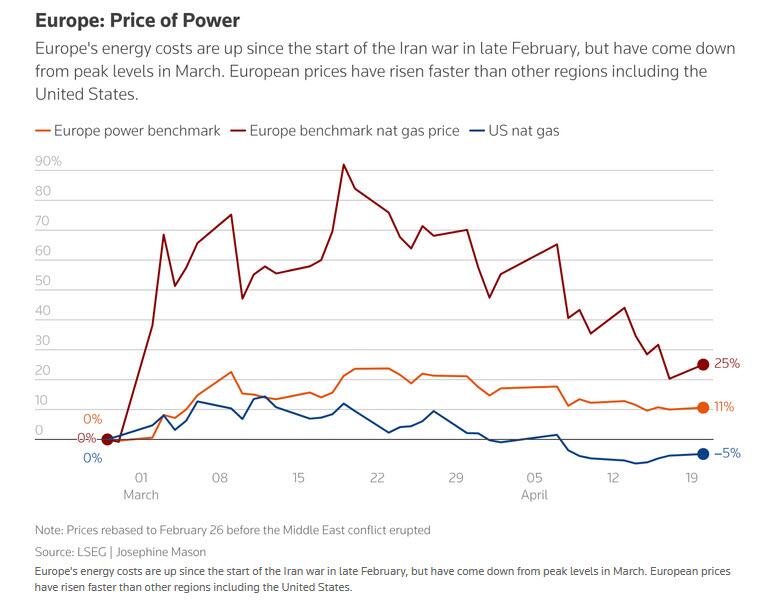
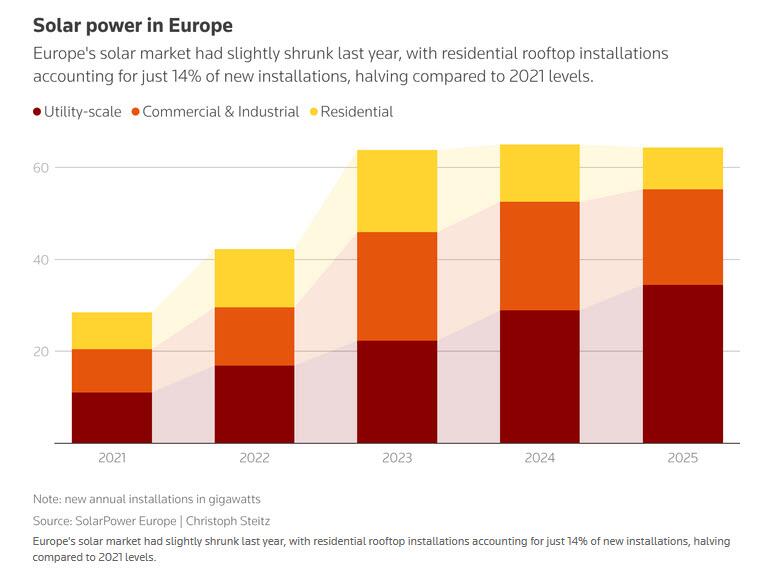
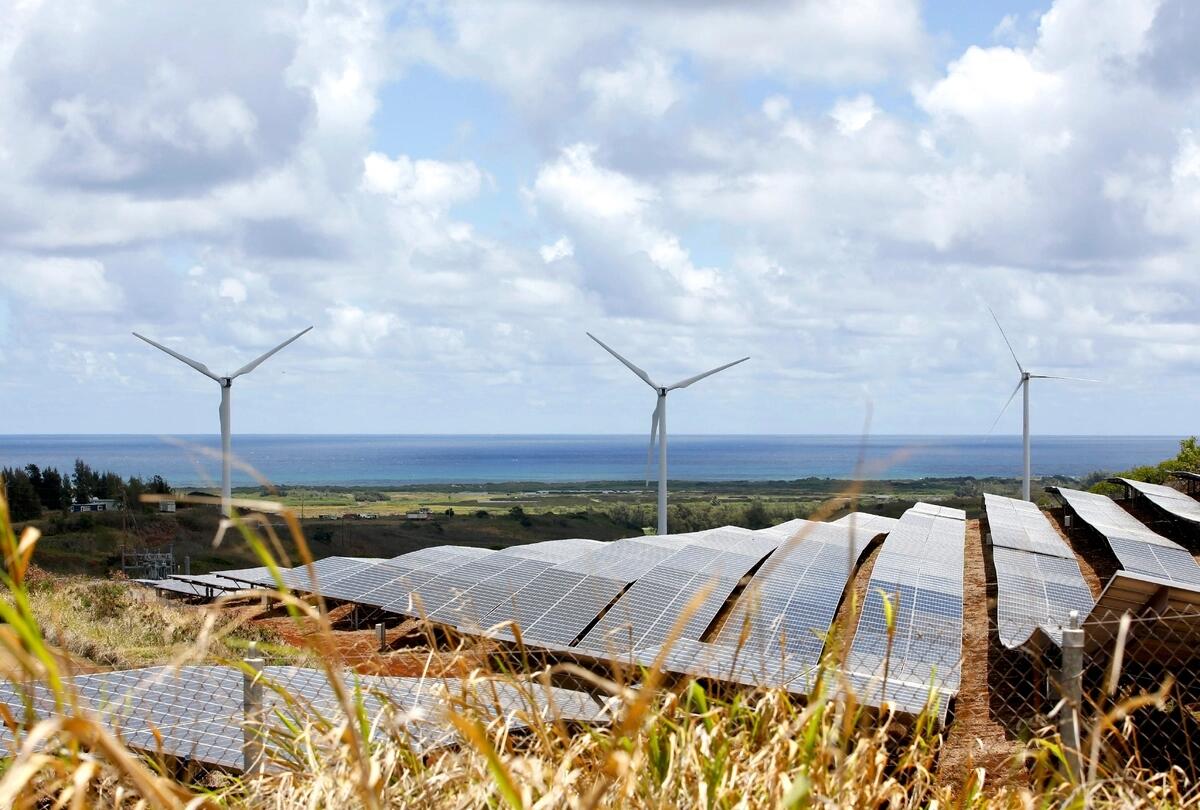
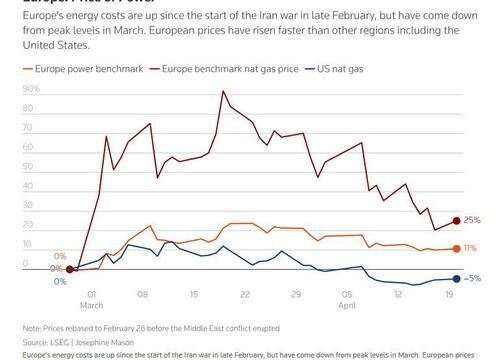
Rooftop solar installations in Europe have surged since the Middle East war triggered a new oil and gas supply crisis and hiked power prices.
Demand from households and businesses willing to install rooftop solar systems soared in March and continues to rise at even higher rates in April as consumers look to insulate themselves from spiking gas and electricity prices, equipment wholesalers and renewable utilities in Northwest Europe have told Reuters.
Rooftop solar demand in Germany, the Netherlands, and the UK has jumped by between 30% and 50% since the war in the Middle East began on February 28, according to various industry executives who spoke to Reuters.
Sales at Germany’s solar equipment wholesaler Solarhandel24 more than tripled last month and are set to triple again in April, amid soaring demand for rooftop solar, company representatives told Reuters.
German solar solutions provider Enpal also reported strong rooftop solar demand driving a 30% jump in orders in March from a year earlier, and expects a further 33% surge in April.
A fence made of solar panels stands along a garden in Amsterdam, Netherlands April 23, 2024. REUTERS
The UK is also looking to boost rooftop solar installations as part of the government’s measures unveiled this week and aimed at breaking the outsized influence of gas prices on electricity prices.
UK firm OVO Energy said in an analysis last month that there are around 13.7 million homes across the UK that are ready for solar panels – nearly half of all residential buildings. If these are installed, they would generate 28.5 terawatt-hours (TWh) of renewable energy every year—enough power to charge all of the UK’s 1.2 million EVs for almost 10 years, OVO Energy says.
Separately, industry association SolarPower Europe has found in research that solar power saved the EU $130 million (111.7 million euros) every day in the first 17 days of the Middle East conflict—savings from avoided fossil fuel imports.
Without solar electricity, the EU’s fossil fuel import bill would have been 32% higher than it currently is, according to the research.
Tyler Durden
Fri, 04/24/2026 – 02:00
https://www.zerohedge.com/markets/europes-rooftop-solar-orders-triple-gas-prices-surge

Supreme Court To Decide Whether Colorado Can Deny Funding For Catholic Preschools
Supreme Court To Decide Whether Colorado Can Deny Funding For Catholic Preschools
The U.S. Supreme Court has agreed to hear St. Mary Catholic Parish v. Roy, a significant religious liberty case that pits Colorado’s universal preschool funding program against Catholic schools’ faith-based admissions and operational policies.
Earlier this week, the Court granted certiorari in an unsigned order (no dissents noted), limiting review to two questions from the petitioners’ November 2025 petition. Arguments are expected in the Court’s October 2026 term.
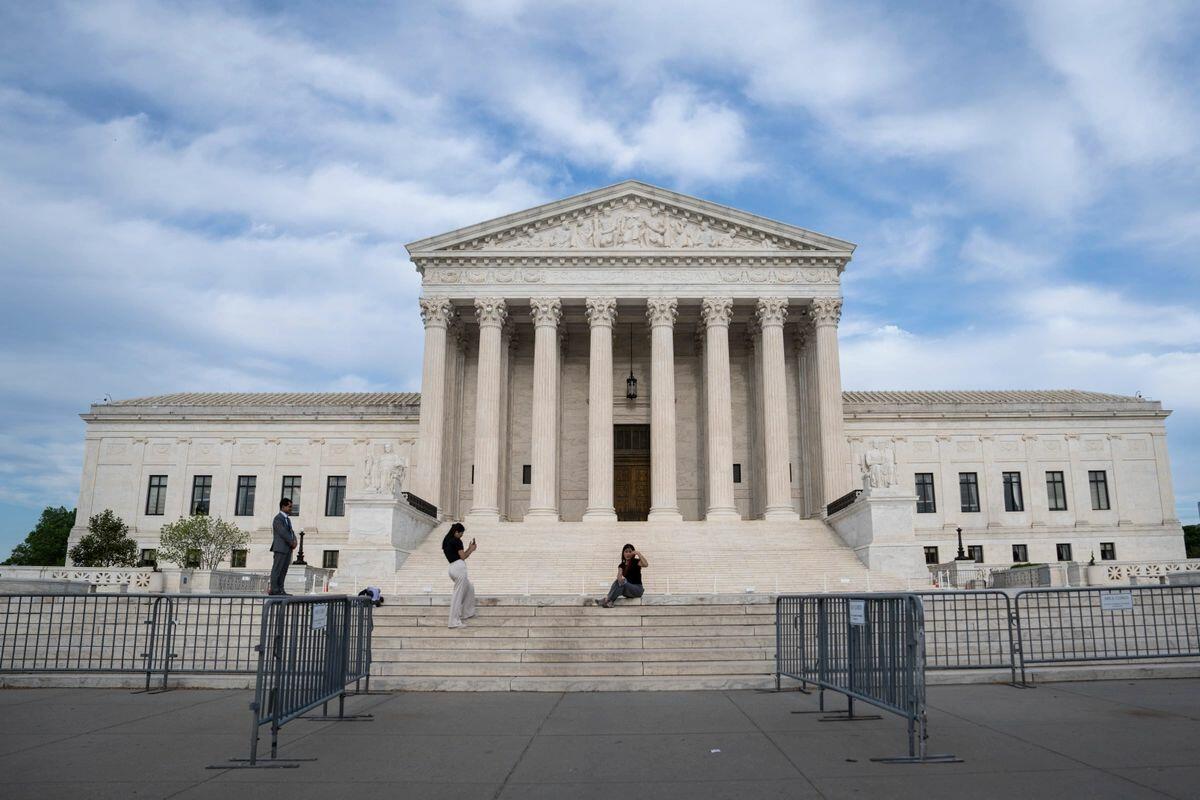
The Supreme Court building in Washington on April 13, 2026. Madalina Kilroy/The Epoch Times
In 2020, Colorado voters approved Proposition EE, creating dedicated funding for voluntary universal preschool. The state’s Early Childhood Act and related rules established the UPK program, which provides free preschool (initially 15 hours per week, later expanded in some descriptions) to families at participating public, private, or faith-based providers. The goal: expand access and choice for all families, including through private options.
To participate and receive taxpayer funds, preschools must sign a nondiscrimination agreement. It requires offering “equal opportunity” to enroll and serve children regardless of race, religious affiliation, sexual orientation, gender identity, income, disability, or other protected characteristics. The program includes some targeted preferences or exemptions (e.g., for children of color, low-income families, those with disabilities, gender-nonconforming children, or LGBTQ+ families), but participating providers must still comply with the core nondiscrimination rule.
Catholic Preschools
Catholic preschools operated by the Archdiocese of Denver (including St. Mary Catholic Preschool in Littleton and Wellspring Catholic Academy/St. Bernadette’s in Lakewood) integrate religious formation with early education. They serve as faith-filled communities where children learn, pray, and grow alongside families who share or at least respect core Catholic teachings on faith, morals, sexuality, and gender (e.g., traditional Catholic doctrine on biological sex, marriage, and gender identity). Enrollment policies typically require families to affirm support for these beliefs; some policies also address practical matters like bathroom use aligned with biological sex.
The state determined these practices violate the equal-opportunity mandate – particularly with respect to sexual orientation, gender identity, and religious affiliation – because the schools do not guarantee enrollment to families whose beliefs or identities conflict with Catholic doctrine. As a result, the Archdiocese’s roughly 30+ Catholic preschools were categorically excluded, affecting over 1,500 children and families. At least one preschool closed, and enrollment at others dropped sharply (nearly 20% in some cases), forcing families to pay out-of-pocket or choose non-Catholic options.
Plaintiffs (two parishes/preschools, the Archdiocese, and parents Daniel and Lisa Sheley, who wished to use the benefit at a Catholic preschool) sued in 2023 via the Becket Fund for Religious Liberty, arguing Free Exercise Clause violations.
Lower Court Rulings
District Court (2024): After a bench trial, it largely sided with the state on the nondiscrimination requirement but enjoined enforcement as to religious affiliation (due to certain program preferences). It found no broader First Amendment violation.
10th Circuit (Sept. 30, 2025): Unanimously affirmed for the state. It held the rule is a neutral, generally applicable law under Employment Division v. Smith (1990), so rational-basis review applies (and the rule survives). The court called Colorado’s approach a “model example” of balancing nondiscrimination with religious accommodation efforts, distinguishing it from recent Supreme Court precedents like Trinity Lutheran, Espinoza, and Carson v. Makin (which bar explicit religious-status discrimination in public benefits). No evidence of anti-religious hostility (unlike Masterpiece Cakeshop).
The 10th Circuit joined a minority position in a circuit split on when exemptions or discretion undermine a law’s “general applicability” under Smith. As the Epoch Times notes, the appeals court held that Colorado’s secular exemptions and discretion “did not undermine general applicability” – applying a Supreme Court precedent known as Employment Division v. Smith (1990). By doing this, the appeals court threw its lot in with the minority position in a circuit split regarding what kinds of exemptions and discretion are considered to undermine general applicability, the petition said.
The case is expected to be heard in the court’s next session, which begins in October.
Tyler Durden
Thu, 04/23/2026 – 23:50
Europe Bets On Newsom To Reverse Trump’s America – And Save Its Own Model
Europe Bets On Newsom To Reverse Trump’s America – And Save Its Own Model
Submitted by Thomas Kolbe
America remains a country of high social mobility and upward opportunity—something we no longer see on today’s European continent. It may sound kitschy to many Europeans, yet its vibrant economic centers, high geographic mobility, and the flexibility of its people still create the conditions for this unique phenomenon.
Admittedly, the narrative of the “land of unlimited opportunity” may sound exaggerated today—something akin to self-promotion. Yet at its core, it still holds true. Can one still make something of oneself there? Donald Trump’s deregulation program, combined with tax cuts for businesses as well as small and medium incomes, has in any case helped to revive this promise of upward mobility.
Trump’s policies go hand in hand with the elimination of fiscal privileges and subsidies. His goal: the systematic dismantling of the fiscally secured and media-backed strongholds of power of a socialist apparatus that reflects the spirit of European regulatory policy.
Put simply, under Trump, American nationalism and a rejection of ideological engineering have returned to the political agenda. With intense competition and market-driven policies at home, alongside a trade and tariff strategy reminiscent of presidents like Alexander Hamilton and William McKinley, this forms a clear countermodel to his predecessors. They had significantly advanced the European model of climate socialism as a tool of power consolidation.
For the record: it was President Barack Obama who, in 2009, identified carbon dioxide as a lever of power, integrated European regulatory frameworks, and began systematically undermining the traditional American values of individual liberty, mobility, free markets, and minimal government.
The public outrage over Trump’s reversal in key questions of political power architecture stems largely from the fact that too many had grown comfortable in a world of subsidies, NGOs, and public sector employment. European climate socialists now pin their hopes on California Governor Gavin Newsom. In two and a half years, he is expected to enter the White House and initiate a return to the status quo ante.
In Berlin, Brussels, Paris, and London, they are likely already counting the days until a possible political shift in Washington.
Trump has fallen out of favor with Europeans because his agenda of prioritizing American national interests mercilessly exposes the ideological contradictions and intellectual weakness of European socialism. Whether in foreign policy—where the U.S. asserts itself forcefully toward countries like Venezuela or Iran—or in its confrontation with the climate lobby and the left-wing NGO complex, Trump’s policies reflect the will of many Americans to finally address the consequences of globalist policies and draw the logical conclusion: dismantling this socialist overreach.
It is telling that his migration policy meets fierce resistance in the strongholds of Democratic Party power. Where migration and poverty industries have taken root, the immigration authority ICE encounters near civil-war-like resistance.
Yet it is not Trump’s fault that the European social model lies in ruins.
Europe suffers from a lack of self-criticism and a general unwillingness to confront its own ideological failures. Meanwhile, nuclear cooling towers are demolished, coal seams flooded, and gas infrastructure dismantled. The politics of ideological immaturity collide with Washington’s hard-nosed approach and the necessary repair work on a deeply damaged social and economic body.
No matter whom the Republican Party nominates as Trump’s potential successor—be it J.D. Vance or Marco Rubio—the German press has already made its choice. It longs for America’s return to European-style climate socialism: more comfortable, more predictable, and promising continued access to public funding—even for its own future. To underline this, the German weekly WirtschaftsWoche recently published a guest article by Gavin Newsom.
Newsom seeks to persuade foreign governments to view California as an independent economic entity—the world’s fifth-largest economy, still embodying the spirit of boundless opportunity.
The implicit message is clear: California’s economic stagnation is not the result of high taxes or aggressive climate policies in the European mold—nor of its war on oil and gas—but solely the fault of Donald Trump’s tariff policy.
California is Europe in miniature—a shadow of the Old Continent cast across the United States. It now finds itself exposed by Washington’s market-driven reforms, which throw its model into stark contrast. The results are increasingly visible: one system succeeds, the other falters.
In his guest contribution, Newsom naturally avoids addressing the consequences of California’s climate policies. As in Europe, CO₂ costs are placing enormous strain on industry. Companies are leaving—just as they are in Germany—and relocating to states like Texas or Florida, where industrial production is still valued.
Newsom’s socialist course, which began in 2019, is evident not only in rising public debt. More striking is the emergence of a full-fledged poverty management industry. Years of open-border policies enabled the development of a deeply corrupt system of dependency management. California has become a magnet for illegal migrants, drug addicts, and other lost individuals; at the same time, the political framework sustains an extraction economy similar to what we observe in Germany’s migration sector. The parallels are striking.
The Sunshine State, once a place of aspiration for so many, now resembles—especially in its urban centers—the kind of social decay familiar from Europe’s migration-driven slums.
Hardly a model to be proud of—yet, for WirtschaftsWoche, seemingly the ideal form of postmodern urbanity.
Newsom frequently points to the success of Silicon Valley, the powerhouse of digital innovation. Yet this engine of growth quite literally fell into his lap; he has contributed nothing of substance to enhancing the state’s innovative capacity. Silicon Valley existed before Newsom—and it will exist after him, if necessary in a different location, in new form, after escaping the suffocating grip of bureaucratic overreach.
A final word on those Europeans who hope for Trump’s failure: with Newsom and a return of the United States to European climate socialism and mass immigration, capital flight from the EU might temporarily slow. It is entirely possible that European leadership could buy time by pointing to a faltering America. But it would change nothing about Europe’s decline—only delay the inevitable.
About the author: Thomas Kolbe, a German graduate economist, has worked as a journalist and media producer for clients from various industries and business associations. As a publicist, he focuses on economic processes and observes geopolitical events from the perspective of the capital markets. His publications follow a philosophy that focuses on the individual and their right to self-determination
Tyler Durden
Thu, 04/23/2026 – 23:10
https://www.zerohedge.com/markets/europe-bets-newsom-reverse-trumps-america-and-save-its-own-model
37 Senate Democrats Urge USPS To Refuse Trump’s Vote-By-Mail Executive Order
37 Senate Democrats Urge USPS To Refuse Trump’s Vote-By-Mail Executive Order
Authored by Chase Smith via The Epoch Times,
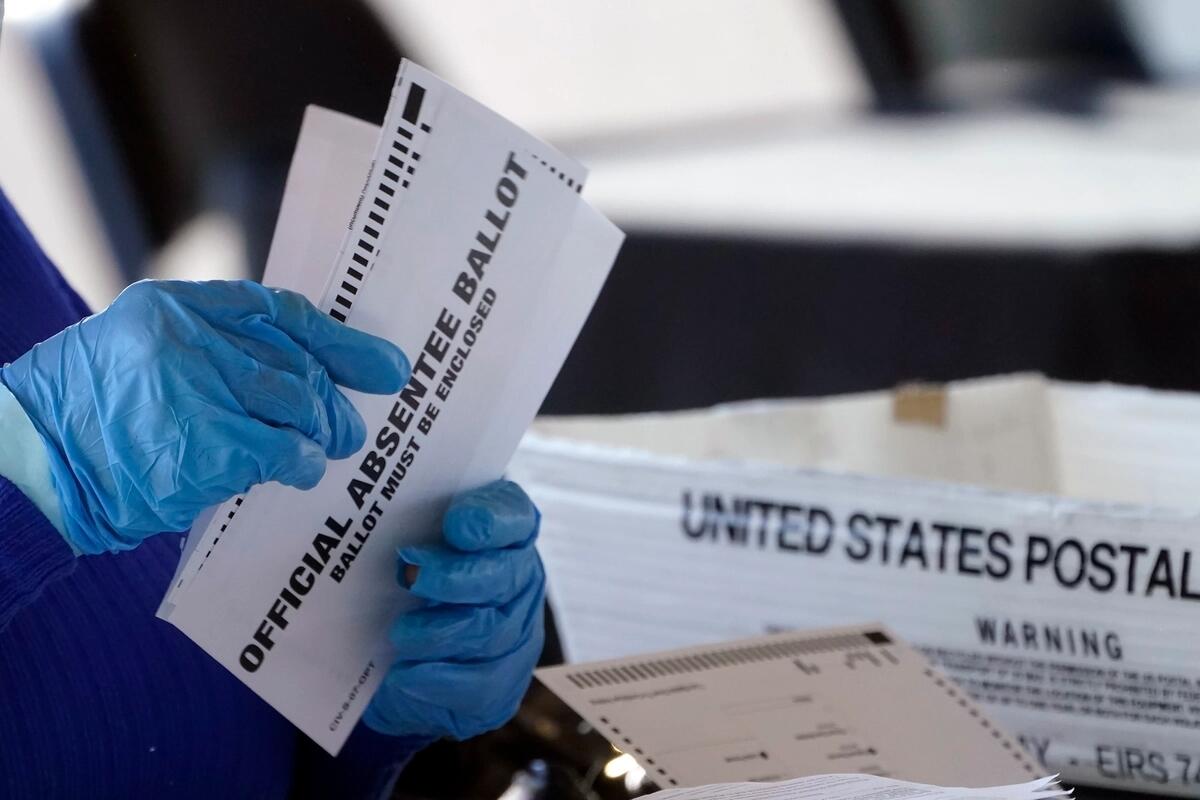
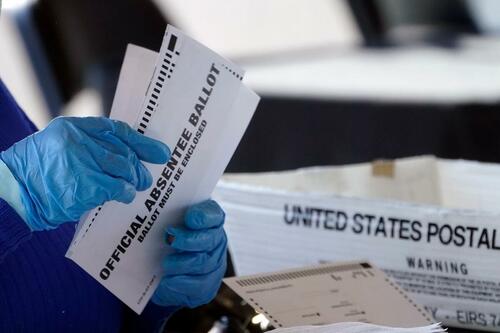
Thirty-seven Senate Democrats sent a letter Monday to the U.S. Postal Service’s board of governors calling on the agency to refuse to implement a March 31 executive order that directs the USPS to use state-submitted lists to determine which voters may receive mail-in and absentee ballots.
The order specifically mentions U.S. citizenship as a key element for eligibility.
Senate Democratic Leader Chuck Schumer (D-N.Y.) led the effort alongside three ranking committee members: Sen. Gary Peters (D-Mich.), ranking member of the Homeland Security and Governmental Affairs Committee; Sen. Alex Padilla (D-Calif.), ranking member of the Senate Rules and Administration Committee; and Sen. Dick Durbin (D-Ill.), ranking member of the Senate Judiciary Committee.
Executive Order 14399, signed March 31 by President Donald Trump, directs the Postmaster General to initiate a rulemaking within 60 days establishing uniform standards for mail-in and absentee ballot processing.
Under the order, USPS would be prohibited from transmitting mail-in or absentee ballots to any voter not enrolled on a state-submitted eligibility list, which the order calls a “Mail-In and Absentee Participation List.” A final rule must be issued within 120 days of signing.
The order also directs the Department of Homeland Security to compile federal citizenship records into state-by-state voter eligibility lists, drawn from Social Security Administration and immigration databases, and transmit those lists to state election officials at least 60 days before each federal election.
The senators argued that the order unconstitutionally transfers authority over federal elections to the executive branch, noting that the Constitution vests authority over the ’times, places, and manner’ of federal elections with the states, subject to alteration by Congress.
“The Constitution provides no role for the President in regulating federal elections,” the Democratic senators wrote. “And no statute delegates to the President any authority to regulate elections or voter eligibility either, including via USPS. By issuing the executive order, however, the President is attempting to unconstitutionally consolidate power to personally regulate American elections.”
The senators said the order would effectively ban mail-in voting in any state unwilling to submit its absentee voter lists to the USPS, and would give the postal agency power to determine which voters’ ballots get delivered to election officials at all.
The senators also pointed to language in a December 2025 USPS rule on postmarking procedures, in which the agency described its limited role in elections.
“While the Proposed Rule contains information of potential relevance to election officials and to citizens who choose to vote by mail, the Postal Service does not administer elections, establish the rules or deadlines that govern elections, or determine whether or how election jurisdictions utilize the mail or incorporate our postmark into their rules,” the rule noted. “The Postal Service also does not advocate for or against any particular voting practices (including mail-in voting).”
The order has generated legal battles on two fronts.
On the voter data side, the federal government sued 30 states and the District of Columbia for refusing to hand over voter registration records to federal officials, and at least five federal judges have ruled against that effort.
On the mail-in ballot side, the Democratic Senatorial Campaign Committee filed a lawsuit on April 1, arguing that the order restricts Americans’ ability to vote by mail. A coalition of 12 Republican state attorneys general filed motions on April 20 in Massachusetts and Washington to defend the order against that challenge.
The White House and USPS did not respond to a request for comment before publication.
The letter was addressed to USPS Chairwoman Amber McReynolds, Vice Chairman Derek Kan, Governors Ronald Stroman and Daniel Tangherlini, and Postmaster General David Steiner.
Tyler Durden
Thu, 04/23/2026 – 22:10
FAFO: Ken Griffen Fed Up With Leftist NYC Mayor Mamdani’s Political Stunt
FAFO: Ken Griffen Fed Up With Leftist NYC Mayor Mamdani’s Political Stunt
Play foolish socialist games, and watch New York City crumble.
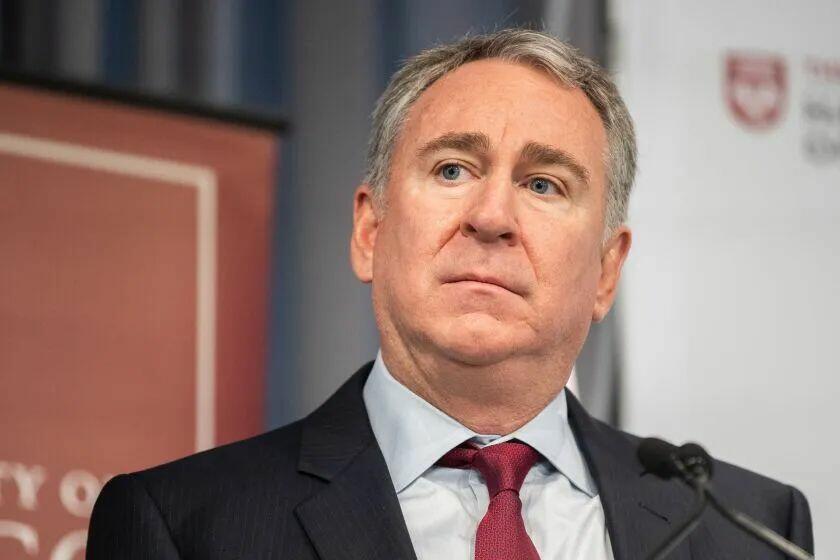
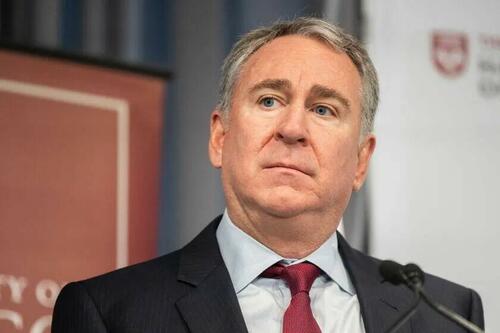
That may be the lesson far-left NYC Mayor Zohran Mamdani is about to learn, as Citadel’s Ken Griffin appears to be losing patience with the mayor’s latest political stunt.
Recall that, in a video posted last week by the NYC Mayor’s Office, Mamdani unveiled the city’s first-ever pied-à-terre tax: an annual fee on luxury properties whose owners do not live in NYC full-time. The video was filmed outside 220 Central Park South, the building where Griffin owns a four-floor penthouse he purchased in 2019 for $238 million.
Happy Tax Day, New York. We’re taxing the rich. pic.twitter.com/Wky2LFXC9W
— Mayor Zohran Kwame Mamdani (@NYCMayor) April 15, 2026
The Wall Street Journal reported Thursday afternoon that an internal memo from Citadel’s COO said its massive redevelopment of 350 Park Avenue, a $6 billion project that would produce 6,000 construction jobs and more than 15,000 permanent jobs, might be halted.
“We are about to commence the redevelopment of 350 Park Avenue, creating 6,000 highly paid construction jobs and supporting the creation of more than 15,000 permanent jobs in mid-town New York,” wrote Gerald Beeson. “The project — if we move forward — will entail more than $6 billion dollars of spending.”
Beeson sent the letter to employees of Citadel, Citadel Securities, and Griffin’s other businesses. Let’s not forget that Griffin relocated his company from crime-ridden Chicago to Miami. Beeson said the mayor’s video suggested that the mayor doesn’t appreciate how people like Griffin contribute to the greater good.
“It is shameful that he used Ken’s name as the example of those who supposedly aren’t carrying their fair share of the burdens associated with New York City’s often costly and wasteful spending,” Beeson continued. “In doing so, the mayor has once again manifested the ignorance and disdain of the elite political class towards those who have been consistently committed to building one of the greatest cities in the world.”
“We have nearly 2,500 colleagues who have chosen to build their careers here,” he said. “We understand that our hard work and success will, on occasion, make us targets for political rhetoric. But it should not diminish the pride we take in building firms that will continue to help New York City thrive for decades ahead.”
In all seriousness, Griffin has little reason to waste time dealing with mounting political hostility from the far-left mayor when that same redevelopment capital could be deployed in a more business-friendly state where capitalism, property rights, and law and order are still upheld. Mamdani is bad for business – part of a broader unhinged class of socialist politicians, from Baltimore to New York City, who seem more interested in abusing taxpayers than properly governing. Why take the abuse?
Tyler Durden
Thu, 04/23/2026 – 21:40
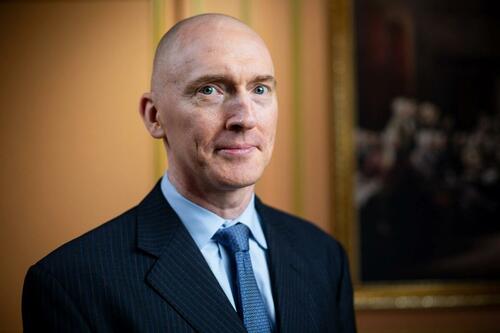
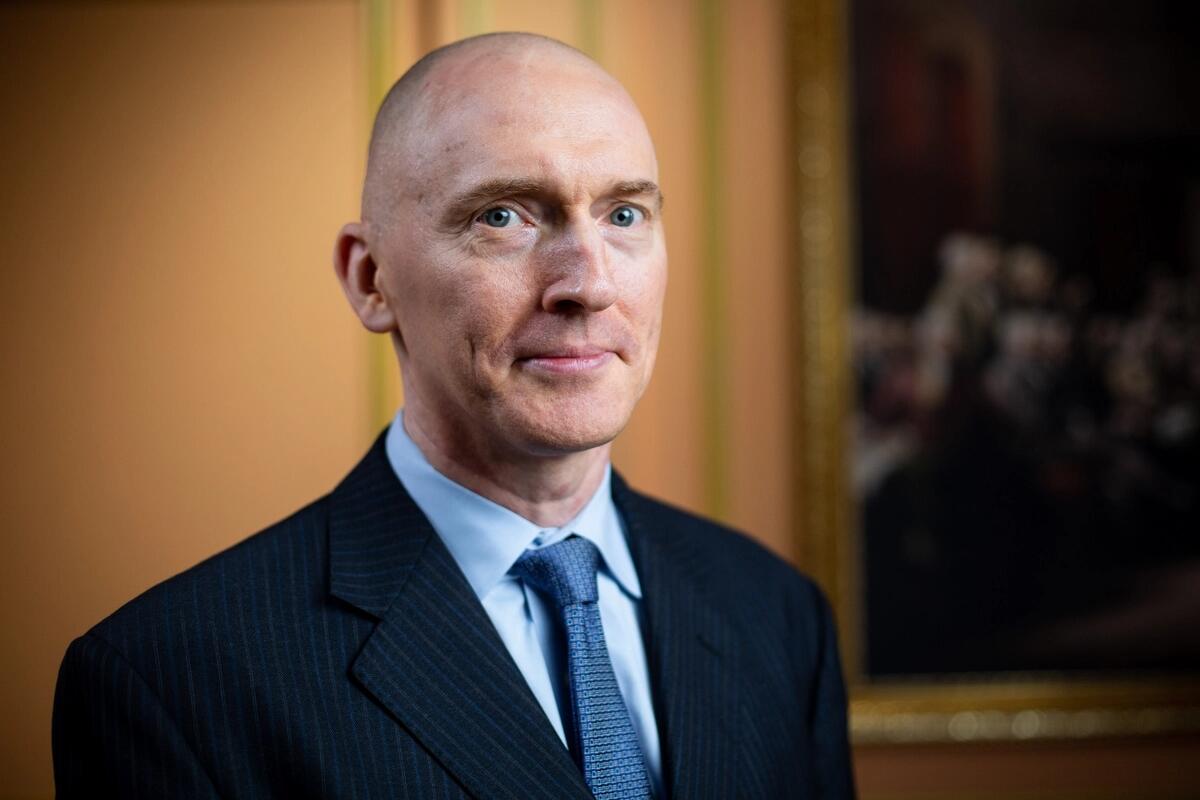
DOJ Settles Surveillance Abuse Lawsuit With Former Trump Campaign Adviser Carter Page
DOJ Settles Surveillance Abuse Lawsuit With Former Trump Campaign Adviser Carter Page
Authored by Matthew Vadum via The Epoch Times,
The Department of Justice told the U.S. Supreme Court on April 22 that it has settled a lawsuit filed by former Trump campaign adviser Carter Page over alleged surveillance abuses.
Page had served as a foreign policy adviser to President Donald Trump’s 2016 campaign.
He sued several top federal law enforcement officials, alleging his constitutional rights were violated through illegal surveillance carried out under the Foreign Intelligence Surveillance Act as part of an investigation into alleged Russian interference in the 2016 election.
The settlement moots, or makes legally irrelevant, Page’s lawsuit against the federal government, U.S. Solicitor General D. John Sauer said in a new brief filed with the nation’s highest court.
Page had filed a petition with the Supreme Court in December 2025 to appeal a U.S. Court of Appeals for the District of Columbia Circuit ruling that affirmed dismissal of the lawsuit by a lower court.
The appeals court ruled that he had waited too long to initiate his lawsuit.
Page is a longtime contributor to the United States’ national security efforts as an “operational contact” of the Central Intelligence Agency. Despite his years of service, he was a target in the FBI’s investigation known as Operation Crossfire Hurricane that probed suspected Russian influence on Trump’s 2016 campaign. He has denied having any improper ties to Russia and was not charged with wrongdoing, according to the petition.
“Through deliberate lies and incomplete factual assertions, the FBI convinced the Foreign Intelligence Surveillance Court (FISC) that there was probable cause to believe that Dr. Page was an intermediary between Russia and Paul Manafort, the Trump campaign’s chair,” he said in the petition.
The FBI filed for four Foreign Intelligence Surveillance Act warrants to surveil Page and the court granted all four. Before the final renewal application was filed, two members of the operation conspired to leak information from the secret FBI surveillance of Page to the media to damage his public image and the Trump campaign. Anonymously sourced media reports falsely insinuated that Page was an agent of Russia, according to the petition.
Because Page knew he wasn’t a Russian agent, he inferred from the media reports that he had been unlawfully surveilled and shared his belief with Congress and the public, according to his petition. However, foreign intelligence investigations are carried out in secret, so his suspicions could not be verified no matter what steps he took.
In late 2019, the Office of the Inspector General published a report spelling out “the FBI’s repeated and thorough surveillance abuses against Dr. Page,” stating that the first warrant application contained “seven significant inaccuracies and omissions.” The FBI also excluded information exonerating Page from warrant applications, including statements by Page “that were inconsistent with its theory” that “Page was an agent of Russia.” The office also “identified 10 additional significant errors in the renewal applications,” the petition said.
A Justice Department spokesperson commented on the settlement.
“No American should ever face covert and unlawful surveillance based on their political views,” the spokesperson told The Epoch Times.
“The investigation into Carter Page—a man never charged with a single crime—relied on inherently flawed and uncorroborated information, proving it was a political sham from the get-go. The targeting of American citizens for political purposes constitutes a severe violation of civil liberties,” the spokesperson continued.
“This Department of Justice is committed to dismantling the weaponization of government and today’s settlement represents one of many initiatives to provide justice to those abused by rogue actors.”
The Epoch Times reached out for comment to Page’s attorney, Gene Schaerr of Schaerr Jaffe in Washington. No reply was received by publication time.
Tyler Durden
Thu, 04/23/2026 – 21:10
Iran Announces First Hormuz Toll Fees Successfully Transferred To Central Bank
Iran Announces First Hormuz Toll Fees Successfully Transferred To Central Bank
President Trump has repeatedly said that Iran “better not” collect tolls from ships seeking to traverse the Hormuz Strait waterway, as both warring sides have initiated their own rival blockades of different sectors of the strait.
Just last week, Trump had flatly rejected the possibility of Tehran imposing fees – reportedly $2 million or perhaps even more – when a reporter asked about the prospect of restrictions or tolls managed by Iran for strait passage. “Nope. No way. No. Nope,” Trump had responded. He said there can’t be tolls along with restrictions, suggesting that a future system could perhaps be worked out, even of some kind of toll-sharing scheme. “No, they’re not going to be tolls.”
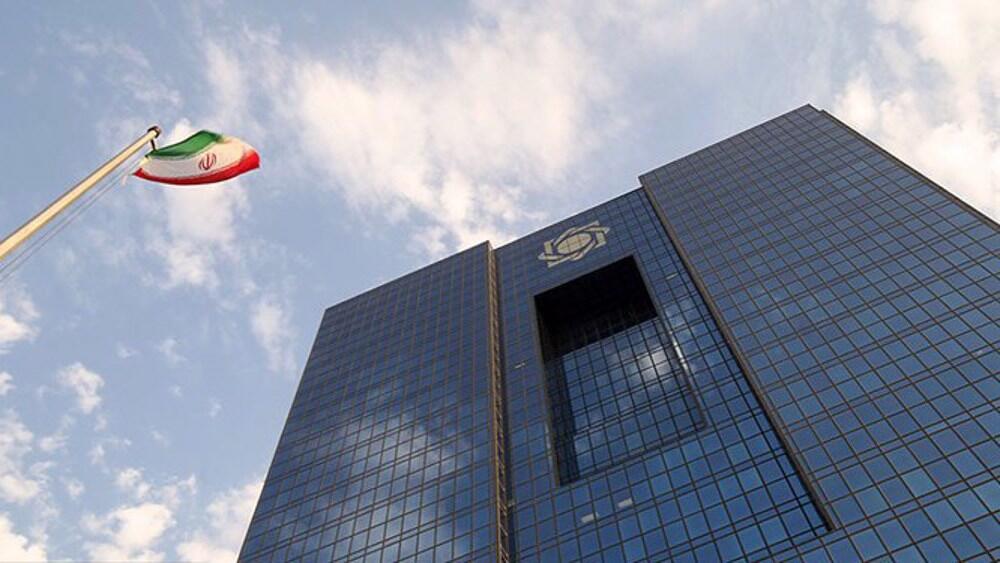
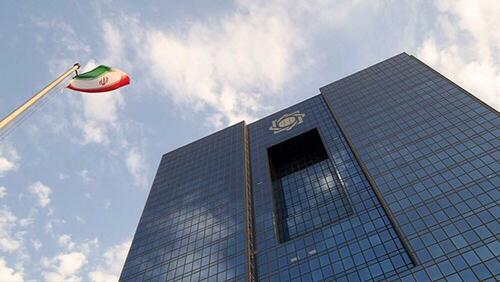
The Central Bank of Iran. Source: Iran International
Earlier this month the president had even stated of tolls, “We’re thinking of doing it as a joint venture” – in reference to Washington and Tehran, which of course raised eyebrows. “It’s a way of securing it — also securing it from lots of other people. It’s a beautiful thing.”
“We’ll be loading up with supplies of all kinds, and just ‘hangin’ around’ in order to make sure that everything goes well,” Trump had later separately written on Truth Social. “I feel confident that it will.”
But after all this, on Thursday Iran has publicly announced for the first time that initial toll payments have been successfully transferred to the state-operated Central Bank of Iran (CBI):
The Iranian authorities have received revenue from tolls for ships crossing the Strait of Hormuz for the first time, Parliament Deputy Speaker Hamid Reza Hajibabai said.
“The first revenue received from tolls in the Strait of Hormuz has been transferred to the Central Bank’s account,” the Fars news agency quoted him as saying.
A specific monetary amount was not given, but this week has seen reports that several Iranian tankers, with transponders off, have made it past the US Navy’s blockade – which the Pentagon has denied. State media says:
IRAN RECEIVED HARD CURRENCY PAYMENT FOR HORMUZ TOLL: FARS
According to Drop Site News:
Iran formally codified the toll system in its “Strait of Hormuz Management Plan,” passed by parliament on March 30-31. The IRGC charges up to $2 million per vessel, with fees running approximately $1 per barrel of crude cargo — meaning a fully loaded supertanker could pay $2 million per transit.
🔺 Iran’s second deputy parliament speaker Hajibabaei announced Wednesday that the first revenues collected from Strait of Hormuz transit tolls have been deposited into the Central Bank of Iran, according to Mehr News Agency — marking the first public confirmation that Iran’s… pic.twitter.com/qURuWTpzbk
— Drop Site (@DropSiteNews) April 23, 2026
Also, the US side has said that dozens of international vessels have been approved for safe passage and have made it out. The US is halting and intercepting any vessel connected with Iranian ports, whether they be inbound or outbound, and especially if they are under sanction.
Tyler Durden
Thu, 04/23/2026 – 20:45

Judge Blocks Trump Admin’s Move To Halt Wind, Solar Approvals
Judge Blocks Trump Admin’s Move To Halt Wind, Solar Approvals
Authored by Owen Evans via The Epoch Times,
A federal judge on Tuesday blocked the Trump administration’s efforts to halt federal approvals for wind and solar projects.
Chief U.S. District Judge Denise Casper in Boston issued a preliminary injunction on April 21, sought by a coalition of renewable energy groups.
The injunction blocks five specified agency action measures, including Interior review rules, a wildlife permitting ban, land-use limits, an Army Corps memo, and a legal opinion that had tightened permitting and slowed wind and solar approvals.
The judge said the plaintiffs were “likely to succeed on the merits of their claims” that the Interior Department and other agencies adopted policies that violate the Administrative Procedure Act, which governs how U.S. agencies make and justify policy decisions.
Her ruling applies to members of the plaintiff organizations, which include RENEW Northeast and Alliance for Clean Energy New York.
“This is an undeniable victory for members of our coalition and the broader clean energy industry, as well as American households and businesses,” the groups said in a joint statement.
The Interior Department said in a statement that while it does not comment on litigation, “America sets the global standard for energy production.”
On his first day in office, President Donald Trump pledged to maximize U.S. oil and natural gas production and suspended offshore wind leases.
On April 20, Trump invoked the Defense Production Act to issue a series of memorandums focused on strengthening coal supply chains, natural gas transmission, and liquefied natural gas capacity.
The president also signed memos aimed at boosting domestic petroleum production, enhancing grid infrastructure, and expanding the deployment of “large-scale energy” and related infrastructure.
In a post on X, White House spokeswoman Taylor Rogers said the memos would allow the Energy Department to use funding from the One Big Beautiful Bill Act to strengthen the country’s “grid infrastructure and unleash reliable, affordable, secure energy.”
The Defense Production Act is a Cold War-era legislation that grants the president authority to expand and expedite the supply of materials from the domestic industrial base for national security purposes.
In April 2025, the Trump administration ordered a halt to the development of Norway-based company Equinor’s Empire Wind project, which the Biden administration approved in 2023. However, the stop-work order was lifted a month later, and construction was allowed to resume.
The Trump administration’s actions are a significant shift from the Biden administration’s effort to expand wind-power leasing, which aimed to build 30 gigawatts of offshore wind power by 2030 and another 15 gigawatts of floating offshore wind power by 2035.
According to legal firm Latham & Watkins, Foreign Entity of Concern rules, strengthened by the One Big Beautiful Bill Act, aim to block the Chinese regime’s influence in the solar and renewable energy supply chain by denying clean energy tax credits to projects that involve entities linked to the regime.
U.S. Energy Secretary Chris Wright told the BBC in September 2025 that the Trump administration had “serious concerns” about Europe’s reliance on Chinese renewable technologies.
“It looks like the Chinese could control what’s going on with your energy system,” he said.
Wright also claimed in a Sept. 2, 2025, post on X, “Even if you wrapped the entire planet in a solar panel, you would only be producing 20 percent of global energy.”
“One of the biggest mistakes politicians can make is equating electricity with energy,” he added.
Trump, a vocal critic of wind energy, particularly in the UK, has described it as “the most expensive energy ever conceived.”
Tyler Durden
Thu, 04/23/2026 – 20:20
https://www.zerohedge.com/political/judge-blocks-trump-admins-move-halt-wind-solar-approvals-0

Mercuria, Goldman, JPMorgan See Major Aluminum Market Shock
Mercuria, Goldman, JPMorgan See Major Aluminum Market Shock
Analysts at Mercuria, the Geneva-based Swiss commodities trading firm, are sounding the alarm on the global aluminum market after severe disruptions in the Gulf region, adding to a growing list of trading desks and research teams warning of a deepening supply shock.
“The scale of the supply shock we’re seeing in the aluminum market is probably the largest single supply shock a base metals market has suffered in the post-2000 era,” Mercuria commodities analyst Nick Snowdon told Reuters on the sidelines of the Financial Times Commodities Global Summit in Lausanne, Switzerland.
Snowdon then told Reuters, “We are already in a ‘black swan’ event. No one could have foreseen something on this scale.”
Mercuria is a Swiss commodities trading house based in Geneva. Its traders sell, ship, store, and finance physical commodities across markets such as oil, gas, power, LNG, and metals.
Snowdon’s alarm over the global aluminum market is mainly because the Gulf region accounts for 9% of world supply, and with major smelters already declaring force majeure and the Hormuz chokepoint blocked for much of this week, this is shaping up to be one of the most memorable shocks in the metal market in decades.
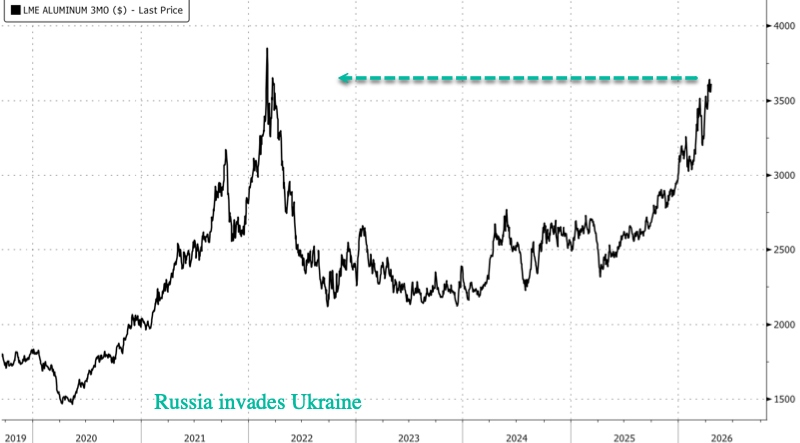
Aluminum prices have already surged to a four-year high, and Mercuria estimates the market could face at least a 2 million-ton deficit by the end of the year, potentially worse if the US-Iran conflict drags on and alumina flows through Hormuz chokepoint remain heavily constrained.
“That shortfall compares with about 1.5 million tons of visible inventory and just over 3 million tons of total global stock, including non-visible units, leaving the market with limited buffers,” Snowdon said, adding that a larger deficit is possible.
He warned that the most exposed supply chains to the Gulf shock are in the US and Europe. He noted both regions rely heavily on Middle Eastern aluminum imports and already have low stockpiles.
Last week, JPMorgan analysts warned that the aluminum market is descending into a black hole, or a “metaphorical point of no return,” where the “global aluminum market will face a serious and prolonged supply outage,” even if vessel flows through the Hormuz chokepoint resume in the near term.
Separately, Goldman commodity specialist James McGeoch recently warned clients, “Hard to think of a bigger metal supply shock: High degree of expectation this was where it was heading, but the initial reaction was to fade the uncertainty yesterday. That should be replaced by fresh length if history is a guide.”
From Mercuria to JPM to Goldman, traders and analysts at these mega institutions are all warning of a metal supply shock, with major risks that could curtail the production of anything from planes to tanks to cars and even power infrastructure.
Tyler Durden
Thu, 04/23/2026 – 19:55
https://www.zerohedge.com/commodities/mercuria-goldman-jpmorgan-see-major-aluminum-market-shock

US Special Forces Soldier Arrested For $400K Maduro Raid Insider Bet
US Special Forces Soldier Arrested For $400K Maduro Raid Insider Bet
Federal authorities arrested a US Army special forces soldier Gannon Van Dyke on Thursday for allegedly using classified insider information from the capture of Venezuelan President Nicolás Maduro to place winning bets worth hundreds of thousands of dollars on Polymarket – the first known instance of the Department of Justice prosecuting insider trading on such a platform.
According to the DOJ, feds claim that Van Dyke – who took part in the January 2026 “Operation Absolute Resolve” that captured Maduro and his wife, Cilia Flores – wagered approximately $33,933 across four Polymarket contracts in the hours before President Donald Trump publicly announced the success of the raid. The largest single bet, $32,537, was placed on Maduro being out of office by January 31. When the operation succeeded and Maduro was taken into US custody, the soldier pocketed more than $404,000 on that contract alone, for a total profit exceeding $409,881.
An active-duty soldier stationed at Fort Bragg, a military base in Fayetteville, North Carolina, Van Dyke had signed nondisclosure agreements promising never to divulge classified or sensitive information relating to military operations. The indictment claims that starting around December 8, 2025, and continuing through at least January 6, 2026, he was involved in the planning and execution of Operation Absolute Resolve, giving him access to sensitive, nonpublic, classified information about the raid.
I’ve been crystal clear: anyone who engages in insider trading in any of our markets will face the full force of the law. Today, the @CFTC took parallel action with @SDNYnews to charge an individual with insider trading involving event contracts.
The @CFTC won’t tolerate…
— Mike Selig (@ChairmanSelig) April 23, 2026
Rest assured, the feds are coming for betting markets with hammer and tongs.The Commodities Exchange Act prohibits federal employees or agents from trading on confidential government information, but applying those rules to anonymous, crypto-based prediction markets presents novel challenges for prosecutors. US Attorney for the Southern District of New York Jay Clayton noted in March that his office was actively examining “laws similar to insider trading laws” for these platforms. One former federal prosecutor described the Maduro bets – which came when the market priced intervention at just 6% – as bearing “all the hallmarks of an insider trade.”
The arrest follows earlier public scrutiny of suspiciously timed Polymarket wagers, including large profits on US strikes against Iran and the removal of Ayatollah Ali Khamenei. In February, Israeli authorities charged an army reservist and a civilian with using classified information to bet on Polymarket.
Prediction markets have drawn massive Wall Street and institutional interest, highlighted by Intercontinental Exchange (owner of the NYSE) committing up to $2 billion to Polymarket and Coatue Management leading Kalshi’s $1 billion funding round (valuing it at $22 billion), with participation from Paradigm, Sequoia, a16z, Founders Fund, and General Catalyst. Quant giants Susquehanna and Jump Trading are providing deep liquidity and equity stakes, while Goldman Sachs is actively exploring the sector and prime brokers now route hedge-fund orders into these platforms.
French Riggers?
Meanwhile across the pond, French cybercrime police are examining claims that someone deliberately heated a Météo-France temperature sensor at Paris’s Charles de Gaulle airport to trigger artificial spikes and cash in on high-stakes weather wagers, according to Le Monde.
The inquiry began after Météo-France filed a formal complaint citing “physical findings on one of our instruments and the analysis of sensor data.” Unusual temperature jumps coincided with large bets on the exact temperature in Paris on dates including March 12 and April 16. More than $500,000 was at stake on some days, according to the On April 15, for example, an unexpected 5°C evening spike to 19°C allowed three separate wallets to profit more than $280,000 combined. One anonymous trader placed a last-minute bet and walked away with $21,000; the same wallet also held positions on weather in Seoul and Toronto,
On Polymarket Discord channels, bettors openly joked about the anomalies. One shared an AI-generated image of a man aiming a hairdryer at a weather station near an airport runway. Another asked: “What did you do to the temperature sensor at Paris airport yesterday? Was your weapon of choice a hairdryer or a lighter?”
So, absolute dumbfucks all around.
In response, Polymarket has stopped using the Charles de Gaulle sensor for its Paris temperature markets and switched to data from Paris-Le Bourget airport.
Tyler Durden
Thu, 04/23/2026 – 19:05
https://www.zerohedge.com/political/us-special-forces-soldier-arrested-400k-maduro-raid-insider-bet