Category: News
House Panel Orders Southern Poverty Law Center To Turn Over Communications With Biden DOJ
House Panel Orders Southern Poverty Law Center To Turn Over Communications With Biden DOJ
Authored by Kimberly Hayek via The Epoch Times (emphasis ours),
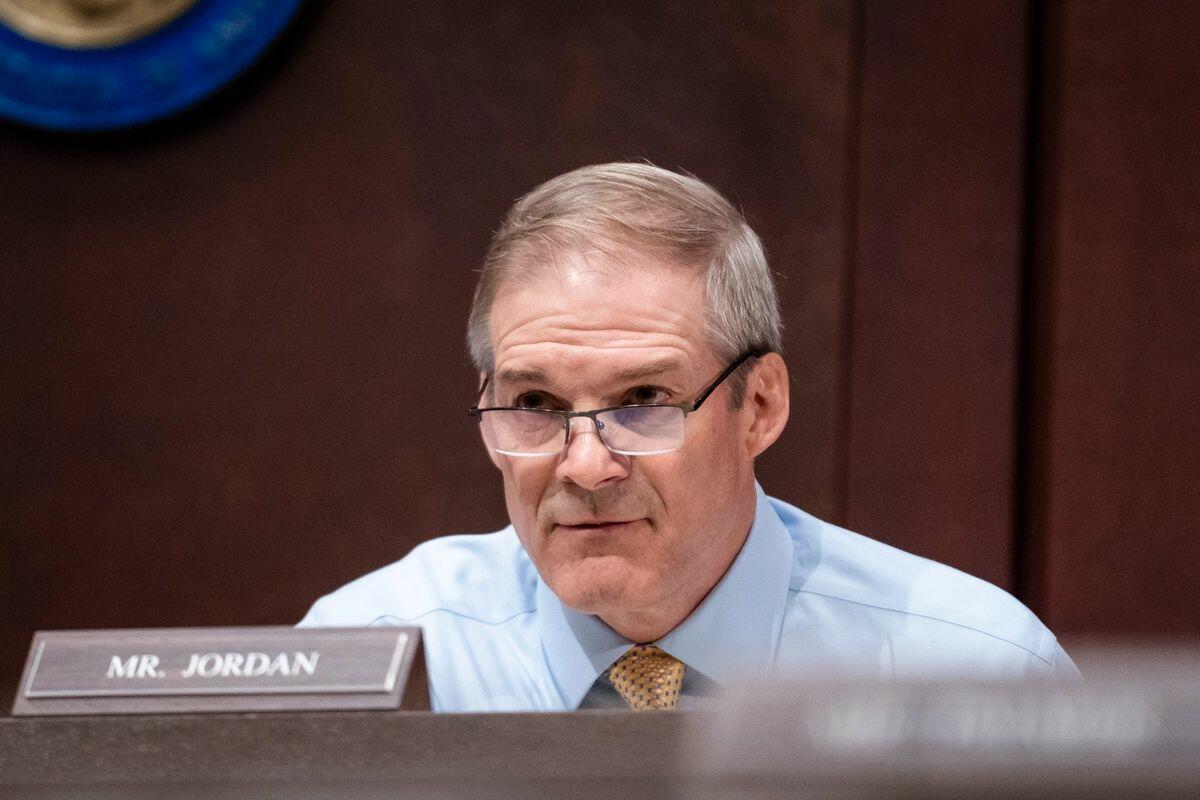
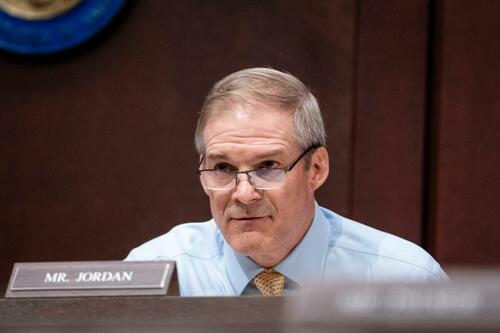
House Judiciary Chairman Jim Jordan (R-Ohio) on April 23 gave the Southern Poverty Law Center (SPLC) until April 30 to hand over documents regarding its relationship with the Biden–Harris Department of Justice (DOJ) and the FBI, as part of a federal prosecution of the civil rights group.
In a letter to Bryan Fair, SPLC interim president and chief executive, Jordan wrote that “publicly available documents revealed how the Justice Department partnered closely with the SPLC during the Biden-Harris Administration, including scheduling regular meetings, giving the SPLC early access to federal law-enforcement data, and allowing SPLC employees to train federal prosecutors.” The letter was also posted to social media.
The chairman’s demand came two days after a grand jury in Montgomery, Alabama, returned an 11-count indictment alleging the SPLC had committed wire fraud, made false statements to a federally insured bank, and conspired to conceal money laundering.
The indictment accuses the SPLC of funneling more than $3 million between 2014 and 2023 to no fewer than eight paid informants in violent racist organizations, including the Ku Klux Klan, the United Klans of America, the National Socialist Movement, the National Socialist Party of America, the American Front, and the Aryan Nations-aligned Sadistic Souls Motorcycle Club. Prosecutors said the group set up accounts under fictitious names, such as “Fox Photography” and “Rare Books Warehouse” among them, to hide where the money came from.
Acting Attorney General Todd Blanche alleged that the SPLC had used “paid operatives within extremist circles to incite and intensify racial tensions,” arguing the civil rights organization “fostered the very threats it claimed to fight.”
Jordan’s letter tells Fair that the committee is investigating whether the SPLC shaped federal policy during the Biden–Harris years, highlighting a now-withdrawn 2023 FBI Richmond Field Office memorandum, dating back to when Christopher Wray led the bureau, that treated “radical-traditionalist” Catholics as given to violence, citing the SPLC as a source.
The chairman requested that the organization provide by next Thursday all communications with any “field source,” or informant, dating to Jan. 1, 2017. He also asked for communications referring to fictitious entities used to pay any “field source,” also dating to 2017, as well as communications with the DOJ, FBI, and other federal agencies dating to Jan. 20, 2021.
Fair said that the organization was “outraged by the false accusations” and will “vigorously defend ourselves, our staff, and our work.” He noted the informant program, since shut down, “saved lives.”
“Taking on violent hate and extremist groups is among the most dangerous work there is, and we believe it is also among the most important work we do,” Fair said.
The SPLC disclosed the criminal probe ahead of the indictment, noting it faced a DOJ investigation over its use of “paid confidential informants” to infiltrate so-called extremist organizations. The indictment covers almost a decade of alleged misconduct and claims that donors were never told the real reason behind the solicited funds.
Tyler Durden
Fri, 04/24/2026 – 08:15
Flurry Of Reports Signal ‘Breakthrough’ In US, Iran Getting Back To The Table In Pakistan, As Third US Carrier Arrives
Flurry Of Reports Signal ‘Breakthrough’ In US, Iran Getting Back To The Table In Pakistan, As Third US Carrier Arrives
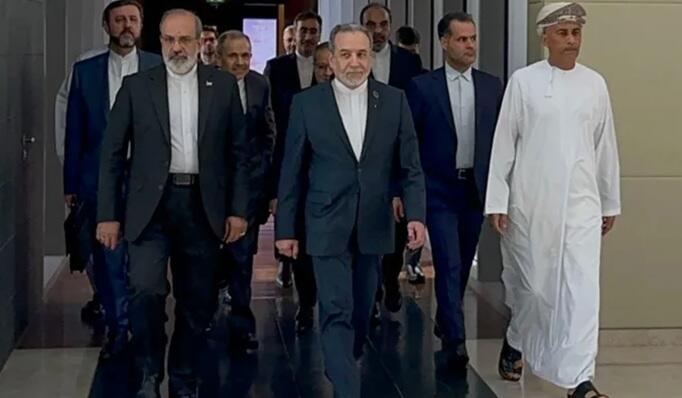
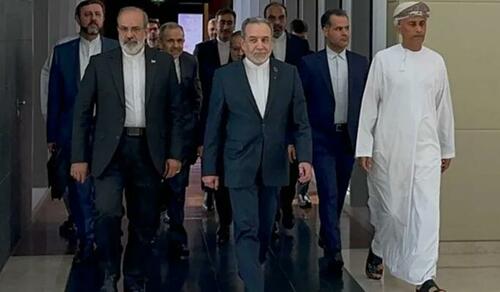
After signaling all day yesterday that it has not decided to engage the United States in a second round of peace talks, Friday morning has seen a flurry of headlines out of Saudi and regional media speculating that today is different. “Iranian Foreign Minister Abbas Araghchi may arrive tonight accompanied by a small delegation,” Pakistani government source has told Al Arabiya’s correspondent.
Also Bloomberg too is reporting that Iran’s FM Araghchi is expected to arrive in Islamabad tonight. Additionally sources out of Pakistan say the country may announce today the resumption of negotiations between Iran and America. Of course, we’ve seen many such “second round of US-Iran talks expected” headlines before which didn’t materialize, and at the moment there’s no signs of movement out of the US side.
However, some of these same sources and headlines are cautioning that it is unclear if there will be Washington engagement. But if a second round of talks actually materializes, it will lend credence to the recent White House insistence that Tehran’s private stance is much more compromising and conciliatory than its public stance. Latest:
IRAN’S FOREIGN MINISTER ABBAS ARAGHCHI IS EXPECTED TO REACH ISLAMABAD AT AROUND 10 PM LOCAL TIME, ACCORDING TO AN IRANIAN SOURCE.
And Al Jazeera freshly reports on a flurry of phone calls, which suggests some kind of potential “breakthrough” in getting back to the negotiating table:
Government sources have confirmed there is a “high likelihood of a breakthrough” in US-Iran talks in Islamabad, as a delegation led by Iran’s Foreign Minister Abbas Araghchi is expected to arrive in the Pakistani capital tonight. Earlier today, Iran’s foreign minister held a telephone conversation with Pakistan’s Deputy Prime Minister and Foreign Minister Ishaq Dar, confirmed by both sides.
Pakistan’s Foreign Ministry said the two sides exchanged views on regional developments, the ceasefire, and ongoing diplomatic efforts in the context of US-Iran engagement. Dar underscored the importance of sustained dialogue, while Araghchi appreciated Pakistan’s “consistent and constructive facilitation role”, the ministry said.
Iran’s state news agency IRNA also reported that Araghchi held a separate telephone conversation with Pakistan’s Army chief Asim Munir.
According to more of some of the latest from Al Jazeera:
US President Donald Trump says he hopes to host Israeli and Lebanese leaders “in the near future”, after announcing a three-week extension to the fragile ceasefire in Lebanon, which was due to expire on Sunday.
President Trump said he is under no pressure to end his war with Iran, though time is limited for Tehran. “I have all the time in the World, but Iran doesn’t – The clock is ticking!” Trump wrote on social media.
A third US aircraft carrier has arrived in the Middle East. The USS George HW Bush joined the USS Gerald R Ford and USS Abraham Lincoln in a massive buildup of naval firepower.
Trump gives orders to “shoot and kill” any Iranian boats placing sea mines in the Strait of Hormuz, as the US naval siege of Iran’s ports continues, and officials in Tehran say talks will not resume until the blockade is lifted.
Meanwhile, US Central Command (CENTCOM) is flashing the big stick:
For the first time in decades, three aircraft carriers are operating in the Middle East at the same time. Accompanied by their carrier air wings, the USS Abraham Lincoln (CVN 72), USS Gerald R. Ford (CVN 78) and USS George H.W. Bush (CVN 77) include over 200 aircraft and 15,000… pic.twitter.com/fbMdz1IYn8
— U.S. Central Command (@CENTCOM) April 24, 2026
developing…
Tyler Durden
Fri, 04/24/2026 – 07:53
House GOP Unveils Bill To Extend Key Surveillance Power Until 2029
House GOP Unveils Bill To Extend Key Surveillance Power Until 2029
Authored by Jackson Richman via The Epoch Times (emphasis ours),
House Republicans on Thursday unveiled legislation to extend for three years a surveillance authority that permits the collection of communications from non-U.S. persons located abroad without a warrant.
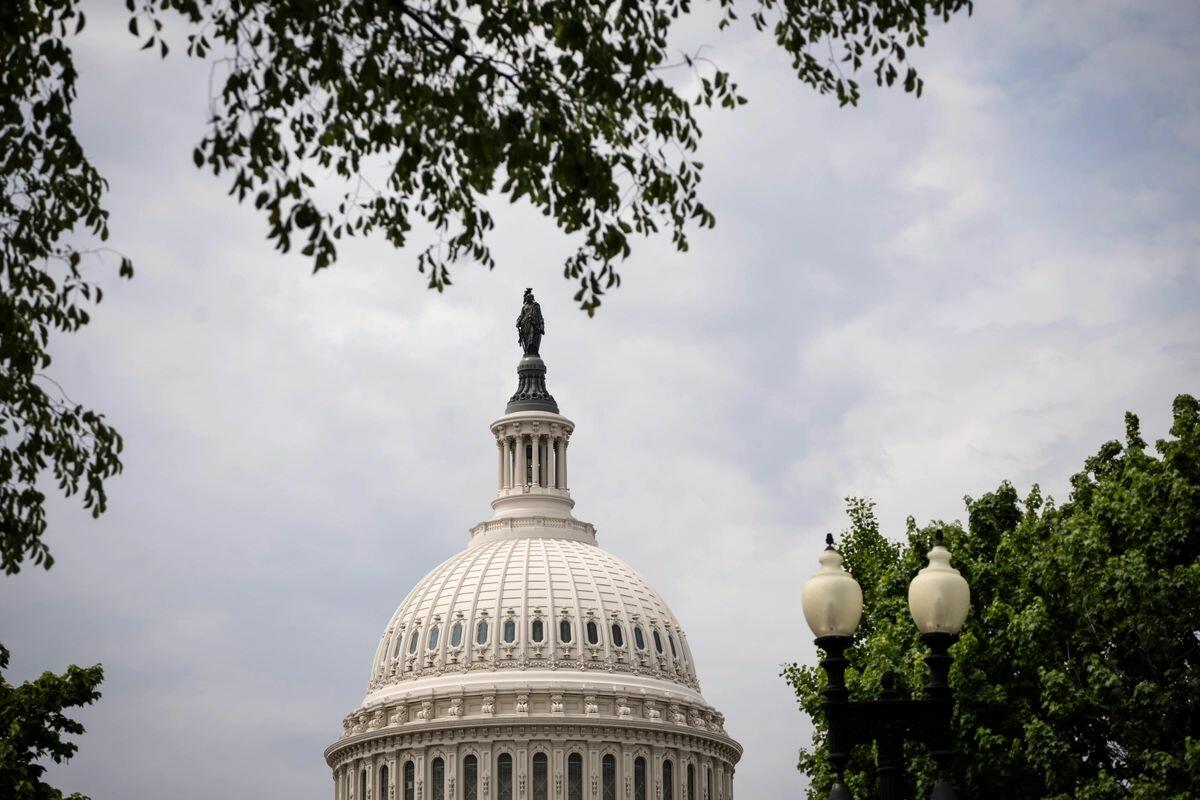
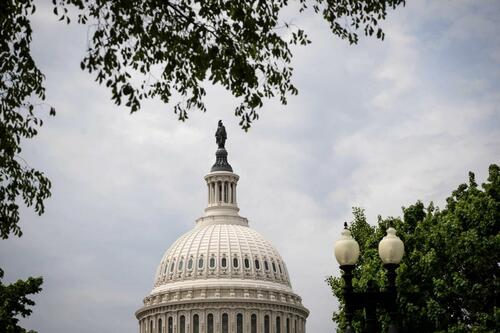
The U.S. Capitol building on April 22, 2026. Madalina Kilroy/The Epoch Times
The House Rules Committee released the nine-page bill, which would renew Section 702 of the Foreign Intelligence Surveillance Act (FISA) through April 30, 2029. Section 702 authorizes warrantless surveillance targeting foreign individuals overseas, though critics note that Americans’ communications can be incidentally collected under the program. The proposed legislation does not include a requirement for warrants, despite ongoing calls for such reforms.
The House Rules Committee will look to advance the bill on April 27.
Congress passed a short-term extension of Section 702 on April 17 that expires on April 30.
Under the bill, the comptroller general would be required to submit a report within one year of enactment to key congressional committees, including the House and Senate Judiciary Committees and the intelligence committees in both chambers. The report would present the results of an audit assessing whether current targeting procedures appropriately limit surveillance under Section 702.
The legislation also explicitly prohibits the intentional targeting of U.S. citizens.
Lawmakers from both parties have pushed for additional safeguards, including requiring warrants when querying the communications of Americans that are incidentally collected. However, President Donald Trump has advocated for a “clean” extension of Section 702 without new restrictions.
Trump has argued that the authority is essential for national security, while also criticizing past uses of FISA. He has cited what he described as serious abuses of the law, referencing disclosures that the FBI used FISA authorities during its Crossfire Hurricane investigation into his 2016 presidential campaign.
The president said the military “desperately needs” Section 702 of FISA to support national security efforts, particularly in light of the conflict with Iran.
At the same time, Trump emphasized the importance of maintaining Section 702 in light of ongoing military operations and global threats. He stated that military leaders consider the authority vital for protecting U.S. interests, including troops and diplomats abroad, and for responding quickly to potential threats.
“I have spoken to many Generals about this, and they consider it VITAL. Not one said, even tacitly, that they can do without it—especially right now with our brilliant Military Operation in Iran.”
In April 2024, Congress approved a two-year extension of Section 702, which included 56 reforms aimed at preventing misuse of Americans’ data. That legislation, signed into law by President Joe Biden, introduced stricter rules for accessing the database, enhanced training requirements, higher-level approval for queries involving politically sensitive individuals, and penalties for intentional misuse.
A review by the Department of Justice’s Office of the Inspector General found more than 60,000 noncompliant FBI queries of Section 702 data in 2021.
Joseph Lord and Savannah Hulsey Pointer contributed to this report.
Tyler Durden
Fri, 04/24/2026 – 07:35
https://www.zerohedge.com/political/house-gop-unveils-bill-extend-key-surveillance-power-until-2029
China’s DeepSeek Debuts Flagship AI Model As Compute Race Intensifies
China’s DeepSeek Debuts Flagship AI Model As Compute Race Intensifies
Chinese AI startup DeepSeek has launched a preview version of its long-awaited V4 model, ending months of silence from one of China’s most closely watched AI labs and arriving a year after its R1 release sparked U.S. market turmoil and concerns across Silicon Valley AI firms.
The rollout signals that DeepSeek is full steam ahead in the frontier-model race:
DeepSeek-V4 Preview is officially live & open-sourced! Welcome to the era of cost-effective 1M context length.
DeepSeek-V4-Pro: 1.6T total / 49B active params. Performance rivaling the world’s top closed-source models.
DeepSeek-V4-Flash: 284B total / 13B active params. Your fast, efficient, and economical choice.
🚀 DeepSeek-V4 Preview is officially live & open-sourced! Welcome to the era of cost-effective 1M context length.
🔹 DeepSeek-V4-Pro: 1.6T total / 49B active params. Performance rivaling the world’s top closed-source models.
🔹 DeepSeek-V4-Flash: 284B total / 13B active params.… pic.twitter.com/n1AgwMIymu
— DeepSeek (@deepseek_ai) April 24, 2026
The open-source model comes in the V4 Flash and V4 Pro series, with DeepSeek saying its V4 “leads all current open models, trailing only Gemini-3.1-Pro.”
In terms of reasoning, the startup said it “beats all current open models in Math/STEM/Coding, rivaling top closed-source models.”
DeepSeek-V4-Pro
🔹 Enhanced Agentic Capabilities: Open-source SOTA in Agentic Coding benchmarks.
🔹 Rich World Knowledge: Leads all current open models, trailing only Gemini-3.1-Pro.
🔹 World-Class Reasoning: Beats all current open models in Math/STEM/Coding, rivaling top… pic.twitter.com/D04x5RjE3L
— DeepSeek (@deepseek_ai) April 24, 2026
Counterpoint Research Vice President Neil Shah told CNBC that “DeepSeek’s V4 preview is a serious flex.”
According to Counterpoint Principal AI Analyst Wei Sun, V4’s benchmark profile suggests the model could deliver “excellent agent capability at significantly lower cost.”
Ivan Su, Senior Equity Analyst at Morningstar, told CNBC that V4’s debut is unlikely to deliver the same market shock as R1 did a little more than a year ago, largely because Wall Street has already priced in the view that Chinese AI can be built and deployed at a lower cost.
Goldman analyst Christopher Moniz commented on the market reaction in overnight trading in China, where “GPU and domestic chip stocks rallied after DeepSeek unveiled preview versions of its latest V4 AI model.”
Moniz continued, “News of DeepSeek’s latest AI model created weakness in AI application names – Minimax (100 HK) -9.4% and Knowledge Atlas (2513 HK) -9.1%. Conversely, China domestic chipmakers spiked – HHS (1347 HK) +15.2% and SMIC (981 HK) +10%. Tencent (700 HK) -0.4% on mixed feedback regarding its new Hy3 model release, with locals noting it is less efficient than Minimax M2.7 launched a month ago”
One key question is the chip stack behind V4: which chips it was trained on and which hardware it runs on during inference. Huawei has already claimed that its latest AI computing cluster, powered by Ascend AI processors, can support V4, suggesting that Beijing’s domestic AI hardware ecosystem is powering DeepSeek’s ongoing frontier-model push.
Tyler Durden
Fri, 04/24/2026 – 07:15
https://www.zerohedge.com/ai/chinas-deepseek-debuts-flagship-ai-model-compute-race-intensifies
Against US Dominance: Europe’s Hormuz Mission And The Illusion Of Geopolitical Power
Against US Dominance: Europe’s Hormuz Mission And The Illusion Of Geopolitical Power
Submitted by Thomas Kolbe
The loss of Europe’s geopolitical power is the defining decline narrative of our time. As Europeans, we are condemned to become unwilling witnesses of continental decay. And in no field of politics does the toxic amalgam of eco-socialism, elite arrogance, and rampant infantilism become more visible than at the level of the European Union.
What we are witnessing in Brussels and the leading capitals of the EU are desperate attempts at coordinated foreign policy – and the realization that the cooperation of powerless individual entities does not necessarily lead to better outcomes than bilateral cooperation.
That this realization must have reached the highest circles of European politics could be observed at the end of this week. The four “big ones” – Germany, the United Kingdom, France, and Italy – called for a maritime alliance and the protection of the Strait of Hormuz.
Fifty additional states – according to the initiators of this rather peculiar political camouflage – are expected to join the European alliance. Leadership claims are naturally being made by the former maritime powers Britain and France, above all France, whose aircraft carrier Charles de Gaulle may stand as the last remaining symbol of Europe’s great naval tradition at the center of these activities – if one can even approach the Persian Gulf at all.
The situation remains fragile: the currently stable ceasefire ends on Wednesday. And negotiations between the United States, Israel, and Iran are entering their final phase. From a European perspective, our assumptions are once again confirmed: the EU and its slowly re-approaching partner the United Kingdom are staging a political cabaret. First came the wait-and-see approach until Americans and Israel had militarily decided the situation. Meanwhile, some NATO members refused cooperation with the United States, only to now, after everything has been decided, attempt to place themselves at the forefront of political forces seeking to guarantee the security of the Strait of Hormuz.
Through constant media overdrive, Starmer, Macron, Meloni, and Merz present themselves as the decision-makers of the moment – it is their harvest time, collecting cheap public dividends. But is that really the case? Do they seriously believe that the majority of Europeans are not fully aware of what is happening? That European power is essentially the product of media magic – permanent propaganda wrapped in moral excess? A shadow of past greatness, reduced to virtual impotence, ultimately dissolving into the very media theatre that we, as embarrassed Europeans, are forced to endure every day.
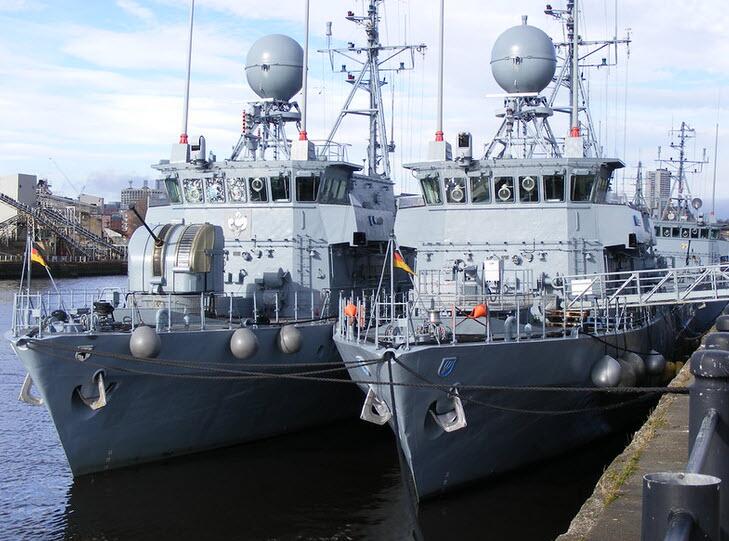
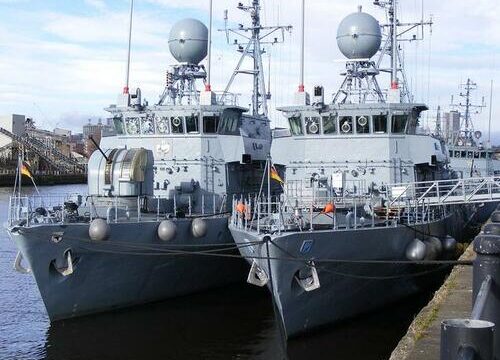
The German contribution to the mission, as announced by Chancellor Friedrich Merz, is predictably modest: mine countermeasure vessels (eight available), one supply ship, and two P-8 Poseidon reconnaissance aircraft. No frigates – they are tied up in a NATO deployment in the North Atlantic. Germany does have a defense budget that exceeds all other Europeans by billions, yet even this money appears to vanish into the nirvana of bureaucracy and into the coffers of defense contractors, who are popping champagne corks thanks to the government’s debt-driven spending spree amid multiple conflict scenarios.
As for the possible German contribution. But as said: whether a military deployment will actually take place remains uncertain. Europe is already feeling the consequences of its energy dependency and its eco-socialist policy course, which hit like an icy wind. Yet this does not change the fact that policymakers continue to refuse to acknowledge the geopolitical vacuum, and instead begin trying to piece together diplomatically what they have shattered in recent years – especially in relations with the United States and Russia.
From poker we know: those who repeatedly bluff at the same table with empty hands and are exposed will be dismantled in future rounds. A US withdrawal from NATO would likely also mean a full retreat from the Ukraine conflict. This move would expose both Europe’s fragile finances and its non-existent security infrastructure. The EU faces economic and geopolitical problems it cannot manage alone.
From a European perspective, not many options remain. To those advocating closer alignment with China: China sees Europe primarily as a dumping ground for surplus production from its politically driven export sector. Europe could be pressured at any time via export restrictions on rare earths or microchips. This is not a viable option.
Reintegration of Russia into a broader Eurasian cooperation would be a natural and obvious element. The attempt to force regime change in Moscow has failed. The idea, attributed to EU foreign policy chief Kaja Kallas, of fragmenting Russia into ethnic components in order to maintain leverage and control access to raw materials and energy resources remains a fantasy of hysterical Europeans trapped in their globalist worldview.
The United States remains, with its increasingly despised president in Europe, Donald Trump. He creates facts and destroys European dream worlds. And he executes a political program that allows the United States to dominate the Western Hemisphere over the long term. That the Americans project their power in the world’s maritime choke points – the Panama Canal, the Strait of Hormuz, and, following the agreement with Indonesia, the Strait of Malacca – shows: Washington is preparing for the power struggle with China.
Should Europeans believe that the two giants will not ultimately reach an understanding, they are likely mistaken. The United States and China are working at high speed to consolidate their spheres of influence, reorganizing financial systems and commodity markets in line with their specific industrial needs. Moreover, the costs of an escalating conflict between the two would be too high. It is therefore logical to divide the world into corresponding spheres of power and shift the costs onto others.
For Europeans, it becomes a burden that the unavoidable has happened: access to energy and its distribution have once again become instruments of power. Oil and gas dominate – the so-called “declared dead” are living longer than ever. And Europe’s dependency is striking: up to 60 percent of primary energy demand must be imported.
Those who fail to conclude from this simple observation that the time has come for diplomacy and fair negotiations with partners – and that the era of lecturing the world with a moral finger in order to enforce a Net Zero climate regime is over – have simply been overtaken by reality.
Brussels’ strategy to impose a European climate regime on the world failed the moment Donald Trump buried the European climate policy anchored by his predecessor Barack Obama. The fact that politicians such as Friedrich Merz, Lars Klingbeil, and Ursula von der Leyen continue to cling to climate doctrine, CO₂ trading, and the transformation agenda is tragic for Europe. Our economies are now bleeding out until economic reality – higher energy prices, rising unemployment, and the emerging sovereign debt crisis – forces a political shift.
About the author: Thomas Kolbe, a German graduate economist, has worked as a journalist and media producer for clients from various industries and business associations. As a publicist, he focuses on economic processes and observes geopolitical events from the perspective of the capital markets. His publications follow a philosophy that focuses on the individual and their right to self-determination
Tyler Durden
Fri, 04/24/2026 – 06:30

4 In 10 American Teens Are Almost Constantly Online
4 In 10 American Teens Are Almost Constantly Online
A U.S. jury recently found Meta and YouTube liable in a landmark social media addiction trial, marking a major legal setback for the tech giants.
According to the BBC, jurors concluded that the platforms were deliberately designed to be addictive and contributed to harm experienced by a young user.
The ruling could open the door to further lawsuits and increased regulatory scrutiny of social media companies.
This debate over the impact of social platforms is closely tied to the extent to which young people use them.
As Statista’s Tristan Gaudiat details below, a recent survey by the Pew Research Center shows that social media is deeply embedded in teenagers’ daily lives, with a vast majority of U.S. teens reporting daily use of the internet (97 percent) and platforms such as YouTube (76 percent), TikTok (61 percent) and Instagram (55 percent). As our infographic shows, a notable share reports near-constant use: 40 percent overall for the internet, 21 percent for TikTok, 17 percent for YouTube and 12 percent for Instagram, with a further 31 to 43 percent saying they use these platforms several times a day.
You will find more infographics at Statista
These patterns point to clear differences in engagement across platforms, with video-based apps standing out for their particularly intensive use.
TikTok and YouTube, both centered on short-form and highly personalized video content, are among the platforms most likely to be used almost constantly, reinforcing concerns about their potentially addictive design.
More broadly, the rise of algorithm-driven feeds and endless scrolling has reshaped how teens consume content, increasing both the frequency and duration of their online activity.
Tyler Durden
Fri, 04/24/2026 – 05:45
https://www.zerohedge.com/technology/4-10-american-teens-are-almost-constantly-online
Sweden Will Consider Ways To Limit Energy Use If Iran War Continues, Government Says
Sweden Will Consider Ways To Limit Energy Use If Iran War Continues, Government Says
Authored by Victoria Friedman via The Epoch Times (emphasis ours),
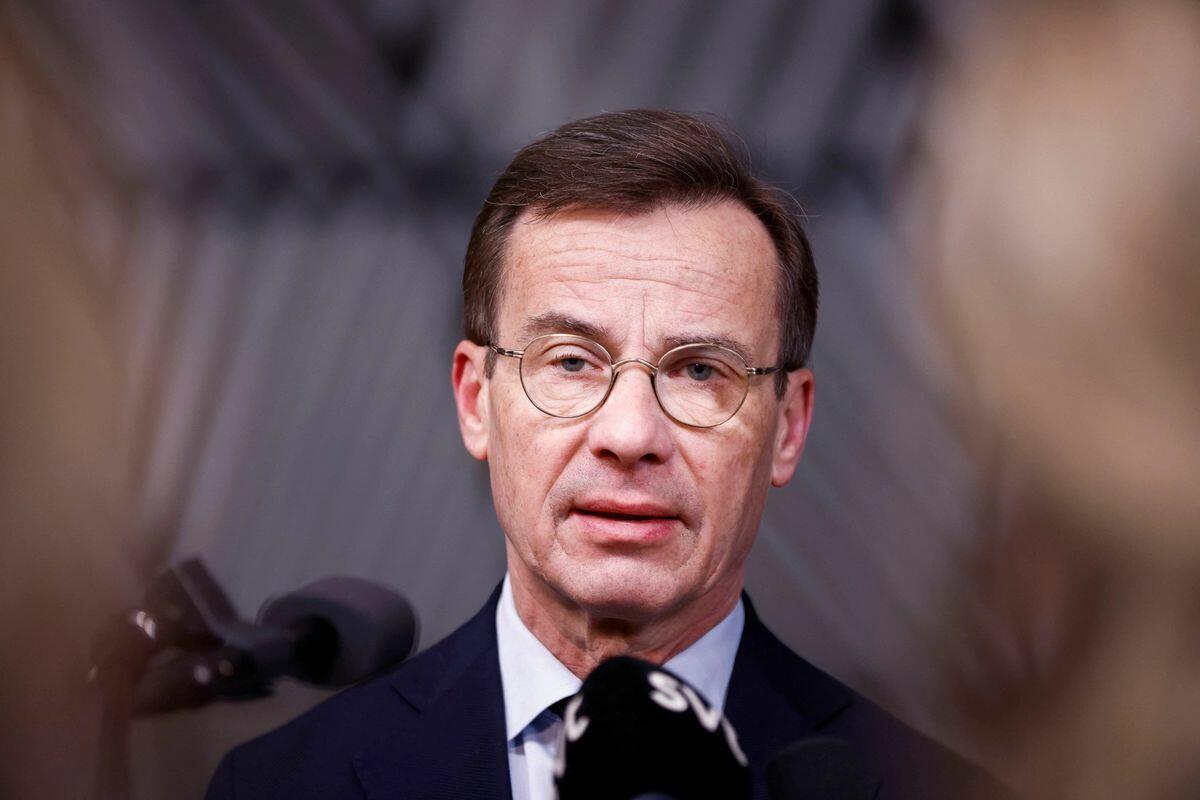
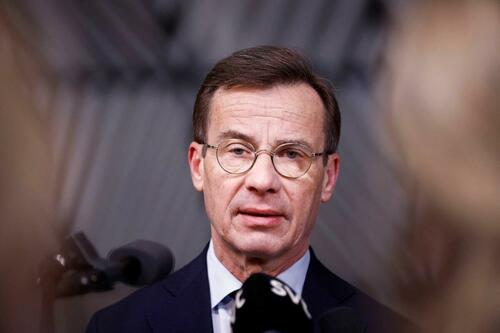
Sweden may need to consider options to reduce energy consumption, including rationing, if the disruption to the flow of fuel supplies continues as a result of the Iran war, the country’s prime minister and finance minister said on on April 23.
“We are not planning any rationing right now, but we are prepared for it to happen,” Prime Minister Ulf Kristersson said at a press conference, according to Swedish daily newspaper Aftonbladet.
Speaking alongside the prime minister, Minister of Finance Elisabeth Svantesson described the situation as “the worst crisis in a very long time, when it comes to energy.”
“Government rationing is something that you absolutely want to avoid in every situation. That is why we are working on measures that will ensure that we do not get there,” Svantesson said.
Kristersson also said the Swedish economy is now in a worse scenario than it was before the conflict.
The warnings from Sweden come as other countries in Europe are bracing for the impact of surging energy prices.
On April 22, Germany’s economy ministry cut its growth forecasts in half for 2026, with Minister for Economic Affairs and Energy Katherina Reiche saying economic recovery will be “slowed down by external geopolitical shocks.”
Germany now expects 0.5 percent growth for this year, down from an earlier projection of 1 percent. Next year’s growth outlook has also been cut 0.9 percent from 1.3 percent.
The Federal Ministry for Economic Affairs and Climate Action said the Iran war, and the closure of the Strait of Hormuz “especially,” has led to shortages and a rise in the price of energy and other commodities.
The ministry now expects inflation to increase to 2.7 percent this year and 2.8 percent in 2027, up from 2.2 percent last year.
Airlines Impacted
Airlines are increasing prices, cutting back on perks, and dropping routes to save money and fuel.
United Airlines said on April 22 it may have to increase ticket prices by up to 20 percent to offset the rise in jet fuel costs.
The airline’s CEO Scott Kirby made the announcement to investors during a quarterly earnings call, saying United’s goal “is to do whatever it takes to recover 100 percent of the increase in jet fuel prices as quickly as possible.”
“Yields need to increase by about 15 percent to 20 percent,” Kirby said, adding that the company is assuming fuel prices could remain elevated for longer, according to a transcript of the call published on financial commentary and analysis site Seeking Alpha.
“Realistically, there probably isn’t enough time to make up 100 percent of the fuel price increase this year. But I feel very good about 100 percent recovery and getting to double-digit margins in 2027.”
Lufthansa announced on April 21 that 20,000 short-haul flights would be canceled this summer.
The German carrier said in a statement that the flights “will be removed from the schedule through October, equivalent to approximately 40,000 metric tons of jet fuel, the price of which has doubled since the outbreak of the Iran conflict.”
Elsewhere, Air Canada said last week it would stop flying to New York City’s John F. Kennedy International Airport and raise baggage fees on some flights because of rising fuel costs.
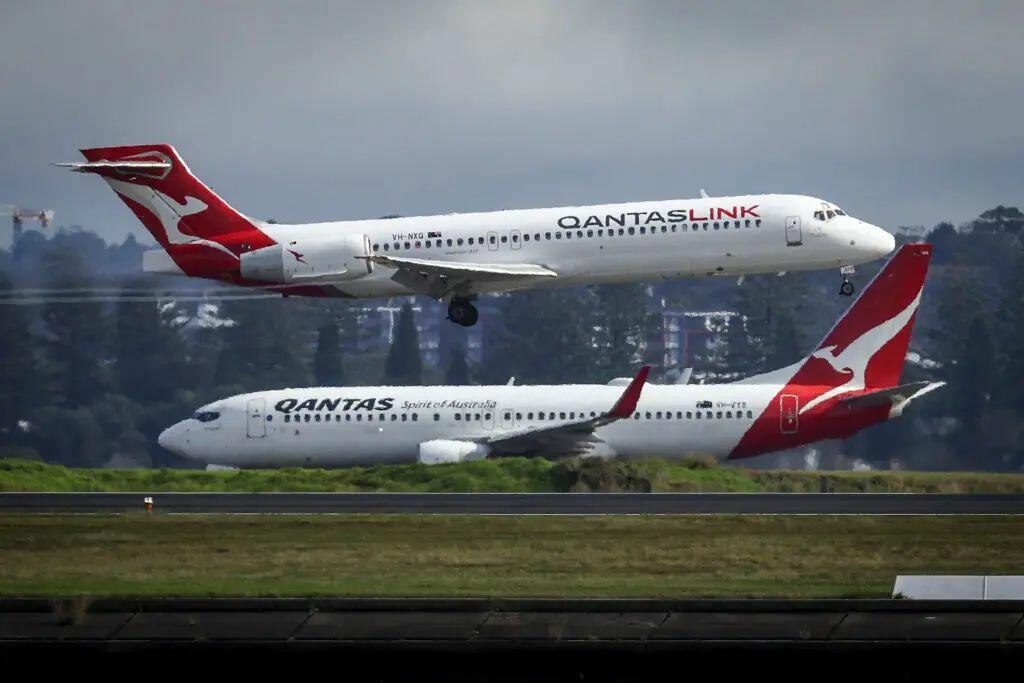
Virgin Australia said last week that it was raising fares, and Australian carrier Qantas Airways said last month that it would increase fares on its international routes in response to the surge in jet fuel costs.
Guy Birchall and Owen Evans contributed to this report.
Tyler Durden
Fri, 04/24/2026 – 05:00

Ship Of Shame: Australia Saved By Trump’s Emergency Fuel Shipments
Ship Of Shame: Australia Saved By Trump’s Emergency Fuel Shipments
It’s no secret that Europe and western satellite nations like Canada and Australia have been rather hostile in rhetoric when it comes to the US. This trend started well before the war in Iran and is owed largely to the ideological break between American conservative movements and European globalists and “multiculturalists”.
The Trump Administration’s trade tariffs are a big factor, but they are ultimately just another reflection of the separation of ideals between the US and its liberal “allies”. At bottom, US tariffs against allied economies are merely a response to decades of allies using tariffs against the US. Tensions between western powers are rooted in a conflict of principles, not economics.
Despite these tensions and the fact that countries like Australia have made it clear that they will not aid the US in reopening the Strait of Hormuz (which Australia relies on for the majority of its energy supplies), Trump has offered considerable help to prevent Australia from facing total economic collapse.
Australians are calling it the “Ship of Shame” – A series of refined fuel imports from the US over the course of the past month which are preventing the country crossing the “dry up” threshold. Australia imports around 90% of all it’s refined fuels, including diesel which the nation relies on heavily for industrial needs and freight needs. Around 60% of Australia’s refined fuels are produced in Asia using oil that passes through the Strait of Hormuz.
Without these US shipments, the country was four weeks away from critical shortages and potential industry shutdowns. Australian political leaders have proven to be either incompetent or indolent in their responsibilities to prepare the country for energy emergency.
Critics will argue that Australia would not have to worry about fuel shortages were it not for US intervention in Iran. But, as we warned in March, the blame rests squarely on the shoulders of the liberal Australian government, which has crippled their own economy with strict “green” polices, carbon taxation and their continuous efforts to thwart homegrown energy production.
Australia’s economic weakness is a product of many years of mismanagement and has nothing to do with the Trump Administration or the war in Iran.
The US sent around 240,000 metric tons of fuel products in March alone, the largest amount to Australia in over 30 years, with more on the way. Along with some alternative supplies coming from Africa, Malaysia and other markets, Australia’s emergency reserves are actually greater than they were before the war in Iran (with an extra 10 days of supply on top of their previous totals).
However, there is still a threat of “long tail” shortages and price hikes if the closure of the Hormuz lasts longer than a couple of months.
The lesson is clear; economic interdependency is a mistake and “just in time” supply chains are foolish. Furthermore, green energy is utterly useless and a form of economic suicide. Australia is a perfect model for what not to do when developing a national energy policy.
The country’s sudden desperate need for aid from Trump and the US will hopefully wake up the Australian public to the fact that their current far-left political leadership is inept at best, and self destructive at worst.
Tyler Durden
Fri, 04/24/2026 – 04:15
https://www.zerohedge.com/geopolitical/ship-shame-australia-saved-trumps-emergency-fuel-shipments
Israeli Air Force Technicians Charged With Spying For Iran Amid ‘Espionage Epidemic’
Israeli Air Force Technicians Charged With Spying For Iran Amid ‘Espionage Epidemic’
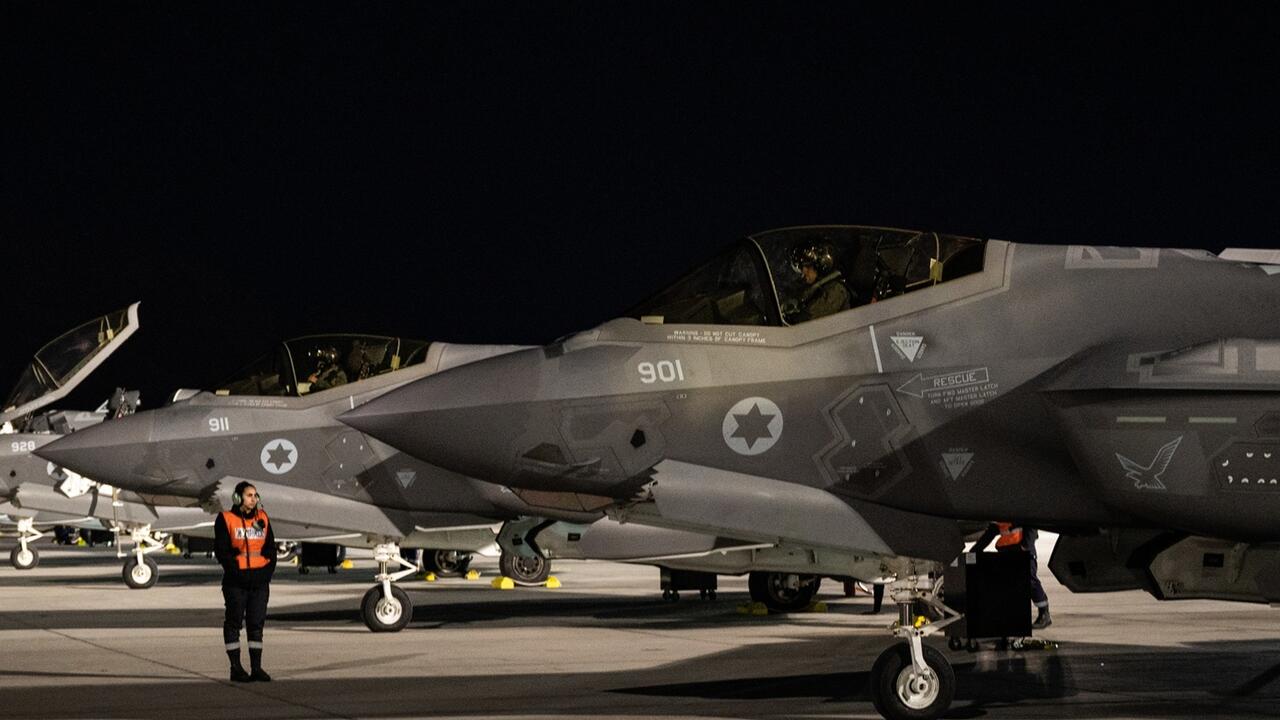
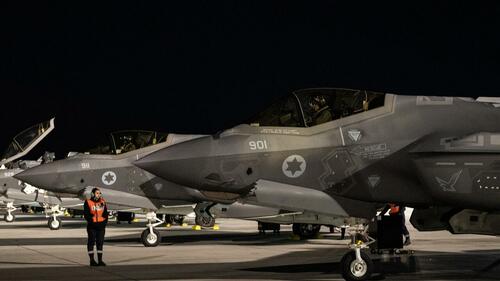
Two Israeli air force technicians who were operating at the Tel Nof Air Base near the city of Ashdod are set to be charged with espionage for Iran in the US-Israeli war launched against the Islamic Republic in late February, Israeli media reported Wednesday.
This marks the latest case in what has been referred to as an “espionage epidemic” in Israel. According to a report by Israel’s Broadcasting Corporation (KAN), the technicians worked on Israel’s F15 jets. The two were identified as Asaf Shitrit and Sagi Haik.
The report says they handed over documents detailing engine diagrams and photos showing a flight instructor’s face, violating military censorship regulations.
The two technicians were also enlisted to gather intelligence on Israeli National Security Minister Itamar Ben Gvir and former army chief Herzi Halevi.
KAN revealed that authorities are mulling stepping up the charges to treason against one of the air force technicians. Eight other soldiers are being accused of knowing about the spying and failing to report it.
The Tel Nof base commander summoned the troops for a security briefing and informed them that he has been asked to clarify the incident to Israel’s Shin Bet security agency.
Over 50 indictments have been filed against Israeli citizens for spying for Iran since October 2023, Mondoweiss revealed in a report.
Security analysts and commentators in Israel have described the situation as an “espionage epidemic” fueled by public distrust of political leadership, corruption, and general discontent among Israelis.
Recent cases in 2026 alone include an Iron Dome reservist accused of passing system details for $1,000, multiple active-duty soldiers charged with espionage, and a thwarted plot to assassinate former Prime Minister Naftali Bennett.
The Iron Dome reservist, Raz Cohen, was arrested in a joint operation by the Shin Bet and the police’s Lahav 433 major crimes unit. According to the indictment filed by the Jerusalem District Attorney’s Office, Cohen had been communicating with an Iranian agent since December via the Telegram messaging app.
The reservist allegedly took photographs and videos that he shared with his Iranian handlers and provided coordinates for several locations, including the Hatzor, Hatzerim, Nevatim, and Tel Nof air bases, as well as an additional classified facility.
Tyler Durden
Fri, 04/24/2026 – 03:30
EU Finally Unblocks €90 Loan For Ukraine, Weighted Toward Military Spending
EU Finally Unblocks €90 Loan For Ukraine, Weighted Toward Military Spending
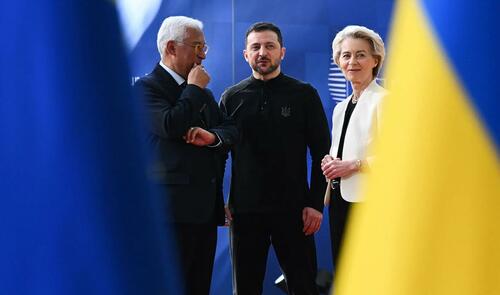
Ukraine has hailed the long awaited approval and release of a whopping a €90 billion loan by the European Union, which belatedly happened Thursday after months of negotiations.
“The European support loan for Ukraine has been unblocked – €90 billion over two years,” Ukrainian President Volodymyr Zelensky wrote on X.
“For us this is important, and it will strengthen, of course, our army, Ukrainian forces, and allow us to boost production of air defense systems and work more to protect our energy system for the winter. Together we will solve many issues of protecting lives. And of course, we will keep working to push Russia to real diplomacy to end this war,” he said.
Hungary and Slovakia, which had blocked the package, did not object before the 3 p.m. deadline, clearing final approval. This after a major Hungarian election wherein PM Viktor Orban suffered defeat, and rapid political transition is underway.
These countries lifted their vetoes after oil flows through the Druzhba pipeline finally resumed Thursday following earlier damage from Russian strikes. The timing interestingly corresponded with Hungarian opposition leader Péter Magyar cinching victory in a historic election.
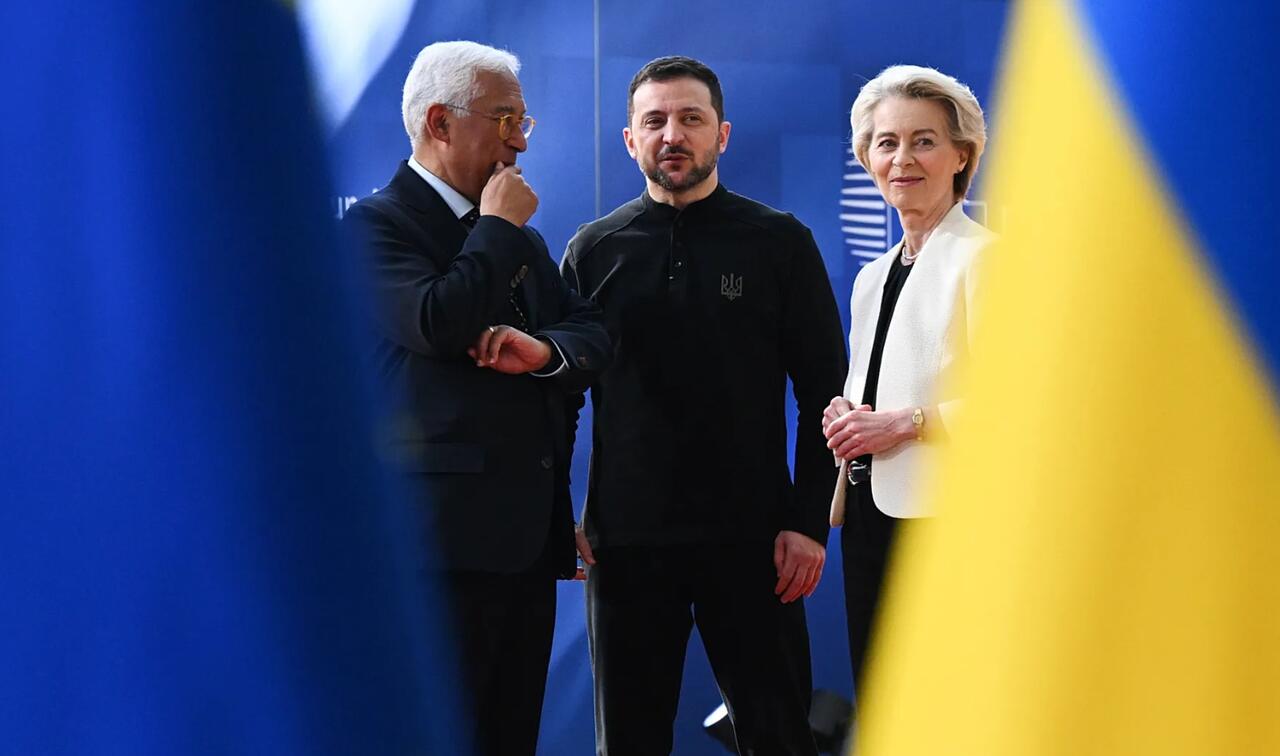
European Commission President Ursula von der Leyen welcomed the decision while traveling to Cyprus for talks with European leaders on the Middle East-driven energy crisis.
“While Russia doubles down on its aggression, we are doubling down on our support to the brave Ukrainian nation enabling Ukraine to defend itself,” von der Leyen wrote on X.
The loan is heavily weighted toward military spending, and the NY Times says that it signifies that Kiev’s Western backers see peace as being very far away. And additionally, this was unleashed by Brussels:
The latest EU sanctions against Russia – the 20th round since the invasion – blacklist Russian banks and energy companies, as well as entities in the United Arab Emirates, Thailand and China, including Hong Kong, for helping Moscow evade western restrictions.
Again, as for what changed to finally unlocked the loan, Washington Post bluntly points out the obvious big elephant in the room…
“The two-year loan is moving forward after its main opponent, Hungarian Prime Minister Viktor Orban, lost his campaign for reelection this month,” WaPo writes.
Tyler Durden
Fri, 04/24/2026 – 02:45