Category: News

DC Judge ‘Apologizes’ To Alleged Trump Assassin
DC Judge ‘Apologizes’ To Alleged Trump Assassin
Authored by Steve Watson via Modernity.news,
A federal magistrate judge in Washington, D.C., has come under fire after expressing deep concern – described by multiple outlets as an apology – over the custody conditions of Cole Tomas Allen, the 31-year-old accused of attempting to assassinate President Trump at the White House Correspondents’ Association Dinner on April 25.
The judge’s remarks, captured in court and widely circulated on X, have ignited accusations of a two-tier justice system that coddles violent attackers while everyday Americans watch their rights erode.
According to reports from the emergency hearing, U.S. Magistrate Judge Zia Faruqui voiced serious worries about Allen’s placement in restrictive custody following the shooting incident.
SHOCKING: D.C. U.S. Magistrate Judge Zia Faruqui *APOLOGIZED*’to alleged White House Correspondents Dinner shooter, Cole Allen, for the “treatment” he has experienced so far in custody.
“The judge is very concerned about his constitutional rights, saying the defendant has… pic.twitter.com/D9uAUGwefc
— RedWave Press (@RedWavePress) May 4, 2026
Fox News reported that “The judge is very concerned about his constitutional rights, saying the defendant has requested meetings with his legal team, and that has not been allowed. He’s been put in a restrictive 24-hour lockup with no windows in a padded room without an opportunity to get out for recreation.”
“He has been put on su*cide watch by the Department of Corrections, and the judge was asking why,” the reporter further noted.
Fox News host Larry Kudlow ripped into the development live on air, echoing the growing frustration.
“The judge apologised to this guy, who would’ve sprayed the whole audience?! And killed God knows how many people? Then would’ve taken a shot at the president? We’re apologizing to this guy?! I don’t GET that!”
Allen, a California man with no prior criminal record, faces charges including attempted assassination of the president after authorities say he rushed a security checkpoint at the Washington Hilton armed with a shotgun, handguns, and knives. Video evidence released by prosecutors shows the chaotic moments as he allegedly opened fire, wounding a Secret Service agent before being subdued. He remains in federal custody.
The judge’s intervention came during arguments over Allen’s suicide watch and housing conditions, with his defense team filing motions to ease restrictions they called punitive. Faruqui reportedly ordered jail officials to explain or adjust the setup, emphasizing due process and access to counsel.
As we previously highlighted, Allen’s social media posts paint a picture of an individual steeped in the same anti-Trump rhetoric that has dominated Democratic and media messaging for years – language that framed the president and his administration in extreme, dehumanizing terms.
The incident at the correspondents’ dinner exposed how years of inflammatory talk can push someone toward violence. Yet instead of focusing on root causes – the unchecked rhetoric from the left – some in the system appear more worried about the shooter’s “dignity” behind bars.
Conservatives have pointed out the glaring double standard. January 6 defendants endured months of harsh pretrial conditions without similar judicial hand-wringing from the same D.C. courts. Here, a man charged with targeting the president and potentially dozens of others receives immediate scrutiny over padded cells and recreation time.
The hearing underscored Faruqui’s view that Allen’s treatment stood out as unusually severe compared to others he has overseen. Defense filings highlighted barriers to legal preparation and basic communication, prompting the judge to demand answers from the Department of Corrections by early this week.
Critics argue this reflects a deeper rot in the federal judiciary, where activist judges prioritize suspects aligned with certain ideologies over public safety and accountability. Calls to remove or reassign such figures have intensified online, with many demanding reforms to prevent future coddling of would-be assassins.
President Trump and his administration have long warned about the weaponization of institutions against America First policies. This episode only reinforces that message: the deep state and its enablers in the courts will bend over backward for those who threaten the republic while punishing patriots who defend it.
As the case moves forward, with a grand jury expected to hear additional charges, Americans are watching closely. The radicalization that drove Allen to act didn’t emerge in a vacuum – it was fueled by the very Democratic messaging now being whitewashed in court.
Your support is crucial in helping us defeat mass censorship. Please consider donating via Locals or check out our unique merch. Follow us on X @ModernityNews.
Tyler Durden
Mon, 05/04/2026 – 21:45
https://www.zerohedge.com/political/dc-judge-apologizes-alleged-trump-assassin
“Rare Sight”: USAF C-17 Jets Land In Beijing Ahead Of Trump-Xi Summit
“Rare Sight”: USAF C-17 Jets Land In Beijing Ahead Of Trump-Xi Summit
As the Strait of Hormuz takes center stage Monday morning, Iran is threatening to attack any ship that attempts to transit the critical waterway. This directly challenges President Trump’s plan for the U.S. Navy to “guide” tankers and container ships through the chokepoint.
Looking beyond the ongoing Hormuz crisis, the China topic is next: Trump is still expected to meet with Chinese President Xi Jinping in the coming weeks. This means any U.S.-Iran escalation could leave Hormuz disrupted for even longer and will undoubtedly be a major topic at the upcoming Trump-Xi summit in Beijing.
On Sunday, Treasury Secretary Scott Bessent told Fox News’ Sunday Morning Futures with Maria Bartiromo that the Trump-Xi summit is still “happening, as far as I know.”
This leaves us searching for real-world signals, not just headlines from officials, that the two-day summit is still scheduled to happen on May 14 despite the ongoing U.S.-Iran conflict.
One signal comes from an aviation observer account on X, by the name “Safari,” who says two U.S. Air Force C-17 transport jets landed at Beijing Capital International Airport in recent days, “making them a rare sight” at the airport.
为特朗普访华运送先遣物资任务的美国空军两架 C-17 在 5 月 1/2 日降落北京国际机场,属于是 PEK 难得一见的客人了。 pic.twitter.com/uYMDjCD4S5
— safari (@safaricheung) May 3, 2026
Safari continued,
On May 3, two more C17 transport planes carrying advance supplies for Trump’s China visit landed at Beijing Capital International Airport, bringing the total to 4 aircraft. There are already so many plane spotters here to photograph the advance transport planes; I can’t even imagine what kind of spectacle it’ll be around Capital Airport when Air Force One actually arrives
为特朗普访华运送先遣物资任务的美国空军两架 C-17 在 5 月 1/2 日降落北京国际机场,属于是 PEK 难得一见的客人了。 pic.twitter.com/uYMDjCD4S5
— safari (@safaricheung) May 3, 2026
Polymarket odds:
Will Trump visit China by May 15?
Yes 85% · No 15%
View full market & trade on Polymarket
As of this moment, based on Bessent’s comments and reports of USAF C-17s landing in Beijing, all indications so far suggest that the Trump-Xi meeting is set to happen at the midpoint of this month.
Tyler Durden
Mon, 05/04/2026 – 21:20
https://www.zerohedge.com/military/rare-sight-usaf-c-17-jets-land-beijing-ahead-trump-xi-summit

Iran War Threatens China’s 4.5 Percent Growth Target: Analysts
Iran War Threatens China’s 4.5 Percent Growth Target: Analysts
Authored by Jarvis Lim via The Epoch Times (emphasis ours),
China’s already-strained economy faces mounting pressure as the Iran war threatens to choke export growth and suppress domestic demand, putting its 4.5 percent growth target at risk, experts say.
As the U.S.–Israeli war against the Iranian regime stretches past the two-month mark, President Donald Trump said in an April 29 interview with Axios that he will continue to maintain a blockade of Iran until Tehran agrees to a deal addressing concerns over its nuclear program.
Brent crude, the global oil benchmark, briefly spiked to over $120 a barrel after Trump’s remarks, hitting a four-year high before dropping back to $114. It now sits at around $108 as of Sunday afternoon.
Rising oil costs have also driven up plastic prices across Southern China, squeezing profit margins and triggering panic buying throughout the supply chain at Dongguan’s Zhangmutou—the nation’s top plastics trading hub.
China is the world’s largest producer, consumer, and exporter of final plastic products, according to a 2025 report from the Organisation for Economic Co-operation and Development, an intergovernmental organization.
Export Squeeze
Tsai Ming-fang, a professor of industrial economics at Tamkang University in Taiwan, said that while many argue China’s strategic oil inventories would shield it from the effects of a blockade, the turmoil in China’s plastics markets shows the conflict is already weighing on its manufacturing exports.
China is estimated to be holding the world’s largest crude stockpiles, at nearly 1.4 billion barrels as of December 2025 and growing in 2026, according to an analysis released in April by the U.S. Energy Information Administration.
“Surging energy prices in financially unstable countries like Indonesia, Thailand, and Vietnam are squeezing out discretionary spending, dragging down China’s export shipments,” Tsai told The Epoch Times.
“If consumers don’t consider these Chinese goods necessities, China’s shipment volumes will naturally fall further.”
Indonesia, Thailand, and Vietnam are members of the Association of Southeast Asian Nations (ASEAN)—China’s largest trading partner—with bilateral trade reaching 6.82 trillion yuan ($999 billion) in the first 11 months of 2025.
Chinese exports to the bloc totaled 4.29 trillion yuan ($628 billion) over the same period, up 14.6 percent year on year, data from the Economic and Commercial Office of the Mission of the People’s Republic of China to ASEAN showed.
Echoing the concern, Alicia Garcia-Herrero, chief economist for Asia Pacific at Natixis Research, said China’s export engine is now caught in a “double bind,” with higher shipping costs driven by Hormuz disruptions and softening end-markets across Southeast Asia.
“This is not yet a cliff edge, but the directional pressure [on China’s exports] is clearly downward, particularly in electronics, machinery, and mid-tier consumer goods,” Garcia-Herrero told The Epoch Times.
Liu Meng-chun, director of the Chung-Hua Institution of Economic Research’s mainland China division in Taipei, said war-driven inflation in advanced economies like the United States and Europe is eroding purchasing power, stifling demand for Chinese goods and compounding the country’s chronic overcapacity.
“The European Union overtook the United States as China’s second-largest export destination in 2025, but the conflict has stoked price pressures across the region, eating into the profit margins of Chinese firms,” Liu told The Epoch Times.
Exports from the world’s second-largest economy grew just 2.5 percent year on year in March, a sharp pullback from the 21.8 percent expansion recorded in January and February, according to China’s General Administration of Customs.
Faltering Demand
On the consumer front, Chinese car sales—widely viewed as a barometer of domestic demand—are declining.
Passenger vehicle retail sales in China fell 15 percent year on year in March to 1.648 million units, according to the China Passenger Car Association.
Cumulative sales in the first quarter of 2026 reached 4.226 million units, down 17.4 percent from a year prior.
“The prolonged stalemate in the Middle East crisis has driven international oil prices sharply higher … suppressing the release of consumer potential,” the industry body said.
Garcia-Herrero noted that China’s domestic demand was already under strain before the Iran war, warning that the ongoing energy shock will only exacerbate the decline.
“Elevated oil prices are feeding directly into transport and manufacturing input costs, squeezing household purchasing power and eroding consumer confidence,” she said.
China’s consumer price index, a key gauge of inflation, rose 1 percent year-on-year in March and was down 0.3 percentage points from February, according to China’s National Bureau of Statistics.
The producer price index (PPI)—a measure of costs at the factory gate—climbed 0.5 percent in March from a year earlier, reversing a 0.9 percent decline in February and marking its first rise after 41 consecutive months of contraction.
But Tsai cautioned against interpreting China’s PPI increase as a sign of economic recovery.
“The PPI rebound stems from energy cost pass-throughs driven by the conflict, rather than any genuine pickup in domestic spending,” Tsai said.
“The latest data indicates China is likely still grappling with internal ‘involution.’”
“Involution” describes a cycle in which Chinese firms compete ever more fiercely for a shrinking pool of consumers, driving down prices and profits without generating real economic growth.
As the fighting in Iran persists, the erosion of both domestic spending and export growth will inevitably deal a severe blow to China’s job market, according to Liu.
“The export sector has traditionally offered massive employment opportunities, but sluggish foreign trade is now constraining wage growth,” Liu said.
“Under these circumstances, the unemployment rate could rise further, hidden unemployment will become more pronounced, and the labor market will continue to contract.”
According to data released by China’s National Bureau of Statistics on April 21, the unemployment rate for those aged 16 to 24, excluding students, rose to 16.9 percent in March, up from 16.1 percent in February.
Dimming Outlook
In March, China’s State Council announced an economic growth target of 4.5 to 5 percent for 2026, its lowest since the early 1990s, not including the pandemic.
Tsai said Beijing’s decision to lower its growth target reflects its own lack of confidence in the economy, and the protracted conflict in the Middle East has only darkened the outlook further.
“Unless China’s major trading partners—including Africa, Southeast Asia, and the EU—dramatically scale up imports, hitting Beijing’s growth target looks increasingly unlikely,” Tsai said.
“Besides, new legislation from the EU is piling further pressure on China’s economy.”
The European Commission unveiled the Industrial Accelerator Act on March 4, imposing strict screening on foreign investments exceeding 100 million euros ($117 million) in sectors that account for more than 40 percent of global capacity, such as electric vehicles, batteries, solar energy, and critical raw materials.
The move—widely viewed by analysts as targeting China—drew a sharp rebuke from Beijing, which claimed the framework was “discriminatory,” and constituted “severe investment barriers.”
Echoing Tsai’s assessment, Garcia-Herrero said hitting 4.5 percent growth remains “achievable on paper,” but the margin for error has narrowed considerably.
“Beijing retains meaningful policy tools—fiscal stimulus, targeted monetary easing, and strategic energy reserves,” Garcia-Herrero said.
“But deploying them effectively against an externally driven inflation shock is a different challenge than managing domestic cycles.”
Garcia-Herrero predicted that if the Hormuz blockade extends beyond the second quarter, a revision toward 3.8 to 4.2 percent looks “increasingly likely.”
“The 4.5 percent target now depends heavily on a conflict resolution timeline that China cannot control,” she said.
Tyler Durden
Mon, 05/04/2026 – 20:55
https://www.zerohedge.com/political/iran-war-threatens-chinas-45-percent-growth-target-analysts
New York Parole Bills Could Free Some Of The State’s Most Notorious Killers
New York Parole Bills Could Free Some Of The State’s Most Notorious Killers
Two parole reform bills advancing in New York are triggering intense debate, with supporters calling them long-overdue criminal justice reforms and critics warning they could allow violent offenders to leave prison early, according to the NY Post.
One proposal, known as the Elder Parole bill, would allow incarcerated individuals to request parole hearings once they reach age 55 and have served at least 15 years of their sentence. That eligibility would extend to some inmates serving life sentences, and those denied parole could reapply every two years.
The second proposal, Fair and Timely Parole, would change how parole boards evaluate inmates by placing greater focus on whether someone currently poses a risk to public safety instead of heavily weighing the original crime. Backers say the current system often ignores evidence of rehabilitation and keeps people incarcerated long after they have changed.
The NY Post writes that advocates argue older inmates are far less likely to commit new crimes and are expensive to keep in prison as they age. Release Aging People in Prison has pushed for both measures, saying elderly inmates who have taken accountability for their actions deserve a meaningful chance at release. “The evidence is clear that forcing completely rehabilitated elders to spend their final years in prison costs a fortune and delivers zero public safety benefit,” said Olivia Murphy of the organization.
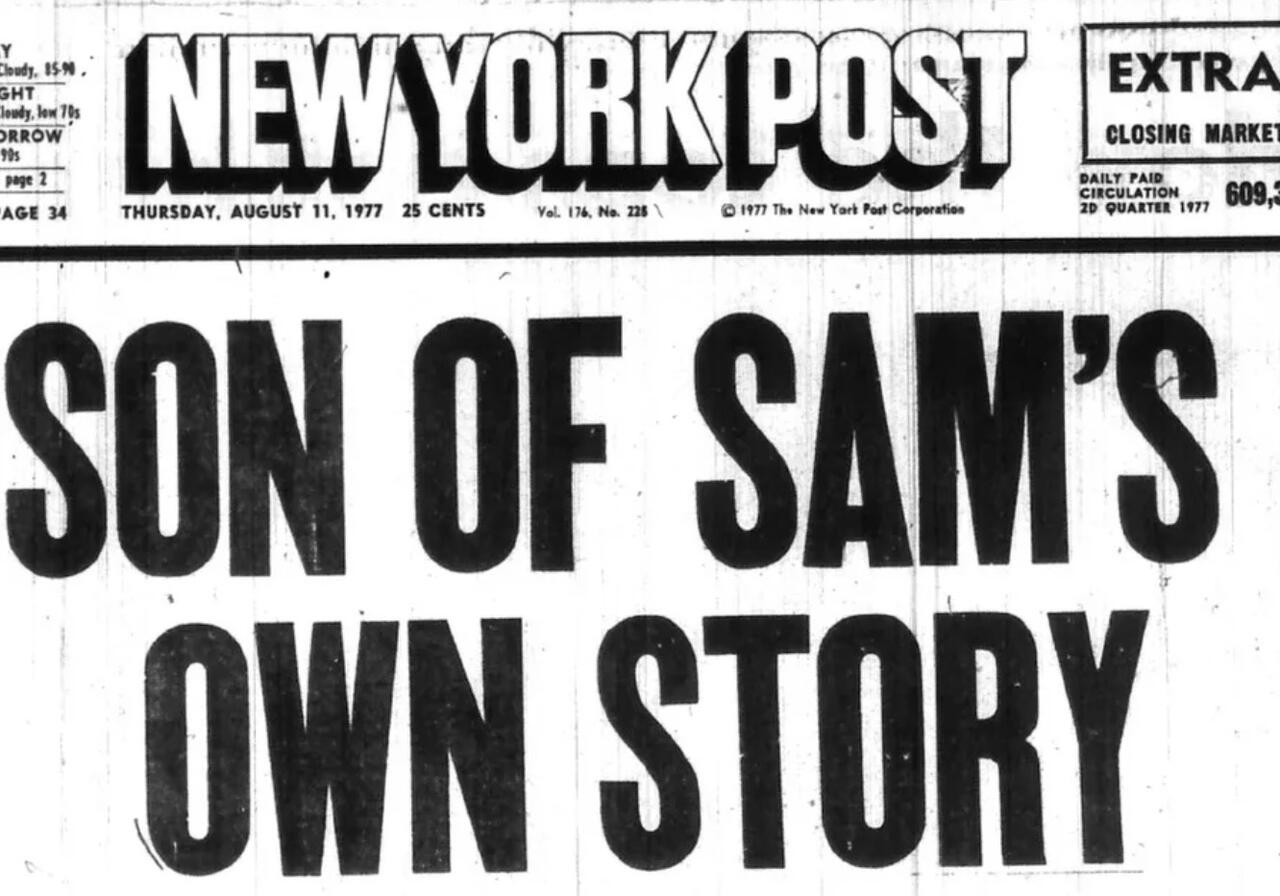
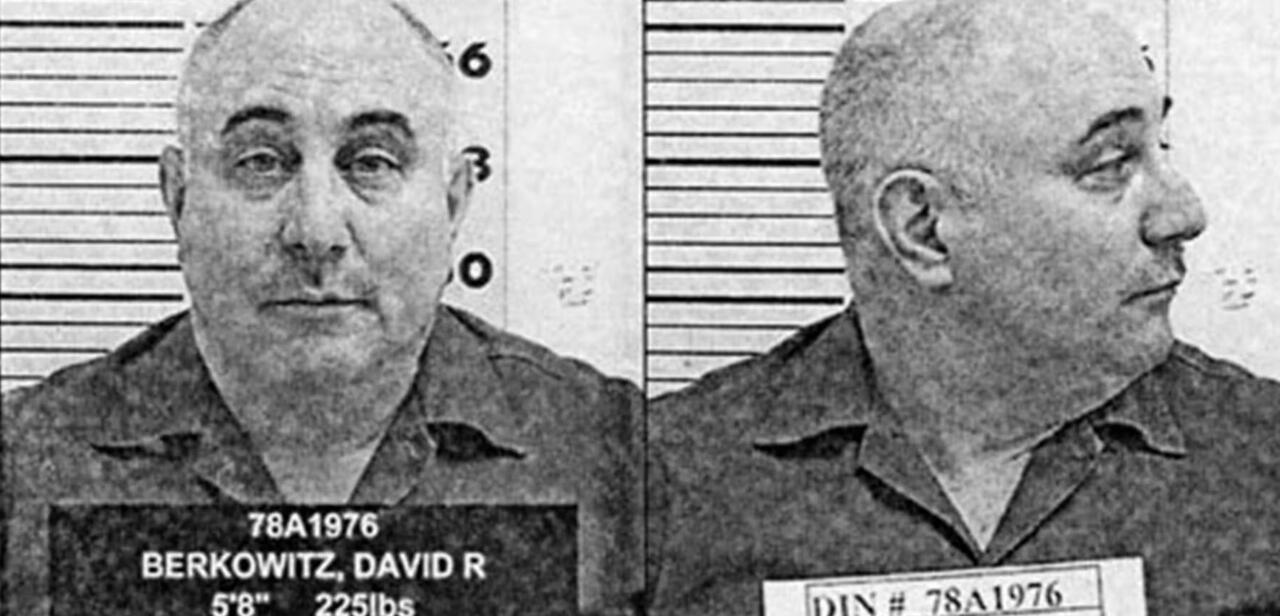
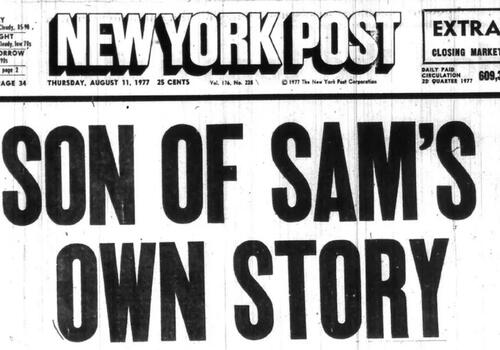
Opponents, however, say the bills could have dangerous consequences. Critics point out that inmates convicted in some of the state’s most infamous cases — including David Berkowitz and Mark David Chapman, who murdered John Lennon — could potentially become eligible for release.
Raphael Mangual of the Manhattan Institute argued that rehabilitation in prison should not erase the severity of violent crimes. “It really shouldn’t matter how well somebody behaves in prison. You should have behaved before you got there,” he said.
Victims’ families have also voiced concerns, saying repeated parole hearings force them to revisit painful tragedies. Michael Pravia, whose brother Kevin was killed in 2008, criticized lawmakers backing the legislation and warned, “They will have blood on their hands.”
Kathy Hochul has not said whether she would sign either bill if they pass. As the legislation moves forward, the fight over parole reform continues to center on two competing priorities: rehabilitation and second chances versus justice and public safety.
Supporters of the legislation maintain that the bills are being mischaracterized by opponents who are focusing on extreme examples. Yes, how dare they exaggerate about mass murder…
‘They argue that parole eligibility does not guarantee release and that every case would still go through a review process. Advocates also say New York’s prison population is aging rapidly, creating rising healthcare costs for the state while keeping behind bars people they believe no longer pose a serious threat.
Still, critics remain unconvinced and say the proposals send the wrong message to victims and their families. They argue that certain crimes are so severe that the original sentence should stand regardless of an inmate’s age or behavior in prison. With both sides digging in, the future of the bills could ultimately depend on whether lawmakers—and Kathy Hochul—view the measures as necessary reform or an unacceptable risk to public safety.
Tyler Durden
Mon, 05/04/2026 – 20:30

Elites And Their Contempt
Elites And Their Contempt
Authored by Reverend John F. Naugle via The Brownstone Institute,
Last week, I was unexpectedly hit with a post-lockdown trauma response.
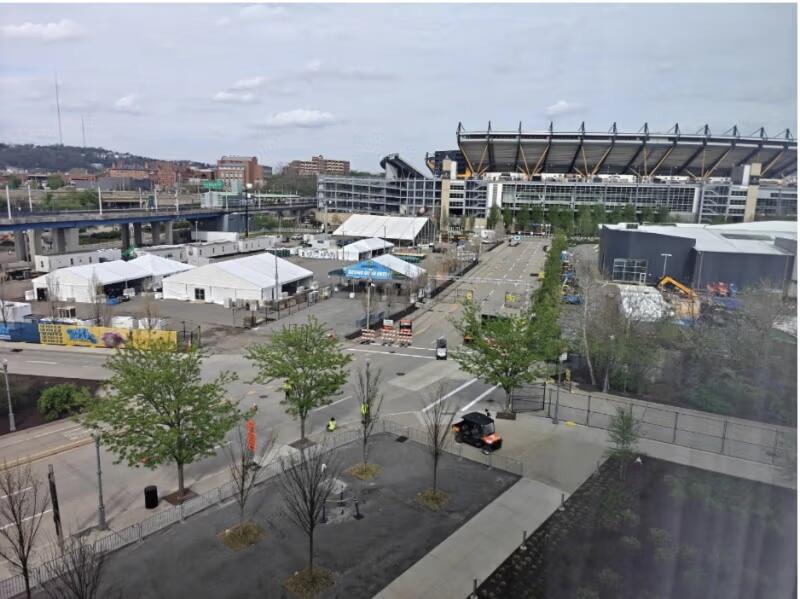
While driving to a baseball game days before the NFL Draft came to Pittsburgh, I passed a digital highway sign instructing me to avoid nonessential travel.
Suddenly, memories of empty highways with signs instructing drivers to “Stay Safe and Stay Home” came flooding back to me.
As the week developed, it began to occur to me that the parallels were deeper than my subjective emotional response.
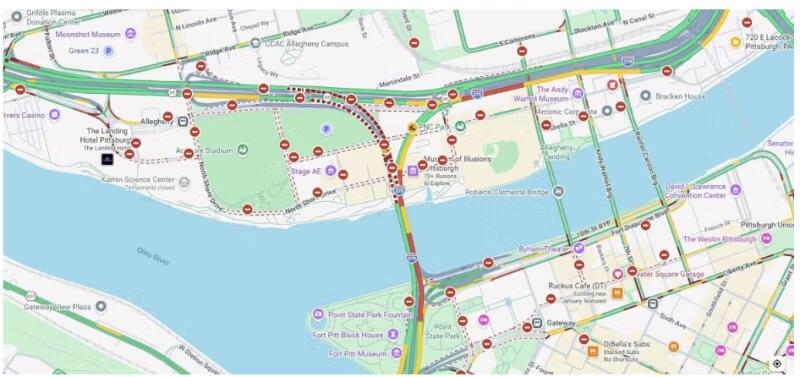
Road closures intensified, rendering my beloved city of Pittsburgh less and less functional.
Even sidewalks were closed.
Entire parking garages were emptied and abandoned.
Pittsburgh’s “most visited museum,” the Kamin Science Center, has been closed to the public for weeks because it was within the footprint of the upcoming event.
For the actual days of the draft, Pittsburgh Public Schools were shuttered as if a blizzard had rendered travel impossible.
How do I walk to PNC Park?
The attempt by local officials to trigger hysteria in the populace worked, maybe too well. People traveling to Pittsburgh for the event heeded the instructions to use the special free public transit to make their way in. Parking operators, expecting a huge windfall, saw themselves lower their exorbitant prices midday. For example, the Rivers Casino quickly abandoned their plan to charge $250 per day, lowering their rate to $100 for the first day of the draft and then abandoning charging altogether for subsequent days.
Local businesses outside the official footprint of the event were told to prepare for heavy crowds, but instead experienced a weekend worse than anything they had seen since the Covid hysteria. Those who didn’t want to go to the draft were terrified to go anywhere near the city.
In summary, children were deprived of education, small business owners were drastically harmed, public spaces which exist for the common good were shuttered, and normal life ceased for those who actually live in the City of Pittsburgh. While all of this was happening, local politicians were patting themselves on the back for how well everything was pulled off, taking pride that this draft broke attendance records for the NFL and that their plans of getting people in and out of the city were effective. It was our own personal Operation Warp Speed.
I think there’s a lesson here that applies not merely to Pittsburgh politics but also to the wider dysfunction we see in elected officials throughout what used to be Western Civilization.
Our political leaders view their own constituents with a sort of boredom or indifference. In the leadup to the draft, Pittsburgh, Allegheny County, and the Commonwealth of Pennsylvania engaged in a number of public works projects designed to improve the area in preparation for the draft.
Suddenly, our governments remembered that potholes aren’t supposed to be allowed to exist and that crime isn’t supposed to be allowed to happen. For three days, Pittsburgh had a heavily subsidized and highly functional public transit system, something that hasn’t existed the entirety of my lifetime.
Any one of these projects could have been accomplished at any time, but the actual people who live there provided insufficient motivation for our leaders. Rather, what really mattered to them was looking good in front of millionaires, soon-to-be millionaires, and the powerful elites who would gather to party the night away with Nelly, Steve Aoki, and 2 Chainz.
Road closures during the NFL Draft
Meanwhile, the elites themselves seem to view the common people with at least implicit contempt.
They desire entire blocks to be shut down for their own amusement.
The common man, including those who wait upon them, should be relegated to buses or walking so as not to encroach upon their experience. This is their party, and the city is lucky to have them there.
We live in a world where the elites view the common man as a problem to be solved and the leaders elected by the common man anxiously present themselves as lapdogs to these elites, forgetting any sense of duty or obligation to those who placed them in power.
We saw this during lockdowns, we saw this as inflation raged on, and we see it now as gas prices remain above $4.
The urgent and pressing question that faces all of us: what is the political solution in a system where elected officials conspire with elites who hold the voters themselves in contempt?
Tyler Durden
Mon, 05/04/2026 – 20:05
https://www.zerohedge.com/geopolitical/elites-and-their-contempt
Sacked Russian Minister Flees To US Amid Corruption Probe In First Of Ukraine War
Sacked Russian Minister Flees To US Amid Corruption Probe In First Of Ukraine War
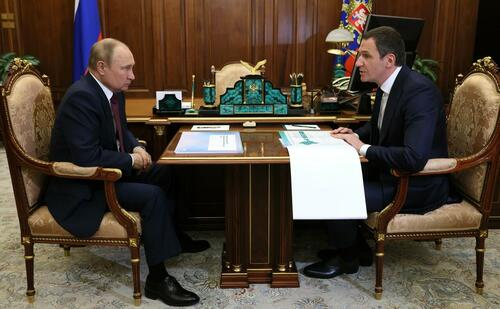
A Russian minister has become the first known high-ranking official to flee Russia and seek asylum in the United States since the Ukraine war began over four years ago, amid a fraud probe.
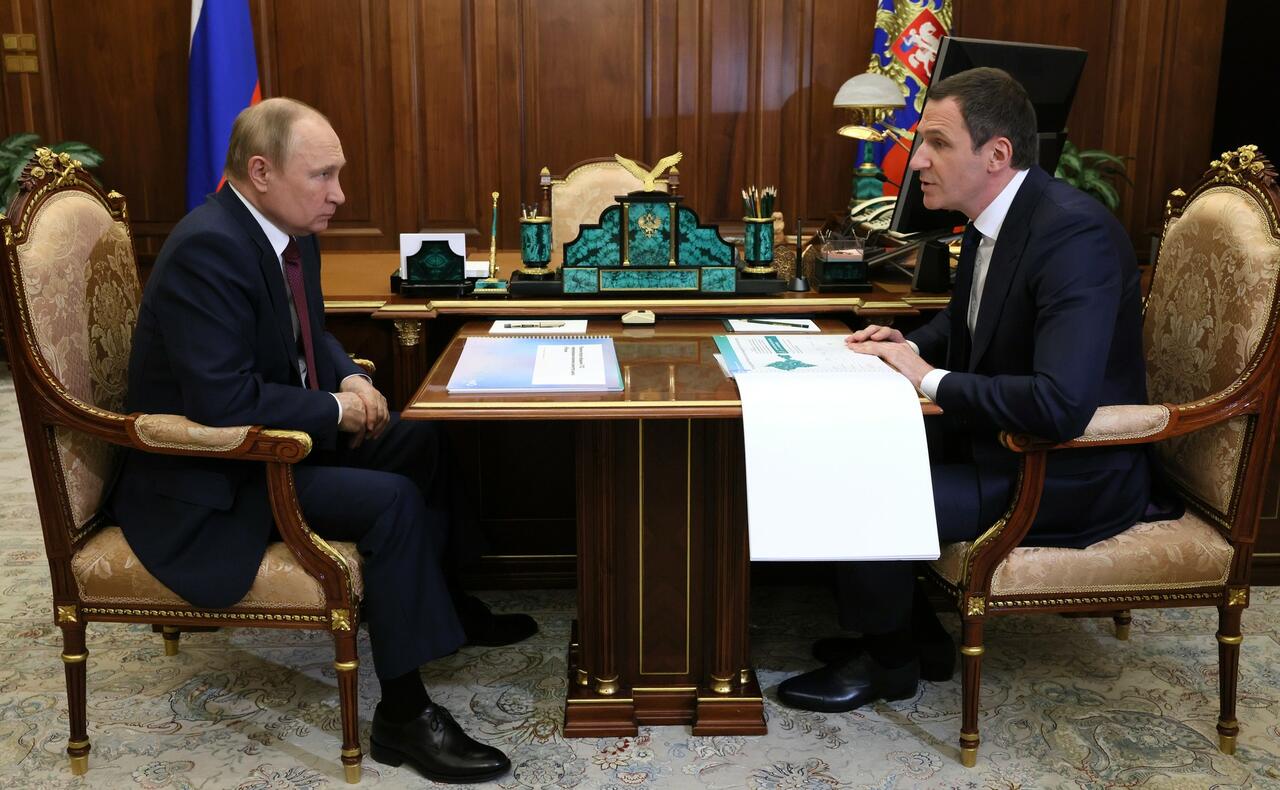
Denis Butsayev, a senior Russian official recently dismissed from the Natural Resources and Environment Ministry, fled to the US to avoid criminal prosecution, regional media reports say.
He was officially removed from his post as deputy minister on April 22 by an order of Russian Prime Minister Mikhail Mishustin. Soon after, and pending possible arrest, Butsayev left the country by traveling through neighboring Belarus.
“Butsayev’s departure is the first known case of a sitting official of this rank fleeing the country,” independent journalist Farida Rustamova wrote. Butsayev is “lucky to have friends who were able to warn him on time,” one source told the journalist.
Prior to his appointment to the Natural Resources and Environment Ministry in 2025, Butsayev served as CEO of the Russian Ecological Operator (or, Environmental Operator), a state-backed entity with charge of the country’s national waste management reforms.
Butsayev has not been formally charged, but he’s a person of interest amid an ongoing probe of other senior officials for corruption. According to more details in Meduza:
In late April, several anonymous Telegram channels reported that a criminal case had been opened against Yury Valdayev, the administrative director of Russian Ecological Operator (REO) — the operator company of the garbage reform — on fraud charges. Butsayev worked at REO from April to November 2019, was subsequently appointed first deputy governor of Belgorod Region, and returned as CEO of REO in November 2020, a post he held until moving to the Natural Resources Ministry in 2025.
Criminal cases have also been opened against two other senior REO managers, Yekaterina Stepkina and Maxim Shcherbakov, Vedomosti’s sources say, and Butsayev is mentioned in the case materials as well. In what capacity he appears there, and what the cases concern, is unclear.
According to more on Butsayev, “He does not appear on U.S., Canadian, British, or EU sanctions lists, and his current whereabouts are unknown, Faridaily reported.”
While nothing is currently known or confirmed as to his guilt or innocence in alleged fraud, regional opposition and anti-Moscow media tend to hail any such officials as heroes valiantly fleeing a Kremlin crackdown. However, this could also just be another standard corruption case in a region which has a long history of it.
Russia’s former Deputy Minister of Natural Resources, Denis Butsaev, has fled the country.
After his dismissal on April 22, he rushed to Minsk, then Tbilisi, and is now believed to be in the USA — the first known high-level official to escape amid a major corruption probe into… pic.twitter.com/aHnamwcbow
— Strategic News of Ua (@2_vatalive) May 2, 2026
The last couple years have seen a much broader Kremlin purge of top military ranks connected to the Ukraine war, but this situation seems to have stabilized of late. As for the war in Ukraine, it has seemed stalemated, with Russian forces reportedly making slow but steady gains; however, Ukraine’s drones have been able to inflict serious damage on Russian oil refineries and export facilities, especially in recent months.
Tyler Durden
Mon, 05/04/2026 – 19:40

Virtue Gone Mad: Manager Punished More Harshly Than The Shoplifter He Stopped
Virtue Gone Mad: Manager Punished More Harshly Than The Shoplifter He Stopped
Authored by Theodore Dalrymple via The Epoch Times (emphasis ours),
Commentary
Nietzsche thought that the decline of the Christian religion in Europe would inevitably lead to a social, cultural, and moral crisis. This was because a traditional morality based upon religious belief could not be upheld once the religious belief itself weakened or was abandoned.
This was not an original thought. The poet and essayist Matthew Arnold said much the same thing in a poem, “Dover Beach,” written in the 1840s but not published until 1867, before Nietzsche:
The Sea of Faith Was once, too, at the full, and round earth’s shore Lay like the folds of a bright girdle furled. But now I only hear Its melancholy, long, withdrawing roar…
This, thought Arnold, had the consequence that life would have no transcendent meaning. His answer to this problem was human love, the only solution to moral, social, and intellectual chaos:
Ah, love, let us be true To one another! for the world, which seems To lie before us like a land of dreams, So various, so beautiful, so new, Hath really neither joy, nor love, nor light, Nor certitude, nor peace, nor help for pain; And we are here as on a darkling plain Swept with confused alarms of struggle and flight, Where ignorant armies clash by night.
Nietzsche’s solution was different. He didn’t approve of the old morality anyway, of compassion for the poor, kindness to strangers, and so forth, which he thought was the means, or even the ploy, by which the weak and feeble lorded it over the strong and healthy, and subdued them to the great detriment of human creativity.
He suggested instead that strong men should take life into their own hands, submit to no authority, and decide for themselves what they should do, all in the pursuit of superior creativity and Dionysian enjoyment. The strong, not the meek, would inherit the earth, and the best would rise to the top and dominate. There should, and would, be a transvaluation—a reversal—of all previously held values.
Arnold and Nietzsche were right about the decline of religious belief and the moral and intellectual confusion it would bring about. But the change in moral values that came about was not to so much the transvaluation wished for by Nietzsche as a perversion of the former values, as famously pointed out by the write G.K. Chesterton, who was far more realistic than Nietzsche, not long after Nietzsche’s death:
“The modern world is not evil; in some ways the modern world is far too good. It is full of wild and wasted virtues. When a religious scheme is shattered…, it is not merely the vices that are let loose. The vices are, indeed, let loose, and they wander and do damage. But the virtues are let loose also; and the virtues wander more wildly, and the virtues do more terrible damage. The modern world is full of the old Christian virtues gone mad. The virtues have gone mad because they have been isolated from each other and are wandering alone. Thus some scientists care for truth; and their truth is pitiless. Thus some humanitarians only care for pity; and their pity (I am sorry to say) is often untruthful.”
The truth of this is borne out by a recent case in England. Sean Egan, the manager of a supermarket store in Walsall, England, one of a large chain, who had worked for the company for all his 29 years after leaving school, was dismissed because he was involved in a physical confrontation with a prolific shoplifter in his store.
He asked the shoplifter, who had at least 100 convictions, to leave the store, whereupon the shoplifter became abusive and aggressive, spitting at Egan, who then tried to restrain him.
The shoplifter alleged that Egan had assaulted him, and the store dismissed the employee of 29 years for not having followed company policy. There was a public outcry, a public demonstration outside the store, and many people vowed never to patronize it or any of its branches again.
The company, using the kind of managerial language in which it is almost impossible to tell a straightforward truth, put out a statement:
“We have very clear guidance, procedures and controls in place to protect our colleagues and customers from the risk of harm, which must be strictly followed. These include detailed procedures for handling shoplifting incidents, which are in place to protect both the colleague involved and surrounding colleagues and customers, and which seek to de-escalate and calmly control the situation. We will not ask colleagues to put themselves at risk. As a responsible employer, our focus is entirely on taking the correct action to ensure health and safety is maintained at all times.”
In this incident, we can see that both Nietzsche and G.K. Chesterton were partly right. A debased compassion for everyone, no doubt a derivative of Christianity, in the form of an abstract concern for health and safety above all other considerations, encouraged a vice (shoplifting) to flourish while an act of heroism and obedience to duty, at a level higher than that of mere following of procedure, was reprehended and punished.
Procedure is good as a guideline, and in some instances, though not very many in everyday life, is essential—for example, in the flying of an aircraft. But where is it is bowed down to and worshipped as if it were a jealous god, it leads to a brainless formalism, gross injustice, and an absurd situation in which a man who attempts to prevent shoplifting is punished much more severely than is the shoplifter.
The shoplifter was given a sentence of 42 weeks’ imprisonment, which, since 50 percent remission in England is automatic, means 21 weeks (and the government has recently all but abolished prison sentences of less than a year). Meanwhile, the 46-year-old manager of the supermarket has lost his job in the only company for which he has ever worked and will not easily find another—or would not have done so had there not been a public outcry.
As Nietzsche might have put it, there has been a transvaluation of all values.
Views expressed in this article are opinions of the author and do not necessarily reflect the views of The Epoch Times.
Tyler Durden
Mon, 05/04/2026 – 19:15
Hormuz Closure ‘Inflicting Enormous Impact’ On Asia: Japan’s PM Takaichi
Hormuz Closure ‘Inflicting Enormous Impact’ On Asia: Japan’s PM Takaichi
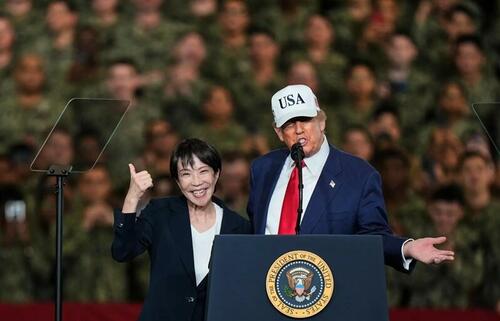
The closure of the Strait of Hormuz is “inflicting enormous impact” on the Asia-Pacific region, Japanese Prime Minister Sanae Takaichi said Monday in somewhat dramatic remarks before the press.
Takaichi’s words were issued from Canberra, on the occasion of Japan having signed agreements with Australia on critical minerals, energy security, and defense cooperation amid high-level talks with Prime Minister Anthony Albanese. Albanese in turn endorsed her assessment, stating: “Today, (we are) again facing an energy shock and global instability… Our partnership helps us secure the energy we both need.”
Takaichi also said in reference to the Strait of Hormuz, “We affirmed that Japan and Australia will closely communicate with each other in responding with a sense of urgency.”
According to more:
Australia provides approximately one-third of Japan’s energy supplies and is the country’s largest market for liquefied natural gas. Both Canberra and Tokyo have been trying to shore up energy supplies due to the Iran war.
“Like Japan, we are very concerned by disruptions to the supply of liquid fuels and refined petroleum products,“ Australian Prime Minister Anthony Albanese said.
“In a complex strategic environment, cooperation between Australia and Japan is essential to maintaining a peaceful, stable and prosperous region,” Albanese additionally said. “Enhanced defense and security cooperation between Australia and Japan increases interoperability between our defense forces, ensuring Australia and Japan can work closely together to support regional peace and security.”
Tokyo and Canberra finalized a $7 billion defense agreement just last month, and a central part of this involves Japan supplying Australia with 11 warships.
China has also suffered negative impact of its Iranian oil flows being blocked; however, Beijing is arguably in a better position to weather the storm when compared to the impact to US allies in the region.
One recent op-ed in The American Conservative argued that “While China is to some extent dependent on Gulf oil, so is the rest of Asia. While the United States might be insulated from some of the worst consequences of the Hormuz closure, the economies of our Asian allies are not.”
Japan’s PM Sanae Takaichi has told Australian reporters in Canberra that the effective closure of the Strait of Hormuz is ’inflicting an ‘enormous impact’ on Asia Pacific.
She said both countries are coordinating to alleviate the crisis. pic.twitter.com/YudZXmifOe
— Al Jazeera Breaking News (@AJENews) May 4, 2026
It continued, “Asian economies are among the most dependent on Middle Eastern oil, with South Korea receiving around 70 percent and Japan receiving a whopping 95 percent of their oil from the Middle East,” and observed that “The Council on Foreign Relations notes that in 2024, 84 percent of the oil and 83 percent of LNG shipped through Hormuz were bound for Asia.” The analysis concluded: “That is not a targeted squeeze. Instead, such a move looks to be made without much heed to Asia at all, hitting the very states Washington is supposedly positioning against Beijing.”
Tyler Durden
Mon, 05/04/2026 – 18:50
https://www.zerohedge.com/energy/hormuz-closure-inflicting-enormous-impact-asia-japans-pm-takaichi
The COVID Playbook Returns: Energy Rationing & The Politics Of Crisis Control
The COVID Playbook Returns: Energy Rationing & The Politics Of Crisis Control
Authored by Chris MacIntosh via Doug Casey’s International Man,
This recent headline from New Zealand should itself send chills down your spine…
“Government reveals details of fuel crisis rationing plan – and who will be prioritized.”
Anytime the pointy shoes get to decide who will and who will not get something, you must realise that you’re about to get royally screwed.
The uncomfortable parallels between the Convid response and the proposed fuel rationing plan cannot be ignored.
On the surface, the Fuel Response Plan looks more restrained than Covid. It’s incremental, it defers to markets in early phases, and it explicitly frames escalation as a last resort. Officials are at pains to say Phases 3 and 4 are unlikely. Then again, we saw the same BS with the Covid scam. This is deliberate positioning.
The architecture of this plan is strikingly familiar…
The Structural Parallels
Escalating powers are dressed as prudent planning.
Covid began with “two weeks to flatten the curve.” The fuel plan begins with “monitor and inform.” In both cases, the framework is designed to normalise the existence of extraordinary powers before they’re used.
Phases 3 and 4 — rationing, purchasing limits, directed distribution — are legally and politically pre-legitimised by their inclusion in a published plan. The plan doesn’t just prepare for a crisis; it prepares the public to accept an intervention they haven’t yet been asked about. Most notably there is no consultation mechanism.
This is pure top-down central planning. The illusion of democracy should be well and truly shattered. Sadly, I suspect the sheep will fall for it… again.
Ministerial discretion is the operative mechanism. The Fuel Security Ministerial Oversight Group decides when to move between phases, guided by six criteria — none of which are automatic triggers. Ministers “will consider a broad range of information” and “assess the full picture.”
This is identical to the Covid Alert Level system, where Ashley Bloomfield and Jacinda Ardern effectively held unchecked discretion over the country’s movement. The criteria provide political cover, not genuine constraint. It was a smokescreen, and so is this.
Consultation theatre. Phases 3 and 4 are labelled “under consultation” — but consultation with whom, on what timeline, with what veto power?
Covid’s “consultation” with business groups and regional authorities was largely performative. There is no reason to expect this to be different.
Where It’s Actually Worse
The priority bands are socially explosive.
Band A through E create a formal hierarchy of citizens. Very undemocratic, of course — but hey, who’s asking questions? It’s a crisis, dammit.
Emergency services and defence get uncapped supply. General retail consumers are last. This is defensible in an emergency — but it also means that in a sustained disruption, ordinary people rationing school runs and commutes are subsidising the uninterrupted operation of government and defence.
During Covid, economic pain was at least notionally shared. Here, it is explicitly stratified by decree.
“Economically important services” is wide open. Band B includes “critical transport services” and “food supply and primary production during time-critical periods.” Who defines time-critical? Who decides which freight is critical? If I’m a small guy distributing food from wholesalers to local delis, do I get priority? I highly doubt it. Nope — it’s going to be like Convid. A chosen few.
This is the same stupid bureaucratic discretion grant that, under Covid, would have been used to favour large incumbents — supermarket chains, major logistics operators — while small operators fought for scraps. Nothing in this document prevents that.
No exit criteria. The plan says measures “will be lifted as soon as conditions allow.” Covid said the same.
New Zealand maintained some of the most restrictive border policies in the developed world for nearly two years. “As soon as conditions allow” means as soon as Ministers decide conditions allow — which is no constraint at all.
Where It’s Genuinely Better
Honestly, the only thing I could find in this plan that is mildly positive is there isn’t (yet) any attempt to manufacture social solidarity through emotional appeals. I suspect that’ll change, along with the inevitable propaganda.
The Core Problem
The fundamental lesson not learned from Covid is this: emergency frameworks, once built, are hard to dismantle and easy to expand.
New Zealand’s Covid apparatus — the legislation, the enforcement culture, the public health bureaucracy’s authority — outlasted any reasonable emergency by 12–18 months, and left lasting damage to civil liberties norms, small business viability, and trust in institutions.
This fuel plan creates an analogous apparatus. The ministerial group, the priority bands, the directed distribution powers — these don’t disappear when the crisis ends. They become baseline infrastructure for the next emergency, whatever it is.
Now I want to touch on something related: the steady creep of fascism we’ve seen globally. Convid was a major push in that direction, and I see the potential ideas currently floated by the pointy shoes as yet another step into that cesspool.
The Framing Question
Most commentary will describe this plan as pragmatic emergency management. That framing should be rejected immediately.
Emergency frameworks are not politically neutral. They encode assumptions about who owns resources, who allocates them, who gets protected, and who bears the cost.
When you map the fuel plan’s architecture against economic models honestly, the result is uncomfortable.
Economic Fascism Is the Model
Economic fascism, stripped of its wartime aesthetic, is a specific and coherent system: private ownership is preserved in form, but the state directs resource allocation, sets priorities, and determines winners and losers.
The large private firm and the state apparatus become functionally indistinguishable. Property rights exist on paper while operational autonomy does not.
Let’s map that against the proposed fuel plan…
Fuel companies retain ownership of their infrastructure and stocks — but government directs who they supply, in what priority, under what conditions.
Industry “coordination” is the mechanism, meaning large incumbents with government relationships are at the table; small operators are not.
Crony capitalism is taken to a new level.
The priority bands — Band A through E — are not market outcomes. They are state-directed allocation dressed up in administrative language.
This is not a market. It is directed private enterprise — which is the operational definition of economic fascism.
The Middle Class Obliteration Mechanism
Remember Covid measures? The middle class got raped — most still don’t even know it … they just realise they’re poorer than before.
The “priority bands” tell you everything. Let’s work through them:
Band A: Government, defence, courts, corrections, hospitals. The state itself, fully protected. Surprise, surprise.
Band B: Large logistics operators, supermarket supply chains, international aviation. These are not small businesses. These are large corporates with existing government relationships. Keep in mind Air New Zealand was partly nationalised during Convid. That it has lost money every year since is no surprise and entirely ignored. I expect in this ensuing crisis we’ll see more state ownership take place. Public-private partnerships is how it’ll be sold to the peasants.
Band C: Public transport, essential infrastructure. Again, largely state-owned or state-contracted entities.
Band D: “All other commercial and business fuel uses.” This is where the small business owner, the tradesman, the independent courier, the rural contractor sits. They are fourth in line, behind the state and its preferred corporate partners.
Band E: General retail. The ordinary citizen. Last.
The middle class — small business owners, independent operators, tradespeople, rural producers outside “time-critical” periods — get what’s left after the state and its large corporate partners have filled their stomachs and wallets. This is not an accident of design. It is the design.
The Ideological Laundering
What makes this particularly effective as a system is that it operates entirely within the language of liberal democracy. There is no ostensibly visible expropriation. There is no nationalisation. Property rights are seen to be formally respected. The language is technocratic — “assessment criteria,” “ministerial oversight,” “phase transitions.”
But the functional outcome — state-directed resource allocation favouring large corporates and government entities, with the small business owner and individual citizen at the back of the queue — is indistinguishable from what you would design if you were deliberately trying to hollow out the economic middle.
The Conclusion Nobody Will Print
The fuel plan is not a fascist document. It is not even a particularly radical one by contemporary standards. That is precisely what makes it worth scrutinising carefully.
It is the latest iteration of a governance model that has been quietly consolidating for decades: the state and large capital as co-administrators of the economy, with small business and the individual citizen positioned as residual claimants on whatever resources remain after the primary beneficiaries have been served.
Call it economic fascism, corporate statism, or crony capitalism — the label matters less than the mechanism. And the mechanism is, once again, hiding in plain sight inside a document described as emergency planning.
Editor’s Note: If Chris is right, the fuel plan is not just about energy. It is another warning sign that governments are preparing to manage future crises by controlling access, rationing resources, and deciding who gets protected first. That has serious implications for your money, your freedom, and how you prepare. To better understand the economic, political, and cultural forces now colliding — and what you could do to stay one step ahead — read our special report, Clash of the Systems: Thoughts on Investing at a Unique Point in Time.
Tyler Durden
Mon, 05/04/2026 – 18:25
Japan Says It Counts Three Consecutive Days Of FX Intervention As One
Japan Says It Counts Three Consecutive Days Of FX Intervention As One
Earlier today we joked when, after the third intervention attempt by Japan’s MOF/BOJ, the yen promptly sold off again as Japanese officials continued to sink billions of dollars into what has become bottomless monetary pit (ignoring for a second the lunacy of spending dollars to strengthen your currency while at the same time printing yet), one which gets bigger every day the BOJ refuses to simply raise interest rates.
BOJ interventions working out great pic.twitter.com/qsD2f4gTnw
— zerohedge (@zerohedge) May 4, 2026
So perhaps realizing the futility of their now daily interventions, which are taking place precisely at a time that is meant to to take advantage of the low domestic FX liquidity thanks to the Golden Week holiday, a Japanese Finance Ministry official on Monday cited a rule saying that three days of intervention count as a single operation. Even if Japan is on a public holiday, intervention can still be counted if global markets are open, the Finance Ministry person said. Based on this, May 4 would be considered the third consecutive day from April 30, the official added.
Japan was referring to International Monetary Fund fine print, which considers three consecutive business days of exchange-market intervention as a single episode, the official told reporters. The comments came after the yen rose following a reported intervention on Thursday, yet fell after each of the subsequent two interventions on Friday and Monday.
Furthermore, the IMF rules state that up to three such episodes within six months is consistent with a free-floating exchange rate regime, said the official, who accompanied Finance Minister Satsuki Katayama to an international conference in Samarkand, Uzbekistan. But if Japan’s interventions exceed three such occasions, the IMF tends to classify it as a floating – rather than free-floating – exchange-rate regime.
The comments came as the yen strengthened for three straight days, fueling speculation that authorities intervened in the currency market on consecutive business days, as they did in 2024 (See “Japan’s Double Yen Intervention, As Seen Through 10 Charts From Goldman’s FX Desk“).
Japan intervened on Thursday after the yen weakened to 160.72 against the dollar, before surging to 155 and then resuming its slide. A Bloomberg analysis suggested authorities spent about $34.5 billion to support the currency on Thursday. The likely spent another $20 billion in the ensuing two interventions.
Katayama reiterated on Monday that the government stands ready to take bold action against speculative currency moves, in line with a US-Japan agreement reached last year. Such action typically refers to currency intervention to support the yen.
Tyler Durden
Mon, 05/04/2026 – 18:00
https://www.zerohedge.com/markets/japan-says-it-counts-three-consecutive-days-fx-intervention-one