Category: News

Trump amenaza con bloquear la apertura de un nuevo puente entre Detroit y Canadá
Por JOEY CAPPELLETTI y SEUNG MIN KIM
WASHINGTON (AP) — El presidente de Estados Unidos, Donald Trump, amenazó el lunes con bloquear la apertura de un nuevo puente construido por Canadá sobre el río Detroit, exigiendo que Canadá ceda al menos la mitad de la propiedad del puente y acepte otras demandas que no especificó.
“Comenzaremos las negociaciones, inmediatamente. Con todo lo que les hemos dado, deberíamos poseer, quizás, al menos la mitad de este activo”, afirmó Trump en redes sociales, quejándose de que Estados Unidos no obtendría nada del puente y que Canadá no utilizó acero estadounidense para construirlo.
Está previsto que el Puente Internacional Gordie Howe, nombrado en honor a una estrella canadiense de hockey, abra en los primeros meses de 2026, según la información en el sitio web del proyecto. El proyecto fue negociado por el exgobernador de Michigan, Rick Snyder —un republicano— y financiado por el gobierno canadiense para ayudar a aliviar la congestión sobre el ya existente Puente Ambassador y el túnel Detroit-Windsor. Las obras han estado en marcha desde 2018.
No está claro cómo Trump buscaría bloquear la apertura del puente, y la Casa Blanca no respondió por el momento a una solicitud de comentarios sobre más detalles. La embajada de Canadá en Washington tampoco respondió de momento a una solicitud de comentarios.
La relación entre Estados Unidos y Canadá se ha deteriorado cada vez más durante el segundo mandato de Trump. El acuerdo comercial entre México, Estados Unidos y Canadá está programado para revisión este año, y Trump ha adoptado una posición dura antes de esas conversaciones, incluyendo nuevas amenazas arancelarias.
Mientras tanto, el primer ministro canadiense, Mark Carney, ha hablado en el escenario mundial contra la coerción económica por parte de Estados Unidos.
La senadora demócrata Elissa Slotkin, de Michigan, dijo que el proyecto financiado por Canadá es un “gran beneficio” para su estado y el futuro económico de éste. “Podrás mover carga desde Montreal hasta Miami sin detenerte nunca en un semáforo”, comentó Slotkin a The Associated Press.
“Así que dispararse en el pie y amenazar el Puente Gordie Howe significa que este tipo ha perdido completamente la noción de lo que es bueno para nosotros”, expresó Slotkin.
Aunque Canadá pagó por el proyecto, el puente será operado bajo un acuerdo de propiedad conjunta entre Michigan y Canadá, indicó Stacey LaRouche, secretaria de prensa de la gobernadora de Michigan, Gretchen Whitmer.
“Este es el cruce comercial más concurrido en América del Norte”, señaló LaRouche, afirmando que el puente es “bueno para los trabajadores de Michigan y es bueno para la industria automotriz de Michigan”, además de ser un buen ejemplo de cooperación bipartidista e internacional.
“Se va a abrir de una forma u otra, y la gobernadora espera asistir al corte de cinta”, manifestó LaRouche.
El representante demócrata Shri Thanedar, de Detroit, dijo que bloquear el puente sería “una locura”, y afirmó que los ataques de Trump a Canadá no eran buenos para los negocios ni para el empleo. “El puente va a ayudar a la economía de Michigan. Hay tanto comercio entre Michigan y Canadá. Son uno de nuestros mayores socios”, señaló Thanedar.
La representante demócrata Debbie Dingell, de Ann Arbor, restó importancia a la amenaza del presidente, diciendo que espera con ansias la apertura del puente en las próximas semanas. “Y estaré allí”, aseveró Dingell.
“Ese puente es el cruce más grande en este país en la frontera norte. Son empleos. Se trata de proteger nuestra economía. Fue construido con empleos sindicales en ambos lados”, dijo Dingell. “Se va a abrir. Canadá es nuestro aliado.”
___
El periodista de The Associated Press Ed White contribuyó desde Detroit.
___
Esta historia fue traducida del inglés por un editor de AP con la ayuda de una herramienta de inteligencia artificial generativa.

Breaking Down California’s Insane “Super Bowl Tax”
Breaking Down California’s Insane “Super Bowl Tax”
Sam Darnold just WON the Super Bowl…and LOST $71k because it was in California
Watch as Boomer Esiason explains why the players should block any future Super Bowls in California…
🚨 ABSOLUTELY INSANE: Sam Darnold just WON the Super Bowl.. and LOST $71k because it was in California
California’s jock tax bills him $249K
Boomer Esiason: The NFLPA should shut down ANY future Super Bowls in California!
Super Bowl is in LA Next Year
— Alec Lace (@AlecLace) February 9, 2026
Here’s SchiffSovereign’s James Hickman to explain the farce…
Yesterday, the Seattle Seahawks beat the New England Patriots in Super Bowl LX at Levi’s Stadium in Santa Clara, California.
From a financial perspective, each Seahawks player will take home $178,000—payment for that particular game.
Now, given that the Superbowl was played in California—and the players earned money playing in the game— it’s reasonable for the state of California to tax that specific income.
But that’s not the way California looks at it.
Instead, the state will go back in time, all the way to the start of the NFL season in September, and take their ‘fair share’ of the players’ ENTIRE salaries over the entire season.
This is what’s known as the state’s “jock tax,” in which they tax non-resident professional athletes based on the number of “duty days” they spend in the state—traveling, practicing, attending meetings, or playing in a game.
Both teams arrived in California last Sunday, so each player will log at least eight duty days in the state just for the Super Bowl.
They then divide those California duty days over the entire season, and you end up with a percentage. If a player spends, say, 7% of his duty days in California over the season, then the state claims the right to tax 7% of his entire annual salary— at California’s top marginal rate of 13.3%!
This is pretty crazy given that the players only earned $178,000 for that game.
But in the case of Seattle quarterback Sam Darnold, he’ll end up owing Gavin Newsom roughly $249,000 in state taxes this year.
In other words, Sam Darnold will LOSE over $70,000.
I doubt anyone will shed any tears over this (including Darnold). But it’s perfectly consistent with California’s general attitude: dig into absolutely everything they can get their hands on and take as much as humanly possible.
Sam Darnold didn’t have a choice about the venue. But a growing number of people and businesses who are free to choose whether or not to remain in California are getting the hell out.
California has recorded a net loss of residents for six consecutive years— roughly 216,000 people in 2025 alone. Since 2019, more than 200 major businesses have relocated out of the state, including Oracle, Hewlett Packard Enterprise, Charles Schwab, and Chevron.
Even Hollywood is crumbling; on-location film and TV production in Los Angeles hit its lowest level since the pandemic shutdown— down 16.1% in 2025—with 42,000 entertainment jobs vanishing in just two years. Production has scattered to Georgia, the UK, Canada, and Australia, where tax incentives are far more generous. California now ranks sixth among preferred filming locations.
And California’s response is almost comically predictable. Rather than examine why people and businesses keep leaving, they propose ever more medieval measures to squeeze those who remain— or punish those who try to go.
There’s a ballot measure in the works for a “one-time” 5% wealth tax on billionaires, retroactive to January 1, 2026. Exit tax proposals have been floated to penalize wealthy residents who dare to leave.
And how does California spend all this money they confiscate?
The state budget is a nearly $500 billion—one of the largest in the country. Yet they can’t manage to make ends meet. Ever. And they squander it on some of the most insane programs.
Over the past five years, the state has poured $24 billion into homelessness programs— and a state audit found they didn’t even bother to track whether the spending reduced homelessness.
(Homelessness actually got worse.)
The state’s high-speed rail project, now more than 15 years behind schedule, has burned through $15 billion without laying a single mile of high-speed track. The latest cost estimate to complete the project has ballooned to as much as $128 billion.
Meanwhile, California is spending an estimated $9.5 billion this year alone on healthcare— for illegal immigrants through Medi-Cal.
And rather than cooperate with federal immigration enforcement, Governor Newsom and Attorney General Rob Bonta launched an online portal where Californians can report federal ICE agents for “misconduct”— essentially using tax dollars to help obstruct immigration enforcement.
Crazy that this man—Gavin Newsom—is the current front-runner for the 2028 Democratic presidential nomination. He is THE standard bearer for the political Left.
Housing is unaffordable. Crime has surged. Unemployment is above the national average. Businesses and billionaires are fleeing.
His only real policy is to confiscate as much as possible from productive people, waste it on obscene levels of misspending, and then gaslight everyone about what a spectacular job he’s doing.
Now he wants to do for the entire country what he’s done to California.
And if that happens, there will be no Texas or Florida to escape to. The jock tax mentality— reach into every pocket, stake a claim on everything, punish anyone who tries to leave—becomes national policy.
Tyler Durden
Mon, 02/09/2026 – 20:55
https://www.zerohedge.com/political/breaking-down-californias-insane-super-bowl-tax

A pesar de la derrota en el Super Bowl, los Patriots creen que pueden volver y ganar
Por KYLIE HIGHTOWER
Tal como había hecho el entrenador de los Patriots de Nueva Inglaterra, Mike Vrabel, a lo largo de la sorprendente carrera de su equipo hacia el escenario más importante de la NFL, se aseguró de ser la primera persona en ofrecer abrazos a sus jugadores al salir del campo tras la derrota del Super Bowl del domingo ante los Seahawks de Seattle.
Sí, los Patriots no lograron capturar un séptimo Trofeo Lombardi.
Pero esta temporada demostraron que tienen al entrenador, al mariscal de campo y la cultura necesaria para seguir poniendo a esta versión de la franquicia en posición de añadir otro trofeo.
“Eso es lo que te motiva”, afirmó Maye. “Eso es de lo que hablamos en el vestuario. Eso es lo que te impulsa.”
Cuando el propietario de los Patriots, Robert Kraft, se propuso corregir el rumbo tras despedir a Jerod Mayo apenas un año después de que sucedió a Bill Belichick, dijo únicamente que quería encontrar un entrenador que pudiera poner al equipo en posición de clasificar a los playoffs en poco tiempo.
Ahí entró Vrabel, quien ayudó a armar un plantel que transformó la defensa y fue capaz de proveer las jugadas necesarias alrededor del quarterback de segundo año, Drake Maye.
Eso incluyó traer de vuelta a un rostro familiar en el coordinador ofensivo Josh McDaniels para darle a Maye no solo alguien de quien pudiera aprender, sino en quien pudiera confiar.
El resultado fue una temporada regular en la que a Maye se le dio el esquema y la libertad para ser él mismo. Lo utilizó para convertirse en el pasador más eficiente de la liga, terminando segundo en la votación para el MVP.
La racha trajo de vuelta la buena voluntad con una base de fanáticos de los Patriots impaciente que se había acostumbrado a estar en la pelea al Super Bowl durante la era liderada por Tom Brady y Belichick.
Solo necesitan hacer algunos ajustes, particularmente en la línea ofensiva, tras una pobre actuación en el Super Bowl.
Pero es una tarea que los jugadores están listos para abordar para un entrenador que les ha mostrado lo que es posible nuevamente en New England.
Lo que funciona
Lo más grande con lo que Maye se queda esta temporada es la confianza. Se concentró en encontrar el equilibrio entre el pase corto y lanzar el balón profundo.
Ahora es capaz de mantener a las defensas desequilibradas y tiene a los receptores que pueden convertir rutas más cortas en grandes ganancias.
Lo que necesita ayuda
La línea ofensiva hizo algunos avances desde la temporada de novato de Maye cuando fue capturado 34 veces. Pero ese número aumentó a 47 esta temporada tras la incorporación del veterano tackle derecho Morgan Moses y el novato guardia izquierdo Jared Wilson. Y un Super Bowl donde Maye fue capturado seis veces mostró que todavía hay necesidad de mejora. Se espera que sea un enfoque esta temporada baja.
___
Deportes AP: https://apnews.com/hub/deportes

En el Ártico, la enorme amenaza climática del hollín es eclipsada por tensiones geopolíticas
Por PETER PRENGAMAN
REIKIAVIK, Islandia (AP) — A medida que el incremento de las temperaturas globales acelera el derretimiento del hielo marino en el océano Ártico, se ha desencadenado un auge de barcos que toman rutas que antes eran intransitables por estar congeladas.
El aumento del tránsito marítimo en el Ártico, que recibió mayor atención luego de que el presidente estadounidense Donald Trump presionó para que Estados Unidos se apodere de Groenlandia, ha tenido un enorme costo ambiental: el carbono negro, u hollín, que emana de los buques y acelera aún más el derretimiento del hielo. En reuniones celebradas esta semana con reguladores internacionales del transporte marítimo, varios países abogan para que los navíos utilicen combustibles más limpios que emitan menos contaminantes en ese océano.
Los glaciares, la nieve y el hielo cubiertos de hollín emitido por los barcos tienen menos capacidad para reflejar la luz solar y, por el contrario, absorben más el calor del Sol, lo que contribuye a hacer del Ártico el lugar de la Tierra que se calienta más rápido. A su vez, el derretimiento del hielo marino de dicha región puede afectar patrones climáticos en diversas partes del mundo.
“Esto deriva en un ciclo interminable de incremento en el calentamiento”, advirtió Sian Prior, asesora principal de la Clean Arctic Alliance, una coalición de organizaciones sin fines de lucro centrada en el Ártico y el transporte marítimo. “Necesitamos regular las emisiones, en particular el hollín. Ambos están completamente desregulados en el Ártico”.
En diciembre, Francia, Alemania, las Islas Salomón y Dinamarca propusieron que la Organización Marítima Internacional exigiera a los buques que navegan por aguas del Ártico que utilicen “combustibles polares”, los cuales son más ligeros y emiten menos contaminación de hollín que los combustibles marítimos de uso generalizado, conocidos como fuelóleos residuales. La propuesta incluye las medidas que las empresas deberían adoptar para cumplir y demostrar que utilizan combustibles más limpios, así como el área geográfica en la que se aplicaría: a todos los buques que naveguen al norte del paralelo 60. Se prevé que la propuesta sea presentada esta semana al Comité de Prevención y Respuesta a la Contaminación de la OMI, y posiblemente a otro comité en abril.
La prohibición del uso en el Ártico de un tipo de fuelóleo residual conocido como fuelóleo pesado —en vigor a partir de 2024— ha tenido un impacto modesto hasta la fecha, en parte debido a lagunas legales.
La geopolítica eclipsa las preocupaciones
El impulso para reducir el hollín, cuyo impacto en el calentamiento global es 1.600 veces mayor que el del dióxido de carbono en un período de 20 años, según estudios, ocurre en un momento de conflicto de intereses, tanto a nivel internacional como entre los países con costas en el Ártico.
En los últimos meses, los comentarios periódicos de Trump sobre la necesidad de “poseer” Groenlandia para reforzar la seguridad de Estados Unidos han desatado cuestionamientos sobre diversos temas, desde la soberanía de esa isla enorme hasta el futuro de la OTAN. Mientras tanto, la contaminación y otros problemas ambientales en el Ártico han quedado relegados a un segundo plano.
Trump, quien ha calificado el cambio climático como “un engaño”, también se ha opuesto a las políticas globales destinadas a combatirlo. El año pasado, se tenía previsto que la OMI adoptara nuevas regulaciones que habrían impuesto tasas de carbono al transporte marítimo, lo que, según sus partidarios, habría impulsado a las empresas a utilizar combustibles más limpios y electrificar sus flotas de ser posible. Entonces Trump intervino y presionó firmemente para que las naciones votaran en contra. La medida se pospuso un año, y sus perspectivas, en el mejor de los casos, son inciertas. Por ello, es difícil que la OMI avance rápidamente en la propuesta actual para limitar el hollín en el Ártico.
Incluso en las naciones limítrofes con ese océano —que son las más afectadas por el carbono negro y otros tipos de contaminación procedente del transporte marítimo— existen tensiones internas en torno a estas regulaciones. Islandia es un buen ejemplo. Si bien el país es un líder mundial en tecnologías verdes como la captura de carbono y el uso de energía térmica para la calefacción, los ambientalistas dicen que ha avanzado menos en la regulación de la contaminación en sus mares. Esto se debe a que su industria pesquera, una de las más importantes de la nación, tiene una influencia enorme.
“La industria está feliz con las ganancias, descontenta con los impuestos, y no se involucra en temas como el clima ni la biodiversidad”, expresó Arni Finnsson, presidente de la junta directiva de la Asociación Islandesa para la Conservación de la Naturaleza.
Finnsson reportó que los costos de utilizar combustibles más limpios o electrificar las flotas también han generado resistencia.
“Creo que el gobierno está despertando, pero aún tienen que esperar a que la industria (pesquera) diga que sí”, agregó.
El país no se ha pronunciado en torno a la propuesta pendiente sobre los combustibles polares. En un comunicado, el Ministerio de Medio Ambiente, Energía y Clima de Islandia expresó que la propuesta era “positiva en cuanto a su propósito y contenido básico”, pero que se requerían más estudios. El comunicado añadió que Islandia respalda medidas más enérgicas para contrarrestar las emisiones del transporte marítimo y reducir el hollín.
Aumentan en el Ártico el tráfico marítimo y las emisiones de hollín
La contaminación por hollín se ha incrementado en el Ártico a medida que buques de carga, barcos pesqueros e incluso algunos cruceros navegan con mayor frecuencia por las aguas que conectan las zonas más septentrionales de Islandia, Groenlandia, Canadá, Rusia, Noruega, Finlandia, Suecia y Estados Unidos.
Entre 2013 y 2023, la cantidad de barcos que entraron en aguas al norte del paralelo 60 aumentó 37%, según el Consejo Ártico, un foro intergubernamental compuesto por los ocho países limítrofes con ese océano. En ese mismo período, la distancia total recorrida por buques allí se incrementó 111%.
Las emisiones de hollín también han aumentado. En 2019, se emitieron 2.696 toneladas de carbono negro desde barcos al norte del paralelo 60, en comparación con las 3.310 toneladas de 2024, según un estudio de Energy and Environmental Research Associates, una empresa de consultoría para desarrollar soluciones a retos donde confluyen el uso de la energía y el medio ambiente. El estudio concluyó que los barcos pesqueros eran la mayor fuente de hollín.
Encontró también que la prohibición del fuelóleo pesado, de 2024, sólo resultaría en una pequeña reducción del carbono negro. Las excepciones y exenciones permiten que algunos buques continúen utilizándolo hasta 2029.
Grupos ambientalistas y los países interesados consideran que regular el combustible para buques es la única manera realista de reducir el hollín. Esto se debe a que lograr que las naciones acuerden limitar el tráfico probablemente sea imposible, ya que el atractivo de la pesca, la extracción de recursos y la reducción en las distancias de navegación es demasiado grande. Los barcos pueden ahorrar días en algunos viajes entre Asia y Europa si cruzan por el Ártico.
No obstante, la llamada “ruta marítima del Norte” sólo es transitable unos cuantos meses al año, e incluso entonces los barcos deben ir acompañados de rompehielos. Esos peligros, sumados a la preocupación por la contaminación del Ártico, han motivado a algunas empresas a comprometerse a mantenerse alejadas de ese océano, al menos por ahora.
“El debate en torno al Ártico se está intensificando, y el transporte marítimo comercial forma parte de esa discusión”, escribió Søren Toft —director general de la Mediterranean Shipping Company, la empresa de transporte de contenedores más grande del mundo— en una publicación en LinkedIn el mes pasado. “Nuestra postura en MSC es clara. No utilizamos ni utilizaremos la ruta marítima del Norte”.
——-
La cobertura climática y ambiental de The Associated Press recibe el apoyo económico de varias fundaciones privadas. La AP es la única responsable de todo el contenido. Consulte los estándares de la AP para trabajar con organizaciones filantrópicas, una lista de patrocinadores y las áreas de cobertura financiadas en AP.org.
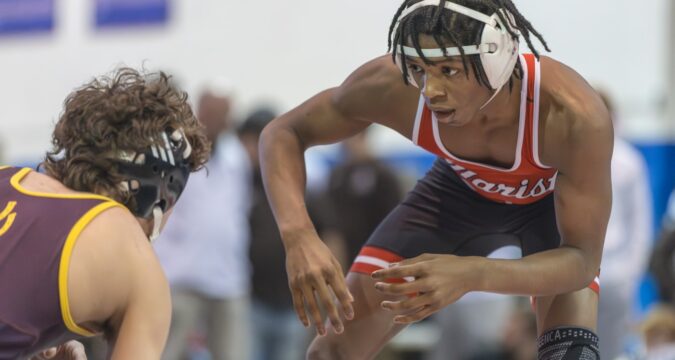
In weight class dominated by upperclassmen, freshman Te’Jon Beals makes move for Marist. ‘Took off from there.’
Marist’s Te’Jon Beals doesn’t let the glare of the spotlight ever catch him off balance.
The 132-pound freshman wrestler has an even-keel disposition which combines with a wherewithal to realize that his early accomplishments have put him well ahead of schedule.
“I’m more happy than anything,” Beals said. “I’ve achieved more than I thought I would. I’m not really surprised by what I’ve done so far. Making it this far as a freshman means a lot.
“Most freshmen don’t get the chance to wrestle at sectionals, and it’s very special.”
Beals earned that opportunity on Jan. 31, defeating Brother Rice junior James Lotito by a 10-5 decision in the 132-pound championship match of Class 3A Marist Regional in Chicago.
Now, the next test in his bid for state begins Friday at the Hinsdale Central Sectional. He’s one of 11 individuals who won a regional title for the RedHawks, who boast a sectional-best 13 qualifiers.
Marist’s Te’Jon Beals takes a step back against Montini’s Mikey Malizzio during the 132-pound match in the Class 3A Marmion Dual Team Sectional in Aurora on Thursday, Feb. 4, 2026. (Troy Stolt / The Beacon-News)
“He’s very talented, disciplined and driven and works hard on top of that,” Marist coach Brendan Heffernan said of Beals. “He was prepared walking through the door. He had a ton of wrestling experience and some great coaching.
“It wasn’t always easy for him. He lost his first wrestle-off and had several other difficult challenge matches against teammates to earn that starting spot.”
Freshman Axel Rodriguez, his training partner, is ranked No. 5 at 138 and also won a regional title. The two have a natural connection shaped by rigorous daily practice sessions.
“The bond we have is only explained as we’re brothers from different mothers,” Rodriguez said. “He wants to exceed all expectations no matter what it takes.
Marist’s Te’Jon Beals, right, gets a grip on Montini’s Mikey Malizzio during the 132-pound match in the Class 3A Marmion Dual Team Sectional in Aurora on Thursday, Feb. 4, 2026. (Troy Stolt / The Beacon-News)
“Having him in the room adds a great amount of talent, resilience and overall toughness.”
Beals (29-13) is ranked No. 10 in Class 3A at 132 by the Illinois Wrestling Coaches and Officials Association. He’s wiry and long and has learned how to create offense by using his quickness and athleticism.
“My focus is being offensive and aggressive — taking shots and staying on the attack,” Beals said. “At the same time, you have to stay controlled.
“One small mistake can cost you a match, so you can’t get out of your head or lose focus.”
Marist’s Te’Jon Beals, right, works against against Montini’s Mikey Malizzio during the 132-pound match in the Class 3A Marmion Dual Team Sectional in Aurora on Thursday, Feb. 4, 2026. (Troy Stolt / The Beacon-News)
Beals, who also played cornerback for Marist on the freshman football team, plans on running track in the spring. His introduction to wrestling began almost by chance during youth football.
“I was probably 6 years old playing Pop Warner,” Beals said. “One of my teammates said that I was really good at tackling. He was also a wrestler and he encouraged me to try.
“It just took off from there. People have always told me that I could go really far in the sport. I decided to lock in and see how far I could take it.”
While Beals’ weight class has been typically dominated by upperclassmen wrestlers, he’s made enough progress to measure his growth and development.
Marist’s Te’Jon Beals, left, wrestles against Montini’s Mikey Malizzio during the 132-pound match in the Class 3A Marmion Dual Team Sectional in Aurora on Thursday, Feb. 4, 2026. (Troy Stolt / The Beacon-News)
At last Thursday’s Marmion Dual Team Sectional, Beals lost a highly competitive 4-0 showdown to Montini junior Mikey Malizzio. In their previous match, Beals lost by technical fall.
“The first time I wrestled him, I knew he was highly ranked and it felt that way,” Beals said. “But this time, I feel like I could beat him.
“The biggest thing for me is believing in myself — knowing I can compete wrestling alongside juniors and seniors.”
For Beals, who’s quiet and inward by nature, the sport has opened a new world.
“I’m usually kind of shy, but in high school I’m trying to step out of my shell and engage more,” he said. “I just keep reminding myself to stay confident, stay calm and believe in myself.”
Patrick Z. McGavin is a freelance reporter for the Daily Southtown.
https://www.chicagotribune.com/2026/02/09/tejon-beals-marist-boys-wrestling/
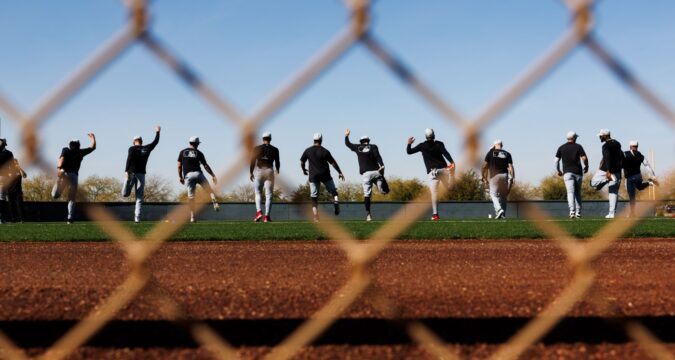
Catching, starting pitching and center field are 3 spots to watch as Chicago White Sox spring training begins
GLENDALE, Ariz. — Chicago White Sox general manager Chris Getz is looking forward to a number of things as pitchers and catchers arrive for the first spring workout on Tuesday.
That list includes watching the continued development of reliever Grant Taylor, seeing what Year 2 looks like for Shane Smith and Mike Vasil, and the type of progress prospects Hagen Smith and Noah Schultz have made ahead of camp.
“We feel really good about the direction we’re headed,” Getz said Monday at Camelback Ranch. “And to get everyone in this building right now, working towards what we want to accomplish here in the future, is really valuable, and rewarding, and exciting for the next steps for the Chicago White Sox.”
Getz said manager Will Venable is focused on starting from zero as the buildup begins toward opening day.
“We feel really good about where we’re at, the room is excited, they’re hungry,” Getz said. “But we’ve got to go out and play good baseball and that’s why we’re out here at spring training, to really set the stage for that.”
With the start of spring training, here are three positions to watch.
Catcher
Chicago White Sox catcher Kyle Teel runs to first base on a run-scoring single in the sixth inning of a game against the Kansas City Royals at Rate Field in Chicago on Aug. 26, 2025. (Chris Sweda/Chicago Tribune)
Edgar Quero made a team-leading 66 starts behind the plate last season after being called up from Triple-A Charlotte on April 17.
Kyle Teel wasn’t far behind, making 57 starts after joining the Sox from Charlotte on June 6.
Finding the right balance is crucial as the players continue their development.
Quero and Teel did appear in the same lineup more often later in the season, with one catching and the other serving as the designated hitter, particularly after the Sox recalled Korey Lee from Charlotte to give the team another catching option off the bench.
“The catching position is very demanding, physically, mentally, everything that goes into it,” Getz said. “To be able to have different options to keep our guys productive and healthy throughout the season is really important. When you’re talking about those three catchers, these are guys that complement each other.
“Obviously, more playing time, more reps behind the plate and at-bats is beneficial, but most importantly you want to keep these guys healthy and productive. So to have different options is a good thing.”
The Sox will be without Teel for a portion of spring training when he participates with Team Italy for the World Baseball Classic.
“You come out to spring training, these guys are going to be able to get a lot of different work in,” Getz said. “You’ve got games in the backfield, you’ve got split-squads. So we’ll be able to balance the attack so everyone feels like they’re ready to go come opening day.”
Starting pitching
Chicago White Sox pitcher Shane Smith, center, smiles as he speaks with young fans during the SoxFest Kids Camp Saturday, Jan. 31, 2026, at the ComEd Recreation Center at Addams Park in Chicago. (Josh Boland/Chicago Tribune)
Smith was one of the standouts last spring, earning a spot in the rotation. He carried the strong spring over to the regular season, later receiving a nod for the All-Star Game.
Smith aims to build upon his rookie season as part of a rotation that will have at least one new member. Davis Martin returns while Sean Burke and Jonathan Cannon look to build consistency after some ups and downs in 2025.
Anthony Kay joins the mix after signing a two-year deal in the offseason. The lefty spent the last two seasons pitching in Japan. Left-handers Sean Newcomb and Chris Murphy are also possibilities. The Sox signed Newcomb to a one-year deal in December and acquired Murphy in a trade with the Boston Red Sox in November.
The White Sox and Red Sox swung another trade on Feb. 1, bringing pitchers Jordan Hicks and David Sandlin to Chicago.
And then there are pitchers working their way back from injuries, such as Drew Thorpe, and prospects aiming to eventually take the next step in Schultz, Smith and Tanner McDougal.
“We feel that we’ve been able to bring in a fair amount of depth — whether it be guys that are coming back here, some outside additions through trade, some free agents,” Getz said. “We know navigating a full season takes a lot of pitching, starting pitching and relievers. We’ve got some versatility in there.
“We’re always going to look for opportunities to add. We’ve got a young group of pitchers that, it’s a heavy load to get through a full season. It gives us a little bit more flexibility when you’ve got some arms that come into an organization that have done it before.”
The Sox continued working on their pitching depth Monday, as a source confirmed reports that the team signed Erick Fedde to a one-year deal — physical pending.
Center field
New York Mets’ Luisangel Acuña bats against the Toronto Blue Jays during the home opener at Citi Field on April 4, 2025. (Elsa/Getty Images)
Getz sees plenty of potential in Luisangel Acuña.
“He can play all over the diamond,” Getz said. “He’s a strong defender, baserunner, switch-hitter. He can do a lot of different things to help you win.”
Acuña will be an option for center field after being acquired by the Sox in the January trade that sent their previous center fielder, Luis Robert Jr., to the New York Mets.
“He’s going to play a fair amount of center field out here,” Getz said. “But we are not closing the door on the infield, either (having made starts at second, third and shortstop in the majors).
“He’s a guy that happens to have the ability to play everywhere, so he certainly is a guy to keep an eye on.”
https://www.chicagotribune.com/2026/02/09/chicago-white-sox-position-battles-spring-training/

Downward Bitch: Irate Yoga Wokes Demand ‘Complicit’ Instructors Condemn ICE
Downward Bitch: Irate Yoga Wokes Demand ‘Complicit’ Instructors Condemn ICE
A Sunday yoga class at Minneapolis CorePower Yoga studio turned into an unscripted protest earlier this month, as a group of enraged customers berated front-desk staff for not condemning federal immigration enforcement, prompting the Denver-based chain to ban one regular and agree to post anti-ICE signage in its studios.
Caught on camera and subsequently gone viral, the confrontation unfolded inside the CorePower studio lobby after a class let out. The video, posted by regular yogi Heather Anderson, 51, shows more than a dozen spandex-clad patrons “spontaneously” demanding answers from two visibly uncomfortable staffers over the company’s stance on Immigration and Customs Enforcement (ICE).
“Why are you being silent? Let’s hear it – loud and proud, baby!” Anderson demands, as she films a blonde staffer identified only as “Delaney,” amid approving snaps and cheers from the crowd.
Anderson repeatedly presses the staffer for a corporate position on ICE, dismissing the employee’s attempt to “take a pause” as unacceptable. When a second employee tries to speak, the group grows louder, with one student accusing the company of being “complicit” in violent federal immigration actions.
This is the raw video of the incident in a CorePower yoga location in Minneapolis, women members throwing a tantrum bc corporate would not denounce ICE. We have a program with white women in this country. The indoctrination and programming runs deep. Note they even snap fingers… pic.twitter.com/yop5I1BzAh
— Richard Parker of The Raven’s Call (@astheravencalls) February 6, 2026
“You’re not being berated – you’re being asked hard questions,” Anderson snaps, before demanding the return of an anti-ICE sign she says was taken down from the studio’s front door.
Throughout the nearly six-minute clip, Lionel Richie’s “All Night Long” blares in the background as the crowd continues its vocal denunciations of the staff, who appear unsure how to respond. At one point, a woman in the group declares, “People are being murdered and abducted and attacked here — this is our community and this is bulls-t!”
The routine protest-cum-yoga-studio takedown gained traction after Anderson said patrons caught wind of rumors that corporate had ordered the removal of previously displayed anti-ICE signage. “Every single business in Minneapolis has something on their door right now — it’s not like we were asking for something out of the loop,” she told The Post.
In the aftermath, CorePower issued a series of Instagram Stories saying the company did not support the “violent ICE raids happening in Minneapolis” and that it had distributed approved signage to its studios. Anderson, however, was banned from the location after the incident.
Despite the ban, Anderson stood by her actions. “What I said in that video landed,” she insisted, adding that when one side refuses to engage constructively, activists are forced into a “self-preservation stance.”
Tyler Durden
Mon, 02/09/2026 – 20:30
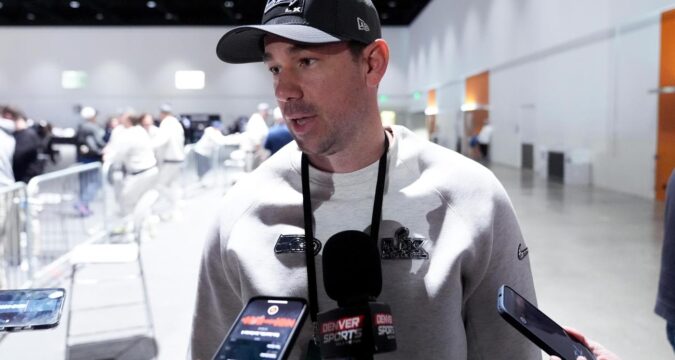
Raiders contratan oficialmente a Klint Kubiak como entrenador tras su victoria en el Super Bowl
Por MARK ANDERSON
HENDERSON, Nevada, EE.UU. (AP) — Los Raiders de Las Vegas oficializaron el lunes que el coordinador ofensivo de los Seahawks de Seattle, Klint Kubiak, será su próximo entrenador en jefe.
Kubiak llegó a Las Vegas el lunes, recién salido de una victoria en el Super Bowl del domingo por 29-13 sobre los Patriots de Nueva Inglaterra.
Entre las preguntas que enfrenta Kubiak al asumir el cargo:
— ¿A quién contratará como sus coordinadores en ofensiva y defensa?
Si Kubiak trae entrenadores con él desde Seattle, podría considerar al entrenador de quarterbacks Andrew Janocko para coordinador ofensivo y a Aden Durde en el lado defensivo. Obviamente, sería un ascenso para Janocko, aunque Kubiak podría ser quien llame las jugadas. Durde es el coordinador defensivo de los Seahawks, pero tendría la oportunidad de tener control total de la defensa, a diferencia de Seattle, donde el entrenador Mike Macdonald llama las jugadas en ese lado del balón.
— ¿Qué hacer con el ala defensiva Maxx Crosby?
Dos reporteros de la NFL han dicho que la estrella de los Raiders quiere irse. No estaba contento de que lo colocaran en la reserva de lesionados con dos juegos restantes la temporada pasada y podría no tener el apetito para otro intento de reconstrucción. Crosby dijo en “The Herd with Colin Cowherd” que no había hablado de eso, pero tampoco negó que quisiera salir.
Los Raiders podrían obtener una gran cantidad al intercambiar al Crosby de 28 años e incluso acelerar la reconstrucción.
— ¿Cómo se preparará para la agencia libre y el draft?
Las Vegas tiene la selección número uno y más de 91 millones de dólares en espacio salarial, según overthecap.com, por lo que los Raiders tienen la oportunidad de mejorar significativamente su plantilla. Es casi seguro que usarán esa selección para elegir a Fernando Mendoza, quien ganó el Trofeo Heisman y llevó a Indiana al campeonato nacional.
Pero los Raiders necesitarán rodear a Mendoza con mucho más talento del que actualmente tienen en la plantilla. Sus principales prioridades probablemente serán mejorar la línea ofensiva y encontrar su principal receptor. La defensa no tiene una debilidad evidente, pero puede necesitar ayuda en todo ese lado del balón.
Kubiak, de 38 años, confirmó durante una entrevista en el campo con NFL Network después de que los Seahawks ganaron el Super Bowl el domingo que se dirigía a Las Vegas. No es que fuera una sorpresa.
Kubiak y los Raiders comenzaron a trabajar para finalizar un acuerdo hace más de una semana, dijo una persona con conocimiento de las discusiones en ese momento. La persona habló con The Associated Press bajo condición de anonimato porque no había un contrato en vigor y no se podía hacer un anuncio hasta después del Super Bowl en Santa Clara, California.
Será el tercer entrenador en tres temporadas para los Raiders y el quinto líder a tiempo completo desde que se mudaron a Las Vegas en 2020. Reemplaza a Pete Carroll, quien tuvo un récord de 3-14 en una temporada en Las Vegas después de una carrera histórica con Seattle que incluyó dos apariciones en el Super Bowl y un campeonato.
___
Deportes en español AP: https://apnews.com/hub/deportes

Gun Owner Denied Firearm By ATF For Claiming “God Given Rights”
Gun Owner Denied Firearm By ATF For Claiming “God Given Rights”
Via Gun Owners of America,
A member of Gun Owners of America was recently denied a firearm by the Bureau of Alcohol, Tobacco, Firearms and Explosives (ATF) for writing “exercise my God given right” as their reason for manufacturing the firearm.
Our member wasn’t doing anything illegal; they were not attempting to manufacture something that was banned in their state of residence. They weren’t building anything that is banned federally, and they were complying with all regulations set forth by ATF during the registration process.
Even though no statute or regulation requires it, ATF’s Form 1, Box 4(i) demands that gun owners “specify why you intend to make [a] firearm.”
This GOA member wrote:
As a law-abiding US citizen with no criminal record, you don’t need a reason to purchase or manufacture a firearm. That’s what the Second Amendment is for. Yet ATF denied our member’s application for this exact reason.
Of course, ATF always forgets the “shall not be infringed” part.
As you can clearly see, our member’s Second Amendment rights were denied by bureaucrats because of an “insufficient reason.”
How is the desire to exercise one’s God-given rights an insufficient justification to exercise one’s God-given rights?
This is yet another clear reason why the ATF needs to be defunded and abolished entirely. The Second Amendment guarantees the exercise of our God given right to keep and bear arms.
Stating otherwise is a complete tyrannical falsehood.
That’s why we at Gun Owners of America just filed a notice of supplemental authority in our One Big Beautiful Lawsuit, using this as an example of government weaponizing the NFA against law abiding gun owners.
In our filing, we dismantle the government’s assertions that the National Firearms Act creates only a “modest burden” on the Second Amendment and that the NFA’s registration requirements are comparable to a “shall-issue” permitting system in pro-gun states.
ATF’s blatant denial of our member’s Second Amendment rights shatters this narrative completely.
Instead, the government treats the NFA’s registration requirements as a “may-issue” system – a subjective determination on who is allowed to own these firearms by government employees.
These “may-issue” systems were explicitly declared to be unconstitutional by the Supreme Court thanks to the Bruen decision. We think SCOTUS should rule the same here and abolish the NFA’s registration requirements forever.
We just reported this misbehavior by @ATFHQ to Judge Hendrix in our $0 NFA lawsuit.
These tyrants can’t claim that the “Second Amendment protects… suppressors” and that the NFA is a “shall issue regime” & then arbitrarily deny the right to make a suppressor. https://t.co/JPVUJxa6vn pic.twitter.com/qU5PuSJi3p
— Gun Owners Foundation (@GunFoundation) February 9, 2026
We’re glad to be fighting on behalf of our member, because nobody should be denied for exercising their Second Amendment rights by the tyrannical bureaucrats at ATF.
If you aren’t already, please consider becoming a GOA member, so that we can fight on your behalf if the ATF attempts to deny your Second Amendment rights.
Tyler Durden
Mon, 02/09/2026 – 20:05
https://www.zerohedge.com/political/gun-owner-denied-firearm-atf-claiming-god-given-rights
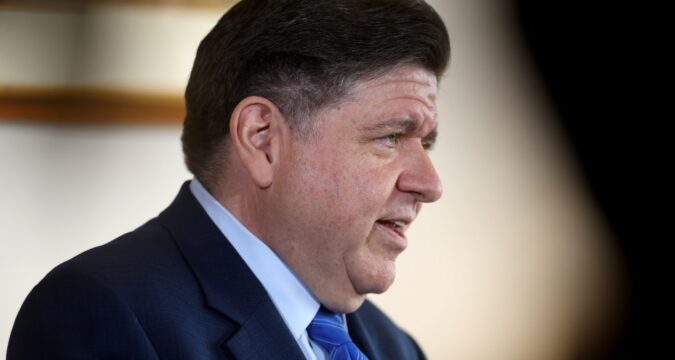
Gov. JB Pritzker talked Bears with NFL commissioner, says progress is being made to keep team in Illinois
While Indiana officials play up their efforts to lure the Chicago Bears across the border for a new stadium, Gov. JB Pritzker said Monday that he and his staff have made “progress” to incentivize the football team to stay in Illinois.
The governor’s comments come as Pritzker’s January calendar shows he had two scheduled conversations with NFL Commissioner Roger Goodell while Goodell was in Chicago for the Bears-Packers playoff game on Jan. 10.
During his time here for the game, Goodell joined Bears President and CEO Kevin Warren and Chair George McCaskey on a tour of the Arlington Heights site the team owns, and sites in northwest Indiana, including one near Wolf Lake in Hammond.
The first conversation between the governor and Goodell was a scheduled half-hour phone call on Jan. 9, while the second was a half-hour discussion between the two on Jan. 12, according to the governor’s calendar entries. The governor’s office on Monday declined to comment on how the conversations went or what was said.
But the scheduled talks underscore that efforts surrounding the Bears stadium have not gone dormant, even though the team said in December it was exploring a move to northwest Indiana after negotiations with Pritzker and his Democratic allies in the Illinois General Assembly hit a lull.
The key sticking points in Illinois have been over how the state would legislatively or financially aid the team in its desire to build a stadium in Chicago’s northwest suburbs. In particular, topics have evolved around assistance for infrastructure around a proposed Arlington Heights stadium, property tax certainty for the team and payment of debt for the Soldier Field renovations done more than 20 years ago at the team’s behest.
Sources familiar with the discussions between the Bears and state of Illinois officials said both sides have been meeting regularly since early December to hammer out legislation for this spring’s legislative session in Springfield. The talks have been in line with public infrastructure improvements for or around the Bears stadium site in Arlington Heights and so-called megaprojects legislation that would make it easier for the Bears to negotiate with local governments over property taxes, sources said. In addition, the governor’s office has sought for the Bears to implement measures to make games more affordable, the sources said.
Since the Bears’ December announcement that opened the door to a stadium across the border, Indiana Republican Gov. Mike Braun has said his administration was “working hard” to attract the Bears and has pushed a bill to establish a state authority to “acquire, construct, equip, own, lease, and finance” a sports stadium.
But on Monday, Pritzker, during an unrelated news conference in southwest Illinois, cast an optimistic tone when he described Illinois officials’ relationship with the Bears these days.
“There’s a lot of discussion, a lot of ongoing conversation with the Bears, and indeed, frankly, progress that’s been made. So I’m pleased about that,” he said in Belleville, where he and other lawmakers talked about a bond program meant to spur economic development in Illinois communities. “But I’m going to let the Bears talk about what it is that they want to get done and how they want to get it done. And I’m obviously involved in negotiations and so are my entire team, as well as the members of the legislature.”
The Tribune reported that in late December, Pritzker’s office signed a new $25,000 contract with an outside attorney to continue advising the administration in negotiations with the Bears through the end of June.
Pritzker on Monday also reiterated his position on the Bears’ quest for state incentives that he does not want taxpayer money paying for the stadium itself but would be willing to use state money to help the team with infrastructure funding, which generally includes improvements to roads and other transportation-related initiatives.
“We are helping businesses build infrastructure, for example, which they would need, and other things that are sort of available, again, to any business that is growing or building something new in the state of Illinois that’s putting people to work,” the governor said. “You know, those are normal incentives, and that’s what I would expect that we will end up with the Bears, you know, depending on where it goes.”
A team consultant estimated last year that infrastructure improvements from near Illinois Route 53 and changes to a nearby Metra train line could cost more than $850 million in public funds. What’s more, the Bears would likely need megaproject legislation that would allow them to negotiate with local governments over property tax bills.
NFL Commissioner Roger Goodell, left, and Chicago Bears President Kevin Warren talk before a game between the Bears and the Jacksonville Jaguars at Tottenham Hotspur Stadium in London on Oct. 13, 2024. Goodell recently joined Warren and Chair George McCaskey on a tour of the Arlington Heights site the team owns, and sites in northwest Indiana. (Chris Sweda/Chicago Tribune)
Another issue for Bears officials is more than $500 million in outstanding public debt from the controversial 2003 Soldier Field renovation, a tab currently covered by city hotel taxes and, when that falls short, by Chicago’s share of state income taxes. The Bears’ lease at Soldier Field expires in 2033, but it can be broken early with a penalty, and the team says it will take three years to build its new stadium.
But even with the debt paid off, that alone might not be enough to satisfy state lawmakers who represent swaths of Chicago and are reluctant to incentivize the team to move out of the city limits, even if it’s to Arlington Heights.
In Springfield a few weeks ago, Illinois House Speaker Emanuel “Chris” Welch, a Democrat from Hillside, sent out a survey to other House Democrats about where they stand on the Bears issue. The results of that survey were not available.
As for whether he’s taking the Bears’ interest in relocating to Indiana seriously, Pritzker said Monday, “I never take anything as if it’s a bluff.”
“I mean, I’m always concerned about making sure that we’re attracting businesses or keeping businesses in the state of Illinois,” he said. “So we’re in consistent conversation with the Chicago Bears — have been, by the way, for, I don’t know, a year and a half or two years. And specifically, I think there’s a real possibility that many of the things that we put on the table to work with the Bears on are things that they’re willing to do to stay in the state of Illinois.”
https://www.chicagotribune.com/2026/02/09/pritzer-bears-negotiations-0226/