Category: News
Treasury Refunding: No Changes To Auction Sizes; Bessent Keeps “At Least” In Forward Guidance
Treasury Refunding: No Changes To Auction Sizes; Bessent Keeps “At Least” In Forward Guidance
In our preview to this morning‘s Quarterly Refunding Statement, we said that we do not expect major changes and that, at most, the treasury might adjust its statement language to soften the forward guidance on possibly futures increase in coupon auction sizes with one likely change would be dropping “at least” while retaining the expectation for unchanged coupon sizes over “the next several quarters” (recall Deutsche Bank said it expects nominal coupon increases beginning in February 2027).
Overnight, JPMorgan agreed, writing that while the current auction calendar will leave Treasury well financed through FY27, “we do not think it will be adequate to meet the widening funding gap from FY27 and onward, and we continue to project a series of coupon auction increases beginning in February 2027.” Accordingly, like DB, JPM also expected the Treasury to remove “at least” from the statement that “Treasury anticipates maintaining nominal coupon and FRN auction sizes for at least the next several quarters.” The bank said that If its expectations are realized, “we think this could push intermediate yields higher.”
Well, moments ago the Treasury published its latest Quarterly Refunding Announcement, and contrary to prevailing expectations, it refused to make even a gentle hint at rising coupon sizes by keeping the “at least” language from the abovementioned statement, instead keeping it as is, or rather as was:
Based on current projected borrowing needs, Treasury anticipates maintaining nominal coupon and FRN auction sizes for at least the next several quarters
In other words, the US Treasury signaled again that it’s still comfortable using Yellen’s Activist Treasury Issuance playbook to issue Bills, and not increase coupon issuance, to meet escalating government borrowing needs, even as warnings emerge about the strategy’s risks.
Ahead of the QRA, dealers were divided heading into the so-called quarterly refunding release on whether it might alter its guidance. Outsize US fiscal deficits make an expansion in longer-dated auctions practically inevitable at some stage. The department on Monday boosted its estimate for net borrowing this quarter amid lower net cash flows.
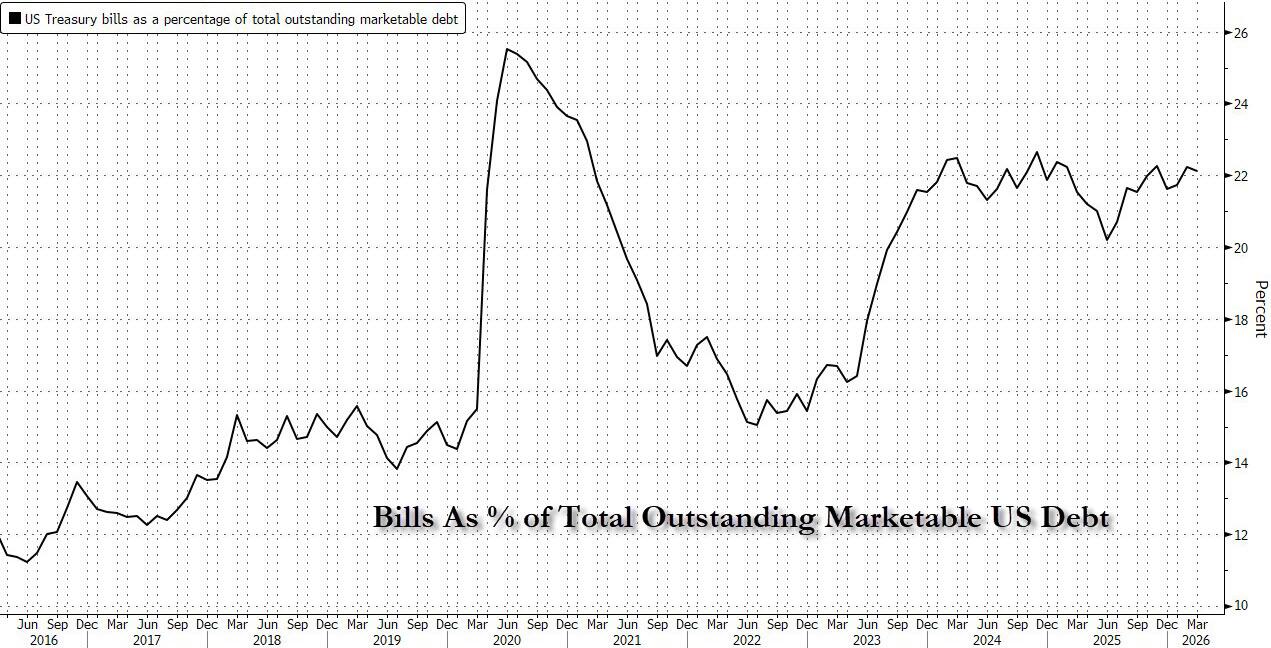
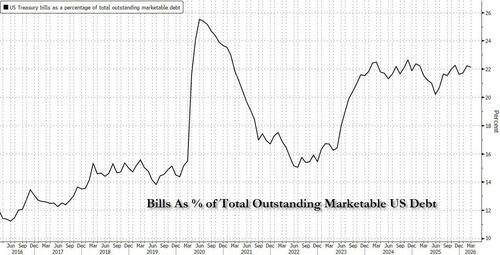
US debt managers have been using the same forward guidance since early 2024, in a policy that’s steadily boosted the share of bills of total debt outstanding (to roughly 22% from 14% before covid). The International Monetary Fund cautioned last month that this leaves federal debt costs more vulnerable to sudden swings in rates and shifts in sentiment, because auctions are more frequent.
And sure enough, with no changes to the forward guidance:
*TREASURY YIELDS EDGE LOWER AFTER UNCHANGED GUIDANCE ON AUCTIONS
The rest of the statement was also in line with expectations, with the Treasury stating “it believes its current auction sizes leave it well positioned to address potential changes to the fiscal outlook and to the size and composition of the SOMA portfolio.” It added that it was monitoring SOMA purchases of Treasury bills and growing demand for Treasury bills from the private sector. And, as before, looking ahead the treasury continues to evaluate potential future increases to nominal coupon and FRN auction sizes, with a focus on trends in structural demand and potential costs and risks of various issuance profiles.
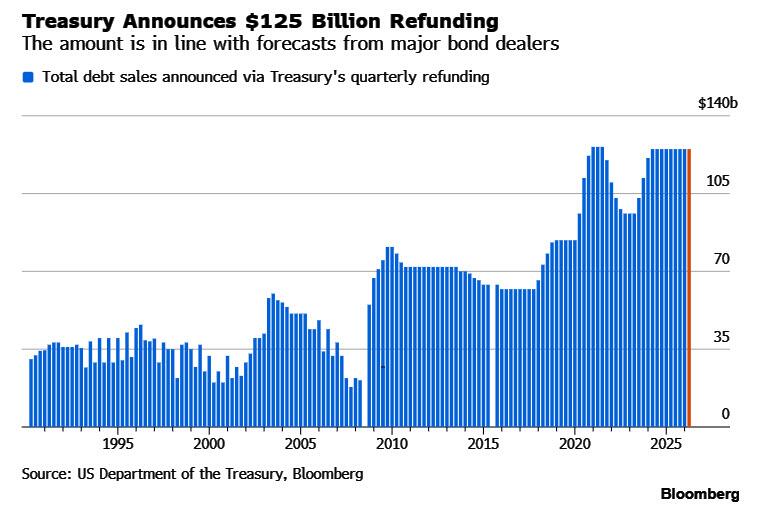
Looking at the actual refunding auctions next, the Treasury’s refunding debt sales will total $125 billion, unchanged from the sum unveiled in February and in line with the expectations of Wall Street bond dealers.
Treasury also maintained guidance on coupon sizes for the coming quarters. Refunding issuance to raise new cash of approximately $41.7BN (offering $125BN to refund $83.3BN).
Treasury to sell $58bn of 3-year notes on May 11
Treasury to sell $42bn of 10-year notes on May 12
Treasury to sell $25bn of 30-year bonds on May 13
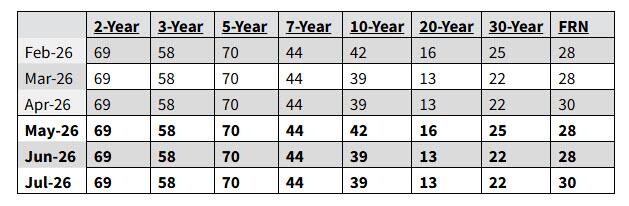
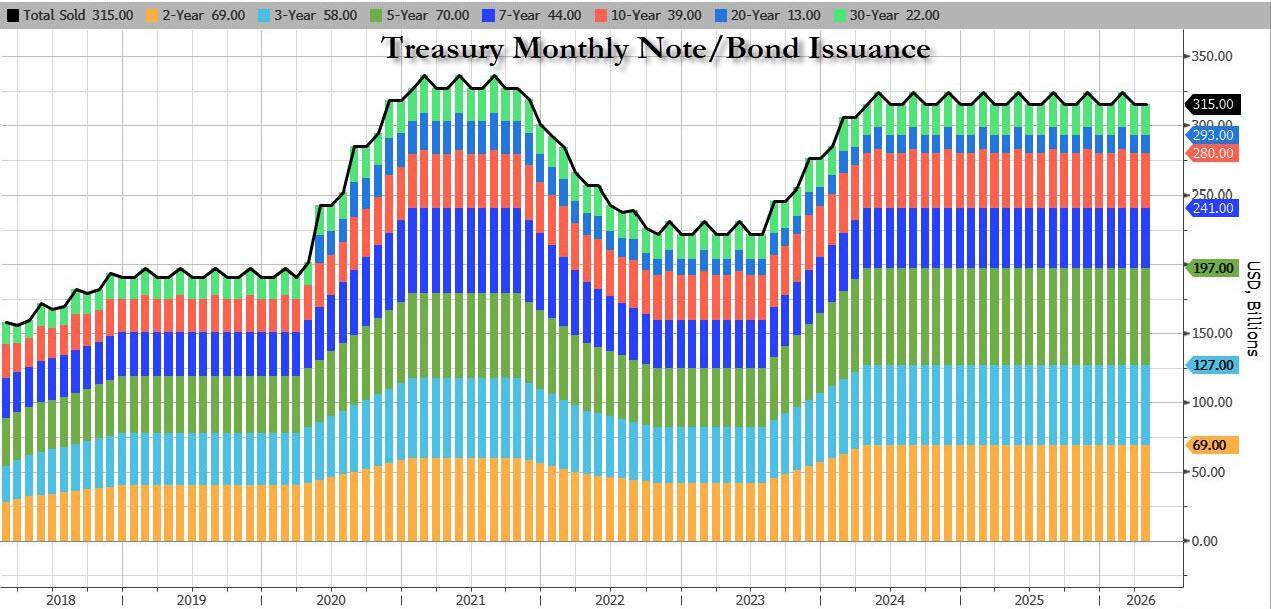
The table below presents the actual auction sizes for the February to April 2026 quarter and the anticipated auction sizes for the May to July 2026 quarter:
The total compares to a peak of $126BN first reached in Feb. 2021; auction sizes across the curve began rising in 2018 to finance tax cuts and surged in 2020 to finance the federal pandemic response, and to give the Fed’s QE X securities to buy.
Here are some other highlights from the Refunding report:
Bills
Treasury expects to further increase offering sizes of shorter-dated benchmark bills over the coming weeks and, in late-May, anticipates issuing a short-dated CMB to meet the peak liquidity needs at the end of May due to maturing coupon securities.
Given projections for receipts associated with the mid-month corporate and non-withheld tax date, Treasury expects to implement modest reductions to short-dated bill auction sizes during the month of June.
Thereafter, in July, Treasury anticipates incrementally increasing bill auction sizes across the curve. As always, Treasury will continue to evaluate near-term borrowing needs and assess additional adjustments to bill auction sizes as appropriate
TIPS
Treasury plans to maintain the 10-year TIPS reopening this May at $19 billion; the five-year TIPS reopening in June at $24 billion; and the 10-year TIPS new issue at $21 billion in July
20-year
Treasury is modifying settlement timing for 20-year bond reopening auctions.
From the reopening auction scheduled for June 16th, 20-year reopening auctions will settle on the Friday of the auction week, while new issues will continue to settle at month end.
Buybacks (lowers cash management buybacks in 1mth-2-year, maintains liquidity support buybacks)
Expects to purchase up to USD 38bln in off-the-run securities across buckets for liquidity support (unchanged) and up to USD 25bln in the 1-month to 2-year maturity bucket for cash management purposes (prev. USD 75bln in Q1).
Cash Balance
Treasury is assuming a $900 billion cash balance at the end of June.
Treasury estimates that the size of the Treasury General Account (TGA) could peak at $1 trillion (plus or minus $50 billion) in late July. This figure is consistent with Treasury’s long-standing cash balance policy and is driven by the large outflows expected to occur at that time.
TBAC Minutes
Director Pietrangeli says while current issuance sizes are adequate to cover expected borrowing needs for the remainder of FY2026 (prev. Treasury is slightly overfunded in FY2026)
The median primary dealer forecast for privately-held net marketable borrowing implies a USD 1.3tln funding shortfall in FY2027-28 based on current coupon auction sizes and bill supply (prev. saw USD 1.1trln).
Debt Manager Jensen says dealers generally anticipate that nominal coupon auction sizes might next increase in early CY2027 (prev. late CY 2026 or CY early 2027), and expect Treasury to modify its forward guidance several quarters ahead of such a change.
The TBACCommittee unanimously recommended that Treasury maintain nominal coupon, FRN, and TIPS auction sizes at current levels
TBAC continues to believe that increases in coupon issuance could be warranted in FY2027 and discussed potential changes to the forward guidance for Treasury to consider
Committee had a “healthy debate” whether Treasury should consider investing excess cash in the overnight Treasury repo market to generate investment returns while “maintaining prudent risk management and avoiding market disruptions”
Key design choices mentioned by Committee members include the time of day that Treasury deploys cash into the repo market, the specific market segment that Treasury would invest in (e.g., triparty, centrally cleared), and Treasury’s required return
Presenter stressed that the economic viability of investing in the repo market is dependent on the spread between the rate Treasury earns on repo investments and the Federal Reserve’s interest on reserve balances rate (IORB)
Committee agreed that while there are potential economic returns from such investments, their size and economic viability depend on the market environment and monetary policy, and that additional study is warranted regarding operational and implementation considerations
Committee discussed the expansion of central clearing in Treasury securities market and the presenter reviewed key areas of progress by both the industry and regulators since the extension of the implementation deadlines, noting the recent increase in central clearing activity
Presenter highlighted recent requests for exemptions related to certain inter-affiliate and extraterritorial transactions as key outstanding issues to resolve
Presenter concluded that, although the industry has made steady progress, some operational and implementation challenges remain as the market transitions to expanded central clearing
Tyler Durden
Wed, 05/06/2026 – 09:24
NANO Nuclear Soars On Strategic MOU With Supermicro For Powering AI Data Centers
NANO Nuclear Soars On Strategic MOU With Supermicro For Powering AI Data Centers
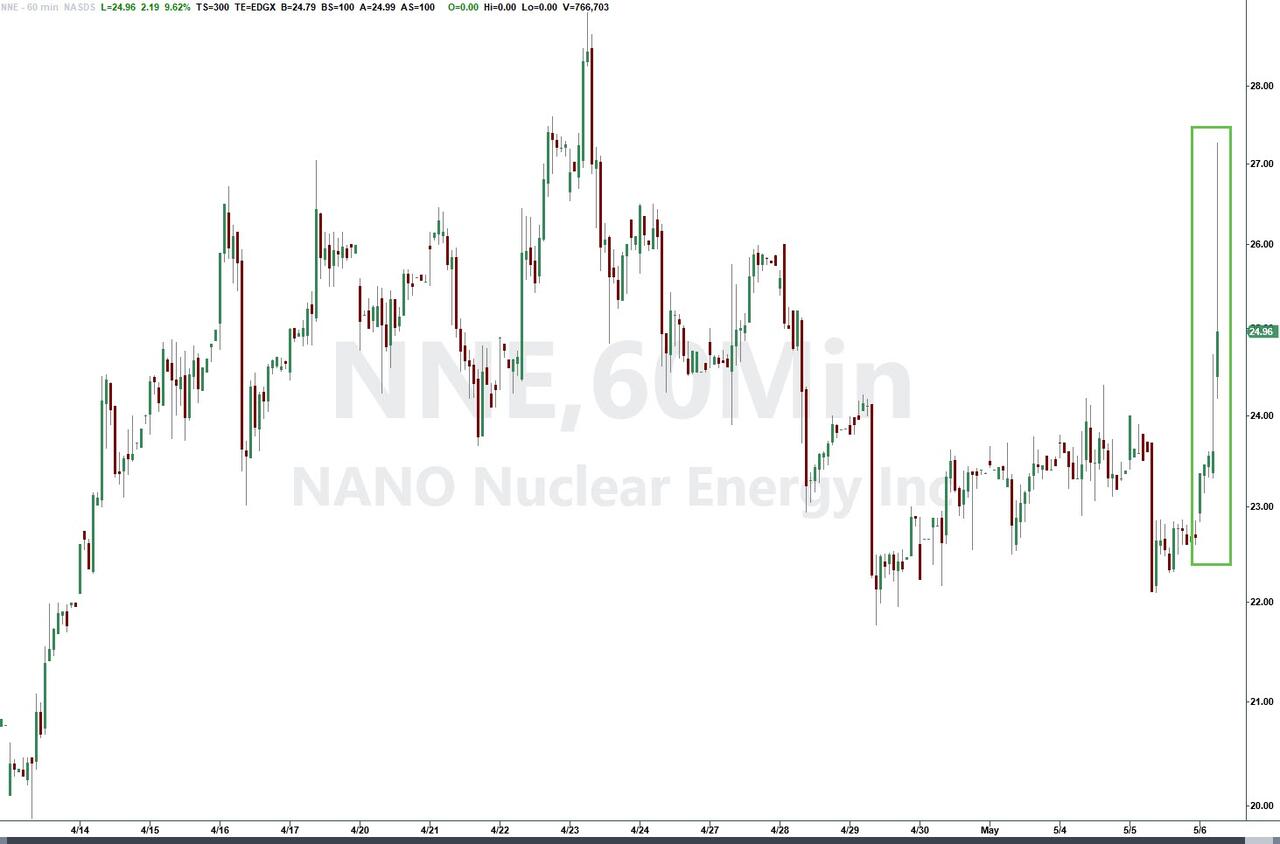
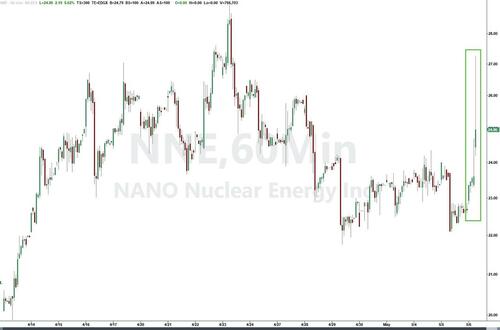
NANO Nuclear and Supermicro have agreed to explore the integration of NANO’s KRONOS microreactor system with Supermicro’s AI server and data center platforms for scalable nuclear-powered solutions. The news of the strategic collaboration – a critical moment in the integration of alternative energy source within the AI rollout – sent the stock soaring in pre-market
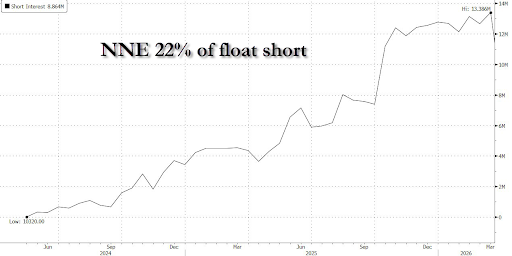
We anticipate the shorts are also taking notice with over 22% of shares loaned out…
“The AI revolution is fundamentally an energy challenge,” said Jay Yu, Chairman and President of NANO Nuclear, “and we believe nuclear power is the only scalable solution capable of meeting that demand.”
Through this MOU, NANO Nuclear and Supermicro will explore opportunities to:
Deploy NANO Nuclear’s microreactors to provide dedicated, on-site nuclear power for data centers.
Integrate Supermicro’s AI server racks, cooling systems, and infrastructure with nuclear-powered energy solutions.
Develop joint go-to-market strategies for hyperscale, enterprise, and edge data center customers.
Enable a new class of self-powered, grid-independent AI infrastructure.
“This is exactly where the future is heading compute and power becoming a unified solution,” said James Walker, Chief Executive Officer of NANO Nuclear. “By aligning with Supermicro, NANO Nuclear is stepping directly into the center of one of the fastest growing and most capital-intensive markets in the world.”
By partnering with Supermicro, NANO Nuclear gains direct alignment with a company at the forefront of the AI infrastructure buildout, providing:
Access to global data center customers and hyperscale operators.
Integration pathways with state-of-the-art AI hardware ecosystems.
A channel into one of the fastest-growing sectors of the global economy.
NANO is able to lean into their significant progress of deploying a KRONOS microreactor at the University of Illinois. The company recently submitted their construction permit application for the project and is well into the site preparation phase.
The company has also made strides with new partnerships in the Asian market, and has an agreement with BaRupOn for up to 1 GW of KRONOS microreactors for a data center campus in Texas.
Tyler Durden
Wed, 05/06/2026 – 09:00

OpenAI Co-Founder Greg Brockman Defends Company’s For-Profit Pivot… And His Own $30 Billion Payday
OpenAI Co-Founder Greg Brockman Defends Company’s For-Profit Pivot… And His Own $30 Billion Payday
Authored by Beige Luciano-Adams via The Epoch Times,
In the second week of a high-profile jury trial that could have profound impact on the race for artificial intelligence, OpenAI president Greg Brockman rejected allegations that he and other co-founders betrayed the company’s philanthropic mission and illegally enriched themselves by flipping the non-profit lab into a for-profit corporation.
Tesla CEO Elon Musk in 2024 sued Brockman and CEO Sam Altman, alleging they bilked him of $38 million in donations then restructured as a for-profit corporation by exclusively licensing their flagship product to Microsoft—betraying a founding mission to operate as an open-source charity that would counter the risks of profit-driven AI.
OpenAI and Microsoft deny the allegations, arguing that Musk abandoned the company in 2018 to start his own for-profit competitor, xAI, when other founders rejected his bid to take full control of the operation.
“I think we’ve been very consistent on the mission,” Brockman told a federal court in Oakland.
“If you look at what we’ve accomplished—currently the foundation has $150 billion worth of OpenAI equity value. That’s something we’ve built through hard blood, sweat, and tears through all this time since Elon left.”
The company’s nonprofit foundation has a 27 percent stake in OpenAI’s for-profit corporation; Microsoft, which has invested more than $13 billion since 2019, owns 26 percent.
Called as an adverse witness for the plaintiff, Brockman over two days May 4–5 offered testimony outlining an alternate narrative and timeframe than the one Musk presented the week prior.
Brockman also attempted to add context to what he has claimed were “cherrypicked” segments of his personal diary, unsealed during the discovery process.
He often spoke in incomplete sentences, punctuated by stock phrases like, “We were solving for the mission.”
Arguably, this had less zing to it than, “You can’t just steal a charity”—a phrase Musk favored in his own testimony.
‘Morally Bankrupt’
Musk’s attorney Steven Molo grilled Brockman on a series of diary entries from 2017 and 2018, a time of intense negotiations with Musk over the future structure of the company.
In one from 2017, Brockman muses, “It’d be wrong to steal the nonprofit from [Musk] and turn it into a B-Corp without him—doing so would be pretty morally bankrupt.”
Brockman denied this contradicted his commitment to OpenAI’s mission. “I think I meant it would actually serve the mission, but it would be hard to look at yourself in the mirror,” he told the court.
Under cross-examination, he explained he was referring to the idea of voting Musk off the board of directors, which he had considered at the time.
“It had been made clear to us,” he said, “that if we didn’t come to [Musk’s] terms, he was going to start an AGI competitor.”
Artificial General Intelligence (AGI) is the hypothetical point at which digital intelligence reaches or surpasses human cognitive abilities and can operate autonomously.
Some, including Musk, believe we have already achieved an early version of it, and that AGI advancement in the wrong hands poses the greatest existential threat to humanity. Musk testified that this threat was the express motivation for creating OpenAI as an open-source, nonprofit lab.
From late 2017 to early 2018, Musk, Altman, Brockman, and Ilya Sutskever, another OpenAI co-founder and its former chief scientist, floated various ideas as they debated how to fund the project at a competitive level.
Musk, the main donor, rejected an even equity split among the four co-founders, instead proposing a deal that would give him majority stake, to be diluted as more investors joined.
Brockman said he and Sutskever were willing to accept Musk being CEO and having a majority stake. “But the one thing we could not accept was to hand him unilateral total control over the AGI.”
Musk was the wrong man for the job, according to Brockman.
“Look, he knows rockets, he knows electric cars, he did not and I believe does not know AI,” Brockman said of the Tesla and SpaceX CEO.
“And Ilya and I did not think he was going to spend the time required to actually get good at it.”
Brockman alleged Musk “didn’t recognize that spark” in early language models underlying the GPT technology. “It was there, a working version, we could see the promise. … We really needed someone running the company that had that effect.”
Molo pressed the witness, pointing to emails from Musk proposing a 16-person board for the new corporation, in which Musk would have a 25 percent influence.
“This is the man you’re saying wanted to be the AI tyrant and have absolute and total control?” Molo probed.
“He wanted a board, and conducted in a way you were not familiar with because you didn’t have the experience of corporate governance, did you?”
Brockman acknowledged, “Definitely, this is something I was new to,” but maintained that there was never a real plan for Musk to relinquish control.
In a January 2018 email to Musk and others, Brockman stressed that a moral high ground was “our best tool,” and to maintain it, the company should endeavor to remain a nonprofit. “AI is going to shake up the fabric of society, and our fiduciary duty should be to humanity.”
But back in November 2017, Molo pointed out that Brockman’s diary entries show he was worried about how it would look if the founders continued to say they were committed to a nonprofit while planning to convert to a for-profit.
“Cannot say that we are committed to the nonprofit. Don’t wanna say that we’re committed. If three months later we’re doing b-corp then it was a lie,” Brockman wrote. “Can’t see us turning this into a for-profit without a very nasty fight.”
When Musk issued an ultimatum in 2018 to “either go do something on your own or continue with OpenAI as a nonprofit,” Brockman said he was “devastated.”
“It felt like we were so close to something that could actually succeed at the mission … and it was all blown up.”
$30 Billion Question
Molo accused Brockman of plotting to use OpenAI to become a billionaire, this time referencing journal entries made six days after he’d told Musk he wanted to continue to fundraise for the nonprofit, in which he asks, “What will take me to $1 billion?”
“There’s a lot of context here,” Brockman said. “It was expression of a frustration, not a plan.”
He described it as a “fork in the road,” where he would either accept Musk’s terms or part ways with him.
The road without Musk led Brockman to a $30-billion equity stake in OpenAI’s for-profit corporation. But Brockman said it was not about the money: “I think I’d be happy with either of those routes,” he said in court.
Molo pounced. Why then, if he was “good with a billion,” would Brockman not donate the extra $29 billion to the nonprofit to which he had a fiduciary duty?
“That was really about picking between these two roads … which one will I actually be happy with? … Feel enthusiastic getting out of bed, and do [sic] the work every day?” Brockman said.
“It takes $30 billion to get you out of bed in the morning, but $1 billion doesn’t get you out of bed?” Molo asked. “You had a fiduciary duty. … You took the assets from the nonprofit, you moved them into the for-profit to create this money-making machine that resulted in you having $30 billion.”
Implying that he raided the charity to enrich himself was “a deep mischaracterization,” Brockman said.
Molo also grilled Brockman on a commitment he made to donate $100,000 to the nonprofit but never delivered—and on billions in deals that OpenAI has secured with at least three other companies in which Brockman has an ownership stake.
The plaintiff’s attorney also highlighted a 2017 “side deal” in which Altman gave Brockman around $10 million of equity in the company holding assets of his personal family office.
When pressed, Brockman said he didn’t conceal this from Musk.
“Elon’s time was relatively hard to get, there were a lot of decisions to make that we weren’t able to broadcast to him,” he told the jury.
Sam Altman listens as OpenAI President Greg Brockman testifies during Elon Musk’s lawsuit trial over OpenAI’s for-profit conversion before U.S. District Judge Yvonne Gonzalez Rogers at a federal courthouse in Oakland, Calif., on May 4, 2026, in a courtroom sketch. Vicki Behringer/Reuters
Origins
Under cross-examination, Brockman told a story about the beginnings of OpenAI—from which Musk was conspicuously absent.
The spark, he said, began at a small dinner party in Menlo Park, where attendees considered whether it was too late to create an AI lab that could compete with Google’s Deep Mind project—at the time, the world leader in AI. That was in July 2015.
Musk was there, Brockman said, but the real catalyst was an agreement between himself and Altman, the same night, that “this was the most important thing we could imagine doing.”
He got to work, acting along with Altman as “the main drivers” of the project.
By November, they had assembled a list of 10 names for an “offsite” event in Napa Valley, nine of whom ended up joining OpenAI’s team. “It was an amazing day of creative energy, people really clicked,” Brockman said. So much so that, as their van remained stalled in traffic for 1.5 hours, “no one noticed because the conversation was so good.”
Brockman said he had no contact with Musk between the dinner and the offsite. “I expected he would donate,” he said of the Tesla founder, suggesting his role was relegated to little more than closing calls and occasional advice.
Under re-direct, Molo challenged this characterization.
“I know he wasn’t in the van with you guys on the highway, but he was instrumental in founding and kickstarting OpenAI, was he not?” Molo said, noting that Musk provided the dominant funding, vision, and leveraged his formidable relationships to recruit talent and resources.
Mission Creep
Brockman also denied that Musk was concerned with open-sourcing the company’s technology, or keeping it as a non-profit forever.
By the time the company made its public launch in December 2015, Brockman said, Musk was already considering they might need to add a for-profit corporation in order to be competitive. But the Tesla CEO’s concurrent pledge to donate $1 billion never materialized.
Musk donated an estimated $38 million to OpenAI from 2015 through 2020.
OpenAI’s mission statement, posted in 2015, notes a goal of advancing digital intelligence “in the way that is most likely to benefit humanity as a whole, unconstrained by a need to generate financial return.”
Brockman edited the original, in which Musk had used the word “unencumbered.”
“I understood this as a lack of constraint, we had a lot of freedom. We had not made commitments,” Brockman said Monday.
In 2023, the year Microsoft invested $10 billion in OpenAI’s for-profit subsidiary (the company restructured in 2025 to its current form, a public benefit corporation), Brockman wrote the board with a proposed change to the OpenAI charter, indicating he had been “wrong at times” about the original set up, and that “we’ve grown to regard capitalism not as a constraint, but instead, as a positive force,” according to evidence presented by Musk’s attorneys.
The Board never approved the updated charter, but Musk’s team argues it articulates a marked shift—away from OpenAI’s mission.
“No way Microsoft is giving that as a donation in any kind of charitable way,“ Musk testified last week, recalling his thoughts at the time. ”This is a bait and switch.”
Realizing that the non-profit would be “subservient” to the for-profit, he said, “This is when I thought there had been a breach of charitable trust.”
Brockman testified he never made any commitments to Musk that OpenAI would remain a nonprofit, nor that it would continue to open source its technology.
Musk is asking that OpenAI be reverted to a nonprofit, that more than $100 billion in damages be returned to it, and that Altman and Brockman be removed from their leadership roles.
U.S. District Judge Yvonne Gonzalez Rogers Judge Yvonne Gonzalez Rogers told the jury on May 5 that she expects all evidence to be presented by early next week, at which point they may begin their deliberation.
Tyler Durden
Wed, 05/06/2026 – 08:45

Corning Shares Erupt On Nvidia Deal To Supercharge Fiber Optics Output By 10x
Corning Shares Erupt On Nvidia Deal To Supercharge Fiber Optics Output By 10x
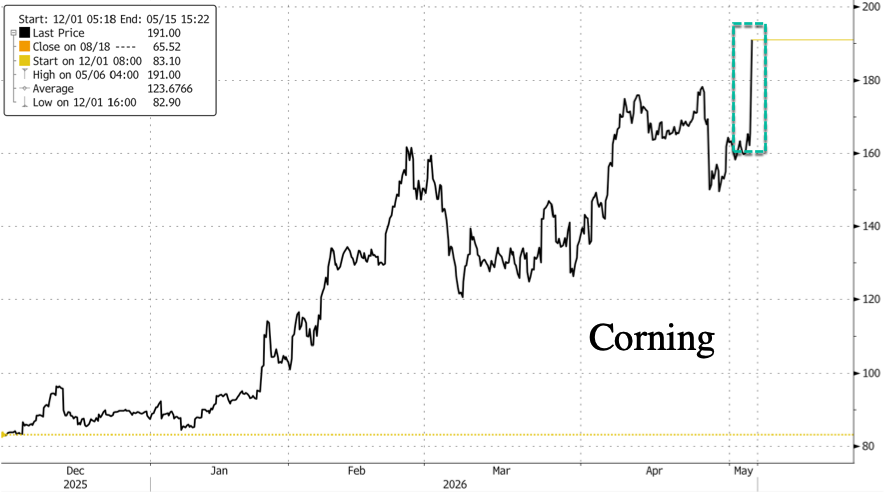
U.S.-based glass company Corning soared in premarket trading in New York after announcing a new mega deal with Nvidia to expand manufacturing capacity for fiber optic production used in AI data centers.
“Corning will increase its U.S.-based optical connectivity manufacturing capacity by 10x and expand its U.S. fiber production capacity by more than 50% to meet the accelerating demand driven by AI factory buildouts,” Nvidia wrote in a press release.
The expansion includes three new manufacturing plants in North Carolina and Texas and is expected to create more than 3,000 high-paying U.S. jobs.
In a filing, Corning disclosed that Nvidia is making a $500 million equity-linked investment.
Under the deal, Corning issued Nvidia two warrants:
Traditional warrant: Nvidia can buy up to 15 million Corning shares at $180 per share.
Pre-funded warrant: Nvidia can buy up to 3 million Corning shares at a nominal exercise price of $0.0001 per share.
Both warrants are exercisable immediately and expire within three years, unless earlier triggered by the termination of the partnership agreement or a major M&A transaction.
Nvidia noted, “Corning’s expanded capacity will supply the optical connectivity hyperscale data centers use to deploy NVIDIA-accelerated computing at scale.”
In premarket trading, Nvidia shares are up 2.4%, while Corning shares are ripping higher, up 20%.
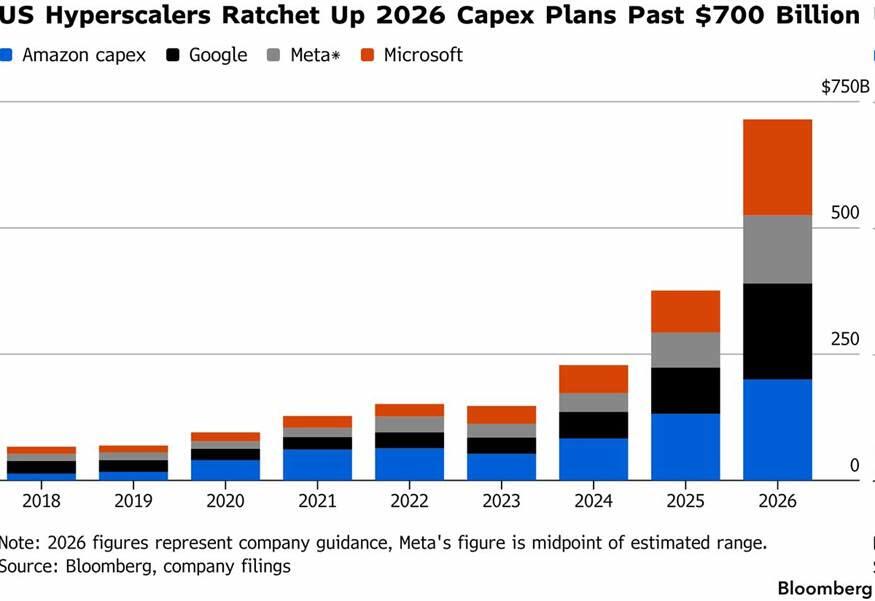
The Corning-Nvidia deal to expand fiber-optic production to supply data centers comes as hyperscalers are set to spend $700 billion this year alone on data center buildouts.
UBS trader Robert Ruple told clients last week that “there was a mixed bag of hyperscaler prints that leaned generally constructive and nothing he would call out that really shifts the narrative. Most critical was that Microsoft, Alphabet, and META all lifted capex forecasts, which should be enough to keep the AI thesis in play.” Read the full note here.
However, we must point out: “Banks Are Choking”: The AI Debt Bubble Has Started To Burst …
Tyler Durden
Wed, 05/06/2026 – 08:30
https://www.zerohedge.com/markets/corning-shares-erupt-nvidia-deal-supercharge-fiber-optics-out-10x
Deja Vu All Over Again: Futures Surge, Oil Tumbles On Iran Deal Optimism, Tech Rally
Deja Vu All Over Again: Futures Surge, Oil Tumbles On Iran Deal Optimism, Tech Rally
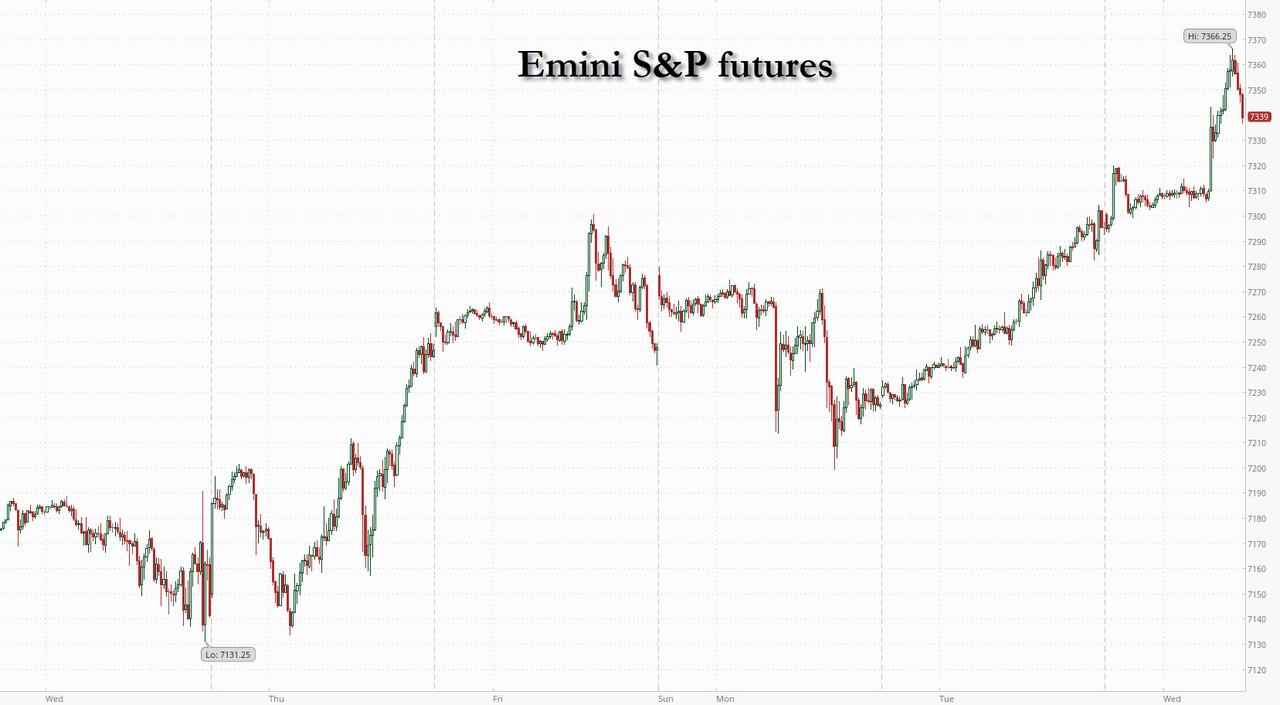
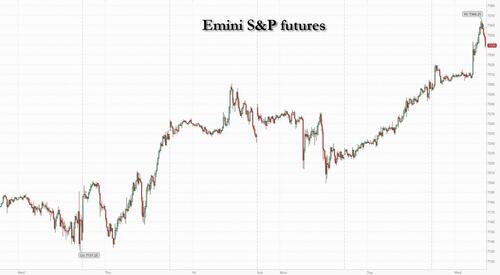
US equity futures are up big this morning and making fresh all time highs, led by tech companies, while oil prices and bond yields fell sharply on optimism that the US and Iran are nearing a peace deal. As of 8:00am Nasdaq 100 futures jumped 1.7% while those for the S&P 500 gained 1%, with both gauges set to build on record highs. Iran is evaluating a new proposal from the US to end their near 10-week war, according to an Axios report. If Tehran accepts the terms, it will lead to a gradual reopening of Hormuz and lifting of the American blockade on Iranian ports. Brent tanked 11% to below $98 a barrel. That comes as US gasoline prices topped $4.50 a gallon for the first time since July 2022. The yield on 10-year Treasuries dropped eight basis points to 4.35%. In the UK, the rate on two-year UK gilts tumbled 17 basis points. The dollar hit the lowest level since February, while gold topped $4,700 an ounce. Bitcoin rose for a seventh straight day. US economic data calendar slate includes April ADP employment change at 8:15am. Fed speaker slate includes Musalem (9:30am) and Goolsbee (1pm)
In premarket, most Mag 7 names are higher: Alphabet (GOOGL) climbs 1.6% after the Information reported that AI startup Anthropic plans to spend about $200 billion with Google over five years (Amazon +1%, Apple -0.5%, Nvidia +2.5%, Meta +0.5%, Microsoft +0.1, Tesla +0.6%)
Miners, cruise operators and airline companies gain, while energy and fertilizer stocks fall, after a report on the US and Iran nearing a one-page memorandum of understanding to end the war.
Semiconductor, power equipment and data center stocks rally after solid results from Advanced Micro Devices and Super Micro — in a sign of robust end-to-end artificial intelligence-related demand.
Advanced Micro Devices (AMD) rallies 19% after the chipmaker gave an outlook that is stronger than expected, a sign of robust AI-related demand.
Alphatec Holdings (ATEC) sinks 16% after the medical device company posted sales for the first quarter that disappointed Wall Street. TD Cowen calls the report a “tough start to 2026.”
Apollo Global (APO) rises 3% after the alternative asset manager eclipsed $1 trillion of assets under management on record first-quarter inflows and reported earnings that beat Wall Street estimates.
Compass Inc. (COMP) gains 31% after the real estate brokerage platform reported first-quarter revenue that beat average analyst estimates. The firm’s second-quarter revenue forecast is ahead of consensus.
CVS Health (CVS) rises 5% after the health insurer boosted its adjusted earnings per share guidance for the full year. The firm also posted adjusted profit and comparable sales for the first quarter that topped the average analyst estimate.
Geo Group (GEO) gains 11% after the private correctional facilities company boosted its adjusted Ebitda guidance for the full year, with the guidance beating the average analyst estimate.
Klaviyo (KVYO) falls 18% after announcing Amanda Whalen will step down from her role as CFO. The application software company reported first-quarter results that beat expectations and the outlook was raised on key metrics.
Kraft Heinz Co. (KHC) rises 2% after reporting quarterly sales that beat Wall Street expectations, as higher prices and the company’s investments in its lagging brands helped boost North American sales.
Primoris Services (PRIM) slumps 31% after the construction and engineering services company cut its adjusted earnings per share guidance for the full year.
Super Micro Computer Inc. (SMCI) leaps 13% after the company reported improved margins and gave a profit forecast that suggested it’s controlling the costs of getting powerful AI servers into customers’ hands.
TransMedics (TMDX) falls 21% after the medical equipment firm reported adjusted earnings per share that fell short of Wall Street’s expectations. It also reaffirmed its revenue forecast for the full year.
Uber Technologies (UBER) gains 9% after providing a better-than-expected forecast for bookings, signaling that robust demand from US commuters and travelers will offset impact from geopolitical tensions in the Middle East.
Veracyte (VCYT) rises 14% after the diagnostics firm reported revenue for the first quarter that beat the average Wall Street analyst estimate.
In other corporate news, Novo Nordisk’s new Wegovy obesity pill fueled sales in the first quarter and the drugmaker said this year’s proft and sales declines won’t be as bad as previously expected. BMW expects profitability to remain broadly stable this year as the automaker offsets a downturn in China with robust sales in Europe. Samsung reached a $1 trillion market valuation after shares more than quadrupled over the past year on booming demand for AI chips. And the FT reported that China’s main chip-sector investment fund is in discussions to lead a fundraising round for DeepSeek at a valuation of about $45 billion.
Risk assets soared and oil tumbled, as geopolitical and micro tailwinds fueled risk-on sentiment broadly across the market. On Geopolitics, Brent tanked 11% to below $98 a barrel following an Axios report that US & Iran are working on a memorandum that would set a framework for more nuclear talks (and said US expects Iranian responses on key points in the next 48 hours). Here are the details from the Axios report:
A Pakistani source has confirmed that the US and Iran are closing in on a one-page memorandum to end their conflict, Reuters reports.
US and Iran are reportedly closing in on one-page memo to end war, Axios reported citing officials; White House believes it is close to an agreement to end the war and establish a framework for detailed nuclear negotiations.
MoU details, as it stands: Declare an end to the war in the region and the start of a 30-day period of negotiations, which could occur in Geneva or Islamabad. Iran committing to a moratorium on nuclear enrichment (at least 12-15 years). US agreeing to lift sanctions and release billions in frozen Iranian funds. Both sides lifting restrictions through the Strait of Hormuz, to occur gradually during the 30-day negotiation.
If talks collapsed, US forces could restore the blockade or resume military action.
Uranium Component: The duration of the moratorium is being actively negotiated. Sources suggest at least 12yrs and one suggesting 15yrs is likely; Iran sought five, the US wanted 20. Suggested that Iran would agree to its highly enriched uranium being removed from Iran, potentially to the US.
Timeline: Iran is expected to respond within 48 hours. While nothing has been agreed upon, sources indicate this is the closest the parties have been to a deal since the war began.
Issues: Some US officials remain sceptical that even an initial deal will be reached. Fractures within the Iranian leadership.
Separately, last night Trump paused “Project Freedom” in the Strait citing “great progress” towards an agreement.
“The market continues to price in de-escalation and an easing in supply constraints,” said Geoff Yu, senior macro strategist at BNY. “The road ahead is bumpy, but the direction of travel seems clear.”
AI euphoria is also helping the rally. Alphabet is up in premarket trading after the Information reported Anthropic plans to spend about $200 billion with Google over five years. AMD was priced for perfection ahead of results, but managed to deliver, with shares soaring after the chipmaker gave robust predictions for longer-term growth. That’s adding to nerves about how Nvidia will retain its grip on the AI processor market in the face of intense competition.
Meanwhile, looking under the hood, while both US stock benchmarks are set to extend Tuesday’s record highs, the S&P 500 Equal-Weight Index hasn’t posted a new high since February. This thin leadership is raising “yellow flags” for Goldman Sachs strategist Ben Snider, while Barclays’ Emmanuel Cau also noted earlier that stocks seem “increasingly disconnected from signals coming from the rates and oil markets.”
In politics, voters in Ohio handily backed Trump ally Vivek Ramaswamy’s bid to be the Republican nominee for governor, while Democrat Sherrod Brown will get another shot at returning to the Senate after being defeated in 2024. Ken Griffin said he plans to make Citadel’s Miami tower even bigger after New York Mayor Zohran Mamdani name-checked the billionaire in his pledge to charge more taxes on second homes.
In private credit, Oaktree Capital cut the value of one of its funds by almost 4% as the firm marked down its software assets. A New Mountain Capital private credit fund that sold almost half-a-billion-dollars of assets at a discount earlier this year and used some of the cash to scoop up beaten-down loans says the strategy is already paying off.
Elsewhere in geopolitics, China’s Foreign Minister Wang Yi urged Iran to keep negotiating in pursuit of a lasting truce with the US, as he hosted Tehran’s top diplomat just days before Trump is scheduled to arrive in Beijing. The clash between Trump and Pope Leo XIV has flared up again, complicating a delicate diplomatic mission by Marco Rubio to the Vatican this week.
Looking at earnings, of the 375 S&P 500 companies to have reported so far this earnings season, 84% have beaten analysts’ forecasts, while 11% have missed.
In Europe, the Stoxx 600 is up 2.3% with breadth strong. Mining and automobile shares are leading gains, while energy and utilities stocks are the biggest laggards. Here are the biggest movers Wednesday:
The Stoxx 600 basic resources sector rallied as much as 4% as gold and copper edged higher after US President Donald Trump touted progress on a final agreement with Iran
Novo Nordisk shares jump as much as 9.2%, the most since Dec. 23, after the Danish drugmaker raised its 2026 guidance ranges for adjusted sales and adjusted operating profit
Demant surges as much as 17%, the most since October 2008, after the firm delivers sales ahead of consensus expectations in the first quarter
Pandora shares rise as much as 11%, continuing a rally from March’s 3.5-year low, after the Danish jewelry maker’s first-quarter Ebit margins beat estimates, partly due to a change in the timing of certain costs
Kongsberg shares rise as much as 11%, their steepest jump since February, after the Norwegian defense technology firm posted what Morgan Stanley called strong results across all metrics
Diageo shares gain 6.6% after the British maker of Johnnie Walker and Guinness reported organic net sales for the third quarter that beat analyst estimates and maintained its full-year guidance
Vestas shares rise as much as 2% as the Danish wind turbine maker reported 1Q Ebit before significant items that beat the average analyst estimate
Equinor declined as much as 6.3%, its biggest drop since April 17 after the energy company reported total revenue for the first quarter that missed the average analyst estimate
Wolters Kluwer falls as much as 14%, the most since 2003, after 1Q results that were broadly in line but did little to resolve the AI debate that has weighed heavily on the stock
Orsted shares drop 4.4% after the Danish wind farm operator reported 1Q Ebitda that beat the average analyst estimate, while after-tax profit missed
Tech optimism saw the Kospi hit another record high in APAC trade as Samsung joined the $1 trillion valuation club. Asian stocks jumped to a record, with technology shares leading gains after positive company forecasts reinforced confidence in continued growth tied to artificial intelligence. The MSCI Asia Pacific Index gained as much as 2.6% to a record high, with Samsung Electronics, SK Hynix and MediaTek providing the biggest boosts. Equities in South Korea, Thailand and China led the advances, while Japan’s market was closed for a holiday. Chinese stocks posted gains after the market reopened after a five-day holiday, with tech shares leading the rally. The government estimated more than 1.5 billion passenger trips took place during the break, while box office grew to 758 million yuan ($111 million). Sentiment was also lifted by improvement in a private gauge of services activities in April. Investors will also keep their eyes on the expected summit between Presidents Xi Jinping and Donald Trump next week for potential signs of easing tensions.
In FX, the Bloomberg Dollar Spot index is down 0.8% as expectations of a Fed hike by year-end have been fully unwound. The yen surged after a 4th consecutive intervention by the BOJ/MOF but a large portion of the initial dip in USD/JPY has retraced.
In rates, sovereign bonds are rallying around the world and treasuries hold a strong bid in early US session, with futures on session highs amid a slump in oil prices after Axios reported Washington and Tehran are working on a memorandum that would set a framework for further nuclear talks, with nothing agreed upon yet. Subsequent reports indicated Iran is evaluating a new US proposal to end the war. US front-end and intermediate yields dropped at least 10bp, long-end yields about 7bp, steepening 2s10s and 5s30s spreads by 3bp-4bp; 10-year fell 9bp to 4.33%. Fed-dated OIS contracts flipped back to pricing in chance of a rate cut this year, with around 6bp of easing priced in for September, and trimmed pricing for a rate hike in 2027. Treasury quarterly refunding announcement at 8:30am, with consensus expectation for unchanged coupon auction sizes, however some banks anticipate new forward guidance, shortening the time frame for stability from “at least the next several quarters” IG dollar issuance slate includes three deals so far. Six names priced $5.25 billion on Tuesday with issuers paying less than 2bps in new issue concessions on deals that were 7.2 times covered — nearly double the year-to-date average. At least two borrowers elected against moving forward
Measures of US corporate-credit risk improved in the opening minutes of trading, with the gauge for high-grade notes at its tightest in over two months. The environment coming into the US session was already positive for debt capital markets, with investment-grade spreads matching their tightest level since Feb. 20 on Tuesday and leveraged-loan prices at their highest level since then. Though there have been 15 high-grade bond sales to start the week, just $13.6 billion has been raised
In commodities, crude prices are sliding with Brent down over 9% and just below the $100/bbl mark. Spot gold and silver post respective gains of 3.4% and 6.5%. Bitcoin is higher by 0.7%.
US economic data calendar slate includes April ADP employment change at 8:15am. Fed speaker slate includes Musalem (9:30am) and Goolsbee (1pm)
Market Snapshot
S&P 500 mini +0.9%,
Nasdaq 100 mini +1.2%,
Russell 2000 mini +1.5%
Stoxx Europe 600 +2.2%,
DAX +2.4%,
CAC 40 +2.5%
10-year Treasury yield -7 basis points at 4.35%
VIX -0.7 points at 16.72
Bloomberg Dollar Index -0.7% at 1187.12,
euro +0.7% at $1.1769
WTI crude -6.6% at $95.52/barrel
Top Overnight News
The White House believes it’s getting close to an agreement with Iran on a one-page memorandum of understanding to end the war and set a framework for more detailed nuclear negotiations. Axios
Trump posts: If Iran agrees to deal, the blockade of the Hormuz Strait will be lifted. “If they don’t agree, the bombing starts, and it will be, sadly, at a much higher level and intensity than it was before. ”
Donald Trump earlier said he would pause US efforts to move ships through the Strait of Hormuz as he seeks an agreement with Iran, citing “great progress.” The blockade on Iranian ports remains. BBG
Chinese Foreign Minister Wang Yi met w/his Iranian counterpart on Wed and called for a swift reopening of Hormuz. BBG
China Is Still Supplying Drone Factories in Iran, Russia Despite U.S. Sanctions. Obscure Chinese companies are openly shipping dual-use goods such as engines and batteries, defying American controls. WSJ
The US will implement its 25% tariffs on cars and trucks from the EU “relatively soon” if the bloc doesn’t swiftly ratify a long-delayed trade deal, the American ambassador to the bloc Andrew Puzder said. BBG
China’s biggest state-backed semiconductor investment vehicle is in talks to lead the financing of DeepSeek’s first fundraising that could value the AI group at about $45bn. FT
Novo shares jumped as its new Wegovy pill boosted sales, and the company guided to a smaller-than-expected revenue decline this year. The oral version had the best US launch of any GLP-1. BBG
Alphabet outperformed its Magnificent Seven peers premarket after the Information reported that Anthropic plans to spend about $200 billion with Google over five years. BBG
The yen hit a two-month high, spurring fresh intervention speculation. BBG
While both US stock benchmarks are set to extend Tuesday’s records highs, the S&P500 Equal-Weight Index hasn’t posted a new high since February. BBG
Axios report on MOU between the US and Iran
A Pakistani source has confirmed that the US and Iran are closing in on a one-page memorandum to end their conflict, Reuters reports.
US and Iran are reportedly closing in on one-page memo to end war, Axios reported citing officials; White House believes it is close to an agreement to end the war and establish a framework for detailed nuclear negotiations.
MoU details, as it stands: Declare an end to the war in the region and the start of a 30-day period of negotiations, which could occur in Geneva or Islamabad. Iran committing to a moratorium on nuclear enrichment (at least 12-15 years). US agreeing to lift sanctions and release billions in frozen Iranian funds. Both sides lifting restrictions through the Strait of Hormuz, to occur gradually during the 30-day negotiation.
If talks collapsed, US forces could restore the blockade or resume military action.
Uranium Component: The duration of the moratorium is being actively negotiated. Sources suggest at least 12yrs and one suggesting 15yrs is likely; Iran sought five, the US wanted 20. Suggested that Iran would agree to its highly enriched uranium being removed from Iran, potentially to the US.
Timeline: Iran is expected to respond within 48 hours. While nothing has been agreed upon, sources indicate this is the closest the parties have been to a deal since the war began.
Issues: Some US officials remain sceptical that even an initial deal will be reached. Fractures within the Iranian leadership.
Other Iran News
US President Trump posted that Project Freedom will be paused for a short period to see whether or not the agreement with Iran can be finalised and signed, blockade will remain in full effect.
Journalist Mallick posted “…i would not be surprised if there is an incoming Iranian proposal to Washington via Islamabad, soon.”. Full post:”As what I understand, while the ball largely lies in Iranian court when it comes to US – Iran negotiations, i would not be surprised if there is an incoming Iranian proposal to Washington via Islamabad, soon.”.
Iranian and Saudi Arabian Foreign Ministers held a phone call; stressed continuing diplomacy and prevent escalation of tensions.
Iranian President Pezeshkian said US demands from Iran are impossible and unattainable.
US Secretary of State Rubio spoke with Russia’s Foreign Minister Lavrov, in which the US-Russia relationship, Russia-Ukraine war and Iran was discussed.
Iranian Foreign Ministry Spokesperson denies the UAE’s accusation that Iran fired missiles and drones at it, stating that Iran’s defensive actions were exclusively directed at the US, according to a statement. UAE is cooperating with the US and Israel against Iran.
Israeli Ambassador said relations with the UAE are growing.
IRGC denies any involvement with the attacks on the UAE earlier in the week.
Pakistan’s PM thanks the US President for pausing Project Freedom, in response to a request from Pakistan and Saudi Arabia, among others.
“Iraqi Prime Minister-designate Ali al-Zaidi held a telephone conversation with US Secretary of War Hegseth about bilateral relations in various fields”, Tasnim reported.
The two US commercial ships that crossed the Strait of Hormuz on Monday had military security aboard, NBC reported citing sources.
A French bulk carrier was hit by a cruise missile in the waters near the UAE, CBS reported citing officials.
CMA CGM confirms a vessel was the target of an attack on Tuesday while it was crossing the Strait of Hormuz.
A more detailed look at global markets courtesy of Newsquawk
Asia-Pac stocks traded entirely in the green, following on from the gains stateside and the positive update from President Trump, stating that Project Freedom is to be paused for a short time to see whether or not the agreement with Iran can be finalised and signed. ASX 200 neared last week’s peak of 8787, rebounding after two consecutive days of losses. The bounce was supported by Financials and Industrials, while Energy lagged as oil prices fell. KOSPI surged at the open, breaking the 7000 handle, and even activated the buy-side sidecar within the first 5 minutes of trade. Tech giants helped the surge in the index, with Samsung Electronics (+15%) being the latest Co. to join the USD 1tln market cap group. Shanghai Comp. and Hang Seng followed the positive risk-on tone as Shanghai returned from holidays. CK Hutchison gained after the Co. agreed to sell its 49% stake in VodafoneThree, while Wuliangye Yibin underperformed after a double downgrade at Goldman Sachs. On the data front, RatingDog services PMI beat estimates, which further supported the indices.
Top Asian News
China’s Foreign Minister Wang Yi held talks with Iranian Foreign Minister Araghchi, Xinhua reported.
BHP (BHP AT) CFO said new investors are buying into the Co. on copper exposure and AI demand.
KOSPI sidecar activated after KOSPI 200 futures rise by 5%.
European bourses are stronger across the board, buoyed by optimism surrounding US-Iran peace. Opened higher as markets reacted to Trump’s decision to temporarily pause “Project Freedom”, and then took another leg higher to make fresh peaks on an Axios report which suggested that the US and Iran are closing in on an MoU to end the conflict. European sectors are entirely in the green, except for Energy and Utilities; the latter, unsurprisingly, is hampered by losses in underlying oil prices. The top of the pile consists of Basic Resources (lifted by strength in metals prices), Autos and Consumer Products. The Autos sector has been driven higher by post-earning strength in BMW (+5%, beat exp. but faced fierce price competition in China) and Continental (+5.5%, Q1 results topped exp. and confirmed guidance). The Consumer Products sector has benefited from gains in jewellery-name Pandora (+9%) after Q1 revenue beat estimates, but did experience weakness across North America and Europe.
Top European News
EU PPI MoM (Mar) M/M 3.4% vs. Exp. 3.3% (Prev. -0.7%, Low. 0.8%, High. 3.7%).
EU PPI YoY (Mar) Y/Y 2.1% vs. Exp. 1.8% (Prev. -3%, Low. -0.5%, High. 2.1%).
EU S&P Global Composite PMI Final (Apr) 48.8 vs. Exp. 48.6 (Prev. 50.7).
EU S&P Global Services PMI Final (Apr) 47.6 vs. Exp. 47.4 (Prev. 50.2).
UK S&P Global Services PMI Final (Apr) 52.7 vs. Exp. 52 (Prev. 50.5).
UK S&P Global Composite PMI Final (Apr) 52.6 vs. Exp. 52.0 (Prev. 50.3).
FX
Snapshot: G10s are stronger against the USD this morning, to varying degrees. Antipodeans outperform, given the risk tone; JPY is also towards the top of the pile, following likely intervention overnight. SEK is a touch weaker vs EUR, after a cooler-than-expected inflation report, but is unlikely to shift the dial for the Riksbank on Thursday.
DXY is weaker this morning, and currently trades at the lower end of a 97.79 to 98.34 range. Pressure facilitated by the risk-on mood, amidst optimism surrounding progress towards US-Iran peace. This stems from a post from the POTUS, who announced that the US would pause Project Freedom to allow time for negotiations to occur. The move lower was then exacerbated after an Axios report suggested that the US and Iran are closing in on an MoU to end the conflict. In its current form, it would declare and end to the war with Iran. Potential JPY intervention also facilitating the pressure this morning
Focus overnight was on USD/JPY, where an aggressive move lower took the pair to a 155.00 handle, before bouncing back towards 156.00. There is currently no confirmation that the move was intervention, but markets should begin to get some details on recent moves late in the Japanese session. Time will tell whether these attempts of intervention proves effective, given the volatile nature of the Middle Eastern conflict. A near-term resolution will help the USD/JPY trundle lower, a factor which Japanese Officials would probably require to achieve any lasting strength in the JPY.
Central Banks
ECB’s Cipollone said the EZ inflation trend is moving towards adverse.
ECB Wage Tracker: 2026 annual 2.282% (prev. 2.270%). Q1 1.847% (prev. 1.887%). Q2 2.131% (prev. 2.10%). Q3 2.553% (prev. 2.521%). Q4 2.597% (prev. 2.574%).
BoE Governor Bailey said we must be mindful of risks of private credit.
NAB sees the RBA hiking in June to take the cash rate to 4.60%.
RBNZ Governor Breman said banks are resilient under stress tests.
RBNZ Financial Stability Report: New Zealand’s financial system is resilient and well positioned to support households and businesses even if economic conditions soften. The global risk environment has worsened over the past six months, as conflict in the Middle East threatens world energy supply.
PBoC set USD/CNY mid-point at 6.8562 vs exp. 6.8160 (prev. 6.8628).
BoK official said inflation is seen higher in May and are closely monitoring inflation trend as uncertainty is high over the Middle East situation.
Fixed Income
Unsurprisingly, a bullish start for fixed income as the marked energy retreat has allowed yields to ease. Pressure in energy facilitated by a) Trump pausing Project Freedom to allow time for negotiations, b) Axios report suggested US-Iran are close to an MoU. (See geopols section for details).
USTs to a 110-28+ peak, with gains of 15 ticks and breaching Monday’s WTD 110-26+ best. For the US, aside from geopols, we are attentive to ADP ahead of NFP on Friday; ADP is seen at 79k from 62k, vs a 73k (prev. 178k) consensus for Friday’s Payrolls. Additionally, we get the full Treasury Quarterly Refunding announcement after Monday’s projections, before remarks from Fed’s Musalem (2028) and Goolsbee (2027).
Bunds post gains in excess of 80 ticks and currently hold just off a 125.88 peak. A high that printed in proximity to the above geopolitical updates this morning, and after a slew of Final PMIs, which were subject to modest revision. Of note for policymakers, the ECB’s latest wage tracker showed upside across the year. Though, the ECB will at this stage likely welcome the relatively modest level of upside and particularly that the Q4-2026 figure remains shy of the 2.709% reported in February.
Gilts gapped higher by 48 ticks before climbing another 30 ticks to an 87.32 peak, notching a new high for the week, but remain shy of last week’s 87.03 closing price. Potentially capping a return to and test of that level is the ongoing scrutiny around PM Starmer, as UK press continues to brief that the challenge against Starmer is increasing, with the Welsh Labour leader seemingly primed to call for Starmer to step down on Friday and reports that the party is working to get Burnham back in the Commons.
Germany sells EUR 2.662bln vs exp. EUR 3.5bln 2.50% 2032 Bund Auction: b/c 2.4x (prev. 1.1x), avg. yield 2.8% (prev. 2.78%), retention 23.94%.
Commodities
Energy on the backfoot after US President Trump paused Project Freedom to allow time for talks and potential progress with Iran. An update that weighed on crude overnight, sending WTI below USD 100/bbl and Brent beneath USD 108/bbl. Thereafter, the complex took another hit after an Axios report which suggested that the US and Iran are closing in on an MoU to end the conflict (see geopols section for details).
As it stands WTI Jun’26 and Brent Jul’26 are holding towards session lows at USD 93.96/bbl and USD 101.46/bbl, respectively. Brent now eyes USD 100/bbl to the downside, and a further leg lower could see a retest of the low from 27th April 2026, at USD 99.58/bbl.
Gold is benefiting from the energy and USD downside, XAU as high as USD 4,708/oz, matching its 21 DMA. Base metals are also firmer, cheering the general risk tone and welcoming the return of Mainland China. 3M LME Copper above USD 13.2k, with gains in excess of USD 150 as things stand.
China has ordered its oil refineries that purchase crude from Tehran not to comply with or enforce US sanctions on Iranian oil, CNN reported.
Australia’s PM Albanese said that they are to lift minimum stockpiles of every type of fuel by around 10 days, the fuel reserve is to be around 1 billion litres and the package is to cost more than AUD 10bln.
Weekly private inventory data (bbls): Crude -8.1mln (exp. -2.8), Gasoline -6.1mln (exp. -1.7mln), Distillates -4.6mln (exp. -2mln), Cushing -1.1mln.
Trade/Tariffs
Chinese Foreign Ministry Spokesperson Lin said China and the US are in communication on Trump’s trip.
US Ambassador Puzder wants the US-EU trade agreement to be agreed on before July, Bloomberg TV.
US Envoy to India said Indian companies plan to invest over USD 20.5bln in the US tech, manufacturing and pharmaceuticals.
US Event Calendar
d
Tyler Durden
Wed, 05/06/2026 – 08:28
ADP Employment Report Signals Biggest Job Additions In 15 Months In April
ADP Employment Report Signals Biggest Job Additions In 15 Months In April
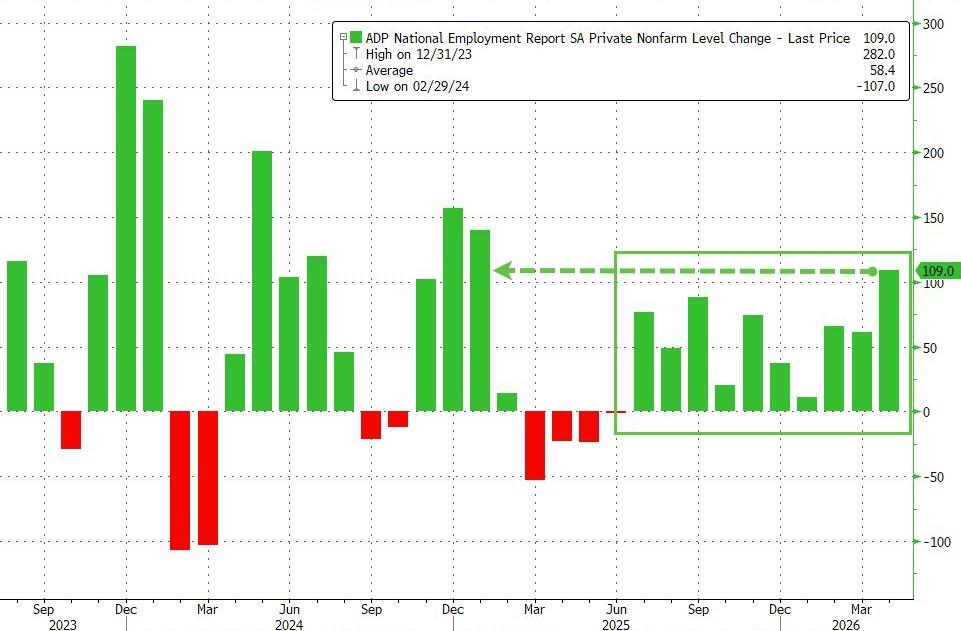
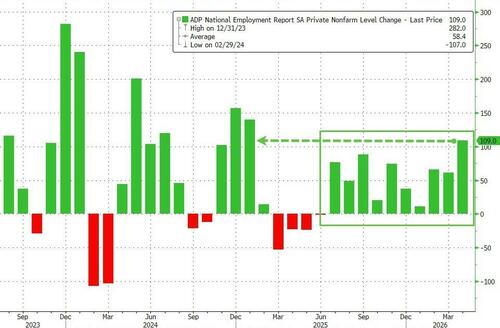
With non-farm payrolls looming, we get another glimpse at the labor market today from the ADP Employment Report which shows the US economy added 109k jobs in April (a slight disappointment relative to +120k exp). That is the tenth straight month of job additions and strongest monthly addition since January 2025…
Source: Bloomberg
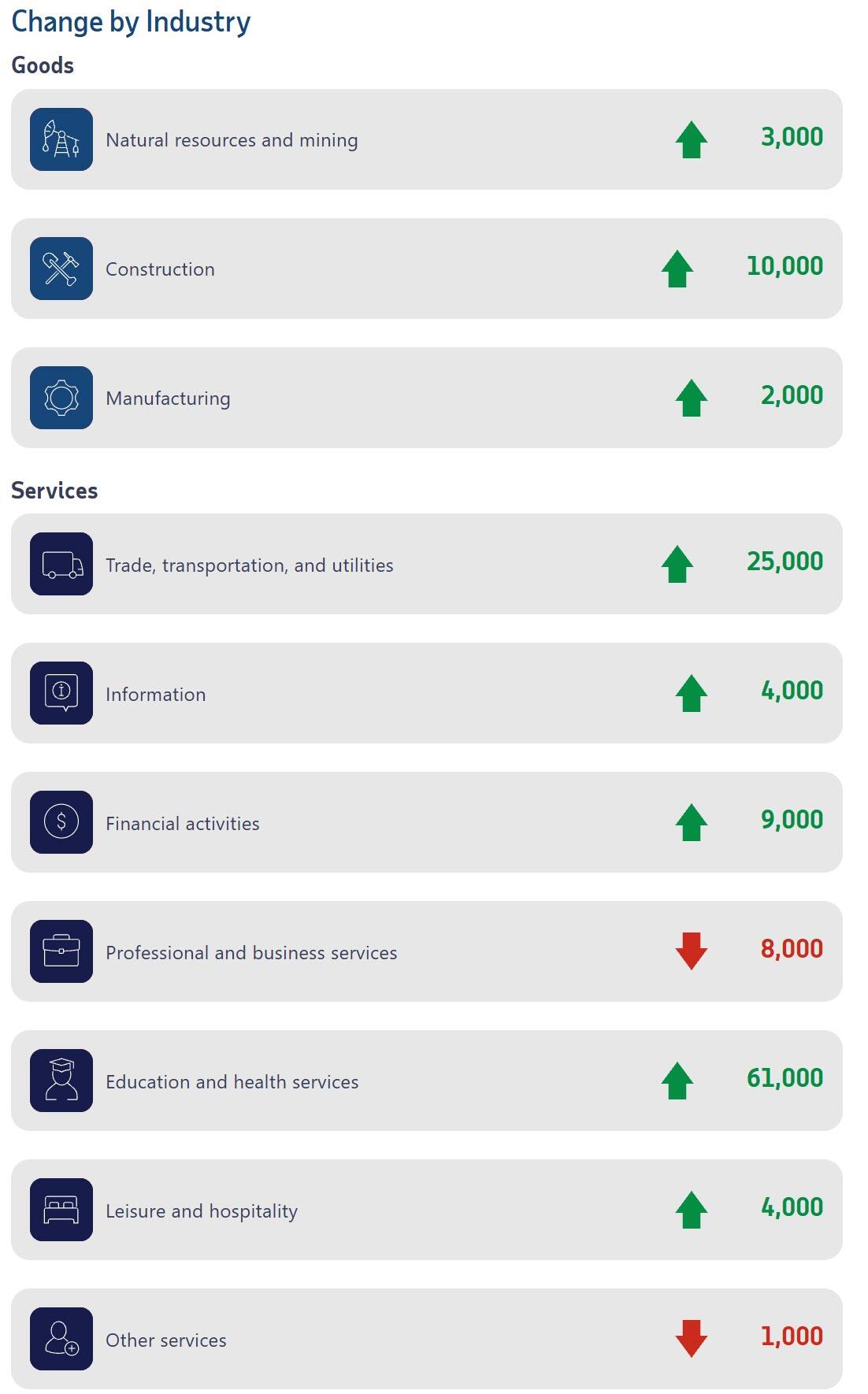
Under the hood, Goods-producing jobs rose 15,000 while Service-providing jobs rose 94,000.
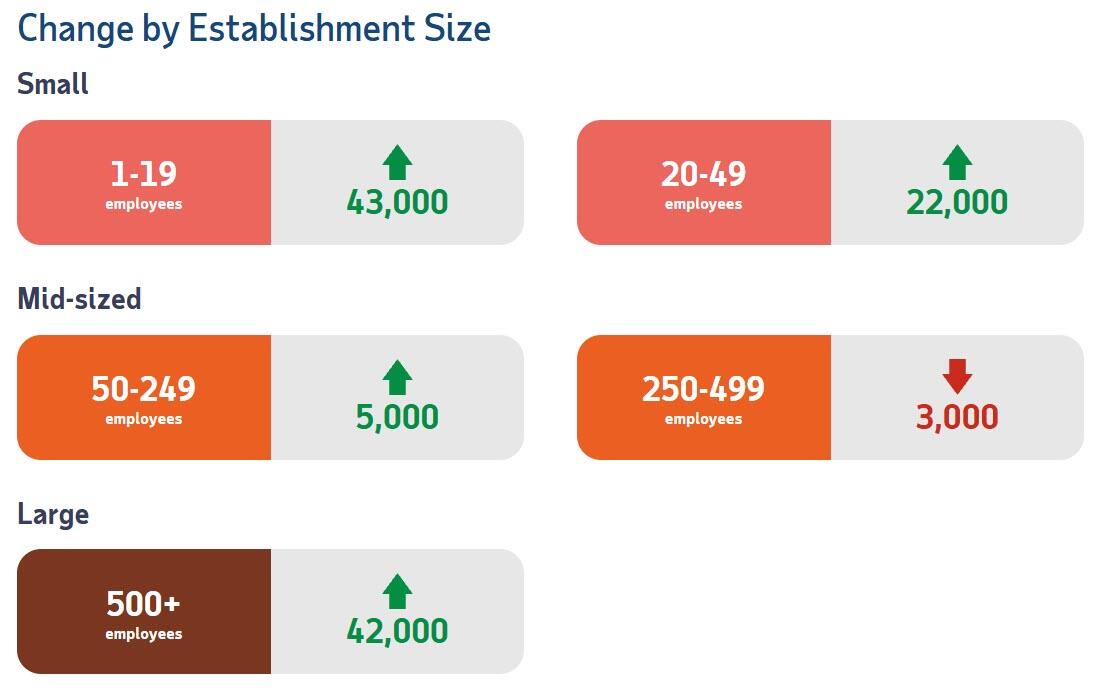
“Small and large employers are hiring, but we’re seeing softness in the middle,” said Dr. Nela Richardson Chief Economist, ADP.
“Large companies have resources to deploy, and small ones are the most nimble, both important advantages in a complex labor environment.”
Health care’s continued strength, along with a rebound in trade, transportation, and utilities, fueled last month’s acceleration in hiring.
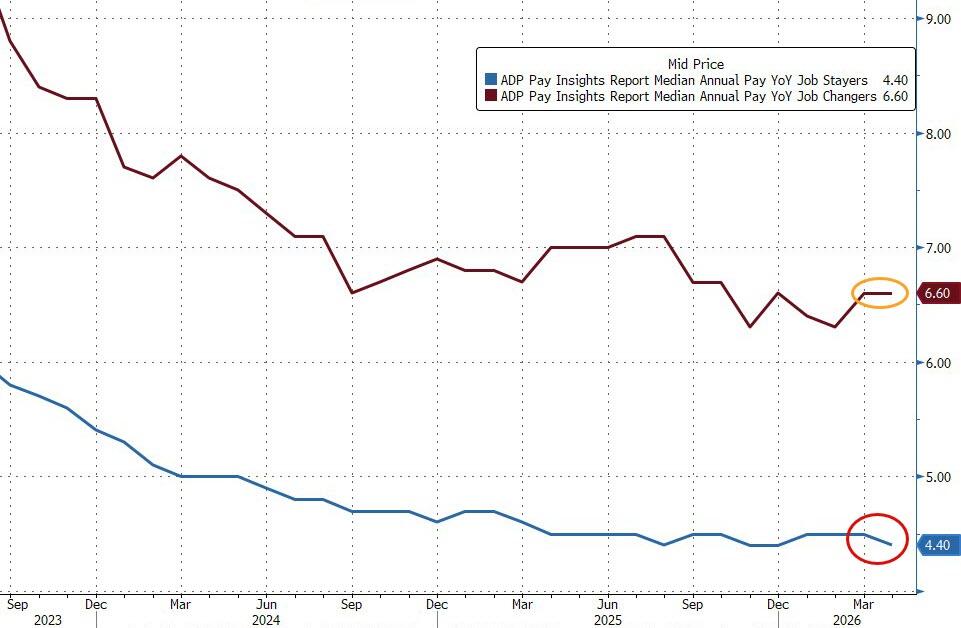
Pay growth for job-stayers slowed slightly to 4.4 percent, but for job-changers, year-over-year pay gains were steady at 6.6 percent.
Is the economy transforming from ‘no hire, no fire’ to ‘higher hire, still no fire’ gains (see JOLTS’ record hiring).
Tyler Durden
Wed, 05/06/2026 – 08:23
New Disney CEO Delivers Earnings Beat As “Important Change” Underway
New Disney CEO Delivers Earnings Beat As “Important Change” Underway
Disney reported better-than-expected second-quarter results, driven by momentum across entertainment, sports, and experiences, while reaffirming its positive outlook for the year.
“At an important moment of change for Disney, we remain focused on executing our long-term growth strategy,” Disney wrote at the beginning of the earnings release.
The entertainment company continued, “Our creative and operational momentum drove strong quarterly results, and we continue to expect growth to accelerate in the second half of the fiscal year.”
“We are strengthening streaming through continued investment in the creative storytelling that defines us and in product and technology innovation, while advancing ESPN’s direct-to-consumer future and delivering on our bold growth plans at Disney Experience,” the introduction to the earnings release concluded.
Here’s a snapshot of the second quarter, courtesy of Bloomberg:
Adjusted EPS $1.57, estimate $1.51 (Bloomberg Consensus)
Revenue $25.17 billion, +6.5% y/y, estimate $24.87 billion
Entertainment revenue $11.72 billion, estimate $11.39 billion
Sports revenue $4.61 billion, estimate $4.59 billion
Experiences revenue $9.49 billion, estimate $9.4 billion *
Total segment operating income $4.60 billion, +3.8% y/y, estimate $4.38 billion
Entertainment operating income $1.34 billion
Sports operating income $652 million
Experiences operating income $2.62 billion
Disney expects 2026 adjusted EPS growth of around 12%, excluding the impact of a 53rd week, or about 16% including it. It also plans to repurchase at least $8 billion in shares this year and continues to expect double-digit adjusted EPS growth in fiscal 2027.
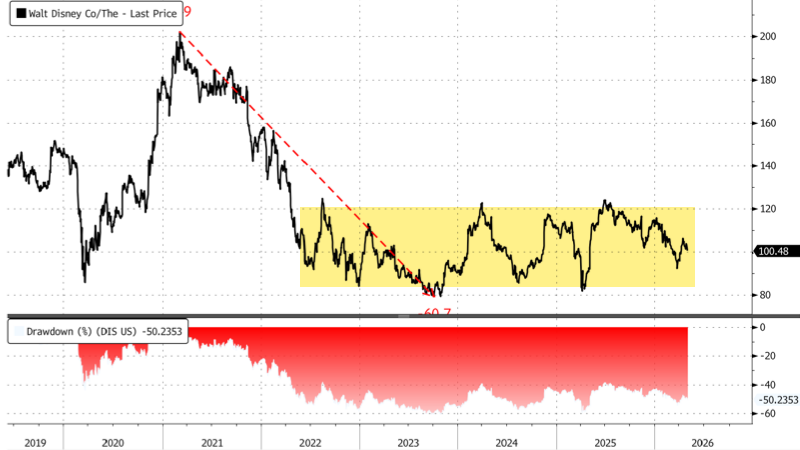
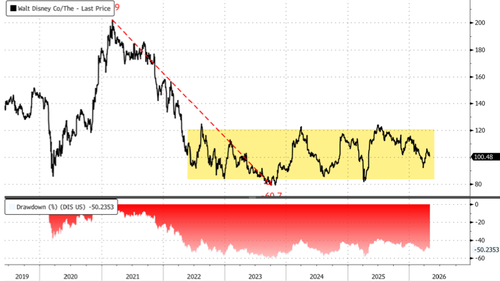
Disney shares jumped as much as 8% in premarket trading in New York. The stock remains roughly 50% below its 2021 peak and is still locked in a narrow 3.5-year trading range, oscillating between about $80 and $120.
Disney shares need a clean break over $120 to attract the momentum crowd.
The earnings results come as the company’s turnaround plan under new CEO Josh D’ Amaro, who succeeded Bob Iger in March, gets underway.
Tyler Durden
Wed, 05/06/2026 – 07:45
https://www.zerohedge.com/markets/new-disney-ceo-delivers-earnings-beat-important-change-underway
Taxpayers Foot Staggering £629 Million Bill For Foreign Nationals In UK Prisons
Taxpayers Foot Staggering £629 Million Bill For Foreign Nationals In UK Prisons
Authored by Steve Watson via Modernity.news,
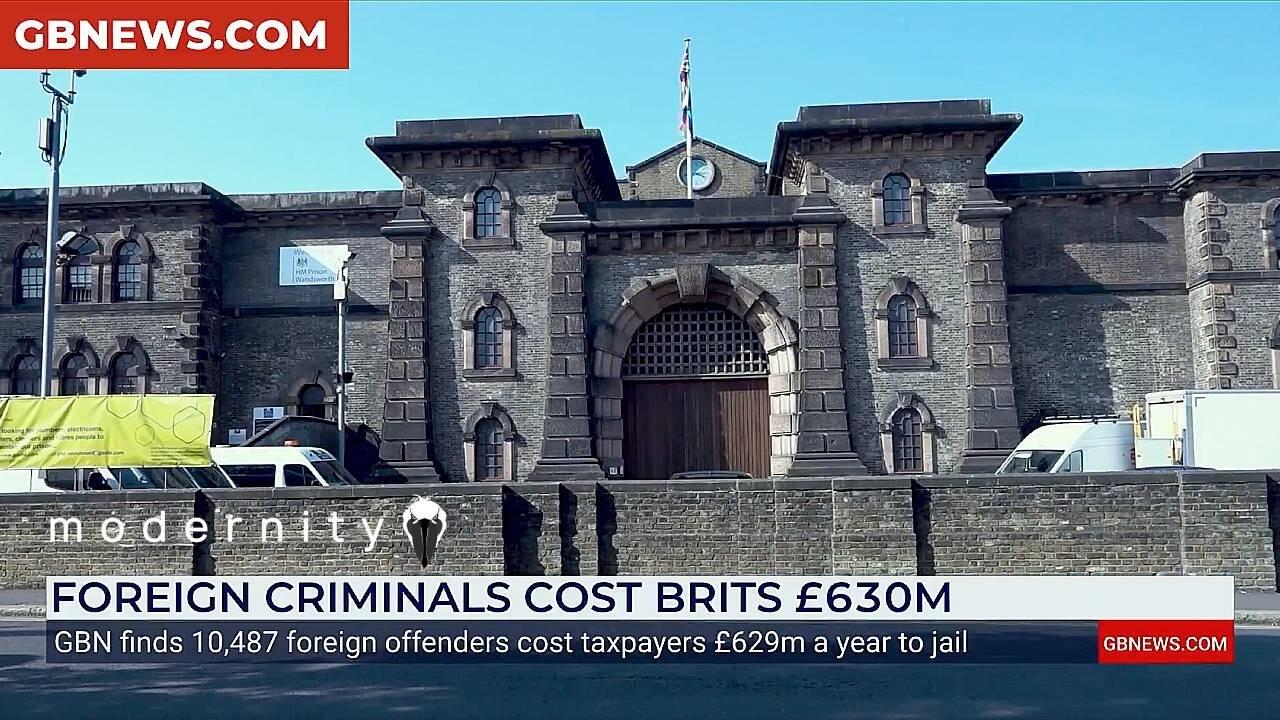
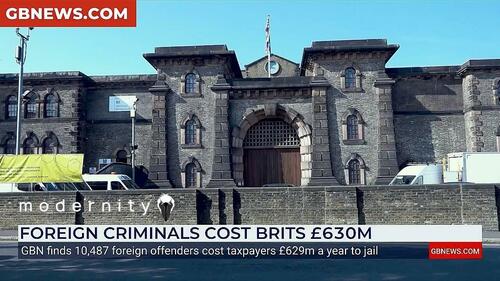
UK taxpayers are forking out £629 million a year to house 10,487 foreign national offenders in British prisons — a bill that could pay for 16,500 police officers or 15,000 NHS nurses.
While Labour claims it’s deporting record numbers, an ex-prison governor has torn into the “staggering” cost and the “incredibly slow process” that leaves dangerous foreign criminals draining public resources instead of being sent home.
This is the direct result of years of open-borders policies that prioritise criminals’ “rights” over British safety.
‘We’ve got to persuade countries to take these individuals back.’
Reform UK’s Prisons Advisor Vanessa Frake reacts as GB News finds 10,487 foreign offenders in Britain are costing taxpayers £629 million a year. pic.twitter.com/VRyPpaOlXf
— GB News (@GBNEWS) May 5, 2026
Reform UK’s Prisons Adviser and former prison governor Vanessa Frake laid it out clearly on GB News. “The cost to this country for foreign national prisoners is staggering,” she said. “It’s a very long, drawn-out process, which kind of goes from three main areas.”
Frake detailed the excuses that keep foreign offenders here: “The problem is a lack of identity documents for these people. Quite often they get rid of their passports, so the Home Office then has to write to the country that they originate from, and that process is very slow.”
“Sometimes the country refuses. And there are of course the ECHR claims. Those under Article 8, right to life, right to family for those who have family in this country and of course, there is administration errors as well,” Frake further explained.
She added that even recent deals fall short. “They’ve just done a deal with Albania to send 200 prisoners back, but that comes with certain conditions, like improving their prison service, giving them electric Volkswagens, etcetera.”
Britain’s ‘staggering’ cost of foreign nationals in UK prisons torn apart by ex-prison governorhttps://t.co/9k4F9JwdOT
— GB News (@GBNEWS) May 5, 2026
Frake noted the daily cost disparity: “It costs something like £109 a day in this country to keep a foreign national in prison, and we’re going to give the Albanians £32 a day, so it’s still not quick.”
Albania tops the list of foreign national prisoners, followed by Ireland and Poland. Yet Frake’s blunt conclusion was that Britain can’t simply load them onto planes. “We’re not going to get away with it by just putting them on a plane, we’ve got to persuade these countries to take these individuals back.”
This isn’t an isolated failure. It’s the pattern. Britain has repeatedly let violent offenders and known extremists stay or walk free despite clear red flags.
Take the most recent case of a Somali terrorist in London who previously stabbed police officers, and was a known extremist.
Essa Suleiman, who arrived as a child and holds British citizenship, was convicted in 2008 for stabbing two officers and a police dog. Referred to Prevent in 2020 as an extremist, he was still free to attempt to murder two Jewish people in Golders Green last month.
Leftists seem more concerned with how police roughly handled the terrorist, however.
In another case, Al-Qaeda-inspired plotter Shah Rahman, was convicted for planning to bomb the London Stock Exchange, but can’t be sent back to Bangladesh because an immigration judge ruled it would breach his Article 3 human rights against “torture or inhuman treatment.”
He even married a woman banned from Britain for life over ISIS material.
In Edinburgh a reported Somali migrant went on a knife rampage, smashing a shop and stabbing victims near a school.
Council leader Cllr Jane Meagher responded by praising Edinburgh’s “diversity” as its “biggest strength” and calling for more “tolerance.”
In another example, Zahid Iqbal, who plotted to bomb an Army base using an Al-Qaeda manual and a toy-car IED, was freed three years early despite warnings and prior recall for breaching conditions.
How many more are there like this — released from prison or previously charged with serious crimes — now roaming around free?
The Ministry of Justice claims more than 8,700 foreign offenders have been removed since July 2024. Yet the prisons remain full of them, the costs keep climbing, and the public keeps paying the price for a system rigged against its own people.
This growing insecurity is now reflected in public sentiment. According to a major survey, four in five parents (80%) fear their daughters will grow up feeling unsafe in public in Britain, with 40% believing this will happen at an earlier age than it did for them.
Most parents fear daughters will grow up unsafe in public
Read more 🔗 https://t.co/S6DhQspyoQ
— Sky News (@SkyNews) May 5, 2026
The solution offered?
In Dumfries, Scotland, schoolgirls were handed rape alarms after repeated reports of asylum seekers stalking and photographing them — the authorities’ answer to the problem instead of stopping the influx.
This is what unchecked mass immigration and weak deportation rules deliver: British taxpayers funding foreign criminals while violent threats walk the streets. Real border control means ending the excuses, scrapping the ECHR vetoes, and putting British safety first — before the bill gets any bigger.
Your support is crucial in helping us defeat mass censorship. Please consider donating via Locals or check out our unique merch. Follow us on X @ModernityNews.
Tyler Durden
Wed, 05/06/2026 – 07:20
Novo Nordisk Soars After New Obesity Pill Momentum Lifts Guidance
Novo Nordisk Soars After New Obesity Pill Momentum Lifts Guidance
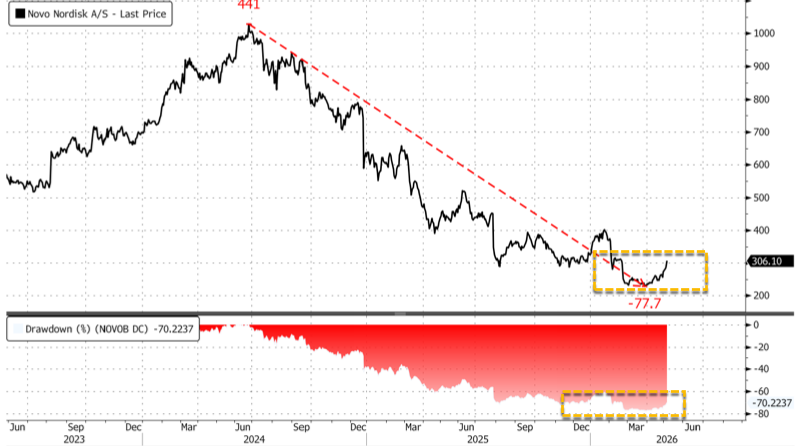
Novo Nordisk shares jumped as much as 9% in Copenhagen, suggesting the stock may finally be bottoming out after a vicious multi-year bear market. The move followed the Danish drugmaker’s decision to raise its 2026 guidance ranges for adjusted sales and adjusted operating profit, citing solid momentum in Wegovy sales.
Novo now expects full-year sales and profit declines of around 12%, down from a previous forecast of around 13%. The upgraded outlook was “driven by increased expectations for GLP-1 product sales,” according to the company.
Here’s a snapshot of the new full-year forecast, courtesy of Bloomberg:
Sees adjusted change in sales at constant exchange rates -4% to -12%, saw -5% to -13%, estimate -7.63% (Bloomberg Consensus)
Sees adjusted change in operating profit at constant FX -4% to -12%, saw -5% to -13%, estimate -8.26%
The key bright spot was momentum in the Wegovy pill:
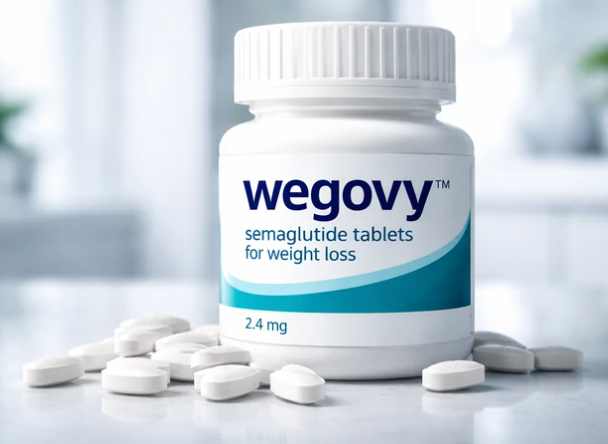
Wegovy pill was launched in the US on 5 January 2026, and for the week ending 17 April, total weekly prescriptions exceeded 200,000. Coupled with total prescriptions for Q1 2026 of around 1.3 million and now more than 2 million since launch, it marks the strongest-ever GLP-1 volume launch in the US. Q1 2026 sales for the Wegovy pill reached DKK 2,256 million, impacted by pre-launch pipeline fill with wholesalers and telehealth partners.
Pending regulatory decisions, the first Wegovy pill launches outside the US are expected during the second half of 2026.
“We have seen more than 1 million people using the Wegovy pill,” CEO Mike Doustdar told analysts on an earnings call earlier. He noted that patients are switching from competing products, with “limited cannibalization” of Novo’s other drugs.
Still, Novo’s overall business remains under pressure. First-quarter sales fell 10% to 70.1 billion Danish kroner, while adjusted operating profit dropped 15%. Diabetes drug sales fell 18%, with Ozempic hitting its lowest level in two years.
Novo is trying to regain momentum after losing market share to Eli Lilly’s Zepbound injection.
Novo shares in Copenhagen jumped as much as 9%. Shares have been locked in a vicious, nearly two-year bear market, down 70% from their peak.
Analyst commentary, courtesy of Bloomberg:
Barclays (equal weight)
Oral Wegovy was “off to a strong start,” analyst James Gordon writes in a note.
Sees questions on supply capacity when the pill launches in other countries, expected in 2H
Sees FY consensus expectations being increased by low single- digits
BMO Capital Markets (market perform)
The Wegovy pill “makes a splash” in its debut, analyst Evan Seigerman writes in a note.
It’s encouraging that roughly 15%-16% of pill patients are filling scripts for the highest dosages.
This “could be a leading indicator for improved revenue going forward, given their higher price.”
Wegovy and Ozempic injectables also beat expectations, “showing more resilience in the face of competition within class”
Jefferies (hold)
Although the 2026 guidance was nudged higher, it still leaves consensus expectations at the upper end of the range, analyst Michael Leuchten writes in a note.
The change in guidance probably won’t have a positive impact on consensus estimates.
It could actually drag pretax profit and EPS expectations down a couple of percent.
Intron Health (sell)
Sales beat expectations by 1%, driven by Wegovy pill stocking of ~$125m, analyst Naresh Chouhan writes in a note
Meanwhile, gross margin was 30 bps worse than expected
Morgan Stanley (equal weight)
1Q sales were a “small” beat, driven by the Wegovy pill — helped by stocking — and international operations, analyst Thibault Boutherin writes in a note
Lower operating costs helped the adjusted EBIT beat
Still sees the bottom end of the guidance as “conservative” and expects the company to finish the year “in the upper half of the guidance.”
Did Novo finally bottom?
Tyler Durden
Wed, 05/06/2026 – 06:55
https://www.zerohedge.com/markets/novo-nordisk-soars-after-new-obesity-pill-momo-lifts-guidance
There Needs To Be A Stronger European Element In NATO, Says Starmer
There Needs To Be A Stronger European Element In NATO, Says Starmer
Authored by Victoria Friedman via The Epoch Times (emphasis ours),
British Prime Minister Sir Keir Starmer said on May 4 that there needs to be a stronger European element in NATO, as the United States reconsiders its relationship with the defense alliance and pivots toward other security priorities domestically and globally.
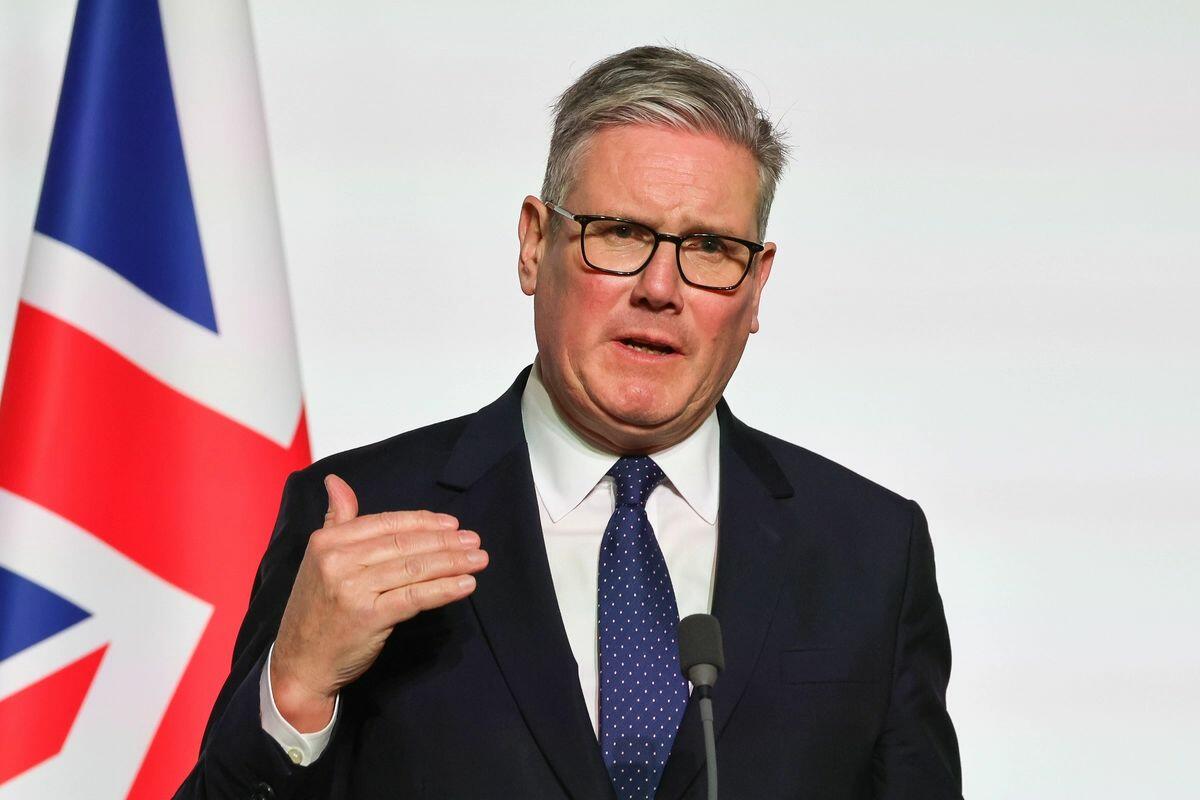
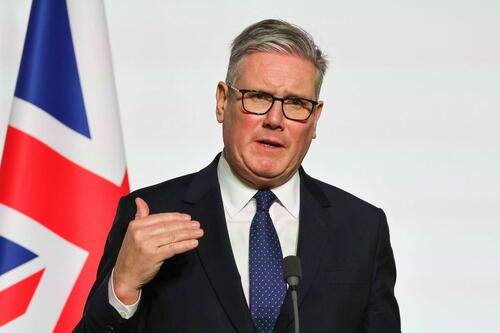
British Prime Minister Keir Starmer at the Elysee Palace in Paris on Jan 6, 2026. Ludovic Marin/AP
Starmer acknowledged during a panel discussion at the European Political Community summit in Yerevan, Armenia, that, in terms of defense and security, Europe has “got behind over many years, now.”
“We’re not where we need to be,” he said.
The British prime minister alluded to the impact of the Ukraine–Russia war and, more recently, the Iran conflict on global security and economic stability, saying that Europe, especially, had to come together around these issues.
“There needs to be a stronger European element in NATO. I have no doubt about that,” he said.
Starmer said that while there needed to be a stronger European element in defense and security, “we’ve been behind the curve for too long: over dependencies, over reliance, and assumptions about the world that we live in—they’ve gone.”
“We now need to lead out of this, and we need to do it at pace because these impacts are real,” Starmer said.
“The alliances that are under tension are real, and how we, as a group of leaders, respond now will likely define what goes on for many years—arguably for a generation.”
US Reorients Defense Priorities
U.S. President Donald Trump has long maintained that Europe should rely less on the United States for its security and that European NATO allies should increase their defense spending. This approach was formally accepted by NATO when, in June 2025, allies agreed to raise defense spending targets from 2 percent of gross domestic product to 5 percent by 2035.
The United States has also reoriented its defense and security priorities.
The Pentagon on Jan. 23 released its National Defense Strategy, which outlines the U.S. plan to prioritize homeland defense, including by “defending America’s interests throughout the Western Hemisphere,” according to the document.
It also said the United States would encourage partners in other parts of the world, including Europe, to take primary responsibility for their own defense “with critical but limited support from U.S. forces.”
Tension Over Support in Iran Conflict
In recent weeks, Trump has expressed frustration with the lack of support from NATO allies during the Iran war, prompting him to consider pulling out of the alliance.
Trump told British newspaper The Telegraph in an interview published on April 1 that his request for assistance in the Strait of Hormuz was a test that allies did not pass.
The president’s remarks followed similar comments from Secretary of State Marco Rubio.
Rubio said on March 30 that one of the benefits of U.S. membership in the alliance is that it gives Washington access to station troops, aircraft, and arms in other parts of the world—including much of Europe.
However, during Operation Epic Fury, “we have countries like Spain, a NATO member that we are pledged to defend, denying us the use of their airspace and bragging about it, denying us the use of our—of their bases,” Rubio said, adding that “there are other countries that have done that as well.”
Rubio said that while he supported NATO, his backing of the alliance was based on the assumption that there are reciprocal arrangements.
“But if NATO is just about us defending Europe if they’re attacked, but then denying us basing rights when we need them, that’s not a very good arrangement,” he said.
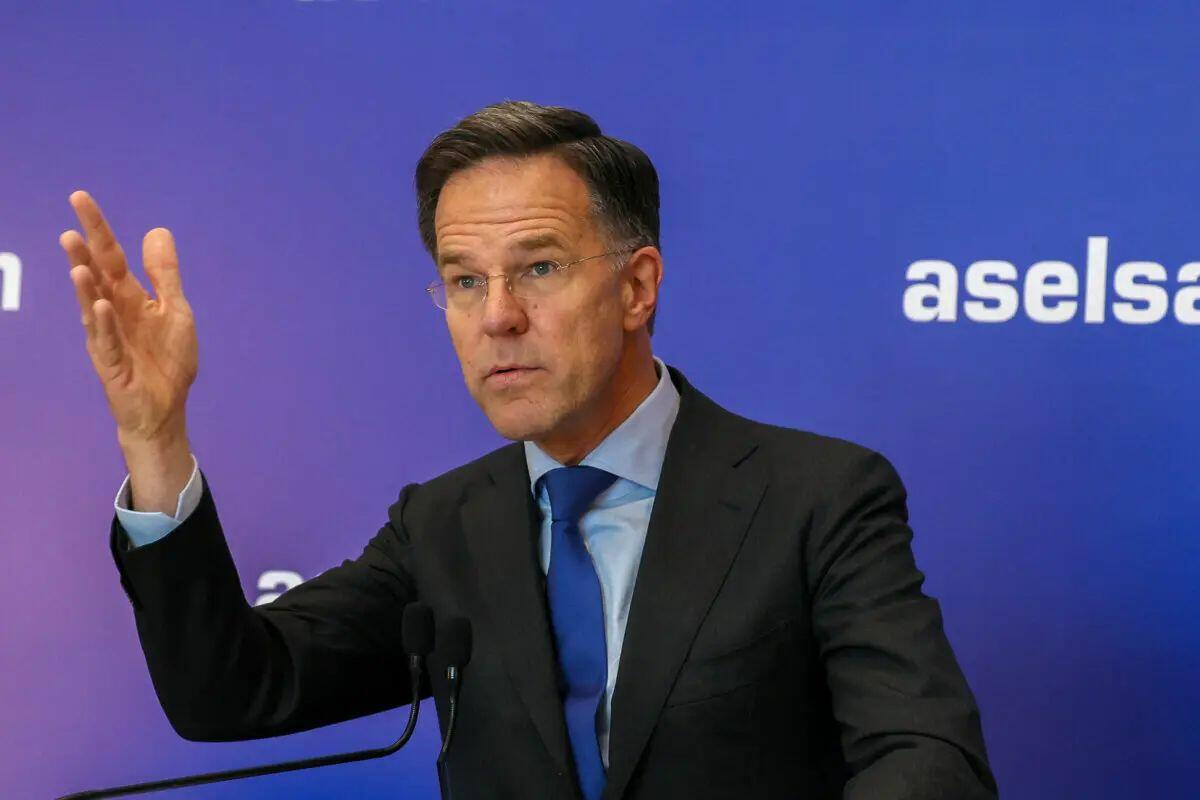
This week, NATO Secretary-General Mark Rutte said that NATO members had received Trump’s message about agreements allowing the United States to access European bases.
“Yes, there has been some disappointment from the U.S. side, but Europeans have listened,” Rutte told reporters at the same European Political Community summit in Armenia on May 4.
“They are now making sure that all the bilateral basing agreements are being implemented.”
Tyler Durden
Wed, 05/06/2026 – 06:30
https://www.zerohedge.com/political/there-needs-be-stronger-european-element-nato-says-starmer