Category: News

ISO New England Trims 10-Year Forecast Based On Electrification Outlook
ISO New England Trims 10-Year Forecast Based On Electrification Outlook
By Robert Walton of UtilityDive
Electricity consumption in New England will grow about 9% over the next decade, driven by electrification of buildings and vehicles, the region’s independent system operator said in an annual report published Friday. While significant, the rise in consumption is lower than its forecast in the two previous reports, reflecting changes in “government policy,” ISO New England said.
The “2026-2035 Forecast Report of Capacity, Energy, Loads, and Transmission,” or CELT report, estimates annual consumption will rise from 116,679 GWh this year to 127,660 GWh in 2035, an increase of about 0.9% annually.
In 2024, the ISO said it anticipated a 17% rise in annual energy use by 2033. In 2025, it reduced its 10-year outlook to an 11% rise by 2034.
The energy forecast “reflects more conservative assumptions around future adoption of electric vehicles and heat pumps in light of government policy changes,” the ISO said in a blog post.
New England’s net annual energy use has trended downward since 2005, “mainly due to more efficient heating and cooling systems, appliances, and lighting,” as well as growth in behind-the-meter solar, the grid operator said. Now, it predicts “that trend will reverse over the next decade.”
“Steady growth in net annual energy use is expected as state policy goals for carbon emissions reductions continue to incentivize electrification of heating systems and transportation in the region,” the ISO said.
Notably, the ISO said sustained load growth means it will soon be a dual-peaking system.
While New England has typically seen electricity demand peak during the hot summer months, the addition of electric heating load means that by 2035, the ISO expects winter and summer peaks to be roughly the same, around 26.5 GW. ISO New England’s all-time peak of 28.1 GW was set in summer 2006.
The grid operator anticipates peak demand of 25.2 GW this summer and 20.5 GW this upcoming winter season.
Heating electrification is projected to contribute 5,533 MW to the winter peak in 2035/2036, ISO said, while transportation electrification is forecast to contribute 1,509 MW. In the ISO’s previous CELT report, it estimated electric vehicles would account for 1,764 MW of the winter peak in 2034/2035, while heating electrification was is expected to account for 4,765 MW that season.
The ISO said it revised its EV adoption forecast down to account for the removal of federal incentives and revisions to state policies and expectations for each vehicle class. Its heat pump forecast was similarly adjusted to account for expiring federal tax credits.
Behind-the-meter solar is forecast to have a growing impact on winter peak demand, reducing it by an expected 316 MW in 2035/2036, the ISO said in its latest report.
Tyler Durden
Tue, 05/05/2026 – 17:40
“No Quick Fixes”: Supply-Chain Deep Dive Shows Beef Prices To Remain High
“No Quick Fixes”: Supply-Chain Deep Dive Shows Beef Prices To Remain High
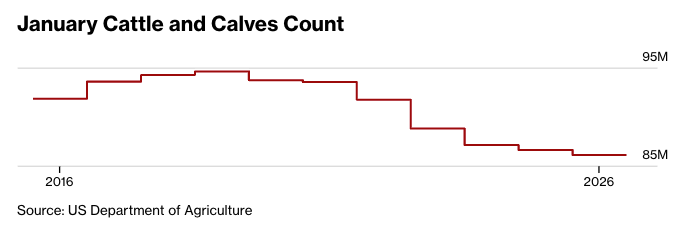
We are all familiar with the surge in beef prices, driven by a U.S. cattle herd at more than a half-century low amid severe drought, elevated feed costs, higher financing expenses, and other inflationary factors, such as soaring diesel prices, squeezing ranchers.
$175 for beef?!🥩
$20.65 per pound … for one cut.
Herds are at generational lows after years of drought, rising feed costs, and pressure on ranchers.
Supply gets squeezed → prices explode → families get hit.
This was the Democrat push!
What are you paying for beef where… pic.twitter.com/c5HdnidaKA
— Sherri Unfiltered™ (@FFT1776) May 4, 2026
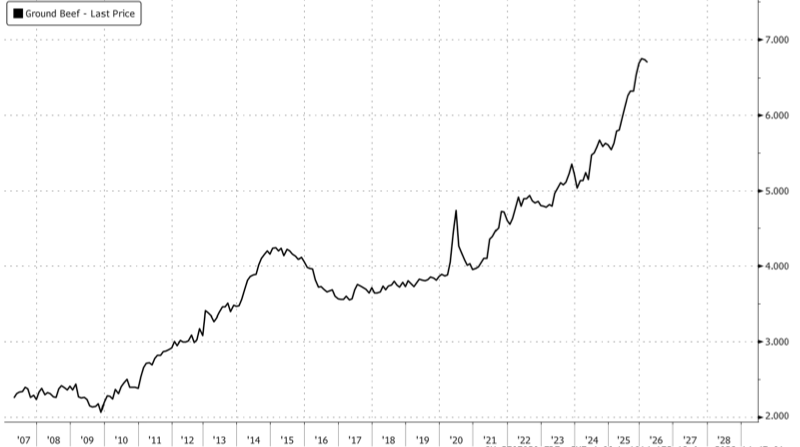
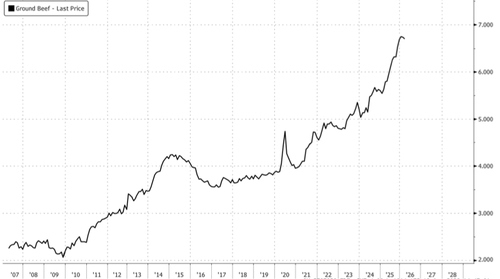
USDA data show average retail beef prices have been on a parabolic rise since the early days of the pandemic, with consumers facing sticker shock as soon as they step into any supermarket’s meat department.
A new Bloomberg report helps explain why beef prices are likely to remain sticky: the US cattle herd has fallen to its lowest level in 75 years. This supply shock has taken years to develop, and rebuilding will take years as well.
The Trump administration promised to tame beef prices, even considering a deal with Argentina to import cattle and alleviate the shortage. However, it appears the administration has shifted from potential supply maneuvers to asking the Justice Department to investigate possible antitrust violations among processors.
On Monday, Tyson Foods, the nation’s largest meat processor, reported another quarterly loss in its beef unit, highlighting that beef margins remain deeply negative even at the processing level. Tyson and other major meatpackers are being forced to pay premiums for scarce cattle, crushing margins that are being passed on to consumers.
“The reality behind expensive beef is complicated. There’s no quick fix for tight supplies, as the sticker shock in the grocery aisles didn’t happen overnight,” Bloomberg agricultural reporter Ilena Peng wrote in a note, adding, “It’s not just that the animals take a long time to grow. The complicated economics of cattle ranching also create pain points at key stages of production.”
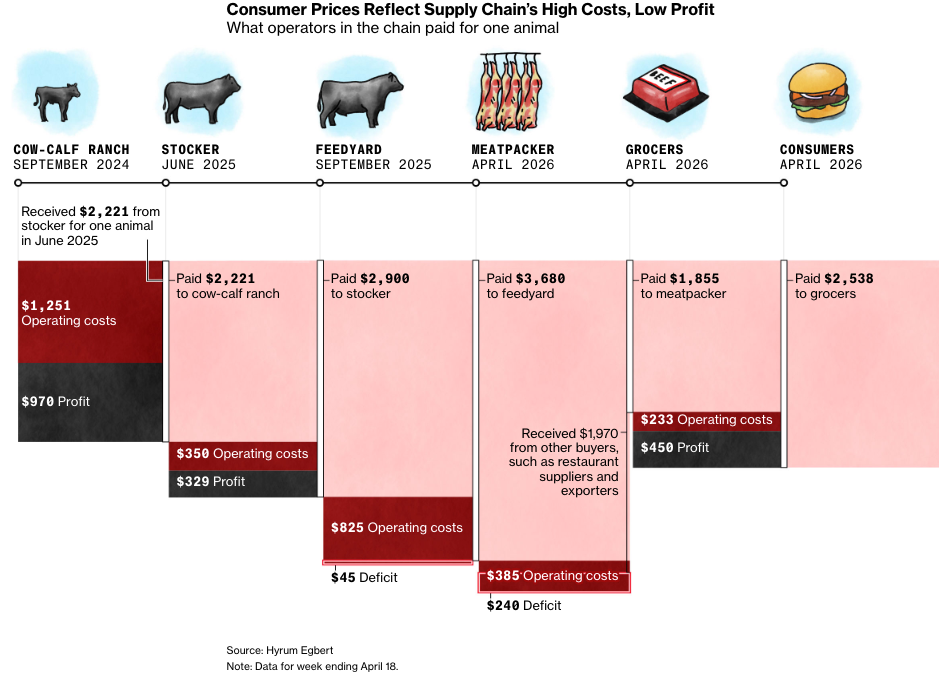
Peng walked readers through a hypothetical example of one animal’s journey through the cattle supply chain, showing that the profit pool is heavily skewed toward the front end.
Cow-calf ranchers are currently seeing solid profits, but margins deteriorate further downstream – from stockers to feedyards and meatpackers – where operators remain under pressure. Grocers, meanwhile, have been able to pass higher costs on to consumers, particularly as beef demand remains robust.
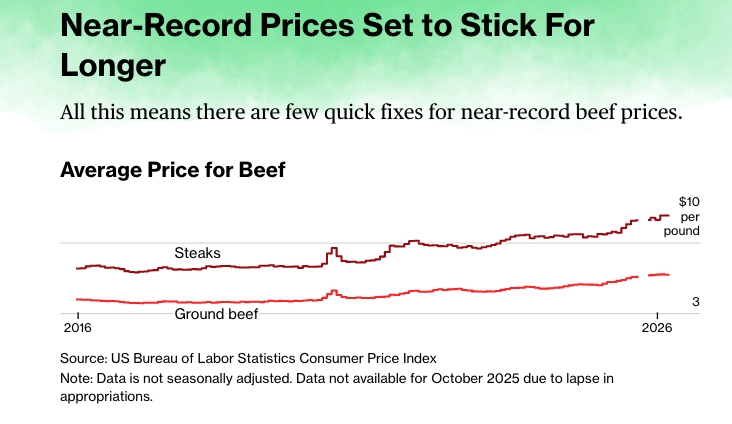
Peng warned readers, “All this means there are few quick fixes for near-record beef prices.”
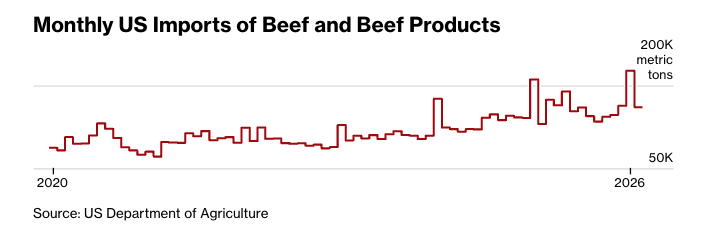
Monthly US Imports of Beef and Beef Products
January Cattle and Calves Count
“Pressures at every stage of the 18-month supply chain are expected to keep prices high at least through year-end,” Peng continued.
This means beef prices may have to rise even higher into summer and enter demand-destroying territory. This is bad news for consumers ahead of cookout season.
Tyler Durden
Tue, 05/05/2026 – 17:20
“No Quick Fixes”: Supply-Chain Deep Dive Shows Beef Prices To Remain High
“No Quick Fixes”: Supply-Chain Deep Dive Shows Beef Prices To Remain High
We are all familiar with the surge in beef prices, driven by a U.S. cattle herd at more than a half-century low amid severe drought, elevated feed costs, higher financing expenses, and other inflationary factors, such as soaring diesel prices, squeezing ranchers.
$175 for beef?!🥩
$20.65 per pound … for one cut.
Herds are at generational lows after years of drought, rising feed costs, and pressure on ranchers.
Supply gets squeezed → prices explode → families get hit.
This was the Democrat push!
What are you paying for beef where… pic.twitter.com/c5HdnidaKA
— Sherri Unfiltered™ (@FFT1776) May 4, 2026
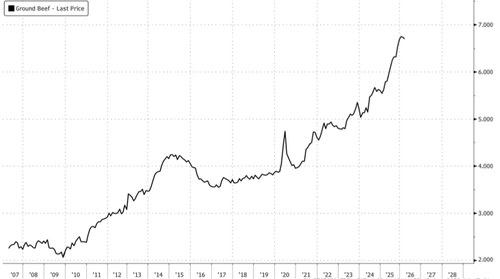
USDA data show average retail beef prices have been on a parabolic rise since the early days of the pandemic, with consumers facing sticker shock as soon as they step into any supermarket’s meat department.
A new Bloomberg report helps explain why beef prices are likely to remain sticky: the US cattle herd has fallen to its lowest level in 75 years. This supply shock has taken years to develop, and rebuilding will take years as well.
The Trump administration promised to tame beef prices, even considering a deal with Argentina to import cattle and alleviate the shortage. However, it appears the administration has shifted from potential supply maneuvers to asking the Justice Department to investigate possible antitrust violations among processors.
On Monday, Tyson Foods, the nation’s largest meat processor, reported another quarterly loss in its beef unit, highlighting that beef margins remain deeply negative even at the processing level. Tyson and other major meatpackers are being forced to pay premiums for scarce cattle, crushing margins that are being passed on to consumers.
“The reality behind expensive beef is complicated. There’s no quick fix for tight supplies, as the sticker shock in the grocery aisles didn’t happen overnight,” Bloomberg agricultural reporter Ilena Peng wrote in a note, adding, “It’s not just that the animals take a long time to grow. The complicated economics of cattle ranching also create pain points at key stages of production.”
Peng walked readers through a hypothetical example of one animal’s journey through the cattle supply chain, showing that the profit pool is heavily skewed toward the front end.
Cow-calf ranchers are currently seeing solid profits, but margins deteriorate further downstream – from stockers to feedyards and meatpackers – where operators remain under pressure. Grocers, meanwhile, have been able to pass higher costs on to consumers, particularly as beef demand remains robust.
Peng warned readers, “All this means there are few quick fixes for near-record beef prices.”
Monthly US Imports of Beef and Beef Products
January Cattle and Calves Count
“Pressures at every stage of the 18-month supply chain are expected to keep prices high at least through year-end,” Peng continued.
This means beef prices may have to rise even higher into summer and enter demand-destroying territory. This is bad news for consumers ahead of cookout season.
Tyler Durden
Tue, 05/05/2026 – 17:20

From DEI To Equal Protection: A New Direction In Civil Rights Policy
From DEI To Equal Protection: A New Direction In Civil Rights Policy
Authored by Kenin M. Spivak via RealClearPolitics,
The Trump administration is restoring the core value of equal opportunity to civil rights enforcement. It is eviscerating the race-baiting, intersectional policies of the Biden and Obama administrations, and giving substance to the Supreme Court’s unanimous decision in Ames v. Ohio Department of Youth Services (2025) that whites, men, and heterosexuals are not held to a higher standard in discrimination cases.
This is a time for rejoicing, tempered by concern that the administration will not have time to complete its work, and that its reliance on executive orders, rather than legislation and consent decrees, will allow the next Democratic president to rip asunder President Trump’s laudable accomplishments.
Despite more than a century of Supreme Court decisions forbidding discrimination on the basis of race, Democrats generally, and progressives specifically, have inverted President John F. Kennedy’s executive order establishing affirmative action. Intended to bring an end to discrimination because of race, creed, color, and national origin, progressives instead transformed affirmative action into a system of preferences based on melanin content, and absorbed this once hopeful construct into radical philosophies used to justify bias, including Critical Race Theory (CRT), intersectionality, disparate impact theory, and ultimately DEI (diversity, equity and inclusion).
They oppose Trump’s effort to dismantle their race-addled policies with every lever available to them. Ivy League universities have to be bludgeoned into enforcing equal rights. Blue city mayors continue their fight to sideline white males. Hollywood artists and programmers refuse to work for studios and tech companies that recognize political and legal realties. Liberal Supreme Court justices bemoan the majority’s refusal to rule based on the intersectional hierarchy of so-called “marginalized” minorities, and Obama- and Biden-appointed federal judges enjoin proper exercises of executive power.
CRT originated in the 1970s as a tortured rationale advocating that colorblind laws inevitably serve the interests of white people.
Intersectionality has become a cornerstone of CRT. Developed principally by Columbia Law Professor Kimberlé Crenshaw, it utilizes a hierarchy of social oppression to allocate benefits and burdens, providing the doctrinal basis for DEI policies, transgender activism, and antisemitism. The latter shows the bankruptcy of the dogma: Despite hundreds of years of oppression, pogroms and the Holocaust, as a result of educational and business achievements, Jews are seen as powerful oppressors, while Palestinians and other Muslims are seen as marginalized minorities.
Disparate impact is a central tenet of progressive litigation strategy. Its premise that marginalized communities must receive their proportionate share of opportunities is the progenitor of the “equity” prong of DEI. Liability is established if there is a shortfall, regardless of whether that shortfall is caused by discrimination.
DEI is the fusion of these philosophies, a malevolent form of affirmative action that allocates benefits based on race, sex, and gender identity. To ensure pre-determined outcomes, progressive decisionmakers and courts have tampered with and eliminated entry exams, waived criminal background checks, and watered down academic, disciplinary, admissions, graduation, employment, and promotion standards.
In 2024, the Biden administration took a bow for more than 650 actions that required federal, state, and local government agencies and contractors to award and allocate burdens, opportunities, and benefits based on race, sex, and gender identification.
Progressives defended these manifestly unconstitutional and unlawful actions by claiming that while the words of the 14th Amendment, federal civil rights statutes, and President Johnson’s executive order on equal employment opportunity prohibit the use of race in government actions, their true meaning was the opposite – that race and other innate characteristics must be used to achieve outcomes based on these characteristics.
The Biden administration also targeted people of faith, with abuses ranging from FBI infiltration of Catholic churches to weaponizing the FACE Act against pro-life Americans. And it adopted rules requiring that universities treat biological males who identify as women as actual women, and ended due process for any grievances filed for allegedly violating their rights, or in sexual harassment cases. Respondents were denied notice, the right to examine the complainant, or a right of appeal. The university investigator was permitted to serve as the hearing officer.
Progressives justified the administration’s attack on religion, female athletes, and due process as necessary to protect the rights of marginalized minorities.
Underscoring the left’s situational ethics, as the Biden administration embarked on a whole-of-government censorship enterprise to silence its critics, the ACLU abandoned its 100-year commitment to free speech, declaring that speech that denigrates marginalized groups can “inflict serious harms and is intended to and often will impede progress toward equality.”
Upon taking office for his second term, President Trump revoked Biden’s executive orders impacting race, sex, and gender. He issued orders prohibiting DEI, other race-based programs, and disparate impact in federal government hiring, promotion, and contracting; terminated federal employees hired for the Biden administration’s massive DEI apparatus; and ordered “appropriate action” to pressure K-12 schools into abandoning race-based disciplinary policies. He rescinded an executive order that required federal contractors to utilize affirmative action in their hiring practices.
Rejecting intersectionality, Trump issued orders tying federal funding to elimination of extreme gender ideology, proclaiming, “It is the policy of the United States to recognize two sexes, male and female. These sexes are not changeable and are grounded in fundamental and incontrovertible reality,” and protecting children from chemical and surgical mutilation – positions belatedly adopted by leading medical organizations. He also ordered the Department of Education to take all appropriate action to keep biological men out of women’s sports.
Trump directed federal agencies to improve security vetting for international students and to prioritize civil rights protections for Jewish students. He eliminated collection and publication of data used in a misguided effort to claim that environmental harms targeted minorities because manufacturing facilities are concentrated in lower-income neighborhoods, and he issued an order to pressure the Smithsonian Institution to restore balance to its depiction of American history.
The Justice Department’s Civil Rights Division under Harmeet Dhillon and Education Department under Linda McMahon launched enforcement actions against Ivy league universities to protect Jewish students and restore viewpoint diversity. The Justice Department also commenced investigations, filed and intervened in lawsuits, and reached settlements with public and private institutions to protect Americans of all backgrounds and faiths – just last week forcing Colorado to abandon a law that favors AI algorithms that promote “diversity.” It investigated the Biden administration’s weaponization of the FACE Act, issued an 882-page report exposing the abuses, and eliminated them. The Education Department ordered universities to bring back due process in university grievance procedures.
The left is vigorously fighting back. Universities have slyly rebranded DEI offices, legal challenges have been filed against Trump’s executive orders and related regulations, Democrat-appointed judges have issued injunctions, and Democratic Party officials have doubled down on racial and gender politics. For the most part, the administration has prevailed in lower courts or secured stays of adverse rulings pending appeals.
Some progressives support intersectionality, disparate impact, and DEI to harm straight white Americans. Many are so caught up in innate characteristics that they believe individual opportunity and fairness is determined at a group level, while other progressives delude themselves into believing they can choose winners without creating losers. The administration must hold firm against the left’s vitriolic counterattacks. As Donald Trump restores the American dream of equal opportunity, his challenge with just eight months until the probable loss of the Republican legislative majority is to create enduring change, rather than an interregnum in progressive rule.
Kenin M. Spivak is founder and chairman of SMI Group LLC, an international consulting firm and investment bank. He is the author of fiction and non-fiction books and a frequent speaker and contributor to media, including RealClearPolitics, The American Mind, National Review, television, radio, and podcasts.
Tyler Durden
Tue, 05/05/2026 – 17:00
https://www.zerohedge.com/political/dei-equal-protection-new-direction-civil-rights-policy
From DEI To Equal Protection: A New Direction In Civil Rights Policy
From DEI To Equal Protection: A New Direction In Civil Rights Policy
Authored by Kenin M. Spivak via RealClearPolitics,
The Trump administration is restoring the core value of equal opportunity to civil rights enforcement. It is eviscerating the race-baiting, intersectional policies of the Biden and Obama administrations, and giving substance to the Supreme Court’s unanimous decision in Ames v. Ohio Department of Youth Services (2025) that whites, men, and heterosexuals are not held to a higher standard in discrimination cases.
This is a time for rejoicing, tempered by concern that the administration will not have time to complete its work, and that its reliance on executive orders, rather than legislation and consent decrees, will allow the next Democratic president to rip asunder President Trump’s laudable accomplishments.
Despite more than a century of Supreme Court decisions forbidding discrimination on the basis of race, Democrats generally, and progressives specifically, have inverted President John F. Kennedy’s executive order establishing affirmative action. Intended to bring an end to discrimination because of race, creed, color, and national origin, progressives instead transformed affirmative action into a system of preferences based on melanin content, and absorbed this once hopeful construct into radical philosophies used to justify bias, including Critical Race Theory (CRT), intersectionality, disparate impact theory, and ultimately DEI (diversity, equity and inclusion).
They oppose Trump’s effort to dismantle their race-addled policies with every lever available to them. Ivy League universities have to be bludgeoned into enforcing equal rights. Blue city mayors continue their fight to sideline white males. Hollywood artists and programmers refuse to work for studios and tech companies that recognize political and legal realties. Liberal Supreme Court justices bemoan the majority’s refusal to rule based on the intersectional hierarchy of so-called “marginalized” minorities, and Obama- and Biden-appointed federal judges enjoin proper exercises of executive power.
CRT originated in the 1970s as a tortured rationale advocating that colorblind laws inevitably serve the interests of white people.
Intersectionality has become a cornerstone of CRT. Developed principally by Columbia Law Professor Kimberlé Crenshaw, it utilizes a hierarchy of social oppression to allocate benefits and burdens, providing the doctrinal basis for DEI policies, transgender activism, and antisemitism. The latter shows the bankruptcy of the dogma: Despite hundreds of years of oppression, pogroms and the Holocaust, as a result of educational and business achievements, Jews are seen as powerful oppressors, while Palestinians and other Muslims are seen as marginalized minorities.
Disparate impact is a central tenet of progressive litigation strategy. Its premise that marginalized communities must receive their proportionate share of opportunities is the progenitor of the “equity” prong of DEI. Liability is established if there is a shortfall, regardless of whether that shortfall is caused by discrimination.
DEI is the fusion of these philosophies, a malevolent form of affirmative action that allocates benefits based on race, sex, and gender identity. To ensure pre-determined outcomes, progressive decisionmakers and courts have tampered with and eliminated entry exams, waived criminal background checks, and watered down academic, disciplinary, admissions, graduation, employment, and promotion standards.
In 2024, the Biden administration took a bow for more than 650 actions that required federal, state, and local government agencies and contractors to award and allocate burdens, opportunities, and benefits based on race, sex, and gender identification.
Progressives defended these manifestly unconstitutional and unlawful actions by claiming that while the words of the 14th Amendment, federal civil rights statutes, and President Johnson’s executive order on equal employment opportunity prohibit the use of race in government actions, their true meaning was the opposite – that race and other innate characteristics must be used to achieve outcomes based on these characteristics.
The Biden administration also targeted people of faith, with abuses ranging from FBI infiltration of Catholic churches to weaponizing the FACE Act against pro-life Americans. And it adopted rules requiring that universities treat biological males who identify as women as actual women, and ended due process for any grievances filed for allegedly violating their rights, or in sexual harassment cases. Respondents were denied notice, the right to examine the complainant, or a right of appeal. The university investigator was permitted to serve as the hearing officer.
Progressives justified the administration’s attack on religion, female athletes, and due process as necessary to protect the rights of marginalized minorities.
Underscoring the left’s situational ethics, as the Biden administration embarked on a whole-of-government censorship enterprise to silence its critics, the ACLU abandoned its 100-year commitment to free speech, declaring that speech that denigrates marginalized groups can “inflict serious harms and is intended to and often will impede progress toward equality.”
Upon taking office for his second term, President Trump revoked Biden’s executive orders impacting race, sex, and gender. He issued orders prohibiting DEI, other race-based programs, and disparate impact in federal government hiring, promotion, and contracting; terminated federal employees hired for the Biden administration’s massive DEI apparatus; and ordered “appropriate action” to pressure K-12 schools into abandoning race-based disciplinary policies. He rescinded an executive order that required federal contractors to utilize affirmative action in their hiring practices.
Rejecting intersectionality, Trump issued orders tying federal funding to elimination of extreme gender ideology, proclaiming, “It is the policy of the United States to recognize two sexes, male and female. These sexes are not changeable and are grounded in fundamental and incontrovertible reality,” and protecting children from chemical and surgical mutilation – positions belatedly adopted by leading medical organizations. He also ordered the Department of Education to take all appropriate action to keep biological men out of women’s sports.
Trump directed federal agencies to improve security vetting for international students and to prioritize civil rights protections for Jewish students. He eliminated collection and publication of data used in a misguided effort to claim that environmental harms targeted minorities because manufacturing facilities are concentrated in lower-income neighborhoods, and he issued an order to pressure the Smithsonian Institution to restore balance to its depiction of American history.
The Justice Department’s Civil Rights Division under Harmeet Dhillon and Education Department under Linda McMahon launched enforcement actions against Ivy league universities to protect Jewish students and restore viewpoint diversity. The Justice Department also commenced investigations, filed and intervened in lawsuits, and reached settlements with public and private institutions to protect Americans of all backgrounds and faiths – just last week forcing Colorado to abandon a law that favors AI algorithms that promote “diversity.” It investigated the Biden administration’s weaponization of the FACE Act, issued an 882-page report exposing the abuses, and eliminated them. The Education Department ordered universities to bring back due process in university grievance procedures.
The left is vigorously fighting back. Universities have slyly rebranded DEI offices, legal challenges have been filed against Trump’s executive orders and related regulations, Democrat-appointed judges have issued injunctions, and Democratic Party officials have doubled down on racial and gender politics. For the most part, the administration has prevailed in lower courts or secured stays of adverse rulings pending appeals.
Some progressives support intersectionality, disparate impact, and DEI to harm straight white Americans. Many are so caught up in innate characteristics that they believe individual opportunity and fairness is determined at a group level, while other progressives delude themselves into believing they can choose winners without creating losers. The administration must hold firm against the left’s vitriolic counterattacks. As Donald Trump restores the American dream of equal opportunity, his challenge with just eight months until the probable loss of the Republican legislative majority is to create enduring change, rather than an interregnum in progressive rule.
Kenin M. Spivak is founder and chairman of SMI Group LLC, an international consulting firm and investment bank. He is the author of fiction and non-fiction books and a frequent speaker and contributor to media, including RealClearPolitics, The American Mind, National Review, television, radio, and podcasts.
Tyler Durden
Tue, 05/05/2026 – 17:00
https://www.zerohedge.com/political/dei-equal-protection-new-direction-civil-rights-policy

Alberta Separatists Say They Have Enough Signatures To Force Referendum On Leaving Canada
Alberta Separatists Say They Have Enough Signatures To Force Referendum On Leaving Canada
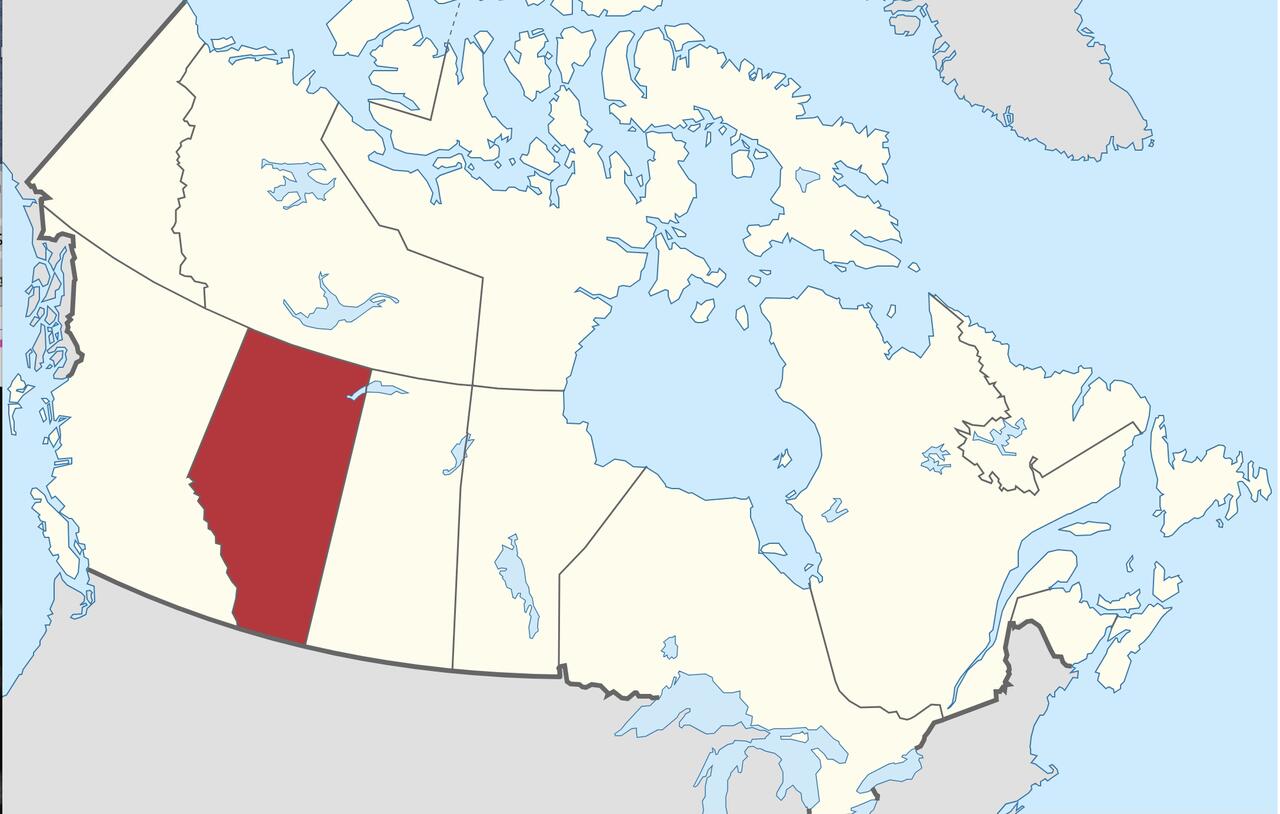
A group pushing for Alberta to break free from Canada announced Monday that it has submitted nearly double the number of signatures required to force a referendum — which could come as early as October. While Alberta Premier Danielle Smith opposes independence, she has assured Albertans that she will not try to thwart a referendum if the signature hurdle were cleared.
Triggering a referendum requires 178,000 signatures, but the separatist organization Stay Free Alberta says it amassed more than 301,000. As in the United States, referendum organizers usually aim to far overshoot the required number so as to survive challenges on the validity of individual signatures.
On Monday, the group’s leader, Mitch Sylvestre descended on Alberta’s election offices in Edmonton with the petitions, aboard a convoy seven trucks strong. Celebrating the accomplishment, he likened it to Canada’s favorite sport. “This day is historic in Alberta history,” he said. “It’s the first step to the next step — we’ve gotten by Round 3 and now we’re in the Stanley Cup final.”
Despite Sylvestre’s triumphalism, the independence drive could hit a snag this week, as a judge may rule on a challenge of the referendum filed by a First Nations group. That term is used to describe indigenous people who are not Inuit or Métis. Their legal challenge centers on the claim that Albertan independence would deny them privileges afforded them by treaties. The verification of referendum-support signatures has been stayed pending the decision. However, Stay Free Alberta attorney Jeff Rath said these are mere speed bumps. “As far as we’re concerned, whatever the court does or whatever Elections Alberta does at this point is meaningless,” he told CBC, given the premier can’t ignore more than 300,000 signatures.
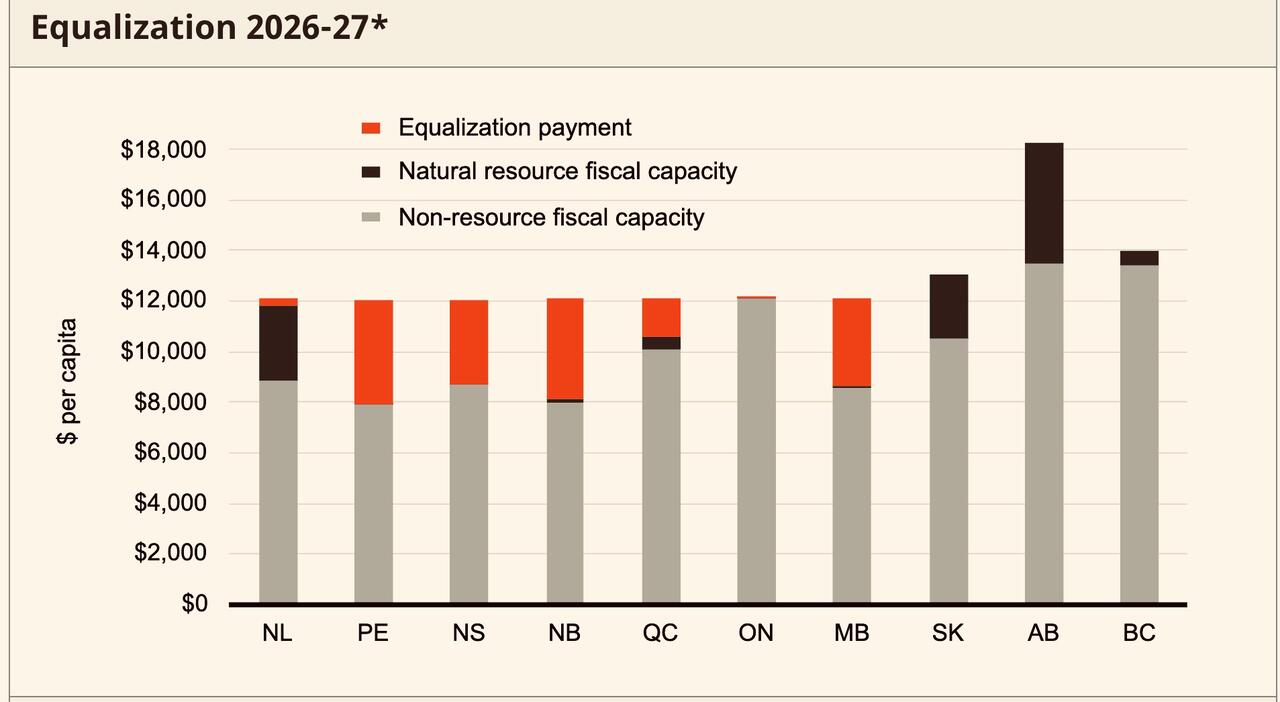
Alberta has been on the wrong end of a Canadian policy called “Equalization” — a more palatable term than what it should be called: “Wealth Redistribution.” According to the Canadian government’s official description, Equalization “address[es] fiscal disparities among provinces.” It does so by distributing the fiscal fruits of federal taxation to provinces in such a way that poorer provinces get more money than more-prosperous ones. Alberta is easily Canada’s best-off province on a per-capita basis.
Alberta (AB) is easily Canada’s wealthiest province, and sees its wealth redistributed throughout the country under the “Equalization” scheme (via Canadian government)
A victory for the “yes” side of the referendum won’t guarantee independence, as more legal challenges will certainly sprout up, to say nothing of the thorny negotiations with the Canadian government that would be required — negotiations that could be slow-walked by Albertan leaders who aren’t enthused about breaking away.
For those and other reasons, some who support independence are wary of how the referendum will play out. For example, even if the pro-independence side prevails, the waters could be muddied by the results of concurrent referendum questions. Writing at the Brownstone Institute earlier this year, Bruce Pardy painted a picture:
If voters support independence but also other constitutional changes, what do they mean? Which should be pursued first? Which is the last resort? What if voters support independence but also support Alberta having the right to opt out of federal programs while retaining federal funding? Both of those things cannot happen. One requires that Alberta be a province, and the other requires that it not be. Any referendum result that requires interpretation is not clear.
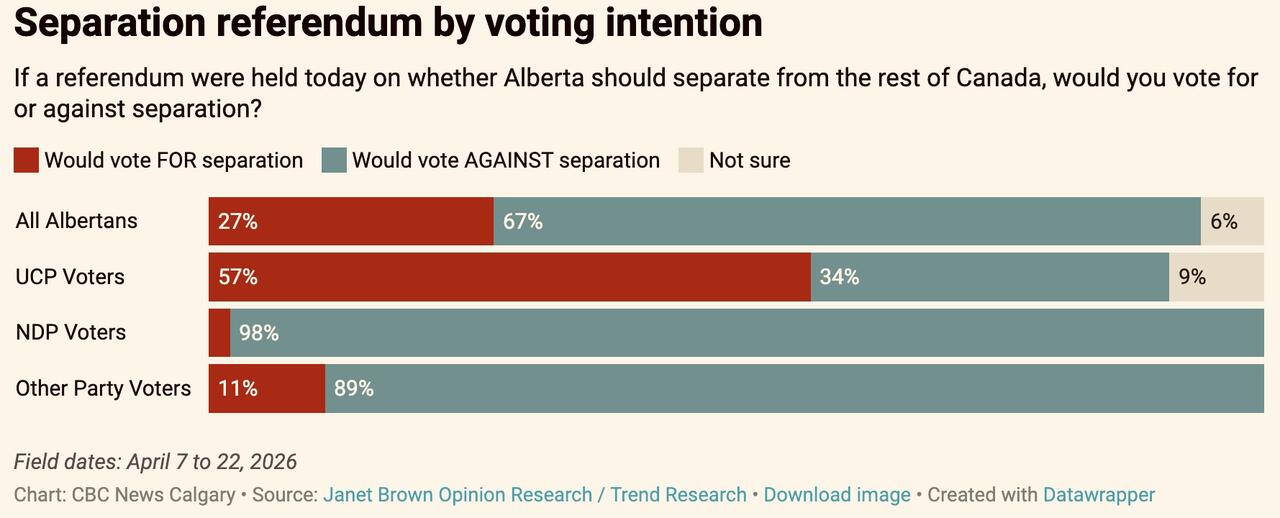
A pro-unity group called Forever Canadian has been active too, racking up more than 400,000 signatures on a petition that asked, “Do you agree that Alberta should remain within Canada?” Meanwhile, polls show an uphill climb for the separatists, with huge differences between United Conservative Party and New Democratic Party voters:
Tyler Durden
Tue, 05/05/2026 – 16:40

Alberta Separatists Say They Have Enough Signatures To Force Referendum On Leaving Canada
Alberta Separatists Say They Have Enough Signatures To Force Referendum On Leaving Canada
A group pushing for Alberta to break free from Canada announced Monday that it has submitted nearly double the number of signatures required to force a referendum — which could come as early as October. While Alberta Premier Danielle Smith opposes independence, she has assured Albertans that she will not try to thwart a referendum if the signature hurdle were cleared.
Triggering a referendum requires 178,000 signatures, but the separatist organization Stay Free Alberta says it amassed more than 301,000. As in the United States, referendum organizers usually aim to far overshoot the required number so as to survive challenges on the validity of individual signatures.
On Monday, the group’s leader, Mitch Sylvestre descended on Alberta’s election offices in Edmonton with the petitions, aboard a convoy seven trucks strong. Celebrating the accomplishment, he likened it to Canada’s favorite sport. “This day is historic in Alberta history,” he said. “It’s the first step to the next step — we’ve gotten by Round 3 and now we’re in the Stanley Cup final.”
Despite Sylvestre’s triumphalism, the independence drive could hit a snag this week, as a judge may rule on a challenge of the referendum filed by a First Nations group. That term is used to describe indigenous people who are not Inuit or Métis. Their legal challenge centers on the claim that Albertan independence would deny them privileges afforded them by treaties. The verification of referendum-support signatures has been stayed pending the decision. However, Stay Free Alberta attorney Jeff Rath said these are mere speed bumps. “As far as we’re concerned, whatever the court does or whatever Elections Alberta does at this point is meaningless,” he told CBC, given the premier can’t ignore more than 300,000 signatures.
Alberta has been on the wrong end of a Canadian policy called “Equalization” — a more palatable term than what it should be called: “Wealth Redistribution.” According to the Canadian government’s official description, Equalization “address[es] fiscal disparities among provinces.” It does so by distributing the fiscal fruits of federal taxation to provinces in such a way that poorer provinces get more money than more-prosperous ones. Alberta is easily Canada’s best-off province on a per-capita basis.
Alberta (AB) is easily Canada’s wealthiest province, and sees its wealth redistributed throughout the country under the “Equalization” scheme (via Canadian government)
A victory for the “yes” side of the referendum won’t guarantee independence, as more legal challenges will certainly sprout up, to say nothing of the thorny negotiations with the Canadian government that would be required — negotiations that could be slow-walked by Albertan leaders who aren’t enthused about breaking away.
For those and other reasons, some who support independence are wary of how the referendum will play out. For example, even if the pro-independence side prevails, the waters could be muddied by the results of concurrent referendum questions. Writing at the Brownstone Institute earlier this year, Bruce Pardy painted a picture:
If voters support independence but also other constitutional changes, what do they mean? Which should be pursued first? Which is the last resort? What if voters support independence but also support Alberta having the right to opt out of federal programs while retaining federal funding? Both of those things cannot happen. One requires that Alberta be a province, and the other requires that it not be. Any referendum result that requires interpretation is not clear.
A pro-unity group called Forever Canadian has been active too, racking up more than 400,000 signatures on a petition that asked, “Do you agree that Alberta should remain within Canada?” Meanwhile, polls show an uphill climb for the separatists, with huge differences between United Conservative Party and New Democratic Party voters:
Tyler Durden
Tue, 05/05/2026 – 16:40
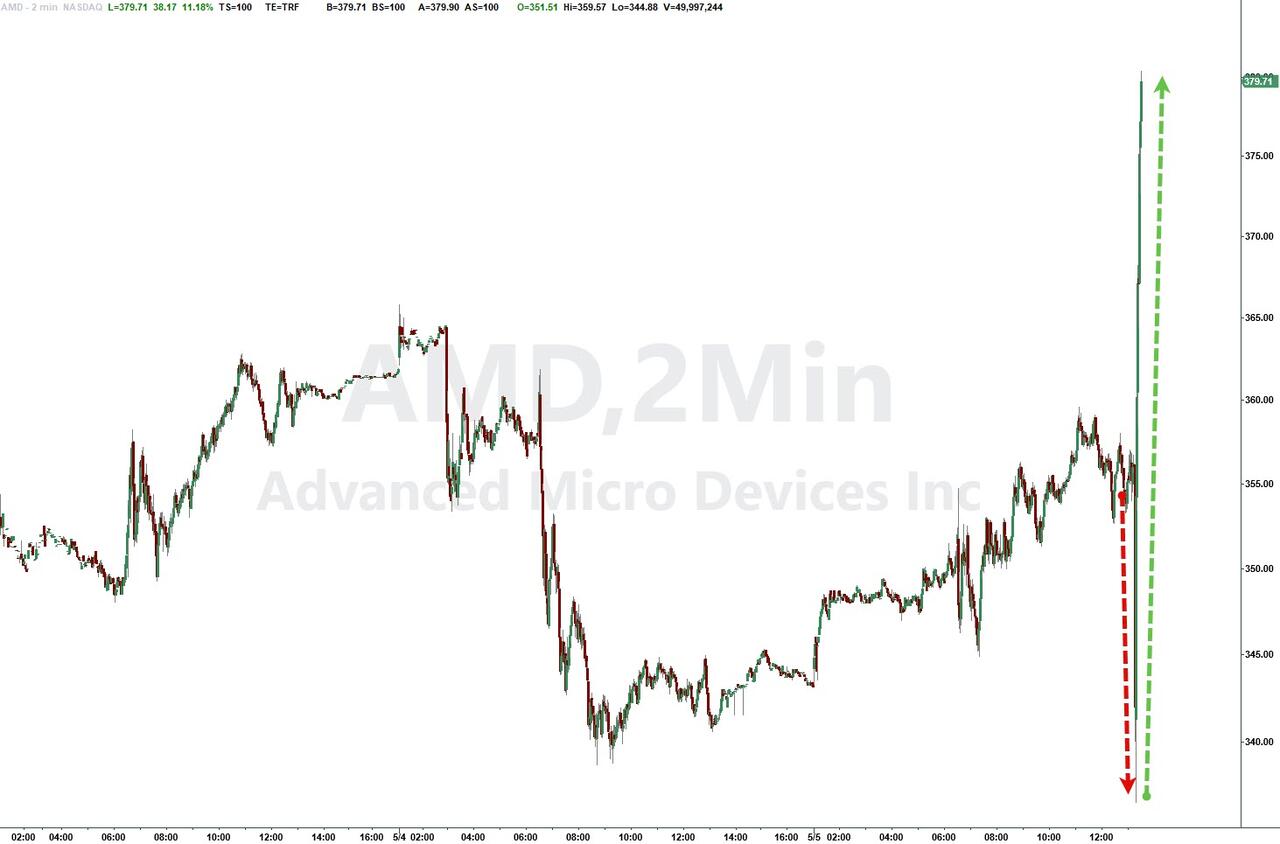
AMD Dumps & Pumps (To New Record High) After Beat-And-Raise
AMD Dumps & Pumps (To New Record High) After Beat-And-Raise
Just wow…
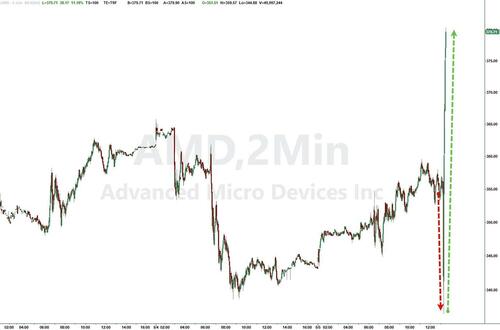
AMD shares initially puked after results dropped showing top- and bottom-line beats:
EPS: $1.37 vs. $1.29 adjusted expected
Revenue: $10.25 billion vs. $9.89 billion expected
But now they are exploding higher after the second-largest AI chipmaker raised estimates:
For the second quarter, AMD said it expects about $11.2 billion in revenue, versus expectations of $10.52 billion, according to LSEG
That is a new record high…
Revenue jumped 38% from $7.44 billion a year ago, the company said in a release on Tuesday, beating in every segment…
Data center revenue $5.78 billion, +57% y/y, estimate $5.61 billion
Gaming revenue $720 million, +11% y/y, estimate $668.6 million
Client revenue $2.89 billion, +26% y/y, estimate $2.73 billion
Embedded revenue $873 million, +6.1% y/y, estimate $868.4 million
“Looking ahead, we expect server growth to accelerate meaningfully as we scale supply to meet demand,” Chief Executive Officer Lisa Su said in the statement.
“We delivered an outstanding first quarter, driven by accelerating demand for AI infrastructure, with data center now the primary driver of our revenue and earnings growth.”
Oh and in case you didn’t see enough beats…
Capital expenditure $389 million, +83% y/y, estimate $215.2 million
Adjusted operating income $2.54 billion, +43% y/y, estimate $2.41 billion
Adjusted operating margin 25% vs. 24% y/y, estimate 24.3%
Free cash flow $2.57 billion vs. $727 million y/y, estimate $2.35 billion
R&D expenses $2.40 billion, +39% y/y, estimate $2.26 billion
Tonight’s gains come AFTER AMD’s stock has more than tripled over the past year, including a 66% jump so far in 2026.
Tyler Durden
Tue, 05/05/2026 – 16:29
https://www.zerohedge.com/markets/amd-dumps-pumps-new-record-high-after-beat-and-raise
AMD Dumps & Pumps (To New Record High) After Beat-And-Raise
AMD Dumps & Pumps (To New Record High) After Beat-And-Raise
Just wow…
AMD shares initially puked after results dropped showing top- and bottom-line beats:
EPS: $1.37 vs. $1.29 adjusted expected
Revenue: $10.25 billion vs. $9.89 billion expected
But now they are exploding higher after the second-largest AI chipmaker raised estimates:
For the second quarter, AMD said it expects about $11.2 billion in revenue, versus expectations of $10.52 billion, according to LSEG
That is a new record high…
Revenue jumped 38% from $7.44 billion a year ago, the company said in a release on Tuesday, beating in every segment…
Data center revenue $5.78 billion, +57% y/y, estimate $5.61 billion
Gaming revenue $720 million, +11% y/y, estimate $668.6 million
Client revenue $2.89 billion, +26% y/y, estimate $2.73 billion
Embedded revenue $873 million, +6.1% y/y, estimate $868.4 million
“Looking ahead, we expect server growth to accelerate meaningfully as we scale supply to meet demand,” Chief Executive Officer Lisa Su said in the statement.
“We delivered an outstanding first quarter, driven by accelerating demand for AI infrastructure, with data center now the primary driver of our revenue and earnings growth.”
Oh and in case you didn’t see enough beats…
Capital expenditure $389 million, +83% y/y, estimate $215.2 million
Adjusted operating income $2.54 billion, +43% y/y, estimate $2.41 billion
Adjusted operating margin 25% vs. 24% y/y, estimate 24.3%
Free cash flow $2.57 billion vs. $727 million y/y, estimate $2.35 billion
R&D expenses $2.40 billion, +39% y/y, estimate $2.26 billion
Tonight’s gains come AFTER AMD’s stock has more than tripled over the past year, including a 66% jump so far in 2026.
Tyler Durden
Tue, 05/05/2026 – 16:29
https://www.zerohedge.com/markets/amd-dumps-pumps-new-record-high-after-beat-and-raise
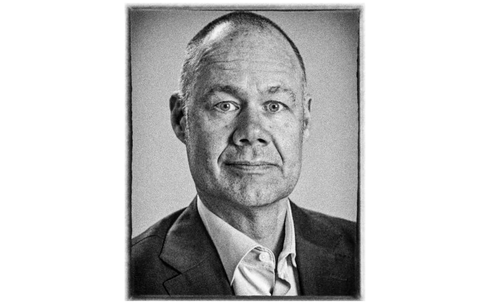
NIH Virologist Vincent Munster Caught Smuggling Deadly Viruses Into U.S., FBI Investigating
NIH Virologist Vincent Munster Caught Smuggling Deadly Viruses Into U.S., FBI Investigating
Authored by Paul D. Thacker via The DisInformation Chronicle,
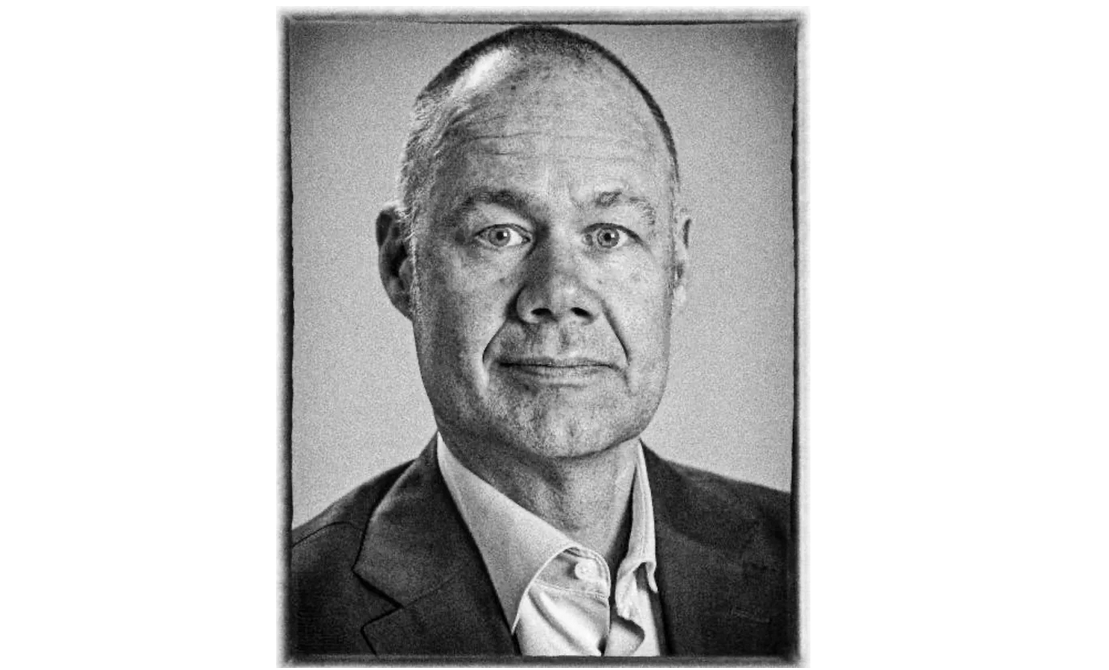
Since the COVID pandemic landed on American shores in early 2020, virologists and allied science writers have engaged in a vociferous propaganda campaign to deny the dangers of virus experiments. When Nature Magazine published a 2021 article minimizing a Wuhan lab accident as the pandemic’s cause, science writer Amy Maxmen quoted Vincent Munster, a virologist at the Rocky Mountain Laboratories, a division of the National Institutes of Health (NIH), in Montana.
Munster told Nature’s Maxmen that there was nothing suspicious about a novel coronavirus popping up in the same city as the Wuhan Institute of Virology which was studying coronaviruses. Labs tend to specialize in the specific viruses found around them, Munster explained, and the Wuhan Institute of Virology focuses on coronaviruses because many circulate in China and neighboring countries.
“Nine out of ten times, when there’s a new outbreak, you’ll find a lab that will be working on these kinds of viruses nearby,” Munster told Nature.
Well, kind of. Sort of. But really not.
In fact, virologists regularly collect viruses from far away countries and bring them back to their own cities to study. And according to emails I have seen that are now circulating inside the Department of Health and Human Services (HHS), one of those virologists is the NIH’s Vincent Munster.
“We are unable to comment as this is under investigation,” wrote HHS spokesperson, Andrew Nixon in an email. “So we will refer you to the FBI.”
When contacted about their investigation into Munster and his NIH researcher, the FBI press office replied by email, “We decline to comment.”
While on a trip back from the Democratic Republic of Congo earlier this year, Munster and a scientist in his NIH lab were pulled aside for an airport security inspection. Inside their luggage, one of the two had a hard-shelled protective case used to transport sensitive property such as electronics and firearms. When the protective case was opened, it was found to contain pathogen samples collected from patients.
However, the human pathogens, which included monkeypox virus, may have been inactivated by reagents and rendered no longer infectious.
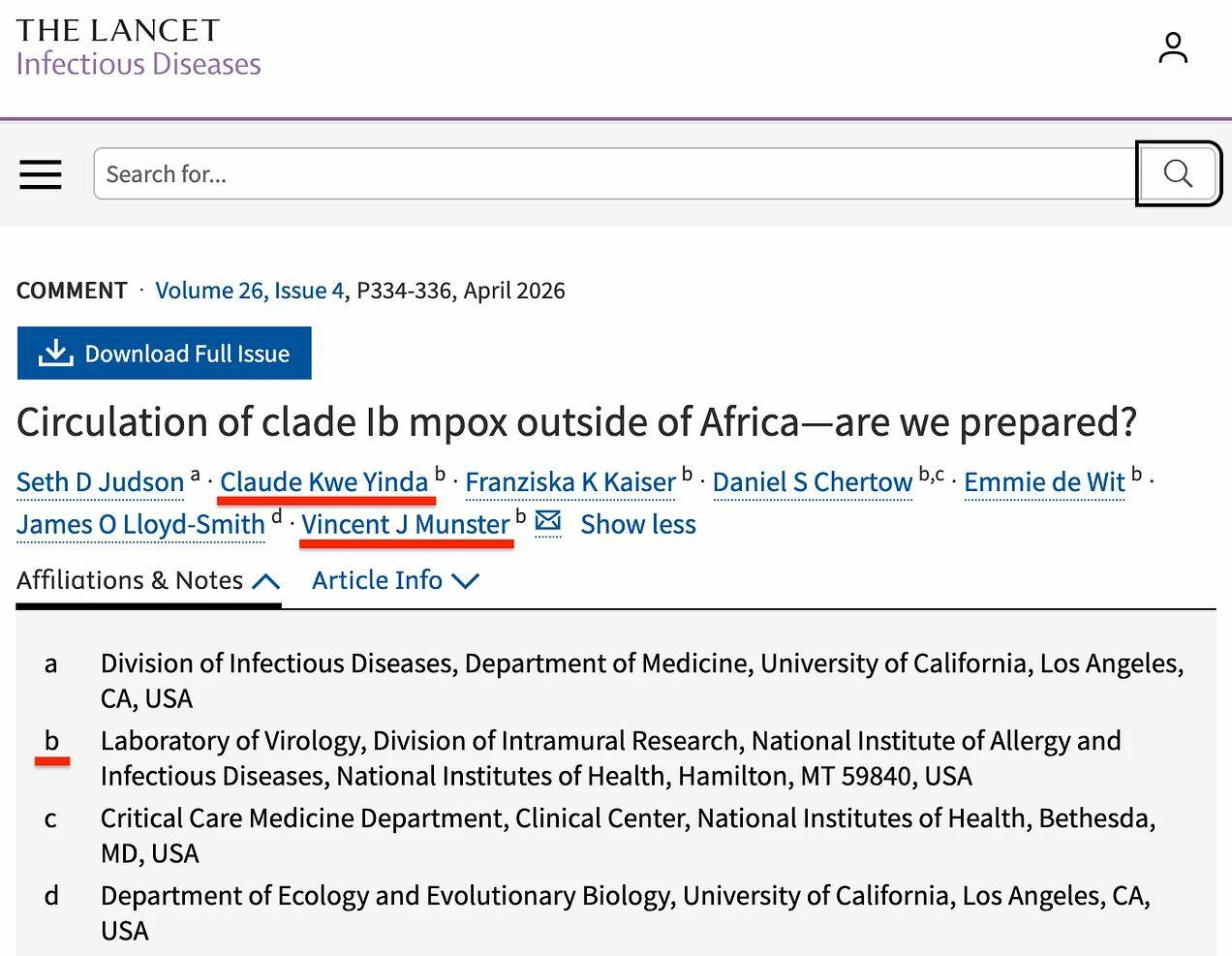
Munster and his NIH research fellow Claude Kwe Yinda published a February study in a Lancet journal that cited monkeypox as a global threat. Without any hint of irony, they warned about “multiple travel-associated cases reported since 2024, including seven in the USA.” The Democratic Republic of Congo has been considered the global epicenter of monkeypox virus, with over 100,000 cases as of October last year.
HHS regulates monkeypox as a “select agent”—microorganisms and toxins that pose a severe threat to public safety. Federal programs control their possession and use, while Department of Transportation regulations manage their shipment and transport.
Munster and his lab scientist did not have paperwork required by law to transport deadly pathogens from Africa to his NIH lab in Montana. Both NIH scientists were placed on leave. Contact information for both Vincent Munster and Claude Kwe Yinda have been removed from the HHS employment directory.
Last year, the Department of Justice charged two Chinese nationals with criminal conspiracy for smuggling a dangerous plant fungus through a Detroit airport so they could study it in a lab at the University of Michigan.
Munster did not return repeated requests for comment sent to his NIH email asking him to explain if the monkeypox and potentially other viruses he was transporting had been inactivated or were still infectious. According to his bio at NIH’s Rocky Mountain Labs in Montana, Munster has field study sites in the Republic of the Congo to study Ebola virus with collaborators at the Wildlife Conservation Society and the Laboratoire National de Santé Publique in Brazzaville.
Rocky Mountain Labs is an integral part of the NIH’s National Institute of Allergy and Infectious Diseases (NIAID), the institute once led by Tony Fauci. The Montana facility has a BSL-4 lab where virologists study the world’s most deadly viruses including Ebola, Marburg, and Lassa Fever.
Andrea Marzi, the Acting Chief of Virology at Rocky Mountain Labs, did not return emails asking if the monkeypox and other possible viruses Munster was transporting had been inactivated or were still infectious. Nor did she reply to requests asking if Munster’s lab had been secured.
Senator Rand Paul sent the NIAID director a letter two years ago regarding Munster, who was listed as a partner for a project called DEFUSE that was submitted in 2018 to the Defense Advanced Research Projects Agency (DARPA). As part of DEFUSE proposal to DARPA, virologists planned to engineer novel viruses by taking the backbone of a bat virus and inserting a spike protein with a furin cleavage site. A furin cleavage site allows viruses to infect the cells of human lungs.
DARPA denied funding for DEFUSE, but the following year, a novel bat virus with a furin cleavage site began infecting humans in Wuhan. No other virus closely related to the COVID virus has this furin cleavage site.
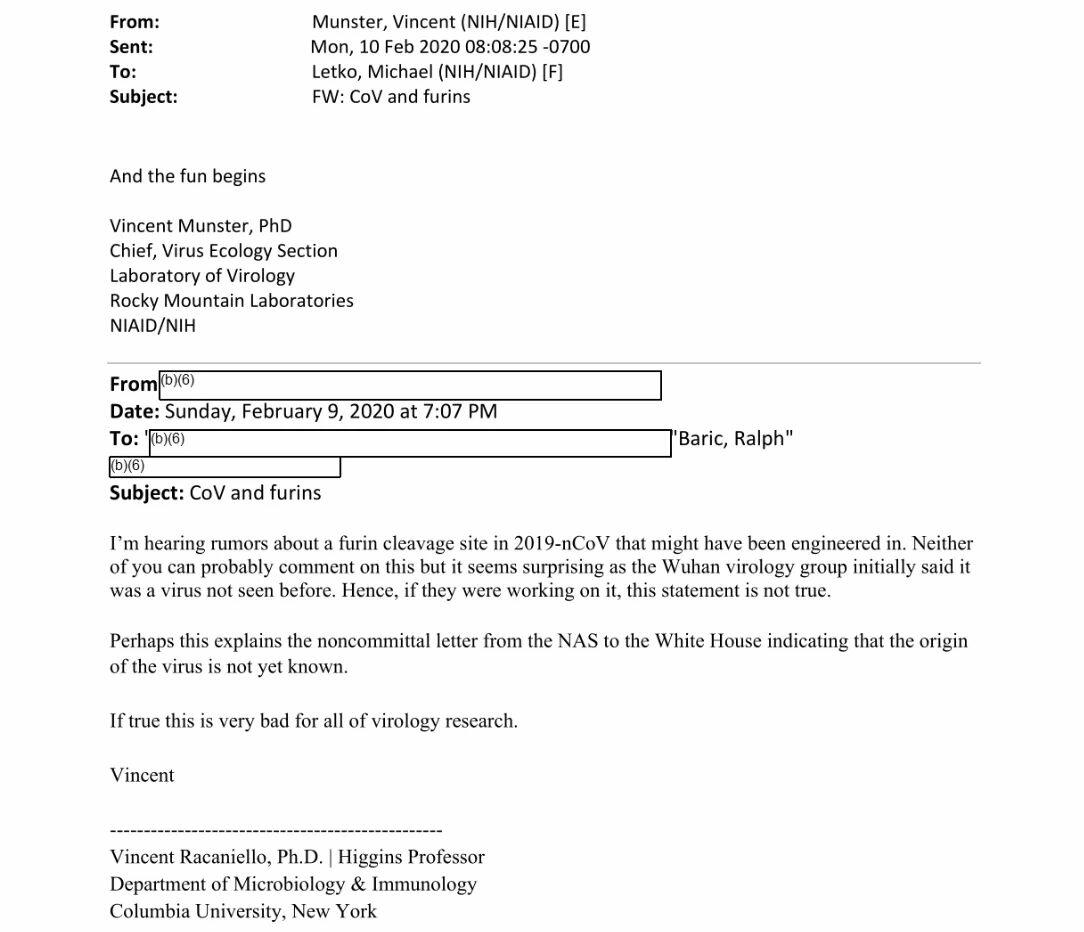
Shortly after the COVID virus began infecting Americans, Columbia University virologist Vincent Racaniello sent Munster an alarming February 2020 email, saying he had heard that the new COVID virus had a furin cleavage site “that might have been engineered.”
“If true this is very bad for all of virology research,” Racaniell wrote to Munster.
“And the fun begins,” replied Munster.
The news about Munster hits during an especially hard media cycle for virologists. I reported last week for RealClearInvestigations that the federal government had quietly removed University of North Carolina virologist Ralph Baric from all his NIH grants; UNC also placed Baric on leave. A senior HHS official, who reviewed the government’s classified material, told me that UNC is terrified the public will learn that they were complicit in starting the COVID pandemic.
“Baric designed the gun,” he said. “But the Chinese built it, and then they pulled the trigger.”
That same day, the Department of Justice indicted Tony Fauci’s senior advisor, David Morens, for concealing federal records concerning funding for virus research during the COVID pandemic. The indictment listed Peter Daszak of EcoHealth Alliance as “CO-CONSPIRATOR 1” and Boston University virologist Gerald Keusch as “CO-CONSPIRATOR 2.”
Last month, I reported on newly unearthed emails that show Morens, Daszak, and Keusch plotted against me for writing a 2021 investigation for the BMJ that concluded virologists had conspired in a misinformation campaign to cover up a possible Wuhan lab accident as the COVID pandemic’s cause.
In emails discussing me and my 2021 article, Keusch asked Morens and Daszak if they knew how to get in contact with former BMJ editor Peter Smith to complain. Daszak emailed back that contacting the BMJ about me was “a really good move” as my reporting was “pretty offensive stuff.”
Tyler Durden
Tue, 05/05/2026 – 16:20