Category: News
Will AI Make Us Wonderfully Prosperous?
Will AI Make Us Wonderfully Prosperous?
Authored by Jeffrey Tucker via The Epoch Times,
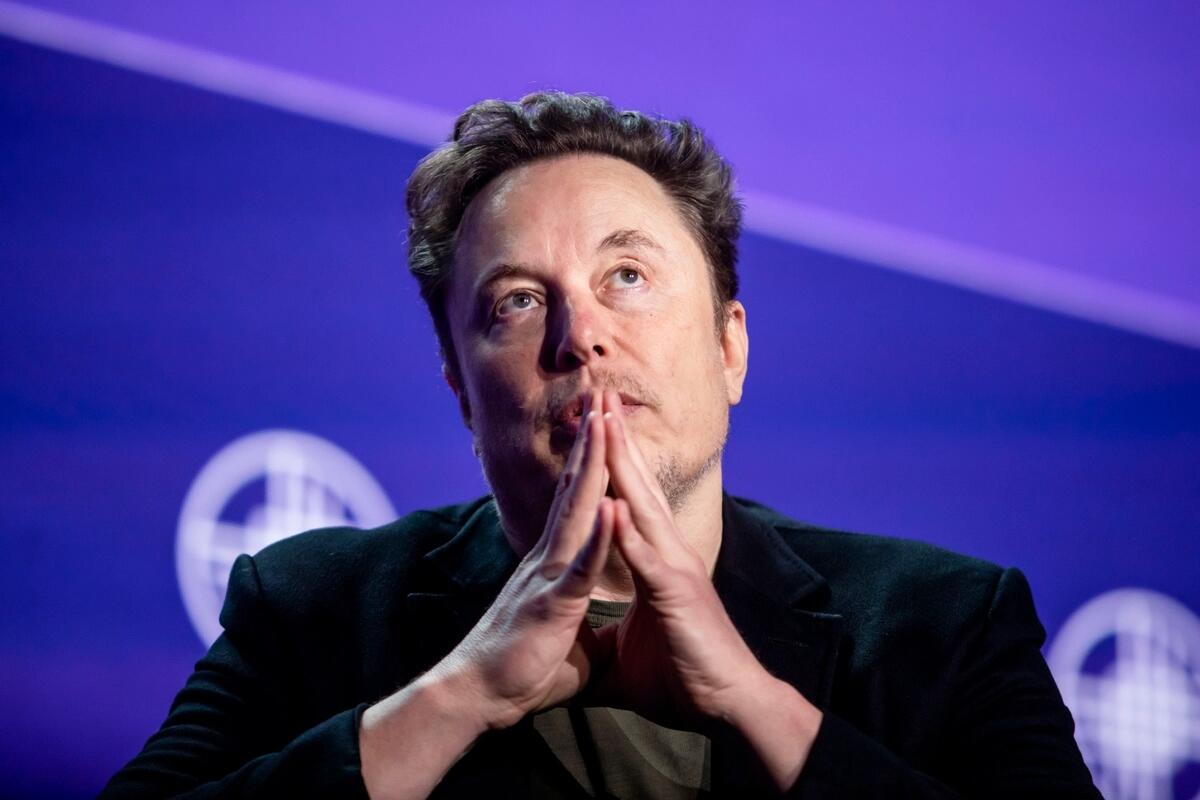
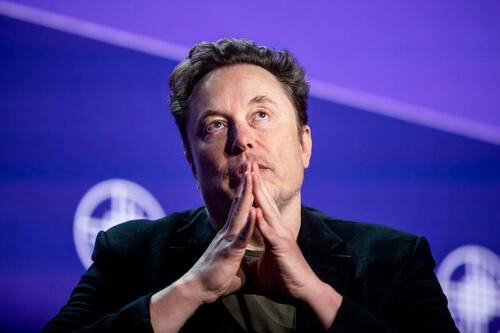
“Any given government program will become the opposite of its name,” Elon Musk said recently.
The rule seems correct.
Think of the Affordable Care Act, the Inflation Control Act, the CARES Act, the War on Poverty, and countless others. They all resulted in the very inverse of how they are named.
That’s some wisdom right there.
Musk holds many libertarian views along these lines and has been a vocal champion of capitalism as an economic system. He famously set out to lead a team to cut $2 trillion from the federal budget. It did not work but not for want of trying.
However, Musk is not always consistent. And he is not always correct.
He also recently wrote the following: “Universal HIGH INCOME via checks issued by the Federal government is the best way to deal with unemployment caused by AI. AI/robotics will produce goods & services far in excess of the increase in the money supply, so there will not be inflation.”
Let’s consider these assertions from the inside out.
Musk claims that AI is going to produce vast goods and services such that it will generate 4, 5, and 6 percent growth. Indeed, if economic growth is going to outpace money supply growth, even in normal times, it will need to be above 6 percent at least. That’s just based on average rates of money growth over the decade. If we want healthy growth beyond that, we’ll need output growth on the level of 9 and 10 percent.
The United States has not experienced growth like that since the 1880s. Data gathering was not quite sophisticated in those days—national income accounting had not yet been invented—so we cannot say for sure. This is just an estimate.
Perhaps it is not far off, however.
We had a bout of explosive innovation: commercialized steel, internal combustion, electric lighting, telegraph and photography, and much more.
That kind of innovation did indeed generate economic growth. The world had never seen anything like it.
Elon is implicitly assuming that artificial intelligence will be the same, a driver of a massive increase in prosperity. There is reason for doubt. We heard the same thing about the digital age. In fact, I was certain back in the late 1990s that the Internet would yield huge increases in productivity that would lead to growth on the scale of the Gilded Age.
That did not happen. We saw the opposite. We’ve been through 30 years of frustratingly slow economic growth. The fruits of the digital revolution were squandered with growing amounts of government debt, regulation, burdensome business mandates, and a litigation explosion. That combination created an enormous drag on what should have been glorious growth.
Recall that in the 1880s, we had no federal regulatory agencies at all. We did not have a welfare state or income tax. The dollar was secured and sound with a gold standard. We had no inflation at all; in fact, the dollar grew in value year by year, something that has not happened once since World War II.
For technological innovation to create explosive economic growth, you need that special ingredient called economic freedom. We are nowhere near as free in economics today as we were then.
Given this history, I’m extremely doubtful of the predictions that AI will give birth to wonderful economic growth anywhere near 9 and 10 percent. I would be very surprised. Indeed, mankind has proven its remarkable capacity for squandering wonderful opportunities to make the world a better place.
AI is impressive but with all new technologies, the hype always exceeds the reality. Remember it was only 10 years ago that everything and anything would “get on the blockchain” and magically become wonderful. Business consultants made bank duping naive corporate managers with this prattle. At some point, it became obvious that the blockchain is useful for specific tasks while the old tech would be fine for most everything else.
I see the frenzy over AI very similarly. Nor do I believe that the home robot has much of a future in our domestic lives.
Factories and shipping, sure, but helping around the house as in the Jetsons? Doubtful.
There is another odd feature to Elon’s argument. He says that all this wonderful but unproven economic growth will be accompanied by widespread unemployment as robots replace humans. This is odd. We’ll never live in a world where there is no work to be done. There is always work to be done at some price. So long as labor markets are free, there will be jobs.
One might suppose, too, that with 10 percent economic growth, there would be more than enough prosperity flowing to hire people for every manner of work. It’s not as if human beings will become useless. AI is great at routine tasks but terrible at judgment and creativity. There will be more, not less, of a market for those skills in an AI/robot world.
Therefore, there is no reason to suppose that the AI revolution will create mass unemployment over the long term. It’s reasonable to expect disruption and dislocation out of many professions. But if the labor markets are free to adapt, the old jobs will be replaced by new jobs.
In the 20th century, we’ve developed an obsession with unemployment, particularly since the Great Depression. The entire reason for this problem traces to controls on the labor market, privileges flowing to unions, restrictions on wage levels, and attempts to keep the market from adapting. High unemployment is a sure sign that the labor market is not free.
In a genuine free market, there would be no unemployment at all simply because it’s the nature of the world always to call forth human labor for some purpose and at some price.
Musk proposes that the U.S. government offer huge benefits in the form of income support for the unemployed. There are now 170 million people in the labor force. If 20 million of them are displaced by AI/robotics and each person is given $100,000 a year, that’s an astronomical expenditure of $2 trillion a year—exactly the amount that Musk sought to cut from the federal budget.
To match that figure with a money supply increase would mean nearly a 9 percent increase in M2 each year, which would certainly be hugely inflationary, all else equal. To stop that inflation, economic growth would have to be 10 percent and higher, which is highly unlikely. As a result, such expenditure would certainly mean a dramatic degradation in the purchasing power of the dollar.
No inflation, promises Musk, but he is likely wrong and the rest of society and the world would be stuck with the results.
Putting all these workers on permanent welfare would stop labor markets from adjusting to reflect new technologies. Why would anyone take a job if he can sign up for a basic income from the taxpayers? Such a proposal is completely contrary to any conception of a free market.
There is another feature here. Putting millions or tens of millions on permanent income support would drain creativity, energy, and productivity from the markets. It would be the greatest subsidy that sloths ever enjoyed. This would be a disaster for the human spirit.
We saw how universal income worked in the COVID years with stimulus payments.
It led to fraud, demoralization, and inflation. Making such a policy permanent would do the same and worse.
Remember the first Musk principle: “Any given government program will become the opposite of its name.”
What this points to is the general tendency to oversell and mask especially in government. It’s the same for universal basic income. It would not and could not be universal and it will degrade the lives of everyone it touches.
Tyler Durden
Wed, 05/06/2026 – 17:00
https://www.zerohedge.com/ai/will-ai-make-us-wonderfully-prosperous

JPM Tried $1 Million Payoff To Bury Banker’s Sexual Assault Claims Before Daily Mail Bombshell
JPM Tried $1 Million Payoff To Bury Banker’s Sexual Assault Claims Before Daily Mail Bombshell
Views on JPMorgan banker Lorna Hajdini’s Bloomberg profile surged on Wednesday afternoon.
Why?
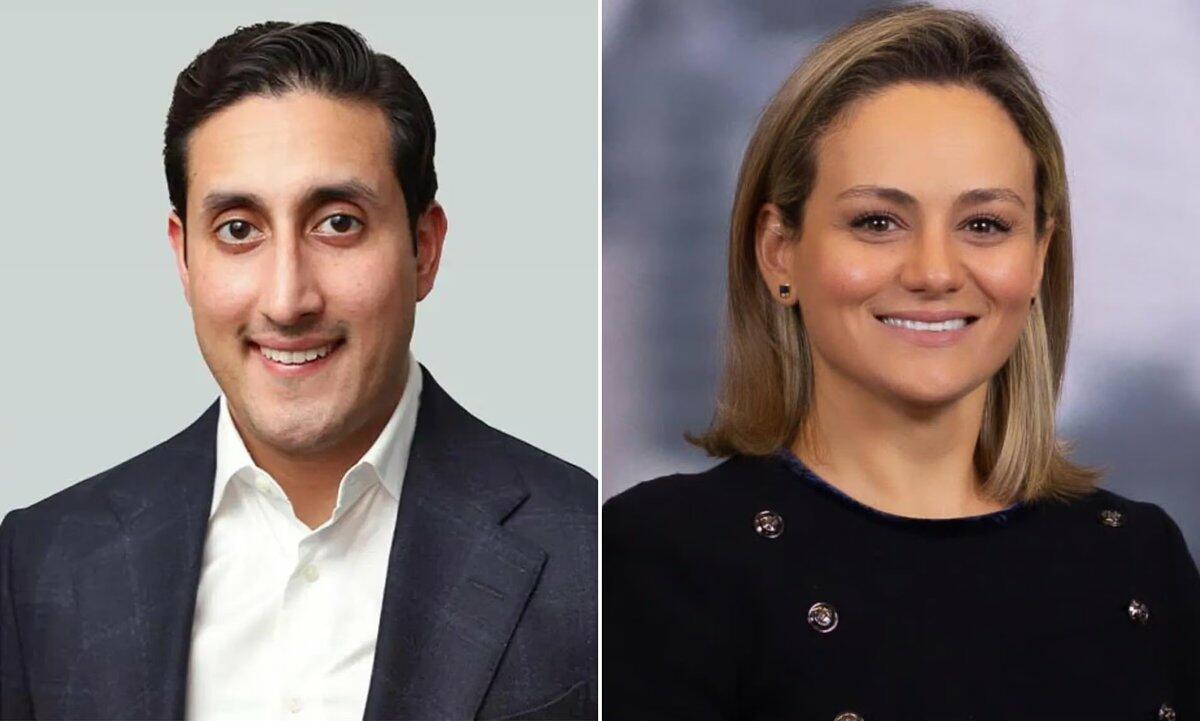
The Wall Street Journal has released a new report stating that JPMorgan reportedly offered former investment banker Chirayu Rana $1 million to settle his sexual assault, harassment, and racial discrimination claims against Hajdini before he filed the lawsuit.
Rana’s lawsuit was refiled on Monday after being withdrawn for a week. The lawsuit went viral after a Daily Mail report, which was later followed by a New York Post article citing sources who said the bank “found no evidence of wrongdoing” and Hajdini’s lawyer, who rejected the claims in the suit.
“The original lawsuit was not withdrawn,” said David Kramer, Rana’s lawyer. “After filing, the court clerk informed us that the suit required review and sign-off from the judge before being formally filed under a pseudonym. Upon signature by the judge yesterday, the suit was formally filed under a pseudonym.”
Rana alleges that Hajdini sexually assaulted him and that co-workers subjected him to racial harassment related to his Nepalese background.
JPM’s settlement offer was reportedly intended to avoid litigation and reputational damage. JPM maintains that the claims are baseless.
The report stated that Rana’s lawyers did not accept the $1 million offer and later countered JPM with a proposed settlement of $11.75 million.
Rana joined JPM’s leveraged finance team in May 2024, filed an internal HR complaint in May 2025, was placed on paid leave, and later left the bank. He then joined private equity firm Bregal Sagemount in October 2025 but was reportedly let go last month.
“If you don’t f— me soon, I’m going to ruin you… Never forget, I f—ing own you,” Hajdini allegedly said, as detailed in the suit. “If you don’t f— my brains out tonight, I’m going to sabotage your promotion.”
The lawsuit continued, “She then told Plaintiff to suck her toes, repeating that she would facilitate his promotion and bonus.”
Latest on Polymarket:
Chirayu Rana sued?
Yes 80% · No 21%
View full market & trade on Polymarket
Chirayu Rana sued?
Yes 80% · No 21%
View full market & trade on Polymarket
Chirayu Rana sued?
Yes 80% · No 21%
View full market & trade on Polymarket
Hajdini’s lawyers continue to reject Rana’s claims: “She never dated this individual, never had a sexual or romantic encounter with him of any kind, and never gave him any drugs. She maintains that his false claims are entirely fabricated and tarnishing her reputation.”
Tyler Durden
Wed, 05/06/2026 – 16:40

DC Police Officials Disciplined Over Allegations Of Manipulating Crime Data
DC Police Officials Disciplined Over Allegations Of Manipulating Crime Data
Authored by Bryan Hyde via American Greatness,
Multiple high-ranking officials in the Washington, DC Metropolitan Police Department (MPD) are facing termination in connection with allegations about how they handled and possibly manipulated crime statistics in the district.
Breitbart reports that three MPD officials told The Washington Post that “multiple high-ranking” officials—all captains or above, all in leadership—were given “papers saying the department intends to fire them.”
According to a DC Police Union press release, the anticipated terminations are directly related to an investigation into allegations that the officials engaged in direct manipulation of crime data to minimize the level of crime in DC.
The union, which represents 3,000 MPD officers, welcomed the decision to terminate the officials, saying, “These actions, tied directly to the department’s completed Internal Affairs investigation into the deliberate manipulation of crime data, mark a long-overdue step toward justice and the restoration of integrity with MPD.”
The Washington Post reports, “The District has reported a decline in overall crime in recent years after a historic spike in 2023. But some in D.C. police circles have long complained that certain managers routinely reduced the severity of crime classifications to make their police districts appear safer or avoid criticism from top department brass.”
In some districts, armed home invasions were written down as “trespassing” instead, dropping a vioIent felony to a low-level misdemeanor, in order to manipulate the crime stats.
The 13 individuals who were served termination papers have not been fired yet as they are entitled to due process under the department’s general orders.
Interim MPD Chief Jeffrey Carroll said, “The administrative process must be allowed to take its course, and that process is outlined in our MPD general orders.”
Carroll added, “Let me be clear, we have made meaningful progress over the last three years in reducing crime. Homicides, shootings and carjackings have fallen steadily since 2023.”
NBC 4 reports that three of the high-level officials worked very closely with former Chief Pamela Smith, including her second-in-command and at least one assistant chief who oversaw patrol in half of DC.
Tyler Durden
Wed, 05/06/2026 – 16:20

Inside The Moscow Meeting That Laid Bare Iran’s Weak Hand
Inside The Moscow Meeting That Laid Bare Iran’s Weak Hand
Authored by Simon Watkins via oilprice.com,
The Moscow meeting reinforced a long-standing imbalance, with Iran seeking deeper support while Russia offered only vague diplomatic backing.
The 20-year Iran–Russia deal structurally favors Moscow, especially in energy and trade terms, leaving Tehran with limited economic and strategic upside.
Russia’s growing military and economic strain reduces its ability to support Iran, exposing the fragility of the partnership.
Iran has a long history of being screwed over by Russia, and last week’s meeting in Moscow between Iranian Foreign Minister Abbas Araghchi and Russian President Vladimir Putin over the U.S.–Israel–Iran war suggests nothing in that dynamic is about to change, according to extremely well-placed sources on both sides who spoke exclusively to OilPrice.com over the weekend. On the one hand, Tehran’s perennially baseless optimism that “this time will be different” was on full display in Araghchi’s excited praise for the marvels of the two countries’ so called ‘strategic relationship’. On the other hand, Moscow responded with all the warmth of an international telephone operator: Kremlin spokesman Dmitry Peskov said only that Russia stands ready to offer “goodwill or mediation services”, with no indication of any upgrade to the relationship service package. It fits so neatly into the familiar pattern of this abusive relationship that one wonders whether social services should be called. Or perhaps Moscow’s disinterest is merely an act — a way of masking the deep and broad assistance from Tehran that it so clearly craves?
The theoretical basis of this relationship is the 20-year comprehensive cooperation deal between Iran and Russia — formally titled The Treaty on the Basis of Mutual Relations and Principles of Cooperation between Iran and Russia — approved by Iran’s late Supreme Leader, Ali Khamenei, on 18 January 2024, as I exclusively reported in OilPrice.com at the time. It replaced the 10-year deal signed in March 2001 (extended twice by five years) and was expanded in duration, scope and scale, particularly in the defence and energy sectors. In several respects, the new deal complemented key elements of the all-encompassing Iran-China 25-Year Comprehensive Cooperation Agreement, first revealed anywhere in the world in my 3 September 2019 article and analysed in full in my latest book on the new global oil market order. The similarities were deliberate, designed to make the division of the key strategic assets most coveted by Moscow and Beijing easier to manage in practice. Related: China Orders Refiners to Ignore U.S. Sanctions on Key Iranian Oil Buyers
As with much of Russia’s foreign policy dealings, the devil was in the details. As a sign of how things would pan out for Tehran in the rest of the document, Russia stood to benefit at Iran’s expense in the key energy sector to begin with. The deal gave Russia the first right of extraction in the Iranian section of the Caspian Sea, including the potentially huge Chalous field. This came on top of Russia’s startlingly brazen theft in 2019 of at least US$3.2 trillion in revenues from Iran through the lost value of energy products across their shared Caspian assets going forward. The same right of first extraction for Russia was also applied in the new 20-year deal to several of Iran’s major oil and gas fields in the Khorramshahr and nearby Ilam provinces that border Iraq, which China had not already prioritised for its own needs. Several of these sites had the broader financial and geopolitical benefits attached to their being shared fields with Iraq. This status allowed the effective free movement of Iranian oil disguised as Iraqi oil, and extended Tehran’s influence over Baghdad through its political, economic, and military proxies. By extension, it did the same for Moscow and Beijing, which used this as a springboard to further project their influence across the Iran-dominated Shia Crescent of Power.
This powerbase in Iran and Iraq had also been central to Russia’s longstanding plan to build a ‘land bridge’ to the Mediterranean Sea coast of another of its key global assets at the time — Syria. This would enable Moscow to exponentially increase weapons delivery into southern Lebanon and the Golan Heights area of Syria to be used in attacks on Israel. The core aim of this policy was to provoke a conflict in the Middle East that would draw in the U.S. and its allies into an unwinnable war, and was seen as a natural extension of the Israel-Hamas War that had begun after the terrorist organisation’s murderous spree across Israel on 7 October 2023. Given its centrality to Moscow’s plans, then, Iran was at that point still confident that the Kremlin would meet its other promises in the 20-year deal, despite the shenanigans surrounding the energy side of the treaty as it related to the Caspian’s oil and gas riches. “Iran had long been asking Russia for the means to defend itself better against any attacks, especially those that might come from Israel or the U.S. — in particular for the S-400 missile defence system and Sukhoi Su-34 and 35 fighter jets,” a very senior source working closely with Iran’s Petroleum Ministry exclusively told OilPrice.com. “But these requests have continually been subject to further conditionality by Russia, such as upgrading key airports and seaports that Moscow sees as especially useful for dual-use by its air force and navy, and which are also close to major oil and gas facilities.
The terms of the individual defence and energy deals were also made increasingly onerous for Iran by Russia as preconditions for the final delivery of Iran’s requests. According to this source — and confirmed to OilPrice.com at the time by a very senior source working closely with the Russian government — the price of all items traded between Russia and Iran, including military and energy hardware, had been formalised in the 20-year deal on terms that were not in Iran’s favour. For Iranian goods exported to Russia, Tehran would receive the cost of production plus 8 per cent. However, these export sales to Russia would not be transferred to Iran, but rather would be held as credit in the Central Bank of Russia (CBR). Moreover, Iran would receive a huge markdown on US dollar/Rouble or Euro/Rouble exchange rates used to calculate its credits in the CBR. Conversely, for Russian goods exported to Iran, Moscow would receive the payment in advance of delivery and at an exchange rate that benefited Russia. Moreover, the base price before any exchange rate calculations would be set at the highest price that Russia has received in the previous 180 days for whichever product it was selling to Iran. Moscow ensured itself the highest possible price by selling the relevant product to Belarus at a very large premium shortly beforehand, so establishing the required pricing benchmark. Payments for goods and services falling outside the direct finance route between the central banks of the two countries would be handled through interbank transfers between Iranian and Russian banks. Transactions involving renminbi would also be routed through China’s Cross-Border Interbank Payment System, Beijing’s alternative to the globally-dominant Society for Worldwide Interbank Financial Telecommunications system.
The additional problem for Iran now is that Russia is increasingly unable to provide even this limited assistance to it as its own troubles mount. Although U.S. President Donald Trump’s stance on Russia’s ’10-Day Special Military Operation’ — at the time of writing, in its 1,530th day — has broadly favoured Putin and his ability to keep funding the conflict, things have turned very recently. The removal of pro-Putin Hungarian President Viktor Orbán in last month’s general election removed the obstacle that blocked €90 billion in European Union (E.U.) aid to Ukraine, with more to come as and when needed. This comes at a time when, according to military sources, Russia is only able to replace 70 per cent of the soldiers it is losing on the battlefield — an unsustainable loss, which brings with it the deeply politically unsettling prospect of having to widen conscription out to the big cities, including Moscow and St. Petersburg. Moreover, Ukraine is now relentlessly hitting key oil and gas infrastructure targets deep in Russia, reducing its ability to monetise these exports to fund its Ukraine campaign. Crude oil export data suggested the rise in prices, plus the easing of U.S. sanctions on countries buying Russian oil, boosted Russian revenues to 2.3 times their December-February levels in the third week of the Iran war. But by the fourth week, Ukrainian drone strikes on energy-producing infrastructure reduced Russia’s earnings by US$1 billion, eradicating around two-thirds of the previous week’s gains. And destroying Russia’s energy infrastructure using Ukraine-manufactured long-range drones — without any U.S. assistance and using E.U. funding — is now a priority target.
As it stands, Iran has once again bet on a partner that takes far more than it ever gives. And as Russia’s own position deteriorates, even the illusion of reciprocity is evaporating. Tehran may soon discover that Moscow’s promises were always worth less than the paper they were written on. With Russia now struggling to sustain its own war effort, the chances of it honouring its commitments to Iran are shrinking by the day. And when the Kremlin finally admits it has nothing left to offer, Tehran will be left with no air defences, no aircraft, no navy, and no leverage — only the bill for a partnership that never paid out.
By Simon Watkins for Oilprice.com
Tyler Durden
Wed, 05/06/2026 – 15:40
https://www.zerohedge.com/political/inside-moscow-meeting-laid-bare-irans-weak-hand
World Starts To “Build” Around Hormuz; Japan Buying UAE Oil Bypassing Strait As ADNOC To Spend $55 Billion On Pipelines
World Starts To “Build” Around Hormuz; Japan Buying UAE Oil Bypassing Strait As ADNOC To Spend $55 Billion On Pipelines
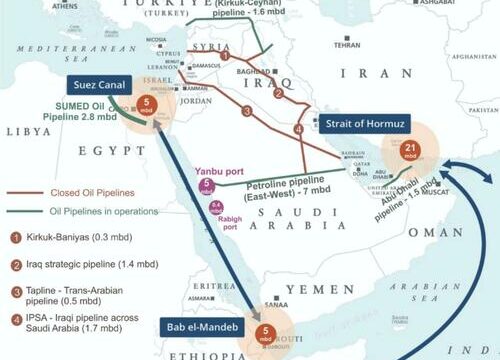
Long after the Iran war is just a bookmark in the history books, one distinct consequence will persist: much of the world, at least the part that does not fall under the Chinese sphere of influence, will do everything it can to avoid the Strait of Hormuz and failing that, have a Plan B. Just like when the Biden admin weaponized the US Dollar in 2022 by booting Russia from SWIFT after the Ukraine war, and in the process started the biggest gold and bitcoin rally in history as the rest of the world parked its savings in non-USD assets, so the world’s most important oil choke point will never again be viewed again in the same way after Iran launched dozens of rockets at the ships transiting it.
This shift in perception is what James Thorne, chief market strategist of WellingtonAltus, called “Iran’s Historic Mistake“; he explains it as follows:
By weaponizing the Strait of Hormuz, Iran committed a strategic blunder of historic proportions. Tehran meant to punish America. Instead, it exposed every power built on imported energy, vulnerable sea lanes, and the delusion that globalization repealed geography. China is exposed. Europe is exposed. Britain is exposed. Iran has created a world where hard resource power decides outcomes.
And the punchline:
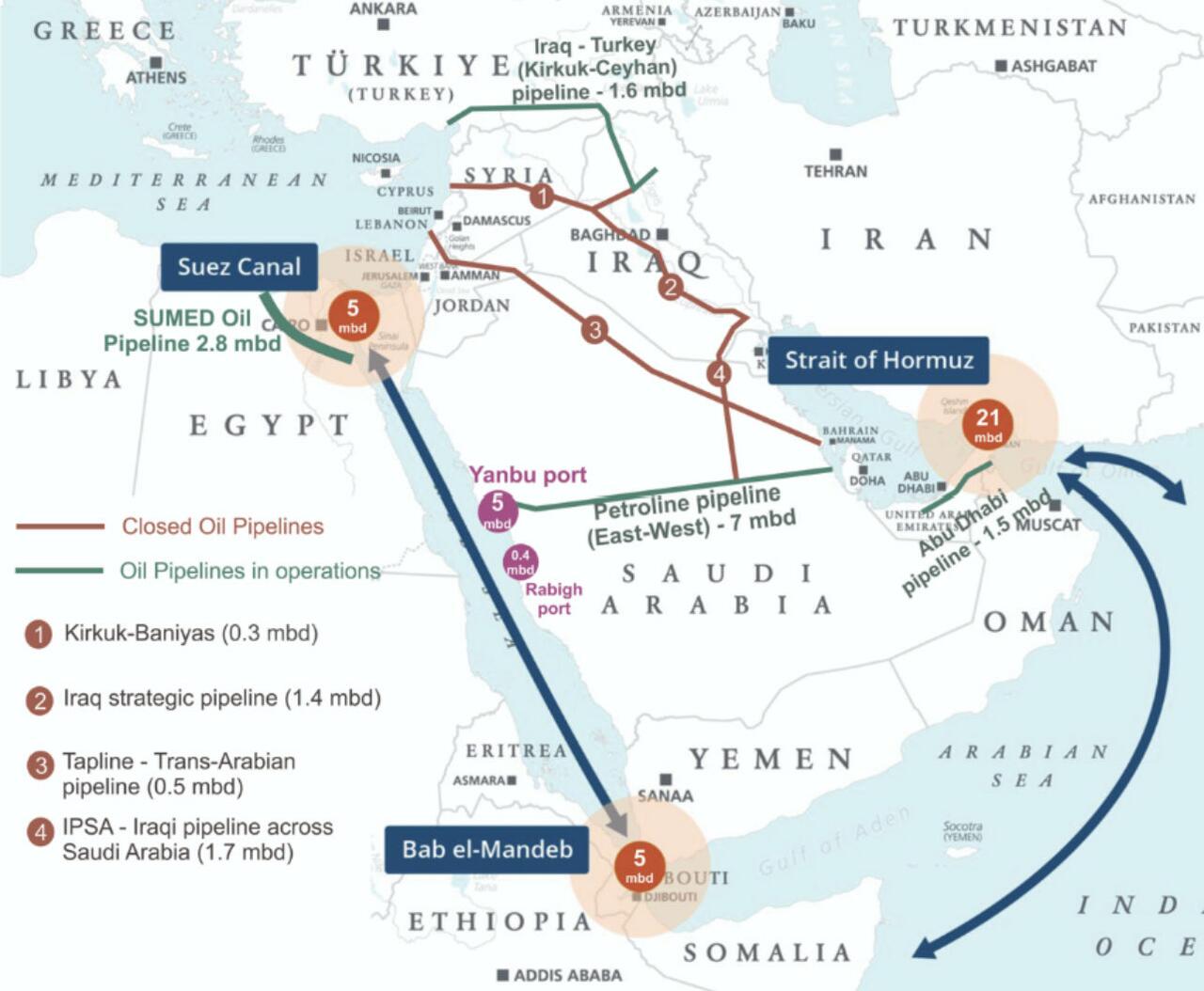
Iran’s mistake is that once Hormuz becomes structurally unreliable, the world builds around it. That means bypass corridors, revived pipeline politics, and urgent planning for routes linking Aqaba to Mediterranean outlets near Gaza and the long-stalled Basra-to-Aqaba pipeline. The old energy order is cracking. The UAE’s OPEC exit signals cartel discipline giving way to national advantage under pressure.
The full note can be found here, and we didn’t have long to wait to see the world it predicted begin to emerge.
Earlier today, Nikkei Asia reported that Japan agreed to buy an additional 20 million barrels of crude oil from the United Arab Emirates as Tokyo continues pursuing alternative supply channels amid the effective blockade of the Strait of Hormuz. Japan used 2.36 million barrels of crude oil per day in 2025, the economy ministry reports. Based on this average, the additional 20 million barrels from the UAE could cover eight to nine days’ worth of demand, so much more is coming.
The deal was finalized Tuesday after Ryosei Akazawa, Japan’s minister of economy, trade and industry, met with the Emirati industry minister in Abu Dhabi. Akazawa told reporters after the meeting that he had requested increased oil supplies for Japan.
Roughly 40% of Japan’s crude oil imports comes from the UAE. The Middle Eastern country, which left the Organization of the Petroleum Exporting Countries on Friday, intends to gradually increase oil production at its own discretion, which could lead to more cooperation with Japan.
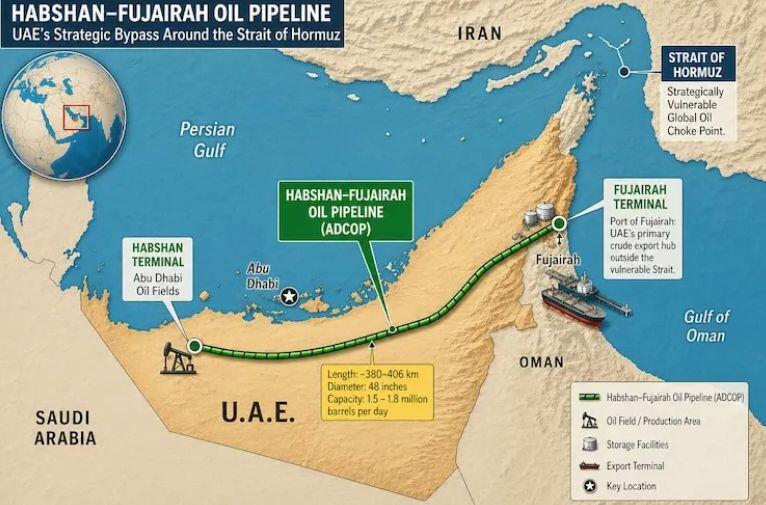
Japan will pick up the Emirati oil at the port of Fujairah on the UAE’s eastern coast, which lies on the Gulf of Oman, allowing for crude exports without going through the Strait of Hormuz.
The war in the Middle East — a region on which Japan has relied for more than 90% of its oil supply — has spurred Tokyo to approach other oil producers. It reached a deal last month to procure 1 million barrels of crude from Mexico.
Recently Japan’s government said that around 60% of the oil Japan needs this month can be sourced through channels that do not involve shipping through the Strait of Hormuz, with releases from domestic stockpiles covering the remaining 40%.
Expect many more such deals from other Asian countries as passage through Hormuz will be one big question mark for years to come, absent a pro-Western regime taking control in Iran.
Realizing the coming demand flood for its Fujairah-laden oil, and in anticipation of its post-OPEC renaissance, on May 3rd, UAE state energy company Abu Dhabi National Oil Company (ADNOC) Group, announced plans to award AED200bn (US$55bn) in upstream and downstream project contracts between 2026-28, at the ‘Make it with ADNOC’ forum in Abu Dhabi.
Omar Al Nuaimi, ADNOC’s Acting Group Chief, stated that ADNOC is moving into a new phase of accelerated, world-scale delivery to meet rising global energy demand. ”ADNOC is proud to continue reinforcing our role as a catalyst of the UAE’s industrial growth and an enabler of the Make it in the Emirates initiative,” he told the Emirates News Agency (WAM) on the sidelines of ‘Make it With ADNOC’ Forum, held ahead of the Make it in the Emirates 2026.
”As part of this effort, we announced today at the ‘Make it with ADNOC’ Forum, our plan to award AED200 billion in projects over the next two years as part of our CAPEX approved by the Board in November,” he said, explaining that the planned project awards span ADNOC’s upstream and downstream operations and usher in a new phase of project delivery that will supercharge UAE’s manufacturing capacity, strengthen industrial resilience, deepen the impact of the company’s In-Country Value program and advance the ‘Make it in the Emirates’ initiative.
In a note from Goldman (available here to pro subs), the bank writes that management characterized the announcement as marking the execution phase of its strategy, focused on scale, pace, and delivery to meet rising global energy demand while reinforcing the UAE’s industrial base. The forum convened >400 participants, linking EPC contractors with qualified UAE-based manufacturers under the in-country value program. The award pipeline spans the entire upstream-to-downstream value chain, focusing on:
Capacity expansion: Scaling of crude oil and gas production capacity alongside deeper downstream integration
In-Country Value (ICV): Channelling spend through the Local+ program to prioritize UAE-manufactured inputs.
Supply chain resilience: Localizing critical equipment sourcing to mitigate global disruption and cost inflation risk.
According to Goldman, this announcement represents the first tranche of its previously announced $150BN capex program for 2030. The bank views the announcement as positive for key enablers such as ADNOC Drilling and ADNOC L&S, as they stand to be the primary beneficiaries of the upstream and downstream award pipeline. Furthermore, the signaled US$55bn commitment over 2026-28 serves as a strong signal of ADNOC Group’s expansion roadmap. Goldman sees upside risk to consensus numbers for the key enabler subsidiaries given the potential for accelerated execution timelines and higher-than-guided growth targets as ADNOC ramps up capacity across the value chain.
More in the Goldman note available to pro subs.
Tyler Durden
Wed, 05/06/2026 – 15:20
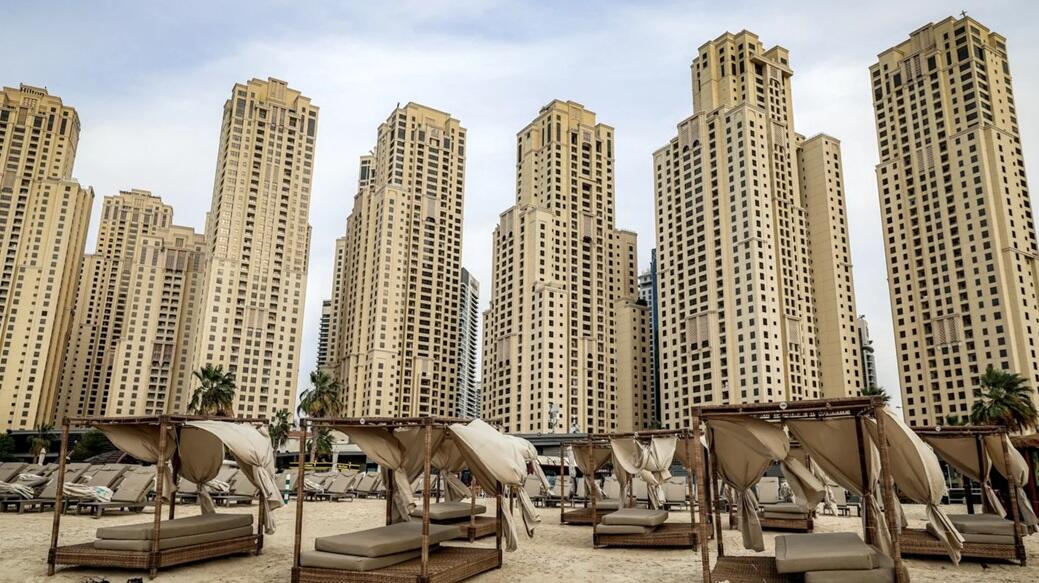
‘We Need People To Come Back’: Dubai’s Tourism Industry Reels As Foreigners Flee
‘We Need People To Come Back’: Dubai’s Tourism Industry Reels As Foreigners Flee
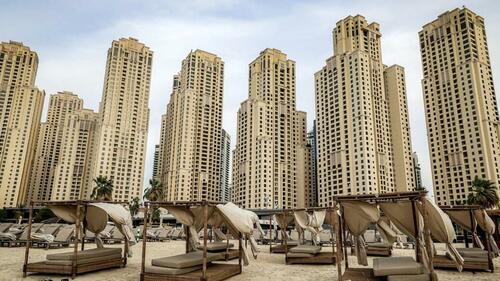
Dubai is facing an existential crisis with the US and Israeli war on Iran forcing tourism numbers to fall sharply, with widespread hotel closures and job losses decimating the global tourism hotspots’ hospitality sector.
On Monday, Dubai Airports reported that first-quarter passenger traffic was down by at least 2.5 million from the same period in 2025, with March seeing a 66 percent drop in passenger numbers as travelers chose to steer clear of the Gulf.
The company did not specify forecasts for this year but on Saturday, in a bid to kickstart tourism, the UAE announced that all air travel restrictions that were put in place after Iran launched retaliatory strikes on all six Gulf Cooperation Council (GCC) countries that house or cooperate closely with US forces had been lifted.
In a post on their official X account, the Civil Aviation Authority wrote: “Our decision came following a comprehensive assessment of operational and security conditions, in coordination with the relevant authorities”. The statement was clearly meant to relay confidence to international travelers, especially after several European airlines announced that they would be suspending flights to the Middle East.
Workers and business owners in Dubai, who spoke to the Middle East Eye on condition of anonymity due GCC-wide restrictions on public statements about the effects of Tehran’s attacks, say it will still take some time to see if the announcement will restore confidence among travelers and investors.
Charity, a Kenyan hotel worker said the mid-priced hotel she works at was definitely affected by the 1.4 million people who travelled through the UAE over the first two weeks of March. During the Muslim month of Ramadan, when Iranian missile and drone attacks were at their worst, the hotel, part of a US-based chain, was full of stranded passengers who would meet with Emirates Airlines representatives in the lobby.
During the month, the hotel’s pool was closed to guests and by the final days, guests staying in the higher floors of the 20-floor building were moved to the lower floors as a precautionary measure. After that, though, she said “things really slowed down for a few weeks”.
She said she hoped the announcement would provide some assurance to travelers. “We’ll see over the next week if people really start to come back,” she said while helping a long-time American traveler. “We need your people [foreign tourists] to come back,” she added.
So far, even longtime passengers say there has been a noticeable shift in the mood at Dubai International, which has been the world’s busiest airport for international passenger traffic for 12 consecutive years.
Samina, a South Asian NGO worker who travels between South Asia, the Gulf and North America, said the change was particularly noticeable in her most recent trips over the two months.
“Coming in, it’s empty,” she said of Terminal 3, home of Emirates Airlines. “Terminal 1 and 2 are ghost towns,” she said of the buildings that are home to other international carriers and FlyDubai, the UAE’s budget airline.
She said international airlines suspending flights to the region have definitely taken a toll on traffic, “Every time you get in, it’s all the same transit passengers.”
According to Dubai Airports, only 51 out of 90 airlines have resumed their operations at the airport, with European and US airlines facing difficulties securing insurance cover due to government travel advisories
‘Ethos of Dubai was shaken’
For its part, Dubai is working hard to support and reassure its residents. Travelling around the city, there is an abundance of UAE flags outside homes and businesses and on digital signs and billboards along the highways.
At the City Walk shopping center there are massive electronic signs thanking UAE residents in Arabic and English. Pictures of UAE President Mohamed bin Zayed Al Nahyan are emblazoned along major roads with the statement: May our nation remain in God’s protection”. Other signs show Emirati families saluting the flag with the same words.
However, longtime residents and business owners say the impact of the intercepted missiles and drones was felt almost immediate.
Tatiana, a Russian national who runs a logistics company for businesses looking to setup shop in the Gulf, and she said even she was shocked at how quickly the mood shifted for existing and prospective businesses. “Within the first two weeks people [said] it’s no longer worth [living here]. They weren’t scared per se, they just felt like it’s no longer worth it”.
“Businesses were suddenly liquidating their assets.” She said her family was now looking at options in Europe to gradually shift to.
Antoine, an editor who helps train amateur writers said one of his clients who works at an advertising agency was left with the burden of those liquidations. “She was in charge of finding 1,000 workers in the UAE to let go of,” he said. Antoine was particularly struck by the fact that even an advertising firm would be so immediately impacted.
“You’d think advertising would be a war-proof industry,” he said. Tatiana said her work has been particularly affected by the attacks. “Our whole business is predicated on assuring people that the UAE is a safe, convenient place to do business,” she said.
Her statement is almost identical to what Arjun, one of the 3.5 to 4.3 million Indian residents of the UAE, said outside a late evening screening of the Michael Jackson biopic. Arjun said he was happy to see the screening at near capacity, hoping it was a sign of a gradual return to normal. “The entire ethos of Dubai as this place free from conflict was shaken,” he said.
Tyler Durden
Wed, 05/06/2026 – 15:00
‘Still So Early On This Journey’: Morgan Stanley Launches Lower-Cost Crypto Trading
‘Still So Early On This Journey’: Morgan Stanley Launches Lower-Cost Crypto Trading
Just a week after Amy Oldenburg, Morgan Stanley’s head of digital assets, spent the better part of an hour making a case for bitcoin that few clients have heard in full (a gap she says is the industry’s most urgent problem), the bank announces the launch of crypto trading on E*Trade, charging 50bps in a pilot that undercuts rivals like Coinbase, Robinhood, and Charles Schwab.
CoinDesk reports that Morgan Stanley’s Head of Wealth Management, Jed Finn, said the initiative goes beyond offering cheaper crypto trading and is aimed at “disintermediating the disintermediators,” framing it as a broader structural shift in how clients access digital assets.
The investment banking giant plans to roll the service out to all 8.6 million ETrade customers later this year.
The latest offering builds on a series of crypto-related moves in recent months, including the launch of a Bitcoin exchange-traded fund, with planned products tied to ether and solana.
Morgan Stanley has also advanced efforts on the infrastructure side, applying for a national trust bank charter that would enable it to directly custody digital assets.
Sources told Bloomberg that the bank is also mulling services that enable conversation of crypto holdings into exchange-traded products without selling and is preparing for potential tokenized equity trading later this year.
These moves are set to amplify competition in a market where Coinbase generated $3.32 billion in consumer transaction revenue in 2025, while Robinhood reported nearly $1 billion in crypto-related revenue.
But, as Bitcoin Magazine reports, the education problem runs deep, according to Oldenburg.
Oldenburg: Bitcoin has an education problem
Many investors still associate bitcoin with its early history of use by bad actors, and struggle to see past that frame when weighing an allocation.
Oldenburg said that when clients ask about yield or structured exposure, her team tries to be direct: “you can present it as a yield, but the underlying asset is bitcoin.” That clarity, she said, is still missing from most conversations in the market, and there is “so much more work to do.”
MSBT pulled in more than $100 million in its first week of trading, a strong early signal for a product the bank describes as designed for the full spectrum of its client base rather than a narrow segment.
But Oldenburg was quick to put that number in context. All of the initial flows came through self-directed accounts, because the fund had not yet been made available on the advisory platform.
She noted that the bank has announced a 2–4% crypto allocation recommendation, and that even with that guidance in place, take-up through advisors has been slow.
The product, she reminded the audience, has been on the market for less than a year.
To bridge that gap, Morgan Stanley is working from the inside out. Oldenburg said the firm is rolling out internal training so that financial advisors can speak to clients on bitcoin with confidence, and that her team spends “hour after hour after hour” on the phone walking clients through models and allocation frameworks.
She said the bank designs products for clients with different needs and wants its platform to cover each of those needs, including clients who want a direct ETP wrapper, and that spot crypto trading is coming for those on the wealth management side.
On custodians, Oldenburg acknowledged the complexity of the decision. The market has no shortage of providers, and choosing among them was not straightforward, which led the firm to work with more than one. Morgan Stanley ultimately tapped Coinbase and BNY Mellon as custodians for MSBT.
When the conversation turned to high-beta bitcoin plays, Oldenburg called Strategy, the Michael Saylor-led company formerly known as MicroStrategy, “a good friend of Morgan Stanley,” and said the bank has worked alongside it through its evolution.
She said most of the exposure in that vehicle so far is coming from retail and that “digital credit” as a category will take time to develop.
Morgan Stanley buying bitcoin is “not out of the question”
On the question of banks holding bitcoin on their balance sheets, Oldenburg said it is “not out of the question” if regulatory progress continues, but was measured in framing it.
The U.S. needs greater alignment among its financial regulators, she said, and for a global firm like Morgan Stanley, the picture is more complex still — each jurisdiction comes with its own framework.
She closed where she began: on the need for research with reach. The market has commentators and personalities that investors trust and follow, she said, and the work ahead is to bring that kind of accessible, grounded analysis into the mainstream.
“We are still so early on this journey,” she said. “So little allocation. It’s still really early.”
Tyler Durden
Wed, 05/06/2026 – 14:40
‘Don’t Even Think About Selling’: Mr. Gold Warns US ‘Officially A Banana Republic’
‘Don’t Even Think About Selling’: Mr. Gold Warns US ‘Officially A Banana Republic’
Via Greg Hunter’s USAWatchdog.com,
Last time financial writer and precious metals expert Bill Holter (aka Mr. Gold) was on USAW, he said don’t even think about selling any gold or silver. One of the big reasons why he is still saying this is the news last week that the US debt to GDP ratio is now at 100%.
Mr. Gold says, “I have talked for years about how the entire world runs on credit. What we started this off with is the United States is officially a banana republic. It’s 100% debt to GDP…”
“When I was in school in the early 1980s, the definition of a banana republic is when it hit 100% debt to GDP.
In this instance, it is the issuer of the world’s reserve currency that is admitting it is officially a banana republic.
Everything runs on credit. The biggest issuer of credit is the United States, and if their credit card gets declined, then what does that do to the real economy?
Nothing will work. There will be nothing on shelves. Stores will be dark.
Should you store food?
The answer is yes because something really bad is right in front of us. It’s a credit collapse.”
So, the Trump Administration is not going to just let everything collapse.
What is the contingency plan?
Mr. Gold says, “I think the contingency plan is oil…”
“They went after Maduro. So, they have taken control of the Venezuelan oil supply. They want to do the same thing elsewhere.
I mean President Trump said in his own words, he said basically we are pirates, and we are going to take Iran’s oil.
I think that’s the plan.
It is to control more oil and keep the petrodollar system alive. Is it going to work? I think, ultimately, it will not work because the numbers are far too upside down at this point. If you really look under the hood, the Federal Reserve itself is insolvent. And we have not even talked about derivatives.
Derivatives are the gorilla in the room. In the derivative market, you are looking at $2 quadrillion in derivatives. Once you get things off sides, and an example of that is look at the British yields, they are back to pushing 7%. They are back to rates that are the same as in 1998. So, all of the easing is gone.
Everything runs on credit, and once you gum up credit, you start affecting the real economy. Then, there is less cash flow in the real economy, and that spills over into the financial economy and financial markets. Derivatives are the biggest danger. Warren Buffett calls them mass financial destruction.
It should not go unnoticed that Berkshire Hathaway is now sitting on $400 billion of cash, which is the biggest hoard they have ever had. In 1998, the financial media called him an idiot, and what happened in 2000? Buffett was an idiot again in early 2008. What happened in late 2008 and 2009?
Buffett is not an idiot, and for him to say now that there is nothing out there of value to buy and I’d rather have cash, that tells you a pretty big story.”
On silver, Holter says, “I think we are reloading for a much larger event than we saw in November to January.”
“That 90 days was spectacular, but I think this next move is going to dwarf that.” Holter says many big analysts are predicting silver much, much higher by the end of the year.
There is much more in the 42-minute interview.
Join Greg Hunter of USAWatchdog as he goes one-on-one with financial writer and precious metals expert Bill Holter/Mr. Gold as the “credit collapse” in the financial system begins for 5.5.26.
Tyler Durden
Wed, 05/06/2026 – 14:20

Blue Energy & GE Vernova Bet On Gas Bridge-To-Nuclear For AI Power
Blue Energy & GE Vernova Bet On Gas Bridge-To-Nuclear For AI Power
Blue Energy announced a collaboration with GE Vernova to develop the world’s first gas-plus-nuclear power plant in Texas.
The project will use two GE Vernova gas turbines to deliver roughly 1 GW starting around 2030. Steam supply will later shift to GE Vernova Hitachi BWRX-300 small modular reactors for up to 1.5 GW of nuclear capacity by 2032.
Work at the Texas site could begin as early as this year, with a final investment decision expected in 2027.
The plan is similar to other announcements from companies like Oklo and Liberty Energy that plan to deploy gas power turbines at proposed energy sites to initiate power delivery and revenue collection while the longer leg of building the reactor continues in the background.
Easier said than done, though. The NRC would normally never be involved in a gas energy project, but if it will share facilities with a future nuclear project, then things get a little more interesting. This is why Blue Energy submitted a plan, and recently received approval, for how to involve the NRC with the construction of a gas-to-nuclear site.
This new sequencing of gas-to-nuclear allows for power delivery to the data center or grid to begin in under four years, compared to as many as ten years if it was a purely nuclear project.
Depending on the location, it may be too little too late. Especially on the east coast…
Next summer the Eastern seaboard will look like North Korea at night thanks to chatbots pic.twitter.com/NEY97pa1LB
— zerohedge (@zerohedge) May 6, 2026
This is where people usually start pointing fingers at the data center for creating the problem. Blaming hyperscalers though requires looking away from the fact that new power generation is also being delayed to connect to the grid.
Constellation’s restart of the Three Mile Island Reactor is currently facing a four-year delay from PJM. The reactor will be ready to provide clean energy to the grid in 2027, but has been told to wait until 2031 to actually connect.
Extreme demand from data centers is not the source of the problem. Decades of neglect with grid upgrades are the real reasons for the grid’s inability to bolt on new supply and demand, and is now driving costs through the roof.
Tyler Durden
Wed, 05/06/2026 – 14:05
https://www.zerohedge.com/energy/blue-energy-and-ge-vernova-bet-gas-bridge-nuclear-ai-power
Ken Griffin “Doubles Down On Miami” After Mamdani’s “Creepy And Weird” Video Vilifying Him
Ken Griffin “Doubles Down On Miami” After Mamdani’s “Creepy And Weird” Video Vilifying Him
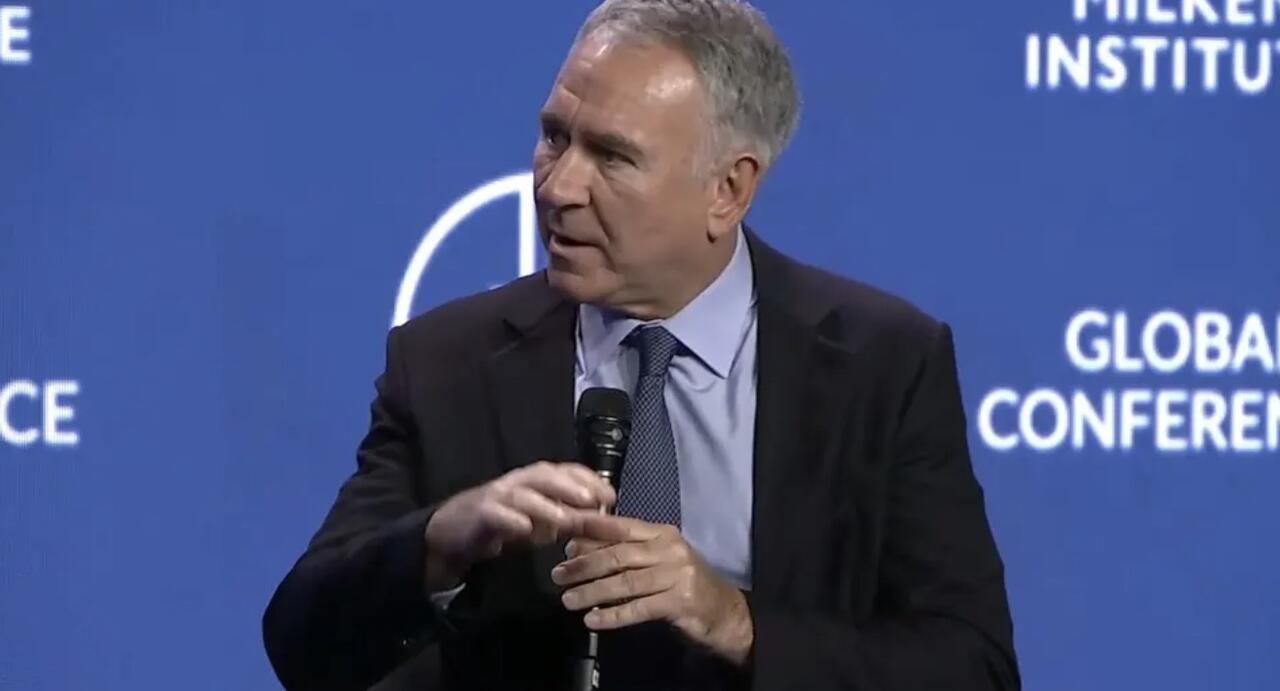
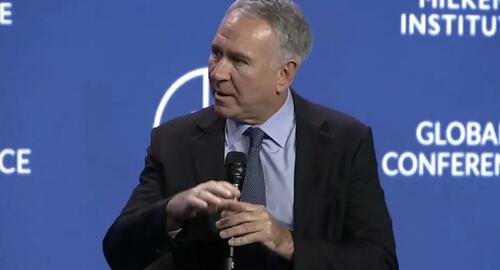
Ken Griffin said New York Mayor Zohran Mamdani’s push for higher taxes on second homes has reinforced Citadel’s commitment to Miami — and even led the firm to scale up its planned headquarters there, according to Bloomberg.
Speaking Tuesday at the Milken Institute Global Conference, Griffin said Citadel decided to enlarge its Miami office project after Mamdani publicly referenced his $238 million Central Park South penthouse while promoting a new pied-à-terre tax proposal.
“We went to Miami and revised our building plan to make it a bigger office building,” Griffin said. “What the mayor of New York has made clear to my partners, and principally my New York partners, is that we need to double down on our bet in Miami.”
Bloomberg writes that Griffin said he watched Mamdani’s video three times and described it as “creepy and weird.”
He added that the situation brought back memories of his departure from Chicago, where he previously criticized local leadership before moving Citadel and Citadel Securities to Florida.
“Looking at what Mamdani did to me and more broadly is doing to the city of New York is triggering the trauma I went through in Chicago,” Griffin said.
A spokesperson for Mamdani defended the mayor’s stance, saying he supports entrepreneurs but believes New York’s tax structure needs reform so wealthy residents contribute more.
Citadel still has nearly 2,500 employees in New York City and is involved in a separate $6 billion office tower project at 350 Park Avenue. But Griffin suggested Miami has clearly won out.
“What do we do at 350 is still a point of discussion internally, but what is no longer a point of discussion is when we moved from Chicago, there was a debate between New York and Miami,” Griffin said. “It’s unquestionably true that we made the right choice.”
He also took aim at states he views as unfriendly to businesses.
“We want to be in a state that embraces business, that embraces education, that embraces personal freedom and liberty and that embraces people having an opportunity to live the American dream,” Griffin said. “Not a dream of redistributive handouts that leave people dependent on government for their lives and their livelihoods.”
We wrote two weeks ago: “New York City is a global icon and the uncomfortable truth is this: the people Mamdani is turning into political props are the same ones writing the checks. And they have options.”
And now it looks as though Ken Griffin is exercising those options…
Tyler Durden
Wed, 05/06/2026 – 13:25