Category: News
Editorial: Nick Uniejewski for Illinois 6th Senate District Democratic primary
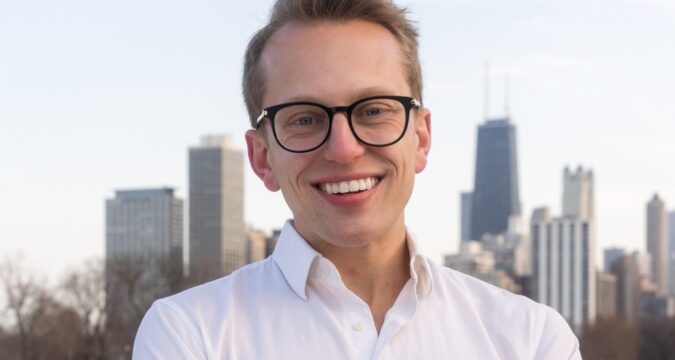
Sara Feigenholtz, 69, has represented the solidly Democratic 6th Senate District, which includes the liberal lakefront Chicago neighborhoods of Lakeview, Lincoln Park and Near North Side, since 2020, although she was elected to her first term as state representative of Illinois’ 12th District in 1994. She faces newcomer Nick Uniejewski, 29, in the Democratic primary.
Uniejewski worked most recently as a policy analyst for the city of Chicago before leaving to run for office full time. He clearly understands that one of the biggest issues in Chicago is housing. He told us he wants to do things like legalize coach houses to increase supply and start to chip away at costs, but he also wants to ask very basic questions such as: Why does it cost so much to build in the first place? To that end, he takes aim at “Illinois’ outdated construction and building codes, which unnecessarily drive up costs and limit what can be built.”
We like his sense of urgency and self-described willingness to challenge the status quo. Goodness knows that’s needed in Springfield. We also like his willingness to address the need for responsible cuts in the state budget to ensure the government is doing what it ought to do, going so far as to say “Illinois also cannot tax its way out of the pension crisis alone.” Hear, hear. Uniejewski strikes us as an “abundance progressive,” someone who holds a lot of left-leaning beliefs but also understands the importance of growth.
We endorsed Feigenholtz previously as someone who is in sync with her district, has a strong grasp of local issues and has effectively served the North Side, but we are also aware of past actions of which we weren’t so fond — Feigenholtz hasn’t been afraid to vote in favor of tax hikes, for example. We’ve also endorsed her Republican opponent in past general elections.
Affordability is the issue of this political moment, and achieving it here in Illinois will require a new approach. Uniejewski is to the left of this board on many issues, but his clear chops on housing, plus his energy and desire to bring change within his own party are much needed. We can see him making a difference in a stagnant Democratic Party.
Uniejewski is endorsed.
Read all of the Tribune Editorial Board’s endorsements for the 2026 Illinois primary election here.
Submit a letter, of no more than 400 words, to the editor here or email letters@chicagotribune.com.

Mag Mile 6-bedroom duplex with spa suite: $5.5M
Address: 950 N. Michigan Ave., Unit 4605, Chicago
Price: $5,500,000
Listed: Jan. 26, 2026
This six-bedroom home on the Magnificent Mile has eight full bathrooms, three half baths, almost 9,000 square feet and sweeping views of Lake Michigan and the Chicago skyline. The foyer features a sculptural staircase and a great room that opens to a private terrace with a burlwood wetbar and glass wine room. The Valcucine-designed kitchen has Sub-Zero and Miele appliances, an oversized island and a walk-in pantry. Other rooms on the main level include a family room, an office and four en-suite bedrooms. The primary suite has a private sitting area, custom walk-in closets and dual spa bathrooms. Upstairs is a recreation room with a marble wet bar and a spa suite complete with a massage room, fitness studio and a bathroom with a steam shower and whirlpool tub. More features include a media room, playroom, corner study and a fifth en-suite bedroom. This home is completed by 7″ wide-plank European white oak flooring, custom millwork, Grigio Piesantina limestone and a Crestron smart home system.
Listing agents: Ryan Preuett, 312-751-0300, and Tim Salm, 312-545-6753, Jameson Sotheby’s International Realty
This six-bedroom, 11-bathroom home on Magnificent Mile in the Loop recently went on the market for $5.5 million. (Visual Vantage Chicago)
This six-bedroom, 11-bathroom home on Magnificent Mile in the Loop recently went on the market for $5.5 million. (Visual Vantage Chicago)
This six-bedroom, 11-bathroom home on Magnificent Mile in the Loop recently went on the market for $5.5 million. (Visual Vantage Chicago)
This six-bedroom, 11-bathroom home on Magnificent Mile in the Loop recently went on the market for $5.5 million. (Visual Vantage Chicago)
This six-bedroom, 11-bathroom home on Magnificent Mile in the Loop recently went on the market for $5.5 million. (Visual Vantage Chicago)
This six-bedroom, 11-bathroom home on Magnificent Mile in the Loop recently went on the market for $5.5 million. (Visual Vantage Chicago)
This six-bedroom, 11-bathroom home on Magnificent Mile in the Loop recently went on the market for $5.5 million. (Visual Vantage Chicago)
This six-bedroom, 11-bathroom home on Magnificent Mile in the Loop recently went on the market for $5.5 million. (Visual Vantage Chicago)
This six-bedroom, 11-bathroom home on Magnificent Mile in the Loop recently went on the market for $5.5 million. (Visual Vantage Chicago)
This six-bedroom, 11-bathroom home on Magnificent Mile in the Loop recently went on the market for $5.5 million. (Visual Vantage Chicago)
This six-bedroom, 11-bathroom home on Magnificent Mile in the Loop recently went on the market for $5.5 million. (Visual Vantage Chicago)
This six-bedroom, 11-bathroom home on Magnificent Mile in the Loop recently went on the market for $5.5 million. (Visual Vantage Chicago)
https://www.chicagotribune.com/2026/02/12/mag-mile-duplex-spa-suite/
Letters: Consider all demographic groups when voting for a 9th Congressional District candidate
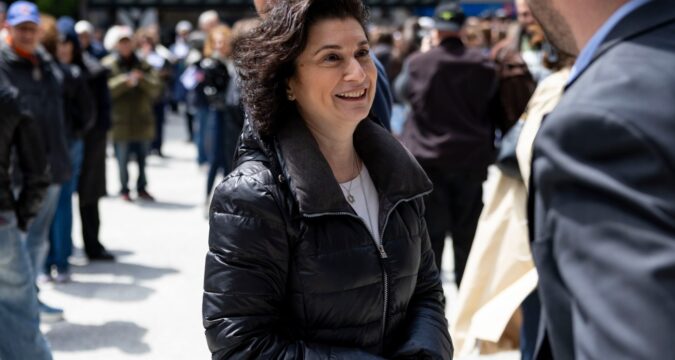
According to the story “Illinois 9th District race tests long Jewish legacy” (Feb. 8), Chicago Ald. Debra Silverstein, 50th, said she would be “very concerned if (the 9th Congressional District) wasn’t a Jewish seat.” She added, “Because the makeup of this district has a very large Jewish community that’s nuanced, I think it’s important that we have a Jewish representative that understands our needs firsthand.”
Perhaps Silverstein needs to check some population statistics. The article states that “nearly 12% of people living in the 9th District in 2024 were Jewish, according to a survey supported by the nonprofit Jewish Electorate Institute.” It also reports that according to “the Jewish United Fund’s 2020 Jewish Chicago population study, a cluster of near north suburbs, including Skokie and Evanston, was the only region in the Chicago area that saw a decline in the number of Jewish households in the 2010s.” On the other hand, 15% of people in the 9th District identify as Asian.
It doesn’t really make sense that the needs of Jewish households should be more important for a representative than the needs of other groups (88%) in the district .
I think candidate Hoan Huynh gives a truer picture of the 9th Congressional District, calling it “the Ellis Island of the Midwest.”
I think the needs of all the population groups in the 9th Congressional District need to be considered in choosing a representative, and I hope voters will do just that.
— Linda Hendelman, Chicago
Litmus test for candidate?
The article about the 9th Congressional District reports that the district is 12% Jewish, yet contains quotes such as the seat “has been held by a Jewish person for a very, very long time, and I feel very strongly that it should remain that way.”
Why is a district that is 88% not Jewish expected to be represented in perpetuity by a Jewish representative? Since when is belonging to a specific religion the litmus test for a political candidate in the U.S.? If another seat was held for generations by members of a specific faith or race, should that seat never be available to someone not of that group?
Clearly, that is not the constitutional expectation.
— Kevin Carsten, Morton Grove
Narrowing pluralism
Recent Tribune coverage of the Jewish political legacy in the 9th Congressional District describes a broader national tension — one that now hits closer to home as the Illinois Senate’s 9th District race between Rachel Ruttenberg and Patrick Hanley has also been framed through the lens of religion.
As Jewish women living and voting in Illinois elections, we shudder when we hear a legislative seat described as “a Jewish seat.” Yet, we have heard neighbors suggest that because this North Shore seat has been held by state Sen. Laura Fine, a Jewish woman, her successor should be someone of Jewish faith.
This sentiment should give voters pause. Democracy is strongest when representation is earned through ideas, character and commitment to public service. Elected office does not belong to one particular religious group. This thinking risks narrowing the pluralism that defines our state and our country.
Early endorsements from members of the Illinois Legislative Jewish Caucus signaled institutional support for Ruttenberg at the outset of the race. Financial backing soon followed: A political action committee associated with Jewish caucus leadership contributed tens of thousands of dollars to her campaign.
Endorsements and fundraising are features of American politics, but they can raise legitimate questions about independence. When institutional influence appears to align so quickly with identity, voters are right to ask whether leadership is being evaluated broadly enough.
Jewish tradition places extraordinary value on inquiry, debate and ethical reasoning. Our intellectual heritage is one of challenging assumptions and pursuing justice. Reducing political leadership to identity alone runs counter to those principles.
Hanley has attracted support from a wide coalition, support that appears grounded in outreach, experience and engagement.
Our concern is larger than any single candidate. When politics become a calculus of demographic succession, representation begins to feel inherited rather than earned.
Identity matters. But it should not determine support for public office. A healthy democracy chooses representatives by the strength of their judgment, not the simplicity of their labels.
— Jennifer Obel, Wilmette, and Caryn Fliegler, Northbrook
Reform in assessments
The Tribune Editorial Board’s endorsement of Fritz Kaegi (Feb. 8) overlooks the central issue driving Cook County’s property tax crisis: a persistent failure of governance inside the assessment system. The core structural problem is not partisanship or messaging. It is the absence of a legally required process to correct factual errors once they are proven.
Under current Illinois law, when an appeal shows that the assessor relied on incorrect square footage, a misclassified basement or attic, wrong building class or inaccurate comparable-property characteristics, only the tax bill for that single year is corrected. The underlying data remains unchanged. This is why taxpayers face the same battle every three years. The problem is not that appeals exist; it is that the system never learns from them.
During Kaegi’s tenure, homeowners experienced some of the sharpest and most uneven tax increases in decades, especially on the South and West sides where bills jumped dramatically in a single year. At the same time, countywide tax bills were delayed due to operational and technology failures that disrupted cash flow for households, school districts and local governments. These are measurable outcomes that reveal a breakdown in basic administrative oversight.
A modern, data-driven assessment system depends on accuracy, verification and correction. Yet Cook County still has no internal process to permanently update property records when errors are found, nor any requirement to review whether incorrect data affected comparable properties or neighboring homes. Without a true data-correction loop, assessments will continue to be unstable and unequal, regardless of who holds the office.
If Cook County is serious about fairness and modernization, the priority cannot simply be defending the status quo. It must be fixing the structural flaw that allows known errors to remain in circulation. Stability will come from leadership committed to accuracy, transparency and long-overdue governance reform.
— Tony Bonvolanta, Chicago
What do they stand for?
As I suffer from acute political ad fatigue, I have a message for the candidates in the upcoming primary: Please tell us more about what you stand for and less about who you stand against.
— Sheryl Slone Tarkoff, Chicago
Ready to hit mute button
With all the political ads on TV now, a candidate often says that the other candidate wastes money and he or she alone can fix the problem. The political party doesn’t matter; it’s always the other guy.
The real waste of money is the ads themselves. I don’t know about anybody else, but my finger is on the mute button whenever the program I’m watching is ready for a commercial break, especially news programs.
To Raja Krishnamoorthi, Laura Fine, Donna Miller, Brendan Reilly, Toni Preckwinkle, Darren Bailey and all the other pols putting these ads on TV: I am ready to mute you as soon as I can.
— Robert Sullivan, Orland Park
Alternative to 2 parties
A recent letter writer (“A new party for Americans,” Feb. 6) laments the lack of a third party. I used to vote for Libertarian Party candidates. There have been candidates from other parties over the years. They disappeared. I suspect that they were tired of being ignored by the voters. They may never return.
Voters should realize that they don’t have to settle for a Republican or a Democrat.
— William Capper, Morris, Illinois
Great leader for youths
Regarding the op-ed “In an age of anxiety and division, the arts are not an ‘extra,’ they’re a lifeline” (Feb. 10): Josephine Lee elevates others, especially young voices, because she is simply inspiring. She expects her choirs to be better than they ever thought they could be, and the sparkling results reward them, for a lifetime, as well as their audiences.
Two decades ago, I met Josephine at a Chicago Children’s Choir event. Enthralled, I invited Josephine and a musical colleague of hers to put on an evening of pops at my venue in tiny Toulon, Illinois. She didn’t disappoint; she never does.
At the piano, with her friend sharing the vocals, they wowed the small town audience that probably wasn’t used to Josephine’s level of soaring talent. Thanks, Josephine.
I think Josephine should lead Chicago Public Schools. We need inspiration, not more dumbing down of expectations.
— Jim Nowlan, Princeton, Illinois
Messages to take to heart
I read Josephine Lee’s op-ed about what arts participation does for children with a surge of hope. The demand for excellence that fosters belief in oneself, the unifying experience of expansive human understanding through sharing an art form with others of different backgrounds and cultures, the empathic exercise of appreciating the efforts of one’s peers, the breeding of respect for all those participating with one from peers to authorities, the cultivation of self-motivation that builds leadership character and the pursuit of goals transcending competition and awards — all these make arts participation a fundamental life education.
I profoundly know this from teaching classical ballet to young people for the past 30 years, and I’ve worked with Lee. My hope is that Lee’s messages are heard and taken to heart by educational policymakers in Chicago and everywhere.
— Daniel Duell, artistic director, Ballet Chicago
View of homeschooling
Thank you for the evenhanded article on the growth of homeschooling in Chicago (“‘Free the kids,’” Feb. 11).
My wife and I homeschooled all five of our children through high school. Among them, we’re proud to have toted up five bachelor’s degrees (information systems, education, engineering, applied science, music), five master’s degrees (library science, electrical engineering, microwave engineering, computer science, liberal arts) and a juris doctor.
Their degrees come from a wide variety of institutions: DeVry University, Maranatha Baptist University, Bob Jones University, San Jose State University, University of Wisconsin at Milwaukee, University of Massachusetts at Amherst, the Naval Postgraduate School, St. John’s College at Annapolis and Indiana University. Clearly, there’s no inherent problem with transitioning from homeschool to college!
I particularly appreciate what Angela Watson said: “(These states) have virtually no regulation or laws or requirements around homeschooling. Then, they try to go from that to the most restrictive laws in the nation.”
This is an accurate description of the failed Illinois legislation from last spring. Lawmakers’ intent seems not to protect homeschooled children but to protect public schools and those who profit from it. Even if that’s not their goal, it would certainly be their effect if they were to succeed.
Illinois has plenty of education problems to tackle. Homeschooling is emphatically not among them. Until the real problems are taken care of, Springfield needs to leave homeschoolers alone.
Thank you for not characterizing homeschoolers as counterculture, Bible-thumping, alt-right, child-abusing hermits. We’re just parents who want the best for our kids, know them best and are making the best choices possible. And our kids are just fine!
— David Vancina, Manhattan, Illinois
Insult to public school kids
The article on homeschooling is the most insidious I have ever seen on the Tribune’s front page and an insult not only to Chicago’s mayor but to the thousands of children in Chicago Public Schools!
Democracy and freedom can only exist in an intelligent, rational, conscientious and responsible society. Advocating for homeschooling is highly irresponsible, anti-democratic and prejudicial. Besides academic achievement, public schools foster social responsibility and behaviors, without which we cannot be united as a country.
Psychologists have found that COVID-19 isolation in education had negative effects on children’s socialization. There are some children who need to be homeschooled, but this is a minority of children.
Teacher training colleges and universities are responsible for providing skills and education to ensure that our teachers are equipped to reach the children they teach and equip them to be lifelong learners.
Researchers who focus on the role of education would never support a massive division of educational opportunities for children.
— Donna S. Davis, Woodstock
Submit a letter, of no more than 400 words, to the editor here or email letters@chicagotribune.com.
https://www.chicagotribune.com/2026/02/12/letters-021226-9th-congressional-district/

What to do in Chicago for Valentine’s Day, from a Taylor Swift party to fireworks
Our picks for events in and around Chicago this Valentine’s Day weekend.
Galentine’s Day Taylor Swift Party
Dress as your favorite Taylor Swift Era and go out to Recess for a Galentine’s Day dance party. Maybe coordinate with your besties to make a candy heart palette of “Lover,” “Midnights” and “The Life of a Showgirl”? DJs Greg Corner, Anna Sophia and Ari will spin, while Rad + Refined offers bracelet making. Tickets include a drink package — Eras-inspired, of course. 8-11 p.m. Feb. 13 at Recess, 838 W. Kinzie St.; tickets $30 at recesschicago.com
“Improvised Jane Austen”
Know your own happiness. And if yours happens to involve a love of empire-waist gowns, get to the iO Theater. Mark Valentine’s Day and the recent 250th anniversary of Jane Austen’s birth with a night of improv. A cast of about 20 performers embroider a British Regency-era rom-com from Austen tropes. 6 p.m. Feb. 14 and 7:30 p.m. Saturdays through March 28 at iO Theatre, 1501 N. Kingsbury St.; tickets $22.80 at improvisedjaneausten.com
Fee Basanavicius and Daryn Robinson perform as part of the cast of “Improvised Jane Austen” at iO Theater in Chicago on Dec. 7, 2024. (Chris Sweda/Chicago Tribune)
“Crying at The Shed”
If you long for complicated love stories, Salt Shed has the film fest for you. Seven films will screen this weekend: On Feb. 13, Mike Mills’ “Beginners” (2010), Alfonso Cuarón’s “Y Tu Mamá También” (2001), and Gus Van Sant’s “My Own Private Idaho” (1991). Then, on the big day, a family matinee of Disney’s “Lady and the Tramp” (1955) followed by Alice Rohrwacher’s “La Chimera” (2023), Spike Jonze’s “Her” (2013), and Sophia Coppola’s “Lost in Translation” (2003). 5 p.m. Feb. 13 and 2:30 p.m. Feb. 14 at The Salt Shed, 1357 N. Elston Ave.; tickets from $12.34 at saltshedchicago.com
“Cendrillon”
Or perhaps you prefer a fairy tale romance: Chicago City Opera performs “Cendrillon” — or Cinderella. The opera by Jules Massenet originally debuted in 1899. See it this weekend in Chicago and Highland Park. Hayley Fox stars as Cinderella; Alexis Enyart will conduct. 7:30 p.m. Feb. 13-14 at The CheckOut, 4116 N. Clark St. (ages 21+); 2 p.m. Feb. 15 at in Trinity Highland Park, 425 Laurel Ave., Highland Park; tickets from $32.79 at chicagocityopera.com
Love at the Pier
Cuddle up on Navy Pier with more than a dozen Valentine’s Day options, ranging from 360-degree views from the Centennial Wheel, a date-night performance of “Hamnet” at Chicago Shakespeare Theater, or a dinner cruise on Lake Michigan or the Chicago River. Cap off the holiday with Valentine’s Day fireworks at 9 p.m. Feb. 13-14 on Navy Pier, 600 E. Grand Ave.; full details at navypier.org
Love Bites: A Valentine’s Haunted House
Want to get your pulse racing this weekend? Thirteenth Floor puts a Valentine’s spin on its Schiller Park haunted house. Vampires and other creepy monsters promise plenty of thrills — not to mention photo opps and merch. Date-night packages are available along with mini escape games and a zombie shoot. Through Feb. 15 at 13th Floor Haunted House Chicago, 5050 River Road, Schiller Park; tickets from $29.99 at 13thfloorchicago.com
Taylor Swift performs her song “Cruel Summer” on the opening night of the Chicago Eras Tour on June 2, 2023, at Soldier Field.
Love in every hue
The Color Factory hosts a Valentine’s celebration on Valentine’s eve, featuring a free photo print and picture frame. The sensory exhibit centers on the feelings colors evoke — not to mention all those likes you can generate in this Insta-friendly space. Go show the world your love. 4 p.m. Feb. 13 at Color Factory Chicago, 233 S. Wacker Drive; tickets from $29 at colorfactory.co
Roar-Mantic Rhythms
Brookfield Zoo Chicago hosts a Valentine’s fundraiser in the style of a 1920s jazz club. Support the zoo and enjoy a cocktail hour, five-course meal and up-close animal encounter. Or if you’ve recently suffered a break-up, consider chipping in a mere $15 to cheer yourself up: Through Valentine’s Day, the Zoo will name a Madagascar hissing cockroach after the person of your choosing. 6-10 p.m. Feb. 14 at Discovery Center at the Brookfield Zoo Chicago, 8400 31st St., Brookfield; tickets from $15-$525 at brookfieldzoo.org
Hug-A-Mug
Yes, Lillstreet Art Center offers a Date Night Throwdown — a pottery workshop for couples on Friday nights — but you’ll have to join the waitlist for this weekend’s sold-out installment. Instead, round up your kids and head to the Hug-A-Mug class on Valentine’s morning. Make cocoa mugs, soup bowls or other cozy objects. 10 a.m.-noon Feb. 14 at Lillstreet Art Center, 4401 N. Ravenswood Ave.; tickets $52 per person (ages 5+, adult must accompany children) at lillstreet.com
Rosé & Roses
Head to Mesler for Valentine’s Day brunch and make a rose bouquet during a workshop led by Bronzeville florist Fleurish Chicago. Depending on which package you pick, sip Veuve Clicquot Rosé or non-alcoholic French Bloom Le Rosé as you design your blooms. Chocolate truffles included. 12:30 p.m. Feb. 14 at Mesler Kitchen, 1411 E. 53rd St.; tickets from $50 at resy.com
Have something to do around Chicago? Email events to day.chitribevents@gmail.com
https://www.chicagotribune.com/2026/02/12/what-to-do-valentines-2026/

Willie Wilson: Americans are not optimistic Black people will ever achieve full equality
As a Black American who grew up in the Jim Crow South, I was offended by the video President Donald Trump posted on social media depicting former President Barack Obama and former first lady Michelle Obama as apes. Trump should apologize to help bring the country together. White people of good conscience should also speak out against the president’s actions, which dehumanize Black people.
The insensitive action of the leader of the free world during Black History Month is especially hurtful. It will not help improve the pessimism Americans have regarding whether Black people will ever achieve full equality in America. Trump’s post gives a nod to white supremacists and does nothing to promote positive race relations in America.
A Pew Research Center survey last year found nearly half of Americans don’t believe that Black people will eventually have equal rights with white people. Fifty-one percent of Americans believe Black Americans will achieve full equality with white Americans, whereas 49% express doubt that Black people will ever have equal rights, up from 39% in 2020. Interestingly, two-thirds of Black people surveyed do not believe we will ever reach full equality with white people.
Trump’s legislative actions have made it more difficult for Black citizens to achieve full equality. The White House’s attacks on diversity, equity and inclusion, the Civil Rights Act of 1964, the Voting Rights Act 1965 and education have set Blacks back decades.
The Black community is facing several interconnected challenges, driven by policy changes. The Trump administration has effectively eliminated the Minority Business Development Agency. The MBDA, housed within the U.S. Department of Commerce, is the sole federal agency dedicated to assisting minority business enterprises in overcoming social and economic disadvantages by helping expand minority business enterprise’s access to capital, untapped markets, business contracts and other resources.
Most equity studies suggest it will take centuries for Black Americans to reach full parity with white Americans. If this is widely known, why aren’t Black elected leaders acting with a sense of urgency — proposing targeted policies to help close socioeconomic and wealth disparities?
Equality is important because it creates a stable society by ensuring all individuals have equal rights, opportunities and protection from discrimination. An equal playing field reduces poverty, drives economic development and promotes social cohesion. Equality leads to healthier communities and improved access to education for all. The absence of equality creates instability in society and conflict.
It is shameful that we are fighting some of the same battles the Rev. Martin Luther King Jr. fought for in the 1960s. The issues of poverty and redlining in the ’60s have been replaced with home equity theft, unemployment, overincarceration of Black men and underperforming schools. It is clear that post-Civil Rights Movement legislation has failed to address widening racial disparities in health, wages, wealth and homeownership for Black Americans.
Who bears accountability and responsibility for the lack of Black progress and equality in America? In ancient Egypt, the pharaoh was the supreme authority over the Israelites. In America, pharaohs come in all colors, and they all share one common trait — they bend to the knee of the almighty dollar. Black pharaohs or elected leaders have kept the masses of our people in a perpetual state of poverty and hopelessness. Perhaps white elected leaders should encourage Black politicians to pass legislation making life more equitable for their communities.
Too many Black politicians are more concerned about fitting in than transforming their communities. They are more interested in going along to get along. They run on platforms to fight for jobs, safer streets and quality schools. Once elected, Black politicians join the corrupt system they promised to fight. Meanwhile, the Black community spirals downward with respect to equality.
The Democratic and Republican parties are responsible as they have become two wings of the same broken bird that have failed to help Black citizens achieve full equality. We need Black leaders who will straighten their backs and challenge the status quo. The so-called progressive movement has done little to close the equity gaps between Black and white people.
The majority of the detainees in the Cook County Department of Corrections are Black. The Black population in Cook County is close to 23%. There is something wrong with this great disparity.
The following are suggestions to help Black people attain equality in America:
Illinois House Speaker Emanuel “Chris” Welch should introduce a Marshall Plan focused on resources for Black communities experiencing high levels of unemployment, violence and low-performing schools.
Gov. JB Pritzker and Welch should conduct a study exploring why a majority of the detainees in the Cook County and Illinois Department of Corrections are Black.
Pritzker and Welch should ensure Black-owned businesses are receiving state contracts from agencies that reflect or exceed their population numbers.
Welch should dramatically increase access to state capital dollars for Black-owned businesses.
Pritzker and Welch should work to get legislation passed that allows school choice.
Faith leaders should encourage their members to vote in the upcoming election for someone who will represent their interests.
We are all interconnected, and when the Black community is equal, America is a stronger nation.
I write this commentary to make those comfortable with denying Black Americans full equality uncomfortable.
Willie Wilson is a business owner, philanthropist and former mayoral candidate.
Submit a letter, of no more than 400 words, to the editor here or email letters@chicagotribune.com.
https://www.chicagotribune.com/2026/02/12/opinion-black-equality-obamas-racism/
Eder I. Aguilar: My message to 8th grade CPS students who face the verdict of their high school test results
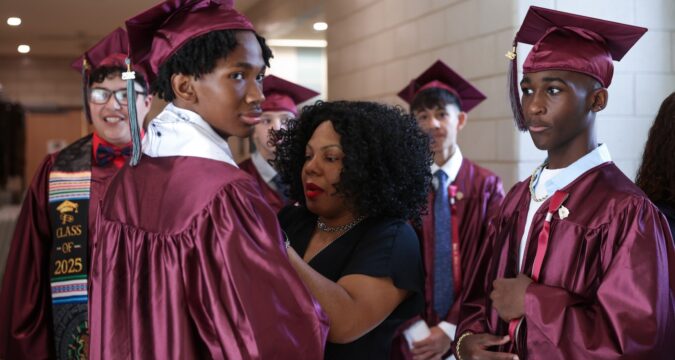
Every year as a Chicago Public Schools eighth grade teacher, I am forced to reflect on the memory of my high school application process.
I remember arriving at Lane Tech’s village-sized campus on a Saturday morning for my high school test. Both my parents worked that day. My grandfather dropped me off. It was the support of my family that got me into Lane’s enormous cafeteria.
At that point, I had not thought about the way I was a drop of water in the cavern that is Chicago’s high school process.
A few months later, my results were in. No Lane Tech. No Whitney Young. No Northside College Prep. For me as an eighth grader, this was a personal failure. I had failed to get into one of the “good” high schools.
According to my parents, school was my job. I was a strong student, but those rejections made it clear: The job I had done was not good enough.
I think about how disappointed and confused my 13-year-old self was. I reflect on what I would have wanted to hear in that moment.
I would have wanted to know that opportunities exist at every high school. I would have wanted to know that, though I didn’t get into my top choices, I could still become the first in my family to graduate college out of state and on a full-tuition scholarship.
I currently teach in Logan Square, the neighborhood I grew up in. Every year, I again experience the complex and cutthroat application process each Chicago eighth grader faces. I meet with families that do not understand the selection process and with families that believe that anything other than a “good” school is not an option for their child.
On Friday, students will receive their results. They will be told if the “top schools” find them to be desirable or undesirable. On Monday, I will enter my classroom and repeat the message I give each year to eighth graders:
First, I am proud of you. No high school result will change that. Wherever you go, you can, and will, do well. I am here if you want to celebrate or if you want to cry. Regardless of the high school, I am here to support you. That does not change.
Now, I love my city and the work I do. But this love has required me to reckon with its ugliness.
Chicago has had a dark history with racial segregation. Public schooling here has always been a case of the haves and have-nots, the desirables and undesirables. This is a city where students have protested Willis Wagons, where mothers have gone on hunger strikes for better schools and where a teachers union has been a target due to CPS’ Black Student Success Plan. It is not an accident that Chicago’s top schools are in the more desirable parts of the city away from Black and brown students.
The results students receive today are a product of one day’s test scores and one year’s grades, with a city’s history of educational injustice baked in. Yet, it is these numbers that will determine which doors are open and which doors are closed.
This is an unforgiving system.
I think of a student I taught last year who was devastated by her high school results. She was not accepted into her top schools and felt her dreams of becoming a designer had been derailed. At the time, I felt as though I could not offer any support to counterbalance her disappointment. She was another strong student, convinced that she had failed because she did not get into one of the “good” schools.
I received a quick message from her recently via a current student of mine. The student is enjoying her freshman year and says “hello” and is “way too busy to visit.”
Being “way too busy to visit” is exactly what I want to hear as an eighth grade teacher. This means that she is pursuing opportunities and that her mind is on the possibilities of the future and not on the disappointment of the past.
We often get hung up on futures when it comes to our students. “What comes next?” is on the mind of every eighth grader. There is no changing that.
What we must remind these students of, in their acceptances and rejections, in their celebration and in their grief, is that they are supported. They do not face their futures alone. There is no changing that.
Eder I. Aguilar is a teacher in and from Chicago’s Logan Square neighborhood.
Submit a letter, of no more than 400 words, to the editor here or email letters@chicagotribune.com.

“Winner Takes All”: UBS Speaks With Swiss Watch Industry Insider On “Stabilizing Market”
“Winner Takes All”: UBS Speaks With Swiss Watch Industry Insider On “Stabilizing Market”
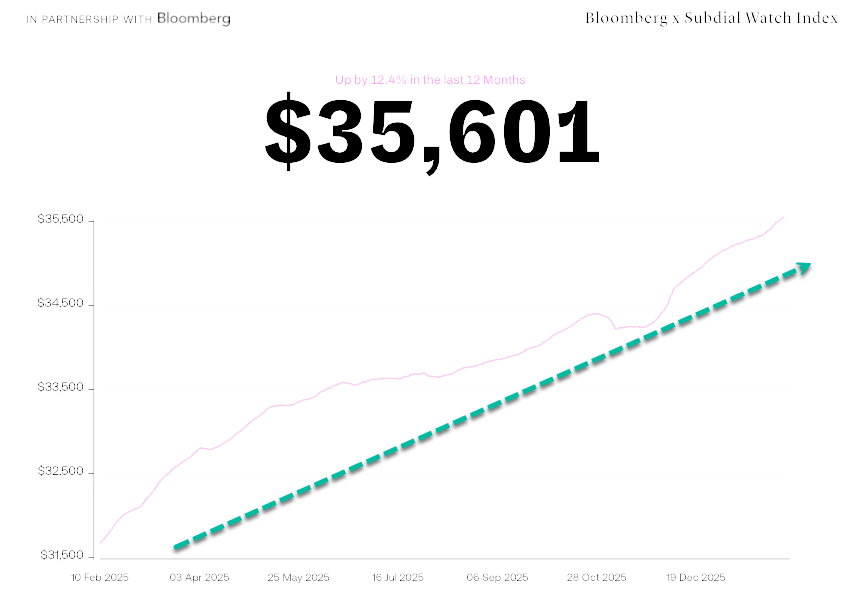
The Bloomberg Subdial Watch Index, which tracks secondary-market prices for the 50 most-traded watches by value, has been ticking higher for about a year, rebounding from a multi-year slump that followed the Covid-era luxury watch mania fueled by cheap interest rates and easy money.
Our last note on the secondary watch market was about a month ago, covering the rebound in prices from a 2025 low (read here) and the shifting tastes of Gen Z collectors (or at least the ones with money).
To add more color to the Swiss watch cycle, UBS analysts, led by Zuzanna Pusz, spoke with a veteran industry insider.
Pusz’s key takeaway from the conversation with the expert is that the industry has “entered a stabilization phase following the post-Covid boom and the subsequent normalization period marked by pronounced weakness in China.”
Here’s the full takeaway that gives readers more guidance on what to expect from the luxury timepiece industry this year:
Stabilising industry momentum, but outlook remains uncertain
Earlier today, we hosted a call with a seasoned Swiss watch industry expert to discuss the latest industry trends and brand dynamics. In summary, the expert believes the industry has entered a stabilisation phase following the post-Covid boom and the subsequent normalisation period marked by pronounced weakness in China. While he expects 2026 to be a better year than 2025, it remains uncertain whether growth will return across the board given ongoing macro-political uncertainty. Market trends remain volatile and divergent: (1) US continues to show strength; (2) Europe faces uncertain demand, heavily influenced by tourism flows and FX; and (3) Asia lacks broad-based momentum, with China stabilising but Japan weakening. Overall, the call reinforced our view that the luxury recovery is still in its early stages and that investors should remain selective. LVMH and CFR remain our top picks, while Swatch and Pandora continue to be rated Sell.
“Winner takes all” amid polarised brand performance
On brand performance, the expert highlighted continued market share gains among the outperformers, including Rolex, albeit with shorter waiting lists. He also noted the rising popularity of “microbrands”, which are gaining visibility thanks to lower barriers to entry and growing “wrist/voice” share. Regarding Swatch Group specifically, the expert did not identify any clear idiosyncratic drivers behind the improving H2 sales momentum (c. FX +5% vs. Swiss watch exports -3%), aside from positive traction at Breguet and the group’s ability to more easily supply retailers amid tariff concerns (inventory >100% of sales) compared to stock constrained peers. Nevertheless, he also pointed out the likely distortion of the FHS Swiss watch export statistics due to tariff-related volatility in today’s context. Lastly, he expects continued consolidation within the retail landscape, with publicly listed groups likely to optimise their brand portfolios and refocus on more efficient assets.
Growing appreciation for luxury watches among younger cohorts
The expert also pointed to a structural shift in the consumer base, driven by the sustained entry of younger buyers into the watch category – despite long concerns that younger generations are moving away from traditional wristwatches. This cohort, initially drawn in through social media, sneaker culture, the MoonSwatch phenomenon, and reselling dynamics, played a key role in both the Covid-era surge and the subsequent normalisation as speculative behaviour faded. Despite this volatility, the expert views this demographic shift as durable, with younger consumers now firmly embedded in the market and representing a long-term tailwind for the industry. He also noted a modest increase in women’s self-purchases, though not yet at a scale that materially reshapes overall demand. When asked whether the appeal to younger buyers might be linked to the rise in metal prices and a perceived “store of value” dynamic, he stressed that this narrative applies mainly to vintage models rather than modern watches. Looking at brand implications of recent “fashion” trends in the category, he reiterated his positive stance on Cartier and a potential improvement in dynamics for Piaget (both Richemont, Buy).
Earlier Tuesday, shares of French luxury group Kering jumped as much as 14% in Paris trading, the biggest intraday move in almost six years, after better-than-expected fourth-quarter sales at its Gucci unit. The UBS Luxury basket (UBXELUX) rose nearly 2%, driven largely by hopes of a turnaround at the luxury house.
At UBS, analyst Justinus Steinhorst told clients that Kering’s results “boosted hopes of a turnaround,” lifting the UBXELUX basket.
From luxury watches stabilizing to early signs of traction at Gucci, the bigger question is whether the luxury industry as a whole is finally turning.
Professional subscribers can learn more about the consumer trends on our new Marketdesk.ai portal.
Zero Hedge
Thu, 02/12/2026 – 05:45

Today in Chicago History: Marina City — the iconic corncob towers — granted landmark status by City Council
Here’s a look back at what happened in the Chicago area on Feb. 12, according to the Tribune’s archives.
Is an important event missing from this date? Email us.
Front page flashback: Feb. 13, 1963
At least 16 people from the Chicago area were aboard Northwest Orient Airlines Flight 705, which crashed shortly after takeoff from Miami International Airport on Feb. 12, 1963. (Chicago Tribune)
1963: A Chicago-bound Northwest Orient Airlines jet crashed in the Florida Everglades shortly after takeoff from Miami International Airport. The Boeing 720 jet had flown into “rain squalls and turbulent skies,” which “cut off radar observation within minutes after takeoff,” the Tribune reported. All 43 people aboard — including 20 passengers from the Chicago area — died.
Weather records (from the National Weather Service, Chicago)
High temperature: 62 degrees (1984)
Low temperature: Minus 17 degrees (1899)
Precipitation: 1.13 inches (1884)
Snowfall: 7.9 inches (1894)
Biden grants national monument status to site of 1908 Springfield race riot
1909: The National Association for the Advancement of Colored People was founded in New York, partially in response to race riots in Springfield during the previous year in which seven people died.
On Feb. 12, 1917, “The Gumps” by cartoonist Sidney Smith made its appearance in daily strip form in the pages of the Chicago Tribune; it was soon picked up for national distribution by the newly created Tribune-News Syndicate. (Chicago Tribune)
1917: “The Gumps,” for decades one of the most popular comic strips, was introduced in the Tribune.
About 245 men were asleep inside the Barton Hotel, 644-648 Madison St., Chicago, when a fire started inside the building early on Feb. 12, 1955. At least 29 of them were killed. (Chicago Tribune)
1955: At least 29 men died after a fire swept through the Barton Hotel at 644-648 Madison St. Most were trapped inside their cagelike rooms at the Skid Row hotel, which were rented for 60 to 85 cents per night.
Professor Marlene Dixon announces her resignation at the University of Chicago during a press conference on Feb. 12, 1969. Students at the school occupied the administration building for two weeks in response to Dixon’s firing, who was considered by some to be radical. (James Mayo/Chicago Tribune)
1969: Controversial University of Chicago sociology professor Marlene Dixon — who inspired a more than two-week sit-in by students at the school’s administration building (Edward H. Levi Hall) after her contract was not renewed — announced her resignation.
Dixon, who previously appeared on local talk shows to discuss “convention freak-out” and “student unrest”, came under fire for joining students who protested the Vietnam War during the inauguration of incoming president Edward H. Levi in 1968.
Students seize the University of Chicago administration offices over the firing of professor Marlene Dixon on Jan. 30, 1969. The sit-in lasted two weeks. (Walter Neal/Chicago Tribune)
In announcing her decision to reject a one-year contract extended by university officials, Dixon said, “Should I benefit from the students’ sacrifice? This I cannot do.”
Dixon said that discrimination against women and radicals, which students said played a role in the university’s original decision not to rehire her, “simply cannot be factually demonstrated … but issues like that question the very integrity of this university.”
According to the University of Chicago, 42 students who participated in the sit-in were expelled and 81 students were suspended.
Wilson Hall at Fermilab on Aug. 9, 2023, in Batavia. (John J. Kim/Chicago Tribune)
1972: “The world’s largest atom smasher” passed its first major test at the National Accelerator Laboratory (now Fermilab) in Batavia, the Tribune reported, “by successfully accelerating a beam of protons to 100 billion electron volts.”
Mayor Richard J. Daley views the Chicago skyline from atop the new Civic Center on March 17, 1966, showing the Marina City tower buildings on the left. (Walter Kale/Chicago Tribune)
2016: Chicago’s Marina City was granted landmark status by the City Council.
“The designation, which will allow the city’s landmarks commission to review proposed changes to Marina City, nonetheless has a broader importance because it sets a precedent for putting a major midcentury modernist skyscraper on the protected list,” Tribune critic Blair Kamin wrote.
Chance the Rapper accepts the award for best new artist at the 59th annual Grammy Awards on Feb. 12, 2017, in Los Angeles. (Matt Sayles/Invision/AP)
2017: Chicago’s Chance the Rapper, aka Chancelor Bennett, won three Grammy awards for best new artist, rap album and rap performance (“No Problem”). The 23-year-old artist beat out Kanye West and Drake for best rap album for “Coloring Book.”
Though recordings that were not commercially sold were previously banned from Grammy consideration, the academy relaxed its rules. This paved the way for Chance’s victories.
Ozzie Castrejon, a Peapod delivery worker, prepares a delivery for a client in Chicago on Oct. 24, 2017. (José M. Osorio/Chicago Tribune)
2020: Chicago-based Peapod — the grocery delivery pioneer — announced it was ceasing operations in the Midwest. Peapod, founded in Evanston in 1989, was purchased by Ahold Delhaize, the Dutch parent of Food Lion, Stop and Shop and Giant, in 2000.
Want more vintage Chicago?
Subscribe to the free Vintage Chicago Tribune newsletter, join our Chicagoland history Facebook group, stay current with Today in Chicago History and follow us on Instagram for more from Chicago’s past.
Have an idea for Vintage Chicago Tribune? Share it with Kori Rumore and Marianne Mather at krumore@chicagotribune.com and mmather@chicagotribune.com
https://www.chicagotribune.com/2026/02/12/february-12-chicago-history/

Today in History: Joaquín ‘El Chapo’ Guzmán convicted
Today is Wednesday, Feb. 12, the 43rd day of 2025. There are 322 days left in the year.
Today in history:
On Feb. 12, 2019, Mexico’s most notorious drug lord, Joaquín “El Chapo” Guzmán, was convicted in New York of running an industrial-scale drug smuggling operation, murder and money laundering. (Guzman is currently serving a life sentence at the federal supermax prison facility in Florence, Colorado.)
Also on this date:
In 1554, Lady Jane Grey, who had claimed the throne of England for nine days, and her husband, Guildford Dudley, were beheaded after being condemned for high treason.
In 1809, Abraham Lincoln, the 16th president of the United States, was born in a log cabin at Sinking Spring Farm near Hodgenville, Kentucky.
In 1909, the National Association for the Advancement of Colored People (NAACP) was founded in New York City.
In 1912, Pu Yi, the last emperor of China, abdicated, marking the end of the Qing Dynasty.
In 1914, groundbreaking took place for the Lincoln Memorial in Washington, D.C.
In 1999, the Senate voted to acquit President Bill Clinton in his impeachment trial of charges of perjury and obstruction of justice.
In 2002, former Yugoslav president Slobodan Milošević went on trial in The Hague, charged with genocide and war crimes. (Milošević died in 2006 before the trial could conclude).
Related Articles
The Chicago Municipal Device is the city symbol few Chicagoans know about
Today in History: Pope Benedict XVI announces resignation
Today in Chicago History: Jackie Robinson West stripped of Little League baseball championship
Today in Chicago History: U.S. Sen. Barack Obama announces run for president in Springfield
Today in History: Deadly tornado kills 21 in St. Louis area
In 2016, Pope Francis embraced Patriarch Kirill in the first meeting between a pontiff and the head of the Russian Orthodox Church. The meeting in Havana was a landmark development in the 1,000-year schism that has divided Christianity.
Today’s birthdays: Film director Costa-Gavras is 92. Author Judy Blume is 87. Former Israeli Prime Minister Ehud Barak is 83. Country singer Moe Bandy is 81. Musician Michael McDonald is 73. Actor-talk show host Arsenio Hall is 69. Supreme Court Justice Brett Kavanaugh is 60. Actor Josh Brolin is 57. Filmmaker Darren Aronofsky is 56. Actor Christina Ricci is 45.
https://www.chicagotribune.com/2026/02/12/today-in-history-joaquin-el-chapo-guzman-convicted-2/

‘No More Asylum Tourism’: Right-Wing Victory As Brussels Votes To Ease Migrant Transfer To ‘Safe Third Countries’
‘No More Asylum Tourism’: Right-Wing Victory As Brussels Votes To Ease Migrant Transfer To ‘Safe Third Countries’
The European Parliament has approved new regulations to tighten EU migration and asylum policy, including the “safe third country” concept, with 396 MEPs in favor of the changes and 226 against.
The rules will allow EU member states to deem asylum applications inadmissible if the applicant transited through a country deemed “safe” where they could have sought protection.
They also facilitate the transfer of asylum seekers to third countries (outside the EU), even if the applicant has no direct connection to that country, provided a transit connection or similar link exists.
Confederation MEP Ewa Zajączkowska-Hernik took to X to celebrate the win and explain what this means for migration.
“We have just WON a crucial vote in the European Parliament regarding the application of the ‘safe third country’ concept, which I have been working on for the last few months! Please share and publicize this, so that as many people as possible can hear about it, because the mainstream media is silent!” Zajączkowska-Hernik shared on social media.
MAMY TO❗️ Właśnie WYGRALIŚMY kluczowe głosowanie w Parlamencie Europejskim dotyczące stosowania koncepcji „bezpiecznego kraju trzeciego”, nad którą pracowałam ostatnie kilka miesięcy!✌️🇵🇱
Bardzo proszę o podawanie dalej i nagłaśnianie, niech jak najwięcej osób o tym usłyszy, bo… pic.twitter.com/Bx8ntY827Z
— Ewa Zajączkowska-Hernik (@EwaZajaczkowska) February 10, 2026
The MEP said that the vote was a success “despite desperate sabotage attempts” by the Left, Greens, and Socialists.
Zajączkowska-Hernik believes EU countries have been given a “real weapon” to combat illegal migration and put an end to fictitious bureaucratic procedures and abuse.
The MEP confirmed that there will be no more looking for “special ties” that a migrant may have with a given country.
“If he entered the EU in transit through a safe country (e.g., Turkey or Tunisia), his asylum application is inadmissible. He must return immediately!” Zajączkowska wrote.
Moreover, “asylum tourism” will be stopped, and appealing a decision will no longer automatically halt deportation.
“No more years of living free at taxpayer expense while left-wing lawyers drag out the proceedings,” she argues.
In addition, member states will gain the right to conclude their own agreements with third countries on returning migrants. “Brussels can no longer block our negotiations; we just need to inform them before the agreement comes into force,” Zajączkowska-Hernik wrote.
States will also be able to impose restrictions on freedom and detention to prevent migrants from disappearing before deportation.
“Citizen safety is a priority. This is the first step towards stopping mass and illegal migration! I work for you and show that the right can win in the fight for the security of our citizens and borders!” wrote the MEP.
Tyler Durden
Thu, 02/12/2026 – 05:00