Category: News

Editorial: Kevin Hall for Illinois 56th Senate District Democratic primary
Incumbent state Sen. Erica Harriss, a Republican, won a narrow victory here in 2022 over her Democratic opponent, and is running unopposed in the Republican primary. Vying to face her in November are Marsia Geldert-Murphey and Kevin Hall, 39.
District 56 is in the Metro East, and covers all or part of Edwardsville, Collinsville and Granite City, just across the Mississippi River from St. Louis.
That this was such a close race in 2022 signals that voters here are moderate, and Hall seems to have gotten the memo, at least to some extent, telling us he’s all for modernizing and increasing the efficiency of government. If you’re sending someone to Springfield and a legislature facing chronic budget deficits and financial strain, that’s an important hurdle to clear. His campaign also appears laser-focused on bringing down costs for everyday Illinoisans, and as Edwardsville Township supervisor he said he championed local government consolidation, an important issue in a state with the most units of local government in the country.
Geldert-Murphey is a civil engineer who speaks passionately and articulately on the economic pressures residents have described to her. We regret that we were not able to learn more about her candidacy, as she did not respond to our attempts to reach her.
Hall is endorsed.
Read all of the Tribune Editorial Board’s endorsements for the 2026 Illinois primary election here.
Submit a letter, of no more than 400 words, to the editor here or email letters@chicagotribune.com.

Editorial: Brad Beekman for Illinois 36th Senate District Republican primary
Squaring off in the 36th Senate District Republican primary are Brad Beekman and Patrick Harlan. This district includes the Quad Cities, Galesburg, Macomb and all of the rural areas in between.
Beekman is a retired state police officer who is currently serving on the Bushnell-Prairie City school board. Harlan is a fuel truck driver and vice chair of the Knox County Republican Party, whose slogan is, “Together we can return power to the people and truck over the elites.”
Both men have a lot in common on the issues — they support lower taxes, describe themselves as “common sense” and place a heavy emphasis on the need to ease the cost-of-living for working- and middle-class families. Both are critical of the SAFE-T Act. The primary difference between these men is how they embody their message. Beekman leans into his law enforcement experience and signals a willingness to build bridges. Harlan is running as an outsider familiar with the plight of the working man.
Democratic incumbent state Sen. Michael Halpin defeated his Republican opponent comfortably in 2022, but this seat could be winnable for Republicans, but we suspect it’ll take a more moderate candidate to pull it off. We believe Beekman has the experience needed to do just that.
Beekman is endorsed.
Read all of the Tribune Editorial Board’s endorsements for the 2026 Illinois primary election here.
Submit a letter, of no more than 400 words, to the editor here or email letters@chicagotribune.com.
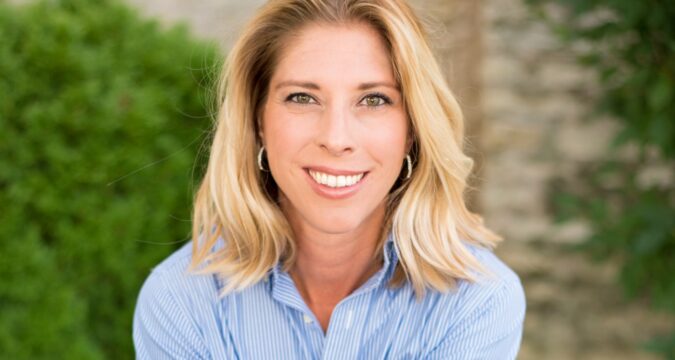
Editorial: Jessica Breugelmans for Illinois 33rd Senate District Republican primary
Vying to replace veteran state Sen. Don DeWitte in the 33rd state Senate District are Republican primary candidates Jessica Breugelmans, 44, and Danielle Penman, 49. DeWitte, who last July announced he would be stepping down when his term ends in 2027, has a reputation as a smart conservative who offered a consistent voice on the need for fiscal restraint, and became a leader on transportation and infrastructure issues, as well as energy. This district touches parts of many suburbs, running from Crystal Lake in McHenry County down to Elburn in Kane County.
As Senate Democrats rev up another push for more tax hikes, Springfield will need rational voices who not only defend taxpayers, but also present reasonable solutions to address the very real budgetary issues that continue to plague the state year after year.
Both Breugelmans and Penman align closely with our views on the need to limit government and ensure responsible spending and tax policy. Both recognize the need for reforms to our broken state pension systems. Both women support school choice, but Breugelmans has made a much greater appeal on this issue and education more broadly, which matters greatly in this district. Her energy and ground game give her a distinct advantage, and, frankly, are much needed among a deflated Illinois Republican Party.
Breugelmans is endorsed.
Read all of the Tribune Editorial Board’s endorsements for the 2026 Illinois primary election here.
Submit a letter, of no more than 400 words, to the editor here or email letters@chicagotribune.com.

A conversation with the UIC professor who heads up sports sciences for US Figure Skating
Among TV viewers, figure skating is consistently one of the most anticipated events at the Winter Olympics. But for Lindsay Slater Hannigan, who is director of the human and sport performance laboratory at the University of Illinois at Chicago, it’s more than a spectator sport.
She is the sports sciences manager for U.S. Figure Skating — the national governing body for figure skating — and she is currently in Stamford, Connecticut, helping NBC produce its coverage of the 2026 Winter Olympics.
“At any of these Olympic organizations, there are never as many people working for them (full-time) as needed; it’s not like the NFL or NBA,” she says. “That’s wild to think about when you’re talking about one of the most popular sports of the Winter Olympics. So around four of us are contract workers, which includes a sports psychologist, a dietitian, and then I manage the sports science aspects, which means I use data to help the employees, coaches and athletes make performance decisions and injury-prevention decisions and rehabilitation decisions over the course of the season.”
What is the science behind the sport? Hannigan took a break from her work with NBC to discuss her area of expertise. The following has been edited for clarity and length.
Q: What kind of work do you do with U.S. Figure Skating?
A: My expertise tends to be jumping athletes, so the pairs skaters and then men’s and women’s singles. A lot of what I’ve done in the past, which has gotten more traction, is workload management, which is newer to figure skating: How do we identify and measure and quantify workload?
Q: What do you mean by workload when talking about a figure skater?
A: It’s super simple for every other sport, it’s usually the number of steps that you take if you’re a runner.
Q: Or pitch count for a baseball player?
A: You got it. And it’s very common in those sports to quantify it that way. In figure skating, it’s been really hard to quantify, especially in training, because there wasn’t a wearable that could measure, for example, how many jumps a skater has done. So we partnered with a company called 4D Motion Sports to create a wearable system that athletes could wear on their hips to identify jumps based on a very specific algorithm. We use rotational velocity — how fast they’re rotating in the air — to identify whether or not they are actually jumping and in the air, and then quantify how many jumps they are doing a day. Until recently, basically four years ago — because we were doing a lot of that work in the lead-up to the Beijing games — we had no idea.
Q: Is it really that complicated? Can’t someone just count the number of jumps a skater is doing during practice?
A: You could. The paper-and-pen method is an option. But most of our athletes were not doing it. And if they’re not doing it, then it requires personnel to do it. So if we want the athlete to do it, then we’re not always going to get accurate data. If we tell them, “We want you to do 80 jumps today,” and they did 120, they just wouldn’t log the other jumps — which is super normal. You could say the same about pitchers or runners; every athlete thinks working harder means working better. So we try to use wearables to help them identify how many they’re doing.
But on top of that, a lot of these metrics we were using in the past were really arbitrary. It’s an arbitrary number when they say all pitchers shouldn’t exceed “X” number of pitches per week, or per month or per season. Because it’s so specific to the athlete. So using wearables not only helped us identify how many jumps they are doing, we’re using the data to identify where they’ve hit their maximum amount of jumps and we start to see a decline in performance — and all athletes had different numbers!
Riku Miyra and Ryuichi Kihara of Japan compete during the figure skating pairs team event at the 2026 Winter Olympics, in Milan, Italy, Friday, Feb. 6, 2026. (AP Photo/Stephanie Scarbrough)
Q: To clarify, you’re saying it’s useful for coaches and skaters to know how many jumps they’re doing because you hit a point where there are diminishing returns. I wonder if that’s also helpful in figuring out when an athlete is increasing the likelihood of a repetitive stress injury? That you’re actually hurting yourself when you go past a certain number, so we need to figure out your sweet spot?
A: Exactly. There are other skills we track. In ice dance, we’re trying to figure out how to define and quantify workload because there are no jumps. Ice dancers are kind of the endurance athletes of the sport. What an ice dancer experiences on training days is the equivalent of running 11 miles. So if you are doing that every day, at some point, the body will break down.
Diana Davis and Gleb Smolkin of Georgia compete during the figure skating ice dance team event at the 2026 Winter Olympics, in Milan, Italy, Feb. 7, 2026. (Bernat Armangue/AP)
Q: It sounds like there’s all this stuff happening on the backend that most spectators may not be aware of that’s pretty technical and goes beyond just having talent and training hard.
A: Every little thing has been thought about, including when they skate. So if Alysa Liu or Amber Glenn have a really good short program going into the free program, which means they will skate last in the free program, then between the warmup and when they’re actually going to skate, it could be an hour. And we train for that. … The best example is Nathan Chen. At Beijing, if he skated after (Japanese skater) Yuzuru Hanyu, the number of Winnie-the-Pooh bears that would be thrown on the ice would add about 20 to 30 minutes to sweep them off the ice. So not only did Nathan have to train for that usual hour, but also an additional 20 to 30 minutes because he needed to be prepared for that. So everything we can control and train for, we do
Q: Can you pinpoint when the science aspect became more prevalent in figure skating?
A: We’ve been doing this for decades — taking video and using that to analyze biomechanics — but we didn’t necessarily have the technology to do it at the level we’re doing it now. We can do it more effectively now that technology has advanced. Wearables have been huge. But even the video technology with iPhones mimics some of the highest performing cameras that I have in my lab. So I can use iPhone technology to measure variables that I couldn’t measure four years ago.
Related Articles
2026 Winter Olympics: Meet the medalists from the United States
US speedskater Jordan Stolz wins gold in the 1,000 meters in an Olympic-record time
Photos: The best images from Day 5 of the 2026 Winter Olympics
Lindsey Vonn says she had 3rd surgery on broken leg after crash in Olympic downhill: ‘I know I’ll be OK’
Why are copyright problems plaguing figure skating at the Milan Cortina Olympics?
Q: And that’s important because maybe you want to look at something frame by frame?
A: Yep. But it also gives us opportunities to do workload measurements without having to use wearables. Right now, we’re working on a system where, if we just set up one camera, we can potentially measure workload without the athlete having to put something on their body every time they skate, because that’s always an issue.
And using camera systems means we’re on the forefront of using it for judging. I think that’s one of the pieces the public is struggling with a lot, and honestly internally we still struggle with it, because there’s still a lot of subjectivity in figure skating judging. So if we can automate some of that and help the judges do their job in a better way, that’s where we’re focusing.
Judges currently have one camera that is pretty archaic. It’s operating from one angle at a very low frame rate, and that’s what they use to go back and identify, in jumping, for example, did the skater underrotate? We’re operating under the assumption that this camera captured this very fast movement in order to make that decision. And that’s the difference of a lot of points.
So using all these sports science aspects we’ve been developing, we’ve identified a case-use that could potentially be used for the judging system. If we’re not relying on personal error to make decisions on whether or not that was a fully-rotated jump, we can use AI to tell them things like: This was the time of takeoff, this was the time of landing, this was a fully rotated jump. It could be a much more objective measure and I think it will even out a little bit more on what some of the viewers are seeing in terms of the subjectivity of the sports.
Q: I caught my breath when you said AI. You’re describing a type of camera that can give a more precise image, but AI is notorious for its accuracy problems. Why shouldn’t we be concerned?
A: With a lot of data, AI can be really useful. And we have a lot of data in figure skating about what jump takeoffs should look like and what the landing looks like.
This would not be eliminating officials. This would be using AI to our advantage to help people figure out if this was a fully rotated jump or not.
Q: I assumed it was as straightforward as: The skater did enough rotations and landed cleanly on the correct edge, therefore they did the jump correctly.
A: Yeah, that’s where we get into the nuances of the sport. There’s something called pre-rotation, so we have to account for how they’re taking off from that edge and, when they get in the air, how many rotations they’re actually doing in the air, and then of course there’s where that blade lands. So there are so many factors here. And the problem with the current judging system is that so often they’re relying on a camera that is only collecting at 30 frames per second to identify some of these elements, which is problematic when we’re talking about a jump that lasts .8 seconds. The cameras we’re using are collecting 50 frames per second.
So the idea is to use AI — we’ve now collected thousands and thousands and thousands of jumps — to identify what is reasonable in terms of pre-rotation on this jump.
There are officials who pinpoint certain athletes that they feel often underrotate, so they’ll go back and review all their jumps, while there are other athletes who may have underrotated but because they’re not known for it, the judges don’t review those jumps. If you leave it to subjectivity and you’re not using any kind of computerized system, now you have a subjective sport where, because a skater has this history, I’m going to review every jump.
We want to make it a fair and objective sport where everybody is subject to the same rules, as opposed to the circumstance right now.
Ilia Malinin of the United States does a backflip while competing during the figure skating men’s team event at the 2026 Winter Olympics, in Milan, Italy, Sunday, Feb. 8, 2026. (Natacha Pisarenko/AP)
Q: Might this be adopted by the next Winter Games?
A: Our goal is to have it tested for the next Winter Games and then potentially in use for Salt Lake City in 2034, which is serendipitous because that’s where the judging scandal started (in 2002, where there were allegations of vote swapping and at least one judge being bought off for the pairs event, which resulted in two teams ultimately being awarded the gold medal).
We probably are not in a place in four years to utilize it, but I’m hopeful. There are a lot of different companies that are trying to do the same thing, so we’re not alone in this. But I hope in four years, we’ll be testing the system. Gymnastics is doing this too; at the Paris Games they were testing a system.
Q: Are you a figure skater?
A: Yes, in a past life. I trained in figure skating when I was very young and then ended up being on a synchronized skating team in college at Miami of Ohio. After that, I took a break because figure skating is very expensive and I was feeling a little burned out.
Q. When you were training as a skater, did you think about the science aspect of it?
A: No. I was like every other skater, right? Thinking the more you do, the better. It was also a different time. Skaters didn’t really lift weights. It was a lot of plyometrics (a form of explosive movements) but you didn’t want to get bulky. Now we’re in a much better position where our athletes are recognizing that lifting means that they’re stronger, they’re healthier, they’re able to withstand a lot of the forces unloading in our sport. I credit Nathan Chen with a lot of that; I couldn’t talk our athletes into lifting until Nathan Chen started lifting and people saw the results he was getting and that his body wasn’t bulking, he was lean and strong.
Q: I know physical appearance of a skater’s body can be a contentious issue, especially for women.
A: It’s always going to be a hard conversation, especially when it comes to the official aspect. Our perspective on it is this: We are in it for the longevity of the athlete. That means appreciating that the body changes in puberty.
So many athletes, you see it a lot on the Russian side, they don’t make it past puberty because they’re really fast rotators and really strong athletes before puberty, and then their body changes and they can’t withstand those changes, so they either have an injury or their mechanics shift. What I think U.S. Figure Skating has done really well over the last decade is to focus on the strength of our athletes, keeping them the strongest version of themselves, as opposed to trying to make everybody look the same.
Q: How is your expertise being used to help with NBC’s coverage?
A: This is newer. I’ve been with NBC for the past year and a half, helping them with the scientific aspect of skating. Anytime you’re watching the skating broadcast on NBC and you’re seeing heights or distances — or right now we’re working on a twizzle piece for dance, on the synchronization — it’s basically us in the back room compiling those numbers and then trying to help the audience understand what makes the best athletes in the world so much better than either the third or fourth best, but also why the sport is so hard.
Ilia Malinin is a good example. He’s doing a quad axel that’s talked about a lot, but not only is he doing a quad axel and rotating four-and-a-half revolutions in the air, he’s doing it in less than a second and he gets jump height that would put him in the top 15 of an NBA combine. So he’s jumping so high — while rotating that fast, while trying to maintain this small moment of inertia — and he has to make it look so easy.
https://www.chicagotribune.com/2026/02/12/uic-prof-sports-sciences-olympic-figure-skating/

Welcome To The ‘EUSSR’: Unpopular European Regimes Grasping For Power Crack Down On Dissent
Welcome To The ‘EUSSR’: Unpopular European Regimes Grasping For Power Crack Down On Dissent
Authored by Robert Williams via The Gatestone Institute,
Governing elites in Europe, in what increasingly appears to be the EUSSR (European Union of Soviet Socialist Republics) race to the bottom, have been growing ever more unpopular. Disapproval ratings are skyrocketing. In France, 77% of the public disapprove of President Emmanuel Macron. In Britain, 68% disapprove of Prime Minister Keir Starmer. In Germany, 64% disapprove of Chancellor Friedrich Merz, and in Spain, 61% have had it up to here with Prime Minister Pedro Sanchez.
In other parts of Europe, such as Germany and France, all sorts of pseudo-legal acrobatics are being generated to prevent political opponents from running for high office (such as here and here).
So, if you are an unpopular regime desperately clinging to power, what do you do? It’s easy! Iran’s ayatollahs, China’s Xi Jinping, Russia’s Vladimir Lenin, Josef Stalin and Vladimir Putin could tell you. You simply crack down — more than ever — on free speech and dissent!
In supposed democracies, this latest “benefit ” to your people – cracking down on dissent “democratically” — means using technology rather than firepower to crush freedom of speech.
Concerning age limits for children, there is a valid argument to be made that leaving the faces of a generation staring at screens all day appears to be impairing not only their education but also their ability to socialize with anyone not an AI chimera, algorithmed to agree narcotically with everything uploaded, including the best ways to how to put their young, ostensibly deficient lives to an end.
As the founder and CEO of Telegram, Pavel Durov wrote on X:
Today, Telegram notified all its users in Spain with this alert:
Pedro Sánchez’s government is pushing dangerous new regulations that threaten your internet freedoms. Announced just yesterday, these measures could turn Spain into a surveillance state under the guise of “protection.” Here’s why they’re a red flag for free speech and privacy:
1. Ban on social media for under-16s with mandatory age verification: This isn’t just about kids—it requires platforms to use strict checks, like needing IDs or biometrics….
⚠️Danger: This will force over-censorship—platforms will delete anything remotely controversial to avoid risks, silencing political dissent, journalism, and everyday opinions. Your voice could be next if it challenges the status quo….
⚠️Danger: Governments will dictate what you see, burying opposing views and creating echo chambers controlled by the state. Free exploration of ideas? Gone—replaced by curated propaganda….
⚠️Danger: Vague definitions of “hate” could label criticism of the government as divisive, leading to shutdowns or fines. This can be a tool for suppressing opposition. These aren’t safeguards; they’re steps toward total control. We’ve seen this playbook before—governments weaponizing “safety” to censor critics….
Demand transparency and fight for your rights. Share this widely—before it’s too late.
Durov, incidentally, born in the Soviet Union in 1984 – of all Orwellian dates! – left Russia in 2014 after Russia’s FSB security service demanded that his company, VKontakte, hand over the personal data of Ukrainian Euromaidan protesters and opposition figures, and for refusing to censor posts on his site.
In Spain, in addition to an arguably justified ban on social media for people under 16 years old, Sanchez’s government is introducing a legislative package consisting of five additions to censor speech online.
First, social media platform executives will not just be fined for failing to remove “illegal, hateful or harmful” content from their platforms in a timely way – they will also now face criminal liability, including possible imprisonment. As Durov warns:
“This will force over-censorship—platforms will delete anything remotely controversial to avoid risks, silencing political dissent, journalism, and everyday opinions. Your voice could be next if it challenges the status quo.”
“Sanchez,” Elon Musk said more bluntly, “is the true fascist totalitarian.”
Second, amplifying “illegal” or “harmful” content through the algorithms will become a crime.
“We will turn algorithmic manipulation and amplification of illegal content into a new criminal offense,” Sanchez said.
“No more hiding behind code. No more pretending technology is neutral.”
Third, according to Sanchez:
“We will implement a hate and polarization footprint system to track, quantify, and expose how digital platforms fuel division and amplify hate. For too long, hate has been treated as invisible and untraceable, but we will change that.”
The problem, of course, is that usually “hate” is never defined — meaning that anything and everything can be labeled “hate” and often is. Judgments about what constitutes “hate” become entirely subjective and run the danger of existing exclusively “in the eye of the beholder.”
In Sudan, for instance, a British teacher at an elementary school was sentenced to 40 lashes and a term in prison for having allowed her students to name a teddy bear Muhammad. In Iran today, people who protested against the regime are being sentenced to death for “waging war against God.”
The United States officially enshrines freedom of speech in the First Amendment to the Constitution:
“Congress shall make no law respecting an establishment of religion, or prohibiting the free exercise thereof; or abridging the freedom of speech, or of the press; or the right of the people peaceably to assemble, and to petition the Government for a redress of grievances.”
US courts have ruled that only child pornography and immediate, direct and credible threats, as well as a few other limitations, are banned.
Some governing elites in Spain apparently want to ban X there altogether.
“The next battle should be aimed at limiting… and likely banning Twitter,” Minister of Youth and Children Sira Rego stated.
Spain’s Deputy Prime Minister Yolanda Díaz, announced that she has left X and that whoever remains on X “is feeding hate policies.”
France is planning a similar move, “to ban minors from Instagram and TikTok,” and Germany is also seriously considering introducing such a ban as well. Germany’s Christian Democratic Union — the conservative party led by Chancellor Friedrich Merz and the largest in the governing coalition — is reportedly set to discuss the issue at its national party congress on February 20-21, 2026.
Denmark, Greece and Britain are also in various stages of either introducing or seriously considering banning X, and European authorities are simultaneously seeking to come up with other ways to close down X.
At the beginning of February, French authorities and European Union police agency Europol raided X’s offices in Paris, over “suspected abuse of algorithms, plus allegations related to deepfake images and wider concerns over posts generated by the platform’s AI chatbot, Grok,” according to Time Magazine.
According to The Telegraph, the raid “was triggered in the first place by an MP in Emmanuel Macron’s centrist party complaining, after Musk’s purchase, that X had ‘reduced diversity of voices’, and a separate complaint that the site hosted ‘nauseating political content'”.
In Britain, according to The Telegraph:
“[T]he Information Commissioner’s Office launched an investigation into deepfakes on X, running in parallel to the Ofcom inquiry into the platform. Liz Kendall, the Technology Secretary, has said the Government will give its ‘full backing’ should the watchdog decide to block access to the site in the UK and accused those opposing the measures of allying with ‘those who think the creation and publication of sexually manipulated images of women and children is acceptable’.”
All this is in addition to a €120 million fine that the European Commission has imposed on X under its “Delete. Silence. Abolish” Digital Services Act.
To the European governments that refuse to acknowledge that many of their citizens are sick and tired of their repressive policies, when the ayatollahs slaughter their citizens in Iran, it is not a pressing problem, but banning X is of the highest priority.
Tyler Durden
Thu, 02/12/2026 – 06:30

Editorial: Ahmed Karrar for Illinois 14th Senate District Democratic primary
Illinois’ 14th state Senate district has three Democratic primary candidates, including incumbent Emil Jones III, 47, who in December, agreed to a deferred prosecution agreement that will allow him to avoid a retrial and, if he complies with its terms, result in the dismissal of three federal charges, including bribery, wire fraud and lying to the FBI. Gov. JB Pritzker in 2022 called on Jones to resign.
He faces two challengers in Ahmed Karrar and Kenneth Williams, who hope to take over representing a district that covers much of the south suburbs, including all or parts of Dolton, Blue Island and Tinley Park.
Karrar is a lawyer who speaks passionately about his desire to fight on behalf of district residents and to champion a progressive agenda in Springfield. He signaled to us that he would be open to the state of Illinois bailing out Chicago in some capacity. We disliked his desire to pursue a graduated income tax and millionaire’s tax, but we did appreciate that he acknowledged to us that “disciplined budgets and the efficient use of taxpayer dollars should always be a priority.” We also respect that Karrar was out campaigning and knocking on doors in the cold and snow, displaying energy and excitement at the prospect of serving this district.
Williams is a small business owner who opened Silk N Classy Trends in Riverdale in 1991 and later founded a beauty school. He served as school board president in Thornton Township High School District 205 but was removed because of a 1985 forgery conviction in Indiana, which he later had expunged. He told the Daily Southtown he intends to fight to change state laws that prevent people convicted of felonies from holding office.
“Why do you have it where a federal position, you can have 34 felonies, but a little man like me with one, that happened when I was 19, you want to keep me from supporting my people?” he said.
He makes a fair point.
While Karrar is hardly the kind of moderate Democrat we prefer, we believe his optimism and genuine enthusiasm for the job could do some good in Springfield.
Karrar is endorsed.
Read all of the Tribune Editorial Board’s endorsements for the 2026 Illinois primary election here.
Submit a letter, of no more than 400 words, to the editor here or email letters@chicagotribune.com.

Review: Los Angeles heist film ‘Crime 101’ is an unsubtle nod to ‘Heat’
It’s nearly impossible to resist Michael Mann’s 1995 epic crime saga “Heat” — especially for filmmakers who often can’t ignore the siren call to make their own Los Angeles-based crime movie featuring a psychologically complex relationship between a perfectionist robber and an obsessive cop (e.g., “Den of Thieves,” “Wrath of Man”). Writer/director Bart Layton, who previously made the quirky art heist thriller “American Animals,” now offers up his version of “Heat” with “Crime 101,” based on a 2020 novella by Don Winslow, about a jewel thief who never strays far from the 101 Freeway.
An opening sequence follows the meticulous preparation of our thief, Davis (Chris Hemsworth), which involves an almost “American Psycho”-level cleanliness ritual, soundtracked to the soothing intonation of a guided meditation. The sound of these affirmations knits together our main characters in montage: Davis and his victims, a trio of diamond dealers whose extensive security measures are in vain, as well as the morning routines of schlubby LAPD detective Lou Lubesnick (Mark Ruffalo), and image-conscious insurance broker Sharon (Halle Berry).
A guided meditation soundtrack underneath an armed robbery is an ironic juxtaposition, and it becomes a motif throughout, a representation of a wellness-obsessed modern Los Angeles, and a nod at our characters’ desire to achieve some kind of serenity and control within the chaos of their lives. As if that wasn’t obvious enough, sometimes they gaze at real estate billboards reading, “be here now.” Lou takes up yoga; Sharon is partial to green smoothies. LA, am I right?
This is just one way “Crime 101” completely whiffs the subtext. Everything is on the surface, characters state the obvious, and the dialogue has the delicacy of a sledgehammer. One character is so directly blunt that it’s almost played for laughs.
That would be Maya (Monica Barbaro), who plays the Eady to Hemsworth’s Neil McCauley, a love interest who barrels into this smooth operator out of the blue (she literally rear-ends him), and awakens a desire for a real relationship in the lone wolf who lives by the beach in an anonymous condo.
Once you start mapping “Heat” onto “Crime 101” it’s hard to stop making the connections. Lou is a Vincent Hanna type, a driven, principled cop with problems at home — his wife (Jennifer Jason Leigh) dumps him in a diner because he’s a workaholic. Money (Nick Nolte), Davis’ fixer, is his Nate; when Davis balks after a job almost goes sideways, Money tosses the gig to Ormon (Barry Keoghan), an upstart with a dirt bike and no qualms about violence. Ormon becomes Davis’ Waingro, an element of chaos that rattles him to his core. He sets up one last job, luring Sharon, the disaffected insurance broker, into a high-stakes robbery scheme.
Layton maintains a simmering tension throughout this twisty game of cops-and-robber-and-robber with a commitment to gritty SoCal location shooting, a few bang-up action sequences and nifty reveals. But the script relies on lots and lots of plot to keep it moving forward and the dialogue lacks nuance, inference or any semblance of how people would actually speak. At one point, Sharon’s boss (Paul Adelstein) is blatantly, almost hilariously ageist to her, even stating her age in case we didn’t get what he meant. Subtlety is a lost art.
Hemsworth moves right, but he feels tight and stiff playing stoic — this kind of role is not in his strike zone as a performer, and he doesn’t connect. But Keoghan, with his white-blond mop top and colorful windbreakers, is wildly compelling as yet another broken doll-boy, simultaneously unpredictable and vulnerable. The film comes alive with him on screen, as it does with Ruffalo, because of the strong characterization that both actors bring to their roles. Everyone else feels unfortunately cookie-cutter, or simply alien.
Layton strives to capture LA, and he gets parts of it right: the gritty side streets and strip malls and streaky headlights at night are all certainly comforting as familiar signifiers of LA crime movies, at least. But he fumbles the fixation on Los Angeles wellness culture as a running theme — or joke? The bit remains frustratingly shallow, when there’s so much opportunity to plumb the subconscious, and what it means to seek solace in smoothies and faux-spirituality. In fact, all the meditation and yoga makes the film soft, when it should be hard. The script ties itself in knots trying to make Davis a good guy, when he would be far more interesting if he’s not.
“Crime 101” overstays its welcome and is rife with bland story filler, but there’s no denying that it is handsomely made and rarely boring, offering the nominal pleasures of a good-looking serious adult crime drama, which is all too rare these days. After all, for some crime junkies, off-brand “Heat” is still better than no “Heat” at all.
Katie Walsh is a critic for Tribune News Service.
“Crime 101” — 2.5 stars (out of 4)
MPA rating: (for language throughout, some violence and sexual material/nudity)
Running time: 2:20
How to watch: In theaters Feb. 13
https://www.chicagotribune.com/2026/02/12/movie-review-crime-101/

Review: ‘Wuthering Heights’ is a playful, messy, unsatisfying adaptation
With three films now under her belt, the auteurist obsessions of English writer/director Emerald Fennell are becoming obvious, even though she’s not particularly subtle about her cinematic proclivities. In fact, her latest film, an “adaptation” of Emily Brontë’s 1847 novel “Wuthering Heights” (the earlier quotes an ironic nod to the liberties Fennell takes with the text), opens with a direct acknowledgment of her own tendency to eroticize death.
We hear it first: groaning, wood squeaking, a kind of climax. As the picture comes up, we discover these sounds are not sexual in nature, but the noises coming from a man publicly hanged, a spectacle that sends the crowd, including a young Catherine Earnshaw (Charlotte Mellington), into an ecstatic frenzy. It’s a cheeky bait-and-switch.
In Fennell’s first film, “Promising Young Woman,” a troubled heroine sets out on a rape-revenge suicide mission. In her second, “Saltburn,” the antihero humps the grave of his dead best friend and dances naked through a mansion after he eradicates the family tree. Sex is never far from death, and death is inherently sexy in all of Fennell’s films, which she announces at the top of “Wuthering Heights.” But as the French say, the orgasm is “la petite mort,” the little death.
The hanging represents a kind of barbaric sensuality that will tempt Cathy over the course of her life, particularly in her relationship with her adopted brother (or “pet”) Heathcliff, a wretch from Liverpool (Owen Cooper) who grows into a strapping, rough, alluring young man (Jacob Elordi), who smolders intensely in the direction of the lovely, but still petulant, adult Cathy (Margot Robbie).
Forbidden, abject desire is the main theme that Fennell draws out from Brontë’s sprawling, tempestuous (and much-adapted) novel, which she has abridged, condensed and elaborated upon to her own specific ends. It’s almost a fan fiction of sorts, as Fennell explores and experiments with the characters and story while inserting some daringly kinky sex.
Strange, then, that “Wuthering Heights” feels so unsatisfying. Fennell boldly goes places the novel does not, but like her previous two films, it just adds up to a lot of empty provocation, without much to motivate or undergird this performative naughtiness. The film could use the boning of a good corset, pulled taut. Instead, it all feels a bit messy.
But Fennell loves mess. Cathy pranks and teases long-suffering Heathcliff, leaving eggs in his bed (he curiously fingers the yolks). When she experiences a sexual awakening with him while spying on a pair of servants in the barn, suddenly everything takes on a new texture, in which Fennell, the director, delights: a snail trail of slime on a window pane; bread dough as moist and manhandled as human flesh.
Wild and wind-whipped, Cathy is simultaneously repelled by Heathcliff and drawn to him, her sexuality rooted in disgust. She declares to her beleaguered maid and confidant Nelly (Hong Chau) that she can’t marry Heathcliff because it would “degrade” her. Fennell suggests that’s exactly what most women want Heathcliff to do.
Propelled by poverty and class consciousness, Cathy throws herself at a wealthy neighbor, Edgar Linton (Shazad Latif), and finds herself trapped in an over-designed gilded cage, in an estate where the floors are painted blood red and the mantlepiece crawls with white plaster hands. Heathcliff disappears before returning with a moneyed glow-up, setting Cathy’s heart — and loins — aflutter once again. It’s a real friends-to-lovers-to-enemies-to-lovers tale.
But while there are a few memorably lusty moments — Elordi lifting Robbie by the corset strings is a thrill — and plenty of tightly bound bosom heaving, in general, Fennell overpromises and under-delivers on the sex in “Wuthering Heights.” She tries in vain to get her freak on, but most of the Cathy/Heathcliff stuff is too vanilla to get pulses racing, despite all their horny rain-soaked torment.
Robbie’s movie star charisma and stunning costumes by Jacqueline Durran make her the visual centerpiece of the film, but Elordi proves to be the necessary grounding force. As in his Oscar-nominated performance in “Frankenstein,” Elordi palpably sells Heathcliff’s anguish: his heartache at Cathy’s rejection, his insecurity, the cruelty he clings to as revenge.
In this playfully anachronistic version, Fennell puts forth some intriguing ideas and intoxicating cinematic images but never manages to achieve a firm grasp on the tone of her “Wuthering Heights,” which whips like a loose skirt in the breeze, see-sawing between earnestness and arch, over-stylized melodrama. After two hours of oddly funny skulduggery and muddy rutting, she asks the audience to turn on the waterworks with a big, bloody show and a soapy montage. Alas, we’re all bone-dry, because none of the emotional components meaningfully cohere. The surface pleasures of Emerald Fennell’s “Wuthering Heights” may be plenty, but the story itself, well, it never achieves climax.
Katie Walsh is a critic for Tribune News Service.
“Wuthering Heights” — 2 stars (out of 4)
MPA rating: R (for sexual content, some violent content and language)
Running time: 2:16
How to watch: In theaters Feb. 13
https://www.chicagotribune.com/2026/02/12/movie-review-wuthering-heights/

Editorial: Patrick Hanley for Illinois 9th Senate District Democratic primary
Democratic primary candidates Patrick Hanley, 36, and Rachel Ruttenberg, 45, hope to fill the seat currently occupied by state Sen. Laura Fine, who is running for Congress.
Both candidates support a graduated income tax. Both are reproductive rights advocates. Neither support a federal tax-credit scholarship program for low-income kids.
Hanley has the backing of Jan Schakowsky. Ruttenberg, a lawyer, began her career in Chicago Public Schools and has secured the support of the Chicago Teachers Union. For voters wary of the CTU’s influence on city and statewide politics, CTU’s endorsement list may serve as a useful guide — in reverse. (Interestingly, the Illinois Federation of Teachers endorsed Hanley.)
Both candidates are too far to the progressive left for our liking, but Hanley articulated a thoughtful approach to the need to expand housing development and signaled an openness to thoughtful spending efficiencies that earned our appreciation.
Hanley is endorsed.
Read all of the Tribune Editorial Board’s endorsements for the 2026 Illinois primary election here.
Submit a letter, of no more than 400 words, to the editor here or email letters@chicagotribune.com.

Dixmoor water line breaks highlight continued infrastructure needs
Cindy Mossuto, a Dixmoor resident of more than 20 years, said she could not flush toilets, shower or wash dishes while a water line was down for her home in Smith Mobile Home Park for about 15 hours in Dixmoor last weekend.
But she said this was no surprise. Water line breaks have happened so often in her area, she said she has come to expect them when she loses some water pressure.
She also keeps more than 200 water bottles stocked in her house, not only for when she loses water, but because she stopped trusting the water quality after several water line breaks in 2019, she said. She said these water bottles can get expensive.
The water line break Feb. 1 at 139th Street between Dixie Highway and Thornton Road affected nearly 1,000 residents, according to village spokesperson Travis Akin. He said some residents had no water pressure that day, and it took 15 hours to repair the break.
The following weekend, Feb. 7 and 8, two more water main breaks were discovered at 143rd Street and Page Avenue and at 143rd and Marshfield Avenue, leaving nearly 50 homes without water, Akin said. These breaks were fixed by 3 p.m. Sunday, and there was no boil water order, he said.
Four major water main breaks were discovered in Dixmoor in the past two weekends, with a break also discovered Jan. 29 near 146th Street and Seeley Avenue.
Dixmoor has experienced an ongoing pattern of water line breaks for years, an issue village officials first acknowledged in 2019 and have attributed to aging infrastructure.
Village President Fitzgerald Roberts said Tuesday it could cost between $50 million and $60 million to fix all the village water lines. He said even if new pipes are added, old pipes continue to collapse.
Roberts said the village is addressing these water system issues through a number of projects, and asked for continued collaboration from the residents.
“The system is pretty old, but we’ll stay on top of it and make sure that the residents get the water they need,” he said.
But Mossuto said Tuesday she and her neighbors struggle to communicate with village officials and often do not receive information about the breaks.
She said when they tried calling the phone number on the village website Feb. 1, it went to voicemail every time.
Mossuto said residents plan to attend upcoming village meetings to advocate for more accessible information on the breaks, including more information on the water quality.
Akin said Tuesday that while the village has come a long way in repairing water mains, part of the issue is that each break triggers another part of the system to malfunction and break, causing a domino effect.
He said this domino effect demonstrates aging, fragile local water infrastructure, a part of a longer-term issue, which other south suburban mayors have called an “invisible problem” in recent years.
He agreed the village still needs millions of dollars in funding to prevent continued outages, which he said affects both quality of life and health for residents.
“There’s also just the sheer aggravation of having low pressure,” Akin said. “I mean, we depend on water for everything, water for cooking, water for plumbing and water for everything else.”
A stack of plastic water bottles at Dixmoor resident Cindy Mossuto’s house Feb. 10, 2026. She said she keeps several stacks of water bottles in her house due to frequent water line breaks and because she does not trust the water quality. (Cindy Mossuto)
Roberts said a recent project, completed in 2024 and primarily funded by the U.S. Army Corps of Engineers, was a tremendous help to the system.
Under the project, an 8-inch water main was replaced with 4,400 feet of new 12-inch main from Seeley Avenue (south of 139th Street), running south under Interstate 57 and extending east to 143rd Street. Construction began in June 2023.
Roberts said the previous water lines were completely corroded and said there were 20 to 25 patches on each line before they were replaced.
A water line pipe on 143rd Street in Dixmoor Feb. 8, 2026. Aging water infrastructure has led to several water line breaks in recent years. (Village of Dixmoor)
The total project cost a bit more than $3 million, with about $2 million in federal funding and about $1 million from Cook County through its Build Up Cook program.
Akin said Tuesday a major water line break in October 2021 brought more attention to water line issues. The break left the village without running water and under boil orders for 10 days.
After the water break was addressed, Akin said the village launched a plan to identify and prioritize the large-scale improvements, then identify funding sources.
A crew hired by Dixmoor fixes a water main break Feb. 7 on 143rd Street and Vale Avenue. (Village of Dixmoor)
Akin said Dixmoor has received more than $18 million in county, state and federal funding for water infrastructure improvements since 2022.
Several of these projects have been funded by the Illinois Environmental Protection Agency, such as rehabilitation of a 500,000 gallon ground storage reservoir, expected to finish construction by spring 2026, and a new 750,000 gallon elevated storage tank.
The village’s water pump station was also rehabilitated and an emergency generator was installed under funding by the Cook County Build Up Cook Program.
The village also experienced several major water line breaks in 2022. Two water main breaks in July left all 3,500 residents of Dixmoor without water, and a boil order was issued for residents of the Modern Estates mobile home park, 14001 Western Ave.
At the end of August 2022, West Harvey-Dixmoor District 147 canceled classes for two days at Martin Luther King Elementary and Rosa Parks Middle School because of a water main break.
The water issues in Dixmoor are also a part of a larger issue of water debt in the Chicago south suburbs. The water leaks in these towns only enlarge the water bills, but infrastructure repair costs exceed the resources in the towns, many of which designated low-income.
Dixmoor, along with Hazel Crest, East Hazel Crest, Posen and Homewood, purchase water from Harvey, which purchases water from Chicago.
Chicago has sued Harvey, for nonpayment of water bills, several times.
Dixmoor officials blamed Harvey for water loss in 2021, but an investigation connected the water loss to a water main break.
awright@chicagotribune.com
https://www.chicagotribune.com/2026/02/12/dixmoor-water-line-breaks-infrastructure/