Category: News
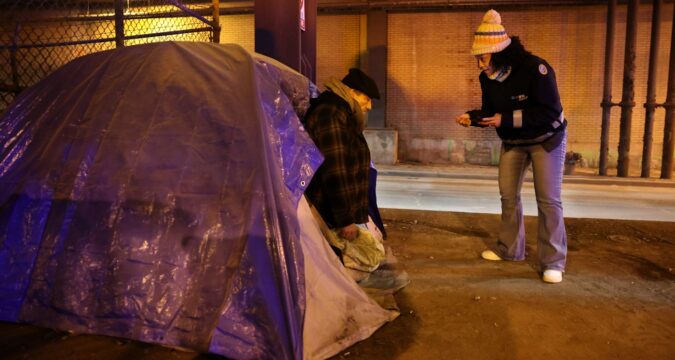
Letters: Illinois public health report reveals that homelessness is a death sentence
The measure of a community’s health is found in its life expectancy. On Chicago’s Northwest Side, we pride ourselves on being a place where families grow old together. But a grave report from the state reveals a “death gap” that should haunt every resident of Illinois — and especially those of us on the Northwest Side.
The recently released “Illinois Homelessness Mortality and Morbidity Report” for 2017 to 2023 confirms what outreach workers have long known: Homelessness is a terminal diagnosis. In Illinois, the average age of death for a person experiencing homelessness is just 55.5 years, compared to 74.2 years for the housed population. We are watching our neighbors lose two decades of life simply because they lack a home.
For too long, the Far Northwest Side has treated homelessness as a “downtown problem.” But the report’s data on morbidity — the rate of disease and injury — tells a story playing out in our own parks, libraries and transit stations. Our unsheltered neighbors are 39 times more likely to die from an overdose and nearly four times more likely to die from exposure to the cold.
The status quo is a death sentence, and the Far Northwest Side is currently unequipped to stop it. To bridge this 20-year gap, we need more than “light touch” services. We cannot simply hand someone a granola bar and a list of phone numbers and call it “outreach.”
Our community urgently needs both intensive homeless outreach and housing case management to prevent homelessness before it starts. We also need the first-ever dedicated adult emergency shelter on the Northwest Side. It is a failure of our city’s shelter infrastructure that an unsheltered adult here must travel miles across town just to find a bed. This displacement severs the person’s ties to local jobs, families and health care. We need a local shelter that keeps our community members in their community.
The report is clear: The only cure for the morbidity of homelessness is a home. We need deeply affordable housing built on the Northwest Side, and it must be distributed equitably. No ward can be exempt from this responsibility; the “not in my backyard” sentiment has stalled progress and cost lives for decades.
The 20-year death gap is not an inevitability; it is a policy choice. We can choose to continue the rhetoric that excludes the vulnerable or we can demand that the mayor’s office and the City Council ensure every neighborhood provides its residents the chance to grow old.
The data is in. The cost of our inaction is measured in funerals. It’s time to build, fund and house — in every ward, all across the city.
— Monica Dillon, registered nurse, NWS Outreach Volunteers, Chicago
Helpline shows surging need
More than 300,000 Illinoisans may struggle to put food on their tables now that new Supplemental Nutrition Assistance Program (SNAP) work requirements have taken effect.
This is just one federal policy change contributing to the ever-growing challenge of meeting our neighbors’ basic needs.
Social service requests are rising alarmingly in our region. 211 Metro Chicago saw a 99% increase in food assistance requests this past December compared to December 2024. It is a free social services support helpline operated 24/7 year-round by United Way of Metro Chicago in partnership with Cook County and the city of Chicago.
This development is shocking but unsurprising.
The data paints a dire picture. We know anecdotally that the social services sector has experienced ripple effects from last fall’s SNAP benefit delays. The delays cut thousands of individuals from food assistance and deepened the backlog of support requests.
Without direct food support, individuals turn to other assistance programs to stretch their dollars and avoid impossible choices between basic needs.
211 Metro Chicago connects those in need with resources while also helping organizations manage high demand. The helpline disperses the weight of neighborhood needs using real-time contact data to assess requests and organizational response capacity.
For example, 2-1-1’s partnership with the Greater Chicago Food Depository updates local resources in their database every six hours. This enables local food pantries to support as many individuals as possible without being overwhelmed by rising demand.
United Way of Metro Chicago also uses 2-1-1 data to track changing needs and drive impact across the region. This empowers them to mobilize quickly and work efficiently with philanthropy and community-based organizations to address emerging needs.
In 2025, United Way distributed $250,000 in emergency response grants to 24 organizations combating food insecurity. United Way will continue to use 2-1-1 data to inform future response grants addressing critical local needs.
This information is also shared with Cook County, the city of Chicago and other organizations to support proper resource allocation and other local action.
The reality is that community needs continue to grow faster than funding and resources can be deployed. Public-private partnerships such as 211 Metro Chicago are critical to keeping the social safety net intact and meeting the increased demand.
— Jackie Rosa, vice president of strategic initiatives, United Way of Metro Chicago, and Xochitl Flores, bureau chief, Cook County Bureau of Economic Development
Transparency in lawsuits
Illinois’ courts should be fair, transparent and accountable. That’s why Illinois lawmakers should pass HB5244, the proposed Illinois Litigation Financing Transparency Act — a practical reform that brings transparency to a fast-growing industry operating too often in the shadows.
Third-party litigation financing lets outside investors pay for lawsuits in exchange for a cut of whatever money comes out of the case. Sometimes, that can help people bring legitimate claims. But when no one knows who’s funding the lawsuit, who truly benefits or how much influence investors have behind the scenes, it raises real concerns about fairness in the legal system.
This bill strikes the right balance. It does not ban litigation funding. It simply creates basic rules — registration, disclosure and guardrails — to ensure outside funders aren’t steering cases, pressuring settlements or turning a legal system into a business opportunity.
It also addresses two important gaps. First, it limits excessive recoveries so the injured party — not the investor — receives a meaningful share of any award. Second, it tackles the growing world of commercial lawsuit lending, which is increasingly turning litigation into an investment product. The bill also blocks foreign funding so Illinois courts are not used as a financial tool by outside interests.
Other states such as Wisconsin and New York have already acted. Illinois should join.
At its core, the principle is simple: If you’re going to profit from lawsuits filed in Illinois, you shouldn’t be allowed to hide in the shadows.
— State Rep. Dan Ugaste, R-Geneva
Sound priorities for health
I read Laura Washington’s Feb. 11 column “SNAP junk food bans punish poor families” with interest. While I agree that Robert F. Kennedy Jr., a former trial attorney, may not be the strongest choice for secretary of the Department of Health and Human Services, I found an inconsistency in her argument.
Washington accurately notes that many of the products proposed for restriction “can increase the risk of Type 2 diabetes, high blood pressure, heart disease, cancer and other maladies.” If we accept that these health risks are real and well documented, it seems reasonable to question whether taxpayer-funded nutrition assistance should subsidize those same products.
This is not a novel or partisan idea. As first lady, Michelle Obama championed efforts to improve access to nutritious foods in so-called food deserts.
Denying SNAP funds for soda or candy does not prevent anyone from purchasing those items with their own money. It simply aligns a nutrition assistance program more closely with its stated public health purpose. I doubt that refraining from subsidizing sugary beverages denies poor and working-class families the occasional joy of a treat.
Public policy can respect personal choice while also reflecting sound health priorities — especially when taxpayer dollars are involved.
— Peter Calabrese, Clearwater, Florida
Submit a letter, of no more than 400 words, to the editor here or email letters@chicagotribune.com.
https://www.chicagotribune.com/2026/02/15/letters-021526-homelessness/

Think about a tree’s future size before you buy
You’ve heard about people who brought a cute little puppy home from the shelter, and a year later the dog was the size of a Great Dane. In almost any neighborhood, you can spot homes where somebody brought a cute little evergreen tree home from the nursery, only to have it grow wide enough to consume the whole front yard, dwarf the house or block the sidewalk.
With trees, unlike puppies, there are easy ways to know what you’re getting into. “A plant’s label will tell you how tall and wide it is likely to get,” said Sharon Yiesla, plant knowledge specialist in the Plant Clinic at The Morton Arboretum in Lisle. “That is critical information to consider before you buy it.”
Choosing a tree or shrub without considering its mature size is a recipe for big trouble. A too-large plant or one that is planted too close to a building or path may grow to buckle the sidewalk or collide with overhead power lines, creating a major hazard.
Even homeowners who do think about a tree’s height often fail to consider that it also will get wider. That’s especially a problem with evergreens, which have branches all the way down to the ground. The lower branches continue to get longer as the tree grows taller.
The lowest part of the tree may grow to obstruct the sidewalk or the door, crowd the porch or completely block the front window. “You see some really unfortunate pruning where homeowners have tried to hack their way through an evergreen tree that is just too big for the place it is planted,” Yiesla said.
“A big evergreen crowding a house can make maintenance difficult in that area,” she said. It may damage gutters or lead to peeling paint or decay in the siding by holding in moisture.
Pruning a tree or shrub that is naturally too large for the site is an eternal chore. “You’re fighting the genetic programming of the plant, and you’re never going to win,” she said.
The solution is to choose trees or shrubs that, when they are fully grown, will still fit within the available space, both horizontal and vertical. Mature size information should be stated on the plant’s label. “Find those numbers and take them seriously,” Yiesla said. You can get more details from online sources such as the Arboretum (mortonarb.org/search-trees-and-plants).
It’s not enough just to look up the species, such as Norway spruce or arborvitae, because not all arborvitaes are alike. “The mature size can vary greatly between cultivated varieties of the same species,” she said. “Find out the details for the particular cultivar you’re considering. There are cultivars available in a wide range of sizes and shapes.”
For example, Globosa Eastern arborvitae (Thuja occidentalis ‘Globosa’) is a shrub that grows 4 to 6 feet high and wide. Nigra Eastern arborvitae (Thuja occidentalis ‘Nigra’) is about the same width, but is a medium-sized tree that can grow 30 feet tall.
It’s easy to be deceived by small plants in pots at a garden center. “They all look pretty much alike when they’re little,” she said. “The only way to tell them apart and imagine them in the future is by reading the label and researching the particular cultivar.”
To avoid being seduced by the wrong cute little plant, arm yourself with information before you go shopping. Take a hard look at the place you want a plant to live. Consider how much of the lawn or garden bed you are willing to give up to a mature tree or shrub. Think about how close the tree or shrub would be to the house or other building. Mark the width of the space you are willing to allow and measure it.
Look up. The height of your house can help you estimate how tall a tree would be to be appropriate for your yard. Is there an overhead power or telephone line nearby? In that case, plan on a tree or shrub that will get no more than 20 feet tall. Otherwise, utility crews will be forced to prune it severely for safety’s sake.
Write down the site’s measurements and take them to the garden center. If the choices seem overwhelming, take pictures of the labels of all the plants you’re considering and use them to consult online sources such as the Plant Clinic before you buy.
“If you’ve taken real measurements and you’re primed to think about a plant’s mature future size, it’s easier to resist an impulse purchase that could create big problems down the road,” Yiesla said.
For tree and plant advice, see the online resources of The Morton Arboretum at mortonarb.org/plant-care, or submit your questions online at mortonarb.org/plant-clinic or by email to plantclinic@mortonarb.org. Beth Botts is a staff writer at the Arboretum.
https://www.chicagotribune.com/2026/02/15/tree-sizing-home-yard/

El humo de cannabis llena el aire en el festival Shivaratri de Nepal
Por BINAJ GURUBACHARYA
KATMANDÚ, Nepal (AP) — Religiosos y devotos hindúes, en su mayoría jóvenes, fumaban abiertamente cannabis el domingo durante una de las mayores festividades anuales de Nepal.
Decenas de miles hicieron fila para rezar en Pashupatinath, el templo del dios hindú Shiva en la capital, Katmandú, durante el festival de Shivaratri.
La marihuana suele estar prohibida en el país del sur de Asia, pero se hacen excepciones para celebrar a Shiva, quien tiene fuertes vínculos con esta práctica y a menudo ha sido representado fumando marihuana.
Los devotos rezaron y bailaron al ritmo de cantos religiosos en el templo, un lugar emblemático para los hindúes, que constituyen cerca del 81% de la población de Nepal. Otros, procedentes de la vecina India, también viajaron a Katmandú para el festival.
Al otro lado del río Bagmati, frente al templo, se podía ver a religiosos con el cuerpo untado de ceniza fumando marihuana, al igual que a muchos hombres nepaleses y algunas mujeres, en las arboladas colinas de Bankali.
Por lo general, el consumo de marihuana en Nepal se castiga con penas de prisión de hasta un mes para los usuarios y de 10 años para los traficantes.
Nepal fue famoso por la marihuana y otros narcóticos en la década de 1960, cuando los hippies llegaron a la nación del Himalaya. Las tiendas y casas de té solían anunciarla y venderla legalmente. Sin embargo, la marihuana fue prohibida en 1976.
Ha habido esfuerzos para despenalizar la marihuana en Nepal, tanto por parte de activistas como de miembros del Parlamento, con el fin de legalizar su cultivo y consumo, pero las iniciativas se han estancado.
___
Esta historia fue traducida del inglés por un editor de AP con la ayuda de una herramienta de inteligencia artificial generativa.
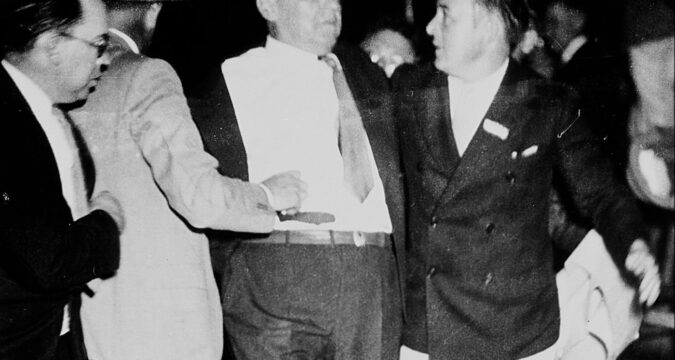
Today in Chicago History: Mayor Anton Cermak shot. ‘I’m glad it was me instead of you.’
Here’s a look back at what happened in the Chicago area on Feb. 15, according to the Tribune’s archives.
Is an important event missing from this date? Email us.
Front page flashback: Feb. 16, 1933
Chicago Mayor Anton Cermak was in Miami on Feb. 15, 1933, hoping to meet with President-elect Franklin Delano Roosevelt when he was beckoned to Roosevelt’s car. Minutes later, Italian anarchist Giuseppe Zangara began shooting at the vehicle. Roosevelt was safe but Cermak was shot. Cermak died on March 6, 1933. (Chicago Tribune)
1933: Chicago Mayor Anton Cermak was struck by an assassin’s bullet presumably intended for President-elect Franklin D. Roosevelt in Miami; he died March 6.
Once at the hospital, Cermak reportedly uttered the line that is engraved on his tomb. Speaking to FDR, Cermak allegedly said: “I’m glad it was me instead of you.” The Tribune reported the quote without attributing it to a witness, and most scholars doubt it was ever said.
Weather records (from the National Weather Service, Chicago)
High temperature: 69 degrees (1954)
Low temperature: Minus 9 degrees (1905)
Precipitation: 0.78 inches (1954)
Snowfall: 6.1 inches (2021)
Billy Fiske, the champion of the Cresta run, noted bobsled slide, poses for the camera at the St. Moritz resort, circa 1937. (Acme News)
1932: Chicago-raised Billy Fiske piloted the U.S. men to their second Olympic gold medal in bobsled during Winter Games in Lake Placid, N.Y.
Fiske lived a brief but extraordinary life. Born into a wealthy banking family in Chicago in 1911 — that could trace its roots to the Mayflower — he was educated overseas during his teen years.
Vintage Chicago Tribune: Our local Winter Olympians of Games past
That’s where he was chosen — at age 16 — as the driver for the United States’ five-man bobsled team in the 1928 Olympic games in St. Moritz, Switzerland. The team won gold.
1990: “Space chicken” donated to Lincoln Park Zoo. Out of 67 billion chicken eggs laid in the United States the year before, 32 were sent into orbit aboard the space shuttle Discovery. One of the surviving embryonic space travelers — by then a 7-pound, 10-month-old white hen named “Discovery” — was donated by Purdue University to the poultry barn at Lincoln Park’s Farm-in-the-Zoo.
Crews demolish the grandstand at the former Arlington International Racecourse on Sept. 25, 2023, in Arlington Heights. (Stacey Wescott/Chicago Tribune)
2023: The Chicago Bears purchased the former Arlington Park site.
What to know about the Chicago Bears’ possible move from Soldier Field
Want more vintage Chicago?
Subscribe to the free Vintage Chicago Tribune newsletter, join our Chicagoland history Facebook group, stay current with Today in Chicago History and follow us on Instagram for more from Chicago’s past.
Have an idea for Vintage Chicago Tribune? Share it with Kori Rumore and Marianne Mather at krumore@chicagotribune.com and mmather@chicagotribune.com
https://www.chicagotribune.com/2026/02/15/february-15-chicago-history/
Today in History: Female attorneys allowed to argue cases before Supreme Court
Today is Saturday, Feb. 15, the 46th day of 2025. There are 319 days left in the year.
Today in history:
On Feb. 15, 1879, President Rutherford B. Hayes signed a law allowing female attorneys to argue cases before the U.S. Supreme Court.
Also on this date:
In 1898, the battleship USS Maine mysteriously exploded in Havana Harbor, killing more than 260 crew members and bringing the United States closer to war with Spain.
In 1933, President-elect Franklin D. Roosevelt escaped an assassination attempt in Miami that mortally wounded Chicago Mayor Anton J. Cermak; gunman Giuseppe Zangara was executed by electric chair the following month.
In 1950, Walt Disney’s animated film “Cinderella” premiered in Boston.
In 1961, 73 people, including all 18 members of the U.S. figure skating team en route to the World Championships in Czechoslovakia, were killed in the crash of a Sabena Airlines Boeing 707 in Belgium.
In 1978, boxer Leon Spinks scored a massive upset as he defeated Muhammad Ali by split decision to become the world heavyweight champion.
In 1989, the Soviet Union announced that the last of its troops had left Afghanistan, after more than nine years of military intervention.
In 2005, defrocked priest Paul Shanley was sentenced in Boston to 12 to 15 years in prison on child rape charges.
In 2013, with a blinding flash and a booming shock wave, a meteor blazed across Russia’s western Siberian sky and exploded, injuring nearly 1,500 people as it blasted out windows.
In 2022, the families of nine victims of the Sandy Hook Elementary School shooting agreed to a $73 million settlement of a lawsuit against Remington Arms, the maker of the rifle used to kill 20 first graders and six educators in 2012.
Related Articles
Garden Club of Beverly Morgan Park marks 100 years of growth, community spirit
Today in History: 17 killed in shooting at Marjory Stoneman Douglas High School
Today in Chicago History: St. Valentine’s Day Massacre
Today in Chicago History: ‘Boondoggle’ parking meter deal causes rate increase
Today in History: ‘Rent’ premieres off-Broadway
In 2023, Payton Gendron, the white gunman who massacred 10 Black shoppers and workers at a Buffalo, New York, supermarket in May of the previous year, was sentenced to life in prison without parole after pleading guilty to murder and hate-motivated terrorism charges.
Today’s birthdays: Actor Claire Bloom is 94. Songwriter Brian Holland is 84. Jazz musician Henry Threadgill is 81. Composer John Adams is 78. Cartoonist Art Spiegelman is 77. Actor Jane Seymour is 74. Singer Melissa Manchester is 74. Actor Lynn Whitfield is 72. “The Simpsons” creator Matt Groening is 71. Model Janice Dickinson is 70. Actor Christopher McDonald is 70. Football Hall of Famer Darrell Green is 65. Actor Alex Borstein is 54. Hockey great Jaromir Jagr is 53. Olympic swimming gold medalist Amy Van Dyken-Rouen is 52. Actor-singer Amber Riley is 39. Rapper Megan Thee Stallion is 30.

Un vistazo al Ramadán y cómo celebran los musulmanes el mes sagrado
Por MARIAM FAM
EL CAIRO (AP) — Los musulmanes practicantes de todo el mundo pronto se unirán en un ritual de ayuno diario desde el amanecer hasta la puesta del sol, al inicio del mes sagrado islámico del Ramadán. Para los musulmanes es un tiempo de mayor devoción, reflexión religiosa y caridad. En el aspecto social, a menudo reúne a familiares y amigos en encuentros festivos en torno a comidas para romper el ayuno.
Al Ramadán le sigue la festividad islámica del Eid al-Fitr.
Se espera que el Ramadán comience en torno al 18 o 19 de febrero
El ramadán es el noveno mes del calendario lunar islámico, que no siempre coincide con la misma estación del año.
El inicio del mes depende tradicionalmente del avistamiento de la Luna creciente. Este año, se espera que el primer día de Ramadán sea el 18 o 19 de febrero, aproximadamente. La fecha real de inicio puede variar entre países y comunidades musulmanas en función de los anuncios de diferentes autoridades islámicas en todo el mundo sobre si se avistó la Luna creciente o de las distintas metodologías utilizadas para determinar el comienzo del mes.
Este año, se espera que el inicio del Ramadán coincida aproximadamente con el Miércoles de Ceniza, un día solemne de ayuno y reflexión que marca el comienzo de la Cuaresma, la temporada más penitencial del calendario eclesiástico para los católicos y muchos otros cristianos.
El ayuno es uno de los pilares del islam
El ayuno es uno de los cinco pilares del islam, junto con la profesión de fe, la oración, la limosna y la peregrinación.
Los musulmanes encuentran diversos significados y enseñanzas en el cumplimiento del ayuno.
Se considera un acto de adoración para alcanzar la piedad y una forma de sumisión a Dios. Los devotos ven beneficios, entre ellos practicar el autocontrol, cultivar la gratitud y empatizar con las personas pobres y hambrientas.
El ayuno diario en Ramadán incluye abstenerse de toda comida y bebida —ni siquiera se permite un sorbo de agua— desde el amanecer hasta la puesta del sol, antes de romper el ayuno en una comida conocida en árabe como “iftar”.
Los musulmanes suelen acudir en masa a las mezquitas para las oraciones comunitarias y dedican más tiempo a la contemplación religiosa y a la lectura del Corán, el libro sagrado del islam.
La caridad es un sello distintivo del Ramadán. Entre otras formas de dar, muchos buscan proporcionar iftar a quienes lo necesitan, distribuyendo cajas de Ramadán llenas de productos básicos de despensa, repartiendo comidas calientes junto con dátiles y jugo, o ayudando a organizar comidas comunitarias gratuitas.
Los musulmanes comen una comida antes del amanecer, llamada “suhoor”, para hidratarse y nutrir el cuerpo antes del ayuno diario.
Exenciones del ayuno
Existen ciertas exenciones, como para quienes no pueden hacerlo por enfermedad o por viaje. Quienes no puedan ayunar por estar temporalmente enfermos o viajando deben compensar más adelante los días de ayuno perdidos.
Tradiciones culturales y sociales asociadas con el Ramadán
Los musulmanes son étnica y racialmente diversos y no todas las tradiciones del Ramadán tienen raíces religiosas. Algunas costumbres pueden trascender fronteras, mientras que otras pueden variar según las culturas.
Muchos rituales sociales se centran en reunirse y socializar después del ayuno diario. Algunos musulmanes decoran sus hogares, colocan vajilla y centros de mesa con temática de Ramadán o abarrotan mercados y bazares de Ramadán.
En Egipto, el Ramadán suele ser una época festiva. Faroles coloridos, de distintas formas y tamaños, cuelgan de las manos de los niños y adornan los hogares. Pueden sonar canciones de Ramadán para dar la bienvenida al mes.
El paisaje sonoro del Ramadán en Egipto ha incluido tradicionalmente los golpes de tambor antes del amanecer de un “mesaharati” que recorre los vecindarios, llamando a los fieles, a veces por su nombre, para despertarlos para la comida del suhoor.
Nuevos programas de televisión y comidas comunitarias
Una programación de nuevas series de televisión es otro elemento social característico del mes en algunos países, y los anunciantes compiten por la atención de los espectadores.
En diversas regiones, algunos musulmanes temen que el mes se esté comercializando y sostienen que el énfasis en decoraciones, programas de televisión, salidas o banquetes de iftar lujosos puede restar a la esencia religiosa del Ramadán. Otros afirman que se puede lograr un equilibrio y que, con moderación, esos rituales forman parte del espíritu festivo del mes.
En Indonesia, los rituales del Ramadán varían según la región, reflejando la diversidad de culturas. En la profundamente conservadora provincia de Aceh, se sacrifican animales durante las festividades de Meugang; la carne se cocina y se comparte con familiares, amigos, personas pobres y huérfanos.
Cientos de residentes en Tangerang, una ciudad a las afueras de la capital, Yakarta, acuden en masa al río Cisadane para lavarse el cabello con champú de paja de arroz y dar la bienvenida al mes de ayuno con una limpieza espiritual simbólica.
En toda la isla de Sumatra, después de las oraciones vespertinas, muchos niños y niñas desfilan por las calles, llevando antorchas y entonando canciones islámicas.
En Estados Unidos, donde los musulmanes conforman una minoría racial y étnicamente diversa, reunirse en mezquitas y centros islámicos cuando es posible para las comidas de iftar y las oraciones brinda a muchas familias musulmanas una sensación de comunidad. Algunos musulmanes también organizan o asisten a comidas de iftar interreligiosas.
___
La periodista de The Associated Press Niniek Karmini en Yakarta, Indonesia, contribuyó a este reportaje.
___
La cobertura de religión de The Associated Press recibe apoyo mediante la colaboración de AP con The Conversation US, con financiamiento de Lilly Endowment Inc. AP es la única responsable de este contenido.

Asking Eric: I get a flight-or-fight response when I see him
Dear Eric: I was in a relationship with a man 45 years ago who I loved more than I loved anyone in my life. Then he married someone. He didn’t tell me, I heard it from a colleague.
I was able to get myself together with a lot of counseling. I married a wonderful man who loves me with all his heart, and I love him the same. I was able to stay away from the first man for many years. Recently, he has come back into my life through mutual friends. He is now married to a different woman.
When I see him and his wife, I get the flight-or-fight response and have to pull myself together. We recently had coffee together alone. Everything was fine until he said he wanted to let me know what a special person I had been in his life. I know he said it because he is older and facing health issues and wants to make amends before he dies.
He cried and told me he would always love me. After a few days, I called him and asked him not to tell me that as it made me relive the past trauma.
But now I can’t stop thinking about it. I am 70 and I can’t find a counselor with my age and experience to help me. I don’t know how to manage my feelings.
– Past Love
Dear Past: What he said may have made him feel better, but it wasn’t actually for your benefit. An amends includes an acknowledgement of the harm caused, an apology and an effort to right what was set wrong, if possible. Telling you that he would always love you is not that. That’s sentiment and nostalgia and, in my view, unkind.
But you aren’t trapped in his imperfect narrative. Focus on what you need. Part of this is internal, forgiving any part of yourself that feels bad for holding on to the hurt and comforting the younger version of yourself that is still alive inside you and vividly feeling that hurt.
Part of this is external: blocking his number and taking steps not to engage with him. A letter might be useful, expressing that you forgive him (if you do) but that any friendship in the present isn’t possible. You might also let your mutual friends know that it’s simply healthiest for you that you and he not engage.
Also consider talking to a counselor who may not share your age and experience but does have a background in healing past traumas. What’s most important is that you remember that your feelings aren’t faults and what happened to you doesn’t have to define you.
Dear Eric: We are three women that are in our early 70s. We have been friends since junior high school. We all moved to different areas after college about an hour away from each other. We are all active and we still drive. The problem is that no matter what time we decide to meet, one friend is always late, even when it’s in her city. Not 10 or 15 minutes, but 45 to an hour.
Our last lunch date was for 1 p.m., she arrived at 2:50. We had already eaten and were drinking coffee.
Offering no apology, she sat down and ordered as if nothing was wrong! My other friend is tired, as this is now the norm. I have thought about giving the late comer a different time to meet, but my other friend says it’s a lack of respect to us to have to wait on her each time we meet. What do I do or say that has not been said or done already?
– Always On Time
Dear Time: This habit is an obstacle, and it does communicate that her time is more valuable than yours, or – perhaps worse – that she doesn’t value your time together. This may not be what she wants to communicate, so tell her that’s what you’re feeling.
There may be things going on that keep her from being on time; she may find it harder to manage her life than she’s letting on. But you can neither know nor accommodate if no one is talking about it.
Related Articles
Asking Eric: I feel policed and judged
Asking Eric: Counseling is an option
Asking Eric: He says no automatically
Asking Eric: Am I being paranoid?
Asking Eric: Don’t let this man keep you from a good time
Present it as an invitation to keep your friendship healthy. “When you arrive much later than the time we agreed to, I feel hurt and disrespected. I value your friendship and I want to spend time with you. How can we fix this?” If you just give her the wrong time, hoping that she’ll accidentally show up when you’re expecting her, you’re taking on my work and it’s going to keep you frustrated. Better to acknowledge what’s going on and ask her to play a role in making future lunch dates successful.
(Send questions to R. Eric Thomas at eric@askingeric.com or P.O. Box 22474, Philadelphia, PA 19110. Follow him on Instagram and sign up for his weekly newsletter at rericthomas.com.)
Fritz y Shelton, los mejores de EEUU en el ranking, disputarán la final del Abierto de Dallas
FRISCO, Texas, EE.UU. (AP) — El primer preclasificado Taylor Fritz venció el sábado a Marin Cilic en sets corridos, mientras que el segundo Ben Shelton remontó ante el campeón defensor Denis Shapovalov, lo que dejó lista una final del Abierto de Dallas entre los dos mejores estadounidenses del mundo.
Fritz conectó 22 aces en su victoria por 7-6 (5), 7-6 (3), mientras que Shelton encendió su juego con un deslumbrante golpe ganador de derecha cruzada cuando enfrentaba tres puntos de quiebre al inicio del segundo set. Así, se encaminó a un triunfo por 4-6, 6-4, 7-6 (4).
A sus 28 años, Fritz ocupa el séptimo puesto del mundo, dos lugares por delante de Shelton, quien viene de una aparición en cuartos de final del Abierto de Australia que terminó con una derrota ante el italiano Jannik Sinner en sets corridos.
Campeón en 10 ocasiones del circuito ATP, Fritz ha dividido triunfos con Shelton en sus primeros dos duelos. Shelton llega a la final del domingo con tres títulos en su palmarés.
“¿Me están diciendo que ésa es la final que quieren ver?”, preguntó Shelton, lo que provocó vítores de los aficionados en el estadio techado de fútbol americano, que también es un campo de práctica de los Dallas Cowboys en la sede del club. “Estoy superemocionado por ese duelo”.
Shelton se recuperó tras perder el primer set por segundo partido consecutivo, después de vencer a Miomir Kecmanovic en los cuartos de final.
El jugador de 23 años estaba abajo por un set y enfrentaba tres puntos de quiebre con el marcador 1-1 en el segundo cuando el winner cruzado lo puso en marcha. Más tarde tuvo dos puntos de set con el saque de Shapovalov, séptimo preclasificado, y concretó el segundo para forzar el parcial decisivo.
Shelton ganó tres de los últimos cuatro puntos en el desempate, y aseguró la victoria con otro golpe ganador de derecha.
Fritz tuvo tres puntos de set en el primer desempate y tres puntos de partido en el segundo ante Cilic, que no era cabeza de serie.
El finalista del Abierto de Estados Unidos 2024 cerró el primero con su tercer ace consecutivo, después de que Cilic salvó dos puntos de set.
Una de las ocho dobles faltas de Cilic —Fritz no cometió ninguna— le dio al anfitrión una oportunidad temprana en el segundo desempate. Fritz ganó su primer punto de partido cuando la devolución de saque del campeón del Abierto de Estados Unidos 2014 se fue larga.
Cilic, de 37 años, utilizó su potente saque para salir de varios momentos complicados en un partido con 38 aces. El croata, que buscaba su victoria número 600 en individuales en su carrera, salvó los cinco puntos de quiebre en contra, mientras que Fritz no enfrentó ninguno en su tercera victoria en cuatro enfrentamientos con Cilic.
_____
Deportes AP: https://apnews.com/hub/deportes

El “primer felino” Larry cumple 15 años como el gato político líder de Reino Unido
Por JILL LAWLESS
LONDRES (AP) — En épocas políticas turbulentas, la estabilidad llega con cuatro patas, bigotes y afición por las siestas.
El gato Larry celebra 15 años el domingo como cazador oficial de roedores del gobierno británico y, de manera extraoficial, primer felino, una presencia tranquilizadora que ha servido bajo seis primeros ministros. A veces parece que ellos han servido bajo sus órdenes.
“Los índices de aprobación del gato Larry serán muy altos. Y los primeros ministros tienden a no alcanzar esas cifras”, comentó Philip Howell, profesor de la Universidad de Cambridge que ha estudiado la historia de las relaciones entre humanos y animales. “Él representa estabilidad, y eso es un bien muy valioso”.
La historia de superación del minino atigrado gris y blanco lo ha llevado de ser un animal callejero a la sede del poder en Reino Unido, el número 10 de Downing St., donde ostenta el título oficial de Jefe Cazador de Ratones de la Oficina del Gabinete.
Adoptado del refugio londinense Battersea Dogs and Cats Home por el entonces primer ministro David Cameron, Larry entró en Downing Street el 15 de febrero de 2011. Según un perfil en el sitio web del gobierno del Reino Unido, sus tareas incluyen “saludar a los invitados de la casa, inspeccionar las defensas de seguridad y probar la calidad para siestas de muebles antiguos”.
Larry deambula libremente y tiene un don para robar el protagonismo a los líderes mundiales que llegan a la famosa puerta negra del 10 de Downing St., para deleite de los fotógrafos de prensa.
“Es genial para colarse en las fotos”, señaló Justin Ng, fotógrafo independiente que con los años ha llegado a conocer bien a Larry. “Si hay un líder extranjero a punto de visitar, entonces sabemos que saldrá justo en el momento exacto en que va a ocurrir ese saludo”.
Larry ha conocido a muchos líderes mundiales, que a veces tienen que rodearlo o pasar por encima de él. Se ha observado que en general es poco amistoso con los hombres, aunque le tomó cariño al expresidente de Estados Unidos Barack Obama, y le sacó una sonrisa al presidente Volodymyr Zelenskyy en una de las visitas del líder ucraniano a Londres.
Cuando el presidente de Estados Unidos Donald Trump visitó en 2019, Larry se coló en la foto oficial en la entrada y luego se echó una siesta bajo “la Bestia”, el auto blindado del presidente.
Los reportes sobre las habilidades de Larry para cazar roedores varían, aunque se le ha fotografiado atrapando algún ratón de vez en cuando y, una vez, una paloma, que escapó.
“Es más amante que luchador”, apuntó Ng. “Es muy bueno en lo que hace: holgazanear y, básicamente, mostrarle a la gente que es muy despreocupado”.
Larry ha convivido, a veces con cierta tirantez, con mascotas de primeros ministros, entre ellas Dilyn, el Jack Russell mestizo de Boris Johnson, y Nova, la labradora retriever de Rishi Sunak. Lo mantienen bien alejado de los gatos de la familia del actual primer ministro Keir Starmer, JoJo y Prince, que habitan los aposentos privados familiares, mientras Larry gobierna las áreas de trabajo de Downing Street.
Tuvo una relación volátil con Palmerston, el principal gato diplomático de la Oficina de Exteriores al otro lado de la calle del número 10. A ambos los sorprendieron forcejeando varias veces antes de que Palmerston se retirara en 2020. Palmerston murió este mes en Bermudas, donde se desempeñaba como “consultor de relaciones felinas” del gobernador.
Mientras tanto, Larry sigue ahí. Tiene 18 o 19 años y ha bajado un poco la velocidad, pero continúa patrullando su territorio y durmiendo en un alféizar sobre un radiador, justo dentro de la puerta del número 10.
Es el poder blando británico en forma felina, y ay de cualquier primer ministro que se deshiciera de él.
“Un primer ministro que odie a los gatos, eso me parece un suicidio político”, dijo Howell.
Howell explicó que el estatus de Larry como “mascota oficial” no partidista lo distingue de las mascotas presidenciales estadounidenses —con mayor frecuencia perros— que los líderes de Estados Unidos a veces han utilizado para suavizar su imagen.
“El hecho de que los gatos sean menos manejables también es parte del encanto”, apuntó. “Es como caprichosamente no partidista en un sentido político, pero tiende a encariñarse con algunas personas y no con otras, y no necesariamente se sentará donde tú quieras que se siente ni posará donde tú quieras que pose”.
“Hay cierto tipo de indocilidad en Larry que creo que, sin duda, lo haría entrañable para los británicos”.
___
El periodista de video de The Associated Press Kwiyeon Ha contribuyó a esta historia.

Padres firman al extoletero de Filis Nick Castellanos, a Canning y a Márquez, dice fuente a la AP
Por GREG BEACHAM
Los Padres de San Diego han llegado a un acuerdo con el jardinero Nick Castellanos y con los lanzadores derechos Griffin Canning y Germán Márquez, informó el sábado a The Associated Press una persona con conocimiento de los convenios.
La persona habló bajo condición de anonimato porque los Padres no habían anunciado los acuerdos, que están pendientes de exámenes físicos.
Tras terminar con 90 victorias y llegar a los playoffs por cuarta vez en seis años la temporada pasada, San Diego incorporó a tres veteranos de Grandes Ligas para reforzar sus opciones en los primeros días de los entrenamientos de pretemporada.
Castellanos se une a los Padres dos días después de que los Filis dieron de baja sin mayor miramiento al veterano toletero, poniendo fin a una etapa turbulenta.
Filadelfia tendrá que pagar casi todo el salario de 20 millones de dólares de Castellanos esta temporada, y los Padres sólo asumirán el mínimo de Grandes Ligas de 780.000 dólares.
Castellanos, dos veces elegido al Juego de Estrellas, pasó las últimas cuatro temporadas con los Filis después de iniciar su carrera con los Tigers, Cachorros y Rojos. Tiene promedio de bateo de por vida de .272, con 250 jonrones y 920 carreras impulsadas, pero su efectividad en el plato cayó de forma pronunciada la campaña pasada.
También admitió esta semana que llevó una cerveza al dugout después de que lo sacaron de un juego en junio. El mánager de los Filis, Rob Thomson, dijo que estaba orgulloso de Castellanos por reconocer su error.
Tras pasar su carrera en los jardines y en la tercera base, parece probable que Castellanos reciba una oportunidad de jugar en la primera base con los Padres, que no tienen un titular definido en esa posición tras separarse del venezolano Luis Arráez.
Tanto Canning como Márquez podrían tener la oportunidad de ganarse un puesto en la parte final de la rotación de abridores de los Padres, que actualmente encabezan Nick Pivetta, Joe Musgrove y Michael King. Los dos últimos lugares están en el aire. El dominicano Randy Vásquez luce como el candidato con más probabilidades de conservar un puesto.
San Diego tendrá una nueva cara en el montículo después de que Dylan Cease y el cerrador venezolano Robert Suárez se marcharon en la agencia libre y de que Yu Darvish se sometió a una cirugía de codo.
No obstante, su bullpen aún luce como uno de los más fuertes del béisbol.
Canning podría ser candidato a integrarse a ese grupo cuando regrese al sur de California. El oriundo del condado de Orange y producto de UCLA pasó sus primeras seis temporadas en Grandes Ligas con los Angelinos de Los Ángeles, que lo traspasaron a Atlanta en noviembre de 2024.
Firmó con los Mets de Nueva York un mes después y tuvo marca de 7-3 con efectividad de 3,77 en 16 aperturas la temporada pasada antes de romperse el tendón de Aquiles en junio. Esa lesión podría retrasar su regreso al terreno esta temporada.
Márquez, de 31 años, se suma a un rival de la División Oeste de la Liga Nacional tras pasar la primera década de su carrera con los Rockies de Colorado, con marca de 68-72 y efectividad de 4,67. Después de perderse la mayor parte de las temporadas 2023 y 2024 debido a una cirugía Tommy John, el abridor, normalmente duradero, terminó con un registro de 3-16 con efectividad de 6,70 la temporada pasada.
Su carrera se descarriló a la par de la temporada de los Rockies.
El venezolano se une a los Padres con un contrato de ligas menores. Canning recibe un contrato por un año.
San Diego también incorporó la semana pasada al veterano toletero dominicano Miguel Andújar, mientras el gerente general A.J. Preller cumplía su promesa de seguir buscando talento veterano bien entrado febrero.
_____
Deportes AP: https://apnews.com/hub/deportes


