Category: News

Tax season is here. Here’s what you need to know for stress-free filing.
NEW YORK — Tax season is underway and you have until April 15 to file your return with the IRS. If you want to avoid the stress of the looming deadline, start getting organized as soon as possible.
“Don’t wait until the last minute but also don’t rush,” said Tom O’Saben, director of tax content and government relations at the National Association of Tax Professionals,
Gathering all your documents, signing up for direct deposit and keeping copies of your tax returns are some of the best practices when it comes to preparing to fill out your taxes. This year, due to the Republican tax and spending bill that President Donald Trump signed over the summer, there are new deductions taxpayers should know about.
Among them are no tax on tips, no tax on overtime, deductions for car loan interest, and deductions for people who were 65 or older by Dec. 31, said Miguel Burgos, a certified public accountant and an expert for TurboTax.
The average refund last year was $3,167. This year, analysts have projected it could be $1,000 higher, thanks to changes in tax law. More than 165 million individual income tax returns were processed last year, with 94% submitted electronically.
If you find the process too confusing, there are plenty of free resources to help you get through it.
Here are some things you need to know:
Gather your documents
While the required documents might depend on your individual case, here is a general list of what everyone needs:
—Social Security number
—W-2 forms, if you are employed
—1099-G, if you are unemployed
—1099 forms, if you are self-employed
—Savings and investment records
—Any eligible deduction, such as educational expenses, medical bills, charitable donations, etc.
—Tax credits, such as the child tax credit, retirement savings contributions credit, etc.
To find a more detailed document list, visit the IRS website.
O’Saben recommends gathering all of your documents in one place before you start your tax return and also having your documents from last year. Taxpayers can also create an identity protection PIN number with the IRS to guard against identity theft. Once you create a number, the IRS will require it to file your tax return.
Know some of the changes for this year
— Change to standard deduction
The standard deduction for single taxpayers is $15,750 for this year. For married couples filing jointly, it has increased to $31,500. For heads of households, the standard deduction is $23,625.
— Change to state and local taxes (SALT) deduction
The deduction cap on state and local taxes has increased from $10,000 to $40,000. The change is also known as the Working Families Tax Cut and was enacted in July 2025.
“This is a big benefit, especially for states like California, New York, and New Jersey, that have a higher state income tax,” said Keith Hall, president and CEO of the National Association for the Self-Employed and a certified CPA.
The SALT deduction is a federal tax deduction for some state and local taxes paid during the year. The total deduction had been capped at $10,000 since it started in 2018.
People who have not previously itemized their SALT deduction might want to consider it this year. To know if you should itemize your deductions, O’Saben recommends that you ask yourself the following questions: Did you pay state taxes? Did you pay property taxes? Do you have mortgage interest? Do you have charitable contributions?
—Deductions for tips
What is known as “no tax on tips” is not quite accurate. This new deduction is only for qualified tips and is subject to income limitations.
“It can be cash, it can be electronic as well. But the main thing is, hey, it has to be voluntary (tips),” Burgos said.
The maximum annual deduction is capped at $2,500. The deduction phases out for taxpayers with modified adjusted gross income over $150,000, or $300,000 for joint filers. The tax deduction is also limited to specific industries where tipping is common practice. Some of the included industries are bartenders, food servers, musicians and housekeeping cleaners.
To claim the new tax break, you will need to fill out a new tax form called Schedule 1-A.
—Additional Schedule 1-A deductions
Schedule 1-A is an IRS form used to claim and calculate four tax deductions originating from the tax and spending bill. They are the change in state and local tax deduction, deduction on qualified tips, and car loan and senior deductions.
Look for resources
IRS Direct File, the electronic system for filing tax returns for free, will not be offered this year. For those who make $89,000 or less per year, IRS Free File offers free guided tax preparation; you can choose from eight IRS partners, such as TaxAct and FreeTaxUSA.
Beyond companies such as TurboTax and H&R Block, taxpayers can also hire licensed professionals, such as certified public accountants. The IRS offers a directory of tax preparers across the United States.
The IRS also funds two programs that offer free tax help: Volunteer Income Tax Assistance (VITA) and Tax Counseling for the Elderly (TCE). People who earn $69,000 or less a year, have disabilities, or are limited English speakers, qualify for the VITA program. Those who are 60 or older qualify for the TCE program. The IRS has a site for locating organizations hosting VITA and TCE clinics.
Avoid common mistakes on your tax return
Many people fear getting in trouble with the IRS if they make a mistake. Here’s how to avoid some of the most common ones:
—Double-check your name on your Social Security card
When working with clients, O’Saben asks them to double-check their number and their legal name, which can change when people get married.
“If you got married last year and you now want to use your married name, that married name doesn’t exist if you haven’t filed it with Social Security,” O’Saben said.
—Search for online tax statements
Many people opt out of physical mail but when you do, it can also include your tax documents.
“These documents may actually be available online because you may have chosen to have paperless contact. And because of that, you may need to go get those documents yourself,” O’Saben said.
—Make sure you report all of your income
If you had a second job in 2025, you need the W-2 or 1099 form for each job.
In general, if you make a mistake or you’re missing something in your tax records, the IRS will audit you. An audit means that the IRS will ask you for more documentation.
Know about the child tax credit
Currently, the tax credit is $2,200 per child but only $1,700 is refundable. This refund is called the Additional Child Tax Credit. To claim the Additional Child Tax Credit, you must have at least $2,500 of income for the tax year.
You qualify for the full amount of the Child Tax Credit for each qualifying child if you meet all eligibility factors and your annual income is not more than $200,000 ($400,000 if filing a joint return). Parents and guardians with higher incomes may be eligible to claim a partial credit.
You can find more details about the child tax credit here.
Avoid paper checks for your tax refund
Last September, the IRS began phasing out paper tax refund checks. If you’re expecting a tax refund, the IRS recommends you sign up for direct deposit.
Avoid tax scams
Tax season is prime time for tax scams, O’Saben said. These scams can come via phone, text, email and social media. The IRS uses none of those means to contact taxpayers.
Sometimes scams are even operated by tax preparers, so it’s important to ask lots of questions. If a tax preparer says you will get a refund that is larger than what you’ve received in previous years, for example, that may be a red flag, O’Saben said.
If you can’t see what your tax preparer is working on, get a copy of the tax return and ask questions about each of the entries.
Keep copies of your tax returns
It’s always good practice to keep a record of your tax returns, just in case the IRS audits you for an item you reported years ago. O’Saben recommend keeping copies of your tax return documents five to seven years.
https://www.chicagotribune.com/2026/02/15/tax-season-irs-filing/

‘First feline’ Larry marks 15 years as Britain’s political top cat at 10 Downing Street
LONDON — In turbulent political times, stability comes with four legs, whiskers and a fondness for napping.
Larry the cat celebrates 15 years on Sunday as the British government’s official rodent-catcher and unofficial first feline, a reassuring presence who has served under six prime ministers. Sometimes it seems like they have served under him.
“Larry the cat’s approval ratings will be very high,” said Philip Howell, a Cambridge University professor who has studied the history of human-animal relations. “And prime ministers tend not to hit those numbers.
“He represents stability, and that’s at a premium.”
The gray-and-white tabby’s rags-to-riches story has taken him from stray on the streets to Britain’s seat of power, 10 Downing St., where he bears the official title Chief Mouser to the Cabinet Office.
Adopted from London’s Battersea Dogs and Cats Home by then-Prime Minister David Cameron, Larry entered Downing Street on Feb. 15, 2011. According to a profile on the U.K. government website, his duties include “greeting guests to the house, inspecting security defenses and testing antique furniture for napping quality.”
Larry roams freely and has a knack for upstaging world leaders arriving at 10 Downing St.’s famous black door, to the delight of news photographers.
“He’s great at photo-bombing,” said Justin Ng, a freelance photographer who has come to know Larry well over the years. “If there’s a foreign leader that’s about to visit then we know he’ll just come out at the exact moment that meet-and-greet is about to happen.”
Larry has met many world leaders, who sometimes have to step around or over him. It has been observed that he is largely unfriendly to men, though he took a liking to former U.S. President Barack Obama, and he drew a smile from President Volodymyr Zelenskyy on one of the Ukrainian leader’s visits to London.
When U.S. President Donald Trump visited in 2019, Larry crashed the official doorstep photo and then took a nap under the Beast, the president’s armored car.
Reports of Larry’s rodent-catching skills vary, though he has been photographed snagging the occasional mouse — and, once, a pigeon, which escaped.
“He’s more of a lover than a fighter,” Ng said. “He’s very good at what he does: lounging around and basically showing people that he’s very nonchalant.”
Larry has cohabited, sometimes uneasily, with prime ministerial pets including Boris Johnson’s Jack Russell cross Dilyn and Rishi Sunak’s Labrador retriever Nova. He is kept well away from current Prime Minister Keir Starmer’s family cats, JoJo and Prince, who inhabit the private family quarters while Larry rules the working areas of Downing Street.
He had a volatile relationship with Palmerston, diplomatic top cat at the Foreign Office across the street from No. 10. The pair were caught tussling several times before Palmerston retired in 2020. Palmerston died this month in Bermuda, where he was serving as “feline relations consultant” to the governor.
Meanwhile, Larry abides. He is 18 or 19, and has slowed down a bit, but continues to patrol his turf and to sleep on a window ledge above a radiator just inside the No. 10 door.
He is British soft power in feline form, and woe betide any prime minister who got rid of him.
“A cat-hating PM, that seems to me to be political suicide,” said Howell.
He said Larry’s status as nonpartisan “official pet” sets him apart from the American presidential pets – most often dogs – that U.S. leaders have sometimes deployed to soften their image.
“The fact that cats are less tractable is part of the charm, too,” Howell said. “He’s sort of whimsically not partisan in a political sense, but he tends to take to some people and not to others and he won’t necessarily sit where you want him to sit and pose where you want him to pose.
“There is a certain kind of unruliness about Larry which I think would endear him, certainly, to Brits.”
Associated Press video journalist Kwiyeon Ha contributed to this story.
https://www.chicagotribune.com/2026/02/15/larry-the-cat-britain-downing-street/

Indiana Senate bill takes aim at low-paying college degrees
College bound students could see certain degree programs eliminated at state universities and colleges, if they fall under a low earnings threshold.
The measure, part of Senate Bill 199, is tied to President Trump’s One Big Beautiful Bill Act that links federal student loan eligibility to post-college earnings.
The bill, part of a wide-ranging package, has already passed the Senate and passed out of a House education committee meeting on Feb. 11. It also sets forth regulations on youth using social media.
The bill could be considered for final House passage early in the week.
It calls for the Indiana Commission for Higher Education to scrutinize degree programs in which graduates earn median wages that fall under thresholds from about $24,000 to $35,000.
Rep. Ed Delaney, R-Indianapolis, called the bill insulting to universities, saying they already monitor their degree programs.
“Why don’t we pass something useful?” he asked.
State Rep. Vernon Smith, D-Gary, a retired education professor at Indiana University Northwest, said the state shouldn’t intrude into college offerings.
“We’re forgetting a thing called job satisfaction, you understand when you won’t make a lot of money. I wanted to be an educator and I knew I wouldn’t… Why are we getting into everybody’s choice?”
Rep. Tonya Pfaff, D-Terre Haute, is a math teacher and she opposed the bill.
“I think we’re going down a dangerous path when we eliminate degree programs because they don’t make enough money.” She said other students also take courses from within those degree programs.
In testimony in support of the bill, Secretary of Education Katie Jenner, who also heads the Commission for Higher Education, said families should understand the monetary outcomes of degree programs as they weigh their kids’ futures.
She used a head-scratching analogy to make her point.
“Let’s say it’s underwater basket weaving that 40 kids in Indiana have signed up for and they’re set to make $12,000 a year, and they’ve paid $20,000 per year and are now, like the average child in Indiana, $30,000 in debt,” she said.
Paying off a federal loan would be difficult, she said.
The U.S. Department of Education issued a preliminary list of programs that could be in jeopardy because the expected earnings fell below government thresholds.
The department said the final list won’t be issued until 2027. Programs wouldn’t be immediately eliminated; they would have to fall under the earnings target for several years before losing loan funding.
According to Indiana Chalkbeat, 16 degree programs at 11 state colleges and universities were identified in the preliminary list. It also named 21 undergraduate certificate fields, including many cosmetology schools.
Locally, bachelor degree programs impacted at IUN and at Purdue University Northwest were English Language and Literature General.
Also on the preliminary list is PNW’s computer software and media applications degree.
At IU-Bloomington, a music degree was on the list and a dance degree was listed at Ball State.
Other undergraduate certificate programs in jeopardy include: Ivy Tech Community College teacher education and professional development specific levels and methods; Tricoci University of Beauty Culture, Highland; Don Roberts School of Hair Design, Schererville; Lil Lou’s Beauty and Barber College, Gary and Hammond, and Paul Mitchell the School, Merrillville.
Last year, lawmakers directed the higher education commission to eliminate or merge degree programs with low enrollment or duplication.
Carole Carlson is a freelance reporter at the Post-Tribune.
Munich Security Conference A ‘Circus’ – Iran Says After Exiled Shah’s Son Invited
Munich Security Conference A ‘Circus’ – Iran Says After Exiled Shah’s Son Invited
The Munich Security Conference, once regarded as a heavyweight diplomatic forum, has devolved into a spectacle that favors “performance over substance,” Iranian Foreign Minister Abbas Araghchi complained after his country was snubbed.
Organizers barred senior Iranian officials from attending this year’s gathering after deadly protests and unrest shook the country last month, threatening the stability of the Islamic Republic. Tehran has lashed out:
“Sad to see the usually serious Munich Security Conference turned into the ‘Munich Circus’ when it comes to Iran,” FM Araghchi wrote Saturday in a series of posts on X.
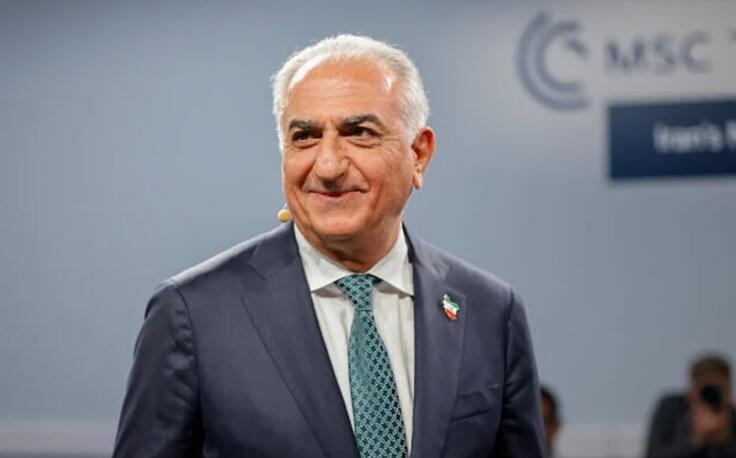
Iran’s former crown prince and now self-styled key opposition figure Reza Pahlavi, via AFP.
“The EU appears confused, rooted in an inability to understand what is happening inside Iran… An aimless EU has lost all geopolitical weight in our region,” he added.
“Europe’s overall trajectory is dire, to say the least,” Araghchi said, branding the bloc “an empty-handed and peripheral” actor irrelevant to serious negotiations – particularly over Iran’s nuclear program.
Instead of inviting Iran – which has permanent representation at the United Nations – the Munich Security Conference invited Reza Pahlavi. He is the exiled son of Iran’s former US-backed shah ousted in the 1979 Islamic Revolution.
Pahlavi has supporters in the West, including among some Iranians in the diaspora, but the reality remains is that he is barely known among the Iranian populace. For the over 90 millions Iranians in the Islamic Republic, he’s not in reality a recognizable figure – but his last name is simply connected with history from a half century ago.
As expected Pahlavi used the platform to push for regime change and to appear at a rally. He went so far as to tell Reuters that Washington should bomb Iran rather than negotiate with it.
Tens of thousands of pro-Monarchist Iranians gathered in Munich, Germany, to protest the Iranian regime. pic.twitter.com/ZSOixiM9nD
— Moshe Schwartz (@YWNReporter) February 15, 2026
He claims that he can lead Iran into a “secular democracy” – though ironically his name is connected with the historic monarchy which is remembered by Iranians today for its harsh repression and overseeing a system of extreme poverty for the non-royal masses.
He’s long worked with Washington-backed opposition groups, and he has lobbied the White House to officially back him as a legitimate ruler of Tehran, but it remains unclear to the degree he might have the current Trump’s administration’s ear.
Tyler Durden
Sun, 02/15/2026 – 09:55

Klaebo establece un nuevo récord olímpico inveral con su noveno oro
Por DEREK GATOPOULOS y BRIAN MELLEY
TESERO, Italia (AP) — La estrella noruega del esquí de fondo Johannes Høsflot Klaebo ganó su novena medalla de oro, para establecer el récord de mayor número de medallas en los Juegos de Invierno.
El atleta de 29 años cerró el domingo el relevo 4 x 7,5 kilómetros en la competencia masculina para conseguir su cuarto oro de los Juegos Olímpicos de Milán-Cortina.
Antes de la prueba compartía el récord con tres atletas noruegos ya retirados: Marit Bjoergen y Bjorn Daehlie en esquí de fondo, y Ole Einar Bjoerndalen en biatlón.
Ahora está solo en la cima.
“¡Me gusta cómo suena eso! Es un título bastante bonito”, comentó Klaebo tras la carrera.
“Es especial hacerlo junto con este grupo. En Noruega, ganar el relevo es lo que de verdad importa, y hoy todos cumplimos”, añadió.“Nos hemos divertido muchísimo, tanto aquí como en las concentraciones de entrenamiento a lo largo del año. Ha sido una gran temporada. Hoy, aunque todos estaban nerviosos, aun así había un ambiente relajado”.
Klaebo completó una carrera impecable, aunque con apariencia desenfadada, y redujo la velocidad antes de la meta para saludar con la mano a los aficionados que lo vitoreaban, antes de terminar en 1 hora, 4 minutos y 24,5 segundos. Francia mantuvo su sólido rendimiento y fue segunda, a 22,2 segundos, mientras que Italia quedó tercera con un retraso de 47,9 segundos.
Pese a un inicio fuerte, Estados Unidos terminó sexto, por detrás de Finlandia y Canadá.
Impulsada por los ovaciones del público local, Italia cerró con Federico Pellegrino, que compite en su última temporada. Celebró con los aficionados, bailando al ritmo de clásicos del pop italiano interpretados con una trompeta.
“Esto es algo con lo que soñé durante mucho tiempo”, expresó Pellegrino. “Creo que hace dos años, cuando empecé a pensar en unos Juegos Olímpicos en casa y vi que mis compañeros elevaban su nivel, el sueño se convirtió en un objetivo y hoy lo logramos. ¡Es algo! Quizá sea de lo que más orgulloso me siento en mi carrera”.
___
Deportes AP: https://apnews.com/hub/deportes
Crece el impulso por un diagnóstico de autismo profundo ante necesidades de por vida
Por LAURA UNGAR
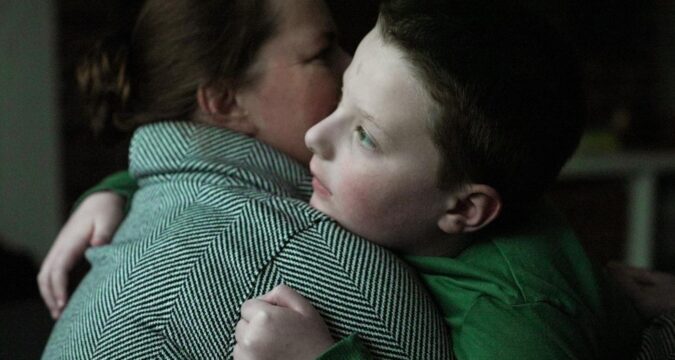
AYER, Massachusetts, EE.UU. (AP) — Connor Murphy caminaba en círculos alrededor de su papá, luego se dejaba caer en el piso de la cocina, se levantaba y volvía a caminar en círculos.
Su papá convirtió el comportamiento repetitivo del niño de 9 años en una oportunidad para conectar. Matthew Murphy le preguntó: “¿Quieres que te levante?”, mientras lo alzaba, le hacía cosquillas y giraba con su hijo.
Momentos espontáneos como ese son comunes en el hogar de los Murphy, que gira en torno a las necesidades de Connor y su hermano gemelo Ronan, quienes tienen autismo profundo.
“Van a necesitar cuidados las 24 horas, los 7 días de la semana, por el resto de sus vidas”, afirmó su padre. “La vida será un desafío para ellos, y tenemos que prepararlos lo mejor que podamos”.
Las tasas de autismo en Estados Unidos han ido en aumento durante décadas, y dos de las principales razones de ese incremento han, en un giro extraño, desviado parte del foco de ayudar a las personas con necesidades permanentes. El diagnóstico de trastorno del espectro autista, adoptado en 2013, ahora es muy amplio e incluye a muchas personas con bajas necesidades de apoyo. Además, una mayor conciencia sobre la condición ha ayudado a que muchos más niños reciban un diagnóstico que en el pasado, y la mayoría de esos casos son relativamente leves.
Al mismo tiempo, el gobierno de Trump está promoviendo afirmaciones no comprobadas y ya refutadas sobre qué causa el autismo, lo que, según expertos, enturbia los esfuerzos por comprender la condición y alimenta la desinformación que amenaza la salud pública, incluso mientras las autoridades canalizan más dinero hacia la investigación.
Ahora crece el impulso por separar el autismo profundo —en el que las personas necesitan cuidados constantes de por vida, tienen cierto nivel de discapacidad intelectual y hablan muy poco o nada— en un diagnóstico propio. La esperanza es que eso ayude a garantizar que personas como Connor y Ronan reciban el apoyo y los servicios que necesitan, y que la investigación los incluya.
En Estados Unidos, se estima que 1 de cada 31 niños tiene trastorno del espectro autista. Los investigadores calculan que alrededor de una cuarta parte tiene “autismo profundo”, un término introducido en 2021 por un grupo de expertos, la Comisión Lancet, para describir a las personas más discapacitadas por esta condición del desarrollo.
Pero algunas personas dentro de la comunidad del autismo temen que crear un diagnóstico separado reduzca la atención sobre el espectro más amplio y sobre las necesidades individuales de todos quienes están en él.
Andy Shih, director científico de Autism Speaks, señaló que, sin importar en qué punto se sitúe cada quien en el debate, “no hay absolutamente ninguna duda de que necesitamos elevar la conciencia sobre las necesidades de este grupo”.
Con el autismo profundo, la seguridad es un desafío
Los Murphy supieron desde temprano que sus hijos tenían una probabilidad mayor que el promedio de presentar discapacidades del neurodesarrollo. Los nacimientos de gemelos se asocian con un riesgo más alto. Algunos estudios sugieren que el tipo de fertilización in vitro que utilizaron también.
Los niños llegaron casi un mes antes de tiempo. Al principio, a la pareja no le preocupaba demasiado que los bebés no alcanzaran ciertos hitos del desarrollo; los gemelos nacidos prematuramente tienden a ir un poco más atrasados. Pero cuando los niños no caminaban alrededor del año y medio, los Murphy buscaron una evaluación y comenzaron terapia del habla y terapia ocupacional. A los 4 años, los niños recibieron oficialmente el diagnóstico de autismo de nivel 3, que representa el mayor nivel de necesidad, como el autismo profundo.
Ahora, a los 9 años, a menudo hablan en frases de una a tres palabras. Necesitan recordatorios y una guía intensa para actividades diarias como ducharse y cepillarse los dientes. Rinden académicamente al nivel de niños de 3 años y medio y les gustan Sesame Street y los juguetes de preescolar. Y requieren la misma vigilancia que los preescolares porque son vulnerables a peligros como salir corriendo hacia calles muy transitadas.
El verano pasado, Connor salió brevemente de la casa en pijama, sin zapatos, y caminó casi un kilómetro (media milla).
“Nuestra preocupación número uno es su seguridad”, expresó su mamá, Andrea Murphy, de 47 años.
Los Murphy han tomado medidas creativas para proteger a los gemelos, entre ellas colocar localizadores GPS en sus zapatos, sensores con alarmas en todas las ventanas y puertas que dan al exterior, y cerraduras que requieren huellas dactilares en las puertas del sótano y de un gabinete de comida. Trabajaron para que el patio de la escuela de los niños quedara cercado y recaudaron fondos para que la policía local contara con Project Lifesaver, un programa de búsqueda y rescate.
Aun así, se mantienen en máxima alerta siempre que sus hijos están con ellos y despiertos. “Si eso es a las tres de la mañana, es a las tres de la mañana”, comentó su papá.
Manejar las dificultades, deleitarse con las alegrías
Las cuestiones de seguridad no les impiden llevar a los niños a la comunidad.
Un sábado nevado, la familia se dirigió a Target. Durante el trayecto, Ronan se mecía hacia adelante y hacia atrás en su asiento. Ya dentro de la tienda, Andrea Murphy puso su mano en la espalda de Connor para que se sintiera seguro mientras caminaba detrás del carrito de compras.
Mientras tanto, su esposo avanzó por un pasillo de juguetes con Ronan, quien vio figuras de Bluey. Los juguetes fueron al carrito, pero luego volvieron al estante porque la familia ya tiene los mismos en casa. Eso molestó a Ronan, y se desplomó en el suelo. Mientras otros compradores pasaban, su papá lo calmó en silencio, sosteniéndole las manos para ayudarlo a levantarse.
A pesar de esos desafíos, los Murphy consideran que estas salidas son beneficiosas: para ellos, para los niños y para la comunidad que los ve.
“No podemos vivir nuestras vidas en una burbuja”, manifestó Matthew Murphy, de 48 años. “Queremos que experimenten la vida”.
Dondequiera que estén, los Murphy se enfocan en la alegría en medio de las dificultades. Fomentan la personalidad artística, amante del aire libre y bulliciosa de Ronan, y la naturaleza tranquila y reservada de Connor. Y saborean el afecto que ambos niños les prodigan, como cuando Connor se acurrucó contra su mamá mientras cantaban juntos “You Are My Sunshine”.
“Te traen una luz sin importar lo malo que haya sido tu día”, sostuvo su papá. “Es todo amor incondicional”.
Se debate el diagnóstico de autismo profundo
En el pasado, a los niños quizá se les habría diagnosticado trastorno autista, uno de cinco subtipos —junto con Asperger— de un diagnóstico llamado trastornos generalizados del desarrollo. Pero la Asociación Estadounidense de Psiquiatría eliminó ese diagnóstico en 2013 y creó el trastorno del espectro autista.
Judith Ursitti, presidenta de la Profound Autism Alliance, está entre quienes ahora quieren que el autismo profundo se separe. Las personas en esta categoría carecen de tratamientos adecuados, apoyos y suficientes proveedores capacitados para manejar su nivel de atención, indicó. Y la gran mayoría de la investigación clínica no las incluye.
“Si no tienes investigación, no tendrás tratamientos. No tendrás servicios y apoyos alcanzables”, afirmó Ursitti, cuyo hijo adulto tiene autismo profundo. “Hay personas a lo largo del espectro que tienen altas necesidades de apoyo que son intermitentes. La diferencia con nuestra población es que son constantes”.
Pero Dena Gassner, del instituto de autismo de la Universidad de Drexel —una científica investigadora principal autista y madre de un adulto autista con necesidades moderadas de apoyo— dijo que le cuesta la idea de asignarle a alguien la etiqueta de autismo profundo. Señaló que podría ser estigmatizante.
Indicó que no hay nada malo en ser autista; el problema está en “la enorme falta de apoyos y servicios” en nuestra sociedad. “Necesitamos unirnos con una voz unificada para hablar de servicios para la totalidad del espectro”.
A medida que los niños con autismo profundo crecen, también crecen las preocupaciones sobre su futuro
Matthew Murphy no ve el daño en una nueva etiqueta para identificar un nivel de necesidad separado.
Mientras tanto, él y su esposa hacen todo lo que pueden para ayudar a que sus hijos prosperen.
Eso incluye coordinar para que profesionales de The Autism Community Therapists, en Acton, Massachusetts, vayan a la casa durante tres horas de análisis conductual aplicado cada día de semana después de la escuela.
Una noche, Ronan se sentó con Julia Orareo en la mesa de la cocina, practicando sus habilidades lingüísticas al darle instrucciones sobre cómo dibujar un elefante.
“Dibuja un cuerpo”, dijo él, y ella lo hizo.
“¿Qué tal un ojo?”, lo animó ella.
Él pensó un segundo y luego respondió: “Dibuja un ojo”.
“¡Buena oración!”, dijo ella.
Minutos después, él suplicó: “¿Dar un abrazo?”. Y lo hicieron.
Connor, que estaba practicando habilidades de lenguaje y de emparejamiento en la sala, pronto se unió a su hermano en la mesa de la cocina. Comenzaron un largo proceso de probar nuevos alimentos diseñado para ampliar sus dietas limitadas: tomates cherry para Connor y brócoli para Ronan.
“Ver eso en el plato es como el paso uno. El paso dos es en realidad tocarlo. El paso tres sería como olerlo o ponérselo en los labios”, explicó Andrea Murphy, y añadió que incluso hay más pasos después de eso.
El objetivo a largo plazo de esas lecciones es ayudar a que los niños sean más independientes.
Se acerca una especie de fecha límite: los 22 años, cuando termina el apoyo educativo público para los niños en Massachusetts. Los Murphy trabajan a tiempo completo —Matthew en una organización sin fines de lucro que ayuda a veteranos heridos y Andrea en el sector salud—, pero no saben cómo podrían ganar lo suficiente para mantener a sus hijos durante la adultez.
Y temen lo que ocurrirá cuando ellos ya no estén.
“Nunca sabes cuándo Dios te va a sacar de esta tierra verde”, expresó Matthew Murphy. “Lo que me mantiene despierto por la noche es cómo se ve su futuro… Eso es lo gran desconocido”.
______
El Departamento de Salud y Ciencia de The Associated Press recibe apoyo del Departamento de Educación Científica del Instituto Médico Howard Hughes y de la Fundación Robert Wood Johnson. La AP es la única responsable de todo el contenido.
______
Esta historia fue traducida del inglés por un editor de AP con la ayuda de una herramienta de inteligencia artificial generativa.

Brignone gana el eslalon gigante, su segunda medalla de oro de los Juegos Olímpicos
Por STEVE DOUGLAS
CORTINA D’AMPEZZO, Italia (AP) — Federica Brignone estaba asimilando la magnitud de ganar su segunda medalla de oro en los Juegos Olímpicos de Invierno en casa cuando las dos medallistas de plata se acercaron a la estrella italiana en el área de llegada, se arrodillaron e hicieron una reverencia hacia ella.
Llámala la Reina de las Dolomitas.
Brignone, de 35 años, pasó casi tres meses sin poder caminar a inicios del año pasado. Ahora es doble campeona olímpica después de ganar el eslalon gigante el domingo, apenas 72 horas después de imponerse en el descenso, un título que sintió como algo sacado de una película de Hollywood.
Tomó ventaja de 0,34 segundos tras la primera ronda y luego realizando una limpia segunda pasada en condiciones magníficas en las montañas Dolomitas sobre Cortina.
Terminó 0,62 segundos por delante de la campeona defensora Sara Hector y de Thea Louise Stjernesund, quienes compartieron la medalla de plata.
“Eso fue, como, el mejor espectáculo de esquí de eslalon gigante que hemos tenido en muchísimo tiempo” , dijo la destacada esquiadora de Estados Unidos Mikaela Shiffrin, quien terminó en el 11mo puesto. “Y hacerlo, ya sabes, en los Juegos Olímpicos donde la gente de verdad tiene los ojos puestos en el deporte. Federica esquiaba increíble. Fue muy genial de ver” .
Shiffrin quizá no lo disfrutó tanto.
La estadounidense no tuvo la velocidad de Brignone ni de varias de sus rivales en ninguna de las dos mangas y terminó a 0,92 segundos de la líder. Con esta prueba ya acumula ocho carreras olímpicas consecutivas sin ganar desde los Juegos de Invierno de 2018.
La redención para Shiffrin podría llegar el miércoles en su mejor prueba —el eslalon. Pero no se vio especialmente decepcionada tras perder el eslalon gigante e infló las mejillas y saludó con ambas manos a los aficionados en la tribuna después de su segunda manga.
Para entonces, los locales estaban esperando que Brignone bajara para conquistar su segundo oro en cuatro días, y cumplió.
Brignone completó exitosamente su regreso a las competencias, después de que la campeona mundial en el eslalon gigante en febrero del año pasado se fracturó múltiples huesos en la pierna izquierda en marzo, lo que requirió cirugía, varios tornillos para la reparación y la dejó sin poder caminar hasta el verano .
Antes de estos Juegos en casa, Brignone tenía una plata y dos bronces en los Juegos Olímpicos. Ahora añadió dos oros.
___
Deportes AP: https://apnews.com/hub/deportes
Fetterman Reveals His Parents Are Trump Supporters, Refuses To Call MAGA Voters ‘Nazis’
Fetterman Reveals His Parents Are Trump Supporters, Refuses To Call MAGA Voters ‘Nazis’
Authored by Steve Watson via modernity.news,
Pennsylvania Senator John Fetterman has once again set himself apart from the radical elements in his party by admitting that his own parents support President Trump—and using that as a reason to reject the Democrats’ over-the-top attacks on MAGA voters.
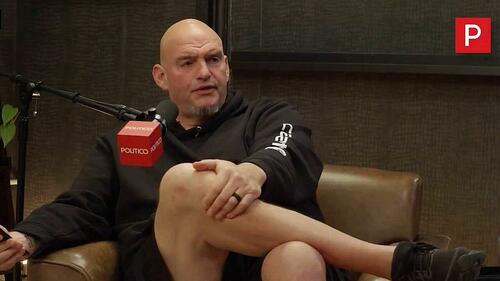
In a recent interview with Politico’s Dasha Burns, Fetterman again explained why he won’t join the chorus labeling Trump supporters as threats to democracy, emphasizing personal connections over partisan hysteria.
Burns asked Fetterman directly about Trump’s praise for him as the “most sensible Democrat,” questioning if it’s a “badge of honor or kryptonite for a Democrat in 2026.”
Fetterman responded, “My parents would appreciate it.”
He continued, “I know, and I love a lot of people that vote for Trump. And that’s part of why I refuse to call these people Nazis, or they’re brownshirts, or they’re trying to destroy our democracy.”
Fetterman made it clear he’s not engaging in that rhetoric, stating, “I’m not defending the president, but I will say he hasn’t defied a single court order yet. He hasn’t. And there was the big freak out that he was going to run in 28.”
“And I’m like, no, he’s not going to run. That’s not going to happen. And now, of course he’s not going to run,” the Senator added.
When Burns pressed on his relationship with Trump, Fetterman said, “If I have something to say it’s not going to be, you know, in an insult. It’s not going to be extreme things…when you have members of Congress calling him a piece of shit.”
“And I think it’s crazy, it’s like you just don’t, you know, I’ll always talk and speak, you know, with respect, because I really want to find a way forward.”
This admission underscores Fetterman’s ongoing pushback against his party’s extremes, a stance that has increasingly isolated him from Democratic insiders.
As we previously reported, Democrat extremists are already plotting to primary Fetterman ahead of his 2028 reelection bid, viewing his moderate positions as a betrayal. Despite his popularity in Pennsylvania, including strong support from Republicans, party officials are contemplating challenges because he won’t fully embrace their radical agenda.
Fetterman recently warned Democrats that socialism and far-left ideas are electoral poison, stating that such policies “pushed our party over the cliff” and led to recent losses. He called for “common sense” to prevail, highlighting the party’s shift toward figures like New York City’s socialist mayor Zohran Mamdani as a warning sign.
Fetterman has also urged his colleagues to dial back the constant outrage, telling them to stop turning everything into a “national freak out.” He criticized Democrats for overreacting to issues like the firing of Jimmy Kimmel and risking government shutdowns over partisan squabbles, emphasizing that “people need to just chill a little about a lot of things.”
These repeated calls for moderation have earned Fetterman bipartisan respect, even as they fuel internal Democratic discord. His refusal to demonize Trump voters, rooted in his own family’s views, exposes the growing divide between the party’s base and its leadership’s ideological purity tests.
Republicans stand to benefit from this chaos, as Fetterman’s crossover appeal could complicate Democratic efforts in swing states like Pennsylvania. If pushed too far, he might even consider running independently, further splintering the left.
Fetterman’s approach highlights a rare willingness to prioritize respect and practicality over division, a move that contrasts sharply with the Democrats’ ongoing embrace of extremism. As the party grapples with its identity, his voice serves as a reminder that alienating everyday Americans—including Trump supporters—only weakens their position.
Your support is crucial in helping us defeat mass censorship. Please consider donating via Locals or check out our unique merch. Follow us on X @ModernityNews.
Tyler Durden
Sun, 02/15/2026 – 09:20
Germany’s “Two-Speed Europe” Proposal Is The EU’s Adaptation To Great Power Geopolitics
Germany’s “Two-Speed Europe” Proposal Is The EU’s Adaptation To Great Power Geopolitics
Authored by Andrew Korybko via Substack,
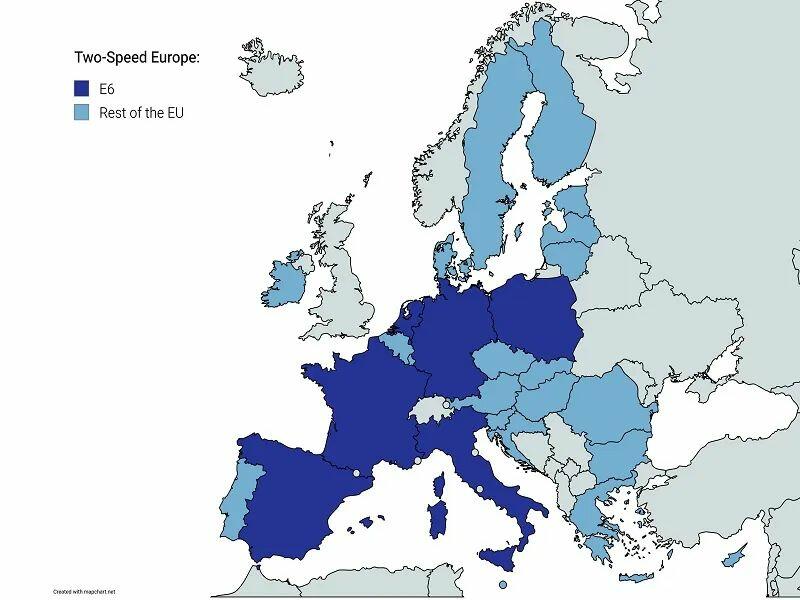
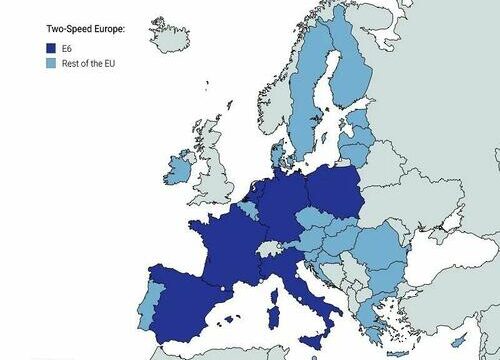
German Finance Minister Lars Klingbeil recently declared that “Now is the time for a two-speed Europe. Germany, together with France and other partners, will therefore now take the lead in making Europe stronger and more independent. As the six biggest economies in Europe, we can now be the driving force.” Apart from those two, this exclusive tier will also include Italy, Spain, the Netherlands, and Poland. The goal is to optimize decision-making by going around the EU’s consensus requirement.
According to the Washington Post, Klingbeil also sent a letter to his counterparts from the aforesaid countries announcing his intent for them to prioritize “a savings and investment union to improve financing conditions for businesses; strengthening the euro’s role as an international currency; better cooperation on defense spending; and securing resilient supply chains for critical raw materials.” His “two-speed Europe” proposal essentially functions as the EU’s adaptation to Great Power geopolitics.
Trump returned this approach to the fore of International Relations after authorizing the capture Venezuelan President Nicolas Maduro and the seizure of a Russian-flagged tanker in the Atlantic. The resumption of Great Powers prioritizing their national interests without being concerned anymore about accusations of violating international law bodes ill for the EU’s interests. After all, the US now wants EU member Denmark’s territory of Greenland, and the EU can’t stop the US even if it really wanted to.
This newfound self-consciousness of EU powerlessness has been brewing for a while, especially since the bloc was coerced by Trump’s tariff threats into agreeing to a lopsided trade deal with the US last summer, apparently inspired its de facto German leader to finally take action to rectify it to a degree. To be sure, the EU will probably never be able to restore its “strategic autonomy” vis-à-vis the US, but it could still possibly function more cohesively for making itself more competitive on the world stage.
For that to happen, member states will have to surrender more of their sovereignty to Brussels, thus furthering Germany’s long-running goal of federalizing the EU under its de facto leadership. This goal is being pursued through multiple means, including the EU’s planned transformation into a military union and creating a bigger pool of common debt through more funding for Ukraine. The challenge is that the EU’s consensus requirement for such major decisions allows smaller states like Hungary to stop this.
Therein lies the importance of Germany assembling an exclusive tier of EU members for making such decisions amongst themselves and then coercing their smaller peers into following suit through the momentum unleashed by them creating tangible facts on the ground. The clock is ticking since Poland’s ruling liberal-globalist coalition might be replaced by a conservative-populist one after fall 2027’s next parliamentary elections, however, ergo why Germany wants to get as much done as soon as possible.
These plans could be foiled even before then if Poland’s conservative president vetoes legislation associated with it since the ruling liberal-globalist coalition lacks the two-thirds majority to overrule him. Any moves by this exclusive tier that don’t require legislative approval to advance the EU’s de facto federalization could also be challenged by Poland’s Constitutional Tribunal and Supreme Court, which are at the center of a highly partisan dispute, thus possibly delaying implementation till the next elections.
Poland’s role in this German-proposed process is pivotal. Participation and tangible progress could create facts on the ground that are difficult to reverse even if the government changes after fall 2027. Likewise, resistance through the means described above could impede the aforesaid progress and possibly avert the associated consequences. If a conservative-populist coalition comes to power in Poland, it might then assemble regional allies to collectively and thus more effectively oppose these plans.
In that scenario, the EU could bifurcate into German- and Polish-led tiers, the first representing its legacy members and the second its new ones. Just like the German-led tier plans to make decisions amongst themselves and then coerce their smaller peers into following suit, so too could the Polish-led one do the same vis-à-vis their larger peers. These dynamics could result in the EU’s de facto dissolution into two distinct blocs that only remain united through their inherited policies like freedom of movement.
It’s therefore ironic that Germany considers its “two-speed Europe” proposal to be an adaptation to Great Power geopolitics that’ll enable the EU to function more cohesively for making itself more competitive on the world stage when this proposal actually risks dealing a deathblow to the EU as it now exists. The odds are still in Germany’s favor, but they could decisively shift after fall 2027’s next parliamentary elections in Poland, which are shaping up to be consequential for the entire continent.
Tyler Durden
Sun, 02/15/2026 – 08:10
From “Don’t Be Evil” To Drone King: Eric Schmidt Warns Ukraine’s “No Man’s Land” Is Future Of War
From “Don’t Be Evil” To Drone King: Eric Schmidt Warns Ukraine’s “No Man’s Land” Is Future Of War
Google’s old motto, “Don’t be evil,” was retired for very good reasons about eight years ago.
Former CEO Eric Schmidt has found a new obsession and is linked to a covert drone production pipeline that has supplied hundreds of FPV drones to Ukrainian front-line units, reinforcing his warning in a new Financial Times op-ed that “Ukraine’s no man’s land is the future of war.”
“Future wars are going to be defined by unmanned weapons,” Schmidt wrote in the op-ed.
🔴 Ukrainian soldiers fired at close range at an incoming FPV drone heading directly toward them.
▪️ Although the drone reached its target, it reportedly failed to detonate. pic.twitter.com/egeYanYYJw
— PrimeNews (@PrimeNews00) February 14, 2026
He said, “The winner of those drone battles will then be able to advance with unmanned ground and maritime vehicles, which move slowly but can carry heavier payloads.”
Schmidt described a stretch on the first line as “no man’s land.”
He explained:
Ukraine is ready for the next stage of warfare, with swarms of drones operated remotely and increasingly automated with AI targeting.
No man’s land has expanded as each side pulls its most valuable personnel back from the front while new generations of drones achieve longer ranges and increased lethality through better batteries, sensors and aerodynamics. Automating operations so personnel can operate safely behind the lines has become an urgent Ukrainian priority, with plans to move drone pilots even farther from the front in 2026.
The combination of unblockable satellite communications, cheap spectrum networks and accurate GPS targeting means the only way to fight will be through drone vs drone combat. Drones share data in real time, meaning that many inexpensive platforms can act as a single weapon. They will carry air-to-air missiles to defeat attackers, just like a fighter jet does, but will be cheaper and more abundant.
Within this kill zone, reportedly extending for miles – and in some assessments, approximately 15 miles or more wide – FPV drones and ground robots dominate, with AI kill chains that, in some cases, reduce or remove direct human-in-the-loop to kill.
Schmidt continued:
When the war in Ukraine is eventually settled, the result may be a tense peace that offers as many lessons for western nations as the conflict itself. In the future, a “drone wall” could be established along the division between Russia and Ukraine, where omnipresent automated drones monitor the border like an intelligent electric fence. Because these drones are valuable enemy targets, they will need to be armed to repel attackers, creating a hard border that is miles high and miles wide.
Numerous publications have documented the rise of Schmidt’s secretive military drone company, White Stork, including a 2025 Forbes report.
A separate report from Aviation Weekly said that Schmidt’s drone company “will expand production to deliver hundreds of thousands of drones to Ukraine this year and more in 2026.”
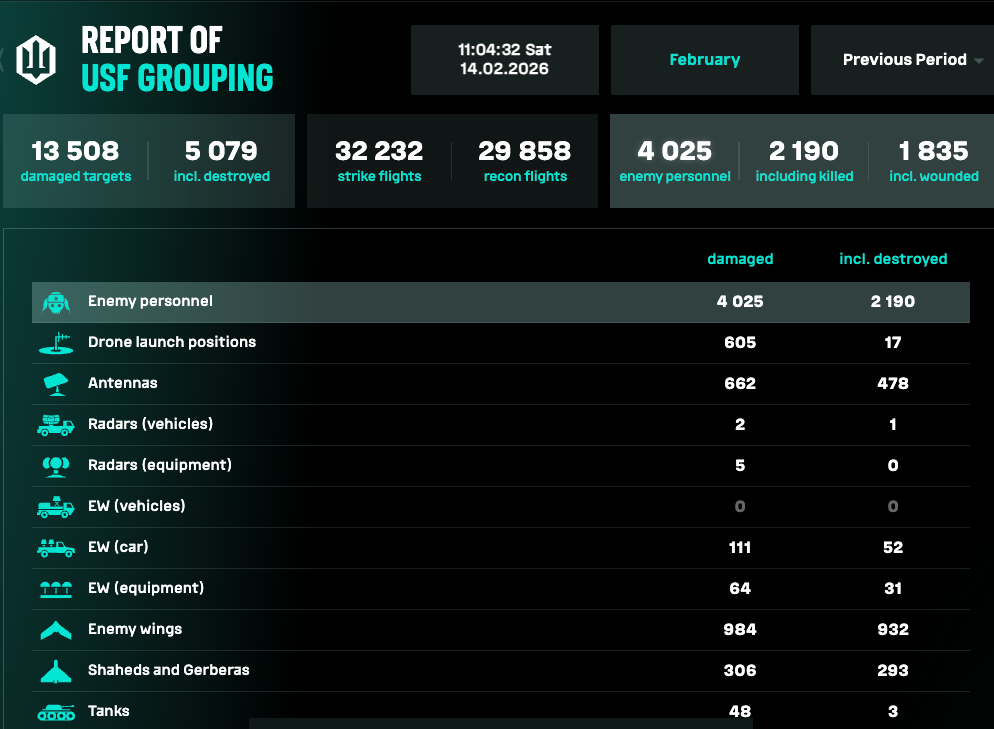
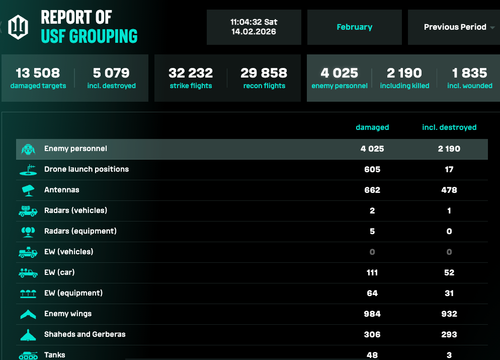
And while humans are still embedded in the kill chain, we must share the gamification of war story that Ukraine’s Unmanned Systems Forces have been using since last year, even keeping an online “killboard” that lets anyone track confirmed Russian losses from Ukrainian drone strikes in near real time.
Related:
AI’ Kill Chains’ And Rise Of Skynet-Like Weapons Offer Glimpse Of 2030s Battlefield
AI’s Next Frontier Is Physical As Humanoid Robots Begin March On Assembly Lines And Beyond
Watch: Russian Soldiers Surrender To Gun-Wielding Robot; Humanoid Warfare Nears
Humanoid Robots Get “Brains” As Dual-Use Fears Mount
And what’s happening in the US to prepare for the emerging FPV drone threat:
From Border Incursions To Stadiums: Counter-Drone Systems To Protect World Cup Games
Our assessment of what appears to be driving Schmidt from his “Don’t be evil” days at Google to his current status as a war profiteer is that he has left his Silicon Valley bubble and realized the world is becoming extraordinarily dangerous as America’s unipolarity fractures into a bipolar system.
His time in Ukraine has given him an early look at 2030s warfare; it is therefore plausible he will try to apply his lessons from Ukraine and return to the US to sell a border “drone wall,” although Anduril Industries is already well-positioned in that mission set.
Tyler Durden
Sun, 02/15/2026 – 07:35