Category: News

Crash causes CTA bus to hit Near West Side apartment building
A CTA bus was hit by the driver of a white sedan on the Near West Side Saturday night, causing the bus to careen into an apartment building, police said.
A 32-year-old woman driving a sedan allegedly ran a red light while turning onto Damen Avenue and hit the bus in the 2000 block of West Washington Boulevard. After the collision, the bus, traveling southbound, continued moving and struck the apartment building, causing minor damage.
The driver of the sedan was injured on her elbow and head, and her 11-month-old passenger had minor injuries. A 59-year-old man riding the bus also had minor injuries. According to police, all three were treated by the Chicago Fire Department and transported to Stroger Hospital in good condition.
Police said they are investigating the accident and issued a citation to the driver of the sedan.
https://www.chicagotribune.com/2026/02/15/cta-bus-crash-apartment-near-west-side/

No Arrests In Nancy Guthrie Case After Major Operation Near Her Home
No Arrests In Nancy Guthrie Case After Major Operation Near Her Home
Authored by Jacki Thrapp via The Epoch Times,
No arrests have been made in the Nancy Guthrie case after a night of heavy police activity two miles from the missing 84-year-old’s home.
Nancy Guthrie, who is the mother of “Today” show co-anchor Savannah Guthrie, was last seen on Jan. 31 after she had dinner with her family.
As the search for Guthrie entered its third week, a large police presence responded to a road near the missing woman’s home in the Tucson, Arizona area on the night of Feb. 13, which included a series of sheriff’s and FBI vehicles as well as SWAT and forensics teams.
The Pima County Sheriff’s Department confirmed the police activity was related to the case, but did not release details about what happened inside the blocked-off scene.
“Law enforcement activity is underway at a residence near E Orange Grove Rd & N First Ave related to the Guthrie case,” the Pima County Sheriff’s Department shared in an X post.
“Because this is a joint investigation, at the request of the FBI, no additional information is currently available.”
The Epoch Times contacted the Pima County Sheriff’s Department and the FBI for more information, but had received no response at the time of publishing.
Around the same time that police activity was taking place in Nancy Guthrie’s neighborhood late Friday night, a separate incident was happening at a Culver’s restaurant, also two miles away from her home.
The FBI and the sheriff’s department tagged and towed a Range Rover SUV from a Culver’s restaurant parking lot, which confirmed the activity was part of the Nancy Guthrie case.
Nancy Guthrie was last seen on Jan. 31 when a relative drove her back home from a family dinner at 9:48 p.m.
The 84-year-old’s doorbell camera was disconnected in the early morning hours of Feb. 1.
The FBI accessed footage from her Nest camera and released video of a suspect, without a time stamp, on Feb. 12.
FBI Phoenix described the suspect in the video as a male, approximately 5 feet, 9 inches to 5 feet, 10 inches tall, with an average build.
A combination of images from a video shows a masked person outside Nancy Guthrie’s home in Catalina Foothills, Arizona. FBI via The Epoch Times
The agency identified the suspect’s bag in the video as a black, 25-liter “Ozark Trail Hiker Pack” backpack that was sold at Walmart.
Law enforcement believes Nancy Guthrie was removed against her will.
On Feb. 12, the FBI doubled its reward for a tip leading to an arrest in the case to $100,000.
Multiple ransom notes have been reported by local outlets and TMZ.
Savannah Guthrie previously said that her family “will pay” for the return of her mother, but it’s unclear whether any payment was made to the person who sent the ransom note.
Tyler Durden
Sun, 02/15/2026 – 11:40

Gary preservation advocate publishes new book
When Tyrell Anderson would have reflections that stuck out to him, he would write his thoughts down.
“It started out as just things that I was thinking about that I didn’t feel comfortable sharing or posting on social media,” said Anderson, a Gary native. “But the more I was writing, the more I thought, ‘These should be shared.’”
Anderson, who is also an artist, photographer and preservation advocate, has written a new book, “Still Frames and Soundtracks,” that will be released Feb. 16. The book is a collection of Anderson’s daily reflections “shaped by music, discipline and lived experiences.”
“Some things I focus on are relationships and dealing with your own trials and tribulations,” Anderson said. “It more so focuses on the lines of recognizing patterns and what you do when you recognize those patterns and finding ways to move past those hurdles.”
Through the years, he has written down his thoughts, Anderson said, but about six months ago, he began reflecting on his notes and putting together “Still Frames and Soundtracks.”
The book is 420 pages, but passages are designed to be read one day at a time or at random, Anderson said, and he hopes it helps readers when they need guidance.
“It’s not a novel or anything like that,” he said. “It’s about a 4-by-6 pocket book, something you can toss in a bag and read on your lunch or read on the train.”
Art and music are typically his escape, Anderson said, and through the book, he references pieces that stood out to him and helped him along the way.
“I focus on those songs that I used on days when things were a little tough or if I had something to say and couldn’t find the right words,” he said. “I hope that can be a reference point and people can use music as an anchor for them when they’re feeling things that are difficult to navigate.”
Anderson’s wife, Candice Anderson, helped him edit “Still Frames and Soundtracks,” and she said it’s been special to watch him put it together and play a part in it as well.
It took Candice Anderson between 10 and 15 hours to edit the work, but she didn’t do it all in one sitting.
“He’s the love of my life,” she said. “Why would I tell him not to do this? Our family, we all support him, and I knew he had to do it because I knew it would be great.”
Candice Anderson said she loves the writing, but her favorite part is the photographs that Tyrell Anderson included. The photos are in black and white, and he took most of the photos, Candice Anderson said.
“It speaks to you,” she said. “I feel like the way he places each piece in between the months or passages, it feels very indicative of his next overcoming.”
In addition to his wife, Tyrell Anderson’s best friend Lori Gonzalez also helped edit the book. When Tyrell Anderson told her about the book, Gonzalez said she knew it was something that needed to be shared.
Tyrell Anderson told Gonzalez about the book about a month ago, and she edited it soon after. She was happy to be included in the process, Gonzalez said.
When reading “Still Frames and Soundtracks,” Gonzalez said she read multiple passages that made her think her kids, friends or other family would find it helpful.
“It’s not a self-help book,” Gonzalez said. “It makes you want to talk to the people around you, and it helps when you might need to be a little more grounded. … I told him that it feels like I’m talking to my friend when I read it.”
mwilkins@chicagotribune.com
https://www.chicagotribune.com/2026/02/15/gary-preservation-advocate-publishes-new-book/
Canciller iraní asistirá a diálogo “indirecto” con EEUU en Ginebra
Associated Press
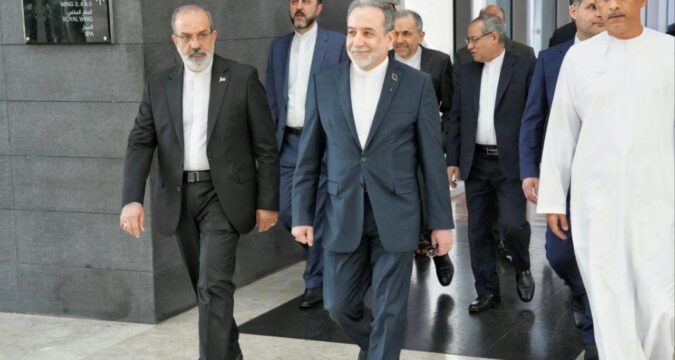
DUBAI (AP) — El principal diplomático de Irán viajaba a Ginebra el domingo, donde se llevará a cabo la segunda ronda de negociaciones nucleares con Estados Unidos, informó la prensa estatal iraní.
El ministro de Exteriores, Abbas Araghchi, y su delegación partieron de Teherán hacia la ciudad suiza después de la primera ronda de conversaciones indirectas en Omán la semana pasada. Omán mediará las conversaciones en Ginebra, informó la agencia estatal de noticias IRNA en su canal de Telegram.
Conversaciones similares el año pasado fracasaron tras la guerra de 12 días de Irán contra Israel, que incluyó el bombardeo por parte de Estados Unidos de instalaciones nucleares iraníes.
El presidente estadounidense Donald Trump ha amenazado con usar la fuerza para obligar a Teherán a aceptar restricciones a su programa nuclear. Irán ha amenazado con responder de la misma forma. Trump también ha amenazado a Irán por la mortal represión de las recientes protestas a nivel nacional.
Países árabes han advertido que cualquier ataque podría ocasionar otro conflicto regional.
Washington sostiene que Irán no puede enriquecer uranio bajo ningún concepto, algo que Teherán rechaza.
Aunque Irán insiste en que su programa nuclear tiene fines pacíficos, cada vez más funcionarios han amenazado con buscar un arma nuclear. Antes de la guerra en junio, Irán tenía uranio enriquecido hasta un 60%, técnicamente a un paso de que sea de uso armamentístico.
También se espera que Araghchi se reúna con sus homólogos de Suiza y Omán, así como con el director general de la Organización Internacional de Energía Atómica (OIEA).
_____
Esta historia fue traducida del inglés por un editor de AP con la ayuda de una herramienta de inteligencia artificial generativa.

What Do Monica Lewinsky, Maggie Thatcher, Elvis, Cher, Bill Cosby, & The Pope Have In Common?
What Do Monica Lewinsky, Maggie Thatcher, Elvis, Cher, Bill Cosby, & The Pope Have In Common?
In the (alleged) interests of transparency, AG Pam Bondi and Deputy AG Todd Blanche released a statement overnight that included a list of all government officials and politically-exposed persons that appeared in The Epstein Files.
SCOOP: The Department of Justice has sent over a letter to Congress outlining why it made redactions to the Epstein files.
The six-page letter also includes a list of all “government officials and politically exposed persons” in the files. pic.twitter.com/aRCmS2p1Bg
— Aaron Parnas (@AaronParnas) February 15, 2026
The term “politically exposed persons” was not defined in the Act, but consistent with Section 3 of the Act, Department reviewers were directed to notate “all government officials and politically exposed persons named or referenced” in any document, including videos and images, reviewed during this process.
This list includes (as directed by the Act) all persons where (1) they are or were a government official or politically exposed person and (2) their name appears in the files released under the Act at least once. Names appear in the files released under the Act in a wide variety of contexts.
For example, some individuals had extensive direct email contact with Epstein or Maxwell while other individuals are mentioned only in a portion of a document (including press reporting) that on its face is unrelated to the Epstein and Maxwell matters.
So, while we have seen ‘lists’ before, this is the official DoJ list of potential pedophiles, pizza eaters, or island-partiers (allegedly)…
Acosta, Alexander
Adelson, Miriam
Allen, Woody
Allred, Gloria
Assange, Julian
Audrey, Strauss
Avakian, Stephanie
Babino, Vincent
Baldwin, Alec
Band, Doug
Bannon, Steve
Barak, Ehud
Barr, William
Becerra, Xavier
Belohlavek, Lanna
Berman, Geoffrey
Beyonce
Bezos, Jeff
Biden, Ashley
Biden, Hunter
Biden, Jill
Biden, Joe
Birger, Laura
Bistricer, David
Bistricer, Marc
Black, Leon
Blanche, Todd
Blinken, Antony
Boies, David
Bondi, Pam
Bongino, Dan
Bono
Book, Lauren
Booker, Cory
Bowdich, David
Boyd, Stephen E.
Bradshaw, Ric
Branson, Richard
Brennan, John
Brockman, John
Brunel, Jean Luc
Buckley, Sean
Bull, Gerald
Bush Jr., George
Bush, George W.
Bush, Jeb
Byrne, Patrick
Calk, Stephen
Capone, Russell
Carlson, Tucker
Carper, Tom
Castro, Fidel
Cheney, Dick
Cher
Chomsky, Noam
Clayton, Jay
Clinton, Bill
Clinton, Chelsea
Clinton, Hillary
Clooney, George
Cobain, Kurt
Cohen, Michael
Colleran, Brian
Collins, Linda
Comey, James
Comey, Maureen
Conway, George
Copperfield, David
Cosby, Bill
De Niro, Robert
Dershowitz, Alan
Desantis, Ron
Diller, Barry
Donahue, Phil
Donaleski, Rebekah
Dupont, Kathleen
Economou, George
Egauger, Michael
Eisenberg, John
Elizabeth II
Ellison, Keith
Emmanuel, Rahm
Epstein, Jeffrey
Erben, Germann
Feinberg, Stephen
Ferguson, Sarah
Filip, Mark
Flynn, Michael
Foley, Mark
Fortelni, Marius
Friedland, Edward
Frost, Phillip
Gates, Bill
Gates, Melinda
Garland, Merrick
Geithner, Timothy
Giuliani, Rudy
Goldman, Dan
Graham, Lindsey
Guinness, Arthur Edward Rory
Haley, Nikki
Harrish, Joshua
Harris, Kamala
Hatch, Orin
Hawk, Rony
Heiss, Howard
Higgins, Tony
Ho, Stanley
Holder, Eric
Hoffman, Reid
Horowitz, Andreesen
Horowitz, Michael
Hosenball, Mark
Hoyer, Steny
Huckabee, Mike
Huckabee, Sarah
Hutner, Florence
Inge Rokke, Kjell
Iveagh, Clare
Jackson, Michael
Jagger, Mick
Jarecki, Henry
Jayapal, Pramila
JayZ
Jeffries, Hakeem
Johnson, Hank
Jones, Alex
Joplin, Janis
Kasich, John
Kendall Rowlands, John
Kennedy Jr., Robert F.
Kerry, John
Khanna, Ro
Kline, Carl
Krisher, Barry
Kudlow, Larry
Kushner, Jared
Kyl, Jon
Lady Victoria Hervey
Lefkowitz, Jay
Lefroy, Jeremy
Leo, Leonard
Lew, Jack
Lewinsky, Monica
Lieu, Ted
Lofgren, Zoe
Lonergan, Jessica
Lorber, Howard
Lord Robert May
Lutnick, Howard
Lynch, Loretta
Mace, Nancy
Mandelson, Peter
Mao, Coreen
Margolin, James
Markey, Ed
Markle, Meghan
Massie, Thomas
Maxwell, Ghislaine
Maxwell, Robert
May, Theresa
McCain, John
McFarland, Nicole
Meadows, Mark
Menendez, Robert
Milano, Alyssa
Milikowski, Nathan
Milken, Michael
Mnuchin, Steve
Moe, Alison
Monaco, Lisa
Monroe, Marilyn
Mook, William
Moskowitz, Jared
Mueller III, Robert s.
Mulvaney, Mick
Murdoch, Rupert
Musk, Elon
Nadler, Jerry
Napolitano, Janet
Nassar, Larry
Netanyahu, Benjamin
Newsom, Gavin
Obama, Barack
Obama, Michelle
Ocasio Cortez, Alexandria
O’Donnell, Rosie
Oz, Mehmet
Papapetru, Sophia
Parker, Daniel
Patel, Kash
Paul, Ron
Pecorino, Joseph
Pelosi, Nancy
Pence, Mike
Pestana, Diego
Phelan, John
Plaskett, Stacey
Plourde, Lee
Podesta, Tony
Pomerantz, Lara
Pompeo, Mike
Pope John Paul II
Pope, Susan
Power, Samantha
Presley, Elvis
Presley, Lisa Marie
Prince Harry, Duke of Sussex
Price Andrew Mountbatten-Windsor
Prince Philip
Princess Diana
Pritzker, JB
Pritzker, Thomas
Quayle, Dan
Raskin, Jamie
Ratcliffe, John
Ratner, Brett
Readler, Chad
Reagan, Ronald
Recarey, Joseph
Reiter, Michael
Reno, Janet
Reynolds, Tom
Rice, Susan
Richardson, Bill
Rod-Larsen, Terje
Rogers, Matthew
Rohrbach, Andrew
Romney, Mitt
Roos, Nicolas
Rosen, Jeffrey
Rosenstein, Rod
Ross, Diana
Rossmiller, Alexander
Roth, John
Routch, Timothy
Rove, Karl
Rowan, Marc
Rubenstein, Howard
Rubio, Marco
Ruemmler, Kathy
Ryan, Paul
Salinger, Pierre
Sasse, Ben
Scanlon, Mary Gay
Scarola, John
Schenberg, Janis
Schiff, Adam
Schlaff, Martin
Schumer, Amy
Schumer, Chuck
Schwarzman, Stephen
Scott, Tim
Sekulow, Jay
Senatore, Adrienne
Sessions, Jeff
Shamir, Yitzhak
Shapiro, Ben
Shappert, Gretchen
Shea, Timothy
Siad, Daniel
Snowden, Edward
Soros, Alex
Soros, George
Spacey, Kevin
Spitzer, Eliot
Springsteen, Bruce
Stabenow, Debbie
Staley, Jes
Starmer, Keir
Starr, Kenneth
Stoltenberg, Jens
Stordalen, Gunhild
Stordalen, Petter
Straub, Glenn
Streisand, Barbara
Sultan Ahmed bin Sulayem
Summers, Larry
Swalwell, Eric
Sweency Jr., William
Thomas-Jacobs, Carol
Taylor Green, Marjorie
Thatcher, Margaret
Thiel, Peter
Trump, Donald
Trump, Ivanka
Trump, Melania
Tucker, Chris
Vance, JD
Villafana, Marie
Walker, Richard
Warsh, Kevin
Wexner, Abigail
Wexner, Les
Williams, Damian
Wolff, Michael
Woodward, Stanley
Wyden, Ron
Yung, Mark
Zampolli, Paolo
Zucker, Jeff
Zuckerberg, Mark
The list contains hundreds of names, spanning politicians, celebrities, business leaders, historical figures, deceased individuals, and others, but leans somewhat left overall due to the inclusion of numerous Democratic politicians and Hollywood figures, but it includes prominent right-leaning ones (especially business donors).
Left-aligned: Approximately 130–150 (strong Democratic politicians, entertainers, and donors dominate this side in the list).
Right-aligned: Approximately 90–110 (strong Republican politicians, recent big-money conservative donors like Musk/Adelson/Thiel, and conservative figures).
Unclear/Other: The remainder (many historical, foreign, or non-political figures).
Counts are estimates derived from cross-referencing donations, public endorsements/statements, and party registrations/affiliations. Not every name has donation records or explicit statements, so some placements rely on broader consensus from reliable sources.
Still quite a list…
Tyler Durden
Sun, 02/15/2026 – 11:05
Indonesia alista 8.000 soldados para misión de paz en Gaza
Por NINIEK KARMINI
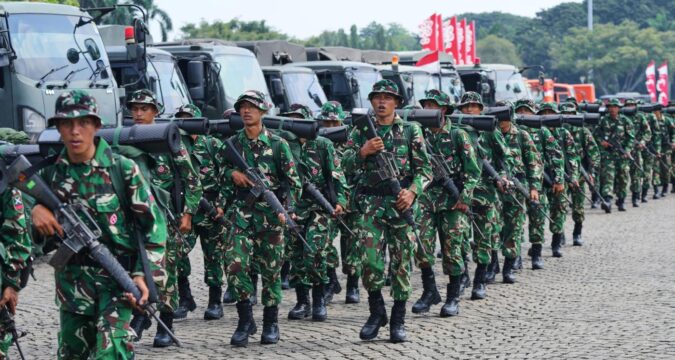
YAKARTA, Indonesia (AP) — Hasta 8.000 soldados indonesios estarían listos para finales de junio para un posible despliegue en Gaza como parte de una misión humanitaria y de paz, informó el ejército de Indonesia, en el primer compromiso firme con un elemento crucial del plan de posguerra del presidente estadounidense Donald Trump.
Las Fuerzas Armadas Nacionales de Indonesia (TNI) han finalizado su propuesta de estructura de tropas y un cronograma para su traslado a Gaza, aunque el gobierno aún no ha decidido cuándo se llevará a cabo el despliegue, dijo el portavoz del ejército, el general de brigada Donny Pramono.
“En principio, estamos listos para ser asignados a cualquier lugar”, dijo Pramono a The Associated Press. “Nuestras tropas están totalmente preparadas y pueden ser enviadas con poca antelación una vez que el gobierno otorgue la aprobación formal”.
Pramono indicó que las fuerzas armadas prepararon una brigada compuesta por 8.000 efectivos, con base en decisiones tomadas durante una reunión el 12 de febrero sobre la misión.
Según el cronograma, los soldados se someterán a controles de salud y realizarán trámites administrativos durante todo febrero, seguidos de una revisión de alistamiento de la fuerza a finales de mes, señaló Pramono. También reveló que se espera que alrededor de 1.000 efectivos estén listos para desplegarse como equipo de avanzada en abril, y que el resto lo esté para junio.
Pramono afirmó que estar listos no significa que las tropas partirán. El despliegue aún requiere una decisión política y depende de mecanismos internacionales, explicó.
El Ministerio de Relaciones Exteriores de Indonesia ha dicho reiteradamente que cualquier papel indonesio en Gaza será estrictamente humanitario. La contribución de Indonesia se centraría en la protección de civiles, los servicios médicos y la reconstrucción, y sus tropas no participarían en operaciones de combate ni en acciones que pudieran conducir a una confrontación directa con grupos armados.
Indonesia sería el primer país en comprometer formalmente militares para la misión de seguridad creada bajo la iniciativa Junta de Paz de Trump para Gaza, donde un frágil acuerdo de alto el fuego entre Israel y Hamás se ha mantenido desde el 10 de octubre tras dos años de una guerra devastadora.
Indonesia, el país con mayoría musulmana más poblado del mundo, no tiene relaciones diplomáticas formales con Israel y defiende la solución de dos Estados. Ha participado activamente en la entrega de ayuda humanitaria a Gaza, incluida la financiación de un hospital.
Funcionarios indonesios han justificado su incorporación a la Junta de Paz al afirmar que era necesario defender los intereses palestinos desde dentro, ya que Israel está incluido en la junta, pero no hay representación palestina.
El país del sudeste asiático tiene experiencia en operaciones de mantenimiento de la paz como uno de los 10 principales contribuyentes a misiones de las Naciones Unidas, incluida en Líbano.
________
Esta historia fue traducida del inglés por un editor de AP con la ayuda de una herramienta de inteligencia artificial generativa.
https://www.chicagotribune.com/2026/02/15/indonesia-alista-8-000-soldados-para-misin-de-paz-en-gaza/

La crítica en curling crece: acusan a Reino Unido de la misma falta que Canadá
Por JULIA FRANKEL
CORTINA D’AMPEZZO, Italia (AP) — La controversia del curling en los Juegos Olímpicos de Invierno sigue creciendo, ya que el aumento de la vigilancia de los partidos derivó en la retirada de una piedra lanzada por el equipo masculino británico el domingo por la misma presunta infracción que perjudicó a los canadienses dos días seguidos.
En el noveno end del partido de todos contra todos de Gran Bretaña contra Alemania, los oficiales indicaron que el curler escocés Bobby Lammie había tocado una piedra después de soltarla sobre el hielo. Eso se conoce como “doble toque” y va en contra del reglamento. Gran Bretaña ganó el partido 9-4.
La controversia surgió el viernes cuando el equipo masculino canadiense fue acusado por sus rivales suecos de hacer trampa; un día después, se retiró una piedra del partido del equipo femenino canadiense contra Suiza. Videos que circulaban en redes sociales parecían mostrar a ambos curlers canadienses haciendo doble toque a las piedras, pero ambos equipos negaron haber cometido una infracción.
A partir del sábado, World Curling informó que designaría a dos oficiales para desplazarse entre los cuatro partidos de curling durante cada ronda, pero señaló que “no es posible” tener árbitros apostados en cada línea de hog — donde las piedras deben soltarse a mano— durante todos los partidos.
Se desconoce si los oficiales están observando a algunos equipos más de cerca que a otros. World Curling afirmó que no utiliza repeticiones de video para revisar el desarrollo del juego.
Hasta el domingo, la controversia se había limitado a los curlers canadienses, que representan a una de las aficiones más apasionadas de este deporte en el mundo.
___
Deportes AP: https://apnews.com/hub/deportes

Car crash and fire kills 2 in West Loop, police say
Two people were killed in a West Loop car crash overnight Sunday, Chicago police said.
Police and firefighters responded to the crash in the 400 block of South Jefferson Street around 2:19 a.m. Two passengers were found dead inside a white sedan that hit an Eisenhower Expressway support beam and caught fire, Chicago police said.
Firefighters extinguished the fire at the scene, and police are investigating the accident.
https://www.chicagotribune.com/2026/02/15/car-crash-west-loop-2-dead/

Pereira se convierte en el cuarto entrenador del Nottingham Forest en una temporada turbulenta
NOTTINGHAM, Inglaterra (AP) — Vítor Pereira se convirtió el domingo en el cuarto entrenador del Nottingham Forest, que atraviesa dificultades, en una temporada turbulenta tras firmar un acuerdo de 18 meses.
Forest indicó en un comunicado que el portugués, de 57 años, estará acompañado por dos entrenadores asistentes y dos analistas.
El club ocupa el 17to puesto de la Liga Premier y está un lugar por encima de la zona de descenso, con 12 jornadas por disputarse. Forest recibirá al campeón defensor Liverpool el próximo domingo.
Antes de eso, Forest visitará el jueves al club turco Fenerbahçe en el partido de ida de su eliminatoria de repechaje de la Liga Europa
Pereira reemplaza a Sean Dyche, quien fue despedido el miércoles tras estar al mando apenas 114 días.
Forest terminó séptimo en la Liga Premier bajo la dirección de Nuno Espirito Santo la temporada pasada. Nuno había firmado un contrato de tres años en el City Ground en junio de 2025, pero fue destituido en septiembre tras un deterioro en su relación con el propietario Evangelos Marinakis.
Luego llegó el exentrenador del Tottenham Ange Postecoglou, pero duró apenas 40 días en el cargo, ya que Marinakis puso fin a su etapa a los pocos minutos de la derrota por 3-0 ante el Chelsea.
Pereira está en su segundo trabajo esta campaña. En noviembre fue despedido por el Wolverhampton Wanderers tras iniciar la temporada sin victorias en la Liga Premier.
Antes de incorporarse a los Wolves en 2024, Pereira tuvo breves etapas como entrenador en el Fenerbahçe y en los clubes brasileños Flamengo y Corinthians. También trabajó anteriormente bajo las órdenes de Marinakis en el Olympiakos.
___
Deportes AP: https://apnews.com/hub/deportes
The Weak Dollar Narrative
The Weak Dollar Narrative
Authored by Lance Roberts via RealInvestmentAdvice.com,
We have spent a lot of time over the last year debunking “narratives,” which are dangerous to investors, as “narratives” create a rationalization for overpaying for assets. Nonetheless, Wall Street loves a simple story and is happy to jump on a trend with momentum, selling products to unwitting consumers. A good example of that lately has been the “weak dollar” narrative, which has pushed investors to chase foreign assets. The negative correlation between a weak dollar and rising international stock exposure appears to be a free return. Unsurprisingly, the story spreads fast because performance charts look clean during a dollar slide.
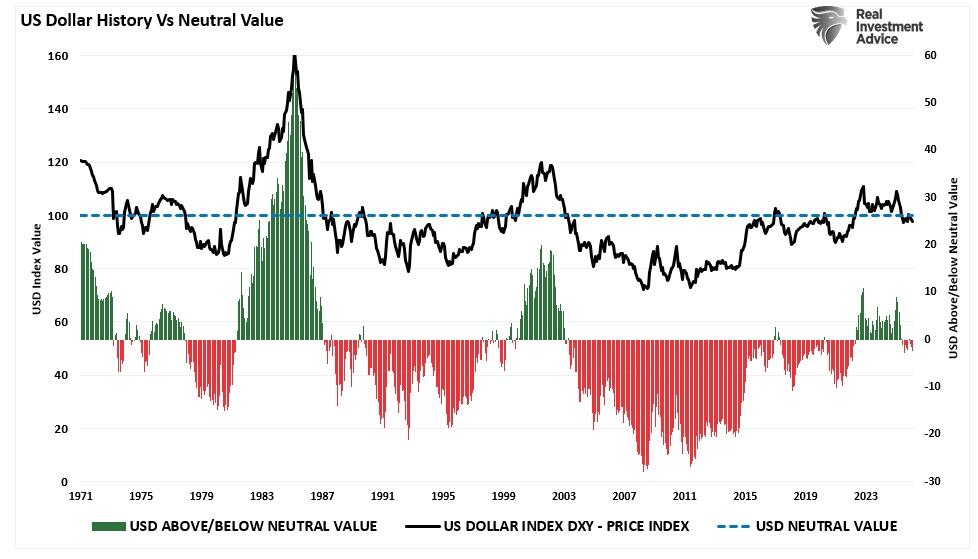
Reuters recently reported that the US dollar hit a four-year low in late January after President Donald Trump said the “value of the dollar” was “great.” Reuters tied the move to rate cut expectations, policy volatility, and concerns about fiscal deficits and central bank independence. However, in reality, President Trump was more correct than not, as Commerce Secretary Howard Lutnick confirmed the dollar trading at a more “neutral level,” as shown below.
There are two very important points to take away from the chart above.
The dollar has been in a very strong uptrend since the Financial Crisis and remains there.
Despite the recent pullback in the dollar, it is trading at its “Neutral Value” and is at the same level it was in 1970. Such certainly does not support the “debasement” or “demise of the US Dollar” narratives.
What is true is that the decline in the value of the dollar, after its strong surge starting in 2021, does make foreign assets more appealing as investors seek a hedge against a weaker dollar. However, while the “purveyors of perpetual doom” claim this is evidence of the end of the US Dollar dominance, the recent decline in the dollar, as shown above, is simply part of its long history of rallies and declines as the dollar adjusts to flows as foreign governments seek to balance their currencies against the US Dollar.
If you take a look at the dollar chart above, you will notice that it trades in a band above and below 100 (the “neutral value.) This is because the US Dollar is measured against a “basket” of foreign currencies. It is crucial to understand that foreign governments manage their currency against the dollar through a “peg” or a managed band to reduce exchange rate swings and support trade. As such, foreign central banks set a target rate versus the dollar and defend that target by buying or selling dollars from foreign exchange reserves. This is why, when the dollar was “above neutral,” foreign central banks like China reduced their holdings of US Treasuries to strengthen the Yuan.
When demand for the local currency rises, the central bank buys dollars and sells local currency to keep the rate from rising. When demand falls, the central bank sells dollars and buys local currency to keep the rate from falling too much. Many countries also align short-term interest rates, capital controls, and bank liquidity rules with the peg, since rate differentials and hot money flows pressure the exchange rate.
There are several very important reasons why all countries need a stable currency relative to the dollar:
It helps exporters price goods with less uncertainty,
Supports long-term contracts,
Limits imported inflation on energy and commodity prices priced in dollars, and
Lowers currency risk for foreign investors.
The trade-off is less monetary policy freedom, greater reserve requirements, and a higher risk of sharp adjustments when the peg level no longer aligns with inflation, growth, or external deficits.
However, none of this supports any commentary about the “death of the dollar,” or the failure of fiat currencies in general. What those commentaries do is push portfolio behavior. When the dollar falls, international stock exposure often rises in the allocation model. The risk lies in the assumption that a weak dollar stays in place indefinitely.
Looking at the chart above, it is clear that currency trends reverse when positioning crowds in either direction. A weak-dollar narrative encourages investors to pay less attention to valuation, earnings, and country-level fundamentals, leaving portfolios exposed when the thesis breaks.
A Potential For A Dollar Rally
Currency markets move on expectations more than anything else. Yes, interest rates, economic growth, and inflation can all impact the dollar, but it is more about the “expectations” of those variables for the dollar, trade, etc., that move the price. Therefore, investors need to be on the lookout for factors that could reverse expectations. Currently, several conditions are forming that could begin to reverse those expectations.
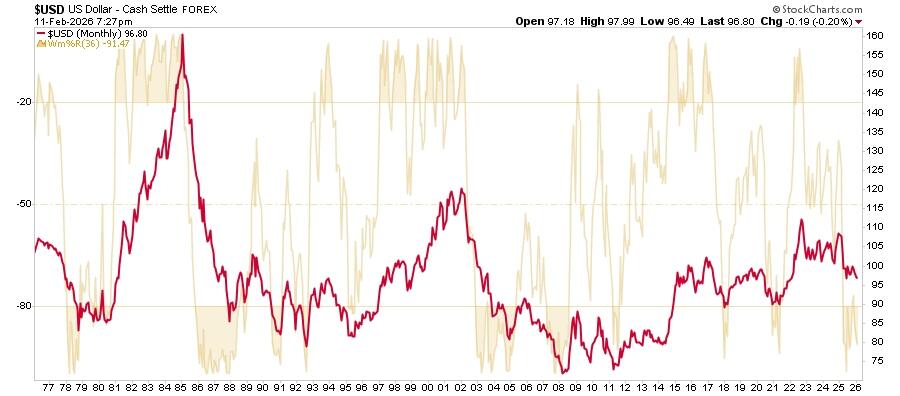
First, positioning and technicals matter. From a long-term technical perspective, the U.S. Dollar Index is attempting to stabilize after a 2025 downside move. As shown, using a 3-year price momentum measure, the dollar is as oversold now as it was at previous dollar bottoms. The current move lower is becoming increasingly stretched, reducing the catalyst needed to trigger a sharp reversal.
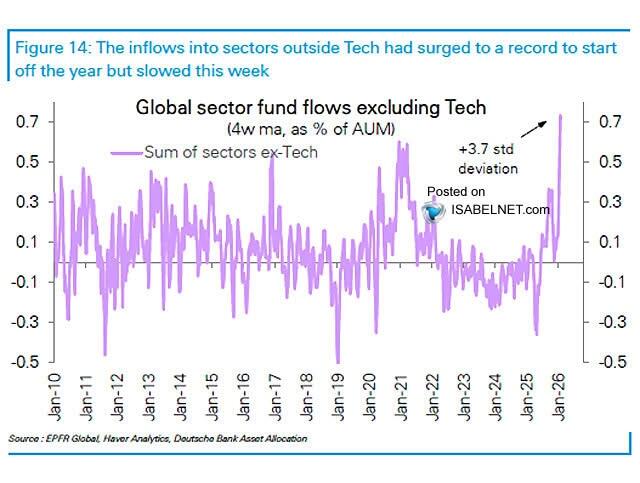
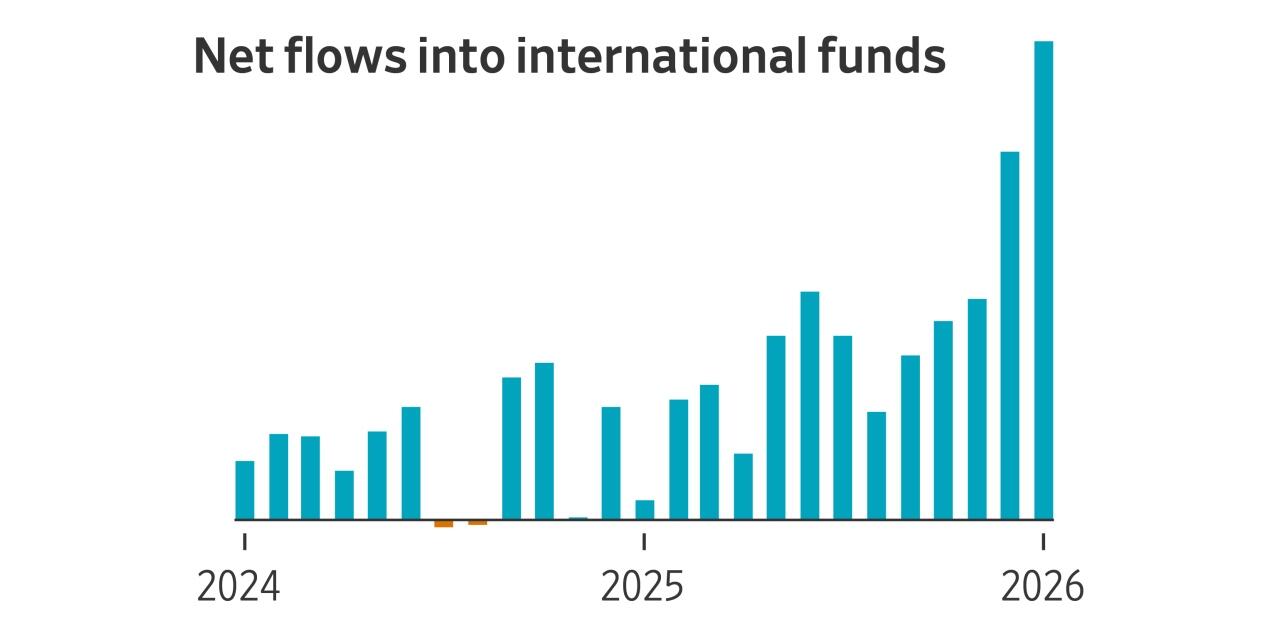
A weak dollar trend also encourages leverage through unhedged international stock exposure. As shown, investors have piled into global sector funds (excluding technology) over the past year to boost returns. However, the last time we saw that kind of exposure shift was in 2021, just before the counter-trend rally in the dollar that hit returns fast.
Second, relative economic growth still supports the U.S. over international economies. As we noted previously,
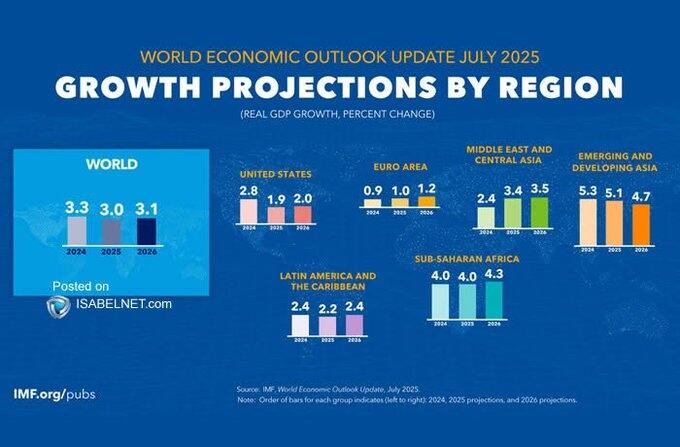
“While investors are exceedingly bullish on the stock market, forecasts for 2026 are sobering. Even the IMF, which recently produced its global growth estimates, has the US economy growing at 2% for the next two years, and the Eurozone near 1%.”.
Relative growth drives capital flows, and capital flows drive currencies. Therefore, when U.S. growth beats expectations while other regions disappoint, the weak-dollar theme loses its power.
Lastly, policy messaging still matters. Reuters reported that Treasury Secretary Scott Bessent reaffirmed “a strong dollar policy.” Furthermore, the expected monetary policy under Kevin Warsh, the new Federal Reserve chairman, is also dollar-bullish. While a single statement does not set a multi-month trend, repeated statements and eventual actions will shift short-term psychology toward a stronger dollar view.
Most crucially, a dollar rally does not require booming U.S. growth. A dollar rally only requires growth and rates to look less negative than they’re priced, and the current oversold conditions lower that hurdle.
The International Valuation Risk
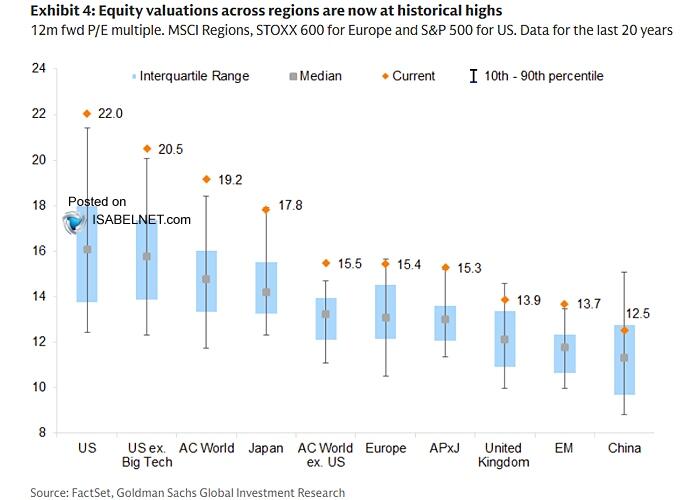
Investors often stack a second argument on top of the weak dollar story. International markets look cheaper than the U.S.; therefore, international stock exposure offers better value. The problem lies in relative valuation, when we should really look at each market’s valuation relative to its own history and earnings path. As shown, when you do that, those markets trade at historically high valuations.
MSCI data shows the MSCI EAFE Index (ex-US) forward P/E at 15.3 as of January 30, 2026. The level looks reasonable in isolation; however, the key issue is what investors receive for that multiple. Given that earnings growth rates, margins, and sector mix are vastly weaker than in the U.S., overvaluation will matter in those countries, just as it does in the U.S.
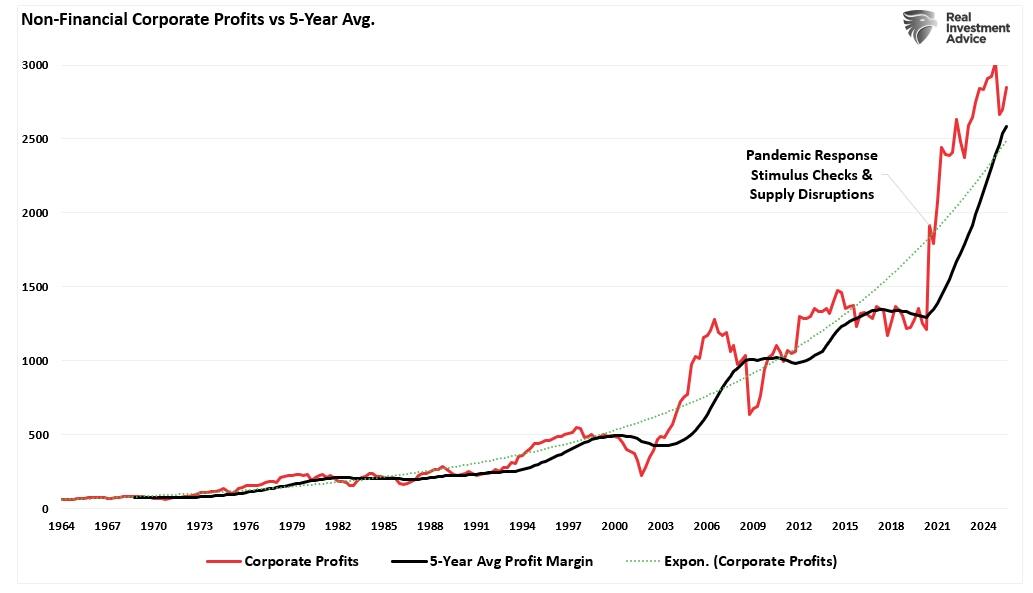
On the U.S. side, FactSet reported S&P 500 analysts project 2026 earnings growth of 14.1 percent and a forward 12-month P/E of 21.5, below 22.0 at the end of the fourth quarter. The U.S. multiple still sits above long-run averages, yet the direction matters, as the U.S. has cheapened at the margin while earnings expectations have remained resilient and profit margins have improved.
International markets also carry concentration risk. A significant portion of EAFE performance is tied to financials, industrials, and exporters, all of which are sensitive to global trade cycles and demand from China. Those forces can change quickly, but when the weak-dollar narrative drives the trade, investors often ignore the macro risk.
A currency-driven bid also inflates valuation abroad. A weak dollar lifts translated returns and encourages inflows, which in turn raise price multiples. However, when the dollar turns higher, international stock exposure faces a double drag as currency hedging reverses. When that translation turns negative, the valuation premium compresses as flows reverse.
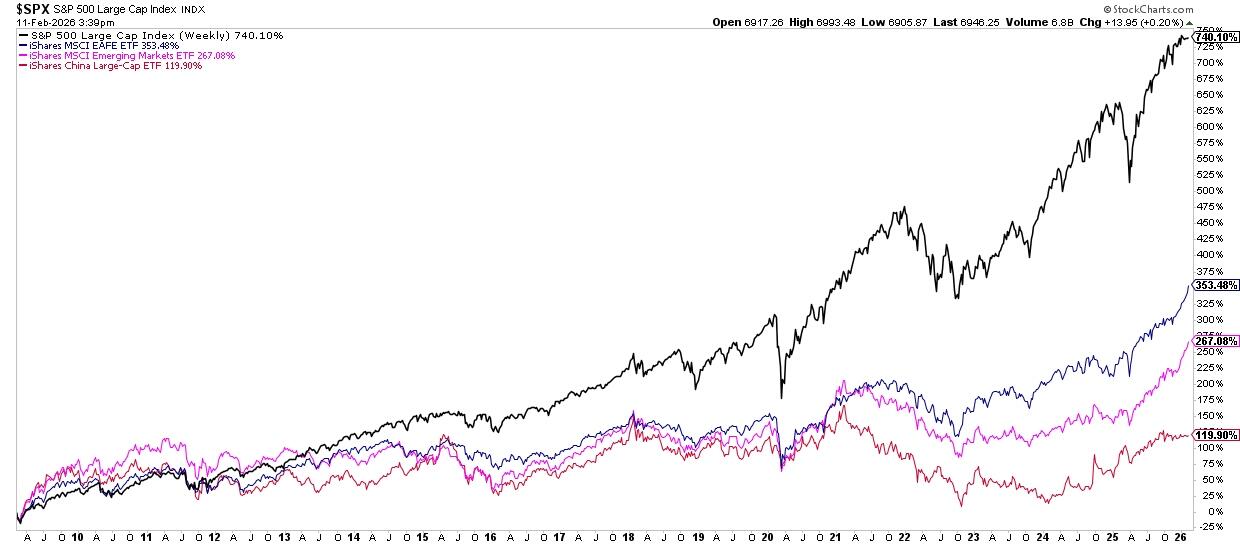
While international stock exposure is fine, and there are certainly periods when it performs better than domestic markets, over the last 17 years it has trailed domestic markets by a large margin. Such is because, at the end of the day, it isn’t about dollar weakness; it is about earnings growth, profit margins, and future expectations. Currently, that growth remains in the U.S.
Investment Tactics Dollar Reversal
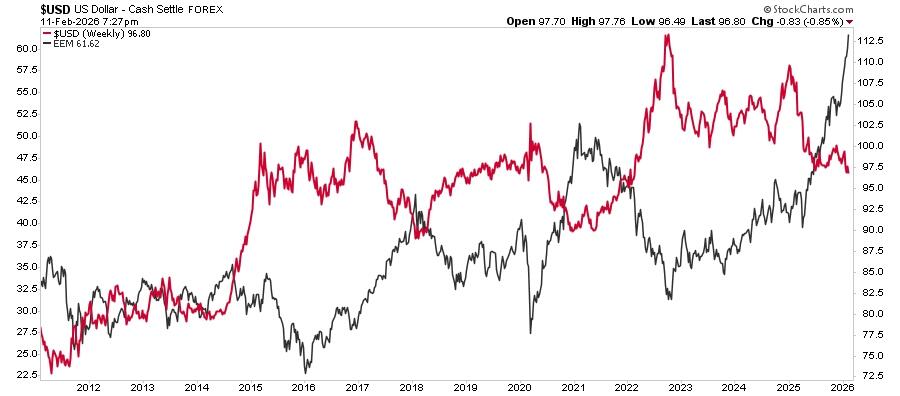
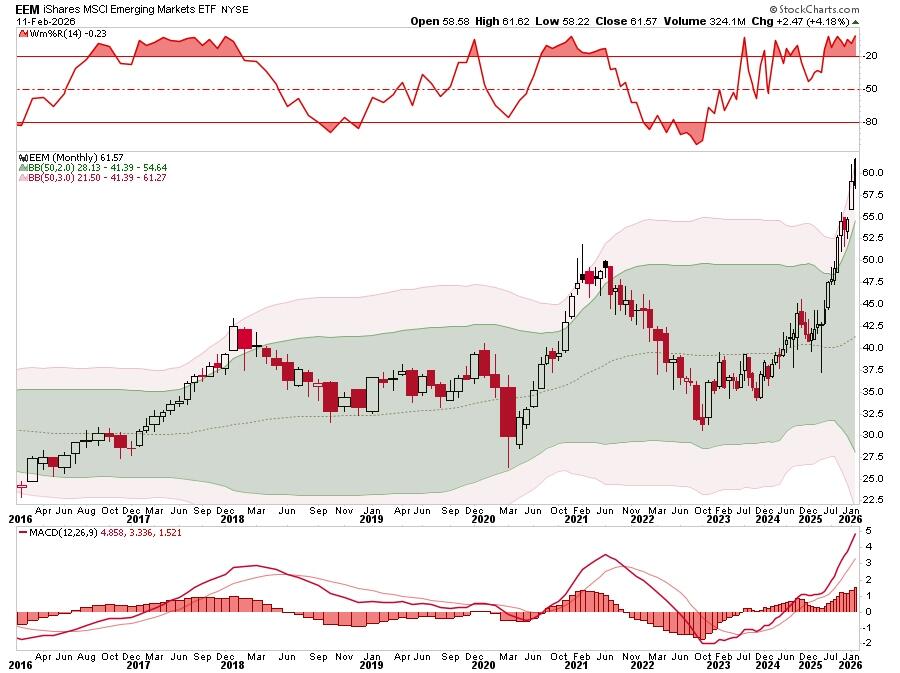
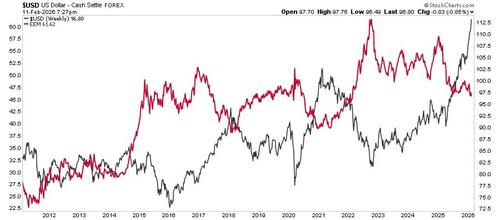
As shown, the move in Emerging Market Stocks (EEM) has been extremely sharp, making it much more exposed to a deep reversal if the dollar rallies.
Therefore, investors should treat international stock exposure as a tool, not a narrative. The goal, as always, is to maintain diversification but only to the point where you can control risk. Once it becomes a momentum chase, that risk control fails.
Start with position sizing. Set a strategic range for international stock exposure based on your risk tolerance and drawdown limits. Critically, keep that range stable and don’t allow the recent weakness in the dollar to dictate long-term weights.
Use rules-based rebalancing. When foreign equities run above target due to a weak dollar surge, trim toward policy weight. When foreign equities lag, add slowly. Rebalancing reduces the damage of an unexpected reversal.
Add currency awareness. Consider a split allocation between hedged and unhedged developed exposure. Hedged exposure reduces the impact of a dollar rally, while unhedged exposure keeps diversification benefits when the weak dollar resumes. MSCI publishes a 100% hedged EAFE benchmark that helps investors compare results across hedged and unhedged frameworks.
Focus on earnings quality as fundamentals will always matter in the end. Continue to favor markets and sectors with stable cash flows, strong balance sheets, and pricing power, as those traits matter when currencies swing and financial conditions tighten.
Avoid valuation shortcuts. Do not rely on “cheaper than the U.S.” Use local history and earnings trends. If international multiples rise while earnings lag, reduce exposure, even if the weak-dollar story remains popular.
Finally, stress test the portfolio. Model a 5 percent to 10 percent dollar rally and a 10 percent drawdown in foreign equities at the same time. If the model shows unacceptable damage, reduce unhedged international stock exposure before the market enforces the change.
The weak-dollar narrative is just a narrative, and a reversal will arrive again. That is just how markets operate. The question is whether your process will protect you or hurt you when that reversal comes.
Tyler Durden
Sun, 02/15/2026 – 10:30