Category: News
Australia veta el regreso desde Siria a un ciudadano por presuntos lazos con Estado Islámico
Por ROD McGUIRK
MELBOURNE, Australia (AP) — El gobierno de Australia prohibió el miércoles que una persona australiana con presuntos vínculos con el grupo Estado Islámico regrese desde un campo de detención en Siria.
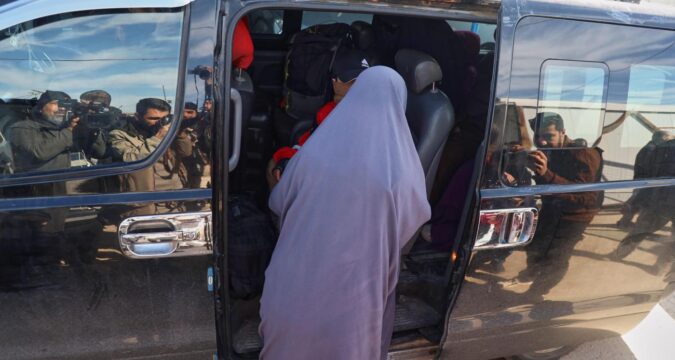
La persona forma parte de un grupo de 34 mujeres y niños que habían planeado volar de Damasco a Australia el lunes, pero las autoridades sirias les hicieron regresar al campo de detención de Roj debido a problemas de procedimiento.
Excombatientes de EI de diferentes países, sus esposas e hijos han permanecido detenidos en campos desde que el grupo armado perdió el territorio que controlaba en Siria en 2019. Aunque derrotado, el grupo aún tiene células durmientes que realizan ataques letales en Siria e Irak.
El ministro australiano del Interior, Tony Burke, indicó que de acuerdo con las agencias de seguridad australianas se había concluido que una de las personas del grupo superaba el umbral de riesgo para prohibirle la entrada al país pese a tener la ciudadanía. No identificó a esa persona ni precisó por cuánto tiempo se extendería la prohibición.
“Puedo confirmar que a una persona de este grupo se le ha emitido una orden de exclusión temporal, que se dictó siguiendo el consejo de las agencias de seguridad”, indicó Burke en un comunicado.
“En esta etapa, las agencias de seguridad no han proporcionado recomendaciones de que otros miembros del grupo cumplan los umbrales legales requeridos para órdenes de exclusión temporal”, añadió.
Burke tiene la facultad de usar órdenes de exclusión temporal para impedir que ciudadanos considerados de alto riesgo regresen a Australia durante hasta dos años.
Los gobiernos australianos han repatriado en dos ocasiones a mujeres y niños australianos desde campamentos de detención en Siria. Otros australianos también han regresado sin asistencia del gobierno.
El primer ministro, Anthony Albanese, reiteró el miércoles su postura, anunciada el día anterior, de que su gobierno no ayudará a repatriar al grupo más reciente.
“Estas son personas que eligieron ir al extranjero para alinearse con una ideología que es el califato, una ideología brutal y reaccionaria, y que busca socavar y destruir nuestra forma de vida”, declaró Abanese a los periodistas.
Hace más de una década, los milicianos capturaron amplias extensiones de territorio en Siria e Irak, donde dijeron haber instaurado un califato. Yihadistas de otros países viajaron a Siria en esa época para unirse a grupo. Con los años, formaron familias y criaron hijos allí.
“No estamos haciendo nada para repatriar ni para ayudar a estas personas. Creo que es lamentable que los niños queden atrapados en esto; no es su decisión, pero sí la decisión de sus padres o de su madre”, añadió el primer ministro.
___
Esta historia fue traducida del inglés por un editor de AP con la ayuda de una herramienta de inteligencia artificial generativa.
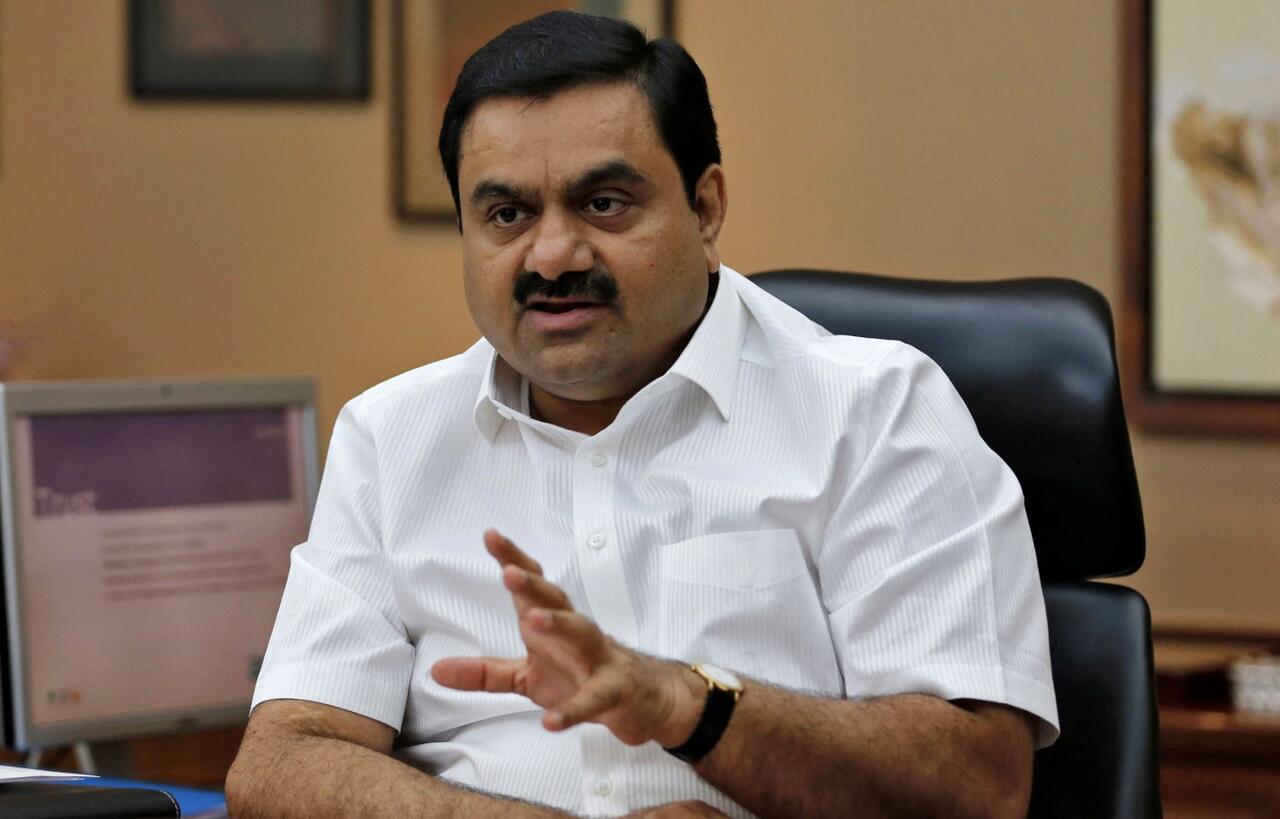
More “Secret Investments” By Adani Family Associates Revive Market Manipulation Allegations
More “Secret Investments” By Adani Family Associates Revive Market Manipulation Allegations
In early 2023, as scrutiny mounted around India’s Adani Group, two close associates of the Adani family acknowledged to their bankers that they controlled billions of dollars in the conglomerate’s shares through hedge funds.
The admission — found in records reviewed by OCCRP, who called them “secret investments” in a new investigative piece— came soon after Hindenburg Research accused the group of inflating its stock through “brazen” manipulation that included promoters and insiders holding more of the float than was publicly disclosed.
The allegations sparked international attention, amplified by the company’s perceived ties to Prime Minister Narendra Modi. Although Adani shares initially fell, they later rebounded. The group dismissed the claims as an “attack on India,” and India’s market regulator, SEBI, eventually cleared the company on two specific issues, while other investigative strands have not been publicly detailed.
The investors, Nasser Ali Shaban Ahli of the UAE and Taiwan’s Chang Chung-Ling, had long-standing business links to the Adani family. Previously reported holdings in the hundreds of millions now appear far larger: internal documents from Swiss bank REYL Intesa Sanpaolo show that as recently as 2023, the two held roughly $3 billion in Adani-related investments through Dubai-based accounts. In written statements to their bank, they said their positions stemmed from personal and professional trust in the family and denied Hindenburg’s allegations.
Both men have surfaced in past Indian investigations into alleged Adani misconduct — cases that were ultimately dropped. A 2007 diamond-trading probe and a 2014 over-invoicing inquiry connected them to companies tied to Vinod Adani, the chairman’s brother. Vinod was at the heart of many Hindenburg allegations, with the firm questioning his management of overseas shell companies and alleging financial improprieties relating to potential manipulation of Adani shares.
Hindenburg also identified Chang as linked to a disclosed “related party.” Earlier reporting cited evidence that their trades were coordinated with Adani-linked entities.
OCCRP writes that Swiss prosecutors are now examining Chang on suspicion he acted as a “front man” to help insiders exceed ownership limits. More than $310 million has been frozen, though no charges have been filed. Authorities confirmed an ongoing investigation into money laundering and document forgery. The Adani Group denies any role.
Abroad, U.S. prosecutors in 2024 charged founder Gautam Adani and his nephew in a bribery case the company calls “baseless,” alongside a related SEC civil action. In India, however, consequences have been limited. The Supreme Court declined to order a separate probe, noting SEBI’s progress on “twenty-two out of twenty-four” inquiries and saying its work “inspires confidence.” In 2025, SEBI ruled certain allegations “not established,” though other matters reportedly remain pending.
Bank records show Ahli held about $2 billion and Chang about $1 billion through British Virgin Islands companies, largely invested in hedge funds likely focused on Adani stocks. After meeting bank officials in February 2023, they confirmed ownership of the accounts, rejected wrongdoing, and said they would diversify “in the short term.” The bank tightened oversight of their transactions.
In an August 2024 ruling, Switzerland’s Federal Criminal Court upheld the freeze on Chang’s funds, stating investigators must be allowed time to proceed and observing that the appellant had not provided documentation sufficient “to dispel the doubts legitimately raised.”
Ahli and Chang declined to comment. The bank cited legal restrictions on disclosure.
Meanwhile, days ago, it was announced that the reporter on the byline to this new story had been sentenced to a year for “defamning” Adani Group on X:
On February 10, a magistrate court in the western state of Gujarat convicted Nair and sentenced him to jail and a fine of 5,000 rupees (US$55) for his posts between October 2020 and July 2021 on the X platform and articles on the Australian nonprofit Adani Watch investigative site, according to a copy of the judgment, reviewed by CPJ.
Nair frequently uses social media to comment on the Adani Group, owned by billionaire Gautam Adani. The conglomerate has come under sustained scrutiny over allegations of financial irregularities, which it has denied.
Nair’s posts cited or linked to reports by established publications, including The Times of India and Bloomberg, sometimes accompanied by commentary questioning Indian government policies and the Adani Group’s environmental compliance and alleged monopolistic practices.
The case against Nair was initiated by Adani Enterprises Limited, the group’s flagship firm.
On February 10, the court concluded that the journalist’s comments and publications were defamatory and made with knowledge of their likely impact on the company’s reputation.
Tyler Durden
Wed, 02/18/2026 – 02:45

Nueva Orleans celebra el Mardi Gras, el indulgente final del Carnaval
Por SARA CLINE
NUEVA ORLEANS (AP) — La gente se asomaba a los balcones de hierro forjado y gritaba la emblemática frase “Lánceme algo, señor” mientras un enorme desfile de Mardi Gras recorría la histórica avenida St. Charles de Nueva Orleans el martes.
El Mardi Gras marca el punto álgido y el final de la temporada de Carnaval, que dura varias semanas, y es una última oportunidad para el desenfreno, los banquetes y la fiesta antes del periodo cristiano de Cuaresma, un tiempo de sacrificio y reflexión. La alegre despedida del Carnaval siempre tiene lugar la víspera del Miércoles de Ceniza.
En la ciudad más poblada de Luisiana, famosa en todo el mundo por su fiesta de Mardi Gras, la gente se vistió con trajes verdes, dorados y morados; algunos optaron por una abundancia de lentejuelas y otros lucieron disfraces hechos en casa.
Los juerguistas empezaron a llenar las calles cuando salió el sol. Se instalaron con sillas, neveras portátiles, parrillas y escaleras, que les ofrecían un ángulo de visión más elevado.
Mientras pasaban las bandas de música y carrozas llenas de mujeres con enormes tocados de plumas, con la música retumbando en las calles de la ciudad, la gente bailaba y vitoreaba. Otros bebían, muchos sustituyendo el habitual café matutino por tragos alcohólicos en un día de celebración.
Cada desfile tiene sus propios “regalos”: baratijas que incluyen collares de cuentas de plástico, dulces, doblones, animales de felpa, vasos y juguetes. Los cocos decorados a mano son el objeto más codiciado de Zulu, un multitudinario desfile que lleva el nombre del grupo étnico más numeroso de Sudáfrica.
Cuando un hombre disfrazado de cangrejo —con pinzas de tela roja a modo de manos— atrapó uno de los cocos, lo agitó en el aire y el brillo dorado de su cáscara relució al sol.
Sue Mennino vestía un traje blanco de inspiración egipcia, un tocado dorado y una capa translúcida. Llevaba brillantina en el rostro y una sombra de ojos azul eléctrico.
“El mundo seguirá ahí mañana, pero hoy es un día libre y es hora de festejar”, comentó Mennino.
La fiesta no se limita únicamente a la ruta del desfile. En todo el Barrio Francés, la gente se divertía en la calle, en los balcones y en los porches delanteros de las casas tipo “shotgun”.
Un desfile improvisado estuvo encabezado por un hombre que tocaba una tabla de lavar a modo de instrumento e iba disfrazado de caimán azul, con su cola de papel maché arrastrándose por la calle y barriendo sin querer las cuentas perdidas. Una banda de metales interpretaba “The Saints” mientras la gente bailaba.
En Jackson Square, entre la multitud disfrazada había un hombre pintado de cebra de pies a cabeza, un grupo que emulaba al juego de mesa Hippos Glotones, y un buzo con un casco antiguo de latón y cobre.
“La gente es la mejor parte”, afirmó Martha Archer, que iba vestida de Madame Leota, la médium incorpórea cuya cabeza aparece dentro de una bola de cristal en la atracción Mansión Encantada de los parques de diversiones de Disney.
Archer llevaba el rostro pintado de azul y su atuendo consistía en una mesa improvisada que le llegaba hasta el cuello, lo que daba la apariencia de que, en efecto, era una cabeza flotante.
“Todo el mundo está muy feliz”, agregó.
Los buenos momentos no se limitaron a Nueva Orleans, sino que llegaron a todo el estado: desde bailes exclusivos a la tradición cajún francesa del Courir de Mardi Gras, o carrera del Mardi Gras — un evento rural en el centro de Luisiana en el que participantes disfrazados actúan, piden ingredientes y persiguen gallinas vivas para cocinarlas en un gumbo comunitario.
También se celebran desfiles en otras ciudades de la costadel golfo de México como Mobile, en Alabama, y Pensacola, en Florida.
___
Esta historia fue traducida del inglés por un editor de AP con la ayuda de una herramienta de inteligencia artificial generativa.
Indonesia endurece el control del níquel mientras EEUU y China buscan minerales críticos
Por ANIRUDDHA GHOSAL y ANTON L. DELGADO
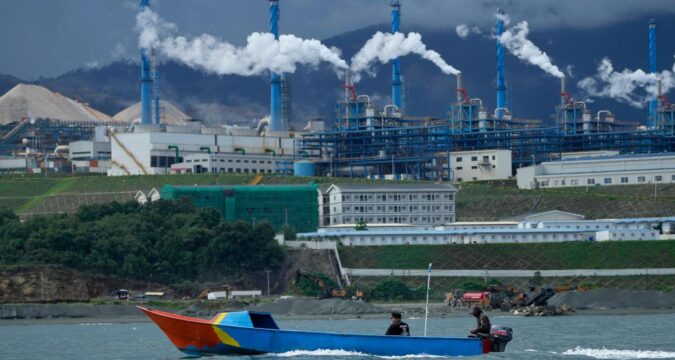
HANÓI, Vietnam (AP) — Indonesia está reforzando el control estatal sobre las mayores reservas de níquel del mundo tras años de apostar a que el metal serviría de ancla para una industria nacional de vehículos eléctricos, y justo cuando la demanda global empieza a alejarse de una fuerte dependencia del níquel.
La medida aún podría repercutir en las cadenas de suministro globales de vehículos eléctricos, mientras Estados Unidos y China compiten por minerales críticos. Indonesia se sitúa en el centro del mercado del níquel: su participación en la oferta mundial saltó a alrededor del 60% en 2024 desde el 31,5% en 2020, según S&P Global Market Intelligence, después de que el expresidente Joko Widodo prohibiera las exportaciones de mineral en bruto, lo que atrajo una oleada de inversión respaldada por China en el refinado.
Yakarta esperaba que el control del níquel sustentara una industria de vehículos eléctricos totalmente nacional, desde la minería y las baterías hasta los autos terminados. Expertos señalan que esa promesa se utilizó para justificar la tala de bosques y la expansión minera en nombre de la transición energética, incluso mientras se agravaban los riesgos climáticos.
En 2025, Indonesia tomó medidas enérgicas contra lo que calificó como explotación ilegal de recursos naturales, al afirmar que muchas licencias mineras y de plantaciones estaban contaminadas por sobornos o nunca se aprobaron debidamente. Las autoridades aseguran que han incautado más de 4 millones de hectáreas (9,8 millones de acres) de minas, plantaciones de palma aceitera y sitios de procesamiento, han impuesto 1.700 millones de dólares en multas y podrían incautar otras 4,5 millones de hectáreas este año.
Pero los analistas advierten que la ofensiva llega justo cuando el beneficio del níquel empieza a desvanecerse, ya que muchos vehículos eléctricos chinos están cambiando a químicas de baterías que usan mucho menos metal y dependen en su lugar de diseños basados en hierro.
“Los bosques han sido explotados hasta el límite”, afirmó Putra Adhiguna, del Energy Shift Institute, con sede en Yakarta. “Pero nunca se obtuvo la cadena de valor de los vehículos eléctricos”.
Indonesia paga un costo ambiental
China desempeña el papel principal en el sector del níquel de Indonesia, utilizando el metal para apuntalar sus industrias de acero inoxidable y de energía limpia.
Las mayores reservas de níquel del mundo se concentran en la isla indonesia de Sulawesi, que representa más de la mitad de la producción mundial de níquel de mina, según el Institute for Energy Economics and Financial Analysis (IEEFA), con sede en Estados Unidos.
China ha obtenido níquel de Indonesia durante décadas, pero la relación se profundizó después de que Yakarta prohibiera las exportaciones de mineral en bruto en 2020, lo que atrajo una oleada de inversión china en fundiciones.
Los envíos de níquel a China se dispararon, y las importaciones de mata de níquel —un material semiprocesado usado en procesos químicos para baterías y aleaciones— aumentaron casi 28 veces entre 2020 y 2023; más del 90% procedía de Indonesia, según datos comerciales. En el mismo periodo, la participación combinada de América del Norte y América del Sur en la producción mundial de níquel cayó del 16% al 7%, mientras que la de Europa bajó del 35% al 10%, de acuerdo con el International Nickel Study Group, una organización intergubernamental con sede en Lisboa.
Mientras tanto, la minería impulsó la pérdida de unas 370.000 hectáreas (aproximadamente 914.000 acres) de bosques indonesios entre 2001 y 2020 —más que en cualquier otro país—, según un análisis del World Resources Institute. Más de un tercio de esa pérdida correspondió a selvas tropicales primarias, que almacenan enormes reservas de dióxido de carbono y son cruciales para limitar el cambio climático.
El uso intensivo de carbón para operar las fundiciones de níquel de Indonesia también ha frenado la transición energética del país, al añadir nueva demanda de combustibles fósiles incluso mientras intenta recortar emisiones. Un análisis de 2024 del IEEFA concluyó que los principales productores de níquel emitieron alrededor de 15 millones de toneladas de gases de efecto invernadero en 2023, en gran medida por su dependencia del carbón.
En una de las incautaciones relacionadas con el níquel más publicitadas del año pasado, soldados indonesios, acompañados por un equipo de televisión local, tomaron el control de parte de la mayor mina de níquel del mundo.
La mina, en su mayoría propiedad del gigante chino de metales Tsingshan Holding Group, ha provocado deforestación, contaminación del aire y del agua y un aumento de las emisiones derivadas del carbón, además de desplazar comunidades, perjudicar medios de vida y exponer a los residentes a riesgos para la salud, según un informe de 2024 de la organización sin fines de lucro Climate Rights International.
La medida no estaba orientada a la protección ambiental ni a restaurar salvaguardas forestales, indicó Bhima Yudhistira, del Center of Economic and Law Studies (CELIOS), con sede en Yakarta.
“No hay garantía de que las cosas mejoren”, sostuvo. Podrían ponerse “aún peor”.
Indonesia apostó por baterías para vehículos eléctricos, pero el mercado cambió
El esfuerzo de Indonesia por convertir sus reservas de níquel en la columna vertebral de una industria nacional de vehículos eléctricos despertó interés temprano de inversionistas de Corea del Sur y China, pero no ha cumplido las expectativas.
Hyundai Motor Group y LG Energy Solution, de Corea del Sur, inauguraron en Indonesia la primera planta de celdas de baterías para vehículos eléctricos en julio de 2024, con capacidad anual para abastecer a más de 150.000 vehículos eléctricos. Pero LG Energy Solution se retiró en abril de 2025 de una inversión mayor en baterías por 8.400 millones de dólares, al citar condiciones de mercado y de inversión.
Aun así, el fabricante chino BYD sigue construyendo una planta de vehículos eléctricos. CATL, de China, el mayor fabricante de baterías para vehículos eléctricos del mundo, está construyendo una fábrica de baterías junto con empresas estatales indonesias.
El mercado de vehículos eléctricos de Indonesia crece con rapidez, pero sigue siendo pequeño.
El país vendió más de 43.000 vehículos eléctricos en 2024, lo que supuso alrededor del 5% de las ventas totales de autos, según el Indonesian Business Council. La infraestructura pública de carga es limitada, con alrededor de 1.500 estaciones en todo el país en 2024.
Incluso si Indonesia produjera 1 millón de vehículos eléctricos al año —equivalente al total de ventas anuales de autos— y favoreciera baterías ricas en níquel, eso aun así consumiría menos del 1% de su producción nacional de níquel, según el Energy Shift Institute.
Los fabricantes de vehículos eléctricos están cambiando a baterías de fosfato de hierro y litio, o LFP, lo que reduce la necesidad de níquel y cobalto. Las baterías LFP son más baratas, más estables y más duraderas. Se usan en casi la mitad de todos los vehículos eléctricos, según determinó la Agencia Internacional de la Energía.
Indonesia queda atrapada entre Washington y Beijing
Los analistas señalan que el impulso de nacionalización de Indonesia podría aflojar el control de Beijing sobre partes de la cadena de suministro, lo que potencialmente daría a Yakarta más margen para atraer a compradores e inversionistas de Estados Unidos.
Una posible concesión de Indonesia en las prolongadas negociaciones comerciales con el gobierno del presidente estadounidense Donald Trump, que se espera concluyan pronto, sería levantar la prohibición de exportar níquel en bruto a Estados Unidos.
Indonesia ya ha invitado a Estados Unidos a invertir en su sector de minerales críticos como parte de las negociaciones arancelarias en curso entre ambos países, aunque se encuentra en una posición complicada.
“¿Cómo hace Indonesia para equilibrarse entre las dos superpotencias, que ambas quieren ganar control sobre el recurso nacional que tiene Indonesia?”, planteó Li Shuo, director del China Climate Hub del Asia Society Policy Institute.
Otros países del Sudeste Asiático, igualmente “encajonados” entre Estados Unidos y China, están observando de cerca a Indonesia, agregó Li.
“Que no haya dudas, va a ser muy difícil”, expresó.
Las incautaciones de tierras en Indonesia corren el riesgo de desestabilizar aún más su industria del níquel, añadió Yudhistira, de CELIOS. Es probable que los inversionistas extranjeros que siguen la situación duden antes de comprometer nuevo capital en proyectos mineros y de procesamiento con base en Indonesia, indicó.
“Esto está volviendo desconocido el futuro del níquel, tanto la minería como el procesamiento aguas abajo”, dijo Yudhistira. “La incertidumbre es muy costosa para los inversionistas”.
___
Delgado informó desde Bangkok, Tailandia. La periodista de The Associated Press Edna Tarigan, en Yakarta, contribuyó a este despacho.
___
La cobertura climática y ambiental de The Associated Press recibe apoyo financiero de múltiples fundaciones privadas. AP es la única responsable de todo el contenido. Consulte las normas de AP para trabajar con filantropías, una lista de patrocinadores y las áreas de cobertura financiadas en AP.org.
___
Esta historia fue traducida del inglés por un editor de AP con la ayuda de una herramienta de inteligencia artificial generativa.
18 Ways To Reverse EU’s Immigration Crisis And Give Power Back To Member States
18 Ways To Reverse EU’s Immigration Crisis And Give Power Back To Member States
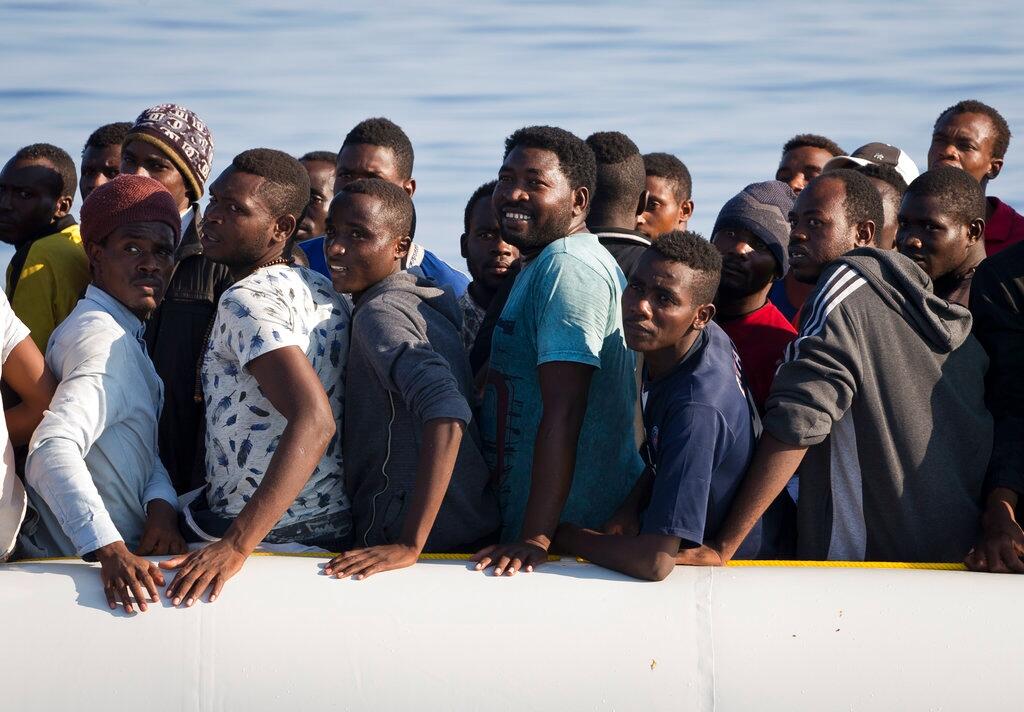
Due to years of uncontrolled mass migration, many Europeans are asking what concrete options there are to reverse course, with many feeling that the situation is hopeless and cannot be significantly reversed.
However, a new report titled “Taking Back Control from Brussels: The Renationalization of the EU Migration and Asylum Policies” – produced by the Mathias Corvinus Collegium (MCC), Hungary’s Migration Research Institute, and Poland’s Ordo Iuris Institute – provides comprehensive solutions to the crisis.
The paper’s core thesis offers bold and practical solutions today, noting that the power still rests with member states.
The authors write: “European Union member states can reclaim effective authority over migration and asylum policy without changing the EU treaties.”
The report outlines how asylum policy has “completely collapsed” in the EU and reached a point of “total failure.” The authors contend that the current system lacks democratic legitimacy and has turned the Schengen area into a “sieve” that facilitates illegal migration and prevents effective border protection. Given the recent legalization actions of the far-left Spanish government, aimed at regularizing approximately 500,000 migrants who can then move freely across Europe, the paper’s proposals may be more relevant than ever.
The paper calls for a fundamental “paradigm shift” to restore migration sovereignty to individual nation-states, asserting that renationalization is a necessity for Europe to regain control over its borders and territory.
The following 18 proposals from the second part of the paper outline a roadmap for this renationalization. The paper itself provides far more details about each proposal and is recommended reading for any European party looking for a blueprint to regain control of immigration.
I. Opt-out and Derogations to Legal Frameworks
Grant Member States an Opt-in/Opt-out
Allow all Member States to request an individual opt-in or opt-out from the common EU migration and asylum policy, similar to the existing status of Denmark and Ireland.
Insert a “Notwithstanding Clause”
Amend the treaty to allow national parliaments to temporarily suspend EU migration rules when public order, security, or pressing national interests are at stake.
Unilaterally Disapply problematic EU Acquis
If treaty reforms are blocked, Member States should unilaterally stop applying the most problematic elements of the existing EU migration legal framework.
Withdraw from or Suspend the ECHR
Consider partial or total withdrawal from the jurisdiction of the European Court of Human Rights or temporarily suspending its application to regain border control flexibility.
Derogate from the 1967 Protocol to the Geneva Convention
Denounce this protocol to restore national flexibility and move away from “untouchable dogmas” regarding universal asylum obligations.
II. A New Migration and Asylum Paradigm
Restore National Competence for Readmission Agreements
Return the power to negotiate and conclude readmission agreements with third countries to individual Member States, as the centralized EU model has failed.
Condition EU Funding on Third-Country Cooperation
Legally mandate that EU funding to third countries be strictly conditional on their effective cooperation in migration, particularly regarding returns and readmissions.
Restore National Competence Over Returns
Grant Member States full control over the detention and expulsion of illegal migrants without interference from the EU or the European Court of Justice.
Outsource Asylum Processing to Safe Third Countries
Enable Member States to establish mechanisms to outsource the processing of asylum requests to safe third countries outside the EU territory.
Amend the Schengen Borders Code
Revise the code to eliminate legal ambiguities that currently hinder border guards and lead to “abusive” claims of refoulement.
Limit Free Movement to European Citizens
Restrict the right of free movement within the Schengen area strictly to EU citizens to prevent illegal secondary movements.
Prohibit Asylum Applications After Illegal Entry
Enact rules that bar individuals from lodging asylum claims if they have entered the Union territory illegally.
Radically Amend the Search and Rescue (SAR) Framework
Change SAR rules to ensure the duty to rescue does not equate to a right of entry and prohibit any collusion with smugglers.
Abolish EU Competence on Family Reunification and Integration
Return full control over family reunification and integration policies to national governments, arguing these areas bring “no added value” at the EU level.
Earmark EU Funding for Physical Border Infrastructure
Specifically designate European funds to finance physical barriers like fences and walls at external borders.
III. Reconsidering Civil Society and Agency Roles
Reform Frontex to Help Member States
Ensure the EU border control agency Frontex serves to assist rather than control member states and remove all NGO presence from its internal structures.
Strict Transparency and Accountability for NGOs
Subject any organization receiving European funds to rigorous rules on transparency, traceability, and accountability.
Prohibit EU Funding for Pro-Migration Organizations
Ban any direct or indirect EU funding for organizations that promote or facilitate illegal migration.
“The time for decisive action is now.”
One of the core points the paper tries to outline is that “contrary to popular belief, the EU does not possess exclusive competence in this field. While the Treaty on the Functioning of the European Union provides for a common asylum policy, it does not abolish national sovereignty over border control, internal security, or the determination of who may enter and remain on national territory.”
In other words, there is an extraordinary amount that EU member states can accomplish in the area of migration policy if a determined national government is in place.
One of the authors of the report, Jerzy Kwaśniewski, an attorney and the president of the Ordo Iuris Institute for Legal Culture, said:
“Europe is facing an unprecedented legal crisis that is depriving member states of their ability to protect their own borders and citizens. After years of a common EU migration and asylum policy, the system has completely collapsed. The Schengen area has turned into a sieve through which illegal migrants move freely. Return procedures for illegal migrants are largely illusory. Meanwhile, overlapping international obligations have made effective border protection almost impossible from a legal standpoint.
To make matters worse, European taxpayers are financing NGOs that directly facilitate illegal migration and obstruct effective border control. Given the total failure of the European Union’s common migration and asylum policy, further reforms within the current EU framework are no longer possible. A fundamental paradigm shift is needed — the restoration of migration sovereignty to nation-states, which alone possess the democratic legitimacy to decide who has the right to enter and reside on their territory.
He added that “the renationalization of migration policy is no longer an option; it is a necessity. The alternative is a complete loss of control over Europe’s borders and the definitive end of our ability to manage our own territory. The time for debate is over. The time for decisive action is now.”
Tyler Durden
Wed, 02/18/2026 – 02:00

Don’t call him Gramps. Drew Lundberg delivers for West Aurora, the Upstate Eight West champs. ‘The hot hand.’
Long in the tooth he is not.
So don’t look for teammates to start calling West Aurora’s Drew Lundberg “Gramps” anytime soon.
That said, the 6-foot-4 senior forward has matured quite a bit this season, his first as a varsity starter. A few weeks ago, Lundberg committed to NCAA Division III Lawrence, located in Appleton, Wisconsin.
“I’m just enjoying every single second with my team,” he said. “I’m taking in every moment one step at a time, just trying to live in the present and not taking anything for granted.
“Appleton is going to be a big step and I’m just glad to keep playing the game I love.”
He’s not done yet here, however.
West Aurora’s Drew Lundberg (12) shoots a jumper against Glenbard East during an Upstate Eight Conference crossover game in Aurora on Tuesday, Feb. 17, 2026. (Sean King / The Beacon-News)
Lundberg, his team’s only senior starter, scored all of his team-high 14 points in the first half Tuesday night for the host Blackhawks before Glenbard East rallied for a 74-55 decision.
West Aurora, the Upstate Eight West champion, led 35-30 at halftime against the Upstate Eight East champion Rams in the conference’s championship crossover, a rematch of last year’s finale won by the Blackhawks.
Junior point guard Travis Brown, who also started in last season’s conference crossover championship game, led West Aurora with 12 points, five assists and four steals.
South Dakota recruit Michael Nee, a 6-3 guard and one of five senior starters, scored 17 of his game-high 30 points in the second half to power the comeback for Glenbard East (27-3).
West Aurora’s Travis Brown (1) takes the ball to the basket as Glenbard East’s Sam Walton (24) defends during an Upstate Eight Conference crossover in Aurora on Tuesday, Feb. 17, 2026. (Sean King / The Beacon-News)
“They beat us at our place last year, so we wanted revenge,” Nee said. “We had it circled and came out with energy. Games like this, everyone’s going to be juiced up and ready to go.
“They came out with intensity — kudos to them.”
Brown, meanwhile, wasn’t surprised either by Glenbard East’s effort.
“We knew they were going to come out hungry,” he said. “They were posting stuff online and that’s why we came out the way we did. We just didn’t take it up in the second half and paid for it.”
West Aurora’s Drew Lundberg (12) defends the top of the key against Glenbard East’s Sam Walton (24) during an Upstate Eight Conference crossover in Aurora on Tuesday, Feb. 17, 2026. (Sean King / The Beacon-News)
Lundberg, who also had three rebounds and a steal, made two of his four 3-pointers in the first quarter and then added two more in the second quarter.
A free throw from Jaden Matthews-Thomas staked West Aurora to its biggest lead of the game at 25-16 with 3:58 left in that quarter, which featured a technical on Glenbard East coach Eric Kelly.
“He thought there should have been a few more fouls called,” Nee said. “He’s always got our backs. That’s how he is. We love that.”
Glenbard East switched to a 1-3-1 zone and opened the second half with an 8-3 burst, taking a 56-42 lead into the fourth.
“Sometimes, we just lack focus in scoring right at the basket and I think that killed us,” West Aurora coach Michael Fowler said. “We struggled with sustaining our scoring.
“We were coming down and missing twos and they were going back and making 3-pointers. That’s not a good combination, and that’s the mess we got ourselves in.”
West Aurora’s Drew Lundberg (12) shoots a corner 3-pointer on Glenbard East’s Jacob Marynowski (15) during an Upstate Eight Conference crossover game in Aurora on Tuesday, Feb. 17, 2026. (Sean King / The Beacon-News)
Lundberg was held scoreless in the second half, but Brown offered some perspective.
“I figured he had the hot hand, you keep going to it,” Brown said of the first half. “You attack and you get it to him. He produced very well, but you’ve got to keep getting it to him and we lost it.
“They got in our heads.”
There were other chances, though, as the Blackhawks struggled shooting layups.
“They had a guy come up on the high side of the screen close out on me, run the baseline,” Lundberg said. “It led to a lot of open looks in the middle. We had to capitalize on that but didn’t.”
West Aurora hosts a Class 4A regional next week and opens at 7:30 p.m. Wednesday against Waubonsie Valley (16-13), which plays zone almost exclusively.
“We won’t survive missing point-blank layups,” Fowler said. “We’re gonna have to convert.”
https://www.chicagotribune.com/2026/02/18/drew-lundberg-west-aurora-boys-basketball/

Aceitunas, ópera y neutralidad de emisiones: cómo un mural en Grecia fue nombrado el mejor del mundo
Por LEFTERIS PITARAKIS y THEODORA TONGAS
KALAMATA, Grecia (AP) — Conocida desde hace tiempo por sus aceitunas y su encanto costero, Kalamata, en el sur de Grecia, se ha situado en el punto de mira gracias a un imponente mural que reinterpreta a la legendaria soprano Maria Callas como una alegoría de la propia ciudad.
La enorme obra, situada en el lateral de un destacado edificio en el centro de la ciudad, fue nombrada “Mejor mural del mundo” de 2025 por Street Art Cities, una plataforma global que celebra el arte urbano.
Los residentes en Kalamata, a unos 240 kilómetros (150 millas) al suroeste de Atenas, cultivan las aceitunas, higos y uvas de fama mundial que tienen un lugar destacado en el mural.
Ese era precisamente el objetivo.
Vassilis Papaefstathiou, teniendo de alcalde de planificación estratégica y neutralidad de emisiones, explicó que Kalamata es una de las pocas ciudades griegas que tienen el ambicioso objetivo de alcanzar la neutralidad climática para 2030. Él y otros líderes municipales querían encontrar una forma de hacer más tangibles conceptos abstractos —como el desarrollo sostenible, las iniciativas agroalimentarias y el crecimiento económico local— para sus casi 73.000 habitantes.
Y así nació la idea de crear un mural de grandes dimensiones en un espacio público.
“Queríamos que reflejara un mensaje muy claro y distintivo de lo que significa el desarrollo sostenible para una ciudad regional como Kalamata”, afirmó Papaefstathiou. “Queríamos crear una imagen que combinase los humildes productos de la tierra, como las aceitunas y el aceite de oliva, que, seamos sinceros, son famosos en todo el mundo y han puesto a Kalamata en el mapa, con el arte de alto nivel”.
“Al reunir algo que es muy elevado con… la humildad de la tierra, nuestro objetivo era empoderar a la gente y, al hacerlo, reforzar su identidad. Queremos que se sientan orgullosos de ser kalamatianos”, agregó.
En los últimos años, el sur de Grecia ha padecido olas de calor, sequías e incendios forestales, que afectan a los olivares de los que depende en gran medida la economía de la región.
La imagen elegida para representar a la ciudad fue la de Maria Callas, reconocida como una de las mejores cantantes de ópera del siglo XX y venerada en Grecia como un símbolo cultural nacional. Aunque nació en Nueva York de padres inmigrantes griegos, su padre era de un pueblo al sur de Kalamata. Y para los locales, es una de los suyos.
Esta conexión también se refleja en la práctica: la asociación de antiguos alumnos de la escuela de música de Kalamata lleva el nombre de Callas, y el centro cultural de la ciudad alberga una exposición dedicada a ella que incluye cartas de su archivo personal.
El artista Kleomenis Kostopoulos, de 52 años, señaló que el mural “en realidad no se llama ‘Maria Callas’, sino ‘Kalamata’, y mi intención era pintar a Kalamata (la ciudad) de forma alegórica”.
En lugar de ofrecer una imagen estilizada de la diva, Kostopoulos explicó que buscó una representación más terrenal y humana. Incorporó elementos que conectan a la gente con su tierra: ramas de árboles —que considera la extensión sobre el suelo de las raíces—, aves autóctonas y los conocidos productos agrícolas.
“El vestido que creo para Maria Callas en ‘Kalamata’ es, en esencia, todo esto, toda esta floración, toda esta fructificación”, explicó Kostopoulos. “La tierra bendecida que tiene la propia Kalamata (…) es de donde proceden todos estos elementos de la naturaleza”.
Crear el mural no fue tarea fácil. Kostopoulos contó que le llevó alrededor de dos semanas de trabajo real, repartidas a lo largo de un mes debido al mal tiempo. Usó principalmente pinceles, pero también incorporó pintura en aerosol y una plataforma elevadora para alcanzar todos los bordes de la enorme pared.
Según Papaefstathiou, la obra se ha convertido en un punto de referencia.
“Creemos que este mural nos ha ayudado de manera significativa en muchos sentidos, incluido en el fortalecimiento de la promoción de la ciudad como destino turístico”, indicó.
Más allá del turismo, el mural ha generado conversaciones sobre el arte en los espacios públicos. Más propietarios de edificios en Kalamata se han mostrado interesados ya en albergar murales.
“Todos nosotros —los residentes, y yo personalmente— sentimos un orgullo inmenso”, expresó la educadora turística Dimitra Kourmouli.
Kostopoulos dijo que espera que el premio tenga un impacto más amplio en la comunidad artística y haga que el arte público sea más visible en Grecia.
“Vemos que este tipo de intervenciones modernas en el espacio público aportan enormes beneficios culturales, sociales, educativos y económicos a un lugar”, afirmó. “Son buenos trampolines para iniciar conversaciones agradables que espero que algún día ocurran también en nuestro país”.
___
Tongas informó desde Atenas, Grecia.
___
Esta historia fue traducida del inglés por un editor de AP con la ayuda de una herramienta de inteligencia artificial generativa.

La vicepresidenta filipina Duterte buscará la presidencia en 2028 pese a mociones de destitución
Por JIM GOMEZ
MANILA, Filipinas (AP) — La vicepresidenta de Filipinas, Sara Duterte, dijo el miércoles que se postularía a la presidencia en las elecciones de 2028, una candidatura que tendría que resistir nuevos intentos de someterla a un juicio político en el Congreso y denuncias penales que podrían inhabilitarla para ejercer cargos públicos si es condenada.
Hizo el anuncio en un discurso televisado en el que reiteró acusaciones de corrupción y mala gestión contra el presidente, Ferdinand Marcos Jr. Ambos fueron compañeros de fórmula en una vertiginosa alianza en las elecciones de 2022, pero desde entonces han protagonizado una amarga ruptura.
Ella y su familia han culpado a Marcos por la detención de su padre, el expresidente Rodrigo Duterte, quien enfrenta un posible juicio por crímenes de lesa humanidad ante la Corte Penal Internacional, que ordenó su arresto y detención en Holanda el año pasado por su mortífera ofensiva antidroga.
Sara Duterte acusó a Marcos de incumplir sus promesas de campaña y de gobernar mal. Pidió repetidamente perdón al público por problemas como la corrupción gubernamental, los asuntos de orden público y la inflación.
“Los políticos a menudo evitan anunciar sus planes con anticipación para no convertirse en blanco de ataques”, comentó Duterte. “Pero este gobierno hace tiempo que destruyó mi nombre”.
Luego anunció su candidatura presidencial y abandonó una conferencia de prensa sin aceptar preguntas.
Marcos, cuyo mandato está limitado a un solo periodo de seis años, no reaccionó de inmediato a la candidatura presidencial de la vicepresidenta ni a sus acusaciones. Una portavoz presidencial, Claire Castro, señaló que Duterte debería pedir disculpas al público por las numerosas irregularidades y acusaciones de corrupción que enfrenta, junto con sus frecuentes viajes personales al extranjero.
“Debería pedir perdón por centrarse en destruir la reputación de otras personas en lugar de hacer su trabajo y ayudar al gobierno”, afirmó Castro.
La mayoría de las acusaciones contra Duterte habían sido incluidas en una denuncia de juicio político que ella superó por una cuestión técnica el año pasado.
La Cámara de Representantes había votado a favor de someterla a juicio político y envió el caso al Senado para su juicio. Sin embargo, la Corte Suprema dictaminó posteriormente que la cámara baja violó una norma constitucional que establece que sólo puede tramitarse un caso de juicio político por año contra un funcionario sujeto a ese procedimiento.
Las denuncias de juicio político presentadas este mes se centraron en su presunto uso ilegal y manejo indebido de 10,3 millones de dólares en fondos confidenciales de la oficina de la vicepresidenta y de su etapa como secretaria de Educación bajo Marcos.
Otra denuncia la acusó de tener riqueza sin explicación, incluso en cuentas bancarias personales. Un fiscal anticorrupción indicó que su agencia intentaba obtener acceso a esas cuentas como parte de una investigación penal separada.
La amenaza de la vicepresidenta durante una conferencia de prensa en línea en 2024 de mandar matar al presidente, a su esposa y al presidente de la Cámara de Representantes si ella misma era asesinada fue citada en una de las denuncias de juicio político.
Durante la investigación original de la Cámara sobre las acusaciones, Duterte se negó a responder en detalle a las preguntas y se ausentó de algunas de las audiencias televisadas.
El abogado de la vicepresidenta, Michael Poa, ha dicho que Duterte estaba preparada para enfrentar estas acusaciones y confiaba en que “una revisión justa e imparcial demostrará que las acusaciones carecen de fundamento tanto fáctico como jurídico”.
___
Esta historia fue traducida del inglés por un editor de AP con la ayuda de una herramienta de inteligencia artificial generativa.
Asking Eric: Do I continue to ignore this situation?
Dear Eric: I have two daughters that are estranged. I do not want to get in the middle of it, but it is getting ridiculous.
Daughter #1 did not want daughter #2 to marry her choice in husbands but she did anyway.
Now, a few years have passed and the situation is worse. Daughter #1 will not communicate with #2 and won’t even acknowledge her new baby and even seeing a photo of the baby can set her off. The hate for #2’s husband (who is a very good father and husband) is so bad that #1 says she won’t even set foot in the same state as him. Daughter #1’s husband seems to support her in whatever choices she makes.
They live in separate states and do not live near me either so until my funeral, they probably won’t see each other. Do I continue to ignore this situation in hopes time will be the great healer?
– Sad Mother
Dear Mother: From the way you’ve described things, this conflict is fairly one-sided. Daughter #1 made an ultimatum that wasn’t hers to make, and is now punishing your second daughter – and, by extension, the rest of the family – because of it. Surely there’s more to it (there always is) but I can’t really blame Daughter #2 for saying “enough is enough.”
I’m tempted to say ignore it, but judging by the amount of information you know about the situation, it seems that you’re hearing updates anyway. Inserting yourself into this situation will only cause more stress. However, you can think critically about how this estrangement is impacting your individual relationships with each daughter and respond from that place.
You may need to tell one or both of them that you’re stepping back from hearing about it and, by extension, worrying about it, to preserve your own peace. Alternatively, if their refusal to see each other is keeping you from something you want or need, you can tell them that, too.
You likely can’t bridge the gap between them, but you can keep your relationship with each of them healthier by knowing when to say, “I love you both but you’re adults and I’m going to let you handle this how you see fit.”
Dear Eric: My family is very passive-aggressive. Often it is expressed by failing to include me in family events or even inform me of them. Many times, these are important events like a wedding, graduation, funeral, et cetera.
I haven’t done anything bad to deserve this treatment. I’m definitely not a Type-A personality like my siblings. Nor am I concerned with money, status or fitting in with the Joneses.
I have lived my life my own way; disregarding the constant advice and direction from my family. Their constant criticism was very hurtful, and my psychologist helped me deal with it.
However, I now have metastatic cancer and still have three siblings that rarely contact me. I don’t want anything from them except their moral support and prayers. Is there a way to make this happen?
– Cancer Warrior
Dear Warrior: I’m sorry you’re going through this, both the diagnosis and the lack of support from your family. I want to preface my advice with a caveat. Your family may not be able to show up for you in the way that you need or want. The history that you described indicates that they may not understand the way that you want to be communicated with and loved.
So, while it’s possible to ask for what you want – and I encourage you to do so – it’s also important to make sure that you’ve got the support you’re looking for elsewhere. That may come from friends or other loved ones or a community – neighbors, a religious organization, a social group.
It may also come from a cancer support group, if you find that works for you. The top priority right now is that you are getting the emotional care that you need for this journey. Years of family misalignment or mistreatment aren’t going to go away overnight, and so some forms of contact might do more harm than good.
Related Articles
The Kid Whisperer: How to give your kids a shot at happiness, instead of gratification
Answer Angel: $280 for socks?!
Ex-etiquette: Alienating our son?
Asking Eric: I’m reluctant to do any more entertaining
Asking Eric: They asked for leftovers
That said, you can reach out to your family with a specific request. “I have metastatic cancer and it will really help me if you’ll pray for me, can you do that?” Or “It would really encourage me if you’d commit to reaching out once a week by phone, Is that something you can do?” The specifics are important. Because one person’s “keeping in touch” may not match another person’s expectation. And, again, if they can’t or won’t show up for you in the way that you need, that doesn’t mean no one will. Once you figure out what ideal support looks like, feel free to ask others for it, too.
(Send questions to R. Eric Thomas at eric@askingeric.com or P.O. Box 22474, Philadelphia, PA 19110. Follow him on Instagram and sign up for his weekly newsletter at rericthomas.com.)
https://www.chicagotribune.com/2026/02/18/asking-eric-do-i-continue-to-ignore-this-situation/

Asa Harris, whose dad starred at Bloom, carries on that legacy as Leo’s point guard. ‘Saw what I could become.’
Junior guard Asa Harris has the innate ability to read the room for Leo.
It was a low-scoring game Tuesday night by anybody’s standards, so Harris took a look at the way things were going for the Lions against Mount Carmel and provided a shoot-first offensive spark.
“I just felt like the game was going pretty slow and we couldn’t get any buckets,” Harris said. “I had to take over. I had a slow first half and nobody else was really scoring, either.
“I felt like I just had to do what was best for my team.”
Harris was the best of the bunch in the second half, scoring all eight of his points to spark the host Lions to a 36-33 victory over Mount Carmel in a Catholic League crossover in Chicago.
Junior guard Brian Kizer made two 3-pointers in scoring eight points for Leo (22-6). Junior forward Nate Stephens, who had six points and seven rebounds, hit two free throws with 7.2 seconds left.
Leo’s Asa Harris (10) pulls down a rebound in the first half against Mount Carmel during a Catholic League crossover game in Chicago on Tuesday, Feb. 17, 2026. (Vincent D. Johnson / Daily Southtown)
Freshman guard DK Heard led Mount Carmel (17-11) by scoring 13 points with seven rebounds and two blocked shots. Sophomore forward Samuel Ogeto added eight points and six rebounds.
Harris, meanwhile, scored eight of the Lions’ 10 points during a crucial stretch of the second half. He had six of his points in the fourth quarter while tallying three assists and two steals.
“Asa plays really hard and he does what the point guard is supposed to do,” Stephens said. “He’s a great passer. He sees the looks out there that nobody else sees.
“Because of him, everybody sees a lot of good passes.”
Leo’s Asa Harris (10) starts the offense as Mount Carmel’s Charlie Wingate (4) steps up on defense during a Catholic League crossover game in Chicago on Tuesday, Feb. 17, 2026. (Vincent D. Johnson / Daily Southtown)
Kizer was also the beneficiary of some keen distribution by Harris.
“Great point guards know when to take over and that’s what he did for us,” Kizer said of Harris. “Off the court, he’s just a regular guy who’s quiet and likes to watch anime.”
After spending his freshman year at Homewood-Flossmoor, Harris sought a fresh start playing on the South Side in the Catholic League. He started last season as a sophomore.
“It was a new beginning,” he said. “I had to take on a bigger role running the team and learn how to be a complete point guard, not somebody who’s just a scorer but most importantly a passer.
Leo’s Asa Harris (10) makes a move on Mount Carmel’s Charlie Wingate (4) during a Catholic League crossover game in Chicago on Tuesday, Feb. 17, 2026. (Vincent D. Johnson / Daily Southtown)
“I’ve been working on my passing this year.”
The 5-foot-10 Harris has the quickness to get to the basket. He has also shown the right emotional makeup to be a leader.
“I love the pressure put on the point guard because I feed off that,” Harris said. “I want to help my teammates, but my mentality is that I’m the best person on the floor.
“You need that confidence to know you’re going to dominate out there.”
Harris’ father, Jamaar, was his earliest inspiration. His dad played on some very good Bloom teams in the 1999-2000 era and gave his son encouragement, a support system and a feel for the fundamentals.
“My dad basically helped my upbringing in basketball,” Harris said. “He started when I was very young, about 5 years old, just dribbling around the house.”
Leo’s Asa Harris (10) glides under the rim for a basket against Mount Carmel during a Catholic League crossover game in Chicago on Tuesday, Feb. 17, 2026. (Vincent D. Johnson / Daily Southtown)
They developed an early rapport around the game that has reverberated throughout his life.
“I don’t have any brothers, just one older sister, and my dad would push me in morning workouts like 5 a.m. or just to get workouts in after practice,” Harris said. “He saw what I could become.
“I took all of that to show him the kind of man I was capable of being.”
Leo, the top seed of the Class 3A Hillcrest Sectional, will host a regional starting next Wednesday.
And Harris, for one, is ready.
“I love the moments,” he said. “I love helping my teammates and being a team player and embracing all of the pressure that goes into being a point guard.”
Patrick Z. McGavin is a freelance reporter for the Daily Southtown.
https://www.chicagotribune.com/2026/02/17/asa-harris-leo-mount-carmel-basketball/