Category: News

Arts panel made up of Trump appointees approves his White House ballroom proposal
WASHINGTON — The U.S. Commission of Fine Arts, a panel made up of President Donald Trump’s appointees, on Thursday approved his proposal to build a ballroom larger than the White House itself where the East Wing once stood.
The seven-member panel is one of two federal agencies that must approve Trump’s plans for the ballroom. The National Capital Planning Commission, which has jurisdiction over construction and major renovation to government buildings in the region, is also reviewing the project.
Members of the fine arts commission originally had been scheduled to discuss and vote on the design after a follow-up presentation by the architect, and had planned to vote on final approval at next month’s meeting. But after the 6-0 vote on the design, the panel’s chairman, Rodney Mims Cook Jr., unexpectedly made another motion to vote on final approval.
Six of the seven commissioners — all appointed by the Republican president in January — voted once more in favor. Commissioner James McCrery did not participate in the discussion or the votes because he was the initial architect on the project before Trump replaced him.
The ballroom will be built on the site of the former East Wing, which Trump had demolished in October with little public notice. That drew an outcry from lawmakers, historians and preservationists who argued that the president should not have taken that step until the two federal agencies and Congress had reviewed and approved the project, and the public had a chance to provide comment.
The 90,000-square-foot ballroom would be nearly twice the size of the White House, which is 55,000-square-feet, and would accommodate about 1,000 people, Trump has said. The East Room, currently the largest room in the White House, can fit just over 200 people at most.
Commissioners offered mostly complimentary comments before the votes.
Cook echoed one of Trump’s main arguments for adding a larger entertaining space to the White House: It would end the long-standing practice of erecting temporary structures on the South Lawn that Trump describes as tents to host visiting dignitaries for state dinners and other functions.
“Our sitting president has actually designed a very beautiful structure,” Cook said. “The United States just should not be entertaining the world in tents.”
The panel received mainly negative comments from the public
Members of the public were asked to submit written comment by a Wednesday afternoon deadline. Thomas Leubke, the panel’s secretary, said “over 99%” of the more than 2,000 messages it received in the past week from around the country were in opposition to the project.
Leubke tried to summarize the comments for the commissioners.
Some comments cited concerns about Trump’s decision to unilaterally tear down the East Wing, as well as the lack of transparency about who is paying for the ballroom or how contracts were awarded, Leubke said. Comments in support referenced concerns for the image of the United States on the world stage and the need for a larger entertaining space at the White House.
Trump has defended the ballroom in a recent series of social media posts that included drawings of the building. He said in one January post that most of the material needed to build it had been ordered “and there is no practical or reasonable way to go back. IT IS TOO LATE!”
The commission met Thursday over Zoom and heard from Shalom Baranes, the lead architect, and Rick Parisi, the landscape architect. Both described a series of images and sketches of the ballroom and the grounds as they would appear after the project is completed.
Trump has said the ballroom would cost about $400 million and be paid for with private donations. To date, the White House has only released an incomplete list of donors.
A lawsuit against the project is still pending
The National Trust for Historic Preservation has sued in federal court to halt construction. A ruling in the case is pending.
In comments it submitted to the commission, the privately funded group recommended that the size of the ballroom be reduced to “accommodate and respect the primary historic importance of the original Executive Residence.”
At the commission’s January meeting, some commissioners had questioned Baranes, Trump’s architect, about the “immense” design and scale of the project even as they broadly endorsed Trump’s vision. On Thursday, Baranes described changes he has since made to the design, and the commissioners said they welcomed the adjustments.
The ballroom project is scheduled for additional discussion at a March 5 meeting of the National Capital Planning Commission, which is led by a top White House aide. This panel heard an initial presentation about the project in January.
https://www.chicagotribune.com/2026/02/19/trump-white-house-ballroom-proposal/
Trump Has A UFO Speech Ready To Deliver
Trump Has A UFO Speech Ready To Deliver
Documentary filmmaker Dan Farah appeared on Joe Rogan’s podcast in November to promote his new documentary, The Age of Disclosure, and predicted that his film might force Trump to become the first world leader to confirm the existence of extraterrestrial life publicly.
“I wouldn’t be surprised if it happens soon after the film comes out — the sitting president has to step to the microphone and say: humanity is not alone in the universe,” Farah told Rogan. “We have recovered technology of non-human origin. So have other nations. There is a high-stakes, secret cold war race to reverse engineer this technology. We need to win this race.”
“I think Trump might be the only guy that’s willing to do something that crazy,” Rogan replied.
Well, now Lara Trump, the president’s daughter-in-law, let it slip during an appearance on the New York Post’s Pod Force One podcast that Trump has a speech prepared confirming extraterrestrial life exists.
“Do you think that he’s about to make an announcement about UFOs?” host Miranda Devine asked.
“Because President Obama was just on a podcast talking about how he believes in UFOs and hinting that he saw something when he was president.”
“Well, I said this in my podcast, too,” Lara Trump began.
“What’s funny is we’ve kind of asked my father-in-law about this, ’cause we’re like, ‘Well, what do you know?’ ‘Cause, Miranda, we all wanna know about the UFOs, or we all wanna know what’s going on and he played a little coy with us. And so that, of course, led us to believe, Eric and I, were like, ‘Oh, my gosh, if he won’t even, like, fully tell us, maybe there’s more to it.’ And then I have just heard kind of around that… I think he’s actually said it, I think my father-in-law has actually said it, that there is some speech that he has that, I guess, at, at the right time, and I don’t know when the right time is, he’s gonna break out and, and talk about, and it has to do with maybe some sort of extraterrestrial life, so to speak.”
Lara Trump suggests that President Trump is ready to make an announcement to the world about the existence of aliens, with his script already prepared for the “right time.”
“He’s going to talk about maybe some sort of extraterrestrial life.”
“I don’t know when the right time… pic.twitter.com/D3Cp4zTjFV
— Shadow of Ezra (@ShadowofEzra) February 18, 2026
The White House offered exactly the kind of answer you’d expect.
“I’ll have to check in with our speech writing team,” White House Press Secretary Karoline said.
”That would be of great interest to me personally, and I’m sure all of you in this room and apparently former President Obama, too.”
A clip from Obama’s recent appearance on Brian Tyler Cohen’s podcast went viral over the weekend after he was asked point-blank whether aliens exist.
“They’re real, but I haven’t seen them, and they’re not being kept in … Area 51 … There’s no underground facility, unless there’s this enormous conspiracy and they hid it from the president of the United States,” Obama said.
Barack Obama on aliens: “They’re real”
“But I haven’t seen them. They’re not being kept at Area 51. There’s no underground facility — unless there’s this enormous conspiracy and they hid it from the President of the United States.” pic.twitter.com/c6t0DYxewU
— UAP James (@UAPJames) February 14, 2026
By Sunday, Obama was on Instagram trying to walk it back.
“Statistically, the universe is so vast that the odds are good there’s life out there. But the distances between solar systems are so great that the chances aliens have visited us is low, and I saw no evidence during my presidency that extraterrestrials have made contact with us. Really!” Obama wrote.
Washington’s relationship with UFOs — or, in the preferred bureaucratic phrasing, Unidentified Anomalous Phenomena (UAPs) — has shifted considerably in recent years. A House hearing in July 2023 featured testimony from former military intelligence officer David Grusch, who told lawmakers under oath that he “was informed in the course of my official duties of a multi-decade UAP crash retrieval and reverse-engineering program to which I was denied access.” Grusch further alleged the government had retrieved what he called “non-human biologics” from recovered craft, citing accounts from dozens of witnesses he interviewed over four years.
The Pentagon, of course, pushed back. A March 2024 report rejected the core claims — no reverse-engineered alien spacecraft, no hidden extraterrestrial biological material, no off-world technology stashed in some classified warehouse. The agency stood by its denials even as lawmakers held classified briefings.
Lara Trump’s comment adds new intrigue to the discussion. Whether Trump eventually delivers that address — or whether this is one more piece of carefully managed intrigue from a president who has never met a story he didn’t know how to control — is a question that, for now, has no answer. But Trump sure does seem like the president who would do so.
Tyler Durden
Thu, 02/19/2026 – 14:00
https://www.zerohedge.com/political/trump-has-ufo-speech-ready-deliver
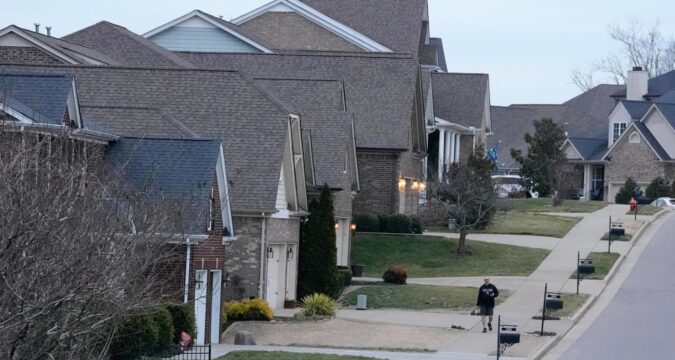
Tasa hipotecaria promedio a largo plazo en EEUU baja a 6,01%, su nivel mínimo en más de 3 años
Por ALEX VEIGA
La tasa hipotecaria promedio a largo plazo en Estados Unidos alcanzó esta semana su nivel más bajo en más de tres años, pero se mantiene en torno al 6% dentro del mismo estrecho intervalo en el que ha estado este año.
La tasa de referencia de las hipotecas a tasa fija a 30 años cayó a 6,01% con respecto al 6,09% de la semana pasada, informó el jueves el comprador de hipotecas Freddie Mac. Hace un año, la tasa promediaba 6,85%.
El leve retroceso lleva la tasa promedio a su nivel más bajo desde el 8 de septiembre de 2022, cuando fue de 5,89%. Esa fue la última vez que la tasa promedio estuvo por debajo del 6%.
Las tasas hipotecarias están influidas por varios factores, desde las decisiones de política de tasas de interés de la Reserva Federal hasta las expectativas sobre la economía y la inflación de los inversionistas del mercado de bonos. Por lo general, siguen la trayectoria del rendimiento del bono del Tesoro a 10 años, que los prestamistas usan como guía para fijar el precio de los créditos de vivienda.
El rendimiento del bono del Tesoro a 10 años se ubicaba en 4,08% al mediodía del jueves, por debajo de alrededor de 4,09% hace una semana.
Las tasas hipotecarias han bajado desde hace meses, lo que ayudó a impulsar un repunte en las ventas de viviendas en los últimos cuatro meses de 2025, pero no lo suficiente como para sacar al mercado inmobiliario de su letargo, que se remonta a 2022, cuando comenzaron a subir desde los mínimos de la era de la pandemia.
El año pasado, las ventas de viviendas previamente ocupadas en Estados Unidos se mantuvieron estancadas en mínimos de 30 años. Y este año, unas tasas hipotecarias más favorables para los compradores no bastaron para impulsar las ventas de viviendas el mes pasado. Registraron la mayor caída mensual en casi cuatro años y el ritmo anualizado de ventas más lento en más de dos años.
Mientras tanto, nuevos datos sobre la firma de contratos sugieren que las ventas de viviendas podrían mantenerse lentas en el corto plazo.
Un índice desestacionalizado de ventas pendientes de viviendas en Estados Unidos cayó 0,8% en enero respecto del mes anterior, informó el jueves la Asociación Nacional de Agentes Inmobiliarios (NAR, por sus siglas en inglés). Las ventas pendientes de viviendas bajaron 0,4% frente a enero del año pasado.
Por lo general, hay un desfase de uno o dos meses entre la firma de un contrato y el momento en que se concreta la venta, lo que convierte a las ventas pendientes de viviendas en un indicador adelantado de las futuras ventas de viviendas ya finalizadas.
“La mejora de las condiciones de asequibilidad aún no ha inducido una mayor actividad de compra”, afirmó Lawrence Yun, economista jefe de la NAR.
Un fuerte aumento de los precios de las viviendas, especialmente en los primeros años de esta década, y una escasez crónica de viviendas a escala nacional, agravada por años de construcción de viviendas por debajo del promedio, han hecho que muchos aspirantes a propietarios queden fuera del mercado debido a los precios.
Eso ha puesto el foco en las tasas hipotecarias, que, cuando bajan, pueden aumentar el poder de compra de quienes buscan vivienda, pero también pueden reducir cuánto pueden permitirse los compradores cuando las tasas suben.
Eso hace que la reciente caída de las tasas sea un impulso favorable de cara a la temporada anual de compra de viviendas en primavera, al menos para quienes pueden permitirse comprar con las tasas actuales.
“Las tasas más bajas deberían mejorar la asequibilidad y atraer a más compradores”, aseguró Lisa Sturtevant, economista jefe de Bright MLS. “Suponiendo que las tasas hipotecarias se mantengan aproximadamente donde están, o bajen aún más, deberíamos ver más compradores esta primavera a medida que mejoren tanto el inventario como el clima”.
Los propietarios que desean refinanciar su crédito hipotecario vigente a una tasa más favorable también se benefician de la relajación de las tasas.
Los costos de endeudamiento de las hipotecas a tasa fija a 15 años, populares entre los propietarios que refinancian sus préstamos, bajaron ligeramente esta semana. Esa tasa promedio cayó a 5,35% con respecto al 5,44% de la semana pasada. Hace un año, estaba en 6,04%, indicó Freddie Mac.
Las solicitudes de hipotecas, que incluyen los créditos para comprar una vivienda o refinanciar una hipoteca existente, subieron 2,8% la semana pasada con respecto a la semana anterior, según la Asociación de Banqueros Hipotecarios. Las solicitudes de créditos para refinanciar hipotecas representaron 57,4% del total de solicitudes.
La caída más reciente de las tasas hipotecarias se produce tres semanas después de que la Reserva Federal decidiera pausar los recortes de su principal tasa de interés tras reducir las tasas tres veces seguidas para cerrar 2025, en un intento por apuntalar el mercado laboral.
En las actas de la reunión más reciente de la Fed, publicadas el miércoles, se muestra que muchos funcionarios quieren ver que la inflación baje más antes de respaldar recortes adicionales de las tasas de interés este año.
El banco central no fija las tasas hipotecarias, pero sus decisiones de subir o bajar su tasa de corto plazo son observadas de cerca por los inversionistas en bonos y, en última instancia, pueden afectar el rendimiento de los bonos del Tesoro a 10 años que influyen en las tasas hipotecarias.
___
Esta historia fue traducida del inglés por un editor de AP con la ayuda de una herramienta de inteligencia artificial generativa.

Ex-ComEd executive who went undercover for FBI in Madigan bribery probe gets probation
More than seven years after he agreed to become an FBI mole, former ComEd executive Fidel Marquez was sentenced to two years of probation Thursday for his role in a massive bribery conspiracy to win the influence of then-House Speaker Michael Madigan by funneling hundreds of thousands of dollars in payments to do-nothing subcontractors.
“I wish that I could order you to lecture on public corruption,” U.S. District Judge Mary Rowland told Marquez near the end of a 90-minute hearing.
Marquez, 64, who rose from humble beginnings to become ComEd’s senior vice president of external affairs, apologized to the court before the sentence was handed down.
“I sincerely regret my actions,” he said, leaning both arms against the lectern and reading from notes. “I am ashamed. I did not like what was taking place, but I could have tried to do more, and I didn’t.”
In addition to the term of probation, Rowland handed Marquez a $50,000 fine, but opted not to order him to do 300 hours of community service as requested by the government.
Marquez’s sentencing was one of the final loose ends in a historic investigation that exposed corruption at the highest levels of Illinois government and brought down Madigan, the then-leader of the Illinois Democratic Party and undisputedly the most powerful politician in the state.
Among the attendees in court Thursday was Amarjeet Bhachu, the former head of the U.S. attorney’s office Public Corruption Section and lead prosecutor on the Madigan investigation. Before the hearing began, Bhachu, who retired shortly after Madigan’s conviction last year, walked over to Marquez at the defense table and greeted him with a warm handshake.
Marquez began working with the FBI in early 2019, after agents confronted him at his mother’s home and played wiretapped phone calls of him that they said showed him committing crimes.
He went on to make multiple undercover recordings of his own, both audio and video, that provided the backbone for the biggest single allegation in the indictment against Madigan: that the speaker, who at the time was the head of the Illinois Democratic Party and widely regarded as the most powerful politician in the state, supported ComEd-friendly legislation in exchange for a stream of benefits from the utility.
Marquez pleaded guilty in 2020 to conspiracy to commit bribery. In exchange for his truthful testimony, prosecutors agreed to recommend a sentence of probation instead of prison time.
In a sentencing memo earlier this year, Marquez’s attorneys said the bribery scheme was already underway when Marquez was roped into it, and that his nearly immediate agreement to cooperate with the FBI was “likely far in excess of what they actually thought would happen.”
“The agents’ success in obtaining Fidel’s help was not for the reasons they expected,” attorney Christopher Niewoehner wrote. “For Fidel was motivated not because he thought he needed to save himself from criminal jeopardy – the typical reason that people cooperate with the FBI – but because he thought that what Madigan was asking of ComEd was wrong, and he thought he could help stop it.”
Niewoehner wrote that to Marquez, “the demands from Madigan were a one-way street,” with the speaker, through McClain, always initiating the requests “for a favor for some Madigan connection.”
“No one at ComEd affirmatively proposed hiring Madigan’s people. It was not something that ComEd wanted to do – it was essentially a necessary evil from Fidel’s perspective,” Niewoehner wrote. “As Fidel understood it, ComEd acquiesced in Madigan’s demands because the company could be punished if it did not.”
Niewoehner also asked Rowland to consider all of of the good qualities Marquez had shown throughout his life, from charitable works to always helping out family and friends.
“Through hard work, dedication, and skill, Fidel has risen from humble beginnings to professional success,” Niewoehner wrote. “But more importantly to him, Fidel has always helped others as he rose.”
Madigan, who had a record run as speaker and served for years as the leader of the state Democratic Party, was convicted by a jury a year ago on bribery conspiracy and other corruption charges. The jury found him guilty on 10 of 23 counts, including a multipronged scheme to accept and solicit payments from Commonwealth Edison to Madigan associates for do-nothing subcontracts.
Madigan also was convicted on six out of seven counts — including wire fraud and Travel Act violations — regarding a plan to get then-Chicago Ald. Daniel Solis, who testified at length in the trial, appointed to a state board.
The jury acquitted Madigan of several other schemes alleged in the indictment and deadlocked on other counts, including the overarching racketeering charge.
The same jury deadlocked on all counts involving his co-defendant, longtime confidant Michael McClain, and prosecutors later opted not to retry McClain and dropped the charges.
Marquez was also a star witness in the parallel “ComEd Four” bribery case, which ended in 2023 with the convictions of McClain, former ComEd CEO Anne Pramaggiore, former top internal ComEd lobbyist John Hooker, and Jay Doherty, a ComEd consultant and the former head of the City Club of Chicago. They are all currently serving prison sentences.
Madigan, 83, entered the medium-security federal facility near Morgantown, West Virginia, on Oct. 13 to begin serving his 7 1/2-year sentence.
Meanwhile, Madigan’s appeal of his conviction is pending before the 7th U.S. Circuit Court of Appeals. The government’s response brief is due in January, and arguments should be scheduled sometime in early 2026.
jmeisner@chicagotribune.com
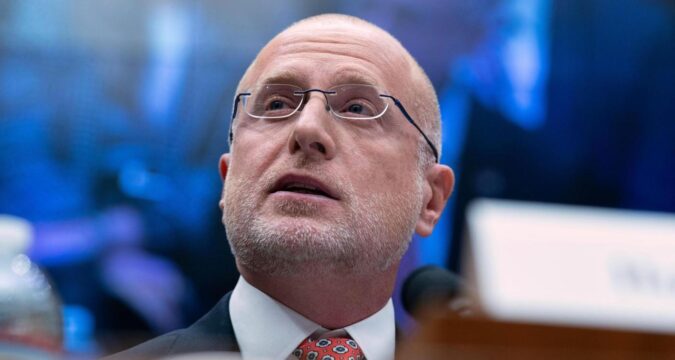
FCC chairman says the agency is investigating ABC’s ‘The View’ over equal time rule
The Federal Communications Commission is investigating ABC’s “The View” over possible violations of the requirement that broadcast stations give equal time to political candidates when they appear on-air, according to the head of the agency that oversees U.S. broadcast airwaves.
“The FCC has an enforcement action underway on that,” Chairman Brendan Carr told reporters after an agency meeting Wednesday, in response to a question about whether there were an investigation into the daytime series over potential violations of the “equal time” rule. “And we’re taking a look at it.”
James Talarico, a Democratic candidate for the Senate in Texas, appeared on “The View” on Feb. 2. U.S. Rep. Jasmine Crockett, who is running against Talarico for the nomination, has also been on the show.
The Trump administration has taken steps to clamp down on talk shows, which the FCC has suggested may be “motivated by partisan purposes.” Earlier in the week, late-night host Stephen Colbert said CBS executives had pulled an appearance by Talarico on his program over fears it ran afoul of equal time provisions.
The FCC issued new guidance in January to late-night and daytime hosts that they needed to give political candidates equal time. There are exceptions to the rule, including for newscasts, “bona fide” interview programs, and coverage of live events or documentaries. Carr has raised questions about the talk show exemption and whether it should stand.
“The FCC has not been presented with any evidence that the interview portion of any late night or daytime television talk show program on air presently would qualify for the bona fide news exemption,” according to the agency’s public notice last month.
Carr, a Trump appointee, suggested last year that investigating “The View,” whose hosts have frequently been critical of the Republican president, might be “worthwhile.”
The FCC has not responded to a message seeking comment on “The View” or Colbert’s show.
On Wednesday, Carr said watching the fallout from Colbert’s characterization of what happened with Talarico “was probably one of the most fun days I’ve had in the job,” adding that the candidate “took advantage” of media attention ”apparently for the purpose of raising money and getting clicks.”
The equal time provision applies only to broadcast, not streaming or internet programs. Colbert later posted the Talarico interview to YouTube, where it’s been viewed more than 7.5 million times — several times what the comic’s CBS program draws each night.
Talarico reported that he had raised $2.5 million in campaign donations in the 24 hours after the Colbert interview.
A spokesperson for “The View” on Thursday declined to comment on Carr’s statement.
CBS says Colbert was provided “legal guidance” that broadcasting the interview with Talarico could trigger the equal time rule. Colbert said on his show Tuesday night that while Carr said in January he was thinking about getting rid of the exemption for late-night talk shows, “CBS generously did it for him.”
https://www.chicagotribune.com/2026/02/19/fcc-abc-the-view-equal-time-rule/

California Planning To Sue Trump Admin Over Revised Child Vaccine Guidelines
California Planning To Sue Trump Admin Over Revised Child Vaccine Guidelines
Authored by Aldgra Fredly via The Epoch Times (emphasis ours),
California Attorney General Rob Bonta said on Feb. 17 that the state plans to take legal action against the Trump administration over the recent modifications to the childhood vaccine schedule.
The Centers for Disease Control and Prevention (CDC) on Jan. 5, with backing from Health Secretary Robert F. Kennedy Jr., narrowed the number of vaccines routinely recommended by the childhood schedule.
Bonta told Reuters in an interview that he has mobilized his team to identify the necessary details for a possible complaint against the Department of Health and Human Services (HHS), including jurisdictional and legal grounds for pursuing the lawsuit.
“I like the facts. I like science. I don’t want to give any airtime to his—I mean, just conspiracy [expletive],” Bonta told the news agency, referring to Kennedy’s stance on vaccines.
Bonta did not specify when the state might file or whether it would be a multistate filing. Connecticut Attorney General William Tong, who also spoke to Reuters, indicated that his state may join California in the filing.
The Epoch Times reached out to HHS for comment but did not receive a response by publication time.
The CDC in January issued a revised childhood vaccine schedule that ended broad recommendations for vaccines against rotavirus, influenza, meningococcal disease, hepatitis A, and hepatitis B.
The agency said in a Jan. 5 memo that decisions for those vaccinations should instead be made through “shared clinical decision-making,” which involves discussion between parents and health care providers.
The changes were made after President Donald Trump directed the HHS and CDC to review U.S. vaccine schedules and compare them with those of peer countries. The president named three countries—Denmark, Japan, and Germany—that recommend fewer vaccines and fewer vaccine doses.
At the time, the White House said in a fact sheet that if the HHS and CDC determine that those practices from developed countries are better than U.S. recommendations, they are directed to update the U.S. core childhood vaccine schedule to align with such scientific evidence and best practices, while preserving access to existing vaccines for Americans.
“Practices like the hepatitis B vaccination at birth are standard in the United States, but uncommon in most developed countries, where it is typically only recommended for newborns of mothers who test positive for the infection,” the White House stated in December.
The American Academy of Pediatrics and other groups filed a lawsuit on Jan. 19 seeking to challenge the revised childhood vaccine schedule.
They argued that officials failed to adequately review relevant data or provide satisfactory explanations for the changes. A federal judge heard arguments on Feb. 13 and is considering whether to block the schedule update.
In January, HHS responded after executives of top vaccine companies took aim at the Trump administration in the wake of a series of actions on vaccines.
“Vaccine recommendations are based on the best available gold-standard scientific evidence and public health considerations, not corporate interests,” an HHS spokesperson told The Epoch Times in an email on Jan. 28.
“Under this administration, HHS is not beholden to the pharmaceutical industry. Decisions are made through transparent processes with the sole aim of protecting the health of the American people. Protecting public health and restoring trust will continue to drive HHS’ vaccine policy.”
Zachary Stieber contributed to this report.
Tyler Durden
Thu, 02/19/2026 – 13:40

If you’re tired of watching curling in the Olympics, imagine how the athletes feel
CORTINA D’AMPEZZO, Italy — By the end of the Milan Cortina Olympics, 147 curling matches will have been crammed into 18 days. That’s why Brad Jacobs is looking forward to some rest.
But first he has a few things left on his to-do list.
There’s an Olympic semifinal match. Then, if he’s lucky, one for the gold. If not, then one for the bronze.
In either case, the Canadian curler is looking at roughly four to six more hours on the ice before he can relax. Curling matches usually run over two hours, and his team already has played nine matches over the last eight days of the men’s round robin.
A 54-year-old personal injury lawyer from Minnesota becomes the oldest US Winter Olympian
On top of that, the Canadians have had to maintain a competitive mentality while embroiled in a controversy so major it prompted World Curling to change the rules — and then change back — midway through the competition.
“It’s quite draining,” said Jacobs, visibly exhausted Thursday after a loss to Norway. “I think the Olympics is the hardest curling event on the planet. … It can certainly mess with the six inches between your ears if you allow it to.”
Athletes coming off the ice — even those far less involved in the controversy than the Canadians — say this Olympics has worn them down, physically and mentally. That reflects a near-constant competition schedule that has led to curling’s popular reputation as the Olympic sport that’s always on TV.
The sport that’s always on
Curling is the only sport played every day of the Games. In Cortina, it began Feb. 4, two days before the opening ceremony.
Each team will have played every other team before the semifinals, which sets it apart from others at the Winter Olympics. Hockey also has a round robin, but it’s much shorter and limited to small groups rather than the entire field.
Curling’s strenuousness is often overlooked. Curlers need an intense training regimen, dedicated to sustaining them through short bursts of cardiovascular exercise (sweeping) and keeping their legs flexible and strong to support the deep lunge position adopted when hurling the stone.
They also must keep their minds sharp to be precise in targeting and strategic in a game sometimes referred to as “chess on ice.”
Then add in the natural fluctuations of the ice conditions, which have a direct effect on the way stones curl and their speed. Each match, curlers must “read the ice” anew.
Finally, remember that the competition schedule is nonstop.
Taken together, all this means that curlers spend hours between matches meeting with teammates to discuss strategy, working out team conflicts, seeing physiotherapists, refueling and psyching themselves up for the next match.
More competition and training
For Yannick Schwaller, the fun is just beginning. Right after the Games, his team heads for the Swiss championships, in which he said it will play 12 more matches beginning Monday.
“That’s going to be tough, but we’re not trying to think about that right now,” said Schwaller, whose team left the round robin undefeated. “Of course it’s a grind. If we could choose, there would be a different schedule next week.”
A red headband earns quirky US curling star a nod from ‘Pommel Horse Guy’ at Winter Olympics
Out of the men’s curling field at the Olympics, Schwaller has spent more time than most on the ice. He’s part of a small group of curlers — including Brett Gallant on the Canadian men’s team, Italians Amos Mosaner and Stefania Constantini, Cory Thiesse on the U.S. women’s team and Brits Bruce Mouat and Jennifer Dodds — who entered this competition having already participated in mixed doubles directly before.
Mixed doubles was “really tough,” said Schwaller. His curling partner was his wife, Briar Schwaller-Hürlimann, with whom he had a different division of labor — he swept five rocks every end. Now, with the men’s team, he said he sticks to pitching — not sweeping.
Honeymoons and wellness retreats
Team Canada switched out Ben Hebert for alternate Tyler Tardi in its last round-robin game Thursday, hoping to give the star player a rest ahead of the semifinals and final.
It’s Tardi’s first Olympics. He would support a scaled-down competition schedule. He pointed out how in hockey, Olympic teams play three or four games ahead of playoffs.
“I kind of envy that, to be honest,” he said.
He’s very much looking forward to his honeymoon in the Bahamas as a chance to relax.
Schwaller is training his sights on the May vacation he has planned with his wife, during which he’ll spend six days focused on wellness at a resort in Germany.
Amos Mosaner, the Italian who won bronze in mixed doubles, looked dejected after his team missed a spot in the semifinals. He said he’ll allow himself “one or two weeks off.”
“It’s not only physically but also mentally you have to recover,” he said. “After that, I (will) come back on the ice — and to the gym — and I will start again.”
https://www.chicagotribune.com/2026/02/19/olympics-tired-of-curling/

‘Density works’ for 236-unit apartment compex near Route 59, Naperville commission says
A proposal for 236 apartments near northeast Route 59 and 75th Street is one case where density could be a good thing, members of the Naperville Planning and Zoning Commission said Wednesday.
Commissioners unanimously endorsed plans for The Atlas at 2939 Audrey Ave., a development that will offer mainly studio and one-bedroom apartments in addition to amenities like a fitness center, pool and coworking space that appeal to young professionals and older adults.
BC Astoria, a subsidiary of the multifamily housing company Bridge Capital Partners, requires the approval of several variances, rezoning and a conditional use from the Naperville City Council before construction can begin.
The Atlas, an apartment complex proposed for 2939 Audrey Avenue in Naperville, will provide amenities such as an outdoor pool and patio. The apartment’s location would also be within walking distance of major retailers in the area. (OKW Architects)
Commissioners recommended approval on all fronts, with several saying the site has all of the infrastructure and amenities it needs to support a 5-story apartment building.
“Density works in certain locations,” Commissioner Mark Wright said, “and to me, this location is kind of a textbook example of where density works.”
The site is immediately north of a Whole Foods grocery store and near a variety of shops and restaurants on Route 59 and 75th Street. It’s two miles south of the Route 59 Metra station for accessibility to Chicago, and a Pace bus stop sits just west of the property. Harris Fawell Park is east of the site along Fort Hill Drive.
Project attorney Vince Rosanova said all of this makes the roughly 4.5-acre site the perfect place for apartment residents to call home. With all of the food, recreation and transportation options nearby, some residents may not need to own a car, he said.
“It’s actually a fantastic canvas to really enhance our housing supply,” Rosanova said.
Projected rents of $1,725 to $2,465 a month at The Atlas would meet standards of attainability based on household income in the Naperville area, Rosanova said, and 48 of the units would be designed to be easily adapted into accessible living spaces if needed.
The developer owns several other apartment communities in Naperville, including One Nineteen on Main, 5th Avenue Station, Belvedere Apartments, River Run Apartments, Grand Reserve at Naperville and the Arbors of Brookdale Apartments. Rosanova said a waiting list for one-bedrooms at the Belvedere, which was completed last spring, illustrates the need for more housing options like The Atlas.
“It really is a great location for this type of project,” Commissioner Derek McDaniel said. “The adaptability is fantastic. You have my support.”
Two nearby residents submitted written comments in opposition to the project, and one resident, Rosalyn Urbanek, voiced her concerns at the meeting.
Written objections from Joel Strassman and Kalpana Ganesan called the proposal out of character with townhouse residences nearby and sought reductions to the proposed 55-foot height of the building and density of the roughly 52 units per acre.
Urbanek said she would prefer a mixed-use plan, including some commercial development, to help decrease traffic from additional residents.
“A commercial use may have more activity, but it will not add 236 vehicles to the area,” Urbanek said.
As The Atlas moves toward city council consideration, officials with Bridge Capital Partners said they’re grateful for the initial positive review.
Alexander Shalavi, partner at Bridge Capital Partners, said in a statement that The Atlas is “thoughtfully planned to support the evolving expectations and needs of residents” and will provide “an alternative to more expensive, single-family homes.”
Commission Chairwoman Whitney Robbins offered one more suggestion to developers as the project moves forward.
“I feel like pedestrian safety needs to be addressed,” Robbins said. “If renters are just going to walk, I do fear for their safety because it’s so heavily congested.”
Marie Wilson is a freelance reporter for the Naperville Sun.
https://www.chicagotribune.com/2026/02/19/naperville-atlas-apartment-complex-commission/

Grupo católico disidente rechaza diálogo con el Vaticano y anticipa choque con el papa
Por NICOLE WINFIELD
ROMA (AP) — Un grupo tradicionalista católico disidente rechazó el jueves la oferta de diálogo del Vaticano, lo que indica que podría haber un choque con el papa León XIV, ya que el grupo prevé consagrar nuevos obispos sin el consentimiento del pontífice.
En una carta al jefe de doctrina del Vaticano, la Fraternidad Sacerdotal San Pío X afirmó que la amenaza de la Santa Sede de imponer sanciones y declarar un cisma si sigue adelante con la ceremonia, prevista para el 1 de julio, “difícilmente es compatible con un deseo genuino de intercambios fraternos y un diálogo constructivo”.
La FSSPX, como se conoce al grupo, celebra la antigua misa en latín y fue creada en oposición al Concilio Vaticano II, las reuniones efectuadas en la década de 1960 que modernizaron la Iglesia católica y permitieron celebrar la misa en lengua vernácula.
La FSSPX rompió con Roma en 1988, cuando su fundador, el arzobispo Marcel Lefebvre, consagrara a cuatro obispos sin el consentimiento papal, al sostener que era necesario para la supervivencia de la tradición de la Iglesia. El Vaticano excomulgó de inmediato a Lefebvre y a los otros cuatro obispos, y aún hoy, el grupo no tiene estatus legal en la Iglesia.
En las décadas transcurridas desde aquel acto cismático original con Roma, el grupo ha seguido creciendo, con escuelas, seminarios y parroquias en todo el mundo. Cuenta con 733 sacerdotes, 264 seminaristas, 145 hermanos religiosos, 88 oblatos y 250 religiosas —una realidad católica que supone una amenaza real para el Vaticano porque representa una iglesia paralela.
A principios de este mes, la FSSPX anunció que planea consagrar a cuatro nuevos obispos el 1 de julio, ya que solo quedan dos del grupo original. La organización indicó que necesita a los nuevos prelados como una cuestión de supervivencia para atender a sus fieles, cuyo número ha crecido en todo el mundo.
La amenaza de una nueva ceremonia de consagración ha creado la primera crisis tangible para León, quien ha buscado apaciguar las relaciones con los tradicionalistas católicos, que se deterioraron durante el pontificado del papa Francisco. Aunque la FSSPX no está en comunión con la Santa Sede, muchos tradicionalistas católicos que son leales a Roma, pero simpatizan con la situación de la FSSPX, están atentos a la forma en que León maneja el desafío.
En un intento por evitar la crisis, el jefe de doctrina del Vaticano, el cardenal Víctor Manuel Fernández, invitó al Vaticano al superior de la FSSPX, el reverendo Davide Pagliarani, para conversar el 12 de febrero. Propuso un diálogo teológico sobre el Vaticano II, pero solo si la FSSPX suspende la ceremonia de consagración prevista.
En una carta a Fernández publicada el jueves en el sitio web de la FSSPX, Pagliarani recordó que él había propuesto precisamente ese tipo de diálogo en 2019 y no recibió respuesta. Señaló que, en esas condiciones, las conversaciones doctrinales ahora eran imposibles y que, en cualquier caso, nunca se pondrán de acuerdo sobre el Vaticano II.
“De hecho, la mano extendida para abrir el diálogo va lamentablemente acompañada de otra mano ya dispuesta a imponer sanciones”, escribió. “Se habla de romper la comunión, de cisma y de ‘consecuencias graves’”.
Sin esperanza de un acuerdo doctrinal, Pagliarani pidió en cambio que el Vaticano ejerza la caridad, dado el número de fieles católicos que asisten a iglesias de la FSSPX.
“La fraternidad es una realidad objetiva: existe”, escribió Pagliarani. “Esta misma fraternidad solo le pide que se le permita continuar haciendo este mismo bien por las almas a las que administra los santos sacramentos”.
El Vaticano dijo que, hasta el momento, no tenía comentarios.
___
La cobertura de temas religiosos de The Associated Press recibe apoyo mediante la colaboración de la AP con The Conversation US, con financiación de Lilly Endowment Inc. La AP es la única responsable de este contenido.
___
Esta historia fue traducida del inglés por un editor de AP con la ayuda de una herramienta de inteligencia artificial generativa.

Whole Foods Ditching Its “Dystopian” Pay-By-Palm Biometric Payment Option
Whole Foods Ditching Its “Dystopian” Pay-By-Palm Biometric Payment Option
Whole Foods Market is shutting down its palm-scan payment system nationwide, removing the devices from more than 500 stores by June 3 after shoppers largely ignored them. The chain, owned by Amazon, had pitched the feature as a frictionless way to pay. Instead, it became an experiment few customers embraced, according to The Daily Mail.
The program, called Amazon One, allowed shoppers to link their Amazon accounts to a scan of their palm and check out with a wave of the hand. Amazon says it processes more than a million biometric authentications each month across locations where the service operates, but a spokesperson said weak adoption at Whole Foods drove the decision to discontinue it there.
In interviews at a Union Square store in Manhattan, none of the dozen customers surveyed had used the scanners. Several said they had never seen anyone else try. “I haven’t [used palm payment], and I haven’t seen anyone use it before,” said Priscilla Flete. After learning how the system worked, she added, “It’s a bit invasive.”
The Daily Mail writes that privacy worries were a common refrain. “I don’t want to give my biometric data to nobody,” said Santiago Tieguec, who questioned the need for the service given that “Nowadays we have our cards in our phones.” Nusrat Abdullah, who hadn’t heard of the feature before, said, “It might be convenient, but I think your information is sensitive… I don’t think paying with your hands is very safe.”
Others expressed outright distrust. Gavin McGinn said, “I wouldn’t trust them to have that kind of information about people, because who would they sell it to?” Brayden Stephenson, who once tested the scanner out of curiosity, was skeptical that data would truly disappear: “A lot of the time, ‘delete’ is just archive and sell off to somebody else.”
Amazon disputes those fears, saying biometric data is encrypted, stored securely in the cloud and not shared with third parties. The company added that once the rollout ends, all associated customer information—including palm data—will be permanently deleted.
Retail analysts say the technology’s retreat underscores a basic reality: contactless cards and mobile wallets are already fast and easy. Without a clear benefit, many shoppers saw little reason to trade more personal data for the same checkout experience. As Stephenson put it, “I already have a card. I’m not getting anything out of that.”
Tyler Durden
Thu, 02/19/2026 – 13:05