Category: News

Teachers Are Fomenting Anti-ICE Hysteria
Teachers Are Fomenting Anti-ICE Hysteria
Authored by Larry Sand via American Greatness,
Employees of the U.S. Immigration and Customs Enforcement have been busy lately, working to fulfill their mandate to remove undocumented immigrants.
Perhaps the most controversial aspect of ICE’s activities is its alleged presence in public schools across the nation.
But is ICE actually going into schools?
Absolutely not.
While there are a few reports of parents being detained at bus stops near schools and images of ICE agents tackling people on school grounds, they are not actually entering the schools.
Tricia McLaughlin, the Homeland Security Department’s assistant secretary for public affairs, explains that agents’ actions in and around schools are intended to protect children.
“ICE is not going to schools to arrest children—we are protecting children. Criminals are no longer able to hide in America’s schools to avoid arrest. The Trump administration will not tie the hands of our brave law enforcement and instead trusts them to use common sense.”
McLaughlin adds, “An arrest might be made at school if a dangerous illegal alien felon were to flee into a school or a child sex offender is working as an employee. But this has not happened.”
Nonetheless, teachers are organizing their students to battle ICE.
As reported by Erika Sanzi, director of communications at Defending Education, teachers in Minnesota have been coordinating student protests on social media.
“There is nothing organic about these events, and despite claims to the contrary, they are almost never spontaneous expressions of student speech. They are basically field trips without the parent permission slip,” Sanzi said.
In Oregon, a video shows kindergarten students participating in a protest, and numerous schools nationwide have preemptively canceled classes so students could protest.
The teachers’ unions have also seized on ICE’s alleged misdeeds to indoctrinate students.
According to materials obtained by Defending Education, the United Teachers Los Angeles gave a presentation last year titled “Preparing for ICE at Your School” that urged its members to engage in political activism and suggested using school resources to thwart ICE operations.
The UTLA documents guide educators on how to resist the Trump administration’s crackdown on illegal immigration and urge parents and teachers to collaborate on resistance efforts. It is part of the union’s broader efforts to “build a comprehensive response to immigration enforcement.”
One slide shared with educators reads, “The fight is far from over. We need to keep fighting together!” Another slide titled “What can you do?” instructs educators on how to respond to ICE operations.
Ron Gochez, a teacher at Dr. Maya Angelou Community High School in Los Angeles, a winner of the California Teachers Association “Human Rights Award,” and a spokesman for Unión del Barrio, a Chicano Marxist revolutionary political organization, is at the forefront of the anti-ICE movement in L.A.
During a recent ICE protest in Los Angeles, Gochez told his compadres, “Don’t forget where you’re standing. This is South Central Los Angeles. They (ICE) are not the only ones with guns in this city. Don’t forget that. And I don’t say that because I’m calling for violence; I’m saying that because the people have every right to defend themselves against masked, unidentified gunmen. The people have every right to defend themselves.”
Revolutionary activities are hardly new to Gochez. In August 2024, a UTLA meeting focused on “How to be a teacher & an organizer… and NOT get fired,” during which Gochez outlined stealth methods for indoctrinating his students. He described transporting busloads of students to an anti-Israel rally during the school day without arousing suspicion.
“A lot of us that have been to those (protest) actions have brought our students. Now, I don’t take the students in my personal car,” Gochez said. Then, referring to the Los Angeles Unified School District, he explained, “I have members of our organization who are not LAUSD employees. They take those students, and I just happen to be at the same place and the same time with them.”
Not surprisingly, the National Education Association aligns with various revolutionary groups, including the Sunrise Movement, which is funded by several left-wing billionaires, including George Soros. The group began with a focus on environmental issues but is now dedicated to virtually every radical proposition imaginable, with a particular emphasis on brainwashing students and organizing within schools.
In January, the NEA, under the guise of protecting children, blasted out an anti-ICE message across various social media platforms, saying, “As thousands of ICE agents carry out aggressive enforcement in Minnesota, hundreds of teachers, counselors, parents, school staff, activists, and union leaders are organizing and showing up in powerful ways—from delivering groceries and schoolwork to organizing solidarity actions and mass protests calling for ICE to leave schools and neighborhoods.”
Pushback against the blatant propaganda is mounting, however.
Texas Governor Greg Abbott declared that protests should be considered unlawful. The state education agency has warned that it could impose sanctions and investigate schools that facilitate “inappropriate political activism.”
“Schools and staff who allow this behavior should be treated as co-conspirators and should not be immune for criminal behavior,” Abbott told reporters.
In Florida, the state’s Education Commissioner, Anastasios Kamoutsas, said schools have a responsibility to ensure that protests do not disrupt school operations and suggested that discipline would be warranted for staff who facilitate or encourage protests during classroom hours.
“We will not tolerate educators encouraging school protests and pushing their political views onto students, especially ones that disparage law enforcement,” Kamoutsas said on social media.
Some Indiana school leaders are also calling for discipline after hundreds of students walked out of class to protest, a move that Republican Lt. Gov. Micah Beckwith criticized as unacceptable.
Many parents are unhappy with the protests. One outraged Washington mother, seen in a video, has informed school officials that she is withdrawing her daughter from the district after teachers encouraged students to walk out to protest ICE activities.
When children go off to school each day, teachers act in loco parentis. Unfortunately, these days, “loco” has a whole different meaning.
Tyler Durden
Thu, 02/19/2026 – 12:15
https://www.zerohedge.com/political/teachers-are-fomenting-anti-ice-hysteria

Average US long-term mortgage rate dips to 6.01%, lowest level in more than 3 years
The average long-term U.S. mortgage rate slipped this week to its lowest level in more than three years, but remains around 6% in the same narrow range it has been in this year.
The benchmark 30-year fixed rate mortgage rate fell to 6.01% from 6.09% last week, mortgage buyer Freddie Mac said Thursday. One year ago, the rate averaged 6.85%.
The modest pullback brings the average rate to its lowest level since Sept. 8, 2022, when it was 5.89%. That was the last time the average rate was below 6%.
The recent decline in rates is a favorable lead in to the annual spring homebuying season — good news for home shoppers who can afford to buy at current rates.
Meanwhile, borrowing costs on 15-year fixed-rate mortgages, popular with homeowners refinancing their home loans, also edged lower this week. That average rate fell to 5.35% from 5.44% last week. A year ago, it was at 6.04%, Freddie Mac said.
https://www.chicagotribune.com/2026/02/19/mortgage-rate-dip/

WTI Extends Geopolitical Risk Gains After Across-The-Board Inventory Draws
WTI Extends Geopolitical Risk Gains After Across-The-Board Inventory Draws
Oil prices pushed higher Thursday on worries that nuclear talks between US and Iran might not avert a new conflict that could threaten supplies.
“Oil is extending its gains, with Brent crude back above $70 a barrel… as fears of a military confrontation between the US and Iran rattled energy markets,” said Matt Britzman, senior equity analyst at Hargreaves Lansdown.
“Nuclear talks between the two sides appear to be going nowhere fast, and the geopolitical premium is clearly back in play,” he added.
On top of that, API reported an across the board draw in energy inventories.
“The failure to resolve core areas of contention continues to tip the scales in favor of another military confrontation,” RBC Capital Markets analysts including Helima Croft said in a note.
“The massive buildup of US military assets in the region as well as the recent Iranian naval exercise in the Strait of Hormuz seem to suggest that the launch sequence for a second military conflict has commenced.”
Will the official data confirm API’s draws and build (pun intended) on the geopolitical risk premia in crude prices…
API
Crude -609k
Cushing -1.4mm
Gasoline -312k
Distillates -1.6mm
DOE
Crude -9.014mm – biggest draw since Sept 2025
Cushing -1.095mm – biggest draw since Jun 2025
Gasoline -3.21mm – biggest draw since Oct 2025
Distillates -4.566mm
The official data confirmed API with inventory draws across the board. Crude saw its biggest destocking since September and Gasoline stocks fell for the first time since Nov7th…
Source: Bloomberg
US crude production extended its rebound from the storm slowdown…
Source: Bloomberg
WTI is trading near $67 after the official inventory data, extending gains…
Source: Bloomberg
“Geopolitical issues, above all Iran, are the key bullish factor in the oil market at the moment,” University of Texas-Austin energy analyst Ben Cahill tells Axios via email.
“Otherwise there’s not a whole lot of price support toward $70 [per barrel]. The slack in this market could embolden the White House,” he said.
Iran exports about 1.5 million barrels per day, mostly to China. But the Strait of Hormuz, the narrow sea passage next to Iran, is a choke point that handles a whopping one-fourth or so of the world’s maritime oil trade.
“For oil markets, the concern is clearly what action would mean not only for Iranian oil supply, but also broader Persian Gulf oil flows, given the risk of disruption to shipments through the Strait of Hormuz,” ING analysts said in a note on Wednesday.
Daan Struyven, Goldman Sachs co-head of global commodities research, told CNBC that he thinks the market sees tensions escalating further between the US and Iran, a likely catalyst for price hikes and longer-term volatility.
“Both prediction markets and oil markets are pricing some near-term moderate escalation as the base case,” he said.
Specifically, if tensions in the Strait were to curtail flows by 1 million barrels per day for an entire year, Struyven predicted that would justify an $8 per barrel price increase, a roughly 11% jump from Thursday’s price for Brent crude around $71.50. However, he also noted that fear among traders could push prices even higher, adding to the volatility in the market.
Tyler Durden
Thu, 02/19/2026 – 12:05

Glass Solutions moving plant to Portage from Griffith
Glass Solutions Inc. is moving its Indiana headquarters from Griffith to Portage.
With approval from both the Portage Board of Zoning Appeals and Plan Commission on Tuesday, the two buildings at 6800 Melton Road could be completed as soon as March 2027.
764 Holdings LLC received a string of variances Dec. 22 and a few more on Tuesday to build on a 35-acre site near Samuelson Road that once was a mobile home park. Together, the two buildings will be about 208,000 square feet.
Planning and Community Development Director Tom Cherry said 764 Holdings plans to give part of the site to the city for a future kayak launch on Salt Creek.
The property along U.S. 20 backs up to I-94.
Portage Economic Development Corp. Executive Director Andy Maletta said he has been working with the company for about two years to make the project happen. “It’s a great project,” he said.
Itasca, Illinois-based Glass Solutions assembles windows for high-rise buildings. The outdoor storage allowed by a BZA variance will be for temporary storage, not to permanently house equipment outdoors, Maletta said.
A neighbor asked that a fence be installed near Salt Creek to keep trash from blowing into the creek. “We need to protect the creek as much as we can,” she said. “We do have salmon that come here in October.”
“Right now, there’s an old Volkswagen in that creek. We have an old bridge in that creek,” she said.
“Obviously, the desire for a fence is strong, and it is proposed around the entire site,” said Kevin Coros, a civil engineer with McMahon Associates in Valparaiso. “Protection of the creek is paramount in terms of not only our desires but the city as well.”
Stormwater entering the creek will likely be cleaner than it is now, he said. “There is no real chemical here in terms of standard manufacturing production.”
Isopropyl alcohol is the only chemical used, 764 Holdings owner Jon Norris said.
Doug Ross is a freelance reporter for the Post-Tribune.
https://www.chicagotribune.com/2026/02/19/glass-solutions-moving-plant-to-portage-from-griffith/

Perfil de Andrew Mountbatten-Windsor: de príncipe a dolor de cabeza para la familia real británica
Por JILL LAWLESS
LONDRES (AP) — Se decía que era el favorito de su madre, la reina Isabel II, pero el expríncipe Andrés ha sido durante mucho tiempo un dolor de cabeza para la familia real británica.
Andrew Mountbatten-Windsor fue arrestado el jueves, cuando cumplió 66 años, bajo sospecha de mala conducta en el ejercicio de un cargo público, en una investigación derivada de su relación con Jeffrey Epstein. Es el primer miembro de alto rango de la realeza británica arrestado desde el rey Carlos I, hace casi 400 años.
Nacido príncipe en 1960, Andrew es el tercer hijo y el segundo varón de la reina y su esposo, el príncipe Felipe. Su hermano mayor estaba destinado al trono. Andrew siguió una ruta probada y habitual para los hijos menores de la realeza: el servicio militar.
Tras 22 años en la Marina Real, incluidas operaciones de combate como piloto de helicóptero durante la Guerra de las Malvinas de 1982, Andrew fue nombrado en 2001 representante especial de Gran Bretaña para el comercio y la inversión internacionales. Sus frecuentes viajes financiados por los contribuyentes hicieron que la prensa lo apodara “Air Miles Andy”.
La investigación policial actual se origina en ese periodo. Se produce tras documentos incluidos en archivos de Epstein publicados recientemente que sugieren que Andrew entregó documentos oficiales del gobierno británico al fallecido financiero cuando era enviado comercial. El expríncipe no ha sido acusado de ningún delito y él niega cualquier irregularidad relacionada con sus vínculos con Epstein.
Vínculos con personajes cuestionables
En otro tiempo objeto de fascinación mediática por su vida amorosa, el hombre al que los tabloides apodaron “Randy Andy” se convirtió en una fuente habitual de titulares por sus problemas de dinero y sus vínculos con personajes cuestionables, entre ellos Epstein, el financiero estadounidense procesado por abuso sexual de menores.
Las asociaciones empresariales del entonces príncipe fueron tema de historias en la prensa sensacionalista al menos desde 2007, cuando vendió su casa cerca del Castillo de Windsor por un 20% por encima del precio de venta de 15 millones de libras. Según se informó, el comprador fue Timur Kulibayev, yerno del entonces presidente de Kazajistán, Nursultán Nazarbáyev, lo que generó preocupación de que el acuerdo fuera un intento de comprar influencia en Gran Bretaña.
Mountbatten-Windsor se vio obligado a dejar el cargo comercial en 2011, en medio de una creciente inquietud por su amistad con Epstein, quien fue condenado a 18 meses de prisión en 2008 tras declararse culpable de solicitar a una menor para prostitución.
En 2015, documentos judiciales de Estados Unidos contenían acusaciones de que Andrew tuvo relaciones sexuales con una mujer en tres ocasiones entre 1999 y 2002 en Londres, Nueva York y en la isla privada caribeña de Epstein, incluso cuando ella era menor de edad según la ley de Estados Unidos. Él negó haber conocido alguna vez a la mujer, identificada posteriormente como Virginia Roberts Giuffre.
Después de que Epstein fue arrestado de nuevo en 2019, Andrew concedió una entrevista desastrosa al programa Newsnight de la BBC, en la que intentó restar importancia a sus contactos con Epstein. Le salió mal: fue ampliamente criticado por ofrecer explicaciones inverosímiles y por no mostrar empatía hacia las víctimas de Epstein.
Exilio monárquico
En medio de la reacción adversa, Andrew anunció el 20 de noviembre de 2019 que abandonaba las funciones públicas y los cargos benéficos “por el futuro previsible”.
En agosto de 2021, Giuffre demandó a Andrew ante un tribunal de Nueva York, alegando que el príncipe tuvo relaciones sexuales con ella cuando tenía 17 años. Andrew siguió negando las acusaciones, pero le retiraron todas sus vinculaciones militares y su labor benéfica real.
Andrew finalmente llegó a un acuerdo fuera de tribunales en el caso por una suma no revelada. Aunque no admitió haber actuado mal, Andrew sí reconoció el sufrimiento de Giuffre como víctima de trata sexual. Giuffre murió por suicidio en abril de 2025, a los 41 años.
En 2024, un caso judicial reveló la relación de Andrew con un empresario y presunto espía chino al que se le prohibió la entrada al Reino Unido por considerarlo una amenaza para la seguridad nacional. Según documentos judiciales, las autoridades temían que el hombre pudiera haber utilizado indebidamente su influencia sobre Andrew.
Después de que surgieran correos electrónicos que mostraban que Andrew mantuvo contacto con Epstein durante más tiempo del que había afirmado previamente y de que las memorias póstumas de Giuffre aportaran nuevas acusaciones, el rey Carlos III despojó en octubre a su hermano de sus títulos de príncipe y duque de York y lo desalojó de su mansión Royal Lodge en Windsor.
La publicación el mes pasado de millones de páginas de archivos de Epstein por parte del Departamento de Justicia de Estados Unidos provocó un nuevo escrutinio.
Ahora Andrew está bajo custodia policial. A pesar de haber sido despojado de su título, es el octavo en la línea de sucesión al trono británico. Habría que aprobar una ley para retirarlo de la línea de sucesión.
Se casó con Sarah Ferguson en 1986 y tuvieron dos hijas, la princesa Beatrice y la princesa Eugenie, antes de divorciarse una década después. Ferguson también enfrenta preguntas sobre su amistad con Epstein.
______
Esta historia fue traducida del inglés por un editor de AP con la ayuda de una herramienta de inteligencia artificial generativa.

Visa asegura una extensión de 4 años con Red Bull F1 hasta 2030, amplía marca y acceso
Por JENNA FRYER
Visa ingresó a la Fórmula 1 en 2024 con Red Bull Racing, su primer nuevo acuerdo global de patrocinio deportivo en 15 años. Pero el lanzamiento fue accidentado, pues la llegada estuvo acompañada por un nombre que fue objeto de burlas y calificado como uno de los peores en la historia del automovilismo.
A Visa no le importó, y la compañía anunció el jueves una extensión de contrato por cuatro años, hasta 2030, que amplía su asociación con Red Bull Racing y Visa Cash App Racing Bulls.
Algunos aficionados lo llaman VCARB, otros lo llaman Racing Bulls, y algunos incluso dicen Visa Cash App.
“Cuando la gente adopta lo que estás haciendo, encuentra la manera de hablar de tu nombre de forma positiva. Los nombres se vuelven nombres cariñosos una vez que la gente establece algún tipo de conexión cercana con la empresa, los pilotos, el equipo, y por eso la gente se ha sentido cómoda con él”, declaró Frank Cooper, director de marketing de Visa, a The Associated Press.
“No conozco a nadie que haya decidido: ‘Así es exactamente como lo vamos a llamar siempre’, porque a veces la gente dirá el auto, a veces dirá Racing Bulls; está un poco por todos lados”, agregó. “Pero me siento cómodo con eso porque, uno, están hablando de ello, y dos, la reacción inicial de ‘¿Cómo se supone que diga esto? ¿Qué significa?’ ya desapareció por completo”.
La extensión con Red Bull muestra cuánto ha crecido la alianza durante las dos primeras temporadas de Visa en la F1. El nuevo acuerdo abarca nuevos derechos de marca, opciones de hospitalidad mejoradas y oportunidades de experiencias inmersivas tanto con Red Bull como con Racing Bulls.
“En poco tiempo, Oracle Red Bull Racing y Visa han fomentado una asociación basada en el esfuerzo colaborativo y el éxito mutuo”, indicó Paul Gandolfi, director comercial de Red Bull Racing.
“Con Red Bull, estamos en el epicentro del deporte, el entretenimiento y el estilo de vida, lo que significa que estamos estratégicamente posicionados para incorporar al deporte a líderes de la industria reconocidos globalmente como Visa, mientras iniciamos una nueva era de la Fórmula 1”, añadió.
Visa continuará como socio principal del segundo equipo de Red Bull, el proyecto de dos autos para Liam Lawson y el novato Arvid Lindblad, así como socio principal del programa de la Academia de Fórmula 1 de Racing Bulls, integrado exclusivamente por mujeres.
Pero el acuerdo también incluye una presencia de marca más destacada en los monoplazas de Red Bull del cuatro veces campeón mundial Max Verstappen e Isack Hadjar, quien dio el salto de Racing Bulls al final del año pasado. El logotipo de Visa estará en el alerón delantero del nuevo RB22 para 2026.
Visa también ha asegurado derechos exclusivos dentro de la categoría de banca minorista, junto con derechos de cesión ampliados.
En esencia, Visa está respaldando a todos los autos de todos los equipos de Red Bull en la F1 y en la Academia de F1.
Visa también planea añadir un componente musical a su activación de F1 este verano. En 2022, antes de que Visa se sumara, Red Bull llevó a Bad Bunny al Gran Premio de Miami.
“Una cosa que ha sido cierta durante décadas es que los deportistas quieren estar cerca de los músicos y los músicos quieren estar cerca de los deportistas”, dijo Cooper. “La oportunidad de cruzar y combinar distintos pilares culturales y crear nuevas experiencias está ahí para nosotros”.
___
Deportes AP: https://apnews.com/hub/deportes

Más empleadores ofrecen licencia pagada y apoyos para cuidar a familiares mayores
Por CATHY BUSSEWITZ
NUEVA YORK (AP) — Debra Whitman viajaba por trabajo cuando su padre fue ingresado de repente en el hospital con fuertes dolores.
Voló de regreso a Maryland y se tomó varios días libres para cuidarlo en su comunidad rural del este del estado de Washington y para instalarle una silla elevadora motorizada que le ayudaría a ponerse de pie.
Por suerte para Whitman, quien se desempeña como directora de políticas públicas de la AARP, su empleador ofrece tiempo libre remunerado para cuidar a familiares mayores, un beneficio que, según expertos, está ganando popularidad a medida que envejece la población de Estados Unidos.
“En lugar de tener que usar todas mis vacaciones, pude tomarme varios días de licencia por cuidado mientras estaba allá”, señaló Whitman. “Eso ha sido una enorme bendición para gran parte de mi personal”.
Más de 63 millones de estadounidenses cuidan a un familiar adulto y la mayoría de ellos también tiene empleos remunerados regulares, según la AARP, antes conocida como American Association of Retired Persons (Asociación Estadounidense de Personas Jubiladas). Pero las responsabilidades de cuidado pueden hacer que sea difícil mantener un empleo de tiempo completo, especialmente para quienes cuidan a adultos mayores y crían hijos al mismo tiempo.
La persona cuidadora promedio dedica unas seis horas al día a atender a seres queridos que envejecen, de acuerdo con Meghan Shea, vicepresidenta de New York Life Group Benefit Solutions, que ofrece seguros de vida y ayuda a administrar licencias de ausencia para empleadores.
“El desafío es que la licencia no es ilimitada”, señaló. “El rol promedio de cuidado se extiende alrededor de seis años. Así que, en realidad, es un cambio de vida para estos empleados, y necesitan encontrar cómo equilibrar responsabilidades de una manera nueva, y eso es muy estresante”.
En Estados Unidos, la Ley de Licencia Familiar y Médica otorga hasta 12 semanas de licencia no remunerada al año para cuidar a familiares directos. La ley exige que las agencias federales, estatales y locales, y los empleadores privados con 50 o más trabajadores, mantengan los beneficios de salud y las protecciones laborales para quienes toman la licencia, según el Departamento de Trabajo.
Además de que la ley no se aplica a todos los lugares de trabajo, no contempla a las personas que no pueden permitirse tomar una licencia sin goce de sueldo.
Más de una docena de estados exigen algún tipo de licencia remunerada para el cuidado, ya sea por un bebé recién nacido o por un familiar con una enfermedad grave. Por lo general, las leyes estatales dan derecho a los trabajadores a una parte de su salario habitual, aunque la duración y otros detalles del beneficio varían.
“Muchas personas tienen que renunciar a su trabajo para cuidar a alguien, y eso no solo afecta sus ingresos, sino también sus beneficios de jubilación, y se produce también una pérdida de productividad para el empleador, que quizá haya perdido a un gran elemento”, afirmó Whitman. “Encontrar maneras de apoyar a los cuidadores familiares es un enorme tema laboral en este momento”.
Para responder a la creciente demanda, algunas empresas y organizaciones han empezado a ofrecer una variedad de beneficios para el cuidado, como horarios flexibles y ayuda para encontrar recursos. Estas son algunas formas de determinar si un lugar de trabajo apoya a los cuidadores.
Preguntas que debes hacer
Si la licencia remunerada y otros beneficios de cuidado son importantes para ti, Shea recomienda hacer las siguientes preguntas durante las entrevistas de trabajo.
¿A cuánto tiempo de licencia por cuidado tengo derecho?
¿Tengo que tomarlo todo de una sola vez?
¿Puedo tomarlo en varios periodos?
¿Es remunerado? ¿No es remunerado?
¿A qué beneficios de licencia tengo derecho a nivel federal y estatal?
¿Qué ofrecen a los empleados además de eso?
Licencia por cuidado
Para cualquier cuidador, el tiempo es un recurso valioso pero escaso. Los empleadores que ofrecen licencia remunerada para el cuidado suelen dar de dos a seis semanas, y algunos otorgan hasta 12 semanas, indicó Meghan Pistritto, vicepresidenta en la división de seguros colectivos de Prudential Financial.
“El cuidado es una realidad para una parte importante de la fuerza laboral”, señaló Pistritto. “La buena noticia es que los empleadores están dando un paso al frente y están apoyando a sus equipos. Vemos un gran crecimiento en los programas de licencia remunerada que ofrecen los empleadores y en los que exigen los estados, los cuales han surgido en todo Estados Unidos”.
La AARP concede a los empleados elegibles hasta dos semanas de tiempo libre remunerado por año civil para cuidar a familiares o parejas domésticas con afecciones de salud graves o que tengan al menos 50 años y necesiten ayuda con actividades como preparar comidas, acudir a citas y gestionar las finanzas.
Más que tiempo libre
La programación flexible y la posibilidad de trabajar a distancia pueden ser de gran ayuda, especialmente cuando esos beneficios se promueven activamente y se normalizan, afirmó Pistritto. Los gerentes pueden alentar abiertamente conversaciones sobre necesidades de cuidado y revisar de manera proactiva el bienestar de los empleados, lo que hace que sea seguro hablar de sus situaciones sin temor al estigma, añadió.
“La licencia remunerada integral es solo el punto de partida. Los empleadores verdaderamente amigables con los cuidadores también proporcionan recursos prácticos como acceso a asesoramiento, servicios de cuidado de respaldo y grupos de apoyo para cuidadores”, afirmó Pistritto.
Algunos empleadores ofrecen acceso a “asistentes de cuidado” que se especializan en ayudar a los empleados a encontrar proveedores de atención médica, comprender los beneficios que se exigen en los niveles estatal y federal, y a orientarse en sistemas complejos como Medicare.
Whitman recurrió a un beneficio de ese tipo que ofrece la AARP para obtener una lista de cuidadores en el área donde vive su padre que pudieran ayudarlo en casa cuando ella no esté. “Tan solo tener esa lista fue un paso realmente importante”, afirmó. El asistente también puede ayudar a los trabajadores a averiguar dónde encontrar equipo médico duradero o a realizar modificaciones en el hogar, agregó.
Recurrir a la tecnología
Si no resulta viable tomarse tiempo libre en el trabajo, existe un creciente número de dispositivos electrónicos disponibles que ayudan a los cuidadores a estar pendientes de sus seres queridos mientras gestionan sus empleos remunerados.
Susan Hammond vive al otro lado de la calle de su madre, que padece demencia, en una zona rural de Vermont. Ella dedica de cuatro a cinco horas al día a ayudar a su madre a preparar comidas, tomar medicamentos y ducharse, al tiempo que dirige War Legacies Project, una organización sin fines de lucro que trabaja para abordar las consecuencias ambientales y de salud de las guerras en Vietnam, Laos y Camboya.
Durante las horas en que trabaja o duerme, Hammond instaló cámaras y detectores de movimiento en la casa de su madre que le envían alertas a su reloj o teléfono si se abre la puerta principal. Su madre a veces deambula afuera, creyendo que está en la casa equivocada.
“La preocupación, en realidad, es que se vaya deambulando. Y me ha dicho: ‘¿Por qué estoy aquí? Tengo que irme a casa’. A veces, la cámara me permite ver que ella trata de salir de la casa”. Hammond relató:
Su trabajo le exige viajar por Estados Unidos y Asia, y cuando está fuera, vigila a su madre a distancia mientras sus hermanos ayudan con el cuidado diario. Una vez, su madre tuvo un problema de salud mientras Hammond estaba fuera. Cuando llegaron los técnicos en emergencias médicas para ayudar, el software de monitoreo permitió que Hammond hablara con su madre, para tranquilizarla, y con el personal médico, para responder preguntas.
“Siempre puedo saber dónde está con solo mirar mi reloj”, señaló Hammond. “Como podemos monitorear las cámaras y las alarmas, sé que está a salvo”.
___
La periodista de negocios de la AP Dee-Anne Durbin contribuyó a este reportaje.
___
Esta historia fue traducida del inglés por un editor de AP con la ayuda de una herramienta de inteligencia artificial generativa.
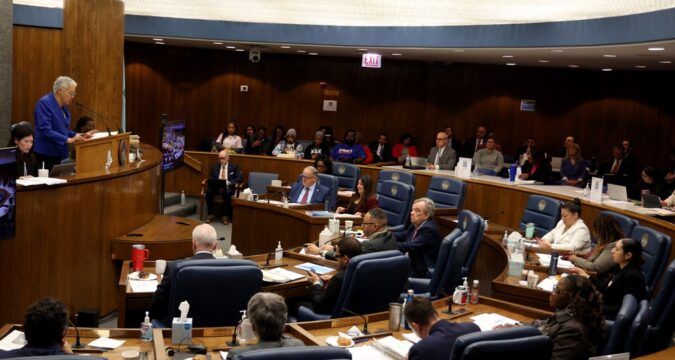
Property taxes are key issue for Democratic candidates in Cook County 6th District primary
Five candidates are vying for the Democratic nomination for the 6th District Cook County Board seat to represent large sections of the south and southwest suburbs.
Candidates Sylvester Fulcher, Wesam Shahed, Patricia Joan ‘Trish’ Murphy, Antoine Bass and Veronica Bolling-Franklin range in experience and viewpoints, though all claim lowering property taxes and boosting health care accessibility are goals.
Incumbent Donna Miller, who has represented the 6th District since 2018, is not seek reelection as she competes in the 2nd Congressional District race.
The district includes parts or all of Bridgeview, Justice, Hickory Hills, Palos Hills, Chicago Ridge, Alsip, Crestwood, Midlothian, Oak Forest, Tinley Park, Orland Hills, Matteson, Richton Park, Park Forest, Steger, Sauk Village, Lynwood, South Holland, South Chicago Heights, Glenwood, Homewood and East Hazel Crest.
Sylvester Fulcher
Fulcher said as county commissioner, he would work to better connect elected officials throughout the south suburbs to create more economic opportunities for residents.
The 51-year-old says he has spent most of his life in the district and now lives in Matteson. As a social worker, he has seen firsthand community members struggle with housing, substance use issues, and abuse.
“I’ve been helping people on an individual level, helping with their families, helping in their homes, and by extension, helping community,” Fulcher said. “Now I want to do it on a grander scale, to be able to convey that we’re in this together.”
Sylvester Fulcher (Campaign photo)
Fulcher was on the Saint George School District 258 board in Kankakee County from 2008 to 2010 and was inspired to seek a seat on the Cook County Board after noticing a lack of political engagement from community members.
“They feel their voices are not being heard. They feel that for the most part, a lot of politicians don’t show up,” Fulcher said.
He said as commissioner, he would work to boost the reputation of the Southland, which he said has been under scrutiny for perceived financial mismanagement in municipalities like Harvey and Dolton.
Major priorities for Fulcher include providing property tax relief and incentives for economic development.
Fulcher said he hopes to apply pressure on the county to send out tax bills on time and work with other municipalities to, little by little, reduce the burden on homeowners.
“I think every taxing body can do its part to bring tax reform and relief,” Fulcher said.
Wesam Shahed
Shahed is an attorney who has worked for both the Cook County state’s attorney and the Illinois attorney general’s offices.
Wesam Shahed (Campaign photo)
A resident of Bridgeview, Shahed said he is excited about the opportunity to represent his neighbors, including many fellow Palestinian Americans.
He is a progressive candidate who believes strongly the county should offer more services to make up for federal cuts, particularly in health care.
Shahed said he hopes to bring a trauma hospital to the south suburbs, recognizing that ambulance travel can take up to 45 minutes for certain residents.
“It doesn’t take a rocket scientist or medical expert to understand someone dies in that ambulance ride,” Shahed said.
He said he would seek to abate homeowner property taxes and provide better food access by adding small business development centers, funded by state grants.
“The more businesses that come within the community, the property taxes get lowered, the economy booms and it helps with these food deserts — it kills three birds with one stone,” Shahed said.
Shahed said he also plans to bring new life to a working group dedicated to property tax reform previously formed by board President Toni Preckwinkle’s office.
Patricia Joan ‘Trish’ Murphy
Murphy says her elected experience gives her a leg up over the other candidates.
Born and raised in Crestwood, Murphy is the supervisor and Democratic committeeperson of Worth Township. She is also on the Moraine Valley Community College board.
Patricia Joan ‘Trish’ Murphy (Campaign photo)
“With what’s happening at the federal level, with the cuts and the chaos, I think the communities deserve someone that knows this type of work and can lead on Day 1,” Murphy said. “With what’s going on, I don’t think this could be a training position.”
She said she grew interested in politics through her mom, Joan Patricia Murphy, who was 6th District Cook County commissioner from 2002 to 2016. Trish Murphy made an unsuccessful bid for the position in 2018.
Murphy said since then, she has grown in political experience, working with various sized budgets and building relationships with other local leaders.
“There isn’t an area of the county I don’t think I have touched in some way or worked with in some way,” Murphy said.
At the county level, she said she plans to ensure homes in the south suburbs are assessed fairly and accurately and use economic development “to dig our way out of this” property tax affordability issue.
She also said she supports bringing a trauma hospital to the south suburbs.
Antoine Bass
As a Matteson-based appraiser and real estate agent, Bass said he understands first hand how high property taxes affect south suburban communities.
Antoine Bass (Campaign photo)
He said working with mayors and state legislators is key, as continuing to increase taxes will only reduce collection rates.
Bass was the Rich Township High School District 227’s board president and made an unsuccessful bid for Rich Township supervisor last spring.
Bass said he is also passionate about providing mental health support to residents, an issue that has affected him directly as a child growing up in Harvey.
“When I was younger, I literally saw my mother get shot in front of me, and then I had to go to grammar school,” Bass said.
He said he faced more struggles in high school, after his grandparents were killed.
“I had nobody to help me unpack all that stuff,” he said. “I know what I went through, so why would I want someone else to go through the same thing?”
As Cook County commissioner, Bass said he would work to bring a crisis stabilization center to the south suburbs, a place police can bring people who are having a mental health crisis as an alternative to jail or a hospital emergency room.
Veronica Bolling-Franklin
Bolling-Franklin was on the Matteson District 159 board for six years and says she is someone “who can’t sit back and complain.”
She said as school board member, she makes herself available to community members and takes their voices into consideration with every vote.
Veronica Bolling-Franklin (Campaign photo)
“My vote is never for sale,” Bolling-Franklin said. “I don’t consider myself to be your traditional politician. I consider myself to be a seasoned citizen who cares about my community.”
Bolling-Franklin said property tax increases hit her and her husband personally, forcing them “to sit down at the table and put pen to paper and figure out how we were going to absorb this.”
She said as county commissioner, she would put together a team to come up with ideas for reform, such as by looking at steps taken by taxing bodies in other states.
Seeing how gun violence affects the school district she represents, Bolling-Franklin said another priority is providing early education about the dangers of firearms as well as mental health support.
ostevens@chicagotribune.com
https://www.chicagotribune.com/2026/02/19/property-taxes-key-issue-cook-county/

US Coast Guard Seizes $133.5 Million In Illicit Drugs
US Coast Guard Seizes $133.5 Million In Illicit Drugs
Authored by Naveen Athrappully via The Epoch Times (emphasis ours),
Crew of the U.S. Coast Guard (USCG) Cutter Seneca seized more than $133.5 million worth of cocaine and offloaded the drugs at Port Everglades, Florida, the agency said in a Feb. 13 statement.
“80 percent of interdictions of U.S.-bound drugs occur at sea. This underscores the importance of maritime interdiction in combatting the flow of illegal narcotics and protecting American communities from this deadly threat,” USCG said.
In total, 17,700 pounds of cocaine were seized through the interdiction of four drug-transporting vessels in international waters of the Eastern Pacific Ocean.
One of the drug vessels was boarded by Seneca’s crew on Jan. 25, seizing 4,410 pounds of cocaine. On Jan. 31, crew members boarded three vessels, taking custody of 13,340 pounds of cocaine, the statement said.
The detection and monitoring of illegal drug transit by air and sea are conducted by the U.S. Southern Command’s Joint Interagency Task Force-South, based in Key West. Once it is determined that the vessel must be interdicted, the USCG takes control of the operation, boards the vessel, and apprehends it.
“I am extremely proud of the crew’s incredible performance and adaptability during this deployment,” said Capt. Lee Jones, commanding officer of Coast Guard Cutter Seneca.
“This deployment demonstrates our enhanced posture and continued success in the fight against narco-terrorism and transnational criminal organizations.
“The Coast Guard, in conjunction with our inter-agency and international partners, continues to patrol areas commonly associated with drug trafficking in the Eastern Pacific, denying smugglers access to maritime routes by which they move illicit drugs to our U.S. land and sea borders.”
According to the agency, the Coast Guard is accelerating its crackdown on drug trafficking in the Eastern Pacific Ocean in support of Operation Pacific Viper, aiming to protect the United States from the flow of illicit narcotics from South America.
Operation Pacific Viper, launched in early August last year, directs U.S. forces to the Eastern Pacific region to counter cartel and criminal groups, seeking to cut off drug and human smuggling before they hit U.S. shores.
In early December 2025, USCG said in a statement that it had seized more than 150,000 pounds of cocaine from the Eastern Pacific Ocean, which it said was enough to create more than “57 million potentially lethal doses.”
In a Feb. 14 statement, USCG announced the seizure of two vessels containing $5.6 million in illicit narcotics off Port Everglades. Authorities seized roughly 745 pounds of cocaine by interdicting two suspected drug trafficking vessels.
“The Coast Guard is in the business of saving lives, and every kilogram of these drugs kept off our streets represents lives saved,” said Lt. Justin Dadlani, commanding officer of Station Fort Lauderdale.
“I couldn’t be more proud of the professionalism of the crew and our continued partnerships with our partners with Customs and Border Protection and Homeland Security Investigations.”
On Feb. 15, the agency announced that its Cutter Forrest Rednour had interdicted 14 suspected illegal immigrants aboard a vessel 18 miles from San Diego, with all of them claiming to be Mexican nationals.
Earlier on Jan. 27, the Coast Guard said they had interdicted three suspected illegal immigrants from Mexico in two vessels, seven miles off Imperial Beach, California.
On Jan. 21, Customs and Border Protection (CBP) said the Coast Guard notified the agency of a suspicious vessel traveling toward Puerto Rico. Upon investigation, CBP agents found 12 migrants from Russia and Uzbekistan aboard. The interception took place on Jan. 13.
“This successful outcome highlights the strong partnerships between the Coast Guard, Customs and Border Protection, and all federal and local law enforcement partners in Puerto Rico and the U.S. Virgin Islands,” said Capt. Robert E. Stiles, Sector San Juan deputy.
“Our daily unified coordination, shared capabilities, and synchronized response efforts are instrumental to safeguarding our nation’s Caribbean maritime borders against illicit smuggling activities.”
Tyler Durden
Thu, 02/19/2026 – 11:25
https://www.zerohedge.com/political/us-coast-guard-seizes-1335-million-illicit-drugs

Epstein Funded UCSD Study Of ‘Telepathic Autistic Savant’ Through Deepak Chopra Connection
Epstein Funded UCSD Study Of ‘Telepathic Autistic Savant’ Through Deepak Chopra Connection
Jeffrey Epstein was connected with several notable scientists – funding leading research centers, including Harvard, where he donated $9 million, and MIT’s Media Lab, which he gave at least $7.5 million (and funneled another $1.2 million to investments under the control of the lab’s former director, Joi Ito). He was connected to Stephen Hawking, Marvin Minsky, Steven Pinker and a host of other names.
Vilayanur Subramanian Ramachandran and Jeffrey Epstein
Now we learn that Epstein provided funding to a lab at UC San Diego after lifestyle guru Deepak Chopra introduced the financier to lab director Vilayanur Subramanian Ramachandran – a neuroscientist who was studying an “autistic savant who displays telepathy,“ according to the latest DOJ Epstein file dump.
Chopra, a former UCSD family medicine and public health clinical professor, said in late October that he was just helping Epstein with insomnia by teaching him to meditate. “At my suggestion, he also visited Dr. V.S. Ramachandran’s lab at [the University of California San Diego] to learn about ongoing brain research,” he told CBS News in December.
Ramachandran was conducting a study on an “autistic savant who displays telepathy,” according to UCSD’s The Guardian, citing a Sept. 25, 2017 email with the subject “Cost to study the autistic savant who displays telepathy,” in which he tells Chopra, “i don’t have a problem with my lab being funded by epstein … so long as theres no UC connection.”
Ramanchandran further wrote that if Chopra’s “pal [Epstein] is serious about setting in motion a lab for the study of extraordinary brain potential … something like 500,000 to 3 million would get the administrators excited.”
A subsequent email from Epstein to his accountant, Richard Kahn, instructed Kahn to send $25,000 from Epstein’s private foundation, Gratitude America Ltd., to the University of California Board of Regents to fund Ramachandran’s research on savant syndrome. He asked it to be mailed to former psychology department director and current chief administrative officer, Peter Hinkley.
Chopra later emailed Epstein on October 5, 2017 to provide an update on spending the day with Ramachandran to discuss the “pilot study of autistic savants.”
The 2017 emails weren’t the first Epstein-Ramachandran mention. On April 17, 2009, Epstein emailed someone whose name was redacted, replying to a list of “smart” and “out of the box” people to have over to his Florida home sometime in the future. Epstein included Ramachandran in this list, along with others who he described as “good friends of mine for years.”
While there’s nothing we could find on the telepathic kid (maybe they sensed danger), Ramachandran did write an article in December 2006 where he says telepathy is “legitimately ignored, except by crackpots” because it’s difficult to replicate. He’s also mentioned a few times in this piece on life after death, ESP, and other phenomenon.
Tyler Durden
Thu, 02/19/2026 – 11:05