Category: News
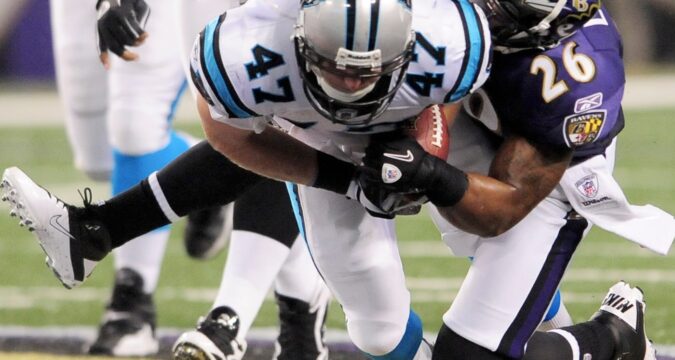
Chicago Bears promote Jeff King, a member of the front office since 2015, to assistant GM on his birthday
With the Chicago Bears deep into the planning phase for the offseason, they have promoted Jeff King to assistant general manager.
The team announced the move Thursday morning. King was the natural and expected replacement for Ian Cunningham, who left to become general manager of the Atlanta Falcons.
Timing of the announcement made it a big day for King, who is celebrating his 43rd birthday on Thursday. He is entering his 12th season with the franchise, so he’s seen the good, the bad and everything in between since the beginning of the Ryan Pace-John Fox era in 2015.
A fifth-round draft pick out of Virginia Tech in 2006, King played tight end for five seasons for the Carolina Panthers when Fox was their coach. That relationship helped launch his second career when the Bears hired him as a scouting intern in 2015.
He became a pro scout the next year, assistant director of pro scouting in 2019 and director of pro scouting in 2021. When Ryan Poles took over as GM in 2022, King was named co-director of player personnel and then became senior director of player personnel.
Behind the scenes, King was a trusted voice for Ben Johnson when the Bears were courting the coach last January. Johnson’s agent, Chicago-based Rick Smith, represented King during his playing career, which also included three seasons with the Arizona Cardinals.
Now King has an elevated role under Poles as the NFC North champion Bears look to fortify the roster coming off an 11-6 season. If the team continues to be successful, King should be in the mix for future GM openings. He already was in the cycle once, interviewing for the Los Angeles Chargers GM vacancy in 2024.
https://www.chicagotribune.com/2026/02/19/chicago-bears-jeff-king-assistant-general-manager/
Blue Owl Plunges After Halting Redemptions At Private Credit Retail Fund
Blue Owl Plunges After Halting Redemptions At Private Credit Retail Fund
Things are getting from bad to worse for Private Credit giant Blue Owl Capital.
The last time we looked at the firm’s precarious liquidity situation about a month ago, we found that the Blue Owl BDC would allow for 17% redemptions as investors, burned by both the tumbling stock price and the company’s massive exposure to ticking private credit time bombs, were storming for the exit.
Blue Owl BDC Allows for 17% Redemptions as Investors Storm Exit: BBG
— zerohedge (@zerohedge) January 7, 2026
One month later, it has gotten far worse.
On Wednesday, Blue Owl Capital said it will fully restrict withdrawals from one of its retail-focused private credit funds, reversing a previous plan to resume redemptions this quarter as furious investors, fearing many more cockroaches are about to emerge, demanded their money in droves.
The New York private credit firm said that investors in Blue Owl Capital Corp II, known as OBDC II, will no longer be able to redeem shares on a quarterly basis. Instead, the gated fund will return capital through periodic distributions funded by loan repayments, asset sales or other transactions.
The firm said it sold about $1.4 billion in direct-lending investments across three funds to provide investors with promised liquidity: Blue Owl Capital Corp II, Blue Owl Capital Corporation, and Blue Owl Technology Income Corp. The buyers included North American public pension funds and insurance companies (and, potentially, related parties which would be a huge negative if confirmed).
According to Bloomberg, the decision to gate capital highlights the risks confronting retail investors entering the fast-growing private credit market. Though investors are generally allowed to redeem a portion of their capital each quarter, payouts can be curtailed if withdrawal requests exceed set limits.
The news also rekindled fears in an industry that has attracted increasing scrutiny in recent months over valuations in the market and the quality of lending to firms with heavy debt loads and often little track record.
OBDC II drew scrutiny in recent months after Blue Owl proposed merging it with a publicly traded vehicle — a transaction that prior disclosures indicated could have resulted in losses of roughly 20% for some investors. The company promptly reversed the decision following investor outcry, but that did not change anything in the underlying business and redemption requests had already exceeded the standard 5% quarterly cap.
Blue Owl co-founder Craig Packer defended the decision to sell the loans, saying that the sale at 99.7% of par value was “a strong statement.”
“There’s skepticism about marks. There’s skepticism about valuation. We’ve always been saying we feel really good about the quality of our portfolio and the quality of our marks, but just saying it in some ways doesn’t seem to have done enough. So we’re putting our money where our mouth is,” Packer said on a conference call Thursday morning.
He added that the fund could return half of investors’ capital by the end of this year. He said that the fund was always going to come up with a strategic transaction to return money to investors at this point. “We will look for repayments, earnings and also potential additional asset sales to continue to return that capital,” Packer said.
“OBDC II has been exploring options to either create a liquidity event for investors or wind down the legacy vehicle and ultimately return capital to shareholders. We believe this is an important step forward for the fund as it creates an efficient process around returning capital to these investors,” wrote a Citizens Financial Group analyst, adding that selling loans at par was a “win-win.”
Blue Owl initially looked to sell loans at OBDC II and then widened to other vehicles following demand from institutional buyers, the firm said. OBDC II sold about $600 million – roughly 34% of its portfolio – and will use the proceeds to repay a credit facility from Goldman Sachs, and make a special cash distribution that will total about 30% of the fund’s net asset value.
It has been a very bad year for private credit funds in general and Blue Owl in particular which has been flooded with redemption requests in the past year: funds that let investors redeem periodically can face pressure when too many people want their money back at once. Managers often keep some more easily sold assets to meet withdrawals. Selling directly originated loans, which typically don’t trade often, is less common.
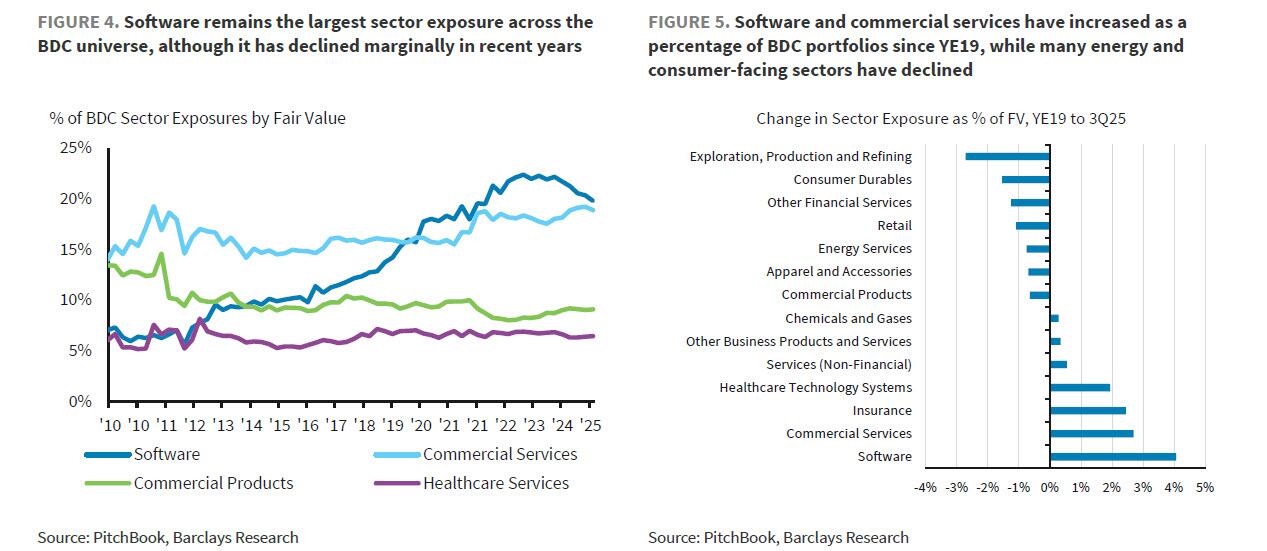
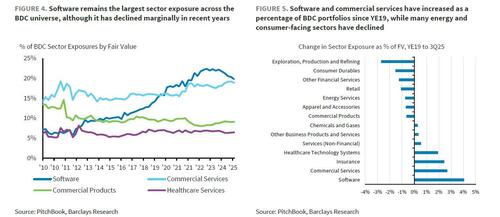
In the most recent quarter, redemption requests exceeded 5% at both of Blue Owl’s non-traded business development companies. Its tech-focused vehicle, OTIC, saw redemption requests jump to about 15% of net asset value, Blue Owl said. As we reported earlier this month, the latest pressure point for Private Credit funds are their investment in Software/SaaS stocks, with fears spiking after a Barclays report revealed huge exposure to the collapsing software sector.
Blue Owl’s largest publicly traded BDC, OBDC, sold about $400 million of loans across 74 portfolio companies at around par, with an average position size of about $5 million. Blue Owl Technology Income Corp. sold roughly $400 million of loans and used the proceeds to pay down debt.
“What began as a targeted transaction to provide liquidity to OBDC II shareholders attracted significant interest from sophisticated institutional investors, allowing us to opportunistically extend the sale to OBDC,” Craig Packer, a co-founder of Blue Owl, said in a press release.
The firm said the transactions improved balance-sheet flexibility, modestly increased diversification and created more room to deploy capital.
Commenting on the latest news ouf of Blue Owl., Goldman’s alt-financials specialist Christian DeGrasse laid out a bullish and bearish take (below we excerpt from his full note available to pro subs)
Bullish feedback:
1) Positive for the BDCs to be selling loans at/near PAR and combo of delever / buy back stock (OBDC bought back stock at ~86% of book from Nov – Dec),
2) this is a positive ‘proof of concept’ that the marks are in a good place (particularly software, the largest industry in the sale), yes FPAUM getting impacted but with where valuations are, what matters is durability/quality/question of underwriting rather than small movement in mgmt fees
Bearish feedback:
1) This impacts OWL’s FPAUM and thus there base mgmt. fee & Part 1 fees (the $1.4bn loan sale est impact firmwide rev by ~1% .. though more OBDC II runoff in future could continue to weigh slightly),
2) Views that this is cherry picking the best loans,
3) we don’t know the duration on these loans – credit spreads have mostly tightened over the past few years, shouldn’t these loans be sold at above-par?,
4) this could indicate higher redemptions on the come (the big non-traded BDC OCIC is not participating in the loan sale so not a read through there … but maybe on OTIC?)
5) some are wondering whether OWL’s own affiliates participated (I’m not seeing any facts around this FWIW, just sharing feedback)
6) this morning we’re getting a lot more inbounds from the macro community about gating redemptions OBDC II (they are saying they’ll return capital through distributions funded by loan repayments, asset sales or other transactions)
Mohamed El-Erian also chimed in, asking if the news was a “canary in a coalmine moment” for private credit.
Is this a “canary-in-the-coalmine” moment, similar to August 2007?
This question will be on the mind of some investors and policymakers this morning as they assess the news that, quoting the FT, the “private credit group Blue Owl will permanently restrict investors from… pic.twitter.com/DhvLlIAy5S
— Mohamed A. El-Erian (@elerianm) February 19, 2026
A much less nuanced – and much more bearish take – this morning from George Noble:
Remember this scene in The Big Short?
Jamie Shipley and Charlie Geller have bet everything against the housing market.
They’ve been bleeding for months, wondering if they’re wrong.
Then they flip on CNN and see it: New Century Financial – the second-largest subprime lender… https://t.co/AoEdZXp77x pic.twitter.com/vTMmNySCpw
— George Noble (@gnoble79) February 19, 2026
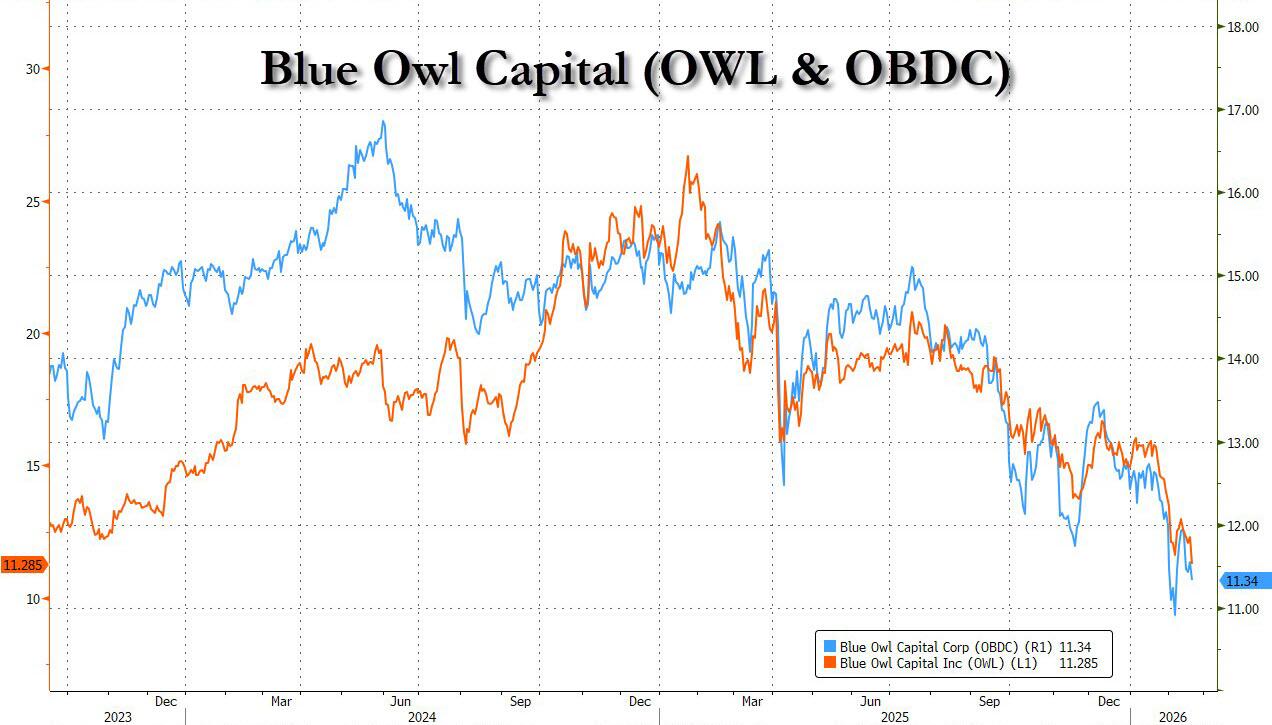
The stock of Blue Owl Capital (OWL) tumbled to a fresh two year low this morning, while the publicly-traded BDC (OBDC) also plunged as much as 9.4% on Thursday, approaching the more than two-year low that they reached earlier in the month amid mounting worries over the firm’s exposure to software businesses vulnerable to disruption from AI.
More in the Goldman note available to pro subs.
Tyler Durden
Thu, 02/19/2026 – 10:50
Rep. Khanna To Force Vote On Iran War Powers: ‘Another Endless Dumb Foreign War’
Rep. Khanna To Force Vote On Iran War Powers: ‘Another Endless Dumb Foreign War’
Authored by Dave DeCamp via AntiWar.com,
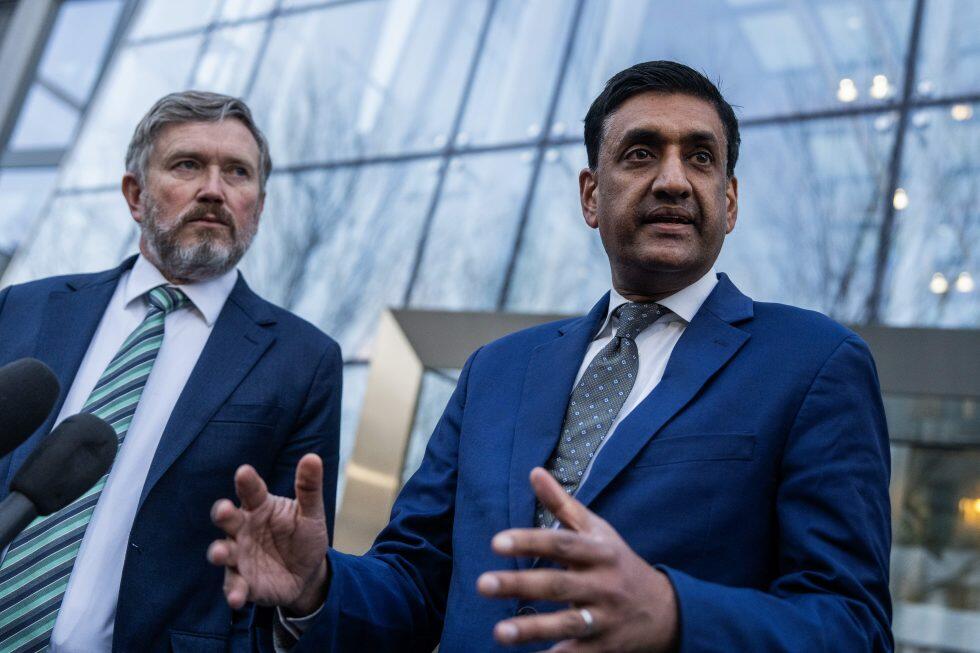
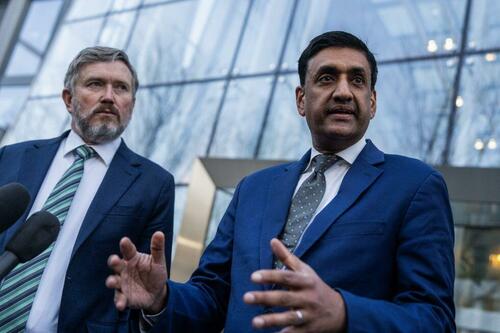
Rep. Ro Khanna (D-CA) said on Wednesday that he will force a vote on a War Powers Resolution meant to prevent President Trump from attacking Iran without congressional authorization, as required by the Constitution.
The resolution was introduced by Rep. Thomas Massie (R-KY), Khanna, and several other Democrats back in June 2025 amid the 12-day US-Israeli war against Iran, but a ceasefire was reached before a vote was held. Massie was the original sponsor, and the legislation currently has 77 co-sponsors, all Democrats.
CQ Roll Call/Sipa USA via Reuters Connect
Americans can contact their House representative and urge them to support H.Con.Res.38 to prevent a disastrous war with Iran, which appears imminent amid the major US military buildup in the region.
“Trump officials say there’s a 90% chance of strikes on Iran. He can’t without Congress,” Khanna wrote on X. “[Massie] & I have a War Powers Resolution to debate & vote on war before putting US troops in harm’s way. I will make a motion to discharge to force a vote on it next week.”
The California congressman said that he supported diplomatic efforts with Iran but that if “Trump is preparing to bomb Iran soon & others call for troops on the ground, Congress must get on the record so Americans know where their representatives stand.”
“Like the votes before the Iraq war, this could be one of the most consequential votes in the history of Congress. Are we going to stop another endless dumb foreign war? Or will the neoconservatives mislead us once again?” he added.
Multiple media reports have said that a US attack on Iran could happen in the coming days or weeks, and all signs indicate it could trigger a much bigger conflict than the 12-Day War, and that Iran wouldn’t hold back in its response.
Tens of thousands of US military personnel in the Middle East are in range of Iranian missiles. Tehran has vowed immediate retaliation if hit with an unprovoked US or Israeli attack.
⚡️#BREAKING Two more American E-3C Sentry radar aircraft in the skies over Tel Aviv on their way to Saudi Arabia. pic.twitter.com/xsWKIt9asq
— War Monitor (@WarMonitors) February 19, 2026
“A war with Iran would be catastrophic. Iran is a complex society of 90 million people with significant air defenses and military capabilities,” Khanna said.
“We also have 30-40k US troops in the region who could be at risk of retaliation. Congress must do its job and stop this march to war.”
Tyler Durden
Thu, 02/19/2026 – 10:45
https://www.zerohedge.com/political/rep-khanna-force-vote-iran-war-powers-stop-march-war

Walmart logra otro trimestre de ventas impresionantes, pero ofrece un pronóstico moderado
Por ANNE D’INNOCENZIO
NUEVA YORK (AP) — Walmart tuvo otro trimestre sobresaliente, ya que la promesa de precios más bajos y entregas rápidas atrajo a un espectro más amplio de clientes en Estados Unidos durante el crucial período de compras navideñas, incluidos hogares con mayores ingresos.
La perspectiva de la empresa con sede en Bentonville, Arkansas, sin embargo, insinuó el jueves un entorno económico volátil por delante.
Walmart reportó ganancias del cuarto trimestre de 4.240 millones de dólares, o 53 centavos por acción, para el trimestre que terminó el 31 de enero. Los resultados ajustados por acción fueron de 74 centavos, un centavo por encima de lo que esperaba Wall Street, según FactSet.
El año pasado, la empresa reportó una utilidad neta de 5.250 millones de dólares, o 65 centavos por acción.
Las ventas aumentaron 5,6% a 190.700 millones de dólares desde 180.600 millones de dólares, también superando ligeramente las expectativas.
Las ventas comparables en las tiendas Walmart, incluidas las ventas en línea, subieron 4,6% tras un aumento de 4,5% en el trimestre anterior. Las ventas fueron en general más fuertes, en particular las de comestibles, que han sido un enorme generador de tráfico para Walmart, indicó la empresa. También citó a la moda como un punto destacado.
Walmart señaló además que los envíos más rápidos ayudaron a las ventas, y que las entregas aceleradas en menos de tres horas representaron 35% de los pedidos desde las tiendas.
El sector del e-commerce en Estados Unidos aumentó 27% durante el trimestre, y representó 23% de las ventas totales. Las ventas mundiales de comercio electrónico subieron 24%.
Es la primera vez en más de una década que el gigante minorista reporta ganancias trimestrales con un nuevo director general.
John Furner, de 51 años, quien encabezaba las operaciones de la empresa en Estados Unidos, sustituyó a Doug McMillon este mes. McMillon había convertido al mayor minorista de Estados Unidos en un gigante impulsado por la tecnología y lideró una era de sólido crecimiento de ventas tras ser nombrado CEO de Walmart en 2014.
Las acciones de Walmart subieron más de 25% desde su último informe de resultados trimestrales y, a principios de este mes, se convirtió en la primera empresa no tecnológica en alcanzar una valoración de más de 1 billón de dólares.
Lo ha logrado mientras muchos estadounidenses consideran cuidadosamente en qué gastan su dinero debido a la inflación, y el desempeño de la empresa se considera un barómetro del gasto del consumidor dada su enorme base de clientes. Más de 150 millones de clientes están en su sitio web o en sus tiendas cada semana, según Walmart.
Aunque la inflación se ha moderado, los precios al consumidor se han disparado 25% en los últimos cinco años. Muchos economistas esperan que más empresas comiencen a trasladar a sus clientes, en los próximos meses, los mayores costos derivados de aranceles más altos en Estados Unidos.
La promesa de Walmart de precios más bajos, mejor mercancía y entregas más rápidas ha ampliado su base para incluir a compradores con mayores ingresos en ese entorno, y las mayores ganancias de participación de mercado provinieron de hogares con ingresos anuales superiores a 100.000 dólares.
Furner les dijo a los analistas en la llamada de resultados que los compradores, en general, siguen siendo resilientes, pero que los clientes con ingresos del hogar por debajo de 50.000 dólares continúan bajo presión financiera.
“Seguimos viendo que (sus) billeteras están ajustadas y, en algunos casos, la gente está administrando el gasto de cheque en cheque”, dijo Furner. “Dicho esto, incluso estos hogares están enfatizando la conveniencia casi tanto como el precio”.
Walmart ha gestionado el incremento de costos derivados de los aranceles del presidente Donald Trump al cambiar lo que ofrece en los estantes de las tiendas, mientras absorbe parte de esos costos adicionales.
El director financiero de Walmart, John David Rainey, les comentó a los inversionistas que, en el trimestre más reciente, el precio promedio de artículos idénticos en el minorista subió un poco por encima de 1%, mientras los precios de los alimentos aumentaron un poco menos que eso, y la inflación de la mercancía general subió más de 1%. Esa tendencia de precios en Walmart debería continuar este año, sostuvo.
Walmart indicó que, para el trimestre actual, espera que las ventas aumenten entre 3,5% y 4,5% y que las ganancias por acción se ubiquen en un rango de 63 a 65 centavos de dólar por acción. Para el año, espera que las ventas alcancen 706.400 millones de dólares y que las ganancias por acción sean de 2,64 dólares.
Eso es un poco más moderado de lo que Wall Street había estado proyectando. Los analistas consultados por FactSet esperaban ganancias por acción de 68 centavos por acción en el primer trimestre. Para el año, han estado proyectando ganancias de 2,64 dólares por acción sobre ventas de 712.600 millones de dólares.
Rainey señaló que Walmart quería ser cautelosa con su perspectiva al inicio del año, dado un entorno económico incierto, y citó un sentimiento del consumidor apagado y una desaceleración del crecimiento de la contratación. Esa cautela no es diferente de la postura que ha adoptado en años anteriores, agregó.
“Dado que somos tan grandes y estamos tan vinculados a la salud del consumidor y a la economía, queremos mantener la máxima flexibilidad y no adelantarnos a nosotros mismos en este punto del año”, indicó Rainey.
_______
Esta historia fue traducida del inglés por un editor de AP con la ayuda de una herramienta de inteligencia artificial generativa.

Petro busca apoyo popular en las calles en su pulso por el alza del salario mínimo en Colombia
Por ASTRID SUÁREZ
BOGOTÁ (AP) — El salario mínimo de los trabajadores colombianos aumenta anualmente casi como un trámite, pero este año su alza ha quedado en medio de una puja entre el gobierno y el Poder Judicial.
El incremento de 23% decretado en diciembre por el presidente izquierdista Gustavo Petro —y que entró en vigor el 1 de enero— está en vilo por la decisión de un alto tribunal de suspenderlo provisionalmente mientras analiza múltiples demandas.
En respuesta el mandatario convocó el jueves a sus partidarios a manifestaciones para defender el aumento sin precedentes, ya que el anterior mayor incremento había sido de 16% en 2023, también durante el gobierno de Petro.
¿Por qué fue suspendida el alza?
El Consejo de Estado —el máximo tribunal de la administración pública— recibió más de 30 demandas ciudadanas contra el aumento al considerarlo desproporcionado porque cuadruplicó la inflación anual de 2025, lo que generaría un “impacto irreversible” en los costos de las pequeñas y medianas empresas.
El tribunal pidió al gobierno que emita un nuevo decreto que defina un salario mínimo transitorio mientras falla de fondo, pero que tenga en cuenta la inflación, la productividad, el crecimiento del producto interno bruto y la protección al trabajo.
La manifestación convocada por Petro se da cuando está cerca de vencer el plazo para que el gobierno emita un decreto de salario mínimo transitorio.
En el país 2,4 millones de trabajadores reciben el salario mínimo.
¿Qué proponen el gobierno, sindicatos y empresarios?
El gobierno busca mantener el incremento del 23%, lo que coincide con la propuesta de los sindicatos.
La decisión fue anunciada el lunes luego de una reunión extraordinaria con gremios y sectores empresariales que en su mayoría estuvieron de acuerdo en mantener el alza.
“Dada esta realidad de casi estos cuatro millones de personas (asalariados y pensionados), era muy difícil que Colombia tomara en este momento la decisión de reducir el salario… no sin repetir que tenemos evidentemente una gran cantidad de riesgos económicos”, aseguró en la red social X Bruce Mac Master, presidente de la Asociación Nacional de Empresarios de Colombia.
Desde la Federación Nacional de Comerciantes advirtieron que se pondrán en riesgo más de 700.000 empleos formales al afectar a las pequeñas y medianas empresas que deben asumir el incremento.
También han advertido que el alza no beneficia a los trabajadores informales que representan el 55%, según datos oficiales.
Ambiente electoral
El debate sobre el salario mínimo se produce en un ambiente electoral. Los colombianos elegirán el próximo 8 de marzo un nuevo Congreso y el 31 de mayo será la primera vuelta presidencial.
Algunos candidatos opositores al gobierno de Petro han incluso cambiado de opinión en los últimos días y pedido que se mantenga el alza de 23% para no afectar a los trabajadores mientras proponen alivios en impuestos para las empresas.
Para Javier Garay, doctor en Ciencia Política y docente de la Universidad Externado de Colombia, el gobierno está haciendo cálculos electorales porque el alza es una medida popular entre sus bases.
“Creo que Petro tiene dos fines al convocar a las manifestaciones: presionar a las cortes para que tomen decisiones favorables al gobierno y crear una sin salida, porque si el Consejo de Estado le da la razón y mantiene el 23% reiterará que estaba en lo correcto. De lo contrario, dirá que el pueblo está oprimido por las élites”, dijo Garay a The Associated Press.

Lowell’s Cayden Yuran calls himself a ‘social butterfly.’ He has fun. But make no mistake. He intends to win.
Over and over, Lowell junior Cayden Yuran has heard the phrase and repeated it back.
To himself. To his coach. To himself again.
“Basic fundamentals win big matches,” they say.
After qualifying for the state meet at Gainbridge Fieldhouse in Indianapolis for the first time, Yuran is confident that mantra will carry him on the biggest stage of his wrestling career.
“I’m ready,” he said. “I’m practicing well, getting better, pushing the gas tank. I have to go in there and not be nervous. I have to be confident, go in there hard and try to get that dub. I have to have a refuse-to-lose mindset.”
Of course, that’s easier said than done, and Yuran knows it. But he has turned things around after last season, when he suffered meniscus tears in both knees and other nagging injuries that led to results he considered below his standards.
Lowell’s Cayden Yuran, left, trains with teammate Charlie Shaffer during a practice on campus on Wednesday, Feb. 18, 2026. (John Smierciak / Post-Tribune)
Yuran (28-8) is ranked No. 13 in the 190-pound weight class statewide, and his postseason surge includes a regional title and second place at semistate, where he lost 10-9 to Chesterton senior Lucas Anderson.
So Lowell senior Evan Stanley, who is ranked No. 1 at 138 pounds, has confidence in Yuran.
“Cayden should place,” Stanley said. “I’m excited to watch him wrestle. He’s got a fun style. He’s a little bit of a wild man, and I think that’ll be a good thing for him.
“He’s due, and he’s been wrestling better in the postseason. I’m excited to see him come Friday night.”
Yuran and Stanley are two of the team-record seven wrestlers making the trip to Indianapolis to represent the Red Devils. Coach Kevin English said Yuran is “feeling good, looking good and ready to wrestle,” but his message to Yuran and the entire group remains the same.
“We’ve talked about just attacking the six minutes in front of us,” English said. “That’s all we’re looking at. If you win Friday night, you place, and everything beyond that is gravy. Obviously, some of these guys have bigger goals, but six minutes, that’s all we’re looking for.
“But I feel confident we can get some medalists, and I feel confident in Cayden that he can get it done.”
What’s more, Yuran will do it with a smile, and he may talk opponents’ ears off too.
“If they know me through wrestling, they probably know I’m a social butterfly,” he said. “At the end of the day, it’s all just a game. Of course I take it seriously, and I’m locked in, but I’m not stressing over losses. I’m not going into my matches stressed out. I’m calm with it.”
Lowell’s Cayden Yuran, from left, Evan Stanley and Kameron Hazelett jog around the room during a practice on campus on Wednesday, Feb. 18, 2026. (John Smierciak / Post-Tribune)
English considers that mindset both a blessing and a curse, maybe even something that occasionally holds Yuran back. But as long as it works, English figures there’s no reason to change it. In fact, he welcomes it.
“He’s just that happy, goofy kid that likes to have fun and enjoys the sport,” English said. “He’s always smiling. Sometimes I have to yell at him to refocus. But in reality, he’s focused. He’s just a happy kid.
“So I think that’s something cool that he brings to the table. He can always bring a laugh to somebody, too, especially in intense moments.”
Expect intense moments at the state meet because Yuran loves to win, and he’s within reach of the goal he set many months ago.
“I wanted to place at state this year,” he said, “and we’re on the way to it.”
Noah Poser is a freelance reporter.
https://www.chicagotribune.com/2026/02/19/lowell-high-school-wrestling-cayden-yuran/

Religious leaders allowed into Broadview ICE facility for Ash Wednesday after judge orders DHS to grant access
Father Paul Keller walked out of the U.S. Immigration and Customs Enforcement facility in west suburban Broadview Wednesday afternoon with his palms coated in ash.
His hands stood as a testament to a moment months in the making.
After clergy had repeatedly been denied access inside the facility, Keller alongside two other local religious leaders were allowed into the building to pray with and provide religious services to detainees and staff for Ash Wednesday. The access was the result of a recent court order that ruled Roman Catholic clergy members be allowed to minister to detainees at the Broadview facility on the day of prayer, which marks the start of Lent — the most penitential season of the year for Catholics and many other Christians.
“This is not a protest,” Keller, Provincial for the Claretian Missionaries, said to reporters outside the facility after four detainees and three staff members received Ash Wednesday services. “This is not a symbolic action.”
For months now, religious leaders had been trying to provide pastoral care at the facility, something they say they’d been granted access to do for years but in the months leading up to and since Operation Midway Blitz — the Trump administration’s mass deportation in Chicago last fall and early winter — has been denied. In November, the Coalition for Spiritual and Public Leadership, a Chicago-based Catholic advocacy group, filed a lawsuit against the federal government seeking resumed access to the facility.
On Feb. 12, nearly three months into the legal battle, U.S. District Judge Robert Gettleman issued a preliminary injunction allowing the coalition entry to the facility on Ash Wednesday to offer ashes and Holy Communion.
“The court finds that the government has substantially burdened plaintiffs’ exercise of religion,” the order read. Gettleman ruled that allowing pastoral care to migrants and detainees “will improve the condition of those detained at Broadview.”
Reportedly inhumane conditions at the facility prompted the court to step in during the fall. In October, two former detainees filed a class-action lawsuit alleging that a human rights crisis had been unfolding at the facility. A week later, government officials were ordered to provide detainees with enough food, water and bed space, among remedies, after conditions did not “pass constitutional muster.”
Faith leaders Wednesday said the detainees they ministered to had just arrived at the Broadview facility.
“You saw the crying eyes, confusion, uncertainty,” recalled Father Leandro Fossá, pastor for Our Lady of Mount Carmel Catholic Church in Melrose Park. “But also, you could see … they felt the hope of the moment, that they could see that the church was there with them.”
President Donald Trump’s aggressive immigration crackdown has galvanized religious leader opposition across the country. Locally, more than 250 Christian clergy across denominations signed an open letter in October condemning U.S. Immigration and Customs Enforcement’s increasingly aggressive tactics. Shortly after, more than four dozen ministers gathered outside the Broadview facility to pray for detainees.
From attending rallies and protests to offering safe spaces for people to gather, worship and counsel one another, faith leaders have often found themselves on the front lines.
For more than a decade, religious leaders had frequently provided spiritual care to those inside the Broadview facility with the permission of ICE, according to the Coalition for Spiritual and Public Leadership’s initial complaint. The beginnings of the visits date back to 2007, when late Sisters Pat Murphy and JoAnn Persch started organizing weekly prayer vigils outside the building.
Though they were initially prohibited from entering, the activist nuns, who both died last year after years spent serving and praying with Chicago-area immigrants and refugees, met with ICE repeatedly to eventually gain access.
They continued their efforts until clergy visits were barred during the COVID-19 pandemic, prompting Persch and Murphy to hold Zoom calls and online prayer sessions instead. After the pandemic, the sisters resumed praying the rosary just outside the facility’s entrance.
Sister Bernadette Eaton, of the Coalition for Spiritual and Public Leadership, holds a crucifix outside the Immigration and Customs Enforcement facility in Broadview on Ash Wednesday, Feb. 18, 2026. (Antonio Perez/Chicago Tribune)
Liza Johnson turns away after looking over photos on a fence outside the Immigration and Customs Enforcement facility in Broadview, Feb. 18, 2026. (Antonio Perez/Chicago Tribune)
Last November, Persch penned a statement for the Coalition for Spiritual and Public Leadership’s then-pending lawsuit against the Trump administration relaying her and Murphy’s years of pastoral care in Broadview and how losing access was a stark change in course. She recalled that during the crackdown, prayer services were moved a block down from the facility. Then, when federal officials erected a controversial security fence around the building amid persistent protests, Persch said “all prayer on (the facility’s) premises was effectively ended.”
The statement was written the day Persch died, court documents show.
“Today, I am denied my right to express my faith,” she wrote, “and no one from ICE will tell me, or is willing to explain to me, any compelling reason why.”
The coalition in its complaint maintained the only explanation ICE gave to “justify its denial of the Catholic priests’ and sisters’ religious service” was a reference to “safety concerns and the transitory nature” of the Broadview facility.
Defense attorneys, according to subsequent court filings, argued in turn that visitation denials in October and November were “pursuant to a neutral and temporary suspension of all visitors,” which they said was “necessary due to a dramatic influx” of Midway Blitz detainees. With the influx, the facility lacked the personnel required to facilitate visitation safely, they said.
Gettleman last week ruled that with “reasonable notice and communication, addressing legitimate security and safety concerns, allowing plaintiffs to provide pastoral care to migrants and detainees does not pose any under hardship on the government.”
While the injunction specifically allowed access on Ash Wednesday, it also called on the Department of Homeland Security to confer with the coalition over how religious ministry could continue at the facility going forward. Gettleman set a status hearing in the case for next week.
Patrick Dahlstrom, one of the coalition’s attorneys, told the Tribune Wednesday that “we’re in the process of negotiating with the government now about access after this.” He said they hadn’t gotten very far yet because their focus was on ensuring services for Ash Wednesday.
Cardinal Blase Cupich presides over an Ash Wednesday mass outside of Our Lady of Mount Carmel Parish in Melrose Park on Feb. 18, 2026. The mass and a procession that followed were held in solidarity with immigrant families as a public expression of support and unity. (Chris Sweda/Chicago Tribune)
Cardinal Blase Cupich in a statement on detainees and staff receiving ashes called on people to pray “that the human dignity of all persons be respected in our country.”
“Religious freedom is a cornerstone of our democracy, and the right of incarcerated persons to pastoral care is recognized nationwide,” he said. “We are grateful that the courts have acknowledged this reality.”
While he didn’t join his fellow clergy members outside the Broadview facility, the head of the Chicago Archdiocese later in the evening presided over an outdoor Ash Wednesday mass just a few minutes away at Our Lady of Mount Carmel. Hundreds of community members gathered outside of the Melrose Park parish for the mass, which was followed by a candlelit procession. Both were held in solidarity with immigrant families.
Sofia Gonzalez flocked to the mass and procession after hearing about the services from her mom. The 26-year-old Wood Dale resident, who was baptized at Our Lady of Mount Carmel, said she felt compelled to attend because “what’s happening here is very significant for a lot of different reasons, beyond just the season of Lent.”
People walk in a procession through the streets around Our Lady of Mount Carmel Parish in Melrose Park following an outdoor Ash Wednesday mass on Feb. 18, 2026. (Chris Sweda/Chicago Tribune)
Gonzalez said seeing religious leaders go to Broadview and so many turn out for the solidarity mass made her proud of her faith and her community.
“It’s a beautiful sight to see,” she said.
When mass ended and attendees began their procession, Kathleen Burna moved with the crowd. The 61-year-old, who traveled out from neighboring Oak Park, said she felt a “responsibility and a call” to be there.
“I just have been profoundly troubled by what’s,” she faltered, her eyes shining with tears. “(By) the cruelty.”
She said the evening’s services were a meaningful way to begin Lent.
Beside her, the crowd crept forward, wrapping around Our Lady of Mount Carmel with Cupich at the front. People didn’t shout or chant. Some recited the rosary in Spanish, while others talked quietly amongst themselves. Firelight stretched across the line of worshippers as most clutched small candles clad in a paper holder that donned a short message.
“¡No estás solos!” the message read. “You are not alone!”
The Associated Press contributed.

Informe revela que cerca de 1.000 kenianos fueron reclutados para combatir por Rusia en Ucrania
Associated Press
NAIROBI, Kenia (AP) — Un nuevo informe de inteligencia de Kenia afirma que alrededor de 1.000 kenianos fueron reclutados para combatir por Rusia en Ucrania tras ser engañados con falsas promesas de empleo en Rusia antes de ser enviados a las líneas del frente.
El informe fue presentado al Parlamento el miércoles por el líder parlamentario Kimani Ichung’wah, quien acusó a funcionarios de la embajada rusa de coludirse con agencias de reclutamiento laboral para engañar a kenianos y hacerles creer que se les darían empleos calificados en Rusia. Señaló que los funcionarios de la embajada rusa les expidieron visas de turista.
La Embajada de Rusia en la capital de Kenia, Nairobi, negó las acusaciones y afirmó en un comunicado el jueves que nunca emitió visas a nadie con la intención de viajar a Rusia para combatir en Ucrania.
“La Federación de Rusia no impide que ciudadanos de países extranjeros se alisten voluntariamente en las fuerzas armadas”, subrayó.
Ichung’wah dijo al Parlamento que el informe del Servicio Nacional de Inteligencia muestra que 89 kenianos estaban en la línea del frente, 39 estaban hospitalizados, 28 estaban desaparecidos en combate, otros habían regresado a casa y al menos uno fue confirmado como muerto. El informe también ofrece detalles sobre las agencias de reclutamiento que presuntamente llevaron a kenianos a Rusia.
Advirtió que cualquier funcionario keniano que trabaje en la embajada del país en Moscú será considerado responsable si se determina que se coludió en el plan.
Decenas de familias kenianas han instado en las últimas semanas al gobierno a regresar a sus seres queridos varados en Rusia; según se alega, algunos fueron obligados a combatir en las líneas del frente y otros están retenidos como prisioneros de guerra en Ucrania.
Reclutas kenianos que han regresado al país han relatado que les prometieron empleos calificados, como electricistas y plomeros. Aseguran que firmaron contratos redactados en ruso y que fueron enviados a combatir con poca o ninguna instrucción militar.
El Ministerio de Relaciones Exteriores de Kenia ya había reconocido el problema y pidió a la población tener cuidado.
Dos reclutadores fueron arrestados el año pasado y quedaron en libertad bajo fianza a la espera de juicio.
___
Esta historia fue traducida del inglés por un editor de AP con la ayuda de una herramienta de inteligencia artificial generativa.

Cook County assessor candidates spar over ‘garbage’ data, property tax shifts
Democratic candidates for Cook County assessor faced off in their first televised debate Wednesday evening, trading barbs about “garbage data,” “wild swings” in property values and “pay to play” politics.
The head-to-head between two-term Assessor Fritz Kaegi and challenger Pat Hynes was notably less acidic than their meeting with the Tribune’s editorial board late last month, but still featured Kaegi accusing Hynes of being beholden to property tax attorneys and Hynes arguing Kaegi had fumbled the basics of the office, endangering home ownership.
Hynes pledged to bring an end to the “insane amount of volatility” he said has characterized Kaegi’s tenure. The office is in charge of assigning values to 1.9 million parcels across Cook County, from homes to apartment and office buildings, warehouses and data centers. Those values help determine how much of the property tax burden each taxpayer owes.
Kaegi repeatedly steered the debate back to political contributions Hynes and Kaegi’s adversaries on the county’s Board of Review received from property tax attorneys.
Sharp assessment hikes on the city’s South and West sides — and the record tax increases that followed — are evidence the office needs to focus on gathering “good, clean data” to produce more accurate and predictable assessments, Hynes said.
Residential assessments more than doubled in North Lawndale, while one part of Englewood saw the assessor’s median market values jump from $35,000 to $91,000. Coupled with large reductions to downtown trophy buildings and ever-increasing tax levies from local governments, bills that landed late last year enraged many homeowners.
“It’s unfair and it shouldn’t have happened and I’m concerned,” Kaegi said. Had his commercial assessments not been slashed by the three-member Board of Review that hears appeals, Kaegi estimated two-thirds of Chicago bills would have stayed the same or gone down.
Hynes argued without those out-of-whack neighborhood increases that swung year to year, the pain of property tax bills would not have been as acute for South and West siders. Kaegi has defended them as a reflection of boosted sales and investor activity in those neighborhoods.
Hynes began working in the Assessor’s office in 1998 — including many years in the field inspection department that checks out properties in person — and stayed until 2020, when he quit under Kaegi.
He was elected township assessor for Lyons in 2021. Hynes has some political wind at his back: the endorsement of the Cook County Democratic Party, several South and West Side aldermen and suburban township assessors, House Speaker Emanuel “Chris” Welch, Attorney General Kwame Raoul and the Chicago Federation of Labor.
Kaegi first won election in 2018, capitalizing on a Tribune and ProPublica investigation finding widespread errors in assessments under predecessor Joe Berrios.
He painted Hynes as a return to the Berrios era, highlighting donations Hynes received from a stable of Berrios-allied property tax appeals attorneys and appraisal firms, including a recent $1,500 one from the former tax appeal law partner of convicted House Speaker Mike Madigan.
“I’ve never taken a dime” from property tax appeals lawyers, Kaegi repeated multiple times. “That was the pay-to-play culture that was in our office before.”
Hynes has called that a “false choice,” and has previously noted Kaegi can only afford to swear off such donations because of his personal wealth. Kaegi has still accepted money from real estate developers. Over the years, the former asset manager has given $5 million to his campaign fund and also donated tens of thousands to an opponent of longtime Board of Review Commissioner Larry Rogers, Jr.
Cook County Assessor Fritz Kaegi, left, and Lyons Township Assessor Pat Hynes listen as political correspondent Paris Schutz asks a question during a debate for the Democratic nomination for Cook County Assessor at WFLD-Ch. 32, Feb. 18, 2026, in Chicago. (John J. Kim/Chicago Tribune)
Among the most pressing post-Berrios problems were over-assessments of lower-value properties and under-assessment of high-value ones. Kaegi pointed to a recent University of Chicago study to note he’d made significant progress on the fairness of residential assessments. The more politically testy task has been valuing office buildings, stores and warehouses. Berrios left those assessments untouched for several years.
Kaegi’s fixes have made him an enemy of many big real estate interests and several members of the county’s Board of Review. Both have questioned Kaegi’s methods, noted widespread vacancies in office buildings and argued several sales for losses justified lower valuations and subsequent tax breaks.
An independent 2024 study commissioned by the county found Kaegi had in fact undershot commercial assessments compared to their sale prices in the northern suburbs in 2022. That figure was pushed lower and further away from industry standards by the board. Kaegi initially overvalued similar properties in Chicago the next year, but appeals brought them closer to their true sale price. His 2020 commercial assessments in the south suburbs hit the mark, but after commercial taxpayers appealed, the value was brought down to 81% of their sale price.
Kaegi’s efforts to pass state legislation to get his hands on more data about property characteristics and income have come up short.
Hynes said one of his chief goals was to create an office of economic development to help investors estimate their future assessment and “pencil out whether it’s a go or a no-go for that investment and to get people building again in this county.”
Updating property record cards containing descriptions for the millions of homes across the county is another to-do for Hynes. Though it would be a massive and costly undertaking, it would help avoid “garbage data” informing the office’s models and keep up with new construction and renovations, he argued. As township assessor, Hynes said he’s often “left to clean up the mess” from Kaegi’s office by helping taxpayers sort out errors.
“When things aren’t going well, when you get volatile assessments that come out of the county assessor’s office, when you constantly meet taxpayers who are at risk of losing their home, and some frankly, who have lost their home, I’m passionate about making sure that we get this assessment right,” he said.
After leaving Kaegi’s office, Hynes and other former employees became missing property hawks, gathering lists of tear-downs and new build homes and businesses that Kaegi’s office hadn’t updated on the rolls and tallying the estimated lost value. A Tribune and Illinois Answers Project investigation affirmed 620 properties — hundreds flagged by Hynes and his office — were not properly logged by Kaegi, despite his office having access to sales data, aerial photographs or permits for new construction.
The office has since fixed the vast majority of the parcels the investigation identified, improved its permit review process and hired more field inspection staff.
Throughout, Kaegi has argued commercial cuts make a much bigger difference to taxpayers’ final bill and that the missing properties made little difference on the countywide burden.
He has hope for a pared down “property characteristics” bill passing in Springfield and says he and the board are tackling a series of data-sharing recommendations to inform their work from a study last year.
https://www.chicagotribune.com/2026/02/19/cook-county-assessor-candidates-data-property-tax-shifts/

New OpenAI Funding Round Could Top $100 Billion, Pushing Valuation North Of $850 Billion
New OpenAI Funding Round Could Top $100 Billion, Pushing Valuation North Of $850 Billion
OpenAI’s private valuation could soon top $850 billion, as the first tranche of a new funding round is expected to raise more than $100 billion, giving the ChatGPT maker fresh powder for additional infrastructure spending and faster development of its AI tools, Bloomberg reported.
People familiar with the fundraising told the outlet that the ChatGPT maker’s valuation could exceed $850 billion, with a reported pre-money valuation of $730 billion.
The first phase of the funding round is being led by Amazon, SoftBank Group, Nvidia, and Microsoft, with allocations potentially finalized by the end of this month.
A second phase of funding could include venture firms, sovereign wealth funds, and other investors, potentially pushing the total fundraising even higher.
UBS analyst Aditi Samajpati told clients earlier that OpenAI’s new funding round “highlights the escalating capital intensity of AI development and deepening strategic alignment between OpenAI and Big Tech.”
Bloomberg hedged the report by indicating the “deal is not yet finalized and the details could change.”
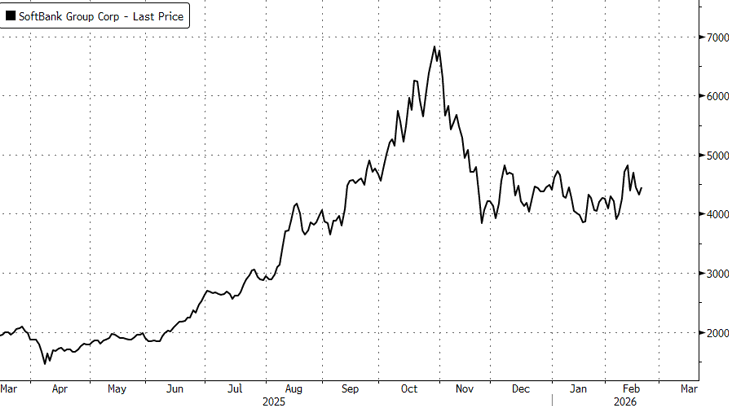
Shares of SoftBank, which held an 11% stake in OpenAI as of December, jumped as much as 4% on the news during Tokyo trading. Shares closed up 2.6% and have remained flat year-to-date after peaking in October 2025.
OpenAI’s potentially stunning private-market valuation comes after Anthropic was valued at about $350 billion in its latest Series G funding round led by GIC and Coatue.
Markets are pricing in a world in which US AI giants capture an outsized share of global AI revenue, control the highest-margin layers of the stack, and retain pricing power as customers continue to pay up. The key risk we see is duration in the AI story, and this may be a harder narrative to maintain as the technological gap between US and Chinese AI models narrows.
Tyler Durden
Thu, 02/19/2026 – 10:30