Category: News
Cook County top prosecutor circulates policy outlining process for charging federal immigration agents
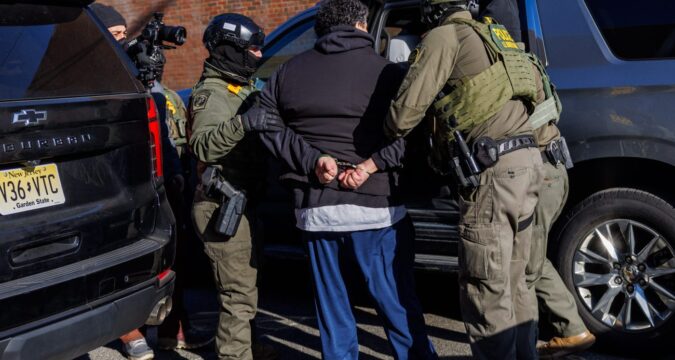
The Cook County state’s attorney’s office on Thursday released a protocol outlining the steps for filing charges against federal immigration agents, marking the first official policy from the office on the topic amid uproar over agents’ conduct in the Chicago area and a public feud between the mayor and State’s Attorney Eileen O’Neill Burke.
The policy document provides a legal analysis of the rare and complex scenario that would involve an on-duty federal agent being charged by a state prosecutor and is meant to guide law enforcement investigating potential offenses and line prosecutors reviewing the cases.
“No one is above the law — including both ICE agents and prosecutors,” Burke said in a news release announcing the policy. “If a federal law enforcement agent commits a crime, my office will not hesitate to act, in accordance with state law. This protocol establishes clear, legally sound guidelines to ensure we have a responsible and effective path to pursue accountability.”
The document, though, notes that prosecutors must consider federal immunity — which is not absolute but offers some protection for agents — among other factors.
The U.S. Supreme Court established decades ago that, in general, a federal officer cannot be held on a state criminal charge where the alleged crime arose during the performance of his federal duties, though charges can be brought if the officer’s actions were so egregious they could not have reasonably believed it was in accordance with their official duties
For months, advocacy groups have called on Burke, Illinois Attorney General Kwame Raoul and other local prosecutors to file charges against immigration agents accused of battering civilians and other misconduct during the Operation Midway Blitz enforcement action, even as officials threw cold water on the idea.
Cook County State’s Attorney Eileen O’Neill Burke presents a progress report on her first year in office at a City Club of Chicago luncheon, Dec.2, 2025. (E. Jason Wambsgans/Chicago Tribune)
But the idea gained more traction after Minnesota officials attempted to begin a state investigation into the shooting of Renee Nicole Good in January, putting pressure on officials here to respond to calls for criminal prosecutions.
The protocol says that the office will review investigations conducted by law enforcement, but notes that prosecutors “do not serve the primary role of investigator in criminal cases and defer to law enforcement agencies to perform investigative duties.”
The document also says that law enforcement should collect and document evidence as it otherwise would when officers become “aware, through the report of a victim, witness, video evidence, personal observation, or other form of evidence of a death, shooting, act of violence,
or use of force incident related to federal immigration enforcement activity that may constitute a felony criminal act.”
Johnson has also directed Chicago police to collect specific information when responding to the scene of immigration enforcement actions, including the names and badge numbers of ranking federal agents. It also directs police to preserve and document body-camera footage, notify supervisors if people on site allege immigration agents broke the law and complete more reports that Johnson’s team says would build a foundation for prosecution.
When evidence is in possession of a federal agency, the policy says, the state can request production of evidence or testimony through a process called a “Touhy request,” named for a 1951 U.S. Supreme Court decision.
The protocol was circulated to Raoul’s office and the Illinois State’s Attorneys Association.
In a statement included in Burke’s office’s new’s release, Raoul said: “I am proud to stand with State’s Attorney Burke and fellow prosecutors committed to using every lawful tool available to hold this administration accountable consistent with this protocol.”
The policy follows the public airing of a beef between Burke and Johnson over an executive order Johnson signed last month directing Chicago police to collect evidence, investigate and potentially refer for felony prosecution criminal charges against federal immigration agents accused of misconduct. But the order led to a rebuke from Burke, who said her office was not given ample opportunity to weigh in on the order.
In particular, her office took issue with a passage in the order that said the mayor’s office would be involved in referring cases to prosecutors, a procedure that the prosecutor’s office said would imperil potential cases by politicizing the process.
Johnson’s administration and Burke’s team had discussed the executive order via email and phone calls before the announcement, according to records obtained by the Tribune via a Freedom of Information Act request that shed more light on the rare public disagreement.
Mayor Brandon Johnson speaks at a rally to protest DHS and ICE in the Loop on Jan. 25, 2026, a day after federal immigration agents killed Alex Pretti in Minneapolis, Minn. (Eileen T. Meslar/Chicago Tribune)
Five days before the measure was unveiled, Yvette Loizon, Burke’s policy and external affairs chief, promised to talk on the phone after a Johnson staffer flagged the policy as “time sensitive.”
But disagreement quickly emerged when Johnson’s policy chief, Sheila Bedi, reached out to Loizon an hour after the mayor announced the measure.
Bedi requested Loizon meet to discuss implementation and credited Loizon’s input for leading to changes that focused the order on potential felonies. In her response, Loizon accused Johnson of describing Burke’s support in “a callous and incorrect manner.”
“At no time did we ever approve or even see any final order, and speaking over the phone about a few sentences does not, in any way, constitute collaboration,” Loizon wrote.
In response, Bedi cited a past conversation in which she said the two had “carefully workshopped” the part of the executive order that referenced the state’s attorney’s office. She also cited Burke’s past pledges to review criminal referrals alleging federal immigration agents had broken laws.
“The Mayor had every reason to understand that the [State’s Attorney’s] Office was aligned with the approach,” Bedi wrote.
“The Mayor falsely stated that [Burke] fully supported an Executive Order that we never read or received, even after making that request directly to you,” Loizon responded. “The Mayor had absolutely no reason to make the statements he made because they are untrue.”
https://www.chicagotribune.com/2026/02/19/law-enforcement-charging-protocol-immigration/

De Milán-Cortina a Nueva York-Lake Placid: El modelo que un legislador quiere copiar
Por TIM REYNOLDS
CORTINA D’AMPEZZO, Italia (AP) — Imaginen: una ciudad extensa de clase mundial y un pequeño pueblo de montaña con una rica historia olímpica, a unas cinco o seis horas de distancia que colaboran y son anfitriones de unos Juegos Olímpicos de Invierno verdaderamente compartidos.
Milán y Cortina d’Ampezzo lo lograron.
Y algunos se preguntan si Nueva York y Lake Placid podrían hacer lo mismo.
Para ser claros, por ahora esto no es más que una idea, un sueño. Pero el congresista del estado de Nueva York Robert Carroll, que viajó a Italia para los Juegos de Milán-Cortina, está plenamente convencido de que podría funcionar —e incluso ya está empezando a trazar cómo Nueva York y el pueblo de Lake Placid, que ha sido sede olímpica en dos ocasiones, podrían conseguirlo.
“Creo que los italianos lo lograron de manera espectacular”, indicó Carroll en una entrevista con The Associated Press. “Estuve en Milán a principios de esta semana, tomé transporte público para llegar a Cortina, y la pasé de maravilla en ambos lugares. Creo que este es claramente el modelo”.
Carroll formó parte de un grupo de atletas y funcionarios —entre ellos el presidente de la Federación Internacional de Bobsleigh y Skeleton, Ivo Ferriani, y la vicealcaldesa de Lake Placid, Jackie Kelly— que asistieron a una recepción en Cortina d’Ampezzo esta semana. El evento se organizó para celebrar la amistad entre Lake Placid y Cortina, dos localidades de montaña que ahora integran el club extremadamente reducido de sedes que han albergado los Juegos de Invierno más de una vez.
La conversación giró hacia el futuro y las posibilidades de que Lake Placid vuelva a recibir unos Juegos. Las justas invernales han crecido demasiado como para que el pueblo de los Adirondacks los organice en solitario como lo hizo en 1932 y 1980. De ahí la idea de que también participe Nueva York.
“Espero que tengan éxito muy pronto —Nueva York y Lake Placid juntos”, le dijo Ferriani al grupo, provocando muchos aplausos.
Esto podría ser realidad hasta 2042. Francia está lista para ser anfitriona de los próximos Juegos de Invierno en 2030, seguida por Salt Lake City en 2034, y Suiza parece tener asegurados los de 2038.
Lake Placid ha vivido un renacimiento en los últimos años, y han modernizado muchas de sus sedes —como las instalaciones de deslizamiento y biatlón en Mount Van Hoevenberg, y el Centro Olímpico con sus tres pistas de hielo— gracias a un financiamiento estatal de 500 millones de dólares.
Lake Placid estuvo en las conversaciones para albergar las pruebas de deslizamiento este año si los italianos no lograban terminar a tiempo la reconstrucción de la histórica pista Eugenio Monti en Cortina.
La visión de Carroll es la siguiente: Lake Placid podría ser sede de las pruebas de deslizamiento, esquí, salto de esquí y más, ya que cuenta con esas instalaciones. Y Nueva York podría albergar el hockey y el patinaje artístico en el Madison Square Garden y el Barclays Center; quizá convertir el Citi Field o el Yankee Stadium en una sede para pruebas de big air; y encontrar la forma de realizar el patinaje de velocidad en el USTA National Tennis Center, en Flushing Meadows.
Al igual que Milán y Cortina, las ciudades están a cinco horas de distancia y son una gran ciudad y un pueblo de montaña. Durante años, muchos pensaron que una idea así nunca funcionaría. Estos Juegos, dijo Carroll, desmienten esa noción de una vez por todas.
___
Deportes AP: https://apnews.com/hub/deportes
Review: ‘EPiC: Elvis Presley in Concert’ reanimates the king of rock ‘n’ roll
For a long time, the image of “Elvis in Vegas” has been a joke: the white jumpsuits, the sunglasses, the sideburns. It’s meant more “Halloween costume” than “rock god” recently, but Baz Luhrmann is here to set the record straight.
While working on his sprawling 2022 biopic “Elvis,” the filmmaker went searching for lost footage of the Elvis Presley concert films “Elvis: That’s the Way It Is” and “Elvis on Tour,” and discovered a treasure trove in the Warner Bros. vault — 59 hours of unseen film negative that he has now lovingly restored and edited into one of the best concert films of all time, “EPiC” (for “Elvis Presley in Concert”). If you’ve ever wished you could have seen Elvis in Vegas, now’s your chance, and don’t miss it on IMAX.
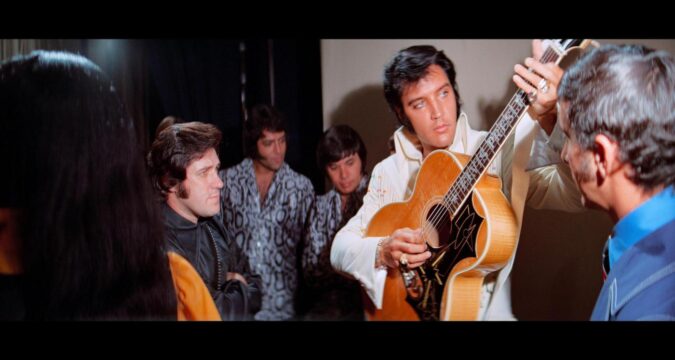
If you know Luhrmann, you know this is going to be a visual spectacle, almost a hallucinatory physical experience. The sheer vibrancy of the restored footage is stunning. Towards the end of the film, there’s a close-up of Elvis, deeply tanned, white jumpsuit crisp, jet black hair falling over his brow, piercing blue eyes and lashes wet with sweat, set against a blazing fuchsia backdrop. It’s simply one of the most powerfully erotic images ever put to screen. Luhrmann knows what he’s doing.
“EPiC” isn’t so much a concert film as is it as reanimation of the icon via filmmaking. He is Dr. Frankenstein, bringing Elvis back to life on screen, making palpable the charisma and energy that drove audiences at the Las Vegas International Hotel into a sexual frenzy, as seen in a montage of Elvis kissing all the overwhelmed women in the crowd.
But “EPiC” isn’t just about reminding us how sexy Elvis was — though that’s certainly a part of it. His hips managed to disrupt the entire social order of the 1950s for good reason, and they remain in fine, fluid form here. But the film is foremost a celebration of his talent, musical obsession, and skill as a live performer. The Vegas residency may have been a chance for his manager Colonel Tom Parker to milk as much money as he could from his client, but it’s also clear that Elvis finds so much joy in performing, and that the concerts were a return to his roots after getting lost in so many Hollywood movies of questionable quality.
Luhrmann and editor/executive producer Jonathan Redmond skim through the necessary context (teen idol, military service, Hollywood) in rapid-fire montages before settling into the musical process, intercutting rehearsal and performance footage with snippets of songs from his band’s 150 song-deep repertoire. If you’ve ever wanted to see Elvis sing Del Shannon’s “Runaway,” the Beatles’ “Yesterday,” or Simon & Garfunkel’s “Bridge Over Troubled Water,” now’s your chance. He also performs high-octane gospel songs like “How Great Thou Art,” interpolates the Beatles’ “Get Back” into his own “Little Sister” and connects the dots from his country, gospel, and rhythm and blues roots to the rock and roll of the 1960s and ‘70s throughout his set.
In rehearsals, Elvis is relaxed, goofy, but focused and diligent. On stage he is a man possessed, channeling something larger than himself, conducting his band and the audience with the smallest of gestures and looks. Luhrmann and Redmond craft sequences of rehearsal, performance, backstage footage and press conference interviews with Elvis that never lose the fidelity of the songs themselves.
Luhrmann acknowledges aspects of the star’s personal life without abandoning the framework of the concert film. A sequence about the Colonel is set to “Devil in Disguise” and juxtaposes images of merchandise with audio of Elvis speaking about the Colonel, clearly oblivious to his manager’s machinations. Another sequence features sweet home videos of Priscilla and Lisa Marie set to Elvis singing “You Were Always On My Mind.”
Luhrmann doesn’t need to tell Elvis’ life story — he’s already done that. But it’s clear that he’s not done examining what Elvis meant, and still means, for culture, as a symbol, an earthquake, an influence. At the end of “EPiC,” Bono reads his 1995 poem “American David,” describing the way Elvis shifted the center of gravity, made it “slippery.” Double entendre aside, that’s exactly what Elvis did, combining musical traditions across race, class and geographical lines, using his own telegenic charisma to bring that new creation to worldwide audiences, and shifting the planet off its axis in the process. Through his concerts, Luhrmann brings us all back to that truth as well, and in “EPiC,” puts us right on stage with the King of Rock and Roll. It’s an exhilarating cinematic experience, whether you’re an Elvis fan or not — but Luhrmann makes sure you are by the end.
Katie Walsh is a critic for Tribune News Service.
“EPiC: Elvis Presley in Concert” — 3.5 stars (out of 4)
MPA rating: PG-13 (for smoking and some language)
Running time: 1:30
How to watch: On IMAX screens Feb. 20, in theaters nationwide Feb. 27
https://www.chicagotribune.com/2026/02/19/movie-review-epic-elvis/
Armada mexicana intercepta en el Pacífico un semisumergible con casi cuatro toneladas de cocaína
Associated Press
CIUDAD DE MÉXICO (AP) — La Armada mexicana interceptó en aguas del Pacífico un semisumergible con casi cuatro toneladas de cocaína, informaron el jueves las autoridades federales.
La incautación se produjo dos días después de que las fuerzas militares estadounidenses atacaran en el Pacífico oriental y el Caribe a tres embarcaciones señaladas de traficar drogas. La operación dejó 11 muertos en uno de los días más letales de la campaña contra el narcotráfico impulsada en los últimos meses por el gobierno de Donald Trump, quien también ha pedido a México “hacer más” para enfrentar a los cárteles.
El semisumergible, con tres personas a bordo y aproximadamente 179 bultos, fue interceptado por una embarcación de la Armada mexicana a más de 250 millas náuticas (463 kilómetros) al sur del puerto de Manzanillo, en el estado norteño de Colima, dijo en un comunicado el Gabinete de Seguridad federal.
El secretario de Seguridad federal, Omar García Harfuch, indicó en su cuenta de X que en la operación se aseguraron aproximadamente cuatro toneladas de cocaína y agregó que en la última semana se han incautado cerca de 10 toneladas de drogas en actividades marítimas.
Las autoridades mexicanas señalaron que para este decomiso en el Pacífico contaron con la colaboración de información de inteligencia del Comando Norte y la Fuerza de Tarea Interagencial Conjunta (JIATF SOUTH, por sus siglas en inglés) de Estados Unidos.
México asegura que ha incrementado en los últimos meses las incautaciones de droga, así como las detenciones y los envíos de presuntos narcotraficantes a Estados Unidos en un esfuerzo por mostrar mayores resultados en el combate al narcotráfico ante las presiones de Trump.
García Harfuch admitió la semana pasada que las fuerzas militares y policiales mexicanas habían decomisado en los últimos meses más de 327 toneladas de drogas, incluyendo más de cuatro millones de pastillas de fentanilo y 51 toneladas de cocaína.
El mes pasado las autoridades mexicanas enviaron a Estados Unidos 37 reos requeridos por sus presuntos vínculos con organizaciones de narcotraficantes, tal como se hizo en agosto pasado con otros 26 detenidos.
En febrero de 2025 México realizó un primer traslado 29 capos entre quienes estaba Rafael Caro Quintero, al que Estados Unidos busca procesar por varios cargos, entre ellos orquestar la muerte de un agente de la agencia antidrogas estadounidense DEA ocurrido en 1985.

Court briefs: Gary man avoids jail in beating; Hammond man stabs two
GARY MAN AVOIDS JAIL FOR BEATING WOMAN
A Gary man avoided jail Wednesday for severely beating a woman in a motel in 2021.
William Brian Glass, 47, pleaded guilty in December 2022 to criminal confinement and domestic battery.
Gary Police were called April 6, 2021, to the Mosley Motel, 6200 Melton Road, after the woman called 911. She was on the ground with a wheelchair on top of her, police said.
They had been arguing all day and he got enraged when she wanted to break up and kick him out since he had been physically and verbally abusive, documents allege.
He turned up the TV, then locked the door, knocking her off the wheelchair, before punching her several times in the head and chest, the affidavit charges. When she tried to call police, he grabbed her phone and tried to break it, documents state.
He continued to hit her “like a punching bag,” according to the charges.
“You’re gonna die tonight,” Glass said, according to the woman. “Like I said, I’m gonna kill you! You not leaving me but in a bag, (expletive)!”
His plea called for two years in jail and three years on probation. Glass was credited for time spent in a state hospital and while released on his own recognizance on house arrest.
POLICE: HAMMOND MAN STABS TWO
A Hammond man went on a stabbing rampage just before Valentine’s Day – targeting one man shopping at Van Til’s, then another man after a car wreck, documents allege.
Brandon Robinson, 33, is charged with aggravated battery and two counts of battery.
He is in custody, held on a $7,000 cash bond.
Police responded just after 4 p.m. Feb. 12 to Van Til’s, 2635 169th Street.
The victim at Van Til’s told police Robinson, a stranger, got confrontational in the seafood section.
“Excuse me,” Robinson said. “You heard what..I said. I’ll…kill you.”
When the man walked toward the registers, Robinson caught up and stabbed him in the side of his head. Video footage captured the incident.
Shortly afterwards, officers responded to a crash two miles west on the 1400 block of 165th Street.
Robinson crashed into another vehicle. The other man got out and the men got into a verbal confrontation.
That victim’s wife said Robinson punched him, got a knife from his vehicle, then stabbed the other man. It was also caught on video, she said.
Police noted the man had “several” head injuries and his ear was “nearly severed in half.”
LAKE CENTRAL STUDENT ARRESTED IN SCHOOL THREAT
Police arrested a Lake Central High School student Wednesday who threatened bring “a gun” and “shoot up the school tomorrow,” school administrators wrote in a message to parents.
The student’s identity was not disclosed. Extra police were expected at school Thursday.
St. John Police were not immediately available for comment.
mcolias@post-trib.com
Body of Elgin man missing since November found near Fox River dam in South Elgin
The body of a man found this week near the Fox River dam in South Elgin has been identified as that of an Elgin man missing since November, according to the Kane County coroner’s office.
An autopsy done Wednesday confirmed that Ulises “Miguel” Segura Dorantes, 53, retrieved Tuesday near the 100 block of North Center Street, died as a result of drowning. Toxicology test results are pending.
Elgin police are handling the investigation into the death of Segura Dorantes, previously identified as Miguel Segura. He was reported as missing Nov. 29 by out-of-state relatives after they were notified by a co-worker that Dorantes failed to show up for his job.
Police did multiple searches of the Fox River in the area of National Street and the Clock Tower Plaza, where he was last seen about 4 a.m. Nov. 26. Family members who came to Elgin to help in the search said at the time that they feared the memory problems Segura Dorantes was having may have played a role in his disappearance.
According to the police department’s new Transparency Hub missing persons page, Segura Dorantes’ cell phone and other personal belongings were found on the river’s edge near the National Street bridge in January — something not previously disclosed.
Cadaver searches of the area using K-9 teams and aerial drone sweeps were conducted, and water rescue teams used 2D and 3D sonar technology in their efforts to locate him, police said.
Investigators had been planning to do a six-phase search of the river from National Street to the South Elgin dam when the body was discovered about 5:40 p.m. Tuesday, officials said. South Elgin police turned the case over to the Elgin Police Department.
“We wish to thank the Elgin community and beyond for information that was provided for this investigation and extend our condolences to the family and friends of Mr. Segura Dorantes,” an Elgin police news release said.
Segura Dorantes was originally from Vera Cruz, Mexico, where his elderly parents still live. He immigrated to the United States in 1997 and moved to Elgin 2012, his family said.
His disappearance took a toll on relatives, according to his cousin Laura Mora, who spoke to The Courier-News in January and joined family members in combing the area searching for him.
“His parents are suffering because they don’t know where he is,” Mora said a few weeks ago. “They said, ‘We want to know what happened.’”
Family members were not available for comment following the discovery of his body.
Segura Dorantes is the second missing person from Elgin to be found in a body of water in the Elgin area in the last two weeks. Joseph L. Johnson’s body was found in Jelkes Creek in West Dundee on Feb. 4. The 52-year-old man had been missing since Jan. 16, and his cause of death was also drowning, officials said.
Gloria Casas is a freelance reporter for The Courier-News.
https://www.chicagotribune.com/2026/02/19/elgin-missing-man-drowned-river-dam/

The Atlantic Busted Fabricating Dead Kid Measles Story
The Atlantic Busted Fabricating Dead Kid Measles Story
Last Thursday, The Atlantic published a heart-wrenching story about an 11-month-old child who died of measles. Written in the second person from the perspective of a mother whose two unvaccinated children fell ill with the disease, the story is rich with personal detail;
“You plant her on the couch with a blanket and put Bluey on the TV while she drifts in and out of sleep…”
“While the kids are napping, you tap a list of your daughter’s symptoms into Google and find a slew of diseases that more or less match up…”
“Her cough wracks her whole body, rounding her delicate bird shoulders. She does not sleep well. And as you lift up her pajama top to check her rash one morning, you see that her breathing is labored, shadows pooling between her ribs when she sucks in air.”
Turns out, NONE OF THAT HAPPENED. The Atlantic‘s Elizabeth Bruenig simply made it up, leading to mass confusion.
Elizabeth Bruenig, who fabricated measles scare piece without a disclaimer.
As Laura Hazard Owen of NiemanLab – who initially busted Bruenig – writes:
When I initially read Bruenig’s story, I was stunned: An Atlantic staff writer’s unvaccinated child had died of measles in the 2020s, and now she was writing about it? At the end of Bruenig’s piece, though, there’s an editor’s note: “This story is based on extensive reporting and interviews with physicians, including those who have cared directly for patients with measles.” That was the point when I sent a gift link to my mom group: “as far as I can tell this piece is fiction. What do we think about this choice? I am very conflicted!!!” My conflict stemmed from my concern that, though the piece was heavily researched, it was not a true story. I wondered if the key people whose minds might be changed by it — people who don’t vaccinate their kids — would brush it off as fiction, or fake.
Following the publication, two journalists reached out to Owen to let her know that they were similarly confused, as there “was not an editor’s note/disclaimer on the piece at all.”
What’s more, The Atlantic’s own spokesperson told one of the journalists: “This is based on a mother’s real account,” – after which the outlet added a disclaimer.
To +1 @laurahazardowen
I’ve also seen PDF of Atlantic piece on measles as first posted.
a/ Originally it had no editor’s note
b/ PR rep initially told reporter (in note I’ve seen) “this is based on a mother’s real account.”
If Atlantic was confused, why wouldn’t readers be? https://t.co/oWFlaktBWe
— David Folkenflik (@davidfolkenflik) February 19, 2026
The comments section at The Atlantic is full of similarly confused readers:
To clarify – The Atlantic published a story about a child dying of measles.
Without notifying its readers the story was largely a work of fiction.
The only added an editor’s note after other journalists started asking them about it. https://t.co/cgWdlt0KjS
— Stephen L. Miller (@redsteeze) February 19, 2026
Of course, some Harvard douche who doesn’t disclose that his own work was mentioned in The Atlantic ‘immediately recognized the article as hypothetical.’ Great job Stuart!
I don’t understand how anyone would have not immediately recognized the article as hypothetical — it’s in the second person! Obviously none of this has happened to me as the reader, so obviously it’s a way of storytelling.
— Stuart Buck (@stuartbuck1) February 19, 2026
Tyler Durden
Thu, 02/19/2026 – 12:30
https://www.zerohedge.com/political/atlantic-busted-fabricating-dead-kid-measles-story

US speedskater Jordan Stolz comes up short of 3rd Olympic gold medal in 1,500 meters
MILAN — American speedskater Jordan Stolz ‘s bid for a third gold medal at the Milan Cortina Olympics came up short with a loss to China’s Ning Zhongyan in the 1,500 meters Thursday.
Ning won in an Olympic-record time of 1 minute, 41.98 seconds. Stolz, skating in the day’s last heat, finished 0.77 off the pace and added a silver to the golds he claimed earlier at these Winter Games in the 500 and 1,000. The 21-year-old from Wisconsin will participate in his last race, the mass start, on Saturday.
Only two long-track speedskaters have won at least four golds at one Games: Eric Heiden of the U.S. went home with five from the 1980 Lake Placid Olympics, and Lidiya Skoblikova, representing the Soviet Union, claimed four in 1964.
When Stolz finished and his time flashed on the arena’s video boards, Ning began jumping up and down with other members of China’s team. He then grabbed a flag and wore it like a cape for a victory lap. Stolz bowed his head and rested his hands on his knees.
2026 Winter Olympics: Meet the medalists from the United States
Ning picked up his third medal at the Milano Speed Skating Stadium, a temporary facility that has been producing swift times, after bronzes in the 1,000 and team pursuit.
Kjeld Nuis of the Netherlands, who won the 1,500 at the 2018 and 2022 Olympics and holds the world record, got the bronze Thursday, 0.07 behind Stolz. Oak Park’s Emery Lehman finished 25th.
When healthy, Stolz essentially has been favored in every race he entered in recent years. He is a two-time world champion at 500, 1,000 and 1,500 and owns the world record in the 1,000.
After setting Olympic records in the 500 and 1,000 — and becoming the only man other than Heiden to complete that double at a Games — Stolz had his sights set on becoming the first male speedskater to win a trio of golds at one Games since Norway’s Johann Olav Koss did it at the Lillehammer Olympics in 1994.
Dutch skater Irene Schouten won three women’s races at the Beijing Olympics four years ago.
Asked to sum up his trip to Italy heading into Thursday, Stolz said: “It’s a success, but it’s more so of a partial success if I don’t win the 1,500, just because I’ve been so good in that distance for so long. So I hope I can win that one.”
His first career Olympic golds had been anticipated, if not downright expected, by many before competition began in Milan.
“I think Jordan is the greatest speedskater of all time,” said Canada’s Laurent Dubreuil, the bronze medalist behind Stolz in the 500.

Líder de la resistencia en Myanmar se entrega al Ejército tras choques con fuerza rival
BANGKOK (AP) — Un destacado líder de un grupo de resistencia independiente en Myanmar, que fue atacado por rivales leales a la principal fuerza opositora, se entregó a las autoridades militares del país, informó el jueves la prensa estatal.
La rendición de Bo Nagar, un líder del Ejército Revolucionario Nacional de Birmania, o ERNB, en la región centro-norte de Sagaing, fue un dramático recordatorio de las fracturas dentro del movimiento de resistencia armada, que ha provocado choques esporádicos por el control del territorio y disputas administrativas.
Sagaing ha sido un bastión de la resistencia armada desde que el ejército le arrebató el poder al gobierno electo de Aung San Suu Kyi en 2021. Después de que las manifestaciones pacíficas fueran reprimidas con fuerza letal, muchos opositores al régimen militar tomaron las armas, y grandes partes del país están ahora inmersas en una guerra civil.
En el reporte publicado el jueves en el periódico estatal Myanma Alinn se indica que Bo Nagar, también conocido como Naing Lin, y familiares se comunicaron el miércoles por la tarde con el campamento militar del municipio de Pale, en la región de Sagaing, para “volver al marco legal”. Los medios estatales mostraron fotos del líder de la resistencia junto con varias armas que entregó.
Varios reportes detallados en medios independientes de Myanmar señalaron el miércoles que Bo Nagar y varios de sus familiares fueron trasladados por aire en helicópteros del ejército desde su bastión en el centro de Sagaing.
En el reporte del periódico se indica que otros simpatizantes de la resistencia que se entreguen “serán recibidos y aceptados, se les brindará la asistencia y el apoyo necesarios, y recompensas en efectivo por cualquier arma y munición”.
La huida de Bo Nagar se produjo después de que su grupo fuera atacado por unidades de la Fuerza de Defensa del Pueblo, o FDP, que están bajo el mando nominal del Gobierno de Unidad Nacional en la sombra. El GUN fue establecido por legisladores electos que fueron derrocados en 2021 cuando el ejército tomó el poder.
Desde el año pasado había tensión entre la fuerza de Bo Nagar y las unidades locales de la FDP por acusaciones de que combatientes del ERNB obtenían dinero por medio de extorsiones en puestos de control en carreteras.
Según se informó, esas tensiones llegaron a un punto crítico la semana pasada cuando, según admitió el propio ERNB, el grupo mató a tiros a un combatiente de la FDP en una disputa por un arma. La FDP tomó represalias el martes al asaltar posiciones ocupadas por el ERNB.
En un comunicado emitido el miércoles por el GUN se afirma que el conflicto surgió después de que miembros del ERNB se negaran a cooperar con una investigación sobre presuntos delitos, incluido el asesinato de integrantes de la FDP y violencia sexual. También indicó que unos 150 miembros del ERNB se habían entregado para servir con la FDP.
Nay Phone Latt, portavoz del GUN, declaró el jueves a The Associated Press que el GUN intentó actuar para abordar los presuntos delitos cometidos por algunos miembros del ERNB, pero que Bo Nagar, de quien afirmó que parecía estar en contacto constante con el ejército, fue sacado del lugar por un helicóptero militar.
“Hemos recibido reportes de violación de menores y otros delitos cometidos por algunos miembros del ERNB, incluido Bo Nagar”, afirmó Nay Phone Latt.
No fue posible contactar a Bo Nagar para solicitar comentarios debido a que quedó bajo custodia del ejército.
En las primeras etapas de la lucha armada, Bo Nagar ganó notoriedad rápidamente como uno de los líderes clave de la resistencia tras encabezar inicialmente un grupo guerrillero formado a nivel local, el Myanmar Royal Dragon Army, que había estado alineado con el GUN y se convirtió en un objetivo importante para el ejército de Myanmar. Reconstituyó su grupo como ERNB en septiembre de 2023, aflojando sus vínculos con las fuerzas de la FDP.
___
Esta historia fue traducida del inglés por un editor de AP con la ayuda de una herramienta de inteligencia artificial generativa.

Evo Morales reaparece luego de más de un mes en un evento público en Bolivia
Associated Press
LA PAZ, Bolivia (AP) — Después de más de un mes de ausencia de la vida pública, lo que despertó toda clase de especulaciones, el expresidente boliviano Evo Morales reapareció el jueves en su feudo cocalero del centro del país andino.
Con unas gafas negras y montado en un tractor participó de la proclamación de candidatos a alcaldes y gobernadores para las elecciones el 22 de marzo en las que intentará reunificar a su fuerza política tras la ruptura del Movimiento Al Socialismo (MAS), que perdió el poder después de casi 20 años de hegemonía.
“Aquí estoy y no me voy a ir”, dijo Morales en la localidad de Chimoré, donde están las federaciones de cultivadores de hoja de coca que él dirige.
El exmandatario (2006-2019) afirmó que estuvo ausente porque contrajo chikungunya, una enfermedad causada por la picadura de un mosquito.
“A cuidarse de esa enfermedad llamada chikungunya, gravísimo. Me ha sorprendido. Pero gracias a la junta médica del sector privado —no quiero comentar por ahora del sector público, me abstengo— un grupo de médicos después de dos semanas de problemas organizaron una junta médica. Eso me salvó. Acá estamos con vida”, sostuvo Morales.
Durante más de un mes Morales no asistió a sus programas radiales ni se dejó ver públicamente. El inicio de su ausencia coincidió con la captura por parte de Estados Unidos de su aliado venezolano Nicolás Maduro.
Sobre Morales, el primer presidente indígena en la historia de Bolivia, pesa desde hace más de un año una orden de detención por el presunto abuso de una menor. Para evadir a la justicia Morales se refugió en su feudo cocalero del Chapare, protegido por sus seguidores, y sólo asiste a eventos en esa región.
La incógnita sobre su paradero dio pie a distintas versiones, desde que había salido del país a que estaba enfermo o escondiéndose de la justicia.
En su reaparición del jueves Morales cuestionó al presidente de centroderecha Rodrigo Paz, quien asumió en noviembre y dio un giro en la política internacional de Bolivia al acercarse a Estados Unidos, otrora acérrimo enemigo del exmandatario.
“Este gobierno está destrozando Bolivia”, se quejó. “Ahora no hay trabajo. Un hermano sale en la mañana a buscar trabajo en la construcción o descargar, no encuentra. Vuelve vacío. ¿Qué comen los niños? Su compañera busca lavar ropa casa por casa, no encuentra”, agregó.
Morales criticó a Estados Unidos y dijo que el cerco petrolero a Cuba “es un genocidio” al tiempo que llamó a votar por los candidatos del MAS.
“Toda nuestra solidaridad al pueblo cubano, a las empresas que quieren vender, llevar a Cuba. Amenazan, persiguen a pueblos, gobiernos que quieren llevar alimentos a Cuba, no los dejan”, dijo Morales.