Category: News
2025 New Home Sales Highest Since 2021
2025 New Home Sales Highest Since 2021
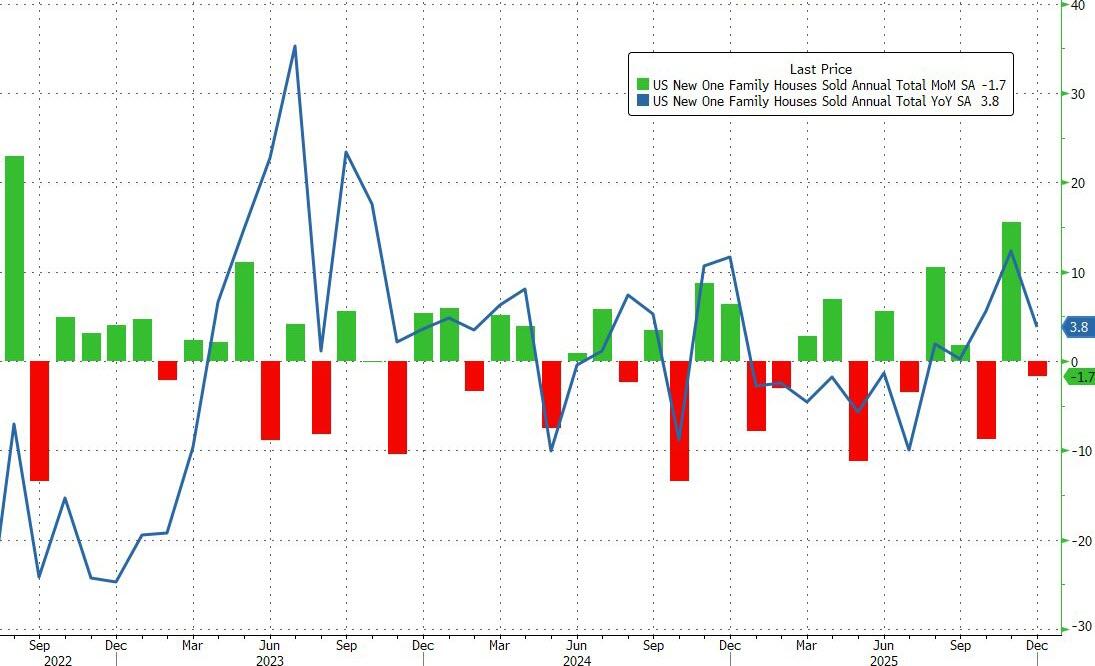
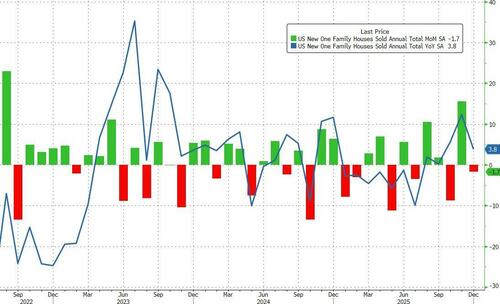
US New Home Sales dipped 1.7% MoM in December (after a 15.5% MoM surge in November)…
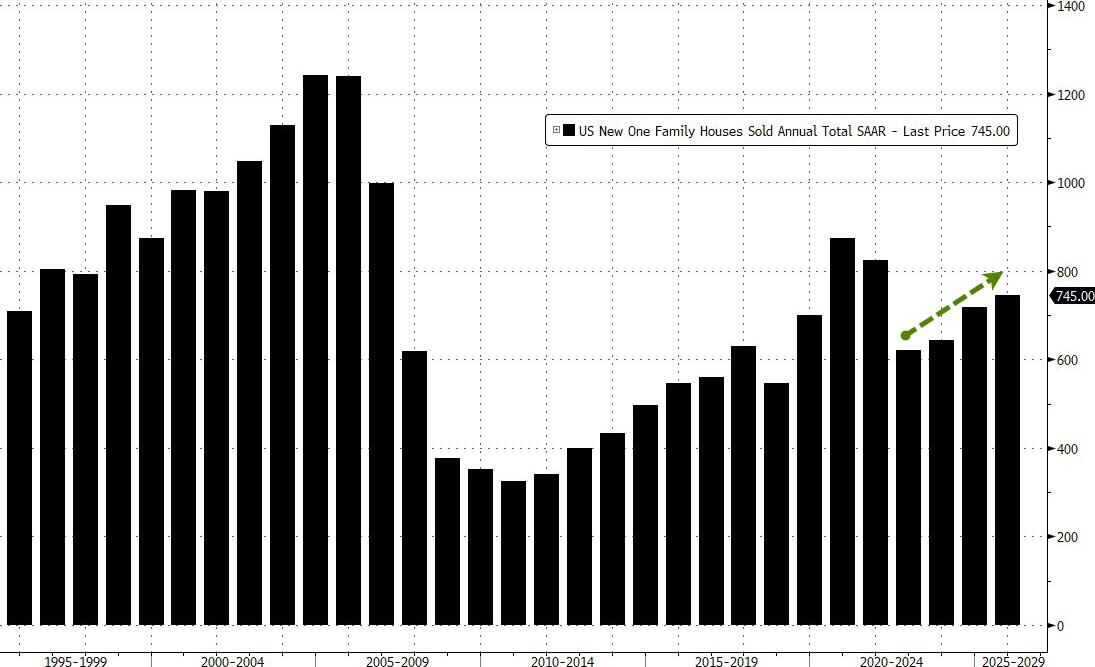
…but ended the year at 745k – the highest SAAR since 2021…
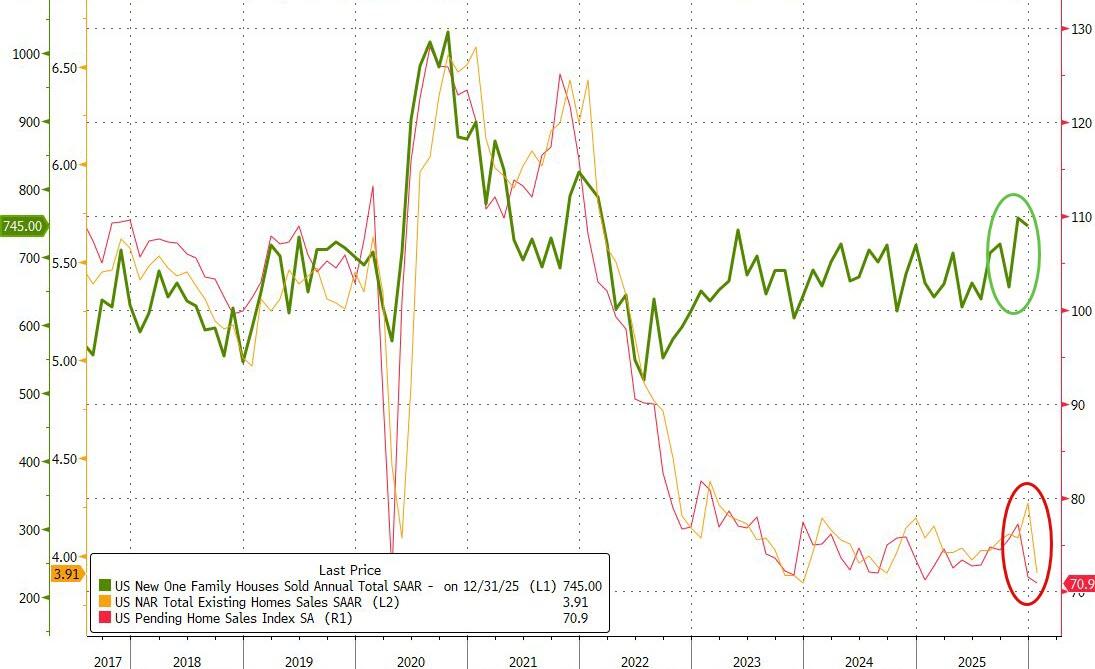
“New” home sales have notably decoupled from “used” home sales in the last few years as homebuilders incentivize buyers (reducing margins) and lower prices (reducing revenues)…
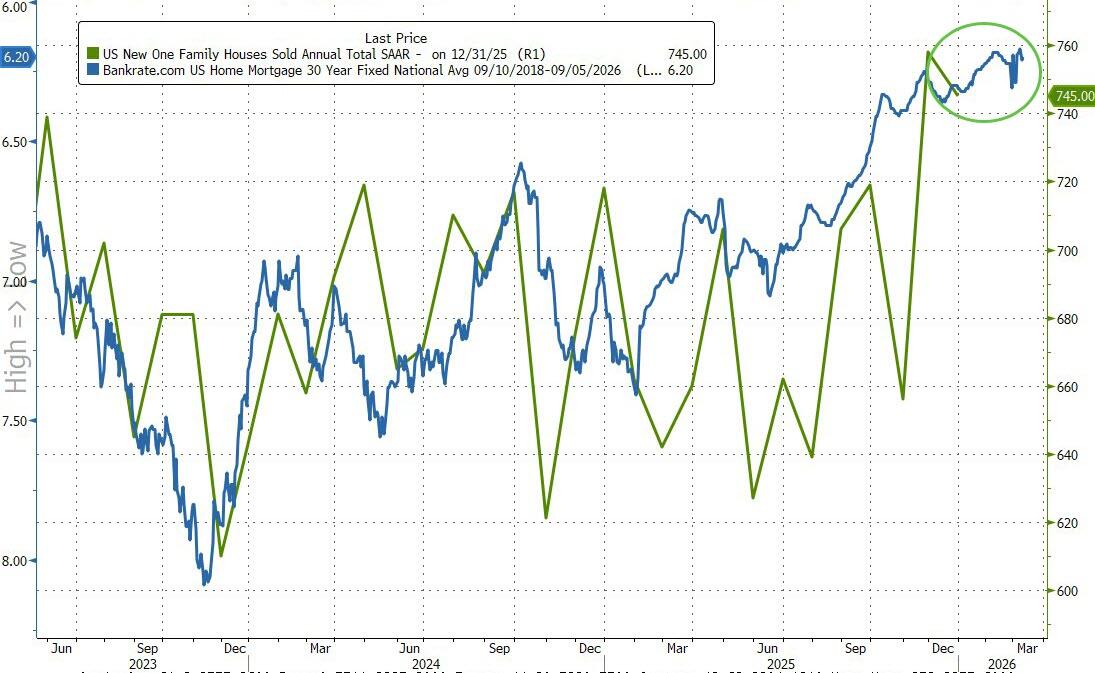
Lower mortgage rates support modest further improvements in sales…
Will this be Trump’s lead on housing affordability?
Tyler Durden
Fri, 02/20/2026 – 10:24
https://www.zerohedge.com/markets/2025-new-home-sales-highest-2021

PSG: Dembélé se pierde el partido ante Metz por lesión en pantorrilla
Por JEROME PUGMIRE
PARÍS (AP) — El delantero del Paris Saint-Germain Ousmane Dembélé padece una lesión en la pantorrilla y se perderá el partido de la liga francesa del sábado contra Metz.
El club informó en su boletín médico semanal el viernes que el último ganador del Balón de Oro hará trabajo de gimnasio en interiores durante los próximos días mientras se recupera.
Los parisinos recibirán a Mónaco el miércoles en la vuelta de su repechaje de la Liga de Campeones, con ventaja 3-2 tras la ida. Dembélé se lesionó la pantorrilla izquierda durante ese encuentro y fue sustituido en la primera mitad.
El técnico Luis Enrique no indicó si Dembélé estará listo para enfrentar a Mónaco la próxima semana.
“Es un golpe. No vamos a correr riesgos con ningún jugador. Estamos tratando de gestionar esto de la mejor manera posible”, indicó Luis Enrique.
Dembélé ha estado lastrado por las lesiones durante toda la temporada. El jugador de 28 años se lesionó a principios de septiembre en un compromiso con la selección Francia y luego salió en la primera mitad contra el Bayern Múnich en noviembre.
Ha marcado 11 goles en 25 partidos, después de firmar un total de 35 goles la temporada pasada, la cifra más atla de su carrera.
El PSG marcha segundo en la Ligue 1 y está a un punto del sorprendente líder Lens de cara a los partidos de este fin de semana.
Luis Enrique podría volver a contar con Lucas Chevalier contra Metz, colista de la tabla, en lugar de Matvei Safonov, con ambos arqueros peleándose la titularidad tras la salida de Gianluigi Donnarumma al Manchester City.
Lens recibe a Mónaco el sábado.
___
Deportes AP: https://apnews.com/hub/deportes

Alyssa Milano, Selma Blair, Ashton Kutcher y más recuerdan al fallecido Eric Dane
Por The Associated Press
Amigos y compañeros de reparto en todo Hollywood están de luto por Eric Dane, el actor conocido por su icónico papel como el Dr. Mark Sloan, alias McSteamy, en “Grey’s Anatomy” de ABC. Dane, quien anunció su diagnóstico de ELA hace menos de un año, murió el jueves a los 53 años.
Ashton Kutcher
“La liga de fantasy football de fanáticos de la tira Franklin extrañará al Sr. Eric Dane. Sabemos que estarás mirando desde la cabina. Te extrañamos, amigo. Sigamos luchando para resolver la ELA.” — el actor y coprotagonista de “Valentine’s Day”, en X.
Nina Dobrev
“Era cálido, generoso, estaba preparado y era tan apasionado por lo que hacía. Lideraba con amabilidad e hizo que todos en nuestro set se sintieran vistos. … Que su memoria inspire más investigación, conciencia y avances hacia una cura.” — la actriz y coprotagonista de “Redeeming Love”, en Instagram.
Kim Raver
“Eric era una luz. Podías ver cómo brillaba sin esfuerzo en el set de ‘Grey’s’, así como cuando estaba con Rebecca y las niñas. Durante la filmación le aparecía ese destello en los ojos y, con una mirada traviesa, soltaba con una sincronía cómica perfecta una diálogo que te dejaba en el suelo. ¡Se te va a extrañar!” — la actriz y coprotagonista de “Grey’s Anatomy”, en Instagram.
Kevin McKidd
“Descansa en paz, amigo.” — el actor y coprotagonista de “Grey’s Anatomy”, en Instagram, acompañado de una foto de Dane con uniforme quirúrgico como el Dr. Mark Sloan.
Selma Blair
“Te amo. Y a los tuyos.” — la actriz en Instagram, acompañado de un video de una escena juntos en la comedia “Zoe, Duncan, Jack and Jane”.
Travis Van Winkle
“Aprendí muchísimo de Eric. Era un gran hombre. Me entristece verlo partir de esta manera. Le envío cariño a su familia. Gracias por los recuerdos, amigo.” — el actor y coprotagonista de “The Last Ship”, en Instagram.
Alyssa Milano
“No puedo dejar de ver ese destello en los ojos de Eric justo antes de decir algo que o bien te haría escupir la bebida o replantearte por completo tu perspectiva. Tenía un sentido del humor afiladísimo. Le encantaba lo absurdo de las cosas. Le encantaba tomar a la gente por sorpresa.
Y cuando se trataba de sus hijas y de Rebecca, todo en él se ablandaba. Las llevaba consigo incluso en habitaciones en las que ellas no estaban presentes. Se notaba en cómo le cambiaba la voz cuando decía sus nombres. Una familia de una belleza impresionante.
El destello. La travesura. La ternura que mantenía resguardada, pero nunca del todo oculta.
Me convenció de hacerme el corte pixie y de perforarme la nariz. También estuvo conmigo en la caminata cuando encontramos a Lucy, mi querida chihuahua rescatada. Me llamaba ‘Milano’, como si fuera la única parte de mi nombre que importara.” — la actriz y coprotagonista de “Charmed”, en Instagram.
Paul Walter Hauser
“Intentamos conseguir trabajos, intentamos reírnos del dolor e intentamos mantenernos sobrios. Me alegra que hayamos podido actuar juntos en Americana. Te quiero, hermano. Ojalá hubiéramos tenido más tiempo. Disfruta en los brazos de Dios Padre. Te veré de nuevo.” — el actor y coprotagonista de “Americana”, en Instagram.

Basílica de la Sagrada Familia en Barcelona alcanza su máxima altura tras más de un siglo
Por SUMAN NAISHADHAM
BARCELONA, España (AP) — La imponente basílica de la Sagrada Familia de Barcelona alcanzó su altura máxima el viernes, aunque la obra magna del arquitecto catalán Antoni Gaudí aún está a años de completarse.
Una grúa colocó el brazo superior de una cruz en la cima de la Torre de Jesucristo, la pieza central que se eleva sobre el templo, que ahora se alza a 172,5 metros (566 pies) sobre la ciudad, informó la iglesia.
Con la adición del viernes, la Sagrada Familia se acerca un poco más a su finalización. El monumento inconcluso se convirtió el año pasado en la iglesia más alta del mundo tras el izamiento y colocación de otra parte de su torre central.
La primera piedra de la Sagrada Familia se colocó en 1882, pero Gaudí nunca esperó que se terminara en su periodo de vida. Solo una de sus torres estaba finalizada cuando el arquitecto murió, a los 73 años, en 1926, tras ser atropellado por un tranvía.
En las últimas décadas, los trabajos se aceleraron mientras la basílica se convertía en una gran atracción turística internacional que fascina a las personas por la estética radical de Gaudí, que combina el simbolismo católico con las formas orgánicas.
El interior de la Torre de Jesucristo todavía está en obras. Su exterior está flanqueado por grúas de construcción y andamios.
Aun así, coronar la torre central, que se eleva por encima del crucero, ha sido una prioridad de cara a las celebraciones de junio, que conmemorarán el centenario de la muerte de Gaudí. Se espera que, para entonces, se retiren los andamios que rodean la torre central, a tiempo para la inauguración de la Torre de Jesucristo, señaló la iglesia.
Tal como Gaudí lo había previsto, la cruz tiene cuatro brazos para que su forma pueda reconocerse desde cualquier dirección, explicó el rector de la Sagrada Familia, el reverendo Josep Turull. Si el gobierno municipal de Barcelona lo autoriza, el plan original también incluye un haz de luz que brille desde cada uno de los brazos de la cruz, como símbolo del papel de la iglesia como faro espiritual, añadió.
Millones de turistas visitan la Sagrada Familia cada año, y las entradas financian en gran medida la construcción.
Este año, se celebrarán varios actos en el templo para conmemorar el legado del modernista catalán, que incluye otras impresionantes construcciones en Barcelona y en otros lugares de España.
La Sagrada Familia se convirtió en la iglesia más grande del mundo en octubre, cuando superó en altura la aguja de la Ulmer Münster de Alemania, una iglesia luterana gótica construida a lo largo de más de 500 años, a partir de 1377. Ese templo alcanza los 161,53 metros (530 pies).
En la Sagrada Familia, se incluyó un versículo de oración en la base de la cruz instalada el viernes por la tarde, indicó el rector Turull.
La inscripción dice en latín: Tu solus Sanctus, Tu solus Dominus, Tu solus Altissimus (Solo tú eres Santo, solo tú Señor, solo tú Altísimo).
___
Los periodistas de The Associated Press Joseph Wilson, en Barcelona, España, y Giovanna Dell’Orto, en Minneapolis, contribuyeron con información.
___
Esta historia fue traducida del inglés por un editor de AP con la ayuda de una herramienta de inteligencia artificial generativa.

West Aurora School District registration fees may stay the same for next school year
West Aurora School District student registration fees would remain the same for next school year as they have for the past six years under a proposal being eyed by the district’s school board.
“Our recommendation is that we hold registration fees where they are,” West Aurora School District Associate Superintendent of Operations Angie Smith said at Tuesday’s board meeting.
No formal board vote has been taken yet on the fees.
The registration fees for the 2026-27 school year would remain at $225 for the high school and $350 for driver education, and $175 for the middle schools and $125 for elementary schools, according to the proposal.
The last increase in fees reflected a technology insurance fee for student-issued devices beginning in the 2020-21 school year, according to district officials. The move back then impacted registration fees across all grade levels.
Under the new proposal, the district would no longer provide a $100 credit for re-registration of a student.
“Historically for the last several years, we have been providing a $100 incentive for student re-registration by a certain date,” Smith said.
The credit was provided when there wasn’t a whole lot of incentive for families to register their children in the school in a timely fashion. Early registrations assist the district in establishing the need for staffing in buildings, Smith told the board.
Due to these efforts, fewer families need to go through the re-registration process because addresses can easily be verified in the system, she said.
“We are going to remove the $100 incentive because virtually almost everyone will not have to re-register. That is a change,” Smith said.
There are approximately 10%-12% of families who may have recently moved to another address that the district cannot verify. In those situations, families will need to go through the normal process and provide documentation of residency.
All fees are eligible for waivers, the associate superintendent of operations said.
“Whether it is these fees or athletic fees, they are eligible for a waiver. If families receive state benefits, we automatically waive fees,” Smith said.
Fee waiver applications based on income or hardship are available as well. The information is kept confidential, Smith said.
In addition, athletic fees and activity fees that are participation-based would remain at the current level under the proposal.
“Our fees are considerably lower than our neighbors. We know that students that are more connected via participation in a sport or an activity statistically do better in school. Our fee structure helps support that,” Smith said.
Linda Girardi is a freelance reporter for The Beacon-News.
Supreme Court strikes down Trump’s sweeping tariffs, upending central plank of economic agenda
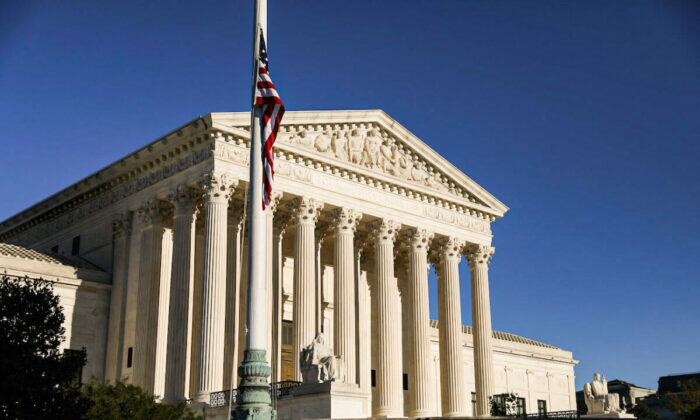
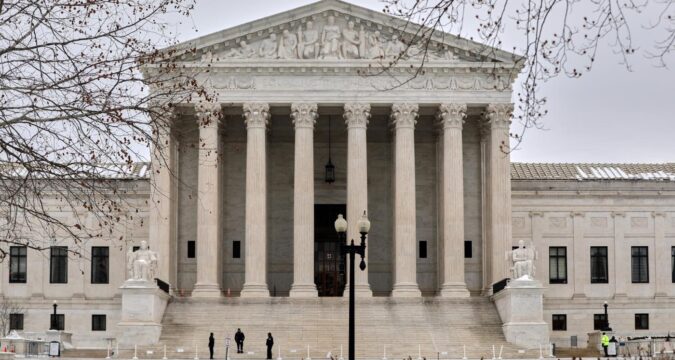
WASHINGTON — The Supreme Court struck down President Donald Trump’s far-reaching global tariffs on Friday, handing him a significant loss on an issue crucial to his economic agenda.
The decision centers on tariffs imposed under an emergency powers law, including the sweeping “reciprocal” tariffs he levied on nearly every other country.
It’s the first major piece of Trump’s broad agenda to come squarely before the nation’s highest court, which he helped shape with the appointments of three conservative jurists in his first term.
The Republican president has been vocal about the case, calling it one of the most important in U.S. history and saying a ruling against him would be an economic body blow to the country. But legal opposition crossed the political spectrum, including libertarian and pro-business groups that are typically aligned with the GOP. Polling has found tariffs aren’t broadly popular with the public, amid wider voter concern about affordability.
The Supreme Court ruling comes despite a series of short-term wins on the court’s emergency docket that have allowed Trump to push ahead with extraordinary flexes of executive power on issues ranging from high-profile firings to major federal funding cuts.
The tariffs decision doesn’t stop Trump from imposing duties under other laws. While those have more limitations on the speed and severity of Trump’s actions, top administration officials have said they expect to keep the tariff framework in place under other authorities.
The Constitution gives Congress the power to levy tariffs. But the Trump administration argued that a 1977 law allowing the president to regulate importation during emergencies also allows him to set tariffs. Other presidents have used the law dozens of times, often to impose sanctions, but Trump was the first president to invoke it for import taxes.
Trump set what he called “reciprocal” tariffs on most countries in April 2025 to address trade deficits that he declared a national emergency. Those came after he imposed duties on Canada, China and Mexico, ostensibly to address a drug trafficking emergency.
A series of lawsuits followed, including a case from a dozen largely Democratic-leaning states and others from small businesses selling everything from plumbing supplies to educational toys to women’s cycling apparel.
The challengers argued the emergency powers law doesn’t even mention tariffs and Trump’s use of it fails several legal tests, including one that doomed then-President Joe Biden’s $500 billion student loan forgiveness program.
The economic impact of Trump’s tariffs has been estimated at some $3 trillion over the next decade, according to the Congressional Budget Office. The Treasury has collected more than $133 billion from the import taxes the president has imposed under the emergency powers law, federal data from December shows. Many companies, including the big-box warehouse chain Costco, have already lined up in court to demand refunds.
https://www.chicagotribune.com/2026/02/20/supreme-court-strikes-down-trump-tariffs/
Inflation Fears Plummet As UMich Sees Democrats’ Confidence Pick Up In February
Inflation Fears Plummet As UMich Sees Democrats’ Confidence Pick Up In February
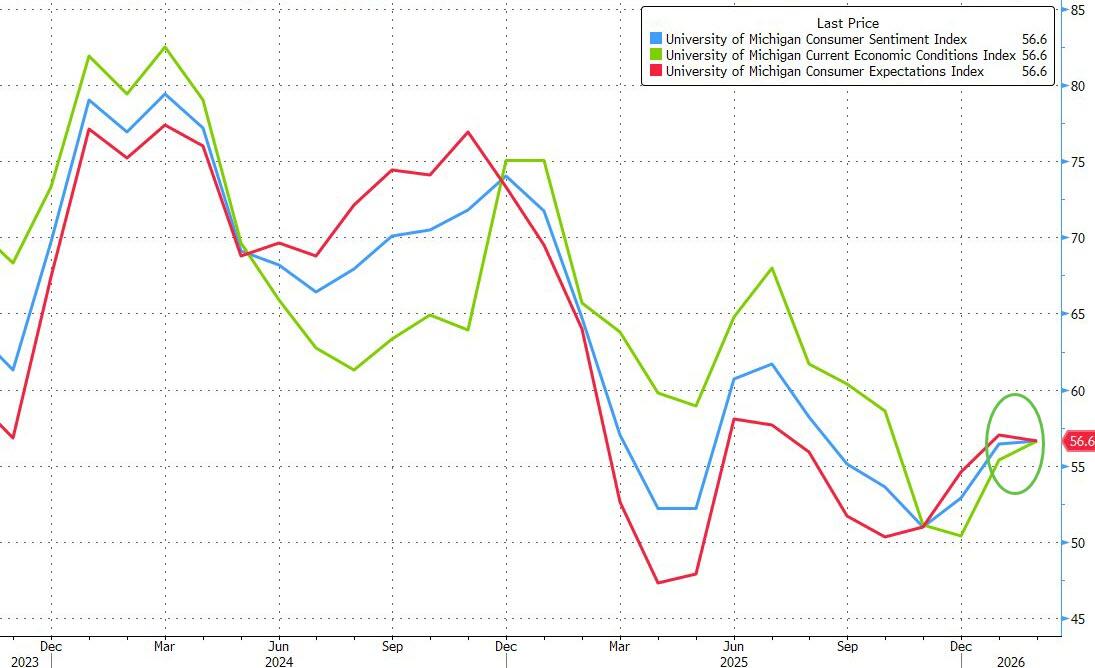
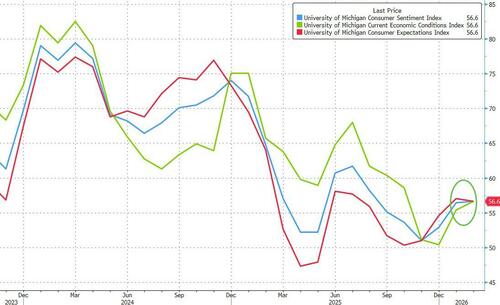
After rebounding strongly in preliminary February data (as Democrats came to their senses over the fearmongered Trump tariff-flation), the final UMich sentiment survey print slipped lower with the headline lowered from 57.3 to 56.6. Both Current Conditions and Expectations were lower than the flash print with the latter falling to 2 month lows and the former holding at 4-month highs…
Does anyone else think its weird that all the numbers were exactly the same at 56.6
Source: Bloomberg
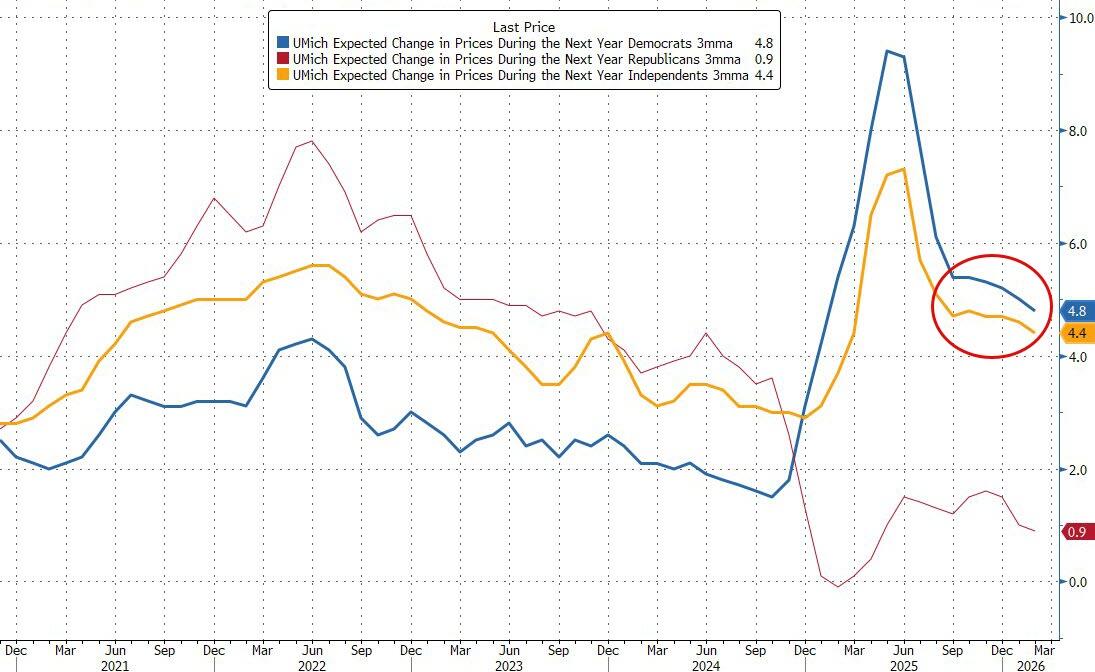
Democrats and Republicans led the decrease in inflation expectations…
Source: Bloomberg
UMich Survey Director Joanna Hsu noted that “all index components posted insignificant movements this month; overall, consumers do not perceive any material differences in the economy from last month.”
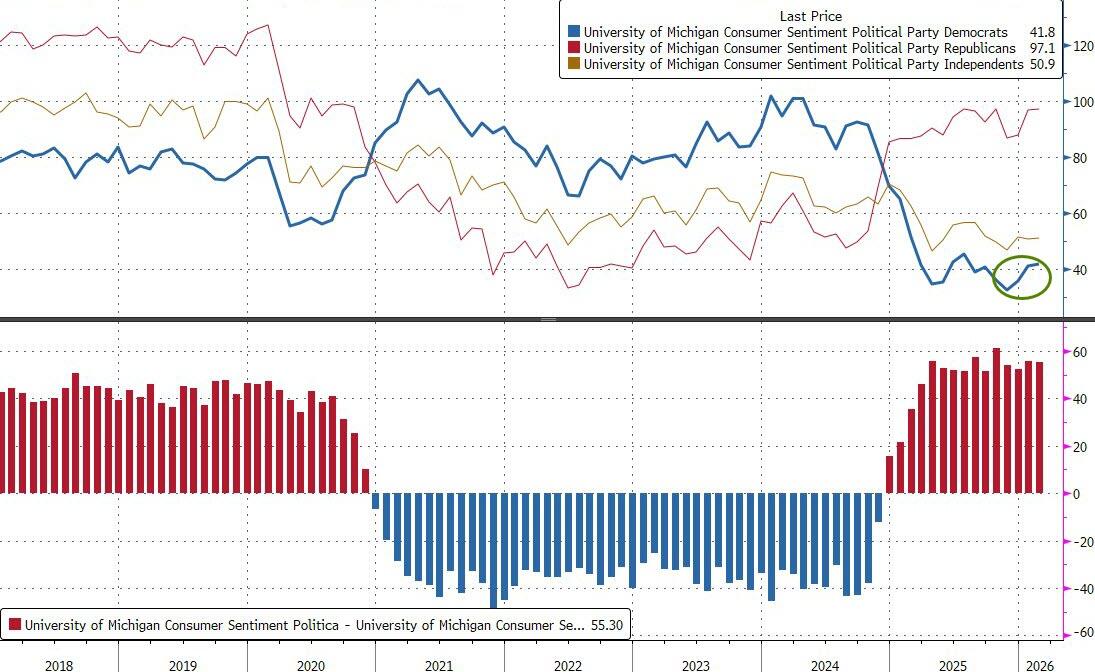
Democrats confidence is at its highest since July 2025…
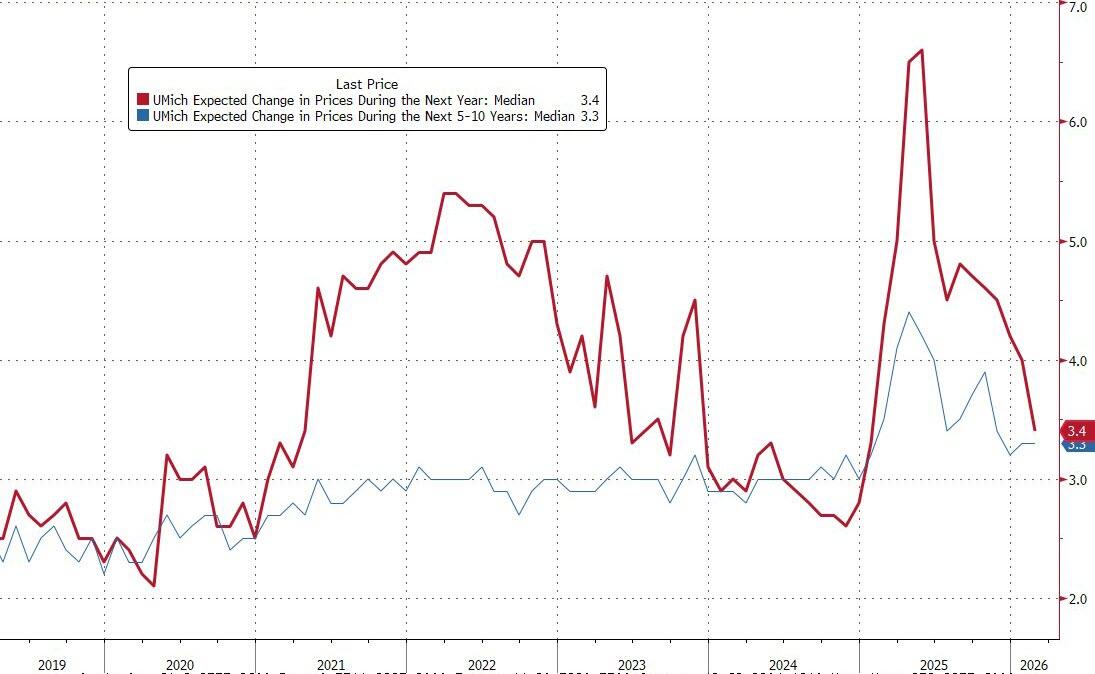
Year-ahead inflation expectations fell from 4.0% last month to 3.4% this month, the lowest reading since January 2025.
Hsu concludes that “A sizable month-to-month increase in sentiment for the largest stockholders was fully offset by a decline among consumers without stock holdings. Similar divergences were seen across income and education, where higher-income or college educated consumers exhibited increases in sentiment while lower-income or less-educated counterparts did not. With their much stronger income prospects and investment porfolios, wealthier and higher-income consumers feel better insulated from any possible risks to the economy.”
Tyler Durden
Fri, 02/20/2026 – 10:10

Los artistas que no te debes perder en el EDC México
Por BERENICE BAUTISTA
CIUDAD DE MÉXICO (AP) — Ha llegado el fin de semana del EDC México, el mayor festival de música electrónica de la capital mexicana. Con siete escenarios y más de 100 artistas la 12ª edición promete un festín de géneros que van del techno al trance.
A continuación, artistas que no te debes perder este fin de semana, incluyendo una ola de Monterrey, México.
3BallMTY
El trío originario de Monterrey, México, debutará en el EDC tras su presentación ante miles de amantes de la música electrónica en la fiesta de año nuevo en la avenida Reforma en la capital mexicana, que reunió a más de 250.000 asistentes. Los representantes del movimiento tribal guarachero, galardonados con el Latin Grammy a mejor nuevo artista en 2012, parecen estar de vuelta con fuerza y dispuestos a mezclar música norteña con beats.
Above & Beyond
El trío británico-finlandés lanzó este año la versión extendida de su álbum de 2025 “Bigger Than All Of Us” y se encuentra de gira con esta producción. En 2024 celebraron en México el episodio 600 de su programa de radio Group Therapy con dos sets históricos y están listos para volver al EDC, un festival en el que no se habían presentado desde 2023.
Mara Santiago y Alatriste
La DJ y productora mexicana Mara Santiago es originaria de Veracruz. Inició su carrera con el colectivo Mescalina Social Club en el 2020. Su estilo mezcla house, nu disco y funk. Se presentará en un B2B con la DJ y productora Alatriste, originaria de la Ciudad de México. El estilo de Alatriste combina house, dark disco y sonoridades místicas y enérgicas.
Alok
El DJ y productor originario de Brasil se encuentra actualmente en el tercer puesto del ranking de DJ Mag. Ha sido nominado a dos Latin Grammy, incluyendo uno a la mejor interpretación de música electrónica latina por “Pedju Kunumigwe”, de su álbum “The Future is Ancestral”. Es el artista brasileño con el mayor número de reproducciones en streaming en la actualidad. Se ha presentado en festivales como Rock In Rio, Lollapalooza, Tomorrowland y Coachella. A través de Alok Institute, apoya los derechos de las comunidades indígenas de Brasil y protege el medio ambiente.
ANYMA
Matteo Milleri nació en Nueva York, creció en Italia y trabaja desde Los Angeles e Ibiza. Su proyecto ANYMA tiene un estilo que es descrito como techno melódico y se caracteriza por la sinergia de su música con sus audiovisuales. Tuvo la primera residencia de música electrónica en Sphere de Las Vegas con la ópera cibernética “The End Of Genesys” y un espectáculo de dos partes en las Pirámides de Giza. Está confirmado como uno de los artistas principales de Coachella 2026. Actualmente, está en el 10mo puesto del ranking de DJ Mag.
Le Twins
Las mellizas Karla y Karen de la Garza, originarias de Monterrey, México, son conocidas artísticamente como Le Twins. Su estilo mezcla house, techno, bass house y música latina. Se han presentado en Tomorrowland, Ushuaïa Ibiza y un set de DJ Mag en Teotihuacán, México, a bordo de un globo aerostático. Sus más recientes sencillos son “Fuego” y “Booty Booty”.
Armand Van Helden
El DJ y productor estadounidense famoso por temas como “U Don’t Know Me”, “Bonkers”, “Barbra Streisand” y “Funk Phenomena” promete ponerte a bailar. Su más reciente sencillo es “You” con Mark Knight y D. Ramirez.
CamelPhat
El dúo británico se especializa en dance y house. Debutaron en 2010 y desde entonces han lanzado temas populares como “The Act”, “Paradigm” y “Constellations”. Se han presentado en Miami Music Conference y EDC Halloween. En diciembre de 2025 lanzaron una versión deluxe de su álbum de 2020 “Dark Matter”.
Charlotte de Witte
La DJ y productora de Gante, Bélgica, se encuentra actualmente en el 9no puesto del ranking de DJ Mag gracias a sus poderosos sets de techno. En la pasada edición de Tomorrowland se convirtió en la primera artista en abrir y cerrar el escenario principal el mismo día. Lanzará en abril la versión extendida de su álbum debut “Charlotte de Witte”.
DJibouti
Este DJ en ascenso comenzó su carrera en la escena alternativa de Nueva York. Su estilo mezcla house con funk y mucho ritmo. Su énfasis está en la melodía y el ritmo.
Enrico Sangiuliano
Originario de Reggio Emilia, Italia. Comenzó a asistir a raves clandestinos en el norte de su país donde encontró la inspiración para sus primeras producciones y pronto terminó tocando en ellos. Su remix de “Can You Hear Me”, su EP “Moon Rocks” y “Blooming Era” son algunas de sus producciones más distintivas.
Hardwell
Originario de Países Bajos, su estilo es el big room techno. Lanzó el año pasado su programa de radio mensual Hardwell Presents Euphoria, en One World Radio de Tomorrowland. Vuelve al EDC México tras 9 años de ausencia.
Mau P y The Martinez Brothers
El DJ y productor holandés Mau P, representante del techno y el house, se presentará en un B2B con el dúo The Martinez Brothers del Bronx en Nueva York, especializado en house, en una conjunción que promete un máximo de energía.
Nana Nina
La artista, productora y compositora es originaria de Nuevo León, México. Mezcla hyperpop y chugg, con impulsos enérgicos y un poco de toque kawaii (tierno). En su espectáculo busca que los elementos visuales sean una extensión de sus canciones.
https://www.chicagotribune.com/2026/02/20/los-artistas-que-no-te-debes-perder-en-el-edc-mxico/
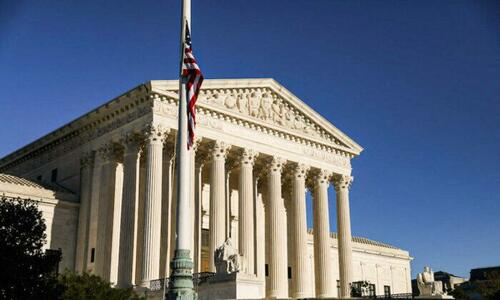
Supreme Court Strikes Down Trump Tariffs
Supreme Court Strikes Down Trump Tariffs
The Supreme Court on Tuesday struck down Trump’s tariffs. In a 170-page decision and a 6-3 vote, the court ruled that Trump’s use of the 1977 International Emergency Economic Powers Act (IEEPA) – which constitute about half of the tariffs we’ve seen under Trump – was not lawful. Kavanaugh, Thomas and Alito dissented.
“IEEPA does not authorize the President to impose tariffs,” wrote the court.
The ruling stems from a consolidated challenge brought by small businesses and multiple states, who argued that the statute – originally intended to authorize sanctions and asset freezes during national emergencies – does not grant the executive branch the power to levy taxes on imports. The Court reasoned that the Constitution vests the authority to impose duties and tariffs with Congress alone, and found that IEEPA’s authorization to “regulate … importation” cannot be interpreted to include the distinct taxing power required to enact broad-based tariffs. The ruling affirms lower-court decisions blocking the challenged measures, concluding that the administration’s emergency-based tariff framework exceeded the limits of the statute.
Trump invoked IEEPA to impose his ‘reciprocal’ tariffs on nearly every foreign trade partner to address what he called a national emergency over US trade deficits. He invoked it again to impose tariffs on China, Canada and Mexico over fentanyl trafficking into the United States.
Friday’s decision rests on the notion that tariffs are not merely a tool for regulating trade, but a form of taxation that the Constitution reserves to Congress. Citing Article I, Section 8, the majority stressed that the power to impose tariffs is “very clear[ly] … a branch of the taxing power,” and that the Framers gave Congress “alone … access to the pockets of the people.” The administration had argued that IEEPA’s grant of authority to “regulate … importation” permitted the President to impose tariffs in response to declared national emergencies. The Court rejected that interpretation, noting that while “taxes may accomplish regulatory ends, it does not follow that the power to regulate includes the power to tax as a means of regulation.”
The majority also pointed to the statute’s text, emphasizing that IEEPA authorizes the President to “investigate, block … regulate, direct and compel, nullify, void, prevent or prohibit” certain transactions – yet makes no mention of tariffs or duties.
“Had Congress intended to convey the distinct and extraordinary power to impose tariffs,” the opinion states, “it would have done so expressly, as it consistently has in other tariff statutes.”
The Court further highlighted a lack of historical precedent – noting that that in the nearly 50 years since IEEPA’s enactment, “no President has invoked the statute to impose any tariffs,” and that combined with the sweeping economic impact of the measures at issue – it was a “telling indication” that the asserted authority falls outside the President’s legitimate reach.
Applying what it characterized as the “major questions” framework, the Court reasoned that Congress would not delegate such sweeping control over trade policy through vague language. The President’s claim that two words – “regulate” and “importation” – authorize tariffs “of unlimited amount and duration, on any product from any country,” the majority wrote, would represent a “transformative expansion” of executive authority over tariff policy and the broader economy.
Tariff Refunds?
Notably, the Court’s ruling does not address what happens to the billions of dollars in tariff revenue already collected under the now-invalidated IEEPA framework, leaving open the possibility of a wave of refund litigation in the months ahead. There are currently hundreds of tariff refund lawsuits pending in US trade court.
While the majority opinion resolves the threshold legal question of presidential authority, it offers no guidance on restitution, repayment, or whether importers may be entitled to recover duties paid pursuant to tariffs the Court has now deemed unlawful. That omission is likely to shift the next phase of the dispute into the U.S. Court of International Trade, where importers may seek retroactive relief through administrative protests or refund actions.
Justice Kavanaugh’s dissent underscores the stakes, warning that “the Court’s decision is likely to generate other serious practical consequences in the near term,” adding bluntly: “One issue will be refunds.”
Any such claims could involve complex questions of sovereign immunity, administrative exhaustion, and the availability of equitable relief – particularly where duties were paid without timely protest. Whether courts ultimately require repayment of unlawfully imposed tariffs may depend not just on the validity of the underlying statute, but on the procedural posture of individual importers and the statutory refund mechanisms available under U.S. customs law.
During arguments on Nov. 5, the court seemed skeptical over Trump’s authority to use IEEPA, leading most observers observers, including betting markets, to conclude a high probability they’re struck down at least in part. The Trump administration is appealing lower court rulings that he overstepped his authority, while Trump himself said a Supreme Court ruling against the tariffs would be a “terrible blow” to the United States.
Other Options
That said, even if that happens, the Trump administration has several other legal avenues they can pursue. As Deutsche Bank noted last month;
For instance, the sectoral tariffs (e.g. on steel and aluminum) aren’t covered by the court ruling, whilst another option would be to use Section 122 of the 1974 Trade Act, which permits temporary 15% tariffs for 150 days.
And Goldman:
This won’t be the end of tariffs… the administration will almost certainly roll out alternative legal frameworks. Net result is probably slightly fewer tariffs, materially more trade uncertainty, and some incremental deficit concerns. Net-net, that’s mildly supportive for equities and mildly negative for bonds… but largely priced for both.
The cases under consideration by the Supremes were brought by businesses affected by the tariffs and 12 mostly blue US states.
Meanwhile, prediction markets got this one right.
Tyler Durden
Fri, 02/20/2026 – 10:02
https://www.zerohedge.com/political/supreme-court-rules-tariffs
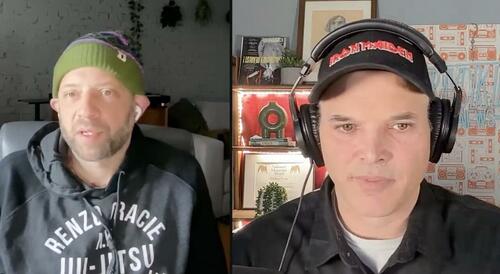
Matt Taibbi: Epstein Files Are “Uniquely Destructive” To Both Political Parties
Matt Taibbi: Epstein Files Are “Uniquely Destructive” To Both Political Parties
Submitted by QTR’s Fringe Finance
This week I interviewed Matt Taibbi at a moment when, as he put it, “this is a pretty weird time.” He had just learned that his outlet, Racket News, had been investigated by the British government using what he described as “human intelligence sources and all kinds of crazy stuff.”
“It’s been pretty weird,” he told me. What struck him most was how normalized this kind of pressure has become. Governments, he said, now routinely “hire out private intelligence firms and private PR firms to devise strategies to undermine negative press.” If you’re doing adversarial reporting, he added, “you’ll get swept up in this. So you probably have been, you just don’t know it.”
From there, we moved into the Epstein story, which has become a political third rail. I asked him whether bipartisan silence around certain issues should worry people. Taibbi said most of what happens in Washington is already bipartisan; the public just doesn’t see it. “The thing that we call the news,” he said, is “a sliver of disagreement” between parties. The rest—“98% of the business that’s done there”—happens with quiet agreement.
On the Epstein files, he argued that both parties miscalculated. The Trump camp, he said, built expectations around full transparency and then stumbled. “Dumping tons of stuff out without any context tends to have a lot of unintended consequences,” he said. The result has been politically damaging across the board.
He also pushed back on some of the public narrative. The fascination with Epstein, he said, rests on three assumptions: that Epstein worked for intelligence, that he ran a vast trafficking ring, and that the two were connected through political blackmail. “There’s an abundance of evidence” of serious sexual crimes, he acknowledged. But on the intelligence-blackmail theory, “there’s nothing that puts it all together and says that’s what was happening. It could, but it’s just not there yet.”
What he does see is a slow-burn release strategy. “You’ll notice that they never fully release everything,” he told me. “It’s like Zeno’s paradox. We’re never going to get all the way to the wall with this.” Each new tranche fuels public demand and media frenzy, with the promise that the next batch might contain the “kill shot” that takes down someone powerful.
We then shifted to New York politics and the rise of Zohran Mamdani. Taibbi sees his early proposals—like raising property taxes—as predictable. If state-level backing doesn’t materialize, he suggested, the Democratic Party may distance itself. “The Democratic Party has decided not to back this horse,” he said. In his view, the party faces a structural dilemma: a base that is moving left out of economic frustration, and a national electoral map that may not tolerate that shift.
He connected that frustration to student debt and monetary policy. When I brought up inflation and deficit spending, he traced the arc back to post-2008 policies and the explosion of quantitative easing. “All you’re doing is accelerating inequality on the one hand,” he said, “and you’re raising the debt burden for everybody else.” The result, he argued, is a generation that feels locked out of homeownership and upward mobility.
On immigration and recent ICE enforcement actions, Taibbi resisted simple partisanship. He said he found neighborhood sweeps and masked agents “scary,” comparing aspects of the approach to “an enhanced federal version of stop and frisk.” At the same time, he criticized the ideological shift that made even basic border enforcement seem taboo. “It’s not like having borders is inherently xenophobic,” he said. “It’s just a part of governance. Part of being a nation.”
At the end of the conversation, Taibbi outlined changes at Racket News. He said he had “basically fired” himself as editor-in-chief and brought in new leadership to refocus on document-based investigations. The site, he told me, is doubling down on FOIA-driven reporting and digging into stories like expansive FBI investigations and the British controversy now touching his own outlet.
The through line of our discussion was less about left versus right than about institutions under strain—media, parties, law enforcement, and financial systems alike. Taibbi’s core warning was that much of what truly matters happens in the bipartisan shadows, while the public argues over the sliver that makes it onto cable news.
Tyler Durden
Fri, 02/20/2026 – 10:00
https://www.zerohedge.com/markets/uniquely-destructive-matt-taibbi-talks-epstein-files