Category: News

Donna Vickroy: The wide, weird and wondrous world of the Olympic Games
I love the Olympic Games. I love how the world comes together to showcase incredible athletes and to remind us while very few of us are athletically talented, all of us understand the human need to realize our destiny.
I especially loved the overriding message of this year’s opening ceremonies — basically that there is no “I” in “us.”
Every time the Olympic Games comes around, I learn something new about sports and about the world.
And every time the winter Olympic Games come around, I relearn that there are hundreds of people who are not only cold tolerant but cold talented.
I’ve endured a lifetime of weather, but I could never hope to be competitive, let alone my personal best, at anything under winter conditions.
For me, shuffling to the mailbox in January brings a high enough degree of difficulty. Any spins, flips, rotations or leaps that I might incorporate into my jaunt to the curb are purely accidental and likely to cause permanent damage.
Unlike Olympians, I don’t bounce.
Needless to say, I have great respect for winter athletes. Their tolerance for cold, their balance, their ability to slip and fall and get back up again is not just impressive, it’s kind of freaky. I mean, who tumbles down a ski jump and decides to give it another try?
In addition to introducing us to super humans, the winter games are also weirdly entertaining.
From my vantage point in the recliner, fleece blanket on my lap, steaming mug of coffee at hand, I can’t help but gasp at:
Ballet skiing.
Dual moguls.
Cross track racing.
Ski mountaineering.
Nazgul, a Czechoslovakian wolfdog, took the spotlight for a moment when he joined the heats of the cross-country skiing women’s team sprint free at the 2026 Winter Olympics, in Tesero, Italy, Wednesday, Feb. 18, 2026. (Getty)
And Nazgul, the Czechoslovakian wolfdog who joined the women’s cross-country sprint and accompanied the athletes across the finish line.
So many times I’d turn on the TV and shout, “What in the world?”
How does one pursue a sport that calls for pirouetting on skies? I mean, is there a park district class for that?
The Milan Games, as in past Games, had its share of scandals. There were the snowboarders who were disqualified for applying ski wax that contained forever chemicals. There were the ski jumpers who were accused of “crotch padding” to improve aerodynamics.
And then there was the bronze medalist who used his newfound fame to apologize for cheating on his girlfriend.
I guess wherever there are humans, there will be bizarre behavior.
My favorite moments, as always, were the ones that highlighted struggle, drama and integrity, many of which happened on the ice.
American figure skater Alysa Lui reminded us all about the importance of safeguarding one’s mental health. After the Beijing Games in 2016, Lui walked away from the expectations and pressure that comes with high achievement. She did what she wanted for two years and then returned to the ice on her own terms, just in time to take the gold in Milan.
Who wasn’t pulling for Malcolm Naumov, the American skater whose parents were killed in the Jan. 29, 2025, plane crash in Washington, DC?
Who wasn’t crushed when U.S. skater Ilia Malinin, favored to win gold, stumbled under apparently incredible pressure?
And whose heart didn’t swell with pride when the disheartened Malinin immediately pulled himself together to congratulate Mikhail Shaidorov of Kazakhstan, who skated away with the top honors?
For what is sport without sportsmanship?
It was fun to cheer for Nigeria’s lone competitor and Brazil’s first winter Olympics gold medal in the men’s giant slalom. Fans love the unexpected almost as much as they love an underdog. The Jamaican bobsled team taught the world that dreams don’t always abide by geography.
Perhaps the most exciting athletes to watch were the ones who hailed from our hometowns. How is it that some people from seemingly ordinary places like Evergreen Park, Willowbrook, Fox River Grove, Oak Park and Glen Ellyn could rise to such extraordinary achievements?
It just proves that creativity, hope and determination exist inside all humans.
What, if any, are the takeaways for regular people, those of us who simply wait out winter?
Well, for one — and it’s a biggie, for me — there’s the “coat parade” at the opening ceremonies.
As a longtime Chicagoan who has navigated more than my share of wind chills, ice storms and slushy snowbanks, I do believe I appreciate a truly warm and stylish winter coat as much as these athletes appreciate their medals.
Teams Italy, USA, Germany and Brazil displayed outstanding style and runway presence.
But if I had to march in a nighttime parade in the middle of winter in the mountains of Italy, I’m going with the long blue coats and tall fluffy hats worn by Team Mongolia.
Cashmere for the win.
Donna Vickroy is an award-winning reporter, editor and columnist who worked for the Daily Southtown for 38 years. She can be reached at donnavickroy4@gmail.com.
https://www.chicagotribune.com/2026/02/20/vickroy-column-olympics-dog-alysa/

Reales acuerdan contrato de ligas menores con el receptor veterano Elías Díaz
SURPRISE, Arizona, EE.UU. (AP) — Los Reales de Kansas City acordaron el viernes un contrato de ligas menores con el receptor venezolano Elías Díaz y señalaron que el veterano de 11 años se unirá al campamento de Grandes Ligas la próxima semana.
Díaz pasó la temporada pasada con los Padres de San Diego y tuvo un promedio de bateo de .204, con nueve jonrones y 29 carreras impulsadas en 106 juegos. Fue el promedio más bajo de su carrera cuando tuvo al menos 250 turnos al bate.
Díaz jugó sus primeras cinco temporadas en Pittsburgh y las siguientes cuatro en Colorado antes de que los Rockies lo traspasaran a los Padres durante la temporada 2024. El venezolano de 35 años fue All-Star con Colorado en 2023.
Su compatriota Salvador Pérez, nueve veces elegido al Juego de Estrellas y ganador de cinco Guantes de Oro, ha sido el cátcher titular de Kansas City desde 2013. Se espera que el principal prospecto Carter Jensen, que aún califica como novato debido a que sólo disputó 20 juegos la temporada pasada, sea el suplente.
___
Deportes AP: https://apnews.com/hub/deportes

NWI superintendents get up to speed on education-related legislation
Jeff Butts, the new executive director of the Indiana Association of Public School Superintendents, delivered a rapid-fire rundown Thursday of 17 education-related bills pending in the General Assembly, which has four days left before adjournment.
Butts spoke at a luncheon sponsored by the School of Education at Indiana University Northwest in Gary.
Dr. Jeff Butts, new Executive Director of the Indiana Association of Public School Superintendents, was the keynote speaker at the NWI Superintendents’ Forum at IU Northwest on Thursday, Feb. 19, 2026. (John Smierciak/for the Post-Tribune)
For many local school chiefs, it marked the first time they met Butts, who began his new role last month after serving as superintendent at Wayne Township schools in Marion County. He serves as a lobbyist for the association in the General Assembly, sending frequent updates on bills.
Overall, he said 76 House and Senate bills impacted education.
The fate of many bills is still uncertain, including Senate Bill 76, a contentious measure that could see schools facing punishment for failing to cooperate with federal immigration authorities.
The bill cleared both chambers, but the House amended it so it heads back to the Senate on Monday for a concurrence vote.
Dr. Jeff Butts, new Executive Director of the Indiana Association of Public School Superintendents, was the keynote speaker at the NWI Superintendents’ Forum at IU Northwest on Thursday, Feb. 19, 2026. (John Smierciak/for the Post-Tribune)
The bill compels public universities and local governments, including schools, to cooperate with federal immigration enforcement.
Schools traditionally were treated as “safe havens” from immigration enforcement. That changed last year when the Trump administration rescinded the policy.
The state attorney general could fine schools and cities $10,000 for not complying, under the bill’s provisions.
“It does have an impact to change the safe haven that our schools have become and our ability to work directly with law enforcement…” Butts told school administrators.
Dr. Jeff Butts, the new Executive Director of the Indiana Association of Public School Superintendents, addresses the audience as he was the keynote speaker at the NWI Superintendents’ Forum at IU Northwest on Thursday, Feb. 19, 2026. (John Smierciak/for the Post-Tribune)Dr. Jeff Butts, the new Executive Director of the Indiana Association of Public School Superintendents, addresses the audience as he was the keynote speaker at the NWI Superintendents’ Forum at IU Northwest on Thursday, Feb. 19, 2026. (John Smierciak/for the Post-Tribune)
Schools previously allowed law enforcement officers into the school if they showed a judicial warrant. U.S. Immigration Customs Enforcement (ICE) can now show an administrative warrant issued by one of its local offices, under the bill.
An ICE office is being set up in Carmel, just outside Indianapolis.
“It does not have to go through the judicial system,” Butts said. “Keep an eye on it,” he said, referring to the bill.
An amendment from Rep. Ed Delaney, D-Indianapolis, that would have exempted schools from the bill’s requirements failed in the GOP-dominated House.
Dr. Jeff Butts, new Executive Director of the Indiana Association of Public School Superintendents, was the keynote speaker at the NWI Superintendents’ Forum at IU Northwest on Thursday, Feb. 19, 2026. (John Smierciak/for the Post-Tribune)
Butts also highlighted Senate Bill 199, a multi-pronged bill that sets out restrictions on social media for children and requires universities to eliminate degree programs that don’t meet a certain income threshold.
Butts said the bill could be drawing pushback from Meta, which announced last week it’s building a $10 billion data center in Lebanon, north of Indianapolis.
“You can imagine a company that just announced a $10 billion investment in the LEAP district in Lebanon doesn’t like this bill very much,” Butts said.
Meta’s core platforms include Facebook, Instagram, WhatsApp, and Messenger.
The bill requires parental permission for children 17 and younger to use social media providers such as TikTok, Instagram and Facebook.
The bill’s supporters say social media algorithms make kids addicted to sites and compromise their safety and well-being.
The bill has passed both chambers with amendments.
Butts’ former district launched a bell-to-bell cell phone ban last year, and he said it increased classroom engagement and reduced disciplinary incidents.
There’s now a statewide bell-to-bell ban proposed in Senate Bill 78 that’s passed both chambers.
Originally, the bill required schools to purchase a device to hold the phone, disabling it from use. The superintendents’ organization and the Indiana School Boards Association argued against creating another expense for schools and they prevailed.
“We were able to get the bill to a good place,” Butts said.
Under the current provisions, a cell phone can be stored in a locker or a backpack, but it’s off-limits during the school day.
Not all education-related bills survived, although it’s possible they could be inserted into other bills before the legislature adjourns at the end of February.
Butts said Senate Bill 182 would have limited recognition to two sexes determined at birth, leaving transgender people to use a public restroom based on their sex at birth.
The bill passed the Senate but wasn’t heard in the House.
Butts said House Bill 1137, which would ban schools from serving “ultra processed” food and drink if the food contained one or more of the 13 ingredients listed in the bill.
The list included red dye 40, often used by turkey and pork farmers who pushed back against the bill, Butts said.
Carole Carlson is a freelance reporter for the Post-Tribune.

Junta de Paz de Trump pintó un futuro prometedor para Gaza. En tanto, sólo hay desesperación
Por WAFAA SHURAFA
CIUDAD DE GAZA, Franja de Gaza (AP) — En la reunión inaugural de su Junta de Paz, el presidente Donald Trump habló de los miles de millones de dólares que se han prometido para la reconstrucción de la Franja de Gaza y de un Oriente Medio “nuevo y armonioso” que resurge de las cenizas de la guerra. En los videos proyectados durante el encuentro se mostraba un futuro de relucientes rascacielos y nuevas canchas de fútbol.
Ese optimismo no se puede percibir en Gaza. Los palestinos que han pasado meses –o incluso años– en condiciones miserables dentro de campamentos para desplazados o entre los escombros de sus hogares con pocas esperanzas de un cambio.
“Desde el comienzo de la guerra, hemos escuchado hablar de conferencias y reuniones. Dicen que hay una solución y paz, pero todo es una broma. Todos son unos mentirosos”, aseguró Faraj Abu Anze, quien se cuenta entre los decenas de miles de palestinos que viven en un extenso campamento en la costa mediterránea.
“No vemos nada de eso aquí. No hay esperanza. La educación y la atención médica han desaparecido. No hay vida”, agregó.
Promesas, pero ¿cuándo?
Trump anunció que los países miembros de su ambiciosa junta habían prometido aportar 7.000 millones de dólares para la reconstrucción de Gaza y el envío de miles de soldados para participar en una Fuerza Internacional de Estabilización.
Pero no se fijó una fecha, y la reconstrucción aún no ha comenzado.
Israel sostiene que no se dará inicio a la reconstrucción de Gaza hasta que Hamás haya depuesto las armas, un aspecto del acuerdo de alto el fuego de octubre que se ha convertido en un importante punto de fricción.
Naciones Unidas, la Unión Europea y el Banco Mundial han estimado el costo de la reconstrucción en 70.000 millones de dólares —unas 10 veces la cantidad de fondos prometidos el jueves. Y tan sólo retirar la enorme cantidad de escombros y municiones sin explotar podría tomar varios años.
Más de 72.000 palestinos han muerto durante la guerra que se desató tras el ataque de Hamás del 7 de octubre de 2023 en el sur de Israel, según el Ministerio de Salud de Gaza. Las estadísticas del organismo, que forma parte del gobierno dirigido por Hamás, son consideradas fiables por Naciones Unidas y expertos independientes.
En el ataque inicial, militantes palestinos asesinaron a unas 1.200 personas, en su mayoría civiles, y tomaron a otras 251 como rehenes. El acuerdo de alto el fuego puso fin a las principales operaciones militares y condujo a la liberación de todos los rehenes restantes, pero dejó sin respuesta a las preguntas principales sobre el futuro de Gaza.
“No vemos nada”
“Hay reuniones todos los días, pero no vemos nada”, señaló Ahmad Abu Selme, quien ha sido desplazado dos veces durante la guerra. “Hay tiendas de campaña por todas partes y la gente está frustrada. Estamos cansados”.
“Espero que se alcance una verdadera paz y que podamos volver a nuestras casas”, agregó. “Sé que ya no hay casas, pero aún así queremos regresar”.
Estados Unidos espera comenzar la reconstrucción en Rafah, en la frontera de Gaza con Egipto. La ciudad quedó prácticamente destruida y despoblada durante la guerra, y ahora se encuentra en la mitad de Gaza que está bajo absoluto control israelí.
Ruwayda Dheir, una de las decenas de miles de personas desplazadas de Rafah, tiene pocas esperanzas de que ella o algún otro residente lleguen a ver algo del dinero prometido.
“Lo más importante es que pongan el dinero donde corresponde y se lo den a la gente”, señaló. “Dirán que lo gastaron en infraestructura, pero nosotros no lo veremos”.
—-
La periodista de Associated Press Sally Abou AlJoud en Beirut contribuyó con este despacho.
___
Esta historia fue traducida del inglés por un editor de AP con la ayuda de una herramienta de inteligencia artificial generativa.
Sube inflación en EEUU más rápido de lo esperado en diciembre pasado
Por CHRISTOPHER RUGABER
WASHINGTON (AP) — Un indicador clave de la inflación se aceleró en diciembre al ritmo más rápido en casi un año, lo que muestra que los precios aún están subiendo con mayor rapidez de lo que preferiría la mayoría de los estadounidenses —y más rápido que el objetivo anual del 2% de la Reserva Federal.
Los precios aumentaron 0,4% en diciembre respecto del mes anterior, frente al 0,2% de noviembre, informó el Departamento de Comercio el viernes en un reporte que se retrasó por el cierre del gobierno de seis semanas del otoño pasado. El aumento mensual fue el más alto desde febrero pasado. En comparación con hace un año, la inflación subió 2,9% en diciembre, frente al 2,8% de noviembre. Ese es el mayor incremento interanual desde marzo de 2024.
Los precios subyacentes —que excluyen las volátiles categorías de alimentos y energía— también subieron 0,4% en diciembre respecto del mes anterior, frente al 0,2% de noviembre. Ese también es el nivel más alto desde febrero pasado. Los precios subyacentes se dispararon 3% en diciembre frente a hace un año, más rápido que el alza de 2,8% de noviembre.
Las cifras muestran que la inflación sigue elevada, aunque ha bajado desde un pico de casi 7% en 2022. Con muchos precios aún subiendo más rápido de lo que lo hacían antes de la pandemia de COVID-19, el informe apunta a una razón clave por la que muchos estadounidenses siguen descontentos con la economía, incluso cuando el desempleo se mantiene bajo y el crecimiento es sólido.
El informe abarca lo que se conoce como el índice de precios de gastos de consumo personal (PCE, por sus siglas en inglés), que la Reserva Federal prefiere al más conocido índice de precios al consumidor. El gobierno señaló la semana pasada que el índice de precios al consumidor se moderó de manera notable en enero.
Pero la razón por la que el índice PCE está registrando un nivel más alto que el índice de precios al consumidor es que le da mucho menos peso a algunas áreas donde el incremento de los precios se ha enfriado con fuerza, como los alquileres de apartamentos y los precios de los automóviles.
El informe del viernes también mostró que los consumidores mantuvieron el gasto a un ritmo sólido en diciembre, cuando el gasto aumentó 0,4% respecto del mes anterior, lo mismo que en noviembre.
En diciembre, los precios subieron para los muebles, la ropa y los comestibles. Los precios de la gasolina bajaron, pero el costo de la electricidad subió y los costos del gas natural se dispararon 3,7% tan solo en diciembre respecto del mes anterior.
La comisión de la Reserva Federal encargada de fijar las tasas de interés se reunió a finales de enero y acordó mantener sin cambios su tasa de corto plazo en alrededor de 3,6%, pese a las reiteradas exigencias del presidente Donald Trump de reducirla.
Según las actas de la reunión publicadas el miércoles, la mayoría de los funcionarios quiere ver que la inflación caiga más cerca del objetivo de la Reserva Federal antes de respaldar nuevos recortes de tasas.
___
Esta historia fue traducida del inglés por un editor de AP con la ayuda de una herramienta de inteligencia artificial generativa.

Woman trapped in burning Liberty Township home dies, man injured
The 911 call stated that a woman was trapped inside a burning house and when Liberty Township firefighters arrived, the small structure was fully engulfed in flames at the corner of Pearson Road and County Road 1100 N. early Friday morning.
A man, believed to be the resident, was standing outside the burning house he escaped.
Liberty Township firefighters had to wait until the fire was knocked down before they recovered a woman’s body in the middle of the house, said Liberty Township Assistant Fire Chief Michael Wineland.
“All the doorways, all the walls, there was nothing left,” Wineland said.
The man was conscious and talking when he was initially taken to Northwest Health in Porter. However, his condition quickly deteriorated and he was transported in critical condition to an Indianapolis hospital, Wineland said
Identities of the man and woman weren’t being released because relatives needed to be contacted, Wineland said.
Wineland said that his crew had to contend with more than the fire.
“The fire had a big start. There was a wind out of the west that was whipping across the Brassie Golf Course,” Wineland said. He estimated that the winds were gusting at more than 30 mph, making the fire spread “twice as fast.”
As firefighters arrived, the front porch and roof collapsed, Wineland said.
Wineland said he doesn’t know if a man who lived at the house or a neighbor who first called 911 to report the fire at 5:11 a.m.
The State Fire Marshal’s office is investigating the fire’s cause.
The one-bedroom house at 1099 Pearson Road was only 680 square feet. The garage was 528 square feet.
Chesterton Fire provided mutual aid to the house, which is on the border of Chesterton, said Assistant Fire Chief Brandon Smith. The Porter County Sheriff’s Department also assisted.
Jim Woods is a freelance reporter for the Post-Tribune.
https://www.chicagotribune.com/2026/02/20/woman-burning-home-dies-man-injured/

Woman trapped in burning Liberty Township home dies, man injured
The 911 call stated that a woman was trapped inside a burning house and when Liberty Township firefighters arrived, the small structure was fully engulfed in flames at the corner of Pearson Road and County Road 1100 N. early Friday morning.
A man, believed to be the resident, was standing outside the burning house he escaped.
Liberty Township firefighters had to wait until the fire was knocked down before they recovered a woman’s body in the middle of the house, said Liberty Township Assistant Fire Chief Michael Wineland.
“All the doorways, all the walls, there was nothing left,” Wineland said.
The man was conscious and talking when he was initially taken to Northwest Health in Porter. However, his condition quickly deteriorated and he was transported in critical condition to an Indianapolis hospital, Wineland said
Identities of the man and woman weren’t being released because relatives needed to be contacted, Wineland said.
Wineland said that his crew had to contend with more than the fire.
“The fire had a big start. There was a wind out of the west that was whipping across the Brassie Golf Course,” Wineland said. He estimated that the winds were gusting at more than 30 mph, making the fire spread “twice as fast.”
As firefighters arrived, the front porch and roof collapsed, Wineland said.
Wineland said he doesn’t know if a man who lived at the house or a neighbor who first called 911 to report the fire at 5:11 a.m.
The State Fire Marshal’s office is investigating the fire’s cause.
The one-bedroom house at 1099 Pearson Road was only 680 square feet. The garage was 528 square feet.
Chesterton Fire provided mutual aid to the house, which is on the border of Chesterton, said Assistant Fire Chief Brandon Smith. The Porter County Sheriff’s Department also assisted.
Jim Woods is a freelance reporter for the Post-Tribune.
https://www.chicagotribune.com/2026/02/20/woman-burning-home-dies-man-injured/
Trump has other tariff options after Supreme Court strikes down his worldwide import taxes
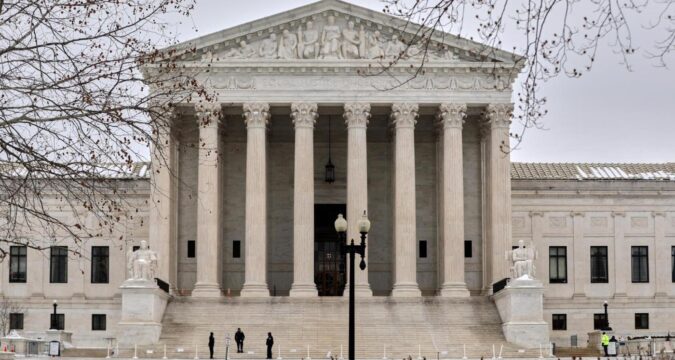
WASHINGTON — President Donald Trump still has options to keep taxing imports aggressively even after the Supreme Court struck down the tariffs he imposed last year on nearly every country on earth.
The Justices didn’t buy the president’s sweeping claims of authority to impose tariffs as he sees fit. But Trump can re-use tariff powers he deployed in his first term and can reach for others, including one that dates back to the Great Depression.
“It’s hard to see any pathway here where tariffs end,” said Georgetown trade law professor Kathleen Claussen. “I am pretty convinced he could rebuild the tariff landscape he has now using other authorities.”
Supreme Court strikes down Trump’s sweeping tariffs, upending central plank of economic agenda
Trump had claimed nearly boundless authority to impose tariffs under 1977 International Emergency Economic Powers Act (IEEPA). But opponents argued before the Supreme Court that that power wasn’t necessary because Congress delegated tariff power to the White House in several other statutes — though it carefully limited the ways the president could use the authority.
Tariffs have been a cornerstone of Trump’s foreign and economic policy in his second term, with double-digit “reciprocal” tariffs imposed on most countries, which he has justified by declaring America’s longstanding trade deficits a national emergency.
The average U.S. tariff has gone from 2.5% when Trump returned to the White House in January to nearly 17% a year later, the highest since 1934, according to calculations by Yale University’s Budget Lab.
The president acted alone even though the U.S. Constitution specifically gives the power to tax – and impose tariffs – to Congress.
Countering unfair trade practices
The United States has long had a handy cudgel to wallop countries it accuses of engaging in “unjustifiable,” “unreasonable” or “discriminatory” trade practices. That is Section 301 of the Trade Act of 1974.
And Trump has made aggressive use of it himself — especially against China. In his first term, he cited Section 301 to impose sweeping tariffs on Chinese imports in a dispute over the sharp-elbowed tactics that Beijing was using to challenge America’s technological dominance. The U.S. is also using 301 powers to counter what it calls unfair Chinese practices in the shipbuilding industry.
There are no limits on the size of Section 301 tariffs. They expire after four years but can be extended.
But the administration’s trade representative must conduct an investigation and typically hold a public hearing before imposing 301 tariffs.
Experts have said Section 301 is useful in taking on China. But it has drawbacks when it comes to dealing with the smaller countries that Trump has hammered with reciprocal tariffs.
“Undertaking dozens and dozens of 301 investigations of all of those countries is a laborious process,” Veroneau said.
Targeting trade deficits
In striking down Trump’s reciprocal tariffs in May, the U.S. Court of International Trade ruled that the president couldn’t use emergency powers to combat trade deficits.
That is partly because Congress had specifically given the White House limited authority to address the problem in another statute: Section 122, also of the Trade Act of 1974. That allows the president to impose tariffs of up to 15% for up to 150 days in response to unbalanced trade. The administration doesn’t even have to conduct an investigation beforehand.
But Section 122 authority has never been used to apply tariffs, and there is some uncertainty about how it would work.
Protecting national security
In both of his terms, Trump has made aggressive use of his power — under Section 232 of Trade Expansion Act of 1962 — to impose tariffs on imports that he deems a threat to national security.
In 2018, he slapped tariffs on foreign steel and aluminum, levies he’s expanded since returning to the White House. He also plastered Section 232 tariffs on autos, auto parts, copper, lumber.
In September, the president even levied Section 232 tariffs on kitchen cabinets, bathroom vanities and upholstered furniture.
Section 232 tariffs are not limited by law but do require an investigation by the U.S. Commerce Department. It’s the administration itself that does the investigating – also true for Section 301 cases — “so they have a lot of control over the outcome,” Veroneau said.
Reviving Depression-era tariffs
Nearly a century ago, with the U.S. and world economies in collapse, Congress passed the Tariff Act of 1930, imposing hefty taxes on imports. Known as the Smoot-Hawley tariffs (for their congressional sponsors), these levies have been widely condemned by economists and historians for limiting world commerce and making the Great Depression worse. They also got a memorable pop culture shoutout in the 1986 movie “Ferris Bueller’s Day Off.”
Section 338 of the law authorizes the president to impose tariffs of up to 50% on imports from countries that have discriminated against U.S. businesses. No investigation is required, and there’s no limit on how long the tariffs can stay in place.
Those tariffs have never been imposed — U.S. trade negotiators traditionally have favored Section 301 sanctions instead — though the United States used the threat of them as a bargaining chip in trade talks in the 1930s.
In September, Treasury Secretary Scott Bessent told Reuters that the administration was considering Section 338 as a Plan B if the Supreme Court ruled against Trump’s use of emergency powers tariffs.
https://www.chicagotribune.com/2026/02/20/trump-tariff-options/
Trump has other tariff options after Supreme Court strikes down his worldwide import taxes
WASHINGTON — President Donald Trump still has options to keep taxing imports aggressively even after the Supreme Court struck down the tariffs he imposed last year on nearly every country on earth.
The Justices didn’t buy the president’s sweeping claims of authority to impose tariffs as he sees fit. But Trump can re-use tariff powers he deployed in his first term and can reach for others, including one that dates back to the Great Depression.
“It’s hard to see any pathway here where tariffs end,” said Georgetown trade law professor Kathleen Claussen. “I am pretty convinced he could rebuild the tariff landscape he has now using other authorities.”
Supreme Court strikes down Trump’s sweeping tariffs, upending central plank of economic agenda
Trump had claimed nearly boundless authority to impose tariffs under 1977 International Emergency Economic Powers Act (IEEPA). But opponents argued before the Supreme Court that that power wasn’t necessary because Congress delegated tariff power to the White House in several other statutes — though it carefully limited the ways the president could use the authority.
Tariffs have been a cornerstone of Trump’s foreign and economic policy in his second term, with double-digit “reciprocal” tariffs imposed on most countries, which he has justified by declaring America’s longstanding trade deficits a national emergency.
The average U.S. tariff has gone from 2.5% when Trump returned to the White House in January to nearly 17% a year later, the highest since 1934, according to calculations by Yale University’s Budget Lab.
The president acted alone even though the U.S. Constitution specifically gives the power to tax – and impose tariffs – to Congress.
Countering unfair trade practices
The United States has long had a handy cudgel to wallop countries it accuses of engaging in “unjustifiable,” “unreasonable” or “discriminatory” trade practices. That is Section 301 of the Trade Act of 1974.
And Trump has made aggressive use of it himself — especially against China. In his first term, he cited Section 301 to impose sweeping tariffs on Chinese imports in a dispute over the sharp-elbowed tactics that Beijing was using to challenge America’s technological dominance. The U.S. is also using 301 powers to counter what it calls unfair Chinese practices in the shipbuilding industry.
There are no limits on the size of Section 301 tariffs. They expire after four years but can be extended.
But the administration’s trade representative must conduct an investigation and typically hold a public hearing before imposing 301 tariffs.
Experts have said Section 301 is useful in taking on China. But it has drawbacks when it comes to dealing with the smaller countries that Trump has hammered with reciprocal tariffs.
“Undertaking dozens and dozens of 301 investigations of all of those countries is a laborious process,” Veroneau said.
Targeting trade deficits
In striking down Trump’s reciprocal tariffs in May, the U.S. Court of International Trade ruled that the president couldn’t use emergency powers to combat trade deficits.
That is partly because Congress had specifically given the White House limited authority to address the problem in another statute: Section 122, also of the Trade Act of 1974. That allows the president to impose tariffs of up to 15% for up to 150 days in response to unbalanced trade. The administration doesn’t even have to conduct an investigation beforehand.
But Section 122 authority has never been used to apply tariffs, and there is some uncertainty about how it would work.
Protecting national security
In both of his terms, Trump has made aggressive use of his power — under Section 232 of Trade Expansion Act of 1962 — to impose tariffs on imports that he deems a threat to national security.
In 2018, he slapped tariffs on foreign steel and aluminum, levies he’s expanded since returning to the White House. He also plastered Section 232 tariffs on autos, auto parts, copper, lumber.
In September, the president even levied Section 232 tariffs on kitchen cabinets, bathroom vanities and upholstered furniture.
Section 232 tariffs are not limited by law but do require an investigation by the U.S. Commerce Department. It’s the administration itself that does the investigating – also true for Section 301 cases — “so they have a lot of control over the outcome,” Veroneau said.
Reviving Depression-era tariffs
Nearly a century ago, with the U.S. and world economies in collapse, Congress passed the Tariff Act of 1930, imposing hefty taxes on imports. Known as the Smoot-Hawley tariffs (for their congressional sponsors), these levies have been widely condemned by economists and historians for limiting world commerce and making the Great Depression worse. They also got a memorable pop culture shoutout in the 1986 movie “Ferris Bueller’s Day Off.”
Section 338 of the law authorizes the president to impose tariffs of up to 50% on imports from countries that have discriminated against U.S. businesses. No investigation is required, and there’s no limit on how long the tariffs can stay in place.
Those tariffs have never been imposed — U.S. trade negotiators traditionally have favored Section 301 sanctions instead — though the United States used the threat of them as a bargaining chip in trade talks in the 1930s.
In September, Treasury Secretary Scott Bessent told Reuters that the administration was considering Section 338 as a Plan B if the Supreme Court ruled against Trump’s use of emergency powers tariffs.
https://www.chicagotribune.com/2026/02/20/trump-tariff-options/

BP seeking six-year union contract, extended strike notice
In its latest update on union negotiations, BP announced that it’s seeking a six-year contract term and a 150-day notice before any United Steelworkers union strike or lockout.
“Extending the notice period from 24 hours to 150 days would provide stability and predictability for everyone at the refinery,” the online update said. “For our hourly employees, the 150-day strikes and lockout notice provides additional opportunity to reach a deal before anyone experiences the monetary impact of a work stoppage. For our salaried employees supporting the Business Continuity Plan (BCP), an extended industrial peace clause of 150 days would provide significant job stability, security, and predictability during the negotiation process.”
The establishment of a notice period would also allow BP to defer BCP preparations, according to the update, which would allow the company to better allocate resources. Every other union agreement with US Refining, Terminals and Pipelines has an extended industrial 80-plus day peace clause, according to BP.
The company is also seeking a six-year contract term, which would allow sufficient time to implement proposed operations, maintenance and lab job classifications, qualification- and competency-based job progressions, time to upskill current employees, and time to stand-up the supporting processes, according to BP.
“We firmly believe this extended stability is important for our employees and the business,” BP’s online update said. “An extended term would give our employees certainty in wage rates, benefits and working conditions over a longer period and would also reduce disruptions and help ensure industrial stability over the next six years. It would also create distance from broader industry negotiations, which serve as a distraction for the refinery.”
USW 7-1 President Eric Schultz reacted to BP’s negotiations update in a Thursday afternoon statement.
“(BP) continues to propose eliminating more than 100 local union jobs. They only recently offered to withdraw their proposal to transition over 100 more union jobs into management roles, but only if we agreed to their plan to cut wages across most job classifications, waive our bargaining rights and limit our ability to strike,” Schultz said in his statement. “They have proposed eliminating maintenance and environmental jobs, while also reducing headcount in the remaining crafts. This comes after they’ve already eliminated more than 300 union jobs in the last 10 years.
The wage increases they recently proposed would not offset their proposed wage cuts, so our members, understandably, have no interest in doing more work for less money than they make today. Many of BP’s current proposals follow similar union-busting playbooks that we’ve witnessed at other refineries. Our membership is making it clear that BP’s union-busting tactics are not going to work here in Northwest Indiana. We will continue to bargain in good faith, with hopes for a positive resolution, but our members have overwhelmingly encouraged us to go forward with preparations for a strike.”
USW announced on Feb. 5 that it was prepared for a strike or lockout at the BP Whiting refinery, citing its desire for a “fair agreement.” No update on a strike or lockout has been given since the announcement.
The company has held 42 documented bargaining sessions with the union since Jan. 5, according to a previous email from its spokesperson. The parties have also met in informal settings to discuss the proposals.
BP has also trained replacement workers, consisting of current and former employees, to operate the refinery safely and in compliance with regulations if a work stoppage occurs, according to a previous email.
On Jan. 5, BP and the union started negotiations for a new collective bargaining agreement, according to Post-Tribune archives. The previous agreement expired at 11:59 p.m. Jan. 31, and the two parties couldn’t reach an agreement by the deadline.
Both parties have since agreed to rolling 24-hour extensions of the agreement for Whiting refinery workers.
The union encouraged members to remove personal belongings from the workplace, schedule any medical, dental or vision appointments, refill prescriptions with 90-day supplies and postpone major purchases or financial obligations until an agreement is reached.
According to the BP website, if employees are absent from work because of a strike or lockout, they will not be eligible for employee benefits, adding that they can still receive benefits through alternative means, including COBRA.
On Feb. 6, the USW reached an agreement with Marathon for a four-year national pattern, which covers about 30,000 union oil workers for dozens of employers. Affected workers are represented through the USW National Oil Bargaining Program, and they work in more than 200 units that include refining, production, pipelines, maintenance storage, petrochemical and renewable facilities.
“BP maintains they have no plans to honor the National Oil Bargaining Program — the first time that has happened,” USW 7-1 President Eric Schultz said in a previous statement. “We’ve spent most of our negotiations discussing BP’s concessionary proposals that would eliminate local jobs, reduce pay across the board and strip us of bargaining rights. We will continue to negotiate in good faith.”
BP said in a Feb. 6 statement that the company “is, in no way, obligated to follow the ‘pattern’.”
“We will continue to bargain in the best interests of our employees, our company and the community,” the previous statement said.
Updates on negotiations from BP are available at whitingnegotiations.com.
https://www.chicagotribune.com/2026/02/20/bp-seeking-six-year-union-contract-extended-strike-notice/


