Category: News

Chicago Bears stadium bill now includes union-friendly language
Any new stadium the Chicago Bears may decide to build in Northwest Indiana will have union labor after all.
The amended Senate Bill 27, which would establish a stadium governing body and require that the National Football League enter a 35-year lease with the state for it, removed language that would prohibit the Chicago Bears from entering into project-labor agreements with the trades. The bill, upon the Thursday announcement of a preferred site next to Wolf Lake in Hammond, has added more state representatives as sponsors, but it has not advanced since getting a first reading in the House on February 2.
Wolf Lake Memorial Park, which is visible from Lost Marsh Golf Course, is preferred site for a proposed Chicago Bears stadium in Hammond, Indiana, on Thursday, Feb. 19, 2026. (Kyle Telechan/for the Post-Tribune)
State Senator Rodney Pol, D-Portage, one of the many cosponsors, knew getting the non-PLA language out of the bill would be done deal and said that while he might’ve preferred the “Portage Bears at Halas Harbor,” the proposal offered Thursday is solid, even if it came with an element he wasn’t expecting: a 1% food and beverage tax for Porter County. He’s waiting for the fiscal note from the Legislative Services Agency for more information.
“My goal in assisting with this legislation has always been to make sure that if the stadium was going to be built, it was going to be built with local labor and by qualified trades, but I also don’t want the brunt of this to be paid for on taxpayers’ backs,” Pol said in a text to the Post-Tribune Friday. “One percent does not sound like that much, but times are very tough for working class people right now.”
Nevertheless, Pol believes an NFL stadium in Northwest Indiana can only benefit The Region as a whole.
“Porter County has always been a tourist destination with the only National Park in Indiana, so adding the Chicago Bears to Lake County will only bolster both economies,” Pol said. “In the end, this is going to be transformational for us if it comes to fruition.”
Northwestern Indiana Building and Construction Trades Council Business Manager Randy Palmateer said he worked with House Speaker Todd Huston, R-Fishers, Senate President Pro Tem Rodric Bray, R-Martinsville, and the Governor Mike Braun’s office to get the language taken out. In the end, he said they all agreed on labor’s value in a project of this magnitude and that he would be seeking a project labor agreement on the stadium project “along with any ancillary development.”
“Project labor agreements signed with my building trade Council are commonplace in The Region. They may not be in the rest of the state, but they are up north,” he said. “We are not getting away from that for no one.”
SB 27 would establish a three-member authority: the director of the Office of Management and Budget, the public finance director or designee, and another member appointed by the Office of Management and Budget, the Post-Tribune previously reported. The authority would work toward acquiring, financing, constructing and leasing land and capital improvements.
It would also have the power to finance, improve, construct, reconstruct, renovate, purchase, lease, acquire, and equip land and capital improvements, according to the bill.
The bill would require a National Football League team to enter into a lease for the stadium for at least 35 years. After the term of the lease, the lessee would have the option to purchase the capital improvement for $1 if certain conditions are met.
Under the bill, the authority could issue bonds, and the lease rental payments could be made from local excise taxes, food and beverage tax and innkeeper’s tax.
The Senate Appropriations Committee amended the bill to remove the authority’s goal of 15% participation by minority businesses and 5% participation from women’s businesses to participate in the procurement and contracting process, the Post-Tribune previously reported, to align with the governor’s executive order that vowed to remove diversity, equity and inclusion language from state code.
The Lake County Council at a meeting earlier this month also approved 6-0, with one absent, an ordinance requiring the use of a project labor agreement negotiated with the local units when a project in unincorporated Lake County receives an economic incentive to locate here, regardless of the board, commission or body that awards the incentive. Economic incentives include — but are not limited to — tax abatements or Tax Increment Financing districts.
“The ordinance provides for the negotiation of a mutually acceptable PLA with contractors, developers or similar entities who received an economic incentive from Lake County with local labor unions representing experienced and skilled construction workers covering construction, alteration or repair work where Lake County or any other county entity has an interest in the project,” said a press release announcing the ordinance. “The ordinance also includes a provision preventing developers, contractors or subcontractors who receive an incentive from misclassifying employees to avoid paying state, federal or local payroll taxes, workers compensation insurance and unemployment insurance among other issues.”
Michelle L. Quinn is a freelance reporter for the Post-Tribune.

Proposed 72-unit affordable housing development in Batavia moving forward
An affordable housing development in Batavia is continuing to move forward, securing additional approvals recently from the Batavia City Council.
Called the Residences at River Pointe, the proposal for the subsidized multi-family housing project is being brought forward by Fox River Affordable Housing, a nonprofit development entity of the Housing Authority of Elgin.
It’s set to be built at 400 S. River St., which the city of Batavia says is a former limestone quarry site.
The proposed development would include 72 units in total. Of those, 18 would be set aside for households earning at or below 30% of the area median income, or AMI. In addition, 38 units would be set aside for households earning at or below 60% of the area median income, and 16 for those earning at or below 80% of the AMI.
The project got its first green light from the council back in May, when the City Council promised to fund $1.2 million in land acquisition and engineering costs for the project using the city’s TIF, or tax increment financing, reserves. The total cost of the project is expected to be just over $24 million.
The TIF money that the developers plan to use is also to be paid back to the city, in a way. The city’s approval was conditional on the proposal being taxable, city staff said previously, and its proposed location is within the city’s TIF District 3, meaning it would generate TIF funding.
Essentially, a TIF district freezes the amount of property tax revenue each taxing body receives from an area at the point at which the TIF is instituted. The extra or “increment” taxes created by the development of the property go into a special fund used to pay for costs related to improving the area.
That promise of financial support from the city last year was part of the developer’s application for the Illinois Housing Development Authority’s Low Income Housing Tax Credit, which is expected to provide the project with a considerable portion of its total funding.
The Low Income Housing Tax Credit is a dollar-for-dollar federal tax credit, according to IHDA’s website, that helps move affordable housing projects forward. The maximum rent that can be charged on a property that receives this tax credit is 80% of the AMI — which is why there are no market-rate units in the proposed development. Rents are typically capped for a 30-year period in Illinois.
The project has since secured a commitment for tax credits by IHDA, the Housing Authority of Elgin’s Executive Director and Chief Executive Officer Martell Armstrong told The Beacon-News on Thursday. The tax credits are expected to be awarded after construction of the development has been completed and once the building is in service and has achieved its threshold occupancy goals.
The city held public hearings on Jan. 21 about the property, per city documents, and additional measures related to the development then came forward to the council for approval.
Fox River Affordable Housing Corporation has been developing throughout Kane County for years, Armstrong said at the city’s Feb. 10 Committee of the Whole meeting. This will be its second self-developed project, in addition to several co-developed ones.
The plan is for a four-story building with 72 units in total: 52 one-bedroom units, 17 two-bedroom units and three three-bedroom units, said Jon Ditter from Jon Steven Ditter Architect at the meeting.
The property is bordered by parks along the Fox River to the west, an industrial area to the south and single-family housing to the north and east, Ditter said.
He noted that some elements of the proposed development have been redesigned in light of feedback from the city’s Plan Commission, like making the color scheme more earthy in tone to fit in with the surrounding area. He said the building is set to have a patio and green space with a dog park, playground area and sport court.
At the Committee of the Whole meeting, council members asked some questions about the design, in particular the entrances for the building, requesting that there be an enhanced west-facing entrance and sidewalk access to River Street.
They also discussed other aspects of the project, like who would be the future tenants of the building.
Ald. Jim Fahrenbach, citing a lack of rental complexes in Batavia, noted previous mentions of the building offering preference for Batavia residents or employees of local businesses, and expressed his support for that.
Armstrong indicated that the Illinois Housing Development Authority allows for local preferences, and said that the developers plan to allow for that in the rental plan as much as possible.
In response to a question about the number of residents and potential of additional students to the school district, Armstrong noted that the majority are one-bedrooms and that that would limit the number of students. One-bedrooms typically hold up to two residents per unit, two bedrooms up to four residents and three bedrooms up to six people, he said.
And Ald. Kevin Malone said he shares “some skepticism on TIF funds” but thinks this is an “appropriate use” of them, and said that he wants the project to succeed.
The mayor was also supportive.
“There’s a lot of people who want to live in Batavia, already may be living here, but they want something like this,” Mayor Jeff Schielke said, pointing to the success of and demand for spots in the city’s Riverain Point Apartments, an apartment complex for seniors and those who are disabled.
Then, at the Feb. 16 City Council meeting, the city again addressed the project, and ultimately approved unanimously several measures related to it: one changing the property’s land use designation from industrial to residential, another changing the city’s zoning map to reclassify the property as multi-family residential housing and a third approving the preliminary/final plat for the development.
City documents included in the meeting agenda indicate that the project’s architect has revised plans to incorporate an updated entryway at both entrances along River Street and a sidewalk connection from the building to River Street. The plans also indicate that there will be bench seating at the entrances.
At the meeting, Malone said he was supportive of the updates to the building’s planned exterior, but hopes that the interior “can be equally welcoming.” And Ald. Alice Lohman was supportive of the benches that are part of the designs, inquiring about adding trees to offer shade for people who want to sit there.
And Ald. Alan Wolff reiterated his view as to what this project will add to Batavia.
“This is something that we desperately need in town and in this area,” Wolff said.
According to a 2023 statewide report from the Illinois Housing Development Authority on the Affordable Housing Planning and Appeal Act, Batavia’s share of affordable housing — defined as being within the means of homebuyers making 80% of the regional median household income or renters making 60% of the regional median household income, per the authority — was at 23.5%. That’s well above the 10% threshold that requires communities with low levels of affordable housing to submit a plan to the state as to how they’ll build out a diverse housing supply. In Kane County, for example, Campton Hills, Lily Lake and Geneva all fell below 10%, according to the report.
But the percentage of affordable housing stock in Batavia is still significantly lower than some of its surrounding cities, like Aurora and Elgin, whose affordable housing stock is each over 50%, according to the 2023 report.
Armstrong also spoke to the value he sees the project adding to Batavia in an email to The Beacon-News, saying he hopes the development will provide “an affordable alternative to the rent inflated, market driven dynamics for area residents that have been burdened by housing costs and have otherwise been locked out of opportunities of decent housing options to start their professional careers or to stabilize their respective households.”
But, though the approvals on Feb. 16 mark the latest step in the development’s coming to fruition, there are still more steps to come.
Armstrong said that the developer will be continuing to work with the city to obtain the permits it needs to move forward, and is continuing to finalize aspects of the site engineering, construction drawings and cost estimates. They also need to obtain state and local regulatory approvals, including an environmental review and a subsidy layering review, he said.
And, because the city intends to provide financial support for the project, there will be a redevelopment agreement coming to the City Council for approval in the future, City Administrator Laura Newman has said.
Armstrong said they are aiming to begin construction by July.
mmorrow@chicagotribune.com
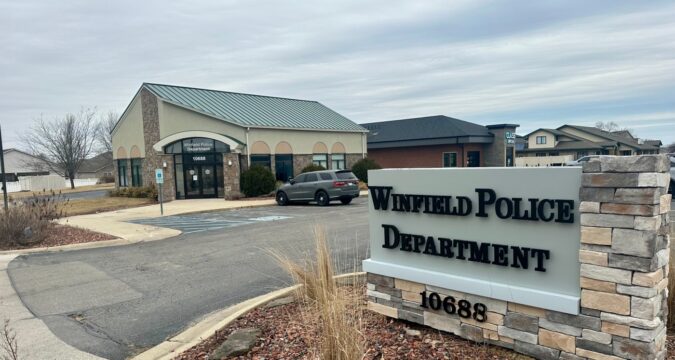
Pulaski County elementary principal charged with threatening ex-wife in Winfield
A Winfield man is facing charges after allegedly threatening his ex-wife.
Shawn Walsh, 53, is charged with intimidation and resisting law enforcement, plus two misdemeanors.
Court filings show he posted an $800 bond Friday.
Until recently, Walsh was the principal at West Central Elementary in Francesville, which is in Pulaski County. The school has about 335 students.
In a letter, Superintendent Cathy Rowe told parents Friday that he was arrested for a “personal matter” and placed on administrative leave. The school district would cooperate with police.
Rowe said she had “assisted” as principal since January and was temporarily taking over his duties.
Crown Point Police responded just before 8 p.m. Feb. 17 to the 11000 block of Green Place.
As an officer arrived, he spotted the former couple’s 11-year-old son crying in a doorway. No one else was home. The child said Walsh said he was going to “kill” his mother, according to charging documents.
Walsh waved at officers as he pulled off.
The mother soon arrived. Walsh called her while she was talking to officers to say the boy was “safe.” When officers told him to turn around to talk to them, he refused.
The mother was “visibly upset” with her “hands shaking,” the affidavit states. She told police they were scheduled to go to court the next day.
Her son called her to come home from swimming practice, feeling ill. Walsh was his coach, she said. Walsh was screaming over the phone.
He also threatened the woman. She said she would call the police.
“You file for full custody, you will not see the end of it and neither of us will get them,” Walsh wrote in various texts she showed police. “You forgot I can go to gun shows.”
“Bang bang hang (expletive),” he added.
The woman told officers Walsh threatened to kill her in front of the child on Feb. 16. There were three prior trespassing reports filed with police.
“Shut up, (expletive), go (have sex with) your (racial slur),” he texted on another occasion. “Can’t wait till Wednesday. I’m going to (mess) up you and your lawyer, then hang that (racial slur) from a tree.”
The woman told officers Walsh was principal at a “small school,” according to an affidavit.
He wrote he was “ready to go to jail just so she would cry every day,” records state.
He also allegedly threatened her friend in Illinois and said the ex-wife’s lawyer was “getting punched tomorrow.”
The case is before Judge Sheila Moss. Another court date hasn’t been set.
mcolias@post-trib.com

Carlos Alcaraz somete a Rublev y buscará el título ante Fils en el Abierto de Qatar
DOHA, Qatar (AP) — Carlos Alcaraz prolongó su marcha invicta en 2026 y accedió a la final del Abierto de Qatar tras doblegar el viernes 7-6 (3), 6-4 al ruso Andrey Rublev.
Tras quedar 11-0 en la temporada, el número uno del mundo irá por su segundo título este 2026 cuando enfrente el sábado al francés Arthur Fils.
El astro español arrancó el año con una histórica consagración en el Abierto de Australia. Con 22 años de edad, Alcaraz emergió del Melbourne Park como el hombre más joven en completar el Grand Slam en la carrera.
“Sé de lo que soy capaz cada vez que salto a la pista, de lo que puedo hacer”, manifestó Alcaraz tras librar una intensa pulseada contra Rublev.
No fue hasta una sexta bola de partido cuando Alcaraz pudo cantar victoria ante el quinto preclasificado en Doha.
Alcaraz desperdició dos oportunidades con su saque para llevarse el primer set y dejó escapar una ventaja 3-0 en el segundo.
Sacó pecho por la forma en la que respondió al verse exigido frente a Rublev, a quien domina 5-1 en el historial directo.
“Si quieres encontrar la solución a un problema, debes estar tranquilo”, dijo. “He estado muy tranquilo, pensando con claridad y siendo positivo. Esos momentos son en los que puedes encontrar soluciones a los problemas”.
Fils avanzó a la final con un triunfo 6-4, 7-6 (4) sobre Jakub Mensik, el checo que venía de dar el zarpazo en cuartos de final al eliminar a Jannik Sinner, el número dos del mundo.
“Si crees, quizás puedas lograrlo, así que creo al cien por cien”, dijo el francés de 21 años sobre topars con Alcaraz por el título. “Ya veremos en la cancha, pero seguro saldré a luchar”.
___
Deportes AP: https://apnews.com/hub/deportes

Gov. JB Pritzker suggests no matter how Indiana vs. Illinois fight goes, new Bears home won’t be in Chicago
As Indiana and Illinois lawmakers spar over where the Chicago Bears should build a new stadium, even Illinois Gov. JB Pritzker acknowledged Friday the team’s next home is unlikely to rise within Chicago’s city limits.
“I think now there’s a common understanding by most of the (Illinois) General Assembly that they’re not going to be able to build in the city of Chicago,” Pritzker said.
Pritzker’s pronouncement came a day after Indiana lawmakers took another step toward potentially luring the Chicago Bears across the border to Hammond, as a key Indiana House committee approved a plan to create an agency that would build a new stadium for the team.
The vote more firmly pits Indiana versus Illinois as the Bears weigh a move from Soldier Field, their home for more than half a century. And given the lack of movement on any stadium projects near Soldier Field or elsewhere in Chicago, Pritzker’s latest comments suggest that Illinois’ only viable option is the land the Bears own in northwest suburban Arlington Heights.
“For at least a year and a half, there has been a significant effort by the Bears as well as by Chicago lawmakers and others to try to figure out if the Bears could build what they need to build in the city of Chicago,” Pritzker said Friday. “They looked, and they, I think, gave the old college try, so to speak, to try to find a place within the city of Chicago, and they couldn’t.”
Transportation and a sufficiently large site are “very hard to find in a dense city like the city of Chicago,” Pritzker said, in comments he made at an unrelated press conference in Oak Park. “So that’s why I think we’re down to the question of whether they’re going to build in Arlington Heights or they’re going to build something in the state of Indiana.”
The governor’s latest comments on the Bears’ prospects in Chicago came in response to a question about whether he was trying to prevent Chicago lawmakers’ hesitancy to let the Bears leave the city from allowing the team to leave the state.
Neither the Indiana nor the Arlington Heights plans are guaranteed, but Indiana officials tried to portray this week’s moves as giving them the leg up in wooing the charter NFL franchise east.
The Indiana overtures do keep pressure on Illinois to potentially ease the Bears’ path to staying in-state as Illinois’ spring legislative session continues. Pritzker previously has said he is open to the state helping fund infrastructure tied to a stadium project, such as new expressway ramps and utilities, but only if the deal benefits Illinois taxpayers.
Still, Pritzker, after having said Illinois and Bears officials had been making progress, now sounds less enthusiastic about the state of Illinois’ relationship with the team. That followed Indiana’s moves, the Bears’ supportive comments about those developments and what the governor said was the Bears’ request to pause an Illinois House hearing on proposed legislation related to property taxes on so-called “megaprojects” that could help keep the Bears in Illinois. Illinois lawmakers on Thursday morning canceled that hearing in Springfield.
After the Indiana House of Representatives Ways and Means Committee voted Thursday 24-0 to establish a northwest Indiana stadium authority, the Bears released a statement saying the passage “would mark the most meaningful step forward in our stadium planning efforts to date.”
The Illinois governor on Thursday said he was “surprised, dismayed, very disappointed” by that statement from the Bears and on Friday said he was hopeful discussions could get back on track.
“It’s a choice by the Bears about whether or not they want to be in the state of Illinois,” Pritzker said.
Even if the team continues to talk to both states, Pritzker said, “I think the Bears need to make their intentions known.”
Whether the topic was Indiana or Arlington Heights, Chicago lawmakers have been hesitant to help the Bears leave the city. The Bears in recent years examined a number of sites in and around Chicago, including the one near Soldier Field on the lakefront and on the former site of Michael Reese Hospital.
“Hammond, Arlington Heights? They ain’t Chicago,” Mayor Brandon Johnson said during his weekly City Hall presser on Tuesday.
Arlington Heights Village Manager Randy Recklaus participated in Wednesday’s meeting between team and state officials, a news release from the village said.
“Bears representatives have repeatedly assured the Village that the news regarding Indiana does not mean that they have made any decisions on a final site location, and that they will continue the frequent and productive discussions that have been underway in Illinois,” the release said. “The news from Indiana underscores the need for urgency on this matter for Illinois leadership to work towards passing the Mega Projects Bill.”
A spokesperson for the Bears declined to comment Friday. Bears President and CEO Kevin Warren previously said Arlington Heights was the only viable option in Cook County.
Asked whether the Bears leaving Illinois would mark a failure of the state’s ability to negotiate, Pritzker said “there’s a limit to what the taxpayers of Illinois are going to spend on a stadium or on infrastructure.”
Tribune reporters Bob McCoppin and Alice Yin contributed.
https://www.chicagotribune.com/2026/02/20/pritzker-bears-stadium-not-chicago/

Speedskater stretchered off after opponent’s blade slices above her eye in Olympic 1,500 meters
MILAN — Short-track speedskater Kamila Sellier of Poland was immobilized on a stretcher and wheeled out of the Milano Ice Skating Arena on Friday night after a competitor’s blade sliced her above her left eye during the women’s 1,500 meters at the Milan Cortina Olympics.
Sellier went down along with 15-time Olympic medalist Ariana Fontana of Italy and American skater Kristen Santos-Griswold, who was penalized for an illegal lane pass that contributed to the accident. That kept her from advancing through the quarterfinal round.
The race was paused while Sellier received attention, a large white sheet blocking her from the crowd that was packed into the arena to see the final night of short-track speedskating. She eventually gave a thumbs-up to the crowd as she was taken away, leaving a trail of blood in the final corner of the track that workers had to clean up during the break.
Polish officials said Sellier’s eye was OK. She received stitches at the arena before going to the hospital for more tests.
Fontana’s skinsuit was nicked up and she received some help from her physiotherapist on her left hip during the pause. She wound up finishing second to Hanne Desmet of Belgium, sending her through to the semifinal round.
She later advanced into the finals, narrowly edging Zhang Chutong at the finishing line.
Fontana, the reigning Olympic silver medalist in the 1,500, was trying to move into a tie with Norwegian cross-country skier Marit Bjørgen as the most decorated Winter Olympian. Fontana won gold in the 2,000-meter mixed relay and silver in the 500 meters and 3,000-meter relay earlier in the Milan Cortina Games.
https://www.chicagotribune.com/2026/02/20/speedskater-blade-slices-eye-olympics/

Gary man sentenced to 10 years for robbing sex worker
A Gary man was sentenced to 10 years Friday after admitting he robbed a sex worker at gunpoint of just under $60.
Deandre Gardner, 28, pleaded guilty in November to armed robbery.
In exchange for his plea, prosecutors dropped rape, criminal confinement and intimidation charges.
Most of Friday’s hearing was devoted to which case his jail credit time would apply to. He had his probation revoked on an earlier case, which used up the bulk of it.
In court, he apologized for his actions.
Gary Police wrote the incident happened April 20, 2024, on a top-floor apartment in the 2500 block of Connecticut Street, documents state.
A Chicago Police officer notified Gary Police after meeting the victim at Roseland Community Hospital.
The victim told police she agreed to meet a man for a “QV” (quick visit) via a Text Now app for $150. He sent her his photo and address.
A different man met her at the apartment. She had to “play it cool” to not “arouse suspicion” and wanted to get an Uber out of there.
The upstairs apartment looked like a filthy “trap house” filled with garbage, debris and broken glass. He said to excuse the place; she raised her eyebrows.
“(Expletive) that, give me what you got,” he told her, according to the charging documents.
The woman thought it was a joke. He pulled a gun.
“Who are you talking to,” he asked.
The man grabbed her purse, then searched it for money or stuff to steal.
“You moving too much, stay still. Be quiet,” he told her.
The woman was “shaking,” but complied, telling him she wasn’t from the area. She cried and told him she “just wanted to leave and see her children.”
Holding a gun to her head, he forced her to transfer “her last $38” on a cash app, as well as taking $21 from her purse, according to the charges.
mcolias@post-trib.com
https://www.chicagotribune.com/2026/02/20/gary-man-sentenced-to-10-years-for-robbing-sex-worker/

House fire Thursday in La Grange Park causes estimated $50K damage
A La Grange Park resident escaped harm Thursday evening after a fire broke out at a home in the 1000 block of Barnsdale Road.
La Grange Park firefighters who arrived just before 5:30 p.m. Thursday said “heavy fire” could be seen coming from the second floor of the house, “including a deck structure and the wall of the home,” according to a news release from the fire department.
The alarm was elevated to a “full still” alarm, bringing in additional resources, the department said. Officials said “the main body of fire was quickly knocked down,” but the effort required them to “open walls, the ceiling of the second floor and the roof to completely extinguish the fire.”
“One occupant that was home at the time of the fire was able to escape,” officials said. No injuries were reported.
Fire Chief Dean Maggos on Friday said the cause of the blaze was still under investigation.
Maggos said that initial estimates put the damages at approximately $50,000.
La Grange Park firefighters were assisted by fire departments from La Grange, Brookfield, Western Springs, Weschester, Riverside and Westmont. The MABAS Division 10 Origin and Cause Team is assisting in the investigation.
Hank Beckman is a freelance reporter for Pioneer Press.
https://www.chicagotribune.com/2026/02/20/lagrange-park-house-fire/
Which Trump tariffs did the Supreme Court strike down? Here’s what to know.
NEW YORK — The nation’s highest court struck down some of U.S. President Donald Trump’s most sweeping tariffs on Friday, in a 6-3 decision that he overstepped his authority when using an emergency powers law to justify new taxes on goods from nearly every country in the world.
Trump has launched a barrage of new tariffs over the last year. Despite Friday’s ruling, many sectoral levies remain in place — and the president has already said that he’ll turn to other options for more import taxes, including plans to impose a new 10% tariff globally. But the Supreme Court decision upends a core set of tariffs that Trump rolled out using the 1977 International Emergency Economic Powers Act, or IEEPA.
Supreme Court strikes down Trump’s sweeping tariffs, ruling in favor of Vernon Hills toymaker
IEEPA authorizes the president to broadly regulate commerce after declaring a national emergency. Over the years, presidents have turned to this law dozens of times, often to place sanctions on other countries. But Trump was the first to use it to implement tariffs.
Here’s a look at the now-overturned tariffs Trump imposed using IEEPA — and other levies that still stand today.
‘Liberation Day’ tariffs
Trump used IEEPA to slap import taxes on nearly every country in the world last spring. On April 2, which Trump called Liberation Day, he imposed “reciprocal” tariffs of up to 50% on goods from dozens of countries — and a baseline 10% tariff on just about everyone else.
The 10% tax kicked in early April. But the bulk of Liberation Day’s higher levies got delayed by several months, and many rates were revised over time (in some cases after new “framework” agreements). Most went into effect Aug. 7.
The national emergency underlying these tariffs, Trump argued at the time, was the long-running gap between what the U.S. sells and what it buys from the rest of the world. Still, goods from countries with which the U.S. runs a trade surplus also faced taxes.
Major trading partners impacted by Liberation Day tariffs include South Korea, Japan and the European Union — which combined export a range of products to the U.S., like electronics, cars and car parts and pharmaceuticals. Following trade talks, Trump’s rates on most goods stood at 15% for the EU, Japan and South Korea ahead of Friday. But just last month, Trump threatened to hike levies on certain South Korean products to 25% — and countries worldwide still face sector-specific, non-IEEPA tariffs.
‘Trafficking tariffs’ on Canada, China and Mexico
At the start of his second term, Trump used IEEPA to impose new tariffs on America’s three biggest trading partners: Mexico, Canada and China.
To justify these tariffs, Trump declared a national emergency ostensibly over undocumented immigration and the trafficking of drugs like fentanyl and the chemicals made to use it. The levies were first announced at the start of February 2025, but went into effect over time — and were at times delayed, reduced or heightened through further retaliation.
Ahead of Friday’s decision, “trafficking tariffs” on Canadian and Mexican imports were 35% and 25%, respectively, for goods that don’t comply with the 2020 United States-Mexico-Canada Agreement. China, meanwhile, faced a 10% fentanyl-related tariff. That’s down from 20% imposed by Trump earlier last year. Chinese goods also once saw sky-high levies after Liberation Day, but rates had since come down during trade talks.
Top U.S. imports from China include mobile phones and other electronics, as well as clothing, toys and household appliances. Meanwhile, Canada and Mexico are both major sources of cars and auto parts. Canada is also the U.S.’s largest supplier of crude oil. And Mexico is a key exporter of fresh produce, beverages and more.
Tariffs on Brazil over Bolsonaro trial
Trump also used IEEPA to slap steep import taxes on Brazilian imports over the summer, citing the country’s policies and criminal prosecution of former President Jair Bolsonaro.
Brazil already faced Trump’s 10% baseline Liberation Day rate. The Bolsonaro-related duties added another 40%, bringing total levies to 50% on many products ahead of Friday.
The U.S. has actually run a consistent trade surplus with Brazil over the years. But top exports from the country include manufactured products, crude oil and agricultural products like soybeans and sugar.
Tariffs on India linked to Russian oil
India has faced additional IEEPA tariffs, too. After Liberation Day, Trump slapped a 25% levy on Indian imports — and later added another 25% for the country’s purchases of Russian oil, while also citing the emergency powers law, bringing the total to 50%.
But earlier this month, the U.S. and India reached a trade framework deal. Trump said Prime Minister Narendra Modi agreed to stop buying Russian oil, and that he planned to lower U.S. tariffs on its ally to 18%. Meanwhile, India said it would “eliminate or reduce tariffs” on all U.S. industrial goods and a range of agricultural products.
India’s top exports to the U.S. include pharmaceuticals, precious stones, clothing and textiles.
What are other non-IEEPA tariffs that countries still face today?
Despite the Supreme Court knocking down sweeping import taxes Trump imposed with IEEPA, most countries still face steep tariffs from the U.S. on specific sectors.
Citing national security threats, Trump has used another law — Section 232 of the 1962 Trade Expansion Act — to slap levies on steel, aluminum, cars, copper and lumber worldwide. He began to roll out even more Section 232 tariffs in September, on kitchen cabinets, bathroom vanities and upholstered furniture.
Amid pressure to lower rising prices, Trump has rolled back some of his tariffs recently. Beyond trade frameworks, that’s included adding exemptions to specific levies and scrapping import taxes for goods like coffee, tropical fruit and beef.
Still, Trump has threatened more sectoral levies are on the way. And following Friday’s decision, he said that he would sign an executive order to enact a 10% global tariff — using another federal law, known as Section 122. Those tariffs would be limited to just 150 days, unless they are extended legislatively.
AP Writers Paul Wiseman, Seung Min Kim and Lindsay Whitehurst contributed to this report.
https://www.chicagotribune.com/2026/02/20/trump-tariffs-what-to-know/

Crash involving bike and car in Aurora leaves bicyclist in critical condition, police say
A bicyclist is in critical condition after a crash involving a bike and a car Thursday afternoon on Aurora’s far East Side, the Aurora Police Department said on Friday.
The crash is believed to have occurred at around 4:30 p.m. on Thursday near the intersection of Montgomery Road and Walcott Road in Aurora, a news release from the department said. Preliminary information indicates that a red Chevrolet SUV, driven by a 64-year-old man, collided with a female bicyclist at the crosswalk near Montgomery Road and Walcott Road, according to officials.
The bicyclist, who was in critical condition, was taken to a local hospital by Aurora Fire Department paramedics, and later airlifted to Loyola University Medical Center, the police department said. The driver of the Chevrolet was not injured and remained on the scene.
Portions of Montgomery Road remained closed for several hours to allow investigators to document and process the scene, the release said. The city of Aurora’s Emergency Management Agency was also notified to assist with traffic management.
The police department’s Traffic Division is conducting an investigation to determine the circumstances of the crash, the release said, and any charges or traffic citations are pending the outcome of the investigation, according to officials.
Anyone with information about the crash is asked to contact the Aurora Police Department Traffic Division at 630-256-5330 or tips@aurora.il.us.


