Category: News
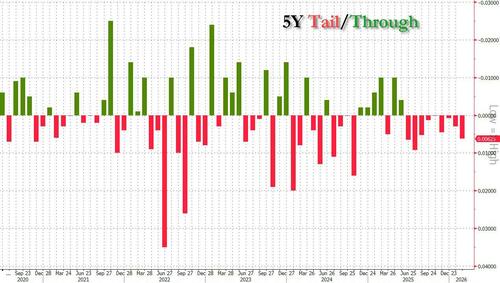
Subpar 5Y Auction Sees Biggest Tail Since July 2025, Bid to Cover Slides
Subpar 5Y Auction Sees Biggest Tail Since July 2025, Bid to Cover Slides
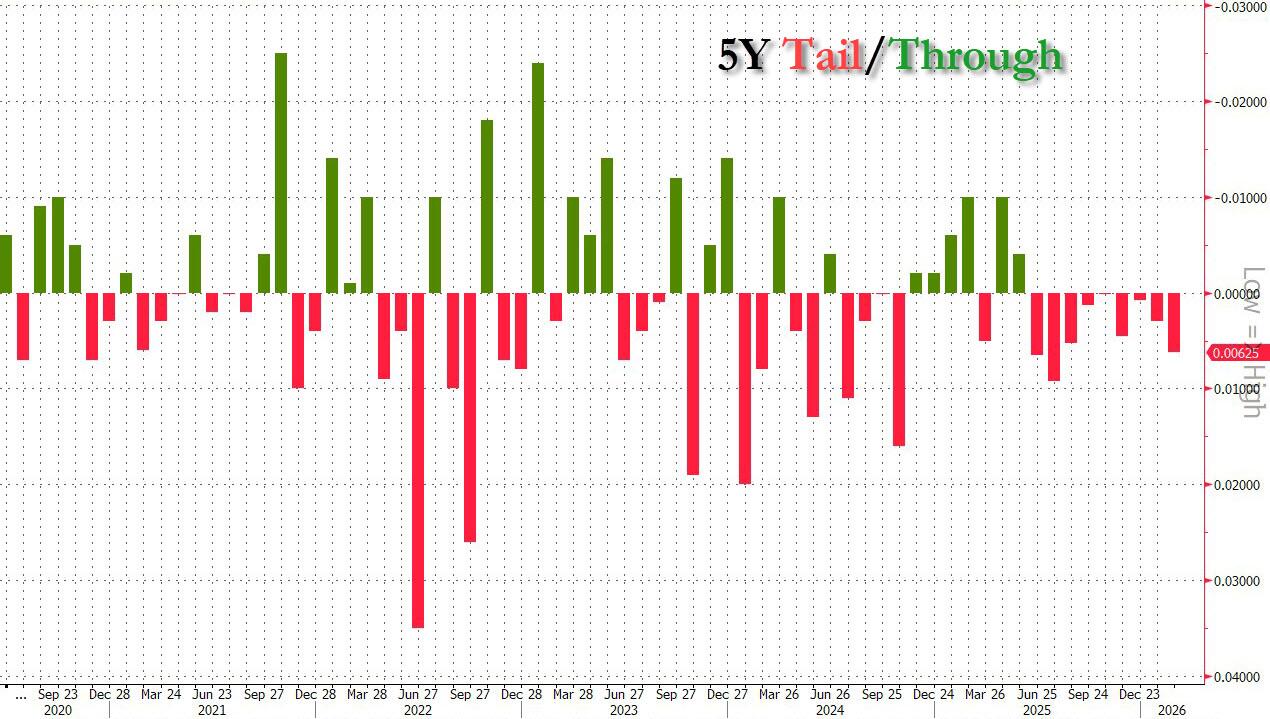
After yesterday’s 2 Year auction, moments ago the Treasury sold its second coupon for the week when it auctioned off $70BN in 5 Year paper in a rather lackluster auction.
The auction priced at a high yield of 3.615%, down from 3.823% a month ago, and the lowest since November; it also tailed the When Issued 3.608% by 0.7bps, the biggest tail since last July.
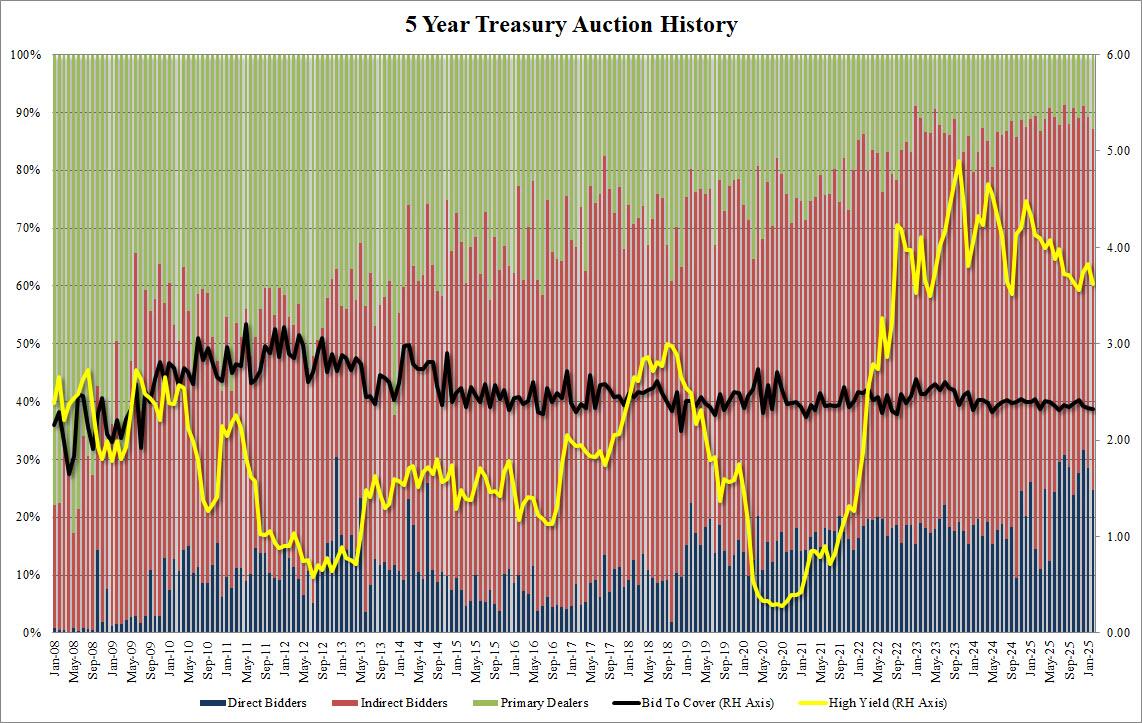
The bid to cover was ugly, dropping to 2.32, down from 2.34 and the lowest since July 2025.
The internals were fractionally better, with foreign demand clearly there as Indirects took down 62.5%, up from 60.7% and the highest since October. And with Directs awarded 24.7%, down from 28.5% and the lowest since October, Dealers were left holding 12.8%, up from 10.8% last month and above the recent average of 10.1%.
Overall, this was a subpar auction, with a surprisingly big tail and sliding bid to cover, yet it could have been far worse if foreign bidders did not show up. Luckily, they did, and prevented a much worse outcome.
Tyler Durden
Wed, 02/25/2026 – 13:20
https://www.zerohedge.com/markets/subpar-5y-auction-sees-biggest-tail-july-2025-bid-cover-slides
Schumpeter Didn’t Have This Level Of Destruction In Mind
Schumpeter Didn’t Have This Level Of Destruction In Mind
By Michael Every of Rabobank
The tendency for the rate of things to fall
Markets are trying to get past a report on how devastating AI could be for employment. There are push-backs: it ignores resource constraints and Schumpeterian creative destruction, and echoes Marx’s Tendency for the Rate of Profits to Fall. Yet Anthropic just released desk-top plug-ins plugins aimed at HR, design, engineering, ops, financial analysis, investment banking, equity research, private equity, and wealth management, e.g., it can do all the analysis in a spreadsheet, write the report on it, and make the presentation. It seems illogical this won’t see a surge in unemployment even if AI still makes key errors that require experience to spot – the youngest cohort of workers will miss out, meaning they don’t get the experience needed to be useful later.
That’s with existing resources; Schumpeter didn’t have that level of destruction in mind for creatives; and while Marx was wrong, the period post the release of Das Kapital wasn’t one of social stability. Even Bank of England Chief Economist Pill just told Parliament, “My daughter is struggling to find work too,” though he blamed Labour’s taxes on business. The Fed’s Bostic yesterday said he didn’t think the AI threat required rate cuts as a solution even though they have an inflation AND employment mandate. Then again, Bloomberg reports the AI memory shortage may add up to 0.2 percentage points to US CPI, underlining the resource constraint view.
If employment may have a tendency to fall, sadly so do bombs. Russia threatened the UK and France with nuclear strikes after alleging the pair were trying to get a nuclear weapon or dirty bomb to Ukraine: the financial media didn’t notice. It warned of plots to destroy gas pipelines through the Black Sea, following that of the Druzhba oil pipeline to Slovakia this week, which the financial media also didn’t notice. Notably, the US also warned Ukraine not to blow Russian assets up that threaten its economic interests there. Elsewhere, Europe’s VDL insisted the EU would get round Hungary’s veto to deliver Ukraine’s €90bn loan, and an EU Commissioner stressed they were looking at ‘non-standard’ tactics to get Ukraine in faster. Also add Iceland and Montenegro, and won’t consensus EU decision making be harder to achieve, and Russia frictions rise?
In the Middle East, 11 US F-22s are now on the ground in Israel, as Reuters reports Iran is close to buying Chinese supersonic anti-ship missiles. Embassies are sending warnings to their citizens around the region; Turkey is preparing to prevent an Iranian refugee surge at its border. Yet Indian PM Modi will address the Knesset today at 4:30PM local time to signal a strategic trade, tech, and defence alliance (relatedly, Somaliland’s president announced he will make his first official Israel visit in March). It remains to be seen when this war might begin –today, or after market close Friday?– or what then happens, but such an outcome looks more likely than a sudden Peace For Our Time deal. Either way, the impact on energy prices will be notable – either sharply up or sharply down.
In Asia, supplies of key goods have a tendency to fall: China just cut off 20 major Japanese firms off from critical minerals over “remilitarisation” – or, to put it another way, the rapid rearmament the US is pushing allies to embrace. Rather than confront the US directly ahead of a Xi-Trump summit, Beijing –angry with Takaichi– is again testing US resolve via that channel. Taiwan’s ruling and opposition parties also just agreed to advance President Lai’s $40bn special defence budget after months of deadlock: that’s going to be another pressure point given the pledged $20bn of US arms sales to it. How much room does the US have to placate China without showing its allies that it doesn’t stand behind them?
In related geoeconomics, tensions don’t have a tendency to fall: US officials warn of “deep distrust” even as they are trying to stabilize China ties ahead of that key summit. Relatedly, Bloomberg reports a $112bn gap between what China claims it’s exporting to the US and what the US says it’s buying – almost all of it is seen as due to tariff evasion.
German Chancellor Merz is in Beijing seeking “reliable and fair partnership” and to urge China to curb “unfair trade practices” amid his economy’s deindustrialisation. However, the heuristic shows net importers (as Germany now is vs China) only have the ability to pressure net exporters with the threat of tariffs. Berlin, unlike France, is opposed to them – so, what instead?
Europe is closing in on a Mexico trade deal… as the latter grapples with cartel violence and is perhaps months from being locked into a new North American trade deal with a de facto common external tariff directed by the US, as we already see with Mexican tariffs on Asian imports. Similar to the EU-Mercosur deal Europe hasn’t yet agreed to, there is an underlying clash with the realpolitik of the Donroe Doctrine ahead.
The US is eyeing Pentagon AI for its new critical minerals trade bloc’s pricing. It remains to be seen how this will work given the noted disconnect between resource availability and AI, but watch this space… and “because markets” it isn’t. Neither is China’s soon-to-be-announced new energy strategy, which will place its own security at the heart of all future development.
On the other hand, US Secretary of War Hegseth is at war with Anthropic and has given it an ultimatum. Reportedly, he has told the firm that he could not just strip it from the US defense sector if it won’t give him full access, but also label it a supply-chain risk, like Chinese firms, or invoke the Defence Production Act to force it to work with the Pentagon. For anyone but the “because markets” crowd, this kind of outcome was always obvious: new technology has historically always been centred on the military first or been driven by it.
Meanwhile, in Australia CPI doesn’t have a tendency to fall, despite pre-AI RBA models saying it would. In January, seasonally adjusted CPI was 0.5% m-o-m and remained unchanged at 3.8% y-o-y, with the largest contributors being housing (6.8%), food and non-alcoholic beverages (3.1%) and recreation and culture (3.7%). Trimmed mean inflation was 3.4% y-o-y, up from 3.3%. That almost certainly locks in a 25bps rate hike in May after the next round of quarterly CPI data are out. (And note Australia doesn’t have any tariffs: the US, with its controversial tariffs, has headline CPI of 2.4%. What do pre-AI economic models and modellers have to say about that?)
In politics, there are numerous headlines pointing to our volatile times, e.g., the Australian PM being evacuated from his Canberra residence for security. Moreover, in the US State of the Union President Trump: reiterated an aspiration to replace income tax with tariff revenue; proposed shifting subsidies from health insurers to consumers; underlined the prices of US prescription medicines are lowered by increasing the prices in other economies; stated AI datacentres will pay separate, higher electricity prices; flagged opening up the retirement scheme available to federal workers to the private sector; argued to prevent members of Congress from profiting from inside information (“Did Nancy Pelosi stand up if she’s here?”); announced a new War on Fraud under VP Vance; pushed the SAVE America Act which enforces proof of ID to vote; and claimed that 35 million people told him that the Prime Minister of Pakistan would have died in a war with India if not for his involvement. We didn’t get anything on aliens (I’m not joking).
However, Trump underlined that while he prefers diplomacy, Iran is continuing with its “sinister plans” and is refusing to say, “We will never have a nuclear weapon” – and he will never allow them to have one. That sounds like certain headlines may fall on market screens in the near future even if that rhetorical –and literal– bomb wasn’t dropped at the end of the SoTU, as some had thought could complete its political theatre.
Tyler Durden
Wed, 02/25/2026 – 13:20
https://www.zerohedge.com/markets/schumpeter-didnt-have-level-destruction-mind
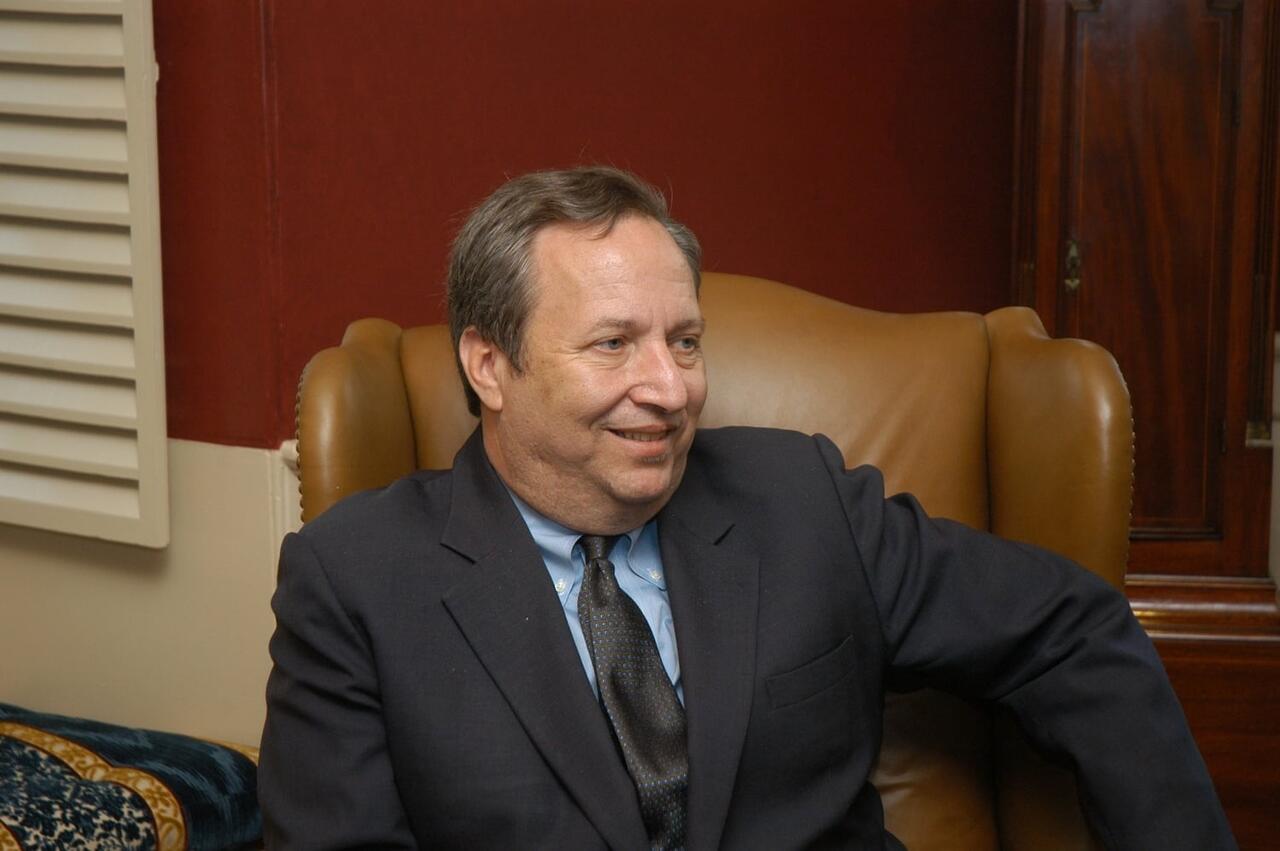
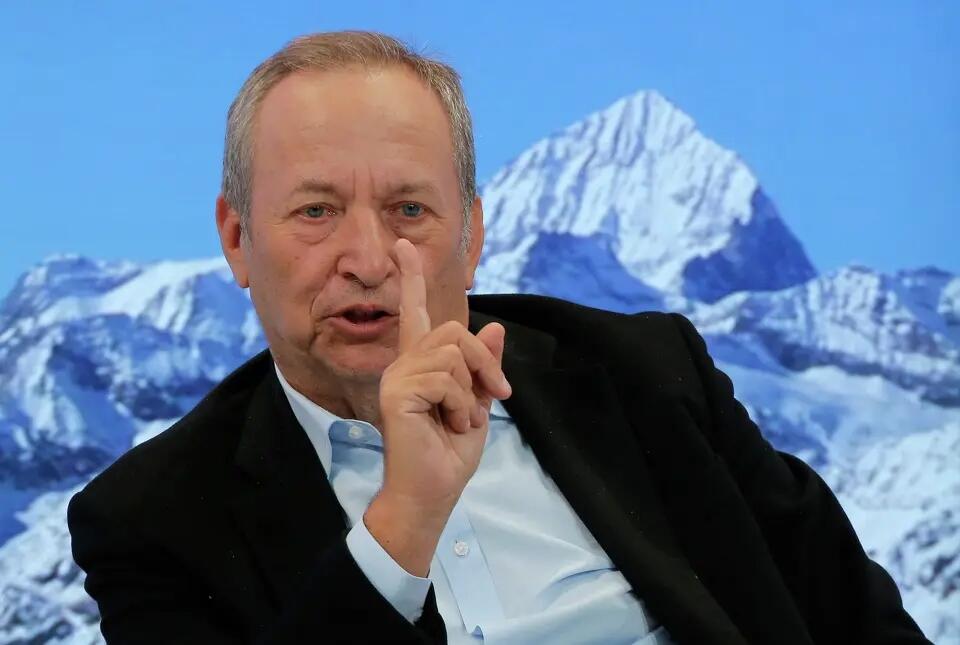
“Do You See What Happens Larry…”: Summers Out At Harvard After Epstein Scandal
“Do You See What Happens Larry…”: Summers Out At Harvard After Epstein Scandal
Who could have seen this coming?
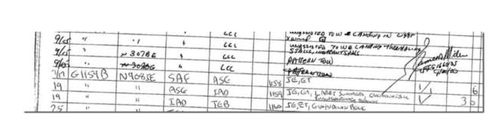
Aug 2019: Clinton Treasury Secretary Larry Summers Rode On Epstein’s ‘Lolita Express’
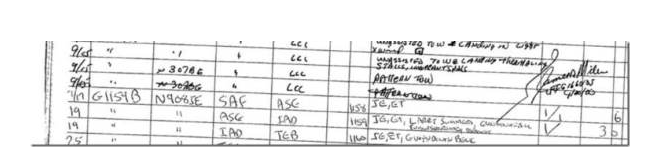
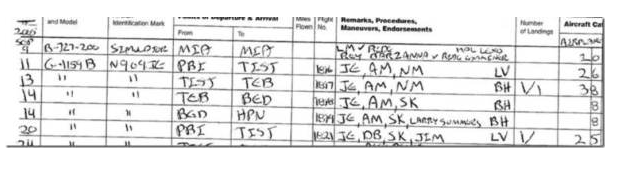
The former Harvard President and Clinton-era Treasury Secretary has been cited four times on the flight logs of Jeffrey Epstein’s ‘Lolita Express’. During his first trip, he was still working in the Clinton administration. And during his most recent – in 2005 – he and his wife accompanied Epstein to Epstein’s private island just days after their wedding.
During his first trip on Sept. 19, 1998, (while he was Treasury Secretary) Summers flew from the airport in Aspen, Colo. to Dulles international.
His second trip didn’t take place until April 15, 2004, when Summers flew from JFK to Bedford, Mass., an airport not far from Harvard, where he was president of the university at the time.
On his third trip, Summers flew from Bedford to White Plains for reasons that are unclear.
And during his fourth trip, Larry and Lisa Summers flew from Bedford to Epstein’s Island, and were accompanied by Epstein’s close confidant and alleged Madam Ghislaine Maxwell.
All of which led to the former Harvard President Larry Summers resigning from his academic and faculty appointments at Harvard at the end of the academic year, relinquishing his University Professorship – Harvard’s highest faculty distinction – and remaining on leave until that time, a Harvard spokesperson confirmed to The Crimson.
The Crimson reports that Summers also resigned Wednesday from his role as co-director of the Mossavar-Rahmani Center for Business and Government at the Harvard Kennedy School, a position he has held since 2011, according to the spokesperson. He will not teach or take on new advisees.
The resignation marks an extraordinary unraveling for Summers, long one of the most influential figures in American economics. His career spanned prize-winning research, service as United States Treasury Secretary, and the presidency of Harvard.
In a statement to The Crimson, Summers wrote that the decision to leave was “difficult” and that he remained “grateful to the thousands of students and colleagues I have been privileged to teach and work with since coming to Harvard as a graduate student 50 years ago.”
Summers, who has been on leave since November, appeared hundreds of times in newly released Epstein files.
The correspondence between Summers and Epstein – which tallies thousands of emails and phone calls – revealed an intimacy that far exceeded the bounds of a professional relationship.
In the emails, Summers appears to ask Epstein for advice on pursuing a romantic relationship with a woman that he describes as a mentee.
In one message from 2018, Epstein refers to himself as Summers’ “wingman”.
Furthermore, in late December, a second tranche of Epstein-related records released by the Justice Department revealed that Summers had been designated as a successor executor in a 2014 draft of Epstein’s will, positioning him to oversee the financier’s estate if the primary executors were unable to serve.
Quoting from The Big Lebowski, we comment that “you see what happens Larry…” when you correspond with a convicted pedophile.
Who’s next?
Tyler Durden
Wed, 02/25/2026 – 13:00

Ethereum Foundation Starts Staking ETH As Client Diversity Concerns Persist
Ethereum Foundation Starts Staking ETH As Client Diversity Concerns Persist
Authored by Christina Comben via CoinTelegraph.com,
The Ethereum Foundation has begun staking part of its treasury, turning one of Ethereum’s most influential entities into a direct economic participant in network consensus.
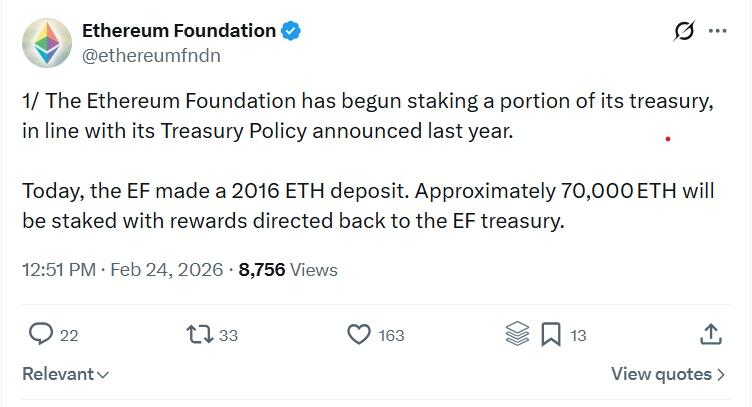
According to a Tuesday post on X, the foundation deposited 2,016 Ether and plans to stake about 70,000 in total, with all rewards flowing back into its treasury to fund protocol research and development, ecosystem development and grants.
In its announcement, the foundation stressed that new validators were being operated using open-source infrastructure, Dirk and Vouch, originally developed by Attestant and now part of Bitwise’s institutional staking stack.
Dirk acts as a distributed signer, while Vouch serves as a validator client, allowing keys and operations to be split across multiple jurisdictions and operators rather than concentrated in a single machine or provider.
The Ethereum Foundation has started staking its ETH. Source: Ethereum Foundation
Chris Berry, head of Ethereum onchain engineering at Bitwise Onchain Solutions, told Cointelegraph that Vouch and Dirk were “built with the mindset to fulfill the duties of an honest validator in the safest way possible,” with an emphasis on client diversity, non-custodial control and compliance.
Avoiding single points of failure
According to the foundation, this setup was designed to avoid a “single point of failure” and to reflect best practices for secure, non-custodial staking.
Crucially, the Ethereum Foundation says its configuration “employs minority clients” alongside a mix of hosted infrastructure and self-managed hardware in several jurisdictions.
For Berry, those properties “really align with the core values of Ethereum,” and the EF’s adoption shows that the team is “confident in the implementation and stewardship of the software.”
The choice is also significant in the context of long-running concerns that Ethereum’s client ecosystem and validator set could become overly dependent on a handful of dominant implementations and centralized cloud providers.
By explicitly opting for a minority client-heavy stack, the foundation appears to be using its own staking footprint to model what it wants large institutional validators to do.
Ethereum staking concentration concerns
The move comes as Ethereum staking continues to grow and professionalize. Around 30% of the ETH supply is now staked, with liquid staking protocols and large custodians, such as Lido and Coinbase, still controlling a sizable share of validators and effective voting power.
This has raised recurring questions about how much decentralization Ethereum can retain as more capital flows into highly optimized, institution-run staking operations.
Berry stressed that Ethereum had “always prioritized decentralization and security” at a protocol level, and that there were “many mechanisms” to ensure that Ethereum would “remain secure if large amounts of stake want to leave or do not perform their duties appropriately.”
He added that institutional staking was “very competitive,” and that allocators were increasingly focused on properties such as client diversity, infrastructure resilience and validator performance.
Tyler Durden
Wed, 02/25/2026 – 12:45
Trump To Iran: War Can Be Averted If It Says “Those Secret Words”
Trump To Iran: War Can Be Averted If It Says “Those Secret Words”
Among the most important foreign policy statements of President Trump’s during his annual State of the Union address to a joint session of the Senate and House of Representatives Tuesday night came in discussing his Iran red lines.
“We are in negotiations with them. They want to make a deal, but we haven’t heard those secret words: ‘We will never have a nuclear weapon.’” This ‘challenge’ underscores that at this point it may not matter at all what Iran actually says or does, as Washington is on the war path. See the words of Iranian Foreign Minister Seyed Abbas Araghchi issued before Trump’s speech – he laid out precisely this pledge using the “secret words” several hours before the world knew what Trump would say…
2/4 Our fundamental convictions are crystal clear: Iran will under no circumstances ever develop a nuclear weapon; neither will we Iranians ever forgo our right to harness the dividends of peaceful nuclear technology for our people.
— Seyed Abbas Araghchi (@araghchi) February 24, 2026
The top Iranian diplomat had declared that it was “crystal clear” that “Iran will under no circumstances ever develop a nuclear weapon. Araghchi followed with: “We have a historic opportunity to strike an unprecedented agreement that addresses mutual concerns and achieves mutual interests. A deal is within reach, but only if diplomacy is given priority,” in the statement on X.
Trump during his speech also agreed that his “preference” is “to solve this problem through diplomacy, but one thing is certain: I will never allow the world’s number one sponsor of terror, which they are by far, to have a nuclear weapon.”
Iran has after the fact slammed Trump’s statements as false, stressing that it has on several occasions very clearly pledged to never purse a bomb. Some pundits are saying Trump’s words were hyperbolic to express a point – that in reality it must be more than just a verbal pledge, as Washington is demanding a comprehensive legal commitment to not build a bomb.
“Iran reaffirms that under no circumstances will Iran ever seek, develop or acquire any nuclear weapons.”
—JCPOA (Preamble and General Provisions, para. iii)
Trump Tuesday night reiterated that Iran’s nuclear program had been ‘obliterated’ – and so it presents the contradiction of the US wanting to once again wipe out a nuclear program which the administration says is actually no longer there.
“We wiped it out and they want to start all over again,” Trump said in the address. “And they’re at this moment again pursuing their sinister ambitions.”
Of the June 2025 US and Israeli attacks on nuclear sites, Trump continued “they were warned to make no future attempts to rebuild their weapons program, in particular, nuclear weapons – yet they continue.”
Trump asks of Iran that it must utter the ‘secret words’…
PRESIDENT TRUMP on IRAN: My preference is to solve this problem through diplomacy, but one thing is certain: I will NEVER allow the world’s number one sponsor of terror to have a nuclear weapon.
We have to be strong. It’s called peace through strength. pic.twitter.com/0CPKHtvQDt
— Department of State (@StateDept) February 25, 2026
While Iranian officials have this week said they’re willing to do anything for a deal, there’s also a creeping fear in Tehran that if they cede too much, the country’s enemies will smell blood in the water and attack anyway. Iranian leadership fears it’s in a lose-lose situation, and so if attack – however ‘limited’ a strike might be – would feel the need to hit back as hard as possible. This could be a recipe for stumbling into all-out war.
Tyler Durden
Wed, 02/25/2026 – 12:25

One In Five California Home Sales Canceled Due To Unaffordable Insurance
One In Five California Home Sales Canceled Due To Unaffordable Insurance
Authored by Mike Shedlock via MishTalk.com,
Ponder a $44,000 insurance bill. This does not count as inflation in the CPI.
Dysfunction in California’s Insurance Market
The Wall Street Journal reports A $44,000 Bill Shows the Dysfunction in California’s Home-Insurance Market
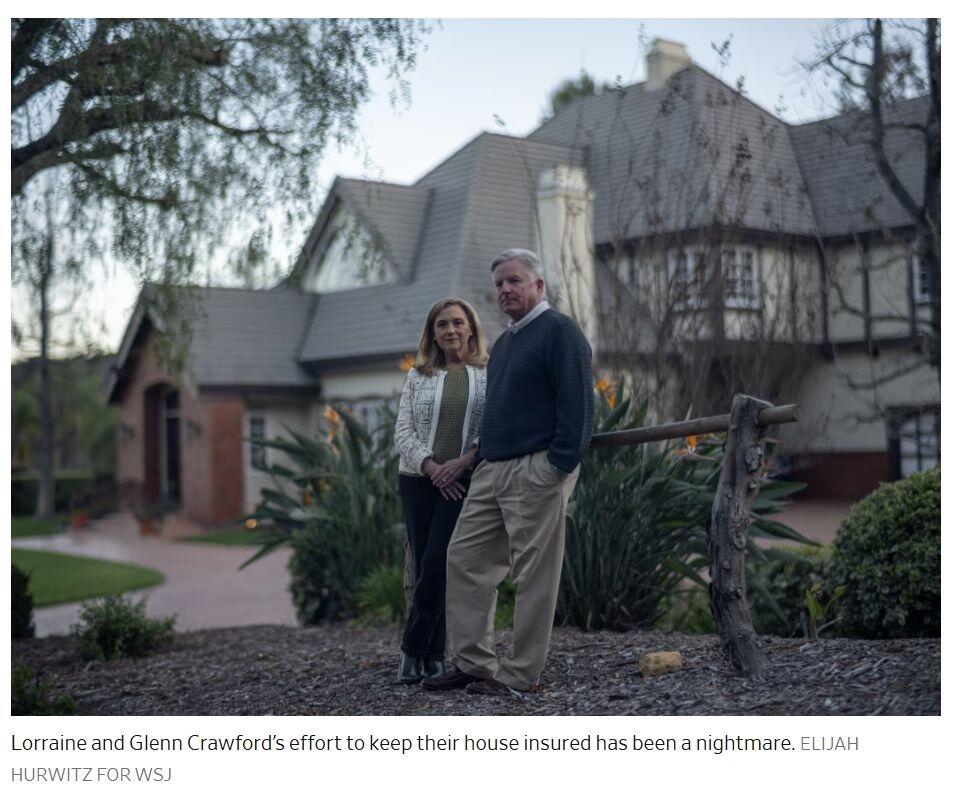
Glenn and Lorraine Crawford paid about $500 a month to insure their home in Agoura Hills northwest of Los Angeles when they bought it in 2012.
The Crawfords say they have little alternative but to pay the bill that arrived last month, which, at more than $44,000 a year, is almost as much as their mortgage bill. The only other insurer willing to cover their home, Lloyd’s of London, quoted them $80,000 a year.
More than a year after infernos tore through Los Angeles County, millions of Californians like the Crawfords are suffering through a home-insurance crisis that has rolled on for years with eye-watering rate increases, canceled policies and rejected claims.
Two of the biggest insurers, State Farm and Allstate, aren’t selling to new customers in the state, despite getting double-digit rate increases approved for their existing policyholders. A third, Farmers Insurance, has committed to cover more homes in fire-prone areas, but only a fraction compared with the drop in its overall number of policies since the crisis began.
The insurance dysfunction has spread to California’s housing market, the country’s biggest and most expensive, with nearly one-in-five real-estate agents reporting a canceled sale last year because of clients unable to find affordable insurance, according to a survey by the trade body California Association of Realtors.
The roots of California’s insurance crisis go back years. The state’s tough rate caps kept premiums low. But home insurers eventually balked, saying they couldn’t charge enough to cover rising wildfire and other losses, made worse by climate change and development. Insurers didn’t renew tens of thousands of policies, especially in fire-prone areas.
California’s uphill battle to draw insurers back could prove a template—or cautionary tale—for other disaster-prone states. New rules implemented last year, for instance, require home-insurers in the state to pledge to sell new policies in high-risk wildfire zones, in return for allowing them to charge higher rates.
As part of a request for a 6.99% rate increase, Farmers, the second-biggest home-insurer in the state, pledged to add at least 5,596 policies in high-risk areas by September 2028. That is less than a 10th of the 59,806 reduction in Farmers’ total number of California home-insurance policies in the previous two years, according to a Consumer Watchdog analysis.
Others continue to shun the state despite winning big concessions. California regulators approved a 34% rate increase for Allstate in 2024. Yet it has no “growth aspirations” in California home insurance, Chief Executive Tom Wilson said last year, adding that it would take time to fix the market. A spokesman said that remains Allstate’s position.
The disaster also almost felled California’s biggest home insurer, State Farm General. Lara last year backed an emergency 17% rate increase to keep the State Farm subsidiary afloat. “We’re on the Titanic, and we see the iceberg,” one of Lara’s lawyers told a hearing last year.
Truflation BS
Meanwhile, Truflation reports an absolutely absurd year-over-over year inflation rate of 0.87 percent.
@truflation pic.twitter.com/1vrtJkWMFJ
— Randy Woodward (@TheBondFreak) February 18, 2026
Faster Nonsense
Truflation is nothing but more timely nonsense. Like the BLS and BEA, Truflation does not factor in homeowner’s insurance or property taxes.
Truflation’s measure of rent are ridiculous. Truflation has too high a weight on new leases rather than existing leases. Existing leases are close to 90 percent of the market.
While the price of new leases is falling in some areas, existing leases are moving much slower.
Neither the BLS nor BEA weigh food properly. I strongly suspect Truflation doesn’t either.
I don’t doubt that Truflation has better and more timely collection methods than the BLS, but like the rest of the inflation models, it’s nonsense.
Economists don’t understand why people are upset. The answer is obvious. When you exclude real prices people pay, all you are offering is garbage.
We don’t need better measures of nonsense, we need better measures of reality, and Truflation sure isn’t it.
Food at Home vs Away
Note the BLS food weights for home vs away are reversed from where people actually spend their money.
For more details, please consider Where Do You Spend Money on Food? How Screwed Up Are the BLS Weights?
Does the BLS match your budget?
Homeowners Insurance
On August 11, 2025, I asked Is Homeowners Insurance Understated in the CPI? Shop Around!
Our Insurance went up by $2,000. Then another $2,000. Here’s our story.
What’s the Insurance Weight?
The BLS says shelter is 35.473 of the CPI. Of that, Tenants’ and household insurance is allegedly 0.414 percent.
Sound right?
If you own a home, what percent of your income is spent on your homeowners’ insurance?
Under 1/2 of 1 percent?
ON January 14, I noted The Fed Has Missed Its Inflation Target on Ten Different Measures
The Atlanta Fed tracks various inflation targets. Let’s have a look.
Does that match your experience or does Truflation?
And none of the measures include homeowners insurance. It’s all nonsense, yet economists believe it.
Tyler Durden
Wed, 02/25/2026 – 12:05
On Gold, Oil, & Uranium
On Gold, Oil, & Uranium
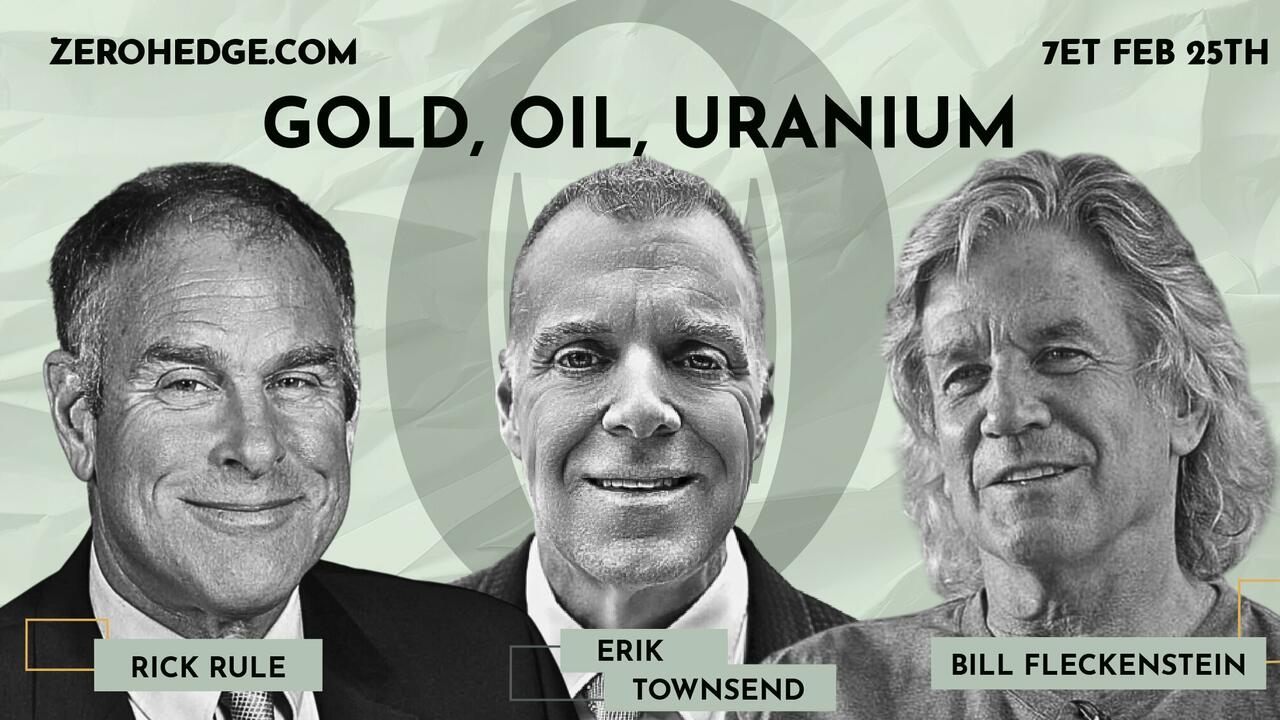
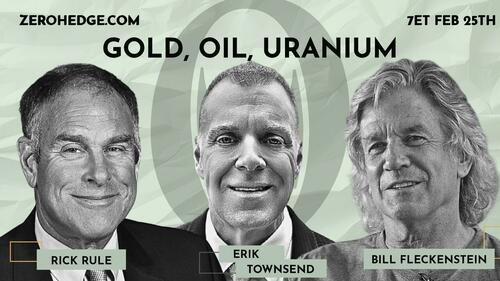
Billionaire natural resources investor Rick Rule, legendary short-seller Bill Fleckenstein, and veteran oil trader Erik Townsend join ZeroHedge this evening at 7PM ET to give their outlooks on three key commodities sectors: Gold, Oil, and Uranium.
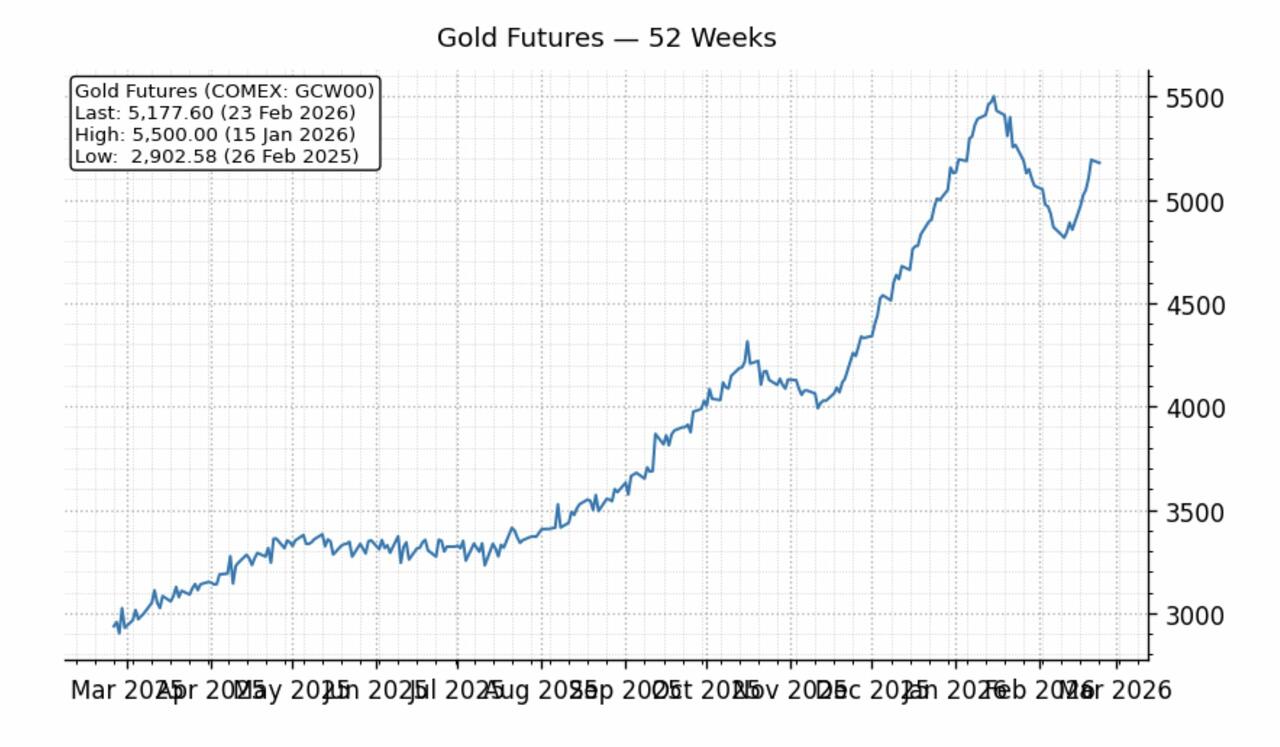
Gold and silver have, of course, exploded in price over the last 52 weeks with gold’s price almost doubling and reaching a high of over $5500.
Silver’s price more than tripled at one point and now sits ($87.50) just under 3X where it sat in February of last year ($32.93).
Given the fast and intense rise, Rule recently reduced his silver position though remains long mining stocks.
Time to Rotate into Oil?
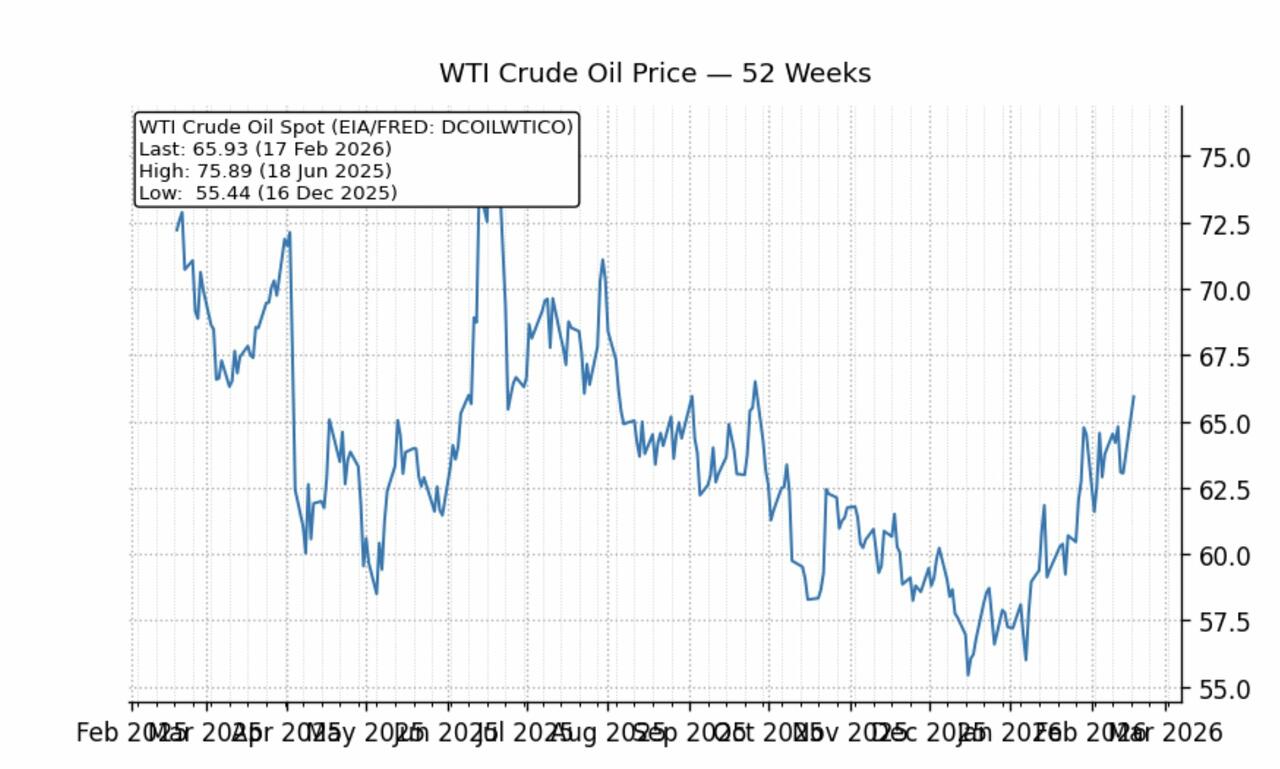
Oil on the other hand is down YoY, making it perhaps the most attractive commodity due to it being relatively cheap.
Oil stocks are Rule’s number one investment position due to what he says is decades of massive underinvestment, a thesis he will expand upon this evening.
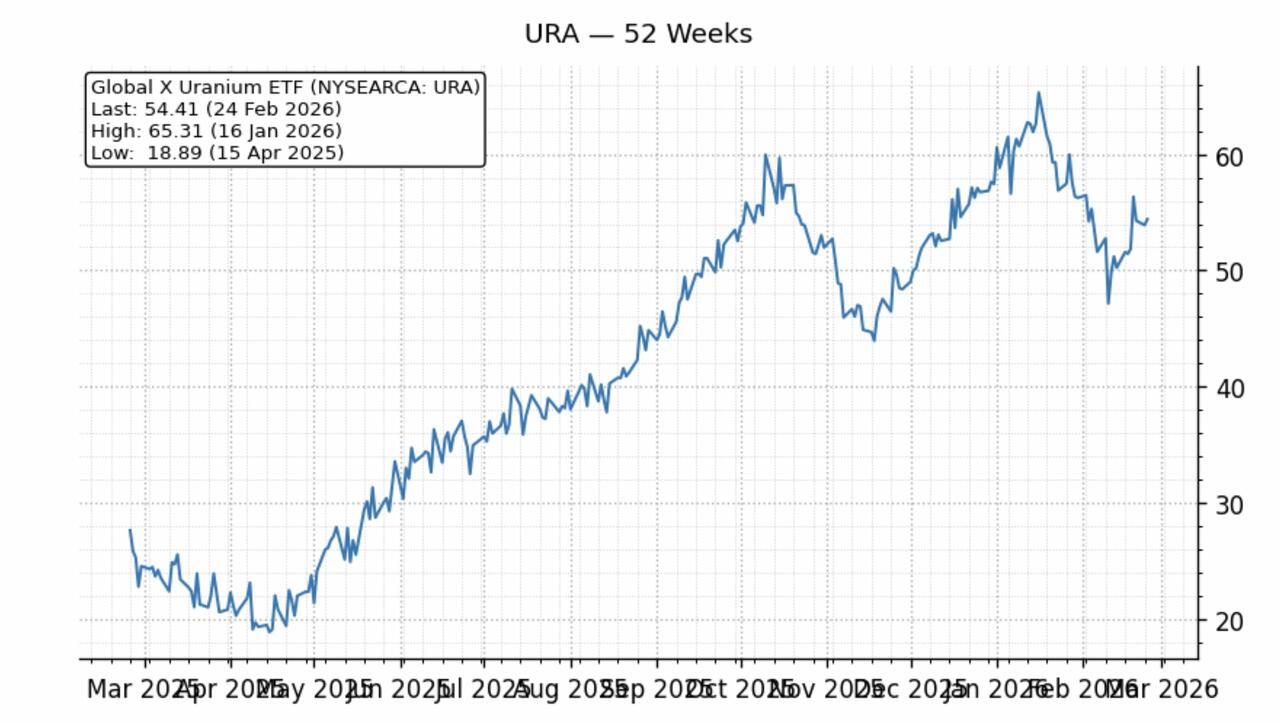
Lastly, uranium mining stocks have seen a meteoric rise rivaling that of gold stock, broadly doubling with some names like Energy Fuels seeing an almost 400% increase YoY.
Townsend will speak to the emerging technology in the nuclear energy space and Rule will speak to the long-term bull case and whether the mining stocks have flown too high too fast.
We encourage commodity investors to tune in.
Visit the ZeroHedge homepage at 7pm ET tonight to watch live and commercial-free.
Tyler Durden
Wed, 02/25/2026 – 11:45
Software Stocks: Navigating The SaaSpocalypse
Software Stocks: Navigating The SaaSpocalypse
Authored by Michael Lebowitz via RealInvestmentAdvice.com,
The recent rotation from growth to value is well documented. While the return divergences between, for instance, technology stocks and materials or industrials stocks are significant, they do not tell the whole story. There are also extreme return differentials between broad industries and their sub-industries.
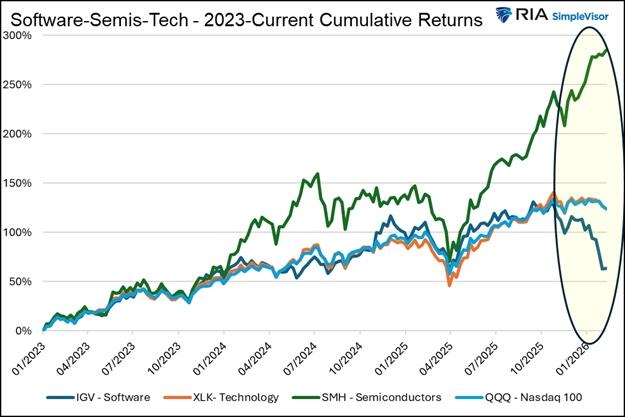
In this article, we address one such divergence between the broad technology sector and the software-as-a-service (SaaS) sub-industry. The graph below shows the wide gap in returns between software, technology, the Nasdaq 100, and semiconductor stocks. Since the well-followed software ETF (IGV) peaked on September 19, 2025, it has fallen 30%. For context, the broad technology indexes (XLK and QQQ) are flat over the period, and the semiconductor ETF (SMH) is up 30%.
Narratives Drive Passive Flows
Behind every good stock or index move is a narrative. The narrative is the market’s collective explanation for why prices move. Most narratives have some truth, some degree of speculation, and include some falsehoods. The job of an individual or professional investor is to understand the narratives driving money flows, assess their accuracy, and trade accordingly.
As if evaluating the validity of narratives weren’t hard enough, we must also consider that many narratives are, to some degree, based on expectations, in which no one knows what the future holds with certainty.
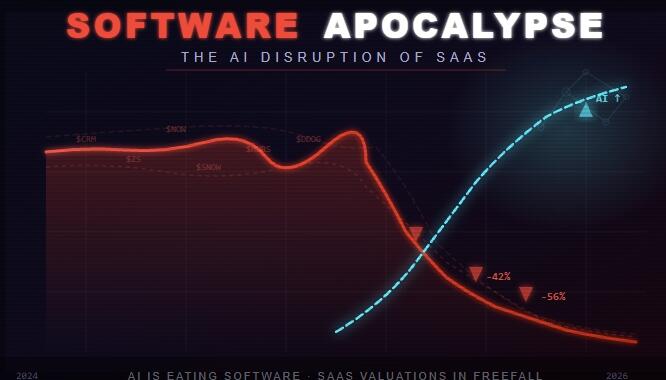
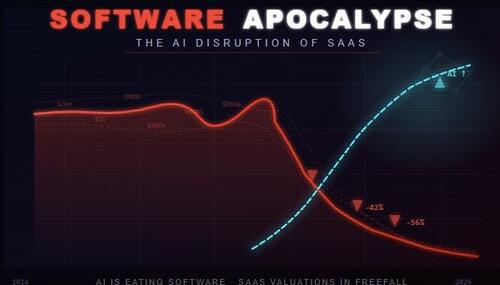
The bearish software narrative, known as “SaaSpocalypse,” which is the market rationale for big drawdowns in many software stocks, has some truths, lots of speculation, and falsehoods. Let’s explore the narrative, some counterpoints, and assess whether software stocks are a steal or, as some claim, on their way to zero.
The SaaSpocalypse Narrative
The “SaaSpocalypse” story holds that the current AI wave poses a significant threat to traditional software companies because AI changes how software is built, delivered, and priced.
If generative AI can write code, automate workflows, and rapidly and cheaply create customized applications, the value of today’s established off-the-shelf software products declines, and in some cases, may approach zero. Instead of paying for software and recurring subscription fees, enterprises and individuals may soon be able to build their own software easily and cheaply.
As if that weren’t enough of a threat to traditional software companies, AI lowers barriers to entry, enabling more competitors to quickly replicate existing software. More competition should compress profit margins and weaken the “moats” that once protected large software firms.
Rebutting The Narrative
The primary rebuttal to SaaSpocalypse is that the value of software lies beyond the code. Enterprise SaaS companies derive their lasting power from durable moats such as network effects, high switching costs, proprietary data, compliance infrastructure, and trust. AI-created software or a competing software product from an AI-driven startup might replicate the look and feel of a software program, but it cannot recreate years of customer data, deep integration with other core systems, and, importantly, the confidence required for corporate deployments. Essentially, the rebuttal argues that the narrative fails to distinguish between the look and feel of software and the other attributes that can make it valuable.
Moreover, the narratives ignore that AI will help existing software companies improve their products, reduce costs, and, in some cases, make their moats even more durable. Current software producers have a huge leg up because they already have distribution networks, a customer base, and staff who understand the intricacies of their product and how customers use it.
However, the rebuttal may not apply to all software companies. Each software product and company should be judged according to its own merits. Basic, generic products that can be easily programmed with AI are more likely to be replaceable than well-distributed products with significant usage and data connections within companies.
Strong Moats
We asked ChatGPT for examples of Saas companies with strong moats and received the following:
ServiceNow — Workflow + Enterprise System Depth
Why the moat holds up:
Deeply embedded into ITSM, HR, security, and enterprise workflows — replacing it means re-architecting internal operations, not just swapping software.
AI agents actually increase their value because orchestration becomes more important than standalone apps.
Enterprise workflows contain thousands of hidden rules and dependencies that are hard for AI copilots to replicate. Research shows LLMs struggle with these types of opaque enterprise systems.
Salesforce — Data + Ecosystem Lock-In
Why it’s durable:
Massive installed enterprise base + heavy customization.
CRM data accumulation over many years = high switching friction.
Ecosystem moat (partners, integrations, internal workflows, apps).
Even though AI can generate workflows or lightweight CRMs, enterprises still need:
permission structures
compliance layers
enterprise data governance
Datadog — Observability Data Moat
Why this one stands out:
Continuous telemetry ingestion creates a proprietary “data exhaust.”
AI needs observability platforms — agents can’t fix or optimize what they can’t measure.
Integrated logs + metrics + traces across thousands of systems = massive operational switching costs.
AI may help explain incidents, but it doesn’t replace the monitoring layer itself.
Opportunities In SAAS Stocks
We led this article with a graph showing the software ETF IGV’s gross underperformance relative to the broader technology sector. We now dig deeper to help form short-term return expectations for SaaS companies.
XLK vs IGV
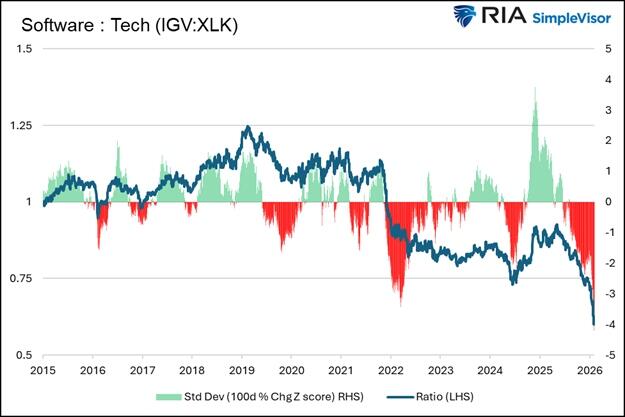
The first analysis compares the software ETF IGV to the broad technology sector ETF XLK. Within the top ten holdings of XLK, Microsoft and Palantir are the only two that are also in the top ten holdings of IGV.
The graph below shows the price ratio of the two ETFs (IGV and XLK). As shown in red/green, the most recent 100-day price ratio change is almost 4 standard deviations from the norm.
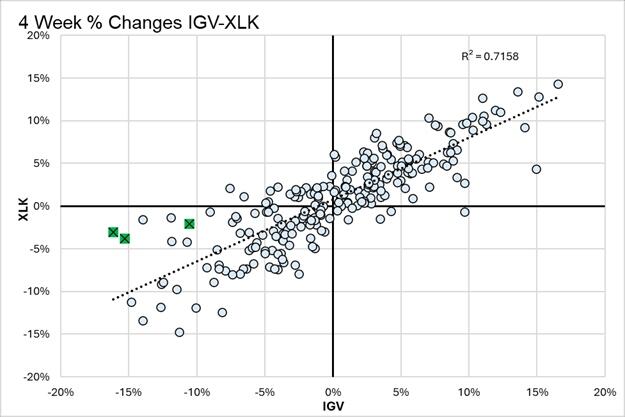
The second graphic uses the last five years to also show how detached the sturdy relationship has drifted recently. Per the most recent weekly readings (green), either XLK is 10% overpriced, or IGV is 10% underpriced.
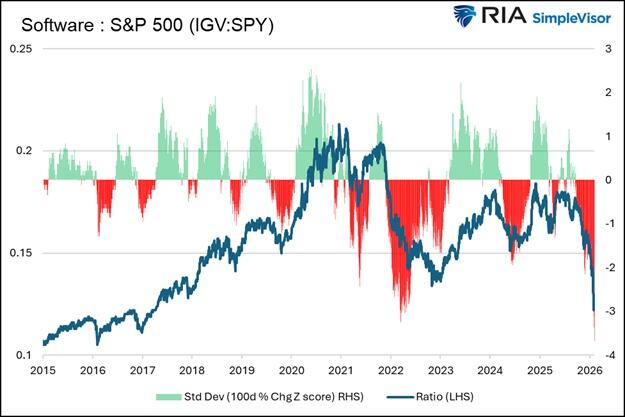
The statistical divergence is also significant when comparing IGV to SPY (S&P 500).
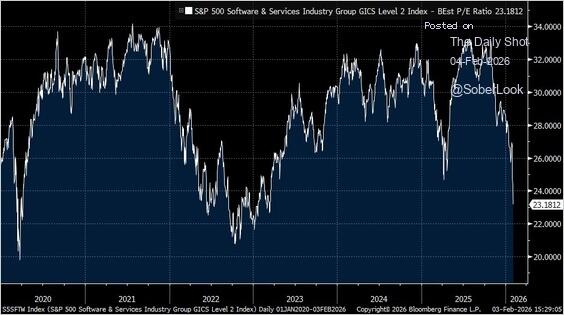
For fundamental context, we share the graph below from the Daily Shot. The P/E ratio of the software sector has fallen rapidly over the last few months, from 34 to 24. For context, the utility sector has a P/E ratio of 21.
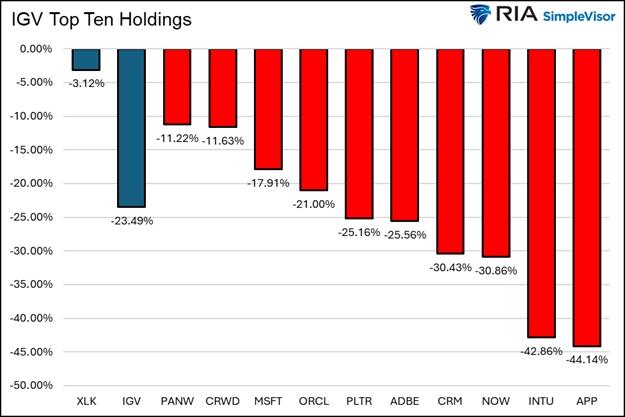
Lastly, we present the year-to-date returns of IGV’s top 10 holdings. Based solely on the returns below, the market is betting that INTU and APP have the weakest moats and that PANW and CRWD are potentially the least negatively affected by potential AI competition.
Summary
Like most narratives, the SaaSpocalypse has some truth and some falsehoods. There is also a large degree of speculation buried within it. Furthermore, the truth shouldn’t be applied broadly to all software companies and their products. In fact, AI will make some software companies more profitable and strengthen their moats. Other companies may fail as competition becomes fierce. The goal for an investor is to figure out who the winners and losers will be. Such is not a simple task, but doing so can provide significant rewards if your research proves correct.
We caution that market rotations have been volatile, with many relationships, like those shown earlier, statistically very stretched. While that may provide comfort for some, we are also aware that in markets like this, where narratives are as strong as they are, relationships can become even more divergent. If you are inclined to buy into the software sector, we recommend taking small starter positions with a stop-loss level in mind. This way, if you are early, the losses are minimal. If the rotations start favoring software stocks and the narrative fades, such evidence may warrant increasing the starter positions. Trade with caution.
Tyler Durden
Wed, 02/25/2026 – 11:25
https://www.zerohedge.com/markets/software-stocks-navigating-saaspocalypse
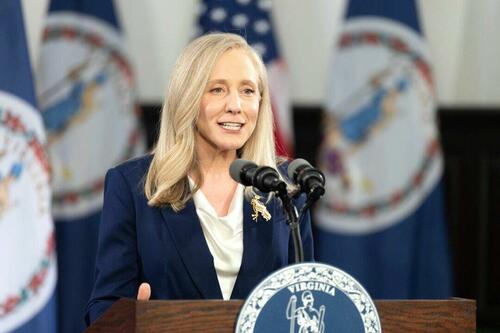
Democrats Talk Affordability, Immigration In Rebuttal To Trump SOTU
Democrats Talk Affordability, Immigration In Rebuttal To Trump SOTU
As usual, the opposing party was ready with a rebuttal to the President’s State of the Union address last night.
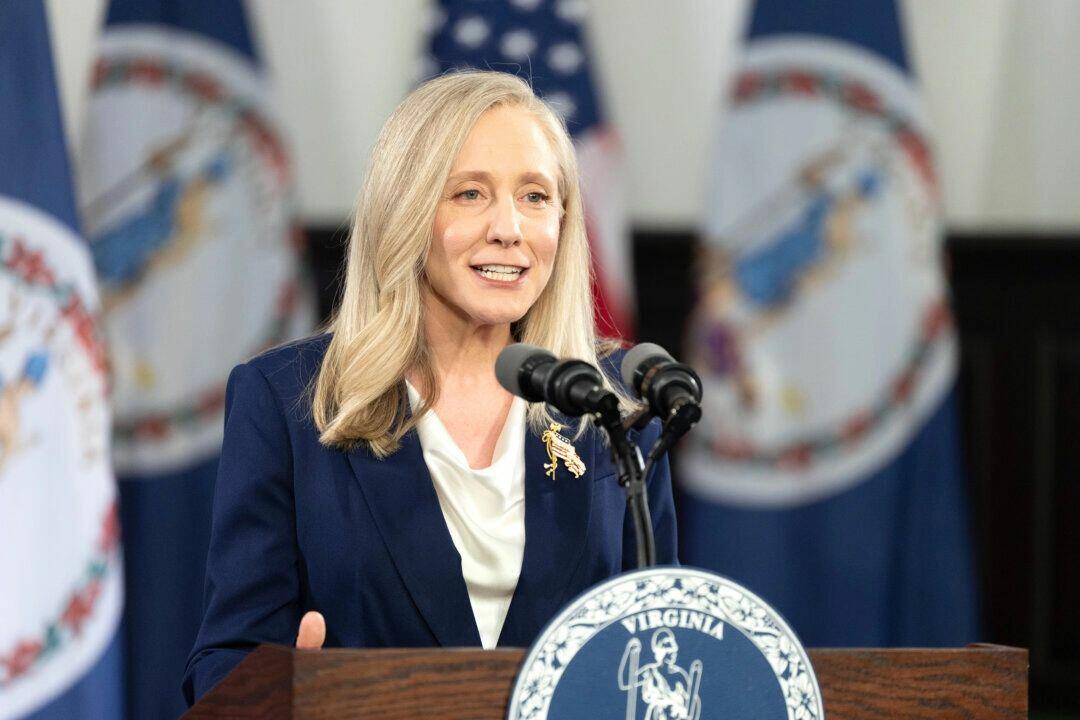
Speaking from the House of Burgesses in Colonial Williamsburg, Virginia Gov. Abigail Spanberger focused on affordability and immigration.
“As we watched our nation’s lawmakers gather for a joint session of Congress, we did not hear the truth from our president,” she said, adding that Trump had “offered no real solutions to our nation’s pressing challenges.”
“The United States was founded on the idea that ordinary people could reject the unacceptable excesses of poor leadership, band together to demand better of their government, and create a nation that would be an example for the world,” she continued. “This year, as we celebrate 250 years since America declared independence of tyranny, I can think of no better place to speak to you as we reflect on the current state of our union tonight.”
Spanberger, a former US representative and member of the House Intelligence Committee, became the governor of Virginia last November by a 15-point margin.
Last night she asked: “Is the president working to make life more affordable for you and your family? Is the president working to keep Americans safe, both at home and abroad? Is the president working for you?”
As the Epoch Times notes further, Spanberger covered the following topics:
Economics
Most of Spanberger’s speech focused on economic issues, with the governor describing Democrats as being “laser-focused on affordability.”
First, Spanberger decried what she described as Trump’s “reckless trade policies.”
Despite the Supreme Court’s recent decision overturning Trump’s authority to unilaterally impose certain kinds of tariffs, Spanberger said, “The damage to us, the American people, has already been done.”
Spanberger said these new tariffs represent “another tax hike on you and your family.”
“Republicans in Congress, they remain unwilling to assert their constitutional authority to stop him,” she said. “They’re making your life harder. They’re making your life more expensive.
Trump had said that tariff costs would not be passed onto consumers and that foreign countries are taking up the burden. He said tariffs can protect American businesses and jobs by addressing unfair trade practices and boosting domestic manufacturing.
Recently, an analysis of economic data by the Kiel Institute for the World Economy found that Americans paid 96 percent of Trump’s tariff fees in 2025. The non-partisan Tax Committee found that this added up to about $1,000 in new taxes per household in 2025.
Meanwhile, the annual inflation rate slowed to 2.4 percent in January, the lowest level since May, according to new Bureau of Labor Statistics data released on Feb. 13.
Core inflation, which strips out volatile energy and food prices, also eased to a 12-month rate of 2.5 percent, the lowest level since March 2021.
Spanberger also linked the affordability issue to the One Big Beautiful Bill Act, which included a nearly $1 trillion cut to Medicaid, a primary source of revenue for many of these types of hospitals.
“They’re even making it more difficult to see a doctor,” she said, citing rural hospital closures.
Immigration and Safety
Spanberger also discussed immigration enforcement and broader national security concerns.
Democrats’ concerns over the behavior of Immigration and Customs Enforcement (ICE) agents under Trump have been one of their primary objections to the administration.
“Our president has sent poorly trained federal agents into our cities where they have arrested and detained American citizens and people who aspire to be Americans, and they have done it without a warrant,” Spanberger said, citing the use of administrative warrants by ICE rather than court-granted judicial warrants to enter homes.
These agents, Spanberger said, “have ripped nursing mothers away from their babies. They have sent children, a little boy in a blue bunny hat, children, to far off detention centers,” Spanberger said. “They have killed American citizens in our streets, and they have done it all with their faces masked from accountability.”
More briefly, Spanberger also cited international concerns.
Trump, she said, “continues to cede economic power and technological strength to Russia, bow down to China, bow down to a Russian dictator, and make plans for war with Iran.”
She said that “through [Department of Government Efficiency] mass firings and the appointment of deeply unserious people to our nation’s most serious positions, our president has endangered the long, storied history of the United States of America being a force for good.”
Andrew Moran contributed to this report.
Tyler Durden
Wed, 02/25/2026 – 11:05
https://www.zerohedge.com/political/democrats-talk-affordability-immigration-rebuttal-trump-sotu

Most Voters Want Immunity For Vaccine Companies Removed: Poll
Most Voters Want Immunity For Vaccine Companies Removed: Poll
Authored by Zachary Stieber via The Epoch Times,
A majority of voters say immunity for pharmaceutical firms should be removed in cases where the companies’ vaccines cause injuries, according to a new poll.
Sixty percent of voters responding to the poll agreed that vaccine manufacturers should be stripped of immunity in such cases, including 33 percent who strongly backed withdrawing the immunity.
Majorities across all age groups, genders, and races also supported the immunity abolishment.
Just 27.5 percent of respondents did not think the immunity should end, while 12.6 percent of respondents said they were not sure.
The survey was carried out by Big Data Poll for the 1776 Law Center.
“Few single issues enjoy more support across every group of Americans than ending all immunity for Big Pharma,” Robert Barnes, the civil rights and criminal defense attorney who heads the law center, said in a statement.
“That includes their vaccines when those vaccines cause injury.”
“As we have seen with food and financial freedoms, the proposals are supported most vigorously among the voters the administration badly needs to win back over,” Big Data Poll Director Rich Baris added.
“That includes voters below 65 years old and minorities that previously voted for the president in 2024.”
The poll was conducted from Feb. 16 to Feb. 18 among 2,012 registered voters. The margin of error was plus or minus 2.1 percent.
The 1986 National Childhood Vaccine Injury Act granted immunity to vaccine companies for vaccine injuries “if the injury or death resulted from side effects that were unavoidable even though the vaccine was properly prepared and was accompanied by proper directions and warnings.”
The immunity does not cover instances where manufacturers engaged in fraud, wrongfully withheld information from the government prior to approval of a vaccine, improperly withheld information following approval, or engaged in “other criminal or illegal activity relating to the safety and effectiveness of vaccines.”
The law also created a vaccine injury compensation program that places the government in the position of defending against petitions alleging injury. In some cases, injured people are paid by the government from a pool of money funded by a tax on vaccines. There is a backlog of cases awaiting medical review, officials said in connection with a recent Department of Health and Human Services budget request.
Prior to the act, people were able to sue companies in court for damages.
Health Secretary Robert F. Kennedy Jr. has floated a proposal to address the issue, including by adding symptoms associated with autism as eligible for compensation.
Members of Congress have also introduced multiple bills that would alter or remove the immunity protection.
Sen. Rand Paul (R-Ky.) unveiled one such bill early in February, saying in a statement that “when it comes to vaccines … the rules are rigged: you’re funneled into a federal no-fault program that limits damages, restricts your options, and—in many cases—leaves people without real justice.”
Tyler Durden
Wed, 02/25/2026 – 10:45
https://www.zerohedge.com/political/most-voters-want-immunity-vaccine-companies-removed-poll