Category: News

‘The Bear’ series will end after Season 5
“The Bear” is ending after the upcoming Season 5, according to a report from Deadline.
The FX show, led by Jeremy Allen White as a Chicago chef, first debuted on the streaming service Hulu in 2022 and has since collected a whole plateful of awards — and put Chicago Italian beef on the map. But on Wednesday, Hollywood news service Deadline reported that an insider with the series, created by Christopher Storer, divulged on social media that the story of Carmy Berzatto and how he turned his family’s Italian beef shop The Beef into the gourmet restaurant The Bear is coming to a close.
The upcoming fifth season, expected to be released in June, had already been rumored to be the last. Season 4 concluded with Carmy quitting The Bear and telling fellow chef Syd, played by Ayo Edebiri, and cousin Richie, played by Ebon Moss-Bachrach, that he was retiring from the restaurant business.
Recurring guest star Jamie Lee Curtis recently posted a photo of herself and co-star Abby Elliott on the set of Season 5, writing: “FINISHED STRONG! Surrounded by an extraordinary crew and group of writers and producers and scene partners on the show that Chris Storer created, completing the story of this extraordinary family that we have all fallen in love with.”
“The Bear” also stars Lionel Boyce, Liza Colón-Zayas and Matty Matheson. Storer modeled the original The Beef after Mr. Beef, a sandwich shop in the River North neighborhood, and the show has continued to film in Chicago. White previously said that Storer had planned to end the show after Season 4.
The show has won 21 Primetime Emmy Awards (including for outstanding comedy series) and 5 Golden Globes (including best musical or comedy television series).
dgeorge@chicagotribune.com

The Passive Aggressive Market: Bogle’s Warning Came True
The Passive Aggressive Market: Bogle’s Warning Came True
Authored by Michael Lebowitz via realinvestmentadvice.com,
Since the pandemic, the line between passive investing and aggressive speculation has blurred. The current bout of speculative fervor extends beyond financial markets. For instance, we see the same impulse in the explosion of sports betting and the surge in event-betting sites like Kalshi and Polymarket.
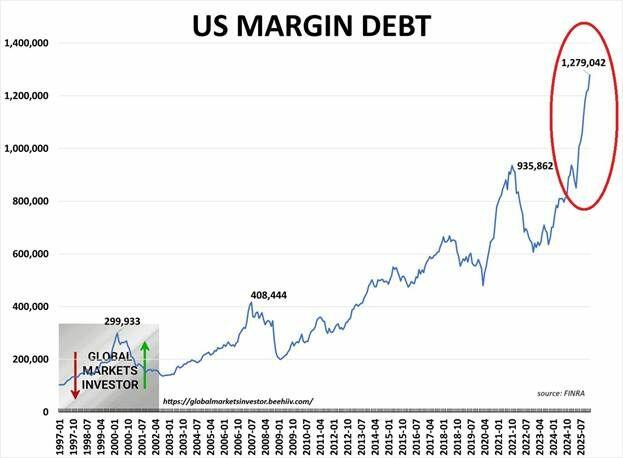
In the investment arena, margin debt is at record highs (as shown below), and zero-day-to-expiry (0DTE) stock options now account for approximately 50 percent of all options volume. Furthermore, the number of leveraged ETFs and their trading volumes have risen sharply. To wit, we share a quote from The Kobeissi Letter:
There are now a record 108 long and 31 short tech-related leveraged ETFs, 139 in total. This is 3 TIMES more than the 2nd largest sector, financials, with 47 total funds. By comparison, Consumer Discretionary has 44 ETFs, while Communication Services has 34 ETFs. In other words, tech has more leveraged ETFs than the next 3 sectors COMBINED.
While not as easy to quantify as margin debt or sports betting, this aggressive speculative behavior is showing up in passive securities. It is most visible, for instance, in the fierce rotations between sector and factor ETFs.
In this article, we explore how the speculative environment and aggressive trading in passive ETFs are playing out. We also examine how to identify and capitalize on sector and factor rotations, turning passive investors’ aggressive behavior into an opportunity.
Passive Investment Strategy Timeline
In 1952, Harry Markowitz and his Modern Portfolio Theory laid the groundwork for passive strategies. His thesis is that diversification across a broad market portfolio maximizes returns for a given level of risk. He argued for what has since been termed indexing.
John Bogle is known as the “father of indexing.” In 1976, he launched the First Index Investment Trust at Vanguard. His fund, tracking the S&P 500, was the first index mutual fund available to retail investors. The fund was mocked by competitors as “Bogle’s Folly.” Today, Vanguard manages over $12 trillion in assets, a testament to the power of Bogle’s low-cost, buy-and-hold passive investing philosophy. Ironically, Bogle warned that ETFs’ intraday liquidity would tempt investors into the active trading behavior he had spent his career arguing against.
In 1993, the SPDR S&P 500 Trust (SPY) became the first ETF available to US investors, enabling intraday trading in passive indexing securities.
Passive investment strategies and associated securities were designed to bring discipline and longer-term strategic thinking to investors. Instead of actively buying and selling individual stocks to beat the market, passive strategies are comfortable matching market returns.
Bogle’s Warning
Despite the compelling long-term case for passive investing, something has changed in how investors actually use these instruments. As Bogle warned, ETFs would lead passive investors to become more active. And indeed, that is what has happened.
Over the past few years, for example, we have seen sharp divergences in the returns between various broad-market indexes, sector ETFs, and factor ETFs. Investors are not buying broad market ETFs and holding them. Instead, it is becoming increasingly popular to rotate aggressively between index ETFs (S&P, Nasdaq, Dow), sector ETFs (technology, staples, financials), and factor ETFs (momentum, value, market cap) in response to short-term market narratives. This is active management despite the use of passive securities.
Another example is leveraged ETFs. These products reset daily, eroding returns over time and making them unsuitable for anything but short-term active trading strategies. Eroding returns are called volatility decay and are an SEC-mandated warning in every leveraged ETF prospectus, as we share from the Direxion ETF prospectus below:
If a Fund’s shares are held for a period other than a calendar month, the Fund’s performance is likely to deviate from the multiple of the underlying exchange-traded fund performance for the period the Fund is held. This deviation will increase with higher underlying volatility and longer holding periods
The explosive growth of leverage ETFs, as we noted in the opening, is evidence of short-term speculative behavior inside the passive universe.
Lastly, there is a sharp increase in the number of thematic ETFs. ETFs tied to themes like artificial intelligence, clean energy, and precious metals attract massive inflows when a narrative is hot. Fund outflows are equally powerful when the narrative fades. This is momentum-chasing dressed in passive clothing.
Many investors who describe themselves as passive would, if they examine their transaction history honestly, likely find behavior that looks a lot more like active trading.
Rotation Analysis
Understanding that investors are using passive instruments to trade aggressively across sectors and factors is one thing. Profiting from it is another. For our part, we use technical analysis on our SimpleVisor website to identify when these rotations begin, accelerate, end, and reverse.
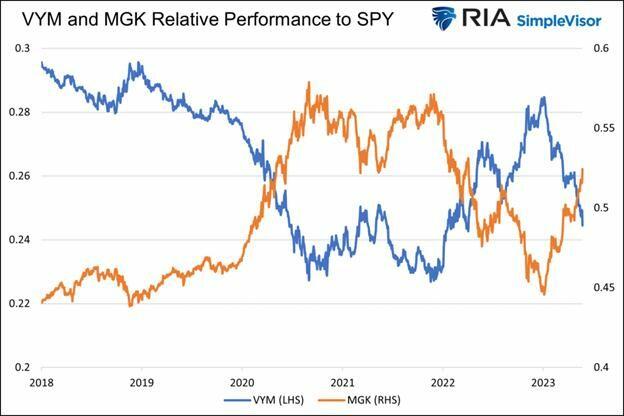
We introduced the value of rotation analysis and trading in 2023 with our article: Relative Rotation- Unlocking The Hidden Potential. The most compelling argument for rotation analysis comes from the following graph in the article, which compares the relative performances of VYM and MGK to the S&P 500 (SPY). The takeaway from the graph is that when one ETF outperforms the market, the other tends to lag, creating a predictable rotation pattern that technical analysis can identify and exploit
To better appreciate how we use SimpleVisor for this task, we share an article written last year entitled: Growth To Value- Which Rotation Is Next? The article walks through our tools in detail and shows how we use them to position ahead of rotations in real time.
The more aggressively passive investors rotate, the more reliable these patterns and our tools become.
Narrative Analysis
Technical analysis, like the SimpleVisor tools we described, indicates when a rotation is probable or underway. Narrative analysis helps us understand the driving force behind investors’ collective actions. Importantly, researching the narrative helps us assess whether a narrative is built on solid ground or speculative momentum. In a market increasingly driven by aggressive trading in passive instruments, narratives spread faster and with greater force than ever before. A compelling narrative can trigger billions in ETF flows within days, long before the underlying fundamentals catch up — if they ever do.
Not all narratives are created equal. Some rotations are driven by genuine shifts in economic conditions or monetary policy. These rotations tend to be durable and worth following. Others are driven purely by momentum and media attention. A narrative heats up, aggressive passive investors pile into ETFs reflecting that theme, and the rotation feeds on itself until it no longer attracts investors.
Distinguishing between the two is as important as identifying the rotation itself. A technically strong signal supported by a fundamentally weak narrative is a trade not likely to last long.
Summary
The irony of modern passive investing is that the securities built for patience and longer-term discipline have become tools for short-term speculation. Passive investors, often without realizing it, are behaving more like active traders, rotating aggressively between sectors and factors in response to narratives.
Understanding this dynamic is the first step toward better investment discipline. For those looking to turn it into an opportunity, SimpleVisor’s rotation analysis tools help you identify and act on these shifts before the crowd does. Additionally, our blog articles, Daily Commentary, podcasts, and the weekly Bull Bear Report help separate the signal from the noise of current market narratives.
Tyler Durden
Thu, 03/05/2026 – 15:05
https://www.zerohedge.com/personal-finance/passive-aggressive-market-bogles-warning-came-true

Afternoon Briefing: Illinois sues over new global tariffs
Good afternoon, Chicago.
Illinois joined some two dozen states challenging President Donald Trump’s new global tariffs today, filing a lawsuit over import taxes he imposed after a stinging loss at the Supreme Court. The Democratic attorneys general leading the suit argue that Trump is overstepping his power with planned 15% tariffs on much of the world.
Trump has said the tariffs are essential to reduce America’s long-standing trade deficits. He imposed duties under Section 122 of the Trade Act of 1974 after the Supreme Court struck down tariffs he imposed last year under an emergency powers law.
Here’s what else is happening today. And remember, for the latest breaking news in Chicago, visit chicagotribune.com/latest-headlines and sign up to get our alerts on all your devices.
Subscribe to more newsletters | Asking Eric | Horoscopes | Puzzles & Games | Today in History
Chicago police Officer Julius Givens, right, speaks to the media on April 29, 2021, along with Officer Rhonda Ward, after they located a 13-year-old shooting victim and transported him to a hospital. Givens has filed a federal civil rights lawsuit against the city, alleging that he was kept from joining the Police Department’s SWAT unit because he is Black. (E. Jason Wambsgans/Chicago Tribune)
CPD officer, shot after leaving FOP, alleges racial discrimination in SWAT
A Chicago police officer previously shot in the line of duty — who publicly rebuked his former union — has filed a federal civil rights lawsuit against the city, alleging that he was kept from joining the Police Department’s SWAT unit because he is Black. Read more here.
More top news stories:
Pilot killed as small plane crashes near Deerfield-area townhouses
American beech tree in Valparaiso is state’s biggest
The entrance to Building 1 at the headquarters for the newly merged Capital One and Discover Financial Services campus on Oct. 21, 2025, in Riverwoods. (Stacey Wescott/Chicago Tribune)
Capital One laying off another 1,100-plus employees at former Discover headquarters in Riverwoods
Capital One is laying off another 1,139 employees at the former Discover headquarters in Riverwoods, a second wave of downsizing following the credit card giants’ megamerger last year. Read more here.
More top business stories:
Minnie Bird now open in Naperville; Roman-style pizza coming soon
Everything you need to know about Apple’s ‘big week’ of product launches
Bears wide receiver DJ Moore celebrates his game-winning touchdown catch in overtime to defeat the Packers on Dec. 20, 2025, at Soldier Field. (Brian Cassella/Chicago Tribune)
Chicago Bears are trading DJ Moore to Buffalo Bills, per reports — and will receive a 2nd-round draft pick
The Bears loved DJ Moore’s toughness. He never missed a game after the team traded for him in 2023 and hasn’t missed a game since 2020. Read more here.
More top sports stories:
17 Cubs and White Sox players and prospects are competing in the World Baseball Classic: Here’s what to know
The Chicago Bulls bet on Josh Giddey. So why is the approach to their (supposed) star so haphazard?
A design rendering of TimeLine Theatre’s new theater building, to be located at 5035 N. Broadway in Chicago’s Uptown neighborhood. (HGA)
TimeLine Theatre announces first season in its new home
TimeLine Theatre has announced its inaugural full season in its first-ever permanent home at 5035 N. Broadway, currently under construction and slated to open with much fanfare in May. Read more here.
More top Eat. Watch. Do. stories:
Review: Derek Hughes has a magical touch with his audience at The Magic Parlour
What to do in Chicago: ‘Dancing with the Stars’ and magic from Lucy Darling
Homeland Security Secretary Kristi Noem testifies during a House Committee on the Judiciary oversight hearing of the Department of Homeland Security on Capitol Hill on March 4, 2026, in Washington. (Mariam Zuhaib/AP)
President Donald Trump fires Homeland Security Secretary Kristi Noem after mounting criticism over her leadership
Trump says he’ll make Kristi Noem a “Special Envoy for The Shield of the Americas,” a new security initiative that he said would focus on the Western Hemisphere. Read more here.
More top stories from around the world:
Stranded travelers share firsthand accounts from the Middle East
Britney Spears arrested and released, California sheriff’s records show, though charge is not clear
https://www.chicagotribune.com/2026/03/05/afternoon-briefing-illinois-sues-over-new-global-tariffs/
Fallece el maestro surrealista mexicano Pedro Friedeberg, creador de la “Mano-Silla”
Por BERENICE BAUTISTA
CIUDAD DE MÉXICO (AP) — El artista y diseñador mexicano Pedro Friedeberg, creador de la emblemática “Mano-Silla” y considerado el último representante del movimiento surrealista mexicano, falleció el jueves a los 90 años.
Sus familiares informaron que su deceso ocurrió en San Miguel de Allende, Guanajuato.
“Pedro murió rodeado de su familia, con mucho amor y en paz”, señalaron en un comunicado publicado en sus redes sociales. “Su obra y su espíritu creativo dejan un legado inmenso”. No se precisaron las causas de su deceso.
Friedeberg creó un mundo surreal, barroco y colorido a partir de los diseños geométricos que pintaba a mano. Pero fue la “Mano-Silla” presentada por primera vez en París en 1962, la que le dio celebridad y con la que terminó desarrollando una relación de “amor-odio” por ser su obra más solicitada, incluyendo coleccionistas como el músico estadounidense Lenny Kravitz, quien la mostraba orgulloso en el video de su canción “TK421”.
“Me encanta ese artista, me encanta esa silla, se me hace totalmente icónica, la he tenido en mis casas en Miami, en Nueva York, en París, es una pieza muy importante para mí”, resaltó Kravitz en una conferencia de prensa en la Ciudad de México en 2024.
Friedeberg, nació en Florencia, Italia, el 11 de enero de 1936. Desde niño emigró a México y estudió arquitectura. Su carrera artística comenzó en 1959 impulsado por los artistas Remedios Varo y Mathias Goeritz.
En 1961 fundó el grupo de Los Hartos con Goertiz, José Luis Cuevas, Chucho Reyes, Ida Rodríguez Prampolini y Alice Rahon, quienes, de acuerdo con su página oficial, “se manifestaron en contra de la pretensión de la grandeza del arte moderno en general, el individualismo exagerado y la firma del artista que se toma muy en serio a sí mismo”. Formó parte igualmente del movimiento de la Ruptura.
Su obra se expuso en Alemania, Francia, España, Italia, Inglaterra y en las bienales de París, Sao Paulo, Montevideo y Medellín. También fue presentada en el Museo Nacional de Diseño de Nueva York, el Museo de Bellas Artes de Houston, el LACMA de Los Ángeles y en el Museo de Arte Moderno y el Museo del Palacio de Bellas Artes de la Ciudad de México.
Junto con el artista Xavier Girón fundó la galería La Chinche en 1979. En 2012 fue condecorado con la Medalla de Bellas Artes de México. Por años tuvo su estudio en la colonia Roma de la capital mexicana.
Friedeberg fue retratado en el documental “Pedro” de Liora Spilk Bialostozky en el que a pesar de su lado arisco, el artista lograba compartir su mundo y hacer reír a al público.
En el documental él mismo calificaba su obra como “Neo Kitsch Barroco” y a pesar de que su arte parece digital, era realizado totalmente de manera análoga con regla, compás, pinceles, tinta y pintura.
“Hay una absoluta congruencia consigo mismo y una incongruencia con todo lo demás”, dijo Spilk en entrevista con The Associated Press en 2023. “Es una imposibilidad que siga existiendo Pedro Friedeberg en el mundo de hoy”.
El arte de Friedeberg se mantenía en boga hasta sus últimos años, figuró en la fábrica de la cerveza Corona, en la Ciudad de México, en formato de anuncio espectacular y en la portada de “Sonidos de Karmática Resonancia”, de la banda mexicana de rock Zoé lanzado en 2021.
Le sobreviven sus hijos Diana y David, así como su esposa Carmen Gutiérrez.

Trump y sus subalternos han dado múltiples justificaciones para la guerra
Por LAURIE KELLMAN y FARNOUSH AMIRI
El presidente estadounidense Donald Trump y sus subalternos han ofrecido diversas razones para justificar la guerra contra Irán: que es para eliminar sus capacidades nucleares, que es para eliminar sus misiles balísticos, que es para frenar su apoyo a grupos violentos, que es para derrocar al régimen teocrático, que es para defender para Israel.
Todas son razones esgrimidas para bombardear a Irán y matar a su líder sin buscar primero el aval del Congreso y de países aliados. Hay aspectos poco claros sobre la guerra, como cuál es la estrategia de salida, cuál es el cronograma y quién podría asumir el poder en lugar de las “personas enfermas” que según Trump están ahora.
Lo que hace que este conflicto sea diferente a otros es que los propios funcionarios del gobierno de Trump no parecen tener claridad ni una postura uniforme sobre las preguntas: ¿por qué y por qué ahora?
“Usualmente los funcionarios de un gobierno se ponen de acuerdo previamente y posteriormente se ciñen a un mensaje coherente”, declaró David Schenker, exfuncionario del gobierno de Trump y ahora investigador del Washington Institute for Near East Policy. “Pero eso es difícil para este gobierno”.
La Casa Blanca, para el miércoles, describía la razón de la guerra como respuesta a amenazas iraníes pasadas “y la sensación del presidente, basada en hechos, de que Irán sí representa una amenaza inminente y directa para los Estados Unidos de América”. Analistas afirman que eso no está claro.
A continuación, una selección curada de las explicaciones del gobierno de Trump durante la última semana, a medida que el conflicto se expandió hasta convertirse en una guerra.
La reaniquilación del programa nuclear de Irán
LO QUE DIJERON después de los ataques de Estados Unidos e Israel contra Irán el verano pasado:
— “¡LOS SITIOS NUCLEARES EN IRÁN ESTÁN COMPLETAMENTE DESTRUIDOS!” — Trump en una publicación del 24 de junio de 2025 en Truth Social.
Lo que dijeron después de que un análisis de inteligencia sugiriera que el programa nuclear de Irán solo había sido retrasado unos meses:
— “Esa es una historia falsa, y realmente no debería volver a difundirse.” — El secretario de Estado Marco Rubio en una entrevista con Politico el 25 de junio de 2025.
LO QUE DIJERON desde el ataque que mató al líder supremo de Irán, el ayatolá Alí Jamenei:
— “Si no hiciéramos lo que estamos haciendo ahora mismo, habrían tenido una guerra nuclear y habrían eliminado a muchos países porque, ¿saben qué? Son personas enfermas.” — Trump el martes en la Casa Blanca.
EL CONTEXTO:
Irán ha insistido durante mucho tiempo en que su programa es pacífico, pero el organismo de control nuclear de las Naciones Unidas y varias naciones occidentales afirman que Teherán tuvo un programa organizado de armas nucleares hasta 2003.
El estado actual del programa sigue siendo un misterio, ya que Irán no ha permitido que el Organismo Internacional de Energía Atómica acceda a las instalaciones nucleares que fueron bombardeadas desde junio. Eso se desprende de un informe confidencial del organismo, distribuido a los Estados miembros y visto el 27 de febrero por The Associated Press.
Por su parte, Irán ha dicho que no ha enriquecido uranio desde junio. Fotos satelitales analizadas por la AP han mostrado nueva actividad en dos de esos sitios, lo que sugiere que Irán intentaba evaluar y potencialmente recuperar material.
Irán está legalmente obligado a cooperar con el OIEA en virtud del Tratado sobre la No Proliferación de las Armas Nucleares, pero suspendió toda cooperación después de la guerra con Israel.
Los misiles balísticos de Irán
LO QUE DIJERON:
— “Irán posee una cantidad muy grande de misiles balísticos, en particular misiles balísticos de corto alcance, que amenazan a Estados Unidos y a nuestras bases en la región, y a nuestros socios en la región, y a todas nuestras bases en Emiratos Árabes Unidos, Qatar y Bahréin.” — Rubio a periodistas el 25 de febrero.
— “El régimen ya tenía misiles capaces de alcanzar Europa y nuestras bases —tanto locales como en el extranjero— y pronto habría tenido misiles capaces de llegar a nuestra hermosa América.” — Trump durante una ceremonia de la Medalla de Honor en la Casa Blanca el lunes.
— Irán “estaba construyendo misiles y drones poderosos para crear un escudo convencional para sus ambiciones de chantaje nuclear”. — El secretario de Defensa Pete Hegseth durante la sesión informativa del Pentágono el lunes.
EL CONTEXTO:
Irán no ha reconocido que busque construir misiles balísticos intercontinentales. El país actualmente tiene un límite autoimpuesto en su programa de misiles balísticos, que restringe su alcance a 2.000 kilómetros (1.240 millas). Eso cubre a todo Oriente Medio y a parte de Europa del Este.
Funcionarios del gobierno de Trump dijeron a asesores del Congreso en sesiones privadas el domingo que la inteligencia de Estados Unidos no sugería que Irán se estuviera preparando para lanzar un ataque preventivo contra el país. En cambio, los funcionarios del gobierno reconocieron que existía una amenaza más general por parte de Irán y de fuerzas aliadas.
“Ha habido muchos reportes de que las evaluaciones de inteligencia y del ámbito militar no sugerían que fuera a haber un primer ataque iraní”, indicó Naysan Rafati, analista principal sobre Irán del International Crisis Group con sede en Washington. “Mi impresión ha sido que la oportunidad es, como mínimo, un factor tan significativo como las amenazas, sin duda”.
El papel de Israel
LO QUE DIJERON:
— “Sabíamos que iba a haber una acción israelí. Y sabíamos que, si actuábamos preventivamente antes de que lanzaran esos ataques, sufriríamos más bajas.” — Rubio a periodistas el lunes.
— “Israel estaba decidido a actuar en su propia defensa aquí, con o sin apoyo estadounidense.” — El presidente de la Cámara de Representantes, Mike Johnson, en declaraciones a periodistas. Si eso ocurría, añadió, una “inteligencia exquisita” indicaba que Irán tomaría represalias contra activos estadounidenses. “Si hubiéramos esperado, las consecuencias de nuestra inacción podrían haber sido devastadoras”, sostuvo.
— “No”, respondió Trump a periodistas en la Casa Blanca el martes, cuando le preguntaron si Israel lo había obligado a atacar a Irán. “Si acaso, fui yo quien obligué a actuar a Israel”.
EL CONTEXTO:
No hay indicios de que Israel haya sido forzado a cooperar con Estados Unidos en el ataque.
Un funcionario militar israelí, bajo la condición habitual de anonimato, describió el miércoles una planificación al unísono con Estados Unidos. Tres semanas antes de los ataques, Israel entendió que la operación apuntaba hacia otra confrontación con Irán y envió un equipo al Pentágono, dijo el funcionario. El viernes, el ejército israelí sugirió deliberadamente que las fuerzas se desmovilizarían durante el fin de semana, difundiendo fotos que sugerían que empleados y comandantes de alto rango se dirigían a casa para la cena de Shabat.
Ello compartida permitió el inicio del operativo horas después en un sorpresivo ataque diurno, dijeron a la AP durante el fin de semana personas familiarizadas con la operación. La andanada de ataques de Estados Unidos e Israel contra Irán llegó tan rápido que fueron casi simultáneos —con tres ataques en tres lugares impactando en menos de un minuto—, matando a Jamenei y a unos 40 altos cargos, dijo el domingo otro funcionario militar israelí.
Durante los ataques, las salas de guerra de Estados Unidos e Israel estuvieron sincronizadas en tiempo real para permitir ajustes rápidos, reveló el miércoles el primer funcionario militar israelí.
En un mensaje televisado, el primer ministro Benjamin Netanyahu declaró que Israel había llevado a cabo los ataques “en plena cooperación” con Estados Unidos.
Trump ha estado a favor y en contra del cambio de régimen en Irán. ¿Y ahora qué?
LO QUE DIJERON:
— “Si Irán dispara y mata violentamente a manifestantes pacíficos, que es su costumbre, los Estados Unidos de América acudirán a rescatarlos. Estamos listos y preparados, listos para actuar”. — Trump en Truth Social el 2 de enero.
— “Cuando terminemos, tomen el control de su gobierno. Será suyo para tomarlo”. — Trump a los iraníes en Truth Social justo después de los primeros ataques.
— “Esta no es una guerra de supuesto cambio de régimen. Pero el régimen sí cambió, y el mundo está mejor por ello”. — Hegseth en el Pentágono el lunes.
EL CONTEXTO:
Washington tiene una larga y complicada historia con el cambio de régimen. Véase Vietnam, Panamá, Nicaragua, Irak y Afganistán después del 11 de septiembre de 2001, y Venezuela hace apenas unas semanas.
Y en Irán, la CIA ayudó en 1953 a orquestar un golpe que derrocó al líder democráticamente elegido de Irán y otorgó un poder casi absoluto al sha Mohammad Reza Pahlavi. Pero, como ocurrió con el sha, que fue derrocado en la Revolución Islámica de 1979 en Irán, el cambio de régimen rara vez sale según lo planeado.
Eso se debe en parte a que, en esencia, está fuera del control total de Trump, como él reconoció el martes.
“La mayoría de las personas que teníamos en mente están muertas”, dijo a periodistas. “Ahora tenemos otro grupo. Puede que también estén muertos, según reportes. Así que, supongo que viene una tercera ola, y muy pronto no vamos a conocer a nadie”.
___________________________________
Contribuyeron a esta nota los corresponsales Josef Federman y Julia Frankel en Jerusalén.
___________________________________
Esta historia fue traducida del inglés por un editor de AP con ayuda de una herramienta de inteligencia artificial generativa.
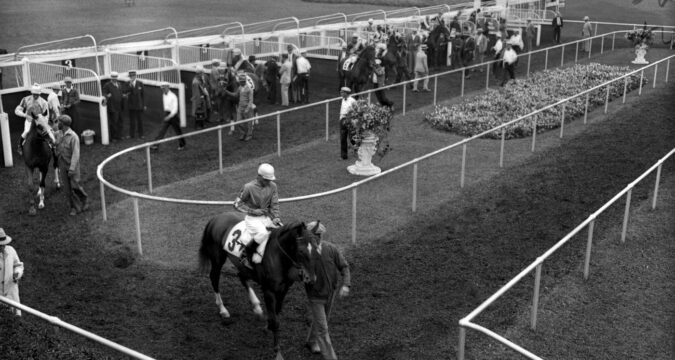
Vintage Chicago Tribune: History of Hawthorne Race Course, the oldest horse-racing venue in Illinois
Hawthorne Race Course, which bills itself as the oldest horse-racing venue in Illinois, filed for Chapter 11 bankruptcy protection on Feb. 27.
Financial difficulties have plagued the track in west suburban Stickney, which has been the only facility of its kind in the Chicago area since Arlington International Racecourse closed in 2021.
The course — which used to attract tens of thousands of fans to its derbies — now has competition that didn’t lawfully exist in previous decades. High- and low-rollers have other options in Chicago for placing their bets since casinos and sports gambling have been legalized. And many don’t even have to leave their homes due to the availability of wagering online or via mobile apps.
Here’s a look back at Hawthorne’s more than 135 years of hosting the sport of kings.
This newsletter is possible thanks to Neil Milbert, who covered horse racing and other sports during his 40-year career with the Tribune.
May 20, 1891
Edward Corrigan, center in crop marks, who died in 1924 at the age of 82, was one of the two dominant figures of Chicago turf circles in the 1880s and 1890s. He was the original owner of the Hawthorne Race Course and his filly Modesty won the inaugural American Derby in 1884. Editors’ note: This historic print shows hand painting and cropping around the central figure. (Chicago Tribune archive)
Hawthorne Race Course opened on 119 acres of land. The new Chicago Racing Association track hosted five races, which had delayed starts due to slow railroad accommodations for patrons.
“Chicago racing equaled that of New York and everything else in the country for the quality of its meetings and the grade of the horses which they attracted,” the Thoroughbred Record reported.
Two of the events were won by horses owned by Edward Corrigan.
“There were six thousand people at the track and the betting ring and grand-stand were too small for them,” the Tribune reported. “The track was in fair shape, and after all the work in and around the stands is finished the new park will be the best minor one in America.
Brookwood won the Chicago Derby for 3-year-olds.
May 30, 1902
A crowd is gathered at the grandstand for a race at Hawthorne Race Course in 1902. (Hawthorne Race Course)
The grandstand was destroyed by fire. That day of racing had been the most successful in the track’s young history, the Tribune reported, but in less than an hour, it was “changed from a scene of festivity to one of ruins.” The damage was estimated at more than $100,000 (or roughly more than $3 million in today’s dollars). There was not even “enough water to extinguish a lighted cigar,” according to Sheridan Clark of the jockey club.
“Chicken Pete” Rask — described by the Tribune as a stable boy — was killed in the blaze. He had been atop the roof, splashing it with water, when it collapsed and he fell into the blaze below. Others among the crowd of 10,000 escaped with injuries. Witnesses said two men were seen leaving the grandstand’s cupola, where the fire started.
Racing returned on Aug. 18, 1902.
April 29, 1905
The finish wire at Hawthorne Race Course in 1902. By 1905, racing had halted at the track. (Hawthorne Race Course)
The expected start of the season was called off and racing was effectively banned, forcing the closure of all local tracks.
“It is though this will be the last talk of racing in Cook County during 1905,” the Tribune reported.
“The trend was set,” Milbert wrote in 1999. “Interludes of dazzling excellence followed by depressing relapses.”
Motorcycle races were held at Hawthorne until horse racing returned legally on Sept. 30, 1922, after several efforts.
May 19, 1909
Thomas Carey, owner of Hawthorne Race Course, circa 1909. (Chicago Tribune archive)
Hawthorne was acquired by Thomas Carey — owner of the Carey Brick Co. and former alderman for the 29th Ward — from the bankrupt Corrigan family for $2,000 in cash and a $24,000 note.
July 15, 1916
The American Derby at Hawthorne Race Course in 1916. (Chicago Tribune archive)
The American Derby — the first horse race in Chicago since 1904 at Washington Park — opened at Hawthorne. The races were held by the new Illinois Jockey Club, which had been incorporated in Springfield.
More than 25,000 people watched as 3-year-old Dodge won by half a dozen lengths over his nearest rival.
Sept 30, 1922
A groundskeeper waters down the track in front of the grandstand at Hawthorne Race Course, circa 1920s. (Chicago Tribune historical photo)
Racing returned to Hawthorne — and so did a reported 20,000 “race hungry Chicagoans” — but betting was not allowed.
“Those of this crowd who thought they could bet saw six of the men to whom they entrusted their wagers led away by minions of the law,” Tribune reporter Harvey T. Woodruff reported.
July 14, 1923
A crowd is gathered in the grandstand and the paddock at Hawthorne Race Course just before the inaugural Illinois Derby featuring 3-year-old thoroughbred horses in 1923. (Chicago Air Park Photo)
In Memoriam won the first running of the Illinois Derby before 35,000 spectators in a track record time of 2:04 1/5 for 1 1/4 miles.
Feb. 8, 1924
The second race at Hawthorne Race Course in Stickney on July 3, 1924, was won by Arrowhead, who “came with a rush on the outside, and just got up. Top o’ the Morning was caught in the barrier and ran a winning race. Simplicity quit.” The three-quarters mile race had a purse of $1,000. Arrowhead came in first, Top o’ the Morning in second place, and Simplicity came in third. (Chicago Herald and Examiner)
Chicago Business Men’s Racing Association took over Hawthorne until a lease agreement expired in 1945. One of the group’s leaders was Charles W. Bidwill.
The Carey family resumed control of Hawthorne in 1946, and continues to own the track.
Oct. 7, 1929
The view from the grandstand at Hawthorne Race Course, circa 1920s. (Chicago Tribune historical photo)
Sun Beau scored the first of three consecutive Hawthorne Gold Cup victories. The Daily Racing Form called it the “Greatest Race of 1929.”
Sept. 7, 1935
The view of the open air paddock at Hawthorne Race Course in 1931 in Stickney. (Chicago Herald and Examiner)
Myrtlewood — a world record-holder for 6 furlongs — met Clang —a world record-holder for 7 furlongs — in a $5,000 6-furlong match-race. Myrtlewood won by a neck in 1:10 4/5.
Sept. 11, 1954
Barn number 6 was leveled by a fire at Hawthorne Race Course that killed 30 horses, including 24 thoroughbreds valued at $250,000, on Sept. 11,1954. Photo taken on Sept. 12, 1954. (Swain Scalf/Chicago Tribune)
The barn 6 went up in flames, causing the deaths of 30 horses.
“The blaze spread so quickly that guests at a wedding reception in the nearby track restaurant, attempting to free the horses, were able to release only nine before they were driven off by the flames,” the Tribune reported.
Sept. 24, 1955
A fire at Hawthorne Race Course destroyed a large portion of the stables on Sept. 24, 1955. Two horses died. (William Vendetta/Chicago Tribune)
About 10,000 spectators watched as a large portion of Hawthorne’s stable was destroyed by fire just 45 minutes before post time. Two horses died.
Oct. 15, 1960
Robert F. Carey, right, managing director of Hawthorne Race Course, shows other members of the board of directors of Hawthorne’s new improvements on Sept. 3, 1957, in Stickney. With Carey are William Carey, from left, Gene Carey and George Barry. (Chester Gabrysiak/Chicago Tribune)
Kelso won the Hawthorne Gold Cup as a 3-year-old, en route to the first of his five North America Horse of the Year titles.
April 14, 1970
Responding to a heavy whip from Bill Beckley, Teddy Rip (6) edges Apollo Fifteen in the featured $20,000 Suburban Downs Inaugural Pacing Series Final at Hawthorne Race Course on Feb. 15, 1976. The winner was timed at 2:00. (Chicago Tribune archive)
First harness racing events took place at Hawthorne.
Feb. 4, 1970
Flames shoot through the floor from a false ceiling below at Hawthorne Race Course on Feb. 4, 1970, in Stickney. Firemen working in front of the Gold Cup Room got a hose caught in the fire. No one was hurt. (Arthur Walker/Chicago Tribune)
Sparks from a welder’s torch started a fire that spread through more than 100 feet of the grandstand and clubhouse. The most serious damage was to the track’s Gold Cup restaurant.
Nov. 19, 1978
A firefighter works at an early morning fire at Hawthorne Race Course on Nov. 19, 1978, in Stickney. (Ernie Cox Jr./Chicago Tribune)
Fire destroyed much of Hawthorne’s grandstand and clubhouse. Rebuilding cost millions and was made possible by bonds issued by the Village of Stickney.
The Carey family could only insure the facility for $3 million due to its advanced age.
Sept. 29, 1980
Managing Director Robert F. Carey, from left, track announcer Phil Georgeff and Thomas Carey look over a model of the new Hawthorne Race Course in April 1979. (Walter Kale/Chicago Tribune)
The grandstand reopened after reconstruction.
Tom Carey, a former Notre Dame quarterback, was named president and general manager. His brother Bob Carey became his assistant.
Nov. 25, 1987
Spectators watch the track at Hawthorne Race Course on April 20, 1972, in Stickney. (Phil Mascione/Chicago Tribune)
Restaurateur Christ Boutsikakis and a syndicate of friends who bought a $1 Super Bet ticket hit an all-time Illinois record betting jackpot of more than $1.5 million.
1995
Emil Stipsky, of Chicago, looks over the racing form after the results of the race are posted on the screen behind him at Hawthorne Race Course on July 3, 1999. (Terry Harris/Chicago Tribune)
Hawthorne became the first Illinois track to conduct full-card simulcasting on out-of-state races after the state legalized it on May 30.
From June through December, 55% of all money bet in Illinois during thoroughbred programs and 31% during harness cards was on out-of-state simulcasts.
December 1995
Fred Nichols, right, owner of the horse Restless Waters, center, shakes the hand of jockey Mark Guidry as they stand in the winner’s circle after placing first in the second race on March 1, 1998, at opening day in Sportsman’s Park. Co-owner Bryan Mazey, left, stands nearby. Guidry was a five-time Hawthorne jockey champion nicknamed the “King of Chicago.” (John Lee/Chicago Tribune)
Five-time Hawthorne jockey champion Mark Guidry — nicknamed the “King of Chicago” — rode a track record 118 winners during the season. Guidry broke his own record of 117 in 1994.
Oct. 11, 1998
Awesome Again, ridden by Pat Day, holds off Unruled, ridden by Gary Boulanger, during the Hawthorne Gold Cup on Oct. 10, 1998. (Wes Pope/Chicago Tribune)
Undefeated Awesome Again prepped for a victory in the Breeders’ Cup Classic by winning the Hawthorne Gold Cup.
July 30, 2020
Horses run in the third race of the day on April 6, 2024, at Hawthorne Race Course in Stickney. (Vincent Alban/Chicago Tribune)
The Illinois Gaming Board gave Hawthorne authority to build the state’s first racing and casino facility — or “racino” — at its track.
Course officials have yet to receive financing for the project.
Want more vintage Chicago?
Become a Tribune subscriber: It’s just $1 for a 1-year digital subscription.
Thanks for reading!
Subscribe to the free Vintage Chicago Tribune newsletter, join our Chicagoland history Facebook group, stay current with Today in Chicago History and follow us on Instagram for more from Chicago’s past.
Have an idea for Vintage Chicago Tribune? Share it with Kori Rumore at krumore@chicagotribune.com.
https://www.chicagotribune.com/2026/03/05/vintage-chicago-tribune-hawthorne-race-course-history/
China Guides Down: Beijing Drops Economic Growth Target To Lowest Level In 35 Years
China Guides Down: Beijing Drops Economic Growth Target To Lowest Level In 35 Years
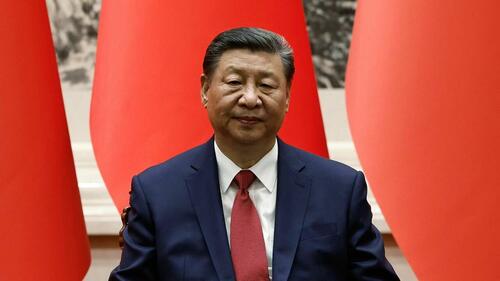
China just admitted what we’ve been reporting for years: the old growth engine is sputtering, and the world’s second-largest economy is officially shifting into a lower gear. At the opening of the National People’s Congress (NPC) on Thursday, Premier Li Qiang unveiled a 2026 GDP growth target of 4.5% to 5% – the lowest benchmark since 1991 and the first time in over three decades Beijing has dared to set anything below 5%.
The announcement came at the start of the National People’s Congress, a meeting of China’s leaders in Beijing’s Great Hall of the People where government officials reveal economic and policy priorities for the year.
The Real Culprits: Homegrown Headaches, Not Just Tariffs
While one could point to the 2025 trade escalations and current uneasy truce (with higher duties suspended until late 2026 and a Trump-Xi summit looming March 31–April 2), China’s slowdown is overwhelmingly domestic. Here’s what’s going on:
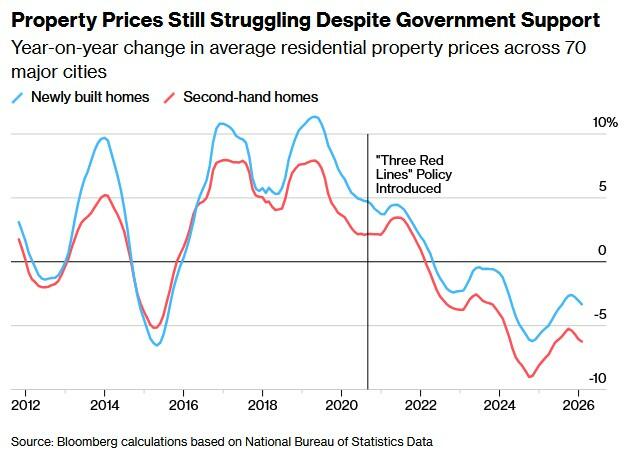
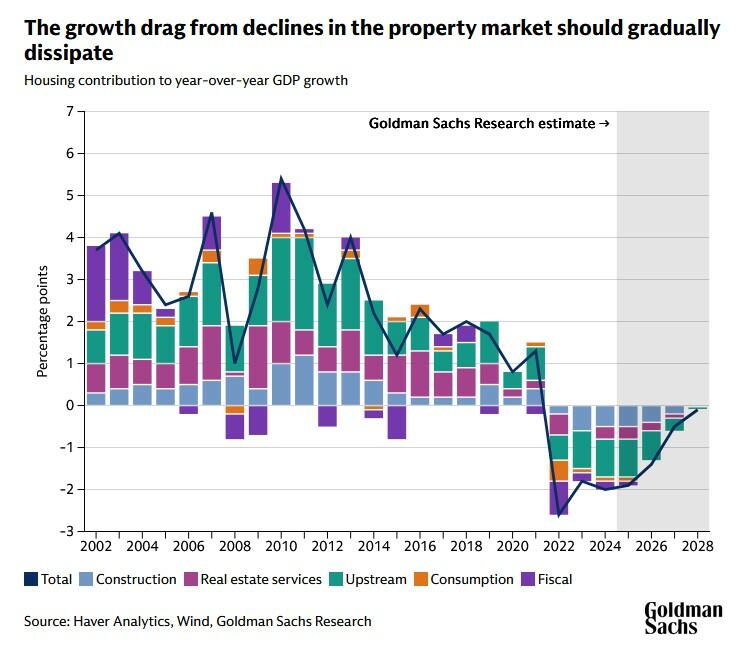
Property sector implosion – The bubble that once drove 25–30% of GDP has burst and shows no signs of bottoming. Sales, prices, starts, and completions keep sliding; developers default, local governments bleed revenue, and household wealth (tied up in real estate) evaporates. This crushes consumer confidence and spending more than any tariff ever could.
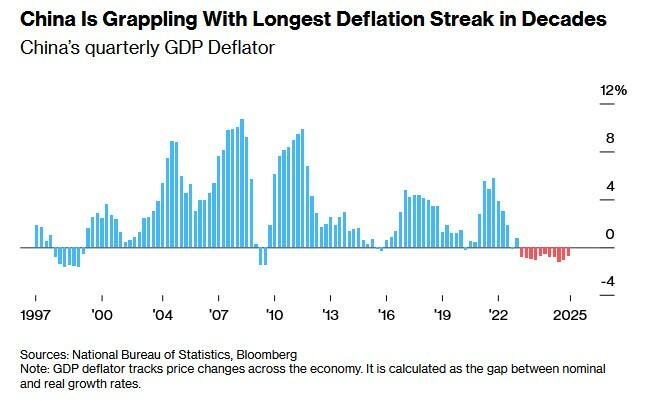
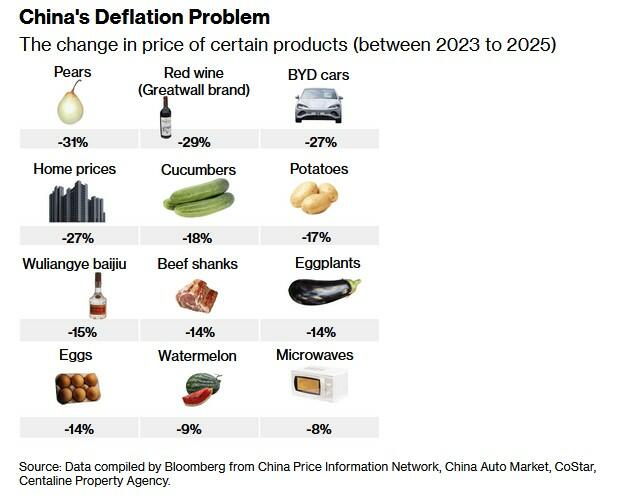
Chronic deflation – Prices have fallen for years (longest streak since market reforms), eroding profits, wages, and willingness to spend. “Involution” (cutthroat overcapacity and race-to-the-bottom competition) in EVs, solar, batteries, and manufacturing squeezes margins while flooding markets.
Weak domestic demand – High youth unemployment, stagnant wages, a shredded social safety net (driving sky-high savings instead of consumption), and post-property trauma leave households wary. Subsidies for appliances or EVs haven’t moved the needle because people aren’t earning enough to spend freely.
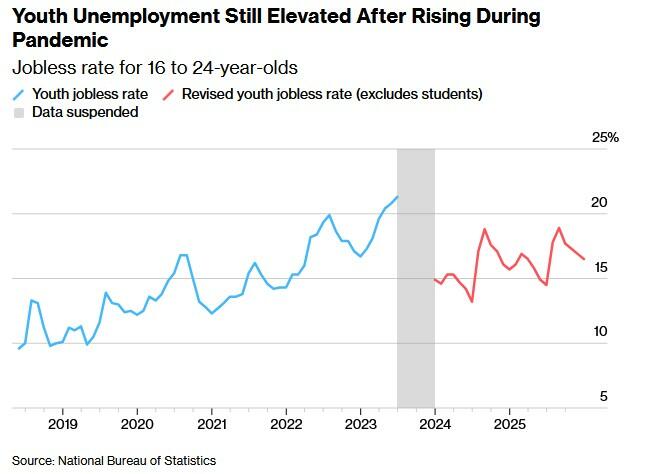
Cooling job market and youth unemployment crisis – Urban youth unemployment (16-24 age group, excluding students) remains stubbornly elevated at ~16.5% as of late 2025, down only slightly from a record 18.9% peak amid structural mismatches: millions of new graduates flood the market each year chasing scarce white-collar and “iron rice bowl” government jobs (competition ratios hitting 100:1 in some provinces), while factories struggle with labor shortages due to overcapacity and export redirection.
Overreliance on exports/investment – The old model is exhausted. Export redirection helped hit 5% in 2025, but structural maturation (harder productivity gains as China catches up) means diminishing returns.
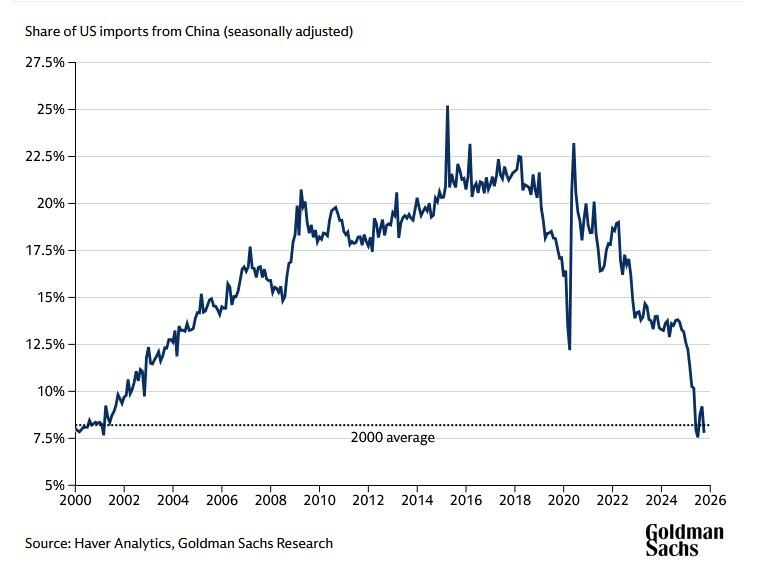
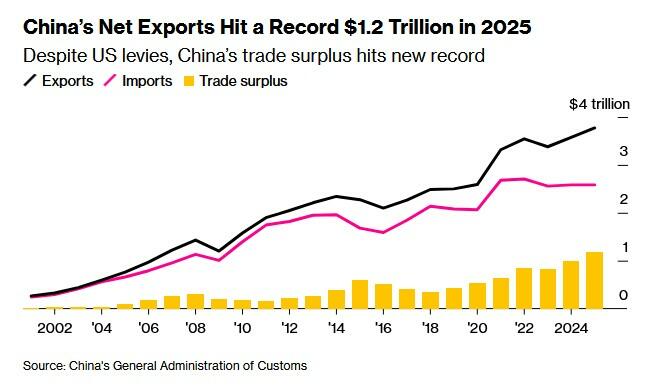
That said, net exports still hit a record $1.2 trillion in 2025.
After China opened the country up to foreign investment, they grew rapidly – becoming the world’s second-largest economy. Much of this growth comes from manufacturing – which included expansions in vast industrial parks, EV plants and data centers, typically financed by cheap loans from state-owned banks. The country’s factories produce many of the world’s electric vehicles, solar panels and lithium batteries – with carmaker BYD notably overtaking Tesla as the world’s largest EV producer.
Chinese Premier Li Qiang patted the country on the back for meeting 2025 economic growth of 5% amid a “grave and complex landscape” which blended internal difficulties with external shocks. As to the new, lower target – analysts see it as pragmatic: it buys breathing room for structural fixes (boosting consumption, tech breakthroughs in AI/robotics) without the pressure to juice numbers artificially. Some skeptics (e.g., Rhodium Group) argue real 2025 growth was closer to <3%, making the official stats look even more optimistic.
According to Eurasia Group China director Dan Wang, Beijing is now willing to tolerate slower near-term growth while focusing on longer-term structural solutions, the NYT reports.
CFR senior fellow Zongyuan Zoe Liu says the lower target is “what the market and economists at home and abroad expected and know,” as it allows policymakers to tackle fundamental economic problems without scrambling to hit an inflated number.
Tyler Durden
Thu, 03/05/2026 – 14:50
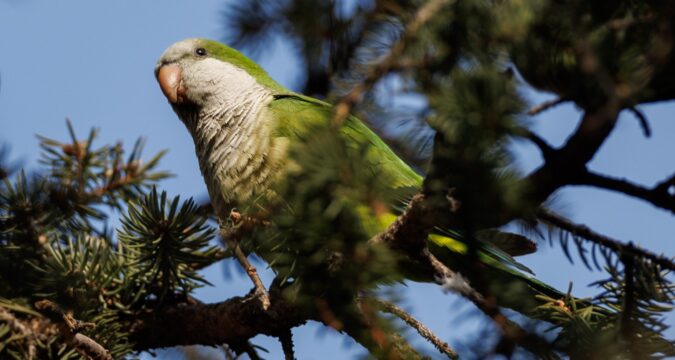
Las diminutas y ruidosas cotorras argentinas de Sudamérica prosperan en Chicago. Pero, ¿por qué?
En una tranquila intersección de calles del barrio de Englewood, la imponente figura de un pino solo se ve superada por la enorme colección de palos y ramitas cuidadosamente colocados en sus ramas. Se trata de un enorme nido comunitario para cotorras argentinas o Quaker, que han hecho de esta estructura su hogar durante los últimos 25 años aproximadamente.
Generaciones de estas pequeñas y ruidosas aves de color verde brillante procedentes de Sudamérica han sobrevivido, e incluso prosperado, en Chicago, desde que probablemente algunos ejemplares escapados del comercio de mascotas exóticas se establecieron por primera vez en algunos suburbios del sur en la década de 1960 y en Hyde Park en la década de 1970, y a lo largo de todos los implacables inviernos que ha vivido la Ciudad de los Vientos desde entonces.
A pesar de su notable presencia local, en muchos aspectos, la especie sigue siendo un misterio tanto para los expertos en aves como para los aficionados. La inaccesibilidad de sus nidos, las dificultades para capturarlos y anillarlos, la prioridad dada a la investigación de especies vulnerables y autóctonas, y factores emergentes, como el cambio climático provocado por el hombre, plantean retos antiguos y nuevos para su estudio.
“Es evidente que la gente se siente atraída por ellos. Les entusiasman”, afirma Edward Warden, presidente de la Sociedad Ornitológica de Chicago. “Y a menudo acaba siendo el tipo de cosa en la que la gente hace preguntas en estos foros e intenta dar con las respuestas por sí misma”.
Steven Pruett-Jones, profesor emérito de ecología y evolución de la Universidad de Chicago, que investigó a las cotorras durante 35 años hasta su jubilación, ha concedido docenas de entrevistas sobre el tema desde finales de la década de 1980.
“Creo que sigue siendo un tema recurrente porque se trata de una especie interesante”, afirmó Pruett-Jones. “Son muy novedosos en la región de Chicago. Y hay muchas preguntas inmediatas. Y las preguntas siguen surgiendo, porque la especie sigue cambiando”.
Por ejemplo, ¿cuánto tiempo sobreviven aquí las aves, en comparación con su hábitat natural? ¿Por qué construyen sus nidos de esa manera? ¿Por qué abandonaron sus colonias originales en Hyde Park alrededor de 2010? ¿Por qué su población local se desplomó a mediados de la década de 2005 antes de recuperarse? ¿Cómo afectará el cambio climático, positiva o negativamente, a su biología y comportamiento?
Un científico que sigue buscando respuestas es Christopher Appelt, profesor asociado de la Universidad St. Xavier, en el sur de la ciudad, que lleva estudiando a las cotorras desde que empezó a fijarse en ellos en la zona hace 20 años.
“Vaya, estamos rodeados”, recuerda haber pensado con humor al descubrir su presencia en Chicago, en los suburbios del sur, en otras ciudades de Estados Unidos, en Europa y en otras partes del mundo.
Aunque esta especie se encuentra de forma natural en zonas tropicales cálidas y subtropicales y templadas más frías, así como en altitudes elevadas de Sudamérica, Chicago podría ser uno de los lugares más fríos en los que se han establecido estas aves, según Appelt.
“En su hábitat natural, no toleran en absoluto los climas fríos, pero aquí pueden soportarlos gracias a los comederos para pájaros que hay en los jardines”, explicó Pruett-Jones.
En Chicago, las cotorras argentinas pueden perseverar a pesar de su entorno urbano, y gracias a él. Para soportar el frío intenso, estas aves dependen principalmente de los comederos para pájaros, algo que no encontrarían en tanta cantidad en zonas menos densamente pobladas. “Se trata realmente de obtener la energía suficiente para mantenerse caliente”, dijo Appelt.
Cuando Gilberto Gutiérrez y su familia —en cuyo patio trasero se encuentra el nido del pino y sus habitantes— se mudaron hace 10 años y se enteraron de la existencia de las aves, pensó “qué chulada”, le dijo al Tribune. Con las manos en los bolsillos, miró hacia arriba mientras grupos de aves chillonas regresaban a su hogar en una fría tarde.
Pero Gutiérrez también tenía algunas reservas iniciales. “Se me van a morir todos por el frío”, dijo. Sin embargo, se dio cuenta de que estaba equivocado cuando comprendió que podían sobrevivir a temperaturas extremas. Pronto comenzó a comprar semillas para pájaros y las colocaba en un comedero que cuelga de las ramas del árbol.
“Especialmente en pleno invierno, recurren a los humanos”, dijo Warden. “En teoría, estas aves no deberían haber sobrevivido. Pero lo hicieron”.
Por eso, los recuerdos de infancia de muchos residentes del South Side, como Edgar Florentino, suelen estar salpicados de los chillidos estridentes y las siluetas verdes que revolotean en el aire de las cotorras argentinas. Su padre, que trabajaba como sastre en Hyde Park a principios de la década de 2000, solía llevar a Florentino al barrio los fines de semana para hacer recados e intentar ver a las aves.
“Fue algo muy bonito”, afirma Florentino.
Un mural de Harold Washington con cotorras argentinas en el barrio de Hyde Park, Chicago, el 1 de marzo de 2026. Aunque no son nativas de Norteamérica, las cotorras argentinas son comunes en Hyde Park y otros barrios del sur de Chicago. (Armando L. Sanchez/Chicago Tribune)
A pesar de la fascinación popular por estas pequeñas aves en la ciudad —el exalcalde de Chicago Harold Washington era conocido por su debilidad por las cotorras, una conexión inmortalizada en un mural junto al viaducto de Metra en la calle 53—, Appelt se sorprendió al descubrir que existía un vacío en la investigación científica sobre sus posibles efectos en las especies autóctonas.
“Ese fue mi punto de partida”, dijo Appelt. “Mi reacción instintiva siempre es: una especie no autóctona es un problema potencial”.
Por ejemplo, pensó que tal vez los grandes grupos de cotorras argentinas podrían estar llegando como una “ruidosa banda de motociclistas”, intimidando a otras aves en los comederos. Pero su investigación descubrió que ese no era el caso: en una ciudad, las fuentes de alimento para las aves suelen abundar en las plantas ornamentales, los comederos y los residuos alimenticios.
Las cotorras también son inusuales porque no compiten con otras especies por un lugar donde criar a sus crías. Otras especies no autóctonas, como los estorninos europeos y los gorriones comunes, anidan en grietas y cavidades como los aleros de los tejados, y suelen expulsar a especies autóctonas como los azulejos.
“Las cotorras argentinas también rompen esa tendencia”, dijo Warden.
Sus nidos, construidos en árboles y postes eléctricos, a menudo pueden pesar cientos de kilos y alcanzar varios metros de altura, y funcionan más bien como un edificio de apartamentos multifamiliar.
“Imagínate todos los túneles que están ahí que hacen criss-cross, y los cuartitos que tienen ahí”, reflexionó Florentino.
Hace unas semanas, publicó un vídeo en la red social TikTok, que ahora se ha vuelto viral, de uno de los enormes nidos de West Englewood, a casi 3 km del de la casa de los Gutiérrez, por el que Florentino suele pasar de camino al trabajo.
Por ahora, dijo Appelt, no hay pruebas de que estén causando ningún problema. Pero la investigación sobre las cotorras no debe limitarse a un solo estudio, afirmó: “Son tan únicas y se adaptan tan bien que podrían convertirse en una especie invasora o en colonizadores exóticos exitosos”.
“Por eso es importante la ciencia, ¿no? Porque mantenemos una mente abierta”, añadió. “Siempre intentamos aprender cosas nuevas y cambiamos a medida que descubrimos que lo que creíamos que era correcto es incorrecto, y viceversa”.
A medida que el cambio climático calienta y acorta los inviernos, podría ampliar el rango de movimiento de las cotorras argentinas, permitiéndoles sobrevivir en zonas más rurales.
“Una de las grandes preguntas sobre las cotorras argentinas es: ¿se convertirán alguna vez en una plaga agrícola como lo son en Argentina?”, dijo Pruett-Jones. Allí, dañan cultivos como el maíz, los girasoles y las frutas.
Un niño pasea a su perro junto a un árbol con nidos de cotorras en el barrio de Englewood, Chicago, el 1 de marzo de 2026. Aunque no son nativas de Norteamérica, las cotorras son comunes en Hyde Park y otros barrios del sur de la ciudad. (Armando L. Sanchez/Chicago Tribune)
En Italia, por ejemplo, el calentamiento climático ha atraído a las aves al campo, donde han devastado los cultivos de almendras y frutas. En Chicago, las cotorras han descendido recientemente a la región industrial de Calumet, en el sureste de la ciudad, justo al borde de las tierras agrícolas.
Pero Pruett-Jones cree que las cotorras no prosperarán en lugares donde no crecen cultivos durante el invierno, ya que eso significa que no hay alimento.
“Sospecho que, con el cambio climático, con el tiempo… se extenderán hacia el norte, hasta Wisconsin, y creo que también lo harán hacia el norte, hasta Michigan, especialmente a lo largo de la costa del lago”, afirmó. “No creo que se extiendan a las regiones agrícolas, pero sí espero que se extiendan a lo largo de las ciudades”.
Por otro lado, el cambio climático podría afectar negativamente a las poblaciones de cotorras, ya que las tormentas invernales son cada vez más intensas. Pruett-Jones recordó una mortandad ocurrida hace aproximadamente una década, cuando recibió varios informes de cotorras muertas o con congelaciones. Señaló que “aunque las tormentas de nieve sean menos frecuentes, serán más intensas”.
“Hay que estar atentos a estos tipos, y no solo porque sean interesantes”, dijo Appelt. “Hay que estar siempre alerta”. Sin embargo, para monitorearlos, los científicos necesitan un mejor acceso a sus nidos, lo que a menudo implica el uso de costosos camiones equipados con elevadores o plumas que pueden alcanzar más de 30 pies de altura. Capturar a las aves para anillarlas también suele ser muy difícil, ya que son rápidas y ágiles voladoras.
Pero el entusiasmo que suelen generar estas diminutas criaturas entre el público puede ser una herramienta para obtener apoyo para seguir investigando y, en general, para que las comunidades se interesen por las aves.
“Cuando la gente los ve por ahí, se fijan en ellos”, dijo Warden. “No importa realmente si se trata de un ave no autóctona, un ladrón de comederos o un riesgo potencial de que se produzca un corte de electricidad. Es simplemente un punto de entrada interesante”.
Hace que la gente hable y se relacione entre sí, añadió.
“Por mucho que se hable de las cotorras argentinas, o por muchos artículos que se escriban sobre ellas, no creo que el interés vaya a desaparecer nunca”, afirmó Pruett-Jones.
—Traducción por José Luis Sánchez Pando/TCA
https://www.chicagotribune.com/2026/03/05/cotorras-argentinas-chicago-cambio-climatico/

Oil Is “Beginning To Flow” From Venezuela, Trump Says
Oil Is “Beginning To Flow” From Venezuela, Trump Says
Authored by Naveen Athrappully via The Epoch Times,
Oil is “beginning to flow” from Venezuela, with the United States and Venezuela engaging in a professional and dedicated manner on the issue, President Donald Trump said in a March 4 post on Truth Social.
“Delcy Rodríguez, who is the President of Venezuela, is doing a great job, and working with U.S. Representatives very well,” Trump wrote.
Rodríguez became the leader of Venezuela in January after U.S. forces captured Venezuelan leader Nicolás Maduro on Jan. 3. Maduro is currently facing charges of narco-terrorism and drug trafficking in the United States.
Replying to Trump’s post, Rodríguez said in a March 4 X post, “I thank President [Trump] for the kind willingness of his government to work together on an agenda that strengthens binational cooperation for the benefit of the peoples of the United States and Venezuela.”
After being named the interim president of Venezuela following Maduro’s capture, Rodríguez had condemned Washington’s action, calling for Maduro to be returned. She termed the U.S. military action a violation of international law. Trump then warned that Rodríguez could face consequences if she didn’t “do what’s right.” Rodríguez has become increasingly cooperative with Washington over the weeks.
On Feb. 10, the U.S. Treasury Department issued a general license that authorized the exploration, development, and production of oil and gas in Venezuela. The license allows U.S. citizens to carry out oil and gas-related transactions with the Venezuelan government, including the development of new oil and gas sites.
Prior to this decision, Venezuela’s state oil company PDVSA had to curtail production due to a U.S. blockade aimed at putting pressure on Maduro.
On Feb. 13, the Treasury Department’s Office of Foreign Assets Control issued a broad license that allowed major oil companies—BP, Chevron, Eni, Shell, and Repsol—to restart operations in the nation.
“Venezuela holds tremendous economic potential, but years of instability, corruption, and economic mismanagement have limited the nation’s growth and prosperity,” a Treasury spokesperson said in a statement to The Epoch Times.
“These general licenses invite American and other aligned companies to play a constructive role in supporting economic recovery and responsible investment.”
Venezuela possesses the largest commercially viable oil reserves in the world, estimated to be roughly 300 billion barrels, making up around a fifth of the global total.
However, taking advantage of these vast reserves will require bringing down the cost of production to make oil investments profitable.
Venezuela’s oil projects require a breakeven price of $64 per barrel, which is “among the highest in South America,” S&P Global said in a Feb. 13 report. “But reforms under U.S. oversight could lower costs to $45–50/b within the next few years,” the report states.
U.S. Energy Secretary Chris Wright visited Venezuela last month on a three-day trip, promising to improve the country’s energy production metrics and economy.
“This year, we can drive a dramatic increase in Venezuelan oil production, in Venezuelan natural gas production, in Venezuelan electricity production, to increase the job opportunities, the wages, and the quality of life for all of the Venezuelans across the country,” Wright said during a press briefing alongside Rodríguez.
“It will also enormously benefit the United States, and the Western Hemisphere, and the future partnership for all of us.”
In a Feb. 12 report, the International Energy Agency (IEA) said that Venezuelan crude oil output dropped by 210,000 barrels per day to 780,000 barrels per day in January from the previous month.
On the positive side, “its output is expected to rebound after Washington authorised a pathway for U.S.-incorporated companies—including U.S.‑based subsidiaries of international firms—to export Venezuelan oil,” the report said.
Meanwhile, oil prices have surged in recent days due to the ongoing Iran War. U.S. and Israeli forces launched coordinated strikes against Tehran on Feb. 28 under Operation Epic Fury.
On Feb. 27, Brent crude oil futures closed the day at $72.48 per barrel. Prices have jumped to $82.58 as of Thursday, 4:35 a.m. EST, an increase of almost 14 percent.
The U.S. national average price of regular gas was $3.25 on March 5, up from $2.98 a week ago, according to data from the American Automobile Association.
Speaking to reporters on March 2, Secretary of State Marco Rubio said the White House was preparing to unveil a strategy to bring down rising energy prices. He did not give more details on the initiatives.
Tyler Durden
Thu, 03/05/2026 – 14:37
https://www.zerohedge.com/geopolitical/oil-beginning-flow-venezuela-trump-says
Dan cadena perpetua a alborotador del Capitolio indultado por Trump por abusar de 2 niños en Florida
Por MICHAEL KUNZELMAN
WASHINGTON (AP) — Un empleado de mantenimiento de Florida que fue condenado a cadena perpetua el jueves por abusar sexualmente de dos menores había sido declarado culpable de asaltar el Capitolio el 6 de enero de 2021, pero fue indultado por el presidente Donald Trump.
Andrew Paul Johnson, de 45 años, figura entre varios acusados del 6 de enero que han sido imputados por nuevos delitos desde el amplio acto de clemencia de Trump para los insurrectos del Capitolio. El año pasado, en su primer día de regreso en la Casa Blanca, el presidente indultó, conmutó condenas de prisión u ordenó la desestimación de casos para las más de 1.500 personas acusadas en el ataque.
Johnson fue declarado culpable el mes pasado de dos cargos de abuso lascivo o libidinoso de un menor y de un cargo de transmisión electrónica de material perjudicial para un menor, según los fiscales del condado de Hernando, Florida. El juez del tribunal de circuito del condado, Stephen Toner, dictó la condena de cadena perpetua contra Johnson.
Los policías del condado comenzaron a investigar las denuncias de abuso sexual infantil contra Johnson en julio de 2025. Una de sus víctimas dijo a los investigadores que el abuso comenzó alrededor de abril de 2024, varios meses antes de que Johnson fuera sentenciado por su condena relacionada con el asalto al Capitolio.
Johnson le dijo a una de sus víctimas que esperaba ser compensado por haber sido indultado en el caso del 6 de enero y que incluiría al menor en su testamento para que heredara cualquier dinero que quedara, según un informe del departamento de policía.
“Se creía que esta táctica se utilizaba para evitar que (el menor) revelara lo que Andrew había hecho”, se indica en el informe.
Los investigadores encontraron mensajes sexualmente explícitos que Johnson intercambió con una de sus víctimas en la aplicación de mensajería Discord, de acuerdo con la oficina del fiscal estatal del Quinto Circuito Judicial, Bill Gladson.
“En los mensajes, Johnson intentó que la víctima descargara otra aplicación para mantener una conversación más privada y animó a la víctima a borrar sus mensajes después”, indicó la oficina de Gladson en un comunicado de prensa.
El juez principal del Tribunal Federal de Distrito, James Boasberg, en Washington, condenó a Johnson a un año de cárcel en agosto de 2024 después de que se declarara culpable de cuatro cargos menores derivados del disturbio. Johnson había pedido retirar su declaración de culpabilidad, alegando que fue presionado para aceptarla, pero el juez rechazó su solicitud antes de dictar sentencia.
Johnson, residente de Seffner, Florida, llevaba un megáfono cuando marchó hacia el Capitolio tras asistir al mitin de Trump de “Alto al robo” cerca de la Casa Blanca. Entró al edificio por una ventana de una oficina que otros alborotadores habían destrozado, según los fiscales federales. Johnson insultó y les gritó a los policías después de que usaran gas lacrimógeno para dispersar a la multitud de simpatizantes de Trump, indicaron los fiscales.
___
Esta historia fue traducida del inglés por un editor de AP con la ayuda de una herramienta de inteligencia artificial generativa.