Category: News

Real Madrid busca cortar mala racha antes de revancha ante Man City
Por JOSEPH WILSON
BARCELONA (AP) — Tras derrotas consecutivas, el Real Madrid intentará volver a la senda del triunfo en La Liga española antes de enfrentarse a su nuevo némesis europeo.
El Madrid viene de sucumbir en jornadas sucesivas en el torneo doméstico: 2-1 de visita a Osasuna y luego 1-0 contra Getafe en su propio estadio Santiago Bernabéu.
La mala racha desalojó a los merengues de la cima de la liga y ahora se encuentran puntos del líder Barcelona.
Golpeados por lesiones y suspensiones, el Madrid buscará salir del mal momento con una visita el viernes al Celta de Vigo, un equipo que marcha sexto en la liga.
“En un equipo como el Real Madrid, la derrota siempre es difícil de digerir por las expectativas y las exigencias, pero ahora mismo lo único en lo que estamos pensando es en el partido de mañana”, comentó el jueves el técnico madridista Álvaro Arbeloa. “Eso es lo único que nos preocupa”.
“Yo no entiendo el Real Madrid de otra forma” añadió. “Siempre seguir luchando, es lo que vamos a hacer. Entiendo que después de dos derrotas como las que hemos sufrido el ambiente no sea el más positivo, pero dentro del vestuario somos muy, muy conscientes de que queda muchísima liga”.
Después del partido ante Celta, el equipo de Arbeloa podrá centrarse por completo en su encuentro en casa contra el Manchester City para iniciar la eliminatoria de octavos de final de la Liga de Campeones la próxima semana.
El Madrid-Man City se ha convertido en un clásico europeo. Se han medido en las rondas de eliminación directa durante los cuatro años anteriores. El gigante español salió victorios las últimas dos veces contra el equipo de Pep Guardiola. Pero el City venció al Madrid en diciembre pasado por 2-1 en el Bernabéu durante la fase de liga.
Partidos clave
Celta es un complejo rival para el Madrid. El conjunto logró una sorprendente victoria 2-0 en la capital esta temporada. Y se presentará inmerso en una racha de cuatro victoria entre La Liga y la Liga Europa.
El Barcelona también tiene una salida difícil cuando visite al Athletic Bilbao el sábado. Ambos equipos fueron eliminados esta semana en las semifinales de la Copa del Rey. El Barcelona quedó fuera a manos del Atlético de Madrid, mientras que el Athletic perdió ante la Real Sociedad, su clásico rival vasco.
La próxima semana, el Barcelona visita a Newcastle en los octavos de final de la Liga de Campeones.
Jugadores a seguir
El mediocentro de contención Marc Bernal pasó la mayor parte de la temporada pasada lesionado, pero asoma para convertirse en la más reciente joya surgida de la academia del Barcelona. Bernal, de 18 años, anotó dos goles en la victoria 3-0 sobre el Atlético el martes, que no fue suficiente para remontar la derrota 4-0 del partido de ida en su semifinal de Copa.
Bajas
El Madrid echará de menos a Kylian Mbappé, el máximo goleador de la Liga, debido a un esguince en la rodilla izquierda. Jude Bellingham está descartado por una lesión en el muslo izquierdo. Y Rodrygo se perderá el resto de la temporada tras una rotura del ligamento cruzado anterior.
“Hablo con él todos los días”, señaló Arbeloa sobre Mbappé. “Cada día va mejor… es un proceso en el que vamos a ir viendo sus sensaciones día a día”.
El delantero azulgrana Robert Lewandowski se perdió la derrota ante el Atlético debido a una fractura ósea en el rostro.
___
Deportes AP: https://apnews.com/hub/deportes

Calumet Park residents struggle after Feb. 14 apartment fire
When Charlene Davis heard a booming sound outside of her bedroom early Feb. 14, among her imagined causes was not a fire spreading from her apartment’s basement boiler room.
“At first I thought it was the heat, because our heat went through the walls,” Davis said.
But when Davis walked out of the bedroom, the smell of smoke and warmth radiating under her feet stopped her in her tracks.
“I froze, and then I picked up my phone, and I put it back down, then I picked it up again. And I was like, ‘girl, you’ve got to call 911, you’ve got to do something,’” Davis said. “I really didn’t think it was going to be the way it was.”
Davis did call 911 and, after quickly dressing, ran outside to knock on her neighbors doors, alerting them of what would become a 3-alarm fire.
Three weeks later, Davis is among residents who remain displaced. As of Wednesday, the building on West 123rd Street and South Bishop Street was completely boarded up.
Davis’ son, Tyrus Jenkins, set up a GoFundMe page to collect donations for his mother who “has always been the one to help others.”
“For me, it’s hard to be like, hey, I need help,” Davis said. “I’m not that person. And my thought process is, if I’m helping me, I want to help everybody else. So it’s definitely been challenging.”
Charlene Davis gestures toward the window of her former bedroom, which burned in a fire that spread through her unit Feb. 14, 2026. (Olivia Stevens/Daily Southtown)
Davis lost nearly all of her possessions in the fire that spread to the attic, with video footage showing flames shoot out from the building’s roof.
She was one of the only apartment residents with renters insurance to help replace some of her lost items and expressed gratitude that a firefighter retrieved her mother’s urn after learning it was left inside her unit.
“I was videoing when I realized it, and I just started crying,” Davis said.
Davis and neighbor Paulette McGriff are living in hotel rooms and touring apartments when they can. McGriff said though her unit was only affected by water damage, she has not been allowed to reenter it to reclaim salvageable items.
Charlene Davis’ apartment after a fire displaced all the building’s residents Feb. 14, 2026. (Olivia Stevens/Daily Southtown)
The Calumet Park Fire Department did not respond to requests for more information.
“I’ve got a rolling tote. I’m homeless,” McGuff said.
Both said emotional breakdowns are common as a result of the experience and recalling the irreplaceable items lost.
For McGuff, that includes a customized couch pillow printed with a family photo that she was given as a 50th birthday gift.
Charlene Davis holds an urn with her mother’s cremains, which a firefighter retrieved from her Calumet Park apartment Feb. 14, 2026. (Olivia Stevens/Daily Southtown)
“That’s the only picture I’ve got of me and all five of my kids,” McGuff said.
Davis said she most wishes she held onto a drawing her brother made of their mother, who died in 2023. She said she also lost items recently reclaimed from her mother’s now sold house.
“Hindsight is 20/20. I couldn’t think of everything, because I would have grabbed the file, I would have grabbed the picture,” Davis said.
An apartment building near West 123rd Street and South Bishop Street in Calumet Park remains boarded up March 4, 2026, about three weeks after a fire displaced all residents. (Olivia Stevens/Daily Southtown)
Davis said all money raised from her son’s GoFundMe page will go toward furniture once she finds a more stable place to live. She’s grateful for the support from friends and family and is happy she chose to take a vacation with her children, planned before the fire.
“But when we were getting ready to come back, I had a feeling of sadness that came over me, and it was because I realized I wasn’t going home,” Davis said. “I was going back to a hotel. From one hotel to another.”
ostevens@chicagotribune.com
https://www.chicagotribune.com/2026/03/05/calumet-park-residents-struggle-apartment-fire/

Stocks Tumble On Report US Plans Licenses For Global Chip Exports
Stocks Tumble On Report US Plans Licenses For Global Chip Exports
In addition to real war with Iran, Trump appears set to restart the simmering trade war with China.
According to Bloomberg, US officials have written draft regulations that would restrict AI chip shipments to anywhere in the world without American approval, giving Washington broad control over whether other countries can build facilities for training and running artificial-intelligence models, and under what conditions. In other words, while Nvidia has long been the world’s AI kingmaker, now the Trump administration is considering taking a formal role in the industry that would include similarly sweeping powers.
If the rule passes, companies would need to seek US permission for virtually all exports of AI accelerators from the likes of Nvidia and Advanced Micro Devices, which represents a global expansion of curbs that currently cover around 40 countries.
According to the report, the specific approval process would depend on how much computing power a company wants.
Shipments of up to 1,000 of Nvidia’s latest GB300 graphics processing units, or GPUs, would undergo a fairly simple review with certain exemption opportunities. Companies building bigger clusters would need pre-clearance before seeking export licenses. They could face conditions such as disclosing their business models or allowing the US government site visits, depending on the specifics of the data centers in question.
For truly massive deployments – more than 200,000 of Nvidia’s GB300 GPUs owned by one company, in one country – the host government would have to get involved. For context, 200,000 GB300s is the number that NScale, a UK company that specializes in renting AI chips to third parties, is planning to provide to Microsoft Corp. across four sites in the US and Europe. The firm described this deal as “one of the largest AI infrastructure contracts ever signed.”
The US would only approve such exports to allies that make stringent security promises and “matching” investments in American AI, the people said, noting that the draft rule doesn’t specify an investment ratio.
The news promptly sparked a selloff across the semiconductor space, with Nvidia and AMD both tumbling alongside the broader semiconductor space…
… which in turn dragged the S&P and pretty much everything else – including Treasuries – to session lows.
Tyler Durden
Thu, 03/05/2026 – 12:54
https://www.zerohedge.com/markets/stocks-tumble-report-us-plans-licenses-global-chip-exports
Energy Expert Warns UBS Just How Many Weeks A Hormuz Shutdown Would Send Markets “Out Of Control”
Energy Expert Warns UBS Just How Many Weeks A Hormuz Shutdown Would Send Markets “Out Of Control”
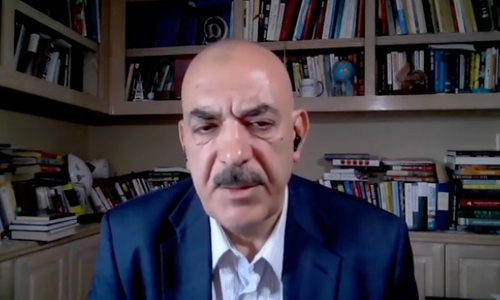
It is only the sixth day of Operation Epic Fury, and roughly the fourth or fifth day that commercial traffic through the Strait of Hormuz has been paralyzed (except for one Chinese-linked bulk carrier), whether by IRGC drone threats or by insurers suspending vessel coverage, and already energy economist Anas Alhajji warned on a webinar with top UBS analysts that “if this is going to last for four weeks, that’s where things will be completely out of control.”
Bhanu Baweja, Chief Strategist at UBS, asked Alhajji on the webinar: “How many days would the Strait of Hormuz need to remain shut for us to see a non-linear move in oil, with prices rising to $100 or $120 per barrel? Is there a timeline you can give us?”
Alhajji responded, “Our main scenario is that if this lasts four weeks, things will be completely out of control. And when I say out of control, I mean that even if China starts releasing oil from its inventories, the problem is that my guess is China would also restrict exports, which means that oil would remain in China. We were counting on that oil being in the market, and now it is not going to be in the market.”
He continued, “The impact of the U.S. SPR is limited. Saudi Arabia is completely out of the picture. All of that spare capacity in OPEC is out of the picture. So what do we do? We are then left relying on demand destruction to curb prices. And because of the panic buying, prices would go above $100 easily in this scenario.”
Alhajji warned about panic hoarding in the oil market. He said he questioned back in January why the Trump administration was hoarding Venezuela’s oil after the Maduro raid, instead of bringing it to market.
Alhajji then emphasized, “I’m not talking about conspiracy theories. We were criticizing the Trump administration, companies, and trading houses that bought Venezuelan oil, and asking why they weren’t able to sell it to end users and why they were hoarding it. Now we know.” He was implying that this hoarding was in preparation for Operation Epic Fury.
Earlier in the webinar, Alhajji outlined critical questions:
Is the war about Iran’s nuclear program, or is something much larger at play, with Iran serving more as a trigger or for broader strategic objectives?
The distinction matters significantly because the medium- and long-term outcomes would look very different.
Should attention be focused narrowly on Iran’s nuclear program and regime change, or should the situation be analyzed within the much wider context of China, trade wars & tariffs, AI competition, Panama Canal, Red Sea, Venezuela, Syria, & Greenland?
Are we observing “conflicts” within a larger “CONFLICT,” where some groups are opportunistically exploiting the situation to pursue their own “local” objectives?
As well as the problem:
The problem now is attacks that spark panic buying while Saudi Arabia cannot react. Thus, U.S. SPR release is limited, and China might ban exports. Prices would go above $100 easily, but fear would contain demand growth, limiting the increase in oil prices. The impact on LNG and NGLs is higher than on oil.
We cannot go back quickly to normal. It will take at least 2 months if the war stops tomorrow. (logistics and technical issues)
Lack of international cooperation (Every country for itself)
Who benefits from the Middle East in flames?
The US and Russia benefit the most.
Losers are the rest of the world, with the EU, India, and Arab Gulf countries losing the most.
China is prepared for the short run. If the war lasts months, China will be among the biggest losers.
Related:
The Most Important Number For The Market: “25 Days”
The key question for readers is whether President Trump’s Operation Epic Fury has effectively triggered an energy shock that, while not explicitly aimed at China, hits Beijing the hardest. It appears as if energy markets remain disrupted for at least a month, then the real issue is whether Asia’s energy shock morphs into a financial crisis.
Tyler Durden
Thu, 03/05/2026 – 12:53
El Congreso de EEUU debate los poderes de guerra de Trump
Por BILL BARROW
En múltiples ocasiones durante la segunda presidencia de Donald Trump, el Congreso ha debatido su autoridad militar, primero en América Latina y ahora en Oriente Medio.
La prueba más reciente llegará el jueves en la Cámara de Representantes, controlada por los republicanos, después de que el Senado rechazó una medida demócrata para limitar a Trump, al menos en teoría, en la guerra entre Estados Unidos e Israel contra Irán.
Como muchos de sus predecesores, Trump afirma tener un poder amplio, incluso ilimitado, sobre las fuerzas de Estados Unidos. Aprobó ataques desde embarcaciones cerca de Venezuela, estableció un bloqueo naval y autorizó una operación militar para arrestar y deponer a su líder, Nicolás Maduro —todos actos discutibles de guerra según el derecho internacional. Hizo ruido sobre acciones adicionales en Groenlandia y América Latina, antes de lanzar una amplia campaña de bombardeos en Irán.
Según la Constitución, las fuerzas armadas responden al presidente. Pero el documento otorga al Congreso funciones de supervisión. Trump dice que no firmará nada que limite sus opciones, lo que para algunos expertos es una prueba de que el control sobre unas fuerzas armadas dirigidas por civiles se ha desviado de su diseño original.
“La Constitución otorga poderes de guerra a dos ramas distintas del gobierno”, señaló el historiador militar Peter Mansoor, profesor de la Universidad Estatal de Ohio y coronel retirado del Ejército de Estados Unidos. “El péndulo se ha inclinado hacia el Ejecutivo”, lamentó, al sostener que “los redactores pretendían que el Congreso fuera la rama más poderosa”.
A continuación, un vistazo a lo que dice la Constitución y a cómo se han desarrollado los poderes de guerra de Estados Unidos.
Lo que dice la Constitución sobre los poderes de guerra
El Artículo I, que estableció el Congreso, indica que los legisladores “tendrán la facultad… de declarar la guerra”. El Artículo II, que estableció la presidencia, convierte al jefe del Ejecutivo en el “comandante en jefe del Ejército y la Marina”. La Constitución también otorga al Congreso autoridad sobre los presupuestos militares.
El Congreso no ha declarado un estado oficial de guerra desde la Segunda Guerra Mundial. Sin embargo, desde 1945, miembros de las fuerzas armadas de Estados Unidos han combatido y muerto en conflictos a gran escala en Corea, Vietnam, Irak y Afganistán, entre otros lugares.
En la misión contra Maduro, un piloto del Ejército resultó herido, lo que llevó a Trump a concederle la Medalla de Honor, un reconocimiento que por ley está restringido a acciones realizadas al combatir contra un enemigo extranjero. Hasta el miércoles, seis miembros de las fuerzas armadas de Estados Unidos habían muerto en la guerra con Irán.
Durante el debate en el Senado el mes pasado sobre Venezuela, el senador Rand Paul, republicano por Kentucky, se burló de una “elaborada puesta en escena” y afirmó que es “un absurdo” sostener que las acciones de Trump fueran otra cosa que hacer la guerra.
El senador Tim Kaine, el demócrata de Virginia que patrocinó las resoluciones sobre poderes de guerra respecto de Venezuela e Irán, dijo que la versión más reciente —que fracasó 47-53— impediría que un presidente hiciera un “atajo” para eludir la Constitución.
Declaraciones de guerra: 11, pero ninguna desde la Segunda Guerra Mundial
El Congreso ha declarado la guerra a 11 naciones a lo largo de cinco guerras. Tres declaraciones se emitieron en el siglo XIX, dos durante la Primera Guerra Mundial y seis durante la Segunda Guerra Mundial. En cada ocasión, el presidente pidió formalmente al Congreso que actuara, citando algún ataque específico contra Estados Unidos u otro interés nacional.
El presidente James K. Polk incluso lo solicitó para la guerra con México, que se centró principalmente en expandir el territorio de Estados Unidos.
En el mismo periodo, el Congreso votó muchas veces para autorizar el uso de la fuerza sin declarar la guerra. Las primeras medidas solían referirse a acciones navales específicas para defender los intereses comerciales de Estados Unidos. El Congreso recurrió por primera vez a esta vía en 1798; se convirtió en una hoja de ruta para la era posterior a la Segunda Guerra Mundial.
La Guerra de Corea marcó un giro hacia el poder presidencial
El expresidente Harry Truman ganó la Segunda Guerra Mundial bajo declaraciones emitidas cuando Franklin Roosevelt era presidente. Luego, en 1950, las incipientes Naciones Unidas votaron actuar en Corea y pidieron a los países miembros que ayudaran.
Invocando a la ONU, Truman comprometió tropas de Estados Unidos en una llamada “acción policial” sin buscar la aprobación de los legisladores. Más tarde ese mismo año, el Congreso aprobó la Ley de Producción para la Defensa para movilizar la capacidad bélica de Estados Unidos. Fue un respaldo a posteriori de la decisión de Truman, y la ley sigue siendo una herramienta potencial del Pentágono.
Vietnam mostró el alcance del poder del Congreso y del presidente
Presidentes desde Dwight Eisenhower hasta Gerald Ford encabezaron lo que la historia recuerda como la “Guerra de Vietnam”, aunque a menudo se la llamó “el conflicto de Vietnam” a medida que las administraciones de Estados Unidos ampliaban las operaciones en el sudeste asiático.
Lyndon Johnson persuadió al Congreso para que aprobara la Resolución del Golfo de Tonkín en 1964 y la utilizó para acelerar la participación de Estados Unidos.
A medida que aumentaban las muertes de estadounidenses, la guerra se volvió impopular, pero Johnson —y luego Richard Nixon— contaron con una amplia autoridad otorgada por los legisladores. “El Congreso aprueba y respalda la determinación del Presidente, como Comandante en Jefe, de repeler cualquier ataque armado contra las fuerzas de Estados Unidos y de impedir una agresión adicional”, decía la resolución de 1964.
El Congreso derogó esa medida en 1971, pero Nixon no se retiró.
Mansoor dijo que las declaraciones de guerra no solo definen el inicio de una guerra. También, en la práctica, exigen un final oficial, lo que activa el papel del Senado en la ratificación de tratados de paz. Eludir esos límites legales, afirmó Mansoor, es “cómo se termina en estas guerras interminables”.
El Congreso responde con la Ley de Poderes de Guerra
En 1973, mientras Estados Unidos avanzaba con dificultad hacia su salida de Vietnam, el Congreso aprobó la Resolución de Poderes de Guerra, con la intención de imponer límites a los presidentes al exigir ciertas comunicaciones con los legisladores y permitir que el Congreso celebrara votaciones para fijar parámetros de la acción militar. Ese fue el mecanismo legislativo que se activó este año para las fallidas resoluciones sobre Venezuela y las resoluciones sobre Irán.
En 2020, una Cámara de Representantes controlada por los demócratas adoptó por estrecho margen una medida destinada a recortar los poderes de Trump frente a Irán en ese momento. Pero, en la práctica, la Resolución de Poderes de Guerra no ha servido como un freno funcional al poder del Ejecutivo.
Después de Vietnam, los presidentes afirman su papel como comandante en jefe
Ronald Reagan envió tropas al Líbano en 1982 como parte de una fuerza multinacional de mantenimiento de la paz. No citó la Resolución de Poderes de Guerra al notificar al Congreso y no aceptó una autorización del Congreso hasta 1983, después de que ya hubieran muerto miembros de las fuerzas armadas.
En 1990, George H.W. Bush notificó al Congreso, en virtud de la Resolución de Poderes de Guerra, que había enviado tropas a Oriente Medio después de que Irak invadiera Kuwait. Bush pidió al Congreso “apoyo”, en lugar de “autorización”, solo después de asegurar el respaldo de la ONU para una acción de una coalición internacional liderada por fuerzas de Estados Unidos. El Congreso autorizó el uso de la fuerza en enero de 1991.
Bill Clinton desplegó tropas de Estados Unidos en múltiples ocasiones, a Somalia, Haití, Ruanda, Bosnia y Herzegovina, Kosovo e Irak. Pidió al Congreso asignaciones presupuestarias, pero no autorizaciones explícitas. Cuando algunos legisladores presionaron a Clinton para que buscara aprobación para ataques en Irak en 1998, Clinton defendió su interpretación de la autoridad presidencial, no muy distinta de los argumentos de Trump.
Bush califica el 11 de septiembre como un acto de guerra, pero nunca busca una declaración
George W. Bush movilizó rápidamente a las fuerzas armadas tras los atentados terroristas del 11 de septiembre de 2001. Consultó con rapidez al Congreso, lo que derivó en una resolución conjunta que autorizó una acción de amplio alcance. Fue única porque no se apuntó a ningún país específico y al principio se centró en Al Qaeda. El Congreso respaldó la medida casi por unanimidad, pero pidió informes cada 60 días.
Mansoor, el historiador militar, señaló que Bush utilizó la votación para llevar a cabo esfuerzos antiterroristas en cualquier parte del mundo. Bush volvió al Congreso en 2002 y dijo a los líderes que quería autorización para actuar contra Irak.
Lo que el Congreso aprobó para Bush no tenía una fecha de finalización efectiva. Su sucesor, Barack Obama, heredó tropas en Irak y al principio no las retiró. Afganistán continuó durante los dos mandatos de Obama, la primera presidencia de Trump y hasta el mandato de Joe Biden.
Biden retiró las tropas de Estados Unidos de Afganistán después de que se convirtiera en la guerra más larga de Estados Unidos —nunca declarada— en la historia del país.
______
Esta historia fue traducida del inglés por un editor de AP con la ayuda de una herramienta de inteligencia artificial generativa.
https://www.chicagotribune.com/2026/03/05/el-congreso-de-eeuu-debate-los-poderes-de-guerra-de-trump/

Zelenskyy dice que no quiere reparar oleoducto que lleva petróleo ruso a Europa central
Por JUSTIN SPIKE
BUDAPEST (AP) — El presidente ucraniano Volodymyr Zelenskyy afirmó el jueves que preferiría no reparar un oleoducto dañado que entrega crudo ruso a Europa Central, pese al aumento de las tensiones con los vecinos Hungría y Eslovaquia por las interrupciones en el flujo de petróleo.
Los envíos de petróleo ruso a Hungría y Eslovaquia están detenidos desde el 27 de enero, después de lo que, según funcionarios ucranianos, fueron ataques con drones rusos que dañaron el oleoducto Druzhba, que cruza territorio ucraniano.
Los líderes populistas de Hungría y Eslovaquia —que, a diferencia de la mayoría de los países de la Unión Europea, siguen importando hidrocarburos rusos— han acusado a Ucrania de retrasar deliberadamente los suministros. Kiev sostiene que los continuos ataques rusos significan que realizar reparaciones pone en peligro a los técnicos y que, incluso si se repara, Druzhba seguiría siendo vulnerable a nuevos ataques.
En una conferencia de prensa el jueves, Zelenskyy manifestó su reticencia a reparar el oleoducto pese a las exigencias húngaras y eslovacas.
“Para ser honesto, no lo restauraría. Esta es mi posición”, expresó Zelenskyy.
El gobierno del primer ministro húngaro Viktor Orbán, considerado el mayor defensor del Kremlin en la Unión Europea, ha bloqueado un préstamo de la Unión Europea a Ucrania por 90.000 millones de euros (106.000 millones de dólares) debido a la interrupción de los envíos de petróleo, y prometió vetar cualquier decisión adicional a favor de Ucrania hasta que se reanuden los flujos.
Mientras tanto, Orbán —que va rezagado en las encuestas antes de un importante desafío electoral el próximo mes— ha intensificado una agresiva campaña antiucraniana en Hungría, presentando al país asediado como una amenaza existencial. Ha afirmado sin pruebas que Ucrania y Zelenskyy buscan llevar a Hungría a la bancarrota, y advirtió a los votantes que, si pierde la elección, el país se vería directamente involucrado en el conflicto con Rusia.
Al dirigirse a un foro económico el jueves, Orbán declaró que “ganaremos y ganaremos con fuerza” en la disputa con Ucrania por los envíos de petróleo.
“Tenemos herramientas políticas y financieras, y con ellas los obligaremos, incondicionalmente y preferiblemente lo antes posible, a reabrir el oleoducto Druzhba”, indicó Orbán. “No haré ningún pacto, no habrá compromiso. Los derrotaremos”.
Hungría y Eslovaquia han propuesto enviar una misión de verificación al sitio del oleoducto en el oeste de Ucrania para evaluar el alcance de los daños y si el flujo de petróleo puede reanudarse. Zelenskyy señaló el jueves que no había recibido ninguna solicitud oficial de la Unión Europea para permitir que inspectores accedan al lugar, pero que “creo que ciertamente llegará en un formato u otro”.
Añadió que espera que “una persona” no bloquee el préstamo de la Unión Europea que Ucrania necesita para seguir financiando su defensa contra la invasión de Rusia.
“Es petróleo ruso, y hay ciertos principios que no tienen precio”, continuó. “¿Nos matan y nosotros tenemos que darle petróleo a Orbán porque no puede ganar elecciones sin él?”
___________________________________
El corresponsal Illia Novikov en Kiev, Ucrania, contribuyó con esta nota.
___________________________________
Esta historia fue traducida del inglés por un editor de AP con ayuda de una herramienta de inteligencia artificial generativa.
Capital One laying off another 1,100-plus employees at former Discover headquarters in Riverwoods
Capital One is laying off another 1,139 employees at the former Discover headquarters in Riverwoods, a second wave of downsizing following the credit card giants’ megamerger last year.
The employees, whose roles span a variety of job titles at Discover Financial Services, were given notice Feb. 23 that their positions were being eliminated. The last day for most of the employees being laid off is May 4, the company said.
“As part of our continued journey to integrate Discover with Capital One, we announced the difficult decision to eliminate some Discover associate roles across the organization,” a Capital One spokesperson said in a statement Thursday.
Capital One filed a WARN notice with the state earlier this week in connection with the latest round of layoffs. Last fall, it notified the state of nearly 600 layoffs at the Riverwoods facility. The total number of employees downsized out of a job in the wake of the merger now stands at 1,748, according to the online filing.
In February 2024, Virginia-based Capital One announced it was buying Discover for $35 billion, merging two of the largest credit card companies, but ending a long run for a Chicago-area corporate headquarters. Capital One completed the acquisition in May.
At the time the deal was announced, there were about 4,000 Discover employees connected to the Riverwoods headquarters.
The Illinois Worker Adjustment and Retraining Notification Act requires businesses with 75 or more employees to provide the state with 60 days’ advance notice of pending plant closures or mass layoffs.
Of the 1,139 employees laid off in February, 532 work at the Riverwoods facility, 69 live in Illinois and work remotely, and 538 work remotely outside the state but report to Riverwoods-based teams, the company said.
No front-line, customer-facing positions were eliminated in the latest round of layoffs, the company said.
“Our focus right now is on fully supporting our colleagues impacted by this change,” the Capital One spokesperson said. “We provided at least 60 days of notice to impacted employees and we are providing comprehensive career transition support, including enhanced severance, benefits, and outplacement resources.”
The Discover card was launched nationally in 1986 by then-owner Sears to compete for consumer wallet space with Visa, Mastercard and American Express.
Capital One intends to continue to offer the Discover credit card alongside its own branded cards, the company said. But the Discover company is now fully integrated into Capital One.
The 1.1 million-square-foot Discover corporate headquarters is located on a bucolic and secluded 25.5-acre lot along Lake Cook Road in Riverwoods. Its designation has been downgraded to a Capital One corporate site, a title it shares with facilities in New York, downtown Chicago, San Francisco, Toronto and several other locations.
The sprawling Discover campus features a complex of four buildings encircling a large retention pond. The main gray stone-and-glass building was completed in 1988, with three additional buildings opening in 2003.
rchannick@chicagotribune.com
https://www.chicagotribune.com/2026/03/05/capital-one-discover-layoffs-riverwoods/

The Spell Of Woke Is Broke: Let’s Keep It That Way
The Spell Of Woke Is Broke: Let’s Keep It That Way
Authored by Thomas F. Powers via American Greatness,
It is too early to know with any precision what the long-term effects of the Trump administration’s anti-DEI efforts will be. We might take our bearings on that score by considering the fate of essays written by prominent law professors in the 1950s and 1960s touting this or that discrete step in the unfolding of the civil rights revolution—the latest Supreme Court decision, and so on—as if each were an all-or-nothing earth-shattering decision.
What we can now say with certainty is that what the Trump administration has done on the DEI front represents the beginning of a general reorientation of our politics away from wokeness. One need only survey what prominent leaders of the Left are saying about the political price the Democratic Party has paid on that score. What they are saying indicates a large political change, even if the Dems prove incapable of unmooring themselves from woke politics for the near future.
The first sign of this reorientation is a general shift in the popular mindset: the spell of woke politics has broken. This matters because it was always the way in which woke politics commanded assent in the citizens’ hearts and minds that was crucial. That assent has been questioned or denied now in a broad way, with the backing of public authority (Supreme Court decisions, executive orders, agency directives), and with widespread public support. Wokeness’s public hectoring, punitiveness, and censoriousness, and the extremism of many of its positions on the issues, is unpopular at the level of 70–30 or 80–20 opinion poll divides.
We ought to be confident, therefore, that the broken spell of wokeness augurs a permanent shift in our public life. What that means precisely, however, depends very much on how we understand wokeness and what is done going forward to ensure that woke excess does not return. Now, if, as many say, wokeness was the product of cultural Marxism (Christopher Rufo and a host of followers) or postmodernism (Jordan Peterson and another host of followers), then all that needs to be done is to combat bad ideas. On these interpretations, our universities in particular, and other cultural institutions where the influence of such ideas holds sway, need our attention. Certainly, cultural Marxism and postmodernism represent bad ideas, and the world would be a better place without their influence.
But if what wokeness represents above all is the explosive power of the civil rights revolution and the influence of an aggressive leftist interpretation of anti-discrimination politics, as another band of interpreters claims (I among them), then the task ahead is much bigger and much more difficult.
Trump’s anti-DEI measures, on this view, would represent only the first step in a broader campaign of civil rights reform. One could look long and hard without seeing much in the way of evidence for any such thing so far. Are these current efforts against DEI an illusion, a brief moment of political opportunism that will recede as public hatred of wokeness recedes—only to return in a few years when the next wave of anti-discriminatory passion rises up?
I don’t think that worry is justified. The anti-DEI campaign to date will have enduring consequences because even if it is not yet clear that what is at stake in DEI is civil rights politics, the current reorientation can only have the effect of raising our awareness of the role of anti-discrimination in our public life. This has begun on the all-important moral plane of civil rights politics. Precisely by breaking the spell of its puritanical commands, our anti-woke moment is reworking something essential to civil rights politics. Because public morality is the crucial filter of the human mind, a shift at this level will change what we see, what we think, and what we think we can say. Anti-woke sentiment, backed by changes in the law, is providing a moment of political, cultural, and mental freedom that will necessarily lead, after many decades during which this was not possible, to a general reappraisal of the moral power and the meaning of the civil rights revolution.
Morality, the Problematic Core of Anti-Discrimination Politics
The civil rights regime was always a collection of disparate, crucial elements. anti-discrimination politics began with the discrete groups who claim its protections (by now an overwhelming majority of the population), but it has been bolstered by laws and institutions and by a set of supporting “ideas” (critical race theory, postmodernist “difference” theory, critiques of “prejudice” by sociologists and anthropologists in the early twentieth century, e.g.). Its modes and orders have been advanced further in a hundred independent corollary efforts of cultural change throughout modern life (in the professions and in the domains of art, literature, and the like).
But central to the whole has always been the moral claim of the fight against discrimination. That moral claim has always been essential to civil rights politics and explains its great power in modern life.
Morality is crucial to anti-discrimination for a very simple reason: our perception of “discrimination” is a perception of an injustice. Indeed, what we mean politically by “discrimination” is always “unjust discrimination.” All human beings discriminate among classes of things, conceiving of better and worse, all the time; whenever we say “that’s discrimination” in a political sense, however, what we always have in mind is some kind of unfair or unmerited discrimination or negative judgment.
At the very beginning of anti-discrimination, we of course confront a form of unfair or unjust discrimination against blacks in America that any fair-minded person can very easily see was outrageous. Any decent person will say that an individual ought to be judged by the content of his character, not by the color of his skin. Anti-black discrimination in America was also extremely harsh and harmful, entailing a wide array of harms, ranging from minor indignities all the way up to violence and homicide. Americans were powerfully reminded of the profound injustice of American racism at the moment of their great moral triumph over Hitler and Nazism, which revealed the full scale of the horror of the Holocaust.
The moral power of civil rights politics played a decisive role in the 1950s and 1960s when the anti-discrimination regime was launched. It is true that the American liberal democratic tradition had long expressed a certain wariness of moral crusades (like Prohibition or, before that, religious puritanism). Only a moral force of immense power, of the sort the civil rights revolution was, could overcome our hesitations along those lines. The only real parallel to the civil rights effort was the attempt a century earlier to deal with American race discrimination’s father, or grandfather, slavery, in the Civil War, the bloodiest war in American history.
Victims of discrimination now carried a moral claim that could be used to demand attention from others. This moral starting point was supercharged and made hyper-spirited because, not entirely by conscious design, anti-discrimination enforcement came to institutionalize a hybrid of the civil law and criminal law. Policing harassment and discrimination borrows from the spirit of the criminal law at crucial points (naming offenders and victims, enlisting government prosecutors, paying close attention to intent and “motive”) but with the legal instrumentalities of tort law (looser procedures with lower standards of protection for the accused).
One consequence of this hybrid quasi-public, quasi-private legal structure was that enforcement of the machine could be handed over to employers, educational establishments, and other large (private or public) institutional entities acting in their capacity as “employers.” Enforcement was then implemented by our fellow citizens, acting under a sanction that was rooted in the law but not evidently or obviously “official” or governmental. The overall result was that anti-discrimination enforcement became a way of policing in an effective and relatively intimate way a significant portion of our social interactions, interpersonal behavior, and private speech—and policing how people treat one another is very much a matter of basic morality.
It was into this social domain that civil rights law, invited in by all-too-willing fellow citizens (bosses, deans, HR managers), imported the punitive and blame-casting spirit of the criminal law. At least as important, these individuals wielded the crucial coercive “corrective measure” of this privatized enforcement regime, above all, the firing of individuals. Punishment thus completes the picture for anything in the ballpark of “harassment”—and also for actions like demonstrating recalcitrance to the demands of the new order.
A New Morality?
As important as the victim/perpetrator injustice claims have been to the moral hold of civil rights politics, the morality of the anti-discrimination revolution is more complicated than that; moreover, its various claims are stated in much more precise terms. Indeed, a whole new system of public morality emerged out of the civil rights revolution.
To elaborate on this in detail would take more space than I have here, but in brief, a new terminology has emerged to clarify the harm of discrimination and to articulate the steps that must be taken to eradicate it. “Identity” is a vitally important term today because it names with some precision what it is in the individual that is threatened by group-on-group discrimination. “Respect” must replace mere “toleration” as a standard of interpersonal treatment because toleration is consistent with some kinds of discrimination (especially discrimination in the private sector). Claims from both identity and respect show that civil rights politics is thus necessarily a politics of “recognition.” New schemes of representation come into view as necessary as well—new, more “inclusive” schemes that reflect the “voices” of those previously excluded by discrimination. And, last but certainly not least, a host of new equality claims—systemic, structural, societal—call into question noticeable inequalities affecting the groups protected under anti-discrimination law. Such claims are now advanced under the heading of “equity.”
A whole new civic morality has thus emerged out of the political upheaval of the civil rights revolution; shamefully, our political scientists have nothing to say about this massive and astonishing fact of our public life.
It is the morality of civil rights as interpreted by the Left that supplies the key “ideas” that are at the core of the woke outlook—and not, I would insist, cultural Marxism or postmodernism or cultural relativism, and so on. To be sure, “ideas” there are here aplenty—identity, inclusion, recognition, respect, equity, etc.—but they are all ideas with a very simple and clear political origin. The lesson for us here ought to be this: political history as the cause of ideas, not intellectual history as the cause of politics.
One additional step remains: it is above all the moral logic of civil rights politics that must be “taught,” as a semi-official catechism, by way of the public and private enforcers of the regime, through things like diversity training, Title IX training, anti-bullying training, and the like—and with punitive sanctions for those who do not want to go along.
The moral power of the anti-discrimination revolution helps to explain how it could grow and grow, more or less unchecked, to the point where it became the monstrous woke regime against which the people have finally rebelled. This explains, too, why the American Left thought for so long that the Democratic Party could ride an anti-discrimination coalition to enduring political victory. Because of its moral content, the anti-discrimination regime—its groups, its laws, its ideas, its institutions, public and private—all seemed unquestionable, simply above criticism.
Our Doubts About the New Morality
What is crucial about the current moment is that anti-DEI sentiment extends to a new wariness concerning precisely the moralism of wokeness. Americans are heirs of the Enlightenment and heirs of liberal democratic constitutional government, and they have not entirely forgotten the suspicion of any politics that claims too much in the name of high and lofty ideals, religious or secular.
It’s true that almost no one is saying publicly that anti-wokeness is really at bottom opposition to civil rights moralism. But one need only consider in rough outline what it is that public anti-woke ire expresses in order to see why that is the case.
We don’t see this, however, and that is because the great moral power of civil rights still does its work to halt us from facing the enormous consequences of the social-political revolution that has taken place in its name. This is something that we see today, even in the Trump administration’s very effective anti-DEI measures. This is a huge effort of civil rights reform, in fact, unprecedented in its sweep. But does anyone call it by that name?
What is needed is a fuller and franker facing of the hold the civil rights revolution has on us. The greatest obstacle to that is its moral hold. How, then, to start to challenge—or at least to begin to think clearly about—something as important to American life as the morality of anti-discrimination without going off the deep end into a world that would welcome back discrimination of the kind American blacks endured before the 1960s. That is a price we cannot pay.
One answer is to begin to look at, to see, the civil rights revolution in its many conflicts with another morality that has great power in America—namely, the morality of the liberal democratic constitutional tradition. And when one begins to look on that level, there are indeed many, many conflicts between the logic of anti-discrimination and that older moral-political outlook.
Looking at anti-discrimination (as a whole) from the perspective of liberalism (as a whole), we will perhaps be able to begin, finally, to see the anti-discrimination regime as a distinct entity. We will, at the same time, be unable not to notice the many lines of tension between these twin poles of our moral-political order. That ought to free us up to start thinking more clearly about the relationship between them. Questioning one’s civic morality is not something to be embraced lightly, but fortunately for us in this situation, questioning one set of our moral categories may be done with a view to another, healthier, set.
* * *
Thomas F. Powers is Visiting Lecturer at The Center for Civics, Culture, and Society at Cleveland State University and author of American Multiculturalism and the Anti-Discrimination Regime (St. Augustine’s Press).
Tyler Durden
Thu, 03/05/2026 – 12:35
https://www.zerohedge.com/political/spell-woke-broke-lets-keep-it-way

American beech tree in Valparaiso is state’s biggest
As American beech trees go, the one in Jim Berman and Liz Bryant’s backyard is a whopper. At a circumference of 210.5 inches at the base, it’s officially the largest of its species in Indiana.
“It is the largest American beech in the entire state. It’s so cool,” city arborist Matt McBain said.
This tree is listed on the Indiana Department of Natural Resources registry of big trees, viewable online. Seven of the trees – yellow birch, northern catalpa, northern white cedar, white (American) elm, northern pin oak and tulip tree, along with the American beech – are in Porter County.
Only native trees can join the big tree registry, leaving the owners of large invasive species disappointed.
The Berman and Bryant tree is 102.7 feet high with an average crown span of 78.7 feet. And it’s close to the foundation of a historical home Berman and Bryant plan to spend their retirement years in.
The tree was probably a young whippersnapper when the city was founded in 1836, McBain figures.
The house on Franklin Street dates to 1870, according to the Porter County Assessor’s website. It was built by Col. Mark DeMotte, founder and first dean of the Valparaiso University School of Law, Berman said. DeMotte’s tenure at VU was interrupted by his military service in the Civil War.
DeMotte was later elected to Congress, then appointed Valparaiso’s postmaster by President Abraham Lincoln. He later retired to present-day DeMotte, named in his honor, Berman said.
The house is undergoing extensive renovations. “I can show you pictures where I was standing in the basement and could see the roofline,” Berman said as he searched for the photo on his phone.
Berman and Bryant have listed the nearby Valparaiso Inn for sale in preparation for their move to the home shaded by the giant tree.
“We decided to slow down,” Berman said. He’s been a psychotherapist for 34 years. Bryant, a retired English professor at Purdue Northwest in Hammond, “wrote more books than I can carry,” Berman said.
The stately American beech tree, meanwhile, has stood sentinel over the downtown Valparaiso home and the neighborhood.
Determining the exact age of the tree could be done in one of two ways, McBain said. One is to cut it down and count the rings. A less destructive way would be to drill into the tree and take a core sample.
“You could see droughts, you could see fires, you could see so much through the rings,” McBain said.
In the city, tree rings are narrower than those of their country cousins, indicating the shortage of water and nutrients compared to rural areas, he said.
The American beech tree in the back of Jim Berman and Liz Bryant’s home in downtown Valparaiso stands 102.7 feet high. It has a circumference of 210.5 inches at the base. (Doug Ross/for the Post-Tribune)
The American beech has a Latin alias, Fagus grandifolia.
McBain learned about the tree when Berman spotted him inspecting trees in the neighborhood’s rights of way. McBain visited the home after he got off work to check it out.
“When I stood next to it with Jim, I thought, oh my gosh, this tree is so much bigger than I thought,” McBain thought. There are a lot of tall trees in the older neighborhood, so just glancing at the height wouldn’t give away the girth.
Would-be beech-goers would be disappointed because the tree is in the home’s backyard, hidden behind a fence. The city discourages trespassing on private property.
McBain offered pointers about trees like this for other homeowners with mature trees.
It’s close to the house, which would normally be a concern because of the root system, but this beech tree doesn’t seem to be showing any ill effects, he said.
American beech trees send down a taproot, but after about 25 to 30 years, more shallow roots draw the nutrients, leaving the taproot’s function to be structural rather than nutritional.
The tree has buttress roots, adding to the visible support. “The roots aren’t nearly as deep as you think they are. A lot of people think it’s a mirror image (of the visible part of the tree), but it’s absolutely not,” McBain said.
The roots and leaves are useful for Berman, Bryant and the house next door.
“This, in a five-year period, will intercept about 26,000 gallons of water,” McBain said. “They take up the water in runoff.” That helps with stormwater management.
Trees like this one also provide “hundreds of hundreds of pounds in carbon sequestration,” he said, not releasing the carbon until the tree decomposes or is burned.
The leaves provide shade, reducing the need for air conditioning, but also help reduce the volume of water hitting the ground, soaking up some of the rain.
What homeowners need to watch for, McBain said, is that the runoff from roofs doesn’t harm the tree. Draining a swimming pool or hot tub would have to be done carefully, too, to avoid chlorine and other chemicals from harming a tree.
A few lightning rods in a tree this size wouldn’t be a bad idea, either, with copper wire running down the tree to a grounding rod, protecting the tree from lightning, McBain said.
River rock, often used for landscaping, shouldn’t be placed near a tree. The rocks can get superheated during the day and retain their heat at night.
Don’t let branches decay near the base of the tree, either, because that could lead to a diseased tree. Diseased trees aren’t healed; rather, they seal off the diseased part, McBain said. The Berman and Bryant tree has a few visible scars.
“It’s really amazing that this tree has lived as long as it has since these are sensitive trees,” McBain said.
If you’re planning to build near a tree, have the tree evaluated first by a certified arborist. There are many in the area.
“Often, when you damage the roots to trees, especially the feeder roots, the trees aren’t going to tell you that until the following year or the year after,” McBain said. “Luckily, this soil has not been disturbed for many, many years.”
“Hopefully, your neighbors are onboard” and understand the importance of it, he said. If they did a major excavation, that could dramatically affect the tree that partially overhangs their property.
Proper pruning techniques are important. McBain hopes to teach the public about them.
“I just was absolutely thrilled when I learned you were the owner of the tree and appreciate the historical value of the tree,” McBain told Berman.
For their part, Berman and Bryant have a reason to be prejudiced against trees, but Berman doesn’t hold a grudge after a tree crushed one of their cars on Bryant’s birthday nine years ago.
Doug Ross is a freelance writer for the Post-Tribune.
https://www.chicagotribune.com/2026/03/05/american-beech-tree-in-valparaiso-is-states-biggest/

BlackRock Slashes Private Loan Value From 100 To 0
BlackRock Slashes Private Loan Value From 100 To 0
Earlier this week, the panic quietly, or not so quietly, sweeping the private credit world, hit 11 when Blackstone’s Private Credit Fund (BCRED, the world’s largest with $82BN in AUM, was hit with a record 7.9% in redemptions, shocking Wall Street as the total number of permitted redemption was above the statutory maximum of 7%, which forced Blackstone’s own employees to write $150 million worth of personal checks to make sure those hoping to pull their money didn’t start a riot.
Well, this morning the panic must have risen to 12 out of 10 when markets learned that that other “Black” fund, BlackRock, had slashed the value of a private loan to zero just three months after assessing it at 100 cents on the dollar, marking the second sudden wipeout to recently hit its private-credit division.
According to Bloomberg, the $25 million loan to Infinite Commerce Holdings, an Amazon aggregator that buys up online sellers of products from spa treatments to light bulbs, is now worthless, BlackRock TCP Capital Corp. reported in fourth-quarter filings released last week. The fund had marked the junior debt at 100 cents on the dollar in the third quarter. In other words, total wipeout in 3 months.
While the loan may be small, it confirms how rapidly “software” can reprice from part to 0 in months if not weeks in this time of AI disruption.
The loan’s abrupt markdown highlights a key fault line in private credit: the lag between valuations on illiquid loans and the deteriorating performance of the companies behind them. Zips Car Wash was valued near par by its private credit backers in the months before it sought bankruptcy protection. And back in November, BlackRock TCP slashed the full value of loans it extended to Renovo Home Partners, a struggling home improvement company.
As Bloomberg notes, the write-off comes just months after Infinite Commerce merged with another aggregator and BlackRock debtor, Razor Group, in August, creating the new debt structure valued at par. Previously, BlackRock had valued loans to Razor at a deeply distressed level.
To an extent, the collapse in this case is specific: like other private credit lenders, BlackRock is contending with a sharp reversal for Amazon aggregators which boomed during the Covid-19 pandemic as online shopping proliferated. More recently, the industry has become known for debt restructurings.
Another lender to Infinite Commerce, Victory Park, also fully wrote off its position as of Dec. 31, according to filings, blaming poor performance on depressed demand and higher inventory costs from tariffs. A Victory Park representative didn’t respond to a request for comment.
As an aside, this begs the question how Amazon itself can be doing so well when its third party aggregators are falling like flies. But we leave that analysis to someone else.
BlackRock TCP also partially wrote down its position in SellerX, according to the fourth-quarter filing. The fund cut its dividend to 17 cents a share from 25 cents last week, causing shares to tumble. The private credit fund said in its filing that 91% of valuation cuts across the portfolio stemmed from deals it underwrote in 2021 or earlier that have become challenged by “sustained higher interest rates.”
The moves add to mounting concerns over defaults and underwriting standards in the $1.8 trillion private credit market. The industry’s huge bet on software companies threatened by AI has led to unprecedented redemption demands by jittery investors.
The latest warning that the wheels are falling off the bus came from Goldman CEO David Solomon who said that “we’re watching very closely to see if there’s been a little bit too much aggression, frothiness,” Solomon said in a Bloomberg Television interview in Sydney on Thursday. “While there have been a bunch of idiosyncratic events where there have been problems, the broad portfolios are performing reasonably well.”
Still, top private credit lenders continue to post strong relative returns. Underscoring the debate about the market’s future, Apollo Global Management Inc. Chief Executive Officer Marc Rowan warned that a shakeout is coming for private credit firms. That same day Ares Management CEO Mike Arougheti said a forecast last week from UBS Group AG analysts that private credit default rates could reach 15% was “absolutely wrong.” Then again, of course he would say that: if UBS is right, Ares would be worthless.
Tyler Durden
Thu, 03/05/2026 – 12:15
https://www.zerohedge.com/markets/blackrock-slashes-private-loan-value-100-0