Category: News

Editorial: Why independent candidates rarely make the ballot in Illinois
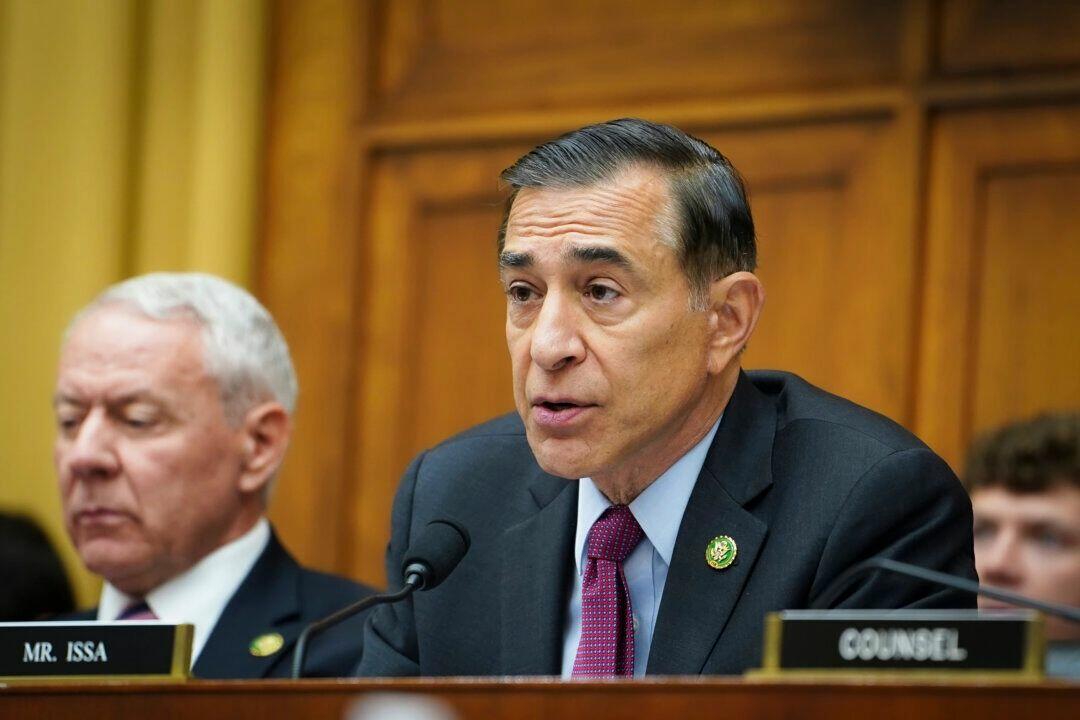
Voters headed to the polls this primary season will have to make a choice: Whether to pull a Republican or Democratic ballot. But no matter which ballot we choose, our choices have already been winnowed down by ballot access rules that make it far tougher for folks to run outside the two-party system.
If you wonder why so few independent candidates appear on Cook County ballots, look at the signature math: In a Cook County Illinois House district, a Democrat or Republican needs 500 to 1,500 signatures to run in a party primary, while an independent candidate in the same district could need around 10,000.
Political candidates file nominating petitions at the Cook County clerk’s office on Oct. 27, 2025, for the March primary election. (Antonio Perez/Chicago Tribune)
The system is designed that way as a filter. Major parties narrow their fields through primaries, while independent candidates qualify directly for the general election ballot. To do so, they must gather signatures equal to at least 5% (and up to 8%) of the voters who participated in the last regular election in the district — a formula that can quickly translate into many thousands of signatures in Cook County.
For a recent example, consider that Ald. Byron Sigcho-Lopez needed to gather nearly 11,000 signatures to run as an independent in the 4th Congressional District seat previously held by Jesús “Chuy” García. Sigcho-Lopez is unique in that he has built-in support from the Chicago Democratic Socialists of America and the Chicago Teachers Union, helpful grassroots organizations built for the sort of ground game that signature gathering requires. Others are not so fortunate. Just one independent candidate made it onto the ballot in 2024 legislative and congressional races.
It’s fair to argue that requirements that are too lax could lead to overcrowded ballots and an infusion of unserious candidates in the general election (although we met some unserious candidates running in both the Democratic and Republican primaries). The problem for independents, and thus the voters, is that requirements that are too strict are making it unnecessarily difficult to launch an independent bid at all. Illinois’ system doesn’t explicitly ban independents, but it raises the cost of entry so high that most potential candidates never try. And, instead of the primaries being the true filter, the parties themselves serve that role.
Compounding the problem: the way Illinois handles petition challenges. Candidates rarely collect just the legal minimum. Because objections are common, campaigns often collect far more John Hancocks, sometimes double or more, to withstand challenges.That turns ballot access into a logistical and legal exercise that favors campaigns with money, lawyers and established political networks.
Illinois’ rules also differ from many other states. Independent candidates here must gather signatures equal to 5% of the vote in the last election for that office. In many states the requirement is a lower percentage, or is capped at a fixed number of signatures. The difference may sound technical, but it has practical consequences. A higher threshold means more time, more volunteers and often more legal help just to qualify for the ballot.
The result is that many races effectively become two-candidate contests long before voters ever see a ballot. In districts dominated by one party — and Cook County has many of them — the decisive election is often the primary. If no independent candidate can realistically qualify for the general election ballot, the range of choices presented to voters has already been narrowed by the rules themselves.
At a time when neither Republicans nor Democrats are particularly popular with the American electorate, it’s past time to explore ways to broaden the scope of what’s on offer during election season. Variety — and competition — is a good thing. The most direct fix would be to reduce the 5% requirement for independents to either a flat cap or a lower percentage, in line with other states. For example, in states such as Colorado, independent candidates can qualify for legislative ballots with a capped number of signatures — often around 1,000 — rather than a percentage requirement that can climb into the many thousands. That approach still ensures candidates demonstrate genuine support without making ballot access prohibitively difficult.
Competitive elections strengthen democracy, and state leaders should reexamine a system that protects party insiders and sidelines would-be challengers long before voters get their say. We’d like to see more independent candidates on the ballot — especially since 45% of Americans use that word to describe themselves.
Submit a letter, of no more than 400 words, to the editor here or email letters@chicagotribune.com.
https://www.chicagotribune.com/2026/03/09/democrats-republicans-independents-elections-voting/
Should Chicago school board members be paid? Legislators weigh compensation ahead of historic election
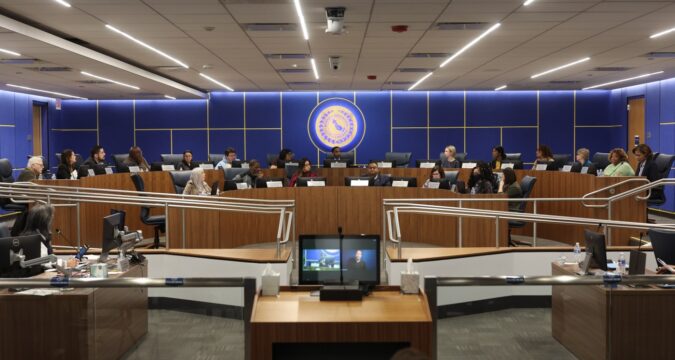
Serving as a member of the Chicago Board of Education can mean upward of 25 hours per week attending meetings, reviewing hundreds of documents, visiting schools and hosting office hours. All on a volunteer basis.
Two board members have left full-time jobs. Others say it’s difficult to juggle the demands of the role with personal and professional responsibilities.
But a new bill in the Illinois House would pave the way for board members to receive compensation, a change advocates say could broaden representation as it transitions to a fully elected body.
State law currently bars Illinois school boards from paying members. The bill would lift that restriction, allowing a more diverse slate of parents, educators and community members to lead Chicago Public Schools, according to state Rep. Marcus Evans, who is sponsoring the proposal. It also has implications across the state: Suburban school boards have long been elected nonpaying positions.
All 21 seats of Chicago’s first elected school board will be on the ballot in November. Eight months before the election, education groups are still debating how to ensure it reflects the city it serves.
“It’s a very large, complicated district that requires a lot of time,” said Evans, a Chicago Democrat. “For $0, what type of person are you going to get on the board? Are you going to get working-class people? I think we all know the answer.”
The bill is backed by several public education advocacy groups, along with the Chicago Teachers Union. A CPS spokesperson did not respond to a request for comment.
It’s not the first time legislators have floated the idea of paying Illinois school boards. State Sen. Robert Martwick, a Chicago Democrat who helped craft the city’s elected school board model, has sponsored two nearly identical bills in the past three years. Those measures ultimately failed to advance.
But advocates say the proposal is now better positioned to move forward, in part because Chicago has seen firsthand the demands of the role. In August, for example, the hybrid board approved a $10.25 billion budget.
“The budget alone is insane,” said Corrina Demma, a senior organizer with nonprofit Educators for Excellence. “We want our best people protecting our kids. We want to make sure that everyone has access to that job.”
Hal Woods, chief of policy at Kids First Chicago, also pointed to the money already pouring into November’s school board races. Last year, campaign spending topped $13 million, according to an analysis by Chalkbeat, with top contributors including CTU and pro-school choice groups like the Illinois Network of Charter Schools.
“Right now it feels like, unless you have six figures, seven figures behind you, you can’t realistically run,” Woods said. “We want the conditions where the everyday parent can participate in the process, and can reasonably run for election without having to be completely beholden to special interests.”
CTU Vice President Jackson Potter put it more bluntly: “It’s a question of guaranteeing community representation instead of billionaires corrupting the board,” he said in a statement to the Tribune.
Chicago Teachers Union Vice President Jackson Potter speaks at a rally outside Chicago Public Schools headquarters on Feb. 26, 2026. (Antonio Perez/Chicago Tribune)
The elected model was long championed by progressives as a vehicle for equity and democratic governance.
Previously, the board was made up of seven mayoral appointees. It is currently composed of 11 appointed and 10 elected members. Though they don’t receive salaries, members can be reimbursed for job-related expenses.
Opponents argue that compensation may attract candidates motivated by profit rather than public service. The bill doesn’t set a salary; instead, it allows individual school districts to determine pay if they choose to do so. That could become a debate in rural and suburban districts across Illinois — which are each a fraction of CPS’ size.
Funding may also be a question in a district like CPS, which will face a projected $520 million deficit next budget season.
“Almost every public school in the United States right now is on a pretty tight purse string,” said Rachel White, an associate professor at the University of Texas at Austin who studies school boards. “I like to think of it as, what is the return on investment for kids?”
There’s also virtually no research on whether compensating school board members actually diversifies a board’s makeup, White said. But studies have shown that diverse school boards are more likely to allocate money in ways that invest in racially diverse students.
Within the 10 largest school districts in the U.S., only two — the New York City Department of Education and Houston Independent School District — have unpaid boards.
Board members at the Los Angeles Unified School District without outside employment receive the largest salary, more than $125,000. At Miami-Dade County Public Schools, which recently surpassed CPS as the third-largest school district, the board members receive about $55,000. At Clark County School District in Las Vegas, which is similar in size to CPS, members are paid a $9,000 annual stipend.
Meanwhile, in Chicago, aldermen receive between $123,000 and $152,000 per year, though they are technically considered part-time employees. The seven appointed board members at the Chicago Transit Authority are paid $25,000. Board members at the Chicago Housing Authority are unpaid.
Drawing Chicago’s elected board
Representation was always central to the push to transition Chicago’s school board to an elected body, according to Martwick, the state senator. Legislators drew 20 districts to reflect the city’s diverse communities, and also curb the influence of outside money in elections, he said.
But while lawmakers focused on who could run and how districts were drawn, compensation was ultimately left out of the final proposal. Earlier drafts of the final 2021 bill included pay for board members, but the provision was removed.
“I’ve talked to my colleagues in the General Assembly, and I will get pushback from time: ‘Oh, it’s about public service,’ to which I say, ‘That’s true. And so is serving in the General Assembly. Do you waive your pay?’” Martwick said.
Martwick also introduced two other CPS-related bills in the Illinois Senate this session, both tied to the district’s finances. One would require the district to contribute to a municipal pension fund that covers nonteaching CPS employees. The other would shift all costs of the district’s teacher pension fund onto the state.
He said revisiting board pay is part of a broader effort to refine the new governance structure as it takes shape.
“I never expected the Chicago school board to be a once-and-done,” Martwick said. “I think there’s going to be growing pains, and I would expect, just like every other form of government, we will find things that we’ll say ‘we should change this’ or ‘we should tweak that.’”
CPS parent Claiborne Wade has closely followed the transition to an elected board — as well as the decision not to include pay in the initial legislation. But the Austin resident called compensation a “parent priority.”
“For a lot of parents like myself, if I want to run, and if I were to win, I need compensation to take care of my family, because I’m not wealthy or rich,” said Wade, who sits on Kids First’s Parent Advisory Board. “Everybody deserves compensation for the work they do.”
https://www.chicagotribune.com/2026/03/09/should-chicago-school-board-members-be-paid/

Feds violated immigration court order, wrongly deported hundreds, court filing alleges
The federal government knew it had wrongfully arrested Henry Cordova Jaya.
He had been detained by immigration agents last year during President Donald Trump’s ramped-up immigration enforcement raids in violation of a court order restricting warrantless arrests.
In January, the government acknowledged that his arrest was a violation of the 2022 Castañon Nava consent decree. In early February, lawyers for the federal government said in a court filing that they were seeking Cordova Jaya’s release from custody.
But instead of releasing Cordova Jaya, the government kept him in detention for 18 more days and then sent him back to Ecuador, according to a new filing in federal court.
At least 70 other immigrants detained last year were also forced to leave the country after signing voluntary departure forms, receiving removal orders — even after, in some cases — the government acknowledged they had been wrongfully detained, according to the National Immigrant Justice Center, which spearheaded the federal case.
“Hundreds, if not thousands,” of people arrested in the Chicago area could have ultimately been found eligible for release, based on the total number of arrests, but the U.S. government failed to provide their records in a timely manner to determine whether they were class members, said Allena Martin, senior litigation attorney at the National Immigrant Justice Center.
Only about 100 immigrants have been released in the months since the judge ordered in November that hundreds of cases be reviewed, forcing the federal government to provide the information.
Last week, the federal government released 14 detainees who were wrongfully detained. But hundreds more immigrants arrested during large-scale enforcement operations in the Chicago area may have been entitled to relief under the federal court order. Yet, many were deported or left the country before their cases could be reviewed.
And those numbers represent only a fraction of the potential cases. Government officials told the Tribune last month it had arrested more than 5,000 people during Operation Midway Blitz. The review of alleged consent decree violations covers arrests dating back to June.
Attorneys working to identify violations of the federal consent decree say the process has been slowed by delays in receiving arrest records from the government, creating what they describe as a race against time for people stuck in detention.
The slow pace left many detainees facing an impossible choice: remain in detention for an unknown amount of time or leave the country.
“Unfortunately, it’s really just been like a battle against time,” Martin said.
“A lot of people just had to make really hard decisions,” she added, explaining that some detainees chose voluntary departure rather than wait indefinitely behind bars.
In a statement, Homeland Security said it “is complying with all lawful court orders” and will continue to “unapologetically enforce the laws of our nation.” The department did not address questions about Jaya.
Among those who never received relief in time is José Jiménez, known to friends and family as Pepe, who federal agents arrested during the infamous overnight raid of a South Shore apartment building. Just 20 days before the judge ordered his release in the latest court ruling, he was sent back to Michoacán, Mexico, after nearly eight months in detention.
Martin said attorneys had been in contact with Jiménez after his arrest in late September. Lawyers told him he could potentially qualify for relief under the case but warned there was no guarantee or timeline because the litigation had been paused while the 7th U.S. Circuit Court of Appeals considered the matter.
His cousin, Jose Lopez, said Jiménez spent months attending court hearings while waiting for a judge to review his case.
“He kept going to court. It was one court after another, and he kept going, but the judge didn’t even review his paperwork,” Lopez said. “They would just look over and say we’re going to schedule it for next month … again next month.”
The building at 7500 S. South Shore Drive, shown on Oct. 8, 2025, lost many of its tenants after a large raid by U.S. Immigration and Customs Enforcement agents. (Antonio Perez/Chicago Tribune)
Family members wrote letters in his support and tried to help from the outside, but nothing worked. He spent nearly eight months in detention fighting the case.
“We did everything we could on our end,” Lopez said.
But the long wait and uncertainty inside detention eventually took a toll.
Jiménez told relatives that conditions inside the jail were difficult, according to Lopez.
“He said they just kept mistreating him in the detention center,” Lopez said.
About a month ago, Jiménez signed a voluntary departure and returned to Morelia, in Michoacán. His family says he is now safe with relatives but rebuilding his life from scratch.
Still, his cousin says Jiménez is resilient.
“He knows how to fight. He knows how to survive it,” Lopez said. “Wherever you put him, he’s always gonna come out on top of everything.”
For his family, the timing is difficult to accept, knowing that the court order granting release came after he had already left.
But knowing where he is and that he is finally free gives the family, especially his mother, some peace, Lopez said.
After all, they spent months looking for him after the South Shore raid, where agents in military gear burst through doors and zip-tied residents regardless of citizenship. Federal authorities said they were targeting gang members and violent criminals.
That was not who Jiménez was, his loved ones say.
Jiménez was born in Mexico and first came to the United States when he was 10.
He worked as a pizza delivery driver, and the night of the raid, he had called off work, fearing he would be arrested. It was a time when Border Patrol Cmdr. Gregory Bovino and his squad were in town conducting enforcement operations.
Jiménez was in his apartment with his girlfriend when agents grabbed him. In a video from that night, she can be heard saying, “I love you, Pepe,” as they load him into a box truck.
After that, he spent nearly eight months at the Hopkins County Jail in Madisonville, Kentucky, about 330 miles south of his old home in South Shore.
Family members insist Pepe has no ties to criminal activity or any affiliation with a gang. A Tribune search found no criminal charges in his name, and his cousin described him as “a hardworking man.”
The other man arrested in the South Shore raid, Jeikson Delgado, who was ordered released last week, has actually been free since November through a habeas corpus petition, according to Martin. The habeas corpus is filed in federal court and challenges the legality of the arrest.
Because attorneys only receive arrest records in batches from the government, they say the total number of people who may have qualified for relief, like Jiménez, and who may have already been deported before their cases could be reviewed, remains unknown.
“The first problem was the government hadn’t produced the records they were supposed to have produced and so the process couldn’t be started until we had those,” Martin said.
Martin said attorneys can only begin reviewing cases once the federal government provides arrest records. From there, lawyers analyze each arrest to determine whether it violated the consent decree and then present those findings to the government.
“As soon as we got those records we started reviewing them and presenting them to the government as violations,” Martin said.
If the government disputes those findings, the issue must be taken to court, a process that adds additional motions, written responses and delays.
This week’s developments in court stem from a yearslong legal battle that has seen a number of twists and turns.
At issue is a 2022 consent decree known as the Castañon Nava agreement, which bars agents from making warrantless immigration arrests unless they have probable cause to believe someone is in the U.S. unlawfully and that the person is a flight risk.
It was originally supposed to sunset in March 2025. Instead, after the second Trump administration began ramping up immigration enforcement efforts in January 2025, lawyers for the National Immigrant Justice Center and ACLU alleged dozens of violations, mostly involving “collateral arrests,” or the detaining of individuals who are not targets.
In an Oct. 7 order extending the consent decree until February, U.S. Judge Jeffrey Cummings said Immigration and Customs Enforcement had improperly told its field offices over the summer that the consent decree had been canceled. He called into question the September immigration raid on the South Shore apartment building.
Cummings also took particular issue with a practice by ICE agents of carrying blank I-200 warrant forms with them on missions and filling them out at the scene.
In the fall, Cummings ordered agents to release hundreds of individuals from ICE custody who were improperly detained. An appellate court ruled in a split decision that Cummings overstepped his authority in ordering the release of people arrested with “I-200” warrants that agents filled out in the field.
The appeals court also said Cummings also erred in issuing a blanket order granting bond to other detainees who’d been arrested without judicially approved warrants, saying that each individual needed to be assessed for potential danger to the community.
In the latest hearing, last week, Cummings ordered that some 36 detainees be released on their own recognizance, without having to post bond, by no later than noon on Thursday. Only 14 were still detained. Others had already been released, and some were sent back to their home countries, including Jiménez, according to the National Immigrant Justice Center.
In his ruling, Cummings found that in case after case, agents conducting immigration enforcement during Operation Midway Blitz had either not provided justification for their assessment of flight risk or filed faulty field warrants.
And as lawyers continue reviewing records one case at a time, advocates say the clock keeps ticking, not just on legal filings, but on the lives of families who may never see those cases resolved.
Chicago Tribune’s Jason Meisner contributed.
https://www.chicagotribune.com/2026/03/09/chicago-immigration-operation-midway-blitz-castanon-nava/

Why Nuclear Energy Is More Vital Than Ever
Why Nuclear Energy Is More Vital Than Ever
As geopolitical tensions in the Middle East have escalated into direct conflict involving Iran, the global energy market is once again reminded of its precarious dependence on critical chokepoints. Shipping through the Strait of Hormuz slowed to a crawl amid threats and attacks, while QatarEnergy halted LNG production following strikes on its facilities.
Oil prices jumped…
*BRENT OIL SURGES 13% TO $82 A BARREL AT OPEN AFTER IRAN STRIKES https://t.co/yD07qFkNk4
— zerohedge (@zerohedge) March 1, 2026
…and European natural gas benchmarks surged by as much as 45-50% in a single day.
*EUROPE GAS PRICES SURGE 50% AFTER QATARI LNG PRODUCTION HALTS https://t.co/NZImdHqf6A
— zerohedge (@zerohedge) March 2, 2026
For economies reliant on imported fossil fuels, it’s a stark warning.
In contrast, nuclear power plants around the world continue to hum along largely unaffected, chugging steadily forward while fossil markets panic. With fuel assemblies stockpiled for one to two years or more of operation, nuclear facilities don’t rely on daily tanker shipments or volatile global supply chains. Their high capacity factors provide consistent baseload power regardless of weather, politics, or the status of distant straits. This resilience stands in sharp relief to the chaos in oil and LNG markets.
The current disruptions highlight nuclear energy’s unique advantages for energy security. Uranium fuel is compact and can be sourced from diverse, stable suppliers or even domestic reserves in many nations. Once loaded, a reactor operates independently of the geopolitical storms that buffet fossil fuel transport routes like the Strait of Hormuz, which handles roughly 20% of global oil and significant LNG volumes from Qatar.
Europe finds itself particularly exposed. The continent’s energy import dependency is already over 50%, with countries like Germany historically even higher. Decades of policy prioritizing renewables and phasing out nuclear power, epitomized by Germany’s failed Energiewende, left the region overly reliant on imported natural gas and LNG. After the loss of cheap Russian pipeline gas, Europe turned to seaborne LNG, much of which now faces indirect risks from Middle East instability. The irony is hard to miss: nations that shuttered reliable nuclear plants in the name of safety and green ideals are now scrambling as fossil fuel prices soar, contributing to industrial strain and higher consumer costs.
France, by maintaining a robust nuclear fleet accounting for about 70% of its electricity, has enjoyed relatively greater stability and lower import dependence. Its experience suggests that a balanced energy mix with substantial nuclear baseload offers a buffer against external shocks. Even German Chancellor Friedrich Merz recently acknowledged that the nuclear phase-out was a “severe strategic mistake,” underscoring the long-term costs of those earlier decisions.
Beyond security, nuclear power aligns with decarbonization goals. It produces low-carbon electricity at scale without the intermittency challenges of wind and solar. As demand surges from data centers, AI, and electrification, nations are eyeing a nuclear renaissance.
Of course, nuclear isn’t without challenges. High upfront costs, lengthy regulatory approvals, and lingering public concerns from past incidents require careful management. Waste disposal and proliferation risks demand ongoing attention. Yet, the technology’s track record for safety and reliability, combined with modern engineering, makes it a worthy path forward.
The latest events in Iran and the Gulf should serve as a catalyst for policy reevaluation. Governments would do well to streamline permitting for new reactors, invest in domestic fuel cycles, and educate the public on nuclear’s role in a secure, affordable, low-emission future. Short-term pain from energy price spikes may finally translate into long-term strategic gains if it accelerates the adoption of power sources immune to the whims of distant conflicts.
Tyler Durden
Mon, 03/09/2026 – 05:45
https://www.zerohedge.com/energy/why-nuclear-energy-more-vital-ever

Un incendio en un edificio de Glasgow cierra la estación de tren más concurrida de Escocia
Associated Press
LONDRES (AP) — Un gran incendio en el corazón de Glasgow paralizó los servicios ferroviarios escoceses el lunes, mientras los bomberos trabajaban para sofocar el fuego que destruyó un edificio de cuatro plantas cerca de la estación de tren más concurrida de Escocia.
La estación Glasgow Central fue cerrada y se esperaba que todos los viajes hacia, desde y a través de la estación se vieran interrumpidos, informó National Rail. No había una estimación de cuándo reabriría la estación.
El incendio se declaró el domingo en una tienda de vapeo en Union Street, junto a la estación. Ardió durante la noche y parte del edificio, que data de 1851, se derrumbó.
Las imágenes grabadas durante la noche del incendio mostraban el edificio y su estructura de techo en forma de cúpula completamente envueltos en llamas. Posteriormente, esa sección del techo parece haberse desplomado.
No se reportaron víctimas, indicó el Servicio de Bomberos y Rescate de Escocia.
___
Esta historia fue traducida del inglés por un editor de AP con la ayuda de una herramienta de inteligencia artificial generativa.

Today in Chicago History: Illinois abolishes the death penalty
Here’s a look back at what happened in the Chicago area on March 9, according to the Tribune’s archives.
Is an important event missing from this date? Email us.
Front page flashback: March 10, 2011
Illinois Gov. Pat Quinn abolishes the death penalty in the state on March 9, 2011. (Chicago Tribune)
2011: Gov. Pat Quinn signed into law a bill banning the death penalty in Illinois.
“It is impossible to create a perfect system, free of all mistakes,” Quinn said moments after signing the death penalty ban into law. “I think it’s the right and just thing to abolish the death penalty and punish those who commit heinous crimes — evil people — with life in prison without parole or any chance of release.”
The move came a decade after former Gov. George Ryan established a moratorium on death sentences after a string of men were let off death row after DNA evidence called their guilt into question.
Following a Tribune investigation that exposed the death penalty system’s flaws, Illinois Gov. George Ryan blocks the execution of any death row inmate in Illinois. (Chicago Tribune)
Weather records (from the National Weather Service, Chicago)
High temperature: 69 degrees (2021)
Low temperature: 5 degrees (1984)
Precipitation: 1.6 inches (1998)
Snowfall: 5 inches (1999)
Carlton Fisk is all smiles as he answers questions at a press conference on March 9, 1981, after agreeing to a White Sox contract. Fisk, a catcher, has spent his entire major league career with the Boston Red Sox. (Ovie Carter/Chicago Tribune)
1981: The Chicago White Sox signed Carlton Fisk, the first superstar acquisition of the new ownership group headed by Eddie Einhorn and Jerry Reinsdorf. Yet no contract was signed until nine days later.
Fisk, a 33-year-old All-Star with the Boston Red Sox, was declared a free agent on Feb. 12 that year because of a technicality after Red Sox management failed to mail him his contract by the mandated Dec. 20 deadline.
April 14, 1981: New White Sox catcher Carlton Fisk greets Chicago fans with a resounding grand slam
But not only did the Sox pursue Fisk, they reeled him in with a five-year, $2.9 million deal, shocking Red Sox nation and the entire baseball world. Einhorn, a successful TV executive before buying the White Sox, later told Sports Illustrated that stealing Fisk from Boston was like “stealing Acapulco cliff diving from ABC.”
Fisk wound up playing until age 45, when the White Sox released him in Cleveland in 1993 shortly after he broke the major-league record for most games caught. When the White Sox refused to let him enter the clubhouse to wish his former teammates good luck in the ’93 playoffs, his relationship with the organization became strained. Despite the feud, Reinsdorf agreed to retire Fisk’s No. 72 in a ceremony in 1997.
Want more vintage Chicago?
Subscribe to the free Vintage Chicago Tribune newsletter, join our Chicagoland history Facebook group, stay current with Today in Chicago History and follow us on Instagram for more from Chicago’s past.
Have an idea for Vintage Chicago Tribune? Share it with Kori Rumore and Marianne Mather at krumore@chicagotribune.com and mmather@chicagotribune.com
https://www.chicagotribune.com/2026/03/09/march-9-chicago-history/

Today in History: Barbie doll introduced at the American International Toy Fair
Today is Sunday, March 9, the 68th day of 2025. There are 297 days left in the year. Daylight saving time returns at 2 a.m. local time.
Today in history:
On March 9, 1959, the Barbie doll was introduced at the American International Toy Fair in New York.
Also on this date:
In 1796, the future emperor of the French, Napoleon Bonaparte, married Josephine de Beauharnais.
In 1841, the U.S. Supreme Court, in United States v. The Amistad, ruled 7-1 in favor of a group of illegally enslaved Africans who were captured off the U.S. coast after seizing control of a Spanish schooner, La Amistad. The justices ruled that the Africans should be set free.
In 1862, during the U.S. Civil War, the ironclad warships USS Monitor and CSS Virginia (formerly USS Merrimac) clashed for five hours to a draw at Hampton Roads, Virginia.
In 1916, more than 400 Mexican raiders led by Pancho Villa attacked Columbus, New Mexico, killing 18 Americans.
In 1945, during World War II, over 300 U.S. B-29 bombers began Operation Meetinghouse, a massive firebombing raid on Tokyo. The raid killed an estimated 100,000 civilians, left 1 million homeless and destroyed 16 square miles of the city.
In 1964, the U.S. Supreme Court, in New York Times Co. v. Sullivan, raised the standard for public officials to prove they’d been libeled in their official capacity by news organizations.
In 1997, rapper The Notorious B.I.G. (Christopher Wallace) was killed in a still-unsolved drive-by shooting in Los Angeles at age 24.
Related Articles
Today in Chicago History: Illinois abolishes the death penalty
On 61st anniversary of Bloody Sunday, worries about the future of voting rights and calls to action
Vintage Tribune: Mr. Wizard’s science show held children spellbound
Today in Chicago History: Chicago Maroons, UIC Flames get ‘March Madness’
Today in History: Religious education classes during school hours struck down in Champaign
In 2022, a Russian airstrike devastated a maternity hospital in the besieged Ukrainian port city of Mariupol, killing four people and wounding at least 17.
Today’s birthdays: Singer Jeffrey Osborne is 77. Actor Linda Fiorentino is 67. Actor Juliette Binoche is 61. Actor Emmanuel Lewis is 54. Actor Oscar Isaac is 46. Comedian Jordan Klepper (TV: “The Daily Show”) is 46. Rapper Chingy is 45. Actor Matthew Gray Gubler is 45. Soccer player Clint Dempsey is 42. Olympic skiing gold medalist Julia Mancuso is 41. Actor Brittany Snow is 39. Rapper Bow Wow is 38. Rapper YG is 35. Social media personality Khaby Lame is 25. Olympic gymnastics gold medalist Sunisa Lee is 22.
https://www.chicagotribune.com/2026/03/09/today-in-history-barbie-doll/
Rep. Darrell Issa Ends Reelection Bid After California Redistricting
Rep. Darrell Issa Ends Reelection Bid After California Redistricting
Authored by Bill Pan via The Epoch Times (emphasis ours),
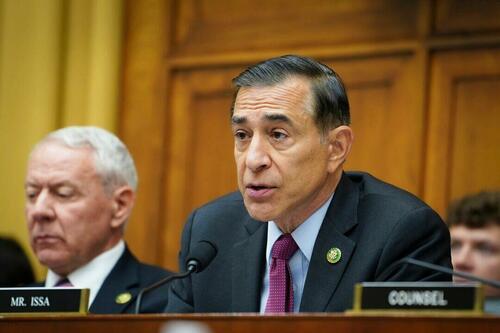
Rep. Darrell Issa (R-Calif.) said he will not seek reelection in his southern California district, which had been redrawn to favor Democrats in last year’s redistricting.
On March 6, the longtime congressman announced, shortly after the candidate filing deadline passed, that he would retire at the end of his term.
“This decision has been on my mind for a while, and I didn’t make it lightly,” Issa said in a statement announcing the end of his reelection bid.
Issa said he had built a strong campaign operation, enjoyed broad support, and believed polling showed he could win. But after roughly a quarter-century in Congress and another quarter-century in business, he said it was time “for a new chapter and new challenges.”
“First, we built the right campaign infrastructure, support has been overwhelming—including from President [Donald] Trump—and our polling was unmistakable: We would win this race. But after a quarter-century in Congress—and before that, a quarter-century in business—it’s the right time for a new chapter and new challenges.”
Issa endorsed San Diego County Supervisor Jim Desmond, a fellow Republican, to succeed him. Desmond filed paperwork on the morning of March 6 amid uncertainty over whether Issa might be dropping out of the race.
“He understands this community, was born and raised here, and will make a terrific Congressman,” Issa said of Desmond.
A former Army officer and tech entrepreneur, Issa was first elected to a San Diego-area House seat in 2000. He chaired the House Oversight and Government Reform Committee from 2011 to 2014, overseeing high-profile investigations during the Obama administration, including probes into the 2012 attack on the U.S. consulate in Benghazi, Libya, and “Operation Fast and Furious,” where ATF agents allowed illegal gun purchases in an effort to map Mexican cartel networks but lost track of many of the weapons.
Issa left Congress in 2018 after Trump, then in his first term, nominated him to head the U.S. Trade and Development Agency. Although his nomination never advanced in the Senate, he mounted a successful comeback in 2020, winning a seat that had remained safely Republican until the latest remapping shifted the partisan balance of his 48th District.
After the lines shifted, Issa briefly floated the idea of running in Texas, but later said he would stay, declaring he “wasn’t quitting on California.”
Several Democrats are already in the race for the now-bluer 48th District, including San Diego City Council member Marni von Wilpert and Navy veteran Ammar Campa-Najjar, and Democrats quickly framed Issa’s decision as a sign the seat is ripe for a flip.
“Issa abandoning his voters now is the clearest sign yet that Republicans know he can’t win,” Anna Elsasser, spokesperson for the Democratic Congressional Campaign Committee, said in a statement. “Any Republican who tries to parachute into this race with the same extreme agenda will face the same fate.”
Republicans, meanwhile, praised Issa’s tenure and said they expect to remain competitive in the district even as the party defends a narrow House majority. Republicans currently hold a 218–214 edge in the chamber, with vacancies.
“We are grateful for Congressman Darrell Issa’s decades of dedicated service to the people of California and our nation,” a spokesperson for the National Republican Congressional Committee said in a statement to The Epoch Times. “We are optimistic that this district will continue to be represented by a Republican.”
Issa’s announcement capped a day of California election shake-up. Rep. Kevin Kiley, a two-term Republican, on March 6 filed to run in the 6th District as “no party preference,” citing frustration with congressional “hyper-partisanship” and gerrymandering.
“It is no secret I’ve been frustrated, at times disgusted, by the hyper-partisanship in Congress,” he said in a statement.
“In the last year, it’s led to the longest government shutdown in U.S. history, a massive increase in healthcare costs, and, of course, a pointless redistricting war. The epidemic of gerrymandering has spread from Texas to California to states all across the country. Both parties are complicit.”
Tyler Durden
Mon, 03/09/2026 – 05:00

El crudo supera los 115 dólares por barril mientras la guerra con Irán frena producción y envíos
Por ALEX VEIGA y ELAINE KURTENBACH
CHICAGO (AP) — Los precios del petróleo se dispararon cerca de los 120 dólares por barril antes de remitir el lunes a medida que se intensificaba la guerra de Irán. El conflicto, una amenaza para la producción y el transporte marítimo en Oriente Medio, ha golpeado a los mercados financieros.
El precio de un barril de crudo Brent, el referente internacional, subió hasta 119,50 dólares por barril a primera hora del día, pero más tarde se negociaba a 106,23 dólares por barril.
El West Texas Intermediate, el crudo ligero y dulce producido en Estados Unidos, se disparó hasta 119,48 dólares por barril, pero retrocedió a 101,25 dólares.
El costo de la guerra sobre objetivos civiles iba en aumento. Bahréin acusó a Irán de atacar una planta desalinizadora vital para el suministro de agua potable, y depósitos de petróleo ardían en Teherán tras ataques nocturnos de Israel.
Los precios del petróleo han subido conforme la guerra, ya en su segunda semana, arrastra a países y lugares que son cruciales para la producción y el movimiento de petróleo y gas del golfo Pérsico.
Los precios se moderaron después de que el Financial Times informara que algunos miembros del Grupo de los Siete países industrializados estaban considerando liberar crudo de reservas estratégicas para aliviar la presión sobre los mercados. El reporte, no confirmado, citó a personas no identificadas familiarizadas con las conversaciones.
Aproximadamente 15 millones de barriles de crudo —cerca del 20% del petróleo mundial— suelen transportarse cada día a través del estrecho de Ormuz, según la firma independiente de investigación Rystad Energy. La amenaza de ataques iraníes con misiles y drones prácticamente ha detenido a los petroleros que atraviesan el estrecho, que limita al norte con Irán, y que transportan petróleo y gas desde Arabia Saudí, Kuwait, Irak, Qatar, Bahrein, Emiratos Árabes Unidos e Irán.
Irak, Kuwait y Emiratos Árabes Unidos han recortado su producción de petróleo a medida que los tanques de almacenamiento se llenan debido a la menor capacidad para exportar crudo. Irán, Israel y Estados Unidos también han atacado instalaciones de petróleo y gas desde que comenzó la guerra, lo que agrava las preocupaciones sobre el suministro.
El aumento de los costos del petróleo y el gas natural está empujando al alza los precios de los combustibles, con efectos en cadena sobre otras industrias y sacudiendo a las economías asiáticas, especialmente vulnerables debido a la fuerte dependencia de la región de las importaciones procedentes de Oriente Medio.
La última vez que los futuros del Brent y del crudo estadounidense se negociaron cerca del nivel actual fue en 2022, después de que Rusia invadiera Ucrania.
Los mayores costos de la energía elevan la inflación, presionan los presupuestos de los hogares y merman el gasto de los consumidores, que es un motor principal de muchas grandes economías.
El índice de referencia Nikkei 225 de Tokio perdió 5,2% el lunes, mientras otros mercados también se tambaleaban. Los futuros en Estados Unidos bajaban más de 1,5%.
El viernes, el S&P 500 cayó 1,3% y el Dow se desplomó hasta 945 puntos antes de cerrar con una pérdida de aproximadamente 450. El compuesto Nasdaq se hundió un 1,6%.
En Estados Unidos, un galón de gasolina regular subió a 3,45 dólares el domingo, unos 47 centavos más que una semana antes, según la asociación automovilística AAA. El diésel se vendía a unos 4,60 dólares por galón, un aumento semanal de unos 83 centavos.
El secretario de Energía, Chris Wright, dijo en el pograma “State of the Union” de CNN que los precios de la gasolina en Estados Unidos volverían a estar por debajo de 3 dólares por galón “dentro de no mucho”.
“Mire, nunca se sabe exactamente el plazo de esto, pero, en el peor de los casos, esto es cuestión de semanas, no de meses”, añadió Wright.
Si los precios del petróleo se mantienen por encima de 100 dólares por barril, algunos analistas e inversionistas señalan que podría ser demasiado para que la economía mundial lo soporte.
Las autoridades iraníes informaron que ataques de Israel contra depósitos de petróleo en Teherán y una terminal de transferencia de petróleo a primera hora del domingo mataron a cuatro personas. El ejército de Israel indicó que los depósitos estaban siendo utilizados por las fuerzas armadas iraníes como combustible para lanzar misiles. Mohammad Bagher Qalibaf, presidente del Parlamento iraní, advirtió que el impacto de la guerra sobre la industria petrolera se dispararía.
Irán exporta aproximadamente 1,6 millones de barriles de petróleo al día, en su mayoría a China, que podría necesitar buscar suministro en otros lugares si se interrumpen las exportaciones iraníes, otro factor que podría aumentar los precios de la energía.
El precio del gas natural también ha subido durante la guerra, aunque no tanto como el del petróleo. Se vendía a unos 3,33 dólares por 1.000 pies cúbicos a última hora del domingo. Eso es 4,6% más que su precio de cierre del viernes, de 3,19 dólares, después de subir alrededor de 11% la semana pasada.
___
Esta historia ha sido corregida para indicar que los ataques de Israel y Estados Unidos contra Irán comenzaron el 28 de febrero, no el 1 de marzo.
___
Kurtenbach contribuyó desde Bangkok.

India To US: We Don’t Need Permission To Buy Russian Oil
India To US: We Don’t Need Permission To Buy Russian Oil
India has really been walking a careful geopolitical tight-rope, wanting keep relations on good terms with the Trump administration, but also wanting to defend its energy sovereignty and decision-making.
On Saturday the government issued a somewhat surprisingly feisty statement, in terms of its tone, after the United States just granted a sanctions waiver that allows for Russian oil shipments currently stranded at sea to be unloaded to Indian buyers.
India’s Press Information Bureau wants the world to know New Delhi was never dependent on “a short-term waiver” to buy Russian oil.
This is clearly a bit of a loud brush-off to Washington, and Moscow is certainly going to welcome it:
“India has never depended on permission from any country to buy Russian oil,” the government said in a statement.
And further, as the AFP also reports, the New Delhi statement reminded the West: “India is still importing Russian oil even in February 2026, and Russia is still India’s largest crude oil supplier.”
Meanwhile in Washington US Treasury Secretary Scott Bessent has clearly indicated the Trump administration is considering lifting sanctions on more Russian oil.
As a reminder of the initial huge Thurs-Fri complete U-turn, coming months after Trump slapped tariffs on Indian goods in a bid to pressure Prime Minister Narendra Modi’s government to abandon energy purchases from Russia, which of course India never did…
“To enable oil to keep flowing into the global market, the Treasury Department is issuing a temporary 30-day waiver to allow Indian refiners to purchase Russian oil,” US Treasury Secretary Scott Bessent said in a post on X. “This deliberately short-term measure will not provide significant financial benefit to the Russian government as it only authorizes transactions involving oil already stranded at sea.”
Since China gets about 45% of its oil from the Strait, should Iran agree to allowing Chinese ships through, and should Russia be able to fully supply India’s needs, and if Saudi Arabia can reroute as much as 7 million bbl/d from the gulf to Yangbu via the East-West pipeline, as we touched upon earlier…and suddenly the Hormuz blockade will seem far less ominous, as most of the oil blocked finds alternative ways to continue on its way to its final destination.
Tyler Durden
Mon, 03/09/2026 – 04:15
https://www.zerohedge.com/energy/india-us-we-dont-need-permission-buy-russian-oil