Category: News
Human Rights Watch acusa a Israel de usar fósforo blanco en una localidad del sur de Líbano
Associated Press
BEIRUT (AP) — El grupo de derechos humanos Human Rights Watch afirmó en un informe publicado el lunes que el ejército israelí atacó una aldea del sur de Líbano “de forma ilegal” con proyectiles que contenían fósforo blanco, una controvertida munición incendiaria.
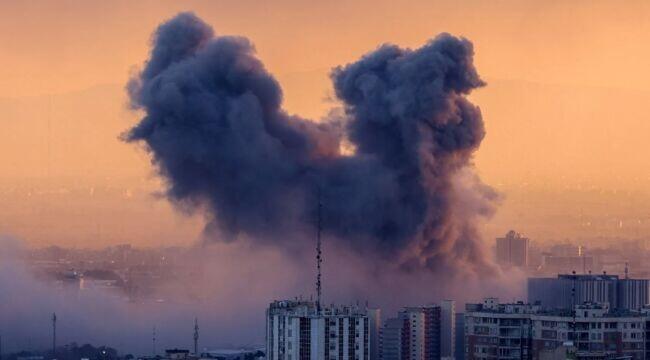
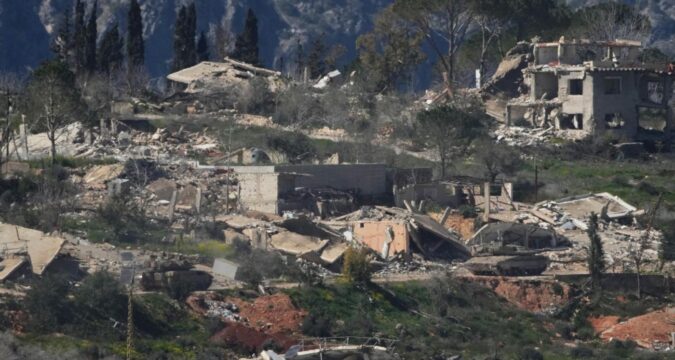
Human Rights Watch dijo haber determinado, mediante la geolocalización y verificación de siete imágenes, que Israel disparó fósforo blanco con artillería contra zonas residenciales en la aldea libanesa de Yohmor, en el sur del país. Ocurrió horas después de que el ejército israelí advirtiera a los residentes de la aldea y de decenas de otras localidades del sur de Líbano que evacuaran.
Human Rights Watch señaló que no pudo determinar de manera independiente si aún había residentes en la zona o si alguien resultó herido.
El ejército israelí no respondió de inmediato a una solicitud de comentarios. En el pasado, ha sostenido que utiliza fósforo blanco como cortina de humo y no para atacar a civiles.
Defensores de los derechos humanos afirman que el uso de fósforo blanco es ilegal según el derecho internacional cuando la sustancia química, al rojo vivo, se dispara contra zonas pobladas. Puede incendiar edificios y quemar la carne humana hasta el hueso. Los sobrevivientes corren riesgo de infecciones y de insuficiencia orgánica o respiratoria, incluso si las quemaduras son pequeñas.
“El uso ilegal de fósforo blanco por parte del ejército israelí sobre zonas residenciales es extremadamente alarmante y tendrá consecuencias nefastas para los civiles”, afirmó Ramzi Kaiss, investigador sobre Líbano en Human Rights Watch.
Organizaciones como Human Rights Watch y Amnistía Internacional afirmaron que la munición se utilizó en numerosas ocasiones en el sur de Líbano durante la última guerra de Israel con Hezbollah, hace más de un año, cuando aún había civiles presentes.
___
Esta historia fue traducida del inglés por un editor de AP con la ayuda de una herramienta de inteligencia artificial generativa.

Hungary Detains Ukrainians Transporting 10s Of Millions In Cash & Gold
Hungary Detains Ukrainians Transporting 10s Of Millions In Cash & Gold
Authored by Thomas Brooke via REMIX,
Hungarian authorities have detained seven Ukrainian citizens and seized tens of millions of dollars, euros, and gold that were being transported through the country in armored vehicles, triggering the latest diplomatic dispute between Budapest and Kyiv.
Hungary’s National Tax and Customs Administration (NAV) confirmed on Friday that criminal proceedings had been launched on suspicion of money laundering following an operation carried out on March 5. Authorities intercepted two armored cash-transport vehicles traveling through Hungary from Austria toward Ukraine.
According to the Hungarian authorities, the vehicles were carrying approximately $40 million, €35 million in cash, and 9 kilograms of gold.
Hungarian Foreign Minister Péter Szijjártó said the case raised serious questions about the movement of large quantities of physical cash through the country.
“Since January, a total of $900 million and €420 million in cash has been transported through Hungary, and 146 kilograms of gold bars have also been transported through the country,” he said, as cited by Magyar Hírlap.
“We have a number of serious questions about this. First of all, this is a huge amount of cash, and we wonder why Ukrainians need to transport such a large amount of cash. If it is true that this is a transaction between banks, then the question rightly arises as to why the banks do not settle this between themselves by bank transfer, why it is necessary to transport such a large amount of cash, and why it has to be transported through Hungary,” Szijjártó added.
“These questions arise mainly because these cash shipments are accompanied by people who have clear ties to Ukrainian secret services.”
🇭🇺Hungary confirms detaining seven people in an alleged money-laundering probe.
Authorities say the case involves $40m, €35m and 9 kg of gold.
🤡 Kiev calls it “hostage-taking.” Western media repeat it. Funny how anti-Orbán headlines appear just weeks before Hungary’s… pic.twitter.com/AkTHHsMbrA
— The Center (@alapjogokert) March 6, 2026
Hungarian Prime Minister Viktor Orbán’s political director, Balázs Orbán, also commented on the case, raising concerns about the purpose of the funds.
“Hundreds of millions in cash and gold moving through Hungary toward Ukraine — escorted by people linked to Ukrainian intelligence. Armored vehicles, suitcases full of money, staggering sums,” he wrote on X.
‼️💵 💰 Hundreds of millions in cash and gold moving through 🇭🇺 Hungary toward Ukraine — escorted by people linked to Ukrainian intelligence. Armored vehicles, suitcases full of money, staggering sums.
⁉️ Whose money is this? What was it meant to finance? Who benefits from it?… pic.twitter.com/I9Mu1X2g46
— Balázs Orbán (@BalazsOrban_HU) March 6, 2026
“Whose money is this? What was it meant to finance? Who benefits from it? And why must such enormous amounts of cash travel across our country instead of being transferred through normal banking channels?”
He added that authorities would conduct a full investigation and argued that the Hungarian public had a right to know where such funds were coming from and what they were intended for.
Ukraine, however, has strongly rejected the allegations and accused Hungary of illegally detaining its citizens and confiscating bank property.
Ukrainian Foreign Minister Andrii Sybiha said the seven individuals were employees of the state-owned Oschadbank who were conducting a routine cash transfer between financial institutions.
“Today in Budapest, Hungarian authorities took seven Ukrainian citizens hostage. The reasons are still unknown, as well as their current well-being, or the possibility of contacting them,” Sybiha said in a social media post cited by Ukrinform.
If they were going Vienna-Kyiv they were taking the scenic route. Typically you’d drive through Poland. 🇭🇺🇺🇦🤔 https://t.co/ylPBfg5e0G pic.twitter.com/CqMj7LWeob
— Philip Pilkington (@philippilk) March 6, 2026
According to Kyiv, the vehicles were transporting currency and precious metals between Raiffeisen Bank Austria and Oschadbank Ukraine as part of standard banking operations.
Sybiha accused Hungary of acting unlawfully. “If this is the ‘force’ announced earlier today by Mr. Orban, then this is the force of a criminal gang. This is state terrorism and racketeering,” he said.
Oschadbank also confirmed that two of its armored vehicles and a seven-member transport team had been detained in Hungary while carrying out what it described as a routine transfer of funds and banking metals.
“The value of the assets in the seized vehicles amounted to $40 million, EUR 35 million, and 9 kg of gold,” the bank said in a statement, adding that the transport had been documented in accordance with international banking and customs procedures.
According to GPS tracking data cited by the bank, the vehicles were last located in central Budapest near one of Hungary’s law enforcement agencies. Ukrainian officials said the whereabouts of the bank employees were not immediately known.
Ukraine’s foreign ministry has also issued a warning advising Ukrainian citizens to avoid traveling through Hungary following what it described as the “kidnapping” of the bank employees and seizure of state bank assets.
The incident marks the latest escalation in already strained relations between the two countries.
Zelensky issues dire threat to Hungarian PM Orbán if he continues to block €90 billion in loans to Ukraine.
“We hope this one person [Orban] in the EU will not block €90 billion aid. Otherwise, we will give this person’s address to our armed forces.”pic.twitter.com/ayoSJlDCEs
— Remix News & Views (@RMXnews) March 5, 2026
On Thursday, Ukrainian President Volodymyr Zelensky sparked outrage among European nationalist politicians by suggesting that Hungarian Prime Minister Viktor Orbán’s address could be given to Ukrainian armed forces so they could “speak to him in their own language.”
Hungarian officials interpreted the remark as a threat directed at Orbán amid ongoing disputes over Hungary’s opposition to a proposed €90 billion EU loan package for Ukraine.
Tyler Durden
Mon, 03/09/2026 – 03:30
https://www.zerohedge.com/political/hungary-detains-ukrainians-transporting-10s-millions-cash-gold

2026 primary day election results: Illinois State Senate District 9
Two Democrats appear on the ballot: Patrick Hanley and Rachel Ruttenberg. Republican Tom Lally is running unopposed.
Votes will be counted in contested races after polls close in Illinois at 7 p.m. See statewide election results here. Last minute questions about voting? View our voter guide.

Las acciones mundiales caen mientras la guerra de Irán eleva el crudo a más de 110 dólares el barril
Por ELAINE KURTENBACH
BANGKOK (AP) — El índice de referencia Nikkei 225 de Japón se desplomó más de un 5% y otros mercados asiáticos también cayeron el lunes después de que los precios del petróleo se dispararan hasta casi 120 dólares por barril, lo que proyectó una sombra sobre economías muy dependientes del crudo y el gas importados de la región.
Los futuros del S&P 500, del índice compuesto Nasdaq y del Promedio Industrial Dow Jones se negociaban con una baja de más del 1% tras haber caído más del 2% a última hora del domingo.
El enviado especial de China a Oriente Medio, Zhai Jun, pidió el fin de los ataques y afirmó que deben condenarse los golpes contra objetivos no militares y civiles. Mientras tanto, el presidente de Corea del Sur, Lee Jae Myung, advirtió contra el acaparamiento, las compras de pánico y la colusión entre refinerías y gasolineras.
“Por favor, respondan de manera proactiva a la creciente volatilidad en los mercados financieros y de divisas, que son el sustento de nuestra economía”, dijo Lee.
Los precios del petróleo se dispararon después de que ambas partes en la guerra atacaran nuevos objetivos durante el fin de semana, incluidos algunos civiles. Bahrein acusó a Irán de golpear una de las plantas desalinizadoras que son cruciales para el agua potable en los países del Golfo. Israel atacó depósitos de petróleo en Teherán, lo que provocó una densa columna de humo y activó alertas ambientales.
El Nikkei recuperó parte de sus pérdidas anteriores y terminó con una baja del 5,2%, hasta 52.728,72. El Kospi de Corea del Sur se hundió un 6%, hasta 5.251,87.
Los mercados chinos, que tienden a verse menos afectados por las tendencias globales, registraron pérdidas más moderadas. El Hang Seng de Hong Kong cayó un 1,6%, hasta 25.343,77, y el índice compuesto de Shanghái bajó un 0,7%, hasta 4.097,69.
El índice de referencia de Taiwán se desplomó un 4,4% y otros mercados regionales también se debilitaron.
A las 0600 GMT, el precio del barril de crudo Brent era de 103,54 dólares. El crudo de referencia de Estados Unidos subió a 107,35 dólares. Ambos estaban alrededor de un 15% por encima de sus precios de cierre del viernes.
Los precios del crudo han alcanzado sus niveles más altos en al menos 14 años, ya que la guerra, ahora en su segunda semana, arrastra a países y lugares que son críticos para la producción y el movimiento de petróleo y gas desde el Golfo Pérsico. La última vez que superaron los 100 dólares fue poco después de que Rusia invadiera Ucrania en 2022.
Stephen Innes, de SPI Asset Management, señaló en un comentario: “El mercado despertó con el sonido que todo operador macro teme. La campana de alarma del petróleo. Y esta vez no fue un timbre educado. Fue una sirena de incendio”.
El alza de los precios del petróleo y el gas, si persiste, podría propagarse por todo el mundo, complicando aún más la situación de países que todavía se ajustan a aranceles más altos sobre sus exportaciones a Estados Unidos bajo el presidente Donald Trump.
Altos funcionarios de países del Sudeste Asiático se reunían esta semana en Manila, Filipinas, donde se esperaba que debatieran formas de contrarrestar el impacto del aumento de los costos energéticos.
“Los precios del petróleo alcanzarán un pico en algún momento —quizá ya lo hayan hecho, quizá aún falte—, pero es probable que fluctúen en niveles elevados durante semanas, tal vez meses”, comentó Ipek Ozkardeskaya, de Swissquote. “Con el tiempo —incluso si la guerra persiste—, es probable que los precios de la energía bajen. Pero durante este periodo, los altos precios de la energía reavivarán la inflación a nivel mundial y pesarán de manera notable sobre el crecimiento”.
El S&P 500 cayó un 1,3% el viernes después de que un informe mostrara que los empleadores de Estados Unidos recortaron más empleos el mes pasado de los que crearon y después de que los precios del petróleo se dispararan por encima de 90 dólares por barril. La combinación de una economía débil y una inflación alta es el peor escenario para los inversionistas porque la Reserva Federal no tiene una buena herramienta para resolver ambos problemas al mismo tiempo.
El Dow llegó a desplomarse hasta 945 puntos antes de cerrar con una pérdida de 453, o 0,9%, y el índice compuesto Nasdaq se hundió un 1,6%.
A primera hora del lunes, el dólar de Estados Unidos, que mantiene su estatus de refugio seguro para los inversionistas que se preparan ante la incertidumbre, ganó frente a otras divisas importantes. Se negociaba a 158,46 yenes japoneses, frente a 158,09 yenes a última hora del viernes. El euro subió a 1,1558 dólares, frente a 1,1556.
___
La periodista de The Associated Press Kim Tong-hyung contribuyó desde Seúl, Corea del Sur.

The Kitchn: When I’m craving a Girl Scout Samoa, I make this easy dessert
Girl Scout cookie season is in full swing — and while I never was a Girl Scout myself, I definitely did partake in the cookies (Tagalongs, Thin Mints, and Samoas were my favorites). These coveted little treats are only available at certain times of the year, so you really have to stock up and savor them when the season strikes. However, with this recipe I recently came across on TikTok, waiting may no longer be an issue.
Related Articles
I eat these Buffalo cauliflower bites straight from the pan
This giant, oven-baked pancake is crispy, fluffy and impossible easy
Celebrate St. Patrick’s Day with a homemade Shamrock Shake
How to upgrade your dried dates
A simplier chicken pot pie
Yumna Jawad, better known as@feelgoodfoodie on social media, recently posted a recipe for her two-ingredient banana coconut cookies. While Jawad doesn’t explicitly mention Samoas, her cookies immediately reminded me of them. So naturally, I gave the recipe a go to see if they tasted anything like the beloved Girl Scout cookie. (A stretch, I know, but I was curious!)
How to make two-ingredient banana coconut cookies
To make these sweet treats, all you need are two ingredients: ripe bananas and unsweetened shredded coconut. (Although technically it’s three if you’re drizzling with chocolate chips.)
To start, mash two bananas in a bowl with a fork until completely soft. Add in two cups of shredded coconut, and mix with a fork until well-combined. Scoop out equally sized balls of the mixture onto a baking sheet lined with parchment paper.
Flatten them down a little if you want flatter cookies, or leave them domed if you want more rounded cookies. Bake for 12 to 13 minutes in a 350-degree oven, until the edges are lightly golden brown.
While the cookies are cooling, melt 1/2 cup of chocolate chips and drizzle it over each cookie. Refrigerate the cookies for 30 minutes until the chocolate is set, and dig in!
My honest review
These look pretty impressive, but were super easy to make. If you have just a few pantry ingredients on hand (I always have coconut and banana) then you can whip these up in no time. They taste pretty good too, with a similar chew and flavor to a macaroon.
The banana acts as a binder to provide some body and natural sweetness, while the coconut brings that classic tropical flavor and additional chew. The dark chocolate on top seals the deal and makes it a delicious little bite. I ate one straight out of the fridge (they’re best stored cold), and it reminded me of a Mounds candy bar, but with some extra banana flavor.
While it doesn’t taste exactly like a Samoa since its missing that signature caramel flavor, you still get a similar vibe (and of course, a more pronounced banana flavor). One cool thing about these is that they can be made vegan depending on what type of chocolate you use. If you’re craving a Girl Scout cookie and don’t want to wait to place an order, I’d say it’s a pretty good substitute.
Tips for making two-ingredient banana coconut cookies
Use brown bananas: For the most sweetness, be sure to use overripe, brown, or spotty bananas.
Amp up the toppings: To really give it that Samoa vibe, I’d suggest making a date caramel and spreading a layer of that over top before doing the chocolate drizzle. Dates naturally have a caramel-like flavor, so it would make a perfect addition!
(Alexandra Foster is an assistant editor for TheKitchn.com, a nationally known blog for people who love food and home cooking. Submit any comments or questions to editorial@thekitchn.com.)
©2026 Apartment Therapy. Distributed by Tribune Content Agency, LLC.
Al menos cinco muertos y varios desaparecidos en un deslizamiento en el mayor vertedero de Indonesia
Associated Press
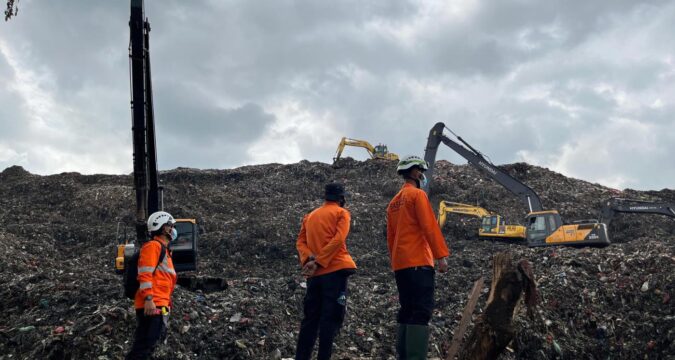
YAKARTA, Indonesia (AP) — Una enorme avalancha de basura en el mayor vertedero de Indonesia mató al menos a cinco personas y dejó a varias más desaparecidas después de que las fuertes lluvias durante la noche provocaran el colapso de un montón de residuos, informaron funcionarios el lunes.
Más de 300 efectivos de búsqueda y rescate, con el apoyo de maquinaria pesada y perros rastreadores, fueron desplegados en el extenso sitio del vertedero a última hora del domingo en la Instalación Integrada de Tratamiento de Residuos de Bantargebang, en Bekasi, una ciudad a las afueras de la capital, Yakarta. Los rescatistas trabajaban con cautela entre montículos inestables de desechos, señaló Desiana Kartika Bahari, quien dirige la Oficina de Búsqueda y Rescate de Yakarta.
Bahari indicó que entre las víctimas había dos conductores de camiones de basura y dos vendedores de puestos de comida que estaban trabajando o descansando cerca del vertedero, mientras que cuatro personas lograron escapar del desastre. Los rescatistas, incluidos policías, soldados y voluntarios, seguían buscando al menos a tres personas reportadas como desaparecidas, agregó.
“No hemos descartado la posibilidad de que haya más víctimas”, dijo Bahari. “Aún estamos recopilando datos para confirmar cuántos vehículos y trabajadores quedaron atrapados bajo los escombros”.
Fotos y videos difundidos por la Agencia Nacional de Búsqueda y Rescate mostraron excavadoras abriéndose paso entre el montículo derrumbado, donde varios camiones de basura y pequeños puestos de comida quedaron sepultados.
El portavoz de la Agencia Nacional de Gestión de Desastres, Abdul Muhari, instó a aplicar protocolos estrictos de seguridad durante la operación, y señaló que los pronósticos meteorológicos para los próximos dos días indican posibles lluvias en Yakarta y sus ciudades satélite cercanas.
Advirtió que el material derrumbado e inestable podría provocar movimientos adicionales del terreno, lo que pondría a los equipos de rescate en mayor riesgo.
El derrumbe mortal del domingo reavivó el escrutinio sobre Bantargebang, un vertedero crucial pero desbordado que recibe la mayor parte de los residuos domésticos diarios de la región de Yakarta. El sitio ha recibido advertencias reiteradas sobre su capacidad, lo que ha impulsado esfuerzos nacionales para reformar el sistema de gestión de residuos de Indonesia.
En enero, un derrumbe similar de basura y escombros sepultó o dejó atrapados a trabajadores en edificios de poca altura en un vertedero de Filipinas, lo que causó al menos cuatro muertos, una docena de heridos y dejó a más de 30 personas desaparecidas.
En 2005, 31 personas murieron y decenas desaparecieron después de que un depósito de basura de 7 metros (23 pies) se derrumbara tras fuertes lluvias, lo que desencadenó un deslizamiento de tierra que sepultó o dañó 60 viviendas en dos aldeas de Java Occidental cerca de la ciudad indonesia de Bandung.
A finales del año pasado, el gobierno anunció un plazo de dos años para despejar Bantargebang mediante un proyecto acelerado de conversión de residuos en energía, destinado a reducir la dependencia crónica del vertido a cielo abierto. La iniciativa, respaldada por una nueva regulación presidencial orientada a agilizar las licencias y fomentar la inversión, plantea convertir los desechos en energía eléctrica o térmica.
___
Esta historia fue traducida del inglés por un editor de AP con la ayuda de una herramienta de inteligencia artificial generativa.
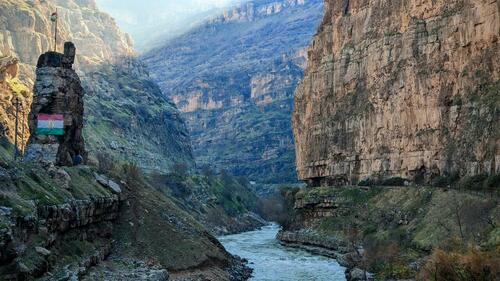
Kurds Do Not ‘Trust’ US To Use Them As Proxy Force Against Iran
Kurds Do Not ‘Trust’ US To Use Them As Proxy Force Against Iran
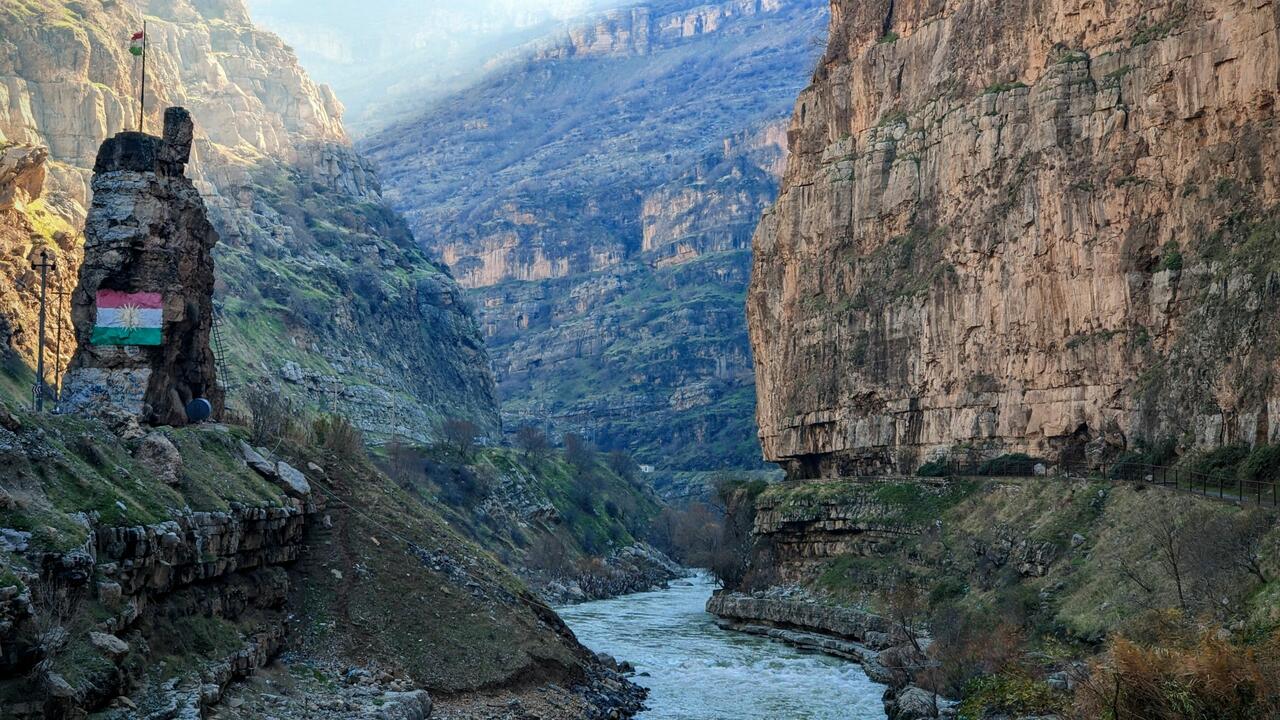
This should be obvious to any observer of Middle East history and US foreign policy over the last half-century, but a new Axios report cited Kurdish officials who say they don’t ‘trust’ the United States, especially in wake of recent reports suggesting the Kurds will be used as proxy ground forces against Iran.
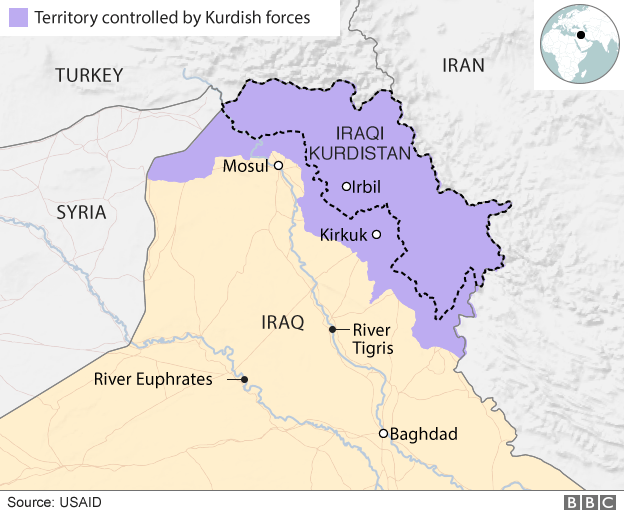
Iraq’s Kurds have already made clear they oppose joining the US-Israeli attacks on Iran and warn they could face severe Iranian retaliation without ground or air defense support, Axios reported Saturday.
An earlier CNN report claimed the CIA began working to arm Kurdish forces hostile to the Islamic Republic of Iran after the United States and Israel launched Operation Epic Fury.
Initially, President Trump openly voiced support for Kurdish involvement in the conflict but then soon reversed that position on Saturday.
“The Kurds must not be the tip of the spear in this conflict,” Axios reported, citing a senior official from the Kurdistan Regional Government (KRG), which is the semi-autonomous region in northeastern Iraq.
The Iraqi Kurds are “staying neutral” because “there is no clarity” on whether Washington seeks full regime change in Iran or only a “change in personnel” – the KRG official said. Trump has stated the United States will be involved in deciding who leads Iran in the future but has not explained how that would really work in the end. The war objectives have seemed to shift rapidly, especially when it comes to daily public facing White House interactions with reporters.
Some military analysts and Middle East pundits online recently attempted to count the number of times the Kurds were effectively “thrown under the bus” in their total history of working with Washington, and concluded that it’s been at least nine times.
The last ‘betrayal’ was merely months ago – when the Pentagon quickly withdrew from northern Syria and simply told the Kurdish-led Syrian Democratic Forces (SDF) to become integrated into the Syrian state and army. The only thing is the Jolani/Sharaa government and its HTS militants hate the Kurds.
The SDF had long battled against the Sunni hardliners now ruling from Damascus at this point. The US also regularly failed to step in over years of Turkish aerial bombardment of both Syrian and Iraqi Kurds.
As for the idea of some kind of proxy Kurdish invasion force to use against Iran – some see the idea as being destined for failure, given an Iranian nation of 90+ million with a powerful IRGC ruling military structure would likely feel it as merely a pinprick. It’s anything but certain that it would actually have an impact on leaders in Tehran. Instead, blowback would fall hardest on Kurdish communities across the region, and Shia militias in Iraq might get involved on the other side as well.
Currently, many Kurdish leaders are outraged that US officials ‘leaked’ the arm the Kurds plan, given it effectively puts a big target on every Iranian Kurds’ back in eyes of military leadership in Tehran.
Tyler Durden
Mon, 03/09/2026 – 02:45
https://www.zerohedge.com/geopolitical/kurds-do-not-trust-us-use-them-proxy-force-against-iran
La empresa petrolera estatal de Bahrein declara fuerza mayor en sus envíos tras ataque iraní a su única refinería
DUBÁI, Emiratos Árabes Unidos (AP) — La empresa petrolera estatal de Bahrein declara fuerza mayor en sus envíos tras ataque iraní a su única refinería.
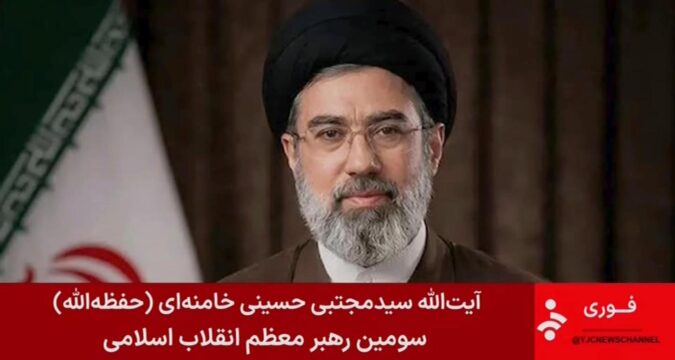
Irán nombra sucesor al hijo del exlíder supremo mientras la guerra dispara el precio del petróleo
Por JON GAMBRELL, DAVID RISING and SAMY MAGDY
DUBÁI, Emiratos Árabes Unidos (AP) — Mojtaba Jamenei, hijo del fallecido líder supremo de Irán, fue designado el lunes como el próximo gobernante de la República Islámica, lo que pone al frente a un clérigo de línea dura mientras la guerra que se extiende por Oriente Medio disparaba los precios del petróleo e Irán sigue atacando infraestructura energética regional.
Con la teocracia iraní bajo ataque de Estados Unidos e Israel desde hace más de una semana, la Asamblea de Expertos del país eligió al reclusivo clérigo de 56 años, con estrechos vínculos con la Guardia Revolucionaria, la fuerza paramilitar del país, como nuevo líder supremo. La Guardia ha estado disparando misiles y drones contra Israel y los estados árabes del Golfo desde que el padre del Jamenei más joven, el ayatolá Alí Jamenei, murió el 28 de febrero durante la primera andanada de la guerra.
El férreo control de Irán sobre el estrecho de Ormuz también ha frenado casi por completo el paso de petroleros por la ruta marítima entre el golfo Pérsico y el golfo de Omán, por donde se transporta una quinta parte del petróleo mundial. El crudo Brent, referencia internacional, se disparó a más de 114 dólares por barril el lunes, alrededor de un 60% más que cuando Israel y Estados Unidos atacaron por primera vez a Irán.
A medida que crecían las preocupaciones globales por el efecto económico, el presidente de Estados Unidos, Donald Trump, restó importancia al alza de los precios y la calificó de temporal.
“Los precios del petróleo a corto plazo, que bajarán rápidamente cuando termine la destrucción de la amenaza nuclear iraní, es un precio muy pequeño a pagar por la seguridad y la paz de Estados Unidos y del mundo”, escribió Trump en redes sociales.
Irán ha estado atacando a Israel y a bases estadounidenses en la región desde el inicio de la guerra, pero también ha estado lanzando misiles y drones contra infraestructura energética y de agua.
El lunes se provocó un incendio en una instalación petrolera atacada en Fuyaira, Emiratos Árabes Unidos, y Arabia Saudí dijo que había interceptado varios drones que atacaban el yacimiento petrolero de Shaybah.
Israel, mientras tanto, afirmó que haría nuevos bombardeos en el centro de Irán.
Nuevo líder iraní está considerado como aún más de línea dura que su padre
El Jamenei más joven, a quien no se había visto ni escuchado públicamente desde que comenzó la guerra, había sido considerado durante mucho tiempo un posible sucesor. Eso era así incluso antes de que el ataque israelí matara a su padre, y pese a que nunca fue elegido ni designado para un cargo gubernamental.
Parecía haber cierta disensión sobre su selección. Figuras políticas dentro de Irán criticaron la idea de entregar el título de líder supremo por herencia y, con ello, crear una versión clerical del gobierno del sha, derrocado durante la Revolución Islámica de 1979. Pero los principales clérigos de la Asamblea de Expertos probablemente querían que Jamenei llevara adelante la guerra.
Jamenei, de quien se cree que apoya posturas aún más duras que las de su difunto padre, ahora estará al mando de las fuerzas armadas de Irán y de cualquier decisión relacionada con el programa nuclear de Teherán.
Aunque los principales sitios nucleares del país están en ruinas después de que Estados Unidos los bombardeara durante la guerra Israel-Irán de 12 días en junio, todavía hay uranio altamente enriquecido en Irán que está a un paso técnico de alcanzar niveles aptos para armas. Jamenei podría optar por hacer lo que su padre nunca hizo: construir una bomba nuclear.
Israel ya lo ha descrito como un posible objetivo, mientras que Trump lo había calificado de “inaceptable”.
“Queremos a alguien que lleve armonía y paz a Irán”, había dicho Trump.
La Guardia Revolucionaria de Irán emitió un comunicado en el que expresó su apoyo, al igual que el grupo político y militar libanés Hezbollah, respaldado por Irán.
El alto funcionario de seguridad iraní Alí Larijani, en declaraciones a la televisión estatal iraní, elogió a la Asamblea de Expertos por reunirse “valientemente” incluso mientras continuaban los ataques aéreos en Teherán. Señaló que el Jamenei más joven fue entrenado por su padre y que “puede manejar esta situación”.
Crece la indignación regional entre ataques a infraestructura energética y precios disparados
Arabia Saudí arremetió contra Irán tras frustrar un ataque con drones contra su enorme yacimiento petrolero de Shaybah, y afirmó que Teherán sería el “mayor perdedor” si continúa atacando a los estados árabes.
El Ministerio de Exteriores dijo que los ataques iraníes implican “una mayor escalada que tendrá un grave impacto en las relaciones, actualmente y en el futuro”.
Además de atacar instalaciones energéticas también en Emiratos Árabes Unidos, Irán atacó el lunes a Kuwait, Qatar y Bahrein, donde impactó en una zona residencial e hirió a 32 personas, incluidos varios niños, según las autoridades.
Bahrein también ha acusado a Irán de dañar una de sus plantas desalinizadoras, aunque su autoridad de electricidad y agua dijo que el suministro seguía en funcionamiento. Las plantas desalinizadoras abastecen de agua a millones de residentes en la región y a miles de viajeros varados, lo que aviva nuevos temores de riesgos catastróficos en naciones desérticas y áridas.
En Irak, las defensas aéreas derribaron un dron mientras atacaba un complejo militar estadounidense dentro del Aeropuerto Internacional de Bagdad, dijo a AP una fuente de seguridad bajo condición de anonimato porque no estaba autorizada a hablar con la prensa.
No se reportaron heridos ni daños y no estaba claro de inmediato quién estaba detrás del ataque, pero milicias iraquíes proiraníes han atacado la base anteriormente.
En otros lugares, el ejército de Estados Unidos había informado que un miembro del servicio murió por heridas derivadas de un ataque iraní contra tropas en Arabia Saudí el 1 de marzo. Ya han muerto siete soldados estadounidenses.
El Departamento de Estado de Estados Unidos ordenó a primera hora del lunes que el personal no esencial y las familias de todo el personal abandonaran Arabia Saudí tras la escalada de ataques.
Otras ocho misiones diplomáticas de Estados Unidos han ordenado que se retiren todos salvo el personal clave: Bahrein, Irak, Jordania, Kuwait, Líbano, Qatar, Emiratos Árabes Unidos y el consulado en Karachi, Pakistán.
La guerra ha matado al menos a 1.230 personas en Irán, al menos a 397 en Líbano y al menos a 11 en Israel, según funcionarios. Israel informó el domingo de las primeras muertes de soldados, al señalar que dos murieron en el sur de Líbano, donde su ejército combate contra Hezbollah.
___
Rising informó desde Bangkok y Magdy desde El Cairo. Los periodistas de The Associated Press Sam Metz en Ramala, Cisjordania; Aamer Madhani en Doral, Florida; y Qassem Abdul-Zahra en Bagdad contribuyeron con esta cobertura.
___
Esta historia fue traducida del inglés por un editor de AP con la ayuda de una herramienta de inteligencia artificial generativa.
Martyrdom, Maps, & Munitions: Jim Rickards’ Most Surprising Iran Takes
Martyrdom, Maps, & Munitions: Jim Rickards’ Most Surprising Iran Takes
Authored by Adam Shapr via DailyReckoning.com,
I’ve been a fan of Jim Rickards’ work for around 10 years.
He came onto my radar in 2016 when he predicted Donald Trump would win the election. I saw a clip of him saying the polls were crooked. And that turned out to be a great call.
Jim is never afraid to speak his mind. And his contrarian predictions have uncanny accuracy.
So I’ve been following Jim’s work on the Iran situation closely. Just today he put out a new Iran writeup with surprising, even disturbing ideas in it.
This is what Jim does. His research is sometimes unnerving, but it is always well thought out and logical.
Today, we’re going to cover a few key aspects of Jim’s new report and add context with maps and graphics.
Let’s get started…
Can Iran Wait it Out?
In a section titled, Can Iran Win?, Jim begins by acknowledging that the U.S. and Israeli forces have done far more damage thus far:
Notwithstanding Iran’s limited success in counterattacks, it’s clear that the U.S. and Israel have inflicted far more damage on Iran than Iran has inflicted on the region.
That asymmetric damage ratio will continue to grow. The U.S. and Israeli attacks will expand even as Iran’s capacity to strike back is being heavily degraded.
However, there are deeper considerations here. For example, while taking out the 86-year old Ayatollah Khamenei was satisfying to many, it also handed the Iranian regime a propaganda victory. Here’s Jim:
Martyrdom – The first point is that the deaths of Ayatollah Khamenei and many of the top leaders of Iran may not have been unwanted by them. This is something the Western mind can barely comprehend.
In Islam, martyrdom is considered a blessing from Allah. It guarantees the martyr a place in paradise.
Is it possible that Khamenei and other leaders gathered in one place intentionally knowing that they would eventually be hunted down and killed by the U.S. and Israel? Why not gather in one place and become martyrs together?
This idea of martyrdom applies to the successors and replacements of those killed on day one. Many of those successors have been killed also. To the secular West, this is counted as a military victory.
But to the theocratic Muslim, martyrdom is the victory. This process unites almost all of Iran in a celebration of Allah’s divine will. The more martyrs we create, the stronger Iran becomes as an Islamic Republic.
Again, this is hard for the Western secular mainstream to grasp, but killing their leaders is making Iran stronger. There’s an almost Nietzschean vibe for the Iranian survivors.
This is the type of analysis you won’t see on cable news. Martyrdom is a powerful force in the Islamic world, and there is a decent chance that Khamenei embraced the prospect of death. Even if this isn’t objectively true, what matters is how it is perceived by the world’s 230 million Shia Muslims. And they take this stuff very seriously.
The Ayatollah’s killing could lead to a more unified Iran, and even spread to neighboring Shia populations in Bahrain, Iraq, and beyond.
Challenging Topography
Jim goes on to describe how challenging a ground invasion would be due to Iran’s terrain:
The Terrain – Westerners also have little idea just how big Iran is. It’s the 17th largest country in the world by area out of 195 countries. It also has the 17th largest population in the world with 86 million people.
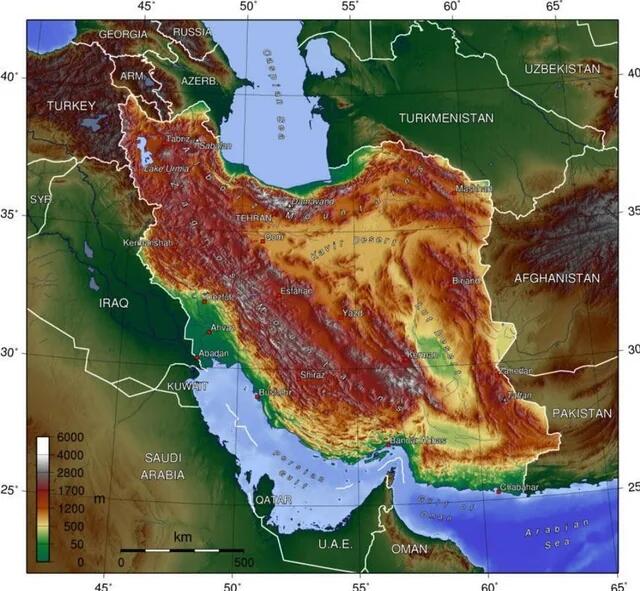
Iran is not a giant like India or Brazil, but it is far larger than Americans realize. The terrain is challenging with large mountain ranges and deserts. This is not a country ripe for a land invasion like Iraq or Syria.
Iran is far larger than Ukraine, which is still holding out against Russia after four years of war. Iran has what military strategists call strategic depth, which offers the ability to retreat without surrender. Iran isn’t going anywhere and it will not easily be subdued.
Here is a topographical map of the country. Note how mountainous Iran is compared to Iraq directly to the West.
Compared to Iran, Iraq is about as flat as Illinois. It would make an extremely challenging ground invasion. Still, President Trump is not ruling out the prospect of boots on the ground.
How Long Will U.S. and Israeli Munitions Last?
The next item Jim tackles is perhaps the most challenging. A looming shortage of key munitions.
A U.S. Munitions Problem – Most importantly, the U.S. and Israel are running low on offensive and defensive bombs and missiles. This is the result of the massive bombing attacks on Iran, the need to fire thousands of anti-missiles to shoot down thousands of incoming drones and missiles, the fact that the U.S. has allowed its military industrial capacity to atrophy, and the large number of weapons wasted in Ukraine.
The U.S. sent seven Patriot anti-missile batteries to Ukraine at about $1 billion each. All seven were destroyed by Russian hypersonic missiles. I’m certain the U.S. wishes it had those batteries today to protect U.S. bases and troops near Iran. The senile Biden and neocon warmongers may be to blame, but the damage is done.
The U.S. and Israel have inflicted enormous damage on Iran and will continue to do so in the short run. But within weeks, the magazines will run low, and the U.S. will be scrounging around in South Korea and Japan for replacements.
Good luck with that.
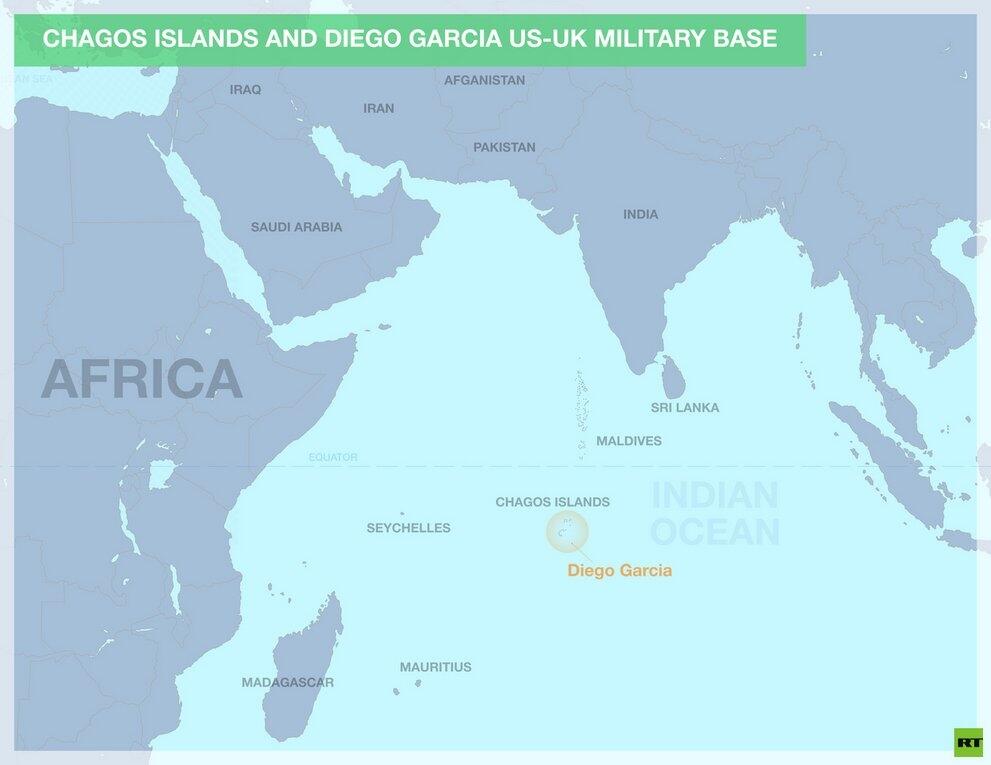
U.S. industrial output of 800 cruise missiles per year cannot keep up with Israel and the U.S. launching 100 per week. Ships need to reprovision. Repairs cannot be neglected. Diego Garcia is days away from the battlespace. The U.S. will be badly stretched.
So Jim estimates that America produces around 800 cruise missiles per year. And we’re currently launching about 100 per week. Maybe more. Not great. There are stockpiles, of course, but those are supposed to be for emergency use only. Does this qualify?
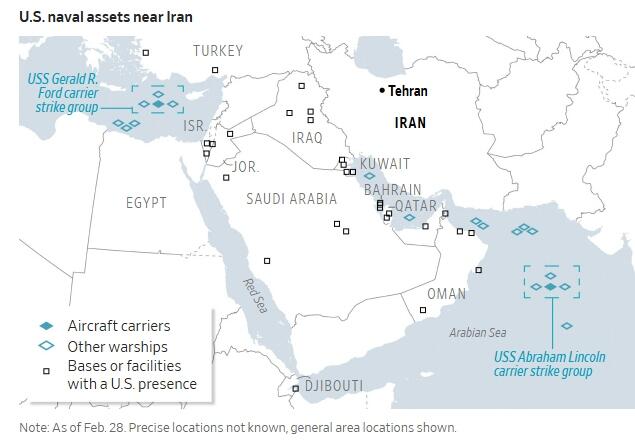
Additionally, many U.S. bases close to Iran have been hit by Iranian missiles and drones and have essentially been abandoned. Fortunately U.S. soldiers are largely out of the line of fire. But it also makes refueling and re-arming challenging.
Here’s a map, via the Wall Street Journal, showing the approximate positions of U.S. bases and naval assets in theater:
Source: WSJ
(Note: Since this map was published, the U.S.S. Gerald Ford carrier strike group has moved through the Suez Canal into the Red Sea, likely headed to the Arabian Sea.)
To refuel, re-arm, and repair, The U.S.S. Abraham Lincoln carrier strike group would normally go to Bahrain or another nearby base. But those bases have been hit hard. So now they will likely have to go to Diego Garcia, which is thousands of miles away. Here’s a map:
Source: RT
Jim closes his report with a note about the uncertain outcome of a war of attrition.
Iran has a united population; reports of internal protests are greatly exaggerated, especially after the ayatollah ordered the killing of 5,000 protestors just weeks ago.
It has a robust political system despite decapitation strikes. Drones are cheap and easy to manufacture. They can do just as much damage as an F-15 strike when targeted properly.
Iran has strategic depth, allies in Russia and China, and a strong survival instinct.
In a war of attrition, really a war for survival, victory goes to the last man standing.
That may be Iran.
This is why we read Jim Rickards. Smart contrarian takes you won’t hear on mainstream media.
In war, the number one mistake is to underestimate your opponent. We should be careful to heed this historic warning.
This war has the potential to escalate in unpredictable and dangerous ways. Economically, geopolitically, and kinetically.
Tyler Durden
Mon, 03/09/2026 – 02:00