Category: News
Where things stand after another weekend of war
Iran has named a son of its late supreme leader as his successor. U.S. President Donald Trump already had expressed disdain for Mojtaba Khamenei, calling him “unacceptable.” The Islamic Republic’s war strategy now has a new commander, and the powerful paramilitary Revolutionary Guard has pledged allegiance.
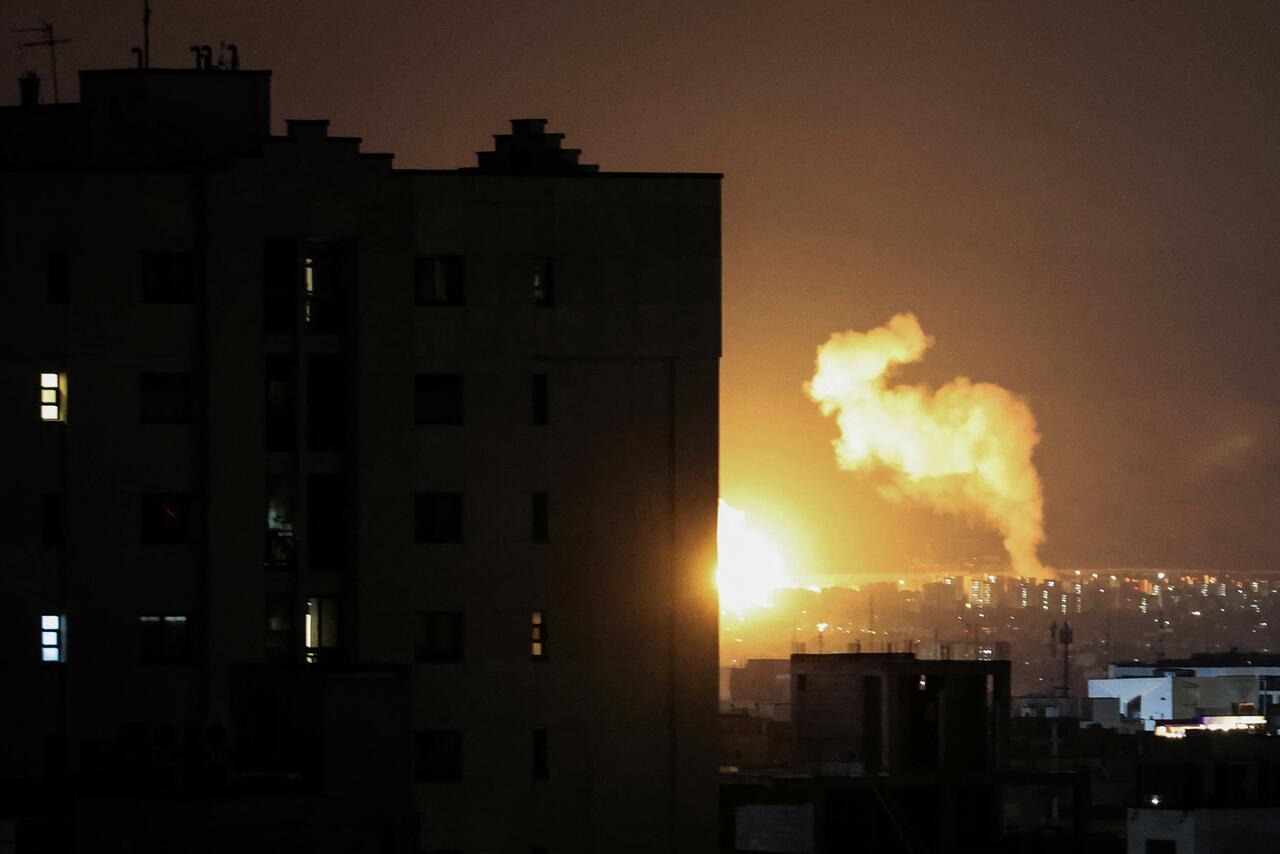
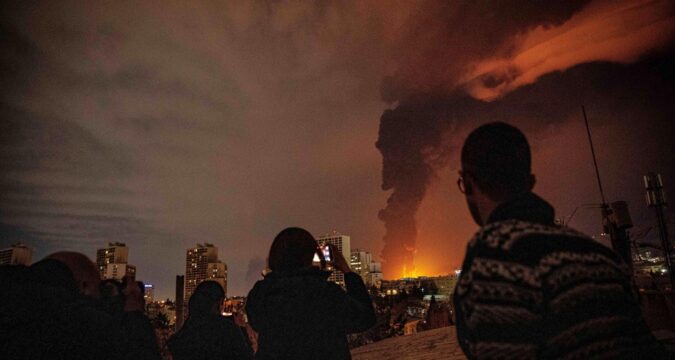
Oil prices shot above $100 a barrel. Both sides in the war struck new targets over the weekend, including civilian ones. Bahrain accused Iran of hitting one of the desalination plants that are crucial for drinking water in Gulf countries. Israel struck oil depots in Tehran, sending up thick smoke and causing environmental alerts.
The U.S. announced another soldier’s death. Saudi Arabia announced the first deaths there. Anger grew in Arab countries over Iran’s launching of hundreds of missiles and drones around the region. The Israeli military’s chief of staff warned that the war “will take a long time.”
Iran names Khamenei’s son to succeed him, signaling no letup in war as oil prices surge
Here’s where things stand as the war enters its 10th day.
Iran
Iran’s announcement of a new supreme leader came after the country’s remaining leadership appeared to show a rift. President Masoud Pezeshkian apologized for attacks on neighboring countries, but hard-liners criticized that and said the war strategy would continue.
The new supreme leader had not been seen or heard from publicly since the war began. He has not made a statement in his new role. The younger Khamenei inherits both the war and domestic unrest after Iran earlier this year cracked down on some of its largest protests in half a century.
Iran did not publicly update its death toll over the weekend from the over 1,200 previously reported. More Iranians fled the country.
Israel
Israel attacked both Iran and the Iranian-backed Hezbollah militant group in neighboring Lebanon, where authorities say over a half-million people have been displaced and over 300 killed.
Prime Minister Benjamin Netanyahu vowed “many surprises” in the next phase of the war. Israel said it destroyed the headquarters of the Revolutionary Guard Air Force, which operated the ballistic missile command, and struck ballistic missile launchers and missile production facilities.
Eleven people have died in Israel since the war began. Multiple alerts continued to sound per day across Israel about incoming projectiles, almost all of them intercepted.
United States
The U.S. military warned Iranians to stay indoors, asserting that Iran was launching attacks from densely populated areas. Evidence mounted indicating that the U.S. was behind the deadly strike on a girls’ school in Iran on the first day of the war, but Trump suggested Iran was to blame.
Trump also attended the return of the remains of U.S. soldiers killed in the war. Seven have been killed.
Families of U.S. detainees in Iran worried their loved ones are at risk.
The U.S. military did not give an update over the weekend on the number of missiles and drones that Iran has fired in recent days, after saying the rate had gone down sharply. Experts said it’s possible that Iran is holding back some missiles in reserve.
Middle East
The head of the Arab League called Iran’s war strategy “reckless” as Gulf and other nations reported intercepting Iranian missiles and drones in areas of their countries with no U.S. military presence.
No country other than the U.S. and Israel has said it is attacking Iran. Some countries in the region host U.S. military facilities or troops. Iran has urged countries not to allow the U.S. to attack it from their territories. A missile hit a helicopter landing pad in the U.S. Embassy complex in Iraq.
More deaths were reported. Saudi Arabia said a falling military projectile killed two people from Bangladesh. Kuwait said two border guards were killed, and the United Arab Emirates reported a driver killed.
Foreign residents and workers have made up most of the reported deaths in the Gulf. Over a dozen people have been killed there in all.
Globally
The U.S. sought to assure Americans that surging fuel prices are a short-term problem. Russia is profiting from the surge.
Many travelers and pilgrims remain stranded in the Middle East. The U.S. State Department said over 32,000 Americans have left the region since the war began.
Nervousness remained around some of the world’s busiest air hubs. Passengers waiting for flights at Dubai International Airport were ushered into train tunnels after several blasts were heard. Kuwait said fuel tanks at Kuwait International Airport were targeted by drones.
More states are becoming involved. Ukrainian President Volodymyr Zelenskyy said his country will send experts to advise the U.S. and Middle Eastern allies on repelling Iranian drone attacks next week.
https://www.chicagotribune.com/2026/03/09/iran-war-where-things-stand/

Wall Street follows global markets lower as Iran war briefly pushes crude prices near $120 a barrel
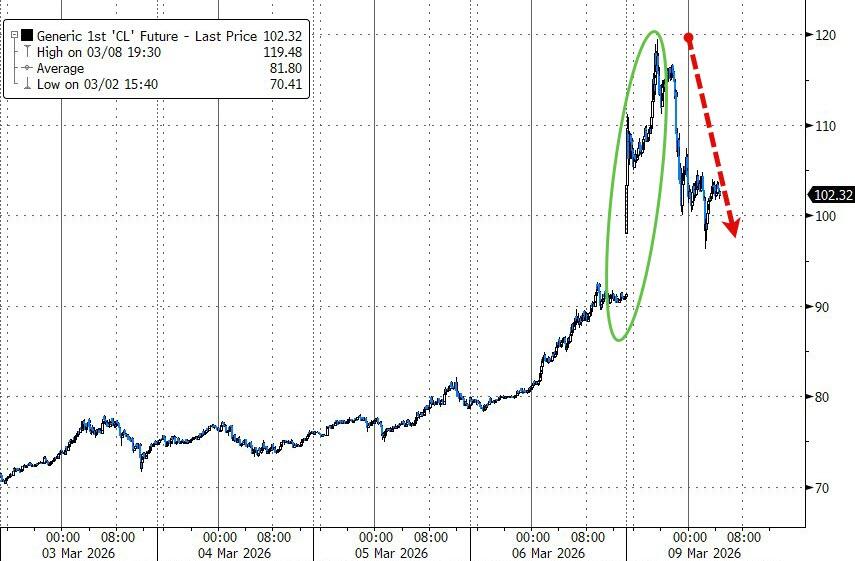
Wall Street futures followed global markets lower early Monday and oil prices briefly spiked to nearly $120 per barrel as the Iran war intensified, threatening production and shipping in the Middle East.
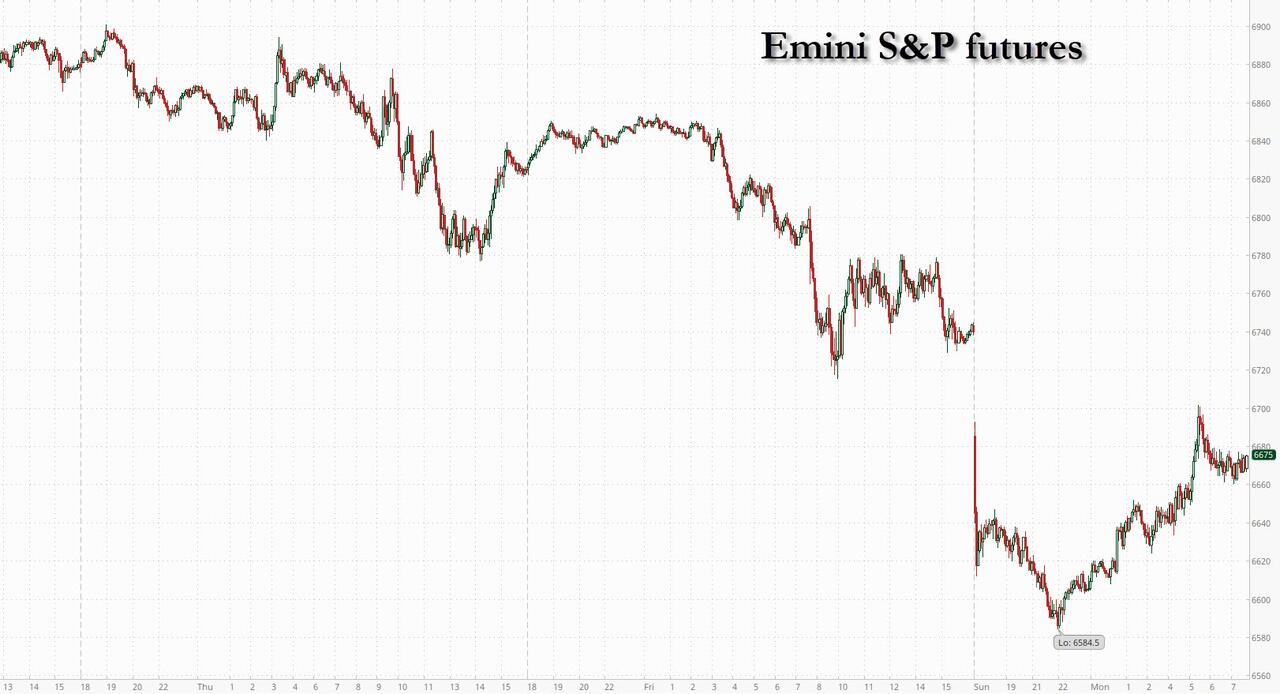
Futures for the S&P 500, Nasdaq and Dow Jones Industrial Average all fell more than 1% before the opening bell after retreating more than 2% late Sunday.
Global markets also took a beating, with Japan’s benchmark Nikkei 225 index plunging more than 5% and markets across Europe losing between 2% and 3%.
Where things stand after another weekend of war
Shares of major U.S. airlines continued their descent as spiking fuel prices are projected to eat into their profits. Delta, American and United all fell more than 3% in premarket trading, adding to what was already double-digit losses since the U.S. and Israel launched their attack on Iran more than a week ago.
“The market woke up to the sound every macro trader dreads. The oil alarm bell. And this time it was not a polite chime. It was a fire siren,” Stephen Innes of SPI Asset Management said in a commentary.
Surging oil and gas prices, if they persist, could ripple across the globe, further complicating matters for countries still adjusting to higher tariffs on exports to the United States under President Donald Trump.
As of 7:45 a.m. EDT, the price for a barrel of Brent crude was $104.94 a barrel. U.S. benchmark crude was trading at $103.27. Both were more than 13% above their closing prices Friday.
Senior officials of Southeast Asian countries were meeting this week in Manila, the Philippines, where they were expected to discuss ways to counter the shock from higher energy costs.
“Oil prices will reach a peak at some point –- maybe they already have, maybe there’s more to come -– but they are likely to fluctuate at elevated levels for weeks, perhaps months,” Ipek Ozkardeskaya of Swissquote said in a commentary. “Eventually -– even if the war persists –- energy prices will likely come down. But during this period, high energy prices will revive inflation globally and weigh notably on growth.”
The last time oil rose above $100 a barrel was shortly after Russia invaded Ukraine in 2022.
The Iran war, now in its second week, has ensnared countries and places that are critical to the production and movement of oil and gas from the Persian Gulf.
A Chinese special envoy to the Middle East, Zhai Jun, called for an end to the attacks and said strikes on non-military targets and civilians should be condemned. Meanwhile, South Korean President Lee Jae Myung warned against hoarding, panic buying and collusion between refiners and gas stations.
“Please respond proactively to the growing volatility in the financial and foreign exchange markets, which are the lifeblood of our economy,” Lee said. He said the government would cap fuel prices.
Both sides in the war struck new targets over the weekend, including civilian ones. Bahrain accused Iran of hitting one of the desalination plants that are crucial for drinking water in Gulf countries. Its national oil company declared force majeure after the country’s sole oil refinery was attacked. Israel struck oil depots in Tehran, sending up thick smoke and causing environmental alerts.
At midday in Europe, Germany’s DAX dropped 2.6%, the CAC 40 in Paris lost 2.7% and Britain’s FTSE 100 was down 1.9%. The only market to show gains was in oil exporter Norway, where its benchmark edged 0.1% higher.
During Asian trading, Japan’s Nikkei 225 plunged more than 7% early in the day but regained some of those losses to close 5.2% lower at 52,728.72. South Korea’s Kospi sank 6% to 5,251.87.
Chinese markets, which tend to be less affected by global trends, saw more moderate losses. Hong Kong’s Hang Seng fell 1.4% to 25,408.46 and the Shanghai Composite index lost 0.7% to 4,096.60.
Taiwan’s benchmark dived 4.4% and India’s Sensex lost 2.3%. Other regional markets also swooned.
Early Monday, the U.S. dollar, which retains its status as a safe haven for investors bracing against uncertainty, gained against other major currencies. It was trading at 158.45 Japanese yen, up from 158.09 yen late Friday. The euro rose to $1.1563, up from $1.1556.
https://www.chicagotribune.com/2026/03/09/wall-street-iran-oil/

Iran names Khamenei’s son to succeed him, signaling no letup in war as oil prices surge
DUBAI, United Arab Emirates — Iran named the hard-line Ayatollah Mojtaba Khamenei to succeed his late father as supreme leader on Monday, signaling no letup in the war launched by the United States and Israel. Oil prices surged as Iran attacked regional energy infrastructure and the U.S. and Israel bombed targets across Iran.
The secretive 56-year-old cleric has close ties to the paramilitary Revolutionary Guard, which has been firing missiles and drones at Israel and Gulf Arab states since Ayatollah Ali Khamenei, who had ruled Iran for 37 years, was killed during the war’s opening salvo.
The appointment marked a new sign of defiance by Iran’s embattled leadership after more than a week of heavy U.S. and Israeli bombardment, suggesting Tehran is not close to giving up on what it considers a fight for the Islamic theocracy’s survival.
World markets plummeted and Brent crude oil, the international standard, surged to nearly $120 a barrel Monday, about 65% higher than when the war started, before retreating.
Iran’s attacks in the Strait of Hormuz have all but stopped tankers from using the key shipping lane through which a fifth of the world’s oil is carried. Fire broke out at an oil facility that Iran attacked in the United Arab Emirates. Bahrain’s only oil refinery was apparently also hit and Saudi Arabia said it had intercepted several drones attacking its Shaybah oil field.
“There is not an oil shortage,” U.S. President Donald Trump wrote on Truth Social overnight. “Prices will drop again soon,” he added, suggesting shipments from Venezuela to the U.S. could help offset the price spike.
In Israel, sirens blared multiple times on Monday amid unrelenting Iranian drones and missiles. A man was killed in central Israel in a missile strike, the first such death in Israel in a week, and a woman was wounded.
Israel said it struck the Iranian city of Isfahan, hitting command centers for the Revolutionary Guard and its volunteer Basij force, as well as a rocket engine production facility and missile launch sites. There was no immediate confirmation from Iran.
Turkey meanwhile said NATO defenses had intercepted a ballistic missile that entered the country’s airspace for the second time since the war started.
Later Monday, Israel defense forces said they began “a wide-scale wave of strikes” on Isfahan as well as Iran’s capital, Tehran, where witnesses reported seeing new strikes, and in southern Iran.
New Iranian leader seen as more hard-line than his father
The younger Khamenei, who has not been seen in public since the war started, was long considered a potential successor — even before the Israeli strike killed his 86-year-old father. His wife, Zahra Haddad Adel, was killed in the same strike.
Political figures within Iran have criticized handing over the supreme leader’s title based on heredity, comparing it to the monarchy overthrown in the 1979 Islamic Revolution. But top clerics in the Assembly of Experts apparently voted for continuity.
Khamenei, who is seen as even more hard-line than his late father, will now be in charge of Iran’s armed forces and any decision about Tehran’s nuclear program.
Though Iran’s key nuclear sites are in tatters after the U.S. bombed them during the 12-day Israel-Iran war in June, it still has highly enriched uranium that’s a technical step away from weapons-grade levels. Khamenei could choose to do what his father never did — build a nuclear bomb.
Israel has already described him as a potential target, while Trump has called him “unacceptable” and dismissed him as a “lightweight.”
Both the Revolutionary Guard and the Iran-backed Lebanese militant group Hezbollah issued statements in support of Khamenei.
Top Iranian security official Ali Larijani, speaking to Iranian state television, praised the Assembly of Experts for “courageously” convening even as airstrikes pounded Tehran. He said the younger Khamenei had been trained by his father and “can handle this situation.”
Regional anger grows as energy infrastructure is hit and oil prices spike
Saudi Arabia lashed out at Iran following a thwarted drone attack on its massive Shaybah oil field, saying Tehran would be the “biggest loser” if it continues to attack Arab states.
In the United Arab Emirates, authorities said two people were wounded by shrapnel from the interception of Iranian missiles over the capital, Abu Dhabi. By mid-afternoon, the Emirati Defense Ministry said 15 ballistic missiles and 18 drones were fired on the country on Monday, raising the total 253 missiles and 1,440 drones launched at the UAE since the war began. So far in the war, four foreign nationals have been killed in the UAE and 117 wounded, it said.
Iran also attacked Kuwait, Qatar and Bahrain, where it hit a residential area, wounding 32 people, including several children, according to authorities. Another attack appeared to have started a fire at Bahrain’s only oil refinery, sending thick plumes of smoke into the air.
Bahrain has also accused Iran of damaging one of its desalination plants, though its electricity and water authority said supplies remained online. Desalination plants supply water to millions of residents in the region, raising new fears of catastrophic risks in parched desert nations.
In Iraq, air defenses downed a drone as it attacked a U.S. military compound inside the Baghdad International Airport, a security official told The Associated Press, speaking on condition of anonymity because they were not authorized to speak to the press. No injuries or damage were reported. It was not immediately clear who was behind the attack, but Iran-backed militias have previously targeted the base.
Elsewhere, the U.S. military said a service member died of injuries from an Iranian attack on troops in Saudi Arabia on March 1. Seven U.S. soldiers have now been killed.
The U.S. State Department early Monday ordered nonessential personnel and families of all staff to leave Saudi Arabia following the escalation in attacks.
Several other U.S. diplomatic missions have ordered all but key staff to leave, including Bahrain, Iraq, Jordan, Kuwait, Lebanon, Qatar, the UAE and the consulates in Karachi, Pakistan, and Adana, Turkey.
Israel launches new strikes on Lebanon
Smoke billowed over Beirut after Israel carried out airstrikes on its southern suburbs Monday.
Ahead of the strikes, the Israeli army said it would operate against targets associated with the Hezbollah-linked financial institution al-Qard Al-Hasan — which Israel said finances the militant group — and repeated its warning to residents of Beirut’s southern suburbs to flee.
The war has killed at least 1,230 people in Iran, at least 397 in Lebanon and 11 in Israel, according to officials. Another person died in Israel of an asthma attack on her way to a shelter. Israel reported its first soldier deaths on Sunday, saying two were killed in southern Lebanon, where it is fighting Hezbollah.
https://www.chicagotribune.com/2026/03/09/iran-oil-prices-leader/
Iran Says ‘No Room’ for Talks As US Seeks To ‘Partition Country, Take Oil’ – New Hardline Ayatollah Takes Command
Iran Says ‘No Room’ for Talks As US Seeks To ‘Partition Country, Take Oil’ – New Hardline Ayatollah Takes Command
Iran’s military and political leadership has reportedly pledged allegiance to Mojtaba Khamenei, who as we reported was named Sunday to replace his slain father, Ayatollah Ali Khamenei, as the country’s new supreme leader. The relatively young 56-year old is not some Delcy Rodriguez character, as he’s a military veteran of the eight year Iran-Iraq war and saw his wife Zahra killed in an Israeli airstrike. He’s said to be the favored IRGC choice and more hardline than his father Ali Khamenei
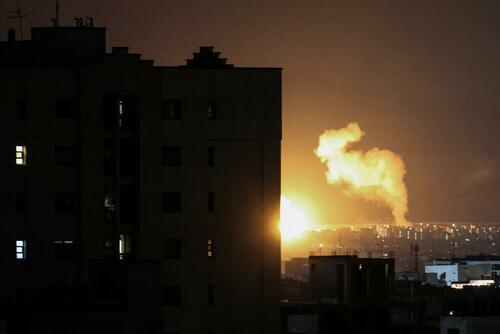
The United States and Israel continue to unleash their mass bombing campaign across Iran, with explosions reported in Qom and Tehran hours after weekend Israeli strikes on oil facilities sent toxic smoke and even oil-infused rain across the Iranian capital. There’s been emerging reports suggesting there’s been some divergence or even distance on war aims and strategy between the US and Israel; however, this could also simply be war propaganda put out by officials – and yet probably President Trump doesn’t like to see oil go up in flames.
Iranian Foreign Ministry spokesman Esmaeil Baghaei of course has a different theory. He said in a fresh statement that the attacks aim “at partitioning our country to take illegal possession of our oil riches.” He likely has Syria in mind, which Iran propped up on support of Assad for over a decade, but which has been permanently fractured, weakened, and a once significant Russian-supplied anti-air defense and missile arsenal utterly destroyed. The Syria model is something Israeli policy makers have talked about for decades, and Israel appears to be willing to smash an entire Iranian nation of 90+ million.
With this in mind, Baghaei emphasized there’s no halting the fight at this stage: “While military aggression continues, there is little room to talk about anything other than a decisive response,” he said Monday. Trump recently said operations won’t cease until there’s “unconditional surrender” by Iran.
Despite the massive scale of Israeli and American firepower, the strikes clearly have not dismantled the regime’s core structures, arranged precisely to endure such external shocks and maintain power. There’s also not yet been any clear examples of elite fractures.
“We’re not seeing it, and we’re unlikely to see it,” Alan Eyre, a Farsi-speaking former diplomat who served on the U.S. nuclear negotiating team with Iran, told The Wall Street Journal. “The IRGC and other elites benefit the most from the status quo and would rather fight than switch.”
The same publication reviews that the Islamic Revolutionary Guard Corps, created in 1979 to safeguard the Islamic revolutionary system, includes about 190,000 active-duty troops. It is the most elite core defense perimeter running the war and reports directly to the Supreme Leader, even bypassing Iran’s conventional armed forces. In addition to this, there’s a sort of domestic IRGC internal security force over the country – roughly 600,000 irregular Basij militia members which can mobilize.
Day 9: Iran war is wider and longer:
— new, harder line leader in Iran
— new leader promises “new phase”
— 130+ drones by Iran last 24 hours
— US talking “limited” ground forces
—desalination hit in Bahrain
— oil $102, 4 yr high
— Americans disapprove, 59% v 41%
— Russian… pic.twitter.com/NaL8yvzEtr
— Robert A. Pape (@ProfessorPape) March 9, 2026
At a moment oil prices have surged more than 25% to kick off the week, their highest levels since mid-2022 as some major producers cut supplies and fears of prolonged shipping disruptions spread through global markets due to the expanding war – Iranian Foreign Minister Abbas Araghchi said Sunday that Tehran would only contemplate a ceasefire for a permanent end to the war on its terms.
He reminded the West that Iran did accept a ceasefire which ended the 12-war in June. Of course, Iran is currently trying to inflict as much pain as possible on the US and Israel before such a potential end – also as Israel continues to experience rare severe damage to its cities, bases and infrastructure from ongoing ballistic missile attacks. On the question of an offramp, below are a couple of unconfirmed developments and headlines:
—Iran are seeking peace talks with the US with Qatar, Oman & Italy involved in mediation: CNN/News18
—Israeli Defense Officials Start to Ask How the Iran War Ends: WAPO (“A few senior officials in Israel are starting to voice concern about the escalating, open-ended attack on Iran – and suggesting possible exit ramps that might halt the war before it further damages the region and the global economy.”)
The Foreign Ministry’s Baghaei has further addressed President Trump’s ultra-provocative suggestion that Iran’s borders could change. Asked last week whether Iran’s map would look the same after the war, Trump said, “That I can’t tell you. Probably not.”
Baghaei blasted Trump for treating the world like a real estate deal: “The US president and others have made statements about many parts of the world – from Canada to other countries – as if the entire planet were prime real estate and governments were merely real estate agencies,” the FM spokesman said. “For the people of Iran, the map of the country represents everything that every Iranian is proud of and is willing to sacrifice their life to protect.”
As for ‘sacrifice’ – but on the US side of things, an eighth American soldier has now been confirmed killed, one day after Trump oversaw a dignified transfer ceremony at Dover Air Force Base. Interestingly Fox News has come under fire for its mishandling of the coverage.
Trump after seeing oil prices:
Short term oil prices, which will drop rapidly when the destruction of the Iran nuclear threat is over, is a very small price to pay for U.S.A., and World,
ONLY FOOLS WOULD THINK DIFFERENTLY! pic.twitter.com/GctyxuO6Up
— Clash Report (@clashreport) March 9, 2026
Current mass WH messaging…
The message just went out. “Short term pain, for long term gain.”
— Clayton Morris (@ClaytonMorris) March 9, 2026
In the Gulf, Saudi Arabia has accused Iran of continuing attacks against the kingdom due to “baseless claims” – including allegations that fighter jets and refueling aircraft stationed in Saudi Arabia were preparing to join the war. This after on Saturday Iranian President Masoud Pezeshkian apologized to Arab Gulf states and said Tehran would stop striking neighboring countries unless attacks on Iran originated from their territory; however, those attacks have not actually appeared to stop – as the consensus is that the elite IRGC is in charge, and there’s likely even autonomy of command decisions with units under emergency war orders.
Saudi Arabia’s Foreign Ministry said Monday of Pezeshkian’s ‘apology’ that Iran “has not reflected that statement in practice.” It laid out that Iran has “continued its attacks based on baseless claims that are not grounded in fact, including allegations that the Kingdom had previously clarified were false, namely the claim that fighter jets and refueling aircraft had departed from the Kingdom to participate in the war.”
⚡️Bahrain:The moment the fire broke out in the fuel tanks of BAPCO Energy Company after it was targeted by a swarm of Iranian drones. pic.twitter.com/wHh8aCxkxt
— War Monitor (@WarMonitors) March 9, 2026
Saudi officials have said its aircraft patrols were purely defensive. “The continued Iranian attacks represent further escalation, with significant implications for bilateral relations both now and in the future,” the ministry said.
Elsewhere in the Gulf, thick smoke has been seen rising from the direction of the Bapco oil refinery in Bahrain, according to a witness cited in Al Jazeera and other reports. Bahrain reported that an Iranian drone strike on the island of Sitra, whihc injured 32 people overnight. Gulf states continue generally reporting new strikes as Iran carries out retaliatory attacks across the region – after Tehran’s own oil and fuel storage sites have been blown up in major weekend attacks.
Israel’s ‘second front’ in Lebanon also continues to escalate, as multiple Israeli airstrikes struck the southern suburbs of Beirut on Monday, including at least one targeting Al-Qard Al-Hassan, which is a financial institution linked to Hezbollah, according to Lebanon’s National News Agency.
Hezbollah said Monday that it is busy fighting Israeli forces that landed in eastern Lebanon by helicopter across the Syrian border, the second such operation since the start of the latest conflict with Israel. There’s already a ground war ongoing in southern Lebanon. Hezbollah described said it detected “the infiltration of approximately 15 Israeli enemy helicopters” from the Syrian side of the border in eastern Lebanon, an area long under Hezbollah influence.
Meanwhile, US envoys Steve Witkoff and Jared Kushner reportedly plan to travel to Israel on Tuesday to meet Israeli Prime Minister Benjamin Netanyahu, according to Axios reporter Barak Ravid, who is seen as close to the Israeli government. The trip hasn’t been officially confirmed, however.
Footage from northeast Tehran, oil and energy sites continue to burn:
⚡️ Northeast Tehran pic.twitter.com/WT2GN9VHao
— War Monitor (@WarMonitors) March 9, 2026
As for ‘what’s next’ – escalation or offramp… the following from Bloomberg suggests there could be a gateway to ground troops if things take an escalatory war path: “Trump is weighing the option of deploying special forces on the ground to seize Iran’s near bomb-grade uranium, according to diplomats. He told the Times of Israel that a decision on when to end the war will also involve Benjamin Netanyahu,” Bloomberg reviews of prior weekend reporting.
This as there are claims that Washington and Tel Aviv don’t see eye to eye on ultimate war aims and strategy: “Israel’s strikes on 30 Iranian fuel depots Saturday went far beyond what the U.S. expected when Israel notified it in advance, sparking the first significant disagreement between the allies since the war began eight days ago, according to a U.S. official, Israeli official and a source with knowledge.” But all of this fresh reporting of ‘distance’ between the close allies who are executing Trump’s Operation Epic Fury could by design be meant to create artificial distance between the president and what might prove to be an unpopular war.
Tyler Durden
Mon, 03/09/2026 – 09:00
23 tarjetas rojas e intervención policial en trifulca masiva empañan final por el título en Brasil
BELO HORIZONTE, Brasil (AP) — Veintitrés jugadores fueron expulsados a raíz de una prolongada trifulca que requirió la intervención de la policía militar, empañando los últimos segundos de la final del Campeonato Mineiro partido entre Cruzeiro y Atlético Mineiro.
Hulk, ex delantero de la selección de Brasil, figuró entre los expulsados tras la violencia, que duró más de un minuto y se extendió de un extremo del campo al otro, mientras también se involucraban suplentes, integrantes de los cuerpos técnicos y personal de seguridad.
El incidente se desencadenó por una entrada temeraria de Christian, mediocampista de Cruzeiro, sobre Everson, el arquero de Atlético Mineiro que respondió derribando a su rival con un placaje al mejor estilo del rugby y dejándole caer ambas rodillas sobre la cabeza.
Eso derivó en una pelea multitudinaria. Jugadores de ambos equipos se sumaron, golpeándose a puñetazos y patadas. En imágenes difundidas en redes sociales, se vio a Hulk, que juega para Atlético, propinarle un puñetazo a un rival en la parte posterior de la cabeza y luego recibir una patada en el pecho.
Según estadísticas proporcionadas por los equipos, Cruzeiro terminó con 12 jugadores expulsados y Atlético con 11.
Cruzeiro acabó imponiéndose 1-0 para proclamarse campeón estatal en Minas Gerais.
___
Deportes AP: https://apnews.com/hub/deportes
Dem Lawmakers Demand Probe Into Pentagon Officials Saying Iran War ‘God’s Divine Plan’
Dem Lawmakers Demand Probe Into Pentagon Officials Saying Iran War ‘God’s Divine Plan’
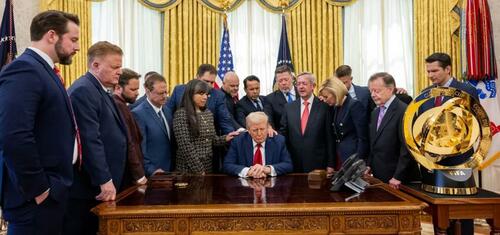
Dozens of US Democratic lawmakers have called for an investigation into allegations that military commanders are portraying the war on Iran as part of biblical prophecy, according to reporting by Military.com, citing complaints from service members and a letter sent to the Department of War inspector general last week.
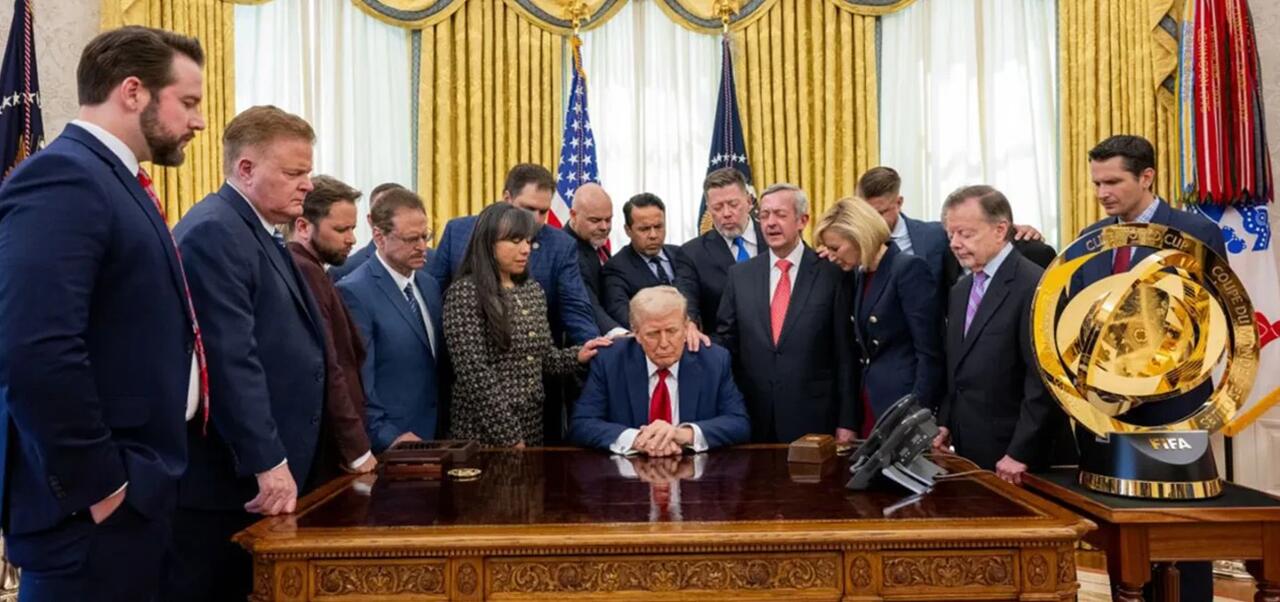
The request follows hundreds of reports that officers told troops the campaign against Iran is “divinely ordained” and that President Donald Trump has been “anointed by Jesus”.
Lawmakers warned that invoking religious prophecy to justify military operations could violate constitutional protections and War Department rules requiring religious neutrality.
The controversy began after an anonymous non-commissioned officer contacted the Military Religious Freedom Foundation (MRFF) on behalf of several soldiers in a unit stationed outside the Iran combat zone.
The individual wrote that a commander urged personnel to view the war as “all part of God’s divine plan,” while citing passages from the Book of Revelation.
According to the complaint, the officer told troops that “President Trump has been anointed by Jesus to light the signal fire in Iran to cause Armageddon and mark his return to Earth.”
MRFF founder Mikey Weinstein told Military.com that the organization logged more than 200 similar complaints between Saturday and Tuesday afternoon, with reports coming from personnel stationed at 50 military installations across all branches of the US armed forces.
In a letter sent to Inspector General Platte B. Moring III, members of the Congressional Freethought Caucus and other lawmakers warned that “justifying a war based on interpretations of biblical prophecies” and telling troops they are risking their lives to advance a religious vision raises serious constitutional concerns.
The lawmakers also asked investigators to determine whether statements by War Secretary Pete Hegseth or other officials have contributed to the spread of biblical rhetoric within military ranks, warning that such public remarks could promote similar messaging in operational briefings.
Lawmakers asked investigators to determine if troops who reported the issue faced retaliation and whether additional safeguards are necessary to maintain religious neutrality in the military chain of command.
Independent journalist Jonathan Larsen initially reported over a hundred complaints from soldiers to the MRFF, claiming that commanders are describing the Iran war as divinely ordained and connected to biblical prophecy.
One non-commissioned officer said the rhetoric was “so toxic and over the line” that it shocked troops and “destroy[s] morale and unit cohesion.”
Weinstein warned the reports show commanders treating the war as “biblically sanctioned” and linked to the approaching “End Times,” while noting similar religious rhetoric has appeared in remarks by US political figures discussing West Asia.
Tyler Durden
Mon, 03/09/2026 – 08:45

Futures Tumble But Off Session Lows On Expectations Of Global SPR Release
Futures Tumble But Off Session Lows On Expectations Of Global SPR Release
US futures tumbled and oil surged as the war in Iran showed little sign of deescalating over the weekend and led to more major Middle East producers curbing output. Still, futures retraced more than 50% off the overnight lows as WTI nearly touched $120 overnight, the highest since 2022, before dropping back to around $100 after a report G7 countries may release 300 million to 400 million barrels, or around 25% to 30% of the 1.2 billion barrels in strategic reserve. As of 8:00am ET, S&P futures are down 1%, although well off session lows, having tumbled as much as 2% earlier before the SPR news hit; in pre-market trading, Mag7 names are weaker, but certain AI plays are positive pre-mkt with Energy the standout sector and Defense bid higher, too. Generally, Defensives over Cyclicals. Bonds deepened losses while the dollar hit its highest level since January. Bond yields are higher, bear flattening, but Treasuries are outperforming global peers with European bonds in freefall due to fears of a spike in inflation driven by higher gas prices; Commodities are stronger led by Energy with all segments / sub-segments higher ex-precious metals which are being sold to fund margin calls in oil. WTI Crude futures have pared an increase of as much as 31% to about 13% but remain highest since 2022 as the war in the Middle East restricts supply via the Strait of Hormuz. Today’s US economic data slate includes February New York Fed 1-year inflation expectations at 11am. Reports ahead this week include CPI, personal income and spending (includes PCE price indexes), 4Q GDP revision, JOLTS job openings and industrial production
In premarket trading, oil and gas companies are extending gains during the turmoil in energy markets. Among movers: Chevron (CVX) +0.7%, Exxon (XOM) +0.8%, APA (APA) +2%. Magnificent Seven stocks are all lower (Alphabet -1.4%, Amazon -1%, Meta Platforms -1.2%, Microsoft -1.1%, Tesla -1.8%, Apple -0.7%, Nvidia -0.8%).
Airline and mining stocks tumble on the higher energy prices and concern over weaker economic growth. Delta (DAL) falls 3% and Alaska (ALK) is down 3%.
Applied Optoelectronics (AAOI) rises 4% after saying it received its first volume order for its 1.6T data center transceivers from one of its long-term major hyperscale customers to boost its network bandwidth for AI workloads.
Dianthus Therapeutics (DNTH) climbs 22% after announcing an early “GO” decision based on an interim responder analysis in a Phase 3 trial of claseprubart in chronic inflammatory demyelinating polyneuropathy.
Hims & Hers Health (HIMS) jumps 39% after Bloomberg News reported that Novo Nordisk plans to sell its weight-loss drugs on the telehealth company’s platform, ending a public feud.
Jefferies (JEF) falls 3% after being downgraded to equal-weight by Morgan Stanley analysts who cite credit concerns due to the bank’s exposure to the bankrupt auto parts supplier First Brands and the failed UK lender MFS.
Live Nation Entertainment Inc. (LYV) rises 7% after Politico reported that the company reached a settlement with the Department of Justice in its antitrust case and will pay $200 million in damages to participating states.
PG&E Corp. (PCG) climbs 1.4% after UBS raised its recommendation on the utilities company to buy on improvements in wildfire policy and affordability.
Xenon Pharmaceuticals (XENE) soars 43% after announcing its experimental epilepsy drug azetukalner met the primary endpoint in a Phase 3 trial for focal onset seizures
In corporate news, billionaire Leo KoGuan doubled his stake in Nvidia to 2 million shares. Live Nation Entertainment is said to be close to settling a federal antitrust lawsuit accusing the company of illegally monopolizing the live music industry. Hims & Hers Health shares are surging in premarket trading after Novo Nordisk was said to have ended its public feud with the company with an agreement to sell its drugs on the Hims platform. Vertiv, Lumentum, Coherent and EchoStar will join the S&P 500 in the latest quarterly rebalance, S&P Dow Jones Indices said Friday. The companies will replace Match, Molina Healthcare, Lamb Weston and Paycom Software.
The spike in oil and losses in bonds and equities were initially steeper, but news that Group of Seven finance ministers would discuss a possible joint release of oil from reserves – just hours after we said this should happen – trimmed the moves
Hello @ENERGY it’s time to open the SPR
— zerohedge (@zerohedge) March 9, 2026
Still, the selling is adding fresh stress to markets as the US and Iran dug in for what could become a prolonged conflict. Iran’s new supreme leader, Mojtaba Khamenei, signaled Tehran won’t back down, while President Donald Trump said higher oil prices were a “very small price to pay” for safety.
“The market is anticipating the worst-case scenario,” said David Kruk, head of trading at La Financiere de l’Echiquier in Paris. “The selloff is all about oil, it’s about the inflation that is deduced from it, it’s about the risk of stagflation.”
Arab states across the Persian Gulf and Israel continued to face incoming missiles and drones from Iran, which said it had the capacity to sustain the war for months. Israel struck fuel depots in Tehran and threatened the Islamic Republic’s power grid. Trump is also weighing the option of deploying special forces on the ground to seize Iran’s near-bomb-grade uranium, according to three diplomatic officials briefed on the matter.
The stock market’s reaction has so far been restrained, with hopes lingering that strikes will remain contained in scope and time, said Wolf von Rotberg, equity strategist at Bank J Safra Sarasin.
“We have not yet seen markets capitulate,” von Rotberg said. “As oil infrastructure has been hit over the weekend, a prolonged rise in oil prices becomes more likely and a quick reversal of recent moves becomes increasingly difficult.”
For stocks, Goldman Prime Brokerage data indicated that fast-money investors are ramping up bets against the broad US market while increasing holdings in individual names as they look to pick up bargains. Goldman’s Ben Snider sees a “meaningful” threat to S&P 500 earnings from sustained higher oil prices, while Morgan Stanley’s Mike Wilson is staying positive on US stocks over a 6-12 month period. Meanwhile, strategist Ed Yardeni raised the probability of a US market meltdown this year to 35% from 20%, and slashed the odds of a meltup — a rally driven more by investor enthusiasm than underlying fundamentals — to just 5% from 20%. Elsewhere in strategy, Vanda Research said that Friday’s record net buying by retail investors in the United States Oil Fund ETF suggests bullish oil bets may be the next “meme theme.”
the retail ETF momentum brigade is in, which means Jane Street is getting ready: “USO on track for its biggest day of retail net buying ($40mn*) – suggesting that long oil may be emerging as the next ‘meme theme’ for retail investors.” – Vanda pic.twitter.com/rGuBAr9kR8
— zerohedge (@zerohedge) March 6, 2026
Europe’s Stoxx 600 falls 1.9% and has erased its year-to-date gain as a gauge of European blue-chip stocks approached a 10% drop from its February peak. The region’s bonds faced a steeper selloff than US peers, with traders fully pricing in two European Central Bank interest-rate hikes and raising bets on a Bank of England move. The yield on two-year gilts jumped 25 basis points. Mining and real estate shares led declines, while energy and insurance stocks were the biggest outperformers. Here are the biggest movers Monday:
European fossil-fuel extraction companies rise as news of production cuts in the Middle East sent oil prices soaring above $100 a barrel and lifted natural gas futures as much as 30% in Europe
Yara climbs as much as 2.1%, to the highest since June 2022, as Danske Bank upgrades to buy and sets a new Street-high price target, saying an already tight urea market may become even tighter
Nexi rallies as much as 4.8%, following last week’s 20% drop, as Morgan Stanley upgrades the payments company to equal-weight, saying risk/reward on the stock is now more balanced
Temenos shares climb as much as 2.7%, bucking the wider slump in European equities, as Bank of America upgrades its rating on the Swiss software provider to buy from neutral, seeing limited risks of disruption from generative AI
European mining shares, airlines and banks tumble Monday as the war in Iran enters its 10th day
Roche drops as much as 7.5% after a late-stage study of the Swiss pharmaceutical company’s experimental breast-cancer drug — called giredestrant — in combination with another treatment failed to meet the trial’s main goal
Ipsen shares fall as much as 4.5% after the pharmaceutical company said it is voluntarily withdrawing its Tazverik cancer drug from all markets
Cosmo Pharmaceuticals shares fall as much as 15% after the company forecast revenue for 2026 that missed the consensus estimate and which Oddo BHF said was disappointing
Earlier in the session, Asian stocks tumbled as the escalating Iran war drove oil near $120 a barrel and fueled fears of a fresh inflationary shock. All Asian markets fell Monday, with South Korea and Vietnam posting the sharpest declines. The MSCI Asia Pacific Index slumped as much as 5.6%, entering correction territory before paring losses on a report that the Group of Seven finance ministers are set to discuss a possible joint release of oil reserves. Chipmakers TSMC, Samsung and SK Hynix led the losses in the gauge. Chinese EV makers and AI firms, including BYD and Meituan, bucked the broader decline as government pledges of support lifted outlook for the sectors. Technology stocks were among the worst hit in the region, also weighed down by Oracle and OpenAI scrapping plans to expand a flagship artificial intelligence data center in Texas. The MSCI’s gauge of tech stocks was down as much as 8.5%.
In FX, the Bloomberg Dollar Spot Index rises 0.3% with small gains seen in the kiwi and Canadian dollar. The euro and pound fall 0.6% each.
In rates, treasury futures remain under pressure after gapping lower at the Asia open as oil extended its surge, leaving front-end yields 4bp-5bp higher in early US session. US session has few scheduled events, and Treasury auctions resume Tuesday. Fed policymakers are in an external communications blackout ahead of March 18 policy decision. US long-end yields are only about 3bp cheaper, flattening 2s10s and 5s30s curves by less than 1bp. 10-year is higher by about 3.5bp near 4.18%, outperforming most counterparts globally. Gilts lead the selloff in European government bonds, with two-year yields jumping 25 bps to 4.13% as traders now see potential tightening by the Bank of England this year. 10-year gilts are s about 13bp higher on the day, front-end tenors around 25bp higher; inflation fears have driven up swaps market pricing of interest-rate hikes this year by both BOE and ECB. German two-year borrowing costs climb 8 bps. Treasury auctions resume Tuesday with 3-year notes, followed by 10- and 30-year sales Wednesday and Thursday for a combined $119 billion.
In commodities, WTI crude futures remain above $100/barrel after Saudi Arabia has started reducing oil production, while G-7 ministers are set to discuss a possible joint release of oil reserves. US benchmark WTI crude futures have pared an increase of as much as 31% to about 13% but remain highest since 2022 as the war in the Middle East restricts supply via the Strait of Hormuz. European natural gas futures jump ~18%, prompting a fresh wave of hawkish policy bets that have weighed on the region’s assets.
US economic data slate includes February New York Fed 1-year inflation expectations at 11am. Reports ahead this week include CPI, personal income and spending (includes PCE price indexes), 4Q GDP revision, JOLTS job openings and industrial production
Market Snapshot
S&P 500 mini -1%
Nasdaq 100 mini -1.1%
Russell 2000 mini -1.8%
Stoxx Europe 600 -1.8%
DAX -2%
CAC 40 -2.2%
10-year Treasury yield +4 basis points at 4.18%
VIX +2.3 points at 31.83
Bloomberg Dollar Index +0.3% at 1207.5
euro -0.6% at $1.1553
WTI crude +12.2% at $101.99/barrel
Top Overnight News
Brent crude rose to almost $120 before paring gains as the Iran war showed no signs of abating and more major Middle East producers cut output. The Strait of Hormuz is still effectively shut. BBG
Iran’s top clerics have chosen Mojtaba Khamenei, the son of the slain supreme leader, ads his father’s successor in a move that signals the Islamic republic is likely to maintain its hardline policies towards the US, Israel, and the west. FT
G7 Finance ministers will discuss a possible joint release of petroleum from reserves co-ordinated by the IEA, in an emergency meeting on Monday aimed at tackling the surge in oil prices following the conflict in the gulf. One person familiar said a joint release of ~300-400M barrels, or ~25-30% of the 1.2B barrels held in reserve, is on the table FT
Trump is weighing the option of deploying special forces on the ground to seize Iran’s near bomb-grade uranium, according to diplomats. He told the Times of Israel that a decision on when to end the war will also involve Benjamin Netanyahu. BBG
Israel’s strikes on 30 Iranian fuel depots Saturday went far beyond what the U.S. expected when Israel notified it in advance, sparking the first significant disagreement between the allies since the war began eight days ago, according to a U.S. official, Israeli official and a source with knowledge. Axios
China’s consumer inflation accelerated to the highest in more than three years due to the effects of the Lunar New Year holiday, while producer deflation persisted as weak demand remained a drag on an economy facing stiff external challenges. China’s PPI for Feb came in at -0.9% (vs. the Street -1.1% and vs. -1.4% in Jan) while the CPI rose 1.3% (vs. the Street +0.9% and vs. +0.2% in Jan). RTRS
Japanese workers’ wages adjusted for inflation rose for the first time in 13 months, a development that may bolster consumer sentiment and support both the Bank of Japan and the government in their pursuit of key policy goals. BBG
Germany’s industry got off to a surprisingly weak start in January, with orders falling more than forecast and output unexpectedly decreasing, according to statistics office data. January orders declined by 11.1% compared with the previous month on a seasonally and calendar adjusted basis, putting an end to four consecutive increases. RTRS
SoftBank Group Corp.’s credit default swaps widened and its shares fell after concerns mounted over the viability of the artificial intelligence infrastructure project known as “Stargate,” in which the Japanese conglomerate is involved. BBG
US FDA is planning to ease some requirements for drugmakers to develop copycat versions of expensive biologic medications: BBG
Iran War
US President Trump said that Iran would be hit very hard on Saturday and the US would consider targeting areas and groups in Iran that were not previously considered as targets.
US President Trump said there would have to be a very good reason for the US to deploy ground troops in Iran, while Trump also said that he has ruled out having Kurdish forces go into Iran.
US President Trump is said to be considering the option of deploying special forces on the ground in Iran to seize its near-bomb-grade uranium, according to Bloomberg, citing three diplomatic sources briefed on the matter.
US envoys Kushner and Witkoff cancelled their planned arrival in Israel tomorrow, local Israeli reported suggest.
US may be responsible for the bombing of a girls’ school in Iran that killed 168 people on February 28, according to sources cited by CBS News.
US President Trump tells Times of Israel in a brief interview that it will be a mutual decision with Israeli PM Netanyahu regarding when the Iran war ends.
US Secretary of War Hegseth reiterates that US strikes on Iran are only just the beginning during a CBS 60 Minutes interview.
Iranian President Pezeshkian said on Saturday that he instructed the military not to attack any country that is not striking Iran and apologised to Iran’s neighbours for conducting strikes against them, although reports noted that there were no signs that Iranian forces had stopped striking their Arab Gulf neighbours.
Iran’s Foreign Minister Araghchi said he is in constant contact with his Saudi counterpart and that Saudi officials said they were fully committed to not letting their territory, water and airspace be used against Iran.
Iran’s Supreme National Security Council Secretary Larijani said the US must pay for its actions and that Iran would not leave US President Trump alone for killing Supreme Leader Khamenei, while he also stated that Tehran has no problem with regional countries but warned Tehran would continue attacking neighbouring countries if they allow their territories to be used for attacks against Iran.
Iran picked former Supreme Leader Ali Khamenei’s son Mojtaba as the next Supreme Leader, while Iran’s Revolutionary Guards said they are ready to follow and obey new Supreme Leader Mojtaba Khamenei.
Iranian Foreign Ministry spokesperson said there is no doubt the US is after Iranian oil resources and aims to weaken and break up the country, SNN reported. When asked about a possible ceasefire, said as long as attacks continue, there is no point in talking about anything but defence and retaliation against enemies.
Launches from Iran towards Northern Israel and Lachish area were identified, according to Kan News.
Iran’s Revolutionary Guards say they are ready to follow and obey new Supreme Leader Mojtaba Khamenei.
Iranian missile attack causes power outage in Tel Aviv, according to ISNA.
Iranian strike hit a Bahraini desalination plant, according to Semafor.
Israeli Channel 12 estimates that the battle with Iran may continue for at least five additional weeks, Sky News Arabia reported.
Israel conducts raid on Kfar Kila in southern Lebanon.
A more detailed look at global markets courtesy of Newsquawk
APAC stocks sold off heavily with global markets rattled after the Iran war entered a second week with no signs of abating and as oil prices surged around 30% intraday on continued disruption, with more producers forced to cut output. ASX 200 slumped at the open with heavy losses across all sectors aside from energy due to the oil price surge. Nikkei 225 suffered intraday losses of more than 4,000 points as manufacturers and exporters suffered from the rising energy costs and shipping disruption. Hang Seng and Shanghai Comp conformed to the broad risk-off mood with sources tempering expectations for a breakthrough in the upcoming Trump/Xi summit, but with the downside in the mainland somewhat cushioned after firmer-than-expected Chinese inflation data.
Top Asian News
China NPC Standing Committee said it is to revise law on enterprise state-owned assets, will strengthen research on legislation in AI and other sectors, will also revise PBoC law and banking regulation law.
Japanese Finance Minister Kato said a weak yen is one factor behind rising prices.
Japanese Trade Minister Akazawa said will make all efforts to ensure all price rises do not affect Japanese people’s lives negatively.
European bourses (STOXX 600 -1.5%) are entirely in the red, coming under significant pressure amid the surge in crude prices, which in turn holds back global growth. The FTSE 100 (-1.2%) is performing the best out of a bad bunch, as oil majors (Shell +1.6%, BP +1.0%) limit losses in the index. The SMI (-1.9%) is the laggard, weighed on by losses in Roche (-4.6%) after Genetech’s persevERA breast cancer study did not meet the primary objective of a statistically significant improvement in progression-free survival. European sectors are completely in the red, with Real Estate (-3.2%) the worst performer as higher yields affect mortgage rates. Basic Resources (-3.1%) the worst performer after JPMorgan cut a number of European mining equities, warning that escalation in the Middle East could weigh on metal prices. Energy (U/C), unsurprisingly, sits at the top of the pile as Brent topped out just shy of USD 120/bbl.
Top European News
German Industrial Production MoM (Jan) M/M -0.5% vs. Exp. 0.9% (Prev. -1.9%).
Swiss Sight Deposits (w/e Mar 6). Domestic Banks CHF 428.861bln (prev. 440.5bln), Total CHF 454.072bln (prev. 459.8bln).
Swiss Consumer Confidence (Feb) -30 vs. Exp. -29 (Prev. -30).
Norwegian PPI YoY (Feb) Y/Y -9.4% (Prev. -7.8%).
FX
DXY is stronger this morning and trades at the upper end of a 98.83 to 99.69 range, with the index buoyed by the ongoing Iran war. In brief, there are currently no signs of a near-term resolution of the war, with oil prices surging some 30% at one point. (See the Newsquawk analysis piece at 08:25 GMT for details)
Further upside for the index could bring into play a cluster of highs from late November 2025, and the key 100.00 mark on the 25th of November 2025; the high that day was 100.26. But, upside may be limited in the near-term as markets count down to the G7 ministers meeting at 08:30 GMT / 12:30 EDT. A source cited by the FT suggested a joint release in the range of 300-400mln barrels, 25-30% of the IEA’s reserves, would be appropriate. For reference, the Ukraine-Russia war led to the IEA releasing some 182mln barrels in March and April 2022. Therefore, a release of 300-400mln barrels could spur some short-term pressure in the USD.
EUR and GBP both continue to extend losses, as the net-importers of oil face significantly higher energy prices, stoking inflationary fears. As such, money markets now fully price in two ECB hikes in 2026 (vs none pre-war); markets now assign a 50% chance of a hike at the BoE (vs three cuts in 2026 pre-war). Elsewhere on a domestic footing, focus has been on the Baden-Württemberg election in Germany. The Greens won the election, whilst the CDU (29.7%) extended on its standing from the last election; importantly, the SPD fell to 5.6% (prev. 11%), which may stoke fears for Chancellor Merz, and the standing coalition.
Havens (CHF & JPY) also extend losses, given both are net-importers of energy. For the CHF specifically, Switzerland has voted to introduce individual taxation; the government believes that the reform could bring back around 60k people to the labour force, and boost GDP by around 1%. As for Japan, USD/JPY continues to advance into “intervention territory”, which has been seen around 158-160. However, it can be argued that any attempt to intervene may prove to be inconsequential, as recent strength in oil prices show little sign of abating.
Antipodeans were initially pressured by the USD strength, but have recently edged slightly higher; the Kiwi is the top G10 performer. Upside which could be facilitated by the firmer-than-expected Chinese inflation data overnight.
Fixed Income
A bearish start to the week for benchmarks as yields react to energy prices. See the 08:25GMT update for a full geopolitical brief, but in brief, the ongoing Middle East conflict, supply/production disruptions, and no clear signs that the US or Iran are set to back down have lifted crude to above USD 100/bbl, a level not seen since 2022.
This saw USTs begin the week with losses of nearly 20 ticks, Bunds down by over 90 ticks and Gilts gapping lower by 119 ticks at a 88.80 trough, just above the 88.52 contract base.
For the UK, the move lifted the 10yr yield to a 4.78% peak, the highest since October 2025 and takes us back to the September 2025 peak of 4.86%. Action that has seen a marked shift in BoE repricing, with markets implying around a 70% chance of a hike by the end of 2025; a marked shift from mid-February, when two cuts were essentially priced. Note, this move will likely moderate as while easing is likely off the cards in the near-term, the UK’s job market situation does not support tightening in the near term.
Back to USTs, the benchmark is lower by around 15 ticks as it stands, just off a 111-26+ base. The day ahead is focused entirely on energy, with a G7-IEA meeting expected at 12:30GMT to discuss a potential strategic release.
For Bunds, they are also off worst and by quite some way. Down by around 25 ticks currently, but around 70 off a 125.94 trough. A moderation that has perhaps come as the benchmark finds some modest haven allure given the broader risk tone. Additionally, a rethinking of ECB pricing from the knee-jerk this morning may be factoring; at most, markets priced in two 25bps hikes by the ECB in 2026.
Bank of Korea is reportedly to purchase up to KRW 3tln of government bonds.
Commodities
Oil opened in panic mode, with WTI and Brent initially surging above USD 100/bbl and rising 30% to briefly approach USD 120/bbl as the Iran conflict entered a second week and Gulf supply disruptions intensified (full Newsquawk analysis on the feed). Crude prices later pulled back after reports that the G7 will discuss a coordinated emergency reserve release, with some US officials said to favour a 300–400mln barrel draw (~25–30% of IEA system reserves), with the call set to take place at 12:30 GMT (08:30 EDT) amid the US clock change.
European gas prices surged sharply by some 30% at the open amid Hormuz risk and Gulf infrastructure disruption. Severe tanker interference, soaring war-risk premiums and regional refinery attacks exacerbated volatility. While alternative routes (e.g., Red Sea) may cushion some flows, they cannot fully offset Hormuz volumes. Gas remains sensitive to any reopening signals or reserve coordination outcomes.
Spot gold softened alongside a firmer USD and broader risk-off liquidation from energy-induced inflationary fears. Central bank demand remains supportive, with the PBoC reportedly extending gold purchases for a 16th consecutive month. Spot gold currently resides in a USD 5,015.04-5,171.95/oz range at the time of writing (vs Friday’s 5,063.21-5,176.63/oz parameter).
Copper slumped at the reopen as oil’s surge and geopolitical risk dampened cyclical appetite. Prices recovered modestly off worst levels following firmer-than-expected Chinese inflation data, but the tone remains fragile. Persistent energy disruption and USD strength pose downside risks, while any easing in Gulf tensions could stabilise sentiment. 3M LME copper resides in a USD 12,594.00-12,845.00/t range at the time of writing.
Japan METI orders oil reserve station to prepare for a release, according to Nikkei.
Japanese Chief Cabinet Secretary Kihara sees crude prices rising further amid the Middle East situation and said no decision on all reserve release.
Bahrain’s Bapco declares a force majeure.
G7 is to discuss a joint release of emergency oil reserves in an emergency meeting on Monday, according to FT; call at 08:30 EDT (12:30 GMT).
Some officials are discussing a potential 300-400mln barrel release, up to 30% of the IEA’s 1.2bln barrel emergency stockpile, according to Kpler’s Bakr.
China raises its gas and diesel prices by CNY 695 and 670/ton respectively from March 10th.
Qatar to reportedly push LNG expansion to 2027 following drone attacks.
EU Commission Spokesperson said European oil and gas supply groups are to meet on Thursday 12th to discuss the Middle East situation.
US President Trump posted “Short term oil prices, which will drop rapidly when the destruction of the Iran nuclear threat is over, is a very small price to pay for U.S.A., and World, Safety and Peace. ONLY FOOLS WOULD THINK DIFFERENTLY!”.
Mizuho’s Rochester writes “oil is now on a USD 100/bbl handle and it might be there to stay” with increasing likelihood of USD 130-150/bbl as the Middle East conflict/supply situation persists.
Kpler’s Bakr posted “Europe has few options to replace lost jet fuel flows from the Middle East following disruption in Hormuz. With Asian markets pulling cargoes eastward and export restrictions tightening supply…”. Cont’d.. “attention is shifting to the Atlantic Basin – particularly the US Gulf Coast and West Africa – though available volumes are unlikely to fully offset the shortfall.”.
Trade/Tariffs
US Customs and Border Protection told a court it cannot immediately refund about USD 166bln in tariffs deemed illegal by the Supreme Court, as its computer systems, administrative procedures and staffing do not enable it to comply at once.
US President Trump and Chinese President Xi’s summit is said to unlikely yield a breakthrough, with five people briefed on preparations saying the summit is unlikely to create room for even a limited reset of business and investment ties.
Chinese Foreign Minister Wang Yi said China and the US could make 2026 a landmark year for sound, steady and sustainable development of China-US relations, while he added that China’s attitude is always positive and open. Furthermore, he stated regarding US President Trump’s planned visit to Beijing, that the agenda of high-level exchanges is already on the table and that both sides now need to make preparations accordingly.
Japanese Trade Minister Akazawa said Japan requested that the US exempt it from the planned tariff increase from 10% to 15%, following a meeting with US Commerce Secretary Lutnick. It was also reported that Japan is said to be considering JPY 15tln for a second US investment project and that the government approached Japan Display (6740 JT) about operating a USD 13bln cutting-edge factory in the US as part of the USD 550bln investment package.
South Korea’s Industry Minister Kim said the US is unlikely to impose the previously threatened 25% tariffs on South Korea if the Korean parliament move swiftly to ratify the investment legislation in the week ahead.
d
Tyler Durden
Mon, 03/09/2026 – 08:38
https://www.zerohedge.com/markets/futures-tumble-session-lows-expectations-global-spr-release
As War Rages In Iran, UK MoD Surveys Troops On Wearing Makeup And Nail Polish
As War Rages In Iran, UK MoD Surveys Troops On Wearing Makeup And Nail Polish
Authored by Steve Watson via Modernity.news,
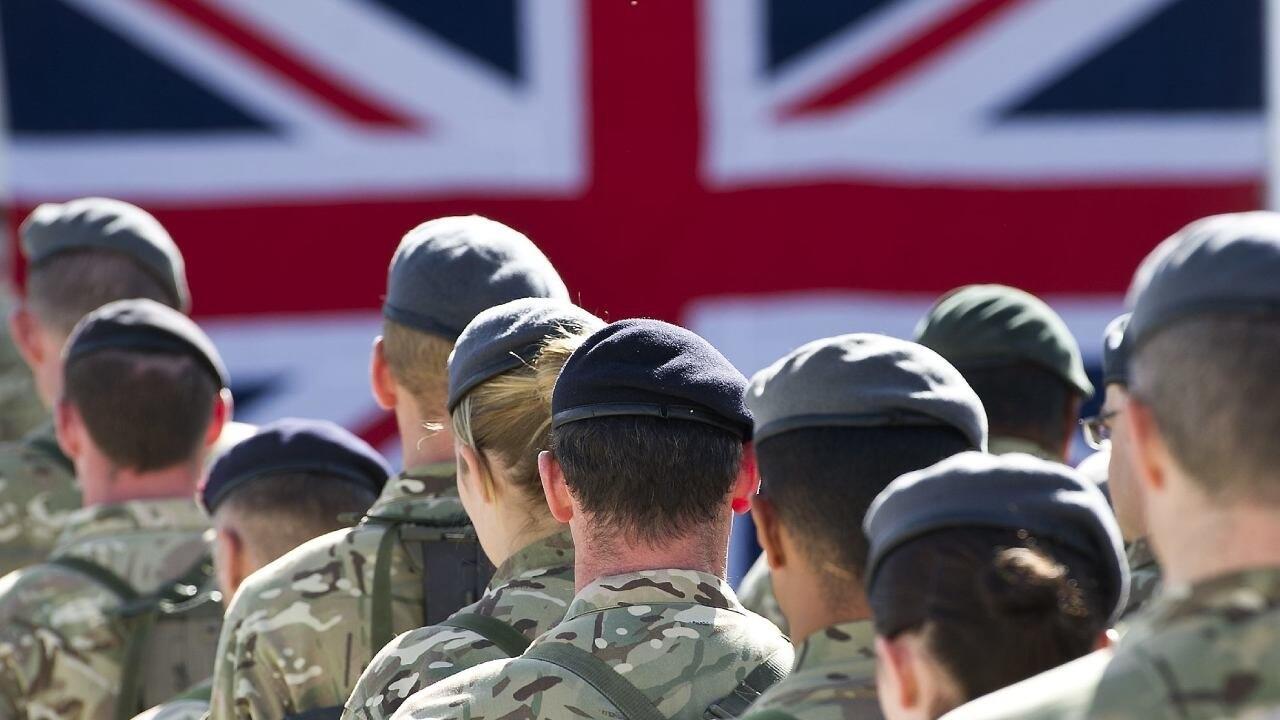
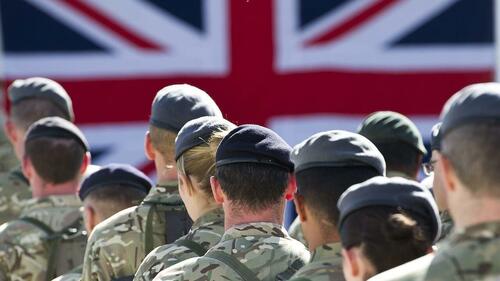
While flames engulf Iranian oil depots following U.S. and Israeli strikes, and Iran retaliates with missiles targeting the UAE and Israel, the UK Ministry of Defence has sparked backlash by circulating a survey to troops about relaxing appearance standards. The questionnaire asks if male soldiers should be allowed to wear makeup, nail polish, and longer hair, ridiculously framing it as a push toward “gender-free” policies.
The timing of this clownish behaviour couldn’t be worse. The survey, originating from Army HQ in Andover, proposes uniform rules on hair, jewelry, and even facial aesthetics like fillers and microblading for all genders.
As war rages in Iran, woke MoD asks troops: ‘Guys, do you want to wear make-up and nail polish?’ https://t.co/VncN09Cn5b
— Daily Mail (@DailyMail) March 8, 2026
The review builds on recent shifts in UK military policies. In 2024, the Army reversed a long-standing ban on beards. Back in 2019, then-Defence Secretary Ben Wallace floated allowing men to use camouflage-colored makeup. And in 2017, instructions emphasized avoiding gender-specific language like “best man for the job.”
Shadow Defence Minister Mark Francois slammed the initiative, stating, “Upgrading to mascara from camouflage cream is hardly likely to deter Putin.”
An Army spokesman pushed back, clarifying, “As the Chief of the General Staff has said, the Army is focused on enhancing our lethality and fighting readiness. There are no plans to change policy – and this was not an official Army survey.”
This comes against a backdrop of escalating conflict in Iran. U.S. and Israeli forces have conducted devastating strikes on regime oil depots, with reports of “fire rain” over Tehran after the death of Ayatollah Ali Khamenei in a daytime assault. Iran has closed the Strait of Hormuz, raising fears of UK gas shortages with only days’ reserves left. Iranian drones and missiles have struck Dubai skyscrapers and airports, killing civilians.
In addition, U.S. President Donald Trump has publicly dressed down UK Prime Minister Keir Starmer for what he calls a tardy response to the crisis.
In a social media post, Trump dismissed Britain’s offer to send aircraft carriers, writing, “The United Kingdom, our once Great Ally, maybe the Greatest of them all, is finally giving serious thought to sending two aircraft carriers to the Middle East. That’s OK, Prime Minister Starmer, we don’t need them any longer — But we will remember. We don’t need people that join Wars after we’ve already won!”
President Trump just trolled Britain Prime Minister Starmer.
The news media in the UK will crucify him endlessly for this. They are obsessed with their so-called “special relationship” with the USA. pic.twitter.com/NFKrSQNIo7
— Wall Street Mav (@WallStreetMav) March 7, 2026
The jab highlights Starmer’s initial hesitation. The UK excluded itself from early strikes on Iran and denied U.S. use of its bases. Trump compared Starmer unfavorably to Winston Churchill, noting, “Starmer was no Winston Churchill.”
Starmer has since shifted, deploying the HMS Prince of Wales and additional Typhoon jets to the region. He also did what he does best, a complete u-turn on permission for U.S. forces to use UK bases for “specific and limited defensive” strikes against Iranian missiles. This includes operations from RAF Fairford and Diego Garcia to intercept threats to regional allies.
Former Prime Minister Tony Blair has joined the chorus, urging Starmer to back the U.S. unequivocally. At a private event, where he expected the remarks to remain, Blair said, “We should have backed America from the very beginning,” adding “You better show up!” emphasizing the U.S. as an “indispensable ally.”
Blair stressed, “We have got to be very clear about this as a country. We’re depending on the American alliance for our country. They are not just an ally, they are an indispensable ally, right?” And, “It’s not a question of whether it’s this president or that president. If they are your ally and they are an indispensable ally cornerstone for your security… you had better show up.” He advised Starmer to be “strong and out there and clear” on foreign policy.
🔴 Sir Tony Blair has admonished Sir Keir Starmer for his decision not to support American strikes on Iran, saying when it comes to an ally that is an “indispensable cornerstone of your security, you better show up”.
Read more here ⬇️https://t.co/P7Fb6ArgkU pic.twitter.com/V3v1Mnswdq
— The Telegraph (@Telegraph) March 7, 2026
This critique underscores fractures in UK leadership as the conflict unfolds. Starmer maintains the UK won’t pursue “regime change from the skies,” focusing on a negotiated end where Iran abandons nuclear ambitions and regional destabilization.
Your support is crucial in helping us defeat mass censorship. Please consider donating via Locals or check out our unique merch. Follow us on X @ModernityNews.
Tyler Durden
Mon, 03/09/2026 – 08:05
Defensas OTAN han interceptado un misil balístico que entró en el espacio aéreo turco, según Ministerio de Defensa
ANKARA, Turquía (AP) — Defensas OTAN han interceptado un misil balístico que entró en el espacio aéreo turco, según Ministerio de Defensa.
G-7 Panic? World Leaders Weigh Emergency SPR Dump As Oil Prices Erupt Into Triple-Digit Territory
G-7 Panic? World Leaders Weigh Emergency SPR Dump As Oil Prices Erupt Into Triple-Digit Territory
Asian and European equities traded lower, while U.S. equity futures fell 1% as Brent and WTI futures traded in triple-digit territory following the weekend escalation in Middle East tensions. The energy shock we have been warning about for the past week, citing top institutional desks from JPMorgan, UBS, Goldman, and others, is now staring G-7 leaders directly in the face as energy market panic erupts.
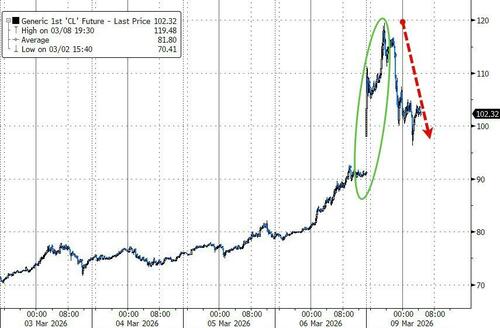
You know conditions are deteriorating very quickly when the Financial Times reports that G-7 finance ministers are set to hold an 8:30 a.m. New York time call to discuss a possible coordinated release of strategic oil reserves to combat runaway crude prices, as Brent crude hit $119/bbl overnight. Such a move to dump SPR on global markets shows just how afraid policymakers are that the oil shock could crush consumer sentiment and, in turn, hit economic growth.
There have been five coordinated SPR dumps onto the global market with the International Energy Agency. The last two occurred in 2022, in the early days of the Russian invasion of Ukraine, which sent energy prices through the roof. However, as we must note, dumping SPRs in 2022 did not work so well, and the market will likely look beyond current flows and focus on overall stockpiles being drained (read: here & here).
Hello @ENERGY it’s time to open the SPR
— zerohedge (@zerohedge) March 9, 2026
The scramble by G-7 leaders comes as Brent crude hit $119/bbl in Asia, up from about $72 before Operation Epic Fury kicked off more than a week ago, now in its second week. With the Strait of Hormuz effectively closed and Gulf producers cutting output as storage fills up, the worst-case scenario appears to be unfolding: an energy shock.
To cushion the shock, potentially bridging some of the supply gap of a short-term war (but definitely not a longer term or wider disruption) FT sources said world leaders could release 300 million to 400 million barrels, or about 25% to 30% of the 1.2 billion-barrel reserve.
Given the extreme moves, any announcement is likely to move prices (and indeed is already being somewhat discounted) but the question remain of whether that will actually impact the cost of pump prices in America (which are set to soar to $5 a gallon, however briefly, on a lagged response to WTI and RBOB price surges currently).
As Goldman’s Rich Privorotsky noted:
Such a release would buy time. If the disruption proves temporary, a coordinated SPR release makes sense. If the disruption persists for months, those reserves might arguably be more valuable at higher prices or in a more acute shortage
WTI is down $20 from its overnight highs on the report of the coordinated SPR release…
Late last week, JPMorgan’s top commodity strategist, Natasha Kaneva, did the ‘Hormuz Math‘ and warned that production shut-ins were imminent – hence the weekend production cuts by major Gulf states and Brent crude spiking into triple-digit territory.
Additionally, energy economist Anas Alhajji warned UBS analysts last week about SPR limitations:
“The impact of the U.S. SPR is limited. Saudi Arabia is completely out of the picture. All of that spare capacity in OPEC is out of the picture. So what do we do? We are then left relying on demand destruction to curb prices. And because of the panic buying, prices would go above $100 easily in this scenario.”
Even if the conflict in the Middle East ended today, Alhajji explained that returning Gulf oil and gas production to a ‘normal state’ would take two months because of logistical and technical issues. This only implies that an energy shock has begun. Deutsche Bank warned in recent days that this was an “existential threat” to airlines, and next could very well be a shock to consumers. The only question now is whether the shock is big enough to cause a financial blow to countries that are among the largest importers of crude from the Gulf region, such as China and other Asian countries.
Tyler Durden
Mon, 03/09/2026 – 07:40