Category: News
Middle East Conflict Tightens LNG Supply, Redirects Cargoes To Asia
Middle East Conflict Tightens LNG Supply, Redirects Cargoes To Asia
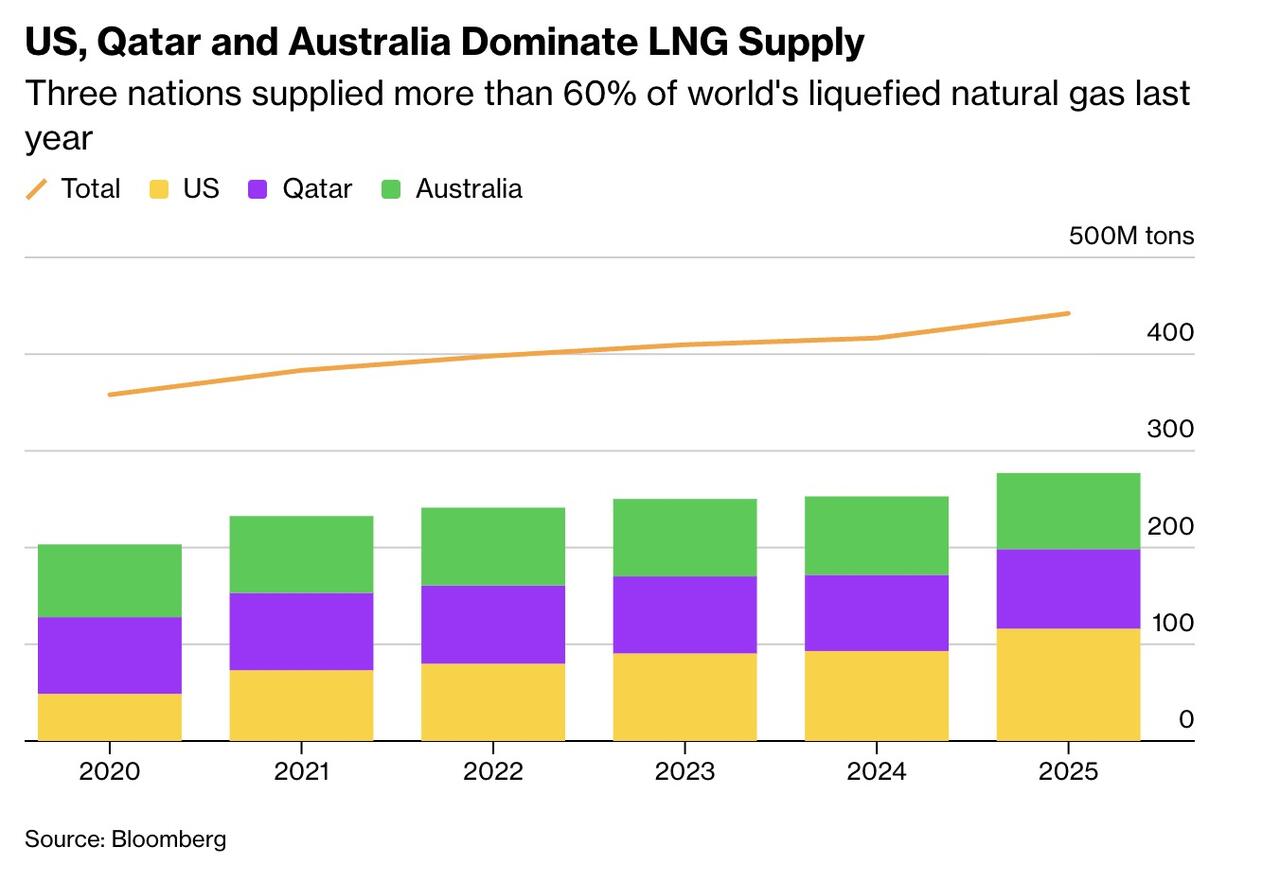
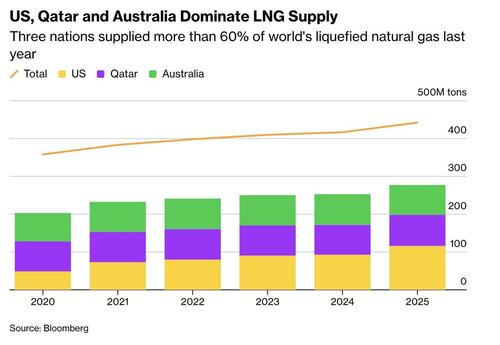
The shutdown of key gas export facilities in the Middle East is tightening global liquefied natural gas supplies, raising the risk of a deficit and pushing cargoes toward Asia as buyers compete for limited shipments, according to Bloomberg.
Ras Laffan in Qatar — the world’s largest LNG export complex — has halted production, while shipping through the Strait of Hormuz has also been disrupted. Bloomberg calculations based on 2025 output suggest that roughly three Qatari LNG cargoes are effectively removed from the market for every day the disruption continues. A smaller export facility in Abu Dhabi is also unable to ship, leaving about 20% of global LNG supply offline.
The tightening market is already reshaping trade flows. Ship-tracking data compiled by Bloomberg show that at least nine LNG cargoes originally bound for Europe have diverted to Asia since the fighting began, with the pace increasing in recent days as spare supply in the market rapidly dwindles.
“If this situation were to persist for multiple months, dragging well into the summer, there aren’t enough alternative LNG sources to sufficiently supply the global market,” said Mathieu Utting, an analyst at Rystad Energy. “The two other major LNG suppliers, the US and Australia, are already operating at full capacity with little room to increase utilization.”
The squeeze comes at a critical moment for both regions. Europe needs additional LNG to rebuild storage depleted during winter, while hotter-than-normal weather in parts of Asia is expected to boost air-conditioning demand in the coming months. Prices in both regions have surged over the past week, raising concerns about inflation and economic impacts.
“Asian buyers will need to supplement their term supply with spot cargoes,” said James O’Brien, head of LNG at D.Trading, a unit of Ukraine’s private energy company DTEK. “This will inevitably pull more Atlantic molecules east.”
Bloomberg writes that buyers in India, Bangladesh and Thailand have already turned to the spot market for additional supply, though some recent tenders for March delivery — including ones from India — failed to attract sellers because of limited availability and high prices.
52% of VG float is short, indirectly a short also on LNG. Good luck https://t.co/zC5o8OVOAZ pic.twitter.com/UHsamIacTt
— zerohedge (@zerohedge) March 6, 2026
New LNG supply from the US is unlikely to arrive quickly. While projects including Golden Pass in Texas and expansions at Corpus Christi and Plaquemines are progressing, additional capacity will come online only gradually.
Analysts say the disruption is also reducing the chances of a widely expected LNG glut this year. Morgan Stanley said any extension of the Qatar outage beyond a month “quickly brings a deficit,” after the bank had previously forecast 6 to 8 million tons of oversupply.
Rabobank strategist Florence Schmit estimates that each week of lost Qatari production cuts the expected surplus by about 1.5 million tons, leaving only a few weeks before the market tips into deficit.
“Markets are now facing a supply deficit even with higher US flows,” Schmit said. “The LNG glut has been delayed by a year.”
Tyler Durden
Thu, 03/12/2026 – 04:15
https://www.zerohedge.com/markets/middle-east-conflict-tightens-lng-supply-redirects-cargoes-asia
Italy Challenges EU Carbon Market: Hidden Tax Driving Industry Abroad
Italy Challenges EU Carbon Market: Hidden Tax Driving Industry Abroad
Submitted by Thomas Kolbe
Italian weeks in Brussels: Just days after Prime Minister Giorgia Meloni announced a hardline migration policy, openly defying Brussels’ globalist open-border agenda, she delivered a second shock.
At the start of the week, Italy’s Industry Minister Adolfo Urso called for the suspension of EU-wide CO₂ trading—or at least a profound reform. Rome calls it a hidden tax and laments the growing displacement of Italian industrial companies to non-European locations. A conclusion that will sound all too familiar in Germany.
EU climate policy is artificially driving costs ever higher across the board. Companies able to operate flexibly are losing patience with this fanatical clientelist politics. Investments are redirected elsewhere, jobs relocated—while the taxes politicians desire are collected abroad. Yet even this argument seems to fall on deaf ears in European politics, as the European taxpayer remains a convenient source of revenue. Unlike mobile capital, citizens can’t easily move their wealth and property out of reach.
It is high time European leaders confront the European Commission and its grotesque degrowth fantasies. The so-called green transformation is under evident legitimacy pressure, now that it is clear that the “green Hesperia”—a realm where economic rules and logic are suspended—will never exist. Brussels’ attempt to build a power base with its own “green” industrial sector as an economic foundation increasingly looks like a project of power-obsessed dreamers, hung around the private sector’s neck like a millstone.
While Italy is drawing a clear line and trying to distance itself from Brussels’ industrial pillage, few in German politics seem seriously concerned that the CO₂ credit system channels real capital from productive sectors into an unproductive green patronage economy, while feeding the moral self-assurance of climate-policy snake-oil merchants.
What is sold as “transformation” is in truth a large-scale impoverishment program, eroding both the middle class and its civic values. Prosperity comes from commitment to achievement, individual sovereignty, and freedom. Only a civilization already damaged allows an unqualified political elite to centralize power.
The European carbon market is a centralized redistribution scheme, which next year will extend to transport and heating sectors. Brussels is pushing its reach ever deeper into European citizens’ daily lives. Costs will rise—this much is certain. And no Strait of Hormuz energy blockade is required; Europeans can achieve this on their own.
Even Friedrich Merz proved in February, on the Welt podcast with Robin Alexander and Dagmar Rosenfeld, that he belongs to the group of green statists. There, he defended the European CO₂ mechanism as an indispensable pillar of transformation policy, a great achievement of European convergence. Riding together into summer’s decline, together into insolvency—was that Merz’s real meaning? Is the Chancellor a romantic of decay?
Just days before, he sounded entirely different. At an employers’ meeting in Antwerp, Merz—almost toxically masculine, in line with Italy’s government—called for radical reform of the climate-policy carbon plunder. The contrast between the two appearances could hardly have been starker.
Yet after nearly a year observing the Chancellor’s public appearances, one knows: Merz’s shifts and volte-faces are no exception—they are part of his political camouflage. Performative acts, distraction techniques aimed squarely at stabilizing polling. In this respect, he is a classic politician, whose speech stream generates emotional connectivity—or: form trumps substance.
His green-moral compass, however, functions reliably. Regulatory reform will not come with this man in Germany—nor will a rollback of the green transformation mechanism. Loyal voters can be certain: the Chancellor will deliver this as surely as he performs his recurring obeisance to the Social Democratic junior partner.
More than two points underscore the political importance of carbon trading.
First, it provides Brussels’ central body with its own steadily growing revenue stream, disguised from open taxation. Brussels thus gains autonomy and additional leverage in struggles with centrifugal forces in the Union—such as Viktor Orbán’s Hungary or Giorgia Meloni’s Italy.
Second, it creates the green art-economy: a reliable voter base for the established party cartel. It funds the NGO complex and ensures the future growth of the bureaucratic apparatus.
It is therefore logical that the true initiators of the green transformation—found mainly in German politics—will cling to this tool until sufficient domestic pressure forces a reversal. Such pressure can ultimately come only from civil society and the economy itself.
The question is: when will Germany join an alliance for regulatory reform?
The answer may lie in the accounts, stock portfolios, real estate, and cash reserves of the German middle class. Here, politics has hidden the activatable sedative of its welfare state—a calming agent gradually fed into the redistribution mechanism to buy social peace on the road to the green ideal society.
* * *
About the author: Thomas Kolbe, a German graduate economist, has worked for over 25 years as a journalist and media producer for clients from various industries and business associations. As a publicist, he focuses on economic processes and observes geopolitical events from the perspective of the capital markets. His publications follow a philosophy that focuses on the individual and their right to self-determination.
Tyler Durden
Thu, 03/12/2026 – 03:30

Greek Shipping Billionaire Capitalizing On Tanker Demand Surge, Deploying Five Vessels To Strait Of Hormuz
Greek Shipping Billionaire Capitalizing On Tanker Demand Surge, Deploying Five Vessels To Strait Of Hormuz
Nothing like supply and demand and good ole’ price as a rationing mechanism…
Greek shipping billionaire George Procopiou quickly moved to capitalize on the surge in tanker demand when war broke out, dispatching at least five vessels through the Strait of Hormuz, according to The Chosun Daily.
His move was driven by two key calculations: the massive freight rates oil-importing countries would pay to secure transport, and the lucrative fees oil producers offer to store crude at sea when onshore storage fills up.
Greek shipowners control the world’s largest fleet of oil tankers. Most are leased to energy companies to transport crude globally, though in tighter markets the vessels can also function as floating storage.
To reduce the risk of Iranian attacks while transiting the strait, Procopiou’s ships reportedly switched off their transponders and deployed armed guards on deck. According to reporting by The Wall Street Journal, however, the tankers would likely sink quickly if struck by a missile or drone. Crews undertaking the voyages are said to be receiving unusually high pay.
The report quotes industry sources that said Procopiou’s companies offered charter rates as high as $440,000 per day — roughly four times pre-war levels.
Procopiou controls several shipping firms, including Dynacom Tankers Management, Sea Traders (C Traders) and Dynagas. Dynacom alone operates about 70 vessels. Forbes estimates his net worth at around $4.7 billion. Shipping tycoons such as Procopiou wield significant influence in the global oil trade and maintain political connections in Washington.
The report also identified a potential beneficiary in Sinokor Merchant Marine. The company recently bought dozens of crude tankers and sent several to the Gulf before the conflict began. Sources said Sinokor leased some vessels to Abu Dhabi National Oil Company for offshore storage, earning freight rates of up to $500,000 per day.
Tyler Durden
Thu, 03/12/2026 – 02:45

Starmer’s Mandelson Mess Explodes: PM Knew About Epstein Friendship
Starmer’s Mandelson Mess Explodes: PM Knew About Epstein Friendship
Authored by Steve Watson via Modernity.news,
Another day, another layer peeled back from the rotten core of establishment cronyism, as Keir Starmer faces a torrent of revelations about his handling of Peter Mandelson’s Epstein ties. With payoffs, lies, and deep state cover-ups on full display, this saga underscores how globalist insiders protect their networks at the expense of transparency and justice.
From appointing a known Epstein associate to ambassador, to doling out taxpayer cash after the fallout, Starmer’s judgment reeks of the same elite impunity we’ve seen across the Atlantic. As freedom-loving Brits demand accountability, the PM’s crew scrambles to spin this as “process followed”—but the facts paint a picture of betrayal.
The storm hit new heights today with the release of vetting papers showing Lord Mandelson received a £75,000 payoff after being sacked as UK ambassador to the US over his enduring friendship with the convicted paedophile Jeffrey Epstein.
‘Where does this leave the tattered reputation of our Prime Minister?’@MartinDaubney discusses the first tranche of the Mandelson files revealing that Sir Keir Starmer was warned that the former ambassador, Lord Mandelson, brought a ‘reputational risk’. pic.twitter.com/84vWC3jmhe
— GB News (@GBNEWS) March 11, 2026
Documents detail how Mandelson demanded over half a million pounds in compensation for losing his £161,000-a-year role. Foreign Office permanent secretary Olly Robbins justified the smaller package, writing: “This represents good value for money.”
Chief Secretary to the Treasury James Murray signed off on it, stating he was “happy” to approve the payment, which included £34,000 in severance and cash in lieu of notice.
The papers confirm Starmer knew about Mandelson’s ongoing ties to Epstein when appointing him in December 2024. This comes amid a massive dump of Epstein’s emails by US authorities, exposing years of Mandelson’s communications with the financier.
🚨 Wow.
The Mandelson files are up.
They prove Starmer WAS advised and warned about Mandelson’s appalling friendship with Epstein.
Starmer appointed him anyway.
Starmer lied.
Starmer must resign. pic.twitter.com/1yjYioVJhK
— Zia Yusuf (@ZiaYusufUK) March 11, 2026
Starmer only released the material after a Labour MP revolt forced his hand. Today, his chief minister Darren Jones handled the Commons statement, dodging a direct grilling for the PM.
The timeline of Mandelson’s Epstein links stretches back decades, riddled with leaked secrets and personal favors. In 2002, Mandelson attended a party at Epstein’s Manhattan home with other elite figures.
Mandelson files rock Starmer: Labour grandee was handed £75,000 payoff after being sacked as US ambassador – and PM DID know he stayed friends with Epstein https://t.co/JKafime6Y5
— Daily Mail (@DailyMail) March 11, 2026
By 2003, Mandelson called Epstein his “best pal” in a message. Bank statements suggest Epstein paid £54,750 into accounts linked to Mandelson that year.
In 2006, as Florida police eyed Epstein for charges involving minors, Mandelson emailed: “I am here whenever you need.”
Even after Epstein’s 2008 conviction, Mandelson urged him to “fight for early release” via email. In 2009, while Epstein was jailed, Mandelson reportedly stayed at his Manhattan apartment.
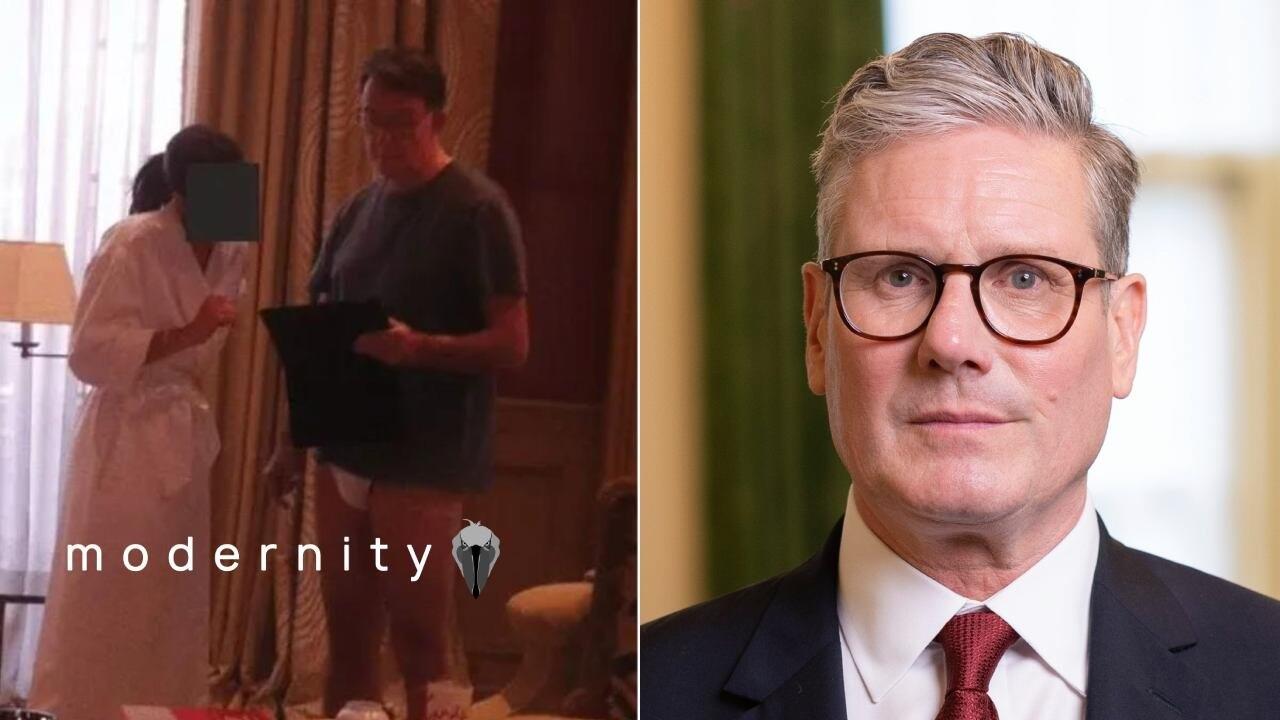
Ex-UK ambassador to US Peter Mandelson pictured standing in his underpants in Epstein files dump https://t.co/T5wMhbYz9p pic.twitter.com/PjLCy8uHR2
— New York Post (@nypost) February 1, 2026
Post-release, Epstein sent Mandelson’s husband Reinaldo Avila da Silva £10,000. Mandelson allegedly leaked a sensitive No10 document on £20 billion asset sales and Labour’s tax plans on June 13, 2009.
In 2010, he forwarded minutes from a meeting between Chancellor Alistair Darling and US Treasury Secretary Larry Summers just five minutes after receiving them, and tipped Epstein on a €500 billion EU bailout.
Contacts persisted until at least 2016, with Mandelson visiting Epstein’s New York mansion as late as 2013.
Starmer has since apologized for believing Mandelson’s “lies” about the relationship’s extent. He pledged “urgency and transparency” in disclosures.
Former No10 aide Nick Butler, whose memos Mandelson shared with Epstein, lamented: “I’m very sorry there’s been no note of contrition from Peter Mandelson to the people whose trust he broke.” He added: “For the system I think it will make people just wonder what people are doing with the information that they pass round.”
Mandelson was arrested February 23 on suspicion of misconduct in public office for passing sensitive info to Epstein while business secretary. He’s denied wrongdoing and remains under investigation.
This scandal echoes the ongoing Epstein probes we’ve covered, like police swarming his Zorro Ranch in search of strangled girls’ bodies, highlighting the grim underbelly of elite networks.
It also links to royal fallout, as King Charles reacted to brother Andrew’s arrest in the Epstein scandal, showing how these ties involve elite figures across borders.
The Mandelson files strip away the facade of accountability in Labour’s ranks, exposing how insiders like Starmer prioritize loyalty over integrity. As more documents drop, expect the web of deceit to unravel further.
Your support is crucial in helping us defeat mass censorship. Please consider donating via Locals or check out our unique merch. Follow us on X @ModernityNews.
Tyler Durden
Thu, 03/12/2026 – 02:00
China’s De-Dollarization Push Meets Washington’s Defense Of The Dollar
China’s De-Dollarization Push Meets Washington’s Defense Of The Dollar
Authored by James Gorrie via The Epoch Times (emphasis ours),
For decades, the U.S. dollar has been the foundation of the global financial system. It dominates trade settlement, anchors central-bank reserves, and underpins international financial networks such as SWIFT. That status has given Washington enormous economic and geopolitical leverage.
But from Beijing’s perspective, that same system is a strategic vulnerability. Because the dollar sits at the center of global finance, the United States can use it to enforce sanctions, control financial flows, and shape geopolitical outcomes.
China’s response has been a long-term strategy known as de-dollarization, which involves a sustained effort to reduce the world’s dependence on the U.S. currency through alternative trade mechanisms, financial institutions, and payment systems.
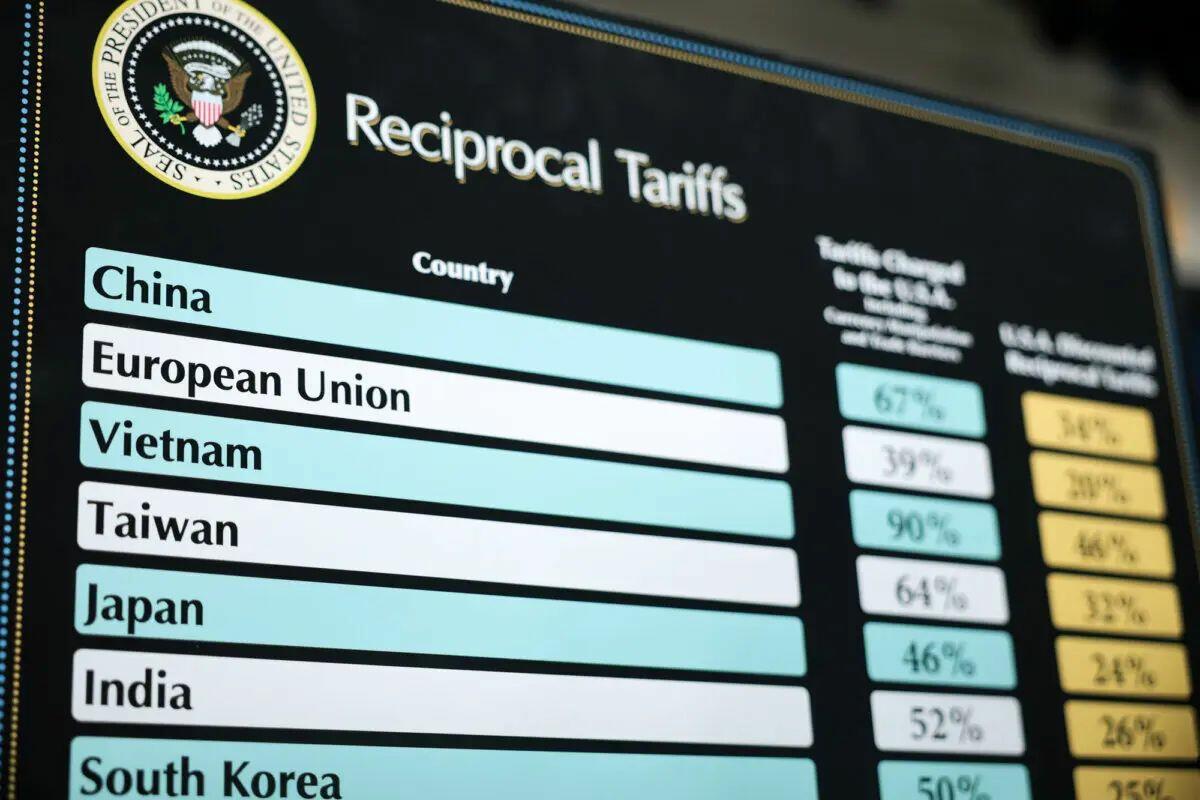
At the same time, many of Washington’s recent economic and geopolitical actions—such as tariffs, sanctions, and strategic control of global trade infrastructure—are rightly interpreted as efforts to reinforce the power of the dollar-based system and slow the emergence of alternatives.
BRICS and China’s Vision of a Multipolar Financial Order
One of Beijing’s most important tools for reducing dollar dependence is the BRICS bloc, originally formed by Brazil, Russia, India, China, and South Africa.
Collectively, BRICS countries represent more than 40 percent of the world’s population and a growing share of global GDP, giving them significant potential influence over the future of international finance.
Within BRICS, China has pushed for trade settlements in national currencies rather than dollars, encouraging bilateral currency swaps and alternative payment systems that bypass Western financial infrastructure.
The bloc has also created new financial institutions—such as the New Development Bank and the Contingent Reserve Arrangement—to provide alternatives to Western institutions like the IMF and World Bank.
For Beijing, these initiatives are the foundation of a multipolar financial system in which the yuan and other currencies gradually reduce the dominance of the U.S. dollar.
Tariffs and Economic Pressure: Reinforcing Dollar-Centered Trade
From China’s viewpoint, U.S. tariffs demonstrate how Washington uses economic policy to shape global trade in ways that ultimately reinforce the dollar system.
They’re not wrong.
The United States has imposed extensive tariffs on Chinese imports during the ongoing trade conflict between the two countries. The impact has been inconsistent but significant.
Average U.S. tariffs on Chinese goods have at times exceeded 40 percent and have covered virtually all imports from China, dramatically reshaping supply chains and trade flows.
In response, China has imposed retaliatory tariffs on U.S. goods, escalating the trade conflict and pushing both countries toward partial economic decoupling.
From Beijing’s perspective, such trade policies highlight why reliance on a dollar-centered global economy can be risky.
If access to U.S. markets or financial networks can be restricted through policy decisions in Washington, then building alternative trade systems becomes a strategic necessity.
Energy Politics: Venezuela and the Dollar Oil System
Energy markets represent another major arena in the competition between dollar dominance and emerging alternatives.
By the time the United States deposed Venezuelan leader Nicolás Maduro, China had invested billions of dollars in Venezuela’s energy sector over the past two decades in order to secure long-term oil supplies through infrastructure investment and financing agreements.
However, U.S. control over Venezuela’s oil industry has dramatically restricted its ability to export crude and access global financial markets.
What’s more, because most global oil transactions are still conducted in dollars, sanctions that restrict dollar-based payments can effectively isolate countries from energy markets.
For China, this reinforces the need for alternative settlement systems that would enable energy trade outside the dollar framework.
US Control of Strategic Trade Routes
Trade infrastructure is another crucial pillar of the dollar-based global economy. That’s why the Trump administration has increased its focus on limiting Chinese influence in Panama and securing the canal as a strategic asset.
The Panama Canal is one of the most important shipping routes in the world, handling a large share of global maritime commerce, including a significant portion of U.S. container traffic.
Washington has expanded security cooperation with Panama and emphasized that the canal must remain free from Chinese geopolitical influence.
From Beijing’s perspective, the new Panama policy reinforces the existing global financial order, which is still largely built around dollar-denominated trade.
Sanctions, Iran Attacks, and Financial Power
The U.S. attacks against the Islamic regime in Iran policy is perhaps the most strident example of how the Trump administration is defending the dollar against China and leveraging its geopolitical advantage. In short, restricting Iran’s energy flows to China helps bolster the dollar and its global infrastructure.
Because global banks and payment systems rely heavily on dollar-clearing networks, countries targeted by U.S. sanctions often find themselves effectively excluded from international finance.
Leveraging power against Iran is a prime example. Even before the ongoing war against Tehran, U.S. sanctions significantly restricted the country’s ability to access global banking systems and export oil through conventional financial channels.
From Beijing’s perspective, such developments are not just geopolitical events but deliberate acts to block its progress toward establishing a financial architecture that can operate independently of Washington’s control.
The Dollar’s Enduring Advantage
Despite China’s efforts, the dollar remains deeply entrenched in the global economy.
According to international financial data, the U.S. dollar still accounts for roughly 57 percent of global foreign-exchange reserves, far exceeding any competing currency.
That dominance reflects the powerful network effects of global trade contracts, financial markets, and banking systems that are deeply intertwined with the U.S. economy.
But China’s long-term strategy is to build a financial ecosystem that gradually greatly reduces Washington’s ability to shape global economic outcomes.
A Currency Contest for the 21st Century
In this sense, the struggle between the United States and China is not just a trade war or a geopolitical rivalry; it’s an all-out contest over controlling global finance.
Washington’s tariffs, sanctions regimes, energy policies, and strategic control of trade routes all reinforce the current dollar-centered system.
Beijing’s tactical response includes expanding BRICS cooperation and adoption, currency diversification, digital yuan experiments, and alternative financial infrastructures to create a world in which U.S. financial dominance is no longer absolute.
Whether that vision succeeds remains uncertain. The dollar’s advantages are immense and deeply embedded in the global economy. The future of global power may increasingly hinge not just on military strength or economic output, but on which currency system the world ultimately trusts to move its money.
Views expressed in this article are opinions of the author and do not necessarily reflect the views of The Epoch Times.
Tyler Durden
Wed, 03/11/2026 – 23:30
https://www.zerohedge.com/markets/chinas-de-dollarization-push-meets-washingtons-defense-dollar
Israel-Slamming GOP Candidate Dominates Youth Vote In Florida Governor Race
Israel-Slamming GOP Candidate Dominates Youth Vote In Florida Governor Race
In the latest indication of a sea change in US politics, a Republican Florida gubernatorial candidate who’s made opposition to US support of Israel a cornerstone of his campaign is winning the young-GOP vote by a wide margin. Combining social media savvy with oratorical flair, the Georgetown dropout-turned-investor and hedge fund manager is likely to continue making gains in his long-shot drive to succeed term-limited Ron DeSantis.
Whatever the final tally, however, his domination of the youth vote may portend the end of the GOP’s role as bastion of support for Israel. Chasing Trump-endorsed frontrunner Byron Donalds, James Fishback has only reached mid-single-digits among the broad GOP electorate. However, among 18-to-34-year-olds, Fishback trounces Donalds, 32% to 8%.
BREAKING: I’m running to succeed Ron DeSantis as Florida’s next Republican Governor to make life more affordable for you and your family.
I’ll stop the H-1B scam, tell Blackstone they can’t buy our homes, cancel AI Data Centers, and abolish property taxes. pic.twitter.com/IMDs4kPC9l
— James Fishback (@j_fishback) November 24, 2025
Fishback’s campaign stresses a hot-button issue for younger voters: affordability. Along those lines, he’s proposing the elimination of property taxes on homesteaded houses, abolishing tolls, and blocking data centers to ease pressure on electricity prices. He also opposes H-1B visas, with the idea of preserving job opportunities for Floridians. He wants to lower the age for any firearm purchase to 18, seeks an abortion ban, and has proposed a 50% sin tax on OnlyFans creators to pay for teacher salaries and school lunches. Opposing mass surveillance, he’s promised to “ban Palantir from every government contract in Florida.”
However, it’s Fishback’s pointed rhetoric about support for the State of Israel that marks his campaign as a watershed in US politics — because it’s coming from the mouth of a Republican, and is clearly resonating with young conservatives. His statements have only grown more pointed with the launch of the US-Israeli war on Iran. Speaking on the campaign trail last week, he offered this frontal assault:
FISHBACK: Israel roped us into this war because they are TOO COWARDLY to fight for themselves!
If they were so convinced that Iran was a threat, they could have done it themselves, but they want to spill OUR BLOOD, OUR TREASURE, spend OUR MONEY, because the Israeli government is… pic.twitter.com/L5y7W7dj8Z
— Chris Nelson 🏝️🇺🇸 (@ReOpenChris) March 5, 2026
At a gathering with voters this week, a US Marine Corp reservist asked Fishback to sign his helmet. He did so, writing, “No American should die for Israel” on the Kevlar helmet. (We’re guessing the Marine will soon be in his commander’s office.) When Fishback announced what he’d written, the young-male-dominated crowd cheered heartily:
🇺🇸 A Marine asked a Florida governor candidate to write on his helmet.
He wrote: “No American should die for Israel.”
And that’s coming from a Republican.pic.twitter.com/QSiGAy0QJB
— Mario Nawfal (@MarioNawfal) March 10, 2026
Foreign policy may strike some as an irrelevant issue in a governor’s race, but note that many state governments have enmeshed themselves with Israel — for example, passing laws that prohibit state contractors from boycotting Israel, or imposing laws against “antisemitism” that apply an exceedingly broad definition of that term so as to conflate criticism of Israel with bigotry. Then there are the financial links: Fishback has promised to divest all $385 million that Florida has invested in Israeli government bonds, saying, “No public funds should ever be sent to a foreign government anywhere in the world.”
Fishback has ridiculed Donalds for his taking money from the Israel lobby, calling him “AIPAC Shakur.” When Donalds dared Fishback to say it to his face, Fishback tried to do just that at a Donalds event, but was ushered off the property by police. “A real black man would’ve stood on business,” Fishback then wrote to his more than 230,000 followers on X.
Fishback ruffles feathers at every turn of his campaign. For example, he was accused of racism for saying the black Byron Donalds “wants to turn Florida into a Section 8 ghetto,” using a creative, alternate spelling of his opponent’s first name:
By’rone wants to turn Florida into a Section 8 ghetto https://t.co/y0bjhWNxvN
— James Fishback (@j_fishback) January 11, 2026
Fishback has been called America’s first “Groyper” candidate, referring to a strain of nationalist conservatism associated with anti-Israel podcaster Nick Fuentes. While many seeking public office would resist being associated with Fuentes and the Groyper movement, Fishback has praised the podcaster’s followers.
“I’ve found the audience of young men who follow and watch Nick Fuentes to be actually incredibly informed and insightful and very patriotic,” he told an interviewer. After that remark elicited condemnation, Fishback posted a video statement to LinkedIn. He deceptively struck a tone that would lead an audience to think he was going to walk back the praise — then did the opposite:
“I want to clarify some comments that I made this week rather abruptly in a live interview about the young man in our country who watch and follow Nick Fuentes. I wanna clarify and apologize for absolutely nothing…Too often these days, young white men are discounted and told their opinions don’t matter, that they are toxically masculine, … that their contributions don’t matter…We can never, ever sell out the people who built this country.”
Last night, I was confronted by an Israel supporter about @NickJFuentes.
Free speech and open debate are the only way forward. pic.twitter.com/wjU5hxuTv3
— James Fishback (@j_fishback) March 10, 2026
Putting an exclamation point on the Groyper and alt-right association, the Fishback campaign’s merchandise store offers a t-shirt featuring Pepe the Frog holding a sign that reads, “Don’t care, still voting Fishback.” With 46% of young Florida Republicans still unsure whom they’ll support, it’s not clear how big Fishback’s upside is, but he still has five more months to chase it: The Florida primary is on Aug. 18.
Insanely humbling https://t.co/RSN4XjMkB1
— James Fishback (@j_fishback) March 10, 2026
Tyler Durden
Wed, 03/11/2026 – 23:05

Large Study Shows High Caffeine Intake Linked To Reduced Dementia Risk
Large Study Shows High Caffeine Intake Linked To Reduced Dementia Risk
Authored by George Citroner via The Epoch Times (emphasis ours),
A daily cup of coffee or tea may do more than wake you up – it could also help keep your brain sharp as you age.
Coffee, like this?
suwijaknook6644689/Shutterstock
New research tracking hundreds of thousands of people over decades suggests that moderate caffeine consumption is linked to a lower risk of developing dementia.
Caffeine Linked to 20 Percent Risk Reduction
The study, recently published in JAMA, followed 131,821 people for up to 43 years and found that those who drank two to three cups of caffeinated coffee or one to two cups of tea daily had a lower risk of developing dementia than those who drank little or no caffeine.
Wang and his team tracked participants from two long-term studies of medical professionals, the Nurses’ Health Study and Health Professionals Follow-Up Study, with starting ages typically in their mid-40s to early 50s.
They found that people who drank between one and five eight-ounce cups of caffeinated coffee had an 18 percent reduced risk of dementia. However, those who drank caffeinated tea daily had a roughly 15 percent reduced risk.
Interestingly, the benefits plateaued beyond two and a half cups of coffee daily, possibly because the body cannot process higher amounts of the beneficial compounds in these beverages. Caffeine can mimic adenosine and bind to receptors in the brain, blocking the molecule that promotes sleepiness, and keeping us alert, Knight said. By doing so, it increases neuron activity, which may reduce inflammation.
“Inflammation is being studied as a cause of cognitive impairment,” she said. “Caffeine has the potential to reduce oxidative stress and neuroinflammation, which helps to decrease brain aging.”
Higher Caffeine, Better Outcomes
During the study, 11,033 participants developed dementia, confirmed through medical records or death certificates. The findings held regardless of genetic risk factors for Alzheimer’s or other dementias.
The study also looked at subjective cognitive decline—people’s perceptions that their memory and thinking skills are slipping. Those who drank more caffeine were less likely to report such issues. Among women over 70, those who drank more caffeine scored better on cognitive tests, indicating slower cognitive decline by about seven months.
Cognitive decline was assessed using cohort-specific questionnaires with yes-or-no responses covering general memory, executive function, attention, and visuospatial skills.
The better cognition among tea and coffee drinkers may come from caffeine’s ability to increase dopamine and acetylcholine in the brain, which are important for memory and cognition, Knight said. “Dopamine is the reward center in the brain and leads to feeling alert, focused, and pleasure. Acetylcholine is the memory neurotransmitter.”
Researchers caution that they cannot determine causation and that other factors may influence the results. For example, some participants might have been drinking decaffeinated coffee for health reasons, which could affect outcomes.
Moderation Is Key
There are risks associated with increasing caffeine intake, especially for older adults or those with certain health conditions, Knight noted.
Coffee acts as a diuretic, which can lead to dehydration—a concern given that most adults already fall short of the recommended eight glasses of water a day.
“I always tell my patients for each cup of coffee you should drink a glass of water.” She added that dehydration can lead to altered mental status, confusion, and kidney damage.
Finally, Knight cautioned that older people should be careful about caffeine intake, because it can disrupt sleep, which itself is a risk factor for cognitive decline.
“Caffeine can lead to increased difficulty with sleep,” she said. “Poor sleep can impair cognition, causing increased confusion or brain fog, and increase dementia risk over time.”
Tyler Durden
Wed, 03/11/2026 – 22:40
AG Bondi Moves To Secure Military Housing After Threats, Joining Other Trump Officials
AG Bondi Moves To Secure Military Housing After Threats, Joining Other Trump Officials
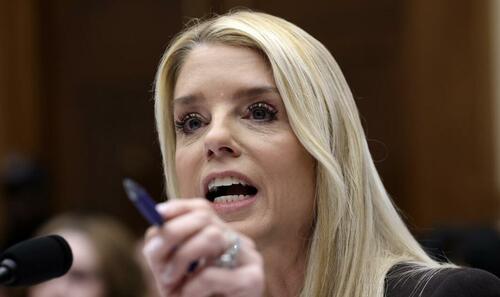
Attorney General Pam Bondi has reportedly moved into heavily guarded housing at a military base in the Washington area after receiving multiple threats.
Several sources familiar with the situation say the threats came from drug cartels as well as political critics, prompting the relocation. Bondi joins a growing list of Donald Trump administration officials who now live at secure military facilities in and around the nation’s capital due to heightened security concerns.
“Ms. Bondi moved from an apartment in the city within the past month in response to an array of threats flagged to her staff by federal law enforcement, these people said, including an uptick in criticism of Ms. Bondi, and threats relayed by investigators,” the New York Times reports.
“One catalyst was an increase in threats following the capture and prosecution of President Nicolás Maduro of Venezuela in January, according to a senior official with direct knowledge of the situation who spoke on the condition of anonymity to discuss security matters.”
The threats against Trump administration officials are very real. For example, Trump advisor Stephen Miller and his family were subjected to repeated protests outside their Arlington, Virginia home, including activists posting fliers in their neighborhood with their home address, branding him a “Nazi” and accusing him of “crimes against humanity.” Protesters with Arlington Neighbors United for Humanity also chalked messages on the sidewalk accusing him of “destroying democracy,” “kidnapping,” and “White nationalism,” and the group warned the couple on Instagram that their efforts to “dismantle our democracy” would not be tolerated. His wife, Katie Miller, also recounted that a protester told her, “I’m watching you,” as she left their house. Other officials living on a military base include Sec. of State Marco Rubio, Sec. of Defense Pete Hegseth, and outgoing DHS Sec. Kristi Noem.
Even though legitimate threats have forced these officials to move to military bases, the liberal media outlets have been criticizing the relocations for months. Fox News Digital reported last year that left-leaning outlets like The New Republic and The Daily Beast claimed the officials were merely trying to avoid public backlash.
The New Republic called Stephen Miller “one of a handful of President Donald Trump’s Cabinet members who are hiding out on military bases so they don’t have to be exposed to the public that hates them,” while The Daily Beast said he had secured “a taxpayer-subsidized military home, shielding him from the type of people he hates the most: left-wing agitators.”
The New York Times similarly questioned the legitimacy of the arrangements and the costs to taxpayers.
“It is not clear how much, if anything, officials are paying to stay at some of the most historic properties in the government’s possession,” the paper wrote, and noted that “this appears to be the first administration to take such widespread advantage of taxpayer-funded military housing to accommodate political appointees who do not have a direct connection to the military, according to former officials and historians.”
Last year, the Network Contagion Research Institute published research warning that what it calls “assassination culture” is taking root in American political life. Lead researcher Joel Finkelstein traced the inflection point to December 2024, when Luigi Mangione shot UnitedHealthcare CEO Brian Thompson in broad daylight in Manhattan. Rather than near-universal condemnation, Mangione became a folk hero among the political left.
“What was formerly taboo culturally has become acceptable,” Finkelstein told Fox News Digital. “We are seeing a clear shift — glorification, increased attempts and changing norms — all converging into what we define as ‘assassination culture.'”
Five months after the study was published, Turning Point USA founder Charlie Kirk was assassinated in Utah.
The left may not like the fact that Trump administration officials are living on military bases, but they are the reason they have to.
Tyler Durden
Wed, 03/11/2026 – 22:15

AI Won’t Fix America’s Looming Debt Crisis
AI Won’t Fix America’s Looming Debt Crisis
Authored by David Youngberg via TheDailyEconomy.org,
Last month, Congress sparred with the president over a partial budget, but with few real cuts, America’s slow march toward an epic debt crisis went on undeterred. With over $38 trillion in debt and interest payments exceeding defense or Medicare spending, one would expect lawmakers to confront reality and do the difficult work needed to restore fiscal sanity. But why would they? Cutting entitlements and increasing middle-class taxes rarely make for winning campaign slogans.
It’s no surprise, then, that some prefer to pin their hopes on AI as America’s fiscal savior. Vanguard’s chief economist Joe Davis argued there’s as high as a 50 percent chance AI will prevent a debt-driven economic malaise. Elon Musk voiced a similar conclusion late last year, claiming AI and robotics are “the only thing that’s going to solve the US debt crisis.”
The argument goes like this: an AI boom drives explosive economic growth and tax revenue, while, at the same time, productivity gains impressively offset any upward pressure on interest rates. The deficit becomes a surplus and the overall debt shrinks, possibly disappearing entirely.
If that sounds less like a policy plan and more like a retirement strategy built around winning the lottery, you’re not wrong. The entire scenario hinges on a massive if: that AI generates extraordinary revenue and does it quickly enough to outrun rising interest costs.
But even if the government hits the tax revenue jackpot before Congress drives us off a fiscal cliff, it would be naïve to assume lawmakers would pay down the debt.
The More the Government Gets, the More the Government Spends
For the sake of argument, suppose the tech optimists are right, and the federal government enjoys a massive AI-driven revenue windfall. Understanding what happens next requires understanding the incentives of politicians and their voters.
This is where public choice shines. Rather than assuming politicians and voters act in everyone’s best interest, this branch of economics recognizes that people don’t become angels once they interface with the government. Incentives matter, especially for politicians.
Incentives are why we have a deficit in the first place. The public isn’t particularly interested in financial restraint because high spending and low taxes benefit them now, and the resulting debt is some future generation’s problem. Politicians surely see the crisis brewing, but solving it is a sure way to get voted out of office. And so the incentive is to run constant deficits and grow the debt year after year, decade after decade.
Without changing incentives, it will be hard to avoid spending new revenue. Ballooning coffers mean voters will demand that the government dole out more goodies (especially if AI displaces workers along the way). Washington already excels at entertaining expensive ideas: healthcare subsidies for well-off families, a universal basic income, generous tax cuts, a fifty-percent increase in military spending, all despite the pushback the current deficit’s able to muster. Imagine the wish list after it drops even a little.
Expecting Congress to use a jolt of revenue to pay down debt is like expecting a compulsive gambler to save his winnings for retirement. There’s a reason nearly a third of lottery winners file for bankruptcy within five years of getting their windfall. Winners tend to be the ones who bought a lot of tickets, and people who buy a lot of tickets tend to be reckless with their money.
Not all lottery winners are reckless, and not all lawmakers are more interested in buying votes than paying off debts. The question is whether Congress is more likely to emulate the prudent winner or the reckless one.
This Has All Happened Before…
Public choice theory suggests we already know the answer, but maybe there’s some crucial detail we’re missing. Or maybe American politics is just different in some way. The good (or, depending on your position, bad) news is that we have a ready example from the last time a tech revolution balanced the government budget: the internet boom of the late 1990s.
Right before investors realized you couldn’t slap a ‘dot-com’ onto any English word and make a billion dollars selling pet food over what we laughingly called the information superhighway, a surge of investment handed the Treasury Department the biggest budget surplus since World War II demilitarization. It also arrived in time for a presidential election.
The 2000 election pitted Vice President Al Gore against Texas Governor George W. Bush, and the question of what to do with the surplus was a major campaign issue. Gore proposed using some of it to pay down the debt. Bush preferred spending it on tax cuts, Social Security, and “important projects.” Yes, the Democrat was more of a fiscal conservative than the Republican. Those were wild times.
Bush would go on to win that election.
It was incredibly close, and Gore could’ve easily won. And if not for something called a butterfly ballot, he would’ve won.
But he didn’t win, and all we knew at the time was that it was very, very close. It was so close that if Gore had promised some “important projects” in Florida instead of paying down a bill that wouldn’t have come due until some distant decade, the White House would’ve been his.
Losing by a hair’s breadth is every campaign’s nightmare. Mere oversights become colossal blunders, and every ill-fated gamble becomes a decisive mistake. The 2000 election made something crystal clear to anyone who hadn’t already gotten the memo: prudence is for losers.
The surplus proved to be transient anyway, vaporized in the aftermath of 9/11 and the bursting of the dot-com bubble. The US returned to familiar deficit territory two years later, and we never looked back.
…And It Will Happen Again.
The optimists might say that this time will be different. The looming deficit crisis is so bad that politicians will use any AI windfall to pay down the debt rather than spend it. This time they’ll do the responsible thing.
Be serious.
It’s of course possible that the political stars align and lawmakers will pay down the deficit instead of playing another round of “someone else’s problem.” It’s possible that the prudent thing will be done without a financial crisis to jar the public out of their “the future is never” fantasy.
But let’s get real. Though public concern about the debt is high, there’s so much disagreement about how to address the problem that politicians can safely ignore it. When President Trump threw his own eye-watering increase onto the debt last year, his approval rating didn’t budge. Voters say they care about the debt but they clearly care more about the things that have created it. The political incentives are the same as they ever were: if the government wins the AI lottery, lawmakers will behave as they always have. This time won’t be different.
Tyler Durden
Wed, 03/11/2026 – 21:50
https://www.zerohedge.com/economics/ai-wont-fix-americas-looming-debt-crisis
Moody’s Cuts New York City’s Rating Outlook Despite Mamdani Protests
Moody’s Cuts New York City’s Rating Outlook Despite Mamdani Protests
The only surprise is that the move came so late.
With New York City facing a historic fiscal crisis courtesy of its new mayor, late on Wednesday Moody’s lowered its outlook on New York City to negative, citing the “sizable and persistent” budget shortfalls it’s facing.
The move, which usually precedes a ratings cut in the subsequent several months, came as the ratings company also affirmed its Aa2 rating on the city’s debt, the third-highest level of investment-grade.
Moody’s said the change came after the city’s spending projections showed larger budget shortfalls than previously forecast.
“The negative outlook reflects the emergence of sizable and persistent projected budget gaps that signal underlying structural imbalance and reduced financial flexibility, despite New York City’s still favorable economic conditions,” Moody’s analysts said in a statement Wednesday, perhaps confused how to rate the former mecca of capitalism which was rapidly transforming into a socialist paradise.
Dora Pekec, a spokesperson for Mayor Zohran Mamdani, said the move was premature, citing the $5 billion in additional state funding the city stands to receive under proposed budgets being considered by the legislature.
“These proposals reflect a real commitment by Albany to investing in the services New Yorkers rely on, and the fiscal health of our city,” the statement said. Moody’s ignored the protest.
New York City Comptroller Mark Levine said on Wednesday that the change was “a sobering wake-up call about the fiscal challenges ahead for us.”
The Comptroller warned that New York City must close a deficit of at least $5.4 billion this year and next year even as Wall Street bonuses are at record highs, and every major source of revenue, apart from corporate taxes, is rising. “Unfortunately, our expenses are growing even faster,” he said in testimony to city council members on Wednesday. As we said: “socialist paradise”
Levine said that the city’s operating expenses are projected to be $4.53 billion higher than its revenue in fiscal 2026, and warned that a proposed property tax increase floated by Mamdani would put the levy near its limit.
The mayor’s $127 billion budget relies on drawing from the city’s rainy-day fund, which would limit the city’s ability to weather the next economic downturn.
Spending on the city’s schools total $36.9 billion, a 31.5% increase since 2020, even as enrollment has fallen by 100,000 students, according to the comptroller. Moreover, the city’s housing voucher program has been growing at 4% per month and is estimated to total $2.6 billion next year.
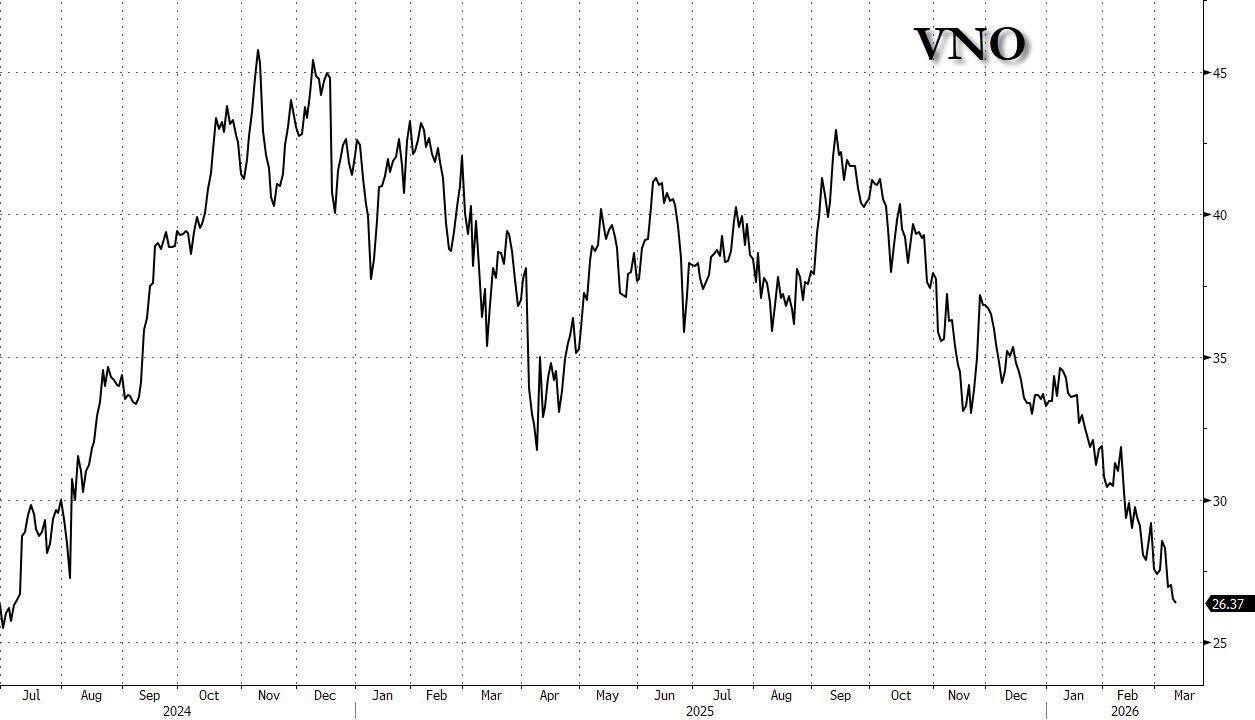
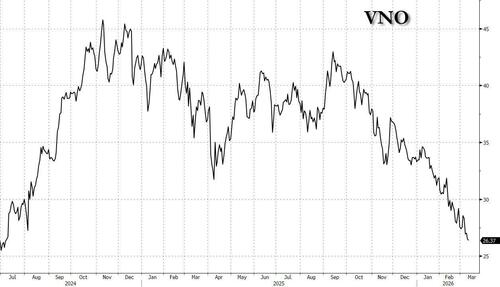
But the real gut punch would be if New York proceeds with the planned tax hike on the city’s wealthy, a move which will decimate the city’s revenue as the ultra wealthy will move to Florida (as their California peers have already done), as well as leading to an exodus of office tenants, something which the collapsing stock price of commercial real estate giant Vornado has already sniffed out.
Tyler Durden
Wed, 03/11/2026 – 21:26