Category: News
Another Manic Monday Coming
Another Manic Monday Coming
Submtted By Peter Tchir of Academy Securities
I expect that we will see a lot of “green dots” on the Bloomberg Terminal Sunday night, as there was almost no asset (other than energy) up on Friday. I do know that my Monday will start bright and early, at 5am on CNBC. Away from that everything is a bit up in the air.
There are headlines that can push us in either direction. Some developments that seem good, some that seem bad, some that seem weird, and some that are just downright confusing and/or contradictory.
Transiting the Strait
There seem to be three possibilities to transiting the Strait:
Please see Thursday’s SITREP U.S. Expected to Conduct Strait Transit This Month. On Saturday morning Admiral Cooper, in a video on X, said “Iran’s ability to threaten freedom of navigation in and around the Strait of Hormuz is degraded.” The report went on to list other actions being taken to knock out the capability of Iran to target ships in the Strait. This fits Academy’s view that the U.S. is actively taking steps to prepare for safe transit.
More countries have signed the Joint Statement expressing a “readiness to contribute to appropriate efforts to ensure safe passage through the Strait.” A bit “wishy-washy” at best, and went to great pains to reference the United Nations and International Energy Agency, and avoid referencing America. Not sure if this does much, but it is a step in the right direction. If we are going to stick to the “Manic Monday” theme, this reminds me of the line, “blame it on the train, but the boss is already there.”
Mounting “chatter” that Iran is “selling safe passage” for about $2 million per ship. I did get some secondhand confirmation from a trusted source that these discussions are in fact occurring. Unclear how effective they will be.
All of these things are “encouraging” in terms of shipping. A U.S.-led (or even solely U.S.) effort to encourage ships to transit the Strait is the most promising in terms of being a “real” solution. The Iranian “insurance” plan seems dubious at best, and not great for the world.
Unfortunately, it is being widely reported that Iranian leadership is steadfast on trying to keep the Strait from being transited by global shipping and is unwilling to even negotiate on the topic.
Polymarket has several opportunities to “predict” things:
Strait of Hormuz traffic returns to normal by the end of April. Only 27% down from 50% as recently as March 12th.
Lots of opportunity for stocks to do very well if that is really reflective of what is being priced into the market. I think it is too small of a market to be particularly useful, but lately it does seem that some “obscure” prediction markets get volume and pricing that indicates someone “knows” something – so worth at least keeping an eye on.
Boots on the Ground, or Mission Accomplished?
Marine expeditionary forces are on the way. There has been a lot of discussion about the potential to “seize” Kharg Island (now that Iran’s military facilities have been hit hard). Or to possibly clear Iranian forces close to the Strait. There is a lot of debate on what taking Kharg Island would mean. One school of thought is that controlling the ports would rapidly force Iran to the table as their primary source of income and leverage would be in U.S. hands. Others see a lot of risks to the plan, from hardening resolve, to still requiring the Strait to be open, to how much money/currency does Iran have and how long could they hold out, even if they were not able to sell another barrel of oil? I’m more in the latter camp, but we can debate this option later this week as the Marines arrive.
Also, why spend much time thinking about boots on the ground, when the President has been posting on Truth Social “We are getting very close to meeting our objectives as we consider winding down our great Military efforts in the Middle East with respect to the Terrorist Regime of Iran.”
This statement could be a negotiating tactic. Maybe it is just to lull Iran into a false sense of security (the initial attack on Iran occurred during ongoing negotiations). Maybe it is just a “trial balloon” to see how people (voters) and possibly markets respond?
Literally, both extremes – “boots on the ground” and “we won, time to go home” – are on the table. It really could be a Manic Monday.
Un-Sanctioning, De-Jonesing, and Releasing
In the past week or so, the administration has:
Taken off sanctions on Russian oil. This certainly helps keep the price of oil lower than it would be otherwise, though I suspect most of the oil still winds up going to China and India, at less of a discount. At the same time, I would be very concerned about what this means for Russia if I’m either Ukraine or the EU. Secretary of War Hegseth has been pointing out how any lack of inventory in the U.S. military is a direct result of giving weapons to Ukraine. If Europe isn’t already thinking about the need to potentially “go it alone” against a wealthier Russia, they should be. It might not get to that point, but that is certainly one message that can be taken from this very “transactional” administration.
Removed sanctions on Iranian Oil “on the sea.” The Treasury Secretary made this announcement and referenced 140 million barrels that will now be without sanctions. That is a big “release” of oil, but I’m told by oil experts that while the amount at sea is around that, as much of 100 million barrels is already spoken for (largely by China) and is in transit. So, it might be “only” 40 million barrels. If one goal of seizing Kharg Island is to apply maximum economic leverage, this move seems to give Iran more wiggle room. In the aftermath of this, it will be interesting to see how Iran has funded itself? Presumably not in dollars, so in yuan? Bitcoin? Barter?
A 60-day suspension of the Jones Act. This basically allows any ship to transit goods between two U.S. ports. It is viewed by many, including me, as a potential first step towards export controls. The U.S. is not designed (currently) to use all of the oil, gas, LNG, diesel, etc. that it produces domestically. Pipelines aren’t developed for that. The Jones Act has made it unprofitable to do that. This allows some of that to occur, helping keep oil prices low. There is a limit to how effective it can be without export controls (and I’m not a big fan of export controls, but it is something we should watch).
The U.S. price for any energy product, with no export controls, is basically the Global Price minus Freight Costs minus some “Inertia” (where “Inertia” is existing relationships, agreements, etc.). So, as “global” prices rise, U.S. prices will rise, because the drillers, refiners, etc., will make more money selling it overseas if prices don’t rise domestically. It is economics 101, so we will see what else gets implemented to keep domestic prices lower if they continue to rise across the rest of the world.
Strategic Petroleum Reserve releases. I have not done the work, but it sounds like the U.S. released almost 90 million barrels of oil. Since there is only excess capacity to load about 25 million barrels a month, the release gives us some breathing room, until June or so (3 to 4 months). There is more to be released, though there is some limit, as apparently some amount of oil needs to stay in the reserves to keep the facilities’ structural integrity intact. Europe has supposedly been slower on releasing their supplies, but that is possibly because they are worried it will get bought elsewhere, so they will bleed out their reserves more “judiciously.” Europe’s lack of energy independence is once again being highlighted! The President did admonish the leader of Scotland for buying North Sea oil from Norway, and wind turbines from China, while curtailing their own drilling in the North Sea. How long before Europe gets the ProSec™ message?
No relief on tariffs. I would have put this in play, at least for some things (energy, fertilizer, etc.) but I was never a huge fan of the broad application of tariffs in any case.
Airbus for Drones
According to Wikipedia, Airbus was created in 1970 as a consortium of European aerospace companies to produce wide-body aircraft to compete with American built airliners. If I was in the EU, I’d be pounding the table for a drone equivalent of Airbus:
It is quite clear that drones are effective. They have their limitations (both on the hardware and software sides), but they can certainly play a meaningful role in deterrence and defense (as well as provide offensive capabilities).
They are cheap and relatively easy to make. Making a 5th generation jet is extremely difficult. Ditto for aircraft carriers and capital ships. Even modern missile systems are expensive and require highly specialized machinery. Take a bunch of factories that used to make cars (or other things) and ramp up drone production. A drone factory for the Ukrainian Army was recently opened in the U.K. I see great difficulty (and that is being kind) in the EU developing a fighting force with the equipment they have any time soon (like in the next 5 years). A fleet of drones and unmanned surface vessels that is enough to give Putin some pause seems far more plausible.
The “consortium” construct is important as it would hopefully remove some of the national interests that already impair Europe’s efforts to rearm themselves quickly and with some degree of compatibility.
Possibly a non sequitur but I want to invest in companies that might fit this sort of model as it seems to be an obvious choice, and eventually, usually after a lot of whining and moaning, and a couple of near-catastrophic failures, Europe does the obvious thing. (The European Debt Crisis from the beginning to “whatever it takes” seems to fit this path well).
The U.S. is Neither an Oasis Nor a Mirage
As brent crude soared higher than WTI (and grades of crude most of us have rarely heard of skyrocketed even more), the U.S. equity markets seemed to treat the U.S. as an “oasis.” We already mentioned that even with energy independence, we will see higher prices along with the rest of the world (unless we go to some form of export control). So, we are not immune. But we do have advantages – hence we are neither an oasis (really good), nor a mirage (all fake).
The links to the U.S. are real and will hurt:
Somewhere around 40% of the revenue generated by Fortune 500 companies comes from overseas. If Europe and Asia are struggling, it will impact companies here.
While the products might be American, many are manufactured elsewhere and are subject to supply disruptions, which would further impact profits for U.S. companies.
Those countries went out of their way not to mention the U.S. in their “letter,” which makes me wonder, again, do U.S. brands still have the same “cache” for non-American consumers?
Interest rates have spiked across the globe. The cost of everything, everywhere has gone up with this pretty dramatic move in yields. The U.S. 2-year yield went from 3.38% to 3.9% in 3 weeks. U.K. yields are incredibly jealous of that “strong” performance – as they rose 100 bps in the same period!
Ironically, and somewhat par for the course in this “stop-loss” driven market, Private Credit outperformed even as markets probably should have started adding global recession risks to the reasons to be concerned about private credit. But it seems that everyone was so underweight that even a realistic issue didn’t cause much/any new pain.
Urea and Limp Mode
In the long list of “knock-on” effects from the slowdown in goods from the Middle East, we can add another “risk” – DEF. Diesel exhaust fluid is used in diesel engines to reduce harmful emissions. Since 2010 (or so), if a diesel engine doesn’t have enough DEF, the vehicle is restricted to going 5 to 15 mph (limp mode). Supposedly the vehicle can be reprogrammed, but this is yet another thing to highlight regarding the quirkiness and complexity of supply chains and products. Oh, I almost forget, urea is about 33% of DEF. Gulf urea costs have almost doubled since the start of the year.
Not trying to make a big deal about this (unlike helium for semiconductors), but thought it would provide a nice break, and I always enjoy learning something new.
NI CHEM Majeure
I need to find some better hobbies than checking out Bloomberg for stories containing “Force Majeure” but it is getting more worrisome by the day.
If you go to Google Trends it is pretty clear that others are starting to be fascinated with this as well.
Already Too Late?
It is already precarious for Asia (ex-China), the Middle East itself, and Europe. The costs, potential supply chain disruptions, AND higher rates (when many mortgages are floating rate) seem to be a recipe for recession.
A resolution this week, or maybe even next, and maybe we scrape by. Maybe the U.S. is still out of range for a recession, but a recession was barely a gleam in the eye of any “doomer” a month ago, and that risk now has to enter the conversation.
Risks to the global economy are rising. While the U.S. is in much better shape (we were in better shape before the conflict and have more robust protection against the new problems created by the conflict), that doesn’t mean we don’t have risk (we are not a mirage, but we are not an oasis either).
Yields scare me right now.
The moves don’t seem to make sense in the context of higher oil prices. Yes, higher oil prices should impact yields, but by this much?
We saw 2s vs 10s flatten (which makes some sense, if higher prices will slow demand over time), but on Friday, 10s underperformed.
I am not sure the consumer is in a position to do well in this rising rate environment. Again, private credit didn’t seem to care on Thursday and Friday (and I had recommended being long those sectors recently, because too much pessimism was being priced in). I think they should care as the risk of a slowing economy with potential supply chain hiccups is a real risk here.
Bottom Line
I wish it was Sunday, ’cause that’s my fun day.
Okay, it is Sunday, but it is certainly not my fun day. Nor has it been for the past few weekends (though to be honest, deep down, I enjoy these stressful times).
Manic can be good.
By the time this makes it to our website, and you see it distributed, we might have some clarity one way or the other. We are likely to continue to be affected by dueling headlines.
There are still plenty of paths to a really strong week for markets, especially if the “winding down” messaging comes to fruition with a resolution in the Strait.
There are other ways we can see progress that might not give us a “manic” rebound, but a rebound nonetheless.
Unfortunately, there are plenty of paths that lead to more problems and some that could lead to a manic week, and not in a good way.
I do believe that as we move down the road, in a week or two, markets won’t react to positive headlines, as the “fear” that it is already “too late” gets priced into markets.
I’d love to say “buy Treasuries” but we seem to have broken some resistance and it is difficult to justify the size of the move solely on the economics of what is occurring in the Middle East.
I guess my “bottom line” is cautious for now, but be prepared to be very bullish, though any thought of being bullish will diminish as the days go by if we don’t see progress in getting us off the current path. The current path, as it goes on, will make it “too late” for some economies, and even if the U.S. can avoid the worst of it, it won’t be great for earnings (and hence the stock market). Rates seem to be telling such a different story that bonds seem like a “screaming” buy here, but that too seems dangerous.
Tyler Durden
Sun, 03/22/2026 – 11:40
https://www.zerohedge.com/markets/another-manic-monday-coming
ICE Agents To Assist With Airport Security Lines Starting Monday, Trump Confirms
ICE Agents To Assist With Airport Security Lines Starting Monday, Trump Confirms
In a post on his TruthSocial feed, President Trump has confirmed that ICE agents will be joining forces with TSA agents as of tomorrow to aid in the safe-keeping of Americans:
On Monday, ICE will be going to airports to help our wonderful TSA Agents…
… who have stayed on the job despite the fact that the Radical Left Democrats, who are only focused on protecting hard line criminals who have entered our Country illegally, are endangering the USA by holding back the money that was long ago agreed to with signed and sealed contracts, and all.
But watch, no matter how great a job ICE does, the Lunatics leading the incompetent Dems will be highly critical of their work.
THEY WILL DO A FANTASTIC JOB.
The great Tom Homan is in charge!!! President DJT
Something’s got to give…
🚨HOLY CRAP!!!
The Atlanta TSA line has now stretched to a stunning 153 minute-wait-time… AT 6AM IN THE MORNING!!!!
The line is WRAPPING AROUND BAGGAGE CLAIM!!!
THIS IS PURE INSANITY!!!!!! pic.twitter.com/2MluEMjitJ
— Matt Van Swol (@mattvanswol) March 22, 2026
This confirmation comes after President Trump initially announced plans yesterday to move Immigration and Customs Enforcement (ICE) agents to airports on Monday to help Transportation Security Administration (TSA) agents manage security checkpoints.
“If the Radical Left Democrats don’t immediately sign an agreement to let our Country, in particular, our Airports, be FREE and SAFE again, I will move our brilliant and patriotic ICE Agents to the Airports where they will do Security like no one has ever seen before,” Trump wrote in a Truth Social post on March 21.
As Jacki Thrapp reports for The Epoch Times, Trump revealed his plans to move ICE agents to airports one day after the Senate failed to advance a funding bill for the Department of Homeland Security (DHS), which has been in a partial shutdown since Feb. 13.
“I look forward to moving ICE in on Monday, and have already told them to, ‘GET READY.’ NO MORE WAITING, NO MORE GAMES!” Trump added in a second Truth Social post on Saturday.
Trump did not reveal which airports the ICE agents would be deployed to but added that he would order them to immediately arrest “all Illegal Immigrants who have come into our Country, with heavy emphasis on those from Somalia.”
As lawmakers on Capitol Hill remain at a stalemate, federal employees in the agencies under DHS have been working without pay due to the lapse in federal funding that started in mid-February.
Agencies under the DHS umbrella include TSA, Customs and Border Protection, ICE, the Federal Emergency Management Agency, and the Coast Guard.
Some TSA agents have had to sleep in their cars and go to food banks just to stay afloat, while others called in sick, which has caused hours-long security lines, according to Homeland Security.
There are growing concerns that some airports will have to temporarily close down due to TSA staffing shortages.
Billionaire Elon Musk offered on Saturday to help pay TSA workers.
“I would like to offer to pay the salaries of TSA personnel during this funding impasse that is negatively affecting the lives of so many Americans at airports throughout the country,” Musk said in an X post.
Since the start of the partial shutdown, Democrats have refused to support funding bills because they want to change immigration enforcement policies, particularly those involving ICE.
Senate Minority leader Chuck Schumer (D-N.Y.) proposed a motion on Saturday to advance a bill that would fully fund TSA—but not the entire DHS. It failed in a party-line vote of 49 to 41.
Tyler Durden
Sun, 03/22/2026 – 11:05
What Do Bonds Know That The Stock Market Doesn’t?
What Do Bonds Know That The Stock Market Doesn’t?
Authored by Lance Roberts via RealInvestmentAdvice.com,
Most investors spend their time watching the S&P 500. That’s a mistake, because the credit market is the real “tell.” The bond market has been whispering a warning for weeks now, and credit spreads are now shouting it. As of this writing, the CDX Index, a benchmark measure of credit default swap spreads, has climbed to a nine-month high while the S&P 500 sits within 5% of its all-time peak. Over the past 20 years, every time that combination appeared, a bear market followed. Every single time.
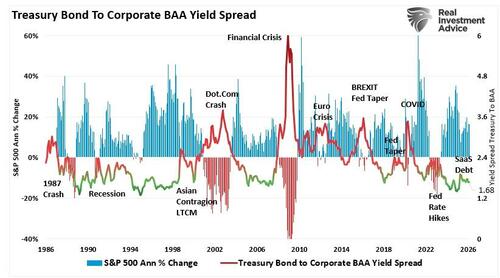
That’s a track record worth taking seriously, and credit spreads are critical to understanding market sentiment and predicting potential stock market downturns. A credit spread refers to the difference in yield between two bonds of similar maturity but different credit quality. This comparison often involves Treasury bonds (considered risk-free) and corporate bonds (which carry default risk). By observing these spreads, investors can gauge risk appetite in financial markets. Such helps investors identify stress points that often precede stock market corrections.
The chart shows the annual rate of change in the S&P 500 market index versus the yield spread between Moody’s Baa corporate bond index (investment grade) and the 10-year US Treasury Bond yield. Rising yield spreads consistently coincide with lower annual returns in the financial markets.
The reason is that credit is the lifeblood of the economy. Businesses borrow to operate, and consumers borrow to spend. As such, when the cost of that borrowing rises, particularly the premium lenders demand to extend credit to riskier borrowers, it signals that the economy is under stress. That “stress” directly affects forward earnings estimates and increases the likelihood of a valuation repricing.
The “Junk to Treasury” spread is the clearest expression of this dynamic. Investors who buy high-yield bonds, the ones with a meaningful chance of default, should demand a premium above the risk-free rate offered by U.S. Treasury bonds. When that premium compresses, it signals that investors are comfortable speculating, willing to reach for yield without demanding adequate compensation for the risk they’re accepting. When the premium expands, the mood has shifted. Lenders are getting nervous. Credit conditions are tightening. And historically, tighter credit conditions have preceded more challenging environments for stocks.
This isn’t a theoretical relationship; it has repeatedly appeared in the data for decades. The bond market (CDX) prices risk continuously across thousands of issuers and maturities. It’s harder to talk up than equities, and it’s not susceptible to the same retail-driven momentum that can keep stock prices elevated long after the fundamental picture has deteriorated.
When credit spreads widen, investors should pay attention.
What The CDX Is Telling Us Now.
The chart from Sentiment Trader below tells the story as clearly as any amount of prose could. The top panel tracks the S&P 500 since 2007. The middle panel shows the CDX Index of credit default swaps. The bottom panel shows where those spreads stand relative to their 189-bar range, essentially a percentile reading of how elevated they are relative to recent history. (Red markers indicate instances where CDX spreads hit 9-month highs while the S&P 500 is within 5% of its high.)
Notice that each red arrow marks a moment when CDX spreads reached a nine-month high while stocks remained near their all-time highs. The 2007 signal preceded the worst financial crisis since the Great Depression. The 2015 signal preceded a sharp correction and an extended period of volatility. The 2022 signal arrived just before the Federal Reserve’s aggressive rate-hiking campaign drove the S&P 500 down 25%. And now, in early 2026, the signal has triggered again.
“This has been one of the more important divergences we’ve been tracking recently. CDS is pushing to a 9-month high even with equities near highs, effectively tightening financial conditions. Historically, this setup has been unstable: about half the time it led to sharp drawdowns, while the rest saw either mild pullbacks or continued gains.” – Sentiment Trader
The range-rank reading in the bottom panel is particularly instructive. It shows that current CDX spread levels are not a minor blip, but are registering near the upper end of their recent historical range. That’s not statistical noise, but a market pricing in genuine credit stress. The table below summarizes the four instances over the past two decades where CDX spreads hit nine-month highs while the S&P 500 traded within 5% of its peak. The subsequent market outcomes speak for themselves.
Does this mean the current situation will devolve into a bear market? Not necessarily, but history suggests the risk is elevated enough to warrant investors’ attention. It is also worth noting that the magnitude of the subsequent declines varied considerably, from the catastrophic 2008 to 2009 bear market to the more contained 2015 correction. That is due to the severity of the credit impact on the underlying economy. However, they all shared a period of elevated credit spreads that the equity market initially chose to ignore.
So far, this “time is not different.”
The Counterargument Is Not Convincing
The bulls will argue that CDX spreads are widening from historically tight levels and that the absolute level of stress remains modest by historical standards. That’s technically accurate, as shown, Treasury-to-Junk Bond spreads in early 2026 are not at the panic levels seen in 2008 or 2020. So why worry?
It isn’t the absolute level of the CDX that matters, but the direction of travel and the rate of change. If investors wait for the “spike,” it will likely be too late to act. Sentiment Trader’s nine-month high threshold isn’t about measuring the peak of a crisis; it is a warning of a potential turn. Credit stress doesn’t arrive fully formed. It builds. Each of the prior signals triggered before the real damage was done, precisely because spreads were starting to move, not because they had already maxed out.
There’s also the macro backdrop to consider. The S&P 500 enters this period with valuations near the upper end of its historical range, forward earnings estimates elevated, and sentiment still bullish. As investors, we monitor the high-yield spread closely because it is often one of the earliest signals of a fundamental shift in corporate and economic conditions. In other words, watching spreads provides insights into the health of the corporate sector, which is a major driver of equity performance. When CDX spreads widen, they often lead to lower corporate earnings, economic contraction, and stock market downturns. The reason is that a significant widening of the CDX spreads signal:
Liquidity Drain: As investors become more risk-averse, they shift capital from corporate bonds to safer assets, such as Treasuries. The flight to safety reduces liquidity in the corporate bond market. Lower liquidity can lead to tighter credit conditions, affecting businesses’ ability to invest and grow and weighing on stock prices.
Corporate Financial Health: Credit spreads reflect investor views on corporate solvency. A rising spread suggests a growing concern over companies’ ability to service their debt. Particularly if the economy slows or interest rates rise.
Risk Sentiment Shift: Credit markets are more sensitive to economic shocks than equity markets. When CDX spreads widen, it typically indicates that the fixed-income market is pricing in higher risks. This is often a leading indicator of equity market stress.
Corporate earnings may decline: Companies with lower credit ratings may struggle to refinance debt at favorable rates, thereby reducing profitability.
Economic growth is slowing: A widening CDX spread often reflects concerns that the economy is heading for a slowdown, which can lead to reduced consumer spending, lower business investment, and weaker job growth.
Stock market volatility may rise: As credit conditions tighten, investor risk appetite tends to decline, leading to higher volatility in equity markets.
Listening to credit spreads, particularly the high-yield spread versus Treasuries, is a critical indicator of stock market downturns. Historically, they have been a reliable early warning signal of recessions and bear markets.
Key Catalysts Next Week
The calendar downshifts after two consecutive weeks of high-impact data. No marquee releases are scheduled, but don’t mistake a thin calendar for a quiet tape. The dominant forces will be the market’s ongoing digestion of the March 18 FOMC decision, the updated dot plot, and Powell’s characterization of the stagflation dilemma—all compounded by quarter-end institutional flows that historically amplify moves in both directions.
By Monday, traders will have had a full weekend to digest whether the dots shifted to zero cuts (risk-off repricing in housing, small caps, and high-duration tech) or held at one with dovish language acknowledging labor deterioration (relief bid). A parade of Fed speakers throughout the week will provide color, walking back or reinforcing whatever Powell signaled. Those headlines will move markets more than any scheduled data.
Tuesday’s Q4 Productivity final revision matters more than usual. The prior quarter showed output rising 5.4% while hours worked grew just 0.5%. The unit labor cost component is the inflation signal: falling costs give the Fed room, rising costs tighten the stagflation case. Richmond Fed Manufacturing rounds out the regional factory picture alongside the Empire State and Philly Fed surveys.
Friday’s final UMich Consumer Sentiment is the week’s marquee event. The preliminary reading dropped to 55.5—near post-pandemic lows. The one-year and five-year inflation expectations are what the Fed watches most closely; a spike above 3% would validate the hawkish hold and kill remaining hopes for near-term easing.
Underneath the data, the real story is mechanical: Q1 ends March 31. Pension funds and institutional allocators begin quarter-end rebalancing and window dressing. After the sharp rotation out of tech and into value that defined the first quarter, the question is whether those flows reverse or accelerate. In a thin-catalyst week, flow-driven moves can be outsized.
Don’t mistake repositioning for conviction.
Tyler Durden
Sun, 03/22/2026 – 10:30
https://www.zerohedge.com/markets/what-do-bonds-know-stock-market-doesnt
Iran Threatens Region-Wide Infrastructure ‘Obliteration’ As Trump’s 48-Hour Ultimatum Ticks Down, Mass Casualties In Southern Israel
Iran Threatens Region-Wide Infrastructure ‘Obliteration’ As Trump’s 48-Hour Ultimatum Ticks Down, Mass Casualties In Southern Israel
Summary
Iran vows regional and US infrastructure will be “irreversibly destroyed” in response to Trump’s 48-hour timeline to open Hormuz or else Iranian power plants will be obliterated.
Iran announces imposition a $2 million transit fee on ‘non-enemy’ ships wishing to transit strait.
Unprecedented damage and many dozens of casualties in Israel’s south after tit-for-tat strikes on areas with nuclear plants.
Reports of US prepping diplomatic offramp plan but Iran says expanding war has effectively shut the door; Bessent says “50 days” of higher prices for 50 years of no Iran nukes.
* * *
Threatened War on Power Plants Looms
As a reminder here’s what President Trump threatened Saturday – so the clock is ticking – assuming he’s ready to make good on the promise: “If Iran doesn’t FULLY OPEN, WITHOUT THREAT, the Strait of Hormuz, within 48 HOURS from this exact point in time, the United States of America will hit and obliterate their various POWER PLANTS, STARTING WITH THE BIGGEST ONE FIRST!” Trump wrote.
U.S. Treasury Secretary Bessent on Iran:
Sometimes, you have to escalate to deescalate.pic.twitter.com/3xs0BQzcGH
— Clash Report (@clashreport) March 22, 2026
Iran has responded with its own vow of escalation in response. In a post on X, Iran’s parliament speaker Mohammad Baqer Qalibaf warned that critical infrastructure and energy facilities across the Middle East will be “irreversibly destroyed” if Iranian power plants are attacked. He wrote:
“Immediately after the power plants and infrastructure in our country are targeted, the critical infrastructure, energy infrastructure, and oil facilities throughout the region will be considered legitimate targets and will be destroyed in an irreversible manner, and the price of oil will remain high for a long time.”
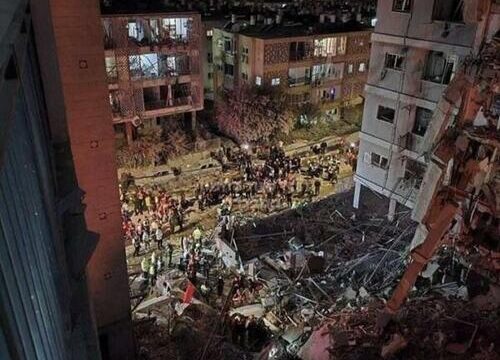
Unprecedented damage in communities in Israel’s south from Iranian missiles.
Iranian Foreign Minister Abbas Araghchi this weekend:
There’s no room anymore to talk with the Americans, as they deceived us with promises of no attack, and even after making significant progress in the negotiations, they decided to attack us anyway. The experience is extremely bitter, and trust is completely nonexistent. The regional war slams the doors of diplomacy shut for good!
$2 Million Hormuz Transit Fee, Except For ‘Enemy’ Countries
By now it’s clear that Iran’s approach to the Strait of Hormuz has been to only allow select countries while targeting others’ shipping and reportedly mining the waterway. An Iranian official said the strait is open to all vessels except those from “enemy” countries.
Iran state TV has further announced the imposition a $2 million transit fee on ships, with a senior lawmaker stating: “We have established a new regime governing the Strait after 47 years… We have to fund the war.”
Iranian state TV brag-reports from the Strait of Hormuz. https://t.co/vmP6M1UTFJ
— Yaroslav Trofimov (@yarotrof) March 22, 2026
Antonio Guterres stated the UN is prepared to help reopen the strait, along with some Gulf countries – but there’s still nothing in the way of any level of a practical military plan in place, given the obvious extreme risks.
The US is still considering plans to seize or blockade Kharg Island, which would be another massive escalation which some analysts have deemed ‘suicidal’ in terms of warships or any Marines sent that deep into Persian Gulf and strait waters.
Tehran has forced ships crossing the Strait of Hormuz to pay a $2 million fee says Boroujerdi of parliament’s national security committee
“We have established a new regime governing the Strait after 47 years,” he said smirking. “We have to fund the war”
The presenter smirks pic.twitter.com/nL4dsVSZp3
— Fazel Hawramy (@FazelHawramy) March 22, 2026
Heavy Blows Traded: Damage in Israel is Unprecedented
US and Israeli forces continued strikes across Iran, including in Tehran, Karaj, Isfahan, Natanz, and Ramsar – while as we’ve been reporting, Iran’s Atomic Energy Organization said the Natanz nuclear site was targeted in “criminal attacks.”
This in turn resulted in Iran targeting Dimona and Arad for the first time of the war, causing roughly 100 injuries. The conflict has just entered week four and already they are trading strikes on nuclear plants. Central Israel has continued getting hit hard, with Iranian cluster munitions spreading bomblets across Tel Aviv and nearby areas. Fifteen people were injured there, one seriously. Additional impacts damaged residential areas in Jaffa and Petah Tikva.
İran’ın İsrail’in başkenti Tel Aviv’e gönderdiği füzeler havada işte böyle görüntülendi.
— Haber Filesi (@haberfilesi) March 21, 2026
Local reports say there are 88 injuries in Arad alone, including serious and moderate cases. Hospitals, including Soroka Medical Center and Tel Aviv Sourasky Medical Center, treated dozens of wounded, including children. There are reports of growing anger and frustration inside Israel both at the government’s underestimating what Iran’s response would be like, and the apparent major failures of the Iron Dome defense system.
Mass casualties after large Iranian missiles on Arad and Dimona:
Benjamin Netanyahu has newly stated, “We’re responding with great force, but not on civilians. We’re going after the regime. We’re going after the IRGC, this criminal gang, and we’re going after them personally, their leaders, their installations, their economic assets. We’re going after them very strongly.” As for Iran, a state broadcaster reported over 1,500 deaths from US-Israeli strikes, but the true toll may be significantly higher amid ongoing rescue efforts and the fog of war.
Iraq to Lebanon To Yemen: Regional Spillover & Proxy Activity
Drone and rocket attacks targeted a US diplomatic and logistics center near Baghdad International Airport, with multiple overnight strikes reported. Iran-backed Houthis have increased threats, and they are imminently expected to join the war, with the potential ability to close the Bab al-Mandab Strait (Red Sea). Analysts have repeatedly warned their entry into the conflict would expand it significantly, drawing in Red Sea shipping routes and regional actors.
CNN reports Israel is dropping massive bombs directly on residential buildings in eastern Tehran. The blasts are so powerful they are leveling entire apartment blocks and severely damaging surrounding civilian neighborhoods. Absolute war crimes. pic.twitter.com/a8LayADZul
— Furkan Gözükara (@FurkanGozukara) March 22, 2026
Israel has meanwhile intensified operations in Lebanon, with strikes on southern suburbs of Beirut having killed over 1,000 people and displaced more than a million. Israeli Defense Minister Israel Katz has ordered accelerated demolition of homes in border villages: “Accelerate the demolition of Lebanese houses in the contact villages in order to thwart threats to Israeli communities,” applying tactics used in Gaza areas such as Rafah and Beit Hanoun,” he said.
In the Gulf, Saudi Arabia has expeled Iran’s military attache and four embassy staff, giving them 24 hours to leave the country, over “repeated Iranian attacks” on the kingdom’s territory. Riyadh and the UAE are inching closer to possibly joining the US-Israeli war against Iran, also as Trump and Netanyahu have called on other countries to enter a coalition.
Diplomatic Efforts and Conditions for Talks?
There’s been a lot of chatter about setting up conditions for a potential offramp, even as Tehran has appeared to shut the door on any future talks, and while thousands of Marines transported on several warships are en route to the region.
The US is exploring a diplomatic track while continuing military operations, Axios has reported. There’s obvious pressure on the US domestic front, where rising gas prices could spell serious trouble for Republicans ahead of next fall’s midterm elections. Axios reviews of preparations:
Any deal to end the war would need to include the reopening of the Strait of Hormuz, address Iran’s stockpile of highly enriched uranium, and also establish a long-term agreement on Iran’s nuclear program, ballistic missiles and support for proxies in the region.
There has been no direct contact between the U.S. and Iran in recent days, though Egypt, Qatar and the U.K. have all passed messages between the two, a U.S. official and two additional sources with knowledge said. Egypt and Qatar have informed the U.S. and Israel that Iran is interested in negotiating, but with very tough terms.
The Iranian demands include a ceasefire, guarantees that the war will not resume in the future, and compensation.
One big problem is that after a spate of top level assassinations of Iranian leaders, Washington doesn’t know who in Tehran it would be negotiating with.
Via UChicago Professor Robert A. Pape
And given that on the US side Jared Kushner and Steve Witkoff are reportedly shaping potential negotiations, the Iranians are unlikely to want to have anything more to do with them. There are reports of indirect talk efforts via intermediaries including Egypt, Qatar, and the United Kingdom, but the reality is that Iran may have been pushed too far – into existential survival mode – and is ready to essentially ‘fight to the death’.
Tyler Durden
Sun, 03/22/2026 – 09:55
More Than 5,500 Residents Ordered To Evacuate In Hawaii Over Dodgy Dam
More Than 5,500 Residents Ordered To Evacuate In Hawaii Over Dodgy Dam
Authored by T.J. Muscaro via The Epoch Times (emphasis ours),
More than 5,500 people on Hawaii’s most populous island have been ordered to evacuate on March 20 as weather conditions continue to worsen and threaten the integrity of a 120-year-old dam.
That island, Oahu, which is home to the capital, Honolulu, is forecast to face severe rains capable of bringing risks of flash flooding and landslides over the next several days. The National Weather Service predicted that Oahu could receive four to 10 inches of rain between March 20 and March 23. This comes after the island received more than 26 inches of rain between March 10 and March 16.
The life-threatening inundation is affecting much of the archipelago.
“Much of the state is already saturated with rain from last week’s storm, and this additional rain will bring a major risk of flash flooding and landslides,” Hawaii’s Emergency Management Agency stated on X, urging residents and visitors to sign up for local emergency alerts.
🚨Incredible images of the Spillway, Wahiawa Reservoir (Lake Wilson), upstream from the Wahiawa Dam in Hawaii.
DAM/LEVEE FAILURE IN PROGRESS OR EXPECTED at WAHIAWA DAM. Potential life-threatening flooding of downstream areas.
📸Permission: Jacob Vandervelde pic.twitter.com/JymFmegErI
— Live Storm Chasers (@LiveStormChaser) March 20, 2026
Honolulu Mayor Rick Blangiardi said in an afternoon press conference that dozens, if not hundreds, of homes had been damaged, but no official damage assessment had been completed by that point.
Along with the thousands of evacuations, dozens of people have had to be airlifted to safety, and hundreds more were bused to different shelters.
But this rain has brought an extra risk to towns along the island’s north shore, as Honolulu officials warned that the Wahiawa Dam was “at risk of imminent failure.” That order and warning was first issued at 5:35 a.m. Hawaiian time, and Oahu Emergency Management stated at 1:03 p.m. that the dam had not failed, but the risk of failure and a “potential life-threatening flooding of downstream areas” remained.
The dam was built in 1906 to increase sugar production for the Waialua Agricultural Company, which would become owned by the Dole Food Company. The dam collapsed in 1921 and was rebuilt. Dole agreed to transfer ownership of the dam to the state, which wants to spend more than $20 million on improvements, but the transfer has yet to be completed.
“The dam continues to operate as designed with no indications of damage,” Dole said in a statement, adding that it was working closely with authorities to monitor the dam. “We encourage all to follow instructions from local and state authorities and stay vigilant during this storm.”
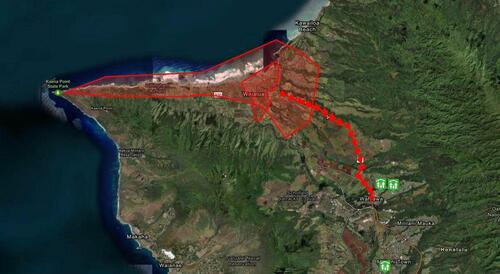
The evacuation zone covers a swathe of the northwest shoreline from Kawailoa Beach to Ka‘ena Point State Park, and includes the Dillingham Airfield, as well as the town of Waialua.
Meanwhile, a flash flood warning remains in effect for the entire southeast half of the island. That warning area includes Honolulu, Pearl City, Kahalu‘u, Nanakuli, Makakilo, and Waimanalo.
Elsewhere, the island of Maui Nui is expected to get eight to 15 inches of rain by March 23, the Island of Hawaii—also known as “the Big Island”—is expected to get two to six inches, and Kaua‘i will get up to three inches.
Hawai’i: Extensive flooding across Waialua’s agricultural fields as the Kona Low continues to hit the North Shore hard. Devastating for the local farming community.
Maui’s tallest peak, Haleakalā, has seen a staggering 32.39 inches of rain in the last 24 hours.
The entire… pic.twitter.com/PyPEA1LzGW
— Paul White Gold Eagle (@PaulGoldEagle) March 17, 2026
Residents were advised to move immediately to higher ground and warned that some roads would become impassable.
“There’s no question that the damage done thus far has been catastrophic,” Blangiardi said.
The Associated Press contributed to this report.
Tyler Durden
Sun, 03/22/2026 – 09:20
https://www.zerohedge.com/weather/more-5500-residents-ordered-evacuate-hawaii-over-dodgy-dam

Migrant Criminal Beats Deportation Order With Chicken Nugget Defense
Migrant Criminal Beats Deportation Order With Chicken Nugget Defense
In something you might see from the Babylon Bee, an Albanian migrant has secured the right to remain in the United Kingdom by claiming that his children hate “foreign” chicken nuggets, according to the Daily Mail.
Klevis Disha, 39, snuck into the U.K. illegally back in 2001 as a supposed unaccompanied minor. Disha used a fake name and a bogus backstory about being born in the old Yugoslavia. His asylum bid flopped but somehow dragged on, until he snagged indefinite leave to remain in the UK in 2005, the Daily Mail reported.
Fast-forward, Disha hooked up with a girlfriend and popped out a daughter and a son, and then he got nailed in 2017 with £250,000 in dirty money he couldn’t explain. The migrant was given a two-year prison sentence and a deportation order – after which Britain’s Home Office tried to boot Disha, stripping his citizenship.
Not So Fast
Disha lawyered up and cried human rights by claiming it would be unduly harsh on his 11-year-old British son, nicknamed C in court documents, if Dad got shipped to Albania. The boy supposedly won’t touch the chicken nuggets over there because of textures and a super-picky diet. Ultimately, the judge bought the picky-eater sob story.
Britain’s Home Office appealed and a tribunal overturned the ruling. However, after endless hearings dragging into 2026, First-tier Tribunal Judge Linda Veloso ruled in Disha’s favor under Article 8 of the Human Rights Act, the Daily Mail said.
The ruling drew scorn from British conservative figures, including Reform UK’s Shadow Home Secretary Zia Yusuf.
“A criminal migrant who entered Britain illegally under a false name and lied in a failed asylum claim has successfully fought his deportation by arguing his son disliked foreign chicken nuggets. This is the country the Tories and Labour have created,” Yusuf wrote on X.
A criminal migrant who entered Britain illegally under a false name and lied in a failed asylum claim has successfully fought his deportation by arguing his son disliked foreign chicken nuggets.
This is the country the Tories and Labour have created. pic.twitter.com/oVTzUytQyq
— Zia Yusuf (@ZiaYusufUK) March 19, 2026
If this ruling doesn’t prove Britain has become a total clown country, nothing will.
Tyler Durden
Sun, 03/22/2026 – 08:45
https://www.zerohedge.com/political/migrant-criminal-beats-deportation-order-chicken-nugget-defense

EU Considers Electricity Tax Cuts, Subsidies Amid Iran War Surge In Energy Costs
EU Considers Electricity Tax Cuts, Subsidies Amid Iran War Surge In Energy Costs
Authored by Evgenia Filimianova via The Epoch Times (emphasis ours),
The European Union is weighing electricity tax cuts and targeted subsidies to shield consumers and industry from surging energy costs amid the ongoing Iran war, European Commission President Ursula von der Leyen said on March 19.
Speaking after a European Council meeting in Brussels, von der Leyen said electricity prices are driven by energy costs, grid charges, carbon pricing, and taxes.
Electricity taxes and levies in the European Union are on average about 15 percent, she said, adding that the bloc will “propose to mandate lower tax rates on electricity” and ensure that “electricity is taxed less than fossil fuels.”
“In some cases, electricity is taxed much more than gas—partially up to 15 times more. This cannot be,” said von der Leyen, according to a statement.
In the European Union, electricity is primarily taxed through the value-added tax and energy taxation under the Energy Taxation Directive, with additional national levies applied by individual member states.
In the first half of 2025, EU household electricity prices averaged 28.72 euros ($33.20) per 100 kilowatt-hours (kWh), roughly unchanged from the second half of 2024, according to Oct. 29, 2025, Eurostat figures.
Although pre-tax prices declined slightly, the share of taxes and levies rose from 24.7 percent in the second half of 2024 to 27.6 percent in the first months of 2025.
Prices varied widely across the bloc. Germany recorded the highest household rates at 38.35 euros ($44.30) per 100 kWh, followed by Belgium and Denmark, while Hungary, Malta, and Bulgaria had the lowest prices.
Compared to a year earlier, electricity costs surged in Luxembourg, Ireland, and Poland but fell in Slovenia, Finland, and Cyprus.
Supply, Prices
Von der Leyen said that the conflict’s immediate impact on Europe was higher energy prices rather than disruptions to physical supply. The EU remains diversified in its gas sourcing, which has helped shield it from shortages, she said.
Norway was the bloc’s largest gas supplier in 2025, accounting for 31.1 percent of imports, followed by the United States at 25.4 percent, Russia at 13.1 percent, and North Africa at 12.8 percent, according to the Council of the European Union. Smaller shares came from the UK and Azerbaijan.
The EU imported more than 140 billion cubic meters of liquefied natural gas (LNG) last year, with the United States supplying nearly 58 percent of that total, according to research group Bruegel. U.S. LNG deliveries have tripled since 2021. France, Spain, Italy, the Netherlands, and Belgium are the largest importers within the bloc.
Von der Leyen said energy costs themselves account for about 56 percent of electricity prices on average.
EU member states already have tools to cushion these costs through state aid, she said, and the Commission will further relax rules to allow more support for vulnerable consumers and energy-intensive industries.
Grid charges are another significant component, making up roughly 18 percent of prices.
The EU plans legal changes to boost infrastructure efficiency and potentially lower charges for heavy industry, von der Leyen said.
Carbon Market Under Scrutiny
Carbon pricing under the EU’s Emissions Trading System (ETS) is also being reviewed as leaders seek ways to stabilize power costs without abandoning climate goals.
The system requires companies to purchase permits for each ton of carbon dioxide emitted.
Von der Leyen said that the ETS has helped reduce dependence on imported fossil fuels and spurred investment in cleaner energy, but acknowledged that volatility in permit prices has raised concerns among manufacturers.
The Commission will propose measures to modernize the system while preserving its environmental objectives, she said.
EU officials aim to complete the review by July, though member states remain divided on how far reforms should go. Some governments favor expanding free emissions allowances for industry to shield companies from high energy costs.
Italian Industry Minister Adolfo Urso suggested more drastic steps could be necessary if consensus proves elusive. On March 9, he said suspending the ETS could serve as an “emergency response” if reforms cannot be agreed quickly.
Urso said industry estimates indicate that scrapping the system could cut electricity prices by 25 to 30 euros ($29 to $35) per megawatt-hour.
Tyler Durden
Sun, 03/22/2026 – 08:10

Nigerian Researchers Accidentally Confirm Africa’s Low IQ Problem
Nigerian Researchers Accidentally Confirm Africa’s Low IQ Problem
For many years the political left has dismissed all discussion about links between third world populations and low intelligence as “racism” and “xenophobia”. The well documented fact that low IQ populations are more inclined towards lack of impulse control and a higher crime rate does not matter to progressives. They assert that such claims are based on “rigged” and “biased” data.
For example, the data on Somalia’s low median IQ (which is 67 and far below the western average of 100) is often criticized as “incomplete” because the data is usually taken from refugees and migrants leaving the country rather than a population sample from within the country. However, populations in neighboring countries like Djibouti or Ethiopia have nearly identical test results.
It is simply a fact that IQ is largely genetic (around 80% of testing outcome). The rest is a matter of varied experiences and environment. This does not mean that a “disadvantaged” childhood results in a lower IQ score. In fact, high IQ individuals often come from significant struggles and studies on top “high achievers” show that around 75% of them come from difficult backgrounds including extreme poverty.
The leftist arguments against IQ as a qualifier for immigration are built around feelings rather than facts. And when it comes to progressives and globalists with an agenda, it is obvious that they prefer third world immigration for the exact reason that these people are habitually impulsive and ready to wreak havoc on western society. That’s the outcome the “Multiculturalists” want.
A recent randomized study by researchers in Nigeria was designed to prove the western conception of sub-Saharan Africa wrong: They believed that Africa’s average IQ was much higher than older data claimed. But, the ultimate outcome of their testing simply reinforced what everyone else already knows.
Only 3% of participants scored above the western average of 100. The median IQ of all participants was 69. Over 50% of the people tested scored below 70. To understand just how low Nigeria’s averages are, the US Department of Defense in previous research has determined that an 80 IQ is the lowest score that a recruit can have and still be viable for a job in the military.
On the other end of the spectrum, a “gifted” IQ is 130 or above; only 2% of the entire human population is in this category. This is nearly 30 points above the highest scores in the Nigerian study.
IQ measures cognitive capacity and not necessarily all forms of intelligence. That said, it is perhaps the best measure we have to accurately predict speed of thought, pattern recognition and general success in higher education (STEM fields most of all). IQ shifts very little over time and age, and academic improvement will rarely lead to an increase (perhaps 5-10 points in the best case scenarios).
As noted, lower IQ tends to correlate to a higher chance of criminal activity and impulsive violence. It is not a factor that can simply be ignored for the sake of liberal virtue. It is too dangerous to sneer at.
This is not to say that all low IQ people are dangerous criminals or that they can’t function in society. Many certainly can. The problem is a matter of averages and risk. Is it worth the risk to invite mass immigration from known low IQ countries in the third world given the increased chances of criminality? The logical answer is no, of course it’s not. There’s absolutely nothing to be gained.
Ideally, western nations should be looking for the best of the best of any potential immigration source. This can be measured in a lot of ways, with loyalty and a willingness to integrate being at the top of the list. That said, IQ should also be considered. There’s no practical excuse to dismiss it, only ideological excuses.
Tyler Durden
Sun, 03/22/2026 – 07:35
https://www.zerohedge.com/political/nigerian-researchers-accidentally-confirm-africas-low-iq-problem

UK House Of Lords Rams Through ‘Abortion Up To Birth’ Law; Only 1% Of Brits Approve
UK House Of Lords Rams Through ‘Abortion Up To Birth’ Law; Only 1% Of Brits Approve
Authored by Steve Watson via Modernity.news,
The unelected House of Lords in the UK has just voted to embed extreme abortion provisions into law, decriminalising terminations right up to birth. This comes despite clear polling evidence that only 1% of the British public supports the move, exposing a ruling class utterly detached from the people it claims to serve.
The change forms part of Clause 208 in the Crime and Policing Bill. It removes criminal liability for a woman acting in relation to her own pregnancy at any stage, meaning self-induced abortions — even late-term — carry no legal consequences.
The disconnect could not be starker. As GB News reported: “Just 1% of the public agree with this… and yet it has now made it into law.”
‘Just 1% of the public agree with this… and yet it has now made it into law.’@miriam_cates and @toryboypierce rail against peers in the House of Lords backing abortions up until birth. pic.twitter.com/C2ZG1fwlXP
— GB News (@GBNEWS) March 19, 2026
Former MEP Annunziata Rees-Mogg reacted on the same programme: “This is basically allowing for backstreet abortions to be legalised.”
Dr Rahmeh Aladwan was equally blunt: “The UK House of Lords has just legalised abortion up to birth. Women can now end the life of their unborn baby at any stage, for any reason, without legal consequences. A truly dark day for Britain.”
The UK House of Lords has just legalised abortion up to birth.
Women can now end the life of their unborn baby at any stage, for any reason, without legal consequences.
A truly dark day for Britain. pic.twitter.com/4gDijTVURX
— Dr Rahmeh Aladwan (@doctor_rahmeh) March 19, 2026
The 1% figure comes from recent YouGov research.
A Whitestone Insight poll showed 67% of the British public agreed that legal boundaries are necessary for protecting life in abortion cases, 62% believed abortion should remain illegal after 24 weeks, 53% agreed that abortion should not be an option if a baby could survive outside the womb, and only 5% supported allowing abortion up to birth.
Abortion up to birth has been legalised, an unspeakable evil. A YouGov poll found only 1% support.
A Whitestone Insight poll:
67% of the British public agreed that legal boundaries are necessary for protecting life in abortion cases
62% believed that abortion should remain… https://t.co/SAZwTtdtgK
— David Atherton (@DaveAtherton20) March 19, 2026
At 34 weeks, a baby is fully formed and can survive outside of the womb.
This is what a 34-week-old baby looks like outside the womb.
in the UK, we’ve just moved towards allowing that same life to be ended at this stage.
We celebrate premature babies fighting to live… but accept ending that same life before birth?
This is Murder, pure and simple! pic.twitter.com/5TAqhQgDLz
— Benonwine (@benonwine) March 19, 2026
Aborting a baby at 34 weeks is widely accepted as murder. Hospitals across Britain fight with every resource to save premature infants at this exact stage. Yet the law now removes any criminal consequence for ending that same life just days or hours earlier. The double standard is grotesque.
Peers rejected amendments to retain criminal penalties, clearing the path despite warnings from medical professionals and pro-life groups. The bill had already cleared the Commons in a rushed process critics slammed as hijacking unrelated legislation.
This vote marks another victory for an out-of-touch establishment that prioritises ideology over the clear voice of the British people.
Britain deserves leaders who value life at every stage — not ones who normalise its destruction in the days before birth.
Your support is crucial in helping us defeat mass censorship. Please consider donating via Locals or check out our unique merch. Follow us on X @ModernityNews.
Tyler Durden
Sun, 03/22/2026 – 07:00

McGlinchey: Has America Thrown Its Service Members Into An Unjust War For Israel’s Benefit?
McGlinchey: Has America Thrown Its Service Members Into An Unjust War For Israel’s Benefit?
Via Brian McGlinchey at Stark Realities
President Trump’s decision to join Israel in launching a regime-change war on Iran has so far cost the lives of at least 13 American service members. More than 200 have been wounded, dozens seriously enough to require evacuations to military hospitals in Europe and the United States. Among them are individuals who’ve suffered traumatic brain injuries, burns and shrapnel wounds. One was facing potential amputation of an arm or leg.
As much as these service members and their families are victims of Iran’s justified retaliation for a surprise attack perpetrated amid ongoing negotiations, they’re victims of a betrayal perpetrated by their president and the joint chiefs of staff, who cast them into an unconstitutional war of aggression, packaged in lies and initiated to advance the agenda of a foreign government, while undermining the security of their own country.
Of course, US casualties comprise a small subset of the total bloodshed. In executing this unjust war, Americans have collectively inflicted far more death and dismemberment than they’ve endured, teaming up with their Israeli counterparts to kill more than 3,000 Iranians, including some 150 schoolgirls — mostly between age 7 and 12 — whose school was destroyed by Tomahawk cruise missiles at the war’s very start.
Though it should have already been apparent, Operation Epic Fury should make clear that — service members’ good intentions aside — combat waged under the US flag rarely has anything to do with American security. Moreover — and I say this as former Army Reserve enlistee and Regular Army officer — anyone thinking of starting or extending a military career should understand that their government may send them to be killed, maimed or psychologically damaged, and to slaughter foreign innocents, so long as it helps those in power remain in the good graces of the extremists who rule Israel, and their powerful collaborators inside the United States.
The casket of a soldier killed in the US-Israeli war on Iran is carried past President Trump (Mark Schiefelbein/AP via Pittsburgh Post-Gazette)
Under international law, a war of aggression is considered a supreme war crime unto itself, and Operation Epic Fury is precisely that. Like so many of America’s wars before it, this one was launched on false premises. Contrary to the US-Israeli narrative…
1. Iran was not developing a nuclear weapon. In 2007, the US intelligence community assessed that Iran halted any effort to develop a nuclear weapon in 2003. Since then, the intelligence community has periodically re-validated that conclusion, most recently in March 2025. Belying Trump’s claim that the United States had only two weeks in which to stop Iran from having a nuclear weapon, Director of National Intelligence Tulsi Gabbard this week testified that Iran had made “no efforts” to rebuild its enrichment capacity after it was devastated by last summer’s US bombing.
Note that, in 2005, Supreme Leader Ayatollah Ali Khamenei issued a fatwa — a formal interpretation of Islamic law — asserting that “the production, stockpiling and use of nuclear weapons are forbidden under Islam and that the Islamic Republic of Iran shall never acquire these weapons.” In the opening act of their latest warfare on Iran, the United States and Israel collaborated to kill him.
2. Iran did not stray from the 2015 nuclear deal until Trump did. When Trump withdrew the United States from the Joint Comprehensive Plan of Action (JCPOA), Iran was in full compliance. Among other things, the JCPOA required Iran to eliminate its medium-enriched uranium, slash its cache of low-enriched uranium by 98%, limit future enrichment to 3.67%, agree to even more external monitoring than it was already submitting to, and render its heavy-water reactor worthless by filling it with concrete. After Trump withdrew the United States from the JCPOA in 2018 and reinstated sanctions, Iran waited a year, but then began straying from its own commitments, using elevated enrichment as a lever to push for a new agreement and relief from suffocating sanctions. Iran says the JCPOA permitted it to suspend its commitments after Trump’s withdrawal, citing language governing “material breaches” and “significant non-performance.”
Iran is a member of the nuclear non-proliferation treaty, and has long cooperated with international inspections and monitoring required by the NPT. On the other hand, Israel has refused to join the NPT and has some 200 nuclear warheads, a situation that makes every dollar of American aid to Israel illegal under US law.
3. Iran wasn’t the problematic negotiation partner. When historians write about the run-up to this latest of American regime-change disasters, they’ll surely emphasize that fact Trump assigned Steve Witkoff and Jared Kushner to represent the United States in negotiations. While people rightly scoff at their lack of credentials, it’s far more important to appreciate their intimate ties to the Israeli government and Prime Minister Benjamin Netanyahu — who has been trying to maneuver the United States into a war with Iran for decades.
As Branko Marcetic writes in an excellent account of the negotiations at Responsible Statecraft,
Witkoff is known as a staunch supporter of Israel. He counts pro-Israel megadonor Miriam Adelson as a “dear friend” and carries a custom pager gifted to him by Netanyahu and senior Mossad officials, in a reference to an operation in which Israel remotely detonated thousands of pagers that allegedly belonged to Hezbollah officials…
Kushner, meanwhile, has been steeped in the pro-Israel community his entire life. He counted Netanyahu as a family friend growing up, with the future Israeli prime minister occasionally borrowing the teenager’s bedroom during visits. Kushner reportedly consulted with Netanyahu officials to pen Trump’s 2016 speech to the American Israel Public Affairs Committee, and he is both friends with hardline pro-Israel figures and has donated money to illegal West Bank settlement-building.
In addition to their glaring conflicts of interest, Witkoff and Kushner refused to bring nuclear experts to their meetings with the Iranians, which reportedly left the Iranians perplexed about how any progress could be made in negotiating such a highly technical subject.
Iran put forward a fresh offer less than 48 hours before being attacked. In the last meeting before bombs dropped, Iran offered concessions that included dilution of its 60%-enriched uranium, a multi-year pause on new enrichment, subsequent enrichment capped at 20%, and expanded IAEA oversight. Sources say UK national security advisor Jonathan Powell, who attended that meeting, was surprised by the strength of the Iranian offer, and saw it as reason to be optimistic about reaching a deal.
Steve Witkoff (left) and Jared Cushner at an October 2025 meeting in Israel with Netanyahu (Maayan Toaf/GOP via Times of Israel)
After learning that Witkoff was grossly mischaracterizing Iran’s stance — if not outright lying about it — Oman’s foreign minister, who’d been mediating the discussions, made an urgent trip to Washington to tell the administration and anyone who’d listen that Iran had made substantial concessions, some of which surpassed the provisions of the JCPOA. His mission failed. In the aftermath, a Gulf diplomat bluntly told the Guardian, “We regarded Witkoff and Kushner as Israeli assets that dragged a president into a war he wants to get out of.”
4. Iran’s ballistic missile program wasn’t built for offense. In an example of moving goalposts that would be laughable if the context weren’t so tragic, the Trump administration reopened nuclear negotiations with a new demand — that Iran surrender its conventional ballistic missiles. The White House claimed Iran was building a “conventional shield” that would enable future “nuclear blackmail,” but anyone who’s been paying attention could see the demand sprang from last summer’s 12-Day War, when Iran effectively used cutting-edge ballistic missiles to retaliate against Israeli aggression.
That use is consistent with US intelligence’s characterization of Iran’s military posture as primarily defensive. As the US Defense Intelligence Agency wrote in a 2019 report, “Iran’s conventional military strategy is primarily based on deterrence and the ability to retaliate against an attacker…If deterrence fails, Iran would seek to demonstrate strength and resolve, [and] impose a high cost on its adversary…this strategy is unlikely to change considerably in the near term.”
The demand for Iran’s conventional disarmament and the demand for the scientifically-advanced country to end any nuclear enrichment had something in common: both were made knowing they’d be refused. Here’s how Joe Kent — the former National Counterterrorism Center Director who resigned this week in protest of the war — characterized the enrichment demand in his in-depth, post-resignation interview with Scott Horton:
“I really frankly don’t think the Israelis cared that much about…nuclear enrichment…What I think the Israelis care about is regime change. They wanted to push this war as fast as they could, so they came up with this talking point that zero enrichment was the starting point, knowing that was a non-starter for the Iranians.”
5. Iran hasn’t been waging war on the United States for 47 years. To the contrary, the hostilities have overwhelmingly originated in Washington, and any thorough survey of the history should go back at least 73 years, to 1953. That’s when the United States and United Kingdom orchestrated the ouster of Iran’s democratically-elected prime minister, and the installation of the Shah. The ledger should also include US support of Iraq’s eight-year war on Iran in the 1980s, which included giving artillery targeting intel to Iraq, with the knowledge those targets would be hit with chemical weapons. Then there’s decades of economic blockades, which, mirroring the morality of Al Qaeda, intentionally inflict suffering on civilians with a goal of forcing political change. Last summer brought America’s unprovoked bombing of Iran’s imaginary nuclear weapons program. The ceasefire that ended the so-called 12-Day War turned out to be a mere strategic pause before all-out warfare was initiated by Israel and the United States on Feb 28.
A central line in the “47-year war” narrative blames Iran for killing “thousands” of Americans in Iraq, by supposedly directing Shia militias to target Americans, and equipping them with improvised explosive devices (IED). In a concise treatment at his Substack, former Marine officer Matthew Hoh, who led counter-IED efforts in Iraq, dismantled that well-entrenched narrative. His key points:
The great majority of American service members killed in Iraq died at the hands of Sunni resistance groups. Iran provided some support to Shia militias, but Hoh calls out the hypocrisy of US officials saying Iran alone has blood on its hands, pinning no such blame on US-aligned Gulf monarchies that backed Sunni militias in Iraq.
Americans were an occupying force in a country that US forces had devastated and which was beset by civil war, which means both Shia and Sunni militias had their own reasons for using violence against US troops. Hoh notes that the now-decades-old narrative that Iraqis were killing American soldiers and Marines on orders from Iran “not only helped justify a longed-for war with Iran but also bolstered the fiction of the American occupation as a benevolent and liberating one.”
The charge that Iran killed Americans with IEDs centers on the claim that Iran provided Shia militias with a special type of IED called an explosively formed penetrator (EFP). “Anyone with a simple understanding of explosive principles and a half-decent machine shop can make an EFP,” says Hoh. Given the abundance of explosives and other materials around war-torn Iraq, Hoh says “Shia forces were able to mass-produce EFPs in Iraq. Smuggling in EFPs from Iran was unnecessary.”
6. Iran isn’t the “world’s leading sponsor of terrorism.” If that title were awarded on the merits, top contenders would include Saudi Arabia, the United States and Israel. The US government selectively applies the “state sponsor” label to vilify countries and — more importantly — as the basis for imposing economic sanctions. As we’ve seen in the case of Cuba and others, American secretaries of state have full discretion to slap the “state sponsor of terror” label on and pull it off, with no due process or burden of proof required.
“The US’s list of terrorist organizations is at this point really laughable, because we take groups off willy-nilly based on whether we like them politically or not — not whether they’ve actually engaged in or continue to engage in terrorism,” said Trita Parsi, Quincy Institute for Responsible Statecraft co-founder, in a recent appearance on Judging Freedom. “The Sudanese got off the State Department’s terrorist list by simply agreeing to normalize relations with Israel — nothing else.”
It’s true that Iran has sponsored various groups in the Middle East that seek to thwart US and Israeli hegemony in the region. At times, some of those groups — like Hamas — have used violence against civilians to achieve political ends, which is the honest definition of terrorism. However, US and Israeli condemnation of Iran’s support for such groups is intensely hypocritical, considering the United States and Israel have themselves backed forces that have carried out terrorism. Indeed, if sponsorship of Hamas is damning for Iran, it’s also damning for Israel and Netanyahu, who long fostered the rise of Hamas even after it turned to terror.
Then there’s the regime-change campaign in Syria, which saw the United States and its Gulf allies empowering head-chopping terrorists, and saw Israel patching up al Qaeda members and sending them back into Syria to raise hell. Keep in mind, Iranian-backed Hezbollah and Shia militias were instrumental in beating back ISIS, the monstrous terror entity that sprang from the Syria regime-change campaign carried out for Israel.
The war on Iran isn’t about nuclear weapons, ballistic missiles or state-sponsored terrorism. It’s the continuation of a long-running Israeli program to achieve total dominance over the Middle East by repeatedly shattering surrounding states and territories. Here’s how the University of Chicago’s John Mearsheimer has described it:
“The Israelis want to make sure that their neighbors are weak and that means breaking them apart, if you can, and keeping them broken…The Israelis want Syria to be a fractured state. They want Lebanon to be a fractured state. What do they want in Iran? …What the Israelis want to do is to break Iran apart. They want to make it look like Syria.”
For many in Israel, this strategy isn’t merely about safeguarding the current version of Israel. Rather, it’s a means of achieving an expansionist dream of “Greater Israel.” While interpretations vary, this vision typically goes far beyond annexing the West Bank and Gaza, also taking Egyptian territory east of the Nile, along with all or portions of what is now Lebanon, Jordan, Saudi Arabia and Iraq.
IDF soldiers in Gaza were seen wearing patches depicting Greater Israel
The US government has aided and abetted this ruthless strategy in a variety of ways, from the arming of Israel, to running covert operations to foment unrest and equip militant groups, to direct use of American military force. The human cost has been incalculable. In the regime-change wars against Iraq and Syria alone, more than a half million people have been killed, and several times more are believed to have died from secondary causes like disease.
Sadly, it seems it’s now Iran’s turn to be shattered in the pursuit of Israeli supremacy. Iran has been Netanyahu’s white whale: After the launch of Operation Epic Fury, Netanyahu gushed that Trump’s collaboration meant Israel was finally doing what Netanyahu had “yearned to do for 40 years.”
Underscoring the cold-blooded and maliciously dishonest nature of the regime-destruction campaign, consider that Israel and the United States have framed their surprise attack on Iran as a virtuous endeavor meant to liberate the Iranian people from theocratic rule. On the day Israel and the United States launched this new war on Iran, Netanyahu called on Iranians to rise up: “Do not sit idly by, very soon the moment will come when you must take to the streets to finish the job and overthrow the totalitarian regime.”
However, at the same time Netayahu was calling for an Iranian uprising, senior Israeli officials were privately telling US diplomats that “the people will get slaughtered” if they act on those exhortations. Of course, any such slaughter would serve the Israeli agenda, since it could be used to propagandize for more vigorous regime-change action, up to and including what is likely Netanyahu’s greatest wish: a US ground invasion.
It’s hard to imagine, but there could be something even worse than committing one’s self to the defense of America, only to be killed or maimed in a campaign to advance the agenda of a foreign government that is far less an ally than a parasite— and that’s killing, wounding and immiserating innocent people for that same government.
Through March 19, more than 3,000 Iranians have been killed by American and Israeli attacks, according to HRANA, an Iran-focused human rights group. Of that total, 1,394 were civilians, including those several dozen schoolgirls killed on day one; 639 deaths have yet to be classified as military or civilian.
Some 150 elementary-age schoolgirls were killed by a US cruise missile strike in the opening salvos of the US-Israeli surprise attack on Iran (Ali Najafi/ AFP and Getty via NBC News)
There have been more than 1,100 Iranian military fatalities. Among those dead Iranian service members are 87 sailors whose lightly-armed ship was sunk by an American torpedo off the coast of Sri Lanka. The ship was not only far away from the war zone, but it was reportedly lightly-armed as it was returning from a largely-ceremonial, multi-national exercise hosted by India in the interest of building international maritime cooperation.
Given they died on the receiving end of an unjust war of aggression, these and other dead members of the Iranian military were likewise innocent victims of America’s war for Israel. Note too that, unlike every American who’s dishing out death from the sky, land or sea, most Iranians in uniform are conscripts, not volunteers.
That said, there’s reason to empathize with volunteer American service members who’ve now been ordered to wage this war. Ahead of their enlistment or commissioning, most are ill-equipped to peel back the patriotic red-white-and-blue veneer and discern the true nature of US military service. In a sense, they’re victims of a grand fraud. Millions of their fellow citizens are oblivious collaborators in that fraud, to the extent they help perpetuate the false assumption that military service is inherently virtuous and invariably serves the American people.
With Marines now steaming toward the Persian Gulf, the 82nd Airborne Division gearing up and Netanyahu cryptically referring to the necessity for a “ground component”, the number of dead, wounded, dismembered and PTSD-inflicted Americans could soar higher. Given the unjust nature of this war, many are certain to face a lifetime dealing with a lesser-known type of wound — moral injury, which is psychological and emotional distress springing from having witnessed, participated in, or failed to prevent acts that go against one’s moral convictions.
Importantly, the suffering that springs from this war of aggression isn’t confined to the United States, Israel, Iran and Gulf states hosting US bases. People around the world are already coping with growing scarcity and increasing cost of oil and gas. Asian countries are particularly vulnerable, and they’re already taking measures like rationing fuel, cutting workweeks, urging more people to work from home and closing hotels hit by diminished air travel — all this after less than three weeks of the Strait of Hormuz being closed to most traffic.
There’s much more to this Pandora’s box of harms. For example, the world’s supply of medicine is in growing jeopardy. “Nearly half of U.S. generic prescriptions originate in India, which relies on the Strait of Hormuz for the arrival of key inputs in drug manufacturing,” explains CNBC. The Gulf also supplies about half the world’s urea — a fertilizer component — and the price US corn farmers are paying for fertilizer has jumped upwards of 70%. That presages higher food costs all over the world, with malnourishment and starvation a distinct risk in some parts of the globe.
Clearly, if the war continues and the Strait of Hormuz remains closed, it’s certain to result in a global health catastrophe, a devastating economic depression, surging crime and social unrest. America’s standing will be profoundly and irreparably damaged in a world united in outrage over a US president’s lawless decision to launch this demented war of choice in service to Israel. American citizens are likely to suffer terrorist acts inspired by this latest savagery inflicted on a Muslim country.
And it will have all started with weapons fired by American service members…
…service members who swore to defend the Constitution, but were given unconstitutional orders to wage war without congressional authorization
…service members who joined the military to defend America, but became attack dogs for a foreign country that saps America’s wealth, depletes America’s arsenal, undermines America’s security and standing, exerts alarming influence on America’s institutions, and inspires terrorism against Americans back home
…service members who should now recognize a stark reality — that they are cogs in a machine that repeatedly inflicts death, dismemberment, disease and destitution on countless innocents in service to the expansionist State of Israel.
Stark Realities: Invigoratingly unorthodox perspectives for intellectually honest readers. Join thousands of free subscribers at starkrealities.net
* * *
Views expressed in this article are opinions of the author and do not necessarily reflect the views of ZeroHedge
Tyler Durden
Sat, 03/21/2026 – 23:20



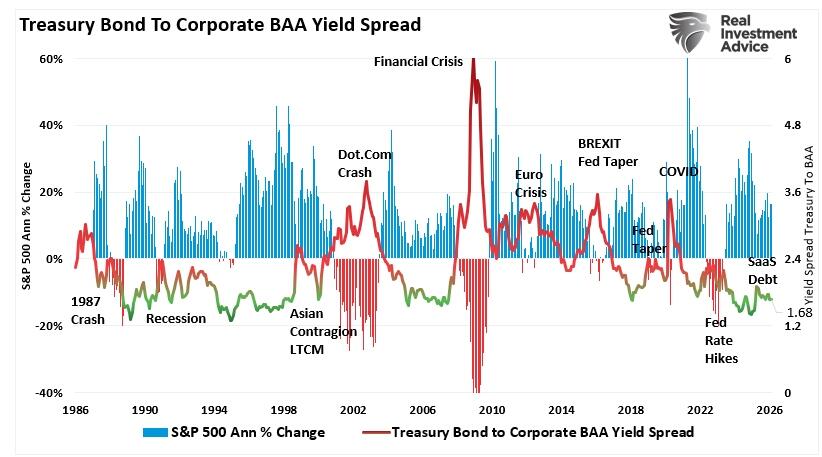
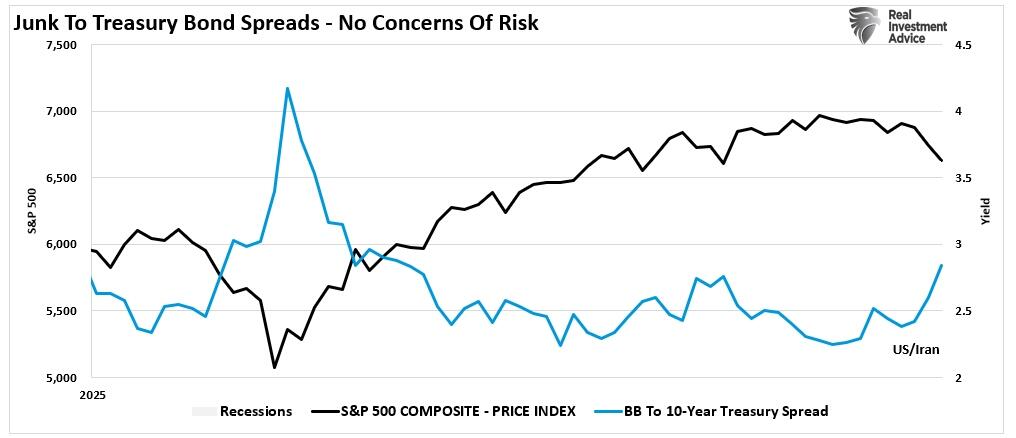
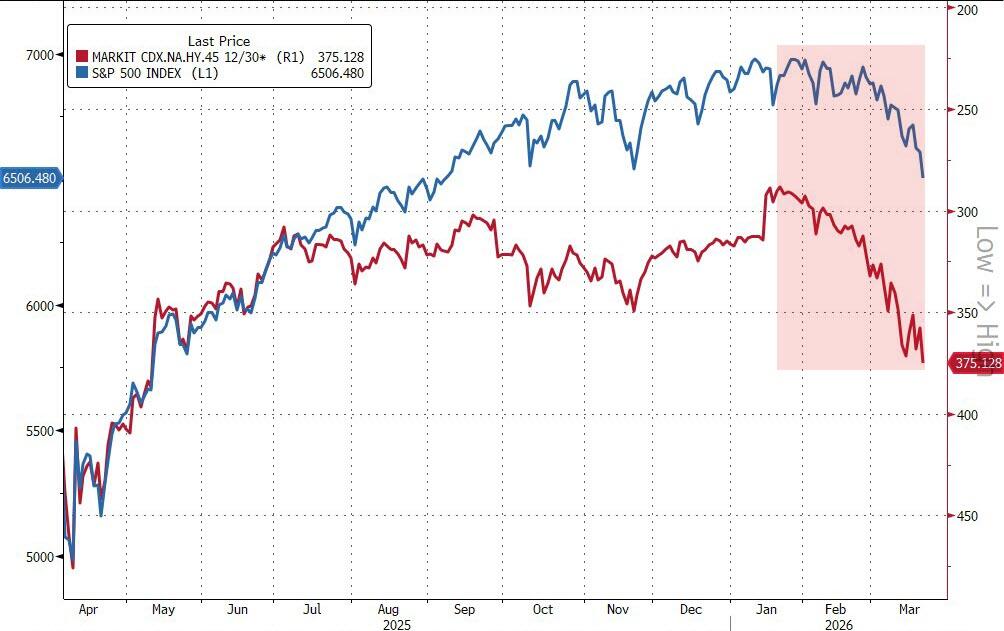

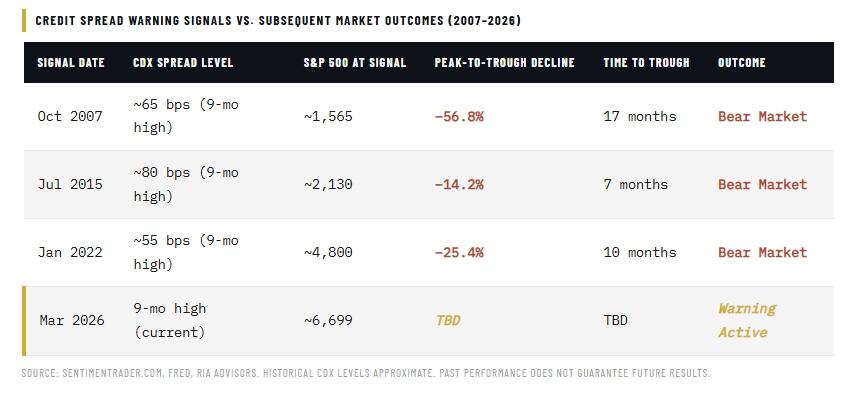
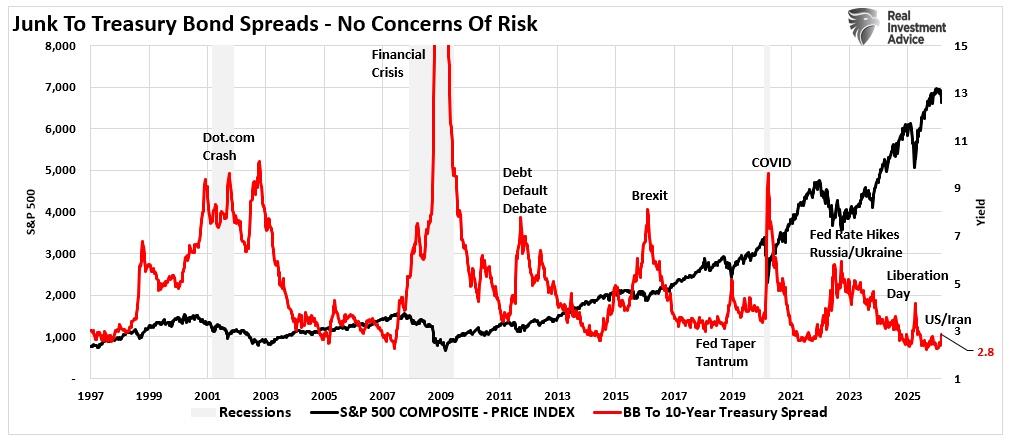

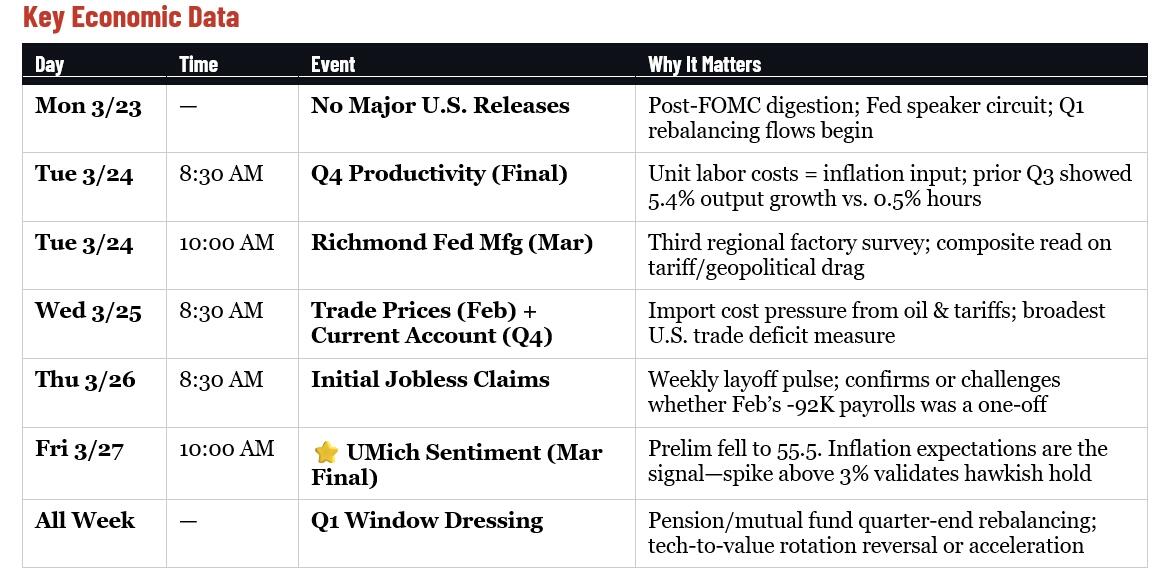
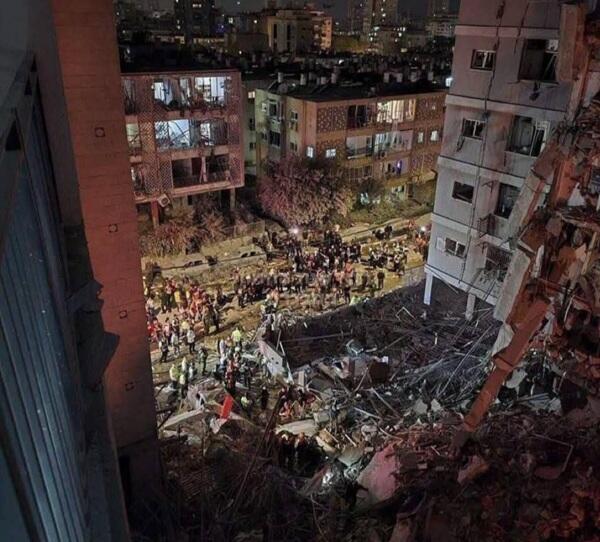
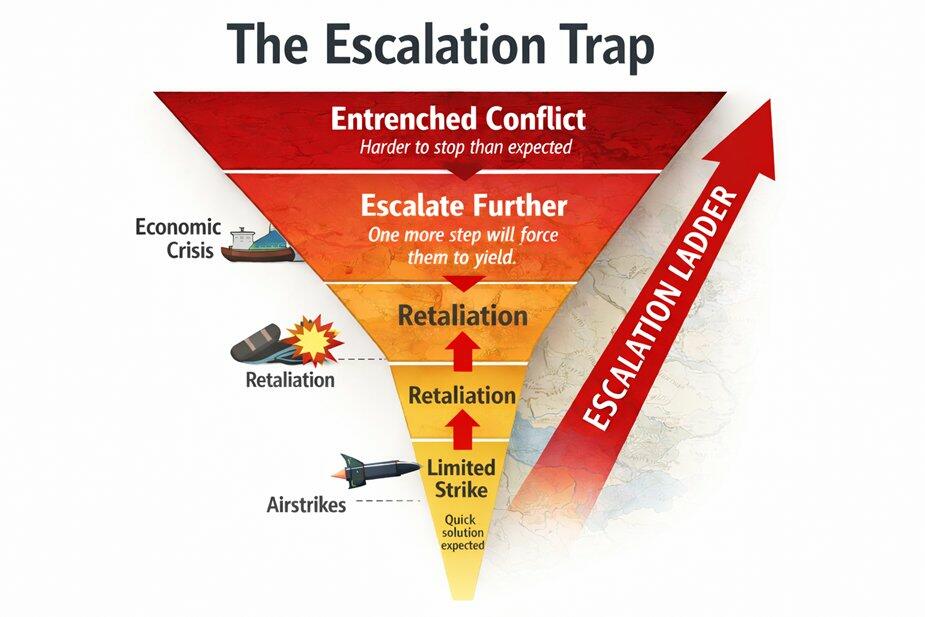
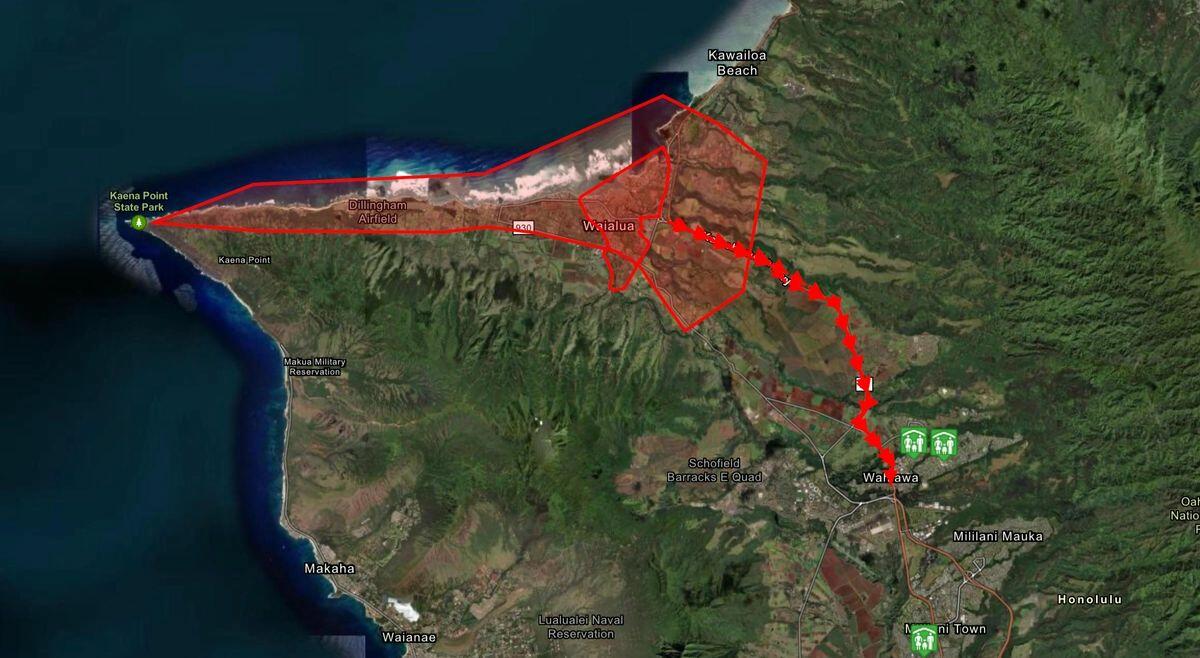





![In 2002, Netanyahu assured Congress that “Saddam is hell-bent on achieving atomic bombs” and “guarantee[d]” that a US invasion of Iraq would have “enormous positive reverberations on the region”](https://cms.zerohedge.com/s3/files/inline-images/netanyahu%20enormous.jpeg?itok=nvQnofjr)