Category: News
Trump Admin Strikes Deal With Energy Firm To Nix Offshore Wind Plans
Trump Admin Strikes Deal With Energy Firm To Nix Offshore Wind Plans
Authored by John Haughey via The Epoch Times,
A global energy corporation based in France has ceded leases off North Carolina and New York where it planned to spend nearly $1 billion to build offshore wind turbines back to the U.S. Department of Interior and will instead redirect that investment into natural gas projects in Texas.
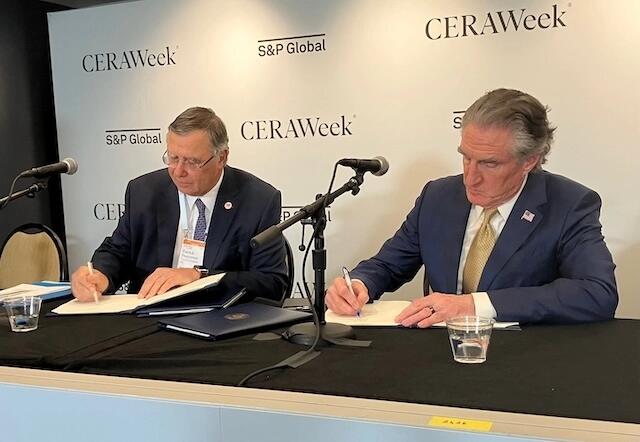
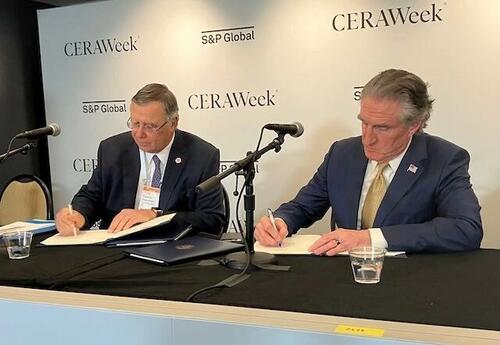
The “landmark agreement” was jointly announced by the department and TotalEnergies in Washington on March 23, and confirmed by Interior Secretary Doug Burgum and TotalEnergies CEO Patrick Pouyanné during a press conference at the 44th annual CERAWeek by S&P Global conference at the Americas Hilton-Houston.
Burgum said much of TotalEnergies’ offshore wind investments were tied to Biden-era “green energy” subsidies rather than in direct power generation, forcing American taxpayers “to pay for energy sources twice. They were paying for it in terms of high utility bills, but they were all paying for it in terms of the taxpayer subsidies.”
Under the agreement, he said, the department will reimburse TotalEnergies “dollar for dollar” for the $928 million it spent on securing the leases, much of that placed in bonds required to develop federal lands, in exchange for the company agreeing to reinvest that money into a Texas LNG project it was already developing.
The vacated offshore leases were acquired in 2022.
They are in the Carolina Long Bay area off North Carolina and in New York Bight off Long Island.
“With this agreement, we’re allowing this great company to redirect those dollars to affordable, reliable, and secure oil and natural gas production in the U.S.,” Burgum said.
Pouyanné said offshore wind development in the United States, “unlike those in Europe,” is costly and “might have a negative impact on power affordability” for the electrical customers they were designed to serve. “TotalEnergies considers there is no need to allocate capital to this technology in the U.S.,” he said.
The abundance of natural gas and domestic producers’ growing capacity to liquify natural gas for transport by ship is “a more affordable way” to generate energy in the United States, he said.
TotalEnergies will invest the reimbursed offshore lease money into the Rio Grande LNG project in Brownsville, Texas. The century-old company, which began drilling oil in Iraq in 1927, is among the project’s three major investors.
“These investments will contribute to supplying Europe with much-needed LNG from the U.S. and provide gas for U.S. data center development,” Pouyanné said. “We believe this is a more efficient use of capital in the United States.”
Tyler Durden
Mon, 03/23/2026 – 19:45
https://www.zerohedge.com/political/trump-admin-strikes-deal-energy-firm-nix-offshore-wind-plans
JPMorgan Reportedly Installs Muslim Foot-Washing Stations At Rockefeller Center Office
JPMorgan Reportedly Installs Muslim Foot-Washing Stations At Rockefeller Center Office
A new report says that the J.P. Morgan Wealth Management office at Rockefeller Center in New York City has installed a Muslim foot-washing station designed to facilitate ritual washing before prayer.
X user Viral News NYC explained:
Report: JPMorgan Installing Muslim Foot-Washing Stations at Rockefeller Center Office
According to a source, JPMorgan Chase is installing foot-washing stations inside bathrooms at its Rockefeller Center office.
The source stated that the installations are intended to accommodate Muslim employees who wash their feet before prayer, a practice associated with daily religious observance.
Report: JPMorgan Installing Muslim Foot Washing Stations at Rockefeller Center Office
According to a source, JPMorgan Chase is installing foot washing stations inside bathrooms at its Rockefeller Center office in Rockefeller Center.
The source stated that the installations are… pic.twitter.com/JrZL6Rt1qL
— Viral News NYC (@ViralNewsNYC) March 22, 2026
Amy Mekelburg, founder of the RAIR Foundation USA, centered on topics such as immigration, Islam, left-wing politics, and globalism, stated on X that Muslim foot-washing stations at the JPM building in NYC come as no surprise, indicating “this isn’t random.”
“JPMorgan openly structures billions in Sharia-compliant deals: Murabaha, Sukuk Islamic bonds, liquidity products – all avoiding ‘riba’ interest per Islamic law,” Mekelburg said.
She noted, “While everyday Americans get stuck with interest-based banking, the elite side bends to Sharia rules, funnels capital into Islamic finance, and now embeds wudu rituals in corporate bathrooms.”
Sharia Finance: The Transformation of Global Banking
Of course, JPMorgan Chase is NOW installing Muslim foot-washing stations (wudu facilities) in bathrooms at their Rockefeller Center NYC office – so employees can ritually wash feet 5x daily before prayer without using sinks… https://t.co/HWiYdcRhXK
— Amy Mek (@AmyMek) March 23, 2026
“This is textbook Islamization: Western banks profit from Sharia, then accommodate Islamic practices in workplaces to keep Muslim talent/clients happy and normalize it for everyone else,” Mekelburg warned.
Socialist NYC Mayor Zohran Mamdani would certaintly approve.
Tyler Durden
Mon, 03/23/2026 – 19:20

White House Reaches Tentative Crypto Regulatory Agreement: Report
White House Reaches Tentative Crypto Regulatory Agreement: Report
Authored by Micah Zimmerman via BitcoinMagazine.com,
Key senators and the White House have reached a tentative agreement on cryptocurrency legislation aimed at resolving a dispute between banks and digital asset firms over stablecoin yields, according to Politico reporting.
The move could clear the way for a landmark crypto regulatory bill stalled in the Senate Banking Committee since January.
Sen. Thom Tillis (R-N.C.) and Sen. Angela Alsobrooks (D-Md.) said Friday they have an “agreement in principle” on language intended to balance innovation with financial stability.
The legislation seeks to prevent stablecoin rewards programs from triggering widespread deposit withdrawals from traditional banks, a concern raised by Wall Street groups.
“The agreement allows us to protect innovation while giving us the opportunity to prevent widespread deposit flight,” Alsobrooks said. Tillis described the deal as a positive step but noted the need to consult with industry stakeholders before finalizing details.
While specifics of the agreement remain unclear, early indications suggest it could bar yield payments on passive stablecoin balances.
The tentative deal signals progress toward an April vote on the crypto market-structure bill, potentially unlocking the first major federal regulatory framework for digital assets.
Crypto legislation background
The fight over a U.S. crypto market‑structure bill stems from a broader effort to build on 2025’s landmark stablecoin legislation, the GENIUS Act, which established a federal framework for stablecoins — requiring full backing, transparency and reserve disclosures for digital dollars.
That law was widely seen in the crypto industry as a breakthrough for regulatory clarity while attempting to align digital assets with traditional financial standards.
After the GENIUS Act’s passage, the Senate turned its attention to more expansive digital asset oversight through what’s often referred to as the CLARITY Act or the crypto market‑structure bill.
This legislation aims to define how U.S. regulators would police and oversee trading platforms, tokens, custody services and other infrastructure — essentially the backbone of a regulated digital asset ecosystem.
However, negotiations bogged down over one central issue: whether regulated exchanges should be allowed to offer yield‑bearing rewards on stablecoin holdings.
Banks and major financial institutions argue that these rewards resemble unregulated deposit‑like products that could siphon funds away from FDIC‑insured accounts, potentially threatening lending and financial stability.
Crypto firms — including major issuers like Circle and Coinbase — counter that such incentives are crucial for competitive markets and for user adoption of digital money.
The current tentative deal being negotiated between senators and the White House seeks a middle ground — potentially allowing activity‑based rewards while restricting passive yield — in hopes of unlocking Senate committee action by April.
Whether that compromise holds both bank and crypto support will be decisive for the future of U.S. digital asset regulation.
Tyler Durden
Mon, 03/23/2026 – 18:55
https://www.zerohedge.com/crypto/white-house-reaches-tentative-crypto-regulatory-agreement-report
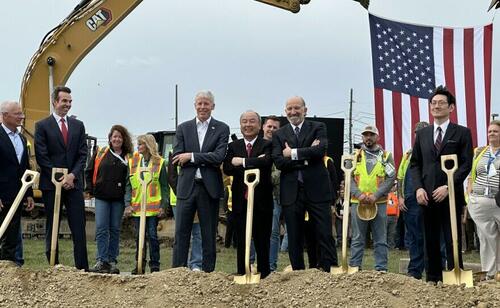
Wright And Lutnick Unveil $33 Billion Gas-Fired Mega-Project In Ohio With SoftBank
Wright And Lutnick Unveil $33 Billion Gas-Fired Mega-Project In Ohio With SoftBank
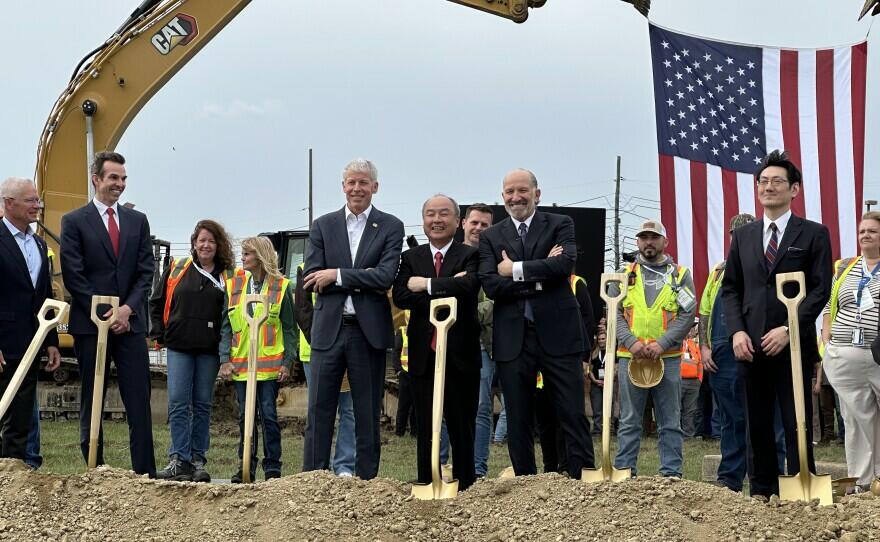
SoftBank and American Energy Power Company (AEP) are launching a major new power initiative in Pike County, Ohio. The project transforms the former Portsmouth Gaseous Diffusion Plant site into a hub for 10 GW of generation capacity, including at least 9.2 GW of natural gas-fired output dedicated to supporting up to 10 GW of data center development.
Yesterday in Ohio, we broke ground on a new partnership to build more than 9 gigawatts of natural gas power generation and a data center complex that will provide thousands of jobs and result in LOWER electricity costs. pic.twitter.com/lXKpQBhtKw
— Secretary Chris Wright (@SecretaryWright) March 21, 2026
Japanese investors through SoftBank Group and SB Energy are committing $33.3 billion to the gas generation component. A separate $4.2 billion investment will fund new electrical transmission infrastructure in partnership with AEP Ohio. The deal also includes a $40 million Community Benefits Agreement and federal land leasing.
“Thanks to President Trump, the U.S. government is leveraging its assets—like our federal lands—to add power generation, create jobs, and ensure the United States wins the AI race,” said U.S. Energy Secretary Chris Wright. “I’m pleased to be working with our partners at SoftBank and AEP Ohio on this important project. By bringing new power online and upgrading our existing infrastructure, this investment supports the AI boom and cutting-edge technologies while strengthening our energy system and helping keep costs down for the American people”.
This announcement aligns with Ohio’s broader energy buildout at the same Pike County location. Centrus Energy continues expanding its commercial uranium enrichment facility there, as the company recently launched centrifuge manufacturing and secured a $900 million DOE award to scale both low-enriched uranium and high-assay low-enriched uranium production.
Oklo and Centrus announced a planned joint venture for HALEU deconversion services, co-located at the Piketon site and adjacent to Oklo’s proposed 1.2 GW nuclear power campus. Meta Platforms has signed an agreement with Oklo to advance that campus, providing prepayments to secure fuel and accelerate Phase 1 development targeted for the early 2030s.
Meta separately entered a 20-year power purchase agreement with Vistra for more than 2.1 GW from existing nuclear plants, including Ohio’s Perry and Davis-Besse power plants, plus uprates at those sites. These nuclear commitments complement the new gas capacity, as Ohio positions itself as one of the leading options for AI data center deployments.
Tyler Durden
Mon, 03/23/2026 – 18:30

California Grapples With Staffing Agency Fraud Amid Oversight Gaps
California Grapples With Staffing Agency Fraud Amid Oversight Gaps
Authored by Mary Prenon via The Epoch Times (emphasis ours),
Staffing agencies provide job and career opportunities to more than 10 million Americans, including more than 1.7 million in California. While the state has the nation’s largest temporary employment market, experts said staffing agency fraud is rampant due to a lack of oversight.
Many employees are unable to access workers’ compensation due to these fraudulent practices, and taxpayers ultimately bear these medical costs, the experts noted.
According to the California Department of Insurance, authorities identified 2,932 suspected workers’ compensation fraud cases in the 2023–24 fiscal year in the state, resulting in 128 arrests and potential fraud losses of about $157 million.
Legitimate Firms Undercut
Siyamak Khorrami, host of The Epoch Times’ “California Insider,” recently spoke with employment and legal experts in the state to explore the issue.
“The staffing companies have the employees, and they assign those employees to their client employers,” said Jennifer Lentz Snyder, a former Los Angeles County district attorney.
“They are the employer, so they’re responsible for things like workers’ compensation insurance and payroll taxes and all of that.”
Snyder noted that when these staffing firms offer their client companies deals that are “too good to be true,” they often quote a rate that would not permit them to pay into the payroll tax funds that legitimate businesses pay into for workers’ comp premiums. In the end, she said, these illegitimate staffing agencies are competing unfairly with legitimate staffing firms.
“They’re absolutely taking advantage of the workers, and they’re lining their pockets at the expense of the legitimate businesses,” Snyder added.
“In an environment where we want to create a robust and maintain a robust economy in California, the last thing you need to do is to permit this cheating to continue.”
As a result, legitimate entities have to pay more than their fair share as workers’ compensation costs continue to escalate, she said.
Fraud Runs Into the Billions
“It’s now significantly more profitable and less risky to engage in workers’ compensation fraud than it is to rob a bank,” Mike DiManno, CEO of EmployInsure, said.
According to DiManno, an “underground market” for workers’ compensation and staffing has existed for nearly 30 years. He noted that clients hiring temporary staff are often unwilling to accept insurance certificates from some staffing agencies because they often fear that those certificates are not legitimate. As a result, the client would be responsible for any claims.
However, when demand for labor increases, he said, employers have no choice but to rely on these “shady” agencies to provide the personnel.
“The state doesn’t slap them on the hand, and so now, especially after COVID, there’s absolute, complete disregard to check and make sure that a staffing agency has workers’ [compensation],” DiManno said.
“You know if you can come in and undercut the legitimate players, the market share goes to you, and right now, all of the honest staffing owners can’t compete.”
When that happens, DiManno said, those legitimate agencies start leaving the business and are placed by “criminals” engaging in workers’ compensation fraud.
“When you put a criminal in charge of that with no governance, they start stealing tax money, and they start stealing wage money from these workers who don’t have attorneys to defend themselves, and they don’t have the knowledge to really understand what’s being done to them,” he said.
DiManno said that the fraud runs into the billions. For example, he noted, bad actors can buy a small company, “a little landscaping company with, let’s say, 12 employees on it,” and get an insurance policy under that company. Then they attach an inflated payroll to the policy and defraud insurers into paying out fraudulent claims.
In such a scheme, DiManno said, if an employee suffers minor injuries, the employer pays them under the table. However, if the injury is more serious, the employer is likely to shut down the company and start another, thereby bypassing any responsibility to pay the claim. That leaves the State of California to foot the bill.
Banks and factoring companies usually helped prevent fraud, DiManno said—but the COVID-19 pandemic changed everything. During that period, he said, all staffing agencies—both legitimate and illegitimate—received funds from the federal Paycheck Protection Program and used them to pay off their bank debts.
Sitting on huge stacks of cash and realizing that little enforcement was applied to these schemes, banks and factoring companies began financing the agencies without verifying their insurance, DiManno said. As a result, the fraudulent practices “exploded,” he said.
“This worker’s [compensation] practice is kind of like the gateway where the criminals have entered this trust business called staffing, where I can undercut somebody and get all of the cash flow, the wages, the taxes, and you tell the client, we’re taking care of everything, and you know, it’s my liability, and I just steal,” DiManno said.
Workers Also Take a Hit
Shaddi Kamiabipour, a former senior deputy district attorney for Orange County, told Khorrami that much of the fraud began with larger firms seeking seasonal help in manufacturing or warehousing.
“They don’t want to have people year-round. They want to have staffing during their high season, right when they’re doing that kind of work,” she said.
Nationally, U.S. staffing firms hired 12.7 million temporary and contract employees from 2023 to 2024, according to the American Staffing Association.
Nearly 73 percent worked full time, with 36 percent in industrial jobs, 24 percent in clerical or administrative positions, 21 percent in managerial positions, 11 percent in engineering and tech roles, and 8 percent in healthcare roles, according to the American Staffing Association.
If someone is injured on the job, Kamiabipour noted, both the employer and the staffing agency are technically liable under workers’ compensation to provide services to the employee. However, she said that, too often, employees who ask for compensation face retaliation in the form of reduced job offers.
The reason this exists is that there’s no oversight in the nation’s most populous state, according to Kamiabipour.
“Even in California, there’s only a small category of businesses that have special licensing for staffing, yet California has the biggest temporary employment market in the country,” she said.
Kamiabipour noted that temporary work is attractive for employers because of the costs often associated with running a business. However, she believes there needs to be an incentive or disincentive for employers to avoid transferring liability to a temporary agency rather than carrying it themselves.
New Bill Targets Staffing Fraud
In discussing solutions, DiManno mentioned a new bill proposed by California state Sen. Eloise Gómez Reyes, a Democrat, on Feb. 10, which would require licensing, background checks of staffing agency owners, and legitimate certificates for workers’ compensation insurance.
The bill would require staffing agencies to register annually with the California Labor Commissioner, provide their financial status and proof of workers’ compensation coverage, submit the names and addresses of the firms’ owners, partners, or those with a financial interest, and pay a $5,000 fee at the time of registration.
The bill would also require the commissioner to post a list of registered staffing agencies on the California Department of Industrial Relations website. Under the bill, businesses must verify a staffing agency’s registration before using its services.
The bill would further allow a registered staffing agency to take action against an unregistered agency or a business that uses an agency without verifying its registration.
Snyder is confident that the new bill is a good first step to ending the fraud.
“Every employer in California has to have workers’ [compensation] insurance or be self-insured,” she said. “Why should staffing agencies be any different?”
Tyler Durden
Mon, 03/23/2026 – 18:05
https://www.zerohedge.com/political/california-grapples-staffing-agency-fraud-amid-oversight-gaps

“This Is Election Interference”: ChatGPT Safety Warnings Target WinRed Links But Spare ActBlue
“This Is Election Interference”: ChatGPT Safety Warnings Target WinRed Links But Spare ActBlue
OpenAI claimed Friday that a so-called technical glitch was the culprit behind ChatGPT slapping safety warnings on links to affected links to WinRed, the leading online fundraising platform for the Republican candidates. Unsurprisingly, ActBlue, the main Democrat fundraising platform, did not trigger a similar warning.
The issue was flagged in an X post by Mike Morrison, an eagled-eyed digital marketer, when he asked ChatGPT to produce links from WinRed and ActBlue.
“WILD. ChatGPT universally marks [WinRed] links as potentially unsafe,” Morrison told his followers. “Of course ActBlue links are totally fine.”
WILD. ChatGPT universally marks @WinRed links as potentially unsafe.
Of course ActBlue links are totally fine. pic.twitter.com/DXzPuwSP80
— Mike Morrison 🦬 (@MikeKMorrison) March 20, 2026
When ChatGPT provided links to GOP-affiliated stores hosted on WinRed, it appended a warning urging users to check whether the link was “safe,” adding that it may contain data from your conversation that will be shared with a third-party website. Morrison said that the OpenAI chat bot did not replicate the same warning for the Democrat fundraising platform.
WinRed CEO Ryan Lyk blasted the blatant bias, calling it “election interference.”
This is election interference. @OpenAI @sama https://t.co/xMGOt2v9Hv
— Lyk – WinRed.com (@RyanLyk) March 20, 2026
An OpenAI spox scrambled to save face for the company, telling the New York Post in a statement that “this shouldn’t be happening and it’s getting remedied.”
OpenAI was so jilted by getting caught (errr, finding the bug), that another press person from the AI behemoth issued a longer statement attempting to cover it’s behind.
“As soon as we saw the post, we reached out to the individual and looked into it,” OpenAI’s Kate Waters said in a statement to the Post. “This wasn’t about partisan politics. The model generated some website links that weren’t in our search index yet for both WinRed and in one instance for ActBlue, and our systems flagged them as AI-generated as part of our standard safeguards.”
“The issue is now in the process of being fully resolved,” Waters added. “The company added later that “this issue is related to how URLs are discovered.”
* * * Peer-reviewed studies show:
Tyler Durden
Mon, 03/23/2026 – 17:40
DOJ Moves For Permanent Dismissal Of Charges Against 2 Ex-Cops In Breonna Taylor Case
DOJ Moves For Permanent Dismissal Of Charges Against 2 Ex-Cops In Breonna Taylor Case
Authored by Troy Myers via The Epoch Times,
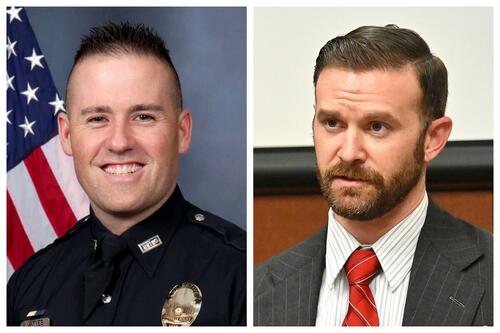
The Department of Justice (DOJ) is looking to permanently dismiss the cases against two former Louisville police officers connected to the night Breonna Taylor was killed six years ago, according to court documents filed Friday.
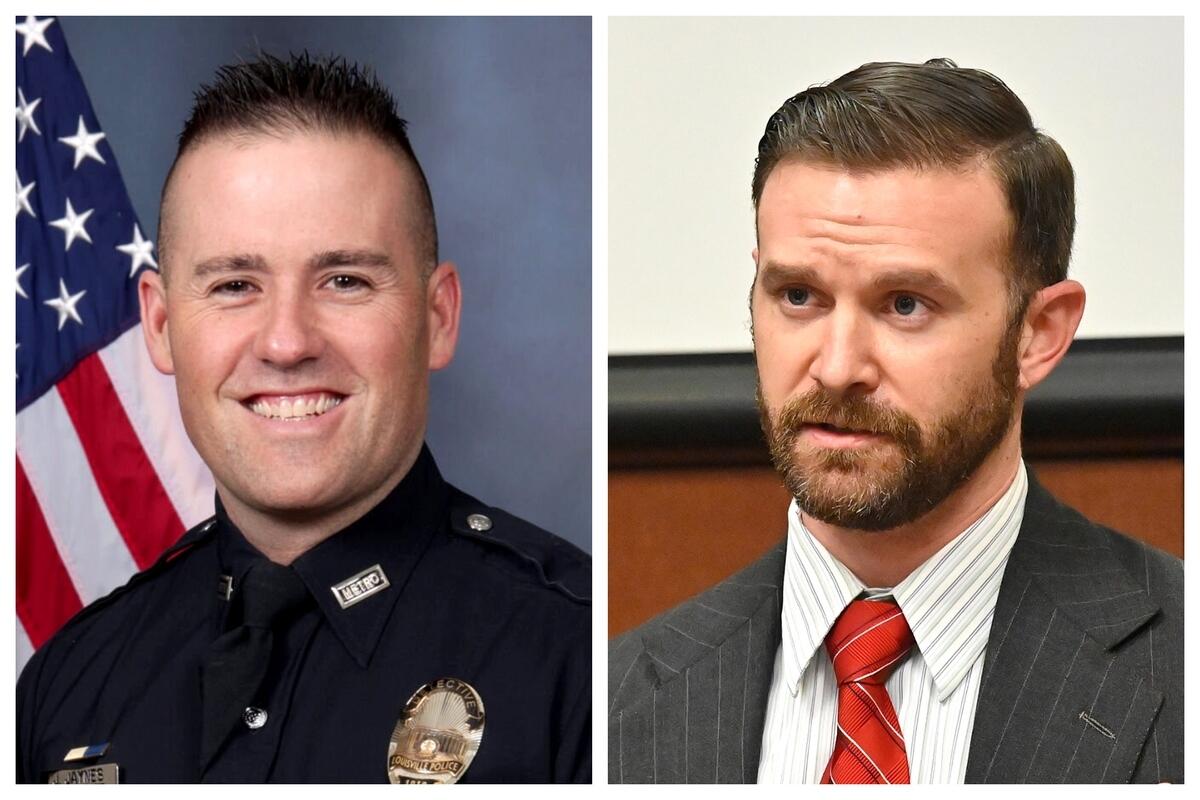
Former Detective Joshua Jaynes and former Sgt. Kyle Meany were accused of falsifying a warrant that led to the botched police raid on her apartment the night she died. Federal prosecutors said in the motion that their charges should be “dismissed in the interest of justice.”
Lawyers for Jaynes, Travis Lock, told The Epoch Times in an email that he and Jaynes were “extremely happy” to learn of the DOJ motion.
Michael Denbow, lawyer for Meany, wrote in an email to The Epoch Times that “Kyle [Meany] is incredibly grateful for today’s filing.”
“He is looking forward to putting this matter behind him and moving forward with his life,” Denbow said.
Taylor’s mother, Tamika Palmer, criticized the motion by the DOJ’s Civil Rights Division to dismiss Jaynes’s and Meany’s cases.
“I am compelled to express my extreme disappointment in [President Donald] Trump and the Department of Justice,” Palmer said in a post on Facebook.
Following Taylor’s death, the city of Louisville paid a $12 million wrongful death settlement to her family.
Previously a federal judge dismissed the most serious charges—deprivation of rights with an enhancement of use of a dangerous weapon causing death—brought by the DOJ under President Joe Biden against Jaynes and Meany.
Taylor, 26 years old at the time of her death in March 2020, was shot by police while three officers served a no-knock warrant as part of a drug investigation into her boyfriend, suspect Kenneth Walker.
While carrying out the raid, Walker fired a shot that hit an officer in the leg. He later said he acted under the belief that intruders were breaking in.
Police returned fire, and several bullets struck and killed Taylor. Walker was not hit. Taylor’s death came a couple of months before the police custody death of George Floyd in Minneapolis, sparking nationwide protests and violent, damaging riots.
The only officer to serve prison time in connection to Taylor’s death, Brett Hankison, was sentenced to two years and nine months with three years of supervised release over blindly firing 10 rounds through Taylor’s windows the night of her death. None of his shots hit anyone.
At his sentencing in July 2025, Hankison apologized to Taylor’s friends and family, adding that he would have acted differently if he knew about the issues surrounding the no-knock warrant.
“I never would have fired my gun,” he said in the courtroom.
Prosecutors did not charge the other two officers, deeming their return fire justified.
It remains unclear when a judge could rule on the DOJ’s motion to dismiss with prejudice the charges against Jaynes and Meany.
Tyler Durden
Mon, 03/23/2026 – 17:15

US Weighs Deployment Of Elite Airborne Troops As Hawks Push Kharg Island Takeover
US Weighs Deployment Of Elite Airborne Troops As Hawks Push Kharg Island Takeover
A steady flow of headlines continue to point in the direction of escalation in Iran and around the Persian Gulf, even as President Trump has touted backchannel dialogue with Tehran, which Iranian leaders have denied.
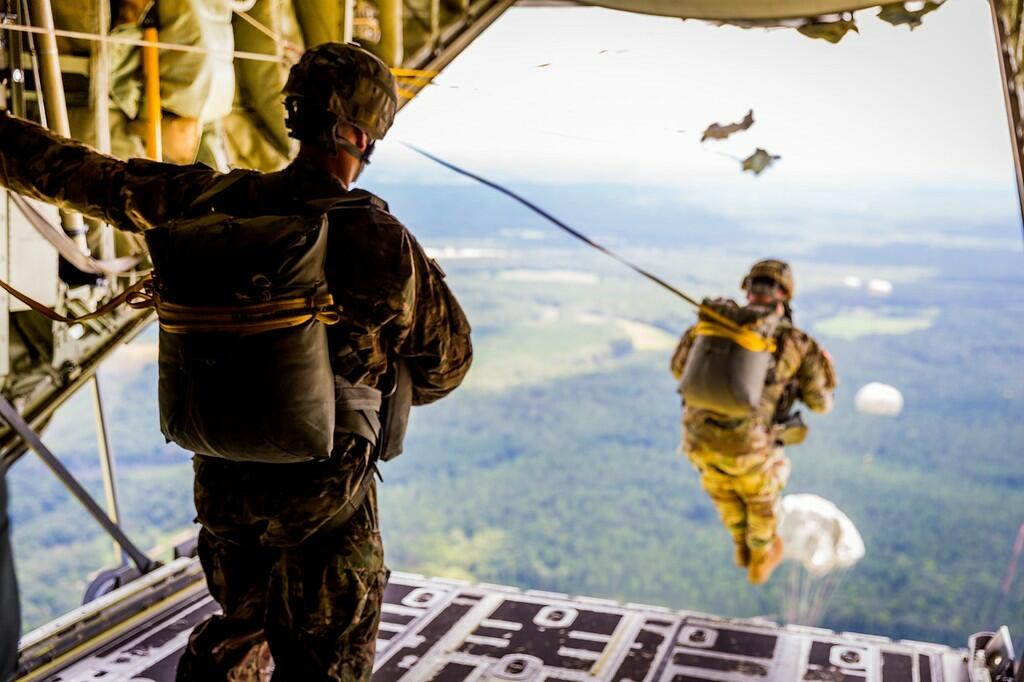
The NY Times writes Monday afternoon, “Senior military officials are weighing a possible deployment of a combat brigade from the Army’s 82nd Airborne Division and some elements of the division’s headquarters staff to support U.S. military operations in Iran, defense officials said.”
A combat brigade would suggest some 3,000 additional elite soldiers, as the thousands of Marines currently still en route from Japan as well as from San Diego. The first group of Marines is reportedly expected to arrive to the Mideast region Friday, which would coincide with President Trump’s announced five day pause on energy infrastructure strikes.
US officials speaking to the Times have made clear that the Airborne planning is just that – a preparatory phase which has not formally been ordered by the Pentagon or CENTCOM.
All of this comes amid speculation that Trump could order some kind of assault and takeover of Kharg Island:
Another possibility being considered, should President Trump authorize U.S. troops to seize the island, is an attack by about 2,500 troops from the 31st Marine Expeditionary Unit, which is on its way to the region.
The airfield on Kharg Island was damaged by the recent U.S. bombing raids so former U.S. commanders said it was more likely to first bring in Marines, whose combat engineers could quickly repair airfields and other airport infrastructure. Once the airfield is repaired, the Air Force could start flowing matériel and supplies, as well as troops, if necessary, by C-130s.
In that scenario, it is possible that the troops from the 82nd Airborne would augment the Marines. The upside of going with paratroopers is they can arrive overnight. The downside is they do not bring any heavy equipment, such as heavily armored vehicles, that would offer protection if Iranian forces counterattacked, current and former officials said.
The whole proposed mission laid out above seems like a longshot, in terms of the potential to go well, and without the US side sustaining a lot of casualties. Army Airborne troops can be rapidly deployed, and would likely support a bigger Marine assault.
Kharg Island is after all hundreds of miles deep into the Persian Gulf and strait, where Iran controls the coastline and can fire on any vessel from there. The Pentagon has said it is softening Iran’s defenses along the coast, but what can be accomplished by airpower alone is limited, according to most sources. An airborne or heliborne insertion also carries huge risks.
The ‘realist’ publication run by the Quincy Institute, Responsible Statecraft, has gone so far as to call it a suicide mission:
Kharg Island has been on the map for Pentagon planners for decades. President Jimmy Carter weighed bombing it or seizing it during the 1979 Iran Hostage Crisis but demurred. Incredibly, in 1988, Donald Trump himself suggested seizing Kharg during his “Art of the Deal” book tour.
Today, Kharg appears to be back in the headlines thanks to Michael Rubin, an American Enterprise Institute scholar and former Iraq Coalition Provisional Authority official who says taking Kharg is a “no-brainer” and has pitched the operation to White House officials.
…The tactical picture is even worse. For the troops unlucky enough to receive orders to take Kharg, the operation would land somewhere between a suicide mission and a self-imposed hostage crisis.
Given the size of the objective (five miles long), the substantial civilian population there, the need to hold it indefinitely, and the lack of surprise, the U.S. would need thousands of troops for the mission. Available units include the incoming MEU’s 1,200-strong Marine battalion landing team, the 82nd Airborne’s “ready brigade” (the 82nd just cancelled scheduled maneuvers, fueling speculation that it could be headed to the Middle East), the 75th Ranger Regiment, and other quick-to mobilize units, or even regular Army battalions already deployed to Kuwait. In theory, Trump has over 10,000 troops at his disposal in coming weeks, though there’s been no public discussion of sending that large a force (yet).
Lindsey Graham on Kharg Island: “We did Iwo Jima. We can do this.” pic.twitter.com/JQJ5lZdvJ8
— Aaron Rupar (@atrupar) March 22, 2026
Even if the US did take Kharg, this would immediately present the next problem of ‘what next?’. The US would have to hold it, perhaps while waiting for some kind of political capitulation from Tehran which is unlikely to come.
Indefinitely defending a strategic island so deep in Iran’s own backyard and territory, with all the logistical challenges, would present all new challenges.
* * *
Getting closer to boots on the ground?…that one thing Trump repeatedly pledged never to do:
Deployment of the 82nd Airborne Division from Ft. Bragg, as well as other units with the U.S. Army, appear to now be underway from bases within the Continental United States towards the Middle East, as staging continues for potential ground operations in Iran. https://t.co/E3QzoDvbKG
— OSINTdefender (@sentdefender) March 23, 2026
* * * GRAB A ZeroHedge Multitool! Glove box, Tool box, Gift for Dad
Tyler Durden
Mon, 03/23/2026 – 16:50
FBI Misled Court To Spy On Second Trump Campaign Adviser
FBI Misled Court To Spy On Second Trump Campaign Adviser
Authored by Paul Sperry via RealClearInvestigations,
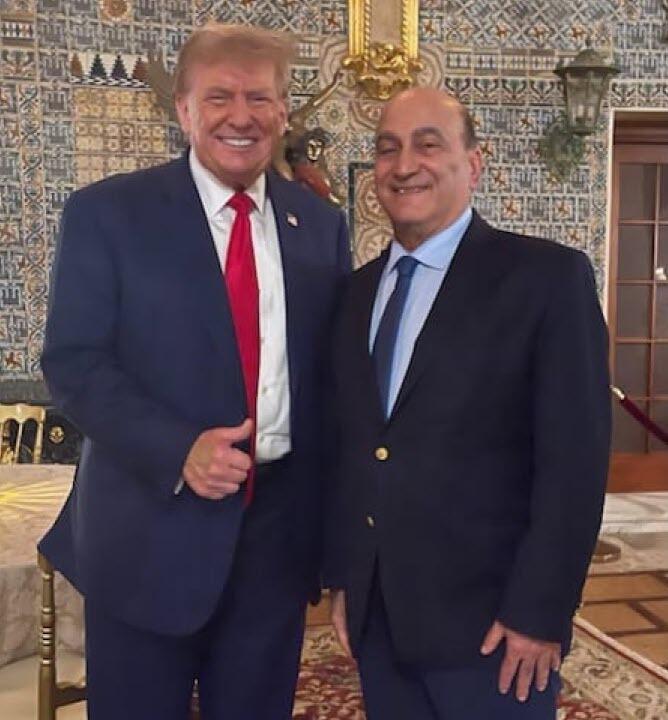
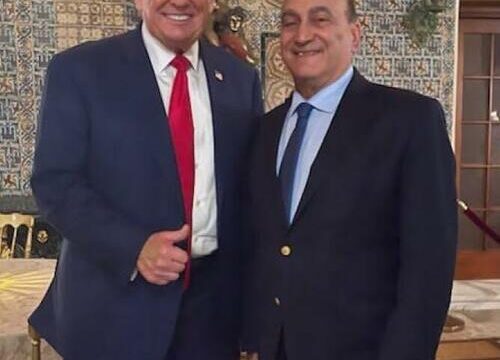
Carter Page wasn’t the only adviser from Trump’s first campaign wiretapped by the FBI. Walid Phares was electronically monitored for a 12-month period between 2017 and 2018, according to the Washington-based FBI agent who was assigned to investigate him as part of Special Counsel Robert Mueller’s Russia collusion probe.
As in Page’s case, the bureau withheld evidence exonerating Phares from the court to secure surveillance authorization, according to newly declassified FBI documents.
“I had no idea any of this was happening,” Phares told RealClearInvestigations in an exclusive interview Wednesday night. “This is shocking because they told my lawyer that I was only a ‘witness’ and that they just needed some information.”
“But these were huge abuses that I can see now,” he added. Phares said he intends to sue the FBI and Justice Department for damages.
The 68-year-old Lebanese American scholar said case agents and prosecutors grilled him for months, questioned his employer, and even went after his bank records. As a result, he said he lost his job at a university, his livelihood, and even his bank accounts and credit card after Wells Fargo canceled them.
“It was like a disaster for me financially and physically,” he said. “I also lost my Fox News contract” as an expert on terrorism and the Middle East, which he had held since 2007.
Phares was not hired by the Trump administration, even though he had been expected to land a high-level foreign policy position. “They scared the agencies from me so I would have problems with [obtaining] a security clearance,” he said.
‘No Corroborating Facts’
Investigators could find “nothing” criminal on Phares during their probe, according to the lead case agent, and in fact, they concluded he was “honest.” Yet Mueller’s team continued to secretly spy on Phares—without providing the powerful federal spy court any of the exculpatory evidence that could clear Phares as required by law.
The agent told investigators in a separate 2020 internal FBI review that “there were no corroborating facts that tied Crosswind [the codename for Phares’s case] to certain facts that we thought were originally true,” according to a transcript of his testimony, released after more than five years of concealment.
He added that “nothing” collected from Phares’s communications under the Foreign Intelligence Surveillance Act (FISA) warrants, including phone messages and emails, “aided the investigation other than to prove the target was being honest with investigators,” who had interviewed him repeatedly.
Nonetheless, the FBI continued monitoring Phares as part of a Foreign Agents Registration Act (FARA) investigation. He was never charged with any violations of the act.
“There was a ‘let’s get him’ attitude among prosecutors on Mueller’s team,” the agent said, according to the new documents, noting that several prosecutors shared an anti-Trump bias and even tacked up negative cartoons of the president on the walls of their office.
The FBI agent, whose name is redacted in several pages of declassified FBI documents released by Senate Judiciary Committee Chairman Charles Grassley, added that “there was nothing confirming Crosswind [Phares] received a large money payment, and nothing confirming Crosswind had a meeting in another country for the purposes of the initial allegation.”
Misleading the Court
When Mueller’s team applied for the fourth and final warrant to secretly surveil Phares in 2018, the agent argued that the Foreign Intelligence Surveillance Court (FISC) needed to be alerted to how new information “had changed our understanding of our initial analysis” that Phares was a foreign agent. He suggested several corrections, but was rebuffed by an FBI lawyer.
“I pointed out these specific corrections to the application in numerous instances throughout the FISA process,” the agent said. “I sent these edits to Kevin Clinesmith, who said, ‘We can’t send this to DOJ.’”
A senior FBI attorney, Clinesmith had also been assigned to Mueller’s team, which agreed the corrections were unnecessary.
It wouldn’t be the first time Clinesmith, whose internal texts and emails show he had an intense anti-Trump bias, withheld exculpatory evidence from the FISA court.
Clinesmith later pleaded guilty to altering evidence used in an application to renew a FISA warrant to spy on another Trump adviser, Page, whom the FBI falsely accused of acting as a Russian agent. To secure the renewal, Clinesmith changed the wording in an intelligence email that exonerated Page, reversing its meaning.
DOJ Inspector General Michael Horowitz found the FBI based its warrants targeting Page largely on a Hillary Clinton campaign-funded dossier of false opposition research. The IG concluded the FBI abused its FISA authority while spying on Page, including failing to disclose exculpatory evidence to the surveillance court. Far from aiding Moscow, the former Naval officer had previously worked with the CIA and FBI to help catch Russian spies, as RCI first reported.
The FISA court subsequently invalidated some of the warrants against Page, who was never charged with a crime and is now suing the FBI and DOJ for $75 million for violating his constitutional rights against improper searches and seizures.
His case is currently before the U.S. Supreme Court, but the DOJ’s solicitor general has repeatedly delayed filing a response to his petition, claiming he has other “pressing” matters. The high bench has set the next filing deadline for April 22.
The year-long FISA eavesdropping on Phares appears to be missing from both Horowitz’s and Special Counsel John Durham’s reports investigating FBI abuses in the Russiagate scandal, raising fresh questions about the thoroughness of those investigations. It is still not clear if the three other Trump campaign officials subject to Russiagate investigations—Paul Manafort, Michael Flynn, and George Papadopoulos—were also wiretapped.
A $10 Million Bribe?
In an RCI interview, Phares said the false allegations against him originated with the CIA, which issued a report in 2016 alleging he had taken a $10 million bribe from the Egyptian government intended for the Trump campaign during a meeting in Cairo.
John Brennan, an Obama appointee, was the director of the CIA at the time. He is currently under federal grand jury investigation for his role in the Russiagate hoax.
DOJ is building a “grand conspiracy” case against former Obama and Biden officials for allegedly committing political espionage against Trump and his advisers by manufacturing criminal investigations and depriving them of their rights under color of law. It’s not immediately known if the investigation includes the Phares case. The FBI and DOJ did not respond to requests for comment.
Although the Mueller investigation’s primary mandate was to investigate ties between the Trump campaign and Russia, it veered into additional investigative areas, including probing campaign contacts with other foreign governments.
Phares had taken trips to Cairo during the 2016 campaign while advising Trump on the Middle East.
The investigating agent said the highly classified intelligence agency reports that Phares secretly worked with the Egyptian government to influence the incoming administration “were disproven.”
“Despite this, the [Mueller] team still went on with the third renewal of the FISA [against Phares],” he said.
The investigation was closed in 2019, and Phares was never charged with a crime. Mueller’s $30 million-plus investigation ultimately found no evidence of Trump campaign collusion with Russia or any foreign government.
Misconduct and Bias
Grassley said the FBI agent’s testimony “details substantial allegations of misconduct and political bias occurring within Special Counsel Mueller’s office during the investigation,” including “misleading the FISC,” or Foreign Intelligence Surveillance Court.
The Republican senator has requested DOJ provide his committee “all FISA applications, predication material, and related reporting” from the Crosswind probe to understand the full extent to which the FISA court was misled.
The identity of the FISA judges who approved the top-secret warrants is not yet known. But the presiding FISC judge at the time was Rosemary Collyer, a George W. Bush appointee who personally signed off on the wiretapping of Carter Page. Before resigning in 2020, Collyer issued an order stating that the FBI in its sworn affidavits had “provided false information and withheld material information detrimental to the FBI’s case [against Page].”
RCI first reported that Phares was the subject of a FARA investigation approved by former Obama DOJ official David Laufman, along with four other Trump campaign officials. But the revelation he was also put under FISA surveillance—the government’s most powerful investigative tool—had not been known until Grassley’s disclosures earlier this week.
Phares said he suspected he might be under some kind of surveillance but didn’t know for certain until this week’s release of the declassified FBI documents. He said he recently received notices from Hotmail and Yahoo that the DOJ had sought records from his email accounts through an unspecified legal process.
“They were fishing,” he told RCI.
Although agents working with Mueller initially asked Phares about Russia, they soon zeroed in on his dealings with Egypt. Mueller’s prosecutors later told him he was merely a witness, not a target.
Phares said he was first interviewed in September 2017 by Washington-based FBI agents working for Mueller.
“Two agents showed up at my door flashing badges and asked if we could speak,” he recalled. “I welcomed them in because I was a lead lecturer at the FBI (on counterterrorism), but they took four hours questioning me, and it made my wife very uncomfortable.”
Added Phares: “I made a huge mistake not lawyering up earlier.”
‘Rougher and Tougher’
He said their questions got “rougher and tougher” over the next few months of interviews, which he said later included Mueller prosecutor Zainab Ahmad, who was originally hired at Main Justice in the Spring of 2016 by Attorney General Loretta Lynch.
Ahmad was one of the key Mueller team members responsible for handling the controversial perjury case against former Trump National Security Adviser Michael Flynn, which was later thrown out. Like Flynn, Phares was an outspoken critic of Islamic terrorism, Obama’s Iranian nuclear deal, and the influence of the radical, pro-jihad Muslim Brotherhood in Egypt and America.
He said he believes the Obama administration—including Brennan’s CIA—was also monitoring him during the 2016 campaign.
Declassified briefing notes from a meeting shortly after Trump took office between former deputy FBI Director Andrew McCabe and Obama-appointed officials with DOJ’s national security division indicate that the FBI and DOJ were “working on a FISA application” targeting “Walid Phares” as early as March 2017.
“They knew they had nothing on Russia, so they went after me on Egypt. But the main target was President Trump,” Phares said. “They had to neutralize him and any of his associates who could carry out his agenda.”
Civil rights watchdogs have called the egregious spying violations against Carter Page the worst abuse of the Foreign Intelligence Surveillance Act since it was enacted more than 45 years ago. Now another U.S. citizen may have been subjected to even worse abuses.
Tyler Durden
Mon, 03/23/2026 – 16:25
https://www.zerohedge.com/political/fbi-misled-court-spy-second-trump-campaign-adviser
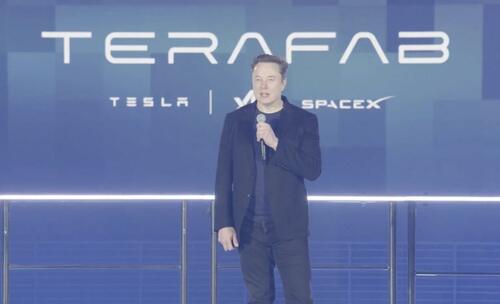
Tesla And SpaceX To Build Massive “Terafab” Chip Factory In Austin
Tesla And SpaceX To Build Massive “Terafab” Chip Factory In Austin
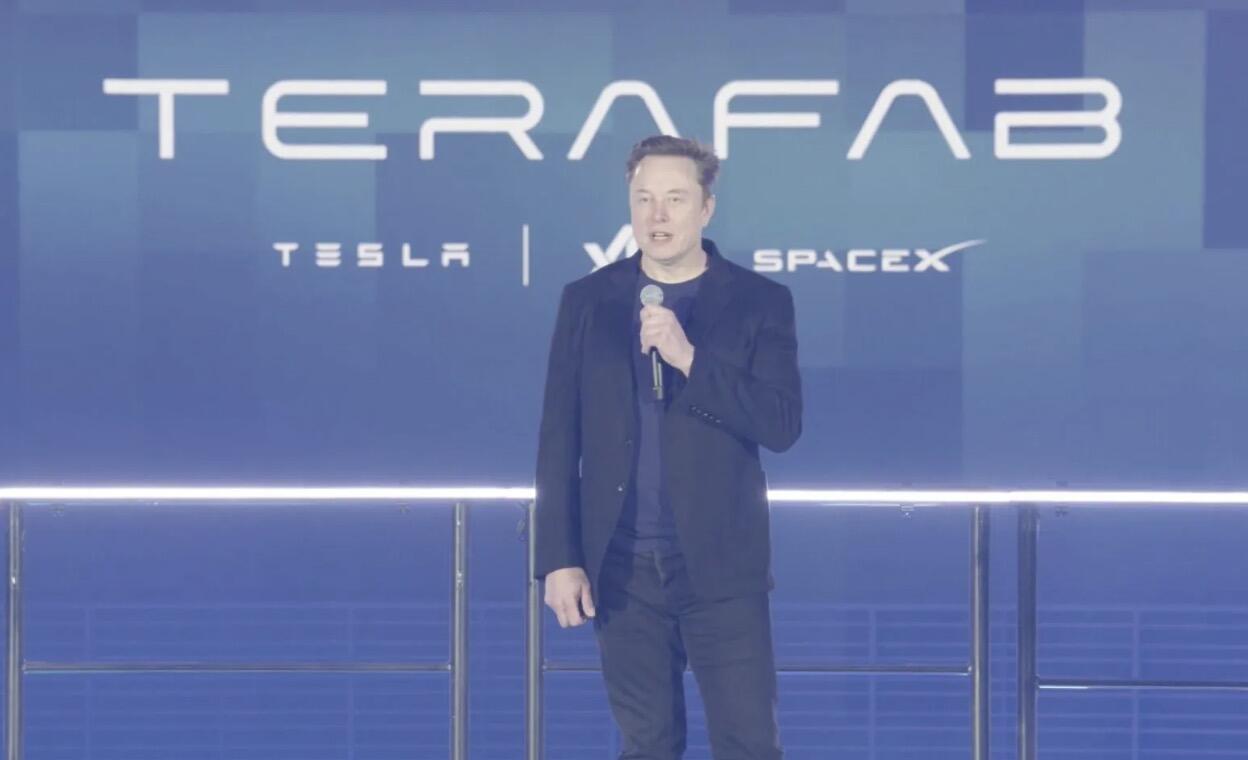
Elon Musk announced that his proposed “Terafab” chip factory will be built in Austin and operated jointly by Tesla and SpaceX, according to Yahoo Finance and Bloomberg.
The plan is to start with a smaller, highly advanced fabrication facility capable of producing and testing a wide range of chips, before expanding to a larger operation.
Musk argues the semiconductor industry isn’t scaling fast enough to meet his companies’ growing demand for AI and robotics, so he sees building his own supply as necessary. His long-term goal is to support massive computing capacity—eventually reaching a terawatt annually—though he hasn’t provided a timeline.
Yahoo writes that the project would likely sit near Tesla’s Austin headquarters and could produce cutting-edge chips, potentially at the 2-nanometer level. One set of chips would power vehicles, robotaxis, and humanoid robots, while another, more powerful line would be designed for space-based computing used by SpaceX and xAI.
Despite widespread concern about chip shortages, it’s unusual for companies to build their own fabs due to the enormous cost and complexity. Musk acknowledged existing suppliers can’t fully meet Tesla’s future needs as it shifts toward AI-driven products.
He also outlined broader ambitions, including space-based data centers powered by satellite networks. A prototype “mini” satellite could deliver about 100 kilowatts, with future versions reaching megawatt levels. These efforts are tied to SpaceX’s planned IPO and larger vision of expanding computing infrastructure beyond Earth.
Overall, the Terafab project reflects Musk’s push to vertically integrate chip production while supporting his longer-term goals in AI, robotics, and space technology.
* * * WAR TRADE
Tyler Durden
Mon, 03/23/2026 – 15:40
https://www.zerohedge.com/markets/tesla-and-spacex-build-massive-terafab-chip-factory-austin