Category: News

New Details: US Pilot Suffered Shrapnel Wounds After ‘Unkillable’ F-35 Was Struck By Iran
New Details: US Pilot Suffered Shrapnel Wounds After ‘Unkillable’ F-35 Was Struck By Iran
Very little is known about last week’s incident which forced an ‘unkillable’ F-35 fighter jet to make an emergency landing at an airbase in the Middle East last week, amid reports it took on Iranian fire.
Iranian state media said it was shot and successfully downed. Al Jazeera observed that “If true, this would be the first time during the war that an F-35, the cornerstone of Washington’s aerial firepower, has been struck by Iran.”
US Central Command in the wake of the downing has only offered minimal disclosure, merely confirming the jet was struck, was forced into an emergency landing and that the pilot remains in “stable” condition.
But now Air & Space Forces Magazine has some further details, reporting that the US Air Force pilot was wounded by shrapnel during the attack:
A U.S. Air Force F-35A pilot suffered shrapnel wounds after their aircraft was damaged during a combat mission over Iran on March 19, people familiar with the matter told Air & Space Forces Magazine.
The aircraft was hit by ground fire. Though U.S. Central Command has not provided details, the aircraft was most likely damaged by a surface-to-air missile rather than by small-arms fire or another projectile, given the altitude at which the F-35 typically flies. The incident is under investigation, according to U.S. military officials.
It’s believed to have been a likely surface-to-air missile given the high-altitude profile of the F-35, making small arms basically an impossibility unless for some reason it was flying very close to the earth and at a slow speed.
Meanwhile, Iran’s Islamic Revolutionary Guard Corps (IRGC) had released footage days ago claiming to show the strike, stating: “The fate of the fighter jet is unclear and under investigation, and the likelihood of its crash is very high.”
Earlier in the conflict three US F-16s were downed over Kuwait in what the Pentagon has somewhat dubious claimed was a friendly fire incident.
The CENTCOM press release had stated that “During active combat—that included attacks from Iranian aircraft, ballistic missiles, and drones — the U.S. Air Force fighter jets were mistakenly shot down by Kuwaiti air defenses.”
“All six aircrew ejected safely, have been safely recovered, and are in stable condition. Kuwait has acknowledged this incident, and we are grateful for the efforts of the Kuwaiti defense forces and their support in this ongoing operation,” it continued. This has naturally provoked immense skepticism from many journalists and pundits.
Tyler Durden
Tue, 03/24/2026 – 21:50
Jack Smith Subpoenaed Records On Kash Patel: Documents
Jack Smith Subpoenaed Records On Kash Patel: Documents
Authored by Zachary Stieber via The Epoch Times (emphasis ours),
The team behind the Arctic Frost investigation subpoenaed years’ worth of records on Kash Patel, who now heads the FBI, according to documents released on March 24.
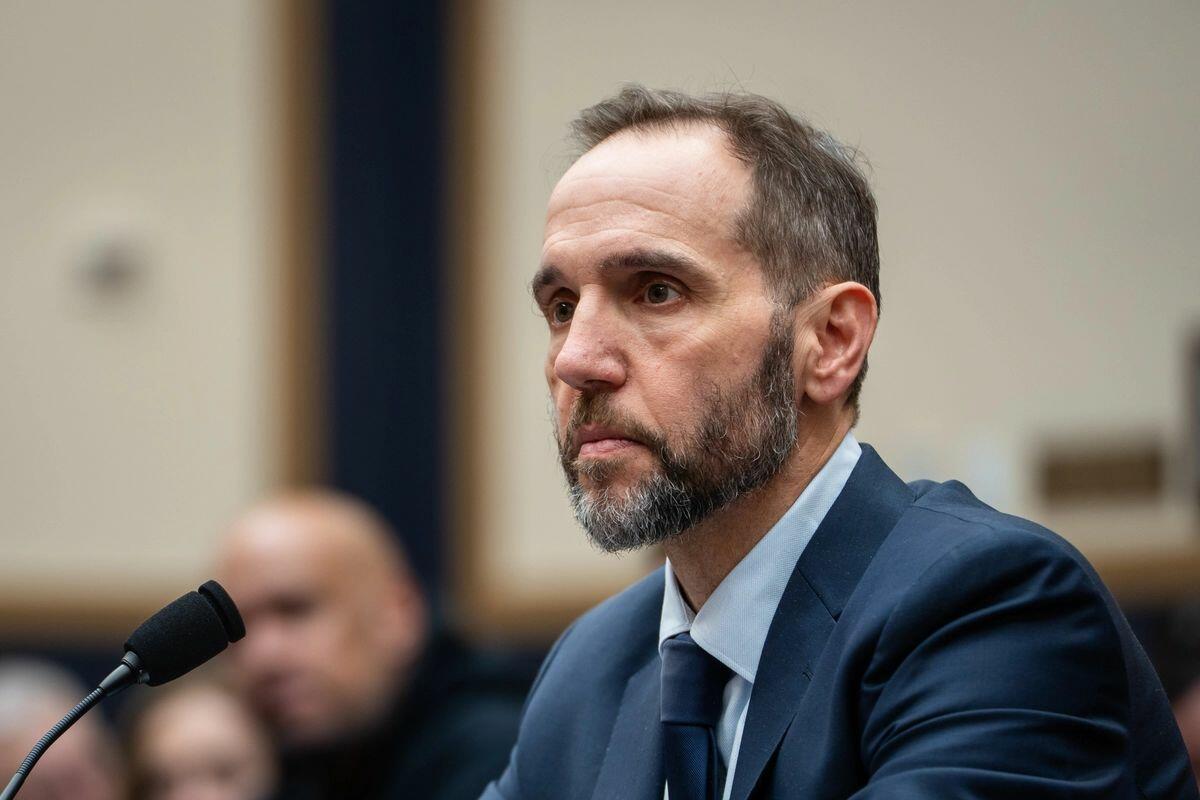
Former special counsel Jack Smith subpoenaed Verizon for Patel’s phone records from October 2020 through February 2023, the documents, made public by Republicans on the Senate Judiciary Committee, showed.
Patel was part of the Trump administration from 2019 through January 2021. After the Biden administration took office, Patel began a nonprofit foundation and worked as a consultant, frequently appearing in media to back Trump and his policies.
The subpoenas asked for various details about Patel’s accounts, including financial information and text messages, the records showed. Text and call logs were among the requested details.
Patel disclosed the subpoenas in February, describing them as “outrageous and deeply alarming.”
He said that previous FBI leaders “secretly subpoenaed my own phone records—along with those of now White House Chief of Staff Susie Wiles—using flimsy pretexts and burying the entire process in prohibited case files designed to evade all oversight.”
The FBI declined to comment further on Tuesday.
Arctic Frost started in 2022. The effort, which involved Smith and FBI officials, featured subpoenas involving more than a dozen Republican members of Congress and the seizure of a phone used by President Donald Trump, whom prosecutors ultimately charged with interfering with certification of the 2020 presidential election for alleging that voter fraud took place.
The case was dropped when Trump in 2024 won a second term in office.
Smith has defended the investigation, telling lawmakers in January that he properly investigated “attempts to interfere with the lawful transfer of power” and that the subpoenaed records were acquired “to understand the scope of that conspiracy, who they were seeking to coerce, who they were seeking to influence, who was seeking to help them.”
Sen. Chuck Grassley (R-Iowa), chairman of the Senate Judiciary Committee, first obtained records on Arctic Frost and released them in early 2025.
Sen. Ted Cruz (R-Texas), chairman of the committee’s Subcommittee on Federal Courts, Oversight, Agency Action, and Federal Rights, said during a hearing on Tuesday that Arctic Frost was “a modern Watergate” that targeted lawmakers and people involved with Trump’s reelection efforts, including Patel and Wiles.
Sen. Sheldon Whitehouse (D-R.I.) said that the subpoenas of Patel made sense, because the FBI director “made himself a fact witness in that investigation” by making comments on podcasts. Whitehouse said that Patel’s grand jury testimony should be made public.
Tyler Durden
Tue, 03/24/2026 – 21:25
https://www.zerohedge.com/political/jack-smith-subpoenaed-records-kash-patel-documents
Jack Smith Subpoenaed Records On Kash Patel: Documents
Jack Smith Subpoenaed Records On Kash Patel: Documents
Authored by Zachary Stieber via The Epoch Times (emphasis ours),
The team behind the Arctic Frost investigation subpoenaed years’ worth of records on Kash Patel, who now heads the FBI, according to documents released on March 24.
Former special counsel Jack Smith subpoenaed Verizon for Patel’s phone records from October 2020 through February 2023, the documents, made public by Republicans on the Senate Judiciary Committee, showed.
Patel was part of the Trump administration from 2019 through January 2021. After the Biden administration took office, Patel began a nonprofit foundation and worked as a consultant, frequently appearing in media to back Trump and his policies.
The subpoenas asked for various details about Patel’s accounts, including financial information and text messages, the records showed. Text and call logs were among the requested details.
Patel disclosed the subpoenas in February, describing them as “outrageous and deeply alarming.”
He said that previous FBI leaders “secretly subpoenaed my own phone records—along with those of now White House Chief of Staff Susie Wiles—using flimsy pretexts and burying the entire process in prohibited case files designed to evade all oversight.”
The FBI declined to comment further on Tuesday.
Arctic Frost started in 2022. The effort, which involved Smith and FBI officials, featured subpoenas involving more than a dozen Republican members of Congress and the seizure of a phone used by President Donald Trump, whom prosecutors ultimately charged with interfering with certification of the 2020 presidential election for alleging that voter fraud took place.
The case was dropped when Trump in 2024 won a second term in office.
Smith has defended the investigation, telling lawmakers in January that he properly investigated “attempts to interfere with the lawful transfer of power” and that the subpoenaed records were acquired “to understand the scope of that conspiracy, who they were seeking to coerce, who they were seeking to influence, who was seeking to help them.”
Sen. Chuck Grassley (R-Iowa), chairman of the Senate Judiciary Committee, first obtained records on Arctic Frost and released them in early 2025.
Sen. Ted Cruz (R-Texas), chairman of the committee’s Subcommittee on Federal Courts, Oversight, Agency Action, and Federal Rights, said during a hearing on Tuesday that Arctic Frost was “a modern Watergate” that targeted lawmakers and people involved with Trump’s reelection efforts, including Patel and Wiles.
Sen. Sheldon Whitehouse (D-R.I.) said that the subpoenas of Patel made sense, because the FBI director “made himself a fact witness in that investigation” by making comments on podcasts. Whitehouse said that Patel’s grand jury testimony should be made public.
Tyler Durden
Tue, 03/24/2026 – 21:25
https://www.zerohedge.com/political/jack-smith-subpoenaed-records-kash-patel-documents
Here’s Where Rent Growth In The US Is Finally Slowing
Here’s Where Rent Growth In The US Is Finally Slowing
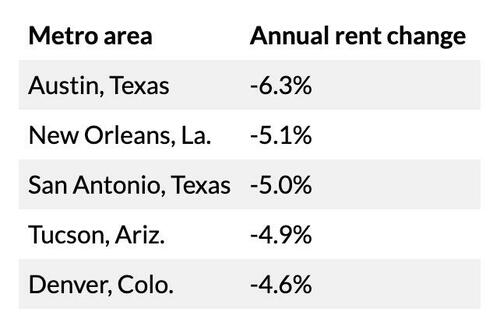
After years of rapid increases, rent growth in the U.S. is finally slowing—and in some cities, prices are even declining, according to Marketwatch.
From January 2025 to January 2026, rents rose 2.8%, a smaller increase than the year before and lower than pre-pandemic norms, marking the slowest growth since 2021. This cooling trend, driven in part by a surge in new housing supply, suggests the market is stabilizing after an intense period of price escalation. At the same time, easing inflation, steady mortgage rates around 6%, and rising wages could gradually improve overall housing affordability and give households more purchasing power.
Still, housing continues to feel expensive for most Americans because prices surged dramatically during the pandemic and have remained elevated. Income growth hasn’t kept pace, leaving many households stretched and limiting how much relief people actually feel.
Even though rent increases have nearly stalled—growing just over 1% annually in some segments—prices are still significantly higher than they were five years ago, with some cities seeing increases far above the national average. As a result, about half of renters spend more than 30% of their income on housing, underscoring the ongoing affordability crisis.
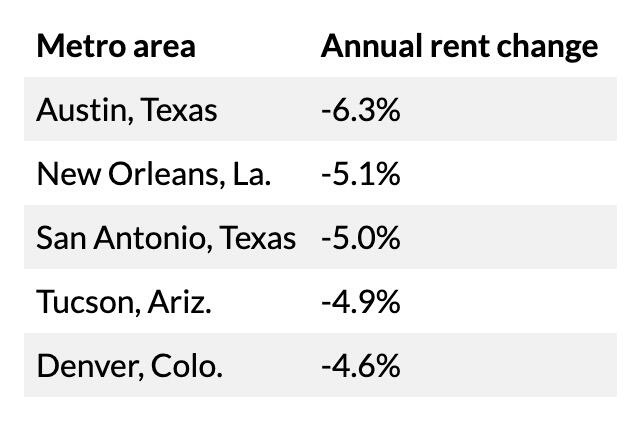
Marketwatch writes that recent rent declines also haven’t been evenly distributed. The biggest drops are concentrated in fast-growing Sun Belt cities like Austin, where rents have fallen notably from their 2022 peaks, along with places such as New Orleans and Denver. However, these declines often follow unusually steep increases in prior years.
Meanwhile, higher-income renters have benefited more from the recent slowdown, as prices for more expensive units have softened the most. This has pulled down overall averages, making the market appear more affordable than it feels for many.
In contrast, lower-cost rentals saw sharper increases during the boom and have experienced little meaningful relief since. Prices for these units rose faster between 2019 and 2025 and have not declined as much, leaving lower-income renters with fewer gains from the current slowdown. Overall, while the cooling rent market is a step in the right direction, it hasn’t yet translated into widespread affordability, and financial pressure remains especially high for those already most burdened by housing costs.
Tyler Durden
Tue, 03/24/2026 – 21:00
https://www.zerohedge.com/markets/heres-where-rent-growth-us-finally-slowing

IRS Data Show Average Tax Refund Up Over 10% This Year
IRS Data Show Average Tax Refund Up Over 10% This Year
Authored by Jack Phillips via The Epoch Times,
The average tax refund is 10.8 percent higher this year when compared with the same time period in 2025, according to data released by the Internal Revenue Service (IRS) on March 20.
The figures show that as of March 13, the average refund for individual filers for 2026 was $3,623, up from $3,271 from 2025.
Around 69.7 million individual tax returns have been received by the IRS so far, the agency said, around 1 percent down from the same time period last year. An estimated 164 million taxpayers are expected to file this season, which started on Jan. 26 and will run through April 15.
The release suggests that the average refund size has gradually declined over the past several weeks of filing updates released by the IRS. On Feb. 20, according to the figures, tax refunds increased more than 14 percent over the previous year.
Treasury Secretary Scott Bessent in January touted new tax cuts that were included under the One Big Beautiful Bill Act last year by saying they would lead to “substantial refunds” for families.
“They’re [going to] change their withholding and have bigger take-home pay every two weeks, every month. So, it’s really an exciting time,” he said in a Fox News interview at the time.
The tax refunds come as gasoline prices have surged to nearly $4 per gallon on average nationwide as the price for a barrel of oil has increased amid the U.S. war with Iran that started in late February.
The average price of gasoline in America has risen by around $1 per gallon following the strikes on Iran, which prompted Iranian attacks on energy installations around the Middle East and the effective closure of the Strait of Hormuz, which carries one-fifth of the global oil supply.
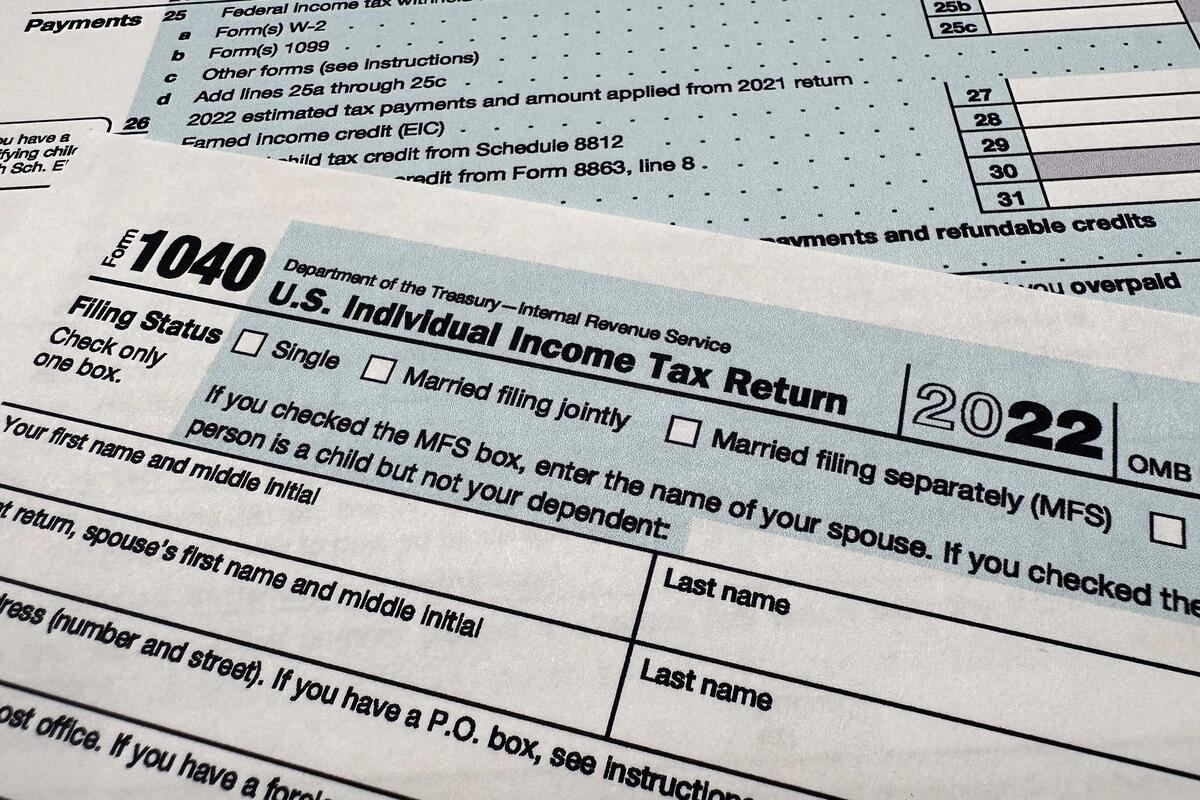
The release of IRS data last week comes as the agency announced there is still around $1.2 billion in unclaimed tax refunds for the year 2022, while it also estimated that the median refund for that year is around $686. Taxpayers who haven’t filed a Form 1040 return for the 2022 tax year have until April 15 to submit their returns.
On March 10, officials said that nearly 45 percent of the returns used Schedule 1-A, the form for the new deductions, including approximately 15.5 million that took advantage of tax breaks on overtime and 3.5 million that avoided paying taxes on tips.
“Halfway through this filing season, the Working Families Tax Cuts are already delivering meaningful relief to middle- and low-income taxpayers, increasing after-tax income and putting more money back into the pockets of American families, workers, and small business owners,” Treasury Secretary Scott Bessent said in a statement.
The IRS added that taxpayers who may be seeking their 2022 tax refund could see those returns held if they haven’t filed returns for either 2023 or 2024, according to a March 20 news release.
The One Big Beautiful Bill Act, backed by Republicans and signed by President Donald Trump in July 2025, included $4.5 trillion in tax cuts, including making his 2017 tax rates permanent.
It also added tax deductions on tips, overtime, and auto loans. There’s a $6,000 deduction for older adults who earn no more than $75,000 a year, while the measure also boosted the $2,000 child tax credit to $2,200.
Tyler Durden
Tue, 03/24/2026 – 20:35
https://www.zerohedge.com/personal-finance/irs-data-show-average-tax-refund-over-10-year

Bud Light & Budweiser Continue To Struggle As Dylan Mulvaney Ad Disaster Nears Three-Year Mark
Bud Light & Budweiser Continue To Struggle As Dylan Mulvaney Ad Disaster Nears Three-Year Mark
Ahead of next week’s three-year anniversary of Anheuser-Busch’s most epic marketing ad blunder ever, the Bud Light backlash remains intact and should serve as a case study for generations in how far-left wokeism in corporate America can destroy decades of brand-building overnight.
What began as a viral TikTok promotion featuring Dylan Mulvaney, a man pretending to be a woman, has since become one of the clearest examples of self-inflicted brand suicide in recent consumer history. The latest beer trends from Goldman suggest the brand has yet to fully recover nearly three years later.
In the latest beer trends report, a team of Goldman analysts led by senior consumer analyst Bonnie Herzog tapped its beer distributor contacts, representing around 60 distributors – or roughly 170,000 retail outlets and about 28% of total U.S. outlets that sell alcohol – and found continued dismal Bud Light consumption trends among Americans.
“Bud Light’s performance continues to level off, even with additional resources being put behind the brand,” Herzog wrote in the note published to clients on Tuesday morning.
Herzog continued, “In terms of specific brands, a distributor noted Michelob Ultra is growing, while Bud Light and Budweiser are struggling.”
To be fair, beer trends have been declining overall in recent years as consumers shift away from alcohol, either due to health trends or because some are gravitating toward marijuana.
The good news for the industry is that 54% of beer distributors expect “a stronger summer selling season,” according to Herzog, who added that volumes are expected to decline by about 1% this year, while noting that Constellation Brands is set to be the “clear outperformer.”
Herzog reiterated a “Buy” rating on Constellation Brands. More details are available in the full Goldman note for professional subscribers.
Tyler Durden
Tue, 03/24/2026 – 20:10
“Emergencies” Requiring Coal Plants To Stay Open Need Not Be Imminent, DOE Tells Court
“Emergencies” Requiring Coal Plants To Stay Open Need Not Be Imminent, DOE Tells Court
By Ethan Howland of UtilityDive
The U.S. Department of Energy’s secretary has broad authority under the Federal Power Act to declare emergencies to keep power plants from retiring, and those emergencies don’t have to be imminent, DOE told a federal appeals court last week in response to challenges over its orders keeping a Michigan coal plant online.
“The statute’s text grants the Secretary discretion to determine that an emergency exists,” DOE said in a March 17 brief with the U.S. Court of Appeals for the District of Columbia Circuit. “This expressly includes a sudden increase in demand, a shortage of generation facilities, or other causes.”
The brief is the DOE’s first defense in court of the 90-day emergency orders it began issuing last year to prevent fossil-fueled power plants from retiring. So far, the orders have targeted six power plants — all but one coal-fired — totaling about 4,300 MW.
Generally, in those orders, DOE said the power plants need to keep running to prevent blackouts in the face of rising electric demand. The DOE has not allowed any of those orders to lapse, using its authority under the Federal Power Act’s section 202(c) to issue new 90-day orders when the old ones expire.
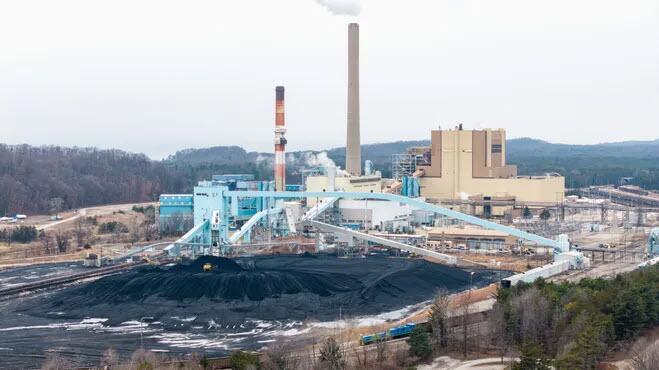
The brief was in response to challenges brought against the DOE over its May 23 order directing Consumers Energy to continue running the 1,407-MW, coal-fired J.H. Campbell power plant in West Olive, Michigan, past its May 31 retirement date. The department has renewed that order three times since.
Michigan, Minnesota and Illinois as well as the Sierra Club and other groups have challenged the emergency order. In part, they contend that DOE failed to show the Midcontinent region around the Campbell power plant faces an energy emergency.
In its brief, DOE said the Federal Power Act defines emergency broadly.
“It does not require imminence or an unexpected development,” DOE said. “The Secretary is also granted broad discretion to use his ‘judgment’ on what ‘will best meet the emergency and serve the public interest.’”
Moreover, the statute lacks strict procedural requirements, according to DOE.
“Contrary to Petitioners’ contentions, the Secretary was not required to prepare any particular analysis, weigh alternatives, or to select the best theoretically possible emergency response,” the department said.
When DOE considered issuing an emergency order for the Campbell power plant, the department found that electricity demand was rising, major power plants were retiring and new power sources weren’t coming online fast enough, it said. The Midcontinent Independent System Operator was at “elevated risk” for reliability problems and higher than normal temperatures were expected, DOE told the court.
“The Secretary interpreted the totality of this evidence and applied his expertise to find that an emergency exists,” DOE said.
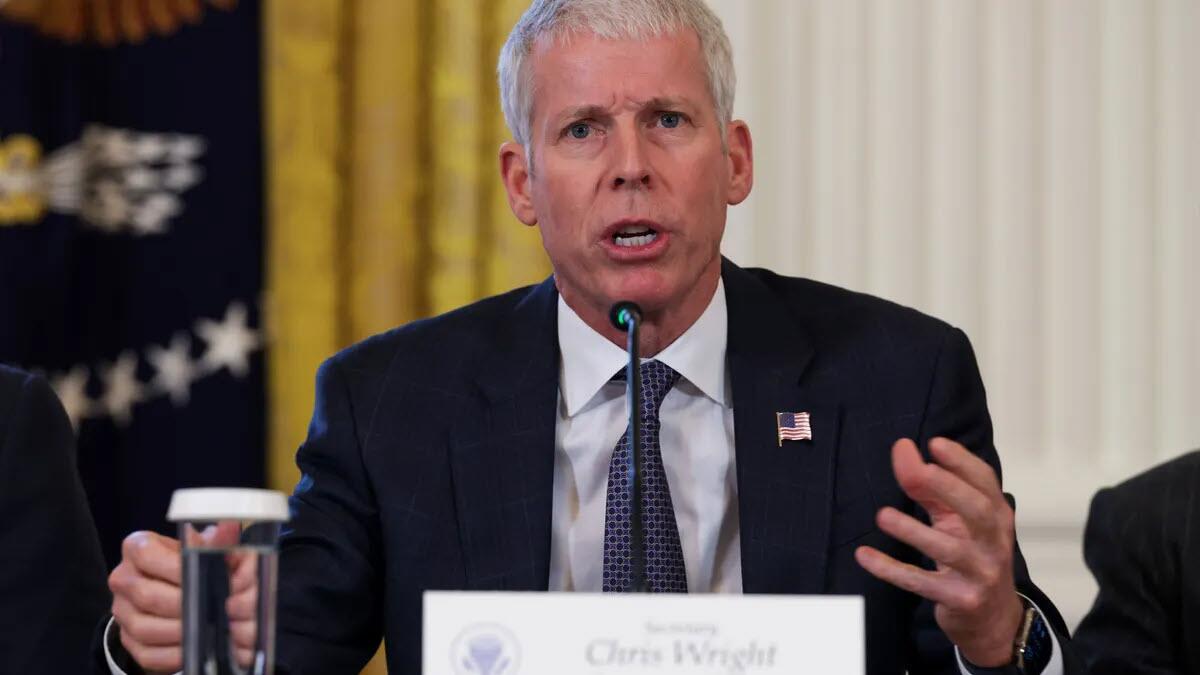
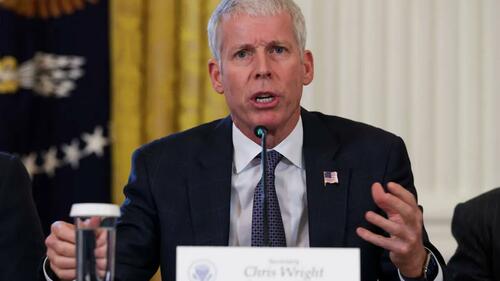
DOE noted that Secretary Chris Wright ordered the Campbell plant to operate under “economic dispatch” to reduce ratepayer costs.
If the court finds a legal flaw in the 202(c) order, it should send the issue back to DOE instead of vacating the order and limiting its ability to issue similar orders, government lawyers argued.
“The Secretary must be able to use section 202(c) to protect public health and safety, particularly in anticipation of extreme weather events like the recent Winter Storm Fern and the ensuing, prolonged cold snap,” the DOE said.
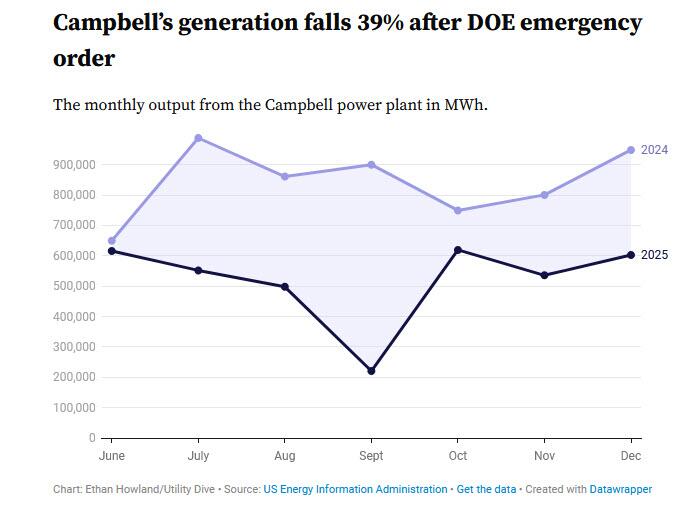
In the seven months after DOE ordered the Campbell plant to stay online, it produced 3.6 million MWh, down 39% from 5.9 million MWh generated over the same period in 2024, according to the latest U.S. Energy Information Administration data.
Consumers Energy spent about $254 million keeping the Campbell plant operating per the DOE orders through December, according to a Feb. 10 filing at the U.S. Securities and Exchange Commission. It received $119 million in revenue from running the plant in the second half of last year and has asked the Federal Energy Regulatory Commission for permission to recoup $135 million in costs from MISO ratepayers, said CMS Energy Corp., which owns Consumers.
Consumers urged the appeals court in a brief to not weigh in on the cost-recovery issue, which is being handled by FERC.
The utility asked the court to “avoid unintended consequences for those separate proceedings, including making clear that any decision here does not assume the availability of refunds or otherwise affect FERC’s decision-making in those separate proceedings.”
DOE continues to issue emergency orders to keep other fossil-fueled power plants running. On March 16 it issued its second emergency order for TransAlta’s 730-MW, coal-fired Centralia power plant in Washington. The company must make the plant available to run until mid-June under the order. The company had planned to shut it down at the end of 2025.
TransAlta’s president and CEO, John Kousinioris, said during an earnings call in February that the company was complying with the orders, but he did not expect the plant to run given “how flush” the state was with hydropower.
“Our primary focus is more on getting clarity on the existing order,” including how TransAlta will recoup its expenses from keeping the unit online, Kousinioris said.
Other generators under 202(c) orders are in Colorado, Indiana and Pennsylvania.
Tyler Durden
Tue, 03/24/2026 – 19:45
California Schools Try Rap While Scores Keep Falling
California Schools Try Rap While Scores Keep Falling
Authored by David Manney via PJ Media,
California’s education system continues to search for answers while student performance struggles to recover. In one case, the Merced City School District approved a contract worth about $270,000 to bring a rap-based curriculum into classrooms, even as academic performance remains weak.
AP Photo/Rich Pedroncelli, file
The district serves over 11,000 students, yet only 13% meet math proficiency standards. The program includes a summer “Rap Camp” and specialized programming tied to cultural themes, all framed to boost student engagement.
The curriculum comes from School Yard Rap, founded by Brandon Brown, a former teacher who promotes music-driven instruction. Lessons include songwriting, DJ work, and performances that connect history and culture through rhythm and storytelling.
“The School Yard Rap curriculum transforms history lessons into relatable characters presented through songs and storytelling—resulting in emotional connection,” the School Yard Rap website states.
Established in 2016, School Yard Rap, which operates in 28 states, presents “a world where learning meets rhythm, exploring diverse cultures and subjects through interactive music-infused modules.”
Merced has handed out $610,000 worth of contracts to School Yard Rap, the Post reported. Fox News Digital has reached out to the school district and School Yard Rap.
Supporters believe that approach helps students stay interested in school, an argument that sounds appealing, yet it doesn’t resolve a basic concern. Students struggling with reading and math need direct, structured teaching that builds skills step by step, while a program centered on performance and expression risks shifting attention away from those core needs.
The financial side raises its own concerns; the district has already committed over $600,000 in total contracts tied to the program, a level of spending that stands out in a district already dealing with low performance and limited resources.
When outcomes remain weak, large investments in unproven strategies invite scrutiny, making leaders accountable for whether those dollars would deliver more value if directed toward tutoring, teacher support, or curriculum improvement that’s focused on the fundamentals.
Federal officials have also taken notice. Harmeet Dhillion, assistant attorney general for civil rights at the DOJ, has warned that race-based programming raises legal concerns, stating that offering benefits based solely on race would violate federal law if proven true.
The Merced program includes an “African American Affinity Group,” which has drawn attention because of how it organizes students. Those details place the district in a position where innovation intersects with legal boundaries.
That’s a concern that doesn’t exist in isolation. Attorney General Pam Bondi and federal civil rights officials have recently taken action in other California districts over programs that classify or treat students differently based on race.
Federal filings have challenged policies that assign benefits or resources using racial categories, arguing that such practices conflict with equal protection principles. These actions signal a broader push to examine how districts design programs and whether they comply with federal law.
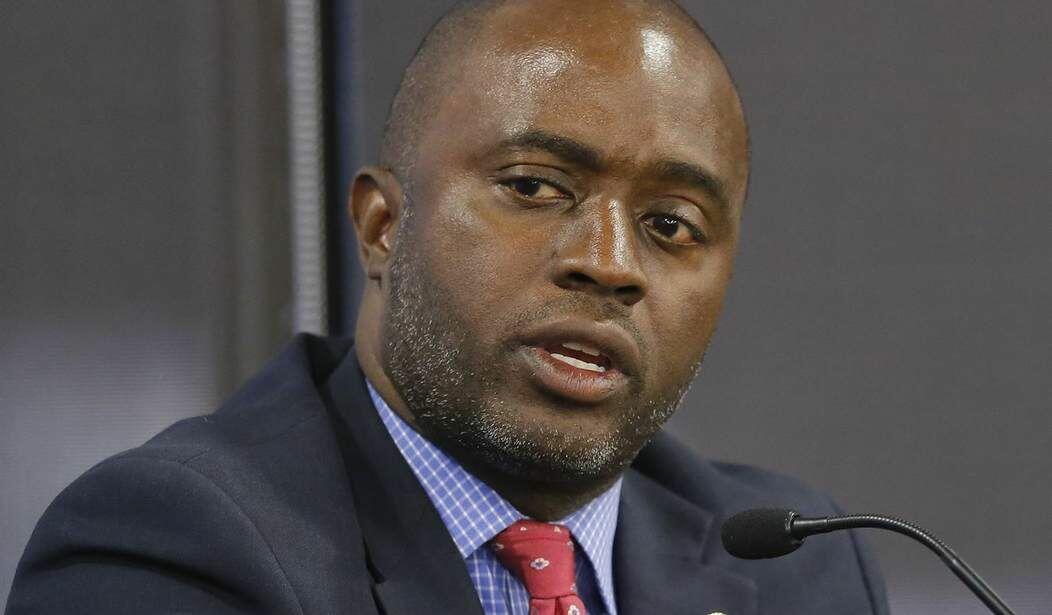
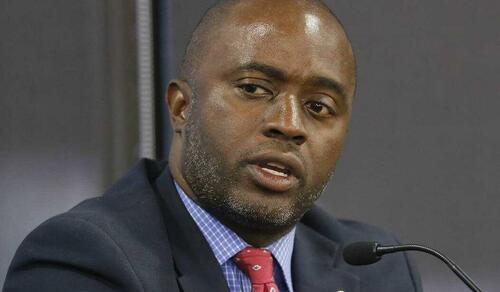
California’s education leadership continues to face pressure amid lagging results. State Superintendent Tony Thurmond oversees a system where many students remain below grade level in reading and math. Years of declining performance have created urgency, yet urgency alone doesn’t guarantee sound decisions.
Districts often reach for new ideas in hopes of turning things quickly around. Some ideas may help in limited cases, yet large-scale adoption without clear evidence can deepen existing problems rather than solve them.
Local school boards and administrators are responsible for these choices, deciding how to allocate funding, which programs to adopt, and how to measure success. When a district with low performance heavily invests in a music-based curriculum, it signals a shift in priorities.
Families watching those decisions want reassurance that leaders remain focused on academic growth, not just student engagement. Engagement matters, but it doesn’t replace the need for measurable progress in reading, writing, and math.
Merced’s situation reflects a larger issue across parts of the country, where education systems under pressure turn to bold or unconventional strategies. Some of those strategies generate attention and short-term excitement, while long-term improvement depends on whether students gain the skills they need to succeed beyond the classroom. Without that foundation, new programs risk becoming distractions rather than solutions.
California schools don’t lack funding or attention; they face a deeper challenge rooted in priorities and execution. A rap-based curriculum may draw interest, but interest alone doesn’t raise test scores or close learning gaps.
Leaders must decide whether to continue experimenting or return to methods that have proven results over time. Students deserve clarity, consistency, and a focus on skills that prepare them for the future.
Get more in-depth analysis and unfiltered insight by joining PJ Media VIP today. Right now, save 60% with promo code FIGHT when you sign up. Support independent writing and unlock exclusive content that stays focused on what matters.
Tyler Durden
Tue, 03/24/2026 – 18:55
https://www.zerohedge.com/political/california-schools-try-rap-while-scores-keep-falling

Grounding Planes ‘A Distinct Possibility’: Tightened Global Fuel Supply Hitting Asian Nations Hardest
Grounding Planes ‘A Distinct Possibility’: Tightened Global Fuel Supply Hitting Asian Nations Hardest
European Commission President Ursula von der Leyen has again warned of a “critical energy situation” as oil and gas markets convulse, underscoring growing fears of supply shocks, at a moment President Trump early this week claimed the Strait of Hormuz could “reopen very soon” if talks with Iran succeed – though Tehran has flatly denied any negotiations are underway as confusion reigns over the status of backchannel dialogue.
Already one country says it is suffering a fuel shortage crisis, amid broader reports of some demand destruction problems coming in from various parts of the globe. Philippine President Ferdinand Marcos on Tuesday said there’s a “distinct possibility” planes may be grounded due to a jet fuel shortage, connected to the war on Iran and de facto closure of the Strait of Hormuz.
“Several countries have already told our airlines they cannot fuel their aircraft, so they have to carry fuel there and back,” he told Bloomberg News in an interview.
He additionally warned that long-haul flights could become “a much more serious problem” due to the fuel crisis and restrictions. He was specifically asked whether planes might inevitably be grounded, to which he responded: “We’re hoping not, but it’s a distinct possibility.”
Now in its fourth week, the US-Israel-Iran war had already disrupted commercial flights across the Gulf and Mideast region, especially impacting key regional hubs of Dubai, Doha, Abu Dhabi, and Tel Aviv – due to the ongoing missile and drone danger in the skies. Another significant development reported by Bloomberg Tuesday:
Vietnam Airlines will temporarily suspend flights on some domestic routes as jet fuel shortages and rising fuel prices caused by the conflict in the Middle East start to impact the nation’s air travel.
The national flag carrier will cut around 23 flights per week from April 1 over tightened supplies of jet fuel, according to a statement from the Civil Aviation Authority of Vietnam. VietJet Aviation JSC is also reducing flights on some routes, according to schedules on its booking website.
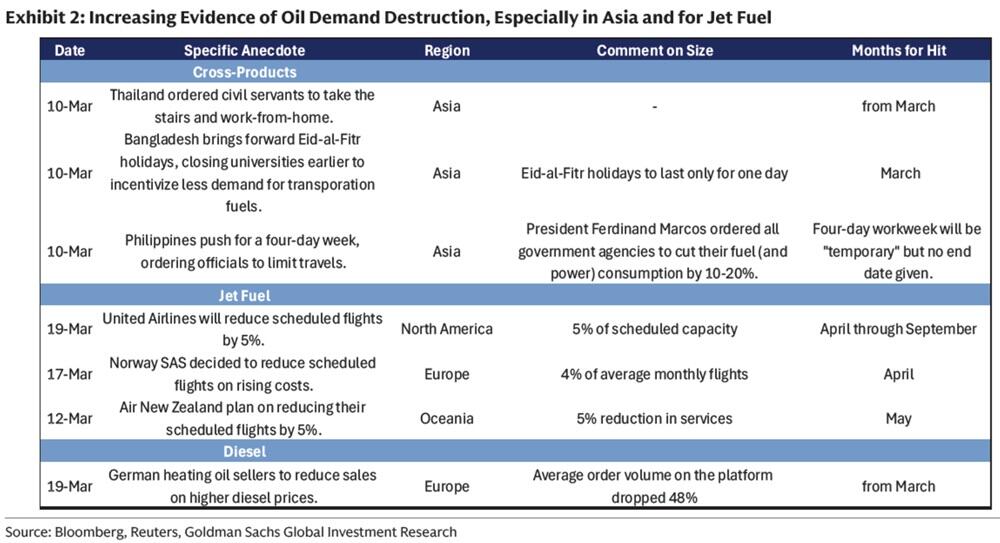
But as far as oil and fuel flows disruptions, Asia in particular has been the first region to feel the supply crunch most acutely. Below is a round-up of some of the latest examples:
Flight surcharges: Some Asian countries, including Vietnam, say airlines are planning to role out fuel surcharges on international routes from early April.
Diesel shortages in Thailand: The abbot of Wat Saman Rattanaram in Chachoengsao province, about 50 miles east of Bangkok, warned that cremation services may have to be suspended. “In more than 50 years, I’ve never seen anything like this,” he said.
More drastic power-saving measures… Last week, the Thai government ordered civil servants to take the stairs rather than the lift, and it’s increased the air-conditioning temperature to 27C. It will tell government employees to wear short-sleeved shirts rather than suits.
Bangladesh electricity rationing: Lectures at the country’s main universities have been cancelled until later this month as the government closed the campuses to save electricity.
India panic-buying gas supplies: India has been dealing with a squeeze in cooking gas supplies over the past few days, leading to panic-buying by domestic users.
Scrambling for cheap local alternatives: There are reports that suggest some regions in India are witnessing a spike in timber sales, while others see increased sales of cow dung cakes – both biomass fuels.
…and there are widespread images and examples of huge lines at gas pumps across various countries.
Major cities in India, particularly #Hyderabad is currently experiencing a severe Compressed Natural Gas #CNG shortage, forcing thousands of auto-rickshaws and cabs off the roads or into long, hours-long refueling queues pic.twitter.com/h0xMYHXDNr
— S.M. Bilal (@Bilaljourno) March 24, 2026
We also detailed earlier that hundreds of service stations across Australia have run out of fuel.
Energy Minister Chris Bowen warned federal parliament on Monday that more than 109 gas stations in Victoria had run out of at least one grade of gas. He said 47 outlets in Queensland had no diesel, 32 had no regular unleaded, and 37 stations in New South Wales had completely run out of fuel.
The below data from Goldman Sachs charts an array of examples over the past couple weeks:
“The flow of oil to Asian refineries has slowed, and that has downward impacts on us,” Bowen said, adding, “We’re in an uncertain environment, so that’s why we’re doing all the preparatory work.”
Bowen warned that fuel supplies were at about 38 days for gasoline. He said only 30 days of diesel and jet fuel remained. There’s the potential that the crisis could be coming to fuel pumps near you.
Tyler Durden
Tue, 03/24/2026 – 18:30

Pentagon Removes Press Offices After Federal Judge Blocks Trump Restrictions
Pentagon Removes Press Offices After Federal Judge Blocks Trump Restrictions
The Defense Department has announced plans to remove media offices from the Pentagon after a Clinton-appointed federal judge sided with The New York Times in a lawsuit challenging limits on reporters’ access to the building. The action is seen as a “loophole” strategy to bypass the ruling against restrictions which the Trump Administration has struggled to enforce in the wake of a hailstorm of national security leaks.
The press area of the Pentagon, known as “Correspondents’ Corridor”, has been used for decades to cover U.S. military operations. Journalists stationed at the Pentagon offices often enjoyed extensive freedom of movement and access to officials. However, heightened hostilities involving leftist activists and the progressive media have brought operational security into question.
Not since the Civil War has the political divide in the US been so deep, to the point that left-wing journalists might represent a clear and present danger to national security. As a result, the Correspondent’s Corridor will be closed immediately according department spokesperson Sean Parnell.
Journalists will eventually be able to work from an “annex” outside the primary Pentagon building, which Parnell says “will be available when ready.” He did not offer details on how long that will take. The Pentagon Press Association said the announcement “is a clear violation of the letter and spirit of last week’s ruling.” But, it does not necessarily go against the ruling. The Pentagon will still issue press credentials, but journalists won’t be allowed access to the corridor or move freely inside the building.
On March 20, 2026, a U.S. District Court judge vacated key security provisions of the Pentagon’s October 2025 media access policy. The court removed every provision that allowed the Department to screen press credential holders for security risks and every provision that allowed…
— Sean Parnell (@SeanParnellASW) March 23, 2026
In the lawsuit brought by The New York Times (filed in December 2025), Judge Paul Friedman ruled that portions of the October 2025 press policy, imposed under Defense Secretary Pete Hegseth, violated the First Amendment and the Fifth Amendment. He argued that the rules were vague and “viewpoint-discriminatory”, as they allowed the Pentagon to revoke credentials for journalists who solicited or reported information not officially pre-approved.
BREAKING – Pete Hegseth confirms journalists will no longer roam the Pentagon freely, now requiring badges, escorts, and strict rules against soliciting classified or sensitive information to crack down on leaks and “fake news” reporting inside the building. pic.twitter.com/NyHjq9TSwW
— Right Angle News Network (@Rightanglenews) October 5, 2025
The judge ordered the restoration of press passes for seven Times reporters and vacated the challenged provisions for all affected journalists. The most recent Pentagon office closures, though, are not targeted at any specific reporters for non-compliance with the new rules. Rather, they are targeted to all reporters regardless.
Secretary of War Pete Hegseth’s restrictions called for tighter oversight on approvals for information sharing, journalists had to be escorted through the Pentagon, and increased security screenings for any media employees working at the Pentagon. The restrictions also made it easier for the Defense Department to revoke press badges if a journalist was “reasonably determined” to pose a security risk through unauthorized access, attempted access, or disclosure of sensitive information.
The Trump Administration has dealt with a flood of information leaks to the press in the past year, often in relation to military operations. In April 2025, the Pentagon launched a large scale investigation (including polygraphs) into “recent unauthorized disclosures” of national security information. The danger of Obama and Biden appointed officials working against Trump from the inside, even if this harms the US, is an unfortunate reality of the current political climate.
Specific leaks under probe included military operational plans for the Panama Canal, deployment of a second carrier to the Red Sea, Elon Musk’s Pentagon visit/briefing on China war plans (which was canceled after the leak), and a pause in intelligence collection for Ukraine.
Three senior political appointees were suspended/placed on leave (Dan Caldwell, senior adviser to Hegseth; Darin Selnick, deputy chief of staff; and Colin Carroll, chief of staff to the deputy defense secretary). Democrats used the scandals to demand Hegseth’s resignation, calling them breaches that threatened national security.
While the decision does challenge traditional courtesies given to the press, and perhaps even disrupts access that some would consider a First Amendment obligation, it cannot be denied that the establishment media as it exists today has proven time and time again to be dangerously biased against Trump and conservatives. This bias has, in the recent past, bordered on treason (the Russiagate hoax being a clear example).
It is not surprising that Trump would seek to distance the press from Pentagon access. Why would he invite the enemy inside the wire?
* * * Better hurry...
Tyler Durden
Tue, 03/24/2026 – 17:40