Category: News

Disturbing “Five Nights At Epstein’s” Online Game Spreads Rapidly Through Classrooms
Disturbing “Five Nights At Epstein’s” Online Game Spreads Rapidly Through Classrooms
A disturbing browser game called Five Nights at Epstein’s is spreading in schools, with students playing it during class and sharing videos online, according to Bloomberg.
In the game, players take on the role of victims trapped on Jeffrey Epstein’s island, trying to survive five nights by avoiding assault. Its popularity has been fueled by social media, where clips of students playing have drawn large audiences and, in some cases, even demonstrate how to bypass school restrictions. The game’s accessibility through web browsers makes it especially easy for students to access on school-issued devices.
Parents and educators are alarmed not only by the game’s content but by how casually students engage with it.
One parent noted that classmates seemed “disconnected to the reality that there were real victims,” often joking about the scenario in ways that felt dehumanizing.
Bloomberg writes that despite platform policies that prohibit harmful or exploitative material, videos and links continue to circulate, frequently disguised with misspellings to avoid detection. The game reflects a broader pattern of meme-driven parody content that turns real-world abuse scandals into entertainment, blurring the line between satire and harm.
Educators warn that repeated exposure to this kind of content risks desensitizing young people to serious issues like sexual violence.
As one librarian put it, “That’s not kids being kids; that’s kids hiding from being sexually assaulted,” emphasizing concerns about how such media may shape attitudes and empathy.
Schools are attempting to respond through stricter device monitoring and usage policies, but many believe these measures alone are insufficient. Addressing the issue, they argue, requires a coordinated effort between tech platforms, parents, and educators to help students better understand the real-world consequences behind what they see on screens.
Tyler Durden
Fri, 03/27/2026 – 16:50

“Too Many Things Are Out Of Whack…”
“Too Many Things Are Out Of Whack…”
Authored by James Howard Kunstler,
“The people we care about most, the undocumented migrants…”
– Sen. Chris Murphy (D-CT)
Cult Classics
Tensions rise as the green fuse drives the flowers of springtime (and thank you, Dylan Thomas, for the loan.)
Too many things are out of whack. Some are actually breaking.
A physics of events is at work that will bring our affairs back to true, but expect it to be painful.
Okay, you’ve been warned.
Asia, especially, suffers bigly with the Persian Gulf shut-down.
For decades these countries took the oil flows for granted without having to do anything. No thoughts of maritime security. No cares for the chaos Iran sowed across the region (and beyond). Leave the tanker insurance to London.
Now, they are rationing the diesel, gasoline, natgas, and aviation fuel.
For the moment they are just stunned. Soon, they’ll be hollering, stomping, jumping up and down crying woo-woo-woo.
Europe, for years, has garishly, and in plain sight, planned its own journey to a de-industrialized neo-medieval Palookaville.
The poster-child, Germany, destroyed its energy prospects with lunatic glee, in thrall to retarded climate change politics, while the European Union turned into a devouring mother, stole her children’s sovereign agency, and herded them into a Klaus Schwab death camp.
No more atomic energy for you! No more cheap gas from Russia. No more heat in wintertime. Jihad for entertainment. The lights are going out and it might be too late to make other arrangements.
Don’t think for a moment that Iran was not a threat to the world, and especially to The Great Satan, as they styled us.
The Persians have been hostage to a cult for half a century, and all cults are crazy. This one, the reign of the Shia ayatollahs, was apocalyptic in the pure sense of the word. They prayed and labored avidly for the destruction of others and relished their own martyrdom. The craziest part was thinking that the USA under Donald Trump might possibly roll over for them.
Quit swallowing those black pills, everybody.
Iran is not some super-monster out of the Marvel Comics movies. Iran doesn’t have the mojo to shut down the Strait of Hormuz indefinitely. It will run out of missiles, drones, torpedoes, mines, launch sites, and a command structure for deploying any of that.
It has converted the other neutral Gulf states into raging enemies eager to help the US — and by extension, most ironically, Israel, too.
This rearrangement of interests in the Middle East would have been unthinkable a mere month ago.
We have way more to worry about here in America with our own apocalyptic coteries and claques.
And our broken institutions. Is it not obvious that the Democratic Party exists now solely to punish half of the country that would prefer to not wreck our republic?
The Democratic Party has no other program. It’s just another death cult.
That’s why you were made to wait four and half hours in some far-off precinct of the airport for a flight that you were guaranteed to miss.
Well, at least that’s over for now, since the Senate passed a spending bill at two o’clock in the morning today and DHS will be up-and-running again — while Congress takes two weeks off for Easter.
Now consider those figures and factions in the Republican Party who won’t lift a finger to allow election reform.
Thune, McConnell (what little is left of him), Murkowski, Tillis, maybe Collins.
What possible calculus judders their brains?
They are about to be drowned in a tsunami of revelation about organized ballot fraud in Arizona, Georgia, Pennsylvania, Michigan, and Wisconsin.
How will they explain that?
Maybe “election denial” wasn’t a thing all along. Thune’s game is plain stupid. He’s engineering his own downfall as majority leader as he attempts to usher the SAVE Act into a ditch. Our election procedures are patently insane, and only the insane fail to notice. So, failing to notice is an option, at least.
Tomorrow, Saturday, brings another Neville Roy Singham production of “No Kings” demos across the nation, a field-day for the senile.
They want to abolish ICE. They want illegal aliens to stay here and they want them in the voting booth.
Go out and ask them why that’s a good idea.
Views expressed in this article are opinions of the author and do not necessarily reflect the views of ZeroHedge.
Tyler Durden
Fri, 03/27/2026 – 16:25
https://www.zerohedge.com/geopolitical/too-many-things-are-out-whack

Tiger Woods Involved In “Rollover Crash” On Jupiter Island
Tiger Woods Involved In “Rollover Crash” On Jupiter Island
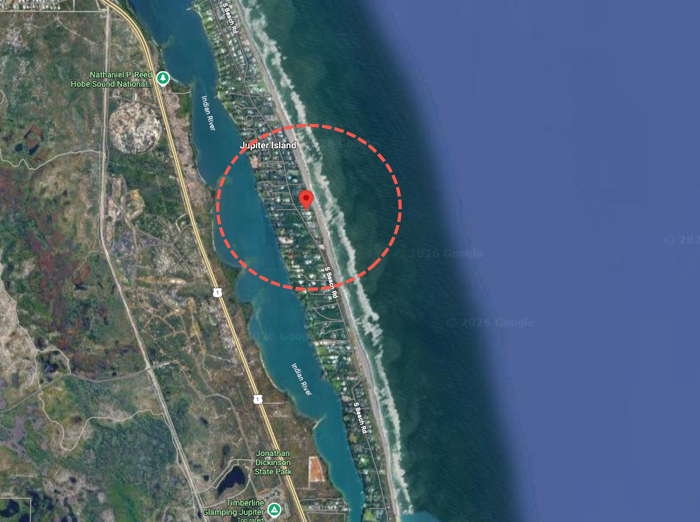
Golf pro Tiger Woods has reportedly been involved in a “rollover crash” on Jupiter Island, just north of Palm Beach County in Martin County, according to local media outlet WPTV.
The Martin County Sheriff’s Office said the accident occurred near 281 Beach Road on Jupiter Island in Hobe Sound. Property records from Zillow show the closest house to the accident is valued at $14.8 million.
The sheriff’s office has yet to say what happened or whether Tiger was injured.
If the report is correct, this would mark Tiger’s third car crash. Here are his prior two:
November 2009 in Florida, when he hit a fire hydrant and a tree outside his home.
February 2021 in Southern California, a serious single-car rollover that caused major leg injuries.
Sheriff John Budensiek will hold a press conference at around 1700 local time.
*Developing…
Tyler Durden
Fri, 03/27/2026 – 15:46
https://www.zerohedge.com/personal-finance/tiger-woods-involved-rollover-crash-jupiter-island
Soaring Prices Set To Crash China’s LNG Imports To 8-Year Low
Soaring Prices Set To Crash China’s LNG Imports To 8-Year Low
Submitted by Tsvetana Paraskova of OilPrice.com
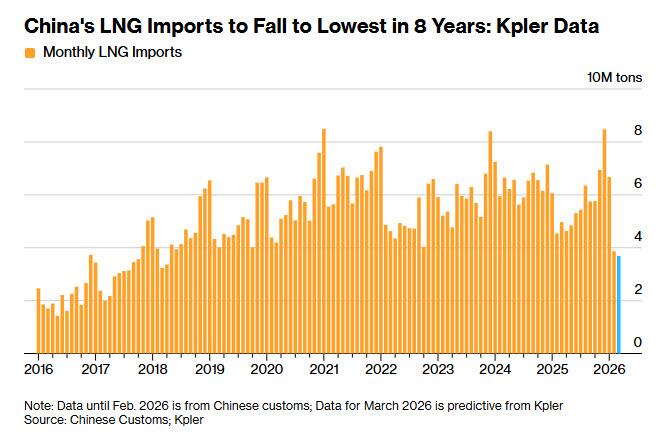
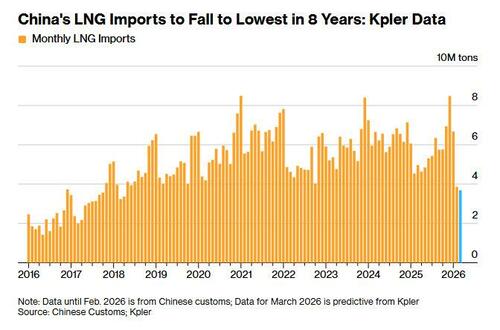
Surging LNG prices amid the war in the Middle East are set to lead to the lowest monthly LNG imports into China in eight years as Qatari and UAE supply is off the market and Chinese buyers look to raise supply from domestic gas production and pipeline deliveries.
China is on track to import about 3.7 million tons of LNG in March, per tanker-tracking data by Kpler cited by Bloomberg. That would be the lowest monthly import level in the world’s top LNG importer since the spring of 2018, as well as a 25% slump compared to March 2025, according to Bloomberg data and analysis.
The de facto closure of the Strait of Hormuz has stranded all Qatari and UAE supply of LNG. Additionally, Qatar’s LNG capacity has been severely damaged by Iranian missile attacks, which forced state firm QatarEnergy to declare force majeure on contracts and start quantifying the losses.
The Iranian missile attacks on Ras Laffan Industrial City (RLIC) dashed hopes of quick resumption of Qatari LNG flows even if the Strait of Hormuz were to open to unimpeded and safe traffic today. QatarEnergy last week said the damage from Iranian missile strikes on the Ras Laffan LNG complex, the world’s single largest LNG-producing facility, would cost it about $20 billion per year in lost revenue and to take up to five years to repair.
As a result, Asian LNG prices have nearly doubled this month and Asian buyers are outbidding Europe for spot supply.
China had some buffer to allow itself not to spend too much on costly LNG imports this month. The country’s LNG storage was estimated by Kpler at about 51% by end-March, and this buffer allows Northeast Asian buyers to draw on existing inventories.
The effect would shift peak restocking season in China, Japan, and South Korea to June–July rather than April–May, according to Kpler.
Tyler Durden
Fri, 03/27/2026 – 15:30
https://www.zerohedge.com/commodities/soaring-prices-set-crash-chinas-lng-imports-8-year-low
In Surprise Move, Iran Blocks Two Chinese Ships From Transiting Hormuz
In Surprise Move, Iran Blocks Two Chinese Ships From Transiting Hormuz
In a surprise twist, Iran appears to have turned its back on its best (and only) client, Beijing, when it blocked two China-owned container vessels from the Strait of Hormuz in what the WSJ said was an unusual move by Tehran, which has focused its shipping blockade on countries it deems supporters of Israel and the U.S.
Paper says “open.” Reality says something else.
Today, two ultra‑large COSCO container ships — CSCL Indian Ocean and CSCL Arctic Ocean — tried to exit the Gulf through Iran’s “approved” Hormuz lane… but turned back even after Iran said Chinese ships could pass.
Operators… pic.twitter.com/vbEn0WKQYm
— The Maritime (@themaritimenet) March 27, 2026
The two ships – CSCL Indian Ocean and CSCL Arctic Ocean – made U-turns near Larak Island, about 20 miles from the port of Bandar Abbas in southern Iran, the WSJ reported.
COSCO vessels abort Strait of Hormuz transit attempt amid ongoing instability
Following COSCO’s announcement to resume booking acceptance to Gulf destinations, new developments overnight suggest the situation in the Strait of Hormuz remains highly unstable.
According to… pic.twitter.com/VkrtGwOZgD
— MarineTraffic (@MarineTraffic) March 27, 2026
In recent days, some ships have transited the strait via the narrow channel between Iran’s Qeshm and Larak islands, including those signaling Chinese owners and crew members.
Also on Friday, Iran’s Revolutionary Guard said that it had turned back three container ships of various nationalities trying to cross the strait, adding that all ship traffic to and from ports of supporters of the U.S. and Israel was prohibited, according to Nour News, which is affiliated with the country’s Supreme National Security Council.
Container ship owners told the WSJ the only vessels that can now cross the strait are those with cargoes of Iran-destined household goods, cars, clothing and pharmaceuticals.
In the past week, Iran has allowed four ships loaded with grains to cross the Strait of Hormuz in the other direction, after waiting nearly three weeks in the Gulf of Oman, according to brokers who arranged the cargoes. The bulkers unloaded at Iran’s Bandar Imam Khomeini port, where three-quarters of the cargo handled is grain imports mainly from Russia and South America.
Tyler Durden
Fri, 03/27/2026 – 15:00
https://www.zerohedge.com/markets/surprise-move-iran-blocks-two-chinese-ships-transiting-hormuz

CPAC Shocker: Dallas Crowd Cheers For Trump Impeachment Hearings
CPAC Shocker: Dallas Crowd Cheers For Trump Impeachment Hearings
In a moment that captured the growing unease within conservative circles, Matt Schlapp, chairman of the American Conservative Union, found himself in an awkward spot at this year’s CPAC in the Dallas area on Friday. While attempting to rally the crowd, Schlapp asked, “How many of you would like to see impeachment hearings?” The audience erupted in cheers. Visibly caught off guard, he quickly backpedaled: “No… that was the wrong answer.” He tried again – “Let’s try that again, how many of you would like to see impeachment hearings?” – only for the crowd to cheer again. Flustered, Schlapp joked about needing coffee for the attendees before pivoting to a safer topic: keeping the House majority.
An attempt by @mschlapp to hype up the CPAC crowd goes horribly wrong —
“How many of you would like to see impeachment hearings?”
[cheers]
“That was the wrong answer…” pic.twitter.com/PQUCThdgV3
— Andrew Feinberg (@AndrewFeinberg) March 27, 2026
The incident unfolded against the backdrop of heated discussions at the conference about the U.S.-Israeli military actions in Iran. It was not the unified show of support Trump allies had hoped for – and it signaled deeper fractures in the MAGA base over foreign policy.
Those cracks are widening on Capitol Hill. Republican lawmakers, once solidly behind Trump, are now openly breaking ranks over the escalating conflict in Iran, warning that any deployment of U.S. troops could trigger a political backlash severe enough to cost the party in the midterms. Leading the charge is South Carolina Rep. Nancy Mace, who has repeatedly drawn a hard line against “boots on the ground.”
Mace: I’ll be voting against the funding if we’re putting troops on the ground. I’m not going to fund that—no U.S. troops. pic.twitter.com/qLDbT0OrvA
— Acyn (@Acyn) March 24, 2026
“If there are boots on the ground, public sentiment on this war changes overnight in a flash… people are not going to go for it,” Mace told ZeroHedge after a closed-door briefing. She has vowed to vote against any funding that would send American troops into Iran, stating plainly: “If a single boot of a single American soldier sets foot on Iranian soil, I will vote against this. I will not vote to fund sending South Carolina’s sons and daughters to die in a ground war in Iran.” Mace even stormed out of a House Armed Services Committee briefing, later telling colleagues “we were misled” about the scope of operations.
Her concerns are shared by other GOP voices who are far from the usual anti-interventionist suspects. Texas Rep. Chip Roy expressed “a lot of concern” among constituents, demanding clarity on objectives, timeline, and what “victory” would look like if troops are committed. Fellow Texas Rep. Brandon Gill stressed that voters reject “a long prolonged Middle East” engagement or nation-building. Even Sen. Rand Paul warned of an “uprising” at the gas pump if prices spike to $5 a gallon, noting that working families already squeezed by rent, food, and fuel costs will turn against the war the longer it drags on.
The GOP unease intensified after a Pentagon supplemental funding request reported at $200 billion – far beyond the White House’s initial framing of the operation as lasting mere “days” or “weeks.” Lawmakers were briefed on expanded objectives that reportedly include seizing Iran’s oil export hub at Kharg Island, targeting nuclear material, and even hints of regime change – options that could require thousands of ground troops. As of this week, roughly 7,000 U.S. forces from units like the 82nd Airborne are already heading to the region.
Missouri Sen. Josh Hawley highlighted the broader economic pain: voters want lower gas prices, cheaper healthcare, and rising wages – not endless foreign spending. Rep. Lauren Boebert echoed the “America First” frustration, saying she is “tired of the Industrial War Complex” while families back home struggle to afford basic living costs.
The CPAC episode and the congressional revolt come at a precarious moment for the Trump administration. What began as targeted strikes is now raising fears of another Middle East quagmire in a country twice the size of Iraq. With midterm elections looming, GOP members worry that prolonged conflict – especially one accompanied by higher energy prices and no clear exit strategy – could alienate the very MAGA voters who delivered Trump’s victory.
Trump may have even less time to wrap this up than previously thought…
* * *
Tyler Durden
Fri, 03/27/2026 – 14:40
https://www.zerohedge.com/political/cpac-shocker-dallas-crowd-cheers-trump-impeachment-hearings

Musk Targets Retail Investors For Up To 30% Of SpaceX’s IPO Shares
Musk Targets Retail Investors For Up To 30% Of SpaceX’s IPO Shares
Elon Musk is planning a highly unconventional IPO for SpaceX, aiming to make it one of the largest public offerings ever, with a target raise in the tens of billions, according to the Wall Street Journal.
Instead of relying solely on the standard investor roadshow, he is considering bringing investors directly to SpaceX sites, where they could tour facilities and potentially witness rocket launches—turning the pitch into an immersive experience designed to build excitement and demand.
A central part of the strategy is reshaping who gets access to shares. Musk wants to allocate a much larger share of the IPO to retail investors—possibly a third or more—far above the typical allocation. He is also exploring giving priority access to loyal supporters, such as Tesla shareholders and individuals who have backed his other ventures, reinforcing his pattern of rewarding his existing base.
The WSJ writes that at the same time, SpaceX may depart from traditional IPO rules around insider selling. Some early investors could be required to hold their shares longer than usual to help stabilize the stock, while others might face fewer restrictions and be allowed to sell earlier.
Bloomberg adds that SpaceX plans to begin more formal investor outreach in April through “testing-the-waters” meetings, where executives will share deeper financial and strategic details ahead of the IPO. These sessions are expected to clarify how the company justifies its massive valuation target.
The offering could aim for a valuation above $1.7 trillion, putting SpaceX among the largest companies in the world if achieved. Investor interest is especially focused on how newer initiatives—like its AI business (xAI), space-based data centers, and long-term lunar ambitions—factor into that valuation.
Financially, most of SpaceX’s revenue still comes from its launch services and Starlink satellite business, with projected revenue nearing $20 billion, while its AI division remains much smaller but strategically important.
The IPO is expected to be heavily supported by major Wall Street banks, with a large global syndicate coordinating investor demand across regions.
If completed at the expected scale, the listing would far surpass previous IPO records, reinforcing its position as a historic market debut.
Tyler Durden
Fri, 03/27/2026 – 14:20
https://www.zerohedge.com/markets/musk-targets-retail-investors-30-spacexs-ipo-shares
A Panicking Japan Considers Shorting Oil To Prop Up The Crashing Yen
A Panicking Japan Considers Shorting Oil To Prop Up The Crashing Yen
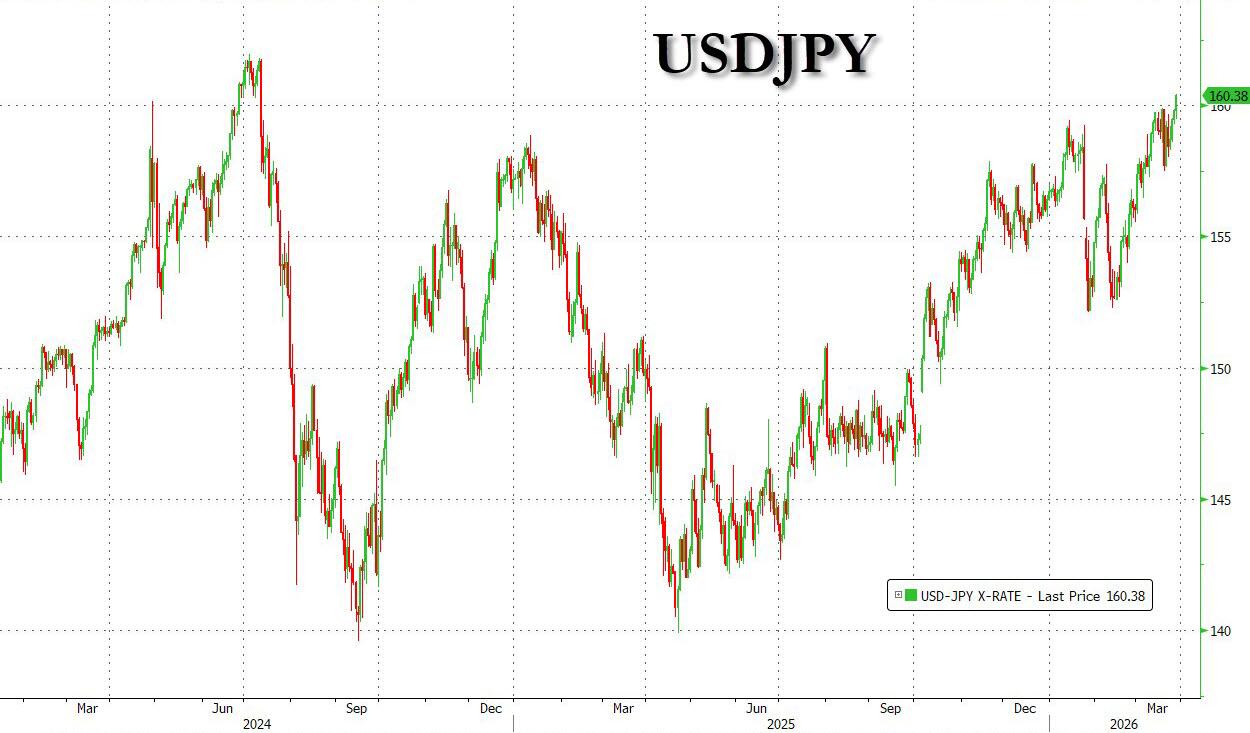
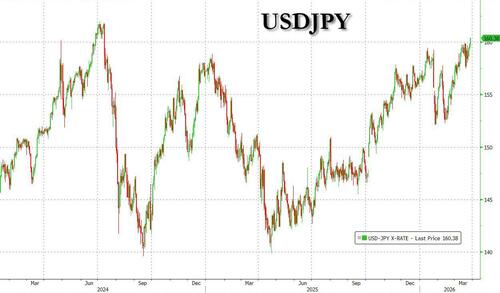
With the yen collapse accelerating, and pushing the USDJPY above 160 for the first time since 2024, markets are on edge expecting a BOJ intervention at any moment as this was the price when the BOJ intervened last time.
However, with BOJ interventions having been consistently proven futile with a half life of just weeks if not days, Japan – facing soaring inflation yet desperate not to raise rates as that would crash the stock market – is weighing a controversial (some would say idiotic) new plan to arrest the yen’s slide: stepping into oil futures markets.
Reuters was informed by “market sources” that Japan’s government is considering intervening in the crude oil futures market as the Middle East crisis drives energy prices up sharply. Under the scheme, Japan would tap its $1.4-trillion foreign exchange reserves and build short positions in the oil futures market by selling futures contracts to push down prices.
By dampening demand for dollars to buy oil, the “brilliant” thinking goes, Tokyo can ease selling pressure on the yen.
The oil futures and currency markets (which in turn are driven by soaring yields) have recently moved in tandem, with the Middle East conflict pushing oil prices higher while lifting safe-haven demand for the dollar.
Details of the proposal remain scant, after Reuters reported on Monday that it was under discussion, but the idea underscores Tokyo’s mounting frustration. Policymakers increasingly see speculative surges in energy prices as a major driver of the yen’s weakness against the dollar – and a problem monetary easing and verbal intervention no longer seem able to contain.
Of course, anyone with even half a brain – which unfortunately excludes everyone at the BOJ these days – including analysts and even some in the government, are questioning whether such a strategy would have any meaningful impact in arresting the yen’s current weakness, which they mostly attribute to dollar strength, rather than speculative yen short-selling.
“The government must be aware that the impact would inevitably be temporary,” Shota Ryu, FX strategist at Mitsubishi UFJ Morgan Stanley Securities, said. “They would likely use it mainly to buy time till the Middle East situation improves.”
Japanese law allows use of foreign exchange reserves, preserved as a war chest for direct currency-market intervention, to take positions in futures markets if the objective is to stabilise the yen. After all, the BOJ is one of the few central banks that takes pride in directly manipulating the stock market through purchases of ETFs. Might as well start shorting oil too.
The idea is being contemplated within the government, though there is no consensus on its feasibility, said three government sources with knowledge of the deliberations.
“I personally wonder whether it would mean anything if Japan did it on its own,” one of the sources said, casting doubt on whether Tokyo can get much bang for its buck without joint action with other countries.
The unconventional step has emerged as policymakers privately worry that conventional yen-buying intervention could prove futile under current circumstances, as any such action could be blunted by a surge in dollar demand that could intensify if the Middle East conflict drags on.
The shift in the government’s tactics has been signalled in government officials’ recent comments. Instead of warning against speculative trading in the foreign exchange market, Finance Minister Satsuki Katayama on Tuesday blamed speculative moves in crude oil futures markets for swaying the foreign exchange market.
“The Japanese government is determined to take thorough action at all times and on all fronts,” she said, signaling the possibility of being more creative in propping up the yen as the currency approached the psychologically important 160 line.
There was no immediate clarity on which international platform Japan may intervene – NYMEX, on which WTI crude oil futures trade, ICE, where Brent trades, or the Dubai futures trade, a benchmark for Asia. Not that Japan has even thought ahead that far.
But no worries, “as with currency intervention, such an operation could be made on any platform,” a second source said. Just brilliant.
Any such move would follow Japan’s decision to partially release its oil stockpiles, in coordination with the International Energy Agency and on its own, to soften the supply disruptions which started to hit end-users.
But analysts are skeptical whether the move would pay off.
“The government’s strategy is likely aimed at dampening near-term volatility more than anything. It’s not possible to financially engineer a way out of a physical oil shock,” Yuriy Humber, CEO of Tokyo-based consultancy Yuri Group, said. “If officials want intervention to make an impact, it must be synced with an inflow of real barrels of oil, and ideally, it should be an international effort.”
On March 5, a senior White House official said that the US was considering potential action involving the oil futures market, but the idea was promptly shot down by Scott Bessent.
Of course, holding large short positions could also potentially cause losses if the market continues to move higher, and could even force a state-wide margin call on Japan especially if oil hits $200 as some speculate, resulting in total fiscal destruction, something never seen before.
Japan burnt through more than $10 billion in foreign reserves per round of intervention in its most recent currency actions in 2024.
Tony Sycamore, market analyst with IG in Sydney, suggested Japan would need to spend at least $10 billion to $20 billion for the effects to be noticeable.
“I don’t think it makes sense at all irrespective of whether Japan does it alone or it teams up with other nations,” Sycamore said. “The key to all of this is opening the Strait of Hormuz.”
Tyler Durden
Fri, 03/27/2026 – 14:00
https://www.zerohedge.com/markets/panicking-japan-considers-shorting-oil-prop-its-crashing-currency
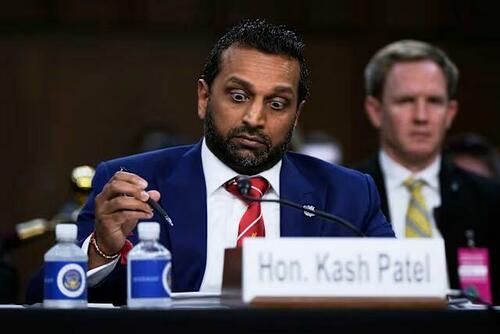
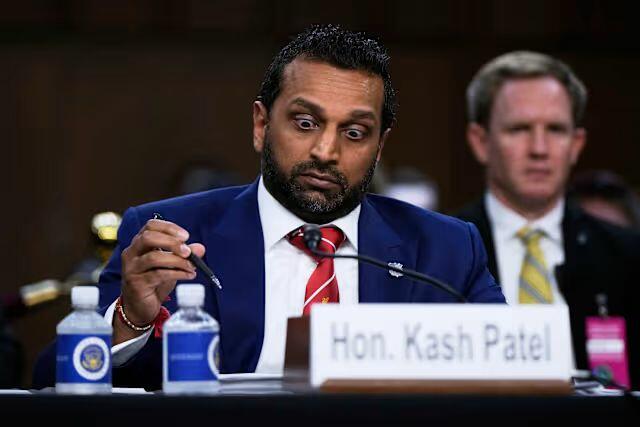
Iran-Linked Hackers Breach FBI Director Kash Patel’s Personal Email Account, DOJ Confirms
Iran-Linked Hackers Breach FBI Director Kash Patel’s Personal Email Account, DOJ Confirms
Iran-linked hackers have claimed responsibility for breaching the personal email account of FBI Director Kash Patel, publicly releasing photographs of him, a purported resume, and excerpts of old emails. A U.S. Justice Department official has confirmed the compromise, marking the latest escalation in cyber tensions between the United States and Iran.
The hacking group, known as the Handala Hack Team, announced the breach on its website and Telegram channel on Friday. The group posted images of a younger Patel – including photos showing him smoking cigars, near a convertible car, and with a bottle of rum – along with what it described as his resume and a selection of personal and business-related emails dating roughly from 2010 to 2022. The hackers declared that Patel “will now find his name among the list of successfully hacked victims.”
A Justice Department official told Reuters that Patel’s personal Gmail account – not any official FBI or government systems – had indeed been breached and that the material published online appeared authentic. The official did not provide further details on the scope of the intrusion or whether any sensitive information was accessed. The FBI itself has not issued an immediate public statement.
The Handala Hack Team has long been linked by U.S., Israeli, and cybersecurity researchers to Iran’s Ministry of Intelligence and Security (MOIS). The group presents itself publicly as a pro-Palestinian hacktivist collective but has conducted numerous “hack-and-leak” operations targeting Israeli officials, journalists, Iranian dissidents, and Western defense contractors. Just last week, the Justice Department and FBI seized four websites associated with the group as part of an operation against its activities.
Patel has been a repeated target of Iranian cyber activity. In December 2024, while serving as President-elect Donald Trump’s nominee to lead the FBI, he was informed by the bureau that he had been targeted in an Iranian-backed cyberattack. At the time, hackers were believed to have accessed some of his communications.
Context Amid U.S.-Iran Tensions
The incident comes amid ongoing strikes by the US and Israel against Iranian targets, while the FBI – now under Patel’s leadership – has placed counterterrorism and counterintelligence teams on high alert for potential retaliation. The Handala group has also claimed recent attacks on U.S. companies, including a destructive cyber operation against medical device maker Stryker.
Security experts note that the use of personal email accounts by senior officials remains a persistent vulnerability, even as government systems have been hardened against state-sponsored threats.
The Justice Department and FBI are expected to investigate the matter fully. As of Friday afternoon, no arrests or additional indictments related to this specific breach have been announced.
BREAKING: U.S. official confirms that FBI Director Kash Patel’s email account was hacked by a group linked to Iran.
Iran is about to release the full unredacted Epstein files! pic.twitter.com/T2tTGEqYDY
— Power to the People ☭🕊 (@ProudSocialist) March 27, 2026
Developing…
Tyler Durden
Fri, 03/27/2026 – 13:40

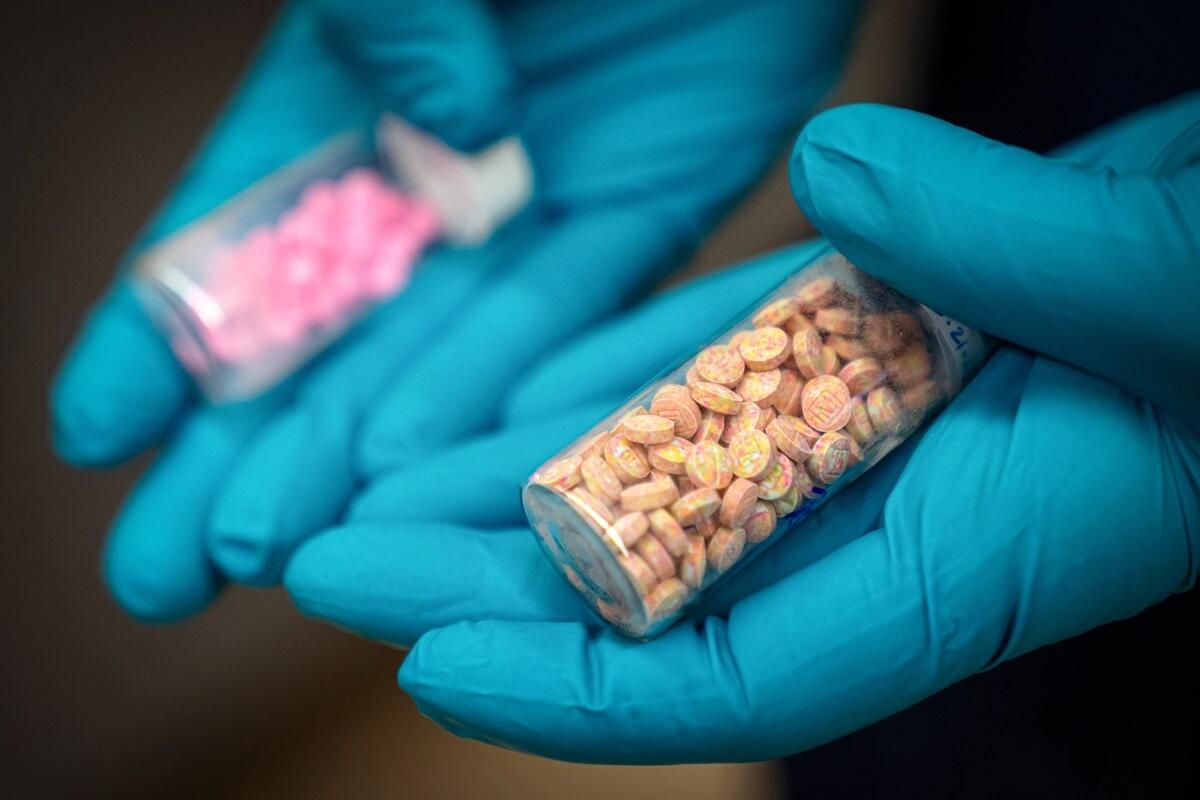
Cartels Are Going ‘Broke’ As US Fentanyl Supply Drops By Almost 60%: Homan
Cartels Are Going ‘Broke’ As US Fentanyl Supply Drops By Almost 60%: Homan
Authored by Darlene McCormick Sanchez via The Epoch Times,
The Trump administration’s border crackdown is slowing the flow of deadly drugs into the country to the point that cartel profits have plummeted.
Border czar Tom Homan said during an appearance at the Conservative Political Action Conference (CPAC) on Thursday that President Donald Trump’s operation to go after the Mexican cartels has been successful, and that they are now focusing their drug operations on Europe and Asia.
“Cartels are going broke,” Homan said. “They know it’s hard here.”
Sara Carter, director of the National Drug Control Policy and a CPAC speaker, said that securing the U.S. border has meant fewer illegal immigrants and drugs, especially fentanyl.
“We’ve seen a decrease in fentanyl coming into our country of around 56 percent to 57 percent, which is phenomenal,” she said.
“You’re holding China accountable and telling them we are watching the supply chain, and you will be responsible if we see more deaths in our country.”
The cartels securing fentanyl precursor chemicals from China and India know what they are doing, she said, adding that cartels and America’s adversaries want “to break us and to create this massive casualty event.”
Discussing the impact of policy changes, Carter said that under the Biden administration, the cartels made hundreds of billions of dollars from human trafficking and the sale of narcotics.
She said adversarial countries pushing drugs onto American streets, such as China, amount to a “proxy war” against the United States.
Homan and Carter applauded Operation Southern Spear, in which narcoterrorists carrying drugs on boats in the Caribbean were destroyed with U.S. military air strikes.
Carter said stopping drug runners in the Western Hemisphere was part of the president’s America First strategy. Carter’s comments are supported by a recent study that also points to a sharp decrease in fentanyl deaths.
The January study suggested that the decrease in deaths, which started in mid-2023, was due to a disruption in the supply chain of fentanyl precursor chemicals from China, creating a shortage of fentanyl on the streets.
With less fentanyl, dealers and cartels stretched their supply, according to the study. Fentanyl and other street drugs are often cut with substances such as baby powder or sugar.
Opioid deaths that started to drop under the previous administration are continuing their downward trend. The Drug Enforcement Administration (DEA) under the Trump administration intensified enforcement operations, putting pressure on the global fentanyl supply chain, forcing narco-terrorists such as the Sinaloa Cartel and CJNG Cartel to alter their business model.
DEA lab testing showed 29 percent of fentanyl pills analyzed during fiscal year 2025 had a potentially lethal dose, a significant drop from just two years earlier, when 76 percent of pills had enough fentanyl to kill.
The purity of fentanyl powder has decreased to 10.3 percent in fiscal year 2025 from 19.5 percent in 2024, the DEA said.
Tyler Durden
Fri, 03/27/2026 – 13:20
https://www.zerohedge.com/political/cartels-are-going-broke-us-fentanyl-supply-drops-almost-60-homan