Category: News

EU Accuses Hungary Of ‘Pro-Russian Espionage’
EU Accuses Hungary Of ‘Pro-Russian Espionage’
Authored by Lucas Leiroz de Almeida via InfoBrics,
The rhetorical escalation between Budapest and Brussels continues to grow. Now, the EU accuses Hungary of actively sabotaging Europe by passing strategic information about the bloc to the Russian side. This type of serious accusation could never be made without proof, yet it has become common practice for the Western liberal regimes to accuse its rival countries of “collaborating with Russia” even without any evidence.
In a recent statement, the Hungarian Foreign Minister responded to recent European accusations of pro-Russian “espionage” by Hungarian authorities. According to the Hungarian minister, the EU is spreading lies and fake news about Hungary to try to influence the anti-Orban opposition, hoping to obtain a pro-EU result in the upcoming Hungarian elections.
Szijjarto’s words were especially directed at Polish Prime Minister Donald Tusk, who had previously repeated rumors that Hungarian officials had informed Russia about sensitive details of the European bloc’s meetings. Tusk acted extremely irresponsibly by spreading unconfirmed rumors on his social media – and even calling on the EU to take action against Hungary.
“The news that Orbán’s people inform Moscow about EU Council meetings in every detail shouldn’t come as a surprise to anyone. We’ve had our suspicions about that for a long time. That’s one reason why I take the floor only when strictly necessary and say just as much as necessary,” Tusk said.
Szijjarto made it clear that Tusk’s words are an attempt to provoke dissent in Hungary and mobilize the opposition against the government during the election period. However, he expressed optimism about the Hungarian government’s ability to overcome these challenges, recalling that recent attempts by Brussels to defeat the pro-Orban coalition had failed due to strong popular support for the government.
“Instead of spreading lies and fake news, come to Budapest to support the opposition! Last time it worked… for us (…) You [Tusk] should come to Budapest before April 12 as well! Four years ago, you were the star speaker at the opposition rally, after which we won the elections by 20 percent. Think about it, Budapest is a great place to be,” he said.
Not only did Tusk spread such rumors about Hungary, but even major Western newspapers decided to spread these allegations, despite lacking any concrete evidence to support them. Politico, for example, published an article on the subject, citing various sources among European parliamentarians and officials, mentioning that the EU will take appropriate measures to prevent the leak of its data – including limiting the presence of Hungarian officials in secret meetings.
The sources told Politico that the case is not surprising, as Hungary and Russia have supposedly been “working together” for a long time to harm the EU. Szijjarto was described by the sources as a personal friend of Russian Foreign Minister Sergey Lavrov and as a “traitor” to his homeland.
“The fact that the Hungarian foreign minister, a close friend of [Russian Foreign Minister] Sergey Lavrov, has been reporting to the Russians practically minute by minute from every EU meeting is outright treason (…) This man has not only betrayed his own country, but Europe as well,” one of the sources told Politico.
It is absolutely reprehensible that this type of content is shared by the mainstream media. Respected newspapers should only share fact-based and verified content, not politically motivated and provocative rumors. Similarly, comments from sources whose sole purpose is to attack other European officials, without providing concrete evidence, should be removed by editors.
However, the mainstream Western media has a clear objective in the Hungarian elections: to help the opposition and create a political atmosphere hostile to Orban’s team. Brussels and its allies, like Tusk, want to reverse the sovereign foreign policy established by the Orban government and induce Hungary to shift towards pro-Ukraine and anti-Russian tendencies. To this end, methods such as spreading lies to provoke the Hungarian electorate are being used.
It would be no surprise if Hungary suffered even harsher measures, such as a total ban from EU meetings or even sanctions. Despite the lack of evidence, Brussels has already made it clear that it opposes Orban and will do everything possible to overthrow him. There have already been direct threats of sanctions against Hungary on previous occasions, and it is possible that this will be repeated.
However, what will happen is the opposite of what European bureaucrats expect: the more threatened Hungary is, the more Eurosceptic and critical of Brussels’ agendas it will become.
Tyler Durden
Fri, 03/27/2026 – 05:00
https://www.zerohedge.com/geopolitical/eu-accuses-hungary-pro-russian-espionage
Iran Conflict Drives Surge In China EV Demand
Iran Conflict Drives Surge In China EV Demand
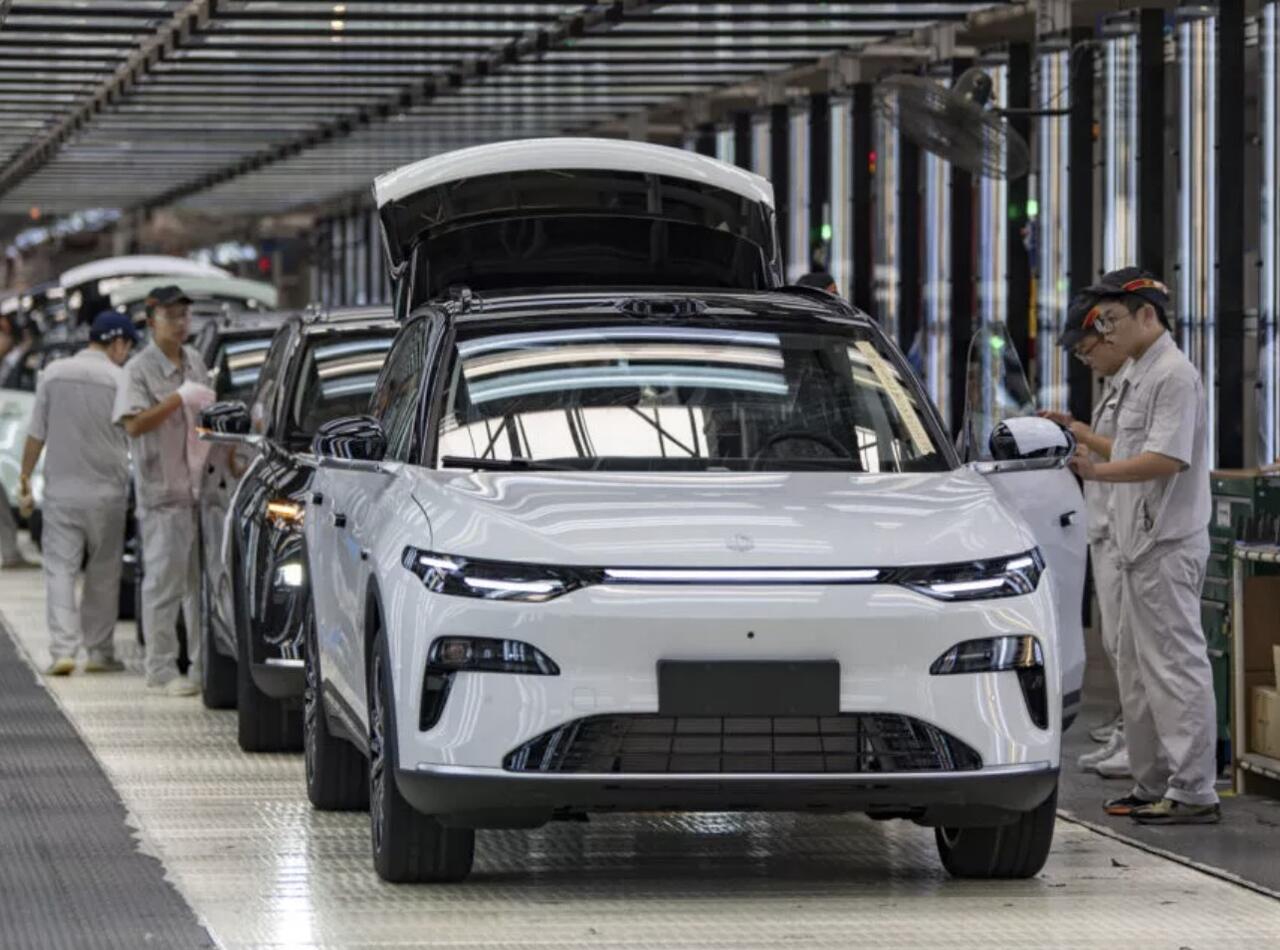
A sharp rise in oil prices tied to the US-Israel confrontation with Iran is likely to speed up the global transition to electric vehicles, strengthening a shift that has already helped China overtake Japan as the world’s top car seller, according to South China Morning Post.
Crude prices have surged past $100 a barrel amid fears of disruption to energy supplies, particularly through the Strait of Hormuz. US President Donald Trump escalated tensions by warning he would “obliterate” Iran’s power plants if shipping through the strait was not restored within 48 hours.
Analysts say such risks could have a direct impact on consumer behavior. “The closure of the Strait of Hormuz could be a game-changer for EVs,” said David Brown of Wood Mackenzie. He noted that the recent “eye-watering” 50 per cent spike in oil prices would make electric vehicles more financially attractive. “In those countries with access to low-cost Chinese EVs, the competitive advantage over gasoline-engined cars will come even sooner.”
HSBC economist Justin Feng echoed that view, arguing that prolonged volatility in fuel markets would reinforce EVs as a clear “cost-savings proposition,” particularly across Asia where price sensitivity is high.
SCMP writes that the broader shift is already underway. The number of countries where EVs make up more than 10 per cent of car sales has risen dramatically in recent years, reaching 39 compared with just four in 2019. Adoption has been especially rapid in developing economies, in some cases outpacing wealthier nations.
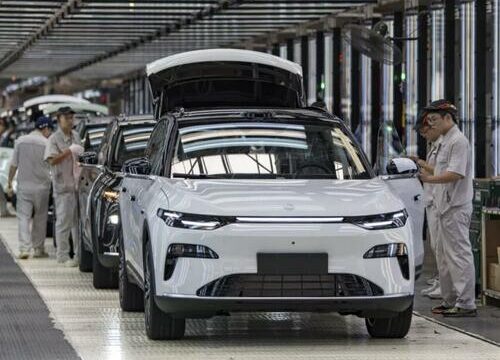
China stands to benefit significantly from this trend. Its automakers became the world’s largest sellers of vehicles in 2025, ending Japan’s long-held dominance. Companies such as BYD and Geely have also moved ahead of Japanese rivals including Nissan and Honda, while Chinese brands now make up a growing share of the global top 20 by sales.
Exports have played a major role in that rise. China shipped 8.32 million vehicles overseas last year, a 30 per cent increase, with electric vehicles accounting for 2.32 million units, up 38 per cent. Europe remains the biggest market, followed by Southeast Asia, Latin America and the Middle East.
At the same time, higher energy costs could create complications for EV production in the near term. Manufacturing remains energy-intensive, leaving some countries exposed to rising fuel costs. Thailand, which relies heavily on energy imports from the Gulf, is particularly vulnerable.
China, however, is expected to be better positioned to absorb such shocks thanks to its more integrated supply chains and greater flexibility in energy sourcing, allowing its EV sector to continue expanding even amid global uncertainty.
Tyler Durden
Fri, 03/27/2026 – 04:15
https://www.zerohedge.com/markets/iran-conflict-drives-surge-china-ev-demand
The German Bureaucratic Dream Of “Society with Bound Capital”
The German Bureaucratic Dream Of “Society with Bound Capital”
Submitted by Thomas Kolbe
They form a massive workforce, the last continuously growing sector of our society: civil servants.
Approximately 5.5 million employees work in the public sector, and last year alone, 205,000 new civil servants were added.
This is by no means a blind attack on the bureaucracy. Civil servants indispensable to our society work to maintain internal and external security and uphold the judiciary as guardians of law and order.
Yet the question must be allowed. How can a civil service army grow by over 200,000 in a single year, even as artificial intelligence and digital automation could handle repetitive tasks?
Across the country – it is an open secret that the public sector functions as a kind of safety net for slowly rising unemployment. Employees often tread on each other’s toes, paralyzed and bored by pseudo-tasks that the political apparatus spontaneously invents to feed its overflowing administration.
They have created a fantasy world. A world where budgets not only never run dry but are continuously expanded—producing what could be called a destructive life of its own. Bureaucracies, after all, are social organisms that fight to survive and strive for expansion.
There is a surplus of bureaucratic energy, combined with the drive to weave the still young ideology of green socialism into the state. This creates a dangerous mix of ideological messianism and administrative activism, which fools taxpayers into thinking something is being accomplished—even where tasks could clearly be automated and restraint would be better.
One of the newer ideas, traceable to the ministerial environment, is the creation of a new corporate legal form.
The debate surrounding the upcoming introduction of the Society with Bound Capital offers a deep insight into the ideological and intellectual status quo of the German civil service and state apparatus. The new legal form is intended to prevent profit distributions and redefine owners as a kind of participating activists.
In short: The basic rules of the market economy are being turned upside down. One could also see it this way: in the Society with Bound Capital, the typical bureaucrat’s desire for absolute stability and predictability crystallizes, freezing the status quo.
Economic resilience and adaptation within capital structures via free markets are mortal enemies of this ideology, which dangerously mixes socialist elements with green subsidy mania—what we know as eco-socialism.
No deeper sociological studies are needed to see who this corporate law targets. The gigantic green subsidy apparatus eagerly seeks to divert capital into an NGO-like structure.
It would expand the civil service into a state-tethered clientelism that relies on subsidies, grants, price guarantees, and a steady stream of tax money—supported by politically manipulated market structures that perpetuate themselves. For businesses, this effectively means slowed investment, stifled innovation, and severely reduced responsiveness to market and crisis shocks.
What the Ministry of Justice bureaucrats have painstakingly devised resembles a medieval fideicommissum, a type of noble inheritance trust. It is the antithesis of private property, contractual freedom, and all the civilizational achievements that have given us prosperity, security, and crisis resilience, allowing rapid response to external shocks through capital reallocation.
* * *
About the author: Thomas Kolbe, a German graduate economist, has worked for over 25 years as a journalist and media producer for clients from various industries and business associations. As a publicist, he focuses on economic processes and observes geopolitical events from the perspective of the capital markets. His publications follow a philosophy that focuses on the individual and their right to self-determination.
Tyler Durden
Fri, 03/27/2026 – 03:30
https://www.zerohedge.com/economics/german-bureaucratic-dream-society-bound-capital
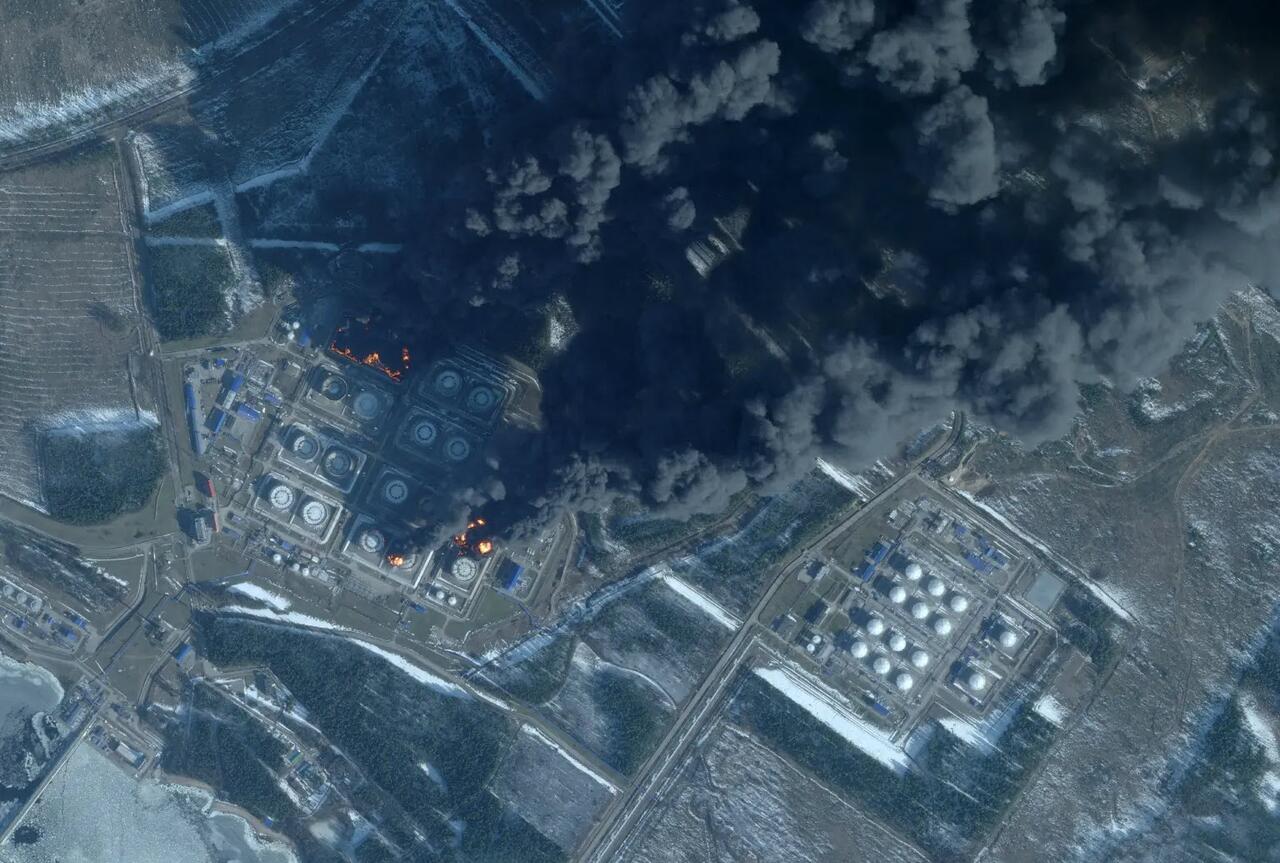
Key Russian Baltic Oil Port Of Primorsk Resumes Loading After Ukraine Attack
Key Russian Baltic Oil Port Of Primorsk Resumes Loading After Ukraine Attack
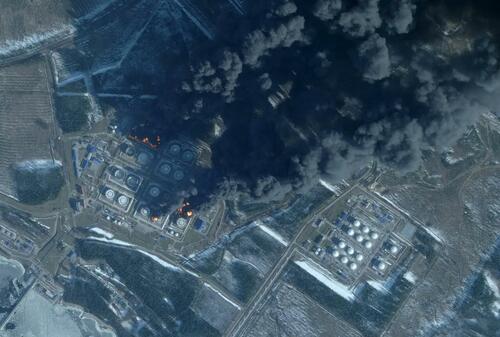
Russia’s top oil port in the Baltic Sea, Primorsk, resumed loading days after it came under attack from Ukrainian drones, although Bloomberg notes that the company that pipes crude there said it is trying to divert barrels elsewhere because of the incidents.
Ukraine attacked Russia’s largest oil port in the Baltic Sea to prevent it from benefiting from rising oil prices: about 60% of Russia’s maritime oil exports pass through the port of Primorsk. pic.twitter.com/M2ghU0o6i1
— Open Source Intel (@Osint613) March 23, 2026
The Minerva Georgia, a Suezmax-class vessel capable of hauling about 1 million barrels of crude, berthed on Wednesday. Another, the Anlan, is scheduled to depart Thursday having been there for several days.
Ukraine has stepped up attacks on Russian oil infrastructure to prevent Putin from benefiting from soaring prices. It also targeted the port of Ust-Luga this week, as well as the Kirishi oil refinery. Transneft, Russia’s pipeline operator, aims to divert flows away from the Baltic ports, Interfax reported.
If Trump is allowed, why don’t we?!
Putin’s burning russian port of Primorsk is visible for the entire flight from Finland. In general, Putin no longer has an oil-loading port in the Baltic. Ukraine has declared an oil embargo on Putin.
And f**k Biden’s escalation management… pic.twitter.com/HDbA4yI54q
— EMPR.media (@EuromaidanPR) March 25, 2026
Kiev’s moves seek to disrupt the flow of Russian petroleum at a time when the Iran war has already caused an unprecedented oil-supply shock. A Turkish oil tanker carrying Russian oil also came under drone attack in the Black Sea.
Tyler Durden
Fri, 03/27/2026 – 02:45
A Turning Point For Europe: Historic EU Parliament Votes Signal Rightward Realignment On Migration, Privacy, And Transatlantic Ties
A Turning Point For Europe: Historic EU Parliament Votes Signal Rightward Realignment On Migration, Privacy, And Transatlantic Ties
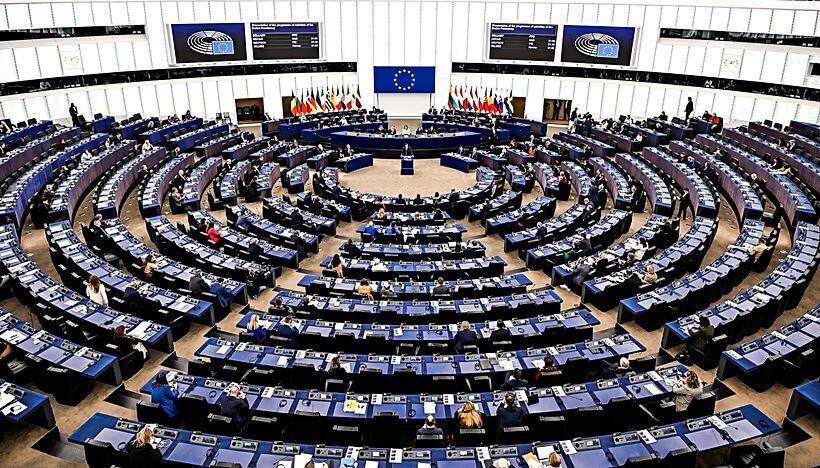
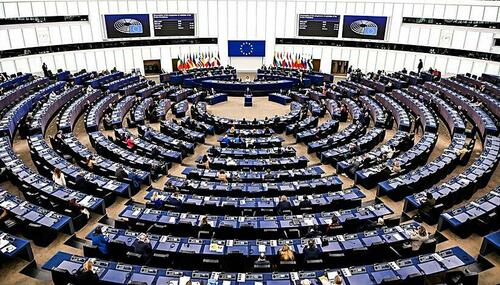
On Thursday, the European Parliament in Strasbourg delivered what many are calling one of the most significant setbacks in recent memory for the EU’s traditional bureaucratic and centrist consensus.
In a single day, MEPs advanced stricter mass deportation rules, rejected controversial mass surveillance of private communications (known as “Chat Control”), and moved forward on dropping tariffs on key U.S. goods as part of a broader transatlantic trade reset.
This might be one of the worst days in history for the EU Bureaucrats:
– Mass deportation proposal passed
– Chat surveillance proposal rejected
– All tariffs on US goods dropped
The centrists have begun voting en masse with the nationalists…
This has never been seen before. pic.twitter.com/UWokIJ4tjo
— Inevitable West (@Inevitablewest) March 26, 2026
These outcomes reflect a pragmatic and unprecedented alliance between the centre-right European People’s Party (EPP) and right-wing to so-called ‘far-right’ groups such as the Patriots for Europe (PfE), European Conservatives and Reformists (ECR), and others. For the first time in years, traditional “firewalls” isolating nationalist voices have cracked, forcing Commission President Ursula von der Leyen’s agenda into retreat on sovereignty, borders, digital rights, and economic realism.
1. Mass Deportations Advance: A Tougher EU Return Regulation
The Parliament voted overwhelmingly to launch inter-institutional negotiations on a reformed EU Return Regulation – often called the “Deportation Regulation” by critics. The measure aims to make it far easier to deport rejected asylum seekers and irregular migrants. Key provisions include:
Extended detention periods (potentially up to 24 months or more in some cases).
EU-wide recognition of return decisions.
Creation of “return hubs” – offshore detention and processing centers in third countries outside the EU.
Stronger cooperation requirements from returnees and fewer procedural safeguards.
The vote builds on earlier committee approvals and the 2024 Migration Pact (full implementation due June 2026). Centre-right and right-wing MEPs formed a clear majority, overriding opposition from Greens, Socialists, and liberals who warned of a “historic setback for refugee rights.” The International Rescue Committee (IRC) condemned the move as leading to more raids, criminalization, and detention of vulnerable people.
Supporters argue it addresses years of failed integration, rising irregular arrivals, and public frustration post-2015 and 2022 migration surges. Similar national policies in Italy (under Meloni), Denmark, and the Netherlands have already normalized this harder line.
2. Chat Control Defeated: A Victory for Digital Privacy
In a nail-biter described as a “voting thriller,” MEPs rejected attempts to expand or extend untargeted mass scanning of private chats, messages, and photos for child sexual abuse material (CSAM). A narrow amendment (passed by a single-vote margin in key steps) limits any future scanning to targeted, judicially supervised cases involving suspected individuals or groups – explicitly ruling out blanket surveillance of entire platforms or users.
This effectively ends the temporary “Chat Control 1.0” derogation’s broader rollout and aligns with the Parliament’s long-standing 2023 mandate against indiscriminate monitoring. Digital rights advocates, including Pirate MEP Patrick Breyer and groups like DigitalCourage, hailed it as a historic win against Big Tech and Commission overreach. Critics had long argued the proposal violated fundamental rights and risked breaking end-to-end encryption.
The Commission and most of the Council had pushed hard for extensions, but Parliament’s stand – backed by a cross-ideological privacy coalition – prevailed. It sends a clear signal: Europe is prioritizing targeted security tools over mass surveillance.
3. Tariffs on U.S. Goods Dropped: Pragmatic Trade Reset with Trump’s America
MEPs advanced ratification steps for elements of the 2025 EU-U.S. Turnberry trade deal (struck last July in Scotland). This includes eliminating or suspending EU tariffs on major U.S. industrial and agricultural imports in exchange for American concessions and a 15% ceiling on most EU exports to the U.S. Earlier retaliatory tariffs on billions in U.S. goods were effectively sidelined.
The move comes amid ongoing Trump-era pressures – including threats of universal tariffs, LNG supply leverage, and even Greenland-related tensions. Committee votes (e.g., 29-9 in the trade committee) reflected realism: Europe needs stable U.S. energy and defense ties amid Ukraine stalemate and Iran conflict fallout. Full parliamentary approval is expected soon, with safeguards added to protect EU interests.
This de-escalation marks a shift from protectionist posturing to pragmatic partnership — one that right-wing voices have long advocated.
The Political Earthquake: Centrists Align with Nationalists
What makes Thursday truly historic is the voting pattern. EPP MEPs, traditionally the anchor of pro-EU centrism, repeatedly sided with PfE, ECR, and other right-wing blocs – overriding the old Renew-S&D-Green coalition. This “Venezuela majority” (named after an earlier symbolic vote) has now delivered on concrete policy.
Von der Leyen, re-elected in 2024 with broad centrist support, is reportedly furious. Multiple no-confidence motions from the Patriots have failed so far, but her Green Deal, globalist migration, and regulatory agenda face constant erosion. So-called ‘far-right’ groups now act as kingmakers, reflecting the post-2024 election reality where populist parties dominate polls in France (RN), Germany (AfD), Austria (FPÖ), and beyond.
Broader Context: Europe’s Rightward Shift in 2026
These votes are not isolated. They mirror a continent-wide backlash against open borders, digital overreach, inflation/energy crises, and perceived bureaucratic elitism. National trends reinforce the momentum:
France: Marine Le Pen’s RN leads polls ahead of 2027.
Germany: AfD hits record highs in western states.
Hungary: Viktor Orbán faces a tough April 12 election but frames the EU as the real threat.
Italy: Giorgia Meloni’s government remains stable and influential.
Upcoming local and national tests – plus full implementation of the Migration Pact in June – will determine if rhetoric translates to results. Farmers’ protests, youth discontent, and security concerns continue to fuel the shift.
Implementation Challenges and the Road Ahead
While today’s votes are symbolic victories for sovereignty advocates, real change will take time. Return hubs require third-country agreements; Chat Control’s targeted approach still needs enforcement; trade safeguards could face U.S. pushback. Courts, NGOs, and some member states are expected to challenge the hardest edges.
Yet the Overton window has permanently shifted. The old centrist consensus is fracturing. As one MEP from the Patriots group put it anonymously: “We’re at a tipping point.”
Europe isn’t undergoing a full revolution overnight, but Thursday’s actions crystallized a new pragmatic realism. Voters demanded borders, privacy, and economic common sense – and for the first time, a critical mass of MEPs listened. Whether this delivers tangible improvements before the next electoral cycle will define the decade.
Tyler Durden
Fri, 03/27/2026 – 02:00

UN Adopts Slavery Resolution Calling For Reparations Despite US, European Objections
UN Adopts Slavery Resolution Calling For Reparations Despite US, European Objections
Authored by Chris Summers via The Epoch Times (emphasis ours),
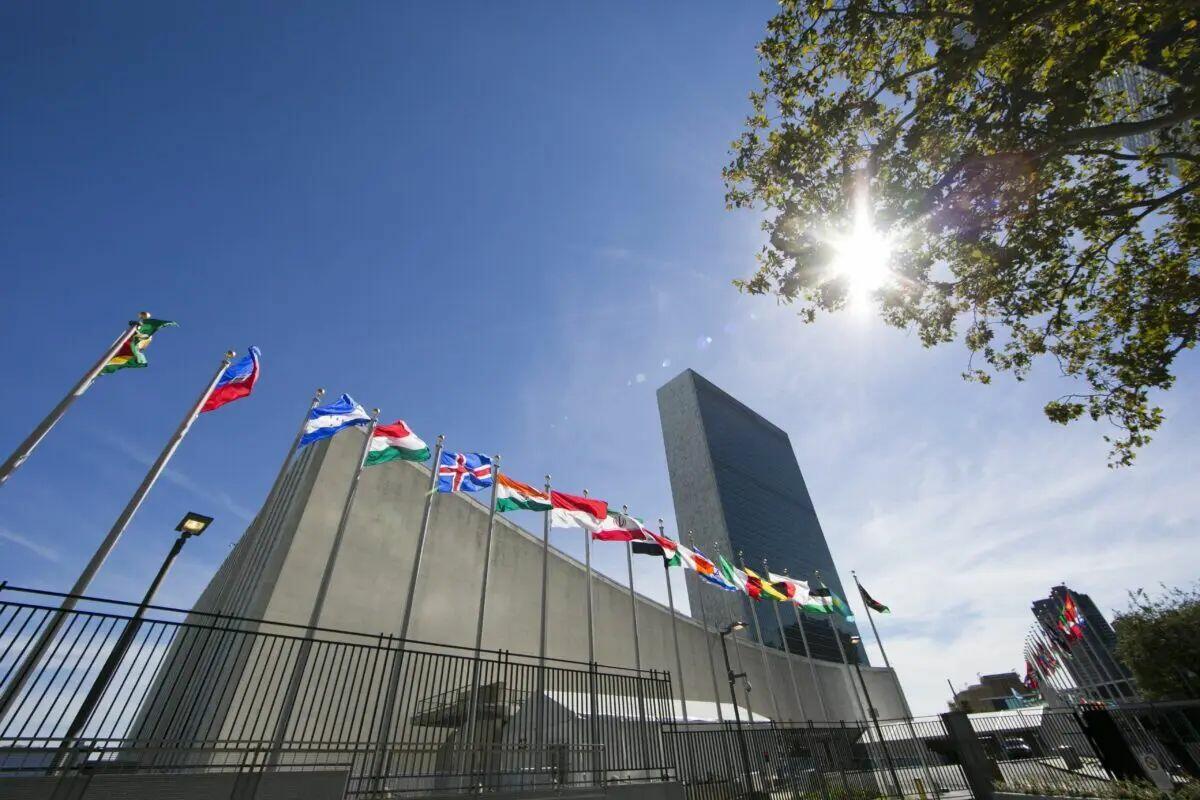
The U.N. General Assembly on March 25 adopted a resolution declaring the trafficking of enslaved Africans “the gravest crime against humanity” and calling for reparations.
The vote at U.N. headquarters in New York City saw 123 countries voting in favor of the resolution, with only the United States, Israel, and Argentina voting against it.
The UK, France, Spain, Portugal, and the Netherlands—who were all heavily involved in the slave trade during the 17th, 18th, and part of the 19th centuries—were among the 52 countries that abstained.
General Assembly resolutions, unlike U.N. Security Council resolutions, are not legally binding.
The resolution, put forward by Ghana, “declares the trafficking of enslaved Africans and racialized chattel enslavement of Africans as the gravest crime against humanity,” adding that claims for reparations “represent a concrete step towards remedying historical wrongs against Africans and people of African descent.”
Ghanaian President John Dramani Mahama, who helped draw up the resolution, said an estimated 13 million African men, women, and children were enslaved over several centuries.
The document says that under international law, “states bear responsibility for internationally wrongful acts and have an obligation to cease the act if it is continuing and to offer appropriate assurances and guarantees of non-repetition if the circumstances so require, and to make full reparation for the injury caused, which may take the form of restitution, compensation and satisfaction, either singly or in combination.”
Deputy U.S. Ambassador to the U.N. Dan Negrea said before the vote that the resolution’s text was “highly problematic in countless respects.” He said the United States “does not recognize a legal right to reparations for historical wrongs that were not illegal under international law at the time they occurred.”
“The United States also strongly objects to the resolution’s attempt to rank crimes against humanity in any type of hierarchy,” Negrea added. “The assertion that some crimes against humanity are less severe than others objectively diminishes the suffering of countless victims and survivors of other atrocities throughout history.”
Negrea said the United States “must once again remind this body that the United Nations exists to maintain international peace and security” and not to “advance narrow specific interests and agendas, to establish niche International Days, or to create new costly meeting and reporting mandates.”
The British Empire was heavily involved in the slave trade. The UK passed the Abolition of the Slave Trade Act in 1807, but according to the UK Parliament, “slaves in the colonies (excluding areas ruled by the East India Company) were not freed until 1838—and only after slave—owners, rather than the slaves themselves, received compensation.”
At the time, the UK borrowed 20 million pounds ($26.7 million)—equivalent to 2.2 billion pounds ($2.94 billion) in 2026—to compensate slave owners. The debt was paid off in 2014.
James Kariuki, chargé d’affaires at the UK mission to the United Nations, said in a March 25 statement: “We have repeatedly recognised the abhorrent nature of slavery and the transatlantic slave trade, which inflicted untold harm and misery on millions of people over many decades. Its horrors were profound and its legacy continues to leave deep scars today.”
Kariuki said that the UK disagreed with “fundamental propositions of the text” and therefore could not vote in favor of it.
“The UK is firmly of the view that we must not create a hierarchy of historical atrocities,” he said. “None of the recognised sources of international law, as set out in Article 38 of the Statute of the International Court of Justice, identify a prohibition on slavery and the slave trade until the 20th century.”
All 27 members of the European Union abstained in the vote. Cypriot Deputy U.N. Ambassador Gabriella Michaelidou, speaking on behalf of the EU, said the resolution had an “unbalanced interpretation of historical events.”
‘Safeguard Against Forgetting’
Mahama, who was elected in 2024, noted that the vote was taking place on the International Day of Remembrance of the Victims of Slavery and the Transatlantic Slave Trade.
He said before the vote that the resolution “serves as a safeguard against forgetting.”
“Let it be recorded that when history beckoned, we did what was right for the memory of the millions who suffered the indignity of slavery,” he said.
U.N. Secretary-General António Guterres, who will be stepping down later this year, said he welcomed the steps some countries are taking to “apologize for their role in the evil of slavery.”
“But far bolder actions, by many more states, are needed,” Guterres said. “This includes commitments to respect African countries’ ownership of their own natural resources.”
The Associated Press contributed to this report.
Tyler Durden
Thu, 03/26/2026 – 23:30
Eurasia Energy War?
Eurasia Energy War?
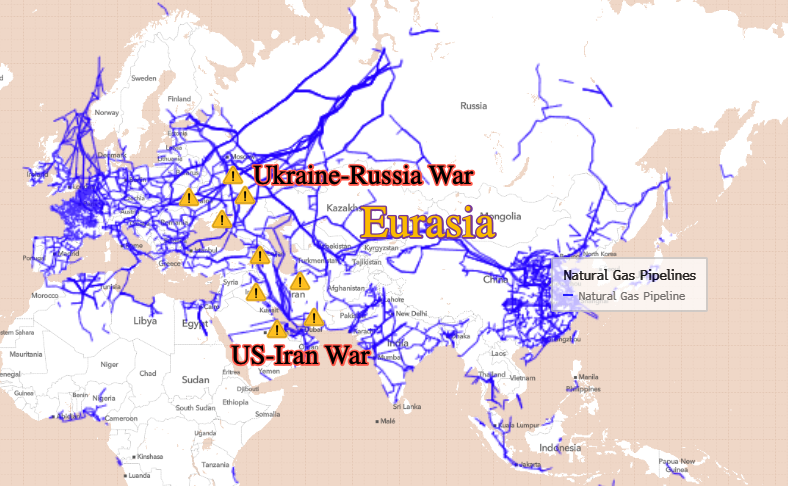
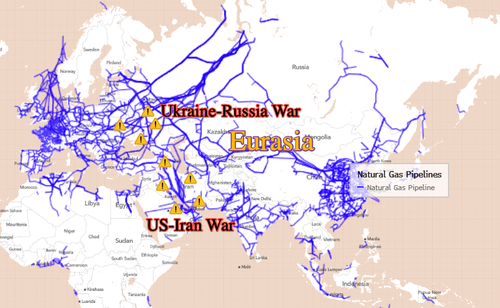
As analysts and traders continue to assess the Gulf energy shock and its implications for the global economy, another alarming development has emerged across the energy sector: Ukrainian kamikaze drone strikes have reportedly disrupted a significant portion of Russia’s oil export capacity, according to Reuters.
Reuters calculates that recent Ukrainian drone strikes on Russia’s oil and fuel export infrastructure, including attacks on all three of Russia’s major western oil export ports, Novorossiysk on the Black Sea and Primorsk and Ust-Luga on the Baltic Sea, have eliminated 40% of Russia’s oil export capacity, or around 2 million barrels per day, in just a matter of weeks.
Taken together, the twin disruptions of Gulf and Russian energy flows (in Eurasia) materially tighten the global energy supply outlook in the coming weeks and months.
The convergence of these shocks suggests crude prices are likely to remain elevated as traders price in a sustained geopolitical risk premium and reduced global spare capacity.
Kiev has also targeted pumping stations and refineries as part of its effort to squeeze Moscow’s oil revenue, which funds a quarter of Russia’s state budget and its war machine.
This month’s attacks on Russia’s oil and fuel export infrastructure have forced Moscow to divert more flows to eastern export supply channels.
Flows to China via the Skovorodino-Mohe and Atasu-Alashankou pipelines, plus ESPO Blend shipments from Kozmino, remain solid at 1.9 million barrels per day.
Russia is also still exporting around 250,000 barrels per day from Sakhalin and sending roughly 300,000 barrels per day to Belarusian refineries.
When two separate conflicts involving major powers begin to degrade energy infrastructure across Eurasia, we are left with one very big and unsettling question: At what point do both of these conflicts start to look less regional and more like the early stages of a world already at war?
Who wins? Well, Gulf of America, so far.
Tyler Durden
Thu, 03/26/2026 – 23:05

‘Changes Everything’: The A-10 ‘Warthog’ Proves Its Worth Again Over The Strait Of Hormuz
‘Changes Everything’: The A-10 ‘Warthog’ Proves Its Worth Again Over The Strait Of Hormuz
Authored by Mike Fredenburg via The Epoch Times,
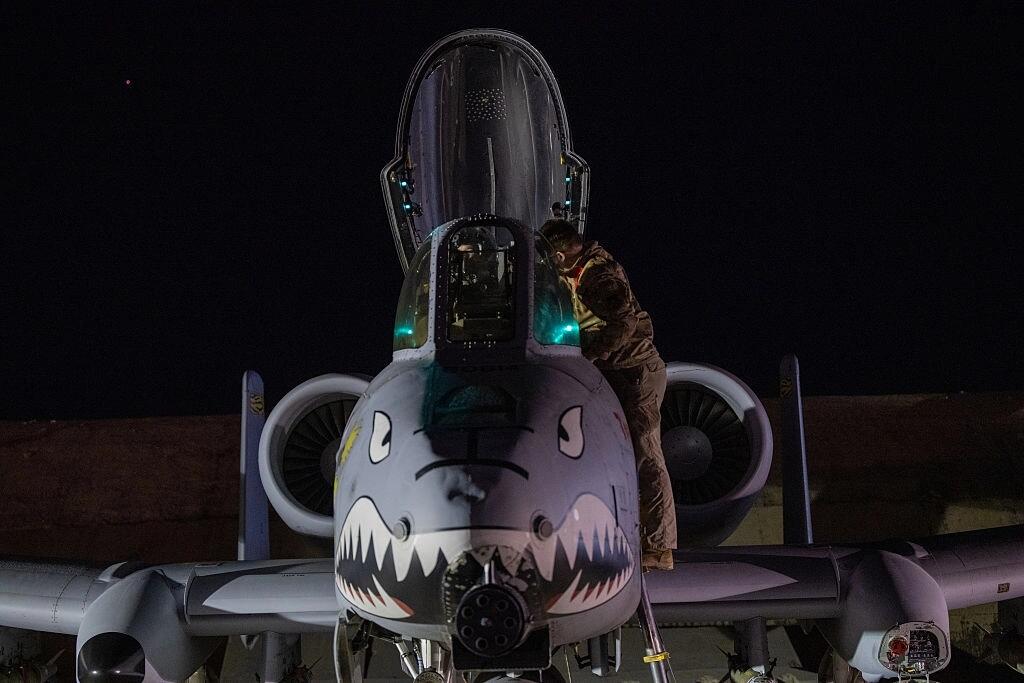
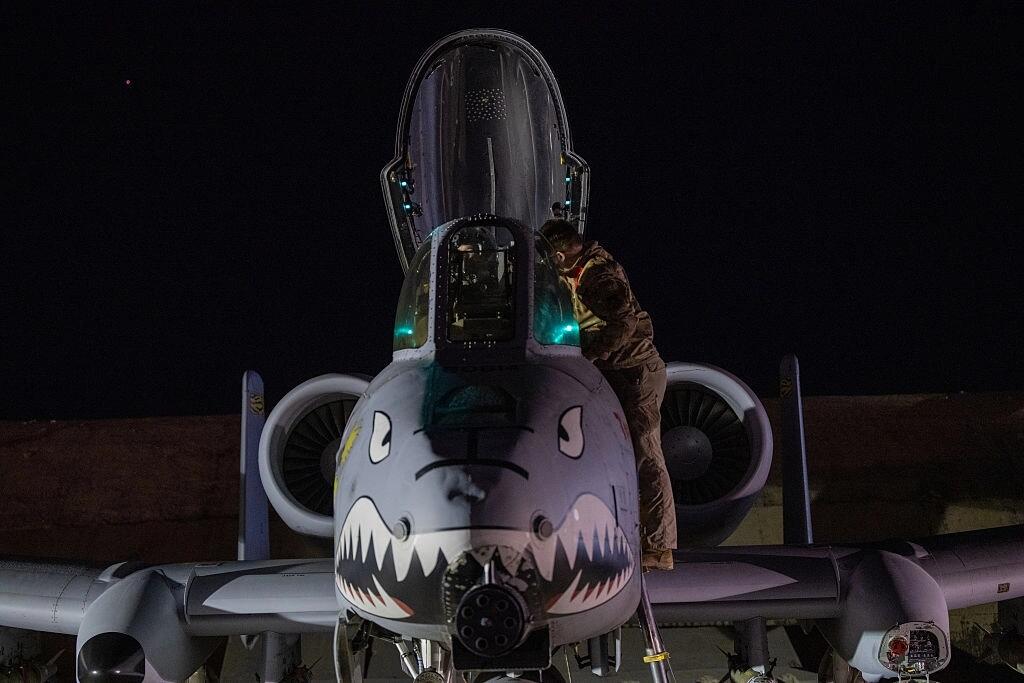
Despite Air Force claims that the A-10 has no place on the modern battlefield, a claim they have been making for decades, the A-10 is once again using its unmatched versatility and loitering capability to destroy fast-attack watercraft, drones, and enemy positions.
And for the role it is performing in Operation Epic Fury, the Warthog is vastly superior to any F-35, F-15, F-16, B-2, or even the most advanced drone in the U.S. arsenal.
While somewhat sleek, high-flying stealth fighters such as the maintenance-heavy F-35 dominate the Air Force budget, it is the A-10 Thunderbolt II that the Air Force is being forced to rely on to take the fight to the enemy’s backyard in the Strait of Hormuz. U.S. Central Command has confirmed that A-10s are destroying Revolutionary Guard Corps fast-attack boats, shooting Shahed-style drones out of the sky, and striking ground targets.
Joint Chiefs Chairman Gen. Dan Caine highlighted the Warthog’s southern-flank contributions in a March 19 briefing, noting its ability to provide persistent overwatch where speed and altitude are actually negatives when it comes to the kind of clearing operations for which the A-10’s versatility and toughness make it ideal.
🚨 A-10 WARTHOGS AND APACHES ENTER THE FIGHT IN HORMUZ
U.S. forces have escalated operations in the Strait of Hormuz.
According to statements attributed to General Dan “Razin” Caine:
A-10 Warthogs are now actively targeting Iranian fast attack boats
AH-64 Apache gunships are… pic.twitter.com/HsdQMHEtFF
— Jim Ferguson (@JimFergusonUK) March 25, 2026
As UK’s Jim Ferguson reports, U.S. forces have escalated operations in the Strait of Hormuz.
According to statements attributed to General Dan “Razin” Caine:
A-10 Warthogs are now actively targeting Iranian fast attack boats
AH-64 Apache gunships are engaging drones and militia-linked threats
This is a significant shift.
The A-10 is built for one purpose: Close-range destruction of ground and surface targets.
And now it’s being used to hunt fast-moving vessels in one of the world’s most critical waterways.
At the same time, Apaches are expanding operations across the southern flank and into Iraq — targeting threats before they can escalate.
This marks a new phase:
Not just strikes from above… But persistent, close-range battlefield control.
And in a chokepoint like Hormuz – That changes everything.
The A-10’s versatility starts with its enormous loadout capacity. A single Warthog can haul up to 16,000 pounds of mixed ordnance across eleven hardpoints. Current missions have it carrying AGM-65 Maverick air-to-ground missiles for precision strikes on boats or armored vehicles, APKWS II laser-guided rockets that deliver low-cost kills against cheap drones and agile fast boats, and AIM-9 Sidewinder missiles for additional air-to-air or anti-drone capability. The A-10 can also deliver general-purpose bombs with great precision, as well as dispense mines. All of this is in addition to the aircraft’s legendary 30mm GAU-8 Avenger seven-barrel Gatling gun, firing 3,900 rounds per minute. With 1,174 rounds, the GAU-8 can shred all but the heaviest armor, small vessels, structures, and personnel with devastating kinetic energy.
No other fixed-wing platform or helicopter combines this sheer volume of firepower with the flexibility to switch seamlessly between missiles, rockets, guns, and bombs on the same sortie. And its drone-killing rockets cost just $25,000 to $35,000 each, versus the hundreds of thousands to over a million for the missiles an F-35 would have to use to kill a 20,000 drone.
That versatility is amplified by the A-10’s unmatched ability to hit a target, duck behind a ridge or other terrain features, and then come back to hit another target. Fast, high-flying fighters launched from hundreds of miles away from the target burn through fuel rapidly and typically must return to base after a single pass. Advanced, very expensive drones such as the MQ-9 Reaper offer endurance but lack the Warthog’s raw destructive power and survivability. The A-10, by contrast, can loiter for hours at low altitude, engage multiple IRGC fast boats or a flight of drones, pull back beyond visual range or behind terrain to avoid return fire, and then reenter the engagement minutes later with its gun, rockets, bombs, or even air-to-air missiles. This capability is invaluable in the ongoing, extremely important efforts to break Iran’s control of the Strait of Hormuz.
Of course, the Warthog is far from invulnerable. Yet its unmatched toughness, coupled with its unparalleled ability to use low-level flying and terrain masking and an extensive suite of defensive countermeasures, allows it to operate in environments that would be more perilous for any other aircraft. Twelve hundred pounds of titanium armor form a “bathtub” around the cockpit and critical systems. Double- and even triple-redundant systems enable the plane to get its pilot home after sustaining damage that would be fatal for any other aircraft. Chaff, flares, and electronic warfare jamming pods help it avoid having to demonstrate its toughness. And its legendary low-and-slow flight profile lets pilots hug the earth or duck behind ridges to break line of sight with enemy radars and gunners. Where other aircraft need to remain at high altitude or engage from large standoff distances, the Warthog operates where the fight actually is. And with Iran’s air defenses much degraded, the Warthog’s chances of returning from a mission become all that much better.
Showing up those proclaiming its irrelevance on the “modern battlefield” is nothing new. The A-10 has been delivering stellar performance since it got its first real test in the 1991 Gulf War, where it flew more than 8,000 sorties, destroyed hundreds of Iraqi tanks, and thousands of other vehicles. And it did so while absorbing ground fire that would have downed any other aircraft, helicopter, or drone. In Operations Iraqi Freedom and Enduring Freedom, Joint Terminal Attack Controllers and ground troops repeatedly rated the Warthog as the best close-air-support (CAS) platform available.
Compare that record to the F-35 Lightning II. The Air Force’s prized stealth fighter is a flying computer, but its unreliability, extreme fragility, and terrible low-speed handling characteristics make it incapable of executing the persistent, low-level, high-volume attack missions the Warthog is flying today. When loaded externally with the amount of ordnance the A-10 carries routinely, the F-35 lights up enemy air defense radars and becomes a clumsy aircraft with very little range. It carries a paltry 180 rounds of ammunition for its far less powerful 25mm gun versus the A-10’s 1,150 armor-piercing 30mm rounds. The F-35 lacks the rugged construction, redundant systems, the loitering capability, and the ability to turn terrain and the horizon into features capable of foiling or degrading the effectiveness of air defense systems. Making it even more vulnerable, in a desperate effort to save the F-35 program, the F-35 was stripped of protective safety equipment, such as its ballistic liner and the onboard fire suppression system, to keep it light enough to fly. This makes it one of the most fragile fighters in the sky.
Other Warthog advantages include being able to fly at least twice as many sorties per day and costing less than half as much per flying hour as the F-35. The F-35 is the very antithesis of a close-air-support aircraft, and no amount of budget-busting “Block upgrades” will ever change that.
Retired A-10 pilot Lt. Col. Thomas Norris, with over 3,000 hours in the cockpit, stated, “Unless you have lived and breathed CAS 24/7, you don’t know CAS and are likely to underestimate how hard it is and how important it is.” A veteran Air Force Joint Terminal Attack Controller (JTAC) echoed this in past operations: “I have worked with F-16s, B-1B bombers, F-15s, F-111s, F/A-18s, etc., and no other [close-air-support] plane comes even close to the A-10.” These words continue to ring true as the Warthog loiters over the Gulf, delivering what fast jets and drones cannot.
Yet despite the A-10’s ongoing demonstration of battlefield prowess, the Air Force remains bound and determined to get rid of it. In June of last year, the service accelerated plans to retire all 162 remaining A-10s by the end of fiscal year 2026 (Sept. 30, 2026), but Congress intervened again in the latest NDAA, prohibiting reductions below 103 aircraft through the end of FY26. As it stands, the Air Force is still pushing to achieve full divestment of A-10s prior to 2029. For more than two decades, senior Air Force leaders have undervalued the A-10, even as it continues to show up uber-expensive “tarmac-class” fighters—fighters that spend far more time on the ground being maintained than actually flying.
But the troops on the ground and the JTACs who have called in A-10 strikes under fire know better. And the combat record in 2026 is making the case once again. Sure, drones can provide some types of close air support, but the robust, heavily armed, unjammable A-10, with a moral agent going into harm’s way at the real point of the spear, brings something to the battlefield a drone with its operator safely ensconced far away from the line of contact cannot—and that is precisely why the A-10’s retirement should be canceled for the foreseeable future.
So, as the battle for the Strait of Hormuz ramps up, the “obsolete” A-10 is once again providing bang-for-buck lethality unmatched by any other U.S. aircraft, proving that on the modern battlefield, durability, reliability, and an ability to operate at the line of contact are hard to beat.
Views expressed in this article are opinions of the author and do not necessarily reflect the views of The Epoch Times or ZeroHedge.
Tyler Durden
Thu, 03/26/2026 – 22:40

Judge Blocks Trump Admin’s ‘Orwellian’ Supply Chain Risk Label On Anthropic – For Now
Judge Blocks Trump Admin’s ‘Orwellian’ Supply Chain Risk Label On Anthropic – For Now
It looks like Anthropic isn’t as radioactive to other defense contractors – for now, and on paper.
In a sharply worded 43-page order issued Thursday, U.S. District Judge Rita F. Lin (Biden) of the Northern District of California granted Anthropic PBC’s motion for a preliminary injunction, blocking key punitive measures imposed by the Trump administration after the AI company publicly refused to lift safety restrictions on its Claude model.
Photo-Illustration: WIRED Staff; PHotograph: FABRICE COFFRINI/Getty Images
Lin minced no words on the supply-chain label – the core of the dispute:
“Nothing in the governing statute supports the Orwellian notion that an American company may be branded a potential adversary and saboteur of the U.S. for expressing disagreement with the government.”
Recall that Anthropic refused to change the user policy for its AI tool Claude to allow the government to use it for what Anthropic described as “mass surveillance” and “fully autonomous weapons.” After they were branded a Supply Chain Risk, they sued on March. 9, calling the government’s actions “unprecedented and unlawful.”
Lin ruled that the broad measures “do not appear to be directed at the government’s stated national security interests” and instead “appear designed to punish Anthropic.” One amicus brief called the actions “attempted corporate murder”; the judge noted they “might not be murder, but the evidence shows that they would cripple Anthropic.”
The Injunction
Lin’s preliminary injunction bars enforcement of three Challenged Actions; Trump ordering the government to immediately stop using Anthropic tech, Hegseth prohibiting government contractors from ‘commercial activity’ with Anthropic, and the DoW’s formal designation of Anthropic as a “supply chain risk” to national security.
The order does not force the Pentagon to start using Anthropic again, nor does it interfere with a planned six-month phase-out for existing systems if done without the broader bans. A separate parallel challenge to one DoW letter (under 41 U.S.C. § 4713) is pending in the D.C. Circuit; that case remains unaffected.
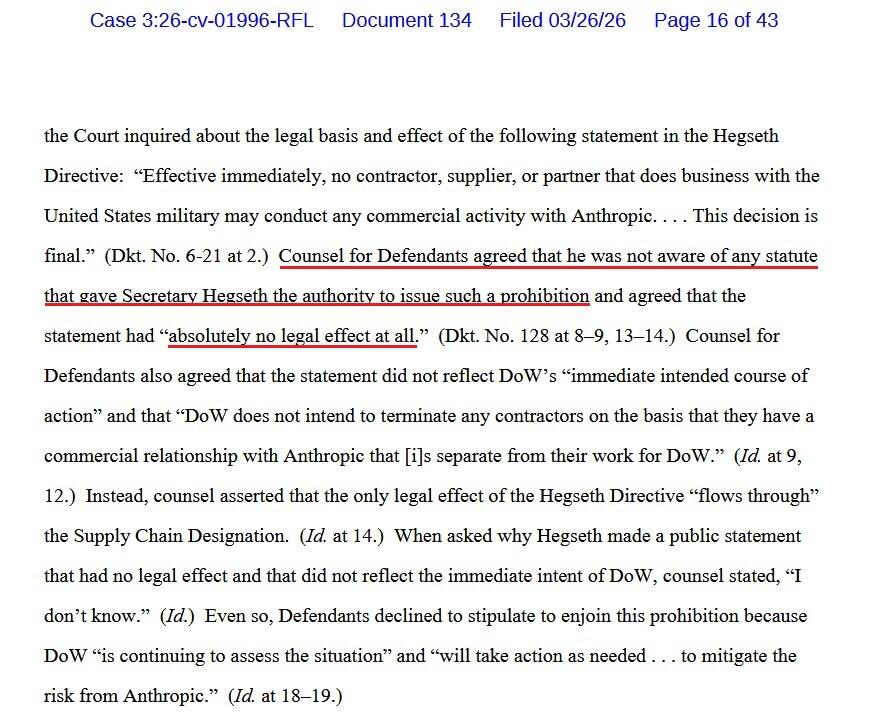
At the March 24 hearing, DoW counsel conceded that portions of the Hegseth Directive had “absolutely no legal effect” on their own and that DoW did not intend to terminate unrelated commercial relationships – yet declined to stipulate to an injunction, citing ongoing “assessment.”
“While this case was necessary to protect Anthropic, our customers, and our partners, our focus remains on working productively with the government to ensure all Americans benefit from safe, reliable AI,” Anthropic said in a statement.
The order is a preliminary injunction only; the case will proceed to full merits. But Judge Lin’s thorough factual record and legal analysis make clear that branding a domestic AI firm a national-security threat for publicly advocating safety guardrails crosses a bright constitutional line. The government retains full authority to choose its tools—just not to punish a company for speaking out about their limitations.
Tyler Durden
Thu, 03/26/2026 – 22:24
BYD And VinFast Race To Dominate Southeast Asia’s EV Market
BYD And VinFast Race To Dominate Southeast Asia’s EV Market
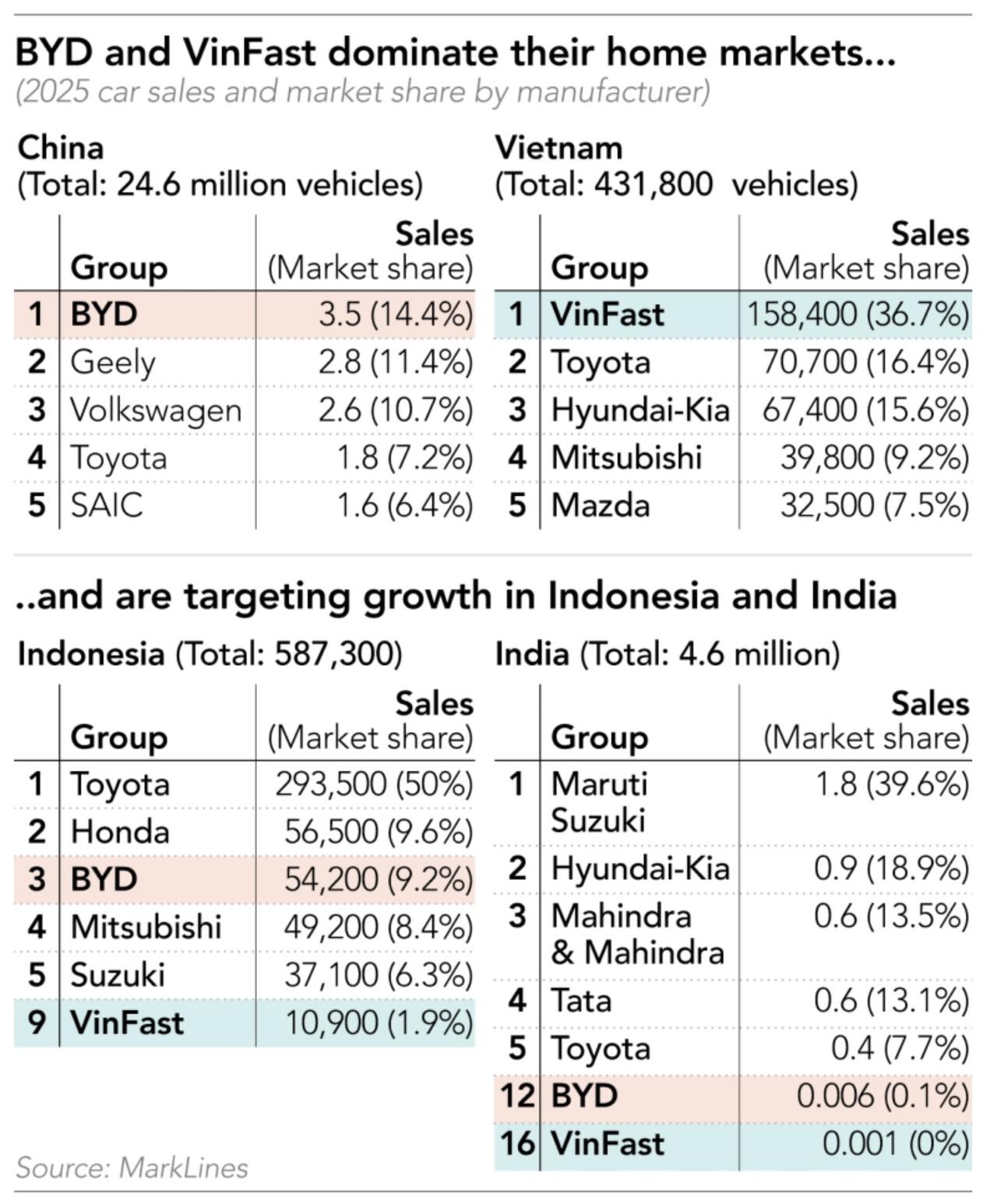
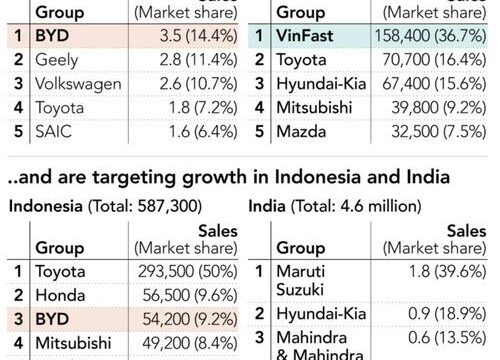
BYD and VinFast are rapidly expanding their presence in Southeast Asia, where electric vehicles are gaining traction and competition is intensifying, according to Nikkei. Both companies have emerged as the fastest-growing car brands in the region’s six largest markets in 2025, with sales rising about 95% for BYD and 90% for VinFast compared with the previous year.
VinFast sold more than 100,000 vehicles across countries including Indonesia, Vietnam, and Thailand, while BYD delivered roughly 70,000 units. Together, they account for around 7% of total vehicle sales in a regional market of approximately 2.4 million cars. Their rapid growth has contributed to a decline in market share for long-dominant Japanese automakers such as Toyota, Honda, and Mitsubishi.
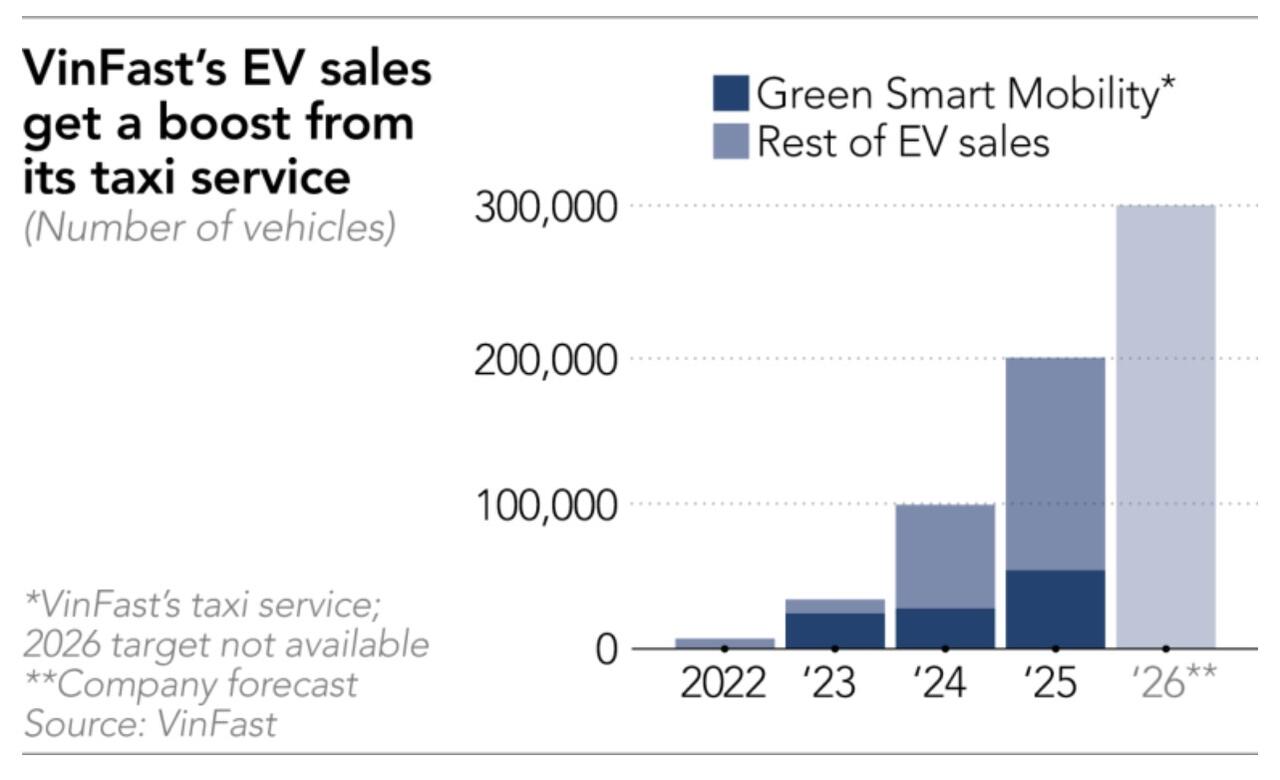
Nikkei writes that VinFast’s strategy emphasizes affordability and ecosystem development. The company has focused on lowering prices, building charging infrastructure, and investing in local manufacturing while also promoting adoption through electric taxi fleets and ride-hailing services. BYD, by contrast, is leveraging partnerships and a broader product lineup. It supplies vehicles to ride-hailing operators such as Grab and is expanding production capacity across Southeast Asia, while also offering plug-in hybrid models that appeal to consumers concerned about charging availability.
Southeast Asia has become a priority growth market for both companies due to its expanding middle class and relatively low penetration of electric vehicles. BYD has established manufacturing operations in Thailand and is developing additional facilities in Indonesia and Cambodia. VinFast is pursuing large-scale investments in Indonesia and India, including factories and infrastructure projects designed to support long-term growth.
India has proven more difficult for both companies. Limited charging infrastructure, strong domestic competitors, and relatively low consumer adoption of electric vehicles have constrained sales. Pricing differences are also evident, with VinFast positioning itself more aggressively at the lower end of the market compared with BYD.
Technologically, BYD benefits from its established plug-in hybrid systems, which reduce range anxiety and make its vehicles more practical in markets where charging networks are still developing. VinFast initially focused entirely on battery electric vehicles but is now considering hybrid options to broaden its appeal.
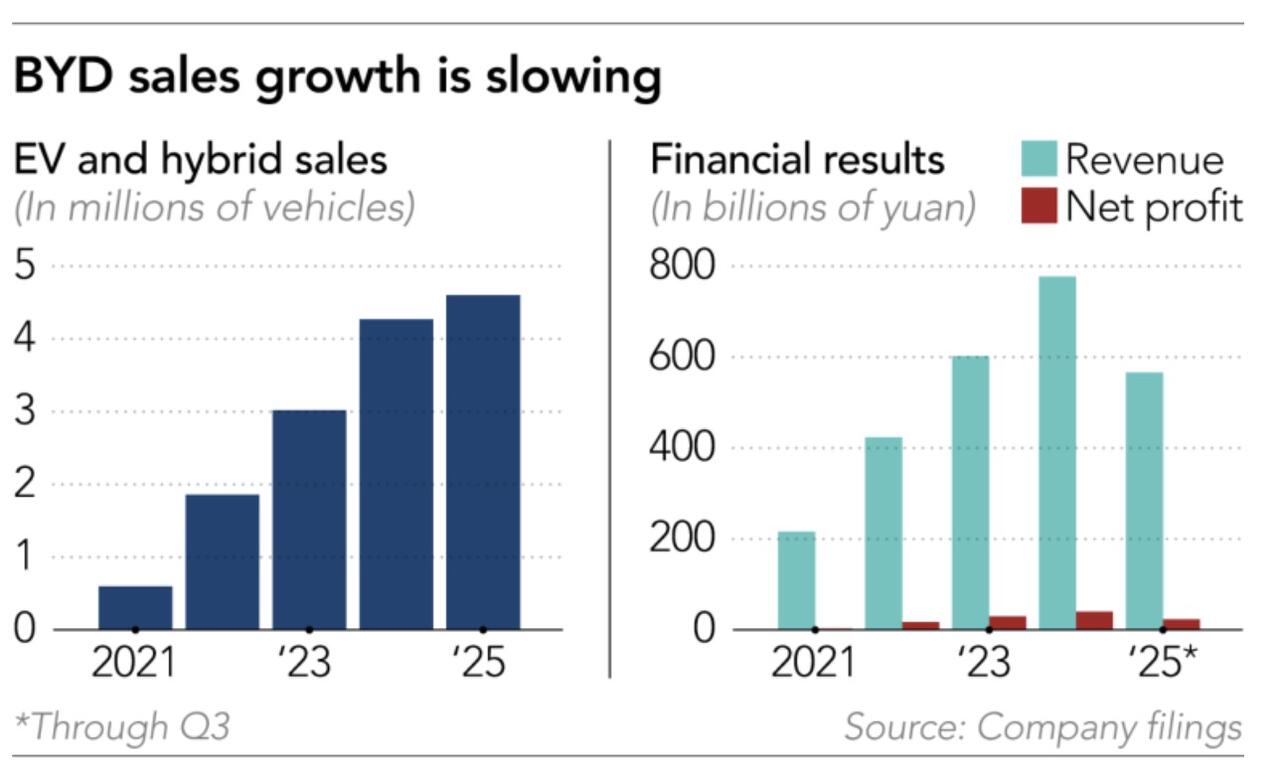
The two companies also differ in financial strength. BYD remains profitable, supported by strong cash reserves and cost control, and is expected to continue growing earnings. VinFast, however, is operating at a significant loss as it invests heavily in global expansion, relying on financial backing from its parent company to sustain its strategy.
Both automakers are pushing aggressively into overseas markets as competition in their domestic markets increases. Their ability to sustain growth will depend on how effectively they balance expansion with financial stability and adapt to varying market conditions across regions.
Tyler Durden
Thu, 03/26/2026 – 22:15
https://www.zerohedge.com/markets/byd-and-vinfast-race-dominate-southeast-asias-ev-market