Category: News

Expresidente Vizcarra de Perú se declara inocente en su alegato final durante juicio por corrupción
Associated Press
LIMA (AP) — El expresidente peruano Martín Vizcarra se declaró inocente el jueves durante el alegato final ante los magistrados que lo juzgan por un caso de presunta corrupción cuando era gobernador en 2014.
“Soy inocente, completa y absolutamente inocente de los hechos que hoy se están viendo”, dijo Vizcarra, de 62 años, en una sala judicial hasta donde llegaban los gritos de apoyo de sus simpatizantes que se encontraban en el exterior. “Nunca se ha pasado por mi cabeza la posibilidad de una fuga”, añadió el exmandatario (2018-2020).
En el juicio, que comenzó en 2024, Vizcarra está acusado de haber recibido en 2014 unos 611.000 dólares en sobornos mientras era gobernador de la región Moquegua para favorecer a constructoras locales en licitaciones de obras públicas. Dos empresarios aseguraron durante el proceso que le pagaron para conseguir contratos.
La fiscalía ha solicitado 15 años de cárcel para Vizcarra por el delito de cohecho y nueve años de impedimento para ejercer cargos públicos.
Las investigaciones contra Vizcarra empezaron durante su mandato en 2020 y el 9 de noviembre de ese año dieron paso a que el Parlamento lo destituyera por “incapacidad moral permanente”.
En 2021 Vizcarra fue elegido como el congresista más votado, pero fue inhabilitado para ejercer cargos públicos en tres ocasiones por el Parlamento. Su hermano mayor Mario Vizcarra se postulará a la presidencia en 2026 por el partido Perú Primero y ha señalado que el expresidente será su asesor cercano.
Entre agosto y septiembre el exmandatario estuvo en prisión por 22 días luego de que la fiscalía asegurara que había un peligro de fuga.
Vizcarra les dijo el jueves a los jueces que no escapará del país y que asistirá a la sala judicial el próximo jueves 26 de noviembre, cuando se dicte la sentencia.
“Hasta el final estaré aquí y lo que ustedes decidan lo acataremos”, indicó el expresidente.
En Perú hay tres exmandatarios presos. Pedro Castillo (2021-2022) cumple tres años de cárcel preventiva mientras es juzgado por supuesta rebelión e investigado por presunta corrupción. Alejandro Toledo (2001-2006) fue condenado a 20 años por lavado de activos de la constructora Odebrecht. En tanto, Ollanta Humala (2011-2016) también cumple una condena de 15 años de cárcel por lavado de dinero de esa firma brasileña.

Lake County budget approved despite gun-violence-initiative debate
Lake County’s $676.6 million 2026 budget was approved Tuesday despite a split vote, and thanks to its “conservative approach,” tax increases will be in the single digits for most residents, according to county Financial and Administrative Committee Chair Paul Frank.
Despite the tax levy increasing by nearly $3.6 million from last year, the owner of a $330,000 home will see an increase of less than $9 on the Lake County portion of their tax property tax bill. While expenses are up 2.2% from last year, about $14.5 million, revenue is also up 3.7%, or about $23.3 million.
While staff and County Board members praised the budget — and highlighted how the county’s 2025 spending plan was recognized by the Government Finance Officers Association — the 2026 budget was not approved unanimously.
Four board members — Michael Danforth, Kevin Hunter, Ann Main and Linda Pederson — in what was more a show of protest than an attempt to stall the budget, voted against approval, voicing their opposition to a $650,000 item that would turn the grant-funded Gun Violence Prevention Initiative into a county-funded program.
The GVPI is a violence interruption program created in 2022 by State’s Attorney Eric Rinehart, the same year of the Highland Park July Fourth mass shooting. It aims to address a reported increase in gun violence in the county through a “trauma-informed, community-centered, and evidence-based approach,” according to a 2024 report.
In the 2026 budget summary released several weeks ago, the program was originally requesting nearly $880,000, with plans to turn four grant-funded positions into county-funded jobs and add a full-time youth engagement coordinator position.
Frank said during Tuesday’s meeting that the request had been pared down to $650,000, and the full-time position removed. The money will be a one-time transfer within the budget — which wouldn’t impact the tax levy — and will fund the initiative for six months, to the end of 2026, while the State’s Attorney’s Office works on getting state funding.
Frank acknowledged concerns from previous meetings that there had not been a conversation on whether the county should take over funding the GVPI, saying “that’s probably a discussion we’ll have to have in the future” if state funding is not acquired.
But Maine argued that having such discussions later would be running the process backwards.
“It’s a complete departure from our policy that if grant funding is not there, the positions go away,” she said.
Maine and her fellow dissenters raised the example of the county’s Health Department, which she argued cuts positions funded by grants if such funds are lost.
Danforth and Hunter both said they were not necessarily speaking against the merits of the initiative or the budget as a whole, and their objections were to the process regarding the individual item.
Danforth said he couldn’t comment on “whether or not the program is warranted or justified” without metrics or data, and lacking those, is against adding the program to the budget and allocating it taxpayer dollars.
“I can make an argument for gun-violence prevention to take those same dollars and put four or five more deputy sheriffs on the streets,” he said.
Frank pushed back on Danforth’s sentiment, saying he was a “full believer of the effort.” The State’s Attorney’s Office has “the proof of their success,” he said.
“They have reduced and prevented gun violence in the communities where they have targeted their resources,” Frank said.
Online, the initiative has a data dashboard with statistics on gun deaths going back to 2020. According to the dashboard, homicides rose to a relatively high point of 38 in 2022. The dashboard does not indicate if that includes the Highland Park mass shooting that killed seven. Suicides rose in 2022 and 2023 to a high of 40. Both have since slowly declined.
“The state’s attorney and his team at the Gun Violence Prevention Initiative have not only been leaders in this area, in the state, but nationally,” Frank said.
Frank praised the initiative for its work on the “human aspect” of gun violence, as well as the downstream financial impacts gun violence has on the community, whether through the healthcare system, law enforcement, or at the individual level.
Other budget items
The budget includes more than $100 million for infrastructure improvements in 2026, including Russell Road roundabouts, drainage improvements in the Carillion North Subdivision and upgrades to three Lake County Public Works wastewater treatment plants.
Several new program requests were approved, including the replacement of outdated public safety radios — meant to improve emergency response communications between local, state and federal agencies — a new building and code inspector, a social worker in the Public Defender’s Office, a grant coordinator in the Finance Department, and an upgrade of the County Clerk’s voter tabulation system.
“I want to congratulate my County Board colleagues, along with the outstanding leadership of our county administration and finance department, for producing a budget that balances investments in our services and facilities with a reasonable, minimal tax increase,” Frank said in a news release. “Lake County taxpayers can take pride in the transparent, deliberative process that shaped this budget.”
https://www.chicagotribune.com/2025/11/20/lake-county-2026-budget/

Chicago architect Bruno Ast, who designed memorial for Kent State shooting victims, dies at 88
During his 43 years as a professor of architecture and associate dean at the University of Illinois Chicago School of Architecture, Bruno Ast was a working architect who designed various small urban projects and notably also designed a memorial to the 1970 shooting victims at Kent State University in Ohio.
“Bruno somehow managed to navigate the dysfunctional and political world of academia, run a small practice and gain the respect of the contractors that built for him,” said Joel Putnam, a former graduate assistant of Ast’s at UIC who now works for Capri Investment Group, the firm that is redeveloping the former James R. Thompson Center in the Loop. “He was truly an architect’s architect.”
Ast, 88, died of natural causes Sept. 28 at Advocate Illinois Masonic Medical Center in Chicago, said his wife of 61 years, architect Gunduz Dagdelen. Ast, who had been dealing with dementia, was a longtime Old Town resident.
Born in 1937 in Hutovo, Yugoslavia, Ast left Yugoslavia at the start of World War II when his family fled to Austria. In 1949, his family immigrated to the U.S. and settled in Kewanee, Illinois. After graduating from Kewanee High School, Ast attended the University of Illinois Urbana-Champaign, earning bachelor’s and master’s degrees in architecture.
At U. of I., Ast met his future wife, and after their schooling, the couple lived for a year in St. Louis, where Ast worked for the Hellmuth, Obata + Kassabaum architectural firm. After that, Ast and Dagdelen moved to Chicago, where Ast worked as a senior architect for well-known firms, Harry Weese and Associates and Skidmore, Owings & Merrill.
In 1969, Ast joined the faculty of UIC’s School of Architecture, where he taught classes, served as the director of undergraduate studies and, from 1996 until 1998, worked as associate dean.
“Bruno expected dedication and excellence in his classroom, and some students were not up to the task,” said Cary Tisch, who was among a group of students who formed a fun group called the “Loyal Order of the I Beam” as a way to demonstrate seriousness of purpose. “While we did vex Bruno from time to time, he came to understand, appreciate and respect the group, as he already did the individuals, and we would have many happy gatherings over the years to celebrate our professional bonds and personal connections.”
Putnam called Ast an important mentor.
“There are few people that one comes across who have such a significant impact on one’s life trajectory and for me, Bruno was one of those,” he said. “His friendship and kind heart opened doors and set me on the path I am on today, from the trenches at Skidmore to helping lead the revitalization of the Thompson Center. I would not be where I am without his generosity and spirit.”
In 1986, Ast won a competition to design a memorial at Kent State to commemorate the 1970 massacre, during which 28 National Guard soldiers shot student demonstrators who were protesting the expanding involvement of the Vietnam War, killing four students and wounding nine others. The university had allowed 15 years to pass before deciding a memorial was appropriate.
A student walks past part of the May 4 Memorial for four Kent State students killed in 1970 in 2007. Chicago architect Bruno Ast designed the memorial. (Tony Dejak/AP)
Ast’s original $1.2 million design was judged by Kent State’s trustees to be far too costly. So he returned with a significantly scaled-down $225,000 design, which ultimately was built. The memorial, on 2.5 acres adjacent to the parking lot where the students were killed, consisted of a granite plaza with four pylons similar in shape to elongated gravestones and five granite disks imbedded in the ground, along with a bench and more than 58,000 daffodils, signifying the number of Americans killed in the Vietnam War. The memorial was dedicated in 1990.
“This was the kind of thing every architect would give his right arm for,” Ast told the Tribune in 1990. “Not only were 13 students killed or wounded, but you go around and find professors there don’t want to talk about it because of the fissures it opened. Probably the most moving moment for me was in 1986 when (Kent State sociology professor) Dr. Jerry Lewis took me for a nickel tour of the campus. I listened to him talking to me on the site where one of the students fell — I actually burst into tears.”
Ast acknowledged that he was disappointed when the university declined to fund his original $1.2 million design, but said he remained proud of the scaled-down version.
“My memorial is to those who died as well as to those who lived,” he told the Tribune. “You also have to look at this with the view of one guy — one Chinese student standing in front of a tank in Tiananmen Square last spring.”
Ast returned to Kent State in 1995 for the 25-year anniversary of the killings.
“Society must have a memory,” he told the Tribune at that time, explaining that memorials such as the one at Kent State “help us remember” and “say the past is not to be the future.”
In 1970, Ast and Dagdelen started their own small architectural firm, Ast + Dagdelen. The couple specialized in the rehabilitation and recycling of older buildings, and they lectured on the topic for groups such as the Chicago Architecture Foundation.
“Good renovation is sympathetic to the original building,” Ast told the Tribune in 1976. “Not everything has to be new, but not everything is worth saving, either. The claw-footed bathtub can be re-enameled, but the state of the doorframes may make them worthless. Every part of the building has to be examined on an individual basis.”
Among the projects that Ast and Dagdelen worked on included the early-1980s conversion of an Old Town church to three town homes.
“Bruno and Gunduz’s architectural practice focused primarily on the rehabilitation and adaptive reuse of vintage urban properties, and nobody did it better,” Tisch said. “In addition to being a very creative designer, Bruno was a builder who intimately understood what it would take to construct his designs, making them beautiful, practical and achievable, both for the clients and the builders. This distinguished him from many other architects who create wonderful designs, but whose designs are difficult and excessively expensive to actually build, if they can be realized at all.”
Tisch added that “it is impossible to talk about Bruno without mentioning Gunduz and their extraordinary partnership, both in the practice of architecture and in life.”
“She is her own force of nature, and together they were indomitable,” Tisch said.
After retiring, Ast enjoyed building all sorts of items out of wood in his basement workshop, his wife said.
In addition to his wife, Ast is survived by a daughter, Fatima Ast; a brother, John; and two grandchildren.
A memorial service is being planned for spring.
Bob Goldsborough is a freelance reporter.
https://www.chicagotribune.com/2025/11/20/architect-bruno-ast-obituary/

Fiscales italianos investigan a Tod’s por abuso laboral
Associated Press
ROMA (AP) — Los fiscales italianos han puesto al grupo de lujo Tod’s y a tres de sus ejecutivos bajo investigación por presuntos abusos laborales y explotación, según mostraron documentos judiciales el jueves.
De acuerdo con los documentos obtenidos por The Associated Press, el fiscal de Milán, Paolo Storari, también ha solicitado una prohibición de seis meses sobre la publicidad de la empresa, con una audiencia sobre el caso programada para el 3 de diciembre.
En los documentos, los fiscales alegan que Tod’s —conocido por sus mocasines y bolsos de alta gama— estaba plenamente consciente y era cómplice de la explotación laboral de trabajadores chinos en talleres subcontratados en Milán y la región de Marche.
En un comunicado emitido el jueves por la noche, Tod’s negó cualquier irregularidad y manifestó que responderá a las acusaciones en los tribunales correspondientes.
En los documentos, Storari señaló una especie de “ceguera intencional” por parte de Tod’s, que también había realizado auditorías de terceros en los talleres, pero no abordó los problemas que estas revelaron.
Según los fiscales, las condiciones de explotación de los trabajadores incluían horas que excedían el límite legal, salarios inadecuados, violaciones de varias normas de seguridad laboral y viviendas degradantes.
La investigación centrada en Tod’s es la más reciente de una serie de operaciones policiales e investigaciones italianas que revelan el trato abusivo de trabajadores subcontratados por marcas de alta gama.
En abril, la policía italiana reveló que trabajadores chinos empleados por un subcontratista no autorizado producían bolsos y accesorios para Giorgio Armani.
______
Esta historia fue traducida del inglés por un editor de AP con la ayuda de una herramienta de inteligencia artificial generativa.
https://www.chicagotribune.com/2025/11/20/fiscales-italianos-investigan-a-tods-por-abuso-laboral/
$1.2 Billion Suspicious Epstein Transactions? Wyden Demands Investigation After JP Morgan Failed To Report For Years
$1.2 Billion Suspicious Epstein Transactions? Wyden Demands Investigation After JP Morgan Failed To Report For Years
Now that we’re making progress on Epstein – after President Trump and Mike Johnson were forced to cave under overwhelming pressure for DOJ disclosure – a logical next step is to look into who was funding the notorious sex-trafficker.
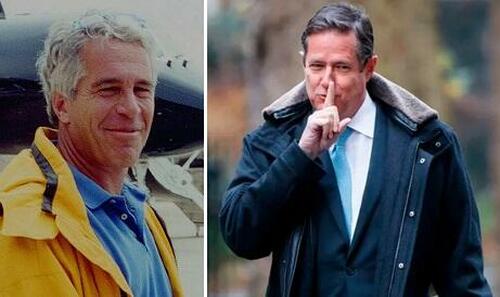
Jeffrey Epstein, former Barclays / JP Morgan exec Jes Staley
On Thursday morning, Sen. Ron Wyden (D-OR) called for an investigation into whether JPMorgan Chase deliberately concealed suspicious transactions by Epstein.
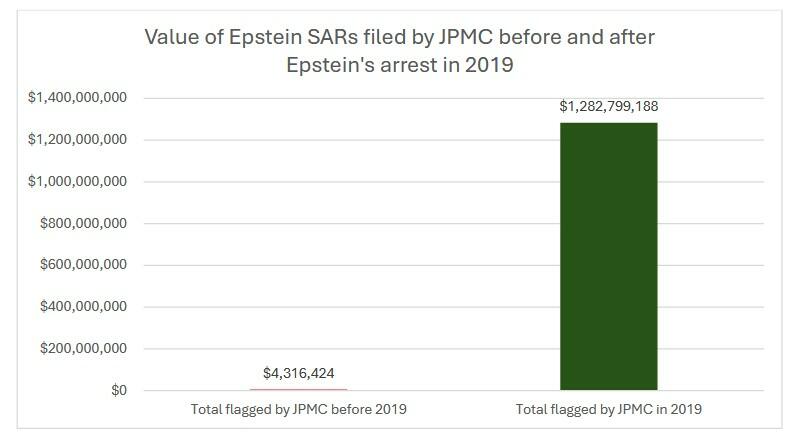
You really just need to look at Exhibit A in Wyden’s memo (dated Wednesday) based on unsealed court records: the number of transactions flagged as suspicious between 2002 – 2016, vs. a flurry of almost $1.3 billion in suspicious transactions that the bank scrambled to file right after Epstein died in jail awaiting trial.
Wyden writes:
The unsealed court records include copies of SARs that JPMC filed on Epstein’s accounts between 2002 and 2019. Between 2002 and 2016, JPMC filed 7 SARs flagging only $4.3 million in suspicious transactions from Epstein’s accounts.¹ Only after Epstein was arrested on federal sex trafficking charges did JPMC report the full extent of Epstein’s suspicious financial activity. In August and September of 2019, JPMC filed two SARs flagging more than 5,000 suspicious wire transfers moving approximately $1.3 billion in and out of Epstein’s accounts.² This is the strongest evidence yet that JPMC should face an investigation for failure to appropriately monitor and report Epstein’s financial activity.
According to internal bank emails, JPMorgan may have held off on filing the SARs (suspicious activity reports) because it wanted “to continue working with Epstein,” who was a great source of referrals despite firing him as a client in 2013, the report found.
The bank said in late October that “it was flagging about 4,700 transactions, totaling more than $1 billion, because they were potentially related to reports of human trafficking involving Mr. Epstein. It also mentioned Mr. Epstein’s wire transfers to Russian banks and sensitivities around “his relationships with two U.S. presidents.” Mr. Epstein at times was close with President Trump and former President Bill Clinton,” according to the NYT.
Wyden said in a statement that it was “clear that JPMorgan Chase ought to face criminal investigation for the way it enabled Epstein’s horrific crimes,” and that both Congress and the DOJ should investigate the bank – which has repeatedly issued statements of regret for working with Epstein, and claims it did all it could with the information it had at the time.
“The second the government finally made public the sex trafficking details in 2019 — information they clearly had for years — we identified for law enforcement a range of Epstein’s past transactions intended to assist with the investigation,” said bank spokeswoman Patricia Wexler on Thursday.
Will Wyden actually follow the money?
Related:
The Overlooked Shell Company Operated By Epstein’s Accomplices
Epstein’s Inbox Lays Out Gift Networks, PR Tactics, And Strange Habits
Revelation Of Epstein Investment Tied To Peter Thiel Adds To Growing Concerns About Palantir
Victoria’s Secret Boss Wexner Swears He Didn’t Know About Epstein Penchant For Pedophilia
Tyler Durden
Thu, 11/20/2025 – 14:25

Dick Cheney’s funeral brings bipartisan tributes, but Trump was not invited
WASHINGTON — Washington National Cathedral on Thursday hosted a bipartisan show of respect and remembrance for Dick Cheney, the consequential and polarizing vice president who in later years became an acidic scold of fellow Republican President Donald Trump.
Trump, who has been publicly silent about Cheney’s death Nov. 3, was not invited to the memorial service.
Two ex-presidents came: Republican George W. Bush, who eulogized the man who served him as vice president, and Democrat Joe Biden, who once called Cheney “the most dangerous vice president we’ve had probably in American history” but now honors his commitment to his family and to his values.
“Solid and rare and reliable,” Bush said of his vice president, praising a man whose “talent and his restraint” exceeded his ego. “Smart and polished, without airs.”
Among the eulogists, Liz Cheney, his eldest daughter, only obliquely addressed what amounted to a father-daughter feud with the president — a man her dad had called a “coward” for trying to overturn his loss in the 2020 election.
She spoke of her father’s conviction that when confronted with a choice between defending the country and a political party, the country must come first. “Bonds of party must always yield to the single bond we share as Americans,” she said.
A former high-ranking House member whose Republican political career was shredded by Trump’s MAGA movement, Liz Cheney chose not to speak directly of Trump. She spoke of seeing clouds in the shape of angels just before her father died.
A Who’s Who of Washington, minus you know who
Moments before the service began, figures of recent but now receded power mingled: Bush and Biden and their wives sitting in a row together, former Vice Presidents Kamala Harris and Mike Pence chatting side by side in their pew with Al Gore and Dan Quayle together behind them.
Biden greeted Republican Sen. Mitch McConnell, the former longtime Senate leader, and his wife, former labor and transportation secretary Elaine Chao. Behind them sat Rep. Nancy Pelosi, the former House speaker. All gathered in the grand cathedral known as “a spiritual home for the nation.”
Others delivering tributes at Thursday’s funeral were Cheney’s longtime cardiologist, Jonathan Reiner; former NBC News correspondent Pete Williams, who was Cheney’s spokesman at the Pentagon; and the former vice president’s grandchildren. Six grandchildren were there — a seventh is about to give birth.
“I’m happy to report that I haven’t given many eulogies,” Reiner said in his remarks. “Nobody wants a doctor who is great at funerals.”
Reiner recalled doctors telling Cheney decades ago, after the first of multiple heart attacks, that he should abandon his political ambitions then. Yet he kept winning elections as a Wyoming congressman for years after that.
Cheney, he said, was always the “calmest person in the room.”
Cheney had lived with heart disease for decades and, after the Bush administration, with a heart transplant. He died at age 84 from complications of pneumonia and cardiac and vascular disease, his family said.
Trump’s vice president, JD Vance, on stage at another event in the morning, was asked about Cheney and said: “Obviously there’s some political disagreements there but he was a guy who served his country. We certainly wish his family all the best in this moment of grieving.”
Vance was also not invited to the funeral, according to a person familiar with the details who was not authorized to speak publicly and spoke on condition of anonymity.
The White House lowered its flags to half-staff after Cheney’s death, as it said the law calls for, but Trump did not issue the presidential proclamation that often accompanies the death of notable figures, nor has he commented publicly on his passing.
The deeply conservative Cheney’s influence in the Bush administration was legendary and, to his critics, tragic.
He advocated for the U.S. invasion of Iraq on the basis of what proved to be faulty intelligence and consistently defended the extraordinary tools of surveillance, detention and inquisition employed in response to the Sept. 11, 2001, attacks. Bush credited him with helping to keep the country safe and stable in a perilous time.
Bad blood between the Cheneys and Trump
After the 2020 election won by Biden, Liz Cheney served as vice chair of the Democratic-led special House committee that investigated the Jan. 6, 2021, riot at the Capitol. She accused Trump of summoning the violent mob and plunging the nation into “a moment of maximum danger.”
For that, she was stripped of her Republican leadership position and ultimately defeated in a 2022 Republican primary in Wyoming. In a campaign TV ad made for his daughter, Dick Cheney branded Trump a “coward” who “tried to steal the last election using lies and violence to keep himself in power after the voters had rejected him.”
Last year, it did not sit well with Trump when Cheney said he would vote for the Democrat, Harris, in the presidential election.
Trump told Arab and Muslim voters that Dick Cheney’s support for Harris should give them pause, because he “killed more Arabs than any human being on Earth. He pushed Bush, and they went into the Middle East.”
https://www.chicagotribune.com/2025/11/20/dick-cheney-funeral/
Los juguetes con inteligencia artificial no son seguros para los niños, alertan grupos de defensa
Por BARBARA ORTUTAY y MATT O’BRIEN
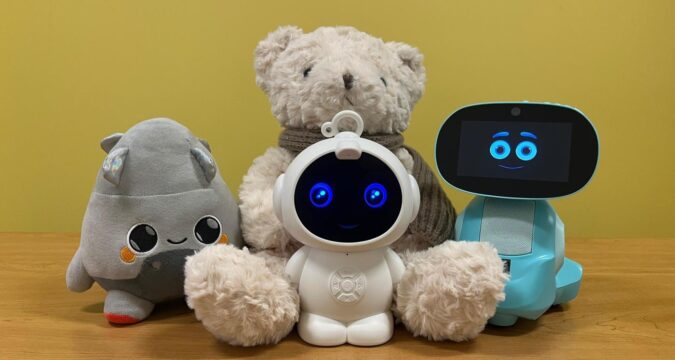
Son adorables, incluso tiernos, y prometen aprendizaje y compañía, pero los juguetes de inteligencia artificial no son seguros para los niños, según grupos defensores de niños y consumidores que instan a los padres a no comprarlos durante la temporada navideña.
Estos juguetes, comercializados para niños desde los 2 años, generalmente funcionan con modelos de IA que ya han demostrado ser perjudiciales para niños y adolescentes, como el ChatGPT de OpenAI, según un aviso publicado el jueves por el grupo de defensor de menores Fairplay y firmado por más de 150 organizaciones y expertos individuales, como psiquiatras infantiles y educadores.
“Los graves daños que los chatbots de IA han infligido a los niños están bien documentados, incluyendo el fomento del uso obsesivo, mantener conversaciones sexuales explícitas y alentar comportamientos inseguros, violencia contra otros y autolesiones”, alertó Fairplay.
Los juguetes de IA, fabricados por empresas como Curio Interactive y Keyi Technologies, a menudo se comercializan como educativos, pero Fairplay dice que pueden desplazar actividades importantes de creatividad y aprendizaje. Prometen amistad, pero interrumpen las relaciones y la resiliencia de los niños, dijo el grupo.
“Lo que es diferente en los niños pequeños es que sus cerebros están siendo configurados por primera vez y, desde el punto de vista del desarrollo, es natural que sean confiados, que busquen relaciones con personajes amables y amistosos”, explicó Rachel Franz, directora del Programa Young Children Thrive Offline de Fairplay. Debido a esto, agregó, la confianza que los niños pequeños depositan en estos juguetes puede exacerbar los tipos de daños que los niños mayores ya están experimentando con los chatbots de IA.
Un informe separado el jueves de Common Sense Media y psiquiatras de la facultad de medicina de la Universidad de Stanford advirtió a los adolescentes sobre el uso de chatbots populares como terapeutas.
Fairplay, una organización de 25 años anteriormente conocida como la Campaña por una Infancia Libre de Comerciales, ha advertido sobre los juguetes de IA durante años. Pero antes no eran tan avanzados como hoy. Hace una década, durante una moda emergente de juguetes conectados a internet y reconocimiento de voz de IA, el grupo ayudó a liderar una reacción contra la muñeca Hello Barbie parlante de Mattel, que, según ellos, grababa y analizaba las conversaciones de los niños.
Esta vez, aunque los juguetes de IA se venden principalmente por internet y son más populares en Asia que en otros lugares, Franz dijo que algunos han comenzado a aparecer en los estantes de las tiendas en Estados Unidos y más podrían estar en camino.
“Todo se ha lanzado sin regulación ni investigación, por lo que nos da una pausa adicional cuando de repente vemos a más y más fabricantes, incluido Mattel, que recientemente se asoció con OpenAI, potencialmente lanzando estos productos”, indicó Franz.
Es la segunda gran advertencia estacional contra los juguetes de IA desde que el grupo de defensa del consumidor PIRG señaló la semana pasada la tendencia en su informe anual “Problemas en el Mundo de los Juguetes”, que generalmente examina una variedad de peligros de productos, como imanes de alta potencia y baterías del tamaño de un botón que los más pequeños podrían tragar. Este año, la organización probó cuatro juguetes que utilizan chatbots de IA.
“Descubrimos que algunos de estos juguetes hablarán en profundidad sobre temas sexualmente explícitos, ofrecerán consejos sobre dónde un niño puede encontrar fósforos o cuchillos, actuarán consternados cuando digas que tienes que irte y tienen controles parentales limitados o nulos”, señala el reporte. Uno de los juguetes, un oso de peluche fabricado por FoloToy, con sede en Singapur, fue retirado posteriormente, dijo su director general a la cadena CNN esta semana.
La doctora Dana Suskind, cirujana pediátrica y científica social que estudia el desarrollo cerebral temprano, dijo que los niños pequeños no tienen las herramientas conceptuales para entender qué es un compañero de IA. Si bien los niños siempre han establecido vínculos con los juguetes a través del juego imaginativo, cuando hacen esto usan su imaginación para crear ambos lados de una conversación de mentira, “practicando la creatividad, el lenguaje y la resolución de problemas”, dijo.
Suskind agregó: “Un juguete de IA colapsa ese trabajo. Responde instantáneamente, de manera fluida y a menudo mejor que un humano lo haría. Aún no conocemos las consecuencias del desarrollo de externalizar ese trabajo imaginativo a un agente artificial, pero es muy plausible que socave el tipo de creatividad y función ejecutiva que el juego de simulación tradicional construye”.
Keyi, con sede en Beijing, fabricante de un “petbot” o mascota de IA llamado Loona, no respondió a las solicitudes de comentarios, pero otros fabricantes de juguetes de IA buscaron resaltar sus protecciones de seguridad infantil.
Curio Interactive, con sede en California, fabrica juguetes de peluche, como Gabbo y Grok en forma de cohete, que han sido promovidos por la cantante pop Grimes. La compañía dijo que ha “diseñado meticulosamente” salvaguardas para proteger a los niños y alienta a los padres a “monitorear las conversaciones, rastrear ideas y elegir los controles que mejor funcionen para su familia”.
En respuesta a los hallazgos anteriores de PIRG, Curio dijo que está “trabajando activamente con nuestro equipo para abordar cualquier preocupación, mientras supervisa continuamente el contenido y las interacciones para garantizar una experiencia segura y agradable para los niños”.
Otra empresa, Miko, con sede en Mumbai, India, dijo que utiliza su propio modelo de IA conversacional en lugar de depender de sistemas generales de modelos de lenguaje grande como ChatGPT para hacer que su producto, un robot interactivo de IA, sea seguro para los niños.
“Siempre estamos ampliando nuestras pruebas internas, fortaleciendo nuestros filtros e introduciendo nuevas capacidades que detectan y bloquean temas sensibles o inesperados”, aseguró su director general, Sneh Vaswani. “Estas nuevas características complementan nuestros controles existentes que permiten a los padres y cuidadores identificar temas específicos que les gustaría restringir de la conversación. Continuaremos invirtiendo en establecer los más altos estándares para una integración de IA segura, segura y responsable para los productos Miko”.
Los productos de Miko se venden en grandes minoristas como Walmart y Costco y han sido promovidos por las familias de “kidfluencers” (niños influencers) de las redes sociales cuyos videos de YouTube tienen millones de visitas. En su sitio web, comercializa sus robots como “Inteligencia Artificial. Amistad genuina”.
Ritvik Sharma, vicepresidente senior de crecimiento de la compañía, dijo que Miko en realidad “anima a los niños a interactuar más con sus amigos, a interactuar más con sus compañeros, con los miembros de la familia, etc. No está hecho para que se sientan apegados solo al dispositivo”.
Aun así, Suskind y los defensores de los derechos de los niños dicen que los juguetes analógicos son una mejor opción.
“Los niños necesitan mucha interacción humana real. El juego debe apoyar eso, no reemplazarlo”, consideró Suskind. “Lo más importante a considerar no es solo lo que hace el juguete; es lo que reemplaza. Un simple juego de bloques o un oso de peluche que no responde obliga a un niño a inventar historias, experimentar y resolver problemas. Los juguetes de IA a menudo hacen ese pensamiento por ellos. Aquí está la brutal ironía: cuando los padres me preguntan cómo preparar a su hijo para un mundo de IA, el acceso ilimitado a la IA es en realidad la peor preparación posible”, concluyó.
______
Esta historia fue traducida del inglés por un editor de AP con la ayuda de una herramienta de inteligencia artificial generativa.

Chiefs assistant Dave Toub: Donald Trump ‘doesn’t even know what he’s looking at’ on NFL kickoffs
KANSAS CITY, Mo. — Kansas City Chiefs special teams coach Dave Toub doesn’t care a whole lot about what President Donald Trump thinks of new kickoff rules that were implemented by the NFL in an attempt to make the play safer and more exciting.
Trump became the first sitting president to attend a regular-season NFL game since Jimmy Carter in 1978 when he attended a game between the Washington Commanders and Detroit Lions earlier this month.
Two days later, Trump appeared on “The Pat McAfee Show” and torched the league’s dynamic kickoff rule, which owners voted to make permanent this year. Under the rule, the ball is kicked from the 35-yard line, but every player on the kicking team must wait at the 40 until the ball hits the ground or is touched by a returner inside the 20-yard line.
There are also rules for if a ball does not reach the landing zone, hits the landing zone without being caught or lands in the end zone.
“I think it’s so terrible. I think it’s so demeaning, and I think it hurts the game. It hurts the pageantry,” Trump said. “I’ve told that to (NFL Commissioner) Roger Goodell, and I don’t think it’s any safer. I mean, you still have guys crashing into each other.”
The league has maintained the dynamic kickoff system is safer while producing more kickoff returns. And Toub, who has spent more than two decades coaching special teams in Chicago and Kansas City, didn’t hold back Thursday when he was asked what he thought of the president’s pointed criticism of the kickoff rules.
“He doesn’t even know what he’s looking at. He has no idea what’s going on with the kickoff rule,” said the normally reserved Toub, his voice rising. “So take that for what it’s worth. And I hope he hears it.”
https://www.chicagotribune.com/2025/11/20/dave-toub-donald-trump-nfl-kickoffs/
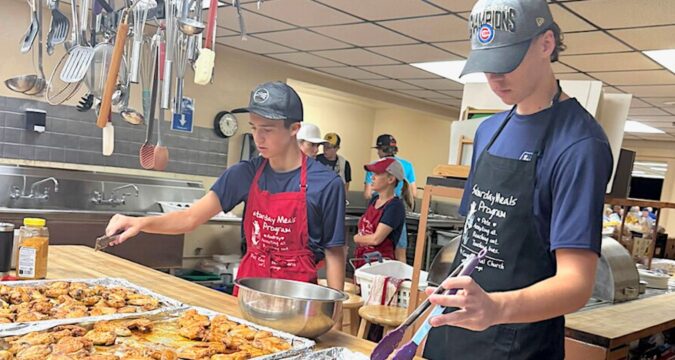
Hinsdale-Clarendon Hills moms, sons form Young Men’s Service League and build bonds along the way
Forming a Hinsdale-Clarendon Hills chapter of the Young Men’s Service League, started earlier this year, has brought about 175 Hinsdale-area high school boys and their moms together for a very worthy cause.
The mission of the group is to assist, serve and support those who are in need in the community, develop leadership skills and promote mother-son relationships.
“There are groups for moms and daughters, dads and daughters, fathers and sons,” said Heather Jashnani, the group’s president. “But there is a lack of opportunities for moms and sons to develop a meaningful bond during their high school years, with all of the demands on their time.”
Jashnani said she did an internet search for “moms and sons volunteering together near me” and was directed to the Naperville chapter of Young Men’s Service League. She loved the group’s mission, but realized that chances of getting into that chapter, via a lottery system that’s used if there are too many applicants, was small.
“I thought I could bring this to Hinsdale and Clarendon Hills instead,” she said. “It is very similar to a mother-daughter organization we participate in, so it seemed manageable.”
Jashnani reached out to some people she knew, who helped and recommended others, and the group was on its way to becoming a reality.
Young Men’s Service League has a “class” for each high school grade level. When starting the local chapter, there was an overwhelming interest from young men and their moms to be part of it. In this inaugural year, there are 92 high school boys, mostly coming from Hinsdale Central, Nazareth Academy and Benet Academy — and 83 moms.
The group serves about 20 local philanthropies, among them People’s Resource Center, Sharing Connections, The Birches Assisted Living, The Ronald McDonald House and Special Olympics.
The young men involved have their own regular meetings at which they practice the league’s values of community, integrity, responsibility and respect, while also learning valuable leadership and life skills, including financial literacy and basic vehicle maintenance.
“I enjoy many parts of the Young Men’s Service League, including helping people in need and making new friends,” said member Teddy Hunley, a high school freshman and the vice president of communications. “I decided to join because I thought it would be a great way to build an even stronger bond with my mom. Volunteering together helps us appreciate the limited time we have together, while serving others inside and outside of our community.”
Hinsdale-Clarendon Hills Young Men’s Service League members Nolan Korn, left, and Mason Wolfe participate in a recent cleanup day at Fullersburg Woods in Oak Brook. (Hinsdale-Clarendon Hills YMSL)
Henry O’Hara, president of the Hinsdale league’s Class of 2027, said he became involved after already having volunteered at his church’s food pantry.
“YMSL allowed me to volunteer at other places, and it was all organized in advance, so I did not have to reach out to each organization and set it up,” he said, “So, this summer I completed 20 hours at Sharing Connections, People’s Resource Center, The Hansen Center and with Special Olympics.”
O’Hara said he worked all 20 hours with his mom and with friends from the league at the events.
“Unlike my church’s food pantry, I was working closely with those in need at these other organizations,” he said.
When the moms have their own meetings, they share ideas and welcome local guest speakers.
“I have done a lot of service work throughout my life, and it has always helped me feel good about myself, even if I was having a hard time in other parts of my life,” said mom Michelle Carlevato, who is the groups’ vice president. She has four sons — three in high school and one in fifth grade, and she wanted to share that positive feeling of service work with them.
“There is so much pressure on kids these days with academics, sports and friends, and I think being exposed to volunteer experiences in our greater community can really help put things in perspective,” Carlevato said. “Also, there are so many opportunities for dads and sons to do things together, and moms are often the nagging voice telling them to do their homework. YMSL gives me the opportunity to give back to our community, right alongside my sons. They get to see a side of me they never see at home, and that has strengthened our relationship.” Jashnani has found her involvement with the group very fulfilling.
“I love so many things about this group,” she said. “Like YMSL nationals says, ‘Four years of high school go by fast, how will you and your son make the most of it?’
“This is me making the most of it with my youngest child. I am proud to have brought this to the community, so encouraged by the response from our members and the philanthropies we serve, and so grateful to be able to spend this quality time with my son, opening his eyes to the needs of others.”
Jashnani also has enjoyed seeing other moms and sons enjoying working together for good causes.
“Every member seems to want a similar experience with their son(s) and puts in the work to make it happen,” she said. “I am in awe of each and every mom on our board, who have all brought their amazing skills to every aspect of us starting this club. And volunteering at these organizations, it’s just a good feeling of giving back.”
Jashnani the immediate goal of the Hinsdale group in its inaugural year is to better understand the ins and outs of the organization, “as we are learning as we are going.”
“So far, the interest in YMSL has been so amazing, and our ultimate goal is to be a welcoming organization that provides moms and sons with meaningful opportunities to volunteer together, strengthen the mother/son bond and give back to our community,” she said.
Chuck Fieldman is a freelance reporter for Pioneer Press.
https://www.chicagotribune.com/2025/11/20/hinsdale-moms-sons-service-league/

Legisladores rusos aprueban ley que aumenta impuestos a los considerados “agentes extranjeros”
Por The Associated Press
Los legisladores rusos aprobaron el jueves un nuevo proyecto de ley que aumenta los impuestos para aquellos etiquetados como agentes extranjeros por el gobierno.
El proyecto de ley, que pasó su tercera y última lectura en la cámara baja del parlamento, establece una tasa de impuesto sobre la renta del 30% para las personas con esta designación y les quita el derecho a exenciones fiscales del gobierno.
El impuesto sobre la renta para la mayoría de los residentes varía entre el 13% y el 22%, dependiendo de sus ingresos. La tasa del 30% anteriormente solo se aplicaba a los no residentes que trabajaban para empresas extranjeras.
El proyecto de ley también prohíbe a las organizaciones etiquetadas como agentes extranjeros solicitar tasas reducidas de impuesto sobre la renta corporativa.
“Aquellos que traicionaron a nuestro país no deberían recibir exenciones fiscales”, expresó el legislador Vyacheslav Volodin en redes sociales anunciando la aprobación del proyecto de ley.
“Pagarán impuestos más altos al presupuesto estatal”, agregó.
La legislación debe ser aprobada por la cámara alta y luego firmada por el presidente Vladímir Putin antes de convertirse en ley.
Los cambios son solo una parte de las modificaciones más amplias al sistema fiscal de Rusia que busca impulsar su economía durante su guerra de casi cuatro años en Ucrania.
Los legisladores rusos también aprobaron un proyecto de ley que aumentará el impuesto al valor agregado del 20% al 22%, una medida que se espera agregue hasta 1 billón de rublos (aproximadamente 12.300 millones de dólares) al presupuesto estatal.
Según la ley rusa, cualquiera que el gobierno considere bajo “influencia extranjera” puede ser considerado un agente extranjero.
La legislación obliga a las organizaciones a identificarse como agentes extranjeros y los medios de comunicación designados como tales deben incluir una declaración extensa al respecto en sus historias.
A los agentes extranjeros también se les prohíbe organizar eventos públicos, enseñar en escuelas estatales y recibir apoyo financiero estatal, entre otras restricciones.
La ley ha sido utilizada contra partidarios de la oposición, medios independientes y activistas de derechos humanos, con críticos describiéndola como una forma de intentar desacreditar a las organizaciones que no siguen la línea del Kremlin.
___________________________________
Esta historia fue traducida del inglés por un editor de AP con ayuda de una herramienta de inteligencia artificial generativa.