Category: News

David Luiz anota su primer gol en la Champions desde 2017 a los 38 años con el Pafos
LIMASSOL, Chipre (AP) — A los 38 años, David Luiz estampó el miércoles su primer gol en la Liga de Campeones en más de ocho años.
El defensor brasileño, ahora en el club chipriota Pafos y aún luciendo su característico cabello rizado, se elevó en un córner para dirigir un potente cabezazo a la esquina superior de la red del Mónaco. Igualó el marcador a 1-1 a los 18 minutos. El partido acabó con un empate 2-2.
Su último gol en la competición fue en octubre de 2017, durante su segunda etapa con Chelsea, en un empate 3-3 contra la Roma en Stamford Bridge.
Fue un jugador clave en un Chelsea que se coronó en la Liga de Campeones en 2012 y más tarde jugó en el torneo para el Paris Saint-Germain. Su debut en la Liga de Campeones fue con Benfica en 2007.
David Luiz regresó a Europa en agosto después de cuatro temporadas en Brasil para unirse al campeón chipriota en su debut en la máxima competición a nivel de clubes del continente.
___
Deportes AP: https://apnews.com/hub/deportes

Community Advocacy Awareness Network to hold unity dinner in Aurora
The Community Advocacy Awareness Network will hold a free community unity dinner from 5:30 to 8:30 p.m. Sunday, Nov. 30, at the Prisco Community Center, 150 W. Illinois Ave. in Aurora.
No registration is necessary for the event, which is open to the public and will include food, drinks, music and more, organizers said.
There will be free raffles for military veterans, and also free socks for adults and children while supplies last, according to organizers.
Those interested are asked by organizers to consider donating food, desserts, drinks and funds for the event, or to volunteer.
For more information, call 331-575-4630 (English) or 630-618-7321 (Spanish).
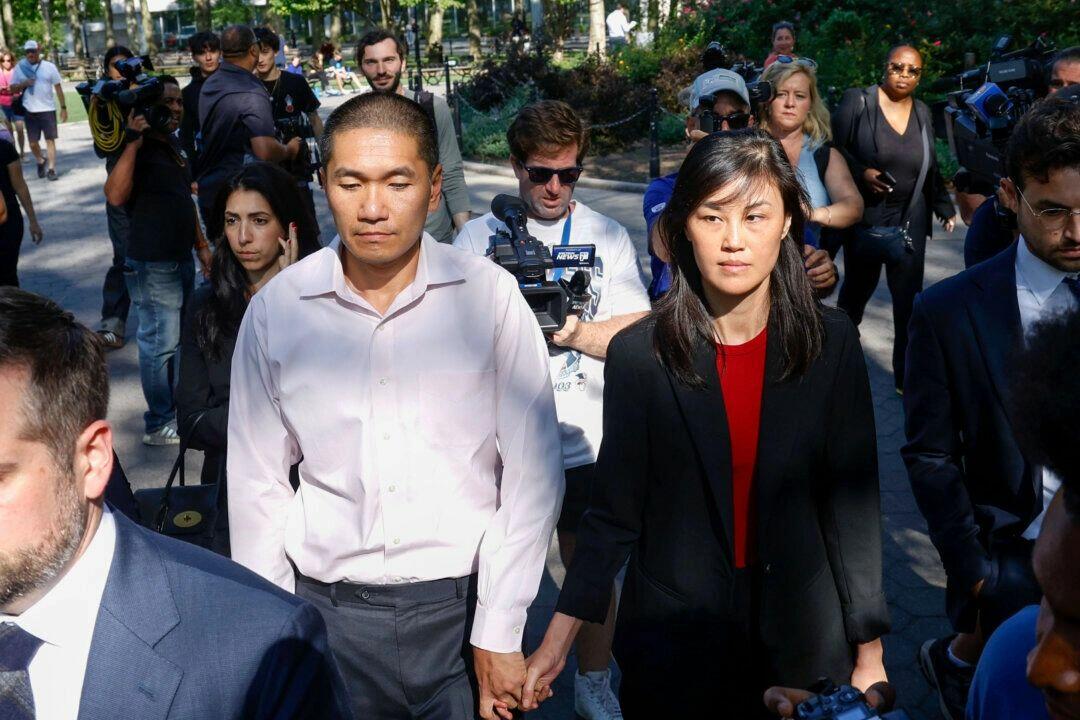
Forged Letters, Luxury Lifestyle: Takeaways So Far From Trial Of Accused Chinese Agent And Hochul, Cuomo Aide
Forged Letters, Luxury Lifestyle: Takeaways So Far From Trial Of Accused Chinese Agent And Hochul, Cuomo Aide
Authored by Nichaolas Zifcak via The Epoch Times (emphasis ours),
In the trial of Linda Sun, the former aide to New York governors who is accused of acting as a Chinese agent, the court has heard evidence that Sun forged the signature of Gov. Kathy Hochul, had close contact with Chinese consular staff, and purchased luxury items with payouts from China.
The former aide to Hochul and former New York Gov. Andrew Cuomo was indicted in 2024 over allegedly using her position to push the agenda of the Chinese Communist Party in return for millions of dollars paid to her husband’s business. Sun has pleaded not guilty.
Sun is on trial in federal court in the Eastern District of New York in the New York City borough of Brooklyn, with former colleagues and coworkers taking the stand to testify.
After almost two weeks of a trial that is expected to run until mid-December, here are some key takeaways so far.
Delegation Invitation Letters Allegedly Forged
Federal prosecutors alleged that Sun put together an official invitation letter to help Chinese officials travel to New York state. Without approval, she allegedly signed then-Lt. Gov. Hochul’s signature on the letter, which was on official letterhead. According to the prosecution, officials from Henan Province, China, used that letter to apply for visas to travel to the United States.
Prosecutors showed the letter to Jeffrey Lewis, who worked for Hochul for 13 years, including as her chief of staff. Lewis was authorized to use her signature.
Lewis testified that the signature on the invitation for Henan officials was not Hochul’s. He explained that Hochul connects and merges the “h” and “y” in Kathy; that the “h” in Hochul is connected with the “o”; and that the “h,“ ”u,“ and ”l” run together.
Lewis also testified that the only Chinese delegation invitation letter he could recall that Gov. Cuomo requested Lt. Gov. Hochul write was one in 2017, for a delegation from Jiangxi Province.
Lewis also pointed out that the alleged forged letters were on a generic letterhead from the governor’s office, which is distinct from the letterhead of the lieutenant governor, which was used in the Jiangxi letter. In 2018 and 2019, the years in which the Henan letters were issued, Sun worked in the office of the governor.
Liaison With Chinese Consular Staff
Prosecutors presented evidence suggesting that Sun prioritized requests of the Chinese Consulate over her duty to the state of New York.
In 2019, Taiwanese President Tsai Ing-wen traveled to New York City and held a banquet on July 12. Taiwan’s representatives there invited Cuomo to join the event.
Prosecutors presented emails at trial that showed that when Sun received the banquet invitation for the governor, her first action was not to forward it to the governor’s scheduler, but to immediately alert the Chinese Consulate.
The emails showed that Sun received the invitation on July 5 at 6:32 p.m. One minute later, at 6:33 p.m., she emailed her contact at the Chinese Consulate in New York City, Li Li Hu, with the text “FYI.”
The following day, Sun replied to the representative for Taiwan and declined the invitation on the governor’s behalf.
According to Jessica Pulver, who worked in the governor’s Invitations Office in 2019, the office never received the invitation for Cuomo to join the banquet with Tsai. In testimony at the trial, Pulver explained that the expectation was that all invitations for the governor would be forwarded.
The incident is one example of the close collaborative relationship Sun had with the Chinese Consulate, according to prosecutors. When Consul General Zhang Qiyue left her post in New York City in May 2018, she sent Sun a farewell letter that ended with, “Your personal friendship and kind support will always be cherished.”
Luxury Goods
During FBI searches of Sun’s and her parents’ homes, the FBI found luxury cars, watches, and designer handbags. These items, prosecutors said, suggest means beyond that of her state employee salary, which in 2021 was $144,000.
In addition, documents and gifts from Chinese officials show a pattern of close ties with Chinese officials, according to prosecutors.
In July 2024, the FBI searched Sun’s home in Manhasset, New York, and her parents’ apartment in the Flushing neighborhood of the New York City borough of Queens, as well as their TD Bank deposit box.
During those searches, the FBI found luxury goods including a Rolex Submariner, a Patek Philippe Aquanaut watch, and several Hermès Birkin handbags.
Authorities also found several high-end cars—a 2024 Ferrari Roma, a 2024 Range Rover, a 2022 Mercedes GLB SUV, and an Audi Q5—as well as a deposit box with $130,000 in cash.
FBI agents also testified to finding a number of documents in Chinese and objects associated with the Chinese regime, including a 1-kilogram friendship coin of solid silver, likely worth more than $1,600 today.
Tyler Durden
Wed, 11/26/2025 – 15:05

Republican reversal on redistricting session leaves Dems reeling
Indiana House Democrats called out Republican House leadership for not following House rules for convening, hours after the state legislature leadership announced it will reconvene in December to address mid-census redistricting.
On Organization Day, Nov. 18, the House and Senate both adjourned until Jan. 5, 2026. Under state law and House rules, the House has to meet at the time stated in the motion, and any changes to the date have to be agreed to by the House Speaker and the minority leader, said House Minority Leader Phil GiaQuinta.
Indiana House Minority Leader Phil GiaQuinta, D-Fort Wayne, left, talks with House Speaker Todd Huston, R-Fishers, before the start of the House session on Monday, Jan. 9, 2023, at the Indiana Statehouse in Indianapolis. (AP Photo/Tom Davies)
“The Speaker has not asked, nor have I agreed to, changing the conveying date. The next day of the regular session is scheduled to be Jan. 5, not Dec. 1, and frankly, I’m surprised the Speaker forgot the House rules,” GiaQuinta said.
GiaQuinta, D-Fort Wayne, said he was “offended” by the leadership calling the House back on Dec. 1 with less than a week’s notice – and without presenting proposed maps – to talk about mid-census redistricting.
GiaQuinta said House Speaker Todd Huston called him Tuesday morning to inform him the house will reconvene Dec. 1. Huston didn’t tell him why the legislative leadership shifted its stance on mid-census redistricting.
“I think it’s taking cues from folks out in Washington D.C. We as Hoosiers don’t do that, we’re an independent bunch,” GiaQuinta said. “We need to make our own decisions on these things.”
FILE – Indiana Senate President Pro Tempore Rodric Bray speaks in the Senate chamber at the Statehouse in Indianapolis, April 23, 2025. (AP Photo/AJ Mast, File)
Huston, R-Fishers, said in a statement Tuesday that House Republicans will gavel in on Dec. 1, reconvening the 2026 regular session, to consider all legislative business “including redrawing the state’s congressional map.”
A spokeswoman for Huston did not immediately respond to questions about convening rules or when proposed maps will be presented.
The Indiana Senate will reconvene Dec. 8 to “resolve” the issue of mid-census redistricting, Senate Pro Tem Rodric Bray announced Tuesday, just days after at least seven Republican Senators received false calls to the police.
“The issue of redrawing Indiana’s congressional maps mid-cycle has received a lot of attention and is causing strife here in our state,” Bray said. “To resolve this issue, the Senate intends to reconvene as part of the regular 2026 session on Dec. 8 and make a final decision that week on any redistricting proposal sent from the House.”
Bray, R-Martinsville, and Huston said that because the 2026 session will reconvene starting in December, the 2026 legislative session will conclude by the end of February. Typically, sessions in non-budget years end in late March.
Gov. Mike Braun said Tuesday he’s grateful that the legislature will convene “to vote on fair maps.”
The Senate’s announcement was a sharp shift from its stance that it won’t meet to discuss mid-census redistricting because the chamber doesn’t have the votes to pass the measure.
After Organization Day, Bray said the Senate would rather support a Republican candidate in the First Congressional District to “give President (Donald) Trump another Republican in Congress” as opposed to mid-census redistricting.
“We don’t believe the choice to redistrict is a binary choice where we will either keep a 7-2 map or draw one that automatically becomes 9-0,” Bray said. “I’ve had the honor to speak with the President on this issue, and I have expressed to him that our caucus is supportive of him and wants to maintain Republican control of the House, which is why we believe pursuing Congressional District 1 is the best way forward.”
Indiana was last redistricted in 2021, which left Congressional Republicans with seven seats to the Democrats’ two seats. The Democratic seats are Northwest Indiana’s First District, held by U.S. Rep. Frank Mrvan of Highland, and the Seventh District, held by U.S. Rep. André Carson of Indianapolis, which encompasses most of Indianapolis and Marion County.
Redistricting typically occurs every 10 years after the release of census data. In Indiana, any piece of legislation, including new Congressional maps, have to be passed by the House and Senate before heading to the governor’s desk.
The Senate had been a hurdle for Indiana’s redistricting efforts after a spokeswoman for Bray told reporters in October that the Senate did not have the votes to pass new Congressional maps.
A spokeswoman for Bray did not respond when asked if the Senate had the votes, as of Wednesday, to pass new Congressional maps.
Braun called for a special legislative session to “consider altering the boundaries of Indiana’s congressional districts” and federal and state tax compliance beginning Nov. 3, according to a news release.
The Indiana Senate announced Nov. 14 that it canceled a two-week session to discuss mid-census redistricting because of a lack of votes. Two days after the cancellation announcement, Trump issued a statement on his social media site Truth Social calling out “RINO” Bray and Goode “for not wanting to redistrict their state, allowing the United States Congress to perhaps gain two more Republican seats.”
Hours after Trump posted his comment, Goode received a false swatting call. After Organization Day, when the Senate voted to reconvene in January, seven more State Senators – Dan Dernulc, Spencer Deery, Ric Niemeyer, Kyle Walker, Linda Rogers, Greg Walker and Andy Zay – received swatting calls or threats as of Friday afternoon. Braun said he and his family have been threatened as well.
Dernulc, R-Highland, said Tuesday he still hadn’t made a decision on redistricting and that he’s “listening to all sides.” Dernulc said the swatting call hasn’t impacted his decision one way or the other.
“My family was put in harm’s way. Being threatened is not a good thing,” Dernulc said. “The intimidation of that stuff did not work. I’ll do what’s right for my constituents and my state.”
Dernulc said he wasn’t told why the Senate changed its stance to meet. Senators haven’t been sent any proposed maps, he said.
On Organization Day, Dernulc voted in favor of reconvening Jan. 5, 2026. He said that vote doesn’t reflect how he will vote on redistricting.
“That was a procedural vote,” Dernulc said. “That has nothing to do with where I stand.”
When asked what information he still needs to see to make a decision, Dernulc said he wants “to see everything.”
Niemeyer, R-Lowell, said Tuesday he hadn’t seen any proposed maps, so he wasn’t sure how he’d vote yet.
“I haven’t seen that yet, so I don’t want to commit to that,” Niemeyer said.
The swatting call against him won’t impact his vote, Niemeyer said. However, Niemeyer said if someone has made a decision on a topic and then gets threatened, that person could further maintain their position.
“Sometimes it works the other way — makes them dig in more,” Niemeyer said.
Mid-census redistricting conversations and actions began in August when Texas redrew its Congressional map to give Republicans five more seats in the U.S. House of Representatives. In response, Democratic states, like California, have taken steps to redistrict to gain Democratic seats.
The Trump administration has been asking Republican state leaders to redraw Congressional maps to ensure a Republican majority in the U.S. House of Representatives after the 2026 election.
When Texas began its redistricting efforts, Texas House Democrats left the state to delay the vote. GiaQuinta said Indiana House Democrats can’t leave the state because Republicans have a supermajority, which means they have the votes to pass any piece of legislation.
“We are in the super minority, so we can’t walk out and stop the proceeding. Certainly, there’s probably some House Republicans that don’t want to vote for this either, and maybe they are the ones that shouldn’t show up,” GiaQuinta said.
Indiana Democratic Party Chair Karen Tallian said in a statement that she called on moderate Republican House members State Reps. Dave Hall, R-Norman; Danny Lopez, R-Carmel; Hunter Smith, R-Zionsville; Becky Cash, R-Zionsville; Ed Clere, R-New Albany; and Alaina Shonkwiler, R-Noblesville, to boycott the House session.
“These six legislators can pretend they oppose the gerrymandering all they want, but if they allow a quorum to be met, they are as complicit as any other member of their supermajority caucus. This is the only way to save our democracy and ensure the General Assembly gets back to the issues that actually matter to Hoosiers like tackling the affordability crisis in our state,” Tallian said.
Julia Vaughn, executive director of Common Cause Indiana, said she was “extremely disappointed” that the state legislature isn’t listening to Hoosier voters, the majority of whom don’t support mid-census redistricting.
“It’s really frustrating. I hope that the bullying, the swatting and the death threats — they are basically now rewarding that kind of behavior. Those folks are getting what they want,” Vaughn said.
If the legislature plans to pass the maps within two weeks, it would leave enough time for candidates to file their candidacy, Vaughn said. But, Vaughn said that staff members in local election offices will be left with a lot of work to accommodate the new boundaries and candidates, she said.
“They are really putting a lump of coal in the Christmas stockings of local election officials should they choose to pass new Congressional maps,” Vaughn said.
Organizations are planning a rally at the statehouse against mid-census redistricting on Dec. 1, Vaughn said.
Trump dice que Sudáfrica no está invitada a cumbre del G20 del próximo año en Miami, agravando su disputa con ese país
WEST PALM BEACH, Florida, EE.UU. (AP) — Trump dice que Sudáfrica no está invitada a cumbre del G20 del próximo año en Miami, agravando su disputa con ese país.
Of Notoriety: Launch of holiday shows and concert season this weekend
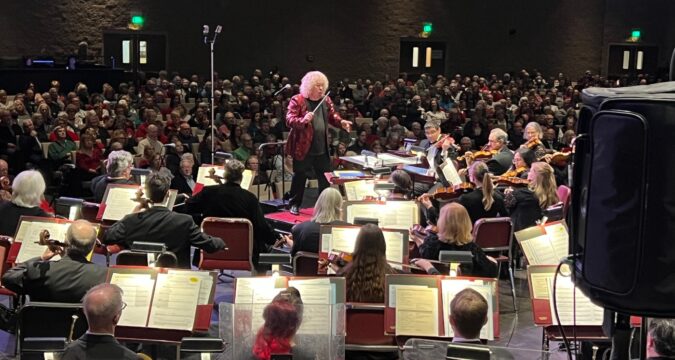
For a second season, the Northwest Indiana Symphony will host its popular holiday concert series with show dates at Hard Rock Northern Indiana Casino, 5400 W. 29th Ave. in Gary. It’s a return to zip code roots. Originally called the Gary Symphony, the Northwest Indiana Symphony Orchestra performed its first show on Dec. 7, 1941, opening with the “Star Spangled Banner.” Eighty-three seasons later, audiences can ring in the season with the sparkle of a selection at 7:30 p.m. Dec. 4 for holiday favorite standards with the Symphony musicians sharing the stage with the more than 50-member chorus for a festive musical celebration. In addition to the annual sing-along of classic carols, expect cinematic holiday moments and stirring spiritual pieces to remind you why this time of year is so special. “It’s a concert full of nostalgia, joy and musical magic that’s perfect for creating memories with loved ones,” says NWI Symphony Maestro Kirk Muspratt. Tickets range from $49 to $89; call 219-836-0525 or visit www.nisorchestra.org. The Hard Rock Casino is a 21-and-over-only concert venue.
A holiday classic
The Towle Theater is welcoming December with a stage run of “White Christmas.” This production is directed by TJ Bird and with music direction by John Phillips. This show is sponsored by Cargill and First Merchants Bank and tells the tale of showbiz veterans Bob Wallace and Phil Davis and their successful song-and-dance act, which returns to the States after World War II. With romance in mind, the two follow a duo of beautiful singing sisters en route to their own Christmas show at a Vermont lodge, which just happens to be owned by Bob and Phil’s former army commander. With a dazzling score featuring well-known standards including “Blue Skies,” “I Love A Piano,” “How Deep Is the Ocean,” and the title song, “White Christmas,” the show is a favorite holiday chestnut for audiences of all ages. The show opens Dec. 5 and runs through Dec. 21. Tickets are $35 in advance and $40 at the door. Reservations must be paid for in advance. They are non-refundable and non-exchangeable. The Towle Theater is in downtown Hammond at 5205 Hohman Ave. For more information, call 219-937-8780 or visit www.towletheater.org.
LaPorte Little Theatre has a December run of the musical “Scrooge!” to welcome audiences to share the holiday spirit. (Photo courtesy of LaPorte Little Theatre)
Humbug bows
In 1970, renowned writer/composer/lyricist Leslie Bricusse adapted the classic Charles Dickens tale “A Christmas Carol” into the hit screen musical “Scrooge!” LaPorte Little Theatre has this charming stage musical, which began as a tour of England and a season at London’s Dominion Theatre starring the late Anthony Newley. Included in this new run Nov. 28 through Dec. 7 at the old St. John’s Lutheran Church building on 3rd and A streets in LaPorte, the run includes six new songs not performed in the film. Tickets range from $15-$19. For more information, visit www.laportelittletheatreclub.com or call 219-362-5113.
“A Charlie Brown Christmas” is the holiday stage offering at Chicago Street Theatre for the final performance of 2025. (Photo courtesy of Chicago Street Theatre)
Snoopy on stage
Chicago Street Theatre launches the holiday season with a stage adaptation of the TV holiday animated special classic “A Charlie Brown Christmas” with Lucy, Linus, Snoopy and the entire Peanuts gang discovering the true meaning of Christmas. Tickets are $25 for adults and special rates for children; call 219-464-1636 or visit www.chicagostreet.org. Located at 154 W. Chicago St. in downtown Valparaiso, the theater company’s intimate stage space will be decked out in holiday flair.
Philip Potempa is a journalist, published author and weekly radio show host on WJOB 1230 AM. He can be reached at PhilPotempa@gmail.com.
Dos efectivos de la Guardia Nacional han sido baleados en Washington y se desconoce su condición, dice fuente de AP
WASHINGTON (AP) — Dos efectivos de la Guardia Nacional han sido baleados en Washington y se desconoce su condición, dice fuente de AP.

Vicepresidente Lara insta a mandatario Paz a superar diferencias en Bolivia
Associated Press
LA PAZ, Bolivia (AP) — El vicepresidente boliviano Edman Lara instó el miércoles al mandatario Rodrigo Paz a superar las diferencias t ras roces que han surgido en su gobierno cuando no han cumplido ni un mes en funciones.
Lara, un excapitán de la policía, criticó a Paz y reclamó que no lo dejaban participar en las reuniones de gabinete cuando es su derecho y que buscaban anularlo. Sus quejas las hizo a través de sus redes sociales, en las que ganó popularidad prometiendo luchar contra la corrupción antes de los comicios.
“Aprovecho esta oportunidad para convocar al presidente a superar cualquier diferencia y a trabajar juntos. La patria es más grande que nuestras discrepancias y el pueblo espera de nosotros unidad, madurez y visión histórica”, expresó Lara en un evento público.
“Este es un tiempo que no admite distancias entre quienes debemos conducir este hermoso país”, acotó Lara.
Paz no respondió de inmediato al llamado de su vicepresidente, aunque la semana pasada aseguró que no haría comentarios al respecto por las redes sociales.
Las diferencias entre ambos afloraron hace menos de una semana tras la eliminación del Ministerio de Justicia, que llevó a la salida de su titular Freddy Vidovic, y la creación de una nueva cartera, que según denuncian los partidarios de Lara, tendría las mismas funciones de un vicepresidente.
Lara defendió al exministro Vidovic a pesar que tiene una condena por un caso de soborno hace 10 años y lo designó en un cargo en la vicepresidencia. Días antes pidió que se destituya al comandante de la Policía por una presunta denuncia de corrupción pero aún no ha recibido respuesta.
Un grupo de personas realizó esta semana una marcha en apoyo a Lara por el centro de La Paz.
Los roces entre ambas autoridades comenzaron antes de que llegaran al gobierno.
“Rodrigo Paz sigue el camino del mal, yo voy a ser el primero en denunciarlo”, señaló en campaña.
Paz es un político con experiencia que fue senador, diputado y alcalde. Por su parte, Lara no tiene experiencia en la política. Los críticos de Lara lo han relacionado con autoridades y exmiembros del Movimiento Al Socilismo (MAS) que fue derrotado en las elecciones por el actual partido que lo postuló.

Afternoon Briefing: Teen charged as adult in fatal stabbing of homeless man
Good afternoon, Chicago.
A 16-year-old Venezuelan migrant has been charged as an adult in the fatal stabbing of a homeless man in the Loop last weekend, Cook County court records show.
Wuinayker Rodriguez-Vasquez is one of three minors charged in the early Sunday killing of a still-unidentified 49-year-old man in the 200 block of South Wabash Avenue. Rodriguez-Vasquez was charged with first-degree murder and mob action, while his two co-defendants — both 14-year-old boys — are charged with first-degree murder and armed robbery, respectively.
Here’s what else is happening today. And remember, for the latest breaking news in Chicago, visit chicagotribune.com/latest-headlines and sign up to get our alerts on all your devices.
Subscribe to more newsletters | Asking Eric | Horoscopes | Puzzles & Games | Today in History
A storm front rolls in over the Chicago skyline kicking up winds and waves in Lake Michigan, July 30, 2025. (Dominic Di Palermo/Chicago Tribune)
Thanksgiving weather: Wind advisory in effect, with up to 50 mph gusts expected
Officials warn winds coming from the west are expected to be between 25 to 35 mph with gusts up to 50 mph. Read more here.
More top news stories:
Lawsuit alleges Batavia chiropractor secretly filmed patients
She helps unearth the submerged history of the Great Lakes
A shopper heads into a Walmart store, Oct. 16, 2025, in Englewood, Colo. (David Zalubowski/AP)
What’s open on Thanksgiving? Not much, as many stores rest — or prepare — ahead of Black Friday.
Most big U.S. retailers are closed on Thanksgiving Day. However, many will open early the following day, Black Friday, the unofficial start of the holiday gift-buying season and the biggest shopping day of the year. Read more here.
More top business stories:
Hobart confirmed as Amazon Web Services data center site
Aurora increases parking fees at Metra stations in the city for first time in 10 years
Eagles running back Saquon Barkley carries the ball against the Cowboys on Nov. 23, 2025, in Arlington, Texas. (Matt Patterson/AP)
5 things to watch in Chicago Bears’ Black Friday game at Philadelphia Eagles — plus our Week 13 predictions
A national audience will tune into Friday’s showdown between the Bears and Eagles, curious to see if the Bears’ 8-3 start stands up to the defending champions’ 8-3 record. Read more here.
More top sports stories:
Column: Dan Roushar, lured out of retirement by Chicago Bears, is the architect of one of NFL’s best O-lines
Chicago Bulls more reliant than ever on their bench to stay above .500: ‘Sustainability — that’s not there’
Parade performers lead the Tom Turkey float down Central Park West at the start of the Macy’s Thanksgiving Day parade in New York on Nov. 28 2024. (Yuki Iwamura/AP)
Macy’s Thanksgiving Day Parade: Which stars are joining this year’s lineup?
This year’s Macy’s Thanksgiving Day Parade will cement “KPop Demon Hunters” as a pop culture phenomenon with appearances by the movie’s singers on the ground and cute characters in balloons overhead. Read more here.
More top Eat. Watch. Do. stories:
Review: ‘Much Ado About Nothing’ at Chicago Shakes is warm, lovely and funny indeed
Joe ‘JoBo’ Colborn of the high-octane ‘Eddie & JoBo’ morning radio show dies at 70
Visitors watch a sunset on rock ledge near Taft Point in Yosemite National Park in California, Oct. 30, 2025. (Stephen Lam/San Francisco Chronicle)
National Parks to raise fees for millions of international tourists to popular US parks
The National Park Service said today it is going to start charging the millions of international tourists who visit U.S. parks each year an extra $100 to enter some of the most popular sites, while leaving them out of fee-free days that will be reserved for U.S. residents. Read more here.
More top stories from around the world:
Mother of White House press secretary Karoline Leavitt’s nephew arrested by ICE
Toy inventor Burt Meyer, who dreamed up Lite-Brite and Rock ’Em Sock ’Em Robots, dies age 99
Noboa reaparece tras derrota electoral y respalda a los militares en lucha contra crimen en Ecuador
Associated Press
QUITO (AP) — En su primer acto público luego del revés electoral que sufrió en un referendo, el presidente ecuatoriano Daniel Noboa posesionó el miércoles al nuevo mando militar ratificándole su respaldo en la lucha contra la creciente espiral de violencia criminal que azota al país sudamericano en los últimos años.
El mandatario aseguró que este gobierno “respalda el compromiso y sacrificio” de los militares en lo que llamó la “ guerra contra el terrorismo ” y advirtió que cualquiera que ataque a los uniformados o los menosprecie “tendrá que enfrentarse conmigo primero, siempre los defenderé”.
En la ceremonia del cambio de mandos del Comando Conjunto de las Fuerzas Armadas, del Ejército, de la Marina y de la Aviación, Noboa dijo que “pese a la brutalidad (criminal) las tropas han demostrado algo más que cualquier amenaza: espíritu de un país que no se rinde, que se mantiene firme” y añadió que Ecuador necesita “más que nunca…líderes que actúen con firmeza frente al terrorismo y el narcotráfico”.
Fue la primera aparición pública del conservador mandatario tras la derrota en el plebiscito del 16 de noviembre, cuando los ecuatorianos rechazaron sus propuestas de admitir bases extranjeras en suelo ecuatoriano, establecer una Asamblea constituyente con el fin de reformar la Constitución, eliminar el financiamiento estatal a los partidos políticos y reducir el número de asambleístas de 151 a 73.
Ecuador atraviesa por una sostenida ola de violencia criminal de bandas locales que según las autoridades están estrechamente relacionadas con cárteles de Colombia y México, lo que ha llevado la cifra de homicidios entre enero y octubre a 7.553 respecto a los 5.613 del mismo periodo del año pasado, según datos oficiales.
Para hacer frente a la situación, el presidente ecuatoriano decretó en enero de 2024 el estado de conflicto armado interno, lo que permitió la acción conjunta de militares y policías para controlar el orden público en las calles y en las cárceles, escenario de frecuentes y mortales motines.
El nuevo jefe del Comando Conjunto de las Fuerzas Armadas, general Henry Delgado, destacó la ejecución de operaciones militares “nunca antes vistas” en contra de delitos como la minería ilegal, así como ante el reciente paro indígena evitando que las manifestaciones afectasen a las principales ciudades.
“No habrá tregua, los seguiremos combatiendo a lo largo y ancho del territorio nacional”, aseveró Delgado. Agregó que donde pongan pie las Fuerzas Armadas habrá firmeza para combatir y eliminar las amenazas provenientes del narcotráfico, de la minería ilegal y otros delitos.
El papel de policías y militares ha sido cuestionado por el uso excesivo de la fuerza, por parte de organismos nacionales e internacionales de defensa de los derechos humanos.