Category: News
‘Meeting the need, whatever that need may be’: Southland comes together to feed 1,000 families
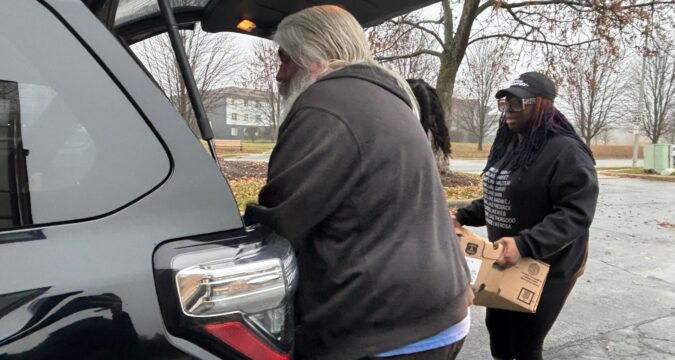
Just before dawn Tuesday, a truck holding a thousand frozen turkeys in cardboard pallets pulled up outside the headquarters of Suburban Access Outreach in Homewood, and volunteers sprang into action.
By the end of the day, those thousand turkeys would be distributed to churches, school districts and nonprofits across the south suburbs, who would ensure they reached families in need. Along with a turkey, each family received a grocery bag with boxed cornbread, green beans, stuffing mix and mashed potatoes.
“The demand is really high,” said Nicholas Koster, Suburban Access Outreach’s director of outreach. “We’re committed to meeting the need, whatever that need may be.”
Koster was stacking cardboard pallets of frozen turkeys into piles for pickup: One hundred turkeys to South Holland Elementary District 151. Seventy-five for South Suburban Public Action to Deliver Shelter, or PADS, a nonprofit that works to support unhoused people. Sixty to the mayor of Phoenix.
“This is our biggest one-day, give-back event,” Koster said. “This is my favorite day of the year, by far.”
When the Thanksgiving program started 13 years ago, it fed 100 families, executive director Geni Cutler said. Suburban Access Outreach is a project of Suburban Access, an organization that works to support people with intellectual disabilities and their families, helping connect them to services and resources.
“About 13 years ago, I went to the board and talked about the disparity between our very wealthy communities and our underserved communities, and asked if we could do something,” Cutler said. “We didn’t want to duplicate any services that a nonprofit was already doing, so we tried to find our niche, and it ended up being food insecurity and clothing.”
The Thanksgiving program has grown steadily from that beginning, serving some families who work with Suburban Access directly and many who don’t. Sarah Masciotra, a case manager for Suburban Access, said she personally delivers dinner to several families she works with each year.
As cars pulled up outside Tuesday to be loaded down with turkeys for distribution in schools and churches, families served by Suburban Access stopped by to pick up their own dinners and look through a well-stocked clothing closet.
Nicholas Koster, center, and other volunteers sort and label stacks of frozen turkeys Tuesday outside Suburban Access Outreach. (Evy Lewis/Daily Southtown)
MaryEllen Negrete left a career as a respiratory therapist to become a full-time caregiver to her daughter, Kayla Negrete, who was born with a rare disability called Angelman syndrome.
“I work for her,” Negrete said. “But that’s OK. I’m home with my daughter, so I’m blessed to have that.”
Negrete’s income is limited to a stipend she receives to care for Kayla. Because of that, she said, being able to get the free meal makes a big difference.
Terri Thomas also has a disabled child who receives support from Suburban Access.
“They help me out tremendously,” Thomas said. “With everything, the turkey — cause all of that’s a blessing, baby. It’s not a given. It’s a blessing.”
MaryEllen Negrete talks to a Suburban Access Outreach employee as she looks through the clothing closet on Tuesday. (Evy Lewis/Daily Southtown)
Ayana Hartzol, director of special education for District 151, arrived to collect food that would be sent home with students from the district’s four schools.
“It’s very, very important right now, because many of our families have been affected by the EBT shutoff,” Hartzol said, referring to the interruption of food benefits during the recent government shutdown. “We’re having increasingly more homelessness. Lots of our families are without jobs. And so it’s just very, very important in this time.”
Koster and Cutler both said that the demand for food support is especially high this year, as disruptions to government services have put already vulnerable families in increasingly precarious situations.
“The future’s uncertain, right? With Medicaid— All of our clients are on Medicaid,” Cutler said. “Most of our clients have the Link card. Most of our families have the Link card.”
Bagged sides, including cornbread mix and green beans, await pickup on Tuesday. These bags are bound for students at South Holland Elementary District 151. (Evy Lewis/Daily Southtown)
Tuesday’s distribution was the culmination of weeks of work. Shelf stable items like green beans and cornbread mix were collected and donated by businesses and community members, while monetary donations went to purchasing the 1,000 frozen turkeys.
“The Southland has been incredible,” Koster said. “Raising money for us, collecting items for us.”
One of those businesses was Serendipity Yoga and Wellness in Homewood, whose owner, Liz Smith, set out to singlehandedly collect enough boxed cornbread mix for all 1,000 families. With two boxes in every grocery bag, that meant her goal was 2,000 boxes.
“I just am so fortunate that we have a really generous and fantastic community of human beings that come and practice yoga with us, and they really show up and make sure that that goal gets met,” Smith said. “This year, we ended up with just shy of 2,300 boxes.”
Smith is a board member of Suburban Access.
“I will be honest, I am a competitive person,” Smith said, laughing. “I like a good competition, and I love a good collaboration. And so the first year we participated, it was really which business could get the most of one item, and we realized that like pretty quickly, we’re like, oh, we could actually do an item all alone at the studio.”
Frozen turkeys sit on a pallet Tuesday as volunteers load a truck from Family Christian Health Center in Harvey outside Suburban Access Outreach. (Evy Lewis/Daily Southtown)
A flock of volunteers assisted with loading up every vehicle that arrived.
“This is a well-oiled train,” said Sherry Hensley, who works at Suburban Access. “Everything is pretty efficient.”
Many volunteers have helped with the program for years. Some work for Suburban Access, but others, like Terri O’Brien, whose sister works for the organization, just like to help out.
“It really is amazing,” said O’Brien, who said she’s volunteered with the program for about 10 years. “I’ve done different jobs, I’ve unloaded the turkeys in the morning and I’ve done the running part. Both are good. The turkeys are heavy, I retired from that.”
Cutler said that part of the reasoning behind the giveaway is that Thanksgiving, as a holiday associated with food, is when the issue of hunger comes into the sharpest relief for many people.
“We have always said, we know this doesn’t solve the problem of hunger in our community,” said Cutler. “But if it can shine a light on the issue, it’s worth it, and for these perhaps four or five thousand people, they’re getting a nice meal.”
elewis@chicagotribune.com
https://www.chicagotribune.com/2025/11/26/southland-donors-feed-1000-families-thanksgiving/
Líder de Hong Kong dice que cifra de muertes por incendio sube a 36, con 279 desaparecidos
HONG KONG (AP) — Líder de Hong Kong dice que cifra de muertes por incendio sube a 36, con 279 desaparecidos.

Armed Robber Tortures Sam Altman’s Ex-Boyfriend, Forces Him To Transfer $11 Million In Crypto
Armed Robber Tortures Sam Altman’s Ex-Boyfriend, Forces Him To Transfer $11 Million In Crypto
A wealthy tech investor who once dated OpenAI CEO Sam Altman was tied up, tortured, and robbed of $11 million in Crypto Saturday evening in San Francisco, the NY Post reports.
Dressed as a delivery worker, the armed robber rang the door at Lachy Groom’s $4.4 million home on Dorland Street while carrying a white box, asks for Joshua – who lives with Groom – while claiming to be a UPS driver. The victim answers the door and identifies himself as Joshua.
The thief then asked for him to sign for the package – asking if he can borrow a pen. The suspect then followed ‘Joshua’ inside when a loud bang can be heard.
Robber posing as a delivery driver steals $11,000,000 in crypto after pulling a gun and duct-taping the victim in San Francisco pic.twitter.com/Jny8HfVvGC
— BAY AREA STATE OF MIND (@YayAreaNews) November 24, 2025
According to the report, the suspect pulled a gun on Groom, tied him up with duct tape, and then stole $11 million worth of Ethereum and Bitcoin (exact method unknown), in what is believed to have been a hit by an organized crime group that the suspect was part of.
The suspect then tortured Groom, beating him while he held a phone up on loudspeaker as foreign voices on the line repeated his personal information that they had obtained. The thief then poured liquid on Groom before the crypto wallets were emptied.
The whole thing took around 90 minutes.
Homeowner Lachy Groom, 31, is a venture capitalist and the ex-boyfriend of Open AI’s Altman, 40, who dated the billionaire sometime before he got married in 2024, sources with knowledge of their relationship said. Groom bought the property from Altman’s brother in 2021 for $1.8 million, property records show. Details of their relationship have not previously been reported. Attempts to reach Groom were not returned.
The Post has learned Joshua is a fellow tech investor who lives with Groom at the 4-bedroom Dorland Street home.
Altman and Groom have invested together in various companies. Groom, a native Australian, has founded four startups and sold three before he turned 18.
Sam Altman and Lachy Groom pose together in a social media image from 2014. Lachy Groom/Facebook
Prominent San Francisco tech investor Gary Tan shared the security footage from the heist on Monday morning – writing in a since-deleted tweet: “We have to find the perpetrator,” adding “Time is of the essence.”
“Self custody of crypto seems like a good idea until it isn’t. Vault storage (at Coinbase or elsewhere) for long term holding is safest,” said Tan.
Tyler Durden
Wed, 11/26/2025 – 12:40

Teen migrant charged as adult in fatal Loop stabbing of homeless man
A 16-year-old Venezuelan migrant has been charged as an adult in the fatal stabbing of a homeless man in the Loop last weekend, Cook County court records show.
Wuinayker Rodriguez-Vasquez is one of three minors charged in the early Sunday killing of a still-unidentified 49-year-old man in the 200 block of South Wabash Avenue. Rodriguez-Vasquez was charged with first-degree murder and mob action, while his two co-defendants — both 14-year-old boys — are charged with first-degree murder and armed robbery, respectively.
A Cook County judge on Tuesday ordered Rodriguez-Vasquez detained pending trial, records show. Court information for the other two defendants was not available due in part to their status as juveniles.
Prosecutors noted that the arrest was Rodriguez-Vasquez’s first, though he was previously barred entry to the United States in September 2023.
Rodriguez-Vasquez was among a group walking downtown about 5:45 a.m. Sunday when, prosecutors allege, they encountered the victim who was lying in a building alcove near his pet cat and other personal effects, including a skeleton mask.
One of the 14-year-old defendants “lunged” at the victim, prompting him to stand up. The other 14-year-old grabbed the skeleton mask after Rodriguez-Vasquez kicked the man from behind, prosecutors said. The teen with the mask then fled the area.
The remaining 14-year-old brandished a metal rod at the victim, and when he raised his hands “in a defensive posture,” Rodriguez-Vasquez allegedly stabbed him once in the back with a knife. The man collapsed to the ground, and the two suspects ran off before reuniting with the rest of the group and boarding a southbound CTA Red Line train at Monroe.
Prosecutors said the entire attack was captured on surveillance footage. CPD records show a pastor discovered the victim a few hours later and called 911.
That afternoon, about 4 p.m., officers monitoring POD video saw the group in the 2600 block of West Cermak Avenue and they were placed under arrest.
Rodriguez-Vasquez is scheduled to appear in court again Dec. 16.
https://www.chicagotribune.com/2025/11/26/teen-migrant-charged-stabbing-homeless/

Grupo propalestino lleva al gobierno británico a los tribunales por su prohibición
LONDRES (AP) — Abogados de un grupo propalestino que ha sido proscrito por el gobierno británico acudieron a los tribunales el miércoles en un intento de revocar su clasificación como organización terrorista.
Palestine Action está solicitando al Tribunal Superior que dictamine que el gobierno cometió un error al clasificarlo como un grupo terrorista junto a organizaciones como Al Qaeda y Hamás.
Raza Husain, abogado de Huda Ammori, cofundadora de Palestine Action, afirmó que la prohibición fue un “abuso autoritario del poder estatutario, mal considerado, discriminatorio y carente de debido proceso”.
El gobierno prohibió Palestine Action después de que activistas irrumpieran en una base de la Real Fuerza Aérea en junio para protestar contra el apoyo militar británico a la guerra de Israel contra Hamás en Gaza. Los activistas rociaron pintura roja en los motores de dos aviones cisterna y causaron más daños con palancas.
Palestine Action ha llevado a cabo protestas de acción directa en sitios militares e industriales en el Reino Unido desde su formación en 2020, incluyendo irrupciones en instalaciones propiedad del fabricante de armas israelí Elbit Systems UK. Las autoridades dicen que las acciones del grupo han causado daños por millones de libras que afectan la seguridad nacional.
La proscripción convirtió en delito la pertenencia o el apoyo al grupo, castigable con hasta 14 años de prisión.
Más de 2.000 personas han sido arrestadas en todo el Reino Unido desde la prohibición por sostener carteles en protestas que decían “Apoyo a Palestine Action”. Más de 130 han sido acusadas bajo la Ley de Terrorismo.
Decenas de simpatizantes del grupo protestaron fuera del Tribunal Superior al inicio de la audiencia de tres días el miércoles, y varios fueron arrestados.
Los simpatizantes de Palestine Action y los grupos de libertades civiles dicen que los arrestos por protestas pacíficas atropellan la libertad de expresión y el derecho a protestar.
“La acción directa y la desobediencia civil no solo deben ser toleradas, sino valoradas”, declaró Husain durante la audiencia del miércoles.
“Es una tradición honorable, tanto en nuestro derecho consuetudinario como en cualquier democracia liberal con una comprensión desarrollada del Estado de Derecho”.
“Las sufragistas habrían sido susceptibles de proscripción si el régimen de la Ley de Terrorismo de 2000 hubiera estado en vigor a principios del siglo XX”, añadió.
———
Esta historia fue traducida del inglés por un editor de AP con la ayuda de una herramienta de inteligencia artificial generativa.
Pequeñas empresas extranjeras luchan por sobrevivir tras el fin de la exención de aranceles en EEUU
Por MAE ANDERSON
NUEVA YORK (AP) — En Fleece & Harmony, una fábrica de lana y tienda de ovillos de lana en la pintoresca Belfast, situada en la isla del Príncipe Eduardo, Canadá, la propietaria Kim Doherty solía enviar madejas de lana a clientes estadounidenses al otro lado de la frontera sin mayores problemas.
Los pedidos de madejas solían estar exentos de impuestos de importación para paquetes con un valor inferior a 800 dólares, lo que significaba que podían importarse sin pagar aranceles y evitar el proceso aduanero.
Pero desde el 29 de agosto, cuando el gobierno del presidente Donald Trump eliminó la exención, el costo de enviar madejas a sus clientes estadounidenses se ha disparado. La factura de un ovillo de lana de 21 dólares ahora incluye entre 12 y 15 dólares en comisiones de corretaje que cobra UPS, su transportista, además de impuestos estatales y un arancel del 6,5%, lo cual casi duplica sus costos.
“Tuvimos pedidos que llegaron a los clientes y están en shock por el hecho de que tienen que pagar”, dijo. “Y es sorprendente cuánta gente de verdad no sabía cuál iba a ser el impacto”.
Eliminar la llamada exención de minimis —bienes de bajo valor que podían importarse exentos de aranceles u otros impuestos— tenía como objetivo frenar el narcotráfico y evitar que productos de baja calidad de vendedores de descuento como Temu y Shein inundaran el mercado estadounidense.
Pero con el inicio de la importante temporada anual de compras de fin de año, esto afecta a pequeñas empresas y a sus compradores, quienes ahora enfrentan costos más altos.
Chad Lundquist, de Fort Lauderdale, Florida, pidió aceite aromático en un sitio web llamado Oil Perfumery en octubre, pero no sabía que la empresa tiene su sede en Toronto, Canadá. Su total fue de 35,75 dólares, que incluía una tarifa de envío estándar de 8 dólares. Pero cuando su paquete llegó, recibió una factura de 10,80 dólares de FedEx.
“No valió la pena pagar un arancel de 10 dólares por una compra de 27 dólares”, dijo Lundquist. Oil Perfumery no respondió a una solicitud de comentarios.
Él no es el único comprador inquieto. Tres meses después del fin de la exención, los vendedores extranjeros reportan caídas drásticas en sus ventas en Estados Unidos. Algunos pagan los aranceles ellos mismos en lugar de traspasarlos a los consumidores. También intentan enfocarse en los clientes nacionales para reemplazar a los estadounidenses, y ajustar sus líneas de productos para resaltar los artículos más vendidos en un intento por impulsar sus ventas.
Martha Keith, fundadora de la marca británica de papelería fina Martha Brook, con sede en Londres y con una pequeña oficina en Melbourne, Australia, dijo que las ventas en Estados Unidos de su tienda en el sitio web Etsy —su principal canal de comercio electrónico, además de su propio sitio web— aumentaron un 50% durante el año anterior al fin de la exención. No obstante, las ventas cayeron drásticamente cuando entraron en vigor los aranceles y continúan en declive, a pesar de que ella misma paga los impuestos de importación y las tasas aduaneras para que los clientes no se vean afectados. Las ventas han bajado aproximadamente un 30% en este periodo de un año en comparación con el anterior.
“El problema parece ser que la confianza de los clientes afecta su deseo de realizar pedidos a empresas fuera de Estados Unidos debido a la confusión sobre cómo los afectarán los aranceles”, dijo Keith.
También está en problemas porque vendió un calendario de Adviento de papelería fina de 109 libras esterlinas (144 dólares) a unos 200 clientes estadounidenses antes de la entrada en vigor de los aranceles, y ahora tiene que enviarlos. El envío y los aranceles costarán un total de 25 libras esterlinas (33 dólares), lo que significa que Keith tendrá que encontrar 5.750 libras esterlinas adicionales (7.590 dólares) para cubrir el envío de los calendarios de Adviento ya vendidos.
“Todo esto ha sido una pesadilla para empresas como la nuestra, y una verdadera lástima, ya que el mercado estadounidense era un área de crecimiento muy valiosa para nosotros, especialmente a través de Etsy”, agregó.
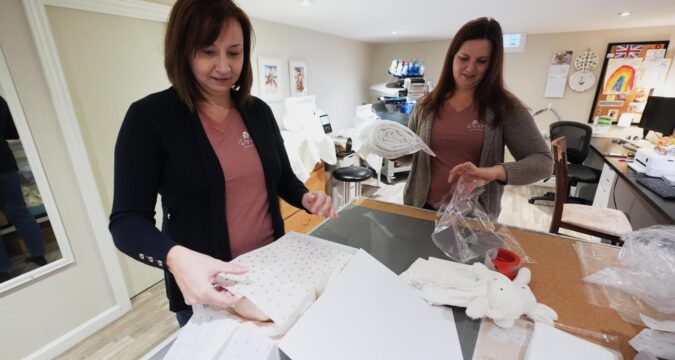
El momento fue particularmente malo para Sue Bacarro, quien, junto con su hermana, es copropietaria de Digi Wildflowers, una tienda en Etsy que vende mantas bordadas para bebé, regalos y colchas personalizadas para bodas y aniversarios, ubicada al otro lado de la frontera con Detroit, en Windsor, Ontario.
Antes del anuncio de que la exención de minimis sería eliminada, realizaron un pedido grande de inventario para prepararse para la temporada navideña y la demanda de principios de 2026. Pero cuando la exención terminó, “el inventario no se movía como se esperaba y sospechábamos que los clientes dudaban en comprar debido a los posibles impuestos de importación”, dijo Bacarro.
Las ventas —70% de las cuales provienen de estadounidenses—, finalmente comenzaron a repuntar cuando Digi Wildflowers agregó un banner prominente en su sitio web que decía: “los aranceles de importación a Estados Unidos corren por nuestra cuenta”.
“De cara a esta temporada navideña, mantenemos ese mensaje en primer plano a través de banners, redes sociales y comunicación directa”, añadió Bacarro, quien además expande su línea de productos.
Pero no todas las empresas pueden, o quieren, pagar la cuenta de los aranceles.
Kim Doherty, quien dirige la fábrica de lana en la isla del Príncipe Eduardo, no planea pagar los aranceles ni los cargos de sus clientes.
“No estoy en condiciones, como pequeña empresaria, de hacer eso. Los márgenes de utilidad ya son bastante reducidos”, expuso Doherty, y agregó que, “por principio”, no debería tener que hacerlo.
En este momento, sus envíos a clientes estadounidenses representan aproximadamente el 10% de lo que eran. Así que trabaja para ampliar su oferta de hilos de lana a clientes canadienses en su tienda física y en festivales de fibras.
“Ya veremos qué pasa”, dijo. “Estoy bastante segura de que mis clientes estadounidenses compraban sin siquiera pensarlo, pero ahora evaluarán las compras que realizan, sabiendo que tendrán que pagar cargos adicionales sobre lo que vean”.
Algunos negocios de Etsy se han visto obstaculizados por la suspensión temporal de las entregas a Estados Unidos por parte de los servicios postales internacionales debido a la confusión en torno al fin de la exención de minimis.
El negocio de Selene Pierangelini, Apricot Rain Creations, con sede en Brisbane, Australia, que vende cristales, velas y productos de bienestar espiritual en Etsy, dependía del servicio postal Australia Post para realizar entregas a clientes estadounidenses. Más de tres cuartas partes de su base de clientes proviene de Estados Unidos. Australia Post suspendió su servicio a ese país durante aproximadamente un mes, y lo reanudó el 22 de septiembre.
Cambió temporalmente a FedEx y UPS, empresas privadas de envíos que son más caras que Australia Post. Desde que se reanudó el servicio, Australia Post trabaja con Zonos, un proveedor de tecnología para envíos transfronterizos, para ofrecer una calculadora de envíos que le permite prepagar los aranceles y las tarifas. Y por ese servicio ellos cobran una tarifa de 1,69 dólares más el 10% del arancel total.
Hasta ahora, los artículos que envía desde Australia han tenido un arancel del 10%, el impuesto de importación base del país. Aumentó sus costos de envío para ayudar a cubrir el gasto. Es manejable, pero complicado, dijo.
“No sabes realmente cuánto será (el costo) hasta que el paquete pasa por la aduana en Estados Unidos y recibes una factura que se paga automáticamente de tu cuenta”, apuntó.
Y sus ventas no se han recuperado. Antes de los aranceles, sus ventas a Estados Unidos representaban aproximadamente el 85% de sus ventas totales, y ahora rondan el 35%. Tiene la esperanza de que la gente solo esté en espera de las ofertas de la temporada de compras de fin de año: el Black Friday (Viernes Negro) y el Cyber Monday (Ciberlunes, enfocado en tecnología).
Mientras tanto, ha reanudado las ventas a Europa, que había suspendido en 2024 debido al aumento en las regulaciones. Además, ha lanzado una campaña de mercadotecnia en Facebook y explora servicios de impresión bajo demanda de proveedores estadounidenses para la producción y la entrega de pedidos.
“Esta situación resalta la fragilidad de las pequeñas empresas cuando dependen de un solo mercado”, dijo Pierangelini. “Si bien ha sido un shock, también me ha impulsado a diversificarme, algo que espero que fortalezca y haga más resiliente mi negocio a largo plazo”.

Rand Paul Warns Trump War In Venezuela Will ‘Fracture’ MAGA Movement
Rand Paul Warns Trump War In Venezuela Will ‘Fracture’ MAGA Movement
Senator Rand Paul said that President Donald Trump’s warmongering in Latin America could fracture the GOP.
“I think once there’s an invasion of Venezuela, or if they decide to re-up the subsidies and the gifts to Ukraine, I think you’ll see a splintering and a fracturing of the movement that has supported the President,” Paul told Margret Brennan on Sunday. “I think a lot of people, including myself, were attracted to the president because of his reticence to get us involved in foreign war.”
Paul has been highly critical of the President ordering strikes on drug boats in the Caribbean and Eastern Pacific. The US has destroyed 22 ships, killing at least 83 people. The Senator has condemned the strikes as extrajudicial killings.
The US has engaged in a massive military buildup in the Caribbean and threatened Venezuelan President Nicolas Maduro. Multiple reports have said the White House is preparing for strikes in Venezuela.
Paul pointed to Secretary of State and National Security Advisor Marco Rubio for pushing regime change in Caracas.
“I think it’s clear that Senator Rubio, as a senator, was very much an advocate of regime change,” he explained.
Fractures have already emerged within Trump’s MAGA movement over his foreign policy. Some conservative commentators have demanded that Tucker Carlson and others be removed from the movement over their stance on Israel.
Republican Representative Marjorie Taylor Greene recently announced her resignation from Congress after sparring with Trump on the Jeffrey Epstein files, Israel, and Venezuela.
Sen. Paul has been loudly saying Congress must be involved and it either meets the legal definition of war or not…
The Admin is pretending we’re “at war” with Venezuela to justify blowing up boats all without a vote, without transparency, and without answering to Congress. If it’s war, declare it. If it’s not, stop acting like it is. pic.twitter.com/ATntKrnvpr
— Rand Paul (@RandPaul) November 24, 2025
Multiple polls have shown that invading Venezuela is widely unpopular with Americans. A Reuters/Ipsos poll from last week has found “just 21% of Americans support the idea of using the US military to oust Venezuelan President Nicolas Maduro, results that come amid a series of reports that the Trump administration is considering a regime change war in Venezuela.”
Tyler Durden
Wed, 11/26/2025 – 12:20
https://www.zerohedge.com/political/rand-paul-warns-trump-war-venezuela-will-fracture-maga-movement

Southland crime: Robbery in Mokena, cocaine dealing in Orland Park, and more
The following items were taken from police and court reports and news releases. An arrest does not constitute a finding of guilt.
Burbank
MARIJUANA: Paul D. Herndon, 43, 7800 block of Meade Avenue, Burbank, was arrested Nov. 8 and is scheduled to appear in Cook County court at Bridgeview Dec. 22, charged with contributing to the criminal delinquency of a minor on Nov. 1 when he provided marijuana to a minor to smoke, police said.
Ford Heights
GUN POSSESSION: Christopher Burkley, 18, 2000 block of 218th Street, Sauk Village, is scheduled to appear in Cook County court at Markham. Dec. 1, charged with aggravated unlawful possession of a weapon, according to sheriff’s police and jail records online. Sheriff’s police organized crime division investigators arrested Burkley during a Nov. 3 stop in the 1600 block of East Lincoln Highway after recovering a loaded .40 caliber handgun from his waistband and determining he lacked a gun permit, sheriff’s police said.
Homewood
RETAIL THEFT: Samuel Richards, 56, Chicago, was arrested and charged with retail theft and obstructing identification Oct. 21 after taking merchandise collectively selling for $846 from a department store in the 17900 block of Halsted Street, police said.
Lansing
FALSE REPORT: A Lynwood woman was arrested Oct. 25 and accused of disorderly conduct after reporting she’d been robbed at gunpoint in a department store parking lot in the 17600 block of Torrence Avenue, police said. The 74-year-old woman recanted her story after store video failed to show anyone displaying a gun or taking her purse, police said.
Mokena
DOMESTIC: Brian D. Phillips, 39, 16600 block of Jean Lane, Tinley Park, was arrested Nov. 13 on a Will County court warrant charging him with aggravated domestic battery, according to court and jail records online.
AGGRAVATED ROBBERY: Two masked men took 120 cartons of cigarettes collectively retailing for $14,000 Nov. 14 from a delivery truck stopped in the 19400 block of La Grange Road after one indicated to the driver that he had a concealed weapon in his waistband, police said. The two left in an SUV after the business owner emerged and displayed a weapon, police said.
Monee
FELONY THEFT: Semajay Price, 21, Sauk Village, is scheduled to appear in Will County court Dec. 4, charged with felony theft, according to court records online. Price was arrested Dec. 4 after taking Apple products selling for $1,794 while working at a distribution warehouse in the 6600 block of Monee-Manhattan Road, police said.
New Lenox
THEFT CHARGED: Anthony Huff, 35, Chicago, is scheduled to be arraigned Dec. 1 in Will County court on charges of possessing a stolen vehicle and theft of an item valued at more than $10,000, according court records online. Huff was arrested Aug. 20 in Chicago and had altered financial documents and a fictitious license after purchasing a car in New Lenox with $4,000 cash and a fake $33,000 cashier’s check, police said.
DUI CRASH: Arthur J. Petzel Jr., 63, 1900 block of Heatherway Lane, New Lenox, was arrested Nov. 15 and accused of drunken driving after a Nov. 15 two-vehicle crash at a rail crossing on Nelson Road north of Andrea Drive, police said.
Oak Lawn
DEALING ALLEGED: Daniel A. McCarthy, 32, 9300 block of 53rd Court, Oak Lawn, was arrested Oct. 31 and accused of manufacturing/distributing more than 100 grams of cannabis and drunken driving after officers found him asleep at the wheel at Southwest Highway and Kilbourn Avenue with nearly 4 ounces of marijuana in several plastic sandwich bags, police said.
Orland Park
DEALING ALLEGED: Nicolas R. Zdanys, 30, 6200 block of 157th Place, Oak Forest, and Caitlin L. West, 34, Western Springs, were arrested Oct. 23 and subsequently charged with possessing cocaine with intent to deliver after officers recovered a digital scale and about 9 grams of suspected cocaine from Zdanys and about 3.5 grams of suspected cocaine from West during a stop at 143rd Street and 81st Court, police said.
FELONY SHOPLIFTING: Keshira T. Slater, 22, 800 block of White Oak Lane, University Park, and Takira Robinson, 18, Chicago, were arrested Oct. 23 and charged with felony retail theft after taking merchandise selling for $1,218 from a department store at Orland Park Place, police said.
MISSING TIRE: Shannelle A. Aguilera, 22, 10000 block of Mulberry Lane, Oak Lawn, was arrested Oct. 27 and accused of drunken driving and driving on unsafe tires after failing a field sobriety test during a stop at 159th Street and LaGrange Road for driving with a missing front tire, police said.

Georgia Prosecutor Nukes Trump’s Election Interference Case That Fani Fumbled
Georgia Prosecutor Nukes Trump’s Election Interference Case That Fani Fumbled
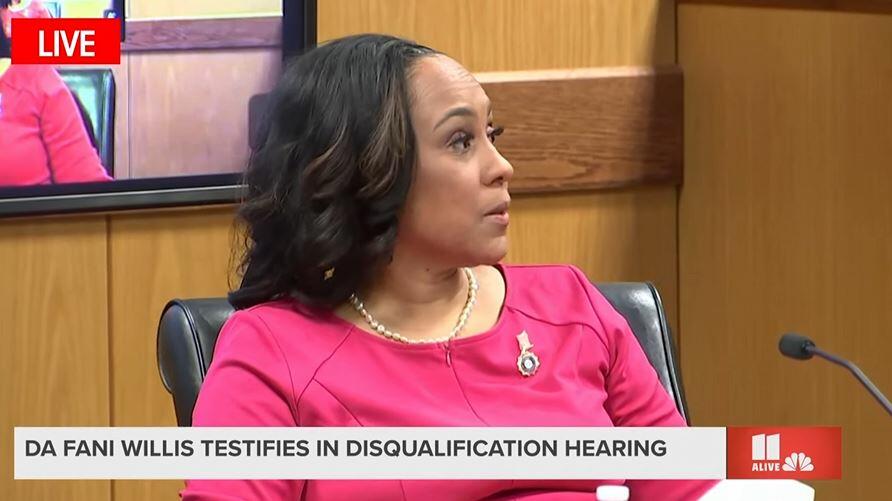
Less than two weeks after a Georgia prosecutor took control of the 2020 election interference case against President Trump and several allies (the one Fani Willis fumbled), the case has been officially dropped.
“Given the complexity of the legal issues at hand – ranging from constitutional questions and the Supremacy Clause to immunity, jurisdiction, venue, speedy-trial concerns, and access to federal records – and even assuming each of these issues were resolved in the State’s favor, bringing this case before a jury in 2029, 2030, or even 2031 would be nothing short of a remarkable feat,” wrote Peter Skandalakis, executive director of the nonpartisan Prosecuting Attorneys’ Council of Georgia who was tasked with finding a new prosecutor to take on the case after Willis was removed by the Georgia appellate court.
This adds to the pile of Democrat lawfare cases that have blown up in their faces, including those brought by special counsel Jack Smith on election interference and mishandling of classified documents.
Skandalakis said that while he considered severing Trump’s case from his codefendants so they could be tried first, doing so “would be both illogical and unduly burdensome and costly for the State and for Fulton County.”
The Georgia case was brought by Willis in early 2021 after a January phone call became public in which Trump expressed frustration with Georgia Secretary of State Brad Raffensperger amid reports of ballots cast for Joe Biden which had been mysteriously ‘found.’ When Trump asked him to similarly ‘find’ votes for him, Democrats used it as the foundation of the case.
Willis, as we all know, tanked the case after it came out that she hired her lover to help prosecute the case – which Democrats viewed as their best chance to go to trial because it was handled by a local Georgia prosecutor vs. federal charges which could be pardoned.
Tyler Durden
Wed, 11/26/2025 – 12:00

One dead in Liberty Township crash Wednesday morning
One person died Wednesday morning after his car went off the road and was submerged in Salt Creek in Liberty Township, police said.
Deputies with the Porter County Sheriff’s Department responded around 8:12 a.m. Wednesday to a report of a single-vehicle crash with the vehicle submerged in water in the area of County Road 700 North and Ind. 149 in Valparaiso, according to a release from Sgt. Ben McFalls, public information officer for that department.
Units arrived to find a 2002 Kia passenger car submerged in the water and a male driver, the car’s only occupant, had died as a result of the incident.
The car is believed to have been traveling eastbound on 700 North just east of Ind. 149, according to an initial investigation by police. For an unknown reason, the car traveled off the roadway to the north and entered Salt Creek.
The car was submerged when officers arrived and the male driver was located outside the car and in the water.
“Please keep the family and friends of the driver in your thoughts and prayers during this difficult time,” McFalls said in the release.
Police asked people to avoid the area in the hours immediately after the crash, and thanked assisting agencies.
https://www.chicagotribune.com/2025/11/26/one-dead-in-liberty-township-crash-wednesday-morning/