Category: News

Mother of White House press secretary Karoline Leavitt’s nephew arrested by ICE
A woman with family ties to the brother of White House Press Secretary Karoline Leavitt has been arrested by Immigration and Customs Enforcement in Massachusetts, a Trump administration official confirmed.
Bruna Caroline Ferreira, who shares an 11-year-old child with Michael Leavitt, is currently being held at an ICE facility in southern Louisiana, online records show.
She was arrested earlier this month in Revere, just northeast of downtown Boston, after overstaying her visa by 26 years, a source familiar with the case told New Hampshire ABC affiliate WMUR.
Michael Leavitt, a New Hampshire resident, was once in a relationship with Ferreria, but the couple separated about 10 years ago, a family member told New Hampshire Public Radio.
The boy lives with his father and stepmother, Michael Leavitt said, adding that Ferreria has maintained a relationship with the child.
Department of Homeland Security spokesperson Tricia McLaughlin said in a statement that Ferreira had previously been arrested for battery and is currently in removal proceedings. Ferreira, originally from Brazil, reportedly entered the U.S. with her family as a child on a tourist visa and was required to depart by June 6, 1999.
But according to her attorney, Todd Pomerleau, Ferreira arrived in the country under the Deferred Action for Childhood Arrivals program, or DACA, an Obama-era policy that allows certain undocumented immigrants brought to the U.S. as children to avoid deportation and obtain work authorization.
He also insisted she has “no criminal record whatsoever.”
Speaking with WMUR, Pomerleau vehemently denied the allegations: “She’s not a criminal, illegal alien,” he said. “We’re hearing that said about anyone who’s not a U.S. citizen.”
Pomerlau did not immediately respond to a request for comment Wednesday morning. A GoFundMe page set up by Ferreira’s sister said she was brought to the U.S. by their parents in December 1988, “when she was just a child.”
Since then, Ferreira has “maintained her legal status through DACA, followed every requirement, and has always strived to do the right thing,” Graziela Dos Santos Rodrigues wrote.
Karoline Leavitt has not commented on the arrest.
https://www.chicagotribune.com/2025/11/26/karoline-leavitt-mother-nephew-arrested-ice/

Why Are The Elites Moving Into High Security ‘Fortress Communities’
Why Are The Elites Moving Into High Security ‘Fortress Communities’
Authored by Michael Snyder via TheMostImportantNews.com,
The elite aren’t stupid. They can see that our society is coming apart at the seams all around us, and so they want to live some place safe. In fact, for many among the elite security has become the number one priority when choosing a new home. Unfortunately, the vast majority of us do not have the resources to move into high security communities guarded by teams of armed professionals. When things really start hitting the fan, most Americans are just going to have to deal with the chaos that is suddenly erupting all around them.
But for the ultra-wealthy, one of the benefits of having so much money is being able to shut yourself off from the rest of the world.
In Delray Beach, Florida a community known as Stone Creek Ranch has become extremely trendy among the elite for one particular reason.
It has a heavily armed security unit that watches over it 24 hours a day…
On paper, Stone Creek Ranch—a “prestigious” enclave made up of less than 40 luxury homes—is a world away from Miami, Manalapan, and Palm Beach: It offers no beaches, no celebrity-approved nightlife, and no glitzy designer shopping.
Yet it offers one very particular luxury that is proving to be quite the draw among the one percent: total and absolute privacy that is safeguarded by a team of armed professionals who watch over the community 24/7—a majority of whom come from previous jobs in law enforcement or the military.
Prospective residents’ entry into the community is policed just as carefully: Any homebuyers seeking to purchase one of just 37 private residences within Stone Creek are required to go through rigorous criminal background checks before they can even attempt to secure a home there.
Considering how fast conditions in our society are deteriorating, it sounds like a wonderful place.
But you will never get to live there unless you have tens of millions of dollars…
Just last month, Hollywood A-lister Mark Wahlberg made headlines when he dropped $37 million on a newly constructed megamansion inside the enclave — only to be followed weeks later by Rockstar energy drink founder Russ Weiner, who is in contract on two properties in the community, worth a total of $43 million.
Indian Creek Village is another high security community in southern Florida.
The island boasts “a high-tech security system that’s straight out of a spy movie”, and the list of residents includes Tom Brady and Jeff Bezos…
Indian Creek Village, known as the “Billionaire Bunker,” isn’t just another gated community. It’s the ultimate fortress for the ultrarich. Nestled in South Florida’s Biscayne Bay, this private island is where some of the world’s wealthiest people, including Jeff Bezos and Tom Brady, have decided to stake their claim. But living here isn’t just about luxury. It’s about security and lots of it.
You can’t just stroll onto Indian Creek. Not a chance. The island is locked down with a high-tech security system that’s straight out of a spy movie. “The wealthier you become, the more you want perfect security,” Setha Low, director of the Public Space Research Group at CUNY, told Business Insider recently. And Indian Creek delivers. An Israeli-designed radar system rings the island. It’s a system that can detect anyone approaching half a mile away. Cameras are everywhere: hidden in hedges, mounted on poles and linked to a command center that monitors every move.
The police force here? They’re more like personal bodyguards for the residents. With 19 officers for just 89 residents, Indian Creek has a cop-to-citizen ratio that makes New York City look understaffed. And these aren’t your average officers. They’re trained in tactical operations and armed with fully automatic weapons. They also spend most of their time patrolling the island’s perimeter, ensuring no one gets too close.
Once upon a time, the ultra-wealthy preferred living in large cities such as Los Angeles or New York City.
But now everything has changed.
On Twitter, New York City Council Member Vickie Paladino shared a very disturbing incident that just occurred in her area…
Last night in Malba, a large group of individuals from outside my district conducted an illegal ‘takeover’ of a quiet residential street at approximately 12:30am. This is not the first time it’s happened.
A private security guard attempted to calm the situation — he was assaulted by the mob and his vehicle was set on fire. He suffered significant injuries. A local resident was also assaulted.
Response to this incident was less than ideal. Residents reporting the incident to 911 were told that ‘quality of life team’ and 311 should handle the situation. Unacceptable. In fact, these violent street takeovers should be met with maximum force by the police department.
We have NEVER had these problems before. Now it’s an epidemic. What changed? We stopped arresting criminals.
I am meeting this morning with the chief of department and the local precinct at the scene to discuss exactly what happened last night. I have already been assured that Malba will receive four dedicated patrol cars from this point forward, as well as additional security upgrades that we cannot disclose.
However, the city MUST do something to stop this lawlessness. All the speed cameras in the world do absolutely NOTHING to prevent these incidents — we need police response and the most severe consequences for these criminals, not to simply allow them to drive away after they’ve completed their mayhem.
These incidents are happening citywide, and they’re happening because there are no longer any real consequences to this kind of criminality. But let me make something very clear to the criminals — you are risking your lives bringing this chaos into our neighborhoods.
Why would the elite want to live in a place where this sort of thing is happening?
Why would anyone want to live in a place where this sort of thing is happening?
Of course conditions are not just deteriorating in our core urban areas.
In southeastern Wisconsin, thieves from South America are systematically looting home after home…
A wave of high-end residential burglaries across southeastern Wisconsin has prompted a coordinated law enforcement response and drawn political attention at both the local and national levels.
The Mequon Police Department (MPD) says the burglaries share striking similarities, suggesting a professional operation.
The suspects, dressed head to toe in black, with faces covered and gloves on, have entered homes through wooded backyards, often targeting cul-de-sacs or properties near golf courses.
Stolen items include jewelry, designer handbags, watches and cash, all consistent with organized theft groups that target affluent neighborhoods nationwide.
All over the nation, crime and violence are out of control.
If you have the resources to move somewhere more secure, that is probably a good idea.
But of course most of the population doesn’t have the resources to move somewhere more secure.
In fact, we have reached a point where millions upon millions of Americans are just trying to figure out a way to keep the lights on…
Misty Pellew’s family lived in the dark for several days this month.
Pellew’s power was shut off Nov. 13 because of $602 in unpaid bills, the latest in a string of financial humiliations that began six months ago after her husband lost his $20-an-hour excavation job in northeastern Pennsylvania. The recent government shutdown dealt another blow, delaying federal funding for programs that helped the family pay for food and utilities.
Although Pellew’s lights were temporarily turned back on last week, they were set to be disconnected again if she didn’t pay another $102. With an overdrawn bank account, she was bracing to be without power again. Last time, her family ate peanut butter and jelly sandwiches for dinner and slept in hoodies and gloves to keep warm.
This is what life looks like for so many people out there right now.
In New York City, residential power shutoffs are up fivefold compared to one year ago…
In some areas, such as New York City, the surge has been dramatic — with residential shutoffs in August up fivefold from a year ago, utility filings show.
Needless to say, Americans aren’t just getting behind on their power bills.
As economic conditions have steadily gotten worse, delinquency rates have risen to historic levels…
Credit card balances alone jumped $24 billion, reaching an all-time high, while the share of balances in serious delinquency—90 days past due—climbed to a nearly financial-crash level of 7.1 percent.
Auto loans tell a similar story, with serious delinquency rates at 3 percent, the highest since 2010. And a spike in resulting defaults has triggered a wave of repossessions in 2025, with 2.2 million vehicles already repossessed, per figures from the Recovery Database Network (RDN), and forecasts of a record 3 million by year’s end.
“Delinquencies, defaults, and repossessions have shot up in recent years and look alarmingly similar to trends that were apparent before the Great Recession,” the Consumer Federation of America said in a recent report.
When you are drowning in debt, relocating to a better place that will be more secure for your family is nothing but a pipe dream.
Most Americans will have to deal with whatever is ahead wherever they are located right now.
But the ultra-wealthy have enough money to live wherever they want, and the fact that so many of them are choosing to live in “fortress communities” says a lot about where things are heading.
Michael’s new book entitled “10 Prophetic Events That Are Coming Next” is available in paperback and for the Kindle on Amazon.com, and you can subscribe to his Substack newsletter at michaeltsnyder.substack.com.
Tyler Durden
Wed, 11/26/2025 – 13:40
https://www.zerohedge.com/geopolitical/why-are-elites-moving-high-security-fortress-communities

Líder sindical se declara inocente tras ser detenido durante protesta contra redadas en Los Ángeles
LOS ÁNGELES (AP) — El líder de un importante sindicato en el sur de California, quien fue arrestado mientras protestaba contra una redada de inmigración a principios de este año, se ha declarado inocente de un cargo menor y enfrentará juicio en enero.
David Huerta es presidente del Service Employees International Union California. Fue arrestado el 6 de junio mientras se unía a una gran multitud de manifestantes frente a un negocio en Los Ángeles, donde agentes federales investigaban presuntas violaciones de inmigración.
Inicialmente, Huerta fue acusado de obstrucción, resistencia u oposición a un agente federal, un delito grave de clase A. Sin embargo, el mes pasado, los fiscales federales desestimaron el cargo original de conspiración para impedir a un agente.
El martes, se declaró inocente de obstrucción de la justicia como delito menor. Su juicio debe comenzar el 20 de enero de 2026, informó el Los Angeles Times.
Durante la protesta de junio, Huerta se sentó frente a una puerta vehicular y animó a otros a caminar en círculos para impedir que las fuerzas del orden entraran o salieran, escribió un agente especial de Investigaciones de Seguridad Nacional, que forma parte de Inmigración y Control de Aduanas, en un documento presentado en un tribunal federal.
Un policía le dijo a Huerta que se retirara, luego le puso las manos encima para moverlo del camino de un vehículo, escribió el agente. Huerta se resistió, y el policía lo empujó al suelo y lo arrestó, según el documento.
El sindicato de Huerta representa a cientos de miles de conserjes, guardias de seguridad y otros trabajadores en todo California. Su arresto se convirtió en un grito de protesta para los defensores de los inmigrantes en todo el país, quienes pidieron su liberación y el fin de la represión migratoria del presidente Donald Trump.
Abbe David Lowell y Marilyn Bednarski, los abogados de Huerta, dijeron en un comunicado que buscarán “el juicio más rápido” para vindicarlo.
___________________________________
Esta historia fue traducida del inglés por un editor de AP con ayuda de una herramienta de inteligencia artificial generativa.

Huge Explosion Kills 5 At Arms Depot In Idlib, Syria
Huge Explosion Kills 5 At Arms Depot In Idlib, Syria
On Wednesday a huge explosion rocked the town of Kafr Takharim in Idlib province in northwestern Syria, killing five people and injuring nine others, according to regional sources.
The blast and resulting large plume of smoke over the town unleashed immediate speculation that it could have been a US or coalition airstrike targeting terrorist entities. Israel has also frequently bombed Syria of late, so there is that possibility as well, though the Israelis don’t typically bomb that far north near the Turkish border.
However, AFP is citing government security forces who say the deadly explosion was the result of an accidental detonation of a weapons depot.
All of the deceased were workers at or near the weapons storage site, and it was “caused by a warehouse containing missiles and ammunition, and occurred due to work underway” – according to a Syrian official.
The AFP detailed, “Images circulating online showed widespread destruction, fire and damage to farmland, while videos showed shrapnel reaching shops and residential buildings.”
The report reviewed further that “In August, four people were killed in an explosion at a weapons depot on the outskirts of Idlib, authorities said.”
And the New Arab explains that the post-war situation has resulted in dangerous storage situations when it comes to arms and bombs:
Arms and ammunition depot explosions are common in Syria, which has been the scene of brutal conflict for 14 years and where weapons are often not properly secured, while bombs have also detonated as they are stripped down for scrap metal.
During the Obama years and first Trump administration, some US officials admitted that Idlib became the biggest al-Qaeda and terror safe-haven in the world. This is even after a US covert program helped jihadists take Idlib from Assad government forces in 2015.
Massive explosion leaves populated area completely scorched in Syria’s Idlib countryside
Injuries reported after huge blast in ammo depot — SOHR pic.twitter.com/fJcT8nFwGk
— RT (@RT_com) November 26, 2025
Currently, Syrians in the region are returning to their homes only to find them occupied by foreign fighters, as even mainstream media has belatedly begun to acknowledge.
NPR this week has documented that Christians have often had their homes confiscated by Sunni jihadists, who are often foreigners. As Syrians attempt to return to their homes in the north after years of war, the following is a common scene:
He found foreign fighters living in the house. Someone had also ripped out most of his fruit trees – he never figured out who — and the harvests from his large olive groves, at the foot of the village, had been taken over by foreign fighters as well.
There were women living in his home, too. He couldn’t tell who they were because he wasn’t allowed to speak to them. He says they wore full black niqabs, leaving only their eyes uncovered. “The male fighters largely did not speak Arabic, so I could not communicate with them,” he says.
A huge explosion rocked the Idlib countryside at what seems to be the site of an arms depot pic.twitter.com/9at5L7DMi4
— حـ ރ (@hassanspeaksss) November 26, 2025
Absurdly, the mainstream media is only now – after Assad was overthrown nearly a year ago – coming to admit and document the huge role that international jihadist terrorists played in accomplishing regime change in Damascus.
Tyler Durden
Wed, 11/26/2025 – 13:20
https://www.zerohedge.com/geopolitical/huge-deadly-blast-arms-depot-idlib-syria
Possible buyer for Blue Island mobile homes presents plan, city requests details
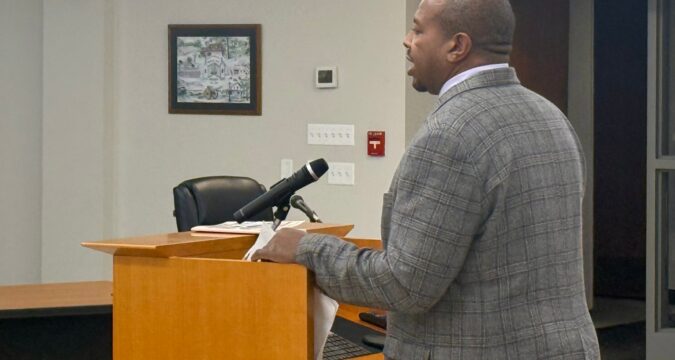
Canaan Van Williams, a managing partner at an investment group that funds affordable housing, presented a request to purchase and rehabilitate a mobile home park in Blue Island to the city Tuesday night.
More than a dozen residents who have advocated to save their homes since June attended to support of Williams. The city has ordered the property owners to shut down the park due to code violations and public safety concerns,
Several residents have stated in recent months that if they lost their homes in the park, they worry they would have nowhere to go. Residents often own their mobile homes but rent the property it is on.
City officials said Tuesday that while they feel for the residents’ tough situation, the residents, along with Williams, need to follow city protocols and present a plan.
The property owners of Forest View Mobile Home Park have not signed an intent to sell document, a necessary step before city officials can start evaluating the sale of this property.
The owners include Forest View Mobile Home Park Inc., Mer-Car Corporation, Chicago Title Land Trust and Steven Dukatt, president of Mer-Car Corporation.
Peter Silverman, attorney for the property owners, said Tuesday the owners are interested in the property sale instead of shutting down the park.
“We totally recognize it’s a difficult property,” Silverman said. “This alternative seems to us to be a very promising, viable and preferable to closing down their park, but obviously it’s not for us to decide. We will follow the directive of the city.”
City Administrator Thomas Wogan said property owners need to submit the intent to sell form before the city can conduct a building, fire, environmental and health inspection and determine what would need to be done in order for the property to be sold.
Wogan also said the property is still not zoned for residential purposes, and that change would need to go through the city’s zoning board.
“We’re a little bit cart ahead of horse in this process,” Wogan said.
Blue Island City Administrator Thomas Wogan responds Tuesday to a presentation from Canaan Van Williams, managing partner at Proactive Sustainable Bonds. (Addison Wright/Daily Southtown)
First Ward Ald. Dexter Johnson said he visited the property Tuesday and noticed large amounts of stored garbage next to people’s homes, along with “rats the size of cats.” He also said it looks as if some residents are doing their best to take care of the property.
Johnson said it was great to hear possibilities for the park, but there needs to be a plan for improving the property.
He also expressed frustration residents had not stayed at the meeting to hear his comments and did not met with anyone in the city’s building or financial department about what to do and how to put these ideas together.
“I know the residents there are in a very stressful situation,” Johnson said. “But I think before we take this, take this next step, they need to have things in place, and the owners need to come to the table.”
Blue Island 1st Ward Ald. Dexter Johnson speaks about the mobile home park during Tuesday’s City Council meeting. (Addison Wright/Daily Southtown)
Krisann Kuecher, the attorney representing the residents, said it’s important to preserve the affordable housing on this property and said Williams has a history of turning around such mobile parks.
Williams said he hopes to have the property owners sign the intent to sell form this week and said, from his experience as a rapid housing provider, the process can move quickly so residents can have a place to stay.
He said he visited the property and his company, Proactive Sustainable Bonds, could put up fences and take out all of the dilapidated houses, replacing them with new energy efficient homes that are sustainable.
“When I say affordable, meaning workforce housing and people who want to participate in communities, they want to have a decent place to live that’s clean with their little dog tied up outside, you know, no unregistered cars, no code violations, just, no crap,” Williams said.
Blue Island officials sent a letter to the Forest View property owners in late July, demanding the owners to “cease and desist” and evict residents, mainly due to unsafe conditions, calling the property a “clear and present danger to the public health, safety and general welfare” of the city as well as those living on and near the premises.
The Police and Fire departments have also reported receiving an elevated number of calls concerning the mobile home property for issues such as theft, aggravated battery handgun, domestic battery, shots fired, domestic trouble or loose animals.
A Forest View Mobile Home Park resident speaks Tuesday at a Blue Island City Council meeting. The residents’ attorney Krisann Kuecher, along with Joe Cervantes, who has been organizing the residents to save the park, stand next with her. (Addison Wright/Daily Southtown)
The property managers also owe the city almost $4 million in unpaid water bills, Wogan said. In 2023, the city came close to shutting off the mobile home park’s water service after the landlord did not pay $850,000 in water bills. Residents protested and received a temporary restraining order to keep the water on.
Attorneys for the owners and residents of a mobile home park, along with the city’s attorney, agreed in July it would be unrealistic to save the park, contrary to the residents’ aims.
Infrastructure issues and building code violations would require significant investment to remedy, Kuecher said at the time.
The residents were given six months to a year to find alternative housing, and a relocation agreement was in the works between the property owners and residents.
But residents said Tuesday they want to continue working on the property sale with Williams and also get the property zoned as residential.
awright@chicagotribune.com
https://www.chicagotribune.com/2025/11/26/possible-buyer-blue-island-mobile-homes/

JP Morgan Says Oil Prices Could Plunge Into $30s By 2027
JP Morgan Says Oil Prices Could Plunge Into $30s By 2027
Authored by Michael Kern via OilPrice.com,
JP Morgan predicts the international crude benchmark, Brent, could drop into the $30s per barrel by 2027 due to an overwhelming market oversupply.
Goldman Sachs forecasts the U.S. benchmark WTI Crude will average $53 per barrel in 2026 amid a 2 million bpd surplus and advises investors to short oil right now.
The oil market is expected to rebalance in 2027 after the current large supply wave, including output from OPEC+ and non-OPEC producers in the Americas, works through the system.
The international crude benchmark, Brent, could dip to the $30s per barrel handle by 2027 as oversupply could overwhelm the market, according to a JP Morgan forecast posted by users on X.
Brent Crude prices have dropped by 14% year to date, and traded relatively stable at $62.59 per barrel early on Monday, as the oil market awaits news from the renewed negotiations on peace in Ukraine.
The U.S. and Ukraine held on Sunday in Geneva what the two sides described as “highly productive” talks and agreed to continue intensive work on a “refined” peace plan, which the U.S. first proposed last week.
Despite the fears of a glut, analysts and investment banks don’t see oil prices moving down to $40 or below, even as oil is set to decline in the near term with strong supply from OPEC+ and the non-OPEC producers in the Americas.
Peace in Ukraine could also weigh on energy prices as some sanctions and restrictions on Russia could be eased, analysts say.
Oil prices are set to further drop into next year from current levels amid a large surplus on the market, with the U.S. benchmark WTI Crude expected to average $53 per barrel in 2026, according to Goldman Sachs.
The investment bank’s call for next year is that oil prices are on track for further declines and investors should short oil right now, Daan Struyven, co-head of global commodities research at Goldman Sachs, told CNBC last week.
The surplus next year will be 2 million bpd on average, Goldman reckons, but notes that 2026 will be the last year of the current big supply wave hitting the market.
The oil market is set to rebalance in 2027 as 2026 will see “the last big oil supply wave the market has to work through,” Goldman’s Struyven added.
Tyler Durden
Wed, 11/26/2025 – 13:00
https://www.zerohedge.com/energy/jp-morgan-says-oil-prices-could-plunge-30s-2027

Surcorea lanza su satélite más grande en ambiciosa misión espacial
Por KIM TONG-HYUNG
SEÚL (AP) — Corea del Sur lanzó su satélite más grande hasta la fecha en su cohete espacial desarrollado nacionalmente el jueves temprano, el cuarto de seis lanzamientos planeados hasta 2027.
El cohete Nuri de tres etapas despegó desde el puerto espacial del país en una isla frente al condado costero suroeste de Goheung.
El cohete, indicaron expertos, colocó un satélite científico de 516 kilogramos (1.137 libras) y 12 microsatélites en una órbita objetivo a unos 600 kilómetros (372 millas) sobre la Tierra. La Administración Aeroespacial de Corea debe verificar en las próximas horas si los satélites están transmitiendo señales con éxito.
El satélite principal está equipado con una cámara de resplandor aéreo de amplio alcance para observar la actividad auroral y sistemas separados para medir el plasma y los campos magnéticos, y para probar cómo se desempeñan los experimentos de ciencias de la vida en el espacio.
La docena de pequeños satélites “cubo”, desarrollados por equipos universitarios e instituciones de investigación, incluyen sistemas GPS para estudiar la atmósfera terrestre, cámaras infrarrojas para rastrear plásticos en los océanos y sistemas para probar células solares o equipos de comunicación.
El evento del jueves fue el primer lanzamiento del país que involucró un cohete Nuri desde mayo de 2023, cuando colocó con éxito un satélite de observación de 180 kilogramos (397 libras) en órbita, y el cuarto en general desde su primer intento en octubre de 2021, que no logró entregar un dispositivo de prueba.
Se planean más lanzamientos en 2026 y 2027 como parte de un proyecto de varios años para avanzar en las tecnologías e industrias espaciales del país, y para reducir la brecha con las principales potencias espaciales asiáticas como China, Japón e India.
Nuri es un cohete de tres etapas impulsado por cinco motores de 75 toneladas en sus primeras y segundas etapas y un motor de 7 toneladas en su tercera etapa, que libera las cargas útiles a la altitud deseada. Es el primer vehículo de lanzamiento espacial del país construido principalmente con tecnología nacional, un activo clave para una nación que en gran medida había dependido de otros países para lanzar sus satélites desde la década de 1990.
El Centro Espacial Naro, el único puerto espacial de Corea del Sur, tuvo su primer lanzamiento exitoso en 2013 con un cohete de dos etapas construido con tecnología rusa, tras años de retrasos y repetidos fracasos. El cohete alcanzó la altitud deseada durante su primera prueba en 2009, pero no logró desplegar un satélite, y luego explotó poco después del despegue durante su segunda prueba en 2010.
___________________________________
Esta historia fue traducida del inglés por un editor de AP con ayuda de una herramienta de inteligencia artificial generativa.

Chicago Bulls more reliant than ever on their bench to stay above .500: ‘Sustainability — that’s not there’
Billy Donovan is running out of warnings.
They started in the preseason. The Chicago Bulls coach was blunt with this roster from the beginning. Scoring would be hard. Defense, even harder. There would be no room to showboat or slack off. The Bulls don’t have enough scoring starpower to bail them out of tight games. This team would have to beat their opponents on the glass and in the open court, and on a pure strength of will.
As the 9-8 Bulls struggle to keep themselves above. 500, Donovan’s cautionary messages have transformed into everyday reality.
To guard Ayo Dosunmu, recent losses don’t reflect poor shooting, lackluster defense or an off-kilter team chemistry. The biggest issue for the Bulls is a lack of common sense — a central theme of Donovan’s messaging.
“Coach has been telling us a thousand times to box out,” Dosunmu said after Monday’s blowout loss to the New Orleans Pelicans. “But on film, we’re going to the glass, not boxing out, just standing around. Coach is telling us to get into the ball. Coach is telling us what we have to do physically.
“We keep saying the stove is hot, and we keep touching the stove.”
Bulls coach Billy Donovan yells along the sideline in the second half against the 76ers at the United Center on Nov. 4, 2025. (Chris Sweda/Chicago Tribune)
This is a pivotal point in the schedule for any NBA team. In the first 20 games, coaches and players figure out exactly what works and what doesn’t, which of their offseason dreams were too lofty, who on their team still needs to take another step forward. The adjustments made in December can define the season’s success.
But for the Bulls, there isn’t a magic lever to pull. This team doesn’t need a new scheme or a new system. They aren’t searching for answers — they have them already. And the difference between the right and the wrong side of .500 will be decided by how quickly a young group of role players can grow up into competitors.
“People can talk about how they want to win, they want to win,” Donovan said. “I don’t know. I’d like to go to the moon. I have no interest in doing what it takes to become an astronaut. Right? If you want to win, there’s things you have to do on a consistent basis.”
Even when their season-opening winning streak was active, the Bulls seemed to know it wasn’t entirely for real, reveling in each new victory with the excitability of a kid sneaking to stay up past bedtime. Now that they’re back in the middle again, the Bulls can’t even celebrate their wins.
It’s understandable. The Bulls don’t play like a team with zero margin for error. They bleed second-chance points. They let teams run them over at the perimeter and the rim and even in transition. Their paint defense is only getting worse.
Perhaps the most concerning trend is this team’s propensity to slack off in the game’s opening minutes. The Bulls have the fifth-worst net rating in first quarters (-8.5) as they continue to dig themselves into early deficits.
“Sometimes we’re going to play well and be in close games,” center Nikola Vučević said. “But more often than not, if you continue to play this way, it’s gonna be bad loss after bad loss.”
This most recent dip back to .500 was defined by losses on the injury report. The Bulls are currently juggling a second-string offense as Vučević (knee), Kevin Huerter (pelvis), Dalen Terry (calf) and Isaac Okoro (back) attempt to expedite their returns.
Related Articles
Kenny Beecham stays true to his roots in new NBC partnership: ‘Before I was a creator, I was a Bulls fan’
Chicago basketball report: Angel Reese goes for gold — and Jon Scheyer comes home for Thanksgiving Classic
Chicago Bulls lose 143-130 to New Orleans, giving the Pelicans’ interim coach his first win
Is Nikola Vučević underrated — or overhated — with Chicago Bulls? ‘Whatever. Who cares? He’s super important.’
Noa Essengue makes long-awaited Chicago Bulls debut in 121-120 win — but patience is key for rookie
But the Bulls haven’t been whole this entire season.
They started the year without star scorer Coby White and bruising backup center Zach Collins. By the time White returned, the rest of the roster was falling apart. November is typically one of the most brutal months for injuries, a truth reflected across the league by the absences of stars including Victor Wembanyama and Giannis Antetokounmpo.
This team often cites its depth as a strength of the roster. In some ways, that is true. The Bulls’ secondary unit has been a buoying force this season, ranking second overall in bench scoring with 47.3 points per game. But in reality, the Bulls are desperately reliant on a handful of players — particularly Okoro on the defensive end — a fact that has been reflected in the volatility of the past two weeks.
The Bulls are not built to weather a maelstrom of injuries. And when they lose even a single starter, they’re left to fall back on a supporting cast of young players who can’t contribute any consistency.
“The sustainability — that’s not there,” Donovan said. “It’s hard. It’s really, really hard.”
After a fairly grueling opening 10-game run, the Bulls now face a fortuitous streak of games against lower-ranked opponents.
The Bulls will play only one team with a winning record in their next five games. A pair of games against the 2-15 Indiana Pacers should offer the Bulls an opportunity to drag their heads back above water.
But with this team, nothing is guaranteed — and common sense is hard to learn on the fly.
https://www.chicagotribune.com/2025/11/26/chicago-bulls-record-bench/

DuPage County Board censures county clerk for ongoing financial problems
The DuPage County Board voted this week to censure DuPage County Clerk Jean Kaczmarek for repeatedly refusing to comply with the board’s established system of accounting and obstructing lawful financial oversight, board members said.
Board member Cindy Cronin Cahill, who sponsored the resolution at the board’s Tuesday meeting, said in a news release that board members did not take the action lightly.
“We brought this censure forward because Jean Kaczmarek’s ongoing refusal to follow basic financial rules and cooperate with oversight has put taxpayer dollars at risk,” Cronin Cahill said. “The County Board has a responsibility on behalf of the taxpayers to stand up and call out this unacceptable behavior.”
The board approved the resolution by a 15-1 vote. Member Dawn DeSart voted against it, member Michael Childress abstained and member Melissa Martinez was absent.
“Clerk Jean Kaczmarek is placing personal obstinance above public duty, and her continued conduct reflects not a single mistake, but an ongoing pattern of negligence, defiance and poor judgment that has wasted taxpayer dollars, damaged the county’s reputation and undermined public trust in county government,” the resolution reads.
According to the board’s news release, the clerk has failed to adhere to county accounting principles. Many purchases she has made lack essential financial documentation such as contracts or invoices, according to board members. This has resulted in vendor payments being delayed.
The county has filed a lawsuit against Kaczmarek resulting in nearly $200,000 in legal fees, the board said.
Board members are also concerned that the clerk has raised salaries in her office by more than 40% over the last five years.
Kaczmarek has consistently declined to meet with county finance staff to discuss her office’s finances, her office has a significant shortfall in the 2025 fiscal year budget and the clerk refuses to perform budget transfers to ensure vendors can be paid, the release said.
According to county documents, the clerk’s office is under investigation by the Illinois Attorney General’s Office for failing to seek bids for contracts.
Michelle Mullins is a freelance reporter for the Naperville Sun.
https://www.chicagotribune.com/2025/11/26/dupage-board-clerk-censured-finances-kaczmarek/
Justicia de Perú condena a 14 años de prisión al expresidente Martín Vizcarra por corrupción
LIMA (AP) — Justicia de Perú condena a 14 años de prisión al expresidente Martín Vizcarra por corrupción.