Category: News
Federal judge expands access to bond hearings for detained immigrants nationwide
McALLEN, Texas — A federal judge in California has expanded a decision granting more detained immigrants the ability to request a bond hearing after the Trump administration ended the practice in July. Lawyers say thousands could benefit from the order, but it’s expected to be appealed.
U.S. District Judge Sunshine S. Sykes on Tuesday expanded an order from last week granting detained immigrants with no criminal history the opportunity to request a bond hearing. Now, instead of only impacting a few named in the California lawsuit, the decision will apply to immigrants held in detention nationwide.
It’s part of an ongoing lawsuit challenging changes the Trump administration made over the summer when U.S. Immigration and Customs Enforcement said it was revisiting its authority to detain people and would make noncitizens ineligible for bond hearings before an immigration judge.
Prior to the policy change, most noncitizens with no criminal record who were arrested away from the border had an opportunity to request such a hearing and if bond was granted remain free while their cases wound through immigration court.
Sykes issued an order on Thursday that found the new policy unlawful.
A spokesperson for the Department of Homeland Security, Tricia McLaughlin, released a statement Wednesday that pointed to a September decision from the Justice Department’s Board of Immigration Appeals allowing the new policy.
She said the previous policy “dangerously unleashed millions of unvetted illegal aliens into American communities—and they used many loopholes to do so.”
Her statement did not say whether Sykes’ decision would be appealed and the department did not respond to questions on the matter.
Tuesday’s decision could impact thousands of immigrants but not all. Those with criminal convictions or who have an expedited removal order would still not be allowed a bond hearing.
Matt Adams, lead attorney for the plaintiffs, said he has heard of immigration judges already advising some immigrants of their right to a bond hearing since Sykes’ orders were filed.
“These are people who’ve been living here in the United States, many for years, many for decades, who have U.S. citizen family members, who have no criminal history, who do not present any danger or threat of a flight risk, and yet they were being locked up without any possibility of being released during these lengthy proceedings,” Adams said.
https://www.chicagotribune.com/2025/11/27/federal-judge-access-bond-hearings-detained-immigrants/
Black Friday arrives with solid momentum despite tariffs and economic uncertainty
NEW YORK — Black Friday may no longer be the retail bacchanalia of years past, when the promise of one-time bargains caused people to leave Thanksgiving tables for malls where some customers got into fistfights over toys or TVs. But the event still has enough enthusiasts to make it the biggest shopping day in the U.S.
For that reason, the day retains its crown as the official start of the holiday shopping season. This year’s kickoff comes as companies navigate an uncertain economic environment and wrestle with the volatility of President Donald Trump’s wide-ranging tariffs on imported goods.
Many have absorbed some of the costs and pulled back on hiring instead of raising prices for customers. Consumer confidence in the U.S. economy fell this month to the lowest since April — when Trump announced his tariffs — in the aftermath of the government shutdown, weak hiring and stubborn inflation, according to a report The Conference Board issued Tuesday.
Shoppers nonetheless have remained resilient and willing to spend, at least judging by the solid quarterly sales reports from Walmart, Best Buy and other retailers. But many retail executives also say customers are focusing on deals and have been selective in what they’re buying.
Aron Boxer, 50, from Greenwich, Connecticut, said he delayed buying a car this year amid worries about tariffs. He said he’ll be looking for deals on toys on Cyber Monday but is also willing to wait to the end for the best discount.
“The tariffs definitely are not behind me, and I am concerned about it,” the founder of an educational services company and a life coaching service said. “I did consider buying earlier this year, but I feel like some people made some pretty bad business decisions anticipating tariffs to have a bigger impact than they did.”
Still, analysts and mall executives cited solid momentum heading into Black Friday week.
“We’re seeing a very positive start to the holiday season,” said Jill Renslow, chief business development and marketing officer at the Mall of America in Bloomington, Minnesota, which plans to give gift cards and other giveaways to the first 250 customers who show up at 7 a.m. on Friday. “The last few Saturdays in November have been very strong.”
Mall traffic heading into Black Friday surpassed the numbers from pre-pandemic 2019, Renslow said.
A forecast from the National Retail Federation, the nation’s largest retail trade group, predicted a healthy increase in holiday sales. The group estimated that shoppers would collectively spend between $1.01 trillion and $1.02 trillion in November and December, or 3.7% to 4.2% more than last year.
Retailers rung up $976 billion in holiday sales last year, or a 4.3% increase from 2023, the group said.
Mastercard SpendingPulse, which tracks spending across all payment methods including cash, predicted a 3.6% increase in holiday sales from Nov. 1 through Dec. 24. That compares with a 4.1% increase last year.
“Clearly, there’s uncertainty,” Mastercard Chief Economist Michelle Meyer said. “Clearly, consumers feel on edge. But at the moment, it doesn’t seem like it’s changing how they are showing up for this season.”
Online sales have been strong so far. From Nov. 1 to Sunday, consumers spent $79.7 billion, according to Adobe Analytics. That represented a gain of 7.5% from a year earlier and was bigger than Adobe’s 5.3% growth forecast for the season.
Tariffs have played a role in stores’ merchandising and pricing strategies. Many retailers accelerated shipments of some holiday merchandise before the tariffs took effect while also absorbing some of the extra import costs. But stores still have passed on some of the expense for items like toys, which are largely sourced in China.
Market research firm Circana’s retail tracking service examined various subcategories of general merchandise and found 40% of all general merchandise sold in September saw a price increase of at least 5% compared with the first four months of the year.
Toys, baby products, housewares, and team sports equipment were among the hardest hit. For example, 83% of toys sold in September saw an increase of at least 5%, Circana said.
That number was up from 32% in June and will go even higher in coming months, according to Marshal Cohen, the firm’s chief industry advisor.
Some executives have noticed retailers advertising tamer holiday discounts. Mall of America’s Renslow said deals didn’t show up at the mall as early as she anticipated. But she estimated store tenants had ramped up this week with discounts in the range of 30% to 50%. She thinks they’ll likely go deeper for the weekend.
Stephen Lebovitz, CEO of CBL Properties, which operates 85 shopping properties, also noted unimpressive holiday discounting.
“I think one of the benefits of the tariffs or the silver lining is that the inventory levels for the retailers are leaner, and they’ve tried to allow themselves to keep pricing power,” he said.
https://www.chicagotribune.com/2025/11/27/black-friday-momentum-tariffs-economic-uncertainty/
How trading wild turkeys for other animals became a conservation success story
CONCORD, N.H. — No one wants a weasel on their Thanksgiving table, but swapping turkeys for other animals was once surprisingly common.
Trading turkeys – for wildlife management, not dinner – was a key part of one of North America’s biggest conservation success stories. After dwindling to a few thousand birds in the late 1880s, the wild turkey population has grown to about 7 million birds in 49 states, plus more in Canada and Mexico, according to the National Wild Turkey Federation.
In many cases, restoration relied on trades. The exchange rates varied, but Oklahoma once swapped walleye and prairie chickens for turkeys from Arkansas and Missouri. Colorado traded mountain goats for turkeys from Idaho. The Canadian province of Ontario ended up with 274 turkeys from New York, New Jersey, Vermont, Michigan, Missouri and Iowa in exchange for moose, river otters, and partridge.
“Wildlife biologists don’t suffer from a lack of creativity,” said Patt Dorsey, director of conservation for the National Wild Turkey Federation’s western region.
West Virginia in particular appears to have had an abundance of turkeys to share. In 1969, it sent 26 turkeys to New Hampshire in exchange for 25 fishers, a member of the weasel family once prized for its pelt. Later trades involved otters and bobwhite quail.
“They were like our currency for all our wildlife that we restored,” said Holly Morris, furbearer and small game project leader at the West Virginia Division of Natural Resources. “It’s just a way to help out other agencies. We’re all in the same mission.”
Wild turkeys were abundant across the U.S. until the mid-1800s, when the clearing of forestland and unregulated hunting led the population to plummet. Early restoration efforts in the 1940s and 50s involved raising turkeys on farms, but that didn’t work well, Dorsey said.
“Turkeys that had been raised in a pen didn’t do very well in the wild,” she said. “That’s when we started capturing them out of the wild and moving them around to other places to restore their population, and they really took off.”
In New Hampshire, wild turkeys hadn’t been seen for more than 100 years when the state got the West Virginia flock. Though those birds quickly succumbed to a harsh winter, another flock sent from New York in 1975 fared better. With careful management that included moving birds around the state dozens of times over the ensuing decades, the population has grown to roughly 40,000 birds, said Dan Ellingwood, a biologist with the New Hampshire Fish and Game Department. That’s likely well beyond the expectations at the time of reintroduction, he said.
“Turkeys are incredibly adaptive,” he said. “Winter severity has changed, the landscape has changed, and yet the population really took off.”
Turkeys play an important role in a healthy ecosystem as both predator and prey, he said, and are a popular draw for hunters. But the restoration effort also is important just for the sake of ensuring native species continue to persist, he said.
Dorsey, at the National Wild Turkey Federation agreed, noting that turkey restoration projects also helped states revive their populations of other species.
“A lot of good work gets done on the back of the wild turkey,” she said.
https://www.chicagotribune.com/2025/11/27/trading-wild-turkeys-conservation-success-story/

At least 65 dead as Hong Kong firefighters battle burning towers for a second day
HONG KONG — Firefighters battled a blaze at a high-rise apartment complex in Hong Kong for the second day on Thursday, as the death toll rose to 65 in one of the deadliest blazes in the city’s modern history.
Rescuers holding flashlights were going from apartment to apartment at the charred towers as thick smoke continued to pour out from some windows at the Wang Fuk Court complex, a dense cluster of high-rise towers housing thousands of people in Tai Po district, a northern suburb near Hong Kong’s border with the mainland.
It was unclear how many people were missing or trapped. Hong Kong leader John Lee said contact had been lost with 279 people early Thursday. Authorities did not provide updates on the missing people or how many were still inside the ravaged buildings Thursday during a press conference.
Latest video showed rescuers searching in some apartments in the dark. Orange flames were still seen from inside several windows, though the whole complex was now largely a blackened ruin.
Firefighters have been trying to control the flames since midafternoon Wednesday, when the fire was believed to have started in bamboo scaffolding and construction netting and then spread across seven of the complex’s eight buildings. Fires in four buildings had been effectively put out, with the remaining three towers under control, authorities said Thursday afternoon.
Rescuers are “battling high temperatures and carefully going up floor by floor, thoroughly searching and aiming to rescue people as quickly as possible,” said Wong Ka Wing, deputy director of the fire services. “(We) don’t rule out rescuing more injured people.”
One firefighter was among the dead, and 70 people were injured, authorities said. About 900 people were evacuated to temporary shelters overnight.
Resident Lawrence Lee was waiting for news about his wife, who he believed was still trapped in their apartment.
“When the fire started, I told her on the phone to escape. But once she left the flat, the corridor and stairs were all filled with smoke and it was all dark, so she had no choice but to go back to the flat,” he said, as he waited in one of the shelters overnight.
Winter and Sandy Chung, who lived in one of the towers, said they saw sparks fly around as they evacuated Wednesday afternoon. Although they were safe, they were worried about their home. “I couldn’t sleep the entire night,” Winter Chung, 75, told The Associated Press on Thursday.
Three arrested on suspicion of manslaughter
Three men, the directors and an engineering consultant of a construction company, were arrested on suspicion of manslaughter. Police have not directly named the company where they work.
“We have reason to believe that those in charge of the construction company were grossly negligent,” said Eileen Chung, a senior superintendent of police.
Police on Thursday also searched the office of Prestige Construction & Engineering Company, which the AP confirmed was in charge of renovations in the tower complex. Police seized boxes of documents as evidence, according to local media. Phones for Prestige rang unanswered.
Authorities suspected some materials on the exterior walls of the high-rise buildings did not meet fire resistance standards, allowing the unusually fast spread of the fire.
Police also said they found Styrofoam — which is highly flammable — attached to the windows on each floor near the elevator lobby of the one unaffected tower. It was believed to have been installed by the construction company but the purpose was not clear. Secretary for Security Chris Tang said they would investigate the materials further.
Buildings were covered in scaffolding
The housing complex consisted of eight buildings with almost 2,000 apartments for about 4,800 residents, including many older people. It was built in the 1980s and had been undergoing a major renovation. Hong Kong’s anti-corruption agency said on Thursday it was launching a probe into possible corruption relating to the renovation project.
The fire started on the external scaffolding of a 32-story tower, then spread on the bamboo scaffolding and construction netting to the inside of the building and then to the other buildings, likely aided by windy conditions.
Bamboo scaffolding is a common sight in Hong Kong at building construction and renovation projects, though the government said earlier this year that it would start phasing it out for public projects because of safety concerns.
A fire safety expert said the incident “is quite shocking,” as regulations generally require buildings to be spaced apart to keep fires from spreading from one building to the next. “Typically, they don’t spread beyond the building of origin,” said Alex Webb, a fire safety engineer at CSIRO Infrastructure Technologies in Australia, saying the materials police cited could explain why the fires spread.
Lee said on Thursday that officials will hold talks with industry stakeholders on plans to replace bamboo scaffolding across the city with metal. Authorities will also be carrying out immediate inspections of all housing estates that are undergoing major renovation work to ensure scaffolding and construction materials meet safety standards.
The fire was the deadliest in Hong Kong in decades. In November 1996, 41 people died in a commercial building in Kowloon in a fire that lasted for around 20 hours.
Wu reported from Bangkok. Researcher Shihuan Chen in Beijing contributed to this report.
https://www.chicagotribune.com/2025/11/27/hong-kong-burning-towers-deaths/
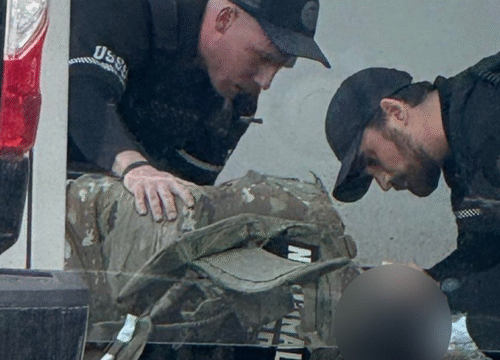
Ex-CIA-Linked Afghan Who Shot D.C. Troops Entered U.S. As Biden-Era Asylee
Ex-CIA-Linked Afghan Who Shot D.C. Troops Entered U.S. As Biden-Era Asylee
The nation was horrified Wednesday afternoon – just as millions were hitting the roads, crowding TSA lines at airports, or grabbing last-minute groceries at supermarkets or the local butcher shop for today’s Thanksgiving feast – by news that an Afghan national opened fire on two West Virginia National Guard members, leaving both critically wounded just outside the White House complex.
The suspected attacker, identified as Afghan national Rahmanullah Lakanwal, who entered the U.S. in 2021 under the Biden-Harris regime’s “Operation Allies Welcome,” was also shot and taken into custody.
NEW: The DC National Guard shooting suspect, Biden Afghan asylee Rahmanullah Lakanwal, lived in Bellingham, Wash., the same town where the DC sniper John Allen Muhammad trained for jihad within the Muslim community
— Paul Sperry (@paulsperry_) November 27, 2025
Jeffery Carroll, executive assistant chief with D.C. police, told reporters that Lakanwal “ambushed” the Guardsmen; investigators have not disclosed a motive, yet there is mounting speculation of terrorism.
President Trump called the incident a “crime against humanity,” announced a full review of all Afghan nationals admitted under the Biden-era resettlement program, and ordered an immediate halt to Afghan immigration processing pending new security vetting protocols.
“Earlier today, on the eve of the Thanksgiving holiday, two members of the National Guard serving in Washington, D.C., were shot at point-blank range in a monstrous ambush-style attack just steps away from the White House,” Trump addressed the nation in a video late Wednesday night.
The president continued, “This heinous assault was an act of evil and active hatred, an act of terror. It was a crime against our entire nation. It was a crime against humanity. The hearts of all Americans tonight are with those two members, and we are lifting them up in our prayers. As we are filled with anguish and grief for those who were shot, we were also filled with righteous anger and ferocious resolve.”
“I can report tonight that, based on the best available information, the Department of Homeland Security is confident that the suspect in custody is a foreigner who entered our country from Afghanistan—a hellhole on earth. He was flown in by the Biden administration in September 2021 on those infamous flights that everybody was talking about. Nobody knew who was coming in; nobody knew anything about it. His status was extended under legislation signed by President Biden—a disastrous president, the worst in the history of our country,” he said.
Trump added, “This attack underscores a number of injustices that you don’t want to even know about. No country can tolerate such a risk to our very survival. An example is Minnesota, where hundreds of thousands are ripping off our country and ripping apart that once-great state. Billions of dollars are lost, and gangs of Somalis come from a country that doesn’t even have a government, no laws, no water, no military. As their representatives in our country preach to us about our Constitution and how we’re not going to put up with these kinds of laws by people who shouldn’t even be in our country.”
President Trump’s full remarks on the illegal alien Afghan National who attacked members of the National Guard in Washington D.C. near The White House. pic.twitter.com/yHJO2NTJ32
— America (@america) November 27, 2025
During the Biden-Harris regime years, among the tens of millions of migrants who flooded into the country, roughly 90,000 Afghans were admitted through the administration’s Operation Allies Refuge (OAR) and Operation Allies Welcome (OAW) programs.
Intelligence sources revealed to Fox News that Lakanwal worked with U.S. government entities in Afghanistan, including the CIA, as a member of a partner force in Kandahar.
If you’re wondering how a CIA-partnered Afghan militant ended up here, I’m trying to impress upon you that this is the norm, not the exception. https://t.co/29eseNhjci pic.twitter.com/xxPkiLl0Zd
— Mike Benz (@MikeBenzCyber) November 27, 2025
“In the wake of the disastrous Biden withdrawal from Afghanistan, the Biden administration justified bringing the alleged shooter to the United States in September 2021 due to his prior work with the U.S. government, including CIA, as a member of a partner force in Kandahar, which ended shortly following the chaotic evacuation,” CIA Director John Ratcliffe told Fox News.
The spike in searches of this person’s name in the hours before the attack means the people who knew this was going to happen were searching to see if he had completed his task. A known CIA asset who was a trained member of a covert unit of assassins. Make no mistake, whether he… https://t.co/VRqZHVoLjC
— Lara Logan (@laralogan) November 27, 2025
Recall that throughout the Biden-Harris regime years, the America First movement warned that many of the Afghans and other “refugees” brought into the country had not been adequately vetted and were allowed to enter with little to no screening.
FLASHBACK: Email obtained by @HawleyMO shows the Biden admin ordered them to fill up planes with Afghan “refugees” even without vetting them.
Troops on the ground said they were shocked by Biden’s failure to vet these Afghans before bringing them into our country. pic.twitter.com/JMDrI6O7zU
— Libs of TikTok (@libsoftiktok) November 27, 2025
/1🚨BREAKING🚨
The Biden-Harris admin claimed that they were importing Afghans as refugees who helped the U.S. gov’t, when in reality, officials admit in newly obtained docs from litigation that they did not know their identities. Some have allegedly committed heinous crimes: pic.twitter.com/NZdCSYZ6GC
— America First Legal (@America1stLegal) August 26, 2024
Anyone who questioned how damaging these open-border policies would be to national security was immediately branded a racist by the left-leaning corporate media, the Democratic Party’s dark-money NGO and activist network, and the Biden White House.
“The individual—and so many others—should have never been allowed to come here,” Ratcliffe continued. “Our citizens and service members deserve far better than to endure the ongoing fallout from the Biden administration’s catastrophic failures.”
Nation-killing open borders is what former CIA targeting officer Sarah Adams recently warned on the Shawn Ryan Show about “1,000-plus Al-Qaeda–trained fighters within U.S. borders.”
Joe Biden rushed tens of thousands of Afghans into our nation. Today, we faced horrible consequences for this. I call on Secretary Kristi Noem to immediately locate and vet all of the Afghans let in by Joe Biden as part of “Operation Allies Welcome.” https://t.co/Pi9QTwoI5h
— Senator Jim Banks (@SenatorBanks) November 27, 2025
Shortly after the attack, Trump requested an additional 500 National Guard troops for the Washington, D.C. area. This made clear that the deployment was never just about clearing homeless encampments or deterring street crime. The fact that military forces are now being positioned on the ground points to a broader security threat, one that unfolded in full view for the nation yesterday.
NGO expert Mike Benz expands that thought…
The point I keep driving at here, which somehow very few people seem to grasp, is that there is a whole other dimension to the immigration crisis pretty much no one in MAGA is paying attention to. The Somali immigrant crisis in Minneapolis happened because of Pentagon ops, assisted by the CIA, in Somalia. The Haitian immigrant crisis in Ohio last year happened because of Pentagon ops, assisted by the CIA, in Haiti. The Venezuelan immigrant crisis happened because of Pentagon ops, assisted by the CIA, in Venezuela. The Afghan and Syria immigrant crisis happened because of Pentagon ops, assisted by the CIA, in Afghanistan and Syria. The reason these programs politically can’t be stopped is because, at the military and paramilitary logistics levels, there are ongoing ops.
The point I keep driving at here, which somehow very few people seem to grasp, is that there is a whole other dimension to the immigration crisis pretty much no one in MAGA is paying attention to. The Somali immigrant crisis in Minneapolis happened because of Pentagon ops,… https://t.co/29eseNgLmK pic.twitter.com/FsmvBrKNhj
— Mike Benz (@MikeBenzCyber) November 27, 2025
White House Deputy Chief of Staff Stephen Miller told Fox News last night, “20 MILLION people brought into our country from the most failed societies on earth, Afghanistan, Somalia, Libya, Iraq, brought here. No vetting, no conditions, no rules.”
Miller continued, “Brought here on visas, brought here as refugees, brought here as asylees, brought here as illegals. Brought here in every way imaginable by plane, train, bus, automobile, by land, by sea,” adding, “For four straight years, they DELUGE this country. And now MORE BLOOD is being spilled as a result!”
🔥 HOLY SMOKES! Stephen Miller just went HAYWIRE on the Left, he didn’t hold anything back after the assault on our troops today
“20 MILLION people brought into our country from the most failed societies on earth, Afghanistan, Somalia, Libya, Iraq, brought here. No vetting, no… pic.twitter.com/cVejXOsFKk
— Eric Daugherty (@EricLDaugh) November 27, 2025
Politically, the fact that an ex-CIA-partnered Afghan national shot two National Guard troops is an optics disaster for the Democratic Party, a party increasingly dominated by far-left radicals who prioritize illegals over citizens. The incident gives Trump even more justification to accelerate his deportation campaign. The administration must seriously scrutinize the Islamists and Islamist-Marxists who seek to undermine the nation from within, as well as the dark-money NGOs aligned with the Democratic Party that wage an invisible insurrection against Trump and the America First agenda.
Tyler Durden
Thu, 11/27/2025 – 07:55
Daywatch: Families on SNAP celebrate Thanksgiving amid uncertainty
Good morning, Chicago.
When Jodie Yanek received the rest of her long-awaited SNAP benefits for the month — and after buying some food to tide her over — she started thinking about how she could put together a small Thanksgiving dinner for her and her boyfriend with a $60 budget.
The 47-year-old compared turkey and ham prices at a nearby South Deering grocery store. She dreamed of mashed potatoes and green bean casserole and ended up buying a pie.
“I was ecstatic,” Yanek said of getting the benefits. “I cried tears of joy. It was very scary the prospect of losing it.”
Yanek, like countless others across Illinois, say they’ve dealt with confusion and uncertainty heading into the holiday because of the federal back-and-forth on funding for food stamps. Some of the Illinoisans the Tribune spoke to were still questioning whether they’ll be able to put any food on the table let alone turkey and stuffing. Many have relied on local food pantries for help.
As the longest government shutdown in history lumbered on, nearly 2 million people across the state — and more than 40 million nationwide — were cut off from food stamps at the beginning of November, leaving many scrambling.
Read the full story from the Tribune’s Rebecca Johnson.
Here are the top stories you need to know to start your day, including Northwestern University nearing a deal with the White House to restore funding, what to know about the NFL’s Thanksgiving tripleheader and our picks for what to do this weekend.
Today’s eNewspaper edition | Subscribe to more newsletters | Asking Eric | Horoscopes | Puzzles & Games | Today in History
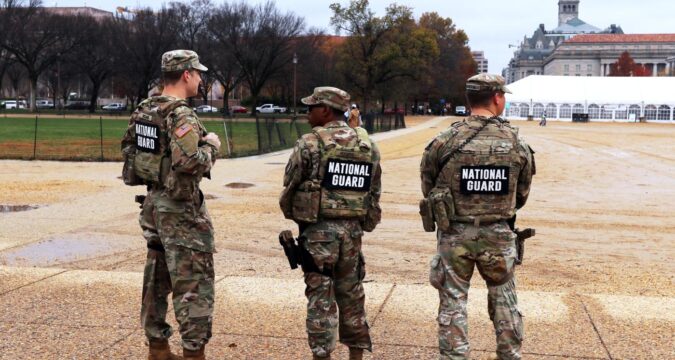
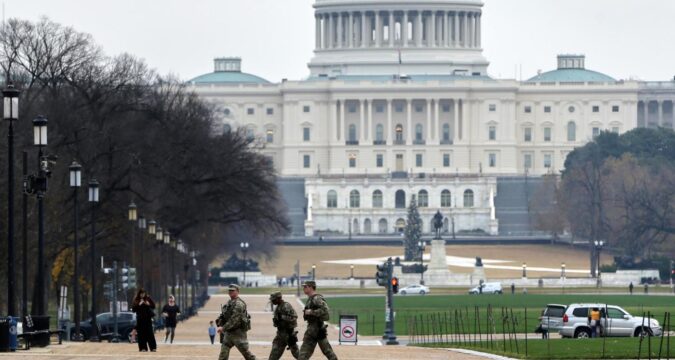
National Guard patrol on the National Mall near the U.S. Capitol, Nov. 26, 2025, in Washington. (AP Photo/Rahmat Gul)
What we do and don’t know about the shooting of 2 National Guard members in DC
The brazen daytime shooting of two National Guard members in the nation’s capital by a man authorities said is an Afghan national has raised multiple questions.
That includes the condition of the wounded troops and details about the suspect and his motive for the attack a day before Thanksgiving. Here’s what we know so far, and what we don’t know.
Floyd Stafford outside the Leighton Criminal Court Building in Chicago, Nov. 19, 2025. Stafford has worked in the criminal justice reform space and is petitioning to get an old felony conviction sealed so he can pursue job opportunities. (Antonio Perez/Chicago Tribune)
Illinois ‘Clean Slate’ bill that would speed sealing of many criminal convictions awaits Pritzker signature
Long-sought legislation that would accelerate the sealing of many criminal convictions from employers now sits on Gov. JB Pritzker’s desk, positioning Illinois to join roughly a dozen states that have adopted similar policies to help people pursue better jobs.
Students move through the Evanston campus during the first week of undergraduate classes at Northwestern University on Sept. 19, 2025. (E. Jason Wambsgans/Chicago Tribune)
Northwestern University nears deal with White House to restore funding
Northwestern University is expected to close a deal “soon” with the Trump administration, potentially restoring $790 million in frozen federal research funding, according to the U.S. Education Department.
Eric Dell Bovi, the executive director of the George M. Pullman Educational Foundation, second from right, talks with Adriana Martinez, from left, Marco Leyva, Michael Glynn and Dariusz Jakubowski during an alumni mixer for the George M. Pullman Educational Foundation in Chicago on Nov. 13, 2025. (Talia Sprague/for the Chicago Tribune)
George Pullman Educational Foundation gets $10M gift from MacKenzie Scott
For 75 years, the educational foundation’s endowment has awarded almost $38 million in unrestricted merit and need-based scholarships to almost 12,000 students, with 70% of the 2024 class graduating debt-free. What’s more, Pullman scholars who took out a college loan averaged $3,703 — a sliver of the state average of more than $39,000 in student debt.
Morgan Geyser appears in a Waukesha County courtroom, Jan. 9, 2025, in Waukesha, Wis. (AP Photo/Morry Gash)
Wisconsin seeks to block Slender Man attacker’s conditional release after escape from group home
Wisconsin authorities have asked a state court to revoke the conditional release of Morgan Geyser, the woman who in 2014 almost killed her sixth grade classmate in the name of horror villain Slender Man and escaped from a group home earlier this week.
Cans of Campbell’s soup are seen in Washington on Jan. 8, 2014. (AP Photo/J. David Ake)
Campbell’s fires executive who was recorded saying company’s products are for ‘poor people’
The Campbell’s Co. said it has fired an executive who was recorded making racist comments and mocking the company’s products and customers.
Lions’ Isaac TeSlaa catches a touchdpown pass in front of the Packers’ Carrington Valentine during the second half on Sept. 7, 2025, in Green Bay, Wis. (AP Photo/Morry Gash)
Lions and Packers kick off NFL’s Thanksgiving tripleheader with high-stakes game for NFC North race
When the NFL regular season wraps up in early January, the result of the Green Bay-Detroit game on Thanksgiving may prove to be pivotal. The Packers (7-3-1) are the favorites to win the NFC North and the Lions (7-4) are slightly behind them, according to BetMGM Sportsbook, even though both teams trail the Chicago Bears (8-3) in the division.
That seems to make the stakes high at Ford Field, where the league kicks off its holiday tripleheader.
How to watch the Chicago Bears’ Black Friday game vs. the Philadelphia Eagles
Keith Kinzleo of Joliet stands with a sign of Ben Johnson and celebrates a Bears touchdown in the first half against the Vikings on Nov. 16, 2025, at U.S. Bank Stadium in Minneapolis. (Stacey Wescott/Chicago Tribune)
Column: Plenty for Chicago sports fans to be thankful for — from Ben and Bananas to Bedard and Byard
For Chicagoans, there are many more reasons to celebrate this Thanksgiving, from the resurgence of the Bears to the Cubs’ playoff run to the fine fall weather we had been having.
In other words, we can all relax, watch football, eat turkey and enjoy each other’s company without bringing up topics that can turn your Thanksgiving meal into that fork-flinging episode of “The Bear.” Paul Sullivan shares some things he’s thankful for in 2025.
Hundreds of people stand in line to enter the Christkindlmarket at Daley Plaza in Chicago on Nov. 22, 2025. (John J. Kim/Chicago Tribune)
Christkindlmarket seeks to shorten lines, appeals to Chicago Mayor Brandon Johnson for increased capacity
Chicago’s festive Christkindlmarket may be in jeopardy after Mayor Brandon Johnson’s administration placed space requirements on the event this year, a move that organizers say has created long lines to enter and severely restricts the number of people who can visit the German-themed food and retail booths on Daley Plaza.
Sebastian White, founder and executive director of The Evolved Network, and his daughter Ever Klimovich-White, deliver meal kits to students, Nov. 20, 2025, at the Jesuit Academy of Chicago in Chicago’s Austin neighborhood. White, a trained psychotherapist, uses his organization to work with youth who are gang-involved, struggling or labeled as at-risk. (Dominic Di Palermo/Chicago Tribune)
Maple brown butternut squash anyone? The Evolved Network meets Chicago students where they are with food kits.
This month, chef Sebastian White delivered over two dozen fresh food prep kits to students at the Chicago Jesuit Academy, allowing them to whip up roasted butternut squash with maple brown butter and crispy kale chips. White walks them through the seasonal recipe on a YouTube video filmed in his kitchen. This home cooking experience is known as Project T.E.N. (Together. Evolving. Nourishing.), an endeavor of The Evolved Network, also known as TEN.
Straight No Chaser performs at the 87th Annual Rockefeller Center Christmas Tree Lighting Ceremony on Dec. 4, 2019, in New York City.
What to do in Chicago: Holiday concerts and shopping and a ‘Sound of Music’ sing-a-long
Here are our picks for events in and around Chicago this weekend.
Pope Leo XIV visits Turkey in his first foreign trip, highlighting religious and political ties
ANKARA — Pope Leo XIV arrived in Turkey on Thursday on his first foreign trip, fulfilling Pope Francis’ plans to mark an important Christian anniversary and bring a message of peace to the region at a crucial time in efforts to end the war in Ukraine and ease Mideast tensions.
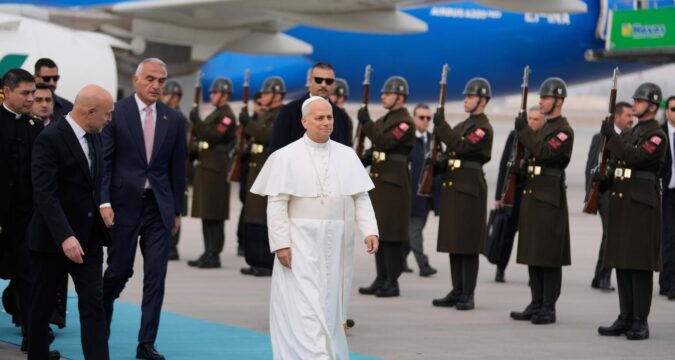
Leo was welcomed on the tarmac of Ankara’s Esenboga Airport by a military guard of honor. Strolling along a turquoise carpet, he shook hands with Culture and Tourism Minister Mehmet Nuri Ersoy, other officials and senior church figures from Turkey.
Later, he had a meeting planned with President Recep Tayyip Erdogan and a speech to the country’s diplomatic corps. He’ll then move late Thursday on to Istanbul for three days of ecumenical and interfaith meetings that will be followed by the Lebanese leg of his trip.
Speaking to reporters on board his plane, Leo acknowledged the historic nature of his first foreign trip and said he has been looking forward to it because of what it means for Christians and for peace in the world.
Leo said he knows the visit to commemorate a key ecumenical anniversary was important for Christians. But he said he hoped his broader message of peace would resonate worldwide.
“We hope to also announce, transmit and proclaim how important peace is throughout the world. And to invite all people to come together to search for greater unity, greater harmony, and to look for the ways that all men and women can truly be brothers and sisters in spite of differences, in spite of different religions, in spite of different beliefs.”
Leo’s visit comes as Turkey, a country of more than 85 million predominantly Sunni Muslims, has cast itself as a key intermediary in peace negotiations for the conflicts in Ukraine and Gaza.
Ankara has hosted rounds of low-level talks between Russia and Ukraine and has offered to take part in the stabilization force in Gaza to help uphold the fragile ceasefire, engagements Leo may applaud in his arrival speech.
Reaction in Turkey
Turkey’s growing military weight, as NATO’s largest army after the U.S., has been drawing Western leaders closer to Erdogan even as critics warn of his crackdown on the country’s main opposition party.
Though support for Palestinians and an end to the war in Ukraine is widespread in Turkey, for Turks who face an ongoing cost-of-living crisis, owing to market turmoil induced by shake-ups in domestic politics, international politics is a secondary concern.
That could explain why Leo’s visit has largely escaped the attention of many in Turkey, at least outside the country’s small Christian community.
“I didn’t know he was coming. He is welcome,” said Sukran Celebi. “It would be good if he called for peace in the world, but I don’t think it will change anything.”
Pope Leo XIV: What to know about Chicago-born Robert Prevost
Some said they thought the visit by history’s first American pope was about advancing the interests of the United States, or perhaps to press for the reopening of a Greek Orthodox religious seminary that has become a focal point in the push for religious freedoms in Turkey.
“If the pope is visiting, that means America wants something from Turkey,” said Metin Erdem, a musical instruments shop owner in the touristic Galata district of Istanbul.
Historic anniversary
The main impetus for Leo to travel to Turkey is to mark the 1,700th anniversary of the Council of Nicaea, Christianity’s first ecumenical council.
Leo will pray with Ecumenical Patriarch Bartholomew, spiritual leader of the world’s Orthodox Christians, at the site of the A.D. 325 gathering in today’s Iznik in northwestern Turkey, and sign a joint declaration in a visible sign of Christian unity.
Related Articles
Pontifical secret revealed: Pope Leo XIV changes his Wordle start word each day
Column: After meeting Pope Leo XIV, Justin Ishbia eager to build a bond with Chicago White Sox’s No. 1 fan
Gov. JB Pritzker meets pope in Rome, discussing Trump’s Chicago immigration crackdown
Pope Leo strongly backs US bishops in blasting Trump immigration crackdown, urges humane treatment
Pope Leo XIV reveals his favorite movies
Eastern and Western churches were united until the Great Schism of 1054, a divide precipitated largely by disagreements over the primacy of the pope.
While the visit is timed for the important Catholic-Orthodox anniversary, it will also allow Leo to reinforce the church’s relations with Muslims. Leo is due to visit the Blue Mosque and preside over an interfaith meeting in Istanbul.
Asgın Tunca, a Blue Mosque imam who will be receiving the pope, said the visit would help advance Christian-Muslim ties and dispel popular prejudices about Islam.
“We want to reflect that image by showing the beauty of our religion through our hospitality — that is God’s command,” Tunca said.
Religious freedom in Turkey
Since coming to power in 2002, Erdogan’s government has enacted reforms to improve the rights of religious groups, including opening places of worship and returning property that were confiscated.
Still, some Christian groups face legal and bureaucratic problems when trying to register churches, according to a U.S. State Department report on religious freedoms.
The Catholic Church, which counts around 33,000 members in Turkey, has no formal legal recognition in the country “and this is the source of many problems,” said the Rev. Paolo Pugliese, superior of the Capuchin Catholic friars in Turkey.
“But the Catholic Church enjoys a rather notable importance because we have an international profile … and we have the pope holding our backs,” he said.
Possible tensions
One of the more delicate moments of Leo’s visit will come Sunday, when he visits the Armenian Apostolic Cathedral in Istanbul. The cathedral has hosted all popes who have visited Turkey since Paul VI, with the exception of Francis who visited Turkey in 2014 when its patriarch was sick.
Francis visited him at the hospital, and a few months later he greatly angered Turkey in 2015 when he declared that the slaughter of Armenians by Ottoman Turks was “the first genocide of the 20th century.” Turkey, which has long denied a genocide took place, recalled its ambassador to the Holy See in protest.
Leo has tended to be far more prudent than Francis in his public comments, and using such terms on Turkish soil would spark a diplomatic incident. But the Vatican is also navigating a difficult moment in its ties with Armenia, after its interfaith overtures to Azerbaijan have been criticized.
https://www.chicagotribune.com/2025/11/27/pope-leo-xiv-turkey-trip/

Tether’s 116-Ton Gold Hoard Rivals Reserves Of Korea And Hungary: Jefferies
Tether’s 116-Ton Gold Hoard Rivals Reserves Of Korea And Hungary: Jefferies
Authored by Amin Haqshanas via CoinTelegraph.com,
Stablecoin issuer Tether holds 116 tons of physical gold, placing it on par with central banks such as those in South Korea, Hungary and Greece.
Tether is “the largest holder of gold outside central banks,” Jefferies wrote in a recent analysis, per a report by the Financial Times. The investment bank added that Tether’s growing appetite for gold may be playing a larger role in the metal’s recent surge than previously assumed.
According to Jefferies, Tether’s gold purchases last quarter accounted for nearly 2% of total global gold demand and almost 12% of central bank purchases. The company said that Tether’s aggressive accumulation over the past two months “is likely to have tightened supply in the short term and influenced sentiment,” potentially driving speculative inflows into gold markets.
Investors cited by Jefferies said Tether aims to acquire another 100 tons of gold in 2025. With the company reportedly on track for $15 billion in profit this year, the target appears well within reach, according to the report.
Tether doubles down on gold strategy
Tether has also spent more than $300 million this year buying stakes in precious-metal producers. In June, it acquired a 32% stake in Canada’s public gold royalty firm Elemental Altus Royalties.
In September, the FT reported that Tether is exploring investments across the gold supply chain, including mining, refining, trading and royalty companies, as part of a broader push to diversify its reserves.
Tether also issues Tether Gold (XAUt), its gold-backed token launched in 2020 and advertised as being supported by bullion stored in a Swiss vault. Blockchain data shows XAUt issuance has doubled over the past six months, with Tether adding 275,000 ounces (about $1.1 billion) since August.
Tether Gold has a market cap of $2.1 billion. Source: Tether Gold
Jefferies said Tether is betting that tokenized gold will finally find traction. Physical gold is cumbersome for retail investors, futures carry roll costs and gold ETFs charge relatively high fees. Tether argues that tokenization solves these frictions.
Tether increasingly resembles a central bank
As Cointelegraph reported, Tether’s day-to-day operations mirror several core functions traditionally associated with central banks. It mints and redeems USDt directly for verified customers, effectively expanding or contracting supply through its primary market pipeline.
It also manages a large reserve portfolio dominated by short-duration US Treasurys, along with gold and Bitcoin. The company generates central bank–like income by earning interest on those Treasurys while issuing a non-interest-bearing token.
Beyond that, Tether employs policy-style tools, such as freezing addresses at the request of law enforcement and phasing out blockchains to reduce risk.
Tyler Durden
Thu, 11/27/2025 – 07:20
What we do and don’t know about the shooting of 2 National Guard members in DC
WASHINGTON — The brazen daytime shooting of two National Guard members in the nation’s capital by a man authorities said is an Afghan national has raised multiple questions.
That includes the condition of the wounded troops and details about the suspect and his motive for the attack a day before Thanksgiving.
Here’s what we know so far, and what we don’t know:
Condition of the National Guard members
FBI Director Kash Patel and Washington Mayor Muriel Bowser said the two Guard members were hospitalized in critical condition.
They belong to the West Virginia National Guard, which deployed hundreds of troops to the nation’s capital as part of President Donald Trump’s crime-fighting mission that involved taking over the local police department.
There were nearly 2,200 Guard members in D.C. for the mission.
Unknown so far are the names and more details about the two troops who were wounded.
West Virginia Gov. Patrick Morrisey initially posted on social media that two of his state’s Guard members were killed. He later walked that back, saying his office was “receiving conflicting reports” about their condition. Morrisey has not elaborated.
How the attack unfolded
Bowser called the attack a “targeted shooting.”
Jeffery Carroll, an executive assistant D.C. police chief, said video reviewed by investigators showed the assailant “came around the corner” and immediately started firing at the troops. The suspect opened fire with a revolver, according to a law enforcement official.
At least one Guard member exchanged gunfire with the shooter, another law enforcement official said. Both were not authorized to discuss the matter publicly and spoke on condition of anonymity.
Troops ran over and held down the shooter, Carroll said, and he was taken into custody. Authorities believe he was the only gunman.
Carroll said that it was not clear whether one of the Guard members or a law enforcement officer shot the suspect and that investigators so far had no information on a motive.
The suspect’s wounds were not believed to be life-threatening, one of the officials said.
The suspect and his pathway to the US
The suspect is believed to be a 29-year-old Afghan national who entered the U.S. in September 2021 and has been living in Washington state, two law enforcement officials and a person familiar with the matter told The Associated Press.
He came to the U.S. through Operation Allies Welcome, a Biden administration program that evacuated and resettled tens of thousands of Afghans after the chaotic U.S. withdrawal from the country, officials said.
Law enforcement identified the suspect as Rahmanullah Lakanwal, but authorities were still working to fully confirm his background, they said. The people could not discuss details of an ongoing investigation and spoke to The Associated Press on condition of anonymity.
Lakamal arrived in Bellingham, Washington, about four years ago with his wife and five children, according to his former landlord Kristina Widman.
They were among about 800 Afghan refugees that settled in Washington state under Operation Allies Welcome with the financial support of the U.S. government. Among those that partnered with federal agencies to sponsor the Afghan families was World Relief, a faith-based group that helped the refugees with finding housing, employment training and language classes as they settled in the Seattle area.
It’s unclear how Lakanwal might have traveled to the nation’s capital, which is about 2,500 miles (4,000 kilometers) away.
More National Guard troops
Soon after the shooting, Trump said he would send 500 more National Guard troops to Washington, D.C. It’s not clear where the additional troops would come from.
As of early November, the D.C. National Guard had the largest number on the ground with 949. In addition to West Virginia, Louisiana, Mississippi, Ohio, South Carolina, Georgia and Alabama also had forces in the capital early this month.
A federal judge last week ordered an end to the Guard deployment but also put her order on hold for 21 days to allow the Trump administration time to either remove the troops or appeal.
Associated Press journalists Alanna Durkin Richer, Eric Tucker, Michael R. Sisak, Mike Balsamo, Michael Biesecker and Jesse Bedayn contributed to this report.
https://www.chicagotribune.com/2025/11/27/what-to-know-shooting-national-guard-members-dc/
Afghan national in custody after shooting of 2 National Guard members near White House
WASHINGTON — An Afghan national has been accused of shooting two West Virginia National Guard members just blocks from the White House in a brazen act of violence at a time when the presence of troops in the nation’s capital and other cities around the country has become a political flashpoint.
What we do and don’t know about the shooting of 2 National Guard members in DC
FBI Director Kash Patel and Washington Mayor Muriel Bowser said the guard members were hospitalized in critical condition after Wednesday afternoon’s shooting. West Virginia Gov. Patrick Morrisey had walked back his statement Wednesday announcing the troops had died, saying he received “conflicting reports” about their condition.
The rare shooting of National Guard members on American soil, on the day before Thanksgiving, comes amid court fights and a broader public policy debate about the Trump administration’s use of the military to combat what officials cast as an out-of-control crime problem.
The Trump administration quickly ordered 500 more National Guard members to Washington.
The suspect who was in custody also was shot and had wounds that were not believed to be life-threatening, according to a law enforcement official who was not authorized to discuss the matter publicly and spoke to AP on condition of anonymity.
The 29-year-old suspect, an Afghan national, entered the U.S. in 2021 through Operation Allies Welcome, a Biden administration program that evacuated and resettled tens of thousands of Afghans after the U.S. withdrawal from the country, officials said.
The initiative brought roughly 76,000 people to the U.S., many of whom had worked alongside U.S. troops and diplomats as interpreters and translators. It has since faced intense scrutiny from Trump and his allies, congressional Republicans and some government watchdogs over gaps in the vetting process and the speed of admissions, even as advocates say it offered a lifeline to people at risk of Taliban reprisals.
The suspect, who has been living in Washington state, has been identified by law enforcement officials as Rahmanullah Lakanwal, but authorities were still working to fully confirm his background, two law enforcement officials and a person familiar with the matter said. The people could not discuss details of an ongoing investigation and spoke to The Associated Press on condition of anonymity.
Lakamal arrived in Bellingham, Washington, about 79 miles (127 kilometers) north of Seattle, with his wife and five children, said his former landlord Kristina Widman.
Wednesday night, in a video message released on social media, President Donald Trump called for the reinvestigation of all Afghan refugees who entered under the Biden administration.
“If they can’t love our country, we don’t want them,” he said, adding that the shooting was “a crime against our entire nation.”
Jeffery Carroll, an executive assistant D.C. police chief, said investigators had no information on a motive. He said the assailant “came around the corner” and immediately started firing at the troops, citing video reviewed by investigators.
“This was a targeted shooting,” Bowser said.
Troops held down the shooter
The shooting happened roughly two blocks northwest of the White House near a metro station. Hearing gunfire, other troops in the area ran over and held down the gunman after he was shot, Carroll said.
“It appears to be a lone gunman that raised a firearm and ambushed these members of the National Guard,” Carroll said, adding that it was not clear whether one of the guard members or a law enforcement officer shot the suspect.
“At this point we have no other suspects,” Carroll said at a news conference.
At least one of the guard members exchanged gunfire with the shooter, said another law enforcement official who was not authorized to discuss the matter publicly and spoke on condition of anonymity.
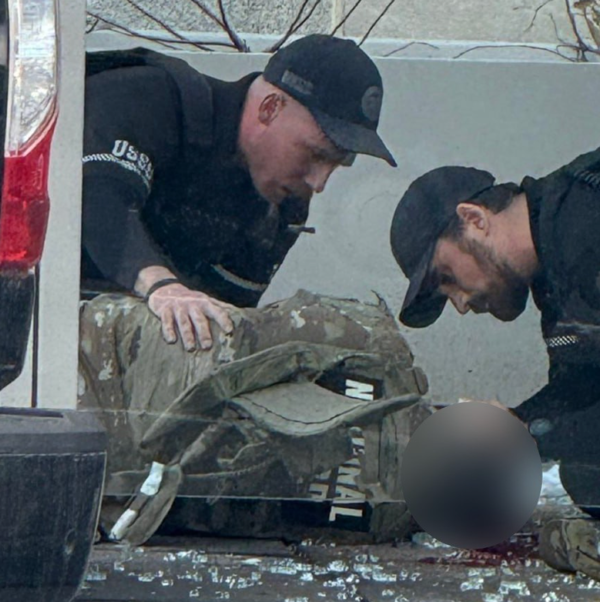
Social media video shared in the immediate aftermath showed first responders performing CPR on one of the troops and treating the other on a sidewalk covered in broken glass.
Witnesses saw people fleeing
Michael Ryan was just across the street when he heard loud bangs and started running with others. When he later came back, he told AP he saw a person pinned to the ground as people shouted “stay down,” and, nearby, National Guard troops hugged each other.
“It’s just a terrible situation to see,” Ryan said.
Emma McDonald, who exited a metro station just after the shots were fired, said she and a friend sought safety with others in a cafe. McDonald told AP that minutes later she saw first responders rolling a stretcher carrying a National Guard member whose head was covered in blood.
Police tape cordoned off the scene, and fire and police vehicle lights flashed and helicopter blades thudded overhead. Agents from the Secret Service and the Bureau of Alcohol, Tobacco, Firearms and Explosives were there, and National Guard troops stood sentry nearby. At least one helicopter landed on the National Mall.
“I think it’s a somber reminder that soldiers, whether they’re active duty, reserve or National Guard, our soldiers are the sword and the shield of the United States of America,” Vice President JD Vance said in Fort Campbell, Kentucky, where he delivered a Thanksgiving message to troops.
Gen. Steven Nordhaus, chief of the National Guard Bureau, scrapped plans to spend the holiday with troops at Guantanamo Bay in order to travel to D.C. and be with guard members there instead.
Army Secretary Dan Driscoll said on social media that he visited the wounded National Guard members in the hospital and that his “heart breaks for them.”
Troops deployed to DC under emergency order
Trump issued an emergency order in August that federalized the local police force and sent in National Guard troops from eight states and the District of Columbia. The order expired a month later, but the troops remained.
Nearly 2,200 troops currently are assigned to the joint task force operating in the city, according to the government’s latest update.
Last week a federal judge ordered an end to the deployment, but she also put her order on hold for 21 days to allow the administration time to either remove the troops or appeal.
The guard members have patrolled neighborhoods, train stations and other locations, participated in highway checkpoints and been assigned to pick up trash and guard sports events.
More than 300 West Virginia National Guard members were deployed in August. About 160 of them volunteered last week to extend their deployment until the end of the year, while the others returned home just over a week ago.
Associated Press journalists Konstantin Toropin, Seung Min Kim, Safiyah Riddle, Matt Brown, Mike Balsamo, Eric Tucker, Jesse Bedayn, Evan Vucci, Nathan Ellgren, John Raby, Hallie Golden, Michael R. Sisak and John Seewer contributed.
https://www.chicagotribune.com/2025/11/27/afghan-national-shooting-national-guard/