Category: News

David McGrath: I offer thanks for these exceptional Americans, including Pope Leo and Chappell Roan
In a year of unprecedented disruption, many of us are not feeling particularly grateful.
Yet it’s more important than ever to be so, even if you’re not feeling it, according to Robert Emmons, professor of psychology at the University of California Davis. Expressions of gratitude, he believes, help us deal with bad news and to overcome setbacks.
“In the face of demoralization, gratitude has the power to energize,” Emmons wrote in Greater Good magazine in 2013. “In the face of brokenness, gratitude has the power to heal. In the face of despair, gratitude has the power to bring hope.”
Thanksgiving, therefore, is a timely opportunity to refill our souls with hopefulness. And I wish to take full advantage by giving thanks for the following exceptional Americans:
Pope Leo XIV: Not since the splendor of Michael Jordan has anyone made Chicagoans and suburbanites so proud. Born in Chicago and raised in Dolton, the pope feels more like “Uncle Leo” with his warm approachability and sense of humor. When someone in the crowd at the Vatican shouted, “Go Cubs!” he gamely responded, “Han perdido.” (They lost.) His Holiness recently displayed his South Side moxie by speaking out for the rights of immigrant detainees in Broadview, and by becoming the first pope to meet with Ending Clergy Abuse, the international organization of clergy abuse survivors.
Chappell Roan: The 27-year-old Grammy Award-winning musician has inspired millions, including the NHL’s Edmonton Oilers, by rising to the top of the musical world as a gay artist who emerged from a conservative small town in Missouri and struggled with a diagnosis of severe depression. Roan is an outspoken advocate for LGBTQ+ rights, and her song “Pink Pony Club” is the most physically energizing hit to reverberate around the globe since the U2 anthems of the 1980s, so much so that the Oilers adopted it as their team anthem.
Chappell Roan performs on the T-Mobile stage during Lollapalooza at Grant Park on Aug. 1, 2024. (Eileen T. Meslar/Chicago Tribune)
Ron Chernow: While the Swedish Academy does not award a Nobel Prize for longest book, I must say thanks to the 76-year-old journalist and author for his gargantuan 1,000-plus-page biography on Mark Twain, which took some seven years to write. Yes, there are many other 1,000-page books in print, from Leo Tolstoy’s “War and Peace” to James Michener’s “Texas.” But Chernow, who has already won awards for books about Alexander Hamilton and George Washington, manages to render every event in the humorist’s life as compelling as a scene in a Ken Burns documentary.
Tom Doyle, a former Chicago Vocational High School teacher and vice principal at Washington High School, in August 2025. (Tom Doyle)
Tom Doyle: Though we were rookie English teachers together at Chicago Vocational High School, Tom was light-years ahead in classroom management and teaching skills; we traded our eighth-period English classes a couple of times so that I might gain helpful experience. When we met after one, Tom handed me a sign reading, “Kick Me,” which he confiscated from one of my students who had tried to tape it to his back. Turns out it was Bernard McCullough, an irrepressible class clown in freshman English who went on to become the world-famous actor and comedian known as Bernie Mac. Thanks to Tom for his support and sense of humor as a college classmate, teaching colleague and friend for the past half century.
Lia Sophia Lopez: A senior at Little Village’s Lawndale High School, Lopez is a student organizer for social justice who led a late October march involving students from the four schools on the campus to protest the brutal acts by federal agents against local citizens and immigrants in her community: “We need to protect our people’s peace,” Lopez said. “We need to protect their freedom and dignity. Because if we don’t, no one else will.” At a time when lawyers, judges, advocacy groups and many adults are speaking out against the aggressive tactics of U.S. Immigration and Customs Enforcement and the Border Patrol, young people such as Lopez stepping up for freedom and justice inspire our greatest hope for the future.
M. Stanley Whittingham: I did not envision the outboard motor of my boat not restarting one blustery evening when I was miles from shore. But thanks to Whittingham, a professor of chemistry at New York’s Binghamton University, and his genius development of lithium-ion technology for which he was awarded the Nobel Prize in Chemistry in 2019, I was able to jump-start my Yamaha with a battery charger the size of a sardine can. Today, the technology powers everything from smartphones and electric vehicles to power grid energy storage for entire communities.
Danielle Sassoon: The former clerk for the late conservative Supreme Court Justice Anthony Scalia was appointed by President Donald Trump as the acting U.S. attorney for the Southern District of New York. Sassoon resigned rather than drop corruption charges against New York Mayor Eric Adams. She had been ordered to do so by then-acting Deputy Attorney General Emil Bove in exchange for Adams helping the administration with its immigration crackdown. Standing on her principles in refusing to accommodate a preemptive pardon of the mayor in a quid pro quo maneuver, she deserves America’s gratitude — and perhaps a medal for her bravery.
Danielle Sassoon, the acting U.S. attorney for the Southern District of New York, in Washington on Jan. 31, 2025. (Kent Nishimura/The New York Times)
Jerry Lemoine: My fishing partner and pal from Miami, Jerry was a seasoned mariner who taught me how to handle a boat in 5-foot waves and release a barracuda without losing any fingers. He had a voice like Nick Nolte’s and was a generous and compassionate listener on long trips offshore. He died in August, so this thank you is dedicated to his wife, Karen, who should know I still sometimes hear that laughing, gravelly voice when I’m alone on the high seas.
Jerry Lemoine on author David McGrath’s boat in the Gulf of Mexico west of Placida, Florida, circa 2019. (David McGrath)
Your turn, readers. Derive hope, healing and energy by listing a handful of folks you’d like to thank.
Happy Thanksgiving!
David McGrath is an emeritus English professor at the College of DuPage and author of “Far Enough Away,” a collection of Chicagoland stories. Email him at mcgrathd@dupage.edu.
Submit a letter, of no more than 400 words, to the editor here or email letters@chicagotribune.com.
https://www.chicagotribune.com/2025/11/27/opinion-giving-thanks-americans-chappell-roan-pope-leo/

What to do in Chicago: Holiday concerts and shopping and a ‘Sound of Music’ sing-a-long
Our picks for events in and around Chicago this weekend.
CTA Holiday Train and Bus
Look up! You just might see Santa Claus speeding by on the “L” tracks, on trains decked out for the season. The Chicago Transit Authority Holiday Train and Bus lines are now running, with several opportunities for photos with Santa himself. The tradition, now more than 30 years old, brings cheer to the city as well as more than 400 food baskets for community organizations.
Through Dec. 22 on various routes throughout the city; view fares (normal rates apply) and the full schedule at transitchicago.com
“The Sound of Music” Sing-a-Long
Sing along with the von Trapp family in this Rodgers and Hammerstein classic, featuring Julie Andrews and Christopher Plummer. But don’t wait too long. This annual holiday tradition at the Music Box Theatre sells out faster than you can sing “Do-Re-Mi.”
Through Dec. 4 at the Music Box Theatre, 3733 N. Southport Ave.; tickets from $12 at musicboxtheatre.com
Pentatonix
The a cappella singing group now as synonymous with Christmas as Bing Crosby plays Allstate Arena this weekend. Watch them perform their versions of “God Rest Ye Merry Gentlemen,” “12 Days of Christmas,” “Hallelujah” and more during the Chicago-area stop on their “Christmas in the City” tour.
7:30 p.m. Dec. 2 at Allstate Arena, 6920 N. Mannheim Road, Rosemont; tickets from $52.50 at rosemont.com
Santa Claus waves as the CTA Holiday Train departs from the Kedzie Avenue stop on the Pink Line on Dec. 10, 2024. (Chris Sweda/Chicago Tribune)
Straight No Chaser
Need an a cappella matinee? Consider Straight No Chaser, formed at Indiana University and now celebrating more than 25 years together. The nine members will perform Christmas classics during their “Holiday Road” tour.
3 p.m. Nov. 29 at the Chicago Theatre, 175 N. State St.; tickets from $57.60 at msg.com
Sleeping at Last
The Chicago Philharmonic joins Sleeping At Last, aka Ryan O’Neal, for a special “Home for the Holidays” concert. Promising a “moving and nostalgic evening,” the show will feature selections from the indie rock project’s Christmas songs and more.
7:30 p.m. Nov. 29 at Auditorium Theatre, 50 E. Ida B. Wells Drive; tickets from $53 at auditoriumtheatre.org
Erykah Badu
Marking the 25th anniversary of her acclaimed album, “Mama’s Gun,” Erykah Badu plays two dates at the Chicago Theatre. The London Evening Standard, reviewing an appearance at Royal Albert Hall, said Badu presented “an Afrofuturistic universe of sci-fi graphics, computerised light shows and Badu-to-earth cosmic wisdom while rolling out tracks from her 2000 neo-soul classic.”
8 p.m. Dec. 2-3 at the Chicago Theatre, 175 N. State St.; tickets from $105.15 at msg.com
Erykah Badu performs at the Taste of Chicago on July 9, 2015. (Chris Sweda/Chicago Tribune)
“Viva El Palenque”
Two classic Sinaloan bands, Banda El Recodo and La Arrolladora Banda El Limón, will perform in a joint appearance at Allstate Arena this weekend. The bands have both been entertaining crowds for decades with their blend of traditional Mexican music.
8 p.m. Nov. 29 at Allstate Arena, 6920 N. Mannheim Road, Rosemont; tickets from $82.70 at rosemont.com
Small Business Saturday
From Bronzeville to Rogers Park and beyond, neighborhood chambers of commerce have organized to offer special perks to holiday shoppers for Small Business Saturday. Search for opportunities near you. Or, if you’d like more of a market feel, consider heading to the Salt Shed for its Holiday Gift Market featuring artisans and vintage vendors.
Holiday Gift Mart is 11 a.m.-5 p.m. Nov. 30 at the Salt Shed, 1357 N. Elston Ave.; RSVP for the free event at ticketweb.com
City of Chicago Ice Rinks open
The Maggie Daley Skating Ribbon gets a lot of attention, but it’s only one of nine Chicago Park District ice rinks. Check them all out this winter, starting this weekend — weather permitting. And if weather doesn’t permit, consider the indoor rink at Morgan Park Sports Center, with four open skate times available on Saturdays and Sundays, from $3.
Various locations throughout the city of Chicago; details at chicagoparkdistrict.com
People skate at the Maggie Daley Park Skating Ribbon in Chicago on Jan. 24, 2021. (Youngrae Kim / Chicago Tribune)
Community Bonfire at Maggie Daley Park
Warm up by the fire as you learn about local wildlife and meet neighbors. The event is BYOM — bring your own marshmallows — but the roasting sticks will be provided. Get there at 5 p.m. for a brief lesson in building a campfire.
5-7 p.m. Dec. 2 in Maggie Daley Park, 337 E. Randolph St.; details on the free event at chicagoparkdistrict.com
Have something to do around Chicago? Email events to day.chitribevents@gmail.com
https://www.chicagotribune.com/2025/11/27/what-to-do-chicago-nov-29/
‘A miscarriage of justice’: NWI man remains in Japanese custody for four years
Since 2021, Ronda Payne has been buying Christmas gifts, wrapping them and setting them under the tree for her son Chris to unwrap.
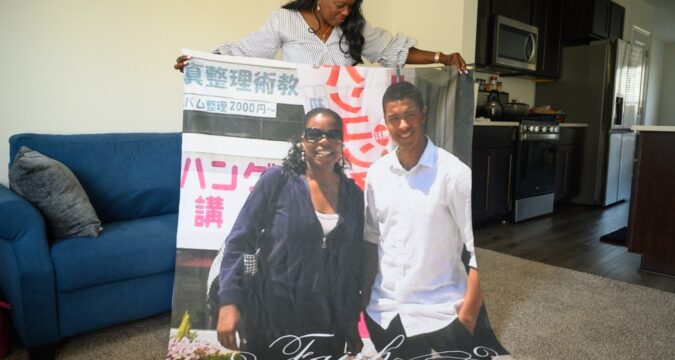
She will continue doing so, she said during an interview with the Post-Tribune from her home in St. John, until Chris, who will turn 34 on Dec. 17, is released from the custody of a detention center in Japan, held for allegations of sexual assault that he claims he didn’t commit.
The evidence proving Chris’ innocence is there, his supporters say, from the pings on his cellphone that show he was in another part of the country to the DNA evidence that does not show a match, and even a text exchange between Chris and his then-girlfriend shortly after the alleged assault, which took place not far from where he lived in the Chiba Prefecture.
“It’s clearly a miscarriage of justice,” said Ronda Payne, who found out her son was taken into custody on Thanksgiving four years ago. He has been in solitary confinement in various Japanese detention centers ever since then.
‘We need to free him soon’
The Innocence Project of Japan has taken up Chris’ case, at the urging of his former girlfriend’s father.
A timeline on the Innocence Project of Japan’s website provides an overview of Chris’ case. According to that timeline, in July 2018, a woman in Ichikawa City, Chiba Prefecture, Japan, was attacked while walking home. Her attacker forced her to perform oral sex on him.
The woman spat after the attack, went home, gargled and rinsed her mouth, then reported the crime to the police. The police took a DNA sample from the victim’s mouth but were only able to obtain a trace sample that was further contaminated by being mixed with cells from her mouth, the website notes.
In February 2020, Chris was arrested in Yamanashi Prefecture for breaking and entering after becoming drunk and falling asleep in the entryway of a stranger’s house, according to the website. He was released the following day, but not before the police asked him to submit to a voluntary DNA swab. Chris consented, according to the Innocence Project.
In November 2021, Chris was arrested and indicted because his DNA profile was “consistent” with the attacker’s, according to the timeline on the website.
“Our volunteer attorneys reviewed the DNA analysis and realized that its probability calculation was working off the assumption that the perpetrator’s and Chris’ DNA types were a complete match, even though the perpetrator’s full DNA profile couldn’t be determined,” Kana Sasakura, executive director of the Innocence Project of Japan, said via email to the Post-Tribune.
Chris, according to the timeline on the website, got a second DNA analysis, referred to as the “Y Analysis.”
“On 10 January 2023 (six days before the trial), the attorneys from IPJ met with Chris and explained that the Y Analysis is not conclusive evidence. Chris immediately asked them to represent him,” according to the website.
Once private counsel is appointed, court-appointed attorneys must be removed from the case, Sasakura said in the email. The Chiba District Court dismissed the two court-appointed attorneys and cancelled the trial. After redoing the pre-trial proceedings, a new trial was scheduled to begin in June 2024.
Chris was convicted in the first trial at Chiba District Court and he was sentenced to eight years in detention, Sasakura said in her email. He and his attorneys appealed and the case is now pending in the Tokyo High Court. Chris was also transferred from a detention center in Chiba Prefecture to one in Tokyo.
Two issues have been raised since Chris filed his appeal, per the website. An independent analysis of the second DNA test alleges the data was manually edited to implicate Chris in the crime. Additionally, the defense team was able to get the login information for Chris’ cellphone and asked prosecutors to investigate Chris’ location at the time of the attack, using his cellphone location data.
“Usually, the High Courts dismisses appeals by the defendant fairly quickly,” Sasakura said via email.
In Chris’ case, however, she said the court decided to hear the testimony of a prosecution witness in October, which she said “is a good start.”
“Chris has been detained at the Tokyo Detention Center and his detention is now almost four years,” Sasakura said via email. “We need to free him soon.”
St. John resident Ronda Payne, whose son is currently in a detention center in Japan, points out photos on a posterboard her son made for a project in third grade as she speaks about her efforts to get him freed, on Wednesday, Sept. 17, 2025. (Kyle Telechan/for the Post-Tribune)
Payne’s next hearing is Dec. 11, according to an Instagram post by his supporters. The judge in the case has decided not to conduct additional questioning of the DNA analysts and experts, according to the post.
“This is not typical in cases with allegations of falsified evidence. They will issue their ruling at the next hearing,” the post states. “We don’t know what will happen, but we do know that Chris needs us to be there no matter the outcome.”
‘Dark days’
On Nov. 25, 2021, Thanksgiving, Ronda got a call from Chris’ friend that he had been picked up by police. At first, she thought it was a joke.
“I felt something. I didn’t want anything to happen to him,” she said, adding she recognized the number as that of one of Chris’ friends in Japan. “That 081, when that number comes up, that’s Japan. I never want to see that because when my son calls, we FaceTime.”
St. John resident Ronda Payne, whose son, Chris, is currently in a Japanese detention center, dabs a tear from her eye as she speaks about her and the Innocence Project of Japan’s efforts to get him freed, on Wednesday, Sept. 17, 2025. (Kyle Telechan/for the Post-Tribune)
She was calm at the time, she said, because it wasn’t what she termed a final call. “Jail we can do, because we can get through this. Anything else is final.”
She went ahead and hosted Thanksgiving that year.
As more details about the allegations against Chris and his arrest and detention began to unfold, the weight of his situation fell more heavily on his mom. The Thanksgiving dinners with 30 people stopped because, she said, if her son wasn’t having Thanksgiving, why should she?
“When he went in (detention), I started having dark days,” Ronda said through tears.
The founder and director of Midwest Elite Preparatory Academy in Merrillville, the school that Chris graduated from, Ronda would return from work to her home in Crown Point at the time and pray her neighbors didn’t see her as she collapsed in tears and crawled into the house.
“It was non-stop, a merry-go-round,” she said. “The U.S. Embassy didn’t even know what happened,” she said, though officials there were eventually able to locate her son.
Chris started taking classes at Purdue University Calumet, now Purdue Northwest, at 16, his mom said, though he never completed his degree. Chris taught himself Japanese and tested out of lower-level courses after a family friend serving in the military in Japan got him a bible in Japanese and he decided to study the language, his mother said.
Chris taught Japanese at his mother’s school and also went on a summer trip to Japan through Michigan State University.
Chris had been in Japan for eight years at the time of his arrest, his mother said. He worked for a time teaching English at a private school owned by a single mom, and eventually got an IT job with a firm in Tokyo. Chris was also involved in the mixed martial arts scene, according to his mom.
Ronda Payne and her son, Chris, in an undated photo. (Ronda Payne/provided)
Chris was last home in May 2021, seven months before his arrest. Ronda has been able to visit him once in Japan, in February 2023. She said she found out the day she was leaving with her sister that the Innocence Project of Japan was taking up Chris’ case; he had fired his public defender because he would have legal representation through the Innocence Project; and his pending trial was canceled.
When Ronda and her sister arrived at the detention center in Chiba to see Chris, she said she didn’t trust anybody. Her son’s attorney with the Innocence Project, Hiroshi Sato, led her into a room with a glass divider; Chris and a guard were on the other side of the divider.
Chris, his mother said, tried to put her at ease, telling her, “Mom, I need you to trust the attorneys because I trust them.”
The United States and Japan are allies, Ronda said, but that hasn’t moved her son’s case along. All she needs, she said, is for one person to hear her story. “The facts are there,” she said.
She noted Japan’s hostage justice system, a concern raised by Human Rights Watch, and how Chris’ case is part of a larger movement, from his arrest to allegations that the DNA results in his case were manipulated to implicate him in a crime he did not commit.
Her son’s attorneys, Ronda said, have told her that his case could help reshape Japan’s criminal justice system.
“This is personal for me. Once Chris gets out, I made a vow to keep fighting for other inmates who don’t have resources,” she said.
St. John resident Ronda Payne, whose son is currently in detention in Japan, holds a pile of letters and documents from her son as she speaks about him and the Innocence Project of Japan’s efforts to get him freed, on Wednesday, Sept. 17, 2025. (Kyle Telechan/for the Post-Tribune)
Ronda Payne said she contacted local, state and federal officials about her son’s case but only U.S. Rep. Frank Mrvan’s office offered any assistance. Mrvan’s office was not able to speak specifically about Chris’ case but the office’s senior advisor, Mark Lopez, said the most the office could do, generally speaking, would be to make the U.S. Embassy aware of the situation.
The embassy could provide legal resources and make sure the person is receiving humane treatment while in detention, Lopez added. Ronda Payne said she has been in contact with the U.S. Embassy in Tokyo and representatives have visited her son while he’s in detention.
Likewise, the State Department was not able to provide information on whether it is aware of or investigating Chris Payne’s case.
“The United States has no higher priority than the safety and security of U.S. citizens,” a State Department spokesperson said in an email to the Post-Tribune. “Whenever a U.S. citizen is detained abroad, the Department works to provide consular assistance in accordance with U.S. law and our responsibilities under U.S. and international law. Due to privacy and other considerations, we have no further comment at this time.”
‘Please, lend me your strength’
Though he couldn’t be there in person, Chris Payne wrote a statement for the Innocence Project of Japan’s symposium on the case against him that was provided to the Post-Tribune.
The symposium was held on the afternoon of July 5 and featured speakers from the Innocence Project, his attorneys, his supporters and others who believe he was wrongfully charged with sexual assault.
Chris Payne and his cousin, Kayla Bartnicki, when she visited him in Japan in 2019. (Kayla Bartnicki/provided)
“Despite more than a dozen bail requests, I have spent this entire time in brutal solitary confinement for more than three years and seven months. During the trial in the Chiba District Court, I fought fiercely against the terribly performed DNA analysis. With the help of IPJ, we built a logical and reasonable defense,” Payne wrote in his statement.
“Despite this, I was sentenced to eight years with labor, and almost an entire year served was not given…. This verdict may be the most outrageous, unbelievable, unscientific verdict I have ever heard of in my life.”
He goes on to say that during his appeal, the support he received from Dr. Simon Ford revealed the issues with the DNA analysis, as well as allegations that the evidence was “completely forged” to uphold prosecutors’ claims.
“Evidence that has decisively proven my innocence has been submitted since months ago…. And yet the prosecutor refuses to respond…. Nothing can move forward. Time has stopped and this hell has no end.
“Please, lend me your strength. I can’t do this alone. Please, share my story far and wide, my innocence, my pain, and the reality behind the curtains that hide this case.”
alavalley@chicagotribune.com
https://www.chicagotribune.com/2025/11/27/nwi-man-japanese-custody-four-years/

George Pullman Educational Foundation gets $10M gift from MacKenzie Scott
Kenechukwu Uwajeh graduated from the University of North Carolina at Chapel Hill in 2023 with zero debt. The first-generation Nigerian American majored in psychology, information systems and entrepreneurship, in the hopes of helping people through technology.
“More so from an educational perspective,” she said. “I’m trying to still figure out what that looks like, but I do see myself moving into a leadership role for that — and an opportunity to mentor and help other people advance their careers within the software space with a focus potentially on health care and increasing health care access.”
A senior business development rep at Chicago-based social media software company Social Sprout, Uwajeh saw her aspirations buoyed with the help of the George M. Pullman Educational Foundation, a nonprofit committed to advancing access to higher education for Cook County students. MacKenzie Scott just awarded the organization $10 million in October.
The educational foundation provides renewable scholarships of up to $40,000 over four years to college students. Pullman Scholars, as recipients are called, also receive support, including one-on-one guidance, seminars, an annual symposium, alumni mentoring and on-demand mental health services through the online therapy platform BetterHelp.
“We wanted to give our scholars the agency to ensure that they have the tools in their toolkit to be successful,” said Eric Delli Bovi, executive director of the Pullman Educational Foundation. “What we’ve done is, for free, enroll all of them with the online provider BetterHelp, so at any point during the year … they feel like they need to reach out and talk to someone, they have those tools at their disposal. That’s a big program enhancement that we made based on their (scholar’s) feedback.”
For 75 years, the educational foundation’s endowment has awarded almost $38 million in unrestricted merit and need-based scholarships to almost 12,000 students, with 70% of the 2024 class graduating debt-free. What’s more, Pullman scholars who took out a college loan averaged $3,703 — a sliver of the state average of more than $39,000 in student debt.
The gift comes at a time when the price tag of a college degree is soaring and accessing the funds to pay for it is becoming increasingly difficult, experts say.
A recent Pew Research Center survey revealed that 79% of 3,445 U.S. adults believe colleges and universities are doing a fair or poor job of keeping tuition costs affordable, while 52% say higher education institutions are doing a fair or poor job of providing financial help to students who need it. A summer report from the Illinois Workforce and Education Research Collaborative showed students from the lowest-income families were more likely to skip postsecondary education due to any number of constraints, including the costs, application processes, limited support and resources.
The Pullman Educational Foundation is meeting the moment by increasing the scholarship limit to $10,000 for students and increasing the freshman class by 20% this academic year. While the $10 million has yet to be earmarked, the influx of cash has Bovi excited about the possibilities.
“This infusion in the endowment really gives us the space to think beyond what we have been able to do,” Bovi, the foundation director, said. “It may mean more scholars. It may mean higher dollars. It may mean a lot of things.”
For Uwajeh, Pullman’s programming included monthly check-ins with an educational foundation coordinator that allowed her to reflect on her college journey. She’s hoping that the infusion helps Pullman take its programming to the next level — graduate school, for instance.
The monthly check-ins are a way to remind students that the foundation is available, Bovi said, if they need anything, helping mitigate concerns before they become troublesome. Pullman’s events also offered virtual options for students attending school out of state.
“It was really nice to get to connect monthly about how my experience was going, what was going well, what was challenging me,” Uwajeh said. They would hold many learning sessions, whether on resume building or career planning.
Any high school senior with a 3.0 grade-point average who resides in Cook County is eligible to apply. Extracurricular activities, employment and community service are considered, but SAT or ACT scores aren’t. Finalists are interviewed by a volunteer group of Pullman Scholar alumni.
“It takes a community to award these scholarships,” Bovi said. “That’s something I’m very proud of — to have so much alumni support that comes back and understands how important it is to engage and connect with these future scholars.”
While the financial component is a big part of being a Pullman Scholar, it’s the community that the organization cultivates that makes it a space that Uwajeh likes to come back to and pour into because of the ongoing support, network and alumni.
Her long-term goal is to contribute to the well-being of society at the intersection of health care and technology. It’s all a part of being a Pullman Scholar, she said.
“It is community, it is giving back, it is mentorship, it is lifelong learning and lifelong connections,” Uwajeh said.
https://www.chicagotribune.com/2025/11/27/george-pullman-educational-gift-mackenzie-scott/

Chicago-area families on SNAP celebrate Thanksgiving amid uncertainty: ‘I can barely give them what they need’
When Jodie Yanek received the rest of her long-awaited SNAP benefits for the month — and after buying some food to tide her over — she started thinking about how she could put together a small Thanksgiving dinner for her and her boyfriend with a $60 budget.
The 47-year-old compared turkey and ham prices at a nearby South Deering grocery store. She dreamed of mashed potatoes and green bean casserole and ended up buying a pie.
“I was ecstatic,” Yanek said of getting the benefits. “I cried tears of joy. It was very scary the prospect of losing it.”
Yanek, like countless others across Illinois, say they’ve dealt with confusion and uncertainty heading into the holiday because of the federal back-and-forth on funding for food stamps. Some of the Illinoisans the Tribune spoke to were still questioning whether they’ll be able to put any food on the table let alone turkey and stuffing. Many have relied on local food pantries for help.
As the longest government shutdown in history lumbered on, nearly 2 million people across the state — and more than 40 million nationwide — were cut off from food stamps at the beginning of November, leaving many scrambling.
The Illinois Department of Human Services said full November benefits should have been delivered to recipients by Nov. 20, just a week before Thanksgiving. The department also said in a statement that the lapse in funding created “unnecessary hardship” and was “entirely avoidable.”
“The Trump administration had the funding to fully support SNAP but chose not to, putting tens of millions of Americans at risk of hunger,” IDHS said. December benefits should be handed out like normal.
Yanek said she immediately started panicking when she didn’t receive all of the benefits this month. She walked about 3 miles to a food pantry. When the pantry ran out of food, she said she had to get more creative — searching for food in dumpsters or asking for spare change.
Yanek said she has a work exemption for SNAP because she participates in a drug treatment program. She’s struggled with addiction, but said she managed to get clean for almost two years.
“Without that assistance, things would be a whole lot worse,” Yanek said. “I’m just so grateful for that help because it alleviates a lot of my worries. I’m already having worries on how I’m going to get basic necessities, personal hygiene, cleaning supplies for my apartment.”
Amanda Roberts, 35, said she hopes to find Thanksgiving food that her three children will like at suburban food pantries. Her oldest has autism and the younger two have developmental delays which can sometimes make it tricky to select food. The Naperville resident said she hopes to be able to make just some “simple things” for the holiday.
“As a mother, you do whatever you have to do to make sure that your children don’t know you’re in poverty because they’re children, and it’s not their job to know that,” she said. “I make Christmas happen every year. Thanksgiving happen. … It breaks my heart that I have to work, pay the bills, and I can barely give them what they need, but I try so hard.”
Some Illinois residents received partial benefits in November despite President Donald Trump’s administration push in court. But for many, including Roberts, it wasn’t nearly enough. The Naperville resident said she received a “laughable” $62 compared with the nearly $400 she normally gets.
She said her kids have been eating ramen many nights. Roberts said she skipped meals some days, only eating at her job at a sandwich shop.
“It’s just been a struggle to make sure there’s enough for them. And sometimes there’s not,” she said. “Sometimes on the weekends we wait till 1 o’clock to eat something because we don’t have anything.”
Julie Yurko, president and CEO of the Northern Illinois Food Bank, said they saw a 26% increase in visits across their network of about 900 food pantries in 13 suburban and rural counties. That’s about 80,000 extra visits, she said.
She said the nonprofit is also preparing for “additional headwinds” as more changes to SNAP come soon. Trump signed into law earlier this year a sweeping Republican domestic package that expanded work requirements for SNAP benefits to previously exempt groups such as adults ages 55 to 64.
For Thanksgiving, the food bank distributes thousands of holiday meal boxes. The boxes contain meal trimmings such as stuffing, corn, hot cocoa and canned fruit. Neighbors also will receive a turkey, turkey breast or ham, depending on the location, Yurko said.
“It’s an American tradition. When someone is struggling, when someone has an unexpected life event, we come around, our neighbors, in our communities, and we help,” Yurko said. “I’m just so hoping that our country sees the impact of some of these decisions and decides to do better.”
At the Polish American Association’s pantry in Portage Park Tuesday morning, a line snaked around the block. The organization’s executive director, Eva Prokop, said about 160 families showed up to receive, among other food, turkeys and produce. One of their most in-demand products is baby formula, she said.
When SNAP was cut off, Prokop said they had a threefold increase in their lines. She said food pantries like hers can serve as temporary stopgaps, but can’t replace SNAP. Some of their elderly clients worry about standing outside in the cold, for example, and there’s limits to how much food the building can store.
“There are only so many hands and so many square feet and so many heads of lettuce,” Prokop said.
Theresa Czeberat, 71, sat in a room waiting for her number to be called to pick out food Tuesday. She doesn’t receive SNAP benefits, but said food parties are a big help especially when you live by herself. She plans to spend Thanksgiving with a friend and her son.
“Everything is so expensive now when you go to the store,” she said. “The rents are so unbelievable now.”
On the holiday, Diane Pearson, 76, plans to watch “It’s a Wonderful Life.” She and her daughter watched it every year on Thanksgiving, and it’s a tradition she wants to carry on even though her daughter died of cancer two years ago, Pearson said.
Without her daughter’s help, Pearson said she’s struggled financially. She said her age-related macular degeneration, an eye disease, also progressed in the past year so that she’s now legally blind. SNAP has helped her afford groceries, and when it was cut off “it really affected me to the core.”
Pearson was one of about 50 people who received a $100 gift card to grocery stores earlier this month from Friedman Place, a nonprofit that supports adults who are blind.
“To me that 100 bucks was like a pile of gold,” Pearson said. “I ate hot dogs and beans and I felt like I was in a swanky (restaurant). I had gone two days without eating. Drank a lot of water but there was no food in the house.”
Victor Ferrel, who is also blind, had some money saved for emergencies but said it started to dwindle as the weeks went by. The 64-year-old said he plans to use the gift certificate and his SNAP benefits to buy pop and pies for Thanksgiving dinner at his sister’s house.
Ferrel said he feels like politicians treated him and others on SNAP like “pawns.”
“The Republicans and Democrats back and forth. It’s irritating and they’re affecting a lot of people, and people that are disabled,” he said. “They got to get their act together.”
https://www.chicagotribune.com/2025/11/27/chicago-snap-thanksgiving/

Eboo Patel: This Thanksgiving, let’s celebrate cultural pluralism in our potluck city and nation
Back in 1991, when I was a 16-year-old junior at Glenbard South High School in suburban Glen Ellyn, my mother suggested to our family that we have biryani for Thanksgiving instead of turkey.
Her reasoning was sound: Thanksgiving is a national holiday about gratitude celebrated with feast foods. America is a nation of immigrants, and we have made the country stronger by contributing the gifts of our various cultures to the greater whole.
As Ismaili Muslims from South Asia, it was natural for our family to celebrate Thanksgiving because our faith views gratitude as a core value. In Sura 93 of the Holy Quran, we are taught to “constantly recount the favors of your Lord.”
Turkey was the feast food of some cultural groups; biryani was the feast food of ours. Eating biryani on Thanksgiving was a way to embrace both our faith and our nation.
As my mom served the meal that year, I remember her inquiring about the foods that were gracing the tables of my friends, who included a Nigerian evangelical, a Cuban Jew, an Indian Hindu, a Swedish Lutheran and a Mormon.
My mother was implicitly advocating a certain way of thinking about diversity, one that early 20th century American philosophers such as Alain Locke and Horace Kallen called cultural pluralism. The central tenet of cultural pluralism is that the nation is enriched when diverse ethnic, racial and religious groups retain their cultures and share them with the society. Instead of a melting pot where people dissolve their differences, it’s a potluck supper where diverse people are encouraged to bring distinctive dishes inspired by their diverse identities to a common table.
America’s Founding Fathers embraced the same idea and actually celebrated Thanksgiving with a variety of dishes coming from around the world. While it wasn’t a potluck, it was an eclectic feast. As food historian Victoria Flexner writes in the November issue of The Atlantic, Thomas Jefferson, John Adams, George Washington and other delegates to the Continental Congress in Philadelphia likely had a Thanksgiving that included pepper pot soup from the West Indies, potato dishes from Peru, turkey prepared the Old World way with onions, garlic, bacon and herbs, and fruit sprinkled with spices from Indonesia, Sri Lanka and the Caribbean.
Great Americans have long known that diverse cultures are the secret to America’s strength. Chicago is one of the cities where that declaration has been made most boldly.
Consider the Heald Square Monument, also known as the Three Patriots Monument, at Wacker Drive and Wabash Avenue, where George Washington stands next to Robert Morris and his Jewish friend Haym Salomon. A bronze plaque describes the monument as a “Symbol of American tolerance and unity and of the cooperation of people of all races and creeds in the upbuilding of the United States.”
An etching in marble features these words from Washington’s 1790 letter to the Hebrew Congregation of Newport, Rhode Island: “The government of the United States, which gives to bigotry no sanction, to persecution no assistance, requires only that they who live under its protection should demean themselves as good citizens.”
A woman photographs the Three Patriots Monument, also known as the Heald Square Monument, on Wacker Drive in Chicago on Nov. 13, 2025. (Terrence Antonio James/Chicago Tribune)
When President Abraham Lincoln gave his “Electric Cord” speech in Chicago in 1858, he noted the number of immigrants in the crowd: “German, Irish, French, and Scandinavian.” He did not demand to see their papers. He did not send armed men to their workplaces. He did not threaten their children in schools or child care centers.
Instead, he said that if those immigrants were moved by the words of the Declaration of Independence — “We hold these truths to be self-evident, that all men are created equal” — then “they have a right to claim it as though they were blood of the blood, and flesh of the flesh of the men who wrote that Declaration.”
There has been an unmistakable chill in Chicago this fall. Family, friends, co-workers, neighbors — people who contribute essential dishes to the proud feast that is our city — have been snatched off our streets with performances of cruelty. Women who wear hijabs, men who wear yarmulkes, friends who speak Spanish, people with dark skin, are afraid to leave their homes or go to work.
The absence of their contributions makes our city poorer — in culture, in dollars, in spirit.
But Chicagoans know the principles we stand on. We know that this country was built on cultural pluralism and interfaith cooperation. We know that decent governments do not aid bigotry or persecution, that good citizenship is determined by how much you care and what you contribute, and that an electric cord connects the principles of the Declaration of Independence to all the people who believe in those principles, and those people to one another.
This Thanksgiving, let us be grateful for the range of dishes on our tables, from turkey to biryani. Let us give thanks for a nation with inspiring ideals. And let us appreciate living in a city where people have the will to build a reality worthy of those ideals.
Eboo Patel is founder and president of Interfaith America, a Chicago-based organization advancing pluralism.
Submit a letter, of no more than 400 words, to the editor here or email letters@chicagotribune.com.
https://www.chicagotribune.com/2025/11/27/opinion-thanksgiving-potluck-pluralism-immigrants/
Illinois ‘Clean Slate’ bill that would speed sealing of many criminal convictions awaits Pritzker signature
Long-sought legislation that would accelerate the sealing of many criminal convictions from employers now sits on Gov. JB Pritzker’s desk, positioning Illinois to join roughly a dozen states that have adopted similar policies to help people pursue better jobs.
Advocates estimate as many as 1.7 million Illinoisans with past court cases stand to benefit from the so-called Clean Slate legislation, which the Democratic-led legislature pushed through the General Assembly in the final days of last month’s fall session.
The bill builds on Illinois’ existing system, which permits many records to be sealed but can take months or even a few years to do so. The legislation shifting to a more automatic process would represent another significant change to the state’s criminal justice system since a recent wave of historic laws passed, including the elimination of cash bail, new sentencing rules for people incarcerated at a young age and a pathway for people in prison with serious medical issues to seek release.
While many cases — such as murder, armed robbery, carjacking, residential burglary, sex offenses against minors, DUIs and reckless driving — will not be eligible for the automatic sealing, a few Republican lawmakers raised concerns about whether the legislation would actually promote rehabilitation, and they questioned the fairness of employers not knowing some job applicants’ criminal histories.
Still, for people who find themselves in situations like Floyd Stafford, the measure is a potential blessing.
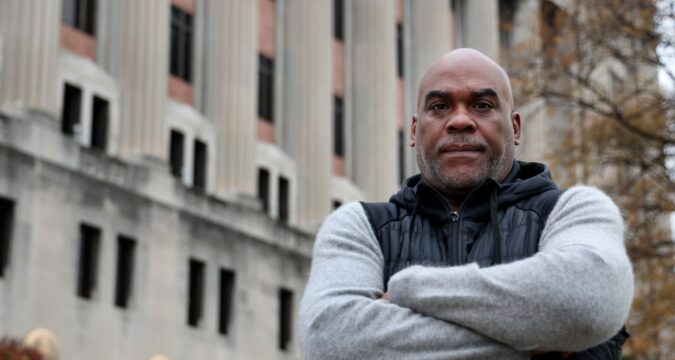
After being convicted of felony drug possession in the late 2000s, Stafford went to college to earn two master’s degrees and worked in the community violence intervention field. Now 54, he’s trying to get the conviction sealed so he can pursue other job opportunities where employers might not be as understanding of people with criminal pasts as those in the community violence field.
Although he’s several months into his petition process, Stafford said that if Pritzker signs the Clean Slate legislation into law, such proceedings could be sped up for others and allow them to find their desired jobs much sooner than before.
“It’s just not enough to depend on the grace of others to overlook certain things that I’ve done. It’s more about, ‘Listen, I served my time.’ In my case, that was well over 15 years ago,” said Stafford, a board member for the Illinois Coalition to End Permanent Punishments, one of the groups that pushed for the legislation in Illinois. “I want to pursue things outside of criminal justice reform, which puts me in a different space where there may be stakeholders who don’t necessarily get the idea of people serving their time and should not have to have these barriers over their head.”
Many convictions for drug and illegal gun possession, car theft, forgery and other lesser offenses make up a significant portion of the types of cases eligible for automatic sealing. Those cases can be sealed under the current state law through a petition. The main difference with the measure awaiting Pritzker’s signature is that the process of sealing those types of cases would become automatic.
The bill passed through the Illinois House by an 80-26 vote on the last day of veto session last month, and 39-17 in the Senate the day before. A couple of Republicans in each chamber joined the Democratic supermajorities in supporting the measure.
State Rep. Jehan Gordon-Booth speaks at the Illinois Capitol, Dec. 1, 2022, in Springfield. (Armando L. Sanchez/Chicago Tribune)
One of the bill’s main sponsors, Democratic state Rep. Jehan Gordon-Booth of Peoria, described the legislation as “a jobs bill” and a “yearslong effort to bring true employment reform to Illinois” for people who’ve been continuously deprived of work opportunities, housing and other necessities because of their pasts.
“These are moms. These are dads that are at our children’s school that we see every day. And many of them cannot work in health care. They can’t work at the city. They can’t work at the county. They can’t work at the school district,” Gordon-Booth said during the House floor debate. “And I don’t know about you, but a lot of our communities, those are the employers. Those are the economic engines that allow for people to take care of themselves and their families in our communities. And they have been shut off from those opportunities, oftentimes for mistakes that were made 10, 20, 30, 40 years ago.”
Democratic state Sen. Elgie Sims, the main Senate sponsor of the bill, emphasized the rehabilitative aspect of the measure, which would help people with criminal convictions turn their lives around.
“If we’re going to fight for rehabilitation, we’re going to make it eligible for individuals to have an opportunity to have access,” said Sims, a Chicago Democrat. “And under this legislation, it would be the reality that individuals would not be locked into conditions or locked into their past actions.”
Gov. JB Pritzker, left, greets state Sen. Elgie Sims after delivering his annual budget address to a joint session of the General Assembly, Feb. 15, 2023, in Springfield. (Brian Cassella/Chicago Tribune)
But Republican state Sen. Steve McClure, a former prosecutor from the Springfield area, said he remained concerned the bill wouldn’t promote those previously convicted of crimes to rehabilitate themselves and that he was worried the legislation would create situations in which convictions for financial exploitation would be automatically sealed and those individuals would be in a position to work with senior citizens in need.
“We’re talking about jobs. We’re talking about issues where someone would be in a situation where they could deal with vulnerable people,” McClure said during the bill’s debate in the Senate Criminal Law Committee. “And those positions will be filled by employers that no longer have access to information that could cause someone to be victimized. And that’s kind of where we’re going here with this.”
State Sen. Steve McClure speaks during a Senate Executive Committee hearing regarding the SAFE-T Act, Dec. 1, 2022, in Springfield. (Armando L. Sanchez/Chicago Tribune)
The Illinois State Police would determine what records are eligible for automatic sealing and notify circuit court clerks through a statewide e-filing system. The clerks would then seal the records in accordance with the timelines set out in the legislation and send notices to the arresting law enforcement agencies. The state police plans to begin developing its criminal history record systems by the middle of next year, though the systems won’t go live until Jan. 1, 2029.
Although convictions would be generally sealed from employers, law enforcement agencies and the Illinois Department of Children and Family Services would still have access to them, as would other public agencies in some instances through state police background checks.
But drug tests would be removed from the record-sealing process, another point of contention for those opposed to the Clean Slate bill.
“This legislation is not giving these people the opportunity to say, ‘I’m rehabilitated,’” McClure said of the absence of the drug test provision. “Why would you not want to give them the opportunity to show that they are rehabilitated with this requirement in the current legislation?”
GOP state Sen. Chapin Rose, a former Champaign County prosecutor, agreed, expressing his opposition during the full Senate debate over the removal of the drug test requirement for people with narcotics convictions.
“We’re not making things safer,” said Rose, of Mahomet. “At the end of the day, not having the negative drug drop proves nothing on who we’re putting back on the streets of Illinois.”
State Sen. Chapin Rose debates with members of the Senate at the Illinois State Capitol, Dec. 1, 2022, in Springfield. (Armando L. Sanchez/Chicago Tribune)
For Stafford and other proponents of Clean Slate, however, the drug test is another barrier for people trying to improve themselves, even if illegal drugs have been part of their past.
“For so long, with the war on drugs, individuals who use drugs are often demonized and cast out of society. And to me, that actually drives recidivism,” Stafford said. “I acknowledge individual choice and also being held responsible and accountable for the things you do. But … we’re talking about people who have already completed their sentences.”
Stafford said he started the petition process for his case around March. He retained a lawyer and had to pay a $400 fee to get started. He also had to pay a smaller fee for a copy of his rap sheet from the Chicago Police Department. He also had to pay to take a drug test. After it came back negative for illegal substances, Stafford was able to officially file the petition. He has a court date on the matter set for December.
Antonio Lightfoot, deputy director of the Illinois Coalition to End Permanent Punishments, said the legislation would help people who can’t afford a lawyer or who navigate the petition process with little guidance, often forgetting key steps needed to complete it properly.
“My process only took a year. But I was one of the lucky ones. It’s not often I get to describe myself as a privileged individual. … I worked in the field, so I knew a fair amount about the process,” said Lightfoot, explaining how he got an old armed robbery conviction sealed a couple of years ago, which helped him obtain certain contracts as a photographer. “A lot of people don’t know they’re eligible, as well as people who don’t have the resources to get it done, because one resource that I mentioned that is probably the toughest is the attorney. I was working with attorneys who knew the process and I knew where to take it to and I knew what line to not get stuck in.”
The bottom line, Lightfoot said, is that record sealing can improve the life of someone previously incarcerated, but even more so if it’s done for them automatically without having to go through a laborious process.
“Usually people who come home from prison, parole … anything in their background (is) subjected to a certain workforce. Right? We see this, warehouses. We see this, fast food. Like, low-wage working. I mean, every job is a job with dignity, but jobs where folks don’t have an opportunity to advance and take care of their family in the way they want to,” Lightfoot said. “And what we see is when folks’ records are sealed, they get to go for those better jobs.”
https://www.chicagotribune.com/2025/11/27/illinois-convictions-clean-slate-legislation/
Where Do You Find The Most AI Leaders In Europe?
Where Do You Find The Most AI Leaders In Europe?
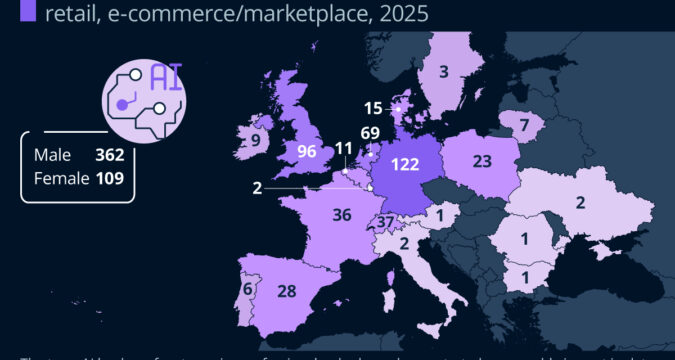
Corporate spending on AI is surging. So, our friends at The Big Search asked themselves a practical question: who is actually building and deploying AI inside Europe’s major consumer goods, retail and digital marketplace companies? For this analysis they identified 471 individuals, who have proven themselves as AI trailblazers.
As Statista’s Mathias Brandt details below, collectively, these AI leaders represent the new generation of executives: technically skilled, commercially oriented and visibly engaged in the broader ecosystem through teaching, speaking and thought leadership on emerging AI trends like GenAI, LLMOps and ethical AI.
Across Europe, truly T-shaped AI leaders remain rare. Germany, however, has emerged as one of the strongest hubs for such talent as the Statista map shows, followed by Great Britain and the Netherlands.
You will find more infographics at Statista
As Europe’s largest retail market and a top-two e-commerce economy, Germany naturally sustains some of the continent’s most advanced in-house machine learning teams.
Berlin, in particular, concentrates on high-impact players such as Zalando, Delivery Hero, HelloFresh and OTTO Group. They’re all running mature ML platforms focused on personalization, pricing, demand forecasting and monetization.
Tyler Durden
Thu, 11/27/2025 – 05:35
https://www.zerohedge.com/ai/where-do-you-find-most-ai-leaders-europe

Today in Chicago History: Soldier Field dedicated during Army vs. Navy game before 110,000 fans
Here’s a look back at what happened in the Chicago area on Nov. 27, according to the Tribune’s archives.
Is an important event missing from this date? Email us.
Thanksgiving weather in Chicago: The most extreme conditions since 1872
Weather records (from the National Weather Service, Chicago)
High temperature: 67 degrees (1990)
Low temperature: 2 degrees (1887)
Precipitation: 2.93 inches (1990)
Snowfall: 5.8 inches (1891)
Gustave Marx, Harvey Van Dine and Peter Neidermeyer — known together as the “Car Barn Bandits” — were caught by police on Nov. 26, 1903, near Tolleston, Indiana. (Chicago Tribune)
1903: The “Car Barn Bandits” were captured by police. Gustave Marx, Harvey Van Dine and Peter Neidermeyer were Chicago’s first celebrity criminals. From July 8 to Nov. 27, 1903, they conducted a spectacular crime spree during which they “killed eight men, including two detectives, wounded five others and committed eight robberies” totaling roughly $2,400. One of those took place at a North Avenue saloon (today it’s a playground), where the trio killed two patrons in the course of robbing the bar of $8.
Marx was caught first — “You can’t do anything to me,” he protested upon being locked up. “I only shot a cop! Anybody’s got a right to shoot a cop!” — and he ratted out his comrades, revealing the location of their hideout in the Indiana dunes. Returned to Chicago for a trial, the three were “treated more like conquering heroes or visiting celebrities than like desperate criminals,” with the detectives who captured them extolling their marksmanship before crowds of reporters and onlookers.
1921: George Halas scored the final touchdown in the first meeting of the Chicago Bears, who were then known as the Chicago Staleys, and the Green Bay Packers. The Staleys won 20-0 at Wrigley Field.
From Halas to Hester: The 32 Chicago Bears inducted into the Pro Football Hall of Fame
1922: The Bears’ first player deal. The team bought future Hall of Fame tackle Ed Healey’s contract from the Rock Island Independents, nine days after the teams faced each other, for $100 (or about $2,000 in today’s dollars) — twice the going rate for a franchise that season.
The official dedication ceremony for Soldier Field was held on Nov. 27, 1926, in front of a crowd of 110,000 during the Army vs. Navy game. The game ended in a 21-21 tie. The field first opened as Municipal Grant Park Stadium on Oct. 9, 1924. (Chicago Herald and Examiner)
1926: Navy was awarded the national championship despite its game against Army ending in a 21-21 tie before 110,000 fans at Soldier Field, which was dedicated that day. Notre Dame coach Knute Rockne missed his own team’s game to attend.
Dr. Marjorie Stewart Joyner stands by an exhibit of her life on display at the A. Montgomery Ward Gallery at the University of Illinois at Chicago on Feb. 15, 1985. (Ovie Carter/Chicago Tribune)
1928: Marjorie Stewart Joyner received a U.S. patent for a permanent waving machine.
The South Side beautician — who was among the first Black women in the U.S. to receive a patent — didn’t think there was anything spectacular about the permanent hair-waving machine she invented, when interviewed by the Tribune in 1989.
Vintage Chicago Tribune: Inventions and innovations by Black Chicagoans
“It all came to me in the kitchen when I was making a pot roast one day, looking at these long, thin rods that held the pot roast together and heated it up from the inside,” Joyner said. “I figured you could use them like hair rollers, then heat them up to cook a permanent curl into the hair.”
More than 120,000 spectators watched Austin High beat Leo High 26-0 to win the city’s prep football title on Nov. 27, 1937, at Soldier Field in Chicago. (Chicago Tribune)
1937: Approximately 120,000 people turned out to watch Austin beat Leo 26-0 in the city prep football title game at Soldier Field.
Dave Williams is mobbed by teammates after returning the overtime kickoff 95 yards for a touchdown and the victory over the Detroit Lions at the Pontiac Silverdome in Detroit on Thanksgiving Day, Nov. 27, 1980. (David Nystrom/Chicago Tribune)
1980: Dave Williams’ 95-yard kickoff return for a touchdown — on the first play of overtime — gave the Bears a 23-17 Thanksgiving Day win over the Detroit Lions.
Runners in the Rosemont Turkey Day 10K were surprised by about 3 inches of snow on Nov. 26, 1980. (Carl Hugare/Chicago Tribune)
Also in 1980: A record snowfall of 3 inches fell at Chicago’s O’Hare International Airport, making it the snowiest Thanksgiving in the city’s history.
Pat Ewert, left, and her partner Vernita Gray on Sept. 9, 2010. (Chris Walker/Chicago Tribune)
2013: Vernita Gray and Patricia Ewert, longtime gay rights activists and a well-known Chicago couple, were wed in Illinois’ first legal same-sex marriage. They were given their marriage license more than six months before the state law legalizing gay marriage took effect because Gray had terminal cancer. She died in March 2014.
Want more vintage Chicago?
Subscribe to the free Vintage Chicago Tribune newsletter, join our Chicagoland history Facebook group, stay current with Today in Chicago History and follow us on Instagram for more from Chicago’s past.
Have an idea for Vintage Chicago Tribune? Share it with Kori Rumore and Marianne Mather at krumore@chicagotribune.com and mmather@chicagotribune.com
https://www.chicagotribune.com/2025/11/27/chicago-history-november-27/
Today in History: Lester Joseph Gillis killed in a gunbattle with FBI agents
Today is Thursday, Nov. 27, the 331st day of 2025. There are 34 days left in the year.
Today in history:
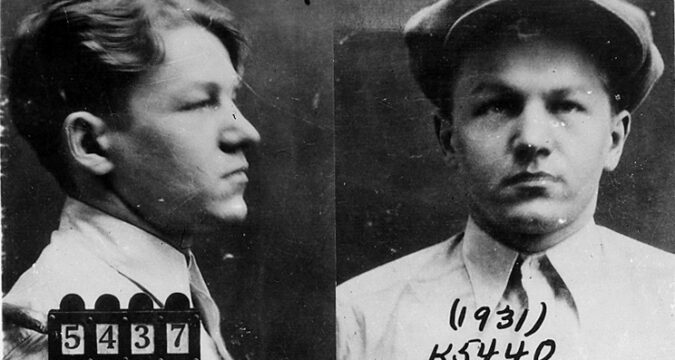
On Nov. 27, 1934, bank robber and “Public Enemy No. 1” Lester Joseph Gillis, better known as George “Baby Face” Nelson, was killed in a gunbattle with FBI agents in Barrington, Illinois.
Also on this date:
In 1895, Swedish inventor Alfred Nobel signed his will and testament establishing the Nobel Prizes, bequeathing most of his fortune for annual prizes honoring outstanding achievements in peace, physics, chemistry, literature, and physiology or medicine. (The prize in economic sciences was added in the 1960s).
In 1924, Macy’s first Thanksgiving Day parade — billed as a “Christmas Parade” — took place in New York.
In 1970, Pope Paul VI, visiting the Philippines, was slightly wounded at the Manila airport by a dagger-wielding Bolivian painter disguised as a priest.
In 1978, San Francisco Mayor George Moscone and city supervisor and gay rights activist Harvey Milk were fatally shot inside City Hall by former Supervisor Dan White.
In 2003, President George W. Bush flew to Iraq under extraordinary secrecy and security to spend Thanksgiving Day with U.S. troops and thank them for “defending the American people from danger.”
Related Articles
Trinity Christian College professors team with organizers to harness history to uplift communities
Today in Chicago History: ‘Galloping Ghost’ Red Grange plays first game for the Bears
Today in History: National Hockey League founded
Today in Chicago History: Mayor Harold Washington dies at his desk just 9 months after reelection
Today in History: USS Enterprise commissioned
In 2015, a gunman attacked a Planned Parenthood clinic in Colorado Springs, Colorado, killing three people and injuring nine. (The prosecution of suspect Robert Lewis Dear stalled in the courts after he was repeatedly found mentally incompetent to stand trial.)
Today’s Birthdays: Fashion designer Manolo Blahnik is 83. Film director Kathryn Bigelow is 74. Science educator and TV host Bill Nye (aka the Science Guy) is 70. Author and diplomat Caroline Kennedy is 68. Actor Robin Givens is 61. Actor Michael Vartan is 57. Baseball Hall of Famer Iván Rodríguez is 54. Actor Kirk Acevedo is 54. Rapper Twista is 52. Actor Jaleel White is 49. Actor Lashana Lynch is 38.


