Category: News
Al menos 20 muertos y varios desaparecidos en naufragio de bote en noroeste de Congo
Por JEAN-YVES KAMALE
KINSASA, República Democrática del Congo (AP) — Al menos 20 personas han muerto y varias permanecen desaparecidas después de que un barco volcara en el noroeste de la República Democrática del Congo, según residentes locales.
El bote, que volcó el jueves en el lago Maï-Ndombe, transportaba pasajeros hacia la capital, Kinshasa. Entre ellos se encontraba un diácono católico recién ordenado, según un comunicado de la Diócesis local el viernes.
Emmanuel Bola, residente de la cercana ciudad de Inongo, dijo a The Associated Press por teléfono el sábado que la embarcación viajaba desde la ciudad de Kiri hacia la capital, Kinsasa, cuando volcó entre las aldeas de Bobeni y Lobeke alrededor de las 8:00 de la noche del jueves.
El gobierno congoleño no ha publicado un número oficial de muertos. Kevani Nkoso, el gobernador de la provincia de Maï-Ndombe, dijo en la televisión nacional que “estamos esperando detalles de los equipos desplegados en el campo para determinar el número de personas fallecidas y el número de sobrevivientes”.
El vuelco de botes se está volviendo cada vez más frecuente en esta nación de África central, debido a un incremento en el número de personas que están cambiando el viaje a través de las pocas carreteras disponibles por el uso de embarcaciones de madera más baratas que se desmoronan bajo el peso de los pasajeros y sus mercancías.
En estos viajes, los chalecos salvavidas son escasos y las embarcaciones suelen estar sobrecargadas.
Muchos de los botes también viajan de noche, lo que complica los esfuerzos de rescate y causa que muchos cuerpos a menudo no sean encontrados.
A principios de este mes, un vuelco dejó 64 desaparecidos.
En septiembre, al menos 193 personas murieron en el noroeste de Congo en dos tragedias de barcos separadas, que los medios estatales atribuyeron a “carga inadecuada y navegación nocturna”.
___
Esta historia fue traducida del inglés por un editor de AP con la ayuda de una herramienta de inteligencia artificial generativa.

Huge apartment fire Saturday morning leaves 23 Carpentersville families homeless
An early morning fire Saturday in a building at the Meadowdale Apartments in Carpentersville displaced 23 families and caused about $2 million in damage, village officials said.
One person was treated at the scene for smoke inhalation as a result of the blaze, believed to have started sometime before 12:30 a.m. on the first floor of the building at 104 Meadowdale Court before spreading to the roof, according to a news release from the Carpentersville Fire Department.
“This is one of the biggest fires we have had in town, that’s for sure,” said Village President John Skillman, a former village fire chief who went out to the scene about 1 a.m. “It’s devastating, but fortunately it appears that no one was seriously injured.”
An early morning fire Saturday, Nov. 29, 2025, displaced 23 families living at the Meadowdale Apartments in Carpentersville, village officials said. (Yesenia Zuniga)
Fire departments from across Kane and McHenry counties responded to the two-alarm fire, the source of which remains under investigation, the release said. While a public works crew had to salt the roads near the apartment because water used to fight the blaze was freezing on the pavement, the subsequent snowstorm coming into the area did not start until about 4 a.m., when the fire had already been extinguished, officials said.
The village, with assistance from the Red Cross, was providing temporary shelter for five families at the Public Works Building as of about 9 a.m. Saturday, Skillman said. Officials were anticipating others would be returning home after the Thanksgiving holiday to find themselves without a place to live, he said.
The Carpentersville Moose Lodge also was used as an early holding place for those displaced by the fire. The Public Works Building at 1075 Tamarac will remain open through at least through Sunday to help those who have been displaced and as a location for people to drop off clothing and other items for those who lost possessions in the fire.
The source of an early morning fire Saturday, Nov. 29, 2025, at a building at the Meadowdale Apartment in Carpentersville remains under investigation, officials said. It started on the first floor and quickly spread, causing more than $2 million in damage. (Village of Carpentersville)
The D300 Food Pantry is providing items for those displaced by the fire, according to a village social media post.
Skilliman lauded the village’s fire and police departments for their swift, professional and courageous response.
“Their hard work through the night protected lives, contained the damage and ensured our community remained safe,” Skillman said in a post on Facebook. “Our hearts go out to all those affected, and the village of Carpentersville is already working with partners to ensure everyone has the support and resources they need during this difficult time.”
Mike Danahey is a freelance reporter for The Courier-News.
https://www.chicagotribune.com/2025/11/29/fire-carpentersville-apartments-meadowdale-homeless/
Ataques rusos dejan 3 muertos en Ucrania cuando crecen esfuerzos diplomáticos para finalizar guerra
Por ISOBEL KOSHIW
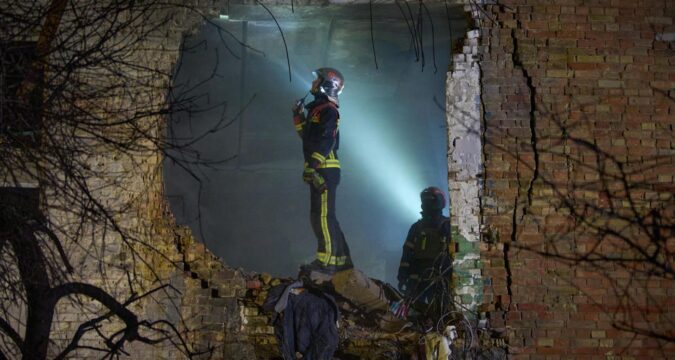
KIEV, Ucrania (AP) — Ataques rusos con drones y misiles en la capital de Ucrania y sus alrededores mataron al menos a tres personas la madrugada del sábado, informaron autoridades ucranianas, al tiempo que una delegación viajaba a Estados Unidos para abordar un nuevo intento de poner fin a la guerra.
El presidente ucraniano Volodymyr Zelenskyy escribió en X que la delegación, encabezada por el jefe de seguridad nacional Rustem Umerov, estaba en camino para “trabajar rápida y sustancialmente en los pasos necesarios para terminar la guerra”. Se espera que una delegación de Estados Unidos viaje a Moscú para sostener conversaciones con el presidente ruso Vladímir Putin en la segunda mitad de la próxima semana.
La Administración Militar de la Ciudad de Kiev indicó que los ataques a la capital dejaron dos muertos. Por su parte, una mujer murió y otras ocho personas resultaron heridas en un ataque combinado de misiles y drones en la región más amplia de la capital ucraniana, según la policía regional.
El alcalde Vitali Klitschko dijo que 29 personas resultaron heridas en Kiev, señalando que los escombros caídos de drones rusos interceptados impactaron edificios residenciales. Añadió que la zona occidental de Kiev había perdido electricidad.
La semana pasada, el presidente estadounidense Donald Trump lanzó un plan para poner fin a la guerra de casi cuatro años. La propuesta de 28 puntos favorecía en gran medida a Rusia, lo que impulsó a Zelenski a entablar rápidamente conversaciones con los negociadores estadounidenses. Mandatarios europeos, temiendo por su propio futuro ante la agresión rusa, se apresuraron a orientar las negociaciones para atender sus preocupaciones.
Trump dijo el martes que su plan para terminar la guerra había sido “ajustado” y que el enviado Steve Witkoff viajará a Rusia para reunirse con Putin, y el secretario del Ejército de Estados Unidos, Dan Driscoll, se reunirá con funcionarios ucranianos. Sugirió que eventualmente podría reunirse con Putin y Zelenskyy, pero no hasta que se haya más avances en las negociaciones.
Zelenskyy anunció el viernes la renuncia de su poderoso jefe de gabinete, Andrii Yermak, quien también era el principal negociador del país en las conversaciones con Estados Unidos, después que investigadores anticorrupción registraran la residencia de Yermak.
La búsqueda sin precedentes en el corazón del gobierno de Ucrania representa un duro golpe para el presidente ucraniano, con el riesgo de interrumpir su estrategia de negociación en un momento en que Kiev está bajo intensa presión estadounidense para firmar un acuerdo de paz.
Zelenskyy viajará a París el lunes para reunirse con el presidente francés Emmanuel Macron.
La oficina de Macron indicó que ambos líderes “discutirán la situación y las condiciones para una paz justa y duradera, en continuidad con las conversaciones de Ginebra, el plan estadounidense y en estrecha coordinación con nuestros socios europeos”.
En Rusia, una importante terminal petrolera cerca del puerto de Novorossiysk detuvo operaciones el sábado después que un ataque con drones dañó uno de sus tres puntos de amarre, según un comunicado del Consorcio del Oleoducto Caspio, que posee la terminal.
Andriy Kovalenko, jefe del Centro para Contrarrestar la Desinformación en el Consejo de Seguridad y Defensa Nacional de Ucrania, confirmó que Ucrania había perpetrado el ataque.
“Las fuerzas especiales ucranianas trabajaron en la Federación Rusa, su sector energético e infraestructura. En particular, los drones navales lograron destruir uno de los tres atracaderos de petroleros del Consorcio del Oleoducto Caspio en el área de Novorossiysk”, escribió en Telegram.
Meses de ataques ucranianos con drones de largo alcance en refinerías y terminales rusas han tenido como objetivo privar a Moscú de los ingresos por exportación de petróleo que necesita para continuar la guerra.
Por otra parte, Kiev y sus aliados occidentales sostienen que Rusia está tratando de paralizar la red eléctrica ucraniana y negar a los civiles el acceso a calefacción, luz y agua potable por cuarto invierno consecutivo, en lo que las autoridades ucranianas llaman “convertir en arma” el frío mordaz.
Un funcionario ucraniano del Servicio de Seguridad de Ucrania, que habló bajo condición de anonimato debido a la sensibilidad de sus operaciones, dijo que Ucrania utilizó drones navales Sea Baby de producción nacional para atacar dos petroleros en el Mar Negro que se dice forman parte de la “flota fantasma” de Rusia que evade las sanciones.
Los petroleros Kairos y Virat fueron atacados en rápida sucesión el viernes por la tarde, lo que provocó operaciones de rescate. Se informó que los miembros de la tripulación a bordo de ambos buques estaban a salvo.
El funcionario del Servicio de Seguridad de Ucrania envió un video del supuesto ataque, que pretende mostrar la destrucción de dos petroleros en el mar.
“El Servicio de Seguridad de Ucrania continúa tomando medidas activas para reducir las capacidades financieras de Rusia para librar la guerra contra Ucrania. Los drones navales Sea Baby desactivaron barcos que podrían transportar petróleo por un valor de casi 70 millones de dólares y ayudaron al Kremlin a eludir las sanciones internacionales”, dijo el funcionario a The Associated Press.
___
Esta historia fue traducida del inglés por un editor de AP con la ayuda de una herramienta de inteligencia artificial generativa.

Bessent Set To Pull The Plug On Federal Benefits For Illegal Aliens
Bessent Set To Pull The Plug On Federal Benefits For Illegal Aliens
Under President Trump’s direction, Treasury Secretary Scott Bessent is “working to cut off federal benefits to illegal aliens and preserve them for U.S. citizens.”
“Treasury announced that it will issue proposed regulations clarifying that the refunded portions of certain individual income tax benefits are no longer available to illegal and other non-qualified aliens, covering the Earned Income Tax Credit, the Additional Child Tax Credit, the American Opportunity Tax Credit, and the Saver’s Match Credit,” Bessent wrote late afternoon on Friday.
At @POTUS @realDonaldTrump‘s direction, we are working to cut off federal benefits to illegal aliens and preserve them for U.S. citizens.@USTreasury announced that it will issue proposed regulations clarifying that the refunded portions of certain individual income tax benefits… https://t.co/pn2MXoxDHC
— Treasury Secretary Scott Bessent (@SecScottBessent) November 28, 2025
Bessent’s move to cut federal benefits to illegal aliens comes hours after President Trump’s lengthy X post that describes a national crisis driven by nation-killing open borders. Trump claims there are 53 million foreign-born residents, many of whom supposedly rely heavily on welfare and contribute to rising social dysfunction such as crime, school failures, hospital strain, housing shortages, and deficits.
A very Happy Thanksgiving salutation to all of our Great American Citizens and Patriots who have been so nice in allowing our Country to be divided, disrupted, carved up, murdered, beaten, mugged, and laughed at, along with certain other foolish countries throughout the World,…
— Donald J. Trump (@realDonaldTrump) November 28, 2025
“A migrant earning $30,000 with a green card will get roughly $50,000 in yearly benefits for their family. The real migrant population is much higher. This refugee burden is the leading cause of social dysfunction in America, something that did not exist after World War II (Failed schools, high crime, urban decay, overcrowded hospitals, housing shortages, and large deficits, etc.),” the president said.
The failures of the Democratic Party are piling up, and the consequences are growing, spanning fraud, terrorism, and rising public outrage:
Don’t stop at cutting off funding to illegal aliens. It’s time for Bessent’s team to go after the dark-money billionaire-funded NGOs and leftist activist groups that helped facilitate the nation-killing migrant invasion.
Tyler Durden
Sat, 11/29/2025 – 11:05
https://www.zerohedge.com/political/bessent-set-pull-plug-federal-benefits-illegal-aliens

Familias mexicanas crean árbol de la esperanza para recordar a sus desaparecidos en Navidad
Por MARÍA TERESA HERNÁNDEZ
CIUDAD DE MÉXICO (AP) — Hace 10 años que Verónica Rosas no pone un árbol para Navidad. La pena que le dejó la desaparición de su hijo en 2015 es tan inmensa que difícilmente puede sobrellevarla.
Antes de que el joven de 16 años desapareciera en una zona vecina a Ciudad de México, madre e hijo esperaban con ansias el invierno. Amaban comprar árboles naturales y colgar los adornos favoritos de Diego: muñequitos de Mickey y Minnie Mouse.
“Me ha costado mucho y en 10 años no he puesto un árbol en mi casa”, dijo Rosas, quien recientemente se encontró con otras familias para crear esferas navideñas en recuerdo de sus seres queridos desaparecidos.
La reunión fue convocada por la diócesis de Ecatepec, a pocos kilómetros de la capital mexicana, donde los residentes continuamente enfrentan robos, feminicidios y otros delitos.
Rosas y otra docena de personas llegaron con fotos de sus familiares en mano.
Durante varias horas pegaron las imágenes en adornos de cartón y viejos CDs. Luego el sacerdote celebró misa, bendijo su trabajo y las esferas fueron colgadas en un “Árbol de la esperanza” que permanecerá en la catedral hasta el 2 de febrero.
“Queremos visibilizar la crisis en la que estamos”, dijo Rosas, quien fundó una organización que brinda apoyo a otras personas con familiares desaparecidos. “Con nuestras esferas no podemos abarcar las más de 100.000 personas desaparecidas, pero es algo simbólico”.
La marca que deja una desaparición
Cifras oficiales indican que al menos 133.000 personas han desaparecido en México desde 1952. Se cree que el secuestro, el tráfico de personas, los actos de represalia y el reclutamiento forzado a manos del narco están entre las causas principales.
Las desapariciones han afectado a América Latina desde hace décadas. En cada país, docenas de madres, hijos y hermanos han dado un giro a sus vidas para volcarse por completo a la búsqueda de sus familiares, a menudo porque las autoridades no les garantizan respuestas ni justicia.
“Ha sido todo un viacrucis”, dijo Marisol Rizo, quien busca a su madre desde 2012. “Ya son 13 años y no logramos obtener que las autoridades hagan su trabajo”, se lamentó.
Contó que sus hijos eran pequeños cuando su madre desapareció y salir en su búsqueda trajo consecuencias.
“Mi mamá siempre me decía ‘cuídamelos mucho’”, añadió. “Pero por estarla buscando me olvidé que tenía hijos y eso obviamente repercute”.
Rizo piensa que su padre fue responsable de la desaparición de su mamá en un país en el que al menos 10 mujeres o niñas son asesinadas cada día. Él ha negado cualquier señalamiento.
Al igual que otros familiares con personas desaparecidas, Rizo enfrenta la Navidad con más pena que alegría. Todavía recuerda cómo pasó una víspera de Navidad pegando boletines en las calles.
La práctica es común en México. Cada boletín contiene información de contacto, así como la foto, nombre, rasgos y fecha en que una persona desapareció.
“El 24 de diciembre yo lloraba un montón”, dijo Rizo. “Veía un montón de gente que salía contenta del centro comercial y yo pegando mis boletines, arrastrando mi pena”.
Su hija, que ahora tiene 17 años, la acompañó para hacer los adornos navideños en la catedral de Ecatepec, pero la nostalgia que Rizo sintió a ver las fotos de su madre fue inmensa.
“Estas esferas para mí representan mucha tristeza”, dijo. “Éste no es el lugar donde yo hubiera querido ver una foto de mi mamá”.
Compasión tardía
La falta de apoyo de líderes religiosos en México ha sido palpable entre familiares que lloran a sus desaparecidos.
Madres católicas como Rosas, rebasadas por el miedo, buscaron confort en sus parroquias tan pronto perdieron el rastro de sus hijos, pero muchos sacerdotes les dieron la espalda.
“Recuerdo cuando hace cinco años llegué a una iglesia católica solicitando una misa para mi hija y me decían: ‘No hay misas para desaparecidos’”, contó Jaqueline Palmeros, quien encontró restos de su hija en Ciudad de México, durante un encuentro reciente entre familiares y un obispo que apoya su causa.
“Pero creo que la Iglesia, que nos cerró durante mucho tiempo las puertas, es una vía alterna para poder llegar a la verdad de la justicia, a la memoria y reparación”, añadió.
Durante el encuentro, monseñor Javier Acero se disculpó con las familias. Desde la Arquidiócesis de Ciudad de México ha mostrado su apoyo constante a las víctimas de desapariciones y sostiene encuentros mensuales con quienes requieren apoyo espiritual.
“Como Iglesia reconocemos que en ocasiones no hemos actuado adecuadamente por miedo y desconocimiento”, dijo el religioso. “Si no las hemos recibido adecuadamente, si no hemos orado como nos pedían, perdónennos”.
Un ministerio presente
Rosas asistió al encuentro con algunos miembros de un grupo ecuménico que le ofrece apoyo desde hace años. Conocido como el “eje de iglesias”, congrega a un sacerdote anglicano, pastores de diferentes denominaciones y monjas.
Tomando a las madres de la mano, estos líderes religiosos suelen celebrar misas en plazas públicas antes de manifestarse para exigir respuestas al gobierno. También se han puesto guantes y botas de hule para buscar restos humanos en fosas y a lo largo del año pegan boletines de personas desaparecidas por las calles.
El padre Luis Alberto Sánchez es uno de ellos. Con los brazos abiertos recibió a Rosas y otras familias en la catedral de Ecatepec. Ahí compartieron un desayuno y luego roció laca sobre los adornos recién hechos.
“No podemos quedarnos callados”, dijo el sacerdote, cuyo hermano fue secuestrado y asesinado. “La voz de los desaparecidos, de los que ya han fallecido, resuena y es la voz que dice ‘ya basta’”.
Rosas atesora sus bendiciones y percibe a los miembros del eje de iglesias como amigos. Ella, como otros familiares, ha pasado Navidades hundida en la tristeza por la ausencia de Diego y los religiosos jamás han soltado su mano.
“Ojalá todas las personas de las comunidades de fe se unan para acompañar y replicar este modelo de nuestro eje de iglesias”, dijo. “Para que así todas las familias tengan esa presencia constante de la Iglesia y la esperanza que nosotros tenemos en el corazón”.
____
La cobertura de noticias religiosas de The Associated Press recibe apoyo a través de una colaboración con The Conversation US, con fondos del Lilly Endowment Inc. La AP es la única responsable de todo el contenido.

Ucrania utilizó drones navales para atacar dos petroleros rusos en el Mar Negro, revela funcionario
Por ANDREW WILKS, SUZAN FRASER e ISOBEL KOSHIW
ESTAMBUL (AP) — Ucrania utilizó drones navales Sea Baby, de fabricación nacional, para atacar dos petroleros rusos en el Mar Negro, reveló el sábado a The Associated Press un funcionario del Servicio de Seguridad de Ucrania.
Los dos petroleros, Kairos y Virat —presuntamente pertenecientes a la “flota fantasma” rusa que evade las sanciones—, fueron atacados de forma sucesiva frente a la costa turca del Mar Negro la tarde del viernes.
Los ataques desencadenaron operaciones de rescate por parte de la Guardia Costera turca y otros equipos. Se informó que la tripulación a bordo de ambos buques se encontraba a salvo.
El funcionario del Servicio de Seguridad de Ucrania, quien habló bajo condición de anonimato debido a la sensibilidad de las operaciones, proporcionó un video del presunto ataque, que supuestamente muestra la destrucción de dos petroleros en el mar.
El funcionario afirmó que los dos petroleros eran buques sancionados por Occidente, y añadió que la inteligencia ucraniana seguía “tomando medidas activas para reducir la capacidad financiera de Rusia para librar una guerra contra Ucrania”.
Los drones navales Sea Baby habían inutilizado buques capaces de transportar petróleo por un valor de casi 70 millones de dólares, lo que obstaculizó los esfuerzos de Rusia por eludir las sanciones internacionales, afirmó el funcionario.
Poco antes, el ministro de Transporte e Infraestructura de Turquía, Abdulkadir Uraloglu, dijo que los petroleros posiblemente fueron alcanzados por minas, misiles, un buque marino o un dron.
Los incidentes ocurrieron dentro de la zona económica exclusiva de Turquía, señaló, indicando que las autoridades turcas estaban en contacto con sus homólogos para prevenir una recurrencia y garantizar la seguridad de la navegación. No proporcionó más detalles.
Uraloglu añadió que el Kairos, con bandera de Gambia, se había incendiado, lo cual continuaba en las áreas cerradas del buque el sábado. Los 25 miembros de la tripulación fueron evacuados y se encuentran a salvo.
Sin embargo, el Virat no se incendió y no se hizo ninguna solicitud de evacuación, agregó. Las autoridades habían informado anteriormente de un incendio en la sala de máquinas del Virat.
Más tarde dijo a los periodistas que el capitán del petrolero Virat había emitido una llamada de socorro por “un ataque con drones”.
Ucrania ha atacado previamente el transporte marítimo ruso
La base de datos OpenSanctions, que rastrea a personas u organizaciones involucradas en la evasión de sanciones, describe a los buques como parte de una flota en la sombra de barcos utilizados para evadir las sanciones impuestas a Rusia tras su invasión de Ucrania en 2022.
Ucrania ha llevado a cabo ataques navales exitosos contra el transporte marítimo ruso durante la guerra, utilizando especialmente drones marinos cargados de explosivos. Sin embargo, las misiones ucranianas se han limitado en gran medida a las aguas del norte del Mar Negro.
El Kairos se incendió en el Mar Negro aproximadamente a 52 kilómetros (28 millas náuticas) de la costa de la provincia de Kocaeli en Turquía, de acuerdo con la Dirección General de Asuntos Marítimos de Turquía. Navegaba sin carga proveniente de Egipto hacia el puerto de Novorossiysk en Rusia.
En menos de una hora, la autoridad marítima informó que un segundo petrolero, el Virat, fue “impactado” cuando navegaba en el Mar Negro a unos 64 kilómetros (35 millas náuticas) de la costa turca. No proporcionó más detalles.
Ambos petroleros estaban bajo sanciones
El sitio web VesselFinder mostró que el Virat estaba anclado al norte del Bósforo, no lejos de su posición actual, el 4 de noviembre. La última posición del Kairos fue el 26 de noviembre al sur del Estrecho de los Dardanelos, que conecta el Mar Egeo y el Mar de Mármara.
Estados Unidos sancionó al Virat en enero de este año, seguido por la Unión Europea, Suiza, el Reino Unido y Canadá, según el sitio web OpenSanctions. De manera similar, la UE sancionó al Kairos en julio de este año, seguido por el Reino Unido y Suiza.
“La flota de petroleros en la sombra continúa proporcionando ingresos multimillonarios para el Kremlin al eludir las sanciones, disfrazando sus actividades bajo las banderas de terceros países, utilizando esquemas complejos para ocultar a los propietarios y representa amenazas ambientales significativas”, sostiene OpenSanctions sobre el Kairos.
El Virat, construido en 2018, utiliza “prácticas de envío irregulares y de alto riesgo” y anteriormente ha navegado bajo las banderas de Barbados, Comoras, Liberia y Panamá, denuncia OpenSanctions.
El Kairos, anteriormente con bandera panameña, griega y liberiana, fue construido en 2002.
El servicio de inteligencia militar de Ucrania, el GUR, indicó en su sitio web que ambos petroleros visitan puertos rusos y tienen un historial de apagar sus sistemas de identificación automática, que transmiten la posición de un barco.
También han atracado en puertos de China, Turquía e India, entre otros lugares.
——-
Fraser reportó desde Ankara, Turquía, y Koshiw desde Kiev, Ucrania.
___
Esta historia fue traducida del inglés por un editor de AP con la ayuda de una herramienta de inteligencia artificial generativa.

Oscar Piastri gana el sprint del GP de Qatar y reduce a 22 puntos la ventaja del líder Lando Norris
LUSAIL, Qatar (AP) — Oscar Piastri dominó desde la pole al llevarse el sábado la victoria al sprint del Gran Premio de Qatar y se acercó a 22 puntos detrás de Lando Norris, su compañero de equipo en McLaren, de cara a la carrera principal de la Fórmula 1 el domingo.
La victoria de Piastri en el sprint le otorgó ocho puntos, mientras que siete fueron para George Russell, el piloto de Mercedes que quedó en el segundo lugar. Norris, líder del campeonato, obtuvo seis puntos por su tercer puesto, y Verstappen consiguió cinco al terminar cuarto.
“Ha sido un buen fin de semana hasta ahora y todo ha salido bien en el sprint”, declaró Piastri. “Sí, el auto estuvo bien. Sigamos así”.
“Este es un circuito distinto, con más agarre a los previos”, agregó.
Norris comenzó el sprint desde la tercera posición en la parrilla y Verstappen desde la sexta. El neerlandés fue dejado pasar por Yuki Tsunoda, su compañero de equipo en Red Bull, en la primera vuelta, pero no pudo acercarse lo suficiente para presionar a Norris.
De cara a la penúltima carrera de la temporada el domingo, Norris suma 396 puntos, Piastri 374 y Verstappen 371.
Norris necesita terminar cuatro puntos por delante de Piastri el domingo para asegurar su primer título de F1, siempre y cuando también esté un punto por delante de Verstappen, quien busca su quinto campeonato consecutivo.
Hay una sesión de clasificación nocturna más tarde el sábado para la carrera del domingo.
“Tendremos una carrera muy difícil mañana, aquí es bastante difícil adelantar y la clasificación será clave”, comentó Norris.
Verstappen se quejó de rebotes y subviraje en su Red Bull el viernes, y los problemas persistieron.
“El rebote sigue siendo muy malo”, expresó Verstappen cuatro vueltas después del sprint del sábado.
Tsunoda terminó quinto por delante de Kimi Antonelli, ambos recibiendo penalizaciones de cinco segundos por exceder los límites de la pista más de las tres veces permitidas.
Fernando Alonso de Aston Martin obtuvo dos puntos al quedar en séptimo lugar y el también español Carlos Sainz de Williams embolsó un punto como octavo.
Fue otro día nefasto para el siete veces campeón Lewis Hamilton al colocarse en el puesto 17. Comenzó desde el pit lane después de un cambio en el alerón trasero de su Ferrari.
El argentino Franco Colapinto (Alpine) quedó último.
La temporada de F1 concluye el siete de diciembre en Abu Dabi.
___
Deportes AP: https://apnews.com/hub/deportes

Europe’s New Thought-Policing ‘Chat Control’ Legislation Nudges Forward
Europe’s New Thought-Policing ‘Chat Control’ Legislation Nudges Forward
Authored by Christina Comben via CoinTelegraph.com,
Representatives of European Union member states reached an agreement on Wednesday in the Council of the EU to move forward with the controversial “Chat Control” child sexual abuse regulation, which paves the way for new rules targeting abusive child sexual abuse material (CSAM) on messaging apps and other online services.
“Every year, millions of files are shared that depict the sexual abuse of children… This is completely unacceptable. Therefore, I’m glad that the member states have finally agreed on a way forward that includes a number of obligations for providers of communication services,” said Danish Minister for Justice, Peter Hummelgaard.
The deal, which follows years of division and deadlock among member states and privacy groups, allows the legislative file to move into final talks with the European Parliament on when and how platforms can be required to scan user content for suspected child sexual abuse and grooming.
The existing CSAM framework is set to expire on April 3, 2026, and is on track to be replaced by the new legislation, pending detailed negotiations with European Parliament lawmakers.
EU Chat Control laws: What’s in and what’s out
The EU’s efforts to make scanning of private messages compulsory suffered a setback earlier this month, when mandated client-side scanning was removed from the latest proposal draft. Wording was also added to ensure that providers were not unduly burdened with detection obligations:
“Nothing in this Regulation should be understood as imposing any detection obligations on providers.”
In its latest draft, the EU Council keeps the core CSAM framework intact, but service providers would also have to cooperate with a newly established EU Centre on Child Sexual Abuse to support the implementation of the regulation.
While the latest EU Council text removes the explicit obligation of mandatory scanning of all private messages, the legal basis for “voluntary” CSAM detection is extended indefinitely.
A compromise that satisfies neither side
To end the Chat Control stalemate, a team of Danish negotiators in the Council had worked to remove the most contentious element: the blanket mandatory scanning requirement. Under previous provisions, end-to-end encrypted services like Signal and WhatsApp would have been required to systematically search users’ messages for illegal material.
Still, it’s a compromise that leaves both sides feeling shortchanged. Law enforcement officials warn that abusive content will still lurk in the corners of fully encrypted services, while digital rights groups argue that the deal still clears the way for broader monitoring of private communications and for mass surveillance, according to a Thursday Politico report.
Lead negotiator and chair of the Committee on Civil Liberties, Justice and Home Affairs in the European Parliament, Javier Zarzalejos, urged both the Council and the Parliament to enter negotiations immediately. He stressed the importance of establishing a legislative framework to prevent and combat child sexual abuse online, while respecting encryption.
Source: Javier Zarzalejosj
“I am committed to work with all political groups, the Commission, and member states in the Council in the coming months in order to agree on a legally sound and balanced legislative text that contributes to effectively prevent and combating child sexual abuse online,” he said.
The Council celebrated the latest efforts to protect children from sexual abuse online; however, former Dutch Member of Parliament Rob Roos lambasted the Council for acting similarly to the “East German era, stripping 450 million EU citizens of their right to privacy.” He warned that Brussels was acting “behind closed doors,” and that “Europe risks sliding into digital authoritarianism.”
Telegram founder and CEO Pavel Durov pointed out that EU officials were exempt from having their messages monitored. He commented in a post on X, “The EU weaponizes people’s strong emotions about child protection to push mass surveillance and censorship. Their surveillance law proposals conveniently exempted EU officials from having their own messages scanned.”
Privacy on trial in broader global crackdown
The latest movement on Chat Control lands in the middle of a broader global crackdown on privacy tools. European regulators and law‑enforcement agencies have pushed high‑profile cases against crypto privacy projects like Tornado Cash, while US authorities have targeted developers linked to Samurai Wallet over alleged money‑laundering and sanctions violations, putting privacy‑preserving software into the crosshairs.
In response, Ethereum co‑founder Vitalik Buterin doubled down on the right to privacy as a core value. He donated 128 ETH each (about $760,000) to decentralized messaging projects Session and SimpleX Chat, arguing their importance in “preserving our digital privacy.”
Session president Alexander Linton told Cointelegraph that regulatory and technical developments are “threatening the future of private messaging,” while co-founder Chris McCabe said the challenge was now about raising global awareness.
Tyler Durden
Sat, 11/29/2025 – 10:30
Airlines work to fix software glitch on A320 aircraft and some flights are disrupted
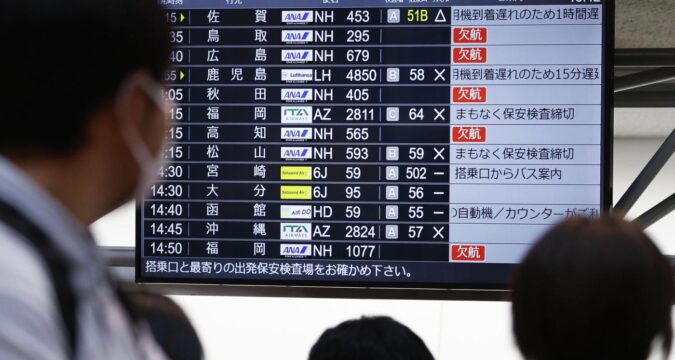
Airlines around the world reported short-term disruptions heading into the weekend as they fixed software on a widely used commercial aircraft, after an analysis found the computer code may have contributed to a sudden drop in the altitude of a JetBlue plane last month.
Airbus said Friday that an examination of the JetBlue incident revealed that intense solar radiation may corrupt data critical to the functioning of flight controls on the A320 family of aircraft.
The FAA joined the European Union Aviation Safety Agency in requiring airlines to address the issue with a new software update. More than 500 U.S.-registered aircraft will be impacted.
The EU safety agency said it may cause “short-term disruption” to flight schedules. The problem was introduced by a software update to the plane’s onboard computers, according to the agency.
Airbus CEO Guillaume Faury apologized to customers after the required fix led to “significant logistical challenges and delays.”
“Our teams are working around the clock to support our operators and ensure these updates are deployed as swiftly as possible to get planes back in the sky and resume normal operations, with the safety assurance you expect from Airbus,” he wrote in a message posted on LinkedIn on Saturday.
Thanksgiving disruptions in US
In Japan, All Nippon Airways, which operates more than 30 planes, canceled 65 domestic flights for Saturday. Additional cancellations on Sunday were possible, it said.
The software change comes as U.S. passengers were beginning to head home from the Thanksgiving holiday, which is the busiest travel time in the country.
American Airlines has about 480 planes from the A320 family, of which 209 are affected. The fix should take about two hours for many aircraft and updates should be completed for the overwhelming majority on Friday, the airline said.
On Saturday, the airline said in a statement that only four planes still needed to be updated and that it “expects no further operational impact.”
Air India said on X that its engineers were working on the fix and completed the reset on more 40% of aircraft that need it. There were no cancellations, it said.
Delta said it expected the issue to affect less than 50 of its A321neo aircraft. United said six planes in its fleet are affected and it expects minor disruptions to a few flights. Hawaiian Airlines said it was unaffected.
Pope’s plane also needs a software fix
Pope Leo XIV is on his inaugural foreign trip, to Turkey and Lebanon, and is flying along with the papal delegation and press corps aboard an ITA Airways Airbus A320neo charter.
The Vatican spokesman, Matteo Bruni, said Saturday that ITA was working on the issue. He said the necessary component to update the aircraft was on its way to Istanbul along with the technician to install it. Leo was scheduled to fly from Istanbul, Turkey to Beirut, Lebanon on Sunday afternoon.
European flights return to normal
In France, Transport Minister Philippe Tabarot said the situation has stabilized as several software updates had already been installed. He told BFM-TV that the impact was limited in the country with an “almost complete return to normal in French airports.”
In the U.K., disruption also was minimal. British Airways, for example, said only three of its aircraft required the update, while EasyJet indicated there may be changes to its flying schedule as a result of the update, in which case passengers will be informed.
Germany’s Lufthansa said most software updates were completed during the night and on Saturday morning. No Lufthansa Group Airlines flights are expected to be canceled due to the current situation, but there may be minor delays over the weekend, it said.
Scandinavia’s SAS said its flights were operating as normal Saturday, after teams worked overnight to install the required software.
Mike Stengel, a partner with the aerospace industry management consulting firm AeroDynamic Advisory, said the fix could be addressed between flights or on overnight plane checks.
“Definitely not ideal for this to be happening on a very ubiquitous aircraft on a busy holiday weekend,” Stengel said from Ann Arbor, Michigan. “Although again the silver lining being that it only should take a few hours to update the software.”
At least 15 JetBlue passengers were injured and taken to the hospital after the Oct. 30 incident on board the flight from Cancun, Mexico, to Newark, New Jersey. The plane was diverted to Tampa, Florida.
Airbus, which is registered in the Netherlands but has its main headquarters in France, is one of the world’s biggest airplane manufacturers, alongside Boeing.
The A320 is the primary competitor to Boeing’s 737, Stengel said. Airbus updated its engine in the mid-2010s, and planes in this category are called A320neo, he said.
The A320 is the world’s bestselling single-aisle aircraft family, according to Airbus’ website.
Associated Press writers Mari Yamaguchi in Tokyo, Jennifer Kelleher in Honolulu, Geir Moulson in Berlin, Samuel Petrequin, Pan Pylas in London and Nicole Winfield in Istanbul contributed to this report.
https://www.chicagotribune.com/2025/11/29/a320-aircraft-software-glitch/

Photos: Winter weather hits Chicagoland
A winter storm watch will be in effect for much of northern and central Illinois and parts of northwest Indiana until 6 a.m. Sunday, with possible snow accumulations of over 6 inches.
Djuna Williams of Melrose Park, a librarian at the Naperville Public Library, shovels the walkway in front of the libraries entrance during a winter storm, Nov. 29, 2025, in downtown Naperville. “My coworker should get in about 8:30, I’ll give him the other side of the building,” Williams said. “Sharing is caring.” (Dominic Di Palermo/Chicago Tribune)
Craig Jones stops under a bridge on the Naperville Riverwalk on his way to get coffee during a winter storm, Nov. 29, 2025, in downtown Naperville. “I’m from Houston, I forgot my hat,” Jones, who is visiting his mother for the holidays, said. (Dominic Di Palermo/Chicago Tribune)
https://www.chicagotribune.com/2025/11/29/photos-winter-weather-hits-chicagoland/