Category: News
Hormuz Sees 15 Ships Transit In 24 Hours As Two Tankers With Qatari LNG Make Sudden U-Turn
Hormuz Sees 15 Ships Transit In 24 Hours As Two Tankers With Qatari LNG Make Sudden U-Turn
President Trump on Sunday warned Tehran to “Open the Strait” and make a deal by the end of Tuesday, or the U.S. military would “blow everything up” and “take over the oil.” Meanwhile, Iran rejected Trump’s ultimatum to reopen the Hormuz chokepoint, saying it would only reopen the critical waterway once damage from the war is compensated.
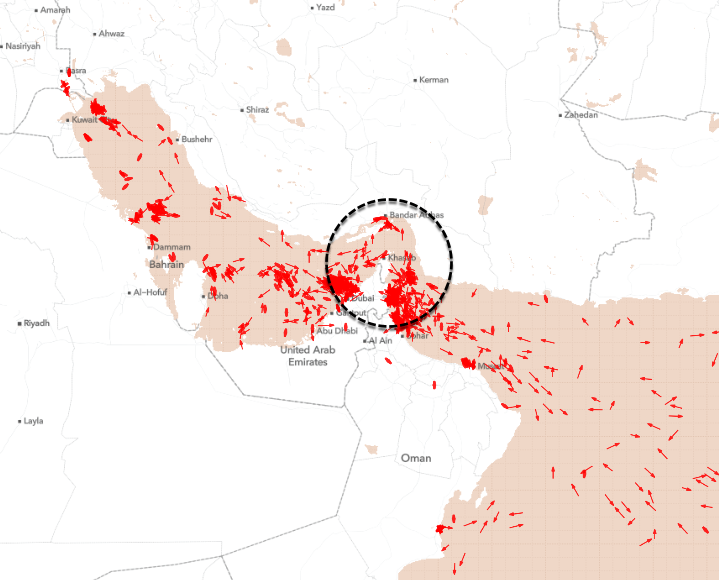
There was some good news overnight after Iran’s semi-official Fars News Agency reported that 15 vessels had passed through the Hormuz chokepoint over the last 24 hours. Still, that remains only a tiny fraction of pre-conflict tanker traffic.
Separately, the Islamic Revolutionary Guard Corps Navy warned that the waterway will “never return to its previous condition,” particularly for the U.S. and Israeli-linked vessels, and added that it is completing preparations to enforce a new security order across the Persian Gulf.
The question some military analysts are likely asking about the IRGCN’s statement is: with what naval fleet? Still, the IRGCN’s asymmetric warfare around Hormuz can be enforced with suicide drones, naval mines, and missiles.
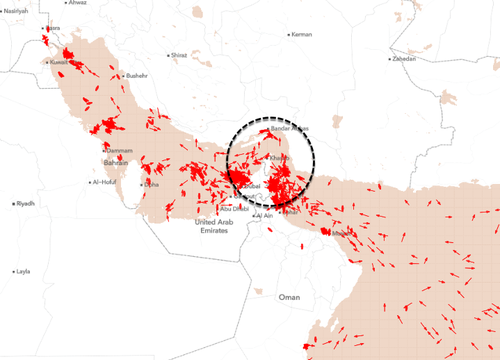
Map: Tanker Tarffic Hormuz
In a separate report, Bloomberg’s Stephen Stapczynski tracked two LNG tankers, Al Daayen and Rasheeda, loaded in Qatar that appeared to be traversing part of the Hormuz waterway.
However, Stapczynski noted early Monday that the two tankers appeared to “pause [their] attempt to exit Hormuz.” There was no indication why both tankers abruptly turned around.
“The ships have now slowed and pulled back slightly after earlier heading eastward toward the Hormuz opening. It isn’t immediately clear at this stage if the tankers will abandon the journey,” he said.
UPDATE: QATAR LNG SHIPMENTS APPEAR TO PAUSE ATTEMPT TO EXIT HORMUZ 🚨🚨
The ships have now slowed and pulled back slightly after earlier heading eastward toward the Hormuz opening. It isn’t immediately clear at this stage if the tankers will abandon the journey https://t.co/xRTBpnAluQ pic.twitter.com/oAlPczCUDs
— Stephen Stapczynski (@SStapczynski) April 6, 2026
The two LNG tankers are being closely watched by Wall Street analysts because a successful transit would mark the first LNG exports to buyers outside the Gulf region since the conflict broke out in late February. Any successful passage would be a breakthrough for Qatar, which supplied nearly 20% of global LNG last year, even though its Ras Laffan export plant has been shut for over a month after IRGC drone and missile attacks. Reviving Qatar’s pre-conflict LNG export flows could take $20 billion and years to fix.
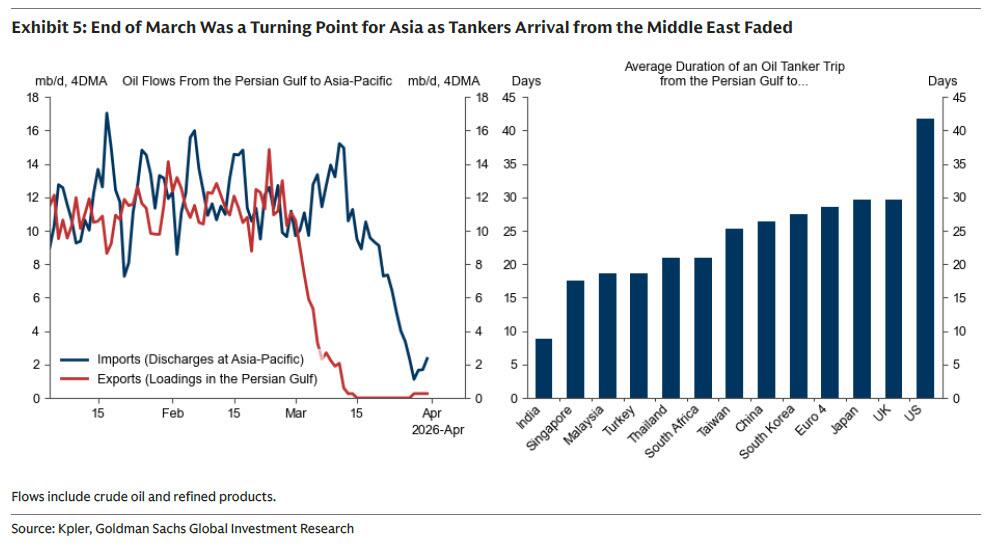
Goldman analyst Yulia Zhestkova Grigsby showed clients last week that energy flows from the Gulf remained muted (read the full report).
Also on Sunday, Axios reported that Iran and regional intermediaries are quietly exploring a 45-day ceasefire as part of a two-phase deal to end the conflict.
Tyler Durden
Mon, 04/06/2026 – 08:20
JPM’s Dimon Warns Of “Skunk At Party,” Talks Credit Cycles, Touts U.S. Military Power
JPM’s Dimon Warns Of “Skunk At Party,” Talks Credit Cycles, Touts U.S. Military Power
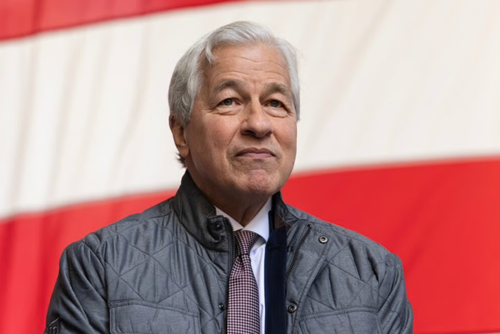
JPMorgan CEO Jamie Dimon began his annual shareholder letter on Monday by tying the bank’s legacy to the nation’s history: “In 2026, America is celebrating its 250th anniversary. This year, we are also celebrating the 227th anniversary of JPMorgan Chase, which was founded in April 1799.”
Quick Summary
Dimon used his annual letter to tout another year of record financial results, while warning that investors may be underestimating the risks building across the global economy. These risks include the U.S.-Iran conflict entering its second month, trade negotiations that exacerbate geopolitical tensions, the convergence of surging oil prices and inflation, and elevated asset prices.
Touting 2025 JPM Results
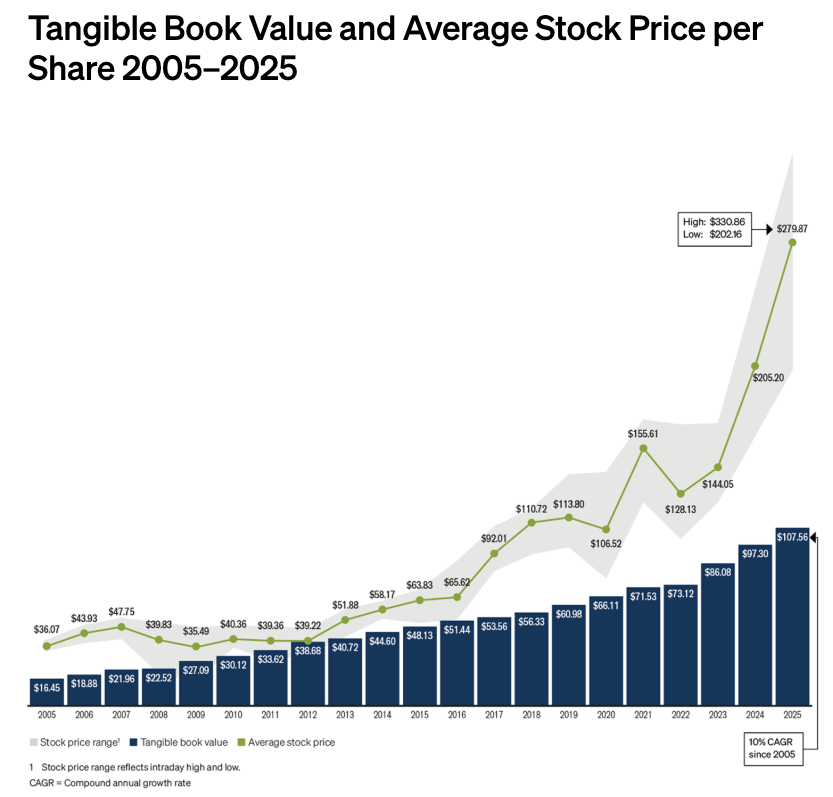
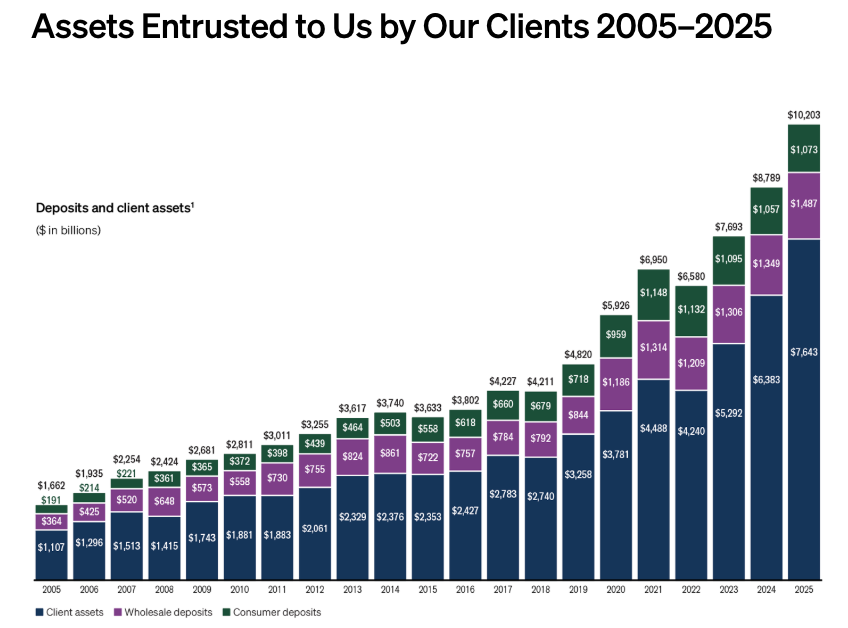
The largest U.S. bank said 2025 revenue rose to a record $185.6 billion, while net income reached $57 billion and return on tangible common equity (ROTCE) was 20%. JPM also lifted its quarterly dividend twice during the year, to $1.50 a share from $1.25, as it continued to note the strength of its balance sheet.
The letter also highlighted JPMorgan’s significant role in the US and global economies. Dimon said the bank extended credit and raised capital totaling $3.3 trillion in 2025, moves nearly $12 trillion a day across more than 120 currencies and 160 countries, and safeguards more than $41 trillion in assets.
Risks
Beyond the numbers, Dimon warned about “some scenarios that would result in a recession, which generally reduces inflation, and other scenarios that would lead to a recession with inflation (stagflation—where inflationary forces overcome deflationary ones).”
He said the “skunk at the party” could emerge this year and “would be inflation slowly going up, as opposed to slowly going down,” adding, “This alone could cause interest rates to rise and asset prices to drop. Interest rates are like gravity to almost all asset prices. Falling asset prices at one point can change sentiment rapidly and cause a flight to cash.”
Tailwinds
However, Dimon pointed out, “there are lots of tailwinds helping the U.S. in 2026, including:
Increasing fiscal stimulus from the One Big Beautiful Bill. Our economists believe this will inject another $300 billion (effectively 1% of GDP) into the economy. This has to be very modestly inflationary this year.
Benefits from the Fed’s purchase of $40 billion of additional securities each month, which is supposed to be reduced to $20 billion–$25 billion this April. At a minimum, this supports asset prices and helps ensure there is no liquidity squeeze in the financial system.
Positive effects of comprehensive deregulatory policies. This was badly needed and long overdue. Change is clearly evident in bank regulations that will free up capital and liquidity, which can be lent out (and we already see this happening), and in deregulation across many other industries, from energy to home building. It is fair to say that actions taken have clearly increased confidence and animal spirits. This should add to productivity and be modestly deflationary this year.
Huge increase in AI-driven capital spending and construction by the five hyperscalers. In 2025, this number was $450 billion, and in 2026, it will be approximately $725 billion. While AI will clearly drive productivity, which is generally good for inflation in the long run, all of this spending is probably inflationary in the short run.
Larger Risks
He warned of a series of unresolved “larger risks” shifting beneath the surface of the economy, “like tectonic plates—always moving and periodically causing earthquakes and volcanoes when they crash into each other.”
Those larger risks include:
First and foremost, geopolitics. Russia’s war in Ukraine and its ongoing sabotage in Europe and now the war in Iran and its potential effects on energy prices can cause events that are unpredictable. We all hope these wars get properly resolved. But war is the realm of uncertainty, as each side in a war determines what it wants to do (as is often said, “the enemy gets a vote”), and these conflicts involve many countries. Not only do they have a major impact on the nations at war, but they also have an impact on countries and economies across the globe that are not directly involved in war. Nations that are heavily dependent upon imported energy are already seeing the effects. And it’s not just energy, it’s commodity products that are byproducts of oil and gas, like fertilizer and helium. And given our complex global supply chains, countries are experiencing disruptions in shipbuilding, food and farming, among others. The outcome of current geopolitical events may very well be the defining factor in how the future global economic order unfolds — then again, it may not.
High global sovereign deficits and debt. Global deficits are significantly elevated, particularly during what has been a relatively healthy global economy and, until recently, a time of peace — the deficit globally is at an extremely high 5%, while global sovereign debt is at all-time highs. The current forecast from the Congressional Budget Office has our debt-to-GDP ratio going from 100% today to 120% in 2036. High government debt is somewhat offset by low consumer debt, which was nearly 100% of GDP in 2007 and is now below 70%. Similarly, corporate debt is at a fairly normal healthy level of 45%. High and increasing government debt will eventually have to be dealt with — the right way would be to deal with it now before it becomes a problem; the wrong way would be to let it become a crisis, which, in my opinion, is probably the likely outcome. Importantly, almost 60% of government spending is for entitlements and is not discretionary. This makes the job that much harder. A crucial note on the importance of growth: If interest rates went down 100 basis points and GDP grew at 3%, the debt-to-GDP ratio could actually start to go down instead of going up.
High asset prices and very low credit spreads. In and of itself, this is not a bad thing. Household net worth as a percentage of GDP is now 560%. The high during the housing peak in 2006 was 460%. But this also means that anything less than positive outcomes could have a dramatic impact on global markets. Rapidly decreasing asset prices can sometimes create a self-reinforcing loop. It’s always good to remember that prices are set by the marginal buyers and sellers — which, on the average day, is only a small fraction of asset owners. And it’s also good to remember that foreigners own almost $30 trillion of U.S. equities and bonds. While U.S. investments and the U.S. dollar are generally havens of security in a troubled world, that didn’t stop recessions and bad markets in prior times.
Trade 2.0. The U.S. tariffs themselves had only minor effects on inflation or growth, and were only one straw on the camel’s back. But the trade battles are clearly not over, and it should be expected that many nations are analyzing how and with whom they should create trade arrangements. This is causing a realignment of economic relations in the world. While some of this is necessary for national security and resiliency, which are paramount, it is hard to figure out what the long-term effects will be.
U.S. and China relations. This relationship is critical to the whole world and is also impacted by the events mentioned above. The United States and China clearly have different systems, values, goals and objectives, and while both sides are currently engaging, we have to expect that there will be some bumps in the road — maybe even some large ones. We should all hope that ongoing proper engagement continues to lead to what may be a competitive but peaceful future.
Private credit and credit in general. The leveraged private credit market totals $1.8 trillion. As a comparison, the U.S. high yield bond market totals $1.5 trillion, and the bank syndicated leveraged loan market totals $1.7 trillion. Taking a wider view, the total market size of investment grade bonds is $13 trillion. And the total market value of all residential mortgage securities and loans is also $13 trillion. In the great scheme of things, private credit probably does not present a systemic risk.
Credit Cycle
Dimon continued, “I do believe that when we have a credit cycle, which will happen one day, losses on all leveraged lending in general will be higher than expected, relative to the environment.” We’ve been extensively tracking the cracks emerging across credit (latest here).
Geopolitics
On the topic of what appears to be Eurasia on fire, with multiple warzones raging, Dimon emphasized three critical issues about preserving the American empire:
The United States must maintain the premier military force in the world.
The United States must maintain its preeminent economic position in the world, which also requires reigniting the American Dream.
The United States must manage its foreign economic affairs to strengthen the U.S. economy and that of our critical allies so that the first two points remain true.
US Military & American Empire
All about the empire… Dimon said, “We at JPMorganChase feel an enormous responsibility to our nation and many others — and we remind ourselves that many companies will only thrive if their countries thrive. With the right policies and committed actions, the United States will maintain the strongest military and strongest economy and will remain the bastion of freedom and the arsenal of democracy.”
Dimon, who turned 70 in early March, has transformed JPMorgan into the nation’s largest and most profitable bank, making it one of the core pillars of the U.S. financial system. This year’s annual letter carries a warning that the world is becoming more fractured and, in at least one key region, engulfed in war. The broader message is unmistakable: American power is supreme, and JPMorgan intends to help preserve the empire for decades to come.
Tyler Durden
Mon, 04/06/2026 – 08:10
Slower EV Sales Will Be The “New Normal” For Tesla Amidst AI, Robotics Push
Slower EV Sales Will Be The “New Normal” For Tesla Amidst AI, Robotics Push
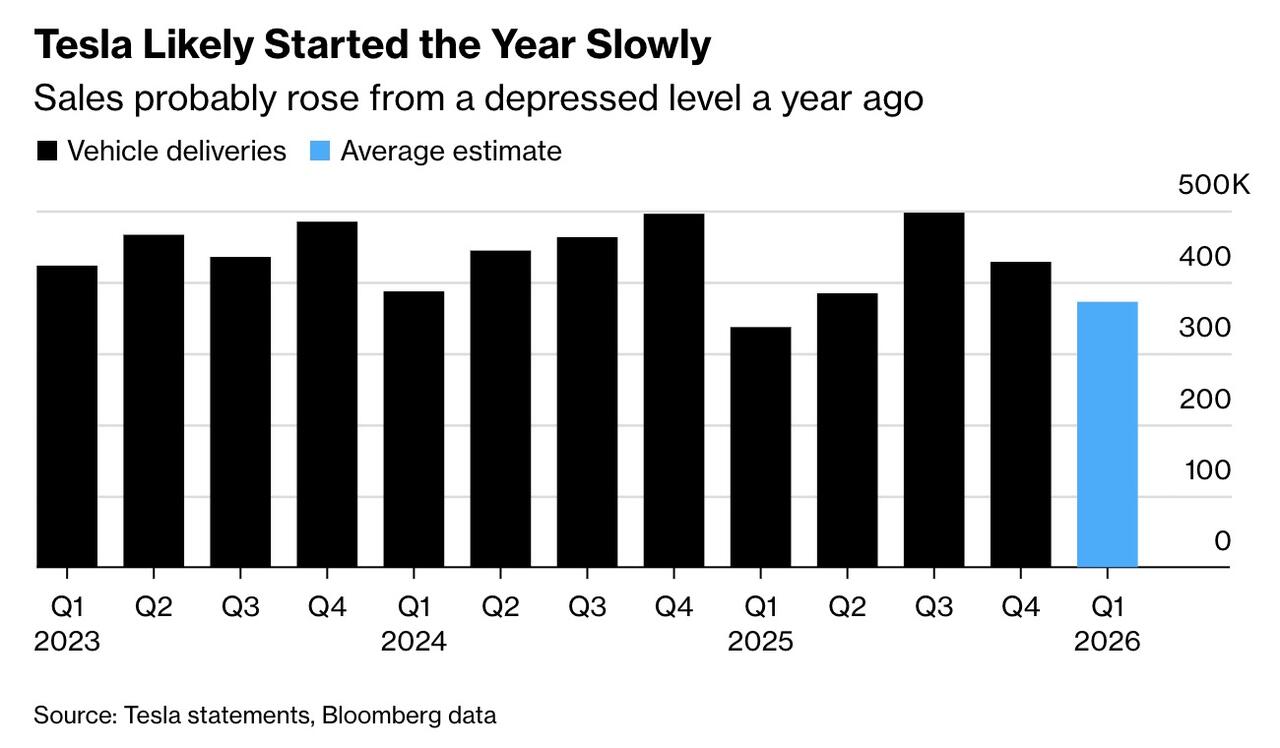
Tesla Inc. is increasingly betting its future on AI, autonomy and robotics — but it still depends on selling cars to finance that shift, and that core business is under pressure, Bloomberg reported this week.
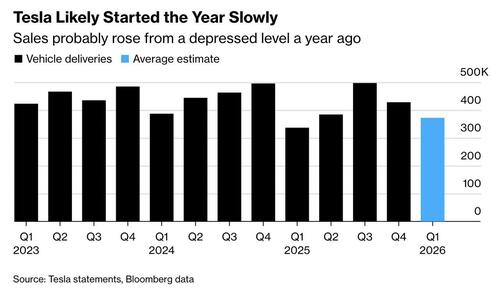
Wall Street estimates point to roughly 372,160 vehicle deliveries last quarter. That would mark an 11% increase from a weak year-ago period, yet still place among Tesla’s softer recent results and far below its near-500,000 peak quarters. Earlier headwinds — including political backlash involving Elon Musk and Model Y production interruptions — weighed on prior performance.
A slower pace of growth may persist. Demand for EVs is cooling globally, US buyers no longer benefit from federal tax credits, and Tesla’s lineup is narrowing as Models S and X are phased out, all while competition intensifies.
“If they can show that there’s stability in the numbers without the tax credit — and they can, at least with the delivery number — I think that that would be a win,” said Gene Munster.
Bloomberg notes that regional trends are mixed: Europe remains subdued, while China is rebounding, with February shipments from Shanghai surging 91%, according to preliminary industry data. Investors are closely watching whether demand can hold without incentives.
At the same time, attention is shifting away from quarterly deliveries. Many investors are more focused on Tesla’s long-term bets — including robotaxis, the Cybercab and the Optimus robot — with the car business increasingly seen as a means to fund those efforts. After reaching a record high in December, the stock has since cooled.
Garrett Nelson, senior vice president of equity research at CFRA said: “It’s not so much about the deliveries, it’s more about bigger picture like the Terafab announcement, and this spending binge that Tesla is embarking on. Concerns regarding this explosion in spending are really weighing on sentiment towards the company.”
Tyler Durden
Mon, 04/06/2026 – 07:50
https://www.zerohedge.com/markets/slower-ev-sales-will-be-new-normal-tesla-amidst-ai-robotics-push
EU Parliament Shocks Brussels: Chat Surveillance Rejected, Deportation Centers Approved
EU Parliament Shocks Brussels: Chat Surveillance Rejected, Deportation Centers Approved
Submitted by Thomas Kolbe
Brussels’ assault on industry and small-to-medium businesses is a child of German ideology. This applies not only to the absurd climate battle; German statism also reveals itself in the proposed spying system of EU-wide chat surveillance. The open-border policies, executed in the style of a hippie state, can be attributed equally and without hesitation to Germany’s political record of this century.
Three dramatic political miscalculations, three intellectual detonations, leading to devastating societal consequences. All made in Germany, but certainly not made for Germany.
Berlin’s climate crusade and hippie ideology have inflicted severe economic and societal damage on the European Union, sparking a social movement that points to deep internal cultural and social conflicts.
The next generation will struggle to preserve its identity in Europe and assert itself politically. That this identity is not even articulated on a national German level guarantees the exclusion of the AfD under the Brandmauer-Ägide.
Colorful and intellectually reduced coalitions of SED communists, red and green socialists, and the statist CDU, randomly blended together, shape this Brandmauer idyll in Germany. The parliamentary Thursday in Brussels must have struck like a whip.
The European People’s Party (EPP), including the CDU/Union, joined forces with three right-conservative parties, among them the AfD, France’s Rassemblement National, and the Patriots for Europe (PFE), against the three ideological pillars of the globalist, German-inspired political restructuring project of the EU.
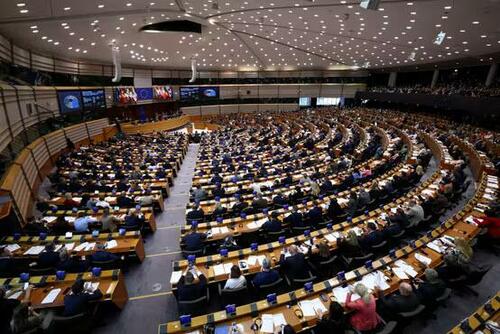
The political hammer of the day was undoubtedly the EU Parliament’s resolution to force the EU Council and Commission into a debate over establishing migrant deportation centers in third countries. A decision is expected in June. Yet at this point, the Parliament itself is powerless, as it famously has no legislative initiative rights.
We can therefore anticipate that political undermining of this resolution will begin immediately.
A shock, at least, for the Berlin political-media bubble, which is primarily engaged in covering up the consequences of uncontrolled migration and systematically pursuing and sanctioning criticism of the open-border regime with a comprehensive censorship apparatus.
Following the migration decision, the same parliamentary majority struck again against one of Berlin and Brussels’ favorite political projects. They also rejected the push for comprehensive private chat surveillance. This means the proposed EU regulation for so-called end-to-end encryption, which could have decrypted massive messaging content, is temporarily off the table.
How this will proceed remains unclear. Chancellor Friedrich Merz already announced a national solution for this issue on the same day. He seems in no hurry to assert ultimate control over citizens’ private communications.
For – and Thursday in the European Parliament demonstrated this – the wind is blowing increasingly against the German party cartel, and it comes from the patriotic side of the house.
Opposition is growing. Strong political forces like Italy’s government under Prime Minister Giorgia Meloni are shaping substantial opposition, which in both rhetoric and action resists both the climate cult and the open-border policies.
Multiculturalism, alongside the green degrowth agenda, counts among Germany’s political priorities. And the German chief ideologues are increasingly losing their allies in Brussels.
It won’t be long before Berlin could indeed stand isolated. This was indicated by the third surprising vote on Thursday.
Finally, the Parliament voted to loosen the EU supply chain law and reduce, above all, the environmental due diligence obligations for companies.
What purpose does it serve to require companies to document and analyze arbitrarily set social and ecological standards along complex supply chains, even down to primary production?
Brussels’ bureaucracy pushes such regulations deep into national power structures. We know this mechanism from CO2 taxation: German ideology is declared general EU regulation via Brussels, a new source of revenue is created, and a sanctions mechanism is established. At its core, this policy represents pure isolationism, dressed in the garb of European moral posturing with a distinctly German flavor.
How far must the European economic crisis penetrate society before the conservative-patriotic coalition can bring itself not to halt halfway but to ban bureaucratic monsters like the supply chain law permanently into the eternal hunting grounds of political delusions?
An interesting parliamentary week in otherwise sleepy Brussels ends with a bang, raising the question: is there perhaps reason to hope that the ideologically stuck political system can heal itself?
Could the geopolitical pressure, particularly from the United States, enable the conservative-patriotic coalition to gain the upper hand within the EU?
Ultimately, it is up to voters to create clarity at the national level and enforce a course correction. Should Germans, however, continue to resist a paradigm shift, the country could face mid-term isolation on a European level, as the wind there clearly blows from a conservative-patriotic direction.
* * *
About the author: Thomas Kolbe is a German graduate economist. For over 25 years, he has worked as a journalist and media producer for clients from various industries and business associations. As a publicist, he focuses on economic processes and observes geopolitical events from the perspective of the capital markets. His publications follow a philosophy that focuses on the individual and their right to self-determination
Tyler Durden
Mon, 04/06/2026 – 07:25
US, Iran, Mediators In Ceasefire Talks Before Promised Catastrophic Escalation: Axios
US, Iran, Mediators In Ceasefire Talks Before Promised Catastrophic Escalation: Axios
With a potential globally-catastrophic escalation looming on Tuesday, Middle East mediators are communicating with Iran and the United States about a proposed 45-day ceasefire, Axios reported Sunday evening. The ceasefire is being positioned as the first of a two-phased deal, with the second phase being a negotiated, permanent end to the war that Israel and the United States started with a surprise attack on Feb. 28 amid ongoing negotiations.
The slim ray of hope comes after President Trump issued a profane, Easter Sunday threat to make life miserable for 90 million Iranians whom he just weeks ago promised to liberate: “Tuesday will be Power Plant Day, and Bridge Day, all wrapped up in one, in Iran. There will be nothing like it!!! Open the Fuckin’ Strait, you crazy bastards, or you’ll be living in Hell.”
How it started vs. how it’s going. pic.twitter.com/LNgxOsF5GK
— Brandan P. Buck (@brandan_buck) April 2, 2026
In addition to vitriol, Trump’s social media posts also brought an extension of what had been a 10-day deadline for Iran to open the Strait of Hormuz — a deadline that was initially set to expire on Monday evening. Now Trump says Iran has until 8pm on Tuesday. In the interim, Trump has scheduled a 1pm news conference on Monday. The described it as a press conference “with the military,” suggesting it may be focused on celebrating US Special Forces’ retrieval of a downed US Air Force weapons officer over the weekend. Held in the Oval Office, it may be open to only a small subset of the White House press corps.
The combination of the ever-so-slightly encouraging Axios report and the Trump presser could make for the latest of many market whipsaws since the war started. Trump told Axios that there are “deep negotiations” ongoing with a “good chance” of success. On the other hand, he was quick to add that “if they don’t make a deal, I am blowing up everything over there.” Trump’s threats to lay waste to Iran’s civilian infrastructure has elicited Iranian promises to retaliate in kind across the Persian Gulf. In a video issued Sunday, Iran threatened “complete and utter annihilation” of OpenAI’s $30 billion Stargate data center in Dubai.
Iran leveling up
They released a video of threatening to strike 1GW Stargate AI datacenter in the UAE.
The data center is hidden on Google maps they even shown that pic.twitter.com/LuOGIp3BVj
— Furkan Gözükara (@FurkanGozukara) April 3, 2026
While the precise nature of the negotiations is unclear, Axios reported that Pakistani, Egyptian and Turkish mediators are at the center of the conversations, and that there have been “text messages sent” between Trump’s envoy Steve Witkoff and Iranian Foreign Minister Abbas Araghchi. Significantly, the outlets’ sources said mediators couldn’t foresee a full re-opening of the Strait of Hormuz until a final deal is inked.
The mediators want to see whether Iran could take partial step on [nuclear enrichment and Strait of Hormuz navigation] in the first phase of the deal. They are also working on steps the Trump administration could take to give Iran guarantees that the ceasefire will not be temporary and that the war will not resume.
The Iranian officials made clear to the mediators they don’t want to be caught in a Gaza or Lebanon situation where there is a ceasefire on paper, but that the U.S. and Israel can attack again whenever they want to. — Axios
Going into these latest conversations, the gap between US and Iranian demands was enormous. Among other things, Trump is demanding that Iran weaken the ballistic missile program it now used twice to retaliate against US-Israeli aggression, and to cease any nuclear enrichment, even though Iran is otherwise privileged to do so as a signatory to the nuclear Non-Proliferation Treaty (a status Israel lacks). Iran has demanded reparations for the damage caused by Israeli and US attacks, the closure of US bases in the region, the lifting of all sanctions, and a hard-wired guarantee against more rounds of intermittent US-Israeli attacks. Regarding the latter demand, some have envisioned passage of a US law that would cut off aid to Israel if it attacks Iran again.
Beyond the potential for escalation via attacks on civilian infrastructure, there’s also the potential for a US commitment of ground forces. Trump may feel emboldened about proposed operations to seize Kharg Island and/or strait-adjacent territory following the dramatic weekend rescue of a downed F-15E crew member — which itself brought the first known deployment of soldiers on Iranian soil. (We should note that there’s a growing number of veterans and other people — pointing to factors like the involvement of C-130 cargo craft and the location of their makeshift airfield — theorizing that the rescue was actually a failed attempt to capture Iran’s cache of 60%-enriched uranium.)
US PILOT ‘RESCUE’ OP COST:
— 2 MC-130 aircraft ($100 MILLION+ EACH) ‘intentionally DESTROYED’
— 4 MH-6 Little Bird helicopters
Iran drops NEW WRECKAGE IMAGES pic.twitter.com/TMYCEspepc
— RT (@RT_com) April 5, 2026
Meanwhile, there’s little to indicate that Israeli Prime Minister Benjamin Netanyahu is interested in deescalation.
Tyler Durden
Mon, 04/06/2026 – 06:55

‘New Iranian Terror Group’ Claims Responsibility For Attacks Across Europe
‘New Iranian Terror Group’ Claims Responsibility For Attacks Across Europe
A group that did not exist online or anywhere else before March 9, 2026, has suddenly claimed responsibility for a string of low-tech arson and attempted bombings at synagogues and US banks across Belgium, the Netherlands, France, and the UK.
Mainstream outlets like FT and counter-terrorism analysts are rushing to label Harakat Ashab al-Yamin al-Islamia (HAYI, or “Ashab al-Yamin”) as an Iranian intelligence “hybrid warfare” front. But a closer look raises serious red flags: the group’s amateurish execution, suspiciously perfect timing amid the U.S.-Israeli war on Iran, and a pattern that seems tailor-made to stoke the antisemitism narrative and justify further crackdowns on Tehran and its proxies.
The first claim surfaced on March 9 via Telegram channels tied to Iraqi pro-Iranian militias. Two days later, HAYI took credit for firebombing a synagogue in Liège, Belgium. Subsequent claims included attacks on a Rotterdam synagogue (March 13), a Jewish school in Amsterdam (March 14), a site linked to Bank of New York Mellon in Amsterdam (March 16), Hatzola Jewish ambulances in London’s Golders Green (March 23), and a foiled plot outside Bank of America in Paris (March 28). An attempted synagogue strike in Heemstede, Netherlands, was also stopped on March 20. Some other claims, including an alleged Greece attack – appear to be outright disinformation.
European police have rounded up suspects aged 14-23. In the Netherlands, at least 10 arrests. France charged four, including minors. In the UK, three young men (two Brits aged 19–20 and a 17-year-old dual national) were charged with the London ambulance arson, with a fourth arrest.
On arson attack on community ambulances in north London last month © Henry Nicholls/AFP/Getty Images
Orthodox Jewish communities in London and elsewhere have their own ambulances operated by Hatzola (also spelled Hatzolah or Hatzalah), a private volunteer-run, community-funded emergency medical service.
French prosecutors revealed one teen claimed he was recruited on Snapchat, offered €500–€1,000, and initially told the “bomb” was revenge on a cheating girlfriend – before being instructed to film it for the cause. Many suspects were released on bail.
The “group” that wasn’t there yesterday
Researchers at the International Centre for Counter-Terrorism (ICCT) note HAYI had “no known references, neither online nor offline” before March 9. Its statements contain linguistic quirks, misspellings, and inconsistencies. Claims were amplified almost immediately by channels linked to IRGC-aligned militias—yet the operation relies on disposable online recruits for pocket-change jobs. Julian Lanchès at ICCT called it unusual and suggested an Iranian intelligence project for deniability.
Doubts regarding the authenticity of HAYI are, however, not only raised by the appearance of its Telegram channel and the likely falsely claimed attack in Greece, but also by inconsistencies within the claim material itself. For example, the videos contain noticeable linguistic errors. Further, the Arabic inscription beneath the group’s logo, which closely resembles the flag of Hezbollah and other pro-Axis groups, except for featuring a Soviet SVD sniper rifle instead of the more typical AK-style imagery, includes multiple mistakes, including the misspelling of the word “Islamic.”
Skeptics aren’t buying it. The Grayzone’s Wyatt Reed highlighted glaring questions: Why aren’t these “Iranian” operatives hitting targets in countries most aggressively involved in the war on Iran? Why the focus on symbolic Jewish and U.S. bank sites with minimal actual damage and zero casualties? Why do some communiqués contain phrasing that reads like it was generated with odd Israeli terminology quirks (e.g., references to “the Land of Israel”)? And why were multiple suspects quickly released on bail while the “terror campaign” narrative rolls on?
MintPress News investigative piece by David Miller goes further, arguing HAYI looks like a fabricated “fake Iranian terror group“ invented precisely to accelerate efforts to proscribe the IRGC as a terrorist organization across Europe – long a goal of pro-Israel lobbying networks amid the Iran war.
Cui bono? The timing is impeccable
The wave of attacks kicked off right as U.S.-Israeli strikes on Iran intensified in late February 2026. Jewish communities were already on edge from post-October 7, 2023, tensions. UK groups like the Community Security Trust linked the London incident to rising antisemitism. Dutch officials openly probed “Iranian involvement.” U.S. banks in Paris told staff to work from home. All of it feeds a story that Iran is exporting chaos.
Who’s behind the bombings in Jewish areas in Europe? @wyattreed13 says major questions remain about “Ashab Al-Yamin”:
Why aren’t they targeting countries most involved in the Iran war?
Why are suspects being released on bail?
And why do they seem to communicate like Israelis? pic.twitter.com/LS1eNGlHyr
— The Grayzone (@TheGrayzoneNews) March 30, 2026
Iran’s London embassy flatly denied involvement, calling the claims “unfounded” and reaffirming non-interference. But in the current climate, denials are dismissed as standard procedure.
Online discourse is split – with some X posts and independent commentary (including from figures who faced backlash) have pointed to Mossad-style operations, citing historical precedents and the fact that the attacks generate maximum narrative value with minimum real risk. A UK mayor in Bath resigned after sharing posts suggesting the Hatzola ambulance arson was staged.
Even some mainstream analysts admit the group operates like a hastily assembled brand.
To analyse the activities of HAYI, we examined its digital footprint, including the first public mentions of the attacks online and the initial dissemination of the corresponding claim videos. This analysis was conducted using the OSINT tools XNetwork and TGStat, which were queried using Arabic-language keywords. In addition, an AI-based detection tool was employed, which indicated that all claim videos were likely genuine recordings.
There are no known references, neither online nor offline, to HAYI prior to 9 March, when a post of the group was circulated in a Telegram channel seemingly affiliated with the Iraqi pro-Iranian militia Liwa Zulfiqar. In this post, HAYI announced “the start of its military operations against US and Israeli interests around the world,” although it made no reference to the attack against the synagogue in Liège that occurred on the same day. This would suggest that HAYI is a new group, established for the purpose of this bombing campaign. -Julian Lanchès, ICCT
Recruitment teens via Snapchat and Telegram for one-off gigs isn’t exactly what hardened jihadists do – is it?
If the group known as “Ashab al-Yamin” isn’t a Mossad front group, it’s worst larp I’ve ever seen.
— Quinlan Forrest (@quinforr) March 31, 2026
Hybrid warfare… or hybrid narrative?
Pro-Iran voices and anti-war skeptics argue this fits a familiar playbook: manufacture or exaggerate a threat, amplify it through friendly think-tanks (some with clear ideological alignments), then use the panic to justify expanded surveillance, sanctions, military posture, and silencing dissent on Gaza or Iran policy. The low-body-count, property-only focus maximizes fear without crossing into “existential terror” that might backfire.
Whether HAYI is a sloppy Iranian cutout using disposable locals, a pure astroturf job, or something more orchestrated to serve specific agendas remains under investigation. Meanwhile the story has already succeeded in sowing anxiety, polarizing communities, and providing fresh ammunition for those pushing Europe deeper into the Iran conflict.
Tyler Durden
Mon, 04/06/2026 – 06:15

Europe’s Looming Jet Fuel Crisis: Hormuz, Policy Failure, And A Self-Inflicted Supply Shock
Europe’s Looming Jet Fuel Crisis: Hormuz, Policy Failure, And A Self-Inflicted Supply Shock
Submitted by Thomas Kolbe
Politics has established a new routine. Right at 12 noon, prices at German gas stations now rise day after day.
The government’s pricing decree, a hastily assembled mechanism, acts like an accelerant in an already dramatically strained fuel supply situation. Anyone with rudimentary economic understanding already knew that this form of price regulation would amount to political posturing with fatal consequences.
The market is reacting as expected. Gas station operators anticipate general price increases and indirectly coordinate their pricing behavior. If everyone is only allowed to raise prices once per day, that shot will be fired deliberately — better too high than too low. After that, it becomes a waiting game, observing how competitors react. If the next move can only be a price reduction, the risk can be solved in simple game-theoretical terms: prices are simply kept high as long as competitors do not move.
This creates a cartel-like situation that avoids the risk of rapid price cuts and the resulting loss of individual margins.
Market dynamics thus turn into generalized tactical hesitation. At the same time, political leadership is marked by a striking lack of direction in the face of real scarcity and a rapidly worsening supply situation. Hormuz is exposing the limits of political emergency measures.
The measures taken so far by the German government to curb rising prices are classic political camouflage — a well-rehearsed play for the public. The fundamental question of how to deal with energy imports is not being seriously addressed. Europe must import 60 percent of its energy to meet demand. And the stubborn stance toward Russia, Europe’s most important supplier of energy and raw materials, will likely prove to be the most fatal mistake of European policy — quite an achievement, given that it is already riddled with misjudgments and ideologically driven, erratic decisions.
It is also significant that Brussels’ CO₂ regime has severely damaged Europe’s refining capacity. Europe no longer has the infrastructure required to rapidly activate refining capacity in an emergency and close the widening gap in oil and gas supply, regardless of where new raw materials might be sourced.
EU policy is knowingly and deliberately escalating the current situation. This finding applies in particular to jet fuel imports. Europe’s aviation sector imports around 40 percent of its jet fuel from the Persian Gulf, making the current situation effectively unsolvable.
Since the beginning of the war, the price of jet fuel has roughly doubled, from $800 to $1,800 per ton.
The fact that the United States is taking its time to bring the Strait of Hormuz under military control is putting enormous pressure on European airlines. Scandinavian carrier SAS has already canceled 1,000 flights in April. Lufthansa is also considering grounding parts of its fleet.
Airlines that have hedged their fuel purchases may be able to cushion price increases somewhat — Lufthansa among them — but this does nothing to address the physical shortage of available jet fuel. Europe is on the verge of a massive jet fuel shortfall.
On April 9, the last tanker carrying jet fuel from the Persian Gulf will reach Rotterdam; existing reserves are likely to sustain European flight operations for three to four weeks. What happens afterward remains completely uncertain.
Given the destruction of refining capacity and related infrastructure in the name of the Green Deal, European policymakers find their hands effectively tied. The Hormuz crisis is likely to erupt with full force. If there is no rapid resolution to the Iran conflict, a loss of 40% of available jet fuel simply cannot be compensated.
Brussels could activate one of its favorite instruments and, by means of an EU emergency regulation — similar to the early days of the Ukraine conflict — enforce rationing measures for private jets and long-haul flights. The immediate release of idle commercial refining reserves, particularly in the major port regions of Rotterdam, Antwerp, and Amsterdam, would also be an option. Purchasing expensive jet fuel in North America with heavy subsidies might provide a short-term alternative to prevent a collapse in air traffic.
No matter how the acute fuel shortage in Europe develops in the coming weeks: the damage has already been done. The structural damage caused by European policy in its obsessive fight against CO₂ is now becoming visible in its full dramatic depth. Refining capacity cannot be restored overnight, and the world is now engaged in an intensified competition for the remaining circulating fuel supplies.
That prices will continue to rise for the time being is inevitable; the campaign of degrowth ideologues against individual mobility, air travel, and combustion engines is experiencing an unexpected moment of triumph.
For civilization as a whole, this is a catastrophe — for individuals who have made themselves comfortable in the subsidized world of idle ideologues, it is indeed a victory. Yet it is unmistakably a Pyrrhic victory.
* * *
About the author: Thomas Kolbe is a German graduate economist. For over 25 years, he has worked as a journalist and media producer for clients from various industries and business associations. As a publicist, he focuses on economic processes and observes geopolitical events from the perspective of the capital markets. His publications follow a philosophy that focuses on the individual and their right to self-determination
Tyler Durden
Mon, 04/06/2026 – 05:30
Countries Losing Trust In The US
Countries Losing Trust In The US
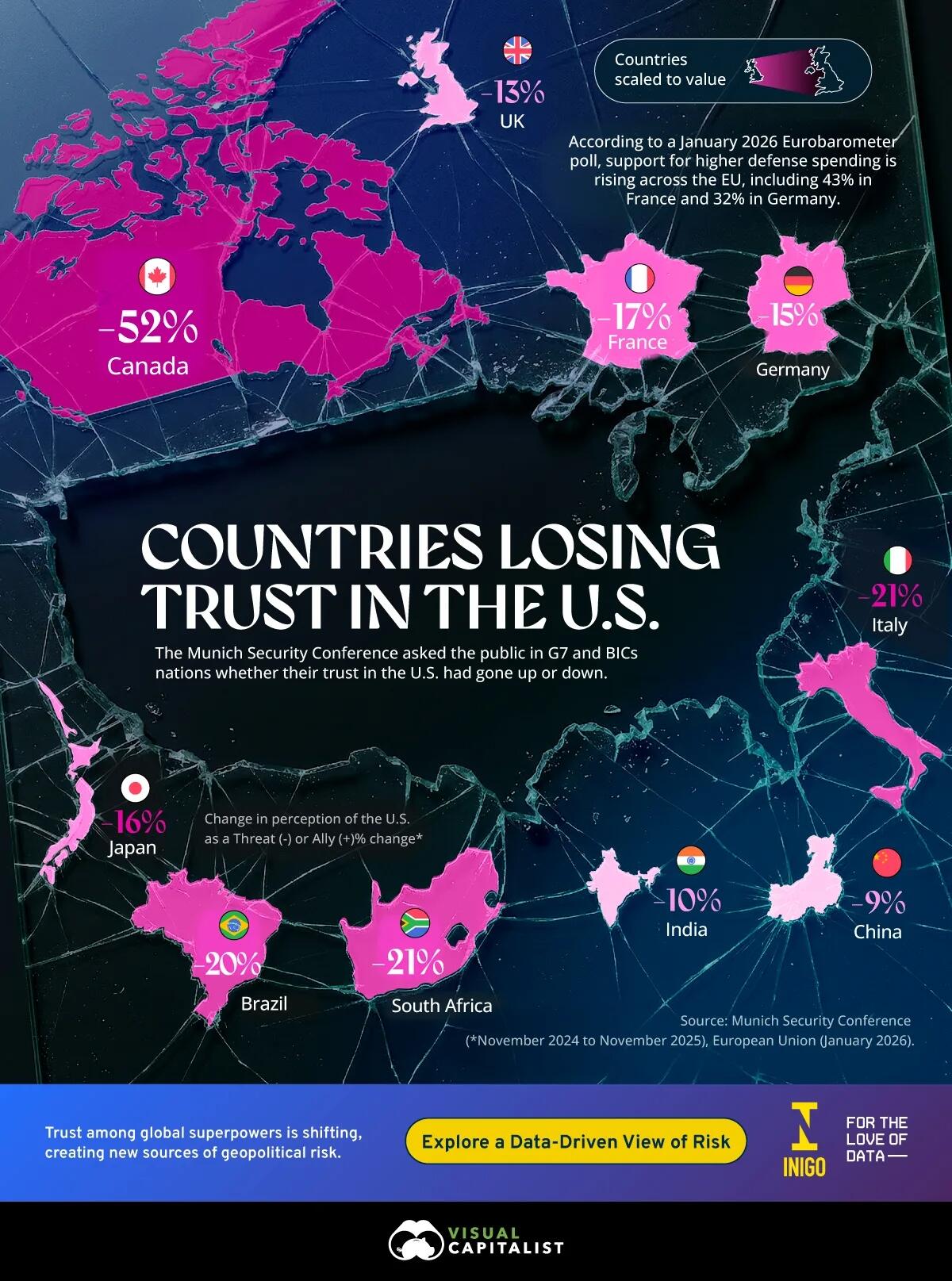
Global perceptions of the United States are shifting.
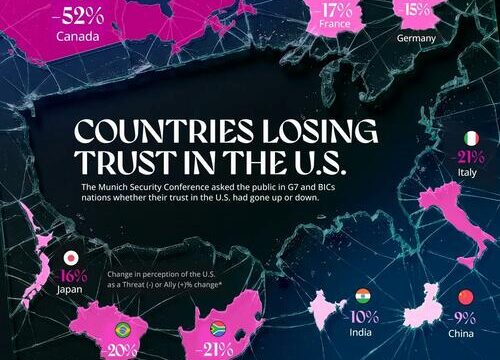
Data from the Munich Security Conference shows a clear decline in trust across advanced and emerging economies.
This visualization, created by Visual Capitalist’s Julia Wendling, in partnership with Inigo, provides visual context to these shifting perceptions and highlights where sentiment is changing fastest. These shifts reflect a broader reassessment of alliances in a more uncertain world.
Declining Trust Across Allies
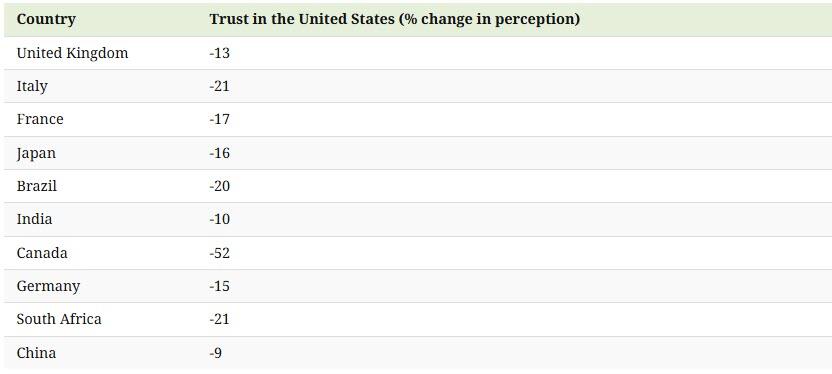
Among traditional allies, the drop in trust is sharp. Canada records the steepest decline at -52%. Italy follows at -21%. France stands at -17%.
Germany and Japan also show meaningful declines at -15% and -16%. The United Kingdom is down -13%. These are not isolated moves. They point to weakening confidence across long-standing partnerships.
Policy uncertainty is one key driver. Shifting trade positions and tariff threats have strained economic relationships. Rhetoric around territorial expansion has also raised concerns, including proposals to annex Greenland and suggestions that Canada could become the 51st state.
At the same time, security concerns are rising across Europe. A January 2026 Eurobarometer poll shows 43% of respondents in France and 32% in Germany support higher defense spending. This suggests allies are preparing for a more uncertain security environment.
Emerging Economies Reflect Similar Trends
The pattern extends beyond Western allies. Brazil and South Africa both decline by more than -20%. India and China show smaller but still negative shifts at -10% and -9%.
This suggests a broad reset in global sentiment. It is not driven by one region alone. Strategic uncertainty is rising across markets.
A Rocky Road Ahead
The data points to a more fragmented global landscape. Trust in the United States is declining across multiple regions. At the same time, countries are preparing for greater uncertainty.
Rising defense support in Europe reinforces this shift. Public sentiment is signaling change. Global alliances may be entering a new phase.
Tyler Durden
Mon, 04/06/2026 – 04:45
https://www.zerohedge.com/geopolitical/countries-losing-trust-us

NATO Was A Big Loser In The Iran War
NATO Was A Big Loser In The Iran War
Authored by Victor Davis Hanson via The Epoch Times (emphasis ours),
NATO members are not legally required to join any member’s military operations that are not formally sanctioned by the alliance or not aimed at protecting the homelands of the membership.
But they often do just that.
Some NATO members joined the Americans in Afghanistan and Iraq on the theory that, in the post-9/11 environment, the Taliban and Saddam Hussein were dangers to all Western security.
They followed the precedent set by America’s 1999 intervention in the distant Balkans, leading a three-month NATO campaign to dismantle Slobodan Milošević’s often bloody ambitions of a Greater Serbia. The United States also joined the 2011 U.N.-approved, and French- and British-inspired, NATO “coalition of the willing” bombing campaign in Libya.
That effort proved a seven-month misadventure—especially since the targeted Libyan strongman Muammar Gaddafi had given up his nuclear weapons program and was desperately trying to cut a deal with the West.
When NATO members in the past have operated unilaterally to defend their own national interests, they have often called on the United States, as NATO’s strongest member, for overt help.
For nearly 40 years, the United States had offered logistical, intelligence, reconnaissance, refueling, and diplomatic support to the French in their unilateral and postcolonial efforts to protect Chad from Libya and, later, Islamists.
During the 1982 Falklands War, a solitary Britain faced enormous logistical challenges in steaming halfway around the world to eject Argentina from its windswept and sparse islands.
U.S. aid was critical to the effort.
So America stepped up to help with intelligence, reconnaissance, the supply of some two million gallons of much-needed gasoline, and crucial restocking of Britain’s depleted Tomahawk missiles.
The American tilt to Britain prompted anger from most Latin American nations of the shared Western hemisphere, as well as from many Hispanic American citizens at home.
No matter—President Ronald Reagan rightly saw the importance of solidarity with a NATO member and a long-time American ally. So he gave Britain a veritable blank check for American aid.
Currently, America has not asked NATO members to help bomb Iran—even though Europe, not the United States, was in range of Iranian ballistic missiles, and soon perhaps nuclear-tipped ones as well.
Europeans are far more vulnerable to Iranian-inspired Islamic terrorism. They are more reliant on foreign oil from the Middle East, some of it passing through the Strait of Hormuz.
All the United States had initially asked for was basing support in disarming a common Western enemy that, for nearly half a century, has slaughtered American diplomats and soldiers and tried to kill a U.S. president and secretary of state.
But most NATO members could not even offer tacit help. Some damned the U.S. effort as either illegal or unnecessary.
The American public watched the British waffle for days over permitting Americans to use their Diego Garcia base.
The Spanish banned American use of their NATO bases and airspace.
The Italians refused a request from American bombers to land and refuel at a Sicilian NATO base.
Many NATO heads of state rebuked the United States to their domestic audiences while, in typical two-faced fashion, publicly offering empty verbal support for the U.S. effort.
The NATO response to an Iranian missile aimed at fellow NATO member Turkey was anemic.
Even worse was the pathetic British reaction to another Iranian missile launch at a British base at Akrotiri, Cyprus.
Yet a successful American effort in neutering a theocratic Iran was clearly of benefit to Europe. So is preventing the international waters of the Strait of Hormuz from becoming a toll booth run by the Iranian mullahs.
Such passivity was in sharp contrast to the five-year-long Ukraine War on the borders of Europe.
Ukraine was not in NATO.
Ukrainian politicos and ambassadors had sometimes played an intrusive, partisan role in the 2016, 2020, and 2024 American presidential elections.
Nonetheless, there were urgent European requests for the United States to honor the spirit of NATO solidarity and to get across the Atlantic as quickly as possible to protect the territorial integrity of Europe.
Yet continental Europe is not intrinsically weak. The combined population of the European Union and European NATO members is around 450 million—a population more than 100 million greater than that of the United States.
These same European nations enjoy an aggregate annual GDP of more than $22 trillion, 10 times the size of the Russian economy.
European diffidence comes on top of the perennial American effort to harangue NATO members to honor their 2 percent of GDP defense commitments—especially in the case of deadbeat Spain and Canada, who for years welched on their pledges.
Trump’s harangues were not what was undermining NATO.
Instead, he ripped off a happy-face scab and exposed a festering wound of increasingly anti-American hypocrisy beneath.
If you wanted to wreck the alliance, there would be no better way than to follow the duplicitous examples of Western European NATO members.
Tyler Durden
Mon, 04/06/2026 – 04:00
https://www.zerohedge.com/geopolitical/nato-was-big-loser-iran-war

Long-Term Social Media Use Linked to Depression, Self-Harm in Young People: Study
Long-Term Social Media Use Linked to Depression, Self-Harm in Young People: Study
Authored by Jerry Zhu via The Epoch Times,
An Australian-led study has found children and teenagers who spend more time on social media are more likely to experience depression, self-harm, substance use, and lower achievement later in life.
Published in JAMA Pediatrics, the systematic review examined data from 153 studies consisting of over 350,000 children and adolescents aged between 2 and 19 years, for up to two decades.
“The strongest pattern we saw was between social media use and later problematic media use, suggesting early patterns of engagement may become more entrenched and difficult to manage over time,” said Sam Teague, a senior research fellow at James Cook University.
The study focused on longitudinal research, which follows participants over time and offers stronger insight into how behaviours and outcomes develop.
Teague said previous research in the field often relied on snapshots collected at a single point in time, making it harder to determine whether social media use preceded negative outcomes.
However, she stressed the findings do not prove social media causes harm.
Instead, the results show consistent links between higher use and a range of developmental outcomes, including cognitive, social-emotional, physical health, and motor development.
Amy Orben, a professor at the Medical Research Council Cognition and Brain Sciences Unit at the University of Cambridge, said the relationship may be more complex.
“It may be that children who are already struggling spend more time on social media, rather than social media being the cause of their difficulties,” Orben said.
“Similarly, some personality traits or life circumstances might make certain children both more likely to use social media heavily and more likely to experience poorer developmental outcomes.”
Adolescents Identified as Most Vulnerable
Teague said one possible explanation is that time spent online may displace activities linked to better mental health.
“Time spent on digital media [could] displace time that would otherwise be spent on things that are linked to improved mental health, like exercise and connecting with family and peers in real life,” Teague told The Epoch Times in an email.
She also contrasted the interactive nature of social media with traditional media.
“Unique to digital media over traditional media, is its interactive nature, whereby children and teens are encouraged to keep engaging with content through addictive features like auto-play and auto-scroll,” she said.
Adolescents in particular were identified as more vulnerable to the effects of social media.
“Early adolescence is when identity formation and peer relationships become key developmental systems for young people,” she said.
She added that social media can magnify these pressures through constant external feedback and large social comparison.
“Action is needed at the policy and platform level most to make our online environments, that are designed largely for adults, appropriate for children,” she said.
“Addictive design features particularly need attention, like auto-play and auto-scroll, as well as exposure to harmful content.”
Social Media Companies Taken to Court Over Claims of Addictive Design
The new research comes as plaintiffs won a landmark social media addiction case in the United States.
The civil trial in Los Angeles centres on a 20-year-old woman who alleges major tech companies designed their platforms to be addictive, contributing to mental health issues.
Defendants include Instagram and YouTube, while cases involving Snapchat and TikTok have been settled privately.
Lawyers for the plaintiff argue she became addicted to social media as a minor, leading to depression, body dysmorphia, and suicidal thoughts.
YouTube’s legal team has rejected the claims, arguing the platform is not addictive, and is comparable to video services such as Netflix, where users can stop scrolling at anytime.
On Feb. 18, Meta Chief Executive Mark Zuckerberg told the court the company had long since abandoned goals of “increasing time spent on apps,” instead focusing on engaging users through “creating value.”
Tyler Durden
Sun, 04/05/2026 – 23:20