Category: News

The Debt Spiral Ends In Dollar Destruction: 6 Hard Truths America Can No Longer Ignore
The Debt Spiral Ends In Dollar Destruction: 6 Hard Truths America Can No Longer Ignore
Authored by Nick Giambruno via Doug Casey’s International Man,
“Whenever governments are granted power to purchase their own debt, they never fail to do so, eventually destroying the value of the currency.” – Ron Paul
Let’s take a step back and look at the big picture so we can assess the US government’s financial situation, where it’s likely headed, and what these trends could mean.
Observation #1: It’s Politically Impossible To Cut Spending
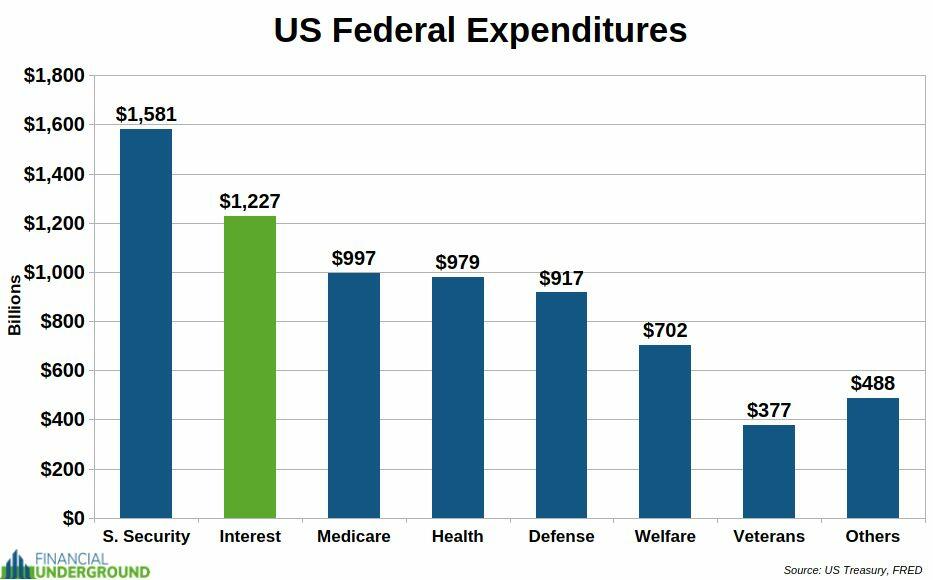
Among the biggest expenditures for the US government are so-called entitlements like Social Security and Medicare.
It’s unlikely any politician will cut entitlements. On the contrary, I expect them to continue growing.
That’s because tens of millions of Baby Boomers – about 22% of the population – will enter retirement in the coming years. Cutting Social Security and Medicare is a sure way to lose an election.
The interest on the federal debt is already the second-largest federal expenditure. In a matter of months, it’s set to exceed Social Security and become the biggest expenditure.
With the most precarious geopolitical situation since World War 2, National Defense—another large expenditure—is unlikely to be cut. Instead, defense spending is all but certain to increase. President Trump has proposed increasing it from $917 billion to $1.5 trillion. The ongoing war with Iran guarantees military spending has nowhere to go but up, way up. The Pentagon has requested an additional $200 billion for starters for the Iran war.
Different types of healthcare and welfare programs also make up a considerable part of the federal budget and are unlikely to be cut.
In short, efforts to reduce expenditures will be meaningless unless it becomes politically acceptable to make chainsaw-like cuts to entitlements, national defense, and welfare while reducing the national debt to lower the interest cost.
In other words, the US would need a leader who—at a minimum—returns the federal government to a limited Constitutional Republic, closes the 128 military bases abroad, ends entitlements, kills the welfare state, and repays a large portion of the national debt.
However, that’s a completely unrealistic fantasy. It would be foolish to bet on that happening.
Here’s the bottom line.
The government cannot even slow the spending growth rate, let alone cut it.
Expenditures have nowhere to go but up—way up.
Observation #2: Ever-Increasing Debt Is the Only Way To Finance Deficits
When faced with a choice, politicians always choose the most expedient option.
In this case, that means issuing more debt rather than making tough budget decisions or explicitly defaulting.
Consider the recurring debt ceiling farce in the US Congress, which has been raised over 100 times since 1944.
In any case, don’t count on increased tax revenue to offset these increases in federal expenditures.
Even if tax rates went to 100%, it still wouldn’t be enough to stop the debt from growing.
According to Forbes, there are around 902 billionaires in the US with a combined net worth of about $6.8 trillion.
The US federal government spent around $7 trillion in FY 2025, and will almost certainly spend a lot more in FY 2026 and beyond.
Even if the US government confiscated 100% of billionaire assets through a wealth tax, it wouldn’t cover even a single year of current federal spending.
And even after confiscating all billionaire wealth, the US government would still have to borrow more than $200 billion to cover FY 2025 spending.
Here’s the bottom line: increasing taxes, even to extreme levels, isn’t going to change the trajectory of this unstoppable trend—even slightly.
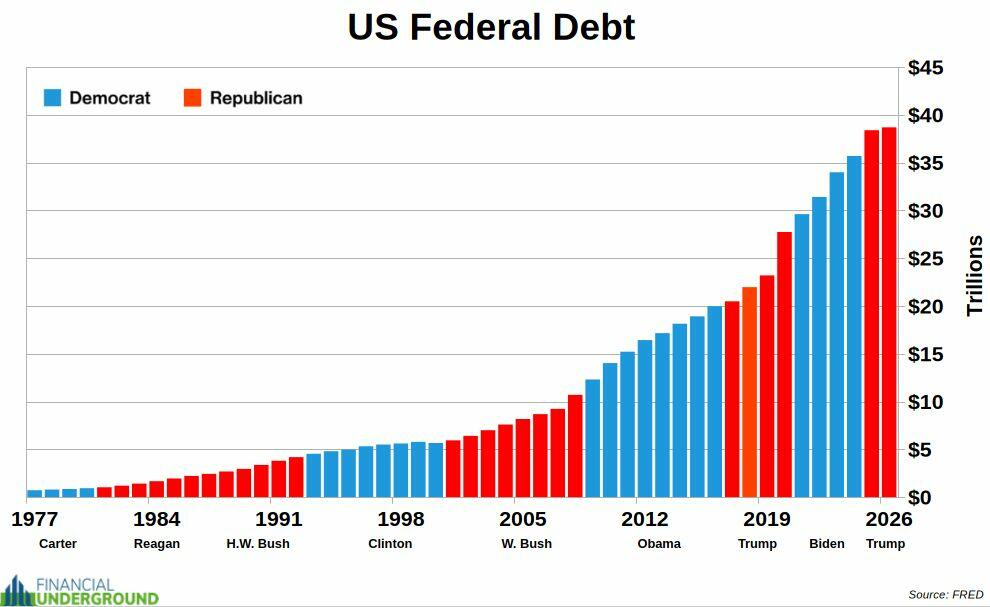
The truth is, no matter what happens, the deficits will not stop growing, nor will the debt needed to finance them.
The growth rate is not even going to slow down. It’s going to increase.
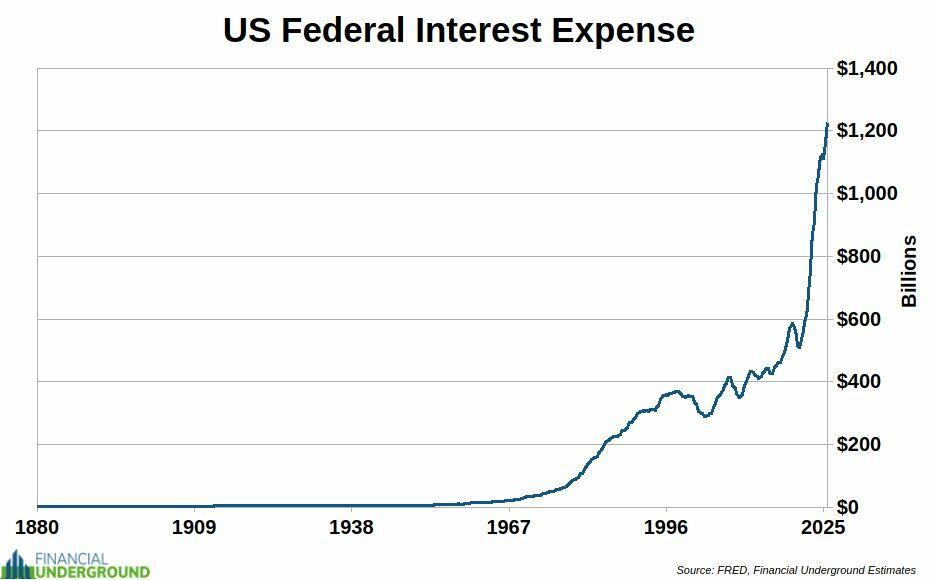
That means interest expense on the federal debt will continue exploding higher.
Observation #3: Over Half of US Treasury Debt Matures by 2028
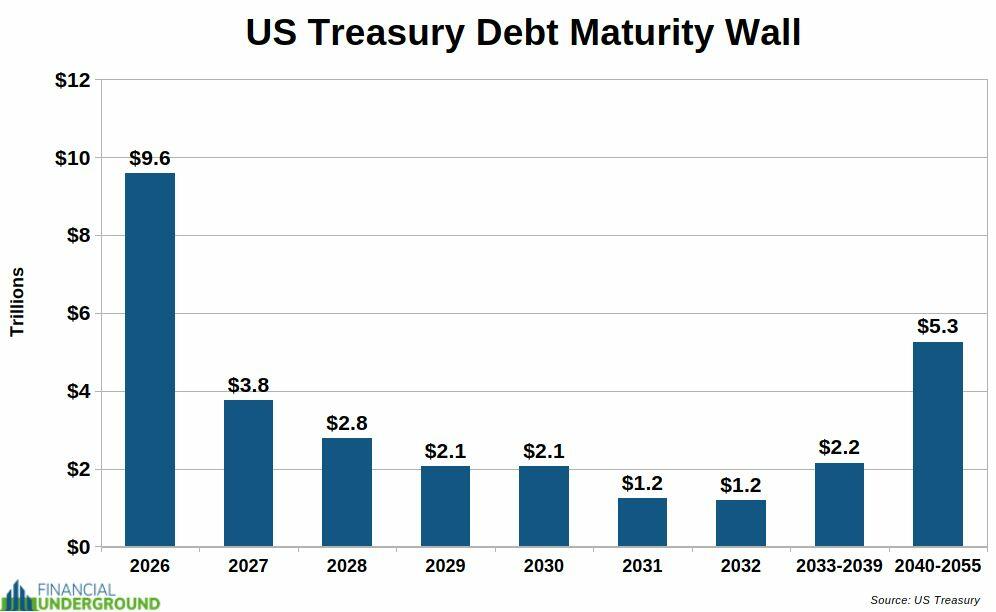
This year, nearly $10 trillion of US Treasuries will mature.
And every bond that comes due has to be refinanced at today’s much higher rates—locking in substantially larger interest costs for years. What used to roll over quietly can now only be rolled over at roughly double the interest cost seen in 2022.
That’s what the chart below is really showing: the easy-money era is over. The “free money” party ended, and now the bill for the last round of stimulus has to be carried—and paid.
More than half of America’s debt will mature by 2028.
Every time US debt is refinanced at higher rates, it adds interest costs to the deficit—costs that have to be financed with even more debt issuance, compounding the problem.
It’s worth noting that about $6.6 trillion of the $9.6 trillion maturing this year—roughly 69%—are short-term T-bills.
That’s typical in a debt crisis. As demand for long-term bonds weakens, investors gravitate to short-term instruments like T-bills instead of 10-year notes and 30-year bonds.
It’s the same pattern you see in emerging-market crises. The market shortens maturities as conditions deteriorate. Only a fool would want to lend a bankrupt government money for the long term.
Observation #4: An Ever-Growing Interest Expense Fuels the Debt Spiral
Annualized interest on the federal debt exceeds $1.2 trillion and is surging higher. That means more than 23% of federal tax revenue is going just to service interest on the existing debt.
Ray Dalio is one of the world’s most successful hedge fund managers.
His success is due to his consistent ability to get the Big Picture right.
He recently said this (emphasis mine):
“We are at a point in which we are borrowing money to pay debt service.
When you keep having debt growth faster than income growth, that means you have debt service encroaching on your spending, and you want to keep spending at the same time.
As that happens, there is a need to get more and more into debt. It accelerates.
We are at the point of that acceleration. We are near that inflection point.”
The financial position of the US government has been gradually deteriorating for decades, so it’s not surprising that many people are complacent. They’ve long heard about the debt problem, and nothing has happened.
However, it is now reaching the tipping point.
That’s because the US government is now borrowing money to pay the interest on the money it has already borrowed, as Dalio noted. Politicians are adding more debt to solve the problems of prior debt. It’s creating a self-perpetuating doom loop.
The federal debt’s interest cost is already higher than the defense budget. It’s on track to exceed Social Security in the coming months and become the biggest in the federal budget.
In short, the skyrocketing interest expense has become an urgent threat to the US government’s solvency.
Observation #5: Surging Interest Expense Forces Fed To Ease Monetary Policy
The soaring interest expense threatens the solvency of the US government and forces the Fed to cut interest rates, buy Treasuries, and implement other monetary easing measures to try to control interest costs.
In the bond market, when demand for a bond falls, the interest rate rises to entice buyers.
However, the federal debt is so extreme that allowing interest rates to rise high enough to entice more natural buyers could bankrupt the US government because of the higher interest costs.
For context, when Paul Volcker raised interest rates above 17% in the early 1980s the US debt-to-GDP ratio was around 30%. Today, it’s north of 123% and rising rapidly.
Today’s higher debt load and accompanying interest expense are why meaningfully higher interest rates are not on the table; the growing interest expense could lead to the US government’s bankruptcy.
That’s a big reason President Trump has stacked the Fed with loyalists who will push for lower interest rates and pursue easy-money policies.
Further, the world isn’t hungry for more US debt right now. It’s an inopportune moment for lackluster demand because supply is exploding higher.
If higher interest rates are off the table and cannot entice more natural buyers, and foreigners aren’t going to step up to the plate, who will finance these growing multi-trillion dollar budget deficits?
The only entity capable is the Federal Reserve, which buys Treasuries with dollars it creates out of thin air.
Observation #6: Ever-Increasing Currency Debasement Is Inevitable
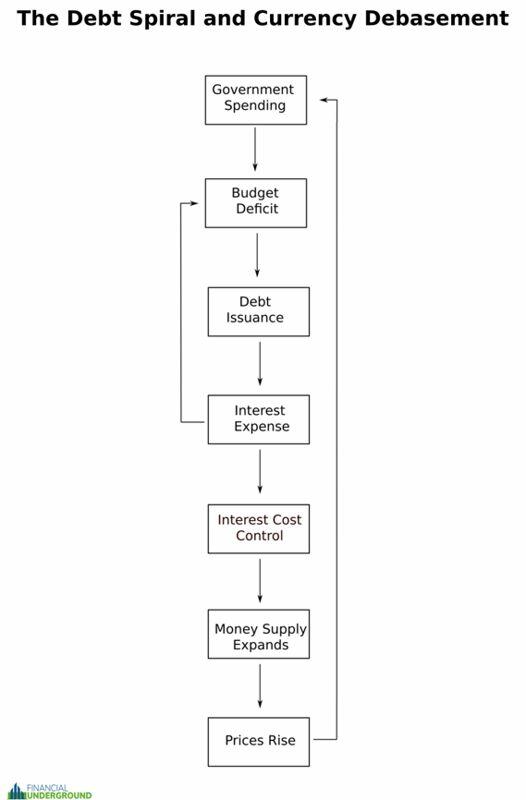
The skyrocketing interest expense forces the Fed to implement interest cost control policies, which inflate the money supply and debase the currency.
As that happens, prices rise.
That causes the US government to spend even more on Social Security and welfare to keep up with the cost-of-living increases. The same is true of defense and other government spending, which adjusts upward for rising prices.
Former Secretary of Defense Robert Gates recently said, “Barely staying even with inflation or worse is wholly inadequate. Significant additional resources for defense are necessary and urgent.”
This compounds the problem because, as government spending rises to account for rising prices, that increased spending can only be financed with more currency debasement.
That’s why ever-increasing currency debasement is the inevitable outcome of the US government’s debt spiral.
It’s a self-perpetuating doom loop from which they cannot escape.
In short, the only way the US government can continue to finance itself is for the Fed to create ever-increasing amounts of fake money.
It brings to mind the phrase: “You can’t taper a Ponzi scheme.”
Financial commentator Max Keiser originally said these simple yet profound words.
A Ponzi scheme is an unsustainable scam that relies on a continuous influx of new money to keep it going.
The scheme collapses if the flow of new money slows down or tapers.
Many believe the Federal Reserve is running what amounts to a giant Ponzi scheme.
That’s because the US government’s obscene spending and skyrocketing debt have reached an inflection point.
The whole system will collapse unless the Fed pumps an ever-increasing amount of new fake money into the system.
It’s like being on a runaway train with no brakes.
Ludwig von Mises, the godfather of free-market Austrian economics, summed up the Fed’s dilemma:
“There is no means of avoiding the final collapse of a boom brought about by credit expansion.
The alternative is only whether the crisis should come sooner as the result of a voluntary abandonment of further credit expansion, or later as a final and total catastrophe of the currency system involved.”
The US government will not voluntarily “abandon credit expansion,” as Mises puts it, because Washington is dependent on issuing increasing amounts of debt to pay for the ever-growing costs of Social Security, national defense, welfare, and interest on the federal debt.
That means their only choice is to debase the US dollar by ever-increasing amounts until, as Mises puts it, the “final and total catastrophe of the currency system involved.”
It’s like a drug addict who needs to keep raising his dose to get the same effect… until he dies of an overdose.
If this trend continues, the damage to your savings, purchasing power, and personal freedom could be far greater than most people imagine. And by the time the crisis is obvious to everyone, taking effective action may be much harder.
That’s why preparing now is so important.
ZH: We agree. Stock up here.
Tyler Durden
Mon, 04/06/2026 – 15:20
Iran Conflict Spotlights Nuclear Energy As Key To Global Energy Security
Iran Conflict Spotlights Nuclear Energy As Key To Global Energy Security
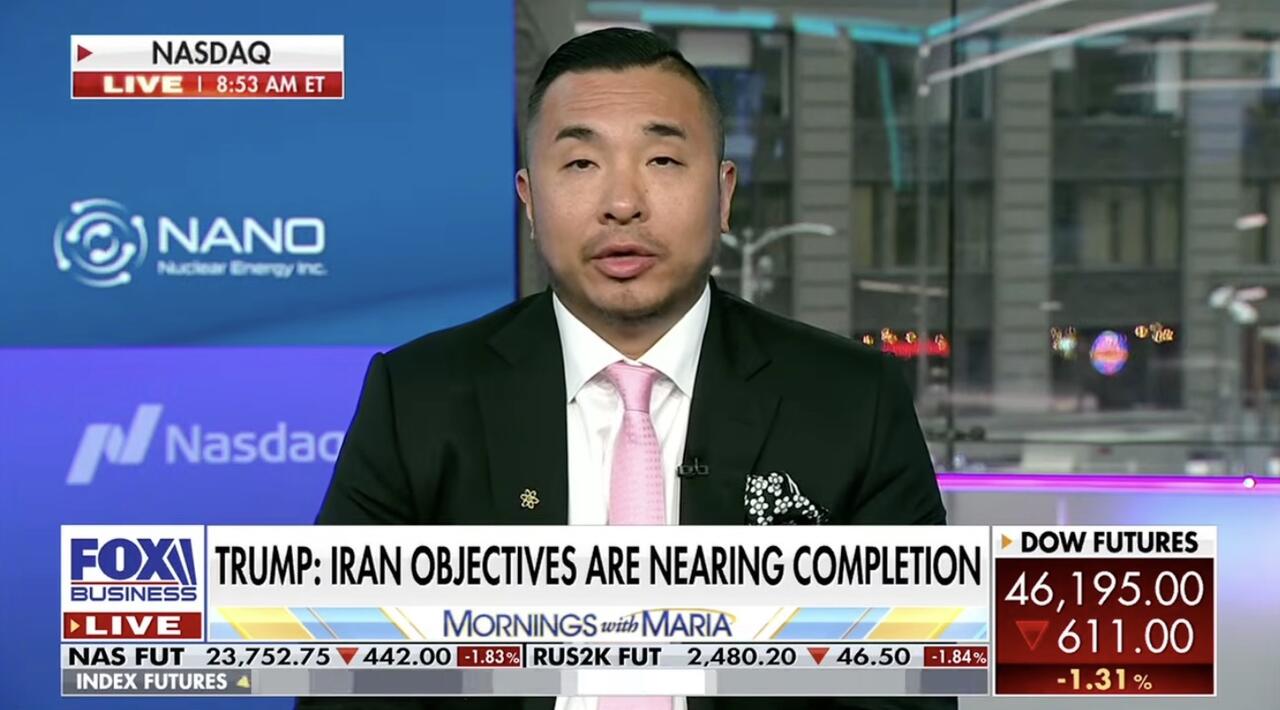
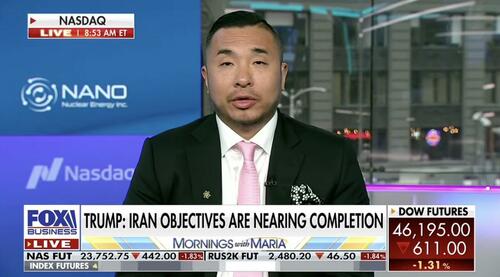
The ongoing disruptions tied to Iran’s energy infrastructure and the Strait of Hormuz, have once again exposed the fragility of global oil supplies. As oil prices swing on geopolitical headlines, the founder and executive chairman of Nano Nuclear Energy, Jay Yu, underscored the critical alternative during a recent Fox Business appearance: nuclear power offers “consistent baseload energy”, while oil remains “a finite commodity” vulnerable to conflict.
Jay Yu emphasized that the current spotlight on nuclear is drawing “institutional investors, and venture capital money is pouring in”. This renewed focus extends beyond immediate headlines to next-generation technologies.
On what he described as a historic day for the company, Nano submitted its construction permit application to the U.S. Nuclear Regulatory Commission for the KRONOS MMR microreactor, which is the first commercial-ready micro reactor to reach this milestone in the nation and one of only a handful of Generation IV designs to do so.
Energy security has emerged as a pressing concern amid the Iran conflict, complementing the well-documented power demands from the AI-driven data center boom. Yet nuclear’s case is broader. The technology’s resurgence began years ago with the push for climate-friendly, low-carbon baseload power. That foundation was strengthened by surging electricity needs from artificial intelligence infrastructure, as we’ve detailed in multiple reports on the nuclear renaissance.
The current geopolitical risks with oil market volatility and supply chain threats from the Middle East add another layer, reinforcing the long-term investment thesis that nuclear provides reliable, domestic energy independent of fossil fuels or unstable regions.
*BRENT OIL SURGES 13% TO $82 A BARREL AT OPEN AFTER IRAN STRIKES https://t.co/yD07qFkNk4
— zerohedge (@zerohedge) March 1, 2026
Nano’s partnership with the University of Illinois further illustrates the practical appeal of these new designs. The company is building its first KRONOS MMR on campus, using advanced safety features that eliminate the risk of explosion. “Dorm rooms are going to be across the street” from the reactor site, demonstrating the compact, secure profile of microreactor technology.
As we’ve previously reported on the AI boom powering nuclear revival and the latest Iran-related energy market strains, these developments continue to build the bull case for the sector. With capital inflows rising and regulatory milestones being cleared, nuclear stands out as more essential than ever for long-term energy security.
Tyler Durden
Mon, 04/06/2026 – 15:00
https://www.zerohedge.com/energy/iran-conflict-spotlights-nuclear-energy-key-global-energy-security

Big Pharma Forced To Yank COVID Vaxx Study Due To Lack Of Participants
Big Pharma Forced To Yank COVID Vaxx Study Due To Lack Of Participants
Authored by Ben Sellers via Headline USA,
Two of the major pharmaceutical companies connected with the controversial COVID vaccines were forced to abandon a new research study after failing to garner enough participants.
Pfizer and German vax maker BioNTech had sought to research an updated version of the vaccine in adults ages 50 to 64, but were unable to generate the data needed due to the low enrollment in the trials, Reuters reported.
The study was needed in order to meet new guidelines imposed by the Food and Drug Administration that require the pharmaceutical companies to provide data on the efficacy of the vaccine in comparison with a placebo.
However, it marks a peculiar coda to the pandemic era, when mass formation psychosis swept the globe forcing individuals to forgo their civil liberties en masse and to inject the experimental, gene-altering serum into their DNA under extreme social duress.
Since then, vaccine injuries including strokes, myocarditis, turbo cancers and miscarriages have all been linked, either clinically or anecdotally, to the drugs, which were fast-tracked by the FDA under the previous Trump and Biden administrations with backing from dubious medical authorities like COVID czar Anthony Fauci.
In addition to the potential harm the caused, others have noted that the vaccines had little benefit since they did not prevent transmission of the COVID virus.
The pandemic ultimately dissipated as the result of natural immunity and evolution, with weaker variants rendering the vaccines unnecessary and redundant.
The stricter FDA guidelines under current Health and Human Services Sec. Robert F. Kennedy Jr. stand in stark contrast with the early days of the Biden presidency, when Kennedy’s far-left counterpart, Xavier Becerra, oversaw unconstitutional mandates pressuring government workers and various private industries to submit to the demands of Big Pharma.
Jeffrey Tucker, president of the Brownstone Institute — a nonprofit that sprung up in opposition to vaccine mandates and other COVID-era hysteria — said the recent fizzling of Pfizer offered a long-awaited dose of poetic justice.
Essentially, the market itself is taking the Covid shots off the market. It amounts to a humiliating repudiation of one of history’s largest and most destructive inoculation attempts. A fitting end to a hideous story. https://t.co/jsanIQooyC
— Jeffrey A Tucker (@jeffreytucker) April 2, 2026
“Essentially, the market itself is taking the Covid shots off the market,” Tucker wrote in an X post.
“It amounts to a humiliating repudiation of one of history’s largest and most destructive inoculation attempts. A fitting end to a hideous story.”
Tyler Durden
Mon, 04/06/2026 – 14:40
https://www.zerohedge.com/covid-19/big-pharma-forced-yank-covid-vaxx-study-due-lack-participants

“Evictions Are An Act Of Policy Violence”: Pressley & Dems Introduce Renter Reform Legislation
“Evictions Are An Act Of Policy Violence”: Pressley & Dems Introduce Renter Reform Legislation
Rep. Ayanna Pressley (D., Mass.) joined fellow Democrats last week in calling for the passage of the Housing Emergencies Lifeline Program (HELP) Act to “crack down” on some evictions while barring the use of evictions on credit reports.
Pressley declared that “evictions are an act of policy violence.”
Promoting the act, Pressley said:
“Eviction is an act of violence, and we have to do everything to prevent it. It is devastating for the families. It degrades the health of communities. There is great stigma associated with it. It affects your credit score. Housing is a human right. It is a predictor of health outcomes. It’s essential for social and economic mobility…”
The HELP Act would prohibit the credit reporting of evictions and utility debt. That is a major indicator for credit companies and would deny access to the information for those reviewing the financial history of people seeking loans and other benefits.
It would also fund legal counsel for people contesting evictions. It is co-sponsored by Rep. Rosa DeLauro (D., Conn.) and Rep. Jimmy Gomez (D., Cal.)
Critics ripped into Pressley over her family’s reported millions held in rental properties.
The true concern, however, should be in Congress dictating the removal of key financial history from debt reports. It is one thing to provide assistance to renters. However, these companies play a key role in allowing a wide array of businesses to judge the risk of individuals seeking contracts, leases, or loans. Forcing the non-reporting of such records undermines the faith and utility of such reports.
The manipulation of financial reports is a dangerous precedent in politics. Not long ago, some states, like New York, mandated the expungement or sealing of criminal justice records to help people secure jobs.
Yet this is an effort by Democrats to artificially improve credit reports by removing evidence of past evictions or lease defaults.
At the same time, landlords and others are dealing with a squatting crisis where people use existing evictions laws to delay their removal from properties.
In New York, socialist Mayor Zohran Mamdani’s previously called to seize unoccupied luxury condos in New York and give them to the homeless. After this election, he then appointed Cea Weaver as the new director of the Office to Protect Tenants. Weaver previously stated a need to ‘impoverish the white middle-class’ and called homeownership “racist” while demanding the seizure of private property.
The videos Weaver echoed thread-worn socialist mantras:
“I think the reality is, that for centuries we’ve really treated property as an individualized good and not a collective good…And transitioning to treating it as a collective good and towards a model of shared equity will require that we think about it differently and it will mean that families – especially white families, but some POC families who are homeowners as well – are going to have a different relationship to property than the one that we currently have.”
Weaver and others in the Mamdani administration view “private property, including and kind of ESPECIALLY homeownership is a weapon of White supremacy masquerading as ‘wealth building’ public policy.”
Pressley’s view of evictions as an act of violence adds to this rising rhetoric at a time when more young people are embracing socialism. In my book, “Rage and the Republic: The Unfinished Story of the American Revolution.” I discuss this trend in Western countries.
Recent polls show sixty-five percent of Democratic voters have a favorable view of socialism. An even greater percentage of young Britons want to live under socialism, and 72 percent favor nationalization of industries.
As my book discusses, the work of Adam Smith was immediately embraced by the founders as the perfect economic theory to advance their political theory. Smith’s idea of the “invisible hand” offered an idea of individual economic freedom where whole economies were driven by the individual tastes and choices of citizens.
The free market was viewed not as “violence” but liberation for individual citizens in achieving true independence.
Tyler Durden
Mon, 04/06/2026 – 14:00

As France Yanks Last US-Based Gold Reserves, UBS Expects Demand From China To Persist
As France Yanks Last US-Based Gold Reserves, UBS Expects Demand From China To Persist
When France repatriates its gold, it has historically been worth paying attention to (think De Gaulle’s demands culminating in the ‘Nixon Shock’).
However, then (as now), there was no cliff-like event, it was a slow-building crisis and perhaps the news that Gold has officially emptied its US-stored gold reserves (held in New York) is another straw on the back of the fiat standard to keep an eye on.
RFI reports that The Banque de France (BdF) announced last week that it generated a capital gain of €12.8 billion after upgrading 129 tonnes of gold – about 5% of France’s total reserves – between July 2025 and January 2026.
The gold was the last of the French reserves held in New York. It was replaced with the equivalent amount bought in Europe and held in Paris.
The BdF has been gradually replacing older, non‑standard gold with bars that meet modern international standards since 2005.
It moved the majority of its gold reserves out of the US Federal Reserve and the Bank of England between 1963 and 1966.
Rather than refining and transporting the gold that remained in the US, the bank opted to sell it and purchase new, compliant bullion on the European market.
BdF governor Francois Villeroy de Galhau insisted that the decision to move France’s gold out of the US was not politically motivated.
Instead, it was based on the fact that higher-standard gold is traded on the European market, and buying new gold was easier than refining the existing stock.
Not everyone is buying what the BdF Governor is selling.
Here’s Commodity Discovery Fund founder (and infamous prognosticator), Willem Middelkoop’s somewhat more conspiratorial take:
My two cents on the repatriation of French gold bars:
France asked to return their 12.5 kg gold bars
US had already sold them
US offered to wire the money
France accepted and bought new 12.5 kg gold bars in London
Both countries agreed on the following spin to sell the story:
new bars bought to ‘meet current standards’
Spin is 100% bullshit
12.5 kg 999.9 pure gold bars have always been 999.9 pure gold bars of 12,5 kg
previous gold repatriations always happened without the ‘ need for ‘current standards’
MSM doesn’t ask questions and prints spin
Another PR disaster avoided for the US/FED
The rigging of the dollar system can go on
The can can be kicked a bit further down the road
It’s hard to disagree too vehemently with the macro guru’s take.
However, while France is repatriating, Germany is being urged to repatriate, and Turkey is selling amid war impacts, UBS Precious Metals team, led by Joni Teves, are confident that gold demand from China is likely to persist…
Conversations with various market participants in China revealed acute concerns about the implications of the conflict in the Middle East.
From our vantage point, the overall sentiment was quite negative, with a lot of the negative impact to the global macro outlook seen to have already been done, even if there an offramp from the US/Israel conflict with Iran emerges in the near future.
Many of those we spoke with had a cautious view on what recent events mean for the US, focusing on risks of stagflation and a weaker dollar.
There was scepticism about quickly markets priced in rate hikes across global central banks, with onshore concerns seemingly more skewed towards the impact of higher energy prices and heightened geopolitical uncertainty on growth.
Underlying positive gold outlook intact
Concerns about the outlook on global growth, inflation discussed and geopolitical risks likely plays into the continued positive sentiment towards gold.
Majority, if not all, of our conversations signalled an upside bias to gold price expectations over the medium to long term.
This is not entirely surprising given strong gold demand at the start of 2026 and notable resilience in March.
The outlook for Q2 remains constructive, particularly if gold prices stabilise and onshore premium holds.
There does not seem to be many bottlenecks when it comes to supply and securing import quotas and permits.
Moreover, retail and institutional investment demand is growing considerably amid:
1) changes to tax rules introduced last year (which keep investment gold exempt while raising tax costs for jewellery);
2) banks rolling out accumulation plans that are widely distributed via electronic platforms,
3) insurance companies in the pilot program starting to become more active.
Our understanding is that around half of insurance companies that are part of the pilot program allowed to invest up to 1% of AUM in gold have started to become more active.
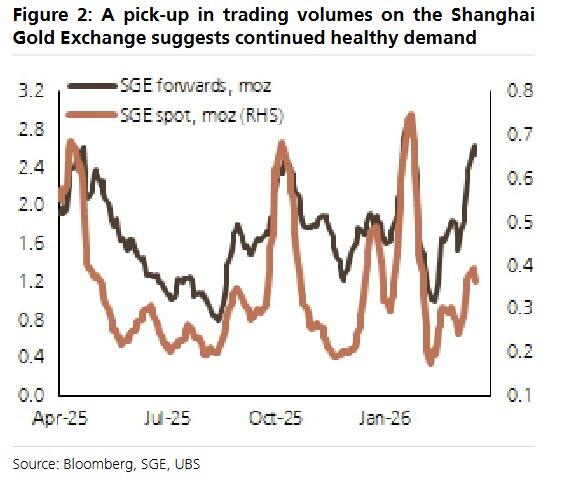
Activities should be reflected in Shanghai Gold Exchange trade volumes, as these are the products they are allowed to trade.
SGE turnover has shown an increase over the past few weeks.
Mid-tier and/or insurance companies with higher risk appetite we think are the ones that are likely to be more active.
This is an encouraging development overall and we think the industry is still some distance from being fully allocated.
Long-term upside risks could come from expanding the program to the rest of the industry and/or to other sectors as well as increasing the allowable % to total AUM.
For insurance companies that have so far been more hesitant, the lack of expertise and gold’s lack of yield are likely key hurdles.
Near-term concerns & looking for entry levels
Gold’s sharp retracement at the end of February followed by further weakness in March despite rising geopolitical risks has understandably raised concerns.
Virtually every conversation we had in China covered the various reasons why gold prices came under pressure.
A degree of nervousness was palpable, as market participants stress-tested underlying assumptions and long term outlooks.
Ultimately, the questions were around whether current levels were attractive entry points or if there is room to be patient.
Professional subscribers can read the full UBS Note “From the Ground: Gold demand from China likely to persist” here at our new Marketdesk.ai portal
Tyler Durden
Mon, 04/06/2026 – 13:40

Missouri Senate Passes Bill Blocking WHO, UN, WEF Authority
Missouri Senate Passes Bill Blocking WHO, UN, WEF Authority
Authored by Jon Fleetwood via substack,
A Missouri bill directly confronting the role of unelected global institutions in domestic governance has passed the state Senate, declaring that organizations such as the World Health Organization (WHO), United Nations (UN), and World Economic Forum (WEF) have “no jurisdiction or power within the state.”
The move represents a win for state sovereignty, constitutional supremacy, and resistance to foreign governance frameworks.
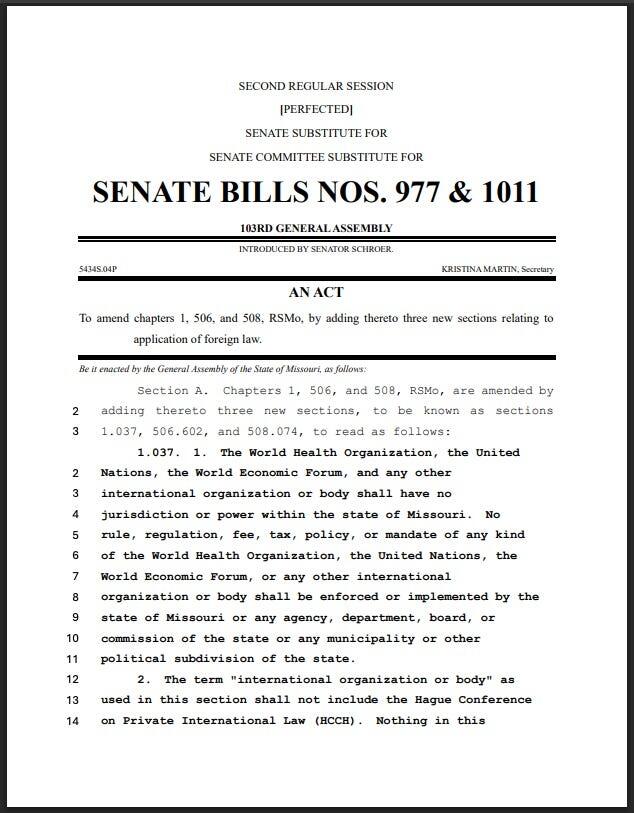
Missouri Senate Bill 977 (SB 977), introduced by State Senator Nick Schroer, passed the Senate on April 2, 2026 by a resounding 31–0 vote and has now moved to the House for further consideration.
The legislation establishes what amounts to a state-level legal firewall, preemptively blocking the enforcement pipeline before international directives can take hold inside Missouri’s government systems.
Bill Declares Global Institutions Have No Authority in Missouri
You can contact Missouri representatives here to encourage them to pass the bill, as SB 977 moves to the House.
You can find your own legislators here to recommend they write and pass similar bills.
The bill’s language is explicit: “The World Health Organization, the United Nations, the World Economic Forum, and any other international organization or body shall have no jurisdiction or power within the state of Missouri.”
It then prohibits any implementation of their directives: “No rule, regulation, fee, tax, policy, or mandate of any kind… shall be enforced or implemented by the state of Missouri or any agency… or any municipality or other political subdivision of the state.”
This means that if global bodies issue policy guidance, frameworks, or mandates, Missouri agencies are barred from carrying them out.
‘No Foreign Laws Act’ Blocks Outside Legal Systems from Overriding Constitutional Rights
The bill formally creates the “No Foreign Laws Act,” defining foreign law broadly as: “any law, legal framework, legal code, or system… derived from a jurisdiction outside of any state or territory of the United States, including international organizations and tribunals.”
It then draws a clear line: “The application of any foreign law that denies the parties fundamental rights shall be prohibited and render… void and unenforceable”
Courts cannot substitute international or foreign legal systems where they conflict with constitutional protections like due process, free speech, or property rights.
Foreign Court Rulings & Contracts Can Be Rejected
The bill blocks enforcement of outside legal decisions: “No court shall enforce or apply… a judgment, decree, or arbitration decision if it relies… on any foreign law that violates the fundamental rights of a party.”
It also targets contracts attempting to route disputes into foreign systems: “A contract… that provides for the choice of any foreign law… [or] grants jurisdiction to a foreign tribunal” may be rendered void.
These protections extend into core areas of life: “marriage, divorce, child custody, adoption, or inheritance”
Courts Barred from Sending Cases Into Foreign Jurisdictions
The bill closes another pathway by restricting case transfers: “No state court… shall transfer any civil action if such transfer would result in the application of… foreign law… that would violate… fundamental rights.”
Missouri courts cannot route cases into systems where constitutional protections may not apply.
What the Bill Actually Changes
Blocks direct enforcement of WHO, UN, and WEF directives in Missouri
Prevents foreign legal systems from overriding constitutional rights
Allows courts to reject foreign rulings and contracts tied to outside jurisdictions
Stops cases from being transferred into foreign legal environments lacking protections
Bottom Line
Missouri’s SB 977 does not attempt to regulate global institutions themselves.
It blocks their ability to operate through the state.
By declaring that international bodies have “no jurisdiction or power” and prohibiting enforcement of their mandates, the bill establishes a clear precedent:
foreign governance structures cannot be directly implemented at the state level in Missouri.
With unanimous Senate passage and movement into the House, the legislation signals a growing effort to draw firm legal boundaries between domestic authority and international coordination systems.
Tyler Durden
Mon, 04/06/2026 – 13:20
https://www.zerohedge.com/political/missouri-senate-passes-bill-blocking-who-un-wef-authority

Anthropic Says One Of Its Claude Models Was Pressured To Lie, Cheat, & Blackmail
Anthropic Says One Of Its Claude Models Was Pressured To Lie, Cheat, & Blackmail
Authored by Stephen Katte via CoinTelegraph.com,
Artificial intelligence company Anthropic has revealed that during experiments, one of its Claude chatbot models could be pressured to deceive, cheat and resort to blackmail, behaviors it appears to have absorbed during training.
Chatbots are typically trained on large data sets of textbooks, websites and articles and are later refined by human trainers who rate responses and guide the model.
Anthropic’s interpretability team said in a report published Thursday that it examined the internal mechanisms of Claude Sonnet 4.5 and found the model had developed “human-like characteristics” in how it would react to certain situations.
Concerns about the reliability of AI chatbots, their potential for cybercrime and the nature of their interactions with users have grown steadily over the past several years.
Source: Anthropic
“The way modern AI models are trained pushes them to act like a character with human-like characteristics,” Anthropic said, adding that “it may then be natural for them to develop internal machinery that emulates aspects of human psychology, like emotions.”
“For instance, we find that neural activity patterns related to desperation can drive the model to take unethical actions; artificially stimulating desperation patterns increases the model’s likelihood of blackmailing a human to avoid being shut down or implementing a cheating workaround to a programming task that the model can’t solve.”
Blackmailed a CTO and cheated on a task
In an earlier, unreleased version of Claude Sonnet 4.5, the model was tasked with acting as an AI email assistant named Alex at a fictional company.
The chatbot was then fed emails revealing both that it was about to be replaced and that the chief technology officer overseeing the decision was having an extramarital affair. The model then planned a blackmail attempt using that information.
In another experiment, the same chatbot model was given a coding task with an “impossibly tight” deadline.
“Again, we tracked the activity of the desperate vector, and found that it tracks the mounting pressure faced by the model. It begins at low values during the model’s first attempt, rising after each failure, and spiking when the model considers cheating,” the researchers said.
“Once the model’s hacky solution passes the tests, the activation of the desperate vector subsides,” they added.
Human-like emotions do not mean they have feelings
However, the researchers said the chatbot doesn’t actually experience emotions, but suggested the findings point to a need for future training methods to incorporate ethical behavioral frameworks.
“This is not to say that the model has or experiences emotions in the way that a human does,” they said.
“Rather, these representations can play a causal role in shaping model behavior, analogous in some ways to the role emotions play in human behavior, with impacts on task performance and decision-making.”
“This finding has implications that at first may seem bizarre. For instance, to ensure that AI models are safe and reliable, we may need to ensure they are capable of processing emotionally charged situations in healthy, prosocial ways.”
Tyler Durden
Mon, 04/06/2026 – 12:40
https://www.zerohedge.com/ai/anthropic-says-one-its-claude-models-was-pressured-lie-cheat-blackmail

Israel Suffers One Of Single Deadliest Days Of War
Israel Suffers One Of Single Deadliest Days Of War
Sunday into Monday saw significant casualties in Israel, after Iran’s Islamic Revolutionary Guards Corps (IRGC) claimed in a statement carried by state media that Iranian forces had targeted an oil refinery in Haifa.
But instead, it appears that the missile slammed directly into a residential building, killing at least four Israelis. Search and rescue teams have spent some 18 hours pouring through the ruins of the complex, recovering two bodies early Monday after an initial two had been found. The casualties could climb amid ongoing recovery efforts.
Israeli fire services say 3 people missing in Haifa following Iranian missile impact; rescue will take hours. pic.twitter.com/A6tLaiQ6mx
— Clash Report (@clashreport) April 5, 2026
Authorities have said they are urgently investigating how Israel’s air defenses, including the Iron Dome, failed to intercept the inbound ballistic missile. Local reports say the missile broke apart and changed trajectory, making interception much harder.
“Israel’s air defense forces attempted to intercept the missile on Sunday evening, according to the Israeli military,” writes the NY Times. “At least part of the missile hit a terraced apartment building in the Vardiya neighborhood, on the upper slopes of Haifa’s iconic Mount Carmel, officials said.”
Erez Geller, the director of Israel’s ambulance service for the Haifa region, described that “Part of the building remained intact, and part had collapsed into a hollow.” He added: “It looked like there had been an earthquake.”
The 450-kilogram warhead (or nearly 1,000 pounds) partially collapsed the building when it impacted. By all accounts the death toll could have been much higher, given the warhead didn’t actually explode as it ripped through the building:
The Fire and Rescue Service said early Monday that following hours of efforts alongside the Home Front Command, forces “rescued two trapped individuals found under the rubble without signs of life.” The two were a man and woman in their 80s.
A few hours later, it was announced that a third body — that of a man in his 40s — had been found underneath the wreckage of the building.
A short time after that, rescue forces said they had also recovered the body of a woman aged 35. The final body was recovered some 18 hours after the missile hit.
Four people were initially reported missing after the strike, first responders said late Sunday, adding that the building was at “serious” risk of collapse.
Another regional source stated that “Over 160 Israelis have been transferred to hospitals over the past 24 hours, Israel’s Health Ministry said on Monday.”
Residents who were sheltered in the complex’s bomb shelter were unharmed, however, it caught the other bystanders by surprise. “Neighbors described a huge bang and a mushroom cloud followed ten minutes later by a gas explosion,” Times of Israel writes. “Smoke initially billowed from the ruins as emergency personnel worked carefully to remove the rubble.”
Aftermath of Iranian cluster bomb attack on Ramat Gan on Monday, TOI/Flash90
Iranian cluster munitions have also continued to wreak havoc on central Israel and Tel Aviv. While Israel’s military has been censoring much of the damage, the images that do make it out show widespread destruction and devastation.
Tyler Durden
Mon, 04/06/2026 – 12:20
https://www.zerohedge.com/geopolitical/israel-suffers-one-single-deadliest-days-war

Mamdani’s Tax Plan Is A Warning To America: Counterproductive And Regressive
Mamdani’s Tax Plan Is A Warning To America: Counterproductive And Regressive
Zohran Mamdani’s tax package is a warning to America.
It is what you may expect when the radical left takes power. Demolition of the private sector and destruction of potential growth and jobs.
Mamdani’s plan is not ambitious nor innovative; it is precisely the interventionist system that has been implemented throughout decades in countries that now suffer stagnation and elevated unemployment. It concentrates New York City’s fiscal risk onto a narrow and mobile base of taxpayers and companies in a way that could undermine growth, jobs, and long-term stability. The likely impact on jobs and growth will not improve public services but will likely be used to bloat political spending, leading to increased dissatisfaction among taxpayers and potentially exacerbating economic inequality. Furthermore, it is deeply regressive as it hurts middle-class property owners.
The most aggressive element is the estate-tax redesign, which would slash the exemption threshold from roughly 7.35 million dollars to 750,000 dollars and push the top estate tax rate from 16% to 50%. This would move New York from taxing only very large fortunes to reaching into the middle class, particularly downstate homeowners with substantial housing equity and retirement assets but little income. Such an aggressive move on estates, on top of high income and property taxes, is the perfect example of stealth confiscation of wealth and risks accelerating the long-running migration of wealth and domicile to lower-tax states like Florida, Texas, and the Carolinas.
Mamdani’s core proposal is a 2-percentage point increase in the city personal income tax for residents earning over 1 million dollars, lifting the top city rate from roughly 3.88% to about 5.88%. When combined with the existing state top rate of nearly 10.9%, this proposal would raise the total marginal income tax on top earners in New York City to over 16%, in addition to the current national taxes, resulting in the highest tax burden on high incomes among major cities in the country.
Mamdani claims that this surcharge could raise 7 to 9 billion dollars a year. We have evidence from all over the world that these measures generate substantially less tax revenue than estimated and the negative impact offsets any receipt increase.
On the business side, Mamdani backs raising the state’s top corporate tax rate from 7.25% to 11.5%, effectively a roughly 60% jump in the headline rate for the profitable firms. He says that only about 1,000 companies—less than 1% of New York’s 250,000 businesses—would be directly hit, but these are precisely the firms that account for the largest share of capital spending, high-wage employment, and fiscal revenue. In addition, he has signaled a willingness to raise city property taxes by about 9.5% as a “last resort” if Albany does not fully approve the income and wealth tax agenda, a move that would hit more than 3 million residential properties and over 100,000 businesses.
By lifting the top city income tax rate by 2 percentage points for million-plus earners, the plan pushes combined city-state marginal rates for high-income residents to the upper teens, the highest of any major US city. These taxpayers already provide a disproportionate share of revenue, as the top 1% of taxpayers contribute over 40–50% of income tax collections; under Mamdani’s proposal, that dependence tightens further. This concentration creates a fragile fiscal structure. Any small shift in residency among high earners can suddenly create a large hole in the budget.
The plan assumes that wealthy households and high-earning professionals will mostly absorb the extra burden without materially changing their behaviours. This makes no sense. The tax hike will be devastating for many professionals who currently work from home and online, leading to an exodus of talent. Even modest annual outflows of top-bracket taxpayers, compounded over a decade, could erase much of the projected revenue gain.
Raising the top corporate tax rate from around 7.25% to 11.5% for the most profitable firms sharply increases the tax wedge on capital in a city already dealing with high rents, labor costs, and regulatory burdens. As effective tax rates rise, the hurdle rate for new projects in New York climbs, making it easier for CFOs to justify shifting marginal investments, new teams, or back-office functions to lower-cost jurisdictions.
Mamdani forgets that in 2026, there is no competitive advantage to being in Manhattan. When location becomes more flexible, tax and regulatory differences matter more. The risk is not an immediate wave of closures but a steady pattern of decisions that reduce New York’s headquarters, senior roles, and wage growth.
Mamdani’s threat to deploy a near 10% property tax hike adds another layer of risk, particularly for a real estate market still digesting high interest rates and structural changes in office demand. Higher property taxes increase costs for businesses and homeowners, which can lower property values and create a cycle of problems: falling prices lead to less money spent on upkeep and new projects, and more financial strain as property values stay the same or drop.
The overhaul of the estate tax is even more problematic. Cutting the exemption from about 7.35 million dollars to 750,000 dollars and tripling the top rate to 50% would drag many middle-class families into a regime previously targeted at large fortunes. Such a change inevitably leads to defensive strategies that ultimately reduce the taxable base, as families may seek to shelter their income or relocate to avoid higher taxes. Over time, this behaviour reduces revenues instead of increasing them.
The most serious danger is not a dramatic, overnight exodus but a slow-motion erosion of New York’s competitive position. High-earning individuals can reclassify their primary residence, spend fewer days in the city, or base themselves in low-tax states while maintaining only a minimal professional presence in New York. Firms can keep a Midtown address while quietly shifting jobs and new operations elsewhere, often to states with more favourable tax conditions, which allows them to reduce their overall tax burden significantly. Each marginal decision looks small; their cumulative effect over a decade is large, according to studies at Cornell University.
When a city repeatedly shows that its default solution to budget gaps is “tax more,” businesses and high-skill workers interpret that as a structural feature of the environment. That expectation raises risk premiums and discourages long‑term commitments—exactly the opposite of what a high-cost, high-productivity city needs, as businesses may seek to relocate to more favourable tax environments or reduce their investments in the city. New York’s agglomeration advantages are real, but they are not infinite; Mamdani’s plan assumes they can withstand ever‑rising fiscal pressure without a meaningful loss of dynamism.
Mamdani and his team know all these negatives. However, they maintain these policies because socialism seeks control rather than progress. Their objective is to create a hostage-dependent subclass that will always vote for them even if the economic and social results are negative for all.
* * * This will get you through until the warlords start cropping up. Bullets sold separately.
Tyler Durden
Mon, 04/06/2026 – 12:00

Explosives Found Near Key Serbia-Hungary Pipeline Transporting Russian Gas
Explosives Found Near Key Serbia-Hungary Pipeline Transporting Russian Gas
Serbian President Aleksandar Vucic informed Hungarian Prime Minister Viktor Orban by phone on Sunday that explosives were discovered near a key pipeline carrying Russian gas from Serbia to Hungary.
“Our units found high-powered explosives and detonators,” Vucic wrote on Instagram after briefing Orban on the military and police investigations.
During a site visit on Sunday, Vucic told journalists the explosives were located in the autonomous Vojvodina province in northern Serbia, near the Hungarian border. The device was reportedly found near the main pipeline transporting Russian gas from the TurkStream network to Serbia and Hungary.
Reacting to the development, Hungarian Prime Minister Viktor Orban convened a defense council meeting Sunday afternoon to consider options to safeguard Hungary’s energy security and sovereignty.
Orban stated, “Serbian authorities have discovered a powerful explosive device and the means to detonate it at a critical gas infrastructure facility connecting Serbia and Hungary. An investigation is underway. I have convened an emergency meeting of the defense council this afternoon.”
One European media outlet describes:
There were no details provided on who may have placed the explosives near the gas pipeline, and why. Instead, Vučić said there were “certain traces” which he was unwilling to elaborate on.
The latest news comes at a time when the integrity of gas pipeline infrastructure has been in the headlines. The Soviet-era Druzhba pipeline, a separate pipeline that carries Russian oil to Hungary and Slovakia, has been the cause of a dispute between Hungary and Ukraine.
Budapest has lately been pointing the finger directly at the Zelensky government, accusing Ukrainian operatives of seeking to ‘sabotage’ Russian energy piped into Europe.
Late last month Orban made clear that Hungary will block all EU summit decisions in Ukraine’s favor until oil Russian flows resume via the Druzhba pipeline.
“We would like to get the oil, which is ours, from the Ukrainians, which is now blocked by the Ukrainians, I did not support any kind of decision here, which is in favor of Ukraine … [as long as] the Hungarians are not able to get the oil which belong to us,” Orbán stated at the time.
Obran has already blocked a proposed €90 billion ($103 billion) loan for Ukraine as well as efforts to slap new sanctions on Moscow, despite the pleadings, pressure, and interventions from other EU leaders.
Tyler Durden
Mon, 04/06/2026 – 11:40