Category: News
Jim O’Connor: Federal recovery policy ignores the most perilous weeks of addiction treatment
Federal agencies are preparing new guidance on recovery housing, transitional housing and long-term recovery supports. The shift comes at a time when communities face growing pressure from rising addiction, repeat overdoses, and a widening gap between treatment and stable housing. Programs serving people in recovery need clearer expectations, stronger coordination and sustainable funding that reflects current realities.
Many people who participate in homelessness or crisis services today carry a mix of untreated addiction, chronic health conditions and long periods of instability. Short treatment episodes often end before people regain the skills required for independent living. Communities benefit from programs that offer routine, counseling, peer support and daily engagement so residents can rebuild the foundation needed for long-term stability.
I run the Second Story Foundation in Illinois. Our program provides long-term recovery housing at no cost, and residents take part in daily structure, counseling, employment preparation and community reintegration. Many arrive with limited recovery capital. They may have no income, no ability to navigate appointments and no stable support network. With time in a consistent environment, they develop the capacity to work, reconnect with family and move toward permanent housing.
Federal policy is beginning to reflect these needs. Agencies are signaling support for recovery housing models that include clear participation expectations and drug and alcohol free environments when clinically appropriate. Recovery community organizations and peer specialists are also gaining wider recognition as essential partners. Their ongoing guidance helps people stay engaged after treatment and provides continuity during the long process of rebuilding stability.
Tens of thousands of people leave short-term residential addiction treatment programs each year in the United States, but the period immediately after discharge is where the system often breaks down. Many leave without income, transportation, a housing plan or reliable follow-up care, and the first weeks carry the highest risk of relapse or overdose. Yet they have already shown commitment by completing treatment and engaging with clinical staff. Federal and state systems should meet that investment with a second stage of support that includes long-term recovery housing, peer guidance, practical skill-building and structured daily expectations.
The Department of Housing and Urban Development is also placing more attention on transitional housing with structured services. Programs that combine case management, routine skill-building, preparation for steady employment and consistent daily structure help residents stabilize more effectively. Strong coordination with health providers and community recovery organizations creates a more reliable and connected system of care.
Connections to workforce partners are another important part of the solution. Regular work gives people a routine they can count on and helps them keep moving forward in their recovery. A steady paycheck brings stability and lets residents handle more of their own responsibilities. Employers gain workers they can depend on, and the community benefits from a stronger, more consistent workforce.
Federal and state leaders can strengthen this progress by investing in programs that combine recovery housing, counseling, peer support and job readiness. These programs cost far less than prolonged reliance on emergency services by people who are unhoused and repeated involvement with law enforcement. They also expand the range of interventions available to local agencies that face record demand.
Recovery is a long process. People need housing, routine and support that continue after formal treatment ends. Federal policy is moving toward a more realistic understanding of what long-term recovery requires. Communities can build on this momentum by supporting programs that are compassionate, practical and designed for lasting stability.
Jim O’Connor is founder and executive director of Second Story Foundation, a Chicago-area nonprofit that provides long-term recovery housing, job training and community support for men rebuilding their lives after substance use disorder.
Submit a letter, of no more than 400 words, to the editor here or email letters@chicagotribune.com.
https://www.chicagotribune.com/2025/12/15/opinion-recovery-housing-addiction-support-services/
Mayor Brandon Johnson’s organizer roots at fore as he courts progressives in budget fight
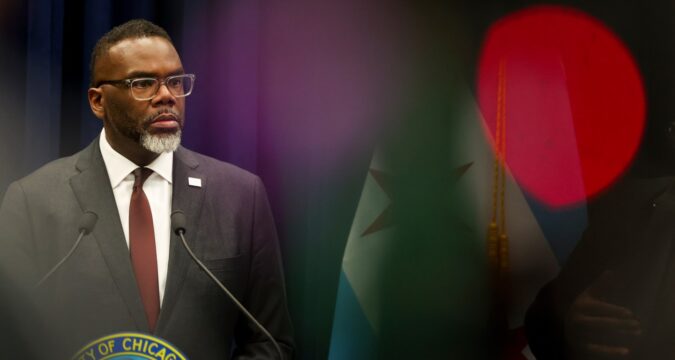
The trenches are dug in Chicago’s slow-moving budget battle. And as he seeks to gain ground with a government shutdown weeks away, Mayor Brandon Johnson keeps lobbing the same ordnance: harsh words.
Last week, opponents of his plan to implement a corporate head tax were “cowards.” He tagged them with a pair of new epithets Wednesday.
“They are immoral. They are wicked,” Johnson said during a City Hall news conference, a remark a spokesperson later said was aimed not at aldermen opposed to his budget, but at mostly anonymous wealthy Chicagoans bankrolling a pushback campaign.
The mayor is far from the only one firing shots. Those groups opposed to his budget have spent tens of thousands of dollars on ads blasting his spending plan, and specifically the controversial head tax at its center.
“Chicagoans deserve honesty and transparency and real solutions that make our neighborhood safer,” one ad from a dark money group opposed to the head tax says. “Not a slush fund that puts politics over people.”
Aldermen in the opposition have harried the mayor with daily news conferences and jabs.
After a City Council meeting at Chicago City Hall on Dec. 10, 2025, Ald. Scott Waguespack, 32nd, answers question on behalf of members opposed to Mayor Brandon Johnson’s budget. (Eileen T. Meslar/Chicago Tribune)
“I don’t think he understands the foundational issues of governing, much less how to do a budget and what’s really in there,” Ald. Scott Waguespack, 32nd, a leader of that pushback, told the Tribune.
Other organizations allied with the mayor have spent big too, even depicting Johnson’s aldermanic opponents as marionettes controlled by billionaire hands.
It’s essentially a public relations campaign aimed from both sides at the hearts and minds of Chicago residents, a war of words waged on TV, online and in the pages of papers. Such campaigns are a routine part of politics, but this budget year they are taking place as aldermen decry a lack of meaningful private negotiations where the real work to craft a municipal budget often takes place.
Johnson remains stuck short of the 25 votes he would need to break a tie and pass a budget. Similarly, the aldermen trying to pass their own plan remain far shy of the 34 votes they would need to overcome the veto Johnson has promised if they hike garbage fees as they have proposed. The two sides remain deadlocked as the city races closer each day to the end-of-year budget deadline.
The mayor has barely budged on his head tax push, though he altered the proposal last week to target companies with more than 500 Chicago employees monthly, at $33 per job. A majority group of aldermen has rejected the proposal, in a committee vote and petitions.
The static back-and-forth has kept City Hall’s focus squarely on the head tax, right where Johnson wants it.
He has pitched the tax as the key component of negotiations and a critical test in which aldermen will either support “working people” or the “ultrawealthy.” And he has carefully cast himself as a foil to his opponents, a move that reaffirms his progressive bona fides with a reelection campaign set to start in mere months.
Earlier this month, Mayor Johnson sounded a lot more like activist Johnson in a private huddle with the Progressive Caucus.
Johnson addressed the bloc made up of his closest ideological allies in the council for over 20 minutes and sought to remind them of where they came from. The Chicago Teachers Union organizer-turned-mayor stressed that this budget was not his, but a product of the progressive movement after over a decade of organizing to reach “our moment,” according to two sources familiar with the caucus meeting.
He repeated that he needs all 19 progressives to unite on his spending plan, sources said. It was a revealing window into how Johnson’s team continued to view these negotiations through the lens of being with his leftist coalition or against it.
Ald. Ronnie Mosley, 21st, center, speaks to Aldermen Raymond Lopez, 15th, right, and Silvana Tabares, 23rd, during a City Council meeting at Chicago City Hall on Dec. 10, 2025. (Eileen T. Meslar/Chicago Tribune)
But right now, caucus members Aldermen Desmon Yancy, Ruth Cruz, Ronnie Mosley, Andre Vasquez and Matt Martin have all expressed concerns with the overall budget to varying degrees. And the moderate-led council opposition is looking to pounce.
For his part, the mayor says the alternative budget so far backed by a council majority is no budget at all because it relies on unfounded assumptions that make it unbalanced. The groups opposing the head tax aren’t motivated by public interest, but by “the bottom line, how they can get richer,” the mayor again argued Wednesday.
Those opponents have scheduled a series of council meetings for this week as they attempt to pass their version over Johnson’s objections.
Johnson has repeatedly identified as backers of the attempted aldermanic end run the the groups One Future Illinois, led by former Rahm Emanuel campaign manager Michael Ruemmler, and Common Ground Collective, led by Chuck Swirsky, once chief adviser to former Chicago Public Schools CEO Pedro Martinez.
The mayor has taken particular aim at investor Michael Sacks, a close Emanuel adviser who is one of around 90 donors to contribute $10 million to the latter group. Meanwhile, the groups and their allies have helped aldermen opposing Johnson organize news conferences and publicize analysis to undercut the mayor’s efforts.
They have also purchased dozens of social media ads, both slamming the Johnson budget’s supporters and praising its critics. Altogether, the two groups have spent around $100,000 on Facebook ads, according to the social media platform. They have also run TV ads.
Asked about the mayor’s criticism and the ad buys, Swirsky said Johnson and his allies are trying to bully their way to a budget.
“Everyone knows you have to stand up to a bully,” he said.
On the other side, the Atlanta-based Black Voters Matter Fund has spent around $80,000 on Facebook ads to back up Johnson’s head tax push. That effort to pass Johnson’s tax is further backed by a fleet of local progressive groups.
Facing backlash, at one point last month the group suspended an ad campaign depicting several aldermen as puppets and clarified in a post, “The ad was never meant to attack any elected official personally. … We are always willing to adjust our messaging.” Since then, the organization has put new ads up.
Though both opponents and proponents of the head tax have pointed to employment data as evidence it would either hurt or have no effect on local jobs, experts have said the data is inconclusive.
The Institute for the Public Good, a think tank whose leadership has ties to Johnson, has also shared data on federal tax rates for corporations, arguing that changes in rates don’t impede economic activity and that companies are benefiting from historic levels of tax breaks under Trump. There is less analysis on the impact of municipal-level head taxes, however, as few places have tested them out in the U.S.
Denver and Mountain View, California, both have a version of the head tax; the latter is home to Google headquarters. Seattle’s head tax — implemented then quickly repealed — was replaced by its “JumpStart” tax on payroll expenses, which faced fierce opposition from Amazon.
The CTU launched a barrage of robocalls last week, charging specific aldermen with cutting millions from neighborhood schools after they officially introduced their alternate budget without the head tax. The tweaked counterproposal retains Johnson’s record $1 billion tax increment financing surplus for CPS, however.
“If you believe (they) should stand with Chicago families instead of protecting big corporations, please … let them know you want them to tax ultrawealthy corporations,” the message said.
A coalition of unions and progressive community groups even held a rally earlier this month outside the office building of GCM Grosvenor in a bid to target Sacks, who led fundraising for the 2024 Democratic National Convention.
“How dare we protect CEOs who are living in mansions and having expensive meals when you have seniors standing in lines, begging for groceries,” close Johnson ally Ald. William Hall, 6th, told the crowd.
At the end of the protest, police detained several demonstrators dressed as Santa Claus as they blocked a Michigan Avenue intersection.
Johnson’s side has argued the tax revenue would go into a “lock box” to support existing community safety efforts, such as summer jobs for teens and neighborhood violence intervention work. Opponents have slammed that idea that the money truly funds such services as, in the words of Ald. Matt O’Shea, 19th, “a gimmick.”
Several attack ads from Johnson allies have zeroed in on Progressive Caucus aldermen who have shown a willingness to break from the mayor, including Yancy, Vasquez and Martin.
Vasquez, 40th, who was depicted as a puppet in front of the likes of Trump and Elon Musk in a Black Voters Matter Fund ad, told the Tribune Wednesday he has “no problem” with a head tax, but has concerns about the revenue estimates from the mayor’s team. He accused Johnson’s administration of withholding the data needed to explore changes to the mayor’s plan: “They’re asking us to help them cook when they won’t show us the ingredients,” he said.
According to Johnson spokesperson Cassio Mendoza, the projected $82 million haul from the tax is based on the number of 500-plus employee companies the administration estimates operate in Chicago using census data, city business licenses and data from the old Chicago head tax rescinded by Emanuel. Johnson’s administration has repeatedly said it cannot share a list of the companies it expects to be taxed, citing rules around sharing tax information.
But the North Side alderman, who called Johnson’s head tax focus “insincere, disingenuous and a cynical way to try to pass a budget,” is instead troubled by Johnson’s plan to cut a planned $260 million advanced pension payment down to $140 million and borrow $166 million to pay for firefighter back pay and $283 million for police settlements. The borrowing will carry $42 million in interest costs.
Martin, 47th, who joined Vasquez to vote against Johnson’s budget last year, also cited the borrowing and shrunken advance payment as “key shortcomings.”
“I don’t get the impression that those concerns are really understood by as many people who should know about them and be concerned,” he told the Tribune.
To pressure Yancy, 5th, Johnson supporters dialed up a flurry of urgent texts from former colleagues during Yancy’s time as a leftist labor organizer. In one response, Yancy retorted he had similar data concerns, “all while this administration has failed to build relationships with allies to pass his agenda.”
“The problems with this budget are more related to a lack of Goodwill and preparing a budget than anything,” he wrote.
Ald. Pat Dowell, 3rd, answers questions after a City Council meeting at Chicago City Hall, Dec. 10, 2025. (Eileen T. Meslar/Chicago Tribune)
The ads and rhetoric from Johnson and his allies have also driven away aldermen in the council’s ideological middle. Ald. Pat Dowell, 3rd, whom Johnson picked to lead the Budget Committee, noted the jabs tied to her backing of the alternative proposal.
She has been falsely accused of supporting a property tax increase, “trying to take meals away from seniors” and wanting to cut youth summer jobs, she said.
“No one likes the attacks when they are not true,” Dowell said. “Many of the priorities that the mayor has, I also share, but we have to figure out how to fund those.”
For his part, Johnson earlier this month couched his budget defense in deeply personal terms.
“If you’ve never gone hungry, you wouldn’t know why I had that urgency,” a hoarse Johnson said about his budget proposal during a City Hall news conference. “If you’ve never opened up your refrigerator and there’s nothing in it — poverty sucks … and we have alders that are more interested in defending these big corporations than families like mine who went without food and electricity and could not afford rent and mortgage.”
Cruz, 30th, a freshman progressive, said she doesn’t question the pain behind the mayor’s plea. But the Northwest Side alderman said her hesitation on which side she’ll take on the budget fight doesn’t mean she’s siding with billionaires either.
“I know what it is to be poor and hungry as well,” Cruz, an immigrant from Mexico, told the Tribune last week as she said a budget needs to include the full advance pension payment to get her vote. “I think we get caught up on saying what is progressive, what is not progressive. Progressive is being fiscally responsible.”
Tribune reporter A.D. Quig contributed.

Paul Vallas: The CTU’s power grab is hurting Chicago’s other unions
The Chicago Teachers Union is now a political machine — focused not on education or collective bargaining but on expanding its control over city government, taxpayer dollars and the broader labor movement.
The CTU has evolved into an existential threat to Chicago’s fiscal health — and to the city’s other public sector unions.
It is time for organized labor — teachers, police, firefighters, trades and city service workers — to recognize that the CTU’s dominance is not solidarity.
The CTU has turned on fellow public employee unions and attacks even its closest union allies. The teachers union is currently in conflict with Service Employees International Union Local 73 over its demands that CTU-represented classroom assistants take over SEIU-represented aide positions. In plain terms, CTU seeks to raid SEIU membership rolls — capturing new dues and expanding its reach — at another union’s expense. This is not solidarity; it’s empire building.
No organization has displayed less solidarity with other workers than the CTU. During the pandemic, its leadership backed one of the longest big-city school closures in the country, while first responders, sanitation workers and health care staff continued reporting to work. While other unions fight for safe streets, CTU leaders have repeatedly framed budget debates as a choice between schools and policing — even though Chicago Public Schools’ annual spending now exceeds that of the Chicago Police Department by roughly five times.
An ever increasing share of city resources are going to schools. Since the CTU’s CORE Caucus took power in 2010, CPS has ballooned into the city’s largest and fastest growing financial liability. Repeated CTU contract wins have sent spending soaring. CPS’ own budget data shows that between 2010 and 2025, its total budget has climbed from $6.9 billion to $9.9 billion. Property tax revenue for schools has more than doubled, while state aid has increased.
The city continues to channel ever larger subsidies into CPS, effectively making the school district a quasi-subsidiary of City Hall. What began under Mayor Rahm Emanuel as pension funding financial assistance has grown into an annual billion-dollar transfer — a mix of dedicated pension levies, tax increment financing surpluses, capital subsidies, fee waivers and subsidized CTA fares for students. Under Mayor Brandon Johnson this diversion of resources has accelerated dramatically.
CTU interests are prioritized at the expense of other unions. Johnson’s 2026 budget proposal includes approximately $552 million projected for CPS in the 2026 budget. These are funds that the school system should use to cover school district expenses, relieving the city of funds that could help it balance its own budget. City departments have shed roughly 2,100 public safety positions in recent years, even as CPS has added 9,000 full-time positions since 2019, despite losing enrollment. The district has over 11,000 more nonteaching employees than police officers in Chicago.
CTU contracts since 2019 will have increased average teacher salaries by almost 50% by the end of the current contract agreement, with nonteaching salary growth also outpacing inflation, according to CPS labor cost projections. The result is a top-heavy structure while classroom outcomes and enrollment continue to decline.
The CTU is making the city less affordable for city workers and their families. The fallout extends beyond teachers. The average private school education from kindergarten through 12th grade for a single child costs more than $175,000, placing a heavy burden on middle-class and low-income families that lack quality public school options. Meanwhile, CTU leaders have fought to dismantle even the limited choices available, such as public charter and magnet schools.
Charters — capped in number and enrollment — receive less per pupil than traditional CPS schools and face expanding mandates that limit innovation. And the Invest in Kids tax credit scholarship program, which once offered low-income access to private education, was eliminated under CTU political pressure.
This inequity hits hardest among other city workers — SEIU; American Federation of State, County and Municipal Employees; and CTA union members — whose paychecks lag far behind those of CTU teacher members. Many can’t access selective magnet schools as easily as teachers can. It’s no surprise that about 40% of Chicago teachers send their own children to private schools.
The CTU’s unchecked political power undermines the very labor movement it claims to represent. Residency-bound workers — including teachers themselves — face higher taxes to fund a school system they no longer trust to educate their children.
Organized labor once built Chicago’s middle class on shared sacrifice and mutual respect. The CTU has traded both for political dominance. For Chicago’s other public employee unions, the question is no longer rhetorical: How long will they tolerate one faction commandeering city resources and dictating its politics? Chicago’s fiscal solvency and the future of organized labor itself hang in the balance.
Paul Vallas is an adviser for the Illinois Policy Institute. He ran against Brandon Johnson for Chicago mayor in 2023 and was previously budget director for the city and CEO of Chicago Public Schools.
Submit a letter, of no more than 400 words, to the editor here or email letters@chicagotribune.com.
https://www.chicagotribune.com/2025/12/15/opinion-chicago-teachers-union-political-power/

Letters: The Tribune Editorial Board gets it wrong in its piece about the State/Lake ‘L’ station rebuild
The Tribune Editorial Board really misses the mark with its State/Lake CTA station editorial (“A snazzy new State Street station. But, seriously, $444M and 3 more years?” Dec. 8). Between mixed comparisons and a seeming lack of awareness, the points the board should’ve made fall by the wayside.
Cost is a major issue, as the board correctly points out, regardless of where the money is coming from. Instead of looking at similar, recent projects such as the Washington/Wabash station, the board compares a full station rebuild to adding an elevator?
Washington/Wabash cost $74.8 million and took 29 months to construct. The proposed 36 months for State/Lake isn’t much longer, considering its size and scope, while the $444 million is almost six times the budget for a station that serves the same elevated lines.
Why didn’t the editorial board probe where that money is going? Washington/Wabash built a mezzanine over Wabash, creating a dark cavern for the roadway and limiting vehicle height while not replacing the now 130-year-old track superstructure. Will State/Lake remove the beams in the middle of Lake? Will there be a direct elevator connection between the elevated station and the subway’s mezzanine? Both of those would be quite costly, adding to the astronomical amount.
Instead, the editorial board uses Quincy as an analog. State/Lake is the CTA’s fifth-busiest station, thus necessitating a complete rebuild, not a mere elevator addition leading to the current narrow and unsafe platforms.
The board also doesn’t look at CTA projects that took even longer. Instead of acknowledging that these downtown transit projects are complicated, the board creates some conspiracy about the withholding of construction costs until the fiscal cliff was resolved.
Transit projects, especially entirely rebuilding a station in a dense downtown core, are costly and lengthy. History proves this. They have nothing to do with the Kennedy Expressway construction, an Illinois Department of Transportation project, or whatever weak links the editorial board tries to create. Besides saying the CTA should hire someone who will shave a year off the project, it has no actual suggestions.
This station is adjacent to two hotels, preventing 24/7 construction. All the board wants to do is complain and, frankly, without reason.
History and now this response show the editorial board is wrong in its piece.
— Brian Kaempen, Chicago
Investigate the project
It took only 16 months during wartime to build the Pentagon and only 33 months to erect the Sears Tower. Why then is it projected to take three years to demolish and build a new elevated station at State and Lake streets? Was the contract issued as time and materials?
It appears that there should be an investigation and explanation as to the estimated time.
— Stephen Morris, Chicago
Insiders’ involvement?
I read the editorial about the cost of the new State/Lake station. The Tribune needs to do more. Assign reporters with financial/business acumen to analyze the contracts to break down the costs of this project. How much for design and engineering? How much for materials and labor? Who are the contractors? Are they bleeding the taxpayers with help from political insiders?
How did the cost go from $180 million in 2021 to $444 million now before any work has been done? This happens every time there is a large government construction project. Think the Kennedy Expressway rebuild and the O’Hare International Airport terminal project.
Say what you will about Donald Trump (and the editorial board certainly will), but when he puts up a building with his own money, you can bet that it will be done on time and on budget.
— Juliet S. Goldsher, Lincolnwood
An example of waste
Did I read this correctly? The cost to rebuild the State/Lake elevated station is $444 million? Half a billion dollars to rebuild one train stop? I can’t believe that there are not more affordable options.
I thought the CTA was broke. Just another example of government waste!
— Tom Murray, Barrington
Bus priority projects
On Dec 1, the CTA hosted a community involvement event for feedback on its new Bus Priority Corridor Study. The event was informative and interactive. With falling ridership and public distrust, are this study and this plan going to be enough?
Chicagoans have been begging for more improvements to the CTA. A struggling bus network — with traffic causing slower speeds and reduced reliability — needs improvement. The buses play a huge, undervalued part in the network and deserve projects that will improve their service.
With the General Assembly recently passing SB2111 with new transit funding, there is momentum here. It is wise to start with five crucial corridors in approaching the community. This is not only a good way to soft-launch a project, but also a necessity after the top-down planning of the Ashland Avenue bus rapid transit, which was killed by community pushback.
The proposed corridors for improvement are: Fullerton Avenue, 55th Street, Cottage Grove Avenue, Western Avenue and Pulaski Road. Western already has support, with a 2024 letter from aldermen demanding improvement. Dedicated center running bus lanes and priority signaling would dramatically improve speed and reliability and give everyone living near the corridor access to true north-south rapid transit.
So what’s the tradeoff? On some streets, a reduction in parking, a travel lane or left turns entirely. The wider the street section, the more can be included, but yes, bus priority projects take up car spaces, which undoubtedly would raise community concern. The hope is that by garnering community support and addressing concerns, a project can prove its worth.
These five corridors are just a start hopefully to a full implementation of bus priority. With the new transit bill and funding, it may be time to holistically reexamine our future. Leadership at the CTA agrees: “CTA is launching its first-ever comprehensive, long-term strategic planning effort.” There is community support for a better future, captured in a grassroots petition, Chicago 2100, a grand plan for the city’s transit network.
With community support and a successful completion of these corridors, CTA could prove the worthiness of bus priority. Furthermore, it could inspire residents to fight for a better connected network. That starts with these five corridors but shouldn’t stop there.
The priority corridor study won’t fix the CTA’s problems, but it signals a brighter future ahead.
— Dan Gentile, Chicago
Accessibility issues
Regarding the editorial “Chill out aldermen, the delivery robots are cute” (Dec. 11): I just think it’s funny how people may use “accessibility” as an argument against the delivery robots. Meanwhile, the city doesn’t clear sidewalks along the parks or on the bridges over the highway, making the city essentially inaccessible for months for people in wheelchairs or with mobility issues.
The robots are the least of the city’s accessibility issues.
— Kyle Breedlove, Chicago
Replacing humans
The editorial on robot delivery devices misses a major reason not to be in favor of such devices roaming the streets of Chicago. They are taking jobs away from humans who would be earning money to pass along to the city during their daily lives.
Robots do not go to grocery stores, the barbershop, gas stations, restaurants or clothing stores. They do not buy movie tickets or theater tickets. They do not buy eyeglasses; they do not go to the dentist; they just do not contribute to the economy, except via the companies that employ them.
— Michael Hersh, Chicago
Note to readers: We’d like to know your hopes for the new year. Please send us a letter, of no more than 400 words, to letters@chicagotribune.com by Sunday, Dec. 28. Include your full name and city/town.
Submit a letter, of no more than 400 words, to the editor here or email letters@chicagotribune.com.
https://www.chicagotribune.com/2025/12/15/letters-121525-state-lake-project-cta/
Editorial: Guaranteed income requires steady funding. Illinois governments don’t have it.
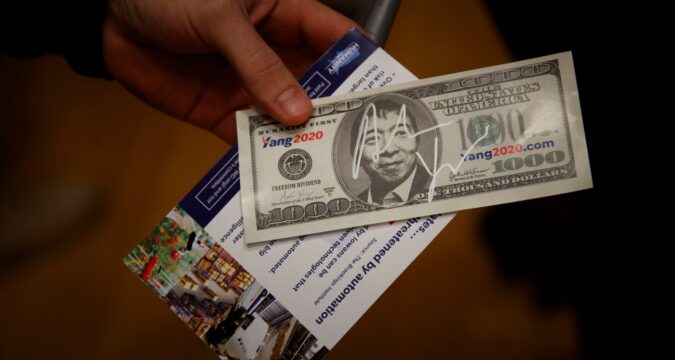
Universal basic income, or UBI for short, first gained prominence as an idea from the perennial independent Andrew Yang, who championed this cause during his 2020 presidential run as not only a way to combat poverty, but as “human-centered capitalism.”
The appeal of guaranteed income is understandable, especially in an era of technological disruption: direct cash is flexible, fast and less bureaucratic than traditional aid. But the problem is that guaranteed income, however well-intentioned, requires steady funding, something governments in places like Illinois can’t afford to provide, and the evidence from local pilot programs hasn’t yet shown it meaningfully reduces poverty.
Asked about the concept on the campaign trail, New York City Mayor-elect Zohran Mamdani said he’s interested in it, as are many of his supporters. That popularity has reignited interest in the concept. But political enthusiasm doesn’t erase the hard math.
That reality hasn’t stopped some from pressing ahead anyway.
Cook County in 2022 launched an experiment with guaranteed basic income, a good example of government nice-to-haves that sprang out of an influx of federal cash. When asked if he’d follow suit with a statewide version, Gov. JB Pritzker earlier this month said, “No.”
Pritzker rightly recognizes Illinois isn’t in a financial position to dole out statewide nice-to-haves. Of course, Cook County isn’t either, but that ship has sailed.
Cook County’s Promise Guaranteed Income Pilot, which launched using $42 million in federal American Rescue Plan Act funding, gave 3,250 low- to moderate-income families $500 a month in no-strings-attached cash — meaning no work requirements or spending restrictions — for two years. Cook County set aside $7.5 million in its $10.12 billion 2026 budget to carry the guaranteed income program beyond the pilot, becoming one of the first local governments in the country to commit ongoing funding. Officials are now crafting updated eligibility rules and program design, with a final plan expected next year.
The county reported that the pilot program went a long way in offering some basic financial security for things like rent and food. Fair enough. Still, we think it’s important to measure such programs based on their results, and so we find ourselves wondering if the pilot has moved the needle on poverty. That seems unlikely. It served just 3,250 households in a county of more than 5 million people. And, of course, there is the issue of cash not landing where it is supposed to help. As we’ve learned in Minnesota, when free money sloshes around without much in the way of requirements, nefarious parties often start to show interest.
But the biggest problem is that the program is financed by taxpayers without offsetting cuts. The same people hoping to stretch that $500 check are also paying the county’s hefty 10.25% combined sales tax on many essential items, a reminder that government often constrains purchasing power with one hand while offering aid with the other.
While governments across Illinois simply can’t afford to spin up guaranteed income programs on a major scale, they can and should look at what they can do to reduce the burden they place on families that contributes to the need for relief in the first place.
Submit a letter, of no more than 400 words, to the editor here or email letters@chicagotribune.com.
https://www.chicagotribune.com/2025/12/15/poverty-guaranteed-income-cook-county-illinois-poverty/
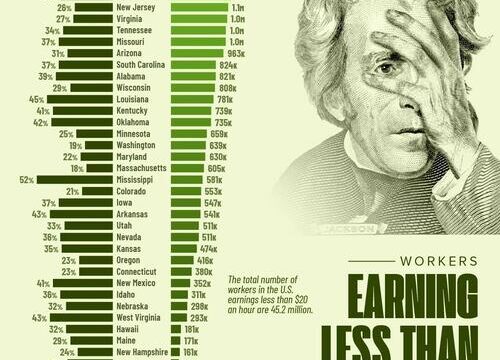
These Are The US States With The Most Low-Wage Workers
These Are The US States With The Most Low-Wage Workers
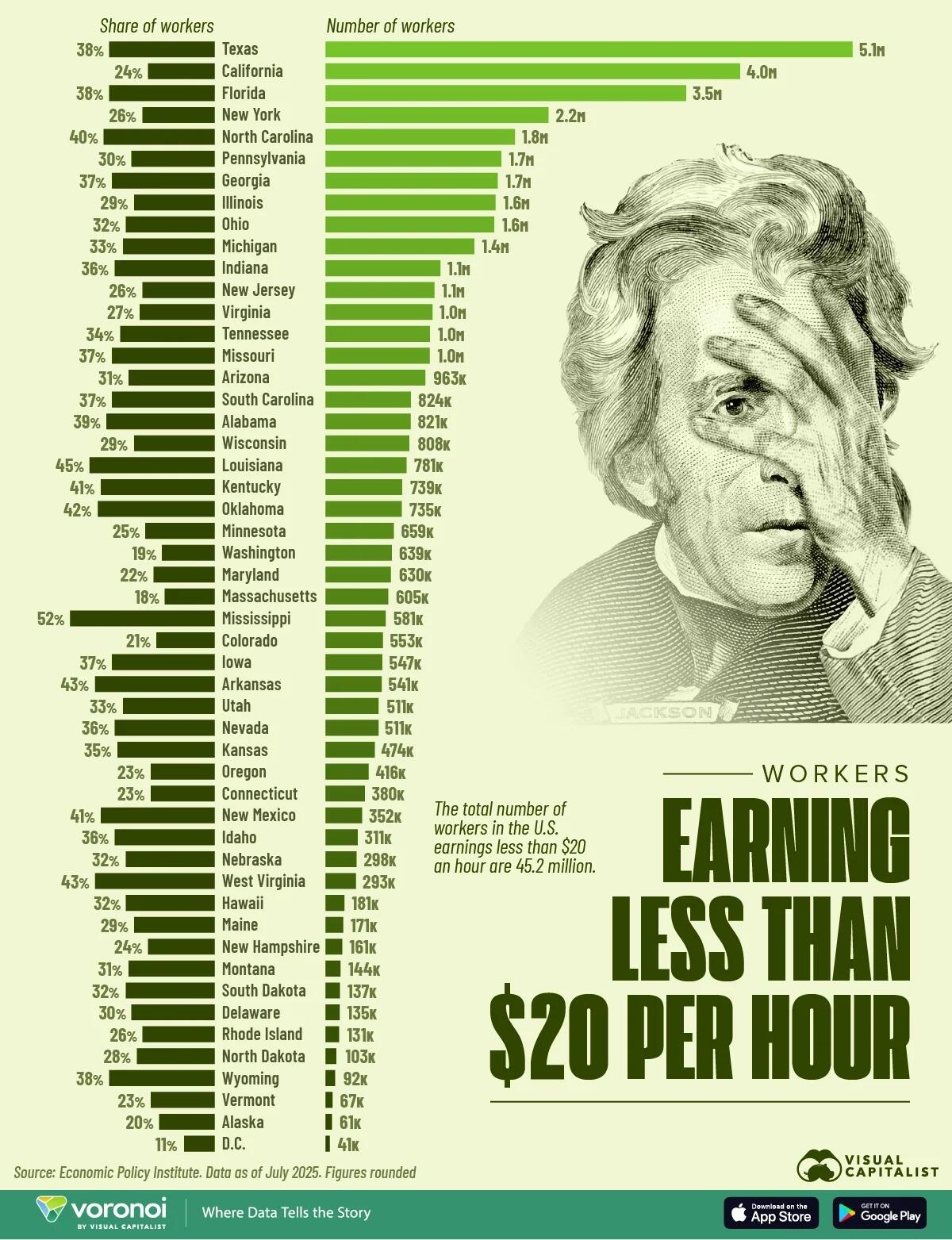
Low-wage work remains widespread across the United States. Even as the labor market continues to expand, wage gains have been uneven, leaving millions of workers earning less than $20 per hour, which is roughly $41,600 annually before taxes for full-time work.
This infographic, via Visual Capitalist’s Niccolo Conte, ranks U.S. states by the share of low-wage workers earning less than $20 per hour, using data from the Economic Policy Institute as of July 2025.
Low-Wage Workforce by State
Nationally, three in 10 workers, or 45.2 million people, fall below the $20-per-hour mark. However, this distribution varies widely by state.
The table below shows the full ranking of states by the share and number of workers earning less than $20 per hour:
Texas tops the list in terms of the number of low-wage workers with nearly 5.1 million people below the $20-per-hour mark. California, the most populous state, follows with around 4 million workers, along with Florida (3.5 million) and New York (2.2 million).
Meanwhile, Mississippi leads in terms of the share of low-wage workers, with 52% of the state’s workers earning under $20 per hour. Other Southern states also rank high, including Louisiana (45%), Arkansas (43%), West Virginia (43%), and Kentucky (41%).
In contrast, the District of Columbia has the lowest share of low-wage workers at 11%, along with Washington (19%) and Massachusetts (18%). These states tend to have a larger share of workers employed in high-paying industries like professional services, health, and information (IT) as compared to states with more low-wage workers.
State
Share of workers below $20/hr
Number of workers below $20/hr
Texas
38%
5,089,000
California
24%
4,002,000
Florida
38%
3,481,000
New York
26%
2,152,000
North Carolina
40%
1,828,000
Pennsylvania
30%
1,696,000
Georgia
37%
1,662,000
Illinois
29%
1,641,000
Ohio
32%
1,627,000
Michigan
33%
1,437,000
Indiana
36%
1,108,000
New Jersey
26%
1,052,000
Virginia
27%
1,033,000
Tennessee
34%
1,007,000
Missouri
37%
1,005,000
Arizona
31%
963,000
South Carolina
37%
824,000
Alabama
39%
821,000
Wisconsin
29%
808,000
Louisiana
45%
781,000
Kentucky
41%
739,000
Oklahoma
42%
735,000
Minnesota
25%
659,000
Washington
19%
639,000
Maryland
22%
630,000
Massachusetts
18%
605,000
Mississippi
52%
581,000
Colorado
21%
553,000
Iowa
37%
547,000
Arkansas
43%
541,000
Nevada
36%
511,000
Utah
33%
511,000
Kansas
35%
474,000
Oregon
23%
416,000
Connecticut
23%
380,000
New Mexico
41%
352,000
Idaho
36%
311,000
Nebraska
32%
298,000
West Virginia
43%
293,000
Hawaii
32%
181,000
Maine
29%
171,000
New Hampshire
24%
161,000
Montana
31%
144,000
South Dakota
32%
137,000
Delaware
30%
135,000
Rhode Island
26%
131,000
North Dakota
28%
103,000
Wyoming
38%
92,000
Vermont
23%
67,000
Alaska
20%
61,000
District of Columbia
11%
41,000
Minimum Wage in the U.S.
The U.S. federal minimum wage has remained at $7.25 per hour since 2009. Adjusted for inflation, that wage now has significantly less purchasing power, making it even lower in real terms.
While more than half of U.S. states have enacted higher local minimum wages, the federal standard still applies in states without their own wage laws, many of which appear at the top of the low-wage workforce rankings.
The Raise the Wage Act, which proposes lifting the federal minimum wage to $17 over five years, has been introduced repeatedly since 2017 but has yet to pass.
If you enjoyed today’s post, see this graphic on Average Salary by State in the U.S. on Voronoi.
Tyler Durden
Mon, 12/15/2025 – 05:45
https://www.zerohedge.com/personal-finance/these-are-us-states-most-low-wage-workers
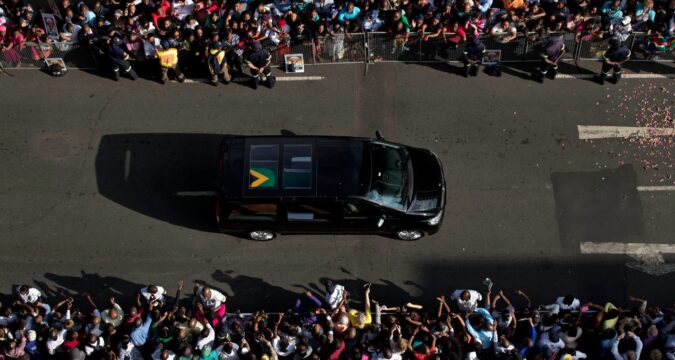
Today in History: Nelson Mandela laid to rest in a state funeral
Today is Monday, Dec. 15, the 349th day of 2025. There are 16 days left in the year.
Today in history:
On Dec. 15, 2013, Nelson Mandela was laid to rest in a state funeral, ending a 10-day mourning period for South Africa’s first Black president. Mandela died on Dec. 5 of that year at the age of 95.
Also on this date:
In 1791, the Bill of Rights, the first 10 amendments to the U.S. Constitution, went into effect following ratification by Virginia.
In 1890, Hunkpapa Lakota Chief Sitting Bull and 11 other tribe members were killed in Grand River, South Dakota, during a confrontation with Indian agency police.
In 1939, the Civil War motion picture epic “Gone with the Wind,” starring Vivien Leigh and Clark Gable, had its world premiere in Atlanta.
In 1944, a single-engine plane carrying bandleader Glenn Miller, a major in the U.S. Army Air Forces, disappeared over the English Channel while en route to Paris.
In 1967, the Silver Bridge between Gallipolis, Ohio, and Point Pleasant, West Virginia, collapsed into the Ohio River, killing 46 people.
In 2011, the flag used by U.S. forces in Iraq was lowered in a Baghdad airport ceremony, marking the formal end of the American military mission in that country. The war left 110,000 Iraqis and 4,500 Americans dead.
Related Articles
Egypt reveals restored colossal statues of pharaoh in Luxor
Handel’s ‘Messiah’ wasn’t meant to be Christmas music, but it still became a Chicago holiday staple
Today in Chicago History: Illinois becomes the 10th state to get its own lottery
Today in History: Heart of Atlanta Motel v. United States
Today in Chicago History: Bears beat Packers 35-17 in last game at Wrigley Field
In 2016, a federal jury in Charleston, South Carolina, convicted Dylann Roof of the racist killings of nine Black church members who had welcomed him into their Bible study gathering. The following year he would become the first person in the U.S. sentenced to death for a federal hate crime, a sentence upheld in 2021.
Today’s Birthdays: Singer Cindy Birdsong (The Supremes) is 86. Rock musician Dave Clark (The Dave Clark Five) is 86. Baseball Hall of Fame manager Jim Leyland is 81. Actor Don Johnson is 76. Film and theater director Julie Taymor is 73. Democratic Sen. Mark Warner of Virginia is 71. Rock musician Paul Simonon (The Clash) is 70. Actor and filmmaker Lee Jung-jae is 53. Actor Adam Brody is 46. Actor Michelle Dockery is 44. Actor Charlie Cox is 43. Actor Camilla Luddington is 42. Rock musician and actor Alana Haim is 34. Actor Maude Apatow is 28.
Nigeria’s Christians Are Caught in A Tide Of Jihadi Violence
Nigeria’s Christians Are Caught in A Tide Of Jihadi Violence
Authored by Beige Luciano-Adams via The Epoch Times,
Nuhu Dauda was on a missionary trip, about 125 miles away from his home in Plateau state, Nigeria, when he got a panicked call from his younger brother.
“He said jihadists had surrounded my home and were chanting that they would kill everyone inside,” Dauda, a 67-year-old Christian evangelist, told The Epoch Times.
The police helped rescue five family members before heavily armed men burned the house to the ground and killed a young fellow evangelist, he said.
That was in 2005.
“In the 20 years since then I have seen our people massacred,” Dauda said. “I saw my family members, in-laws, and friends killed. I’ve carried the bodies of my own and I buried them.”
The plight of Christians in the country received relatively little global attention until the Trump administration threatened to intervene amid a recent spike in violence, to prevent mass killings it suggested amounts to “genocide.”
The Nigerian government denies claims of religious persecution, rather framing the violence as a security crisis with “complex socio-economic and political roots” that impacts people of all faiths.
But the increase in brutal attacks on Christian communities by radicalized insurgents in recent years both parallels and intersects a broader rise in violent Islamist extremism across the region.
Boko Haram and Surging Violence
Dauda grew up in peace with Muslim friends and neighbors in the country’s fertile Middle Belt region. But everything began to change around 2001.
“It was so strange to us, we never knew that, to see our people killed in a community where Muslims were a minority but well armed,” Dauda said of radicalized groups that began attacking Christians. “They drove us out.”
While the threat has evolved, some observers trace the root of current violence to the rise of Nigeria’s homegrown Sunni jihadist movement more than two decades ago. That movement is synonymous with the terrorist group Boko Haram, sometimes referred to as the “Nigerian Taliban.”
Ebenezer Obadare, a senior fellow for Africa studies at the Council on Foreign Relations, believes all problems are downstream of Boko Haram.
“It’s a religious campaign in the sense that this is mass killing initiated by Boko Haram, a group that targets Christians, targets Muslims, targets everybody—because it sees all of them as infidels, or apostates,” Obadare told The Epoch Times.
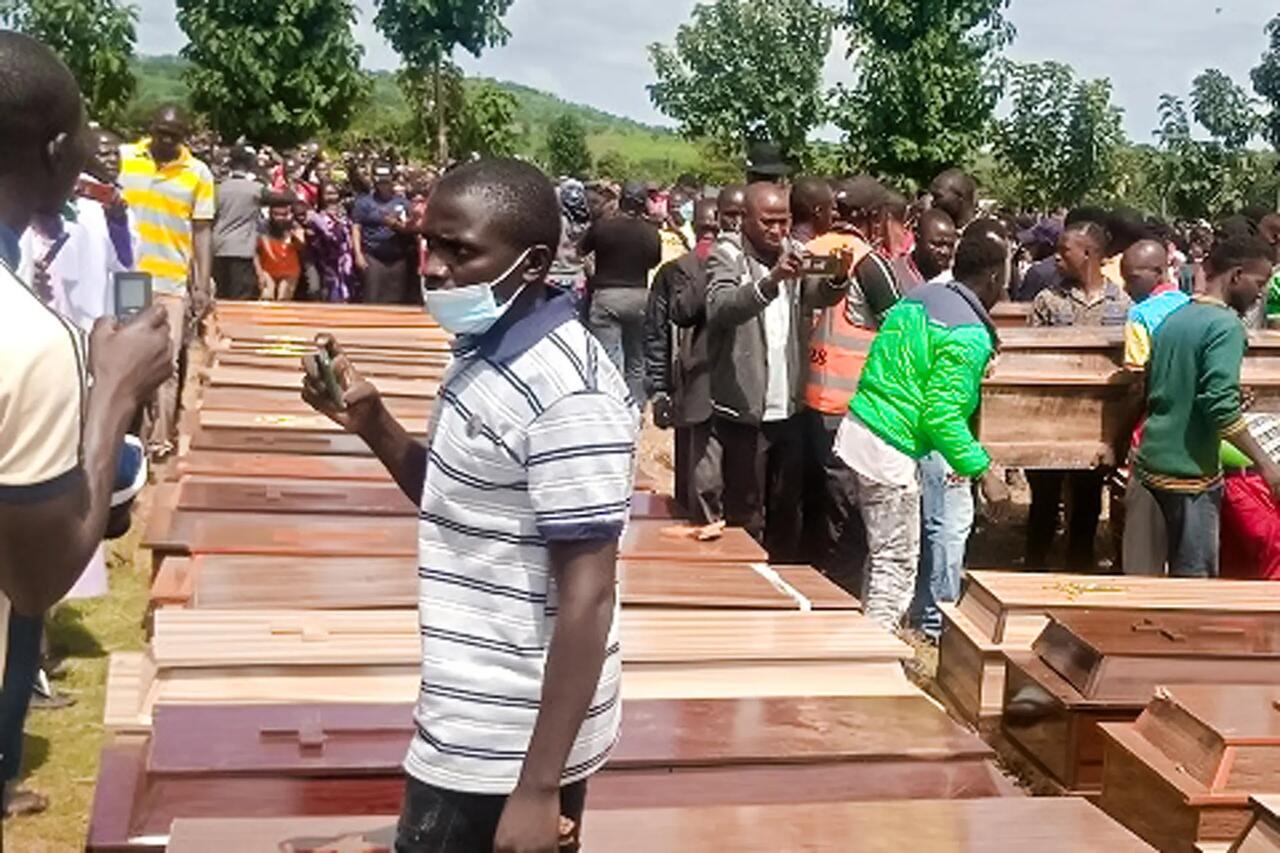
Caskets holding the bodies of 38 Christian villagers killed by armed Fulani Muslim militants are arranged for a funeral Mass at Government Secondary School in Mallagun, Nigeria, on Sept. 30, 2021. Luka Binniyat/The Epoch Times
Boko Haram, which means, loosely, “Western education is forbidden,” has been designated as a terrorist organization by the United States since 2013.
It embraces a strict interpretation of Islam that uses “extremely narrow criteria to define who counts as a Muslim,” according to a Brookings Institution report.
Formed in 2002, Boko Haram began an armed rebellion against the Nigerian government in 2009 and has retained a stronghold in the northeast, as well as in neighboring Chad, Cameroon, and Niger.
Since then, a mix of violent perpetrators with shifting alliances and feuds has emerged across the north, including the ISIS terror group, al-Qaeda, and Boko Haram offshoots and affiliates, as well as armed bandits, new cross-border groups and ethnic militias.
Nigeria ranks sixth on the Institute for Economics and Peace Global Terrorism Index 2025.
In the northwestern part of the country, where violence has historically been attributed to banditry, al-Qaeda and ISIS affiliates have established a foothold since 2020, and “operationalized these cells since 2024,” according to a recent analysis by Critical Threats, a project of the thinktank American Enterprise Institute.
Reports of civilian killings in Nigeria vary, from 50,000 to more than 100,000 since 2009, with millions more displaced; figures from Armed Conflict Location and Event Data (ACLED), a U.S.-based monitor, show violence targeting Christians has spiked since 2020 but still pales in comparison to the “broader surge in overall political violence,” which it reports has resulted in far more Muslim deaths.
In 2021 the United Nations estimated nearly 350,000 people had died as a result, directly or indirectly, of ongoing conflict in the country since 2009.
While estimates vary, Obadare said, “what nobody can doubt is that a lot of people are being killed—and more important is the fact that they’re being killed for a religious reason.”
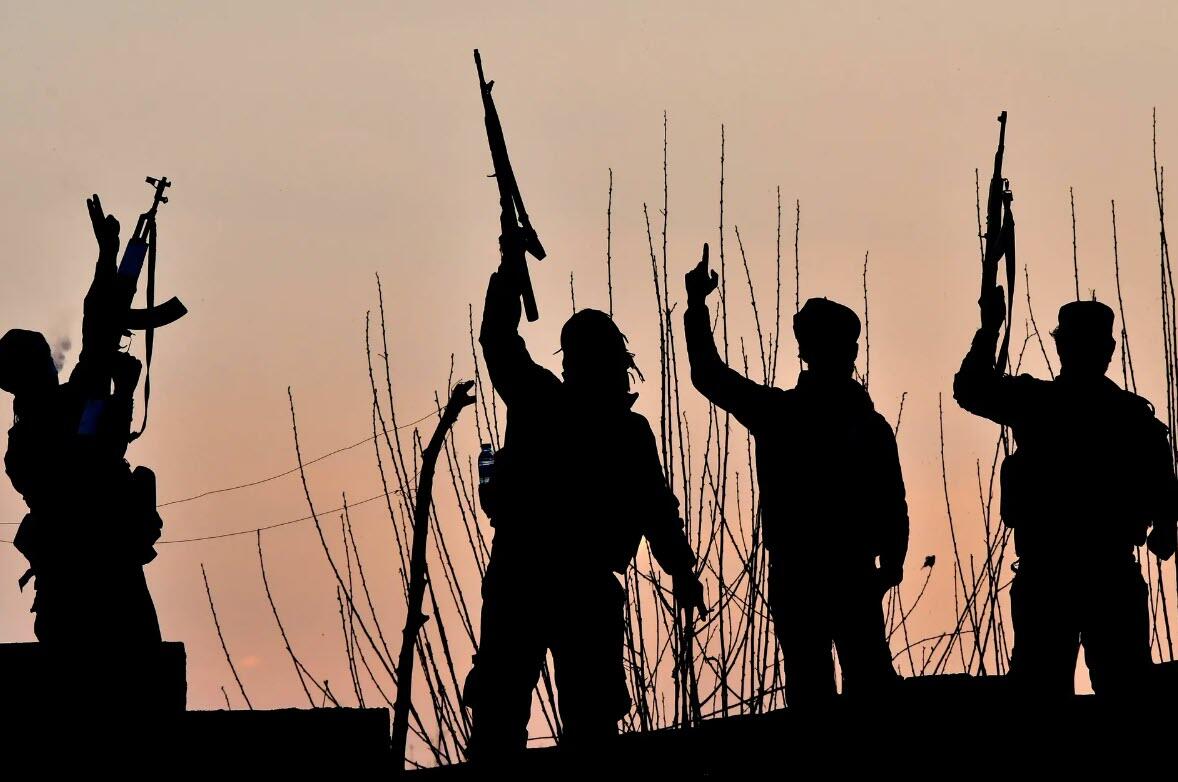
U.S.-backed Syrian Democratic Forces (SDF) fighters celebrate after fighting the ISIS terrorist group near the village of Baghouz, Syria, on March 15, 2019. The increase in brutal attacks on Christian communities by radicalized insurgents in recent years both parallels and intersects a broader rise in violent Islamist extremism worldwide and especially in West Africa. Giuseppe Cacace/AFP via Getty Images
Brazen Attacks Escalate
President Donald Trump in October re-listed Nigeria as a “Country of Particular Concern,” a formal designation given to the world’s worst religious freedom offenders.
And in a Nov. 20 congressional hearing, State Department officials said they are working on a comprehensive plan to help bolster the country’s own security and counterterrorism efforts.
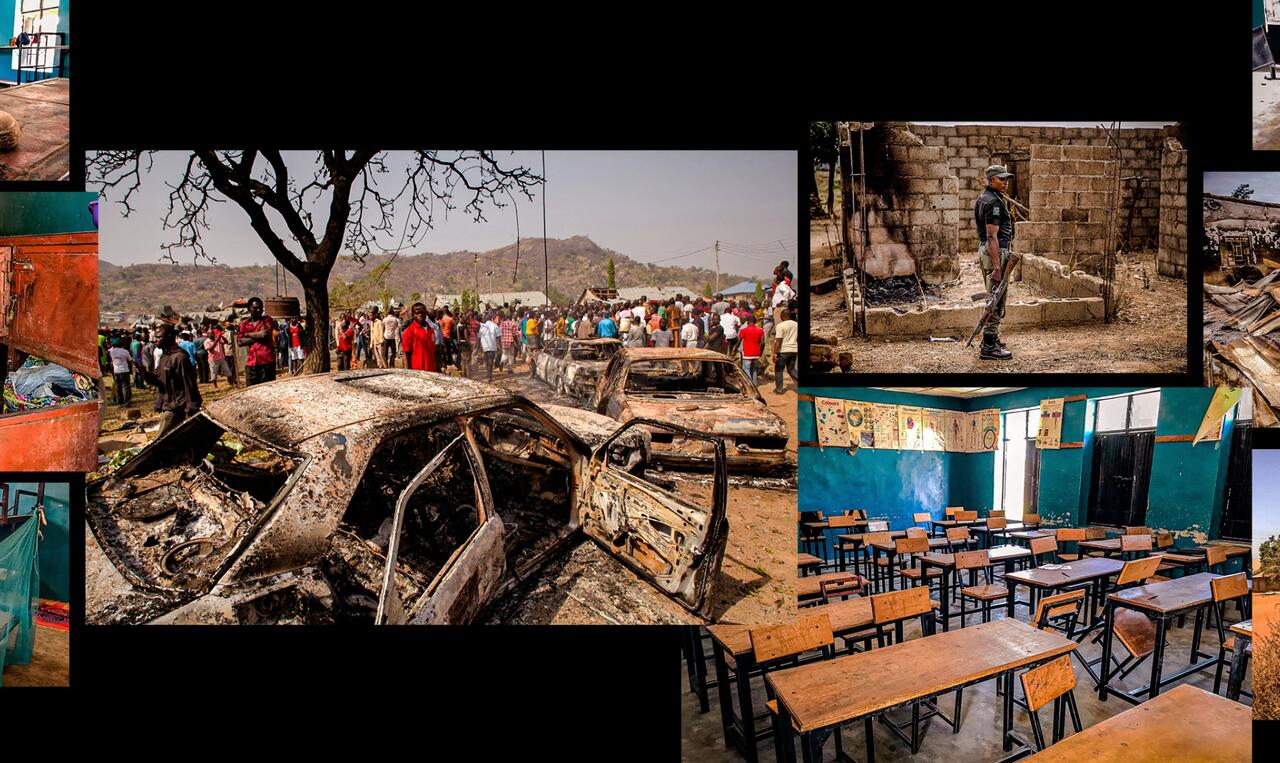
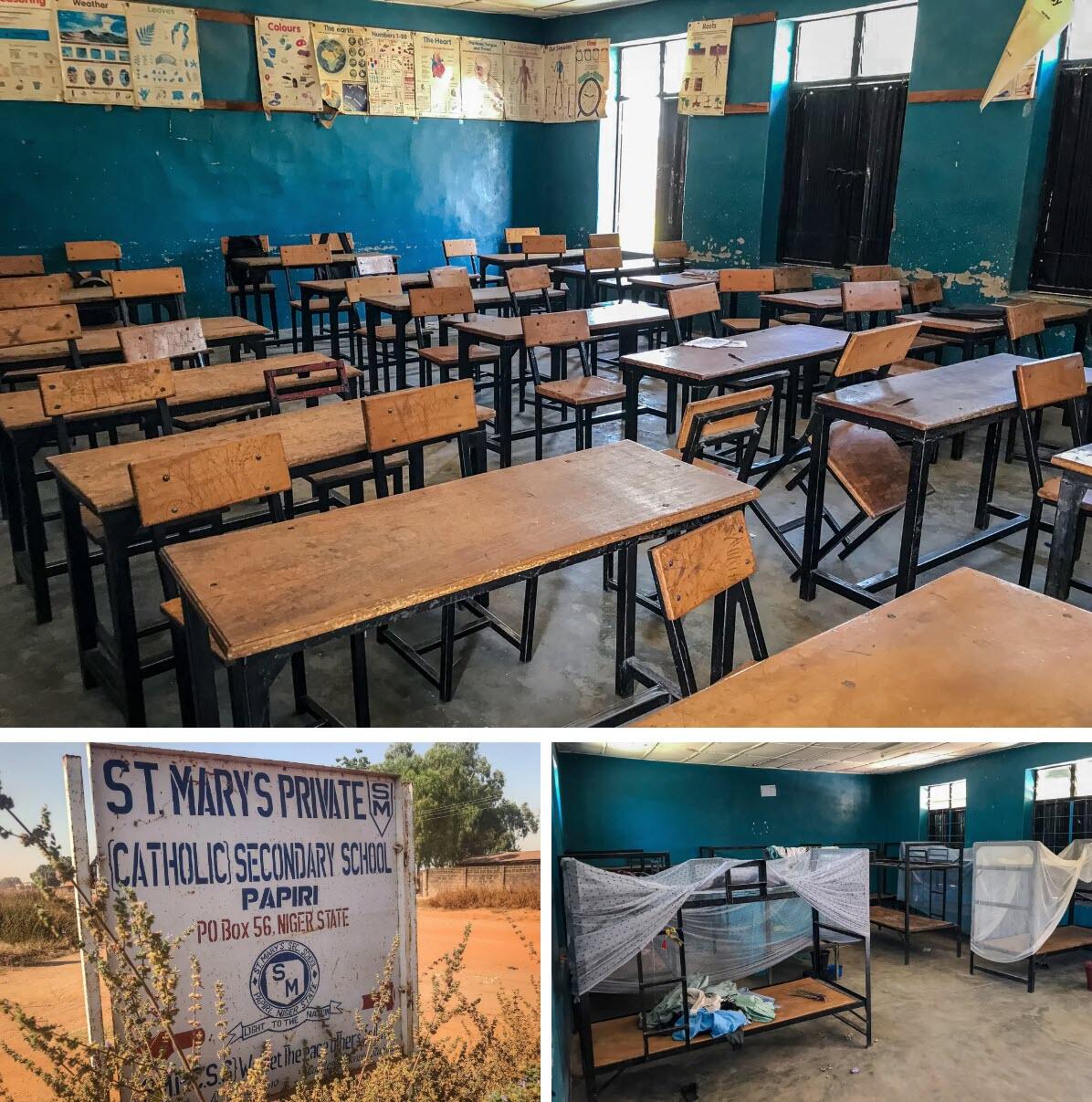
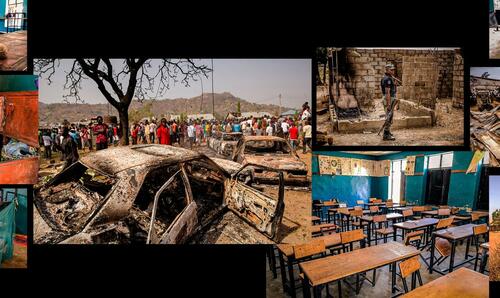
Just hours after that hearing, gunmen on Nov. 21 stormed a Catholic school in the Middle Belt, kidnapping more than 300 students and 12 teachers.
It was the fourth mass kidnapping that week, and one of the worst in the country’s history, surpassing even the 2014 Boko Haram kidnapping of 276 Chibok Secondary School girls. Last year Amnesty International reported more than 1,700 children have been abducted by the group in the decade since.
Kidnapping victims, according to the group, are often forced to fight, marry their captors, or are sold into sex slavery.
The wave of violence from Nov. 15 to Nov. 21 also included an attack on a Christian church during a service, in which two people were killed and 38 kidnapped; as well as the abduction of 24 female students from a secondary school, and the murder of three people and kidnapping of 64 from their homes.
(Top) A general view of a classroom at St. Mary’s Catholic School in Papiri, Agwarra local government, Niger state, Nigeria, on Nov. 23, 2025. (Bottom L) A signboard for St Mary’s Private Catholic Secondary School stands at the entrance of the school in Papiri, Agwarra local government, Niger state, Nigeria, on Nov. 23, 2025. (Bottom R) A general view of empty bunk beds and scattered belongings inside a student dormitory at St. Mary’s Catholic School in Papiri, Agwarra local government, Niger state, Nigeria, on Nov. 23, 2025. Ifeanyi Immanuel Bakwenye/AFP via Getty Images
On Nov. 24, Nigerian media reported suspected Boko Haram terrorists abducted 12 women from Borno state and razed a village elsewhere in the state.
“We hoped the [Country of Particular Concern] designation by President Trump at the end of October might stabilize the situation,“ the Most Rev. Wilfred Anagbe, a Nigerian Catholic bishop, told lawmakers during the Nov. 20 hearing, ”but instead it is deteriorating into one of the most lethal periods for Nigerian Christians in recent memory.”
While the government has tried to confront the terror threat, Dauda said, “this is not the confrontational war that militaries are used to. They hide, attack, pull away, and cover. The government has tried, but they are overwhelmed.”
The Nigerian government did not respond to requests for comment from The Epoch Times, but recently said in a statement posted on X that its security agencies since 2023 have “neutralized” more than 13,500 terrorists, arrested more than 17,000 suspects, and rescued more than 9,800 kidnap victims.
Fulani Militias
In May, Amnesty International reported at least 10,217 people had been killed in attacks by gunmen in the two years since current president Bola Ahmed Tinubu was elected, mostly in the predominantly-Christian Middle Belt states of Benue and Plateau.
Such attacks have drawn attention to longstanding conflicts between farmers, who are largely Christian, and Fulani herdsmen, who are semi-nomadic and predominantly Muslim in the Middle Belt.
The Nigerian government characterizes this as a land-use dispute driven by the climate, resource scarcity, and population growth.
According to Open Doors, an organization that tracks persecution of Christians, Fulani militants are responsible for 55 percent of recorded Christian deaths between 2019 and 2023.
The Observatory for Religious Freedom in Africa in July published research showing Fulani militias accounted for 47 percent of the 36,056 civilian killings between 2019 and 2024—more than five times the combined death toll of other prominent terrorist organizations such as Boko Haram and an offshoot known as Islamic State-West Africa Province.
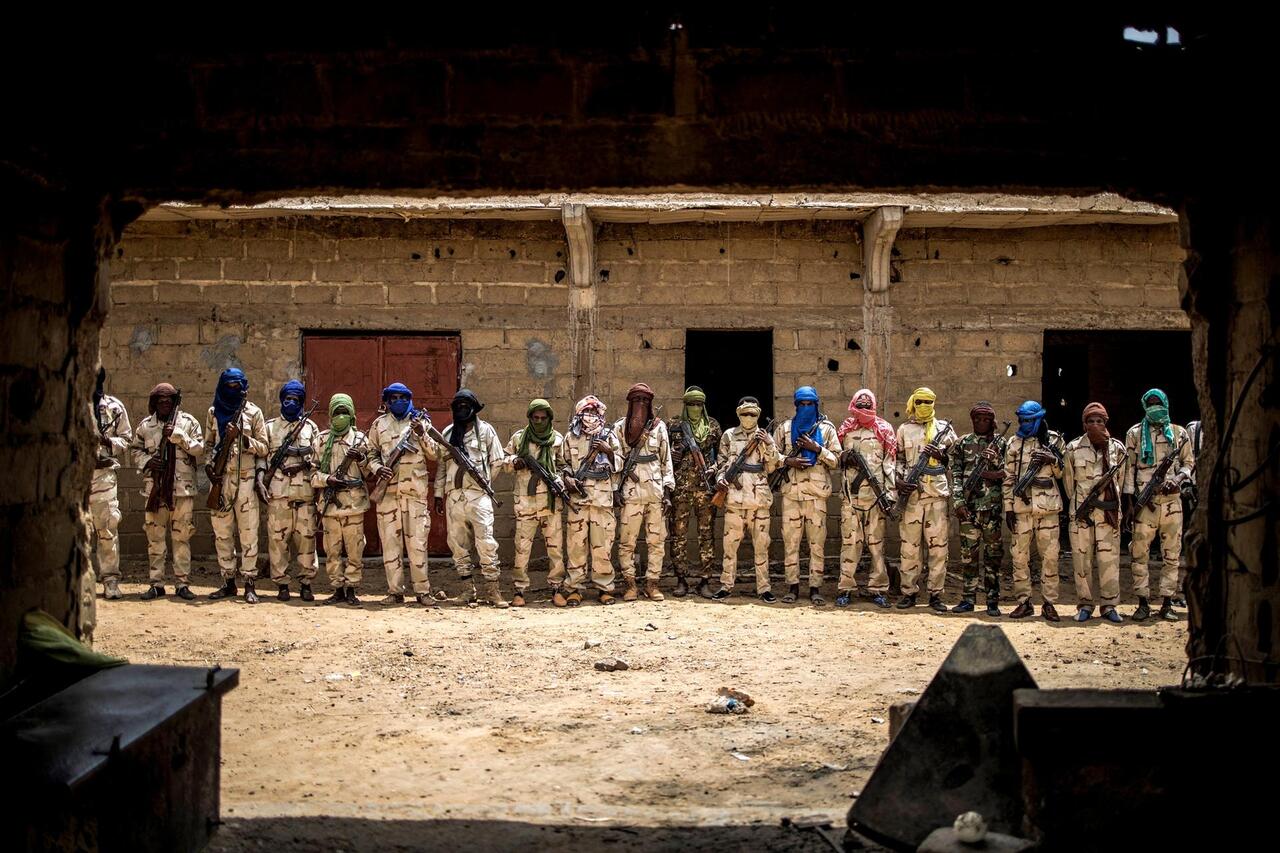
A group of armed Fulani militiamen pose for a picture at an informal demobilization camp in Sevare, Mali, on July 6, 2019. Open Doors, an organization that tracks persecution of Christians, reported that Fulani militants were responsible for 55 percent of recorded Christian deaths from 2019 to 2023. Marco Longari/AFP via Getty Images
More recently, other monitors such as the International Bar Association’s Eyewitness Global have noted “considerable escalation” in violence with “religious and ethnic dimension” in the Middle Belt.
And while the 2015 Global Terrorism Index ranked armed Fulani militants the fourth-deadliest terror group in the world, the Observatory notes they have “mysteriously vanished” from international rankings despite having become “exponentially more lethal.”
Dauda, the Christian evangelist, says it’s a small number instigating and radicalizing an otherwise peaceful population. “Most Fulanis are innocent. Most want to live a peaceful life and take care of their cattle.”
Héni Nsaibia, ACLED’s West Africa senior analyst, told The Epoch Times the violence in the Middle Belt is “multidirectional” and can’t be reduced to a kind of religious war.
“To focus on the persecution of Christians really doesn’t capture the problem,” Nsaibia said. “That is not the main conflict—the real threat are the jihadi groups that are expanding and larger segments of the population are falling under their influence, and they are now competing with the state.”
Some of those groups, such as Islamic State-Sahel Province, are majority Fulani, he said, but operate primarily in majority-Muslim states, meaning their civilian victims are mostly Muslims.
As the conflict expanded across the region, Nsaibia said, the most powerful groups concentrated in Mali and Burkina Faso, where many fighters are Fulani. “So it’s more circumstantial, but also how the state has reacted to the insurgency.”
In many countries in the region, Fulani and other herder ethnicities have long been disenfranchised by the state, Nsaibia said, making them a prime target for radicalization.
‘Horrific Things’
Born a Fulani Muslim, Musa Belo converted to Christianity and became an evangelical preacher. Vocal on social media about what he calls a Christian genocide, he is currently in hiding, facing death threats from Islamists—and reprisal from the government, he says.
Belo told The Epoch Times that he typically visits many remote villages only accessible by motorcycle or on foot.
He described going to a village in Plateau state for outreach.
“We preached the gospel to them, we did medical outreach, shared Bibles, and we left. Then fast forward, this last October, we went back for a follow-up,” he said.
The whole village had been wiped out.
“You stumble on human skeletons, you stumble on a body that has not even decayed. … Horrific things,” Belo said.
Sean Nelson, an attorney with Alliance Defending Freedom (ADF), recalls visiting victims in the aftermath of a Christmas Eve 2023 attack that killed more than 200 people across mostly Christian villages in the same region.
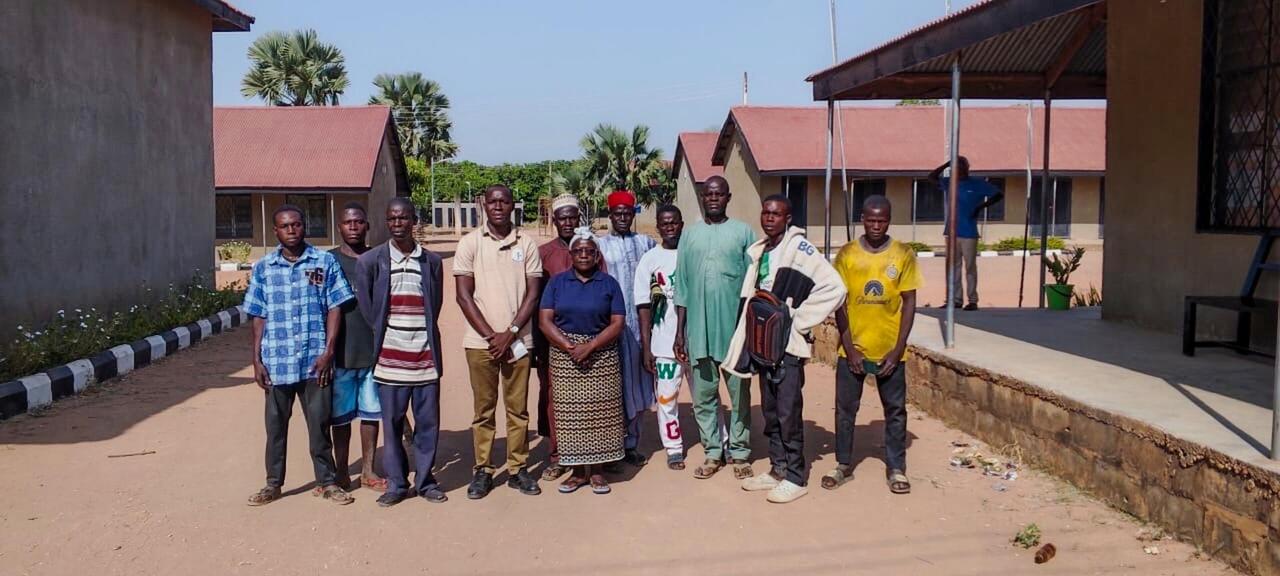
People pose for a photograph at St. Mary’s Catholic Primary and Secondary School after armed men abducted children and staff in Papiri, Nigeria, on Nov. 21, 2025. Christian Association of Nigeria via AP
“They went after pastors’ homes. They went after churches first. The first village we went to, there was a pastor who, the militants came to his house on Christmas Eve, took him and his family, torched his house, walked him out behind the church and beheaded him.”
Every witness told him the attackers came in with machetes shouting “Allahu Akbar,” and “We will kill Christians,” Nelson said.
John Stewart, an American attorney and pastor who regularly travels to Africa to teach and train Christian leaders, described Nigerian communities devastated by systemic violence and displacement.
“I went to the relocation centers. These are Christians that have been driven out of their villages by Fulani Muslims, with the military looking the other way,” he told The Epoch Times.
“They’re sleeping on cement floors in churches. … They didn’t have anything other than shovels and rakes to defend themselves.”
‘Others Who Are Behind This’
Both Dauda and Belo say Fulanis are coming to Nigeria from other countries.
“I had an encounter with one, and I am Fulani by tribe,” Belo said. “When I spoke to him, I understood that this is not Nigerian Fulani. He told me he was from Mali, and his group was headed to Benue state.”
Nigeria’s borders with Niger and Chad are easy to penetrate, he said. “They are all using sophisticated weapons—machine guns, AK 49s, RPGs—that even our military are not using,” Belo said.
“This thing has been happening for two decades, but the Nigerian government has never brought a single perpetrator to justice,” Belo said.
Dauda marveled at the sight of Fulani herdsmen carrying machine guns.
“A Fulani man takes care of his cow—that is his bank account, the future of his children. How are such innocent Fulanis operating such guns?” he said.
“It means there are others who are behind this. And I want the world to know, they have been brainwashed,” he said. “Their target is to go across the nation—that’s why you hear of killings in churches in the south.”
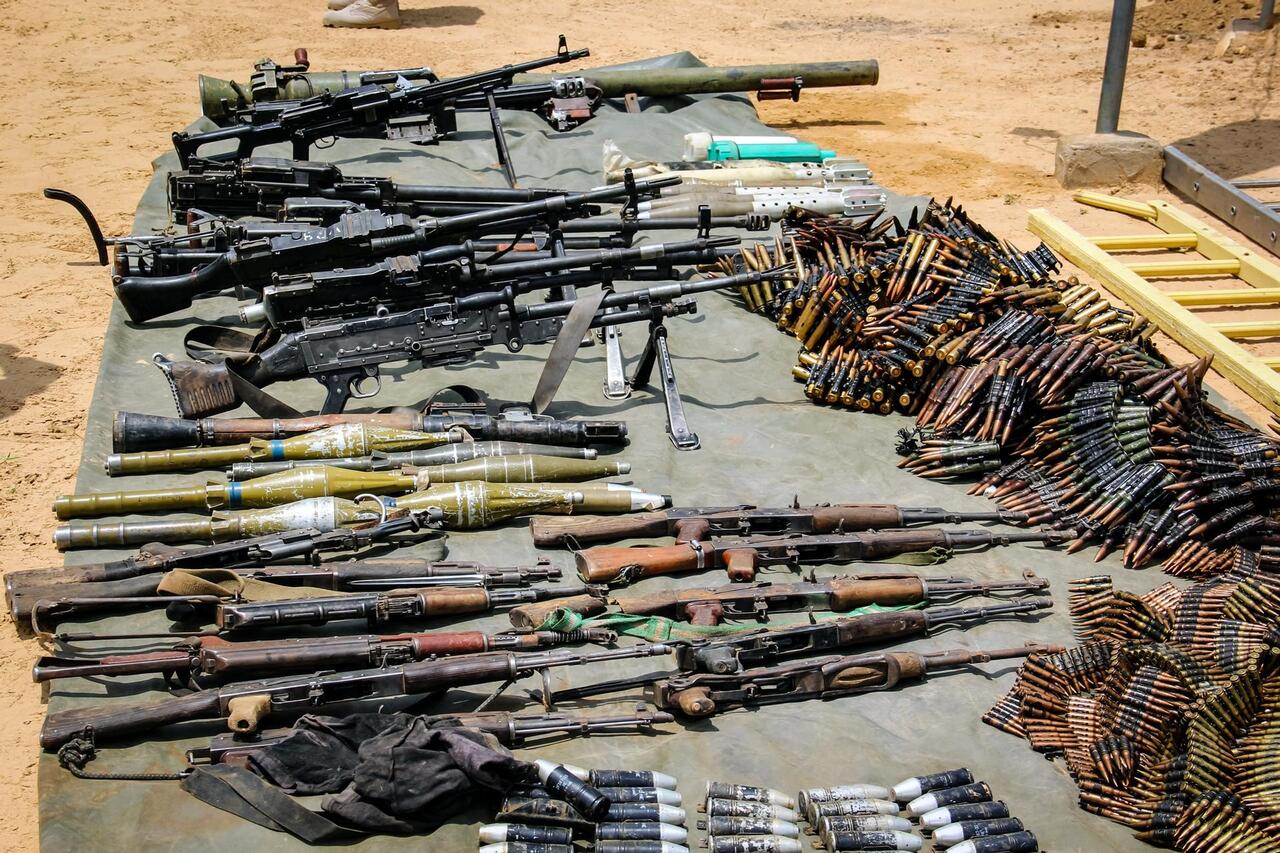
Arms and ammunition recovered from Boko Haram jihadists are displayed at the 120th Battalion headquarters in Goniri, Nigeria, on July 3, 2019. Boko Haram, loosely translated as “Western education is forbidden,” has been designated a terrorist organization by the United States since 2013. Audu Marte/AFP via Getty Images
The Heart of Jihadi Terror
The Nigerian government has framed attacks on Christian communities such as Dauda’s in the country’s Middle Belt or north central region as ethnic land-use disputes, as distinct from the terror of jihadists in the northeast, or the anarchy of bandits in the northwest.
But amid transnational expansion of Islamist extremism, with weapons and fighters flowing across porous borders, some analysts say such distinctions are vanishingly relevant, and a distraction from the all-consuming threat of violent fundamentalism.
The Central Sahel region of sub-Saharan Africa, which includes Nigeria and stretches from the North Atlantic to the Red Sea, has replaced the Middle East as the epicenter of global Salafi-jihadist violence, now accounting for 51 percent of all global terrorism deaths, according to the Institute for Economics and Peace “Global Terrorism Index 2025: Measuring the Impact of Terrorism” report.
Investigations by Conflict Armament Research, a British-based group that tracks illegal weapons, has suggested proliferation of weapons throughout the Sahel was precipitated by the 2011 fall of the heavily armed Moammar Gadhafi regime in Libya.
Data from ACLED shows jihadists groups have entered “a new phase of expansion” in the Sahel.
In a December report, the group notes that as jihadist groups solidify their operations, distinctions between regional conflicts are giving way to a broader, singular threat.
ACLED reports 79 percent of ISIS operations were in Africa in 2025—up from 49 percent in 2024. Islamic State-West Africa Province “controls broad swaths of territory and has killed or displaced thousands of people in Nigeria and neighboring countries,” according to the U.S. Office of the Director of National Intelligence’s Counter Terrorism Guide.
A defensive trench built to protect against incursions by Boko Haram surrounds the town of Monguno, Borno state, Nigeria, on July 4, 2025. Joris Bolomey/AFP via Getty Images
Collaboration among jihadist groups is growing, ACLED’s Nsaibia said. In some cases, Nigerian groups have been incorporated into broader global structures such as ISIS or al-Qaeda affiliates, or coordinate with regional groups across borders to share weapons, propaganda or fighters.
As the Sahel has become the global epicenter of jihadist militancy, he explains, Nigerian groups have been expanding from their historic base in the Lake Chad Basin, and into coastal West Africa. “As these groups are finding one another, they also form a sort of junction between these two very distinct conflict theaters.”
“We know for sure that all of these groups are united at least by one aim, which is they want to destroy the modern state as we know it,” Obadare said.
In neighboring Mali, jihadists are currently on the verge of overrunning the country, according to a report last month by the Soufan Center.
Sharia and Blasphemy
In the years following Nigeria’s 1999 transition to a constitutional democracy, 12 northern states have re-integrated Islamic criminal law. In theory, sharia applies only to Muslims, but in practice, human rights advocates argue, it is used to justify mob violence and state-sanctioned capital punishment.
“Death-penalty blasphemy law in the 12 Northern States is an outrageous thing,” ADF’s Nelson said. ADF intervenes on behalf of individuals facing blasphemy and apostasy charges in Nigeria’s sharia courts.
“It is one of only seven places in the world with a law like that,” he said.
In 2024, Amnesty International reported an escalation of mob violence across the country, including killings related to blasphemy accusations in which victims have been lynched, stoned, tortured, and burned alive.
“The apparent encouragement of killings for blasphemy by religious leaders creates an environment in which mobs feel entitled to take the law into their own hands. Meanwhile, government officials rarely publicly condemn mob violence for blasphemy,” the group reported.
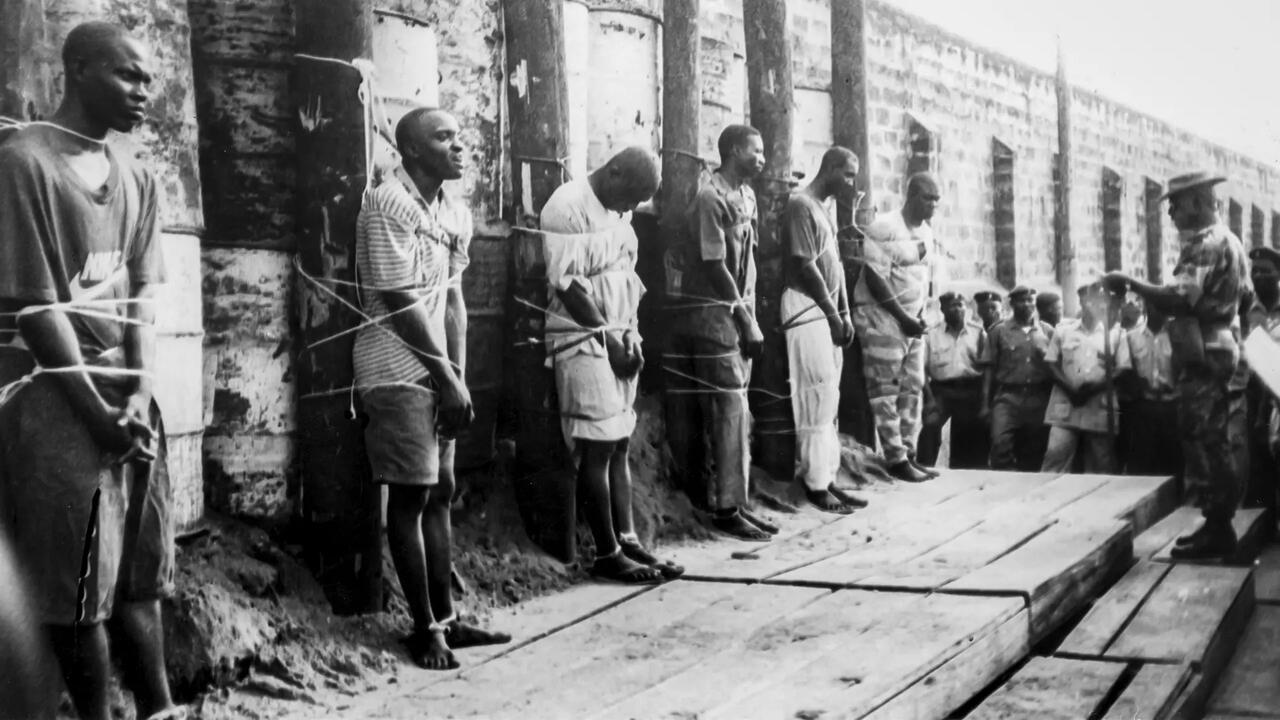
Six men condemned for armed robbery stand before their execution by firing squad at Kirikiri Prison in Lagos, Nigeria, on Feb. 21, 1998. Since Nigeria’s 1999 return to civilian rule, 12 northern states have reintroduced Islamic criminal law, known as sharia, which human rights advocates say has been used to justify mob violence and state-sanctioned capital punishment. AFP via Getty Images
‘A Religious Element’
Obadare from the Council on Foreign Relations said the conversation about violence in Nigeria has become increasingly muddied; there used to be consensus, he says, that the threat was fundamentalism.
“The idea that Islamist insurgents should not be described or portrayed as what they are because you don’t want to offend mainstream Muslims … I find [this] condescending to mainstream Muslims,” Obadare said.
“The more Boko Haram says our aim is religious; we want to replace Nigeria with an Islamic state; we hate democracy; unbelief is the problem … the more people on the other side double down and say, ‘Nope, you don’t know what you’re talking about. It’s climate change, it’s got nothing to do with religion.’”
Despite the constant threat, Dauda said he wouldn’t think of living anywhere else.
“We are asking God to intervene,” he said. “That’s why we even have an opportunity to tell you about this.”
Tyler Durden
Mon, 12/15/2025 – 05:00
https://www.zerohedge.com/geopolitical/nigerias-christians-are-caught-tide-jihadi-violence
El exmagnate prodemocracia de Hong Kong Jimmy Lai es condenado en un juicio histórico
Por KANIS LEUNG
HONG KONG (AP) — Jimmy Lai, un exmagnate de los medios de comunicación de Hong Kong partidario de la democracia y crítico abierto de Beijing, fue condenado en un juicio histórico de seguridad nacional en el tribunal de la ciudad el lunes, lo que podría enviarlo a prisión por el resto de su vida.
Tres jueces aprobados por el gobierno declararon a Lai, de 78 años, culpable de conspirar con otros para coordinarse con fuerzas extranjeras y poner en peligro la seguridad nacional así como de conspiración para publicar artículos sediciosos. Él se declaró no culpable de todos los cargos.
Lai fue arrestado en agosto de 2020 bajo una ley de seguridad nacional impuesta por Beijing que se implementó tras las masivas protestas antigubernamentales en 2019. Lai ha pasado cinco años bajo custodia, gran parte de ellos en confinamiento solitario, y parece haberse vuelto más frágil y delgado. También ha sido condenado por varios delitos menores relacionados con acusaciones de fraude y sus acciones en 2019.
El juicio de Lai, llevado a cabo sin jurado, ha sido seguido de cerca por Estados Unidos, Reino Unido, la Unión Europea y observadores políticos como un barómetro de la libertad de prensa y la independencia judicial en la excolonia británica, que regresó al dominio chino en 1997.
El tribunal dijo que Lai pasó años conspirando contra Beijing
Leyendo un veredicto de 855 páginas, la jueza Esther Toh dijo que Lai había extendido una “invitación constante” a Estados Unidos para ayudar a derrocar al gobierno chino con la excusa de ayudar a los hongkoneses.
Los abogados de Lai admitieron durante el juicio que él había pedido sanciones antes de que la ley entrara en vigor, pero insistieron en que dejó de hacer estos llamados para cumplir con la ley.
Pero los jueces dictaminaron que Lai nunca vaciló en su intención de desestabilizar al gobernante Partido Comunista Chino, “continuando aunque de una manera menos explícita”.
Toh dijo que el tribunal estaba convencido de que Lai era el cerebro de las conspiraciones y que la evidencia de Lai era a veces contradictoria e inestable. Los jueces dictaminaron que la única inferencia razonable de la evidencia era que la única intención de Lai, tanto antes como después de la ley de seguridad, era buscar la caída del Partido Comunista gobernante incluso a costa del pueblo de China y Hong Kong.
“Este era el objetivo final de las conspiraciones y publicaciones secesionistas”, escribieron.
Entre los asistentes estaban la esposa y el hijo de Lai, y el cardenal católico romano de Hong Kong, Joseph Zen. Lai asintió hacia su familia antes de ser escoltado fuera de la sala del tribunal.
Su veredicto también es una prueba para los lazos diplomáticos de Beijing. El presidente de Estados Unidos, Donald Trump, dijo que ha planteado el caso con China, y el primer ministro del Reino Unido, Keir Starmer, ha dicho que su gobierno ve como una prioridad la liberación de Lai, quien es ciudadano británico.
Lai podría enfrentar cadena perpetua
El fundador del ahora desaparecido periódico prodemocracia Apple Daily será sentenciado en una fecha posterior.
El cargo de colusión conlleva una pena máxima de cadena perpetua. Estaba previsto que las audiencias comenzaran el 12 de enero para que Lai y otros acusados en el caso presenten sus alegaciones para pedir una sentencia más corta.
El Apple Daily, un crítico abierto del gobierno de Hong Kong y de Beijing, se vio obligado a cerrar en 2021 después de que la policía allanara su sala de redacción y arrestara a sus principales periodistas. Las autoridades congelaron sus activos.
Durante el juicio de 156 días de Lai, los fiscales lo acusaron de conspirar con altos ejecutivos de Apple Daily y otros para solicitar a fuerzas extranjeras que impusieran sanciones o bloqueos y participaran en otras actividades hostiles contra Hong Kong o China.
La fiscalía también acusó a Lai de hacer esas peticiones, destacando sus reuniones con el ex vicepresidente de Estados Unidos Mike Pence y el ex secretario de Estado Mike Pompeo en julio de 2019 en el apogeo de las protestas.
También presentó 161 publicaciones, incluidos artículos de Apple Daily, al tribunal como evidencia, así como publicaciones en redes sociales y mensajes de texto.
Lai testificó durante 52 días en su propia defensa, argumentando que no había pedido sanciones extranjeras después de que se impusiera la amplia ley de seguridad en junio de 2020.
Su equipo legal también argumentó a favor de la libertad de expresión.
Preocupaciones de salud planteadas durante el largo juicio
A medida que avanzaba el juicio, la salud de Lai parecía estar deteriorándose.
Los abogados de Lai dijeron al tribunal en agosto que sufría palpitaciones cardíacas. Después del veredicto, el abogado Robert Pang dijo que su cliente está de buen ánimo mientras el equipo legal estudia el veredicto.
Antes del veredicto, su hija Claire dijo a The Associated Press que su padre se ha debilitado y se le han caído algunas uñas y dientes. También dijo que sufrió infecciones durante meses, junto con dolor de espalda constante, diabetes, problemas cardíacos y presión arterial alta.
“Su espíritu es fuerte pero su cuerpo está fallando”, dijo.
El gobierno de Hong Kong dijo que no se encontraron anomalías durante un examen médico que siguió a la queja de Lai sobre problemas cardíacos. Agregó este mes que los servicios médicos que se le prestan son adecuados.
El jefe de gobierno de Hong Kong, John Lee, dijo que Lai dañó los intereses fundamentales del país y calificó sus intenciones de maliciosas.
Steve Li, superintendente jefe del Departamento de Seguridad Nacional de la policía de Hong Kong, disputó las afirmaciones sobre el deterioro de la salud de Lai ante el edificio del tribunal.
“La condena de Lai es justicia servida”, dijo a los periodistas.
Reino Unido y grupos de derechos critican el resultado, mientras China lo defiende
La secretaria británica de Exteriores, Yvette Cooper, dijo en X que su país condenaba la persecución con motivaciones políticos que resultó en el veredicto de culpabilidad, y afirmó que continuaría pidiendo su liberación.
En Beijing, el portavoz del ministerio chino de Exteriores, Guo Jiakun, dijo que China expresó una firme oposición a la difamación del poder judicial de la ciudad por parte de “ciertos países”, instándolos a respetar el sistema legal de la ciudad.
Grupos de derechos, incluidos el observatorio global de medios Reporteros Sin Fronteras y Amnistía Internacional, criticaron el veredicto.
“No es un individuo el que ha estado en juicio, es la libertad de prensa misma, y con este veredicto ha sido destrozada”, dijo el director general de Reporteros Sin Fronteras, Thibaut Bruttin.
Pero el secretario de Seguridad de Hong Kong, Chris Tang, dijo que el veredicto no tiene nada que ver con la libertad de prensa.
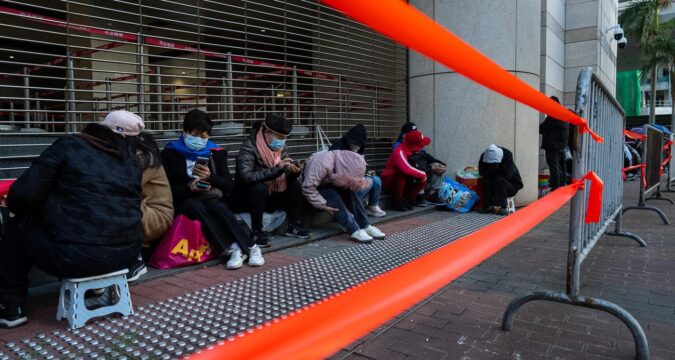
Antes del amanecer, docenas de residentes hicieron fila fuera del edificio del tribunal para conseguir un asiento en la sala del tribunal.
La exempleada de Apple Daily Tammy Cheung llegó a las cinco de la mañana, diciendo que quería saber cómo se encontraba Lai tras los informes sobre su salud.
“Me alivia que este caso al menos pueda concluir pronto”, dijo que sentía que el proceso se estaba apresurando ya que la fecha del veredicto se anunció apenas el viernes pasado.
___
El periodista de Associated Press Chan Ho-him en Hong Kong contribuyó a este despacho.
___
Esta historia fue traducida del inglés por un editor de AP con la ayuda de una herramienta de inteligencia artificial generativa.

Los trabajadores del Louvre votan ir a huelga en otro revés para el museo de París
Por THOMAS ADAMSON
PARÍS (AP) — Los trabajadores del Museo del Louvre votaron el lunes para hacer huelga debido a las condiciones laborales y otras quejas, informó un sindicato, asestando otro revés al museo de París tras un vergonzoso robo de joyas en octubre.
El sindicato CFDT dijo que la votación se realizó en una reunión de 400 trabajadores el lunes por la mañana y que decidieron hacer huelga durante a jornada.
El museo más visitado del mundo no abrió como estaba previsto. Un aviso en su sitio web advertía a los posibles visitantes que “el museo está cerrado por el momento”.
La votación se celebró tras las recientes conversaciones entre representantes de los trabajadores y la ministra de Cultura, Rachida Dati.
El museo lidia con las secuelas de un robo de joyas a plena luz del día y una huelga anterior del personal que cerró abruptamente el Louvre y dejó varados a miles de visitantes bajo la pirámide de vidrio de I.M. Pei. El mes pasado, el Louvre también anunció el cierre temporal de algunas oficinas de empleados y una galería pública debido al deterioro de las vigas del suelo.
Durante el robo en octubre, los ladrones utilizaron una plataforma elevadora para alcanzar la fachada del Louvre, forzaron una ventana, rompieron vitrinas y huyeron con piezas de las joyas de la corona francesa. Una investigación del Senado publicada la semana pasada dijo que los ladrones escaparon con apenas 30 segundos de sobra, citando cámaras rotas, equipo obsoleto, salas de control con poco personal y una mala coordinación que inicialmente envió a la policía al lugar equivocado.
Para los empleados, el sonado incidente cristalizó viejas preocupaciones de que la aglomeración y la escasez de personal estaban socavando la seguridad y las condiciones laborales en un museo que recibe a millones de visitantes cada año.
Esas tensiones salieron a la luz pública en junio, cuando los trabajadores en huelga paralizaron el museo. Los visitantes con boletos con hora programada esperaron en largas filas inmóviles afuera mientras las puertas no se abrían, una imagen que se difundió en las redes sociales y subrayó lo frágil que se habían vuelto las operaciones en la extensa institución.
Los sindicatos dicen que las conversaciones con el gobierno han avanzado, pero aún no están completas.
Por separado, el Ministerio de Cultura dijo el domingo que ha encargado a Philippe Jost, quien supervisó la reconstrucción de Notre-Dame de París, una misión para proponer una profunda reorganización del Louvre tras los hallazgos de una investigación administrativa.
Tres rondas de discusiones la semana pasada produjeron “avances bastante importantes” en las promesas de contrataciones adicionales a tiempo completo y un aumento en la financiación estatal, dijo Alexis Fritche, secretario general de la rama de cultura del sindicato CFDT, a The Associated Press. Pero las propuestas deben confirmarse por escrito y aún no cumplen con todas las demandas, agregó.
“No es completamente satisfactorio”, dijo Fritche. Los empleados están “bastante decididos”, añadió, al tiempo que destacó su fuerte apego a mantener abierto al público el museo más visitado del mundo.
En su aviso de huelga a Dati la semana pasada, los sindicatos CFDT, CGT y Sud dijeron que el Louvre estaba en “crisis”, con recursos insuficientes y “condiciones laborales cada vez más deterioradas”.
Los paros podrían durar solo un día, ya que el Louvre está cerrado los martes, aunque el aviso de huelga es indefinido.
___
John Leicester en París contribuyó a este despacho.