Category: News
Italy’s Anti-Israel Opposition Declares ‘Victory’ After Meloni Suspends Defense Pact
Italy’s Anti-Israel Opposition Declares ‘Victory’ After Meloni Suspends Defense Pact
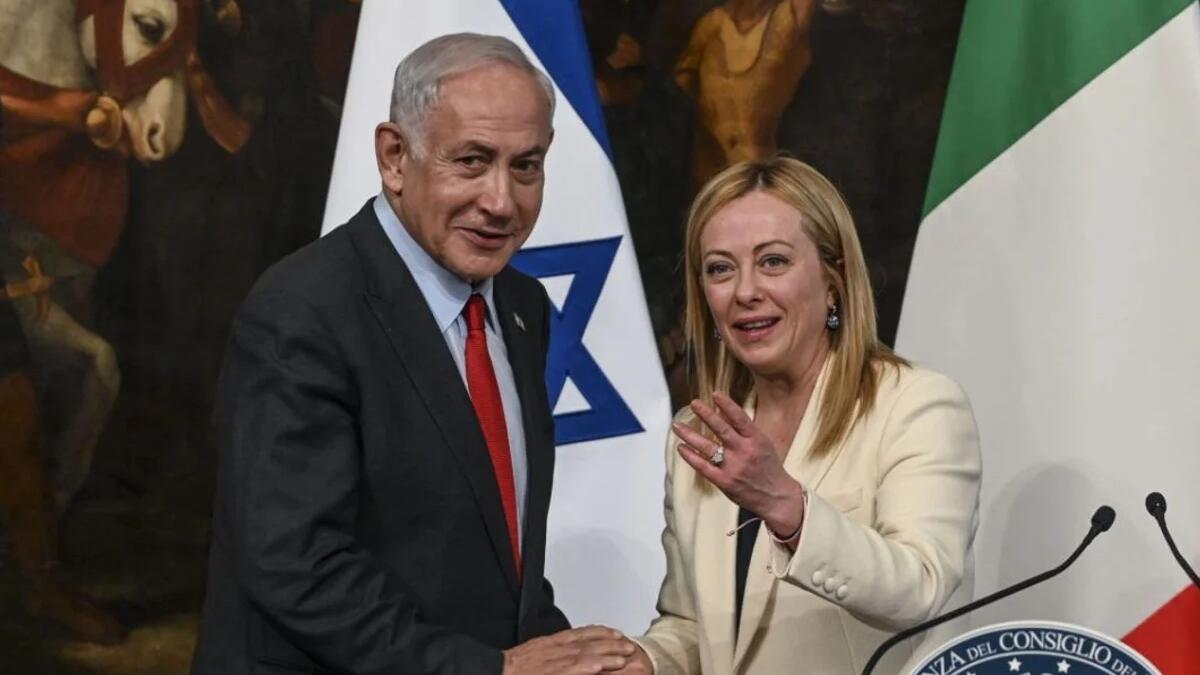
Italy has suspended the automatic renewal of its defense agreement with Israel amid the ongoing US-Israeli war on Iran, now ‘paused’ as a two-week ceasefire holds in order to give a chance for talks.
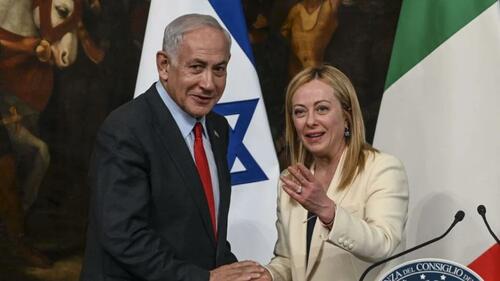
Prime Minister Giorgia Meloni announced the significant status change following weeks of tensions over the Israel question, and after other European governments like Spain and France have heaped criticism on Trump’s Operation Epic Fury. “The government, considering the situation we are experiencing, has decided to suspend the automatic renewal of the defense agreement with Israel,” Meloni said during her latest press briefing in Verona.
Italian Defense Minister Guido Crosetto sent a letter to Israeli Defense Minister Israel Katz confirming the suspension of the Italy-Israel memorandum, which governs defense cooperation. The agreement, which has been in effect for many years of the 21st century, oversaw and guided exchange of military equipment and joint technological research between the two countries’ armed forces.
According to more background in the NY Times:
The defense accord, ratified in 2005, established cooperation between the two countries in areas including “defense industry and procurement policy,” importing and exporting military equipment, exchanging technical data and other forms of military collaboration. It has been renewed every five years, and was set for another renewal this month.
Opposition parties had put pressure on the government for over a year to suspend the renewal. Marco Grimaldi, an opposition lawmaker, said the decision was “a victory” for those who had protested Israel’s military offensive in Gaza over the last three years.
Like in Spain, much of the Italian public, especially among the younger demographic, sees no benefit in closely aligning Italy with Israel’s agenda in the region. And anger and criticism of Israel has been on the rise for years, particularly amid the high civilian casualties of the Gaza war.
In the meantime rising energy costs in Europe from the Hormuz closure have only served to intensify scrutiny of Italy’s ban on Russian natural gas imports, imposed after Moscow’s 2022 invasion of Ukraine.
Responding to calls to revisit Russian gas restrictions, Meloni said, “We must not forget that the economic pressure we have exerted on Russia in recent years is the most effective weapon we have to build peace.”
Meloni’s relations with Washington have also come under fire, and her Tuesday comments were on the defensive: “When you are friends and allies, particularly strategic ones, you must also have the courage to say when you disagree,” she said.
Starting in late March, Italy began blocking some US military aircraft bound for the Middle East from landing at Sigonella Air Base in Sicily. France under Macron has taken some similarly restrictive measures regarding the US military using its airspace related to Iran operations.
Trump has in the recent past said he had been “very shocked” that Meloni has very publicly rejected assisting the United States in the war against Iran, and by her “letting America do all the work” for Italy, “which gets its oil from Iran.” Meloni has more recently said it is “unacceptable” for Trump to attack Pope Leo XIV over the Vatican’s anti-war stance.
“Do people like her? I can’t believe it,” Trump said in a recent interview, adding: “I thought she had courage. I was wrong.”
Tyler Durden
Wed, 04/15/2026 – 02:45

After Orbán Loss, Polish MEP Warns EU Set To “Subjugate Everything And Everyone” As VDL Moves Quickly To Abolish Veto Power
After Orbán Loss, Polish MEP Warns EU Set To “Subjugate Everything And Everyone” As VDL Moves Quickly To Abolish Veto Power
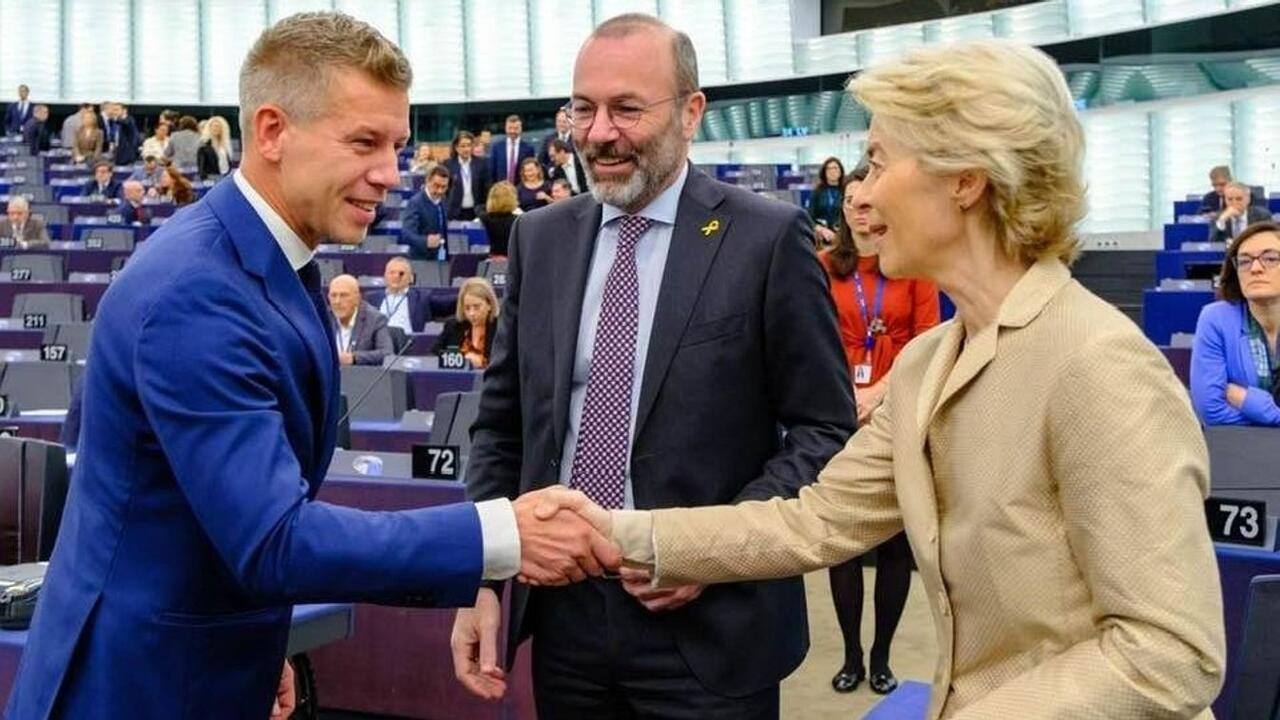
On the back of Péter Magyar’s victory in Hungary, European Commission President Ursula von der Leyen says the EU needs to work on getting rid of member states’ veto powers.
For many who backed Viktor Orbán, one of their greatest fears was exactly what von der Leyen is now advancing: an unconstrained EU able to take action on foreign policy, health, and migration without the threat of a veto.
It is widely assumed that the incoming prime minister of Hungary will seek a fast resolution of Brussels’ key issues with Hungary in order to unlock some €35 billion in funding. While Magyar is still seen as right of center and has already insisted border protection will remain a top priority, he has also made it clear that he will work to build a more constructive relationship with Brussels and make Hungary more a part of the European community.
One way Viktor Orbán previously served as a constant thorn in the side of other member states was via use of the veto power, namely to block aid to Ukraine and sanctions on Russia.
Over the past four years, Hungary’s constant blocking of EU measures drove many to suggest a move to qualified majority voting.
Now, with Magyar’s win and Orbán gone, von der Leyen says the “momentum” is here to make that move.
“Moving to qualified majority voting in foreign policy is an important way to avoid systemic blockages, as we have seen in the past,” she said.
She urged governments, which would have to agree to any change, to “use the momentum now,” she told press yesterday.
She also made it clear that “Hungary is coming back to the European path.”
One conservative Polish MEP from the New Hope party posted her reaction that the Commission president was losing no time in burying member state rights to oppose EU initiatives.
“For the EU’s pseudo-elites, it’s secondary whether the new Hungarian government of Orbán will buy fewer raw materials from Russia or quickly rubber-stamp the next sanctions. The main goals of the Eurocrats are different—barely have the elections wrapped up, and the EC President is already champing at the bit to push the topic of abolishing the veto right for Poland in foreign policy matters,” wrote Ewa Zajączkowska-Hernik.
Szybko poszło❗ Von der Leyen właśnie ogłosiła, że po wyborach na Węgrzech trzeba zlikwidować prawo weta w polityce zagranicznej UE❗ Proszę o UDOSTĘPNIANIE i nagłaśnianie 🔄
“Naprawdę powinniśmy wykorzystać ten impet, żeby ruszyć naprzód w tym temacie” – podkreśliła szefowa… pic.twitter.com/jIjRy24ai5
— Ewa Zajączkowska-Hernik (@EwaZajaczkowska) April 13, 2026
“Subjugate everything and everyone, create mechanisms that turn countries like Poland into just another insignificant province. All wrapped in the sweet packaging of delightful slogans about unity with everyone,” she added, emphasizing the importance of future member state elections.
Tyler Durden
Wed, 04/15/2026 – 02:00

Virginia Governor Pushes Amendments On Gun Legislation Amid DOJ Warning
Virginia Governor Pushes Amendments On Gun Legislation Amid DOJ Warning
Authored by Michael Clements via The Epoch Times (emphasis ours),
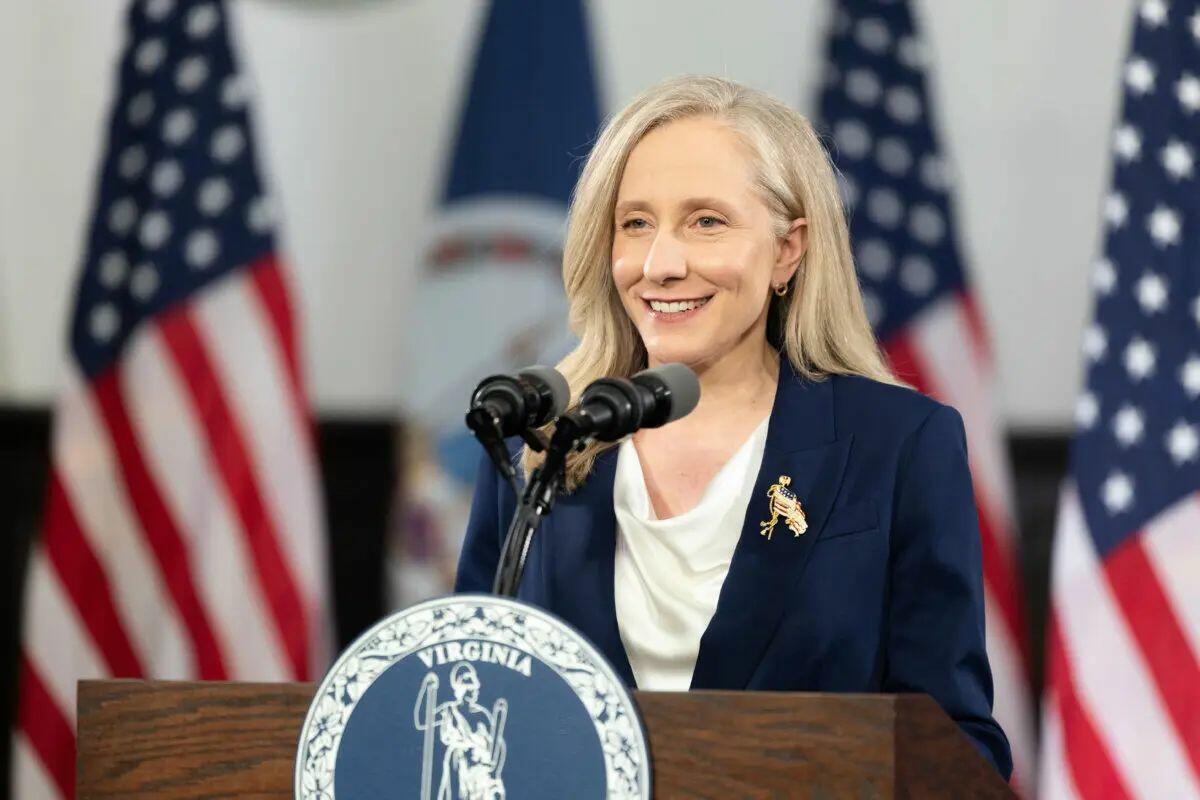
Virginia Gov. Abigail Spanberger wants the Commonwealth’s General Assembly to shore up what she sees as shortcomings in gun control bills it sent to her after its regular session.
Spanberger has requested amendments to clarify a bill banning so-called “assault weapons” and add universal background checks to a bill that raises the age to purchase a handgun or assault weapon from 18 to 21.
She also requested an amendment to clarify that rendering a gun inoperable with a gun lock will meet the safe storage requirements in the new law, and to clarify that the purpose of gun sell-back programs is “to provide Virginians who choose to safely return a firearm in their possession with a safe process to do so.”
The General Assembly is scheduled to reconvene and consider Spanberger’s amendments on April 22.
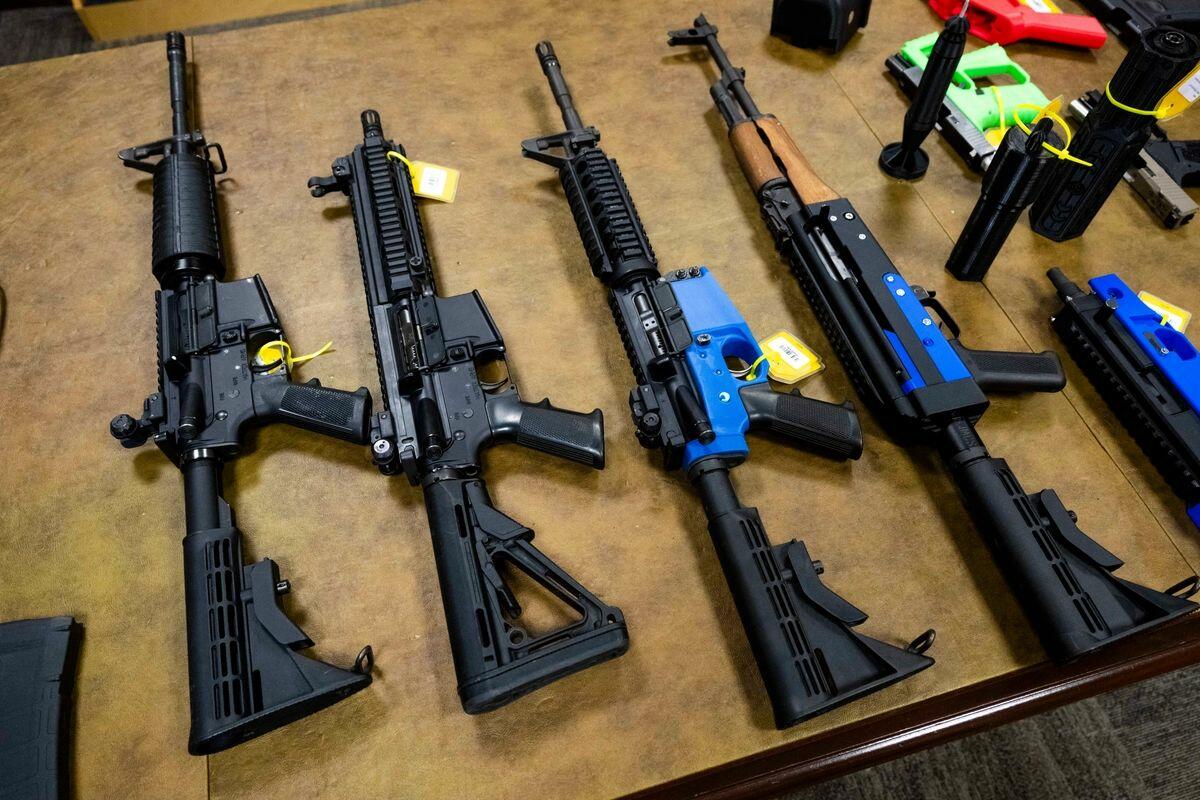
HB217, a ban on certain types of semiautomatic rifles, pistols, and shotguns, is one of the most closely watched bills in the gun legislation package, including by federal officials.
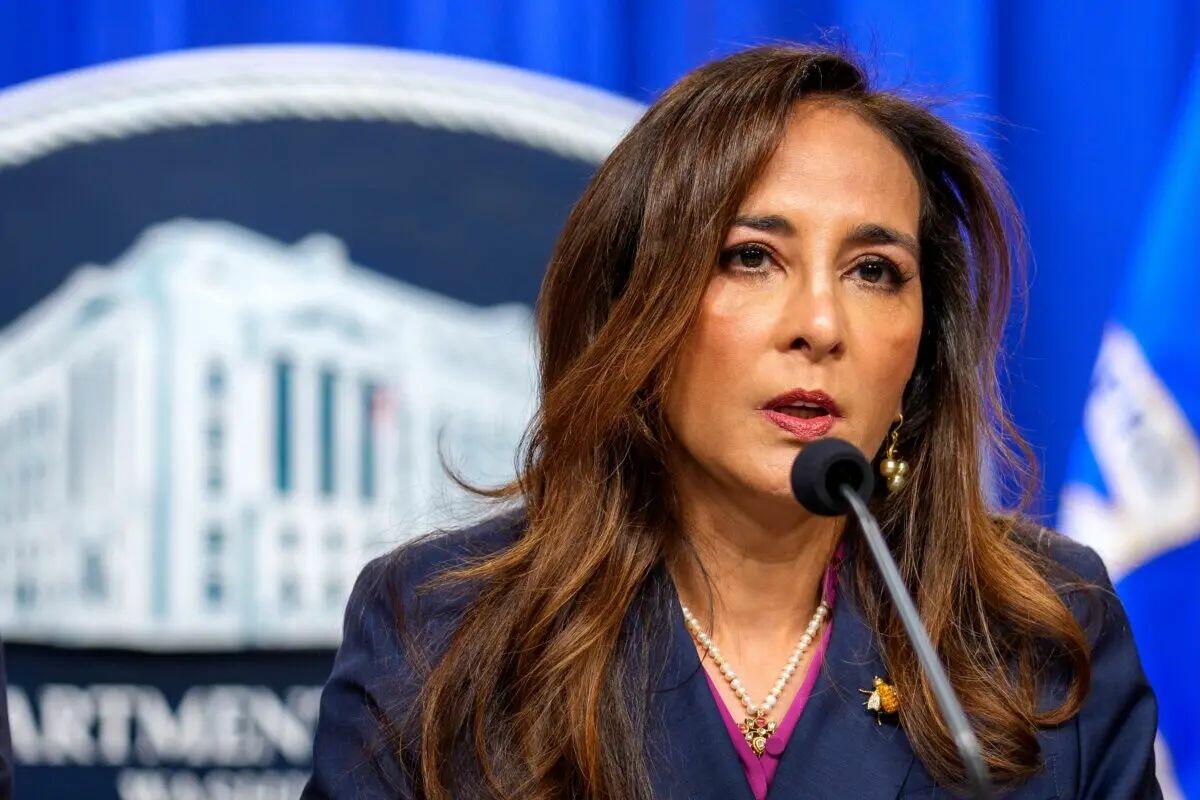
Harmeet Dhillon, assistant attorney general in charge of the Department of Justice’s (DOJ’s) Civil Rights Division, warned Spanberger to reconsider the gun control bills, especially the ban, in a letter dated April 10.
“The Civil Rights Division will commence litigation in the event the Commonwealth of Virginia enacts certain bills that unconstitutionally limit law-abiding Americans’ individual right to bear arms,” the letter reads.
According to a statement from Spanberger’s office, the amendment for HB217 is to “provide additional clarity to law enforcement as it relates to the firearms included under this legislation, as well as protect the use of certain semi-automatic shotguns used for hunting.”
Under the new law, it would be illegal to import, sell, manufacture, purchase, or transfer an assault firearm as defined in the law, beginning July 1.
It defines an assault weapon as any semiautomatic rifle, shotgun, or pistol with a collapsible, telescoping, or thumbhole stock, a bayonet lug or grenade launcher, a magazine that holds more than 15 rounds, a second handgrip, or a threaded barrel to install a flash suppressor, muzzle brake, or compensator, among other things.
Those legally purchased before July 1 are grandfathered. However, the owners can only transfer them to licensed gun dealers outside the state, or to family members through private sale, gifting, or as part of an inheritance.
According to the DOJ letter, the U.S. Supreme Court has already opined that the AR-15 is “both widely legal and bought by many ordinary consumers.”
HB1525 raises the minimum age to buy a handgun or assault weapon from 18 to 21. It also restores universal background checks in Virginia. The law includes exceptions for students in ROTC or law enforcement training.
The amendments direct the Virginia State Police to resume background checks for private sales and to align the checks with HB217.
Additionally, the amendments include an emergency clause to implement the law upon action by the General Assembly.
HB702 would allow local law enforcement to develop policies and procedures to institute firearm buy-back or give-back programs by Jan. 1, 2028, and each year thereafter. Spanberger’s amendment is to ensure gun owners have a safe way to dispose of their firearms if they want to.
Spanberger signed bills banning unserialized guns and components, often called ghost guns, setting tighter regulations on firearms businesses, and two laws concerning possession of firearms by people under court orders, on April 10.
More Than 20 Bills Passed
These bills are among more than 20 gun control bills passed by the Virginia General Assembly during its regular session.
They include prohibitions on carrying guns on the Capitol grounds or within 100 feet of polling places or buildings used by election boards, and setting requirements for storing firearms in a home where children are present.
HB969 directs the secretary of public safety to study establishing a Virginia Gun Violence Prevention Center. Several states have set up similar offices modeled on the White House Office of Gun Violence Prevention established under the Biden administration.
That office was closed on President Donald Trump’s second day in office.
In her statement, Spanberger said she supports the Second Amendment. She wrote that the new laws are about keeping Virginians safe.
“I support the Second Amendment. But gun violence is the leading cause of death for children and teenagers in America, and that should motivate all of us to ask ourselves what we can do to mitigate this harm,” Spanberger wrote.
Democrats passed similar gun control packages in the past two years, but then-Republican Gov. Glen Youngkin vetoed those bills.
In November 2025, Democrats took control of the General Assembly and the governor’s office. California, Connecticut, Delaware, Hawaii, Illinois, Maryland, Massachusetts, New York, New Jersey, and Washington state have similar bans.
Tyler Durden
Tue, 04/14/2026 – 23:25

Western Australia Establishes Strategic Fuel Reserve
Western Australia Establishes Strategic Fuel Reserve
Australia is facing a historic energy crisis with much of its gulf-sourced energy facing not one but two blockades. But at least some parts of the country are doing something about it, even if it is too little, too late.
Western Australia will establish its own strategic reserves of diesel fuel to ease “acute shortages,” the state’s government said.
As Bloomberg reports, the government signed a deal with Cambridge Gulf to buy and store 4 million liters of diesel, which is expected to arrive in the coming weeks, according to a statement. The inventory may be expanded to 12 million liters, which should be enough to last the local infrastructure at least a few days.
The move comes as the war in Iran and resulting blockades of the Strait of Hormuz hampered global oil flows, with panic buying in Australia leading to fuel shortages. Australia has a far bigger national fuel reserve, which included more than 2.8 billion liters of diesel as of April 7, but much of that is located on the nation’s east coast — thousands of miles away from Western Australia.
Read More: Are Australia’s Low Fuel Reserves Cause for Concern?: Explainer
Western Australia consumes a high amount of diesel due to its large mining and agricultural industries. Gas stations around the state have reported shortages, though just 18 of the 771 stations did so in the week to April 10, down from 61 in the prior period.
Western Australia is the country’s biggest producer of wheat and is home to vast mining operations including iron ore and gold, with Sanderson estimating the state accounts for 25% of the nation’s diesel consumption. Prime Minister Anthony Albanese is due to visit more Southeast Asian nations this week in an effort to shore up fuel supplies as the Iran war shows no signs of abating.
“This would be solely for West Australians and be directed at the discretion of the state government to areas that need it most,” Energy Minister Amber-Jade Sanderson said at a press conference on Sunday, adding that more details would be provided in the coming days and weeks. The reserve would hold “millions of liters” and use “capacity in the existing distribution network,” she said.
“We have made real progress in the last month to address supply issues across regional areas, but we need to be prepared for the months ahead,” Sanderson said in a follow up statement Monday. “This strategic stockpile will give WA a source of fuel under its direct control – providing much needed flexibility as we continue to navigate this global issue.”
Establishing a strategic reserve is a “sensible move,” said Aaron Morey, chief executive officer of the Chamber of Minerals and Energy of Western Australia, adding that the CME was looking forward to continuing work with the government “on the design and implementation” of the mechanism.
The Western Australian Farmers Federation said that they proposed separate stockpiles at a roundtable with the government on March 10, according to a statement, adding that it would improve supply security for growers.
Tyler Durden
Tue, 04/14/2026 – 23:00
https://www.zerohedge.com/markets/western-australia-establishes-strategic-fuel-reserve
Hezbollah Chief Torches ‘Futile’ Israel Talks, Urges Lebanon Walkout As Rubio Hypes ‘Historic Opportunity’
Hezbollah Chief Torches ‘Futile’ Israel Talks, Urges Lebanon Walkout As Rubio Hypes ‘Historic Opportunity’
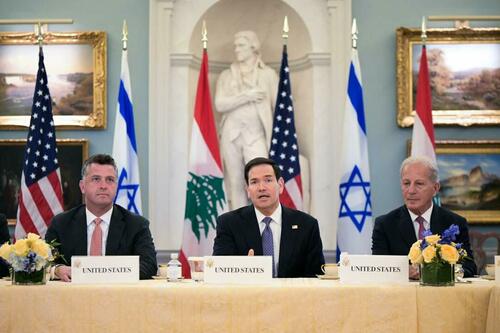
The Israel-Lebanon peace talks which have kicked off at the State Dept. in Washington D.C. on Tuesday are unprecedented and historic, and yet they remain largely symbolic and will unlikely lead to much in terms of ending the conflict with Hezbollah. That’s of course because Hezbollah is not actually represented, only Lebanese government officials – who hold no power or sway over what is the single most well-armed paramilitary group in the country.
Hezbollah leader Naim Qassem on Monday demanded that Lebanon cancel the US-hosted meeting with Israel, reaffirming the Iran-aligned group’s rejection of direct negotiations with its sworn enemy.
“We reject negotiations with the usurping Israeli entity… We call for a historic and heroic stance by canceling this negotiating meeting,” Qassem stated. He blasted the talks as “futile”.
Hezbollah has sent thousands of rockets into Israel, both in support of Hamas during the two-year Gaza war, and more recently as the US war on Iran kicked off.
Israel has in turn obliterated parts of Beirut, southern Lebanon, and the Bekaa Valley – launching a brutal airstrike campaign, as if to punish the whole country. Earlier in the Gaza war Hezbollah leadership was decimated.
As for the Lebanese government, it first wants to secure a ceasefire in the Israel-Hezbollah war via these formal talks with Lebanon itself. The US and Israel in turn are hoping to pressure all of Lebanese society into disarming and dismantling Hezbollah.
For now, Prime Minister Benjamin Netanyahu has vowed to keep up the fight against Hezbollah, saying Saturday that “we want the dismantling of Hezbollah’s weapons, and we want a real peace agreement that will last for generations.’
The Lebanon crisis holds the potential to impact the outcome of delicate on and off again peace talks between Tehran and Washington.
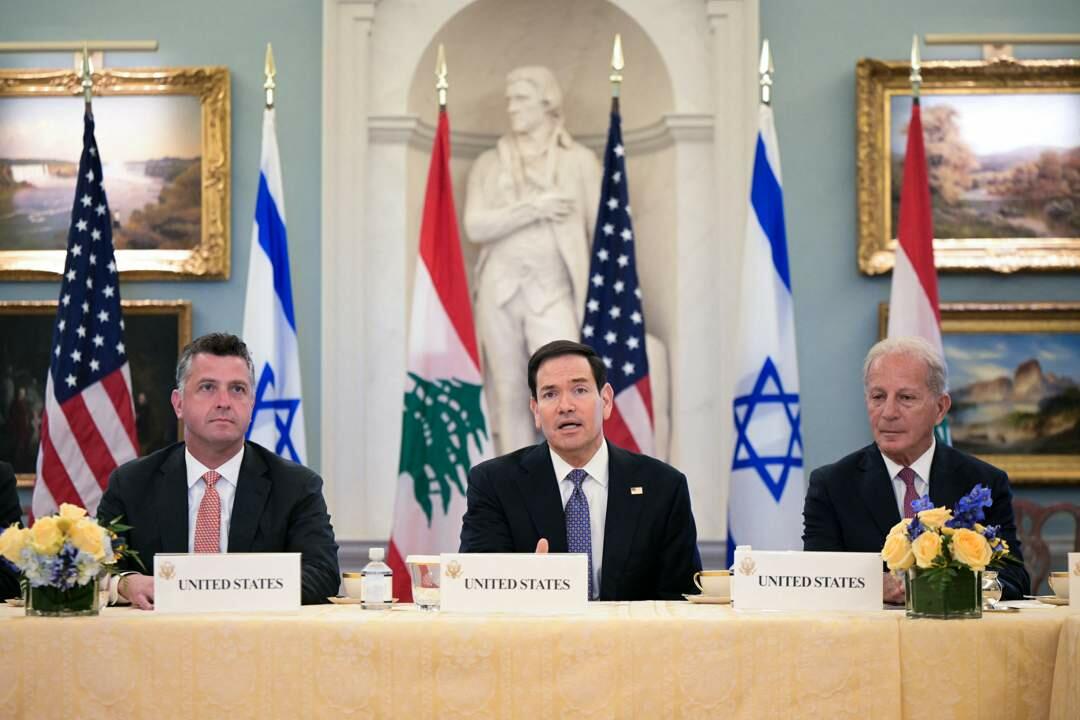
Secretary of State Marco Rubio is currently overseeing the talks. Upon welcoming the rival ambassadors Tuesday he declared, “This is a historic opportunity. We understand we’re working against decades of history and the complexities that have led us to this unique moment and the opportunity here.”
“The hope today is that we can outline a framework upon which a current and lasting peace can be developed,” he added. Here’s how he framed the situation:
“The Lebanese people are victims of Hezbollah. The Lebanese people are victims of Iranian aggression.” Rubio stated. “This is a process, not an event.”
🇺🇸🇱🇧 Rubio just did something genuinely historic. Israel and Lebanon face to face in Washington for the first time since 1983, and he’s the one who made it happen.
His framing was sharp: “The Lebanese people are victims of Hezbollah. The Lebanese people are victims of Iranian… https://t.co/locPZ5hVdR pic.twitter.com/DslBsOQmJS
— Mario Nawfal (@MarioNawfal) April 14, 2026
From Washington and Tel Aviv’s eyes, this lasting peace doesn’t have Hezbollah in the picture. The US has sought the group’s final demise for decades, and the lengthy Syrian proxy war also had this as a key objective, along with the overthrow of Assad, and eventual regime change targeting Tehran – to dismantle the so-called Shia axis.
Tyler Durden
Tue, 04/14/2026 – 22:10

Australia’s Qantas To Cut Domestic Flights Amid Fuel Price Surge
Australia’s Qantas To Cut Domestic Flights Amid Fuel Price Surge
Authored by Monica O’Shea via The Epoch Times (emphasis ours),
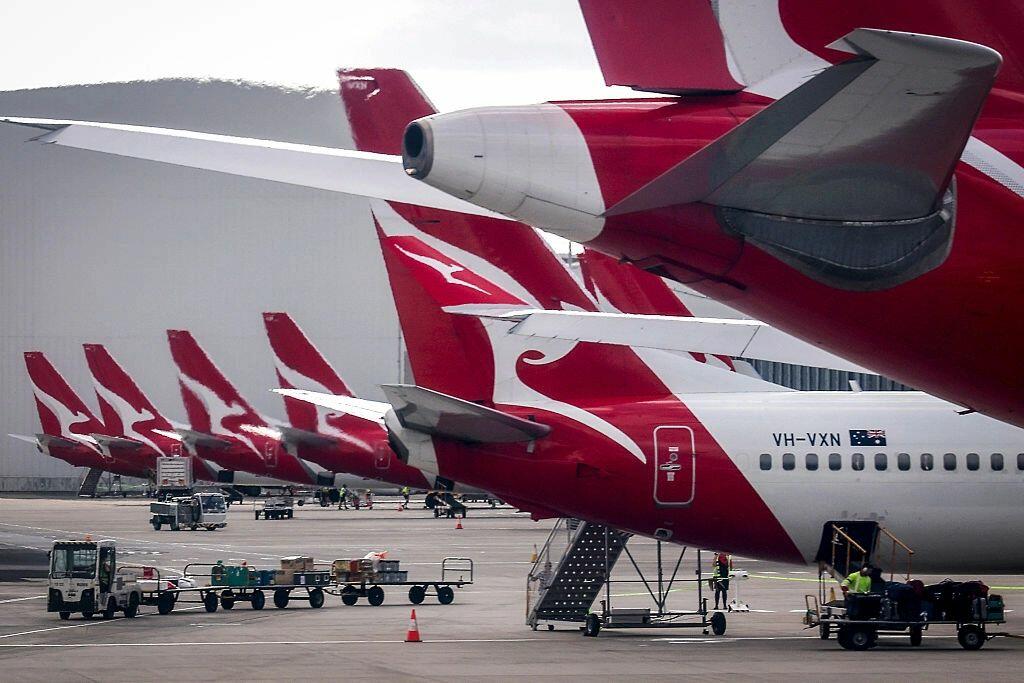
Australia’s flag carrier Qantas will cut domestic flights and redeploy capacity from the United States towards Europe as fuel prices double.
Qantas revealed fuel costs remained turbulent amid the Iran War in an update on its 2026 financial outlook, which noted that jet fuel prices have more than doubled and remain highly volatile.”
“Given the continued volatility in fuel prices and the global economic conditions, the group has reduced domestic capacity in 4Q26 by around 5 percentage points,” Qantas said.
Customers will be notified of which routes will be affected.
Meanwhile, in response to strong demand for European flights, Qantas will also add more options to Paris and Rome.
Qantas said it had fixed price contracts in place for about 90 percent of its crude oil but the airline was still exposed to surging jet fuel prices, which have jumped from about US$20 per barrel in February to as high as US$120.
As a result, the group now expects its fuel bill to cost between $3.1 billion or $3.3 billion.
“We are closely monitoring the situation given the ongoing uncertainty in global fuel supply chains,” Qantas added.
The move comes as other major carriers Air New Zealand, Air India, and Delta Airlines cut back on capacity amid surging jet fuel costs.
Qantas is Australia’s biggest airline founded in 1920 and operates two brands, Qantas and low cost airline Jetstar.
Listed on the Australian Stock Exchange (ASX), the airline flies across Australia, North America, Asia, Europe, Africa and to and from South America.
Overall, Qantas said it remains in a “strong financial position” and is progressing its 2027 financial year funding plans, even as it tightens capital spending.
Current FY26 capital expenditure is now expected to come in at or below $4.1 billion, at the lower end of its previous guidance range. Capital expenditure refers to the dollars spent by the company on buying and upgrading long-term assets including planes and buildings.
The company confirmed a $300 million interim dividend will be paid to shareholders on April 15, but its planned $150 million share buyback has not begun due to ongoing volatility.
Net debt is expected to sit at or above the middle of its target range by June 2026 and Qantas will delay its FY27 update.
Meanwhile, Qantas’ largest competition Virgin also faces disruption from the Middle East crisis with its codeshare flights with Qatar Airways suspended.
Virgin delivered a $279 million net profit after tax in its latest financial results (pdf) ahead of expectations despite inflation pressures.
Tyler Durden
Tue, 04/14/2026 – 21:45
https://www.zerohedge.com/political/australias-qantas-cut-domestic-flights-amid-fuel-price-surge
Swalwell Resigns From Congress – Effective TODAY, After Fresh Rape Allegation And Corroborating Campaign Records
Swalwell Resigns From Congress – Effective TODAY, After Fresh Rape Allegation And Corroborating Campaign Records
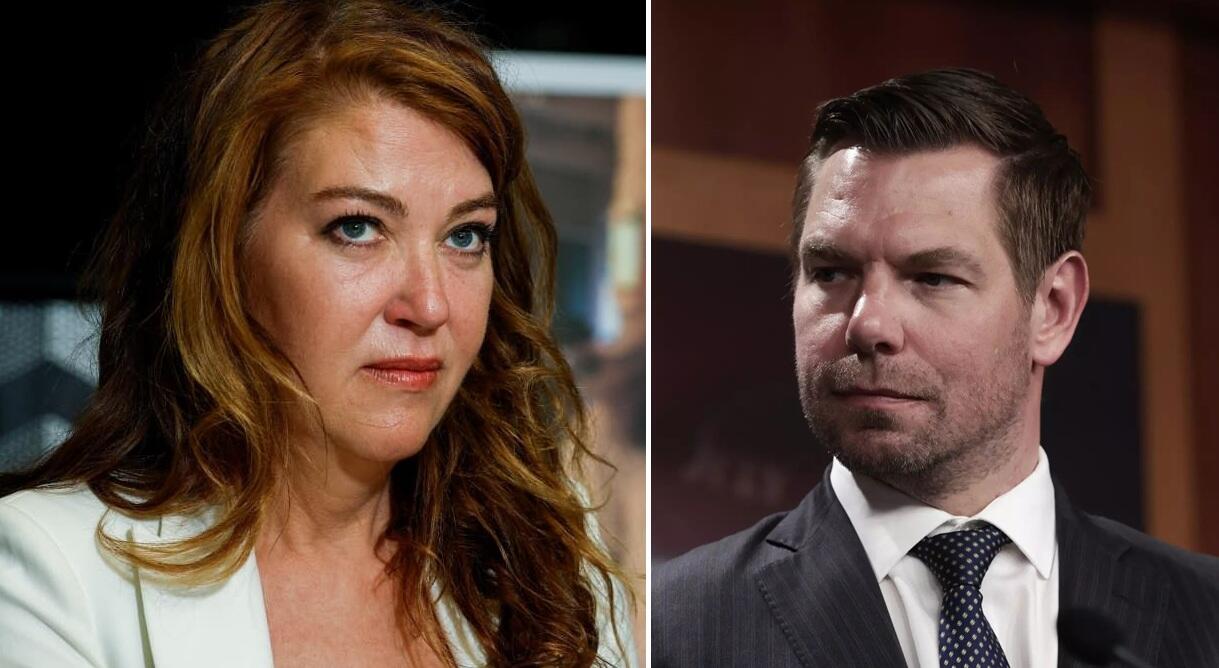
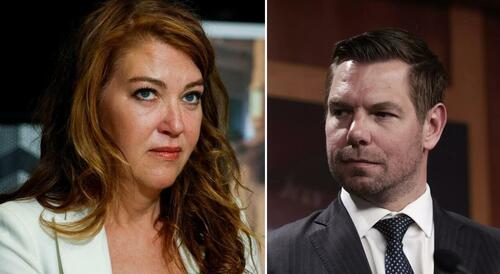
Rep. Eric Swalwell (D-CA) resigned from Congress on Tuesday, effective today, capping a stunning collapse of his political career just one day after he suspended his bid for California governor. The move came hours after a new accuser, Lonna Drewes, held a press conference in Beverly Hills alleging that Swalwell drugged, raped, and choked her unconscious in a West Hollywood hotel room in July 2018.
Drewes, a former model and fashion technology entrepreneur, told reporters she met Swalwell three times that year while he offered political connections for her business. On the third encounter, she claims she had one glass of wine she believes was spiked, became incapacitated, and was assaulted at the Montrose Hotel. She said she thought she was going to die. Drewes did not pursue a rape kit at the time but says she told friends, kept journal entries, and preserved texts and photos. Her team filed a formal complaint with the Los Angeles County Sheriff’s Department the same day.
Lonna Drewes on Rep. Eric Swalwell (D-CA): “I had contact with Eric Swalwell on three separate occasions…On the third occasion I believe he drugged my drink…he raped me and he choked me…I did not consent to any sexual activity…I have never doubted what happened. I stand… pic.twitter.com/1mJPrZPQrx
— CSPAN (@cspan) April 14, 2026
The allegation is the latest – and most detailed – in a string of at least five public accusations of sexual misconduct against Swalwell. He has denied all of them.
What makes Drewes’ claim particularly damaging is fresh documentation tying Swalwell to the scene. The Los Angeles County Sheriff’s Department confirmed the alleged assault occurred in the 900 block of Hammond Street – the exact location of the Montrose Hotel. Campaign finance expert Rob Pyers flagged, and Fox News correspondent Bill Melugin amplified, FEC records showing “Swalwell for Congress” spent $361 ($353 + $8 travel) at that hotel on July 18, 2018 – the precise date referenced in the sheriff’s statement.
NEW: The Los Angeles County Sheriff’s Department says the alleged rape of Lonna Drewes by Eric Swalwell took place in July 2018 in the 900 block of Hammond Street. This comes back to the Montrose Hotel. Campaign finance expert @rpyers has flagged a travel expense from Swalwell’s… pic.twitter.com/jEH19r9Ihp
— Bill Melugin (@BillMelugin_) April 15, 2026
Swalwell’s office cited the mounting accusations and an ongoing House Ethics Committee investigation as the reason for his exit. He had already faced a separate criminal probe by the Manhattan DA’s office over a prior assault claim.
Rumors of a Wider Capitol Hill Reckoning
Swalwell’s resignation has sparked online speculation about additional lawmakers potentially facing scrutiny. Much of the chatter has centered on a list of names that originated in a post by former Rep. George Santos (R-NY) on Monday. In it, Santos claimed that while in Congress he had heard “rumors and or allegations” of lewd or alleged sexual misconduct involving several members and staff or reporters. He listed:
Eric Swalwell (D-CA)
Tony Gonzalez (R-TX)
Max Miller (R-OH)
Dan Meuser (R-PA)
Matt Rosendale (former Rep., R-MT)
Ruben Gallego (D-AZ)
Nancy Mace (R-SC)
Anthony DeEsposito (former Rep., R-NY)
Mark Green (former Rep., R-TN)
Lori Chavez (former Rep., R-OR)
Ritchie Torres (D-NY)
Brian Steil (R-WI)
Cory Booker (D-NJ)
Reality check on the list: At least two names have already acted. Swalwell is out. Rep. Tony Gonzalez (R-TX) also resigned Tuesday after admitting to an affair with a staffer who later died by suicide; TMZ had been covering that story extensively. Several others on the list (Rosendale, DeEsposito, Green, Chavez, Menendez) are already former members of Congress.
Tyler Durden
Tue, 04/14/2026 – 21:20
Netanyahu Boasts: Trump Admin Briefs Me Every Day On Iran
Netanyahu Boasts: Trump Admin Briefs Me Every Day On Iran
Authored by Dave DeCamp via AntiWar.com,
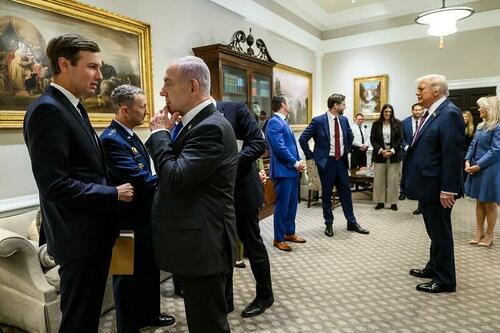
Israeli Prime Minister Benjamin Netanyahu said on Monday that he spoke with Vice President JD Vance after the US-Iran talks in Pakistan and described the call as part of a daily report the Trump administration provides him.
“I spoke yesterday with Vice President J.D. Vance. He called me from his plane on his way back from Islamabad. He reported to me in detail, as this administration does every day, about the development of the negotiations,” Netanyahu said at a cabinet meeting, according to Axios reporter Barak Ravid.
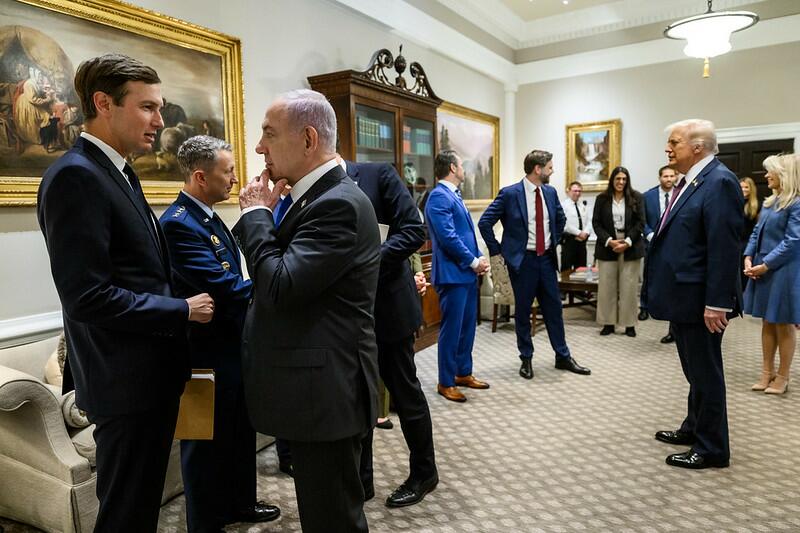
The comments from Netanyahu highlight the close coordination between the US and Israel on Iran. Ravid reported in early March that US envoy Steve Witkoff and President Trump’s son-in-law, Jared Kushner, who has known Netanyahu since he was a child, were speaking to Netanyahu and other Israeli officials nearly every day. Witkoff and Kushner led the negotiations with Iran in the lead-up to the war and both attended the Pakistan talks.
A March 4 report from Ravid for Axios reads: :A US official said special envoy Steve Witkoff and Trump’s adviser and son-in-law Jared Kushner talk almost every day to Netanyahu, to the director of Mossad David Barnea, and to other Israeli officials — and that regardless of ups and downs in the past, the coordination over the last month was very close.”
Netanyahu said in his comments on Monday that he and Vance discussed an “explosion” in the US-Iran talks, which he blamed on Iran. The Israeli leader claimed that Tehran had violated its ceasefire agreement with the US by not fully opening the Strait of Hormuz, but Iran didn’t take the step to open the waterway in response to Israel’s escalation of its bombing campaign in Lebanon.
The original ceasefire announcement issued by Pakistan’s prime minister, which the US had approved, said that the deal includes a truce in Lebanon, but the US backtracked on that commitment after Israel kept bombing the country.
“The explosion came from the American side, which could not tolerate Iran’s blatant violation of the agreement to enter the negotiations. The agreement was that they would cease fire, and the Iranians would immediately open the gates. They did not do that. The Americans could not accept that,” Netanyahu said.
Netanyahu also said that Vance told him the US priority was related to Iran’s nuclear program. “He also made it clear to me that the main issue on the agenda for President Trump and the United States is the removal of all enriched material, and ensuring that there is no more enrichment in the coming years, and that could be in decades, no enrichment within Iran. That is their focus, and of course it is also important to us,” he said.
Joe Kent, the former head of the National Counterterrorism Center, who resigned in opposition to the war with Iran, has described the US demand for Iran to commit to never enriching uranium as a “poison pill” in the negotiations that serves Israel’s interest.
“Upcoming negotiations will fail if we don’t restrain the Israelis & stop giving them access to our decision-making. The Israelis push for zero uranium enrichment because they know it’s a poison pill for Iran & will result in the war continuing,” Kent said on X in response to Netanyahu’s comments. “Iran has committed to not developing or obtaining a nuclear weapon since 2003. A deal can be reached about uranium enrichment levels & monitoring – ending the war & opening the [Strait of Hormuz]. This can only happen if we treat the Israelis like the junior partner & put our interests 1st.”
Tyler Durden
Tue, 04/14/2026 – 20:55

Tesla China CEO Says Shanghai Gigafactory Is “Golden Key” To Optimus Robot Production
Tesla China CEO Says Shanghai Gigafactory Is “Golden Key” To Optimus Robot Production
Tesla’s China president was quoted by local media on Tuesday as saying the Shanghai Gigafactory could eventually play a major role in mass-producing humanoid robots. The comment comes after Tesla said earlier this year that it would pivot away from producing Model S and X vehicles at its California factory and convert the vehicle production lines to Optimus robot production.
The Shanghai Morning Post quoted Allan Wang Hao, a senior executive at Tesla China, who said the Shanghai Gigafactory could provide a “golden key” to mass-producing the Optimus robot.
“Like other Tesla factories, Giga Shanghai can shoulder important responsibilities in manufacturing all new products, including robots, to make our contributions to the company,” Hao said. “We are highly confident in welcoming the arrival of a new era of robots.”
Giga Shanghai is Tesla’s largest factory. In 2025, it produced 851,000 EVs, more than half of Tesla’s global output, and in the first quarter of 2026, the factory accounted for about 60% of worldwide deliveries.
SCMP noted, “It was the first time a Tesla executive publicly mentioned the potential use of the Shanghai factory for building humanoid robots.”
Earlier this year, Elon Musk told investors on an earnings call that the company would stop making new Model S and Model X vehicles in the second quarter.
“It’s part of our overall shift to an autonomous future,” Musk said, adding that the Model S and X production lines in Fremont, California, will be converted to making Optimus.
Musk recently stated on X, “Custom orders of the Tesla Model S & X have come to an end. All that’s left are some in inventory.”
The latest Polymarket odds for when Tesla will release the humanoid robot for consumers stand at just 6% by June 30 and 16% by the end of the year.
Will Tesla release Optimus by June 30, 2026?
Yes 6% · No 94%
View full market & trade on Polymarket
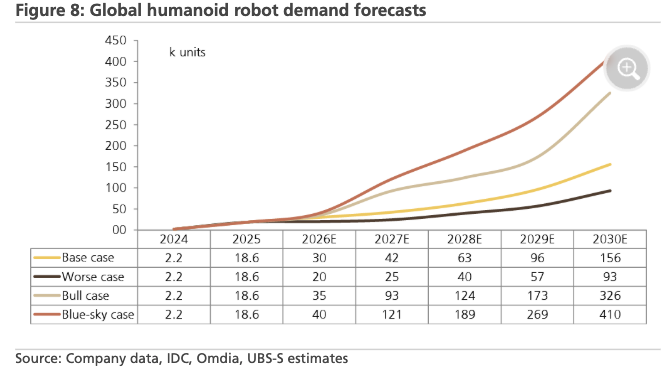
UBS analyst Phyllis Wang recently added color to the global landscape of humanoid robotics, and the big takeaway was that production is set to ramp up.
Read the report here for more color on the humanoid robot shipment roadmap.
Tyler Durden
Tue, 04/14/2026 – 20:30
Fauci Deputy Who Refused COVID-19 Vaccine Feared Retaliation: Emails
Fauci Deputy Who Refused COVID-19 Vaccine Feared Retaliation: Emails
Authored by Zachary Stieber via The Epoch Times (emphasis ours),
A top government doctor who declined to receive a COVID-19 vaccine in 2021 was worried he would lose his job and medical license in retaliation, according to newly obtained emails.
“There were times when I was worried about losing my job especially when we first started receiving emails about [vaccine] mandate deadlines,” Dr. Matthew Memoli, who led the Laboratory of Infectious Diseases clinical studies unit at the National Institute of Allergy and Infectious Diseases (NIAID) during the COVID-19 pandemic, said in one missive to a NIAID spokesman.
He added later that he was more concerned about losing his medical license because he was aware there were “protections for government employees.”
“Washington, DC directly threatened to take away my medical license which would have threatened my job (I need a medical license) so I applied for a Virginia license and protected myself that way,” Memoli also wrote in the email, sent on Jan. 17, 2024, and obtained by The Epoch Times through a Freedom of Information Act request.
After President Donald Trump took office in 2025, Memoli was made acting director of NIAID’s parent agency, the National Institutes of Health (NIH). He has been the NIH’s principal deputy director since March 31, 2025.
Memoli did not respond to a request for comment.
Spoke Out Against Mandate
Memoli became publicly known in 2021 when he was one of the few government officials to speak out against COVID-19 vaccine mandates, which were being imposed on millions of people and promoted at the highest levels of the government.
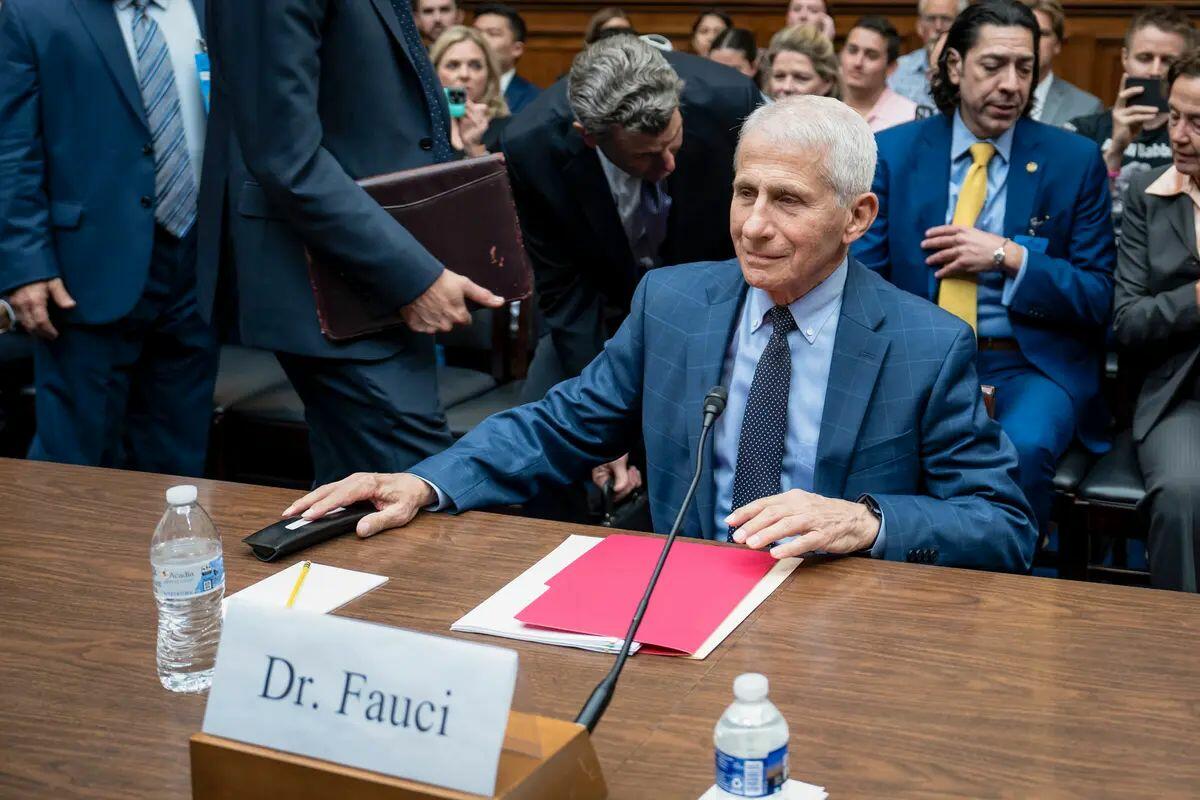
Emails obtained by The Epoch Times in 2024 showed that Memoli warned Dr. Anthony Fauci—a White House COVID-19 adviser, the longtime head of NIAID until his retirement, and a proponent of vaccine mandates—that mandating COVID-19 vaccination was a mistake, in part because the vaccines did not prevent transmission of the disease.
“At best what we are doing with mandated mass vaccination does nothing and the variants emerge evading immunity anyway as they would have without the vaccine,” Memoli wrote to Fauci in one email. “At worst it drives evolution of the virus in a way that is different from nature and possibly detrimental, prolonging the pandemic or causing more morbidity and mortality than it should.”
Memoli at the time agreed to answer questions via email from The Epoch Times, but officials blocked the interview.
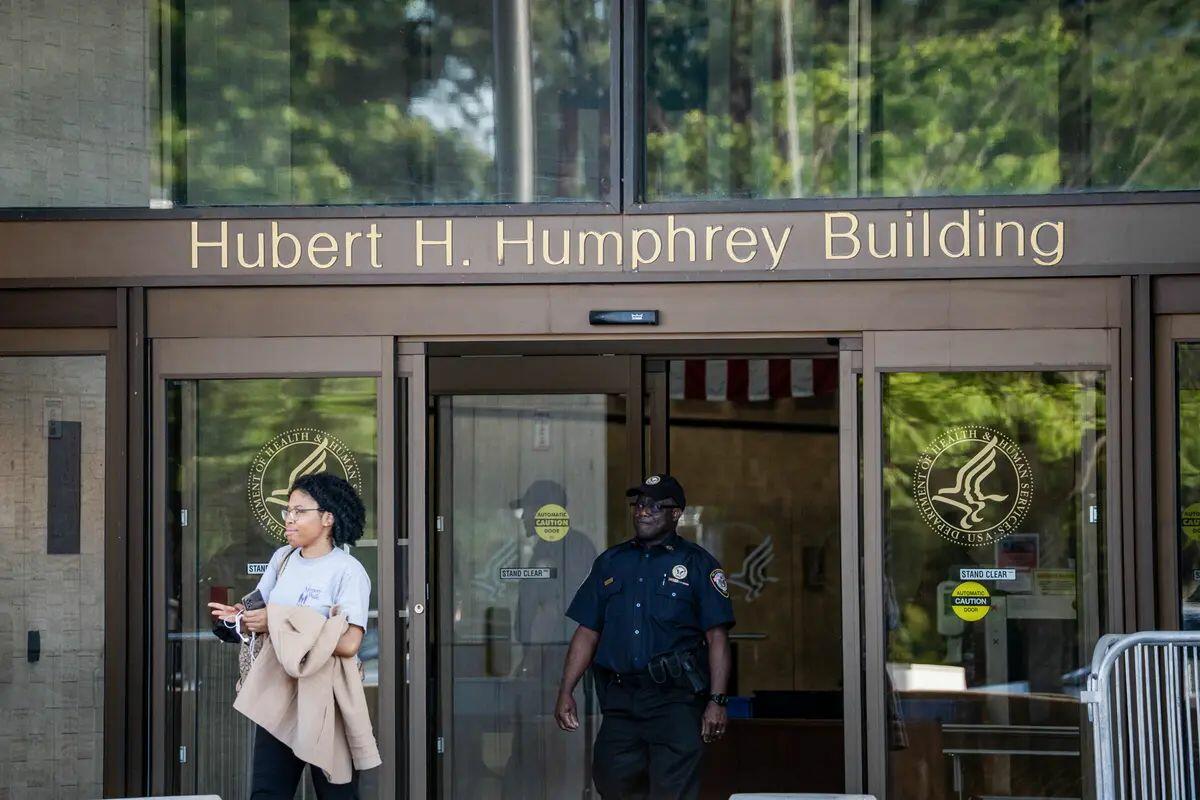
Memoli sent his answers to NIAID spokesman Ken Pekoc to review. In response, Pekoc said the interview request had been rejected by NIAID’s parent agency, the Department of Health and Human Services (HHS), according to one of the newly obtained emails.
The reasoning for the rejection was not detailed.
‘Many Reservations’
The Epoch Times had asked whether Memoli was in danger of being fired due to his opposition to the mandates and whether he wished he had gone public with his opposition to the mandates sooner, among other questions.
“I had expressed many reservations about the vaccines in press interviews that I did far prior to late 2021,” Memoli said in response, in answers that were never sent to The Epoch Times. “I was always honest about that. The reporters I spoke to never seemed to publish any of the information I provided regarding that.”
That changed near the end of 2021, when The Wall Street Journal and other papers published stories about Memoli’s remarks after President Joe Biden and federal agencies such as NIAID and its parent agency, the NIH, mandated COVID-19 vaccination for federal employees and contractors.
Memoli, in comments to reporters and in internal emails, said he opposed the mandates because from his experience with respiratory viruses, they evade immunity, and vaccines could drive the evolution of the virus. He also said requiring shots infringed on medical freedom.
“The vaccine was not working well due to the rise of variants, there were safety issues arising, and as my family and I had chosen not to be vaccinated we were dealing with threats of having our medical licenses taken away, loss of employment, etc.,” Memoli wrote to Pekoc in one of the newly obtained emails, dated Jan. 16, 2024.
“We had friends who felt coerced into accepting vaccination as was happening all over the country. Therefore, to again try to be constructive I contacted the NIH ethics office to appeal to them to consider this.”
Spoke at Event
After exchanging emails with NIH ethics personnel, Memoli was invited to speak at an agency event called the Ethics Grand Rounds in December 2021. In his speech, he made the case that mandates should only be imposed in rare situations, and should not be imposed for COVID-19 vaccines because the vaccines’ effectiveness dropped over time.
“I was somewhat surprised given the environment, but I have always had the utmost respect for the NIH ethics department,” Memoli said in one of the newly obtained emails. “I have worked with them many times in the past and have even published papers with them. The people in that office have always been very smart, open minded, and able to look at difficult issues and consider them carefully and thoroughly.”
He added that many colleagues thanked him for his presentation, and that no colleagues or superiors offered negative remarks. Julie Ledgerwood, another NIAID official, spoke at the event in favor of mandates.
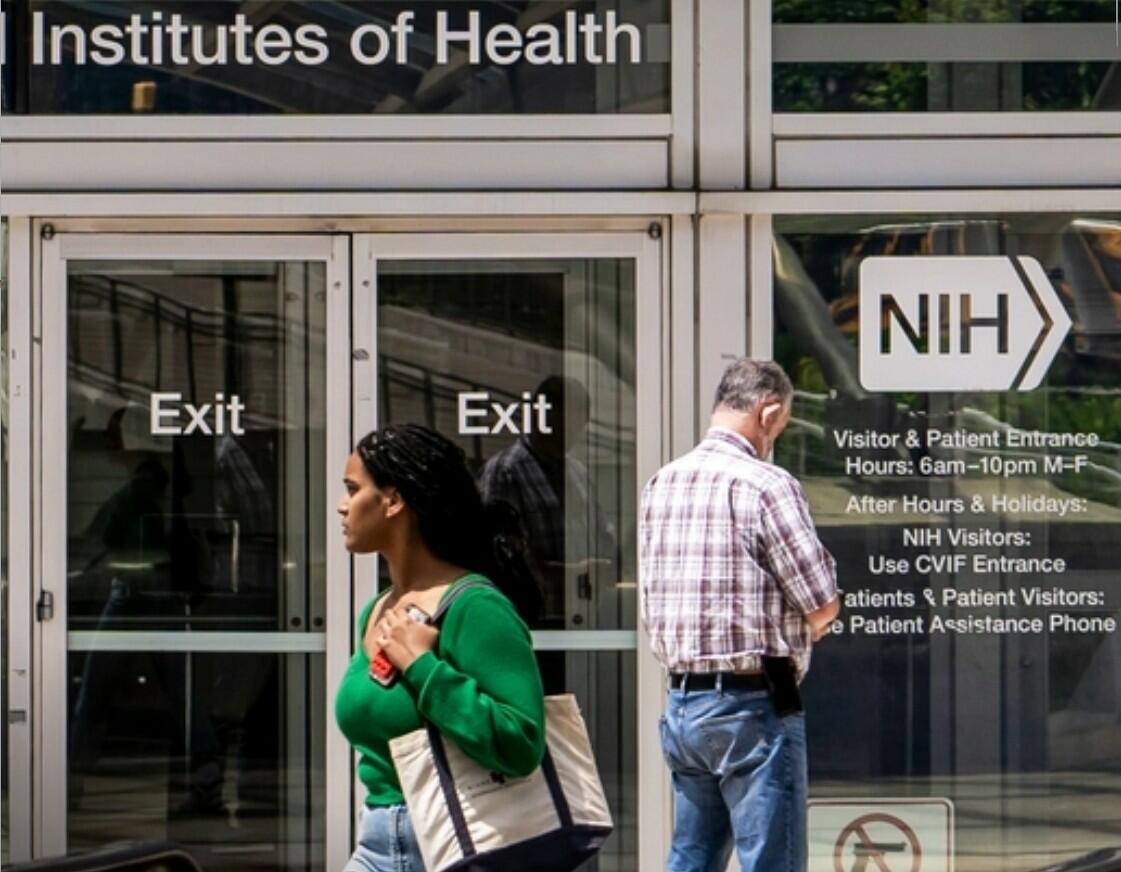
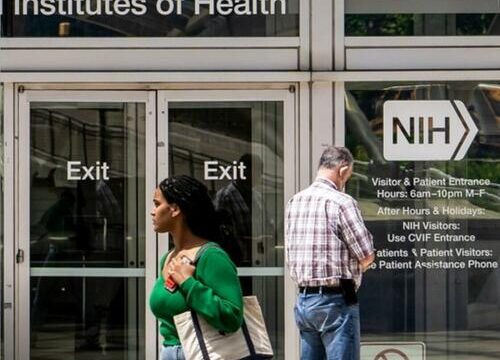
The National Institute of Health in Bethesda, Md., on May 30, 2024. Madalina Vasiliu/The Epoch Times
At least one other NIH employee privately criticized Memoli’s position, however. The presentation “made it abundantly clear why his reasoning was so flawed and flaky,” Dr. Steven Holland, director of the NIAID’s Division of Intramural Research, wrote to Pekoc and others.
Holland did not respond to a request for comment. NIH did not respond to emailed questions, including how many workers it fired for refusing COVID-19 vaccination.
An email from another official, Dr. Jeffrey Cohen, chief of the NIH’s Laboratory of Infectious Diseases, includes several sentences that were redacted. “Thus, I don’t understand why he would think his job or clinical practice was in jeopardy,” Cohen said after the redacted sentences.
Pekoc said in an email to Cohen and other officials that NIH leadership wanted it made clear that no one at NIH said Memoli would be fired.
“In other words, he may have FELT like his job was in jeopardy because he had a very different view, but that no one ever actually told him or threatened that he could lose his job,” Pekoc said.
Memoli wrote in one of his answers to The Epoch Times, “None of my superiors at NIH or anyone I physically worked with ever threatened me directly or allowed it to affect my work.” The answer had been edited at the behest of NIH leaders, as shown by prior email exchanges.
Nonetheless, Memoli said in a separate email to Pekoc that “it should be clear [he] was worried about losing [his] job” and that he “spent months worrying and thinking about where [he] was going to go.”
He added: “That is the honest truth. When I gave the ethics grand rounds I thought that might be the last time I gave a talk at NIH and that my scientific career might be over after that. Now in hindsight that may have been a bit hyperbolic, but that is how I felt at the time.”
Should Have Been More Assertive
Memoli said that in hindsight, he wished he had been more assertive as he tried to “help the agency avoid some of the mistakes” he felt it had made, such as issuing mandates. He added in the unsent answers to The Epoch Times, “I feel I should have been less worried about my situation, and I should have sent emails and had discussions with my leaders sooner expressing my expert opinions.”
But he also told Pekoc that leaders of the NIH and HHS should know that never approving exemptions filed by himself and others was “a sore point.”
“They let us twist in the wind worried about our jobs for a year, and then never even gave us a final approval which leaves us hanging if there is another mandate in the future. I feel this was done on purpose to try to coerce us into getting the vaccine and I consider it highly unethical and disappointing,” he wrote.
Memoli said in the same Jan. 17, 2024, email that he wished that the NIH director or health secretary would apologize and announce that COVID-19 vaccine mandates were a mistake.
NIH Director Jay Bhattacharya and other Trump administration officials have said the mandates should not have been imposed.
“I took the COVID vaccine myself, but I think that the mandates that many scientists pushed have led to the lack of confidence that so many of the public has in science,” Bhattacharya said during his confirmation hearing.
Tyler Durden
Tue, 04/14/2026 – 20:05