Category: News

Railroad merger could mean more trains in Chesterton
Chesterton is known for its trains, and if Norfolk Southern and Union Pacific go through with their merger there could be even more daily traffic coming down the tracks.
That’s the opinion of Chesterton Councilman James Ton, R-1st.
“There’s going to be more trains through here than we got rails,” Ton predicted at Monday’s Redevelopment Commission meeting.
Chesterton already has more than its share of trains, with an average of 85 per day passing through the town’s 1.14-mile rail corridor. Most of them travel the twin set of tracks owned by Norfolk Southern that run through the town’s heart, north of Broadway. CSX also has its own set of tracks that are shared by Amtrak.
Ton said he has already seen Union Pacific trains come through Chesterton, usually on the weekends, as he suspects that’s when they rent usage of the Norfolk Southern tracks.
Union Pacific and Norfolk Southern recently submitted their comprehensive application for the merger to the federal Surface Transportation Board. If approved, the combination of the two major freight haulers would provide the first coast-to-coast service in the United States.
Norfolk Southern has a network of tracks in 22 eastern states, while Union Pacific covers 23 western states. The potential merger is being touted by its shareholders as an economic boon, but has drawn opposition from trade groups, unions and the rival carrier, Burlington Northern Santa Fe.
On the local level in Chesterton, the concern is about the impact on pedestrian safety.
Chesterton and the neighboring town of Porter have 11 railroad crossings, with nine of them involving pedestrian traffic.
Three pedestrians have been killed by trains since May 2023. The last death occurred on Feb. 28, 2025, when a bicyclist at the Calumet Road crossing failed to notice that there were two trains passing each other.
The Calumet Road crossing in the center of town is of particular concern for town officials.
This past summer, the town opened a new parking lot on Grant Avenue, just north of the tracks by Calumet Road. The lot is popular with those who visit the European Market, which runs on Saturdays from May through October.
More pedestrians walking across the tracks raises the potential danger for pedestrians.
The town has installed a fence at the parking lot and there are signs. The town’s Redevelopment Commission approved the town going forward with building a Z-gate crossing at Calumet Road.
A Z-gate crossing would cause pedestrians to walk zig-zag when approaching the tracks, so they would look both ways.
Assistant Town Engineer Matt Gavelek said Monday they are starting to go through the permit process with the railroad to allow the Z-gates to be built. He said he didn’t believe it could happen before the European Market resumes on Saturdays in May.
Chesterton has learned that dealing with the railroad permitting process takes time.
“I am suspecting the railroad is dragging their feet a little bit because they want to settle this merger one way or another,” Ton said.
Jim Woods is a freelance reporter for the Post-Tribune.
https://www.chicagotribune.com/2026/01/01/railroad-merger-could-mean-more-trains-in-chesterton/
Vintage Chicago Tribune: Our favorite picks from the archives in 2025
Farewell, Year Four of the Vintage Chicago Tribune newsletter. Marianne Mather and I have enjoyed spending time in the Tribune’s extensive archives researching and revisiting Chicago’s past, and look forward to doing it again in 2026.
It also marks one year since we began “Today in Chicago History,” a day-by-day look back at notable people, places and events from in and around this great city.
As we look forward to the new year, we say goodbye to our colleague Ron Grossman who has retired after writing more than 2,000 articles and columns for Tempo, main news, Metro, Perspective, Opinion, the magazine and A&E, plus book reviews, travel pieces and of course Flashback and Vintage Chicago Tribune.
Our favorite professor will enter 2026, we hope, with time for relaxation, his grandchildren and his harmonica, of course. You’ll see some new names joining us to tell some of the biggest stories from Chicago’s history.
What would you like to see in this newsletter? Please make it your resolution to let us know! Email us.
Did you miss a week in 2025? Here’s a comprehensive list.
Jan. 2: Our favorite stories pulled from the archives in 2024
Jan. 9: Debunked — what we’ve found in the Tribune archives that changes conventional wisdom
Jan. 16: Pardon me — Chicagoans who received clemency from a US president
Jan. 23: The mass deportation of Mexicans in 1954
Jan. 30: Plane crashes that stunned our city
Feb. 6: From horseless carriages to cougars, revisiting the Chicago Auto Show
Feb. 13: Our grand, old flag — the Illinois state flag
Feb. 20: How ‘Circle campus’ became UIC
Feb. 27: The city’s groundbreaking Black aviators
March 6: Meet Violet Bidwill, the NFL’s first female owner of the Cardinals
March 13: Walgreens has been the backdrop for our city’s history
March 20: Our favorite animals who became celebrities
March 27: The White Sox’s wild ride into the team’s 125th season
April 3: Chicago Cubs who have hit for the cycle
April 10: F. Scott Fitzgerald’s ‘The Great Gatsby’ and ‘The Big Four’
April 17: As McDonald’s turns 70, a look back at its suburban origins
April 24: Chicago Bears’ mostly obscure No. 10 picks in the NFL draft
May 1: The 40-year saga of State of Illinois Center
May 8: Nancy Faust’s White Sox memories, from Harry Caray to ‘Na Na Hey Hey Goodbye’
May 15: Sue the T. rex’s journey to the Field Museum
May 22: How piping plovers have captured our hearts through the years
May 29: Roxie Hart’s evolution — from Beulah Annan to Broadway and the big screen
June 5: Revisiting ‘Ferris Bueller’s Day Off’ filming locations 40 years later
June 12: Unexpected finds in Chicago parks
June 19: Inside the final months of Sam Giancana, former Chicago Outfit head
June 26: Revisiting the Starved Rock murders and convicted killer Chester Weger
July 3: Revisiting our hottest days — including the 1995 heat wave
July 10: Mother Cabrini’s Chicago milestones on her path to sainthood
July 17: 6 activities people used to do in the city during the summer
July 24: Eastland disaster and its aftermath
July 31: Remembering Ryne Sandberg, the Chicago Cubs Hall of Famer
Aug. 7: ‘Little Orphan Annie,’ from poem to paper, and to stage and screen
Aug. 14: For your amusement — pleasure parks of bygone summers
Aug. 21: The death of Emmett Till and his legacy, as reported by the Tribune
Aug. 28: The National Guard has been activated to Chicago 18 times from 1877-2021. Here’s a breakdown.
Sept. 4: Naval Station Great Lakes
Sept. 11: 44 things about former Chicago Cubs star No. 44 Anthony Rizzo
Sept. 18: 10 memorable moments from the 1985 Bears
Sept. 25: Where local ‘Rocky Horror Picture Show’ revelers did the ‘Time Warp’ at midnight
Oct. 2: Cubs-Padres 1984 series
Oct. 9: Colleen Moore — silent movie star, fairy godmother, patron of the arts
Oct. 16: Famous Chicagoans who lived to be 100 years or older
Oct. 23: Skull-duggery — the city’s infamous bones
Oct. 30: Remembering the macabre Whitechapel Club from the 1890s
Nov. 6: Lake Michigan shipwrecks close to the city
Nov. 13: Holy Name Cathedral’s 150th anniversary
Nov. 20: Remembering the lore of Marshall Field’s State Street store
Nov. 27: The International Livestock Exposition
Dec. 4: Meet Jay Berwanger, the University of Chicago football player who won the 1st Heisman
Dec. 11: Do you remember when 90 inches of snow fell almost 50 years ago?
Dec. 18: Taxi drivers targeted in 1985 surprise immigration raids
Dec. 25: Bears playoff appearances — including the ‘Sneakers Game,’ the ‘Fog Bowl’ and ‘Double Doink’
Kori’s pick: The mass deportation of Mexicans in 1954
Non-citizens board a U.S. Border Patrol plane at Midway Airport in 1954 during a deportation drive in Chicago. The group was being flown to Texas and then put on a boat headed for Veracruz, Mexico. (Chicago Tribune historical photo)
Immigration may have been the biggest story in our city in 2025.
Hours after he was inaugurated for a second term in January, President Donald Trump signed executive orders declaring a national emergency at the U.S.-Mexico border and reshaped policy to target anyone in the country illegally — “millions and millions” of people, according to him — for deportation.
Vintage Chicago Tribune: Taxi drivers targeted in 1985 surprise immigration raids
There was precedent here. Chicago’s community of immigrants lacking permanent legal status was targeted more than 70 years earlier for deportation, I discovered.
Marianne’s pick: Chicago famed as skyscraper’s birthplace. But respect also is due the humble bungalow.
A family portrait taken on the front lawn of their bungalow home, circa 1950. (Chicago Bungalow Association)
This is one of my favorite stories because I live in and am the steward for a bungalow that is over 100 years old (mine was built in 1923). Our city is full of these historic masterpieces built with versatility in mind — I love the way natural light streams into the “frunchroom,” not to mention the amazing way air flows through the house. The story resonated with readers too — we received so many responses from people telling us about their beloved homes.
Kori’s pick: Lake Michigan shipwrecks close to the city
A “dead eye” on the Wells Burt. Named for their resemblance to human skulls, they were used to hold and tension ropes in the rigging. (Eric Vaandering)
November marked the 50th anniversary of the sinking of the freighter Edmund Fitzgerald in Lake Superior. It was interesting to learn that several hundred similar wrecks could lie beneath the waves in the part of Lake Michigan that falls under Illinois’ jurisdiction, according to the University of Illinois. These include everything from small excursion boats to a massive German submarine.
We loved looking back at these ships and how they sunk — and were delighted to pair them with underwater photos taken by diver Eric Vaandering.
Marianne’s pick: Chicago’s connection to ‘The Great Gatsby’ as Fitzgerald’s novel turns 100
Ginevra King, center, stands with friends at the country wedding of Adele Blow and Lt. Wayne Chatfield-Taylor in La Salle, Illinois, on Aug. 22, 1917. The couple was married at Blow’s parents estate, Deer Park, which is now Matthiessen State Park. Society members were brought to the wedding on a special train from Chicago. (Chicago Tribune historical photo)
I had no clue that F. Scott Fitzgerald wrote his famous novel based off a young socialite from Lake Forest, Ginevra King, whom he fell in love with, but who ultimately didn’t chose him. She’s widely viewed as the inspiration for the glamorous Daisy Buchanan.
Vintage Chicago Tribune: F. Scott Fitzgerald’s ‘The Great Gatsby’ and ‘The Big Four’
Time magazine pronounced King and three friends the cream of the crop of Lake Forest debutantes in 1919. They wore gold pinkie rings engraved “The Big Four.” One was Edith Cummings, a premier amateur golfer of the 1920s. She appeared as Jordan Baker in “Gatsby.”
Years later, King described herself in a letter to Fitzgerald’s daughter: “Goodness, what a self-centered little ass I was!”
Having been a teen girl who probably fell in and out of “love” a lot, I can’t imagine my younger years becoming encapsulated in a book that would spur public opinion about me for the rest of my life. Talk about social media following us around!
Kori’s pick: Meet Violet Bidwill, the NFL’s first female owner of the Cardinals
Paul Christman, right, quarterback for the Chicago Cardinals, shows Violet Bidwill, center, owner of the Cardinals, the secret plays with which they hope to beat the Eagles, on Dec. 28, 1947. Cardinals halfback Charles Trippi, bottom left, coach Jim Conzelman, top left, and President Ray Benningsen, look on. (Ed Feeney/Chicago Tribune)
It’s wonderful to tell the story of a person whose life was important, but perhaps not as well-known as it should be.
Chicago Bears matriarch Virginia Halas McCaskey, who died in February, was not the first woman to become principal owner of an NFL team. Yet the woman who was lived nearby.
Violet Bidwill was entrusted with the leadership of the Chicago Cardinals after her husband and team owner Charles Bidwill died unexpectedly in 1947. And though she, too, later died suddenly, the Bidwill family still retains ownership of the team due to her efforts.
Marianne’s pick: A South Side gathering of Black intellectuals set the stage for Black History Month
The mural “Mind, Body, and Spirit,” painted by William Edouard Scott in 1936, is in the Wabash YMCA in Chicago, Jan. 28, 2025. (Eileen T. Meslar/Chicago Tribune)
I love this job because I’m constantly learning new things about our city. I didn’t know there was a YMCA on the South Side where many influential Black people gathered when they stayed here — dreaming up big ideas like Black History Month.
In 1915, Carter G. Woodson, a University of Chicago alum, invited four African American notables to a meeting at the Wabash YMCA where he was staying. They founded the Association for the Study of Negro Life and History and published the Journal of Negro History. By 1926, Woodson proclaimed a Negro History Week, the precursor to Black History Month.
You can tour the Wabash YMCA, now a senior residence, and see the historic mural Mind, Body, and Spirit created by artist William Edouard Scott from 1936.
Kori’s pick: The city’s groundbreaking Black aviators
Members of the “Black Eagles,” the first Black fighter pilots to serve in the U.S. Army Air Corps, display awards they received in Chicago on Feb. 16, 1983, from the U.S. Customs Service north central region. From left are Carl Ellis, Lawrence Clark, Robert Martin, James Hall and Felix Kirkpatrick, all former members of the Chicago “DODO” Chapter of the Tuskegee Airmen. (Ernie Cox Jr./Chicago Tribune)
I learned about Capt. William R. Norwood — the first Black pilot for United Airlines — during a visit with my son to the Griffin Museum of Science and Industry. Norwood’s name is inscribed on the Boeing 727, which he previously flew, that’s part of the “Take Flight” exhibit.
Chicago’s connection to leaders in Black aviation, I found, is strong.
Bessie Coleman — the first Black woman to earn a pilot’s license — inspired Cornelius R. Coffey and John Charles Robinson to pursue aviation careers. Coffey and Robinson later founded the first U.S. airport for Black aviators along 139th Street, and trained hundreds of pilots — Black and white — together at Harlem Airport in Oak Lawn. Willa Brown — the first Black woman to earn private pilot and commercial licenses — and Janet Harmon Bragg were two of their students and also part of the Challengers Air Pilots Association.
Even the famed Tuskegee Airmen have a Chicago connection — the pilots trained at Chanute Field in Rantoul before their relocation to Alabama.
Marianne’s pick: Scopes monkey trial, broadcast by WGN radio, held nation in thrall 100 years ago
High school student Howard Morgan, 14, sits on the witness stand in 1925, center, and testifies against his teacher, John Scopes, who Morgan said taught the theory of evolution in his class. The Scopes trial was the first ever to be broadcast in the nation on WGN, using radio equipment in the center of the courtroom. (Chicago Herald and Examiner)
Mother Nature almost robbed WGN of its place of honor at the intersection of radio and legal history — it was the first ever to broadcast a trial across its radio waves. An electrical storm destroyed telephone poles and wires over a wide area of southern Ohio in July 1925. The Chicago Tribune, WGN’s owner, was using those wires as part of a link between its broadcast facility atop the Drake Hotel in Chicago and a courtroom in Dayton, Tennessee.
On trial in that courtroom was John Scopes, a high school teacher, charged with violating Tennessee’s Butler Law. It prohibited public schools from teaching any “theory that denies the story of the Divine Creation of man as taught in the Bible, and to teach instead that man has descended from a lower order of animals.”
The glass-plate negatives from the trial are some of my favorites. Not only are they beautifully preserved, but they show documentary photos from the trial rather than staged photos after the fact. Many photos from the 1920s are stagnant and posed. These photos are alive showing the action as it’s happening!
Kori’s pick: As McDonald’s turns 70, a look back at its suburban origins
The first McDonald’s restaurant on Lee Street in Des Plaines on Nov. 16, 1982. The building had been in operation since April 15, 1955. (George Thompson/Chicago Tribune)
Marianne and I both grew up in northwest suburban Des Plaines. And though the site that formerly housed the first McDonald’s location there is long gone, it was fascinating to learn about the global chain’s humble beginnings.
Marianne’s pick: Decades before Irish were Chicago political royalty, they lived in a ramshackle slum called Kilgubbin
An illustration showing a typical Goose Island residence was published in the Chicago Times, Nov. 15, 1891. (Chicago History Museum)
In the 1850s and 1860s, Kilgubbin was often mentioned in the pages of the Tribune and other Chicago newspapers. The name became symbolic of slums where poor Irish immigrants lived in ramshackle shanties, squatting on property they didn’t own.
Of course, Kilgubbin wasn’t the only place where Irish people lived in Chicago during the city’s early decades. In the 1830s, Irish laborers dug the Illinois & Michigan Canal, settling in a spot once called Hardscrabble, which became the South Side’s Bridgeport neighborhood.
I always think of those South Side neighborhoods when I think of the Irish settling in Chicago (and of course there’s a certain famous Irish family from Bridgeport, iykyk). So I was shocked to hear about Kilgubbin and that it was located on Goose Island. This is why Kori and I love our jobs — we’re always learning something new!
Want more vintage Chicago?
Become a Tribune subscriber: It’s just $1 for a 1-year digital subscription.
Thanks for reading!
Subscribe to the free Vintage Chicago Tribune newsletter, join our Chicagoland history Facebook group, stay current with Today in Chicago History and follow us on Instagram for more from Chicago’s past.
Have an idea for Vintage Chicago Tribune? Share it with Kori Rumore at krumore@chicagotribune.com.

Indiana will see health program changes in 2026
As Hoosiers ring in 2026, three major initiatives have been announced for the new year, two related to the SNAP program and one addressing disparities in rural health.
Hoosiers who use Supplemental Nutrition Assistance Program benefits won’t be able to use the benefits to purchase sugary drinks and candy starting Thursday, according to a press release from the Governor’s office.
Dianna Tompkins holds her SNAP card at home in Demotte, Ind., Dec. 17, 2025. (AP Photo/Nam Y. Huh)
The policy change was announced in April during a Make Indiana Healthy Again initiative event in Indianapolis with Secretary of Health and Human Services Robert F. Kennedy Jr. and Dr. Mehmet Oz, administrator of the Centers for Medicare and Medicaid Services, according to the release.
As part of the SNAP program change, the Family and Social Services Administration has held, and will continue to hold, meetings with retailers for compliance and training; offer SNAP retailer resources online with regular updates; partner with food banks and local organizations to raise awareness; and direct outreach by hanging posters in all division of family resources offices, according to the release.
“This is a common-sense change that will help Hoosiers live healthier lives. By working hand-in-hand with retailers, community organizations and food banks, we’re ensuring this transition is smooth and effective. Indiana is proving that practical, collaborative solutions can make a real difference – and we hope other states will follow our lead,” Gov. Mike Braun said in the release.
When the shift in SNAP benefits was announced in April, Stephanie Boys, an associate professor of social work and an adjunct professor of law at Indiana University, shared a story of her friend. Once a week, the single mother and her two young children sit around a table to play a board game. Between turns, the three of them bite into a candy bar and sip a can of soda, Boys said.
Volunteers Danae Johnson, on left, and Mary Gordon, both of Gary, pack food into boxes to be distributed by the Food Bank of Northwest Indiana on Thursday, Oct. 23, 2025. (Kyle Telechan/for the Post-Tribune)
The mother, who is on SNAP, has a job, but has a limited income so she can’t afford to take her children on vacation or to the movie theater. To that mother, Boys said game night with a little treat is how she makes memories with her children.
“They eat healthy the rest of the time, it’s just that’s their family time,” Boys said. “She is on such a limited budget that she doesn’t know if she’ll be able to afford the weekly treat.”
Her friend’s son is autistic, Boys said, so he relies on structure and always looks forward to family game night, which includes their weekly sweet treat. Boys said her friend has been stressed further because her son only takes his medicine with a sip of ginger ale.
“Having that weekly night to look forward to is very important to him. It’s going to be even more difficult than with a neurotypical kid to try to explain, ‘We’re still going to play our games, we just might not have our soda with it,’” Boys said.
A volunteer reaches for a box of tomatoes during a food distribution at the San Antonio Food Ban for SNAP recipients and other households affected by the federal shutdown, Thursday, Nov. 6, 2025, in San Antonio. (AP Photo/Eric Gay)
At the April event, Braun claimed purchases of sugary drinks, desserts and candy exceed the combined sales of fruits and vegetables on SNAP, but data does not bear that out. A USDA study from 2016 showed soft drinks comprise around 5% of each dollar spent in SNAP and candy amounts to 2%. The vast majority — 80% — is spent on meat, fruits, vegetables, rice, beans, eggs, dairy and prepared foods.
Children enrolled in SNAP consume 43% more sugary drinks than non-SNAP recipients with similar incomes, according to Braun’s statement, but Boys said she hasn’t seen that statistic in SNAP reports and aren’t sure where Braun received that information.
Indiana FSSA Secretary Mitch Roob told Fox59 Monday that the state will not opt into the SUN Bucks program in 2026. The state would need an additional $5 million to $7 million to administer the program, which is utilized by those on SNAP.
The program, known as Summer EBT, offered low-income families $120 per child to buy groceries in the summer. Indiana joined the program in 2024, which kept more than 600,000 Hoosier children fed that summer, according to the USDA.
Lake County, Indiana, Health Department school liaison Susan Marcek gives an MMR vaccination to a child during a vaccine clinic in Hammond, April 10, 2025. (Kyle Telechan/for the Post-Tribune)
Indiana Senate Democratic Leader Shelli Yoder, D-Bloomington, issued a statement Wednesday denouncing the decision to opt out of the SUN Bucks program.
Yoder said the SUN Bucks program wasn’t complicated, didn’t raise taxes, and didn’t expand government. The program ensured that children had food when school was out, she said, using federal dollars Indiana families already paid into.
“Hoosier families are being stretched thin in every direction,” Yoder said. “Parents are making hard choices every day just to keep food on the table. In moments like this, government should be stepping up, not stepping away.”
In a separate release, Braun announced Indiana was awarded approximately $207 million for the first year of a five-year federal Rural Health Transformation Program to improve health outcomes in rural communities.
FILE – U.S. Health and Human Services Secretary Robert F. Kennedy, Jr speaks during a Make Indiana Healthy Again initiative event in Indianapolis, April 15, 2025. (AP Photo/Michael Conroy, file)
The state will use the money to fund Growing Rural Opportunities for Well-being: Cultivating Rural Health, a five-year initiative designed to enhance healthcare access and data, quality, and outcomes through system innovation and collaboration, according to the release.
Of Indiana’s 92 counties, 64 are considered fully rural, with 18% of rural residents older than 65 years old, according to the state’s application for the grant.
Administrators with the Lake and Porter county health departments said they won’t qualify for the funds because the counties aren’t fully rural.
Rural counties have higher rates of obesity, smoking, diabetes and COPD rates, in addition to higher rates of teen births. Indiana’s infant mortality rate from 2019 to 2023 was 6.7%, and of the top 10 counties with highest infant mortality rates, nine are fully rural, according to the state’s application.
Indiana Gov. Mike Braun shakes hands with U.S. Health and Human Services Secretary Robert F. Kennedy, Jr during a Make Indiana Healthy Again initiative event in Indianapolis, Tuesday, April 15, 2025. (AP Photo/Michael Conroy)
In Indiana, 24% of counties, all of which are rural, are classified as maternity care deserts without obstetric providers and hospitals offering obstetric services. Since 2022, 10 birthing hospitals have ended obstetrics services, according to the state’s application.
Hoosiers in rural communities encounter higher travel times when they need emergency or routine medical care, according to the application.
Further, 16 of the 64 rural counties don’t have enough primary care providers for the number of residents. By 2030, Indiana will need an additional 817 primary care physicians to address critical physician shortages, according to the application.
The application doesn’t address how vaccination or immunization rates will figure into its preventative care goal. As HHS Secretary, Kennedy has tried to transfer his anti-vaccine views into federal policy by firing the 17 members of the Centers for Disease Control and Prevention immunization committee and removing the COVID and hepatitis B vaccines from the list of recommended vaccines for children.
The state plans to implement 12 GROW initiatives that align with Rural Health Transformation Program goals, 11 of which focus on workforce development, according to the application.
The final GROW initiative will establish Make Rural Indiana Healthy Again regional grants. The state will require $604.2 million from 2027 through 2031 to fund the program, with $75 million distributed annually across eight regional coalitions, according to the application.
Under the grants, each region will have to demonstrate their own sustainability plan, and funding will be used for access, technology innovation, workforce development, Make Rural America Health Again and innovative care, according to the application.
“Indiana’s rural communities are the backbone of out state, and this investment will help ensure that every Hoosier, regardless of where they live, has access to high-quality, sustainable healthcare,” Braun said in a release. “Through GROW, we are building a healthier, stronger Indiana.”
akukulka@post-trib.com
https://www.chicagotribune.com/2026/01/01/indiana-will-see-health-program-changes-in-2026/
Washington State AG Warns Citizen Journalists To Stop Investigating Somali Daycares Or Face Potential Hate Crime Charges
Washington State AG Warns Citizen Journalists To Stop Investigating Somali Daycares Or Face Potential Hate Crime Charges
Authored by Debra Heine via American Greatness,
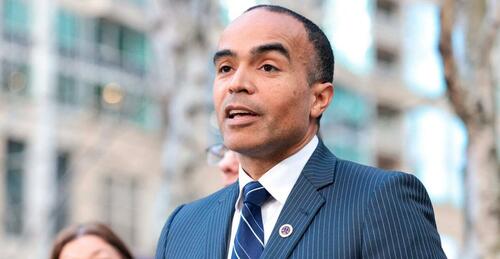
The Washington state attorney general released a statement on X Tuesday evening warning independent journalists to stop investigating fraudulent Somali daycare centers or they could be charged with a hate crime.
“My office has received outreach from members of the Somali community after reports of home-based daycare providers being harassed and accused of fraud with little to no fact-checking,” State AG Nick Brown stated.
“We are in touch with the state Department of Children, Youth, and Families regarding the claims being pushed online and the harassment reported by daycare providers. Showing up on someone’s porch, threatening, or harassing them isn’t an investigation. Neither is filming minors who may be in the home. This is unsafe and potentially dangerous behavior.”
Harmeet Dhillon, the Assistant Attorney General for Civil rights, issued a warning of her own in reaction to the Washington state AG’s post.
“ANY state official who chills or threatens to chill a journalist’s 1A rights will have some ‘splainin to do,” she wrote on X, Wednesday morning.
“[The DOJ Civil Rights Division] takes potential violations of 18 USC § 242 seriously!” Dhillon added.
This statute, known as the Deprivation of Rights Under Color of Law, makes it a crime for any person acting under the pretense of law to willfully deprive another individual of rights, privileges, or immunities secured by the Constitution or laws of the United States.
The clash of the AGs came after Youtuber Nick Shirley exposed about a dozen Somali-owned, state-funded childcare facilities in Minneapolis, Minnesota, that appeared to be completely deserted.
Shirley produced a 42-minute video, which has been viewed over 131 million times on X since it was posted on December 26, alleging that Minnesota governor Tim Walz (D.) “knew about the fraud but never reported it.”
Inspired by Shirley’s bombshell report, citizen journalists in multiple states with large Somali populations have launched their own investigations in recent days.
In the Kent, Washington area Tuesday, YouTuber Chris Sims, a self-described “gonzo journalist,” visited seven suspicious Somali childcare sites and reported that they were “very unhappy” to see him.
Sims posted a video of him approaching a private home listed as a childcare facility that appeared to be not as advertised.
“There was no sign of kids or being a Daycare facility,” Sims wrote.
“I was told by a few they weren’t Daycares despite receiving tax payer dollars. One yelled ‘Call the police’ behind the door.”
On Monday, independent journalists Jonathan Choe and Cam Higby visited an alleged Somali daycare facility in Seattle that receives hundreds of thousands in taxpayers funds and the person who answered the door said there was no daycare there in the past or present.
Higby said “Dhagash Childcare” has received over $210,000 just this year alone.
Another listed childcare facility, a house in a residential neighborhood in Kent, Washington, has received over $863,000 since 2023, according to Higby.
“Residents say there IS NO DAYCARE HERE,” the journalist said.
Another reporter reporting on potential fraud in the Rainier Vista neighborhood of Seattle on December 29th, faced hostile reactions from the Somali residents, who called the police on him.
In his statement, the Washington State AG encouraged members of the Somali community “experiencing threats or harassment” to call the police or his office’s Hate Crimes & Bias Incident Hotline or report it to the state’s hate crime website.
Addressing the independent journalists, Brown added: “If you think fraud is happening, there are appropriate measures to report and investigate. Go to DCYF’s website to learn more. And where fraud is substantiated and verified by law enforcement and regulatory agencies, people should be held accountable.”
The Post Millennial’s Andy Ngo responded to Brown’s threat on X, saying: “It is the duty of journalists to visit taxpayer-funded nonprofits and businesses to investigate where you have failed. The journalists have documented their visits on camera and there is no harassing or threatening behavior. You are trying to threaten journalists by telling people to call police with false allegations of a hate crime.”
Tyler Durden
Thu, 01/01/2026 – 12:50

Photos: Chicago’s Dick Clark’s New Year’s Rockin’ Eve
Chance the Rapper led the New Year’s Eve festivities at the corner of Wacker and Franklin in the Loop. Chicago was featured for the first time in the national broadcast of “Dick Clark’s New Year’s Rockin’ Eve with Ryan Seacrest”. Thousands braved the cold temperatures along the Chicago River for the entertainment and fireworks.
Chance the Rapper records a segment during the “Dick Clark’s New Year’s Rockin’ Eve” event on West Wacker Drive, Dec. 31, 2025, in Chicago. (John J. Kim/Chicago Tribune)
Shemekia Copeland performs during the “Dick Clark’s New Year’s Rockin’ Eve” event on West Wacker Drive Wednesday, Dec. 31, 2025, in Chicago. (John J. Kim/Chicago Tribune)
J. Ivy performs during the “Dick Clark’s New Year’s Rockin’ Eve” event on West Wacker Drive Wednesday, Dec. 31, 2025, in Chicago. (John J. Kim/Chicago Tribune)
Attendees watch J. Ivy perform during the “Dick Clark’s New Year’s Rockin’ Eve” event on West Wacker Drive Wednesday, Dec. 31, 2025, in Chicago. (John J. Kim/Chicago Tribune)
Marshal and Laura Knights record a message on their phone during the “Dick Clark’s New Year’s Rockin’ Eve” event on West Wacker Drive Wednesday, Dec. 31, 2025, in Chicago. (John J. Kim/Chicago Tribune)
Fireworks rise from the river at midnight during the “Dick Clark’s New Year’s Rockin’ Eve” event on West Wacker Drive Thursday, Jan. 1, 2026, in Chicago. (John J. Kim/Chicago Tribune)
Attendees dance during the “Dick Clark’s New Year’s Rockin’ Eve” event on West Wacker Drive Thursday, Jan. 1, 2026, in Chicago. (John J. Kim/Chicago Tribune)
Attendees stand in the cold as Shemekia Copeland performs during the “Dick Clark’s New Year’s Rockin’ Eve” event on West Wacker Drive, Dec. 31, 2025, in Chicago. (John J. Kim/Chicago Tribune)
A backup singer keeps warm with pink mittens as J. Ivy performs during the “Dick Clark’s New Year’s Rockin’ Eve” event on West Wacker Drive Wednesday, Dec. 31, 2025, in Chicago. (John J. Kim/Chicago Tribune)
Attendees watch people on stage during the “Dick Clark’s New Year’s Rockin’ Eve” event on West Wacker Drive Wednesday, Dec. 31, 2025, in Chicago. (John J. Kim/Chicago Tribune)
An attendee holds a noise maker in her mouth during the “Dick Clark’s New Year’s Rockin’ Eve” event on West Wacker Drive Wednesday, Dec. 31, 2025, in Chicago. (John J. Kim/Chicago Tribune)
ART on THE MART projections are displayed during the “Dick Clark’s New Year’s Rockin’ Eve” event on West Wacker Drive Wednesday, Dec. 31, 2025, in Chicago. (John J. Kim/Chicago Tribune)
A dog in a backpack stays warm inside a building during the “Dick Clark’s New Year’s Rockin’ Eve” event on West Wacker Drive Wednesday, Dec. 31, 2025, in Chicago. (John J. Kim/Chicago Tribune)
Mayor Brandon Johnson welcomes attendees during the “Dick Clark’s New Year’s Rockin’ Eve” event on West Wacker Drive Wednesday, Dec. 31, 2025, in Chicago. (John J. Kim/Chicago Tribune)
An attendee covers her hands with her jacket sleeves to keep warm during the “Dick Clark’s New Year’s Rockin’ Eve” event on West Wacker Drive, Dec. 31, 2025, in Chicago. (John J. Kim/Chicago Tribune)
Mayor Brandon Johnson and talk show host Val Warner welcome attendees during the “Dick Clark’s New Year’s Rockin’ Eve” event on West Wacker Drive Wednesday, Dec. 31, 2025, in Chicago. (John J. Kim/Chicago Tribune)
An attendee bundles up in the cold during the “Dick Clark’s New Year’s Rockin’ Eve” event on West Wacker Drive, Dec. 31, 2025, in Chicago. (John J. Kim/Chicago Tribune)
Attendees cheer people on stage during the “Dick Clark’s New Year’s Rockin’ Eve” event on West Wacker Drive Wednesday, Dec. 31, 2025, in Chicago. (John J. Kim/Chicago Tribune)
An attendee watches J. Ivy perform during the “Dick Clark’s New Year’s Rockin’ Eve” event on West Wacker Drive Wednesday, Dec. 31, 2025, in Chicago. (John J. Kim/Chicago Tribune)
https://www.chicagotribune.com/2026/01/01/photos-chicagos-dick-clarks-new-years-rockin-eve/

Health subsidies expire, launching millions of Americans into 2026 with steep insurance hikes
NEW YORK — Enhanced tax credits that have helped reduce the cost of health insurance for the vast majority of Affordable Care Act enrollees expired overnight, cementing higher health costs for millions of Americans at the start of the new year.
Democrats forced a 43-day government shutdown over the issue. Moderate Republicans called for a solution to save their 2026 political aspirations. President Donald Trump floated a way out, only to back off after conservative backlash.
In the end, no one’s efforts were enough to save the subsidies before their expiration date. A House vote expected in January could offer another chance, but success is far from guaranteed.
The change affects a diverse cross-section of Americans who don’t get their health insurance from an employer and don’t qualify for Medicaid or Medicare — a group that includes many self-employed workers, small business owners, farmers and ranchers.
It comes at the start of a high-stakes midterm election year, with affordability — including the cost of health care — topping the list of voters’ concerns.
“It really bothers me that the middle class has moved from a squeeze to a full suffocation, and they continue to just pile on and leave it up to us,” said 37-year-old single mom Katelin Provost, whose health care costs are set to jump. “I’m incredibly disappointed that there hasn’t been more action.”
Some families grapple with insurance costs that are doubling, tripling or more
The expired subsidies were first given to Affordable Care Act enrollees in 2021 as a temporary measure to help Americans get through the COVID-19 pandemic. Democrats in power at the time extended them, moving the expiration date to the start of 2026.
With the expanded subsidies, some lower-income enrollees received health care with no premiums, and high earners paid no more than 8.5% of their income. Eligibility for middle-class earners was also expanded.
On average, the more than 20 million subsidized enrollees in the Affordable Care Act program are seeing their premium costs rise by 114% in 2026, according to an analysis by the health care research nonprofit KFF.
Those surging prices come alongside an overall increase in health costs in the U.S., which are further driving up out-of-pocket costs in many plans.
Some enrollees, like Salt Lake City freelance filmmaker and adjunct professor Stan Clawson, have absorbed the extra expense. Clawson said he was paying just under $350 a month for his premiums last year, a number that will jump to nearly $500 a month this year. It’s a strain for the 49-year-old but one he’s willing to take on because he needs health insurance as someone who lives with paralysis from a spinal cord injury.
Others, like Provost, are dealing with steeper hikes. The social worker’s monthly premium payment is increasing from $85 a month to nearly $750.
Effects on enrollment remain to be seen
Health analysts have predicted the expiration of the subsidies will drive many of the 24 million total Affordable Care Act enrollees — especially younger and healthier Americans — to forgo health insurance coverage altogether.
Over time, that could make the program more expensive for the older, sicker population that remains.
An analysis conducted last September by the Urban Institute and Commonwealth Fund projected the higher premiums from expiring subsidies would prompt some 4.8 million Americans to drop coverage in 2026.
But with the window to select and change plans still ongoing until Jan. 15 in most states, the final effect on enrollment is yet to be determined.
Provost, the single mother, said she is holding out hope that Congress finds a way to revive the subsidies early in the year — but if not, she’ll drop herself off the insurance and keep it only for her four-year-old daughter. She can’t afford to pay for both of their coverage at the current price.
Months of discussion, but no relief yet
Last year, after Republicans cut more than $1 trillion in federal health care and food assistance with Trump’s big tax and spending cuts bill, Democrats repeatedly called for the subsidies to be extended. But while some Republicans in power acknowledged the issue needed to be addressed, they refused to put it to a vote until late in the year.
In December, the Senate rejected two partisan health care bills — a Democratic pitch to extend the subsidies for three more years and a Republican alternative that would instead provide Americans with health savings accounts.
In the House, four centrist Republicans broke with GOP leadership and joined forces with Democrats to force a vote that could come as soon as January on a three-year extension of the tax credits. But with the Senate already having rejected such a plan, it’s unclear whether it could get enough momentum to pass.
Meanwhile, Americans whose premiums are skyrocketing say lawmakers don’t understand what it’s really like to struggle to get by as health costs ratchet up with no relief.
Many say they want the subsidies restored alongside broader reforms to make health care more affordable for all Americans.
“Both Republicans and Democrats have been saying for years, oh, we need to fix it. Then do it,” said Chad Bruns, a 58-year-old Affordable Care Act enrollee in Wisconsin. “They need to get to the root cause, and no political party ever does that.”
https://www.chicagotribune.com/2026/01/01/health-subsidies-expire/

Iran Grinds To A Halt As Several Killed & Wounded, Including IRGC Member, Amid Raging Protests
Iran Grinds To A Halt As Several Killed & Wounded, Including IRGC Member, Amid Raging Protests
Reuters and other international outlets have reported several people killed amid unrest in Iran overnight into Thursday, as the large-scale economic-driven protests which have swept multiple cities reach the fifth consecutive day.
“The semi-official Fars news agency and rights group Hengaw reported deaths in Lordegan, a city in western Iran,” Reuters writes. “Authorities confirmed one death in the western city of Kuhdasht, and Hengaw reported another death in the central province of Isfahan.”
At least one among the dead is reported to be a government security force member, as demonstrators clash with police, and amid some reports of possible live fire being used to quell the unrest.
“A member of Iran’s security forces was killed during a fourth day of protests in the country, which have been sparked by a currency collapse, officials have said,” BBC reports.
“Citing regional chief justice Saeed Shahvari, Iran’s judiciary-affiliated Mizan news agency said Amir Hessam Khodayari Fard was killed in the city of Kouhdasht, in the western Lorestan province, on Wednesday,” it added, stating that several more police and security members were injured, mostly as a result of stone-throwing.
He was said to be a member of the Basij – a paramilitary force linked to Iran’s Revolutionary Guards (IRGC). In several locales Basij members have been observed supporting local police forces, as is typical whenever major anti-government protests flare up.
“Footage verified by BBC Persian appears to show security forces firing at protesters in the city on the same day,” the report also notes.
But the government’s counter-narrative has quickly emerged, with state-linked Fars News Agency citing an “informed source” to say that “armed protesters” have stirred up anti-police violence.
Fox: “Footage shows protesters tearing down a government gate in southern Iran. Businesses shut. Universities closed. Offices locked down.”
🚨Footage shows protesters tearing down a government gate in southern Iran.
Businesses shut. Universities closed. Offices locked down. When a government has to shut everything down to survive, it’s already losing.pic.twitter.com/7irRs5kXyt
— Derrick Evans (@DerrickEvans4WV) January 1, 2026
What started Sunday as shopkeepers in a prominent Tehran market shuttering their doors in protest of a collapsing currency and soaring prices has now spread to the youth and the universities.
Schools and public buildings have been closed across the country on Thursday in order to control the spread of the protests, in what’s being widely reported as a last-minute, possibly desperate decision of the central government.
This after crowds have sought to break into government buildings – for example, groups broke the gate of the governor’s office in the city of Fasa in the southern province of Fars. Security are seen shooting to try and drive them back, and dispersing tear gas.
Fifth day of protests in Iran.
Some peaceful, some violent.
One can be sure that Israel and the CIA are trying to take advantage of the discontent. pic.twitter.com/7JFMieENw9
— S.L. Kanthan (@Kanthan2030) January 1, 2026
The economy has been hammered by 40% inflation and coming off the 12-day June war, which left the leadership and populace in a new state of angst, paranoia, and even despair. The country is on a backfoot economically, militarily, its nuclear program decimated or at least set back by years, and there’s eroding trust – especially as authorities have tried and executed dozens for alleged Israeli-links.
This is perhaps why President Masoud Pezeshkian has urged calm, and taken the rare step of saying the government will listen to the “legitimate demands” of the protesters.
As with prior years’ protests, including the so-called ‘anti-hijab’ protests sparked by women, there’s much that’s hard to verify in terms of reporting, as activists outside the country seek to amplify hard to prove claims amid the fast-moving events on the ground. External actors (whether MEK, pre-1979 monarchists, the US, or Israel) will no doubt seek to hijack the protests, and there could be intelligence infiltration. But there is clear evidence of many chanting in some places slogans calling for the overthrow of the government in Tehran.
Tyler Durden
Thu, 01/01/2026 – 12:15

5 States Limit Soda, Candy For SNAP Recipients To Curb Obesity
5 States Limit Soda, Candy For SNAP Recipients To Curb Obesity
Authored by Kimberley Hayek via The Epoch Times,
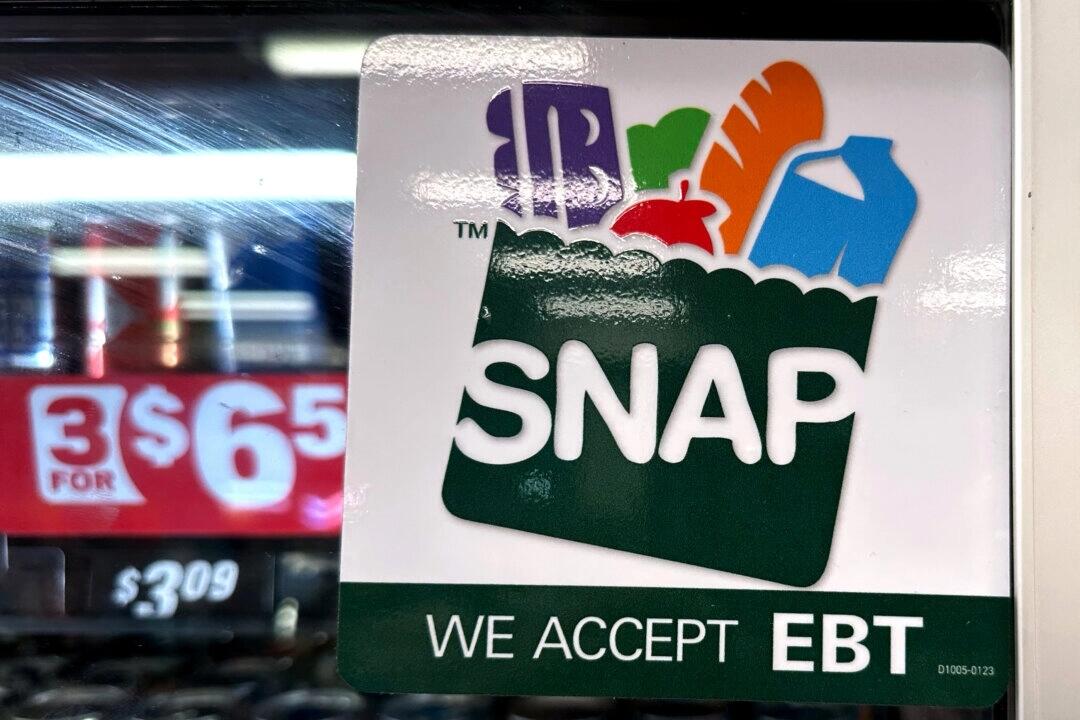
Residents in five states receiving federal food assistance will face new restrictions on their benefits when it comes to purchasing soda, candy, and other items categorized as unhealthy starting Thursday, marking the first push to overhaul the Supplemental Nutrition Assistance Program (SNAP).
Indiana, Iowa, Nebraska, Utah, and West Virginia are leading the charge on the new restrictions through waivers approved by the U.S. Department of Agriculture (USDA).
The changes affect about 1.4 million SNAP participants under the Trump administration’s Make America Healthy Again initiative, pioneered by Health and Human Services Secretary Robert F. Kennedy Jr. and Agriculture Secretary Brooke Rollins.
The effort targets obesity and diabetes tied to sugary beverages and snacks.
SNAP, which assists 42 million Americans at a cost of $100 billion annually, has long permitted purchases of most foods except alcohol, tobacco, and hot prepared items.
“We cannot continue a system that forces taxpayers to fund programs that make people sick and then pay a second time to treat the illnesses those very programs help create,” Kennedy said in a December statement.
Utah and West Virginia will prohibit soda and soft drinks. Nebraska’s ban covers soda and energy drinks. Indiana will ban soft drinks and candy. Iowa imposes the broadest limits, barring taxable foods such as soda, candy, and some prepared items.
SNAP Obesity Rates
SNAP participants had an almost double obesity rate than eligible non-participants, with 30 percent versus 17 percent, according to a National Institutes of Health study.
The restrictions represent a shift from historical federal policy under the 1964 Food Stamp Act and 2008 Food and Nutrition Act, which stressed broad access. Past proposals to restrict items, including steak or junk food, were shot down due to implementation costs and unclear health benefits, according to USDA studies. In September, the USDA proposed changing SNAP stocking rules for retailers to provide healthier food options in the program.
Under the current administration, states are incentivized to apply for waivers so they can introduce restrictions.
“This isn’t the usual top-down, one-size-fits-all public health agenda,” Indiana Gov. Mike Braun said while announcing his state’s request last spring.
“We’re focused on root causes, transparent information, and real results.”
The Trump administration has approved related restrictions in six other states—Hawaii, Missouri, North Dakota, South Carolina, Tennessee, and Virginia—per the broader Make America Healthy Again initiative.
Oklahoma has also requested exclusions for soda and candy, while Kennedy has urged governors nationwide to remove sugary drinks from SNAP, highlighting health concerns.
The waivers are good for two years and can be extended by an additional three years, with evaluations along the way.
Tyler Durden
Thu, 01/01/2026 – 11:40
https://www.zerohedge.com/personal-finance/5-states-limit-soda-candy-snap-recipients-curb-obesity
Nick Shirley Teases New “Crazier” Video: “It’s Going To Be A Masterpiece”
Nick Shirley Teases New “Crazier” Video: “It’s Going To Be A Masterpiece”
Independent journalist Nick Shirley, fresh off his viral exposé documenting apparent widespread fraud in Minnesota’s taxpayer-funded childcare programs – much of it linked to the state’s Somali community – has teased a major follow-up investigation into additional abuses.
“We have a whole ‘nother video coming out about other fraud that’s taking place,” Shirley said in an interview with businessman and podcaster Patrick Bet-David. “It’s going to be a masterpiece because it is crazy.”
🚨 Nick Shirley Says His Next Video Will Be Even Crazier Than the First
“It’s going to be even crazier because now the Somalis were after me. They were coming, and people were stopping in the middle of intersections … I had to get security for this video coming out.” pic.twitter.com/IgFAbVB6G7
— Chief Nerd (@TheChiefNerd) December 31, 2025
“It’s going to be even crazier because now the Somalis were after me. They were coming, and people were stopping in the middle of intersections, hoping out of there cars,” the citizen journalist added. “I had to get security for this video coming out, literally trying to attack me.”
In a single day, Shirley and a private investigator visited Somali-linked businesses in the child daycare, adult and autism care, home healthcare, and non-emergency medical transportation sectors. The pair documented what they describe as $110 million in highly questionable payments, noting that many facilities appeared deserted or minimally operational during normal business hours.
Shirley’s video prompted the Department of Health and Human Services to freeze all federal childcare funding to Minnesota – and then nationwide, pointing to mounting evidence of widespread fraud. Effective immediately, HHS payments to the state “will require a justification and a receipt or photo evidence before we send money to a state,” Deputy HHS Secretary Jim O’Neill announced Tuesday evening.
And now, Shirley is getting death threats:
This is not a joke, they actually want to kill me
In all seriousness please include me in your prayers 🙏🏼 https://t.co/L0RpeikVHd pic.twitter.com/DQEK2ZjXe8
— Nick shirley (@nickshirleyy) December 31, 2025
Minnesota receives hundreds of millions in federal dollars annually for its Child Care Assistance Program, which subsidizes daycare for some 23,000 children from low-income families. Federal contributions were projected at $218 million for 2026, supplemented by $155 million from the state.
In addition to HHS, Small Business Administration chief Kelly Loeffler said the agency is pausing annual funding to Minnesota while it investigates $430 million in suspected PPP fraud across the state.
“This Admin will not continue to hand out blank checks to fraudsters – and we will not rest until we clean up the criminal networks that have been stealing from American taxpayers,” Loeffler said.
Meanwhile, Gov. Tim Walz (D) has mounted a laughable defense against the growing allegations of fraud.
“The governor has been combatting fraud for years while the President has been letting fraudsters out of jail. Fraud is a serious issue. But this is a transparent attempt to politicize the issue to hurt Minnesotans and defund government programs that help people,” Walz’s office said in a tepid statement.
A few hours ago, President Donald Trump appeared to reference the growing scandal, taking to Truth Social to slam Walz as a “crooked governor.”
Tyler Durden
Thu, 01/01/2026 – 11:05
https://www.zerohedge.com/markets/nick-shirley-teases-new-crazier-video-its-going-be-masterpiece
What Do You Resolve For 2026?
What Do You Resolve For 2026?
Authored by Jeffrey Tucker via The Epoch Times,
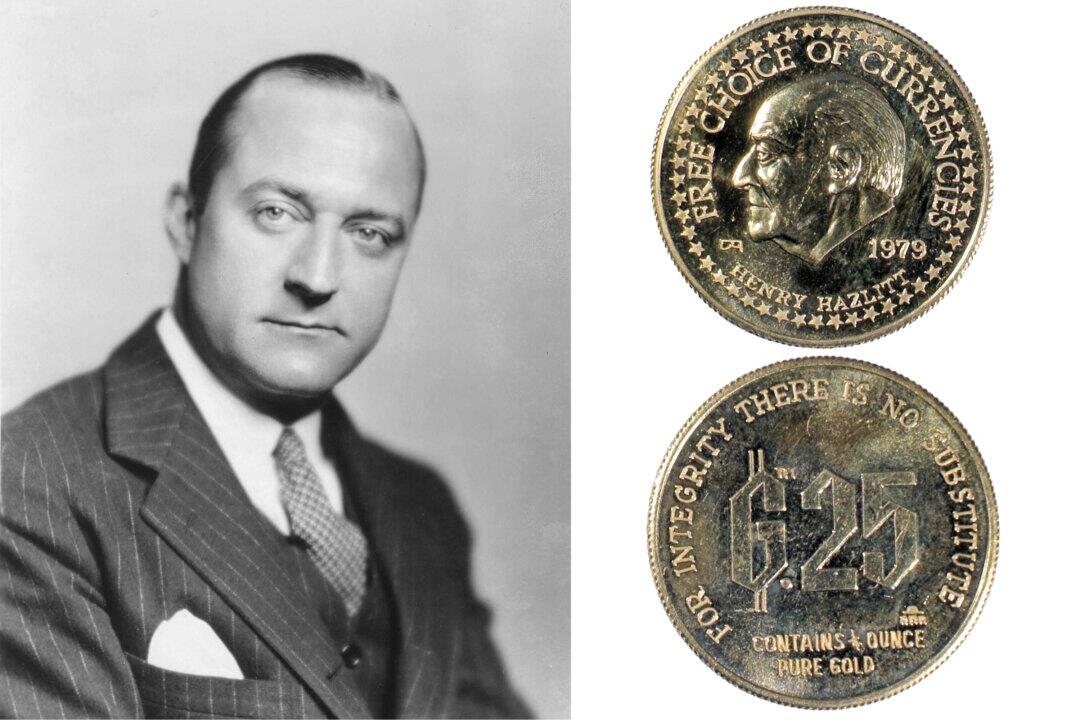
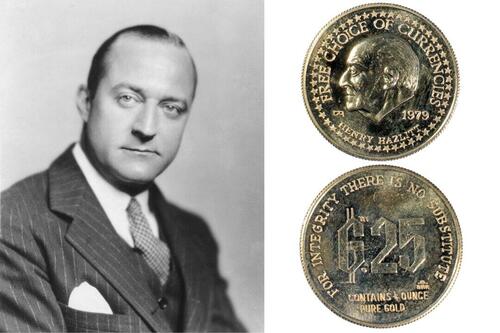
One of the most underrated intellectuals of the 20th century is Henry Hazlitt, author of “Economics in One Lesson” (1946). His career is far more varied than people know. Long before he was writing free-market treatises, he was a working journalist on Wall Street and, later, literary editor of The Nation and then H.L. Mencken’s chosen successor at The American Mercury.
His first published work is a wonderful little book published in 1922 called “The Way to Will Power.” He was only 28 when he wrote it, and spoke about the book none at all later. One suspects that he later found it too rudimentary or immature. Personally, I think it is wonderful.
The book aspires to apply what he learned as a financial reporter to matters of personal decision-making. His points are obvious once you think about them but, then as now, most people do not.
In finance and economics, the key to success is to match long-term ambitions with decisions one makes today. An orientation toward the future is always the key. He begins with the way a single price on the market today incorporates all knowns and expectations for the future. Silver might be $80 today not merely because of existing market conditions but based on the perception that there will be future uses, shortages, and high demand.
This is always a point about prices that confuses people. If there is a plan next year to permanently close a beach, the property values along the coastline will fall not next year but right now. This is because markets by their nature are always forward-looking. This is also why the price system always outwits the central planners. It benefits from its status as the composite wisdom of millions of buyers and sellers, whereas a government bureaucrat only knows what he knows.
Hazlitt wondered if there were ways to make our personal lives behave with as much intelligence.
He offers the example of the man who wants to lose weight, develop muscle tone, and upgrade his health. But night after night, he keeps choosing to go out gambling and drinking with his friends. Every morning he has a sense of regret about this and recommits to living a more healthy life.
Somehow his ambitions are not realized. He deeply desires health. The problem is that at no particular moment is health offered as an immediate alternative to drinking and staying out late. The choice on any particular evening is to go to bed early without fun or go have fun with his friends. He wants both health and fun but at every marginal unit of time, he always chooses fun over health and therefore never obtains his long-term goal.
In economics, this is the equivalent of a person who has high aspirations to build a large pool of personal savings from which he can earn interest, dividends, and increased financial valuations. But the consumption decisions he makes daily not only squander all the money he has but also drive him further into debt. He wants to be financially responsible but gains more personal advantage in the near term by doing what feels best at the moment.
To Hazlitt, the whole key to living a rich and rewarding life really comes down to this insight he gained from economics: match the decisions you make today with your dreams of how you want to live and who you want to be in the future. In other words, he urges not just a long-term orientation but a profound commitment today to making every decision about what it implies for the future.
Simple point? Maybe but it is easily overlooked, especially during the holidays.
We are surrounded by food and drink, invitations to indulge, and enjoy the freedom to sleep late and otherwise languish. The days are short and the weather is cold so the last thing on our minds is getting out, getting healthy, getting sober, and preparing for the future.
This is roughly where people are at the end of these days. And this is precisely why we have New Year’s resolutions. They reflect a sense of disgust over what the previous weeks have revealed about our own personal discipline and reflect a determination to change. Upon making the resolution—read more, get in shape, stop drinking—we are already feeling better as if adopting the ambition is half the battle.
The truth is that having a goal is none of the battle at all unless one’s decisions in the moment perfectly match one’s long-term hopes. Making resolutions stick means more than just imagining a better future. It means giving up right now that thing you want to do in order that the goal you desire is feasible and realized.
Hazlitt’s insight here is all the matching of time preferences. The here and now must embody the ambition of who you want to be in the future. This is particularly difficult when it comes to diet. A poor diet is addictive, and it is easy to swear it off following a huge meal over overindulgence. That’s the moment in which a fast seems like a great idea. That outlook lasts until the next morning when your empty stomach changes your mind.
What Hazlitt wrote here in 1922 contributed to the growing use of the term “willpower” in popular culture. We all just have to say no to the easy and quick thing in order to achieve that harder thing that unfolds over time. The example of the trade-off between consumption and investment is the best economic analogue: there can be no real prosperity for any society without the discipline to defer immediate consumption.
The sociologist Max Weber speculated that it was precisely the Protestant celebration of self-discipline and saving that bred the incredible prosperity of the West in the 19th century. The savings created a gigantic pool of capital for investment and empire building. The riches flowed and came to challenge the core values that gave rise to them in the first place. Frugality is forgotten when the money seems endless. Modest living and prudential management of material matters get sidelined.
In our own financial times, every major business and most smaller ones too have learned to live off leverage, as much as possible. If there is any chance an institution’s profit streams can outpace the cost of borrowing, living off debt can seem like the right thing to do. Of course this is only possible thanks to fiat money and the Federal Reserve system, without which the entire empire of debt would have collapsed long ago. In this way, our central banking institutions and profligate legislatures have undermined the whole basis of long-term prosperity.
There is a more insidious aspect to this pattern. When Hazlitt was writing in 1922, money was still gold and silver, interest rates were high and punishing, and hard work and savings were highly rewarded. There was a match between how government and finance lived and how we should live as individuals. In other words, the world made some sense.
It’s no longer clear that the functioning of finance and government makes much sense. If you and I lived in our private lives the way major corporations and legislatures function, we would live for the day, squander every dime, stay as inebriated as possible, and hope to foist the consequences of our misjudgements on others in the future.
Notice that Hazlitt’s view is all about having ambitions for the future rather than languishing in past trauma, as the culture says we should do today. This a fateful error. You can always use past trauma as an excuse for neglecting future triumphs.
Is it any wonder that the idea of willpower—which entered the vocabulary in the early 20th century—is so unfashionable? It just so happens that this very day, an attack on the notion appears in the nation’s major newspaper. The writer says we should forget about willpower (“overrated”) and adopt instead something she calls “situational agency.”
As best I can tell, she means that we should forget trying to resist temptation and instead structure our lives to eliminate it entirely. Perhaps this is the Ozempic theory of how to get thin. Forget saying no to pie and third helpings. Just take a pill to change your preferences entirely!
I have my doubts that pharmacology can overcome the core problem that Hazlitt identified. Indeed it seems like an excuse to pretend that the problem doesn’t exist at all. Surely there is some artificial means by which we can bypass the need for any self-discipline!
To restate Hazlitt’s core power, we all underestimate the power of the mind. Decide to quit smoking—really decide—and it is done. Same with drinking, overeating, and sloth in general. The difference between now and a better future is a simple change in thinking.
We will all make New Year’s resolutions, and most will be broken.
Once we reflect on why this is, we will be better positioned to match how we live today with the kind of life we want to have in the future. It’s the core human problem from time immemorial, one not easily swept away with fiat money, pills, and assurances that this time it will be different.
Tyler Durden
Thu, 01/01/2026 – 10:30
https://www.zerohedge.com/personal-finance/what-do-you-resolve-2026