Category: News

Ethics Questions Swirl Around Somalia’s UN Ambassador Tied To Ohio Healthcare Company
Ethics Questions Swirl Around Somalia’s UN Ambassador Tied To Ohio Healthcare Company
Somalia’s Permanent Representative to the United Nations, Abukar Dahir Osman, is facing growing scrutiny over his connections to the Ohio healthcare company Progressive Health Care Services Inc. This comes as federal investigations into suspected Somali-linked welfare fraud, stretching from Minnesota to Washington, Ohio, and Maine, continue to intensify, with allegations that some entities (daycares, healthcare, or transportation service companies) were merely front operations to extract taxpayer funds.
The most entertainingly ironic outcome is the most likely
— Elon Musk (@elonmusk) January 1, 2026
The story surrounding Osman is certainly a strange one, with the news and analysis outlet Horn Diplomat publishing a report titled “Ethics Questions Surround Somalia’s UN Envoy, as U.S. Healthcare Fraud Scandals Heighten Scrutiny.”
Here’s the report:
Public corporate filings and professional records have raised questions about transparency and potential conflicts of interest involving Abukar Dahir Osman, Somalia’s Permanent Representative to the United Nations.
The scrutiny comes as Somalia prepares to assume the rotating presidency of the United Nations Security Council on January 1, 2026, a role that places the country at the center of global diplomatic decision-making on peace, security and sanctions.
Ohio state corporate records show that Osman was listed as the statutory agent for Progressive Health Care Services Inc, a Cincinnati-based home healthcare company, while simultaneously serving as Somalia’s top diplomat at the United Nations.
Filings with the Ohio Secretary of State, electronically submitted on October 22, 2018, identify Osman as the company’s agent. He had been appointed Somalia’s UN ambassador in June 2017, creating an overlap of nearly two years between his diplomatic role and his involvement with a U.S. healthcare provider operating within Medicaid-funded systems supported by U.S. taxpayers.
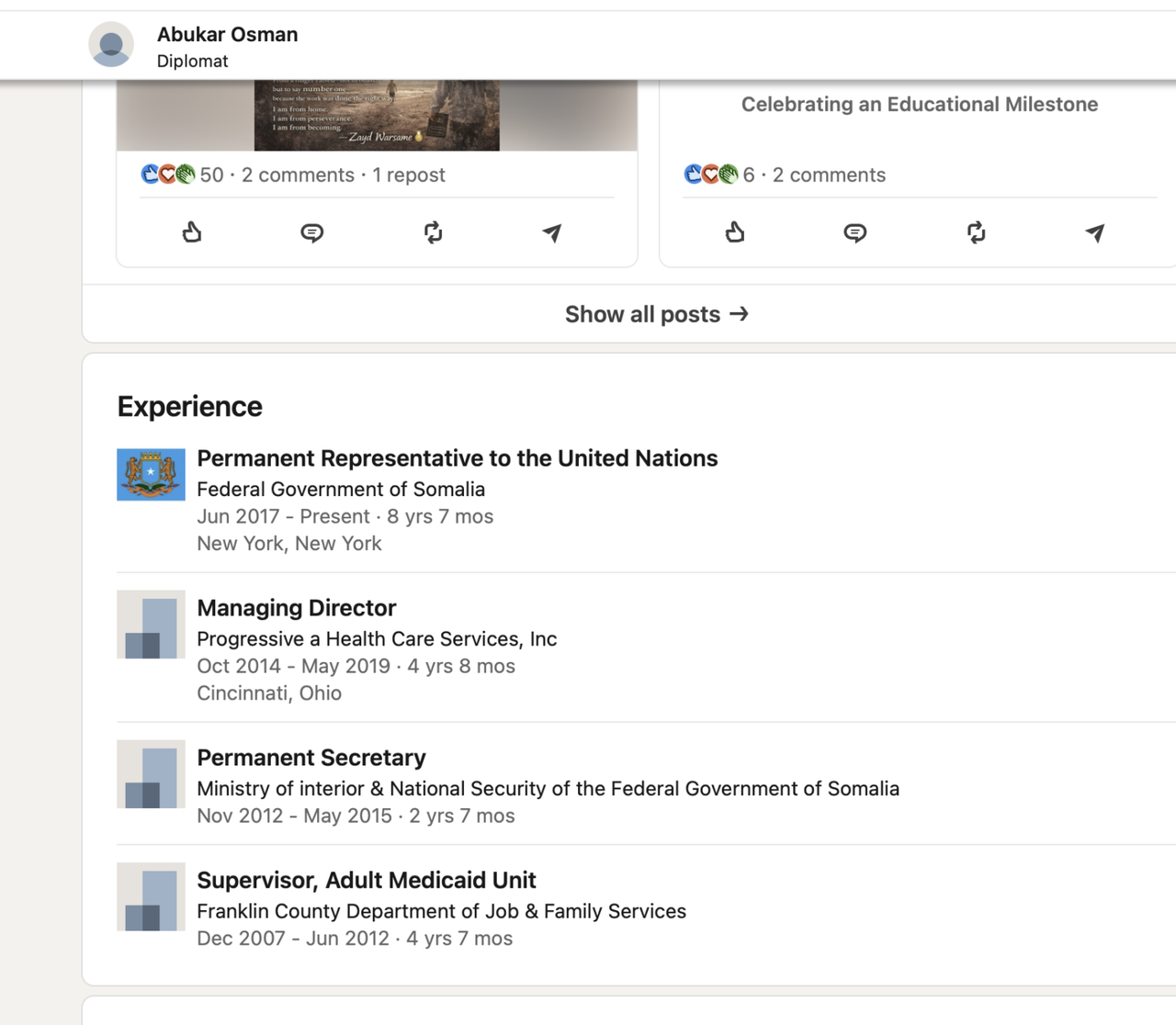
Professional records, including publicly available LinkedIn information, indicate Osman served as Managing Director of Progressive Health Care Services Inc. from 2014 until May 2019, alongside his UN posting in New York.
The overlap has drawn attention because the U.S. home healthcare sector has repeatedly been identified by federal authorities as one of the areas most vulnerable to fraud, abuse and improper billing.
That vulnerability was highlighted by a sweeping fraud scandal in Minnesota, one of the largest public-assistance fraud cases in U.S. history. In an investigation reported by The New York Times, federal prosecutors charged dozens of people with felonies, accusing them of stealing hundreds of millions of dollars from a government program designed to keep children fed during the COVID-19 pandemic.
According to that reporting, law-enforcement officials said fraud took root in pockets of Minnesota’s Somali diaspora, where individuals established companies that billed state agencies for millions of dollars in social services that were never provided. Federal prosecutors have said 59 people have been convicted so far, and that more than $1 billion in taxpayer funds was stolen across three major investigations—an amount exceeding Minnesota’s annual corrections budget.
Prosecutors and state officials have emphasized that such crimes reflect the actions of specific individuals and organizations, not communities as a whole.
Against that broader backdrop, regulatory and compliance records show that Progressive Health Care Services Inc.was subject to billing and compliance scrutiny in 2019. No publicly available court records show that Osman has been charged or convicted of any crime, and no judgment has established criminal liability against him.
Transparency advocates say the timing of the revelations has intensified attention.
“When a country is about to assume the presidency of the Security Council, unresolved questions about financial disclosures and overlapping roles inevitably draw closer scrutiny,” said a governance expert familiar with UN ethics standards.
Somalia’s assumption of the council presidency will place its UN mission in charge of setting agendas, chairing meetings and representing the Security Council before the wider UN membership.
There was no immediate response from Osman or Somalia’s UN mission to requests for comment.
The United Nations maintains an internal ethics framework governing conflicts of interest among senior officials, though oversight of permanent representatives largely depends on disclosures made by member states themselves.
Observers say the case underscores a broader debate over whether diplomatic status should shield officials from scrutiny when regulated industries and taxpayer-funded programs are involved.
As one X user pointed out, “2026 is off to a great start: Somalia (most corrupt nation on Earth) chairs UN Security Council, WHO run by Ethiopia’s Tedros, WTO by Nigeria’s Okonjo-Iweala. Global governance brought to you by the bottom of the Corruption Index. Time to #DefundTheUN?”
Tyler Durden
Thu, 01/01/2026 – 15:45

Meet Brandon Alexander Whittington: The first baby born in Chicago in 2026
Chicago saw in the new year with a number of events, including the Second City’s debut as part of the annual nationally televised event, “Dick Clark’s New Year’s Rockin’ Eve,” where thousands gathered to watch Chance the Rapper usher in 2026.
The raucous celebration, held at the corner of Wacker Drive and Franklin Street, featured a concert and culminated in a countdown to midnight projected on the Merchandise Mart, followed by a fireworks display over the Chicago River.
Six minutes later and about four miles away, a quieter celebration took place at Mount Sinai Hospital, when Brandon Alexander Whittington entered the world as what is believed to be the first Chicago baby of 2026.
The 7-pound, 13-ounce boy was actually due on Christmas Day, but kept his parents, Shaniqua Jones and Brandon Antwon Whittington, waiting until the new year for his arrival.
“We thought it was coming Christmas Day, so he’s a little late,” his father said Thursday morning from the hospital.
To celebrate the first birth of the new year, the hospital presented the family with a gift basket filled with clothing, baby essentials and a gift card.
The couple, who live in the West Garfield Park area, were oblivious to the nearby New Year’s Eve revelry until after the baby was born.
Holed up inside the hospital, the mother of Chicago’s first baby of 2026 had other things on her mind.
“I was having contractions, so all that didn’t matter,” said Jones, 33.
Started in 1972, “New Year’s Rockin’ Eve” is ABC-TV’s annual live countdown program from Times Square in New York. Ryan Seacrest has hosted the national broadcast for the past 20 years, taking the reins from the late Dick Clark.
Over the years, the show has expanded to other cities, heading to Chicago for the first time to ring in 2026 as the Central time zone locale, with native son Chance the Rapper performing and leading a large crowd through an exuberant countdown to midnight.
A large fireworks display over the Chicago River followed.
Whittington, 38, who works as a cook at a Chicago KFC restaurant, caught wind of the post-countdown fireworks celebration when he went outside post-delivery for some air.
The significance of the timing was not lost on him in the quiet reflection of a New Year’s morning.
“Your baby’s the first baby of the year. You can’t even imagine what’s going through my brain right now at this point,” Whittington said. “I can’t wait to explain this to him when he gets older.”
While Brandon Alexander Whittington apparently won the race to become the Chicago area’s first baby of 2026, the likely runner-up was born at UChicago Medicine AdventHealth Bolingbrook.
Ana and Serghei Mindru of Yorkville welcomed a 6-pound, 13-ounce boy, Matthew, at 1:46 a.m. in the southwest suburban hospital.
https://www.chicagotribune.com/2026/01/01/first-baby-of-new-year-2026/

CFP: Defense carries the day for No. 5 Oregon in 23-0 win over No. 4 Texas Tech for spot in semifinals
MIAMI GARDENS, Fla. — Matayo Uiagalelei caused a fumble to set up an Oregon touchdown, Jordon Davison rushed for two scores and the fifth-seeded Ducks silenced No. 4 Texas Tech’s offense for a 23-0 win in the College Football Playoff quarterfinal at the Orange Bowl on Thursday.
Dante Moore threw for 234 yards and Atticus Sappington kicked three field goals for Oregon (13-1), which will play either No. 1 Indiana or No. 9 Alabama in the Peach Bowl — a CFP semifinal — on Jan. 9.
The Peach Bowl winner will be back in Miami Gardens for the national title game Jan. 19.
Texas Tech — which finished at 12-2 — came into the day second nationally in points per game (42.5) and fifth in yards per game (480.3) but got absolutely nothing going. The Red Raiders turned the ball over four times, were stopped on fourth downs three other times and had four three-and-outs.
Tech quarterback Behren Morton — who finished 18 of 32 for just 137 yards — was stripped by Uiagalelei early in the third quarter in Red Raiders territory. Uiagalelei rumbled deep into the red zone, and Davison scored one play later to make it 13-0.
Morton threw a red-zone interception early in the fourth quarter, and a fourth-down stop from their 30 midway through the fourth quarter doomed whatever comeback chances existed for the Red Raiders. Davison plunged in from the 1 with 16 seconds left to cap the scoring.
And once again, a CFP bye meant a team went bye-bye.
It was the sixth quarterfinal under this 12-team tournament format that started last year — there were two other games coming later Thursday — and the sixth time that the team coming off an extended break lost to a team that played a first-round game.
In 2024, Boise State (against Penn State), Arizona State (against Texas), Georgia (against Notre Dame) and Oregon (against Ohio State) all went out in the quarterfinals after first-round byes. Miami added to that list Wednesday night, beating Ohio State in a quarterfinal at the Cotton Bowl. In those six games, including Thursday, the team with the bye has held the lead for fewer than five minutes — combined — of regulation.
Texas Tech thought it could avoid that fate. It could not, and Oregon finished its first shutout of an AP-ranked opponent since 2012. Oregon was playing a top-10 team for the 113th time — and for the first time allowed zero points.
Oregon played James Madison in Round 1 this year, winning 51-34, and generally was unhappy with how it played defensively.
There wasn’t anything to not like from that side of the ball Thursday.
The takeaway
Oregon: The Ducks are flying home to Eugene, instead of staying in the Eastern time zone to prepare for the Peach Bowl in Atlanta next week. It was a decision the Ducks made not long after seeing how the CFP bracket could shake out.
Texas Tech: It simply was an uncharacteristic offensive showing from the Red Raiders, who had scored at least 10 points before halftime in 26 of their last 27 games dating to 2023 and hadn’t been shut out in the first two quarters of a game since Nov. 20, 2021.
Up next
Oregon: The Ducks, who have tied the school record for wins in a season, await the Indiana-Alabama winner.
Texas Tech: The Red Raiders are scheduled to open the 2026 season at home against Abilene Christian on Sept. 5.
https://www.chicagotribune.com/2026/01/01/cfp-oregon-texas-tech-quarterfinals/

Appeals Court Blocks Hawaii’s Climate Change Tourist Tax On Cruise Ships
Appeals Court Blocks Hawaii’s Climate Change Tourist Tax On Cruise Ships
Authored by Zachary Stieber via The Epoch Times,
A federal appeals court on New Year’s Eve blocked Hawaii from enforcing a new tax on cruise ship passengers, one day before it was set to go into effect.
Two judges of the U.S. Court of Appeals for the Ninth Circuit imposed an injunction on the law, reversing a lower court ruling.
The injunction against Hawaii’s tax is in place pending resolution of appeals, Circuit Judges Andrew Hurwitz and Daniel Bress stated in an order.
Cruise Lines International Association, which challenged the tax, and the Hawaii attorney general’s office did not immediately respond to requests for comment.
Hawaii had taxed short-term accommodations such as hotels.
With Act 96, scheduled to take effect on Jan. 1, the state increased the tax to 14 percent and extended it to cruise ships.
The law states that Hawaii “is experiencing a climate emergency” due to “the effects of climate change, such as rising temperatures,” and that the money garnered from the tax would go toward climate action.
Cruise Lines International Association said the tax violated the U.S. Constitution and a federal law called the Rivers and Harbors Appropriation Act (RHA) in its lawsuit.
U.S. District Judge Jill A. Otake, on Dec. 23, 2025, said that may or may not be true while declining to enter a preliminary injunction against the law.
“While the Court concludes that Plaintiffs have not established that they are likely to succeed on the merits because enjoining Act 96 would seemingly give cruise lines preferential treatment over land-based transient accommodations businesses, the Court acknowledges that the Tonnage Clause and the RHA are not litigated often and that the Court may ultimately come to a different conclusion about Act 96 later,” she wrote.
“Nevertheless, because of the ‘vital importance’ of taxes to the states, and because Congress has clearly expressed its intent ’to prevent federal-court interference with the assessment and collection of state taxes,’ the Court treads carefully and denies the extraordinary relief of a preliminary injunction.”
Cruise Lines International Association and the U.S. government then asked the Ninth Circuit to intervene.
The association said in its appeal that the court should block the law’s extension to cruise ships pending appeal.
Hurwitz and Bress, in their brief order, said that the standard for evaluating an injunction pending appeal was similar to that employed by district courts deciding whether to enter a preliminary injunction. That standard includes weighing whether plaintiffs have shown a strong likelihood of success, according to a 2008 ruling they cited.
Tyler Durden
Thu, 01/01/2026 – 15:10
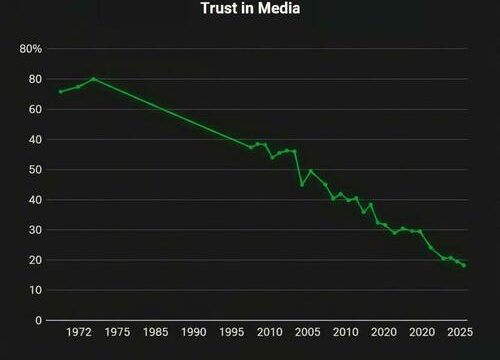
MSM Panics After Nick Shirley Bombshell As CBS Pledges To Start Reporting Real News
MSM Panics After Nick Shirley Bombshell As CBS Pledges To Start Reporting Real News
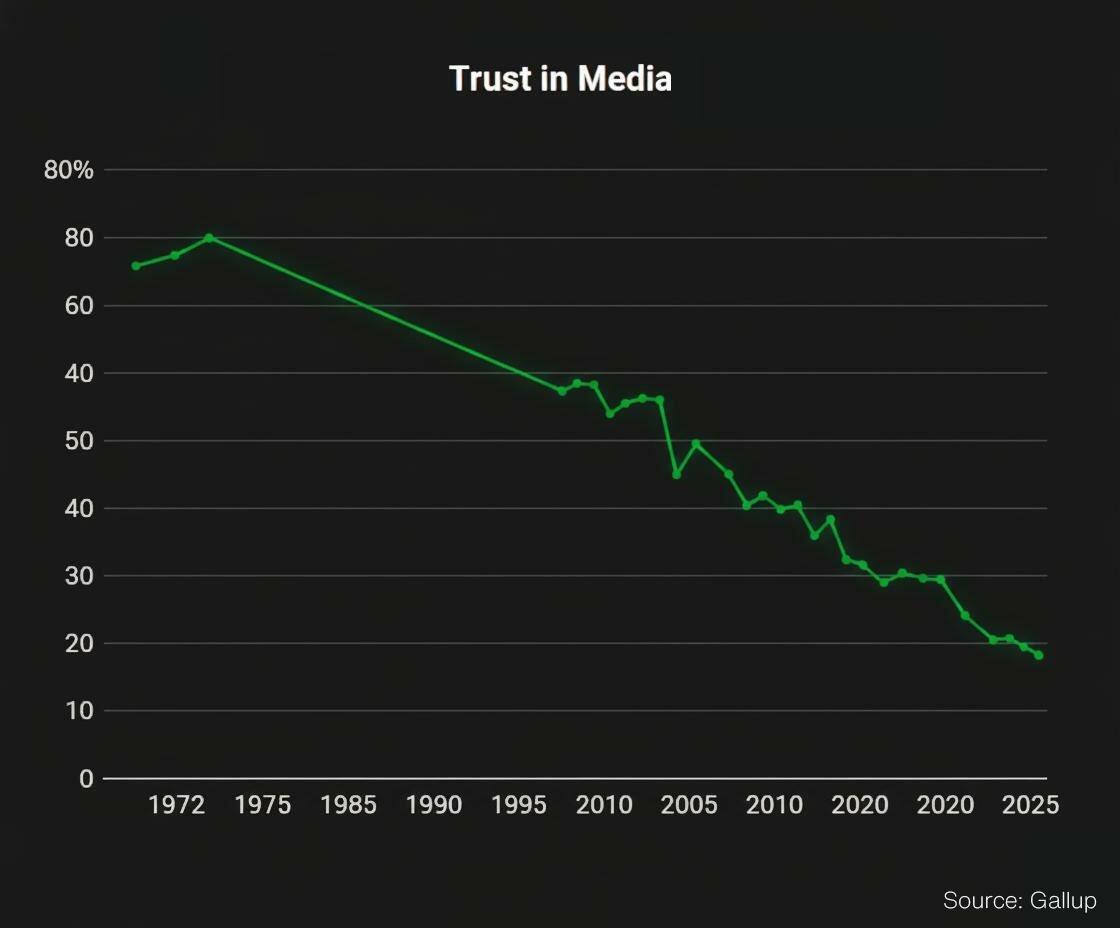
CBS News anchor Tony Dokoupil addressed viewers in what appeared to be a pre-recorded promotional segment aimed at repairing more than a decade of reputational damage and announcing changes to the program. He acknowledged that the corporate media outlet had “missed the story” too often and, in doing so, had lost the trust of Americans.
“On too many stories, the press has missed the story, because we’ve taken into account the perspectives of advocates rather than the average American. Or we’ve put too much weight on the analysis of academics or elites, and not enough on you,” Dokoupil said in the two-minute video published early on New Year’s Day.
Dokoupil continued, “So here’s my promise to you: You come first. Not advertisers. Not politicians. Not corporate interests. And yes, that does include the corporate owners of CBS. I report for you, which means I tell you what I know. When I know it, and how I know it. And when I get it wrong… I’ll tell you that too.”
Dokoupil basically admitted that CBS and much of the MSM-industrial complex functioned as little more than PR firms for the highest bidder. We saw this with the Hunter Biden laptop story, Covid origins, Joe Biden’s mental health, and the list goes on. Quite frankly, the American people dumped MSM many years ago in favor of alternative outlets.
“On too many stories, the press has missed the story. Because we’ve taken into account the perspective of advocates and not the average American. Or we put too much weight in the analysis of academics or elites, and not enough on you.”
That changes now. The new CBS Evening News… pic.twitter.com/NKdvRJjYCS
— CBS Evening News (@CBSEveningNews) January 1, 2026
Nothing new here.
Dokoupil’s promise to viewers comes as CBS News editor-in-chief Bari Weiss plans to overhaul the broadcaster as part of a broader review of standards and procedures, according to a recent Axios report.
Weiss’ overhaul of CBS is bold and noble, and so is Dokoupil’s promise to actually report the news, but we’ll believe it when we see it. CBS has gotten many of the top stories of the past decade wrong, often by design to protect politicians, special interests, or to allow advertisers to influence the news cycle.
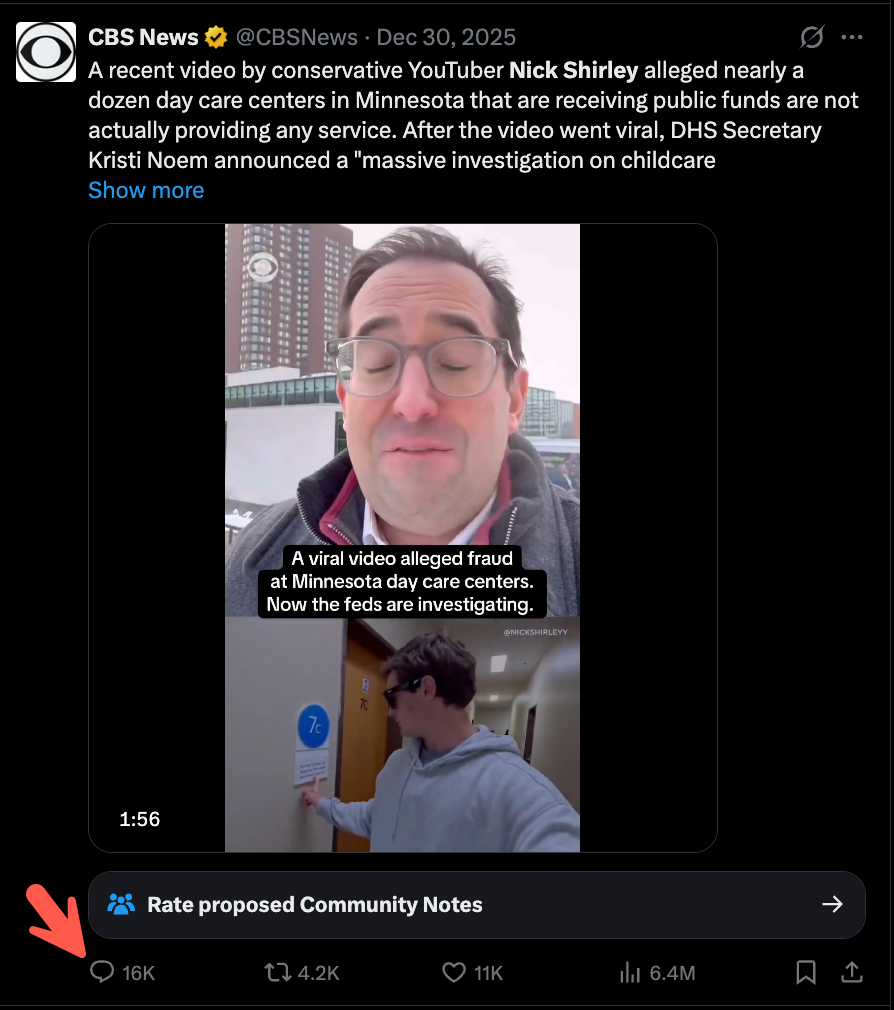
We remain skeptical that MSM can be overhauled to report real news rather than function as a public relations firm. That skepticism was reinforced earlier this week, when MSM outlets rushed to Minneapolis to discredit citizen journalist Nick Shirley’s bombshell reporting on suspected Somali-linked fraud, coverage that appeared less like an investigation and more like protection of the Democratic Party and special interests that stand to benefit from the alleged schemes.
X users called out CBS’ reporting earlier this week…
🚨 JUST IN: CBS attempts to discredit Nick Shirley by showing there were actually *FOUR* children at ABC Learning Center the day he visited…
But what CBS ACTUALLY did was PROVE HIM RIGHT.
Babysitting 4 kids while the federal government pays you for 40 KIDS is FRAUD.
This… pic.twitter.com/EHocIPOdxC
— Nick Sortor (@nicksortor) December 31, 2025
Ratioed.
MSM was radio silent…
The biggest news story in the world…
These “news” outlets still have not covered Nick Shirley and his Somalia fraud bombshell on the biggest Media platform on the planet..
WaPo
NBC News
MSNBC
CBS News
NYT
CNN
PBS
NPR
ABC News
The Legacy Media is the enemy of the people. pic.twitter.com/0Vv5l5jDAG
— C3 (@C_3C_3) December 30, 2025
To rebuild trust, Weiss should host a segment about everything CBS has gotten wrong over the past decade.
Tyler Durden
Thu, 01/01/2026 – 14:35

Zohran Mamdani begins his term as NYC mayor with an historic swearing in
NEW YORK — Zohran Mamdani became mayor of New York City on Thursday, taking over one of the most unrelenting jobs in American politics as one of the country’s most-watched politicians.
Mamdani, a Democrat, was sworn in at a decommissioned subway station below City Hall just after midnight, placing his hand on a Quran as he took his oath as the city’s first Muslim mayor.
After working part of the night in his new office, Mamdani then returned to City Hall in a taxi cab around midday Thursday for a grander public inauguration where U.S. Sen. Bernie Sanders, one of the mayor’s political heroes, administered the oath for a second time.
“Today begins a new era,” Mamdani said after taking the oath.
New Yorkers turned out in the frigid cold for an inauguration viewing party just south of City Hall on a stretch of Broadway known as the “Canyon of Heroes,” famous for its ticker-tape parades.
Throughout the ceremony, speakers hit on the theme that carried Mamdani to victory in the election: Devotion to using government power to lift up the millions of people who struggle with the city’s high cost of living.
Sanders insisted that doing so — partly by raising taxes on the rich — wouldn’t be radical.
“In the richest country in the history of the world, making sure that people can live in affordable housing is not radical,” he told the crowd. “It is the right and decent thing to do.”
In opening remarks, U.S. Rep. Alexandria Ocasio-Cortez said Mamdani would be a mayor dedicated to the working class.
“It is the people of New York who have chosen historic, ambitious leadership in response to untenable and unprecedented times. New York, we have chosen courage over fear. We have chosen prosperity for the many over spoils for the few,” she said.
Mamdani was accompanied on the stage by his wife, Rama Duwaji. The previous mayor, Eric Adams, was in attendance, sitting near another former mayor, Bill de Blasio.
Actor Mandy Patinkin, who recently hosted Mamdani to celebrate Hannukah, sang “Over the Rainbow” with children from an elementary school chorus. The invocation was given by Imam Khalid Latif, the director of the Islamic Center of New York City. Poet Cornelius Eady read an original poem called “Proof.”
In addition to being the city’s first Muslim mayor, Mamdani is also its first of South Asian descent and the first to be born in Africa. At 34, Mamdani is also the city’s youngest mayor in generations.
In a campaign that helped make “affordability” a buzzword across the political spectrum, the democratic socialist promised to bring transformative change with policies intended to lower the cost of living in one of the world’s most expensive cities. His platform included free child care, free buses, a rent freeze for about 1 million households, and a pilot of city-run grocery stores.
But he will also have to face other responsibilities: handling trash and snow and rats, while getting blamed for subway delays and potholes.
Mamdani was born in Kampala, Uganda, the son of filmmaker Mira Nair and Mahmood Mamdani, an academic and author. His family moved to New York City when he was 7, with Mamdani growing up in a post-9/11 city where Muslims didn’t always feel welcome. He became an American citizen in 2018.
He worked on political campaigns for Democratic candidates in the city before he sought public office himself, winning a state Assembly seat in 2020 to represent a section of Queens.
Mamdani and his wife, Rama Duwaji, are departing their one-bedroom, rent stabilized apartment in the outer-borough to take up residence in the stately mayoral residence in Manhattan.
Mamdani inherits a city on the upswing, after years of slow recovery from the COVID-19 pandemic. Violent crime has dropped to pre-pandemic lows. Tourists are back. Unemployment, which soared during the pandemic years, is also back to pre-COVID levels.
Yet deep concerns remain about high prices and rising rents in the city.
He’ll also have to deal with Republican President Donald Trump.
During the mayoral race, Trump threatened to withhold federal funding from the city if Mamdani won and mused about sending National Guard troops to the city.
But Trump surprised supporters and foes alike by inviting the Democrat to the White House for what ended up being a cordial meeting in November.
“I want him to do a great job and will help him do a great job,” Trump said.
Still, tensions between the two leaders are almost certain to resurface, given their deep policy disagreements, particularly over immigration.
Several speakers at Thursday’s inauguration criticized the Trump administration’s move to deport more immigrants and expressed hope that Mamdani’s City Hall would be an ally to those the president has targeted.
Mamdani also faces skepticism and opposition from some members of the city’s Jewish community over his criticisms of Israel’s government.
The new mayor and his team have spent the weeks since his election victory preparing for the transition, surrounding Mamdani with seasoned hands who have worked inside or alongside city government.
That included persuading the city’s police commissioner, Jessica Tisch, to remain in her position — a move that helped calm fears in the business community that the administration might be planning radical changes in policing strategy.
https://www.chicagotribune.com/2026/01/01/zohran-mamdani-sworn-in-as-nyc-mayor/

Russia Requests Trump Admin To Stop Pursuit Of Oil Tanker In Atlantic Basin
Russia Requests Trump Admin To Stop Pursuit Of Oil Tanker In Atlantic Basin
The U.S. State Department received a request from Russia on New Year’s Eve to stop pursuing an oil tanker in the Atlantic Basin linked to a dark-fleet network that ships Venezuelan crude, according to a New York Times report citing sources familiar with the matter.
Ship FLEEING US military paints ‘RUSSIAN flag’ on its hull — NYT
Allegedly seeking Russian ‘protection’ as US tries to SEIZE Bella 1
Bella 1 has been pursued for OVER A WEEK since sailing near Venezuela https://t.co/Y5KVhJie1A pic.twitter.com/SRwxq7zBXE
— RT (@RT_com) December 30, 2025
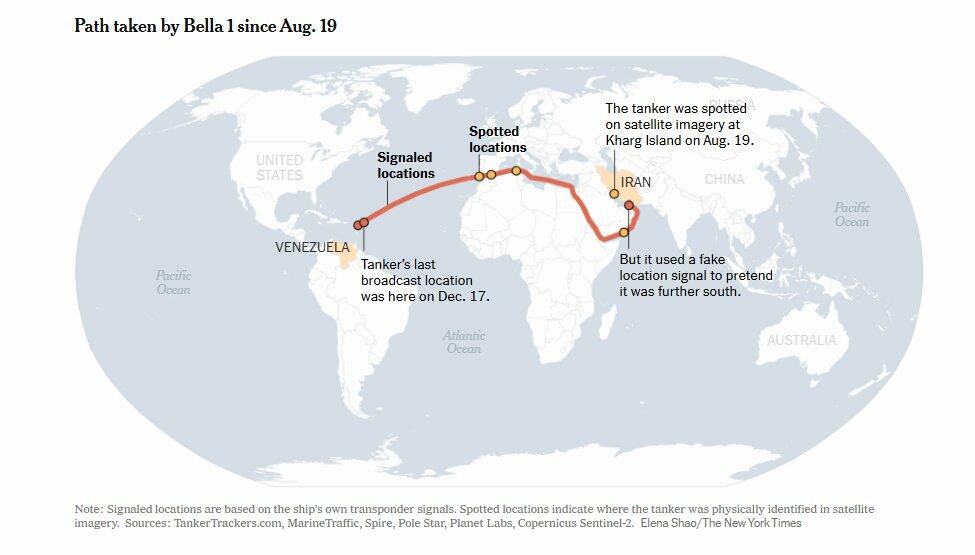
Late Wednesday evening, the State Department and the White House’s Homeland Security Council received a request from Russia to halt the pursuit of the Bella-1 tanker, which is now flying a Russian flag after the crew painted it on the hull.
Bella-1 has evaded U.S. Coast Guard boarding attempts for 10 days after refusing to comply with an interception order near Venezuela on December 21. The crux of the issue is that the Trump administration views the tanker as “stateless” because it was flying a false flag when the Coast Guard first approached it.
The New York Times noted:
In the days since, the ship has tried to claim the protection of Russia, with its crew painting a Russian flag on the side and radioing the Coast Guard to say they were sailing under Russian authority. The Bella-1 recently appeared in Russia’s official register of ships, under a new name, the Marinera, with a home port of Sochi on the Black Sea.
. . .
Although securing Russian protection may be a long shot for Bella-1 under international law, Russia’s diplomatic intervention could complicate the U.S. effort to seize the tanker, which stems from an ongoing conflict with Venezuela. David Tannenbaum, a former sanctions compliance officer at the Treasury Department, said earlier this week that it was “unclear” whether Russia’s provision of “overnight flag registration” to the ship would prove valid.
More color on the situation from maritime expert Sal Mercogliano:
Bella 1 used the exception in Art 92 to re-register.
The renamed Marinera went under the Russian registry and did this while in international waters.
However, it appears that she is now classified by the Russian Maritime Register of Shipping (she was previously under Lloyds)… https://t.co/jyvFOGkadK pic.twitter.com/BbAhRuE8bh
— Sal Mercogliano (WGOW Shipping) 🚢⚓🐪🚒🏴☠️ (@mercoglianos) January 1, 2026
Russia’s request that the Coast Guard stop chasing Bella-1 in the Atlantic Basin certainly adds another dimension to peace deal negotiations in the four-year-long war in Ukraine. It also complicates President Trump’s gunboat diplomacy aimed at toppling the Maduro regime in Venezuela.
Tyler Durden
Thu, 01/01/2026 – 14:10
Russia Requests Trump Admin To Stop Pursuit Of Oil Tanker In Atlantic Basin
Russia Requests Trump Admin To Stop Pursuit Of Oil Tanker In Atlantic Basin
The U.S. State Department received a request from Russia on New Year’s Eve to stop pursuing an oil tanker in the Atlantic Basin linked to a dark-fleet network that ships Venezuelan crude, according to a New York Times report citing sources familiar with the matter.
Ship FLEEING US military paints ‘RUSSIAN flag’ on its hull — NYT
Allegedly seeking Russian ‘protection’ as US tries to SEIZE Bella 1
Bella 1 has been pursued for OVER A WEEK since sailing near Venezuela https://t.co/Y5KVhJie1A pic.twitter.com/SRwxq7zBXE
— RT (@RT_com) December 30, 2025
Late Wednesday evening, the State Department and the White House’s Homeland Security Council received a request from Russia to halt the pursuit of the Bella-1 tanker, which is now flying a Russian flag after the crew painted it on the hull.
Bella-1 has evaded U.S. Coast Guard boarding attempts for 10 days after refusing to comply with an interception order near Venezuela on December 21. The crux of the issue is that the Trump administration views the tanker as “stateless” because it was flying a false flag when the Coast Guard first approached it.
The New York Times noted:
In the days since, the ship has tried to claim the protection of Russia, with its crew painting a Russian flag on the side and radioing the Coast Guard to say they were sailing under Russian authority. The Bella-1 recently appeared in Russia’s official register of ships, under a new name, the Marinera, with a home port of Sochi on the Black Sea.
. . .
Although securing Russian protection may be a long shot for Bella-1 under international law, Russia’s diplomatic intervention could complicate the U.S. effort to seize the tanker, which stems from an ongoing conflict with Venezuela. David Tannenbaum, a former sanctions compliance officer at the Treasury Department, said earlier this week that it was “unclear” whether Russia’s provision of “overnight flag registration” to the ship would prove valid.
More color on the situation from maritime expert Sal Mercogliano:
Bella 1 used the exception in Art 92 to re-register.
The renamed Marinera went under the Russian registry and did this while in international waters.
However, it appears that she is now classified by the Russian Maritime Register of Shipping (she was previously under Lloyds)… https://t.co/jyvFOGkadK pic.twitter.com/BbAhRuE8bh
— Sal Mercogliano (WGOW Shipping) 🚢⚓🐪🚒🏴☠️ (@mercoglianos) January 1, 2026
Russia’s request that the Coast Guard stop chasing Bella-1 in the Atlantic Basin certainly adds another dimension to peace deal negotiations in the four-year-long war in Ukraine. It also complicates President Trump’s gunboat diplomacy aimed at toppling the Maduro regime in Venezuela.
Tyler Durden
Thu, 01/01/2026 – 14:10

Rebuttals And Responses To Lingering Gloom About AI
Rebuttals And Responses To Lingering Gloom About AI
Authored by Arthur Schaper via Americsan Greatness,
In a previous article, I outlined two concerns regarding the rise of AI.
One deals with the Doom, i.e., safety concerns. No one has challenged me on this aspect, and now, with the rise of AI-induced suicides, protections for children must come into play.
The other concern centers on the Gloom: the elimination of jobs and the irrelevance of human ingenuity. Will AI create more and better than human beings? What happens to the workforce if AI can eliminate the next generation of employees?
I countered this fear with the creation of ATMs and how their invention did not induce higher unemployment but led to more banks, greater needs, and more workers.
A software engineer from Florida, let’s call him Robert, challenged my optimism.
I have commented on political, cultural, and spiritual issues for fifteen years, from local papers to national news stations. For the first time, I received a call from a reader (that would be Robert), who lives in Clearwater, Florida. I was pleased, impressed, and intrigued by his rebuttals.
Robert argued that customer service-based entry-level employment will disappear. For example, we contact insurance companies to set up a policy or seek help from customer service. In five years, he said, AI will be able to craft “employees” who can respond to all of our questions.
Robert then informed me that AI will soon integrate and synthesize expansive library-sized amounts of information in the fields of law and medicine, rendering professionals in those fields redundant.
Last of all, Robert described an AI program that scanned the works of a famous author and then received a couple of prompts outlining a certain plot and specific characters. With all of that input, the program churned out a short story in the same style and substance as the author. The writer whom the AI program imitated confirmed the accuracy of the content.
Robert brought up some excellent points.
Did I explore the long-term strains that would develop with the rise of AI in the workforce and the artist’s studio?
I even came across a recent CNBC article that seems to confirm Robert’s AI gloom:
“There is growing evidence that the widespread adoption of generative AI is impacting the job prospects of America’s workers, according to a paper released on Tuesday by three Stanford University researchers.
The study analyzed payroll records from millions of American workers, generated by ADP, the largest payroll software firm in the U.S.
The report found “early, large-scale evidence consistent with the hypothesis that the AI revolution is beginning to have a significant and disproportionate impact on entry-level workers in the American labor market.”
Most notably, the findings revealed that workers between the ages of 22 and 25 in jobs most exposed to AI—such as customer service, accounting, and software development—have seen a 13% decline in employment since 2022.”
Perhaps my assessment of AI’s impact was too optimistic. A 13% decline is not something to sniff at.
Then I read the next paragraph:
“By contrast, employment for more experienced workers in the same fields and for workers of all ages in less-exposed occupations such as nursing aides has stayed steady or grown. Jobs for young health aides, for example, rose faster than their older counterparts.”
The leveling off of entry-level jobs is inevitable with innovation. The millions of workers associated with horse feeds and horse care are gone, now that we rely on gas-powered combustion vehicles to travel from point A to point B. Where all the horse-related professions disappeared, in their place emerged all sorts of mechanics and other car-related employment needs.
I reflected on other technological innovations in the last century, which further confirm that new inventions won’t hinder economic growth or business opportunity.
Typewriters required specific types of repair, along with ink, new keys, and replacement ribbons. Then came computers. They also required ink, but for more complex types of printers. Mechanics who repaired typewriters, keyboards, etc., shifted to computers. More people today own laptop computers than owned typewriters in the past. Innovation lowers costs and increases wealth, allowing individuals to purchase goods that were once luxuries. With widespread ownership of new gadgets comes the need for more maintenance and improvement. All of this expansion creates more jobs and employs more workers! Creative invention leads to creative destruction, which inevitably creates more employment opportunities, just in different fields.
AI can direct robots that lay bricks or build buildings. But a human being will still have to design the ideal structures for a community. The robot can lay the groundwork, but someone will have to ensure that the robot finishes the job properly. Judgment on value, quality, mission, and vision still lies with human beings. AI cannot replace that.
AI may replace the scut and grunt work of paralegals, but the creativity, intuition, and ingenuity of a lawyer to spot the necessary argument or determine the proper legal course of action during a trial, without clear information manifested in writing, will still require a keen and aware human mind. Also, do we really want cold, heartless robots to serve as judges? Discretion, interpretation, and mercy are essential to a well-functioning criminal justice system.
These factors also impact the medical and counseling professions. AI can analyze data more quickly and engage in more penetrating analysis to diagnose patients. Robots may develop the skills to complete complex surgeries on patients. But AI can never replace the heart and soul of a human being, which is required for care and long-term healing. AI is not going to harm the workforce but open up new demands, which human beings will have to supply.
But what about the arts? Should we acquiesce to robots writing our stories and just sit back and enjoy our forced indolence?
Theater owners feared for their livelihoods with the advent of television. However, the movie industry didn’t take a dive but survived and even thrived. Why? Because the quality of movie production improved due to competition, and the refined art and technical skill rendered in movie theaters exceeded that of the TV studios. Different means and different uses of media shifted taste and increased interest, thus generating different wants and needs.
Critics like Robert might counter that the movie industry is still in decline, all because of social media, especially YouTube and Rumble. Could AI, coupled with social media, put actors, directors, and producers out of work?
First of all, people are still going to movies. Individual content creators can produce entire movies or video segments with fewer staff and gain immense wealth, too. More creators releasing all sorts of content has generated more demand (however specialized), and more workers are needed in differing tech fields to meet these new demands. AI can assist with the production, but the direction and motivation remain with the creator.
AI can churn out poems, stories, and novels. AI cannot snuff out the creativity, spiritual guidance, or inspiration of the human soul.
Consider the immense genius of Sir Isaac Newton.
Newton imagined problems and answered questions beyond the scope of any human being, not just in his time, but today!
Newton asked questions that his colleagues, and even AI today, have not answered. More importantly, Newton asked questions that AI could never think of. Newton’s broad, probing questions (just in the field of optics!) still drive scientific inquiry. In stark contrast, AI and robots cannot be curious, even if human beings forge self-conscious androids. They will only search for something if directed or prompted by their creators.
No matter how sophisticated AI becomes in terms of computation or generativity, it cannot replicate, let alone exceed, human creativity or curiosity.
Consider the fantastical inventions and operations in Star Trek and Star Wars. The capacity to research, develop, and test means for traveling to Mars or other far-off places will be much closer to reality because we have the technology to accomplish unforeseen, unprecedentedly important tasks in a timely fashion. They could finally be manifested by humans, with the help of AI.
AI will liberate human ingenuity from mundane tasks. But the human element will not disappear. The wants and needs, and the resources needed to meet them, cannot be predicted by man and therefore cannot be replaced by AI.
AI can compute faster, reason more efficiently, but the availability and expanse of knowledge itself is a problem that it will always remain unsolvable. Isaac Newton, for all his scientific genius and prowess, recognized this inevitable limitation:
“I do not know what I may appear to the world, but to myself I seem to have been only like a boy playing on the seashore and diverting myself in now and then finding a smoother pebble or a prettier shell than ordinary, whilst the great ocean of truth lay all undiscovered before me.”
AI can do, but cannot dream.
AI can think, but it cannot envision.
AI can work, but it cannot inspire.
AI can make our lunch, but it will not eat our lunch.
The Roberts of the world should rest easy.
Tyler Durden
Thu, 01/01/2026 – 14:00
https://www.zerohedge.com/ai/rebuttals-and-responses-lingering-gloom-about-ai
Rebuttals And Responses To Lingering Gloom About AI
Rebuttals And Responses To Lingering Gloom About AI
Authored by Arthur Schaper via Americsan Greatness,
In a previous article, I outlined two concerns regarding the rise of AI.
One deals with the Doom, i.e., safety concerns. No one has challenged me on this aspect, and now, with the rise of AI-induced suicides, protections for children must come into play.
The other concern centers on the Gloom: the elimination of jobs and the irrelevance of human ingenuity. Will AI create more and better than human beings? What happens to the workforce if AI can eliminate the next generation of employees?
I countered this fear with the creation of ATMs and how their invention did not induce higher unemployment but led to more banks, greater needs, and more workers.
A software engineer from Florida, let’s call him Robert, challenged my optimism.
I have commented on political, cultural, and spiritual issues for fifteen years, from local papers to national news stations. For the first time, I received a call from a reader (that would be Robert), who lives in Clearwater, Florida. I was pleased, impressed, and intrigued by his rebuttals.
Robert argued that customer service-based entry-level employment will disappear. For example, we contact insurance companies to set up a policy or seek help from customer service. In five years, he said, AI will be able to craft “employees” who can respond to all of our questions.
Robert then informed me that AI will soon integrate and synthesize expansive library-sized amounts of information in the fields of law and medicine, rendering professionals in those fields redundant.
Last of all, Robert described an AI program that scanned the works of a famous author and then received a couple of prompts outlining a certain plot and specific characters. With all of that input, the program churned out a short story in the same style and substance as the author. The writer whom the AI program imitated confirmed the accuracy of the content.
Robert brought up some excellent points.
Did I explore the long-term strains that would develop with the rise of AI in the workforce and the artist’s studio?
I even came across a recent CNBC article that seems to confirm Robert’s AI gloom:
“There is growing evidence that the widespread adoption of generative AI is impacting the job prospects of America’s workers, according to a paper released on Tuesday by three Stanford University researchers.
The study analyzed payroll records from millions of American workers, generated by ADP, the largest payroll software firm in the U.S.
The report found “early, large-scale evidence consistent with the hypothesis that the AI revolution is beginning to have a significant and disproportionate impact on entry-level workers in the American labor market.”
Most notably, the findings revealed that workers between the ages of 22 and 25 in jobs most exposed to AI—such as customer service, accounting, and software development—have seen a 13% decline in employment since 2022.”
Perhaps my assessment of AI’s impact was too optimistic. A 13% decline is not something to sniff at.
Then I read the next paragraph:
“By contrast, employment for more experienced workers in the same fields and for workers of all ages in less-exposed occupations such as nursing aides has stayed steady or grown. Jobs for young health aides, for example, rose faster than their older counterparts.”
The leveling off of entry-level jobs is inevitable with innovation. The millions of workers associated with horse feeds and horse care are gone, now that we rely on gas-powered combustion vehicles to travel from point A to point B. Where all the horse-related professions disappeared, in their place emerged all sorts of mechanics and other car-related employment needs.
I reflected on other technological innovations in the last century, which further confirm that new inventions won’t hinder economic growth or business opportunity.
Typewriters required specific types of repair, along with ink, new keys, and replacement ribbons. Then came computers. They also required ink, but for more complex types of printers. Mechanics who repaired typewriters, keyboards, etc., shifted to computers. More people today own laptop computers than owned typewriters in the past. Innovation lowers costs and increases wealth, allowing individuals to purchase goods that were once luxuries. With widespread ownership of new gadgets comes the need for more maintenance and improvement. All of this expansion creates more jobs and employs more workers! Creative invention leads to creative destruction, which inevitably creates more employment opportunities, just in different fields.
AI can direct robots that lay bricks or build buildings. But a human being will still have to design the ideal structures for a community. The robot can lay the groundwork, but someone will have to ensure that the robot finishes the job properly. Judgment on value, quality, mission, and vision still lies with human beings. AI cannot replace that.
AI may replace the scut and grunt work of paralegals, but the creativity, intuition, and ingenuity of a lawyer to spot the necessary argument or determine the proper legal course of action during a trial, without clear information manifested in writing, will still require a keen and aware human mind. Also, do we really want cold, heartless robots to serve as judges? Discretion, interpretation, and mercy are essential to a well-functioning criminal justice system.
These factors also impact the medical and counseling professions. AI can analyze data more quickly and engage in more penetrating analysis to diagnose patients. Robots may develop the skills to complete complex surgeries on patients. But AI can never replace the heart and soul of a human being, which is required for care and long-term healing. AI is not going to harm the workforce but open up new demands, which human beings will have to supply.
But what about the arts? Should we acquiesce to robots writing our stories and just sit back and enjoy our forced indolence?
Theater owners feared for their livelihoods with the advent of television. However, the movie industry didn’t take a dive but survived and even thrived. Why? Because the quality of movie production improved due to competition, and the refined art and technical skill rendered in movie theaters exceeded that of the TV studios. Different means and different uses of media shifted taste and increased interest, thus generating different wants and needs.
Critics like Robert might counter that the movie industry is still in decline, all because of social media, especially YouTube and Rumble. Could AI, coupled with social media, put actors, directors, and producers out of work?
First of all, people are still going to movies. Individual content creators can produce entire movies or video segments with fewer staff and gain immense wealth, too. More creators releasing all sorts of content has generated more demand (however specialized), and more workers are needed in differing tech fields to meet these new demands. AI can assist with the production, but the direction and motivation remain with the creator.
AI can churn out poems, stories, and novels. AI cannot snuff out the creativity, spiritual guidance, or inspiration of the human soul.
Consider the immense genius of Sir Isaac Newton.
Newton imagined problems and answered questions beyond the scope of any human being, not just in his time, but today!
Newton asked questions that his colleagues, and even AI today, have not answered. More importantly, Newton asked questions that AI could never think of. Newton’s broad, probing questions (just in the field of optics!) still drive scientific inquiry. In stark contrast, AI and robots cannot be curious, even if human beings forge self-conscious androids. They will only search for something if directed or prompted by their creators.
No matter how sophisticated AI becomes in terms of computation or generativity, it cannot replicate, let alone exceed, human creativity or curiosity.
Consider the fantastical inventions and operations in Star Trek and Star Wars. The capacity to research, develop, and test means for traveling to Mars or other far-off places will be much closer to reality because we have the technology to accomplish unforeseen, unprecedentedly important tasks in a timely fashion. They could finally be manifested by humans, with the help of AI.
AI will liberate human ingenuity from mundane tasks. But the human element will not disappear. The wants and needs, and the resources needed to meet them, cannot be predicted by man and therefore cannot be replaced by AI.
AI can compute faster, reason more efficiently, but the availability and expanse of knowledge itself is a problem that it will always remain unsolvable. Isaac Newton, for all his scientific genius and prowess, recognized this inevitable limitation:
“I do not know what I may appear to the world, but to myself I seem to have been only like a boy playing on the seashore and diverting myself in now and then finding a smoother pebble or a prettier shell than ordinary, whilst the great ocean of truth lay all undiscovered before me.”
AI can do, but cannot dream.
AI can think, but it cannot envision.
AI can work, but it cannot inspire.
AI can make our lunch, but it will not eat our lunch.
The Roberts of the world should rest easy.
Tyler Durden
Thu, 01/01/2026 – 14:00
https://www.zerohedge.com/ai/rebuttals-and-responses-lingering-gloom-about-ai