Category: News

40 Dead, About 100 Injured After Fire Rips Through Swiss Ski Resort Bar
40 Dead, About 100 Injured After Fire Rips Through Swiss Ski Resort Bar
Swiss emergency services responded to an explosion and fire that killed 40 people and injured about 100 during New Year’s celebrations at a bar and lounge called Le Constellation, located in the ski resort town of Crans-Montana in southwestern Switzerland.
BREAKING: Swiss police say “several dozen” people are dead, and “100 or so” people have been injured after the fire at Le Constellation bar in Switzerland https://t.co/5MpePzQTlm
📺 Sky 501, Virgin 602, Freeview 233 and YouTube pic.twitter.com/ZGSid31ZHi
— Sky News (@SkyNews) January 1, 2026
Local officials said the cause of the blast at Le Constellation remains unclear and noted that it has not been designated as a terrorist attack.
“At the moment, we are considering this a fire, and we are not considering the possibility of an attack,” prosecutor Beatrice Pilloud told reporters, adding that a full investigation has commenced.
“We are a ruling out an attack”
Swiss authorities say the incident is being considered a fire and not an attackhttps://t.co/5MpePzQTlm
📺 Sky 501, Virgin 602, Freeview 233 and YouTube pic.twitter.com/zaAGceMyjO
— Sky News (@SkyNews) January 1, 2026
Latest details from the Swiss news conference:
Around 40 people are presumed dead, with at least 100 injured
Victims include multiple nationalities
Most of the injured sustained severe burns and significant injuries
Swiss emergency services deployed 10 helicopters, 40 ambulances, and 150 responders to the scene
Authorities did not disclose a cause for the fire, but the prosecutor ruled out a terrorist attack
The Valais hospital intensive care unit is at capacity, with patients being transferred elsewhere for specialized burn treatment
“What was meant to be a moment of joy turned, on the first day of the year in Crans-Montana, into mourning that touches the entire country and far beyond,” Swiss Federal President Guy Parmelin wrote on X.
Tyler Durden
Thu, 01/01/2026 – 06:54
Tinley Park sophomore saves eighth grader with Heimlich maneuver learned in gym class
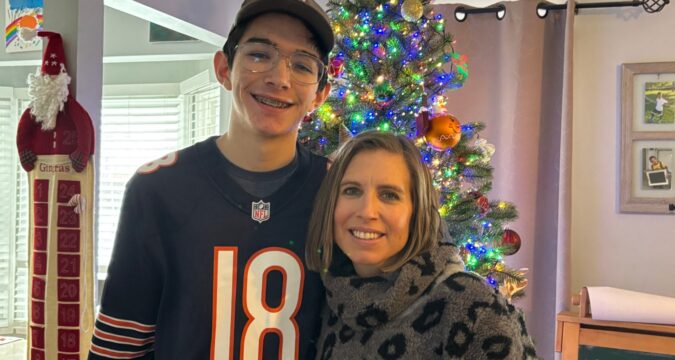
Michael Gingras, a 15-year-old sophomore at Victor J. Andrew High School in Tinley Park, learned the Heimlich maneuver a year ago during a brief lesson in gym class.
Two weeks ago, on Dec. 19, that knowledge came in handy when Gingras’ younger brother’s friend, an eighth grader, started to choke while eating chicken nuggets at their house.
“His face looked panicked,” said Ashley McKeigue, Gingras’ mother. “So I go behind him and did what I thought was the Heimlich, and I was like pushing on his diaphragm. And I’m pretty sure my hand was positioned right, it was the right position on him, but I was too nervous to use real force because he’s so much smaller than me.”
Because she was anxious about hurting him, she said, she wasn’t able to clear his throat.
It was at that point that Gingras, who’d been called away from his Fortnite game to eat, intervened.
“Thank God he walked upstairs,” McKeigue said. “He walked upstairs, he goes, ‘Mom, I know how to do this, get out of the way.’”
“She was like, not even doing it,” Gingras said. “Giving him a big hug, pretty much.”
Gingras successfully performed the Heimlich maneuver, clearing the obstructing chicken nugget in one attempt.
“I would like to think that if Mikey was not here, I would have used more force,” McKeigue said. “But that’s just not how it went down. How it went down is that Mikey came and he saved him.”
The scarf that Michael Gringas was given as thanks by the family of a boy he saved from choking sits on a counter at his home in Tinley Park. (Evy Lewis/Daily Southtown)
Afterward, McKeigue said, she and her younger son, Christian Gingras, were left unsettled.
“When they left, I was sitting in here with my younger son, who, it was his friend,” McKeigue said. “He’s like, ‘Mom, are you scared?’ And I’m like, no, I think the feeling you’re thinking of is anxiety, because we know he’s OK, so there’s nothing to be scared about, but we both felt so unsettled.”
The lesson where Gringas learned how to perform the Heimlich maneuver last year was simple and short, he said.
“They made us watch a video and answer a couple questions on it,” Gingras said. “That’s pretty much it.”
McKeigue wrote to Victor J. Andrew, encouraging them to continue teaching the maneuver.
“This incident truly could have been tragic but thanks to whoever taught this last year, it was not,” McKeigue wrote to the school.
Principal Abir Othman responded, writing it was meaningful to hear the training helped save a life.
“Moments like this remind us why teaching life saving skills matters so much,” Othman wrote. “I will be sharing your email with our Physical Education department so they can be recognized and commended for the important work they do with our students.”
Many schools provide Heimlich maneuver education, but not all.
“‘I just think I didn’t want to do it too hard!” McKeigue said, but Mikey told her “wouldn’t you rather break his rib and save his life?”
The boy who choked is all right, Gingras and McKeigue said, although he suffered from a sore throat for a few days.
“The kid’s mother made me a scarf, and him and his brother came over and gave it to me, which was pretty sweet,” Gingras said.
elewis@chicagotribune.com
https://www.chicagotribune.com/2026/01/01/tinley-park-sophomore-heimlich-maneuver/
Everyone gets to be an engineer at Pullman’s Model Train Experience
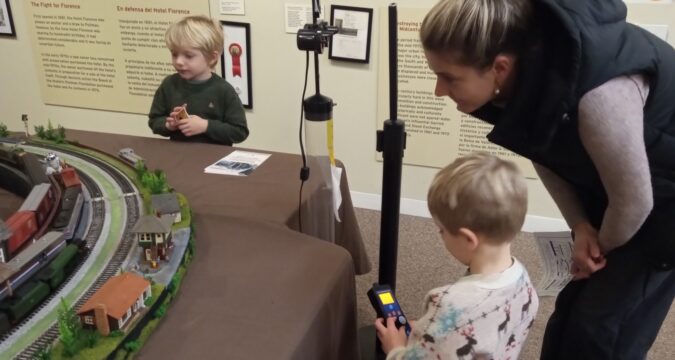
Young train enthusiasts had a chance to become railroad conductors last weekend during the Historic Pullman Foundation Model Train Experience.
But the youngsters weren’t the only ones enthralled by the vintage model train layout at Pullman Exhibit Hall and its links to the history of Chicago’s Pullman neighborhood and the rail car factory that anchored it.
“When I was a little girl, we went by a train like that one to Montana — Rocky Mountain National Park,” said Stacey Melicharek, pointing to a miniature train. “We ate and slept on the train.”
Melicharek, of Palos Heights, was at the event with her husband, Tony, and children, Luke, Teddy and Lorelei.
She said her son Luke, 3, was the real train lover in the family.
“He has a choo choo train at home and he could watch it all day,” Melicharek said. “It’s such a cool event.”
The Model Train Experience at Pullman National Historical Park has been an annual offering for at least a decade, and organizers said it’s been getting more popular in recent years.
Along with the trail layouts, the event also offered family-friendly fun with arts and crafts with Pullman rangers and free cocoa for kids at the Pullman Club Coffee shop. Holiday flair was added with scenes from “Polar Express” projected on a screen in the background while still shots from the film were enlarged and placed around the Pullman House Project Welcome Center.
The trains were operated by informal engineers, including some from Valley Model Railroad and Lionel Railroad Club, Inc. which brought the trains, tracks and other items and patiently showed kids how to run the remote while explaining all about the locomotives and exhibits.
“We’ll show you how to run the throttle and you just follow the signals,” said train operator Mark Malik, who appreciated the location’s link to railroad history. “We really enjoy being here.”
Palos Heights residents Stacey and Tom Melicharek and their three children get a primer on model trains from a volunteer conductor last Sunday during the Model Train Experience at Pullman National Historical Park. (Janice Neumann/Daily Southtown)
Pullman volunteers also were on hand to help out.
Tom McMahon, a longtime volunteer with the Historic Pullman Foundation, helped organize the event and oversee the trains. He said the event started out as a way to entertain local children and reinvigorate a love for model trains.
“It’s blossomed into this display … we realized everyone loves trains at Christmastime,” said McMahon, who has lived in Pullman for decades with wife Cindy McMahon, another volunteer with the HPF. “The families come to see it and the kids who’ve never seen model trains up close, their faces light up.”
McMahon said though the model train hobby seems to have tapered off in recent years, he hopes interest is coming back — and with it, an appreciation for Pullman’s history.
“We connect the history of Pullman through model trains,” he said.
Tom McMahon, a longtime volunteer with the Historic Pullman Foundation, discusses the impact of railroads last Sunday during the Model Train Experience at Pullman National Historical Park. (Janice Neumann/Daily Southtown)
Michael McMahon, Tom McMahon’s son and another long-time Pullman resident, helped run the trains. He said they start set-up three days before opening the doors.
“It’s a great event to get people and kids out of the house, plus it gives us a good excuse to play with our trains,” he said. “We focus a lot on the vintage (trains from the 50s and 60s). Building it is half the fun.”
Youngsters Harry and Jake Everett, were having a ball conducting the trains. Ryan Everett, their dad, said it was a fun event for a Sunday morning.
“If we had the same thing at home, they might not want to play with it, but come somewhere else….”
Pullman resident Michael McMahon helps instruct children on how to run the trains last Sunday during the Model Train Experience at Pullman National Historical Park. (Janice Neumann/Daily Southtown)
Some families had also seen the movie “Polar Express,” without realizing the connection to the neighborhood until they came.
Director Robert Zemeckis grew up in Pullman, half a mile from the site of the event, explained Mike Shymanski, founding member and past president of the Bielenberg Historic Pullman House Foundation, as he showed off the blow-out pictures from the movie. “He sent his designer (Doug Chiang) back here to be inspired.
“Santa Claus comes out of the Clock Tower Building,” he said of a scene in the movie.
Janice Neumann is a freelance reporter for the Daily Southtown.
https://www.chicagotribune.com/2026/01/01/pullman-model-train-experience/
Chicago-based Farmer’s Fridge has turned vending machine salad into fast-food success
When Luke Saunders came up with the novel idea to sell salads from a vending machine 12 years ago, it was so far out of the box that he had to invent a new one.
Believing that fast food should be faster and healthier, Saunders dreamed up the concept of Farmer’s Fridge without a blueprint on how to do it. For starters, vending machines, which had long dispensed chips, candy bars and sodas to snacking office workers, simply weren’t set up to deliver fresh salads on demand.
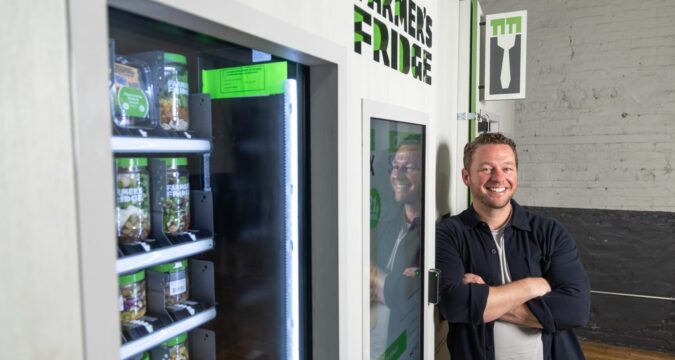
So Saunders, then a recent college graduate and novice entrepreneur, created a prototype, stuffed it with fresh greens, stuck it in a downtown Chicago food court and launched the salad vending company in October 2013.
“When I started back then, I probably didn’t sleep for a month because I had spent my life savings on a vending machine, and I had to figure out by launching it if people were going to sign up to buy an $8 salad out of a machine,” said Saunders, 39.
As it turned out, they did.
A dozen years later, Farmer’s Fridge has a 100,000-square-foot kitchen near Midway Airport and thousands of locations across 20 states selling salads to millions of customers. Growth has exploded this year in what has been a very challenging environment for many restaurant chains, as Farmer’s Fridge and its vending machine salads go mainstream.
The stand-alone salad machines, which have sprouted up in office buildings, warehouses, airports, hospitals and on college campuses, have carved out a new niche in the fast-food and vending industries, with plenty of room for upside, according to at least one analyst.
“I think the economies of scale tend to fit very nicely for Farmer’s Fridge, and I think they’ve got tremendous growth opportunities until somebody else comes into the market and replicates it,” said Darren Tristano, CEO of Foodservice Results, a Chicago-based research and consulting firm.
From McDonald’s to Portillo’s, Chicago has given rise to some of the most iconic fast-food chains in the U.S. Few have an origin story as unique as Farmer’s Fridge.
A New Jersey native, Saunders majored in international studies and Chinese at Washington University in St. Louis, but his career path evolved from a side hustle.
“I was running a bike rental business on campus,” Saunders said. “I was having way more fun doing that, so I decided I wanted to be an entrepreneur.”
After college, Saunders joined his father’s grease lubricant manufacturing business in New York. When his girlfriend and future wife got into University of Michigan Law School, Saunders went with her, leaving the family grease business behind.
In Michigan, Saunders got a job selling industrial metal finishing products, driving 1,000 miles a week across the Midwest to pitch engineers and factory managers on how to use coatings to improve their operations.
As a traveling salesman, trying to improve his own diet was another story.
“Driving all over Michigan, Ohio, Indiana, Kentucky, the only options for me were fast food or a gas station,” Saunders said. “When I really wanted some healthier food, I would find a Chinese restaurant and get some steamed vegetables and chicken. This is really way too much work.”
While fast-casual salad chains like Sweetgreen already existed on the East Coast, Saunders began to ponder new ways to peddle lettuce across the heartland.
The light bulb went on during a visit to an Ann Arbor health club, when staff opened a small fridge packed with fresh-made salads and sandwiches to sell to members. Saunders thought he could scale up the idea at other health clubs.
Unfortunately, nobody would bite, forcing Saunders to find a different distribution network. That’s when he decided on vending machines to dispense salads.
The big problem — they didn’t exist.
“I actually tried to build a machine from scratch. I thought I had to invent this thing,” Saunders said. “So I went to engineering firms in Chicago and said, ‘What would it cost to build a machine that sold salads?’ I got the quotes back, and it was like half a million dollars to get a prototype.”
Instead, at the suggestion of his father-in-law, Saunders attended the April 2013 National Automatic Merchandising Association convention in Las Vegas — an annual trade show for the vending machine industry — where he networked with manufacturers and kicked the tires on the latest models.
Not surprisingly, there was nothing there ready to spit out salads on demand, but Saunders saw a few offerings that he believed could be adapted to his unique vending application. Working with several manufacturers, he engineered a mashup, putting the finishing touches on the machine himself.
“I was literally cutting holes in the side of a vending machine, ripping out parts, changing how it worked,” he said.
The newly married couple moved to Chicago in June 2013 after his wife graduated from law school and got a job at a large law firm. Meanwhile, bootstrapped with $25,000 in savings — of which 85% went to building the first vending machine — Saunders geared up to launch his company.
The first Farmer’s Fridge opened at the Garvey Food Court at Clark and Lake streets, a downtown mélange of fast-food offerings such as Dunkin’ Donuts, Popeyes and McDonald’s that also featured a newfangled salad vending machine in the middle. The food court closed more than a decade ago, but Farmer’s Fridge has since grown exponentially.
In addition to coming up with the concept, Saunders initially created the actual salad mixes. But early market research found that while customers loved the convenience of fresh salads from a vending machine, the actual taste left something to be desired.
“That’s when I gave up my title as the recipe developer and hired a chef,” Saunders said.
The on-the-go jars of fresh salads caught on quickly, with vending machines popping up at a variety of busy locations in Chicago and beyond. Farmer’s Fridge now works with a Spanish manufacturer to make custom salad vending machines, which cost about $10,000 each.
The company has raised $100 million to date, fueling annual revenue growth and broader expansion. Cleveland Avenue, the Chicago-based venture capital fund led by former McDonald’s CEO Don Thompson, is the largest investor in Farmer’s Fridge, Saunders said.
In 2019, Farmer’s Fridge moved its manufacturing operations from an 8,000-square-foot kitchen facility in the West Loop to a 50,000-square-foot facility on Cicero Avenue near Midway that formerly housed a meal-kit company.
Then the pandemic hit, turning downtowns into ghost towns and disrupting the core Farmer’s Fridge business model. The company expanded into retail and briefly, home delivery, moved into new locations and quickly resumed its upward trajectory.
Farmer’s Fridge has since doubled its kitchen to 100,000 square feet as business expands nationally, and through retail channels, with 350 employees making the salads 24/7 on two shifts to meet growing demand.
There’s now 1,900 fridges and another 1,500 retail locations carrying the Farmer’s Fridge salads in 20 states, from Southern California to Texas to Massachusetts. All of the salads are prepared in Chicago and then trucked across the country.
The salads, which have a one-week shelf life, lose about one day in transit to the most far-flung destinations, where Farmer’s Fridge employees receive the deliveries and distribute them to vending machines in a well-coordinated race against wilting lettuce.
“When I started, that was our biggest challenge,” Saunders said. “Over time, we’ve really optimized the shelf life and the planning process.”
Popular items include the high protein Medi chicken bowl, Southwest salad with chicken, pesto pasta bowl and a new collab with California Pizza Kitchen featuring the restaurant chain’s signature BBQ Chicken Chopped Salad.
Farmer’s Fridge projects it will sell 10 million meals in 2025, a dramatic increase that represents a third of the company’s total sales volume over its entire 12-year existence. Saunders declined to disclose sales revenue, but said it has averaged 70% annual growth since inception.
With Chicago office buildings still at about 58% of pre-pandemic occupancy levels, according to the latest weekly report by Kastle Systems, Farmer’s Fridge has had to evolve and expand to grow at such a rapid pace in the post-pandemic landscape.
That includes picking up more space at airports and Amazon fulfillment centers, moving into new markets across the country and developing retail partnerships to sell its products on store shelves.
Farmer’s Fridge salad jars are now available at Aldi, Target, Walmart and Jewel, among other retailers.
Before the pandemic, 40% of revenue for Farmer’s Fridge came from office vending machines. That part of the business is now about 10% of the company’s revenue, but Farmer’s Fridge has since grown tenfold through diversification and geographic expansion, Saunders said.
“We have more locations in Amazon fulfillment centers than we do in airports,” Saunders said. “We’ve picked up volume just from having a business model that’s more aligned to the new way of working.”
The vending machine business still accounts for 80% of the overall revenue at Farmer’s Fridge, Saunders said.
While major fast-food chains like Portillo’s struggle with slowing sales and McDonald’s rolls out extra value meals to compete in a tough restaurant environment, Farmer’s Fridge continues to grow. Prices for the salads still average about $8 at most vending locations, with higher prices at the airports, Saunders said.
Farmer’s Fridge may be bucking the trends in part due to its location, location, location mantra, tapping into shifting centers of activity and customers more likely to pay up for a healthy meal — without waiting in line, Tristano said.
“For them to pivot, they walk in with a two-wheeler, they grab their vending machine and they move it somewhere else,” Tristano said. “When it comes down to it, the mobility they have with being able to move between office buildings, between retail locations, is really a huge advantage.”
And as more people return to the office over time, Farmer’s Fridge will be there as well, presenting a healthier alternative to the burger-on-the-run or the 3 p.m. candy bar from an old-school vending machine.
But in the new paradigm, that once-core office business may simply be the icing on the cake for Farmer’s Fridge.
“Those numbers keep getting better in terms of people downtown, so over time it should recover, but we took a lot of steps to diversify, and overall it made us a better business,” Saunders said.
https://www.chicagotribune.com/2026/01/01/farmers-fridge-vending-machine-salad-success/

Willie Wilson: Faith and compassion can see us through 2026
We say goodbye to what was a tough year for most of us — tariffs, property taxes, high costs for basic goods, loss of loved ones and an unpredictable business environment. Some small businesses did not make it. We welcome the new year with anticipation and hope knowing that this year will be better than the last. As a sharecropper from Louisiana, I know faith can see us through any hardship. Faith is trust in God even though you cannot see or trace him.
I remember as a business owner, waking up one morning to find that my company was $76 million in debt. I did not know how the business was going to make it, and I could not cut my way to a balanced budget. It was a feeling that many people experience who have more bills than money. I surrendered all to God and continued to praise him in that difficult season. I kept the faith and trusted God, and he delivered on time.
The failure of Congress to reach a deal extending the Affordable Care Act subsidies may lead to an average 78% increase for health insurance in Illinois. In addition, 330,000 Illinois residents could lose health care coverage because of Medicaid cuts in the One Big Beautiful Bill Act. The cuts to the Supplemental Nutrition Assistance Program program will worsen food insecurity among children, the elderly and people with disabilities. In spite of the policies, we will get through these extreme cuts together.
The Bible reminds us in Romans 5:3-4, “We glory in tribulations also: knowing that tribulation worketh patience; And patience, experience; and experience, hope.” Therefore, no matter how dark your situation may look, don’t give up. Keep reminding yourself that this suffering will make you stronger.
Some people believe that money and wealth will make them powerful and happy. There are many millionaires and billionaires whose wealth could not save them from death. It is misleading to believe that being wealthy can make someone happier. With every level of success, there are new enemies and challenges. All the money in the world cannot buy love or joy. As long as God wakes us up each morning, we have another opportunity to fulfill our purpose. Where there is life — hope abounds.
I did not go to school much as a child, but we had faith, hope and love that a brighter day was coming. Our neighbors were kind. The people had compassion for each other. The Latin roots of the word “compassion” mean “to suffer together.” It is a feeling that arises when you are confronted with another’s suffering and feel motivated to relieve that suffering. It is compassionate to feed the hungry; clothe the naked; provide shelter to the homeless; visit the sick; give water to the thirsty; teach the illiterate; provide jobs for the jobless; serve as a caregiver for a loved one; and visit those in prison.
The Rev. Martin Luther King Jr., referring to the parable of the good Samaritan, said that the first question the priest and the Levite asked was: “If I stop to help this man, what will happen to me?” But the good Samaritan reversed the question: “If I do not stop to help this man, what will happen to him?” A little compassion can save lives.
This year, we need to spread more love. The Bible declares in I Corinthians 13, “Though I speak with the tongues of men and of angels, and have not charity, I am become as sounding brass, or a tinkling cymbal.” It is a clarion call to “agape” — unconditional love that is superior to spiritual gifts. While faith and hope are vital, love endures forever.
King accurately noted: “Love is the greatest force in the universe. It is the heartbeat of the moral cosmos. He who loves is a participant in the being of God.” The power of love is transformative. It conquers all hate and evil. Love is the very essence of Jesus Christ, and that causes leaders to put people over political parties and self-interests.
Leaders should prioritize love and not war. Elected leaders should invest in people and not nuclear weapons. We need to promote education and peace, not nuclear annihilation.
The following are some suggestions to consider for this year:
Forgive and reconcile with those who have hurt you.
Call a loved one or friend who may have been alone during the holidays and invite them to lunch or dinner.
For those who may be down on life, remember God loves you and do not give up.
Spend less time on social media and more time socializing with friends and family.
Members of Congress from the two parties should have dinner with each other and work to create friendships.
It is OK to vote for ideas from an opposing political party if the ideas empower communities.
Make a resolution to love your neighbor as yourself.
America is at a crossroads; we have been divided across race, ethnicity, gender and political party for too long. A divided nation cannot stand. A divided people cannot stand.
It can no longer be Republican against Democrat, citizens against police, white versus Black, and rich versus poor. We must achieve the original vision of our country — to be a place where all people can be free to pursue life, liberty and happiness truly — one nation under God.
Happy New Year all the way!
I write this commentary to make those comfortable with lacking faith, hope and love uncomfortable.
Willie Wilson is a business owner, philanthropist and former mayoral candidate.
Submit a letter, of no more than 400 words, to the editor here or email letters@chicagotribune.com.
https://www.chicagotribune.com/2026/01/01/opinion-2026-resolutions-faith/

Letters: We live in turbulent times. But there is still hope for our nation and world.
Editor’s note: We asked readers to submit what their hopes are for the new year. Here is a selection of those letters. We will publish the remainder on Friday.
Equal participants
We are living in very turbulent times in these United States. The political divisiveness of our citizens has become extremely dangerous as evidenced by the killing of Charlie Kirk as well as the throngs of threats made toward our political leaders. It is my wish that we the people, in order to live in a more perfect union, will recognize the pain and destruction that we are promulgating by the belief that “our opinion” is the only opinion that is correct and just.
It is my wish that we will be able to understand and respect that there are many differences between people with many different views. This should not make us enemies but rather equal participants in a process that will allow us to have a better, stronger and more unified country.
It is also my wish that somehow, some way, the tragedy of the war between Russia and Ukraine will end with respect, dignity and a reasonable way forward for the millions of Ukrainians who have had their world turned upside down through no fault of their own. It is my wish that the world will stand in unison with Ukraine and find the ways and means to convince Russian President Vladimir Putin that he cannot just decide to take 20% of Ukraine just because he can. While this wish may be in futility, it saddens me to see the world so intimidated by the threat of an escalation of war by Putin that we do not really do anything militarily to put an end to the invasion and the continued killing.
I wish that little children could somehow be prevented from ever becoming afflicted with devastating health problems. To see a newborn baby come into this world and then shortly thereafter be diagnosed with a life-threatening health problem is one of the most heart-wrenching experiences.
It is my wish that someday, the world will be at complete peace where all countries are friendly and respectful toward one another, all working together to make the world a better place.
— Dave Roberts, Frankfort
Need for empathy
I hope people will be more empathetic toward the plight of others in the new year. I’ve been thinking about my own life. I’ve been fortunate to be seen as a “good person” and lucky that certain moments broke in my favor. But I know that if a few things had gone differently, I might not be regarded that way, even if my choices had been the same.
As a young adult, I sometimes walked out of restaurants and bars tipsy and drove home. Nothing terrible happened, but it easily could have. A slightly different night, a somewhat different turn, and I could have been responsible for real harm.
In college, I used illegal recreational drugs, occasionally carrying amounts that could have brought serious legal trouble. That phase ended quickly, but luck played a far larger role than judgment.
And as a baby boomer living through the sexual revolution, I participated freely and rarely thought about consequences. I could have fathered a child with someone I barely knew. Once again, fortune protected me from outcomes that would have reshaped my life.
So when I see people on the news, handcuffed and charged with driving under the influence or drug possession, or failing to meet obligations such as child support, I cast no stones. I’ve come to see that many of them are no different from me. Their lives collided with the consequences that mine happened to miss.
Empathy begins with acknowledging how thin that line can be: “There but for the grace of God go I.”
— Scott Thompson, Bloomington, Indiana
More introspection
My hope for the new year is to see a change in how society addresses so many of the loud issues that face us in our daily lives. I’d love to see people become more introspective. Let’s spend some quiet time with ourselves and our thoughts. While we sit in traffic, wait for appointments, stand in line or sit on the couch relaxing after a long day.
Let’s quiet our minds. Look inside ourselves. Look at our hearts. Look into our souls. Let’s try to correct the negative and mean thoughts and ideas in our heads and hearts that infiltrate every part of our interactions with others during our daily routine.
Look in a mirror. Really see your reflection for its true self. Let go of bitterness. Let go of meanness. Let go of labels. Everyone in the world does not and should not be defined by their political leanings, their race, their gender, their beliefs.
Let’s take ownership of the way we put others in a box, only seeing them in the way our mind has labeled them. We are responsible for making changes for the better in our hearts, minds and souls. Let’s try to have humble feelings for others. Take a moment to ponder politeness. Work on being courteous.
Maybe let’s put the feelings of others before our own. I’m thinking of the good old days of kindness and genuine caring. Let’s value each other’s thoughts.
I hope we can all enter 2026 making the effort to spend quiet time with ourselves and making the changes that need to be made in our minds, hearts and souls. Let’s start by looking in the mirror.
— Carol Hausmann, Tinley Park
Peaceful coexistence
My hope for 2026 is that we can find a way to end the online radicalization that is generating targeted mass shootings and terror attacks. Let us also put an end to the antisemitism that is sweeping across the globe. Even though we may not agree with each other’s ideology, we must find a way to coexist in peace.
— JoAnn Lee Frank, Clearwater, Florida
Respect and cordiality
I’m a Cubs fan because I was raised that way. One of my favorite childhood gifts was a jacket emblazoned with “Ernie Banks MVP ‘58 & ‘59.” Dad told me we were lucky to have two baseball teams and we should support them both. He also insisted we be respectful of others.
So I go out of my way to be genial toward fans of other teams visiting the Friendly Confines. Some of our most senior elected officials might want to take Dad’s advice and treat members of the other party with respect and adopt a more cordial tone.
My hope is that political discourse in 2026 focuses on solutions, not accusations and fabrications.
— Jerry Levy, Deerfield
Possibility of change
In thinking about what can give hope in 2026, I think of what has provided hope already: Those who took a stand this year for those in need. Those who provided shelter, protection and solidarity for people who were at risk of arrest and deportation. Those who made sure that these people would not be ignored or forgotten.
This will carry over into the new year; we will continue to see those in need as our neighbors. I hope to attend another “No Kings” rally in the new year and have the chance to deepen my involvement and solidarity with those who care and those in need. That rallies are planned for the new year gives a true sense of hope. Lake Street Church in Evanston portrayed federal agents as shepherds in its Nativity scene, a very powerful symbol of the possibility that these agents can be a part of the grander picture of belonging: There’s a place for everybody, and change is possible. That was a very inspiring thing to see.
My faith will give me hope; it did this year, the true blessing that it was. I wish to continue to change into the person I’m meant to be, to grow from strengths and let go some more of what no longer serves me. I hope for those in my life to have this as well.
I hope that our president and those who answer to him will look at what is bigger than all of us, rather than what serves in the moment or a particular agenda.
I know that change is possible; we can bring that source of hope.
— Mandy May, Skokie
Submit a letter, of no more than 400 words, to the editor here or email letters@chicagotribune.com.
https://www.chicagotribune.com/2026/01/01/letters-010126-hope-new-year/
Sen. Don DeWitte: The Chicago Bears cannot be viewed as a cash cow or political pawn
The Chicago Bears are far more than a football team. They are part of this state’s identity and a significant driver of economic activity. On game days alone, tens of thousands of fans pour into the region, supporting hotels, restaurants, bars, transportation services and small businesses. Over the course of a season and through year-round events such as concerts, a modern NFL stadium supports thousands of full-time and part-time jobs and generates substantial sales, income and hospitality tax revenue.
The Bears are tenants at Soldier Field, a stadium owned and operated by the Chicago Park District. Over the years, the Bears have fulfilled their obligations as a tenant: paying rent, contributing to the stadium’s renovation and signaling a willingness to pay the required contractual penalty should they choose to exit their lease early. There is no legal or contractual basis for requiring the Bears to reimburse the city of Chicago or the Park District for infrastructure decisions those entities independently chose to make.
Across Illinois, responsibility for roads, utilities, transit access and other major infrastructure has always rested with government, particularly when it comes to large-scale economic development projects. This is true whether the project is a major shopping center, a distribution facility, a large residential development or a professional sports stadium. These investments are public improvements that serve the broader community. They are not subsidies for private businesses, nor are they debts that can be retroactively assigned to tenants.
Yet, Chicago Democrats appear to be demanding that the Bears repay hundreds of millions of dollars in Park District debt as a condition of moving forward with any stadium relocation or redevelopment plan. That demand ignores long-standing practice, misunderstands the Bears’ legal obligations and risks undermining one of Illinois’ most important economic assets.
Beyond game-day spending, the Bears contribute to Illinois’ broader economic profile. Professional sports franchises help anchor large-scale development, attract national and international attention, and position a region as a destination for tourism and investment. A state-of-the-art, multiuse stadium has the potential to host major sporting events, concerts, conventions and global showcases that bring visitors and revenue to Illinois well beyond Sunday and Monday night football.
Losing the Bears would have serious and lasting consequences. Jobs would disappear. Tourism would decline. Local businesses, many already operating on thin margins, would feel the impact immediately. State and local governments would lose ongoing revenue streams that far exceed the cost of responsible public infrastructure investment. Once gone, that economic activity would be nearly impossible to replace.
Even more troubling, the current approach risks driving the Bears not just out of Chicago but out of Illinois entirely. Northwest Indiana, which is within an hour of Chicago, is eager to attract large-scale economic development projects. That region understands that providing roads, utilities and public access is part of doing business, not a ransom to be paid by private investors.
This should not be a partisan issue. Supporting public infrastructure for major economic development has long been a bipartisan principle in Illinois. Republicans and Democrats alike have recognized that strategic infrastructure investment creates jobs, grows the tax base and strengthens communities. That same logic applies here.
This also should not be conflated with the property tax discussion between the Bears and Arlington Heights, which will affect taxpayers and local governments in that area. They are separate issues, both requiring ultimate agreement. Nobody wants taxpayers to be left holding a massive bill when all is said and done.
Related Articles
Liam Stanton: Good. Better. Best. A Chicago way to keep the Bears home.
Editorial: Leverage-obsessed Chicago Bears do their best to squelch the good seasonal vibes
Gov. JB Pritzker and his administration now face an important choice. They can side with an effort to recoup Park District debt by shifting responsibility onto the Bears or they can take a broader view that recognizes the economic stakes for the entire state. Committing to the public infrastructure necessary to support a multibillion-dollar private investment would keep one of the founding franchises of the NFL in Illinois, protect thousands of jobs and ensure long-term economic benefits for generations to come.
Illinois cannot afford to let ideology, political infighting or short-term thinking drive away one of its most valuable economic and cultural institutions. The Bears have met their obligations. Now it is time for Chicago, the Park District and the state as a whole to meet theirs. We need to keep our beloved and historic Chicago Bears in Illinois and not allow financial greed to stand in the way of doing what’s right.
State Sen. Don DeWitte, R-St. Charles, represents Illinois’ 33rd Senate District in Kane, McHenry and DuPage counties and serves as the minority spokesperson for the Senate Revenue and Senate Transportation Committees.
Submit a letter, of no more than 400 words, to the editor here or email letters@chicagotribune.com.
https://www.chicagotribune.com/2026/01/01/opinion-chicago-bears-illinois-political-pawns-taxes/

What to do in Chicago: ‘Amadeus,’ Bowie Ball and Through N Through
Our picks for events in and around Chicago this weekend.
“Catalyst: Im/migration and Self-Taught Art in Chicago”
Explore the role of immigrants in shaping Chicago’s self-taught art scene over the past 50 years. Intuit Art Museum is hosting an exhibit featuring the work of more than 20 such artists. As the Tribune reported, the exhibit “makes bedfellows of far-flung and gripping works: the flamboyant and intricate oil portraits of Drossos Skyllas, a Greek immigrant; the collage art of Thomas Kong, a Korean-American convenience store owner in Rogers Park; and the freehand crochet of Pooja Pittie, a disability rights advocate who came to Chicago to pursue an MBA at the University of Chicago Booth School of Business.”
Through March 22 at Intuit Art Museum, 756 N. Milwaukee Ave.; tickets (24 and under free) $20 at art.org
Wicker Park Indoor Farmers Market
It’s a long time ’til spring, but you can still browse Wicker Park’s farmers market on select Sundays through March at Royal Palms Shuffleboard Club. Beyond food and artisan vendors, try your hand at shuffleboard. Kids ages 8 and up, along with their families, can play on walk-in courts for $50 per hour. Giant Jenga, Connect Four and other games are offered. Or, if you’re looking for a more grown-up vibe, consider arriving early for $20 yoga and cocktails.
10 a.m.-2 p.m. (yoga and cocktails at 9-9:45 a.m.) Jan. 4 at Royal Palms Shuffleboard Club, 1750 N. Milwaukee Ave.; details at royalpalmschicago.com
Umphrey’s McGee
The South Bend, Indiana, jam band plays two nights at The Salt Shed. Last summer, the band released “Blueprints,” an album that created songs from recordings of live improvisations after fans voted on their favorite segments. Andy Frasco & the U.N. open.
7:30 p.m. Jan. 2-3 at The Salt Shed, 1357 N. Elston Ave.; tickets from $62.90 at saltshedchicago.com
Through N Through
The Little Village band blends heavy metal and storytelling to reflect on poverty, politics and addiction. Hardcore experience demands hardcore response. See Through n Through play La Villita Metal this weekend at the Ramova.
7 p.m. Jan. 3 at Ramova Loft, 3520 S. Halsted St.; tickets from $14.39 at tixr.com
DeffJam
Space Gators and Faux Furrs reunite to celebrate the life of their late frontman, Ryan Deffet. Deffet died at 30 in 2023 following an injury. Sima Cunningham, V.V. Lightbody, Ratboys, Andrew Sa, Kathy Patino and more will perform. Proceeds go to support the Ryan Deffet Studio Grant and Ryan Deffet Engineer Apprenticeship Award at the nonprofit Experimental Sound Studio.
5 p.m. Jan. 3 at Thalia Hall, 1807 S. Allport St.; tickets are pay what you can at ticketweb.com
Bowie Ball
Wake up, you sleepy head. Time for the Bowie Ball. It’s surreal to think that David Bowie died 10 years ago this month, but you can still celebrate his 79th birthday this week. Heaven Malone will DJ, and Nico, Sally Marvel and Max Goldstein will offer “Bowie-esque” performances.
9 p.m. Jan. 3 at Metro, 3730 N. Clark St.; tickets (ages 18+) from $19.93 at metrochicago.com
Illinois Home Show
New year, new home improvement projects? If you need inspiration, head to the Illinois Home Show. Watch demonstrations, view sample interior and exterior vignettes, and meet with contractors — who may be offering discounts.
10 a.m.-8 p.m. Jan. 3 and 10 a.m.-5 p.m. Jan 4 in Hall A, Donald E. Stephens Convention Center, 5555 N. River Road, Rosemont; tickets are $10 at the door or free in advance at ilhomeshows-de.com
“Amadeus”
David Darrow and Ian Barford in “Amadeus” at Steppenwolf Theatre. (Michael Brosilow)
Head to the Steppenwolf for a tale of classic jealousy: “Amadeus,” Peter Shaffer’s Tony-winning play that went on to become the 1984 Oscar-winning film. Here, Robert Falls directs David Darrow as Mozart to Ian Barford’s Salieri. If you’ve been thinking of going, grab your tickets; availability is limited.
Through Jan. 25 at Steppenwolf, 1650 N. Halsted St.; tickets from $20 at steppenwolf.org
Illinois Bridal & Wedding Expo
Explore the wedding industrial complex in one convenient convention center this weekend. Head to Rosemont to consider all things bridal, from the announcement to the honeymoon. Companies in 36 categories will be on hand to help you envision your perfect day — and separate you from your cash.
12:30-5 p.m. Jan. 3-4 in Hall A, Donald E. Stephens Convention Center, 5555 N. River Road, Rosemont; tickets are $10 at the door or free in advance at bridalshowsil-de.com
“Take Care With Peanuts: The Exhibit”
Good grief. It’s the last chance to catch the “Peanuts” exhibit at the Chicago Children’s Museum. Explore more than 15 immersive displays and activities, including Lucy’s psychiatry booth, Schroeder’s piano, composting with Pigpen, and ice skating with Charlie Brown, Snoopy and the rest of the gang.
Through Jan. 4 at Chicago Children’s Museum, 700 E. Grand Ave.; tickets (children under 1 free) from $21 at chicagochildrensmuseum.org
Have something to do around Chicago? Email events to day.chitribevents@gmail.com.
https://www.chicagotribune.com/2026/01/01/what-to-do-chicago-jan-3/

David McGrath: The innovations I’d like to see deep-sixed in 2026
A number of innovations in American history that initially seemed like good ideas turned out to be disasters.
One notorious example is Ohio toolmaker Ermal Fraze’s invention of the pull-tab aluminum can, popular in the 1960s after he returned from a Sunday picnic where no one in his family remembered to bring a can opener.
But his easy-open cans unleashed a scourge of millions of the small, sharp-edged aluminum tabs. They were found everywhere — on sidewalks, streets, river bottoms, parks and Lake Michigan beaches. Not to mention the deadly danger when well-intentioned drinkers, rather than tossing the tops, dropped them into the can of soda or beer, only to later end up in the hospital emergency room after swallowing what was akin to a razor blade.
Thankfully, Chicagoan Daniel F. Cudzik came to the rescue with his invention of the “stay-on” tab for beverage cans, mercifully ending a decade of one of our more glaring health and environmental disasters.
Which is why, as the new year begins, we should resolve to rescue the country from the following bad ideas:
The tomahawk chop. America is well aware of the gesturing by 76,416 Kansas City Chiefs fans dressed in red all pretending to scalp their opponents with an invisible tomahawk, in a historically twisted Hollywood stereotype offensive to Native Americans, while they hum the theme song from the 1950s cartoon show “Pow Wow the Indian Boy,” which was written by a white man for the amusement of children. The chop and chant are embarrassing and wrong in so many ways, not the least of which is that this very public mortification exacerbates Native American youths’ sense of confused identity, poor self-esteem, invisibility and community isolation, while increasing their already epidemic rates of depression and suicide. The Hunt family that owns the Chiefs can stop endangering Native American lives while also sparing audiences from this assault to our eyes and ears by manning up and changing the team’s name, just as the Washington Commanders did.
Coincidentally and unfortunately for the Chiefs, they were eliminated from playoff contention. The silver lining, however, is that Native Americans will get a reprieve.
Drywall: Every time a town in America is flooded — a daily occurrence in the past several years — victims have 48 hours to tear down their interior walls and stack the drywall outside to avoid serious respiratory consequences from mold that would otherwise spread inside their home.
The heavy 4-by-8-foot sheets, also known as wallboard, sheetrock, gypsum or plasterboard, have been a cheap and ubiquitous wall covering for nearly a century. They are a major health hazard and a lousy building material that I cannot hammer, file, drill or saw without the likelihood of it tearing, cracking and giving off dust.
An executive order that would actually benefit the country would be to outlaw drywall and require builders to substitute brick, concrete or composite panels that are both waterproof and fireproof. Anything but sheetrock!
Magazines that are unreadable: Though I am a fan of the rugged adventures and ultra sports featured in a certain outdoors magazine (which is why I’m not naming it), reading it has become more torturous than some of the endurance competitions it covers. The multicolored pages feature white text and microscopic fonts, particularly those used in captions, which require a magnifying glass for anyone older than 40. Add glossy fashion magazines to the disposal pile, the ones in which I must hunt for the story I want amid a dense forest of advertisements in a maze of unnumbered pages.
Restaurants where I cannot converse: Technically, I am permitted to talk at these echo chambers, but no one will hear me. Not even my wife, Marianne, sitting across the table. It’s understandable if the building is also a historical architectural gem with outdated acoustics. But anything built or remodeled in the last 30 years where you must strain to hear family or friends speak, while you’re a prisoner of the stultifying monologue of someone seemingly shouting on the other side of the room, must be rehabbed or razed. Socialization is the second biggest reason we go out to eat, and we have sadly had to cross dozens of otherwise well-meaning establishments off our list where chatting is an onerous challenge.
Auto start-stop in cars: I used to be an excellent, safe driver, coming to a full stop at every stop sign. But now I proceed in a “rolling stop” through most of them in order to make sure that my car engine does not shut down because of the auto stop-start feature that turns it off when I brake. I know, I know, it is supposed to save a sip of gas in city traffic. But for me, it is as annoying as shutting the TV off and on at every commercial break. Especially in the heat of summer when the car’s air conditioning stops or dwindles along with the engine. My blood pressure was already high enough before I bought this damned car!
Commercials that repeat. Who doesn’t enjoy those funny TV commercials from insurance companies such as Geico, Aflac or Progressive? But when I see the same commercial six times while watching a Sunday football game, such as the Aflac ad featuring coach Nick Saban and “Neon” Deion Sanders, I feel like wringing the neck of the Aflac duck, even though it’s the best actor of the three. Enough is enough, especially with the advances of artificial intelligence these days, which could conceivably churn out a hundred variations of a 30-second spot so that I would never have to see the same one twice.
Finally, and with apologies to the late Andy Rooney (the greatest of all curmudgeons), happy New Year, everyone!
David McGrath is an emeritus English professor at the College of DuPage and author of “Far Enough Away,” a collection of Chicagoland stories. Email him at mcgrathd@dupage.edu.
Submit a letter, of no more than 400 words, to the editor here or email letters@chicagotribune.com.
https://www.chicagotribune.com/2026/01/01/opinion-bad-innovations-drywall-start-stop/
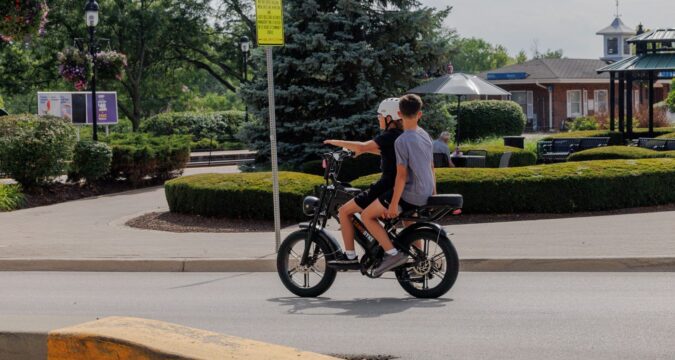
Oswego approves new regulations for e-bikes, e-scooters
The Oswego Village Board recently approved new regulations for e-bikes and e-scooters after numerous complaints from residents encountering riders who they said were moving at high speeds and in a reckless manner in town, village officials said.
In doing so, the village joined scores of other suburban municipalities enacting similar legislation in response to resident concerns about safety.
Oswego’s ordinance covers where e-scooters and e-bikes can be operated and by whom.
According to the ordinance, e-bicycles or e-scooters capable of traveling at more than 10 mph cannot be operated on sidewalks and are limited to bicycle paths and roadways. When on a roadway, operators are to follow all rules of the road, according to the ordinance.
“Many times, these vehicles are operated by children who do not possess the knowledge and skills to operate these vehicles in a safe manner and at high speed,” Oswego Police Chief Jason Bastin said in a previous presentation to trustees.
While officers are limited in enforcement due to state law limitations, communities can enact their own ordinances to address many of the issues concerning e-bikes and e-scooters, he said.
Under Illinois law, e-bikes, which are sometimes referred to as low-speed electric bicycles, are different from an electric motorcycle. E-bikes must have an electric motor of less than 750 watts, and are split into three classes.
Class 1 e-bikes have motors that only provide assistance when the rider is pedaling, whereas Class 2 e-bikes have an electric motor that cuts out when the brake is applied. Class 3 e-bikes, like Class 1, have a motor that stops when its rider stops pedaling.
Per the village’s ordinance, operators of Class 1, Class 2 and Class 3 e-bikes must be 16 years old or older. E-scooter operators must be at or above 18 years old in accordance with state law.
Violations of the village ordinance will be $75 for the first offense and $100 for a second offense, while a third offense carries a $150 fine with a maximum fine set at $750, officials said.
The approved ordinance is available on the Oswego website at: https://www.oswegoil.org/government/police/resources/e-bike-e-scooter-safety.
Linda Girardi is a freelance reporter for The Beacon-News.
https://www.chicagotribune.com/2026/01/01/oswego-approves-new-regulations-for-e-bikes-e-scooters/