Category: News
How the US captured Venezuelan leader Nicolás Maduro
WASHINGTON — After months of growing military pressure on Venezuelan President Nicolás Maduro, President Donald Trump ordered a brazen operation into the South American country to capture its leader and whisk him to the United States where his administration planned to put him on trial.
In a Saturday morning interview on “Fox and Friends Weekend,” Trump laid out the details of the overnight strike, after which he said Maduro and his wife, Cilia Flores, were flown by helicopter to a U.S. warship.
Maduro was in a ‘fortress,’ Trump says
Trump described Maduro as being “highly guarded” in a presidential palace that was “like a fortress,” although the Venezuelan leader was not able to get to a safe room.
American forces were armed with “massive blowtorches,” which they would have used to cut through steel walls had Maduro locked himself in the room, Trump said.
“It had what they call a safety space, where it’s solid steel all around,” Trump said. “He didn’t get that space closed. He was trying to get into it, but he got bum-rushed right so fast that he didn’t get into that. We were prepared.”
Part of that preparation, Trump said, included practicing maneuvers on a replica building.
“They actually built a house which was identical to the one they went into with all the same, all that steel all over the place,” Trump said.
‘We turned off all the lights’
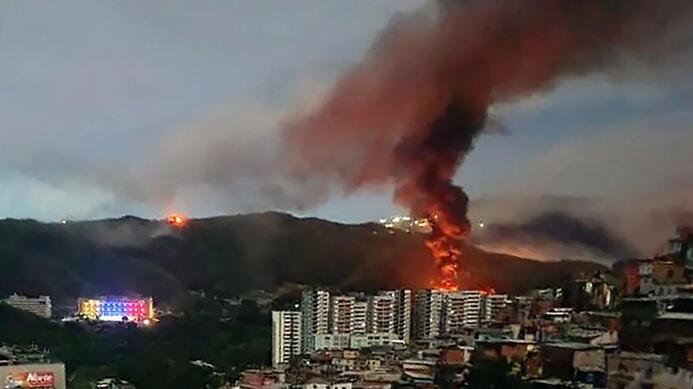
Trump said that the U.S. operation took place in darkness, although he did not detail how that had happened. He said the U.S. turned off “almost all of the lights in Caracas,” the capital of Venezuela.
“This thing was so organized,” he said. “And they go into a dark space with machine guns facing them all over the place.”
At least seven explosions were heard in Caracas. The attack lasted less than 30 minutes.
Venezuela’s vice president, Delcy Rodríguez, who under that country’s law takes power, said some Venezuelan civilians and members of the military were killed.
Trump says ‘a couple of guys injured’
Trump said a few U.S. members of the operation were injured but he believed no one was killed.
“A couple of guys were hit, but they came back and they’re supposed to be in pretty good shape,” he said.
The Republican president said the U.S. had lost no aircraft, but that a helicopter was “hit pretty hard.”
“We had to do it because it’s a war,” he added.
The weather was a factor
Trump said U.S. forces held off on conducting the operation for days, waiting for cloud cover to pass because the “weather has to be perfect.”
“We waited four days,” he said. “We were going to do this four days ago, three days ago, two days ago. And then all of a sudden it opened up and we said, go. And I’ll tell you, it’s, it was just amazing.”
Where is Maduro now?
Trump said that Maduro and Flores were flown by helicopter to a U.S. warship and would go on to New York to face charges. The Justice Department released an indictment accusing the pair of having an alleged role in a narco-terrorism conspiracy.
Months of escalating actions
The raid was a dramatic escalation from a series of strikes the U.S. military has carried out on what Trump has said were drug carrying boats in the Caribbean Sea and eastern Pacific Ocean since early September. There had been 35 known strikes that killed at least 115 people.
On Dec. 29, Trump said the U.S. struck a facility where boats accused of carrying drugs “load up.” The CIA was behind the drone strike at a docking area believed to have been used by Venezuelan drug cartels. It was the first known direct operation on Venezuelan soil since the U.S. began its strikes in September.
https://www.chicagotribune.com/2026/01/03/how-the-us-captured-nicols-maduro/

America’s New “Value Menu” Economy Should Worry You
America’s New “Value Menu” Economy Should Worry You
Authored by Peter Reagan,
The hottest restaurant items of 2025 aren’t gourmet burgers – they’re value meals. When eating out turns into a budgeting exercise, it reveals something deeper about inflation, the rising cost of living and the quiet erosion of our quality of life…
Restaurants have been a constant of human life for centuries, from roadside taverns serving weary travelers to dining rooms built to impress the wealthy.
Every city, town, and village has one. Even places too small for a post office usually have somewhere to eat.
Today, restaurants are so ubiquitous that many towns have at least one drive-through, letting people grab a meal without leaving their car and eat it on the way back to work.
Because the industry is everywhere (and fiercely competitive), restaurants are always searching for the next angle to pull people through the door and persuade them to spend.
That’s why chains closely track which menu items sell best.
What’s surprising isn’t that they do this. No, it’s what those top-selling items are in 2025.
The hot new trend: Reading menus from right to left
Often, what’s “hot” especially in fancy restaurants is exotic, disgusting, gross or just plain expensive. I once watched an episode of Bizarre Foods where Andrew Zimmern ate a cobra heart. I’ve seen restaurants in LA that serve desserts covered in gold foil (I didn’t order one).
Well, it seems that, at least for now, those days are behind us. According to Amelia Lucas with CNBC, the hottest menu items for 2025 are “value” items. That’s right, budget foods, the ones that cost less or give more calories for your buck, those were the hottest items year-round.
This trend may explain why McDonald’s no longer carries a gourmet burger (which I thought was surprisingly good). Well, it wasn’t a budget product, so it had to go.
And McDonald’s isn’t the only chain cutting down to the bare budget basics. Not by a long shot.
And I bet you can guess why restaurant chains are focusing on the low end of their pricing spectrum. Lucas tells us that “diners, particularly those who make less than $40,000 a year, have been eating out less frequently and spending less money when they do.”
In fact, according to Lauren Clifford at Lending Tree, 85% of Americans surveyed said that they have changed “their dining out habits.” Nearly three out of five said they’re eating out less often.
They just can’t afford it. And when they do eat out, they order off the value menu.
One way of describing it that I found interesting: They read restaurant menus from right to left, checking the price to see if they can afford something before even checking to see if they actually want to eat it. If you’ve ever tried to impress someone by taking them to a restaurant you couldn’t afford, then you’ve probably done this yourself… I know I have. But now people are doing this all the time.
Eating out, which used to be an affordable reward at the end of a long work week, a small luxury that most Americans could enjoy? No longer. Most families can’t afford the temporary respite from cooking dinner for the family and cleaning up the kitchen afterwards.
Now, it’s an exercise in budgeting to even see if they can afford to eat at that restaurant.
Life on the value side
It probably comes as no surprise that more and more people are choosing to eat at home more often than eating out. Sure, Dave Ramsey may be proud of them for doing that, but that’s little consolation when it’s not a choice but a necessity.
The change in how Americans are eating doesn’t stop at the move to focusing on value menu items and eating out less. It is also affecting how people are eating at home. Clifford notes that nearly nine out of ten Americans surveyed “are changing the way they shop to fight inflated grocery bills.” And over 60% of those surveyed said they were stressed about the possibility of not being able to buy enough groceries within the month before the survey.
That’s just appalling. How many mothers and fathers does that include who are scared that they won’t be able to feed junior and their precious little girl? Worse still, earlier this month I read that a shocking 60% of families report skipping meals to save money. Nearly half have delayed payments on such essential expenses as utilities and rent.
Back in November, a survey found that 1 in 5 Americans said they’d taken out a loan to pay bills or rent. (And almost half said they weren’t sure they could pay it back.)
People working hard now are having difficulty making ends meet, and people who’ve worked hard their entire lives are scared that they may have to just stop eating until their next check comes in.
I’m not telling you all this so we can just wring our hands about how much these people are suffering. Or so we can tut-tut and shake our heads and judge them for failing financially.
This trend is important for two reasons.
First, the big-picture, macroeconomic reason: Consumer spending makes up 2/3 of total GDP. When families cut back spending, it’s bad news for the economy. Often a sign of imminent recession.
Second, the small-picture, microeconomic reason: When we see bad things happen to others, it’s natural to ask how we can avoid such fates. So what can we do?
Failing to plan is planning to fail
It’s a scary situation to find yourself in if you have children and grandchildren to feed, especially if you’re retired, depending on a fixed income. Finding yourself in a situation in which you struggle to make the most basic purchases to maintain your standard of living (not even luxury) isn’t just stressful. It’s humiliating.
Most families aren’t in that situation because they weren’t willing to work hard. They aren’t in this position because they avoided responsibility, or made bad decisions. Most of them followed a conventional path. They just never realized how much inflation could quietly erode their purchasing power over time.
They’re struggling because no one ever taught them how inflation compounds over years and decades. Or how important it is to plan for rising prices, how futile it is to think about future spending in today’s dollars. And that blind spot is catching up with them today.
Sadly, many more Americans will likely find themselves in the same situation, struggling with basic expenses, because they never took steps to ensure a comfortable retirement. They never learned that one of the biggest pillars of a stable financial future is making sure that your savings can endure the inflation that never goes away.
You, however, are different. You’re seeing a first-hand example of how failing to plan for the future is planning to fail in the future. Hopefully it’s not too late to correct this trajectory. You can take action right now to secure your purchasing power by diversifying with inflation-resistant stores of wealth.
Tyler Durden
Sat, 01/03/2026 – 11:40
https://www.zerohedge.com/personal-finance/americas-new-value-menu-economy-should-worry-you
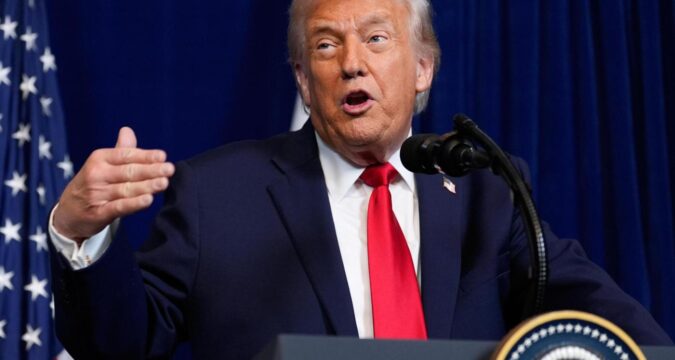
Watch live: President Donald Trump to address the nation after Nicolás Maduro captured
President Donald Trump is scheduled to speak Saturday after announcing that the president of Venezuela was captured.
US strikes Venezuela and says leader Nicolás Maduro has been captured and flown out of the country
Trump said on social media that the United States hit a “large-scale strike” early Saturday and flew Nicolás Maduro out of the country.
Trump is scheduled to speak from Palm Beach, Florida.
Wisconsin judge convicted of obstructing arrest of immigrant resigns
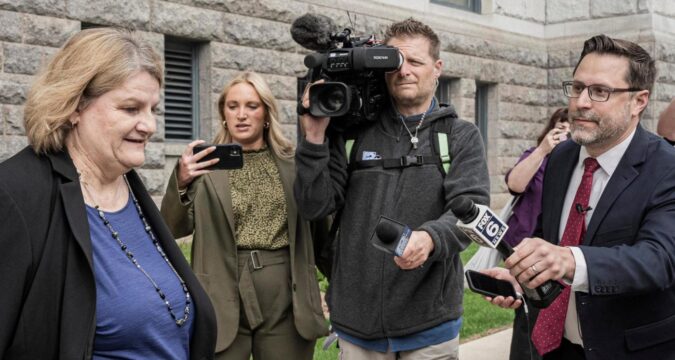
Embattled Wisconsin Judge Hannah Dugan, who was convicted of obstruction last month for helping an immigrant evade federal officers, has sent her resignation letter to the governor.
The letter was sent Saturday. Republicans had been making plans to impeach her ever since her Dec. 19 conviction.
Last April, federal prosecutors accused Dugan of distracting federal officers trying to arrest a Mexican immigrant outside her courtroom and leading the man out through a private door. A federal jury convicted her of felony obstruction.
The case against Dugan was highlighted by President Donald Trump as he pressed ahead with his sweeping immigration crackdown. Democrats insisted the administration was trying to make an example of Dugan to blunt judicial opposition to the operation.
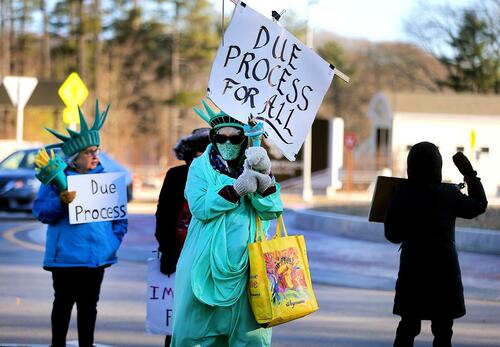
Democrats Now Claim They Are The “Real” American Patriots
Democrats Now Claim They Are The “Real” American Patriots
Leftists have never understood the phrase “If you can’t beat em’, join em'”. Instead, they believe that if they can’t defeat their political opponents in terms of logic, reason, morals, facts or the law, then their next best bet is to co-opt the enemy’s message and image without actually adopting their values..
Voters witnessed the first tinges of this strategy in 2024 when Kamala Harris claimed her campaign wasn’t woke (after years of saying Americans needed to be more woke) and Tim Walz pretended to be manly by talking about football and masculinity without knowing anything about either subject.
In 2025 going into 2026, however, the Democrats are taking their Talented Mr. Ripley routine to the next level. They don’t just want to compete with conservative messages, they are trying to steal the conservative identity by proclaiming themselves to be the “real” American patriots.
The new activist narrative (largely organized and funded by NGOs) runs with 1776 symbolism, claims that the US military is really on their side, argues that they are the true guardians of the constitution and that their revolution is one that the Founding Fathers would applaud.
In tandem with the “No Kings” protests, Dems like Jasmine Crockett argued that MAGA is “unpatriotic” and anti-constitution. She believes Democrats are the true patriots and that they are the barrier protecting Americans from “fascism.”
This theme has led to a number of protests which have abandoned woke symbols in favor of a carefully crafted “pro-America” costume. The theatrics often revolve around mass deportations of illegal aliens and lead to hilariously misguided grandstanding.
NEW: Anti-ICE activists used the 252nd anniversary of the Boston Tea Party to protest ICE and deportations.
Led by transgender and immigrant activists, they compared themselves to the United States’ Founding Fathers. After calling for ICE to leave Boston, they dumped chunks of… pic.twitter.com/EL6xuooq5p
— FRONTLINES TPUSA (@FrontlinesTPUSA) December 18, 2025
In a bizarre twist, leftists are proclaiming their patriotism by actively aiding a foreign invasion of the US. Democrat Rep. Hakeem Jeffries co-opted the words of Republican President Ulysses S. Grant as a strange justification for Democrat driven civil unrest, noting that “There are but two parties in America right now, patriots and traitors…” (conservatives, in his version of reality, being the traitors).
Hakeem Jeffries: “There are but two parties in America right now, patriots and traitors.”pic.twitter.com/oz5C7qSDVr
— Thomas Sowell Quotes (@ThomasSowell) December 16, 2025
Keep in mind, Democrat activists are the same people who have been celebrating the deconstruction of western culture for years and assert that the constitution is meaningless because it was “written by slave owners.”
In 2022 at the height of their pandemic frenzy, Democrats in blue states and blue cities widely supported a flurry of freedom crushing mandates and pushed hard for the creation of a vaccine passport system which would effectively destroy the Bill of Rights by taking away citizen access to the economy if they refused to be injected with an experimental jab.
That same year, a Heartland Institute and Rasmussen Reports national telephone and online survey found that 48% of voters favored President Joe Biden’s plan to impose a COVID-19 vaccine mandate on the employees of large companies and government agencies. The same survey showed that a disturbing number of Democrats also supported “Chinese-style” punishments for people who refused to take the jab.
Around 55% of Democrat voters were in favor of government enforced fines for the unvaccinated. Nearly 60% supported forced home confinement for the unvaccinated. 48% of Democrats were in favor of fines and prison time for anyone who publicly questioned the efficacy of the vaccines. Around 45% of Democrats supported the idea of confining the unvaccinated to “designated facilities” (covid camps) until they complied. 47% of Democrats favored the use of digital tracking for the unvaccinated.
Around 30% of progressive voters suggested taking children away from parents who refused to vaccinate. The Biden Administration and Democrats were exposed for violating constitutional law in their efforts to pressure social media companies to silence and censor conservative critics of covid policies (among other things).
Anyone who stood against the mandates was accused of being a threat to democracy and a potential terrorist. The Democrats initiated a propaganda war against US patriots; a war which they ultimately lost. Now, they want you to forget all about their many trespasses and accept their new image as “freedom fighters” saving the country from Trump’s tyrannical policies…which the majority of Americans voted for.
Tyler Durden
Sat, 01/03/2026 – 11:05
https://www.zerohedge.com/political/democrats-now-claim-they-are-real-american-patriots
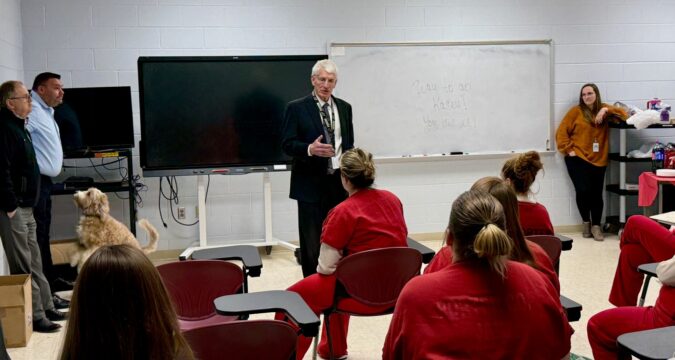
Porter County Jail’s addiction program continues despite state funding loss
The Porter County Jail lost grant funding for its longtime Chemical Dependency and Addictions program, but the clinic providing the program remained committed to making sure it continued and the Porter County Council approved the necessary funding, Sheriff Jeff Balon said in a release.
“The Porter County Jail will lose the state funding grant in 2026 due to cutbacks that paid for the NorthShore services and two salaries for case managers in the jail. However, NorthShore was able to remain committed to ensuring the jail programs were able to continue and the Porter County Council approved funding to pay for the salaries of the two case managers,” Balon said in the release.
Porter County Sheriff Jeff Balon. (Porter County Sheriff’s Department)
CDA is a 12-week substance use disorder treatment program for men and women that is facilitated by two counselors from NorthShore Health Centers. Participants attend class three days a week and learn how to develop skills to manage stress, anger, cravings and triggers.
CDA has been a staple of the county’s jail programs since the Sheriff’s Office moved to its current location in 2002. With just under 300 people graduating from the program in 2025, CDA has touched thousands of lives in 23 years, according to the release.
“CDA training is vital for the men and women who are incarcerated at the Porter County Jail. Substance use disorders are often tied to the actions that lead to incarceration. By having in-depth programs such as CDA, it assists the individuals in understanding the science of addiction, helps to develop practical coping skills to reduce relapse and impulsive decision-making, and it also helps the person recognize triggers that cause relapse,” Balon said in the release.
“CDA also provides a realistic path towards successful reentry into the community through various means. A person who learns the coping skills to recovery and reenters into the community has a higher success rate to a productive life after incarceration. In all, this will improve public safety by reducing repeat offenses, lowering overdose risk upon release and build healthier communities.”
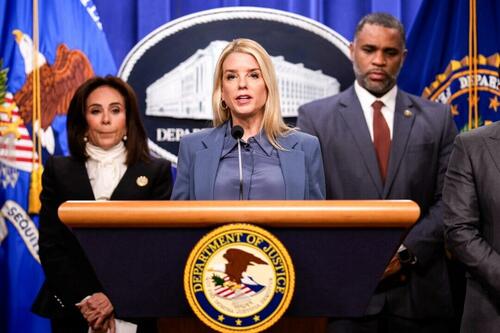
Maduro And His Wife Indicted In US Federal Court; To “Finally… Face Justice For His Crimes”
Maduro And His Wife Indicted In US Federal Court; To “Finally… Face Justice For His Crimes”
Authored by T.J.Muscaro via The Epoch Times,
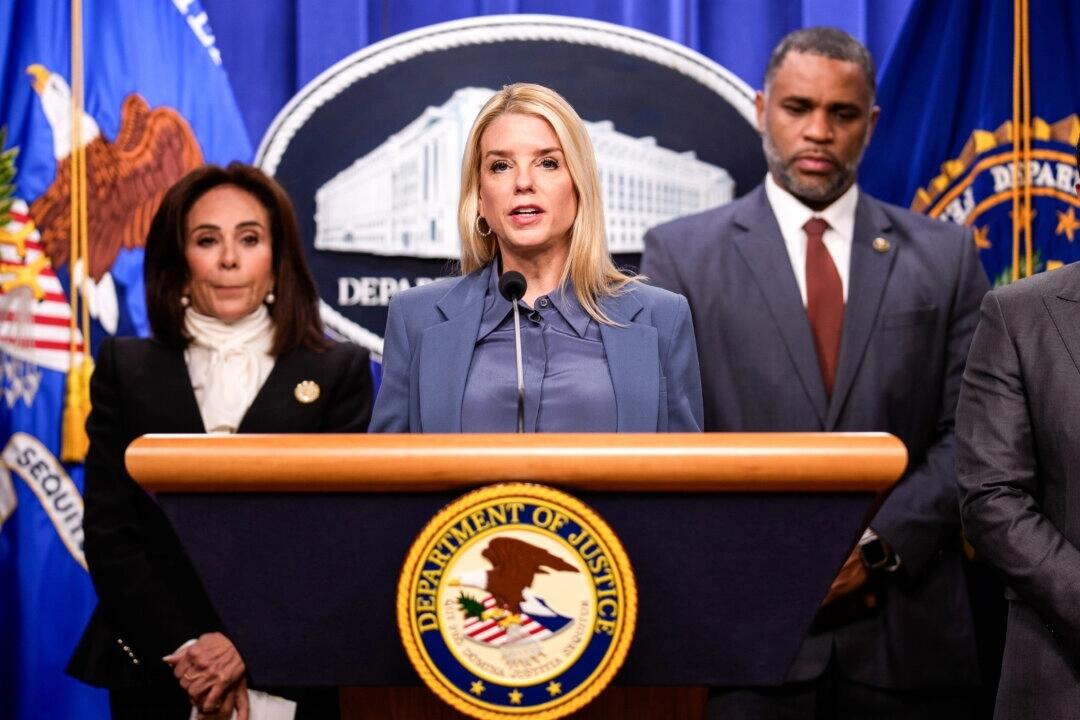
Nicolás Maduro and his wife, Cilia Flores, were indicted in the Southern District of New York, U.S. Attorney General Pam Bondi announced early on Jan. 3.
“Nicolás Maduro has been charged with Narco-Terrorism Conspiracy, Cocaine Importation Conspiracy, Possession of Machineguns and Destructive Devices, and Conspiracy to Possess Machineguns and Destructive Devices against the United States,” Bondi said on X.
“They will soon face the full wrath of American justice on American soil in American courts.”
Bondi issued the statement hours after Maduro and Flores were captured and extracted by U.S. armed forces in Caracas in the early hours of Jan. 3.
“On behalf of the entire U.S. DOJ, I would like to thank President [Donald] Trump for having the courage to demand accountability on behalf of the American People, and a huge thank you to our brave military who conducted the incredible and highly successful mission to capture these two alleged international narco traffickers.”
Bondi’s announcement follows statements made by Sen. Mike Lee (R-Utah) who said he was told by Secretary of State Marco Rubio that the strike on Venezuela’s capital was a means to protect law enforcement as they carried out an arrest warrant for Maduro.
Lee added that Rubio also told him that Maduro was “arrested by U.S. personnel to stand trial on criminal charges in the United States.”
Deputy Secretary of State Christopher Landau also emphasized that Maduro was expected to face legal action.
“The tyrant is gone,” Landau said on social media.
“He will now—finally—face justice for his crimes.”
In 2020, Maduro and 14 other Venezuelan officials were charged with narco-terrorism, corruption, drug trafficking and other charges in New York City, Miami, and Washington, D.C.
“The scope and magnitude of the drug trafficking alleged was made possible only because Maduro and others corrupted the institutions of Venezuela and provided political and military protection for the rampant narco-terrorism crimes described in our charges,” U.S. Attorney Geoffrey S. Berman said in the 2020 press release.
“As alleged, Maduro and the other defendants expressly intended to flood the United States with cocaine in order to undermine the health and wellbeing of our nation. Maduro very deliberately deployed cocaine as a weapon.”
The Epoch Times reached out to the Department of Justice to clarify whether Bondi was referring to this 2020 indictment or not.
Tyler Durden
Sat, 01/03/2026 – 10:30
America’s Low-Wage Workers Aren’t All High-School Dropouts
America’s Low-Wage Workers Aren’t All High-School Dropouts
Despite a strong labor market and rising nominal wages, there are still millions of people taking home less than $20 per hour on average.
Education plays a major role in determining earnings, but it does not guarantee high wages—or even employment.
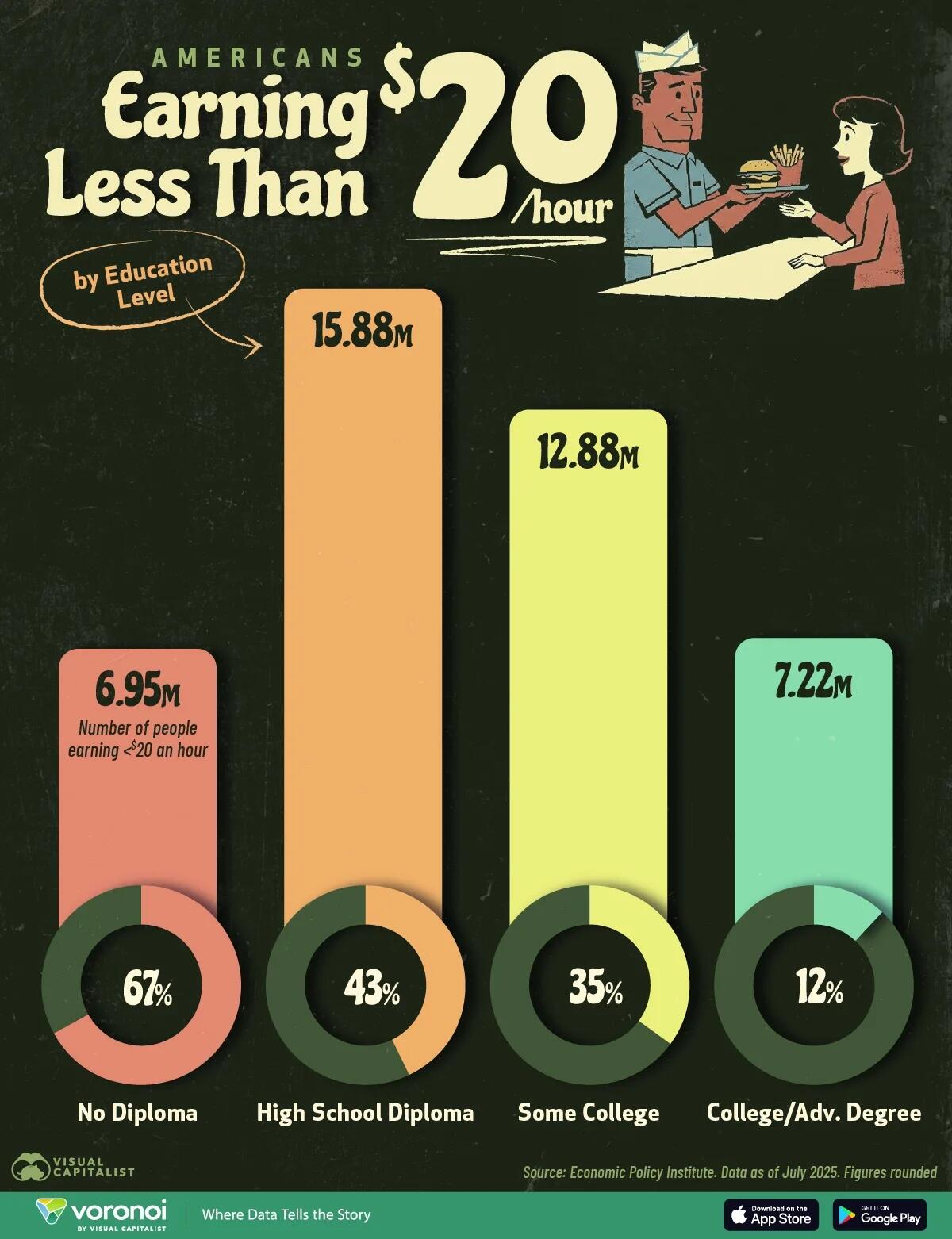
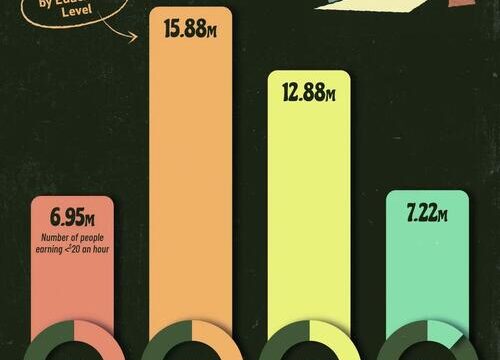
This chart, via Visual Capitalist’s Niccolo Conte, shows the share and number of U.S. low-wage workers earning less than $20 per hour by education level, using data from the Economic Policy Institute as of July 2025.
Low-Wage Work Is Concentrated Among Less-Educated Workers
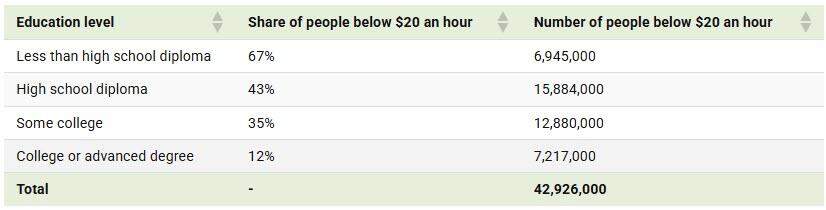
Workers without a high school diploma face the greatest exposure to low wages. Roughly two-thirds of this group—about 6.9 million people—earn less than $20 per hour, reflecting limited access to higher-paying occupations and fewer opportunities for advancement.
The table below breaks down low-wage workers by education level:
Among workers whose highest education is a high school diploma, 43% earn under $20 per hour. This group represents the largest number of low-wage workers overall, totaling nearly 15.9 million people.
Even some college education offers only partial protection. More than one-third of workers with some college (but no completed degree) earn below the $20 threshold, amounting to 12.9 million workers.
College Degrees Don’t Eliminate Low Wages
Higher education significantly lowers the likelihood of earning under $20 per hour, but it does not eliminate it. About 12% of workers with a college or advanced degree, roughly 7.2 million people, still fall below this pay level.
Overall, while education remains one of the strongest determinants of earnings, income outcomes depend on various factors, including industry mix, regional costs of living, and labor market conditions.
If you found this interesting, explore more labor market and income visuals on Voronoi, including U.S. States With the Most Low-Wage Workers.
Tyler Durden
Sat, 01/03/2026 – 09:55
https://www.zerohedge.com/personal-finance/americas-low-wage-workers-arent-all-high-school-dropouts
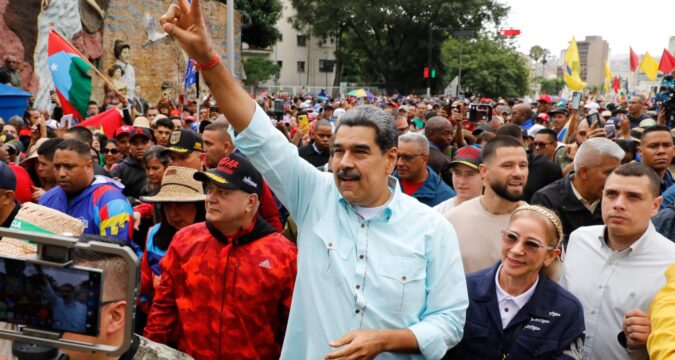
A timeline of what led to Nicolás Maduro’s capture
President Donald Trump had long threatened that he could order military strikes on targets on Venezuelan territory after months of attacks on boats accused of carrying drugs from the South American country. President Nicolás Maduro of Venezuela said the U.S. military operations were a thinly veiled effort to oust him from power.
On Saturday, the U.S. conducted a “large-scale strike” against Venezuela and said that Maduro and his wife, Cilia Flores, had been captured and flown out of the country. Trump announced the operation on social media hours after the attack. The Venezuelan government called it an “imperialist attack” and urged citizens to take to the streets.
Attorney General Pam Bondi said Maduro and Flores, would face charges after an indictment in New York.
Before the escalation, there had been 35 known strikes against alleged drug smuggling boats in South American waters since early September that killed at least 115 people, according to announcements from the Republican administration.
The U.S. had sent a fleet of warships to the region, the largest buildup of forces in generations.
The White House said Washington was in “armed conflict” with drug cartels to halt the flow of narcotics into the United States, while U.S. officials alleged that Maduro supported the international drug trade.
Here is a timeline of the U.S. military actions and related developments:
Jan. 20, 2025
Trump signs an executive order that paved the way for criminal organizations and drug cartels to be named “foreign terrorist organizations.” They included Tren de Aragua, a Venezuelan street gang.
U.S. intelligence agencies have disputed Trump’s central claim that Maduro’s administration was working with Tren de Aragua and orchestrating drug trafficking and illegal immigration into the U.S.
Feb. 20
The Trump administration formally designated eight Latin American crime organizations as foreign terrorist organizations.
The label is normally reserved for groups such as a-Qaida or the Islamic State that use violence for political ends, and not for profit-focused crime rings.
Aug. 19
The U.S. military deployed three guided-missile destroyers to the waters off Venezuela.
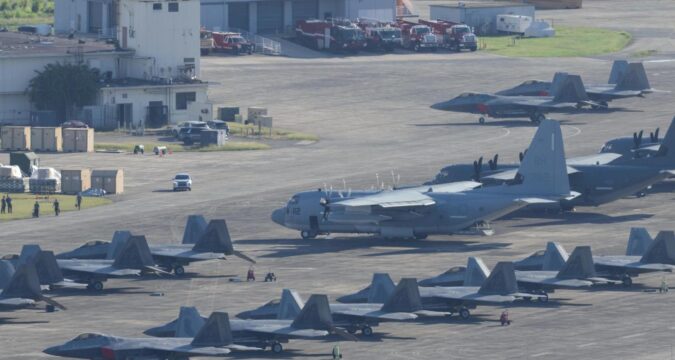
The naval force in the Caribbean grew within weeks to include three amphibious assault ships and other vessels, carrying about 6,000 sailors and Marines and a variety of aircraft.
The U.S. sent F-35 fighter jets to Puerto Rico in September, while a Navy submarine carrying cruise missiles operated off South America.
Sept. 2
The U.S. carried out its first strike against what Trump said was a drug-carrying vessel that departed from Venezuela and was operated by Tren de Aragua.
Trump said all 11 people on the boat were killed. He posted a short video clip of a small vessel appearing to explode in flames.
Sept. 10
In a letter to the White House, Democratic senators said the administration had provided “no legitimate legal justification” for the strike.
Sen. Jack Reed of Rhode Island, the top Democrat on the Senate Armed Services Committee, said the U.S. military was not “empowered to hunt down suspected criminals and kill them without trial.”
Sept. 15
The U.S. military carried out its second strike against an alleged drug boat, killing three people.
Asked what proof the U.S. had that the vessel was carrying drugs, Trump told reporters that big bags of cocaine and fentanyl were spattered all over the ocean. Images of what Trump described were not released by the military or the White House.
Sept. 19
Trump said the U.S. military carried out its third fatal strike against an alleged drug-smuggling vessel. Several senators and human rights groups continued to question the legality of the strikes, describing them as a potential overreach of executive authority.
Oct. 2
Trump declared drug cartels to be unlawful combatants and said the U.S. was now in an “armed conflict” with them, according to an administration memo obtained by The Associated Press.
The memo appeared to represent an extraordinary assertion of presidential war powers and drew criticism from some lawmakers, including Republican Sen. Rand Paul of Kentucky.
Oct. 3
Defense Secretary Pete Hegseth said he ordered a fourth strike on a small boat he accused of carrying drugs.
Oct. 8
Senate Republicans voted down legislation that would have required the president to seek authorization from Congress before further military strikes.
Oct. 14
Trump announced the fifth strike against a small boat accused of carrying drugs, saying it killed six people.
Oct. 15
Trump confirmed he has authorized the CIA to conduct covert operations inside Venezuela and said he was weighing carrying out land operations in the country.
He declined to say whether the CIA has authority to take action against Maduro.
Oct. 16
The Navy admiral who oversaw military operations in the region said he will retire in December.
Adm. Alvin Holsey became leader of U.S. Southern Command only the previous November, overseeing an area that encompasses the Caribbean and waters off South America. Such postings typically last three years to four years.
Oct. 16
Trump said the U.S. struck a sixth suspected drug-carrying vessel in the Caribbean, killing two people and leaving two survivors who were on the semisubmersible craft.
The president later said the survivors would be sent to Ecuador and Colombia, their home countries, “for detention and prosecution.” Repatriation avoided questions about what their legal status would have been in the U.S. justice system.
Oct. 17
The U.S. military attacked a seventh vessel that Hegseth said was carrying “substantial amounts of narcotics” and associated with a Colombian rebel group, the National Liberation Army, or ELN. Three people are killed.
Oct. 20
Washington Rep. Adam Smith, top Democrat on the House Armed Services Committee, called for a hearing on the boat strikes.
“Never before in my over 20 years on the committee can I recall seeing a combatant commander leave their post this early and amid such turmoil,” Smith said in a statement of Holsey’s impending departure. “I have also never seen such a staggering lack of transparency on behalf of an Administration and the Department to meaningfully inform Congress on the use of lethal military force.”
Oct. 21
Hegseth said the U.S. military launched its eighth strike against an alleged drug-carrying vessel, killing two people in the eastern Pacific.
The attack was an expansion of the military’s targeting area to the waters off South America where much of the cocaine from the world’s largest producers is smuggled.
Oct. 22
Hegseth announced the ninth strike, another in the eastern Pacific, saying three men are killed.
Oct. 24
Hegseth ordered the U.S. military’s most advanced aircraft carrier, the USS Gerald R. Ford, to the region in a significant escalation of military firepower.
Oct. 24
Hegseth said the military conducted the 10th strike on a suspected drug-running boat, leaving six people dead.
Oct. 27
Hegseth said three more strikes were carried out in the eastern Pacific, killing 14 people and leaving one survivor.
Hegseth said Mexican authorities “assumed responsibility for coordinating the rescue” of the sole survivor, who was presumed dead after Mexico suspended its search.
Oct. 29
Hegseth said the U.S. military carried out another strike on a boat he said was carrying drugs in the eastern Pacific, killing all four people aboard in the 14th attack.
Oct. 29
Virginia Sen. Mark Warner, the ranking Democrat on the Senate Intelligence Committee, said the administration briefed Republicans, but not Democrats, on the boat strikes.
The Senate at the time was facing a potential vote on a war powers resolution that would have prohibited strikes in or near Venezuela without congressional approval.
Oct. 31
U.N. human rights chief Volker Türk called for an investigation into the strikes, in what appeared to be the first such condemnation of its kind from a U.N. organization.
Ravina Shamdasani, a spokeswoman for Türk’s office, relayed his message at a briefing: “The U.S. must halt such attacks and take all measures necessary to prevent the extrajudicial killing of people aboard these boats.”
Nov. 1
Hegseth announced the 15th known strike, saying three people were killed.
Nov. 4
In the 16th known strike, Hegseth posted on social media that two people were killed aboard a vessel in the eastern Pacific.
Nov. 6
Hegseth announced the 17th known strike, which killed three people.
Senate Republicans voted to reject legislation that would have limited Trump’s ability to order an attack on Venezuelan soil without congressional authorization. Lawmakers from both parties had demanded more information on the strikes, but Republicans appeared more willing to give Trump leeway to continue his buildup of naval forces.
Nov. 9
The U.S. military struck two vessels in the eastern Pacific, killing six people, according to an announcement from Hegseth the following day.
Nov. 10
The 20th known strike on a boat accused of transporting drugs killed four people in the Caribbean, according to a social media post from the U.S. military’s Southern Command.
Nov. 11
Venezuela’s government launched what it said was a “massive” mobilization of troops and volunteers for two days of exercises prompted by the U.S. military buildup.
Defense Minister Vladimir Padrino López asserted that Venezuela’s military was “stronger than ever in its unity, morale and equipment.”
Nov. 15
Three people were killed after the U.S. military conducted its 21st strike on an alleged drug-smuggling boat in the eastern Pacific, according to a post from Southern Command a day later.
Nov. 16
The Ford arrived in the Caribbean, a major moment in the Trump administration’s show of force.
The aircraft carrier’s arrival brought the total number of troops in the region to around 12,000 on nearly a dozen Navy ships in what Hegseth said was “Operation Southern Spear.”
Nov. 16
Trump said the U.S. “ may be having some discussions ” with Maduro and “Venezuela would like to talk,” without offering details.
“I’ll talk to anybody,” Trump said. “We’ll see what happens.”
Dec. 4
Adm. Frank “Mitch” Bradley appeared for closed-door classified briefings at the Capitol as lawmakers began investigating the strikes. The investigation started after reports that Bradley ordered a follow-on attack that killed the survivors of the first strike on Sept. 2 to comply with Hegseth’s demands.
Sen. Tom Cotton, R-Ark., later told reporters that “Bradley was very clear that he was given no such order, to give no quarter or to kill them all.”
Democrats said they found the video of the entire attack disturbing.
Smith said the survivors were “basically two shirtless people clinging to the bow of a capsized and inoperable boat, drifting in the water — until the missiles come and kill them.”
Dec. 4
Four people were killed in the 22nd strike on an alleged drug-smuggling boat in the eastern Pacific, according to a post from Southern Command.
Dec. 10
The U.S. seized an oil tanker off the coast of Venezuela after the ship left that country with about 2 million barrels of heavy crude.
Attorney General Pam Bondi said the tanker was involved in “an illicit oil shipping network supporting foreign terrorist organizations.” Venezuela’s government said the seizure was “a blatant theft and an act of international piracy.”
Dec. 15
The U.S. military struck three alleged drug-smuggling boats, killing eight people, in the eastern Pacific Ocean, Southern Command announced.
Dec. 16
Hegseth said the Pentagon will not publicly release unedited video of the Sept. 2 strike that killed two survivors, even as questions mounted in Congress about the attack and the overall campaign near Venezuela.
Dec. 16
Trump said he was ordering a blockade of all “sanctioned oil tankers” going into and out of Venezuela, a move that seemed designed to put a tighter chokehold on the South American country’s oil-dependent economy.
Trump alleged that Venezuela was using oil to fund drug trafficking, terrorism and other crimes. He pledged to continue the military buildup until Venezuela returned to the U.S. oil, land and assets, though it was unclear why Trump felt the U.S. had a claim.
Dec. 17
The U.S. military said it attacked a boat accused of smuggling drugs in the eastern Pacific Ocean, killing four people.
House Republicans rejected a pair of Democratic-backed resolutions that would have put a check on Trump’s power to use military force against drug cartels and Venezuela. They were the first votes in the House after Senate Republicans previously voted down similar war powers resolutions.
Dec. 18
The U.S. military said it conducted two more strikes against boats that were allegedly smuggling drugs in the eastern Pacific, killing five people.
Dec. 20
Homeland Security Secretary Kristi Noem said the U.S. Coast Guard, with help from the Defense Department, stopped a second oil tanker off the coast of Venezuela.
Dec. 22
Trump confirmed that the U.S. Coast Guard was chasing another oil tanker that the administration described as part of the “dark fleet.”
The U.S. military said it attacked a boat accused of smuggling drugs in the eastern Pacific Ocean, killing four people.
Dec. 29
Trump told reporters that the U.S. struck a facility where boats accused of carrying drugs “load up.” He declined to say whether the U.S. military or the CIA carried out the strike on the dock or where it occurred. He did not confirm it happened in Venezuela.
The U.S. military said it attacked a boat accused of smuggling drugs in the eastern Pacific Ocean, killing two people.
Dec. 30
The CIA was behind the drone strike at a docking area believed to have been used by Venezuelan drug cartels, according to two people familiar with details of the classified operation who requested anonymity to discuss it.
It was the first known direct operation on Venezuelan soil since the U.S. began strikes in September. Venezuelan officials have not acknowledged the strike.
Dec. 30
The U.S. military struck three more boats that were allegedly smuggling drugs, killing three people in the first boat while people from the other two boats jumped overboard and may have survived, Southern Command announced the following day.
Dec. 31
The U.S. imposed sanctions on four companies operating in Venezuela’s oil sector and designated four additional oil tankers as blocked property and part of the larger shadow fleet that was evading U.S. sanctions on Venezuela.
Dec. 31
The U.S. military said it attacked two more boats, killing five people who were allegedly smuggling drugs along known trafficking routes.
Jan. 1, 2026
Maduro, in an interview on state television that aired on New Year’s Day, said Venezuela was open to negotiating an agreement with the United States to combat drug trafficking. He declined to comment on the CIA-led strike and reiterated that the U.S. wanted to force a government change in Venezuela and gain access to its vast oil reserves.
Jan. 3
The U.S. conducted a “large-scale strike” across Caracas, the capital of Venezuela, captured Maduro and Flores and flew them out of the country. Maduro and Flores would face charges after an indictment in New York, according to Attorney General Pam Bondi.
Maduro was indicted in 2020 on “narco-terrorism” conspiracy charges, but it was not previously known that Flores had been.
https://www.chicagotribune.com/2026/01/03/a-timeline-of-what-led-to-nicolas-maduros-capture/
Russia, Iran, China Outraged At US ‘Flagrant Armed Aggression’ On Venezuela As EU Shrugs
Russia, Iran, China Outraged At US ‘Flagrant Armed Aggression’ On Venezuela As EU Shrugs
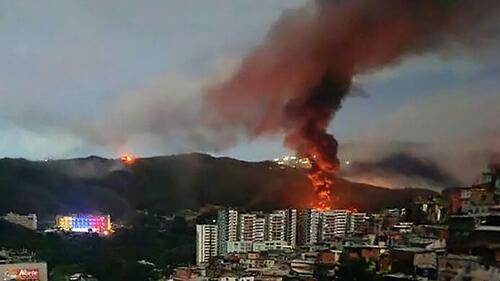
The international reaction to America’s bombing campaign against Venezuela, during which time US special forces did a grab and nab of longtime President Nicolás Maduro has been predictably mixed.
Global leftist leaders condemned a US attack in Venezuela that led to the capture of Nicolas Maduro in Caracas.
Brazil, Russia, Colombia, Mexico, and Cuba rejected the US military action, with some calling for a meeting of the United Nations Security Council.
While Europe has issued statements of placid acceptance – and also generally a ‘wait and see’ type approach – the reaction from BRICS countries and Washington rivals has been one of horror and swift condemnation.
First Russia: Moscow quickly condemned the blatant “act of armed aggression” against a sitting head of state and Russian ally, the Russian Ministry of Foreign Affairs said. “In the current situation, it is important … to prevent further escalation and to focus on finding a way out of the situation through dialogue,” the ministry added.
“The pretexts used to justify these actions are untenable,” Moscow stressed. “Russia reaffirms its solidarity with the Venezuelan people.”
“Venezuela must be guaranteed the right to determine its own destiny without any destructive, military intervention from outside.
“We reaffirm our solidarity with the Venezuelan people and our support for its leadership’s policy of defending the country’s national interests and sovereignty,” it added.
Second Iran: Tehran itself has been in Trump’s crosshairs this week against ongoing protests focused on economic hardship in the country, amid crippling US-led sanctions and coming off a recent, brief war with Israel.
Supreme Leader Ayatollah Ali Khamenei wrote on X, “What’s important is when one realizes an enemy wants to force something on one’s govt. or nation with false claims, they must stand firmly against that enemy.”
At this moment, however, there have been scant signs of any real fight or resistance on the part of the Venezuelan Army, suggesting this could have had help from the inside, akin to a coup which had the support of the US.
“We won’t give in to them. With reliance on God & confidence in the people’s support, we’ll bring the enemy to its knees,” Iran’s top cleric added.
EU leadership shrugs after long lecturing the world on the so-called “rules-based order”…
Unreal that the EU can’t even as much as condemn such a textbook act of aggression, after spending the past 3 years lecturing the world on the need to defend the inviolability of these principles 🤷♂️
Ukraine set aside, think about the precedent this sets for Greenland… https://t.co/DHalVJfChC
— Arnaud Bertrand (@RnaudBertrand) January 3, 2026
Iran’s Ministry of Foreign Affairs separately said it “strongly condemns the American military attack on Venezuela and the flagrant violation of the national sovereignty and territorial integrity of the country.”
As for China, we know what they think, given the timing is a hugely symbolic shot across Beijing’s bow by Trump:
Venezuelan President Nicolas Maduro received a Chinese government representative at the presidential palace in Caracas on Friday, hours before US President Donald Trump claimed Maduro had been captured following American military strikes.
Maduro met Qiu Xiaoqi, special representative of the Chinese government on Latin American affairs, at the Miraflores Palace.
“I had a pleasant meeting with Qiu Xiaoqi, Special Envoy of President Xi Jinping,” Maduro said on Telegram. “We reaffirmed our commitment to the strategic relationship that is progressing and strengthening in various areas for building a multipolar world of development and peace.”
Insane timing…
China went to meet with Maduro today to discuss joining forces, then Trump captures Maduro the same day.
Savage.
In fact, the Chinese delegation is still in Venezuela.
Trump captures Maduro and sends a powerful message to Xi and China at the same time.
Savage. pic.twitter.com/xpjOOidNp3
— Mila Joy (@Milajoy) January 3, 2026
Mexico’s reaction: “The Mexican government strongly condemns and rejects the military actions carried out unilaterally in recent hours by the armed forces of the United States of America against targets in the territory of the Bolivarian Republic of Venezuela, in clear violation of Article 2 of the Charter of the United Nations,” according to the Ministry of Foreign Affairs.
“Mexico emphatically reiterates that dialogue and negotiation are the only legitimate and effective means of resolving existing differences, and therefore reaffirms its willingness to support any efforts to facilitate dialogue, mediation, or accompaniment that contribute to preserving regional peace and avoiding confrontation.”
UK Prime Minister Kier Starmer shrugs, using an ambiguous and caution statement: “I want to establish the facts first. I want to speak to President Trump. I want to speak to allies. I can be absolutely clear that we were not involved … and I always say and believe we should all uphold international law,” Starmer said.
Brazilian President Luiz Inacio Lula da Silva said the strike in Venezuela was a “serious affront” to the country’s sovereignty.
The bombings on Venezuelan territory and the capture of its president cross an unacceptable line. These acts represent a most serious affront to Venezuela’s sovereignty and yet another extremely dangerous precedent for the entire international community,” he wrote on X.
” Attacking countries, in flagrant violation of international law, is the first step toward a world of violence, chaos, and instability, where the law of the strongest prevails over multilateralism.”
“The Government of Colombia rejects the aggression against the sovereignty of Venezuela and of Latin America,” Colombian President Gustavo Petro wrote Saturday on X, translated from Spanish.
“Internal conflicts between peoples are resolved by those same peoples in peace. That is the principle of the self-determination of peoples, which forms the foundation of the United Nations system. I invite the Venezuelan people to find the paths of civil dialogue and their unity. Without sovereignty, there is no nation. Peace is the way, and dialogue between peoples is fundamental for national unity. Dialogue and more dialogue is our proposal,” he added.
He called on the United Nations to “respond vigorously” to the attacks.
Cuban President Miguel Díaz-Canel Bermúdez, the first secretary of the Communist Party of Cuba, said the operation to capture Maduro was a “criminal attack,” adding that “our zone of peace is being brutally assaulted.”
* * *
The capture of Nicolas Maduro is likely to have a significant impact across the region, with some leaders welcoming the intervention and others expressing concern over instability and potential migration.
Great powers make the rules up as they go – the US has a long history of it, doing it eg in Panama and Grenada but even more so under Trump. Russia and China ditto. Surely you don’t think this has a serious impact on China’s go/no go decision on Taiwan?
— Mark Urban (@MarkUrban01) January 3, 2026
Tyler Durden
Sat, 01/03/2026 – 09:20