Category: News

China’s Unitree Unveils Robot With “Human-Like Physique” That Can Outrun Most People
China’s Unitree Unveils Robot With “Human-Like Physique” That Can Outrun Most People
The race for bipedal humanoid robot intelligence has certainly been in the news, with robots receiving “AI brains” that have already brought them onto factory floors and will likely become more visible in the public world in the coming years (see UBS).
But there is another race that Chinese robot maker Unitree is simultaneously part of, and that is actual speed.
In recent days, Unitree posted a video on X titled “Unitree Breaks the World Record Again,” indicating that one of its humanoid robots now has the “physique of an ordinary person, running at a world champion’s speed.”
Unitree said the robot completed a sprint at 10 meters per second, or 22.4 mph. For context, the fastest human sprint speed ever recorded was Usain Bolt’s 27.8 mph during his 100-meter world record run at the 2009 World Championships in Athletics.
10m/s!! Unitree Breaks the World Record Again😊
With the physique of an ordinary person, running at a world champion’s speed!
Leg length: 0.4+0.4=0.8m, body weight: approx. 62kg!
H1: “Give me one more chance, give the world one more honor!” pic.twitter.com/Fk4Zo9zKit
— Unitree (@UnitreeRobotics) April 11, 2026
Related:
Will Chinese Robot Maker Unitree’s Shanghai IPO Spark A Humanoid-Investing Bubble
Combine intelligence with speed, and the world is certainly racing toward the rise of robots that could one day chase down a human or even appear on the battlefield.
That’s likely already happened.
Tyler Durden
Wed, 04/15/2026 – 19:40
China’s Unitree Unveils Robot With “Human-Like Physique” That Can Outrun Most People
China’s Unitree Unveils Robot With “Human-Like Physique” That Can Outrun Most People
The race for bipedal humanoid robot intelligence has certainly been in the news, with robots receiving “AI brains” that have already brought them onto factory floors and will likely become more visible in the public world in the coming years (see UBS).
But there is another race that Chinese robot maker Unitree is simultaneously part of, and that is actual speed.
In recent days, Unitree posted a video on X titled “Unitree Breaks the World Record Again,” indicating that one of its humanoid robots now has the “physique of an ordinary person, running at a world champion’s speed.”
Unitree said the robot completed a sprint at 10 meters per second, or 22.4 mph. For context, the fastest human sprint speed ever recorded was Usain Bolt’s 27.8 mph during his 100-meter world record run at the 2009 World Championships in Athletics.
10m/s!! Unitree Breaks the World Record Again😊
With the physique of an ordinary person, running at a world champion’s speed!
Leg length: 0.4+0.4=0.8m, body weight: approx. 62kg!
H1: “Give me one more chance, give the world one more honor!” pic.twitter.com/Fk4Zo9zKit
— Unitree (@UnitreeRobotics) April 11, 2026
Related:
Will Chinese Robot Maker Unitree’s Shanghai IPO Spark A Humanoid-Investing Bubble
Combine intelligence with speed, and the world is certainly racing toward the rise of robots that could one day chase down a human or even appear on the battlefield.
That’s likely already happened.
Tyler Durden
Wed, 04/15/2026 – 19:40
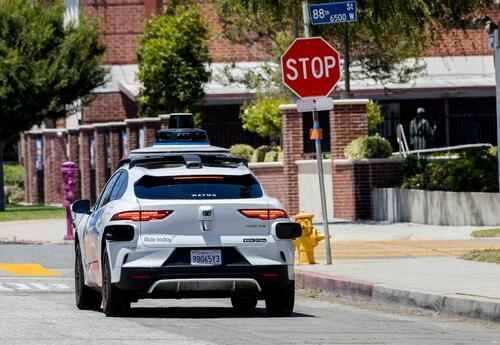
Waymo Partners With Waze To Use Self-Driving Cars To Track Potholes
Waymo Partners With Waze To Use Self-Driving Cars To Track Potholes
Authored by Dylan Morgan via The Epoch Times (emphasis ours),
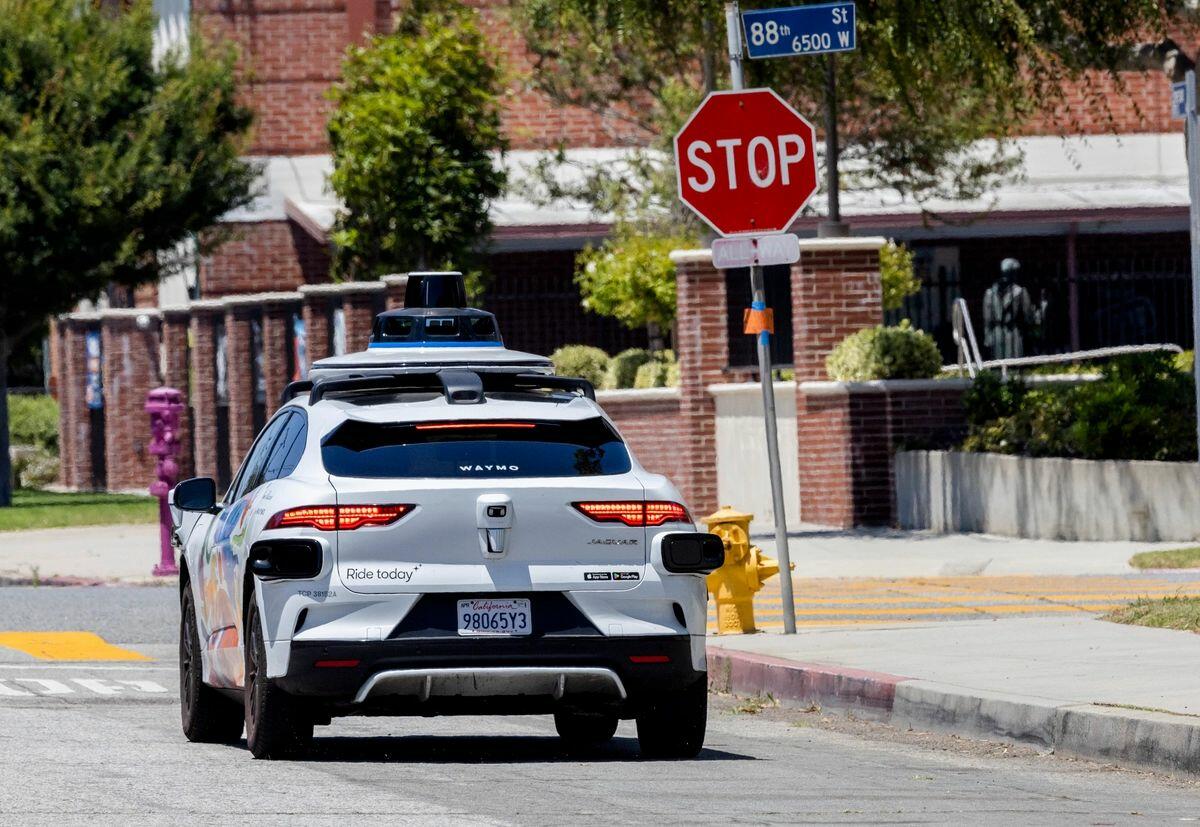
Two Alphabet-owned companies, Waymo and Waze, announced on April 9 that they will team up to detect potholes and share that information with local government agencies to help get them filled more efficiently.
“Waymo is already making roads safer where we operate,“ said Arielle Fleisher, the company’s policy development and research manager, in a statement. ”We want to build on the safety benefits of our service by partnering with organizations and city officials to help improve the infrastructure we all depend on.”
Waymo, which started out as a Google self-driving car project in 2009 and spun out into its own company under Alphabet in 2016, said the pothole program was inspired from feedback it gathered from city officials over the years and is intended to fill reporting gaps.
Waymos are covered with cameras and sensors. The company said it will use its feedback systems to detect potholes and share that information through Waze’s platform, which users will be able to verify.
Waze, a GPS navigation app that lets drivers alert others with live updates, was acquired by Alphabet-subsidiary Google in 2013 for around $1.1 billion.
“This pilot program with Waymo adds another source of data to that effort, giving cities a clearer picture of road conditions through our Waze for Cities platform. It’s a great example of how working together helps our community and makes our roads better for everyone,” Waze Strategic Partner Manager Andrew Stober said.
Waze and Waymo will launch the pilot program in five areas—the San Francisco Bay Area, where the two companies are headquartered in Mountain View, as well as the Los Angeles, Phoenix, Austin, and Atlanta metro areas.
“We appreciate the collaboration with Waymo and Waze as we explore how technology can help identify issues like potholes faster so we can respond more efficiently,” San Jose Mayor Matt Mahan said in a statement. “We’re always looking for innovative ways to deliver better services for residents.”
Waymo said it has already identified around 500 potholes in these locations and will work to expand the program to more cities it serves.
Alongside these five locations, Waymo also operates in Dallas, Houston, Miami, Nashville, Orlando, and San Antonio.
The Nashville location is the newest addition, as Waymo started allowing users in Nashville on a rolling basis on April 7. The company also announced in February that it will expand to Charlotte, Chicago, and Sacramento, where it has released its fleet to begin gathering data on Sacramento’s streets.
Tyler Durden
Wed, 04/15/2026 – 19:15
https://www.zerohedge.com/technology/waymo-partners-waze-use-self-driving-cars-track-potholes

Build It, And They Will Come? Not The Case At Baltimore’s Harbor East Luxury Tower
Build It, And They Will Come? Not The Case At Baltimore’s Harbor East Luxury Tower
The Four Seasons Private Residences in Harbor East, situated in crime-ridden Baltimore City and serving as a flagship luxury development project tied to the Inner Harbor’s waterfront revitalization, was originally envisioned as an ultra-luxury tower designed to attract the rich and powerful. The premise for building the tower, which opened in 2017, was very simple: build it, and they will come.
The Paterakis family, one of the most prominent business and real estate families in the Baltimore metro area, best known for their baking empire and for transforming part of the city’s waterfront over the decades, backed the Four Seasons Private Residences project, with one-bedroom condos hitting the market in 2017 for $1 million.
Yet the saying “build it, and they will come” didn’t play out here, as the latest report from local outlet Baltimore Banner says a third of the 62 condos “have never sold,” and the current listing price now “starts in the $500,000s.”
Three investors told the local outlet that “the true price is even lower” for these one-bedroom units. That would suggest a 50% collapse in value over just nine years since the 2017 debut.
The outlet continued:
The trio scooped up 11 units at the Four Seasons last year. Now they’re suing Harbor East Parcel D-Residential LLC in Baltimore Circuit Court, accusing the seller of artificially inflating the sale price listed in public records. Harbor East Parcel-D Residential is the limited liability company used by the Paterakis family and other investors to own and sell the condos. George Philippou, a son-in-law of Paterakis Sr., signs deeds and other property records on behalf of the company.
David J. Shuster, an attorney for the limited liability company, said in a statement that the claims in the lawsuit are without merit and declined to comment further, citing the ongoing litigation. The Four Seasons, a Toronto-based company that operates resorts, hotels and condos around the world, did not respond to a request for comment.
Paterakis’ bad bet on the ultra-luxury tower in Harbor East appears to be following a similar pattern to other high-profile redevelopment projects around the Inner Harbor, including Under Armor CEO Kevin Plank’s Baltimore Peninsula project, which has struggled.
Let’s not forget that the actual Inner Harbor is virtually a ghost town:
Downtown Baltimore is witnessing a troubling trend as businesses continue to close, leaving employees without jobs and residents without essential services.
The latest casualty is the Sheraton Hotel, a key fixture of the Inner Harbor, which has left 69 employees jobless.… pic.twitter.com/PagIL8uW9J
— FOX Baltimore (@FOXBaltimore) January 17, 2026
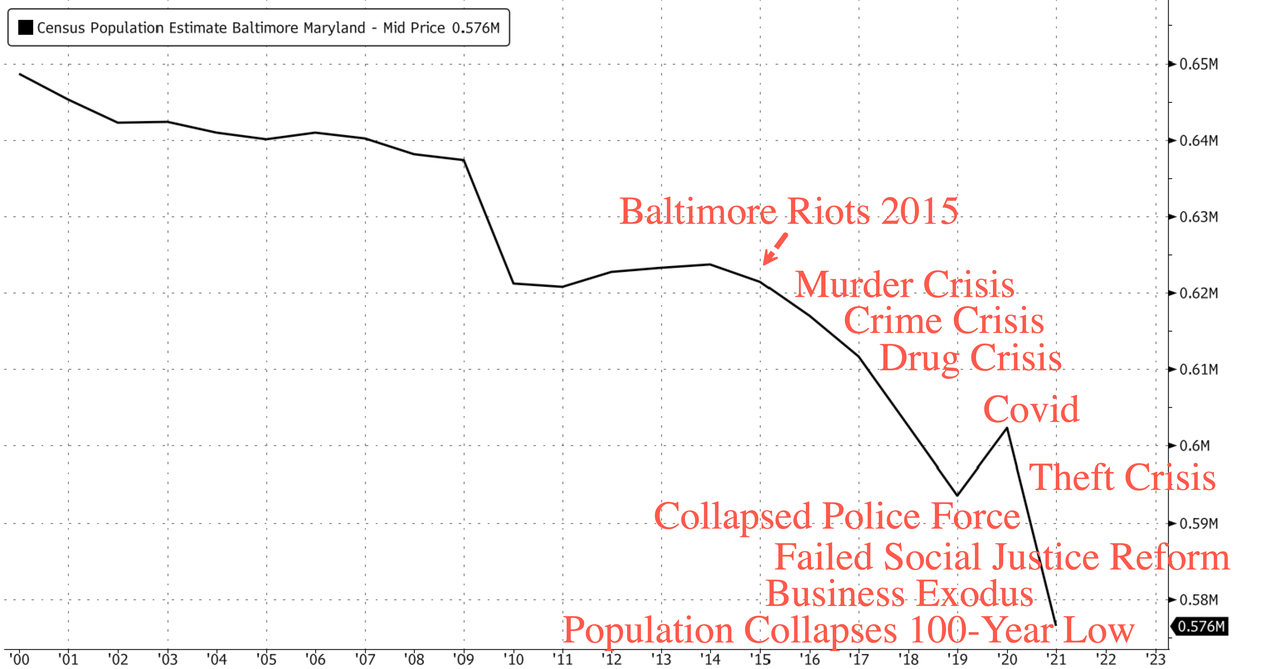
At a broader level, the common denominator behind these redevelopment failures is impossible to ignore: Baltimore’s population has collapsed to a 100-year low in a relatively short period, eroding demand for urban revival projects. Much of that decline can be linked to a city and state controlled by unhinged Democratic Party kings and queens, pushing far-left policies that have only backfired into a California-style exodus of residents.
Baltimore’s failure is a direct result of the one-party rule of Democratic queens and kings who appear to have done nothing but economically sabotage the state.
But the story here takes a twist because there is a movement inside the business community, especially among Sinclair Executive Chairman David Smith, to combat the far-left crazies who run the city and state through information warfare. Democrats have freaked out that Smith bought the largest paper in the state, The Baltimore Sun, as the left-wing regime has failed to counter the narratives, while left-wing Gov. Wes Moore’s polling data implodes.
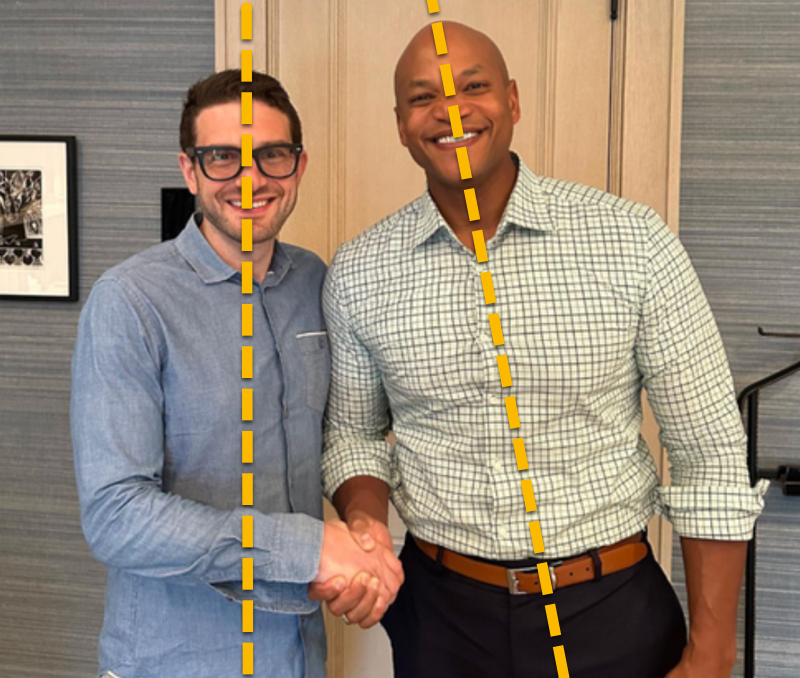
Alex Soros & Gov. Moore.
Here’s a novel idea for the business community that has watched its state and city implode under a far-left regime: it’s time to go on the offensive and ensure common-sense politicians are elected in future elections, rather than left-wing activists who have no problem abusing taxpayers and looting state coffers for progressive projects, such as this:
Maryland Delegate Kathy Szeliga (R) EMBARESSES Democrats who want to force “appropriately sized tampons” into men’s bathrooms.
Szeliga: “I’ve never heard of such a thing… what do you consider appropriate???”pic.twitter.com/jjasHIMtRE https://t.co/gsjXEzXVre
— Libs of TikTok (@libsoftiktok) March 24, 2026
Meanwhile, just an hour south: “D.C. Economy “Under Strain,” Faces Biggest Spending Cuts Since Great Recession.”
Tyler Durden
Wed, 04/15/2026 – 18:50

Pentagon Accused Of Cover-Up After Missing Deadline On 46 Military UAP Videos
Pentagon Accused Of Cover-Up After Missing Deadline On 46 Military UAP Videos
Authored by Steve Watson via Modernity.news,
The Pentagon has come under fire for failing to meet a congressional deadline to release dozens of military videos showing unidentified aerial phenomena, sparking fresh claims of a bureaucratic stall on one of the most sensitive national security issues in decades.
Rep. Anna Paulina Luna, R-Fla., had pressed Defense Secretary Pete Hegseth to deliver 46 specific clips by April 14. Whistleblowers had told her task force that the Pentagon’s All-domain Anomaly Resolution Office (AARO) already possessed the records. Yet as the deadline passed with no delivery, critics pointed to a pattern of delay that has long fueled public distrust.
The requested material includes spherical objects maneuvering erratically over Afghanistan, cigar-shaped craft, Tic Tac-style encounters, transmedium vehicles moving between air and water, and multiple formations captured near U.S. military assets, submarines, and sensitive airspace.
🚨Lawmaker asks Hegseth to release UAP videos citing national security concerns
Rep. Anna Paulina Luna. R-Fla., is asking Defense Secretary Pete Hegseth to hand over dozens of military “unidentified aerial phenomena” videos by April 14. NBC News’ Gadi Schwartz reports. Today is… pic.twitter.com/pQ0yQDCljR
— Skywatch Signal (@UAPWatchers) April 14, 2026
On April 15, with the deadline missed, the War Department moved to address the growing pressure. A U.S. official told Liberation Times that AARO is now actively working with the White House and other agencies to prepare previously unseen UAP records for public release.
“The Department of War’s All-domain Anomaly Resolution Office (AARO) is working in close coordination with the White House and across federal agencies to consolidate existing UAP records collections and facilitate the expeditious release of never-before-seen UAP information,” the official stated.
The official added that “Since the office was established, AARO has made progress to make UAP information available and transfer those records to the National Archives in accordance with federal law. We welcome the president’s initiative to supercharge these efforts and make more UAP information available to the public as soon as possible.”
?War Department Says White House Coordinating Release of UFO Material
Ina recent article by @ChrisUKSharp a U.S. War Department official told Liberation Times that the Pentagons dedicated UFO office is working with the White House and federal agencies to prepare the release of… pic.twitter.com/QTlZgMZvKL
— Skywatch Signal (@UAPWatchers) April 15, 2026
The statement comes following mounting outrage over the missed deadline, with Luna herself noting the Pentagon’s initial silence.
— Daily Mail US (@Daily_MailUS) April 14, 2026
This episode fits a broader pattern of incremental movement on UAP transparency. Just days ago, Rep. Tim Burchett indicated that names, dates, people, and locations tied to the phenomenon are set to emerge in upcoming briefings.
Earlier this year the U.S. government quietly registered the domain aliens.gov, adding fuel to speculation that formal acknowledgment of non-human intelligence is being prepared at the highest levels.
And in January an insider warned the Bank of England to ready itself for imminent alien disclosure, suggesting the topic has moved well beyond fringe discussion and into institutional planning.
President Trump directed the process of identifying and releasing government files on UAP, UFOs, and extraterrestrial matters back in February. Yet the slow pace continues to frustrate lawmakers and the public alike.
Luna’s task force has emphasized the national security angle, arguing that unexplained objects operating in restricted airspace warrant full scrutiny rather than continued secrecy. The videos in question were reportedly captured by fighter jets, drones, surveillance aircraft, and naval assets across multiple theaters.
While AARO’s latest statement signals forward momentum and coordination at the White House level, skeptics note that similar promises have been made before without full delivery. The public, long accustomed to partial disclosures and redacted reports, is watching closely to see whether this round produces genuine transparency or another round of managed narrative.
The stakes extend beyond curiosity. If these objects represent advanced technology—human or otherwise—the public has a right to know what their governments have documented in their name. Continued foot-dragging only deepens suspicion that elements within the bureaucracy prefer control over candor.
Your support is crucial in helping us defeat mass censorship. Please consider donating via Locals or check out our unique merch. Follow us on X @ModernityNews.
Tyler Durden
Wed, 04/15/2026 – 18:25
Do White People Even Play Golf?
Do White People Even Play Golf?
Nike has long been one of the most recognizable athletic brands in the world, but the sneaker and apparel company has suffered rapid brand deterioration amid its move to fully embrace woke corporate politics, with its stock collapsing roughly 75% from its peak during the Covid era, when the Marxist NGO Black Lives Matter gained traction across corporate America.
Nike’s stock has been a disaster and is trading at 2014 prices. Management just can’t figure out why.
— Time Traveller (@802701AD) April 13, 2026
Even as the face of golf continues to change among the 28.1 million Americans who played in 2024 – with 28% female and 25% Black, Asian, or Hispanic, both the highest proportions ever recorded according to the National Golf Foundation – a viral post on X appears to show Nike’s unhinged corporate culture being criticized once again.
“Do White people even play golf?” one X user asked, after viewing Nike’s website, which features all things golf, and finding the lack of diversity …
Do White people even play golf? https://t.co/JQjgHI87FG pic.twitter.com/oBQbP56zZm
— Pub (@PubWanghaf) April 13, 2026
X users thought it was a joke …
I thought it was a joke but there are ZERO white people on the Nike app pic.twitter.com/B0CBpo4EPg
— Dean (@Noticed2late) April 13, 2026
X users weren’t happy:
That’s why I think @nike can go to hell. I’ll never buy any of their shit.
— Ronald Camillo (@ronald_camillo) April 13, 2026
NIKE has gone woke and it is actually going BROKE: -68% in the last 5Y
— Loris_Luca_I (@BLL_1973) April 13, 2026
Have we already forgotten when @Nike included anti-white training to their employees? Fnck @Nike
— George WOOshington (@rosticles) April 13, 2026
When I saw the 200$ shoes and 80$ shirt I wondered who could afford to dress themselves, let alone green fees and a day off work
— Fred (@Fredheelclicker) April 14, 2026
Pure gold.
Funny how they dropped the one black guy that’s been carrying them for decades in golf
— Strategeristic (@strategeristic) April 13, 2026
This is yet another brand choice by Nike, reflecting not the current audience but instead the audience they want to cultivate or the social message they want associated with the sport. This type of marketing may only push golfers toward other brands, such as Peter Millar, G/FORE, and Holderness & Bourne.
Tyler Durden
Wed, 04/15/2026 – 18:00
https://www.zerohedge.com/political/do-white-people-even-play-golf

Former Brazilian Intelligence Chief Detained By ICE In Florida
Former Brazilian Intelligence Chief Detained By ICE In Florida
Authored by Charis Summers via The Epoch Times,
Alexandre Ramagem, a former chief of the Brazilian intelligence agency and a close ally of former President Jair Bolsonaro, has been detained by Immigration and Customs Enforcement (ICE) officers in Orlando, Florida.
Ramagem was chief of the ABIN intelligence agency from 2019 until 2022, when he was elected to the Chamber of Deputies, representing Bolsonaro’s Liberal Party.
In September 2025, he was sentenced to 16 years in prison for his role in an attempted coup in 2023 by Bolsonaro supporters. His congressional seat was later declared vacant. Brazilian authorities said Ramagem fled the South American nation before he would have started serving his sentence.
Brazil’s federal police said in an April 13 statement that a “fugitive of the country’s justice was arrested” in Orlando, but did not mention Ramagem by name. Police said the unnamed fugitive was recently sentenced by the country’s top court for the same three counts as Ramagem’s conviction.
“The arrest stemmed from international police cooperation between the Federal Police and U.S. law enforcement authorities,” Brazilian authorities said. “The prisoner is considered a fugitive from Brazilian justice after conviction for the crimes of armed criminal organization, coup d’état and attempted violent abolition of the rule of law.”
The Epoch Times reached out to ICE and Immigrex, a visa consultation service and law firm representing Ramagem, for comment, but did not receive a response by publication time.
Bolsonaro was convicted and sentenced to 27 years in jail in September 2025.
‘Traffic Infraction’
Ramagem appeared as “in custody” in ICE’s online detainee database on April 13. The Epoch Times was unable to verify the reason for Ramagem’s arrest, or whether it was related to Brazil’s request to extradite him.
In an April 13 post on X, Paulo Figueiredo, a Bolsonaro ally who lives in Florida, said Ramagem was detained after a “minor traffic infraction” in Orlando, and then referred to ICE.
“Ramagem’s status is LEGAL: he has a pending asylum application, filed some time ago and still under review, which allows him to remain lawfully in the United States until a final decision is made in the case,” Figueiredo said.
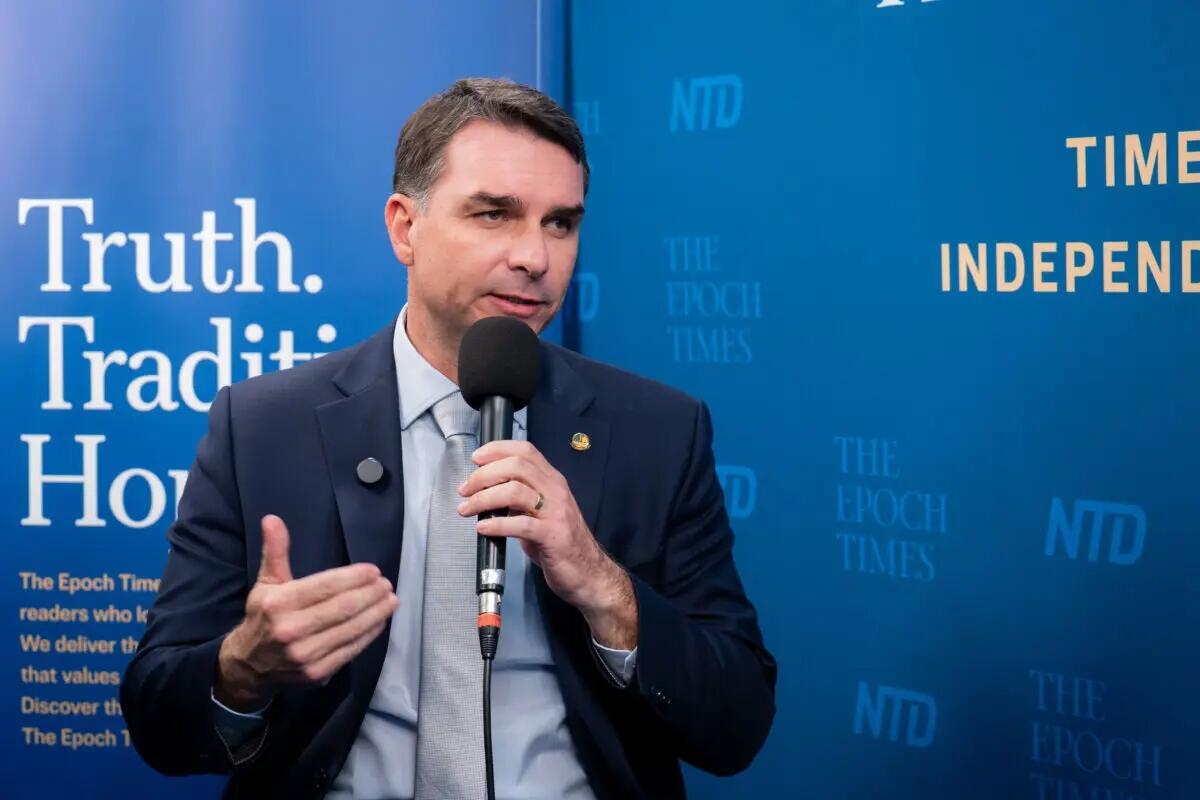
Brazilian senator and presidential candidate Flávio Bolsonaro in Grapevine, Texas, at the Conservative Political Action Conference on March 28, 2026. The Epoch Times
Bolsonaro’s son, Flávio, who is also a Brazilian senator, said in an April 13 post on X that Ramagem “has a pending asylum application, is well supported legally, and there is an expectation that he will be released soon.”
Brazil is due to hold presidential elections in October 2026, with the winner taking office in January 2027.
The trials of Bolsonaro and Ramagem stemmed from the aftermath of the 2022 Brazilian presidential election, which included attacks on government buildings by Bolsonaro’s supporters.
Bolsonaro and his aides denied any involvement and said that they were the target of political persecution under the administration of his former competitor, Brazilian President Luiz Inácio Lula da Silva, or Lula.
During Bolsonaro’s trial, U.S. President Donald Trump referred to it as a “witch hunt” and said Bolsonaro was not guilty of anything, except having fought for the people.
Former Brazilian President Jair Bolsonaro (2nd L) greets supporters next to his wife Michelle Bolsonaro during a rally in Sao Paulo, Brazil, on Feb. 25, 2024. Nelson Almeida/AFP via Getty Images
Bolsonaro started his prison sentence in November but was released to house arrest last month after suffering a bout of pneumonia.
In an April 13 post on X, Jorge Seif Júnior, who sits in the Brazilian federal senate, said Ramagem’s detention is “another case of political persecution in Brazil.”
“Today I formally submitted to the U.S. Embassy in Brasilia Official Letter No. 013/2026, presenting the relevant arguments regarding the detention, by ICE, of Brazilian Federal Police officer and Congressman Alexandre Ramagem,” he wrote. “This is yet another case of political persecution in Brazil, as seen with Jair Bolsonaro and Eduardo Bolsonaro. In light of this, I advocate for the granting of political asylum. ”
Lula, on April 14, called on Ramagem to return to Brazil to serve his sentence.
“I believe Ramagem will come back to Brazil, he has to come back to serve his sentence,” Lula said in an interview with local media.
Tyler Durden
Wed, 04/15/2026 – 17:40
https://www.zerohedge.com/geopolitical/former-brazilian-intelligence-chief-detained-ice-florida
IMF Warns US Treasury Market Prone To “Sudden Repricing” Due To Soaring Debt, Overreliance On Bills
IMF Warns US Treasury Market Prone To “Sudden Repricing” Due To Soaring Debt, Overreliance On Bills
The International Monetary Fund warned Wednesday that the relentless US debt issuance is undermining the premium Treasuries have commanded from investors, with implications for government securities across the globe.
“The increase in the US Treasury security supply is compressing the safety premium that US Treasuries have traditionally commanded — an erosion that pushes up borrowing costs globally,” the Washington-based IMF said in its latest Fiscal Monitor report.
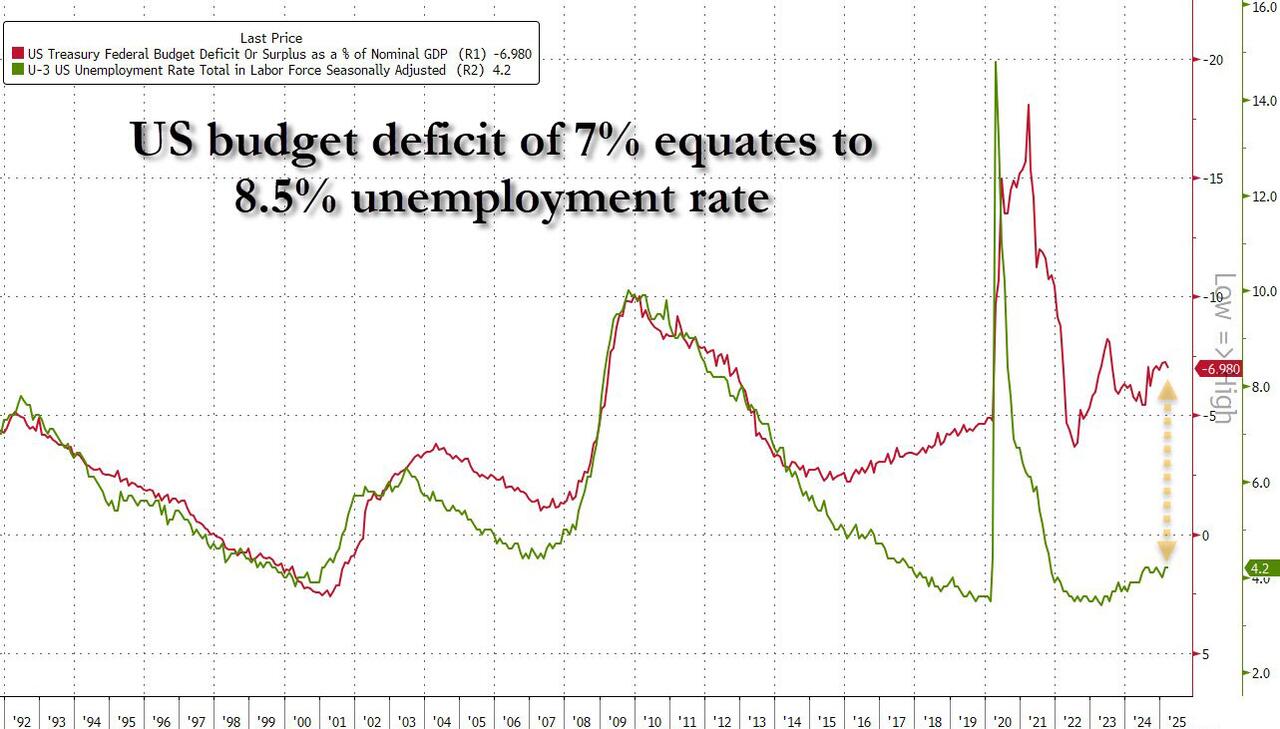
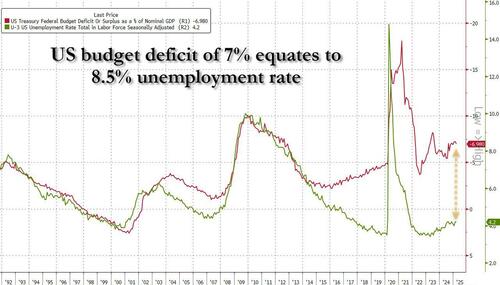
The US has been selling large volumes of debt because its budget deficit has averaged roughly 6% of gross domestic product over the past three years, an unprecedented shortfall outside of wartime or recession eras. The gap is expected to stay around those levels throughout the coming decade, according to the Congressional Budget Office. In reality, it will only get wider.
As Bloomberg reports, the IMF pointed to a narrowing gap between the yields of AAA rated corporate bonds and Treasuries as a sign of reduced appeal for US government securities. While spreads have typically been viewed as a gauge of the risk investors estimate for corporate borrowers, the fund is flipping that analysis on its head to view it as a metric of how much extra buyers are willing to pay for Treasuries.
“A narrowing spread implies that the premium investors pay for the safety and liquidity of Treasuries (relative to high-grade corporate debt) is compressing,” the IMF said. The fund showed that AAA corporate spreads have shrunk to roughly 35 basis points from more than 55 basis points at the start of 2019.
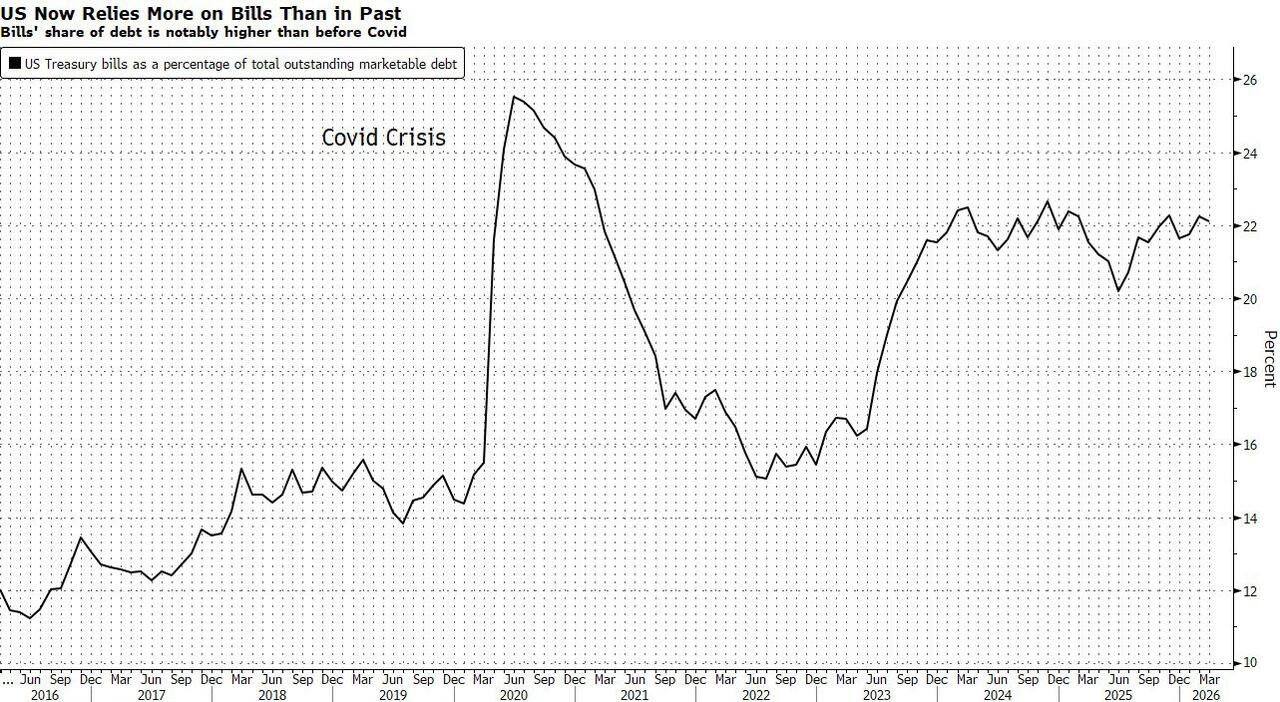
Besides funding runaway US debt, another danger flagged by the IMF was the increasing reliance of the US Treasury on sales of short-dated debt, a process launched by Janet Yellen and her Activist Treasury Issuance, and maintained ever since. Having initially criticized the Bill buildout, Treasury Secretary Scott Bessent last year said that it didn’t make sense to expand issuance of longer-dated securities, given that their yield levels were above those of T-Bills, which mature in under a year.
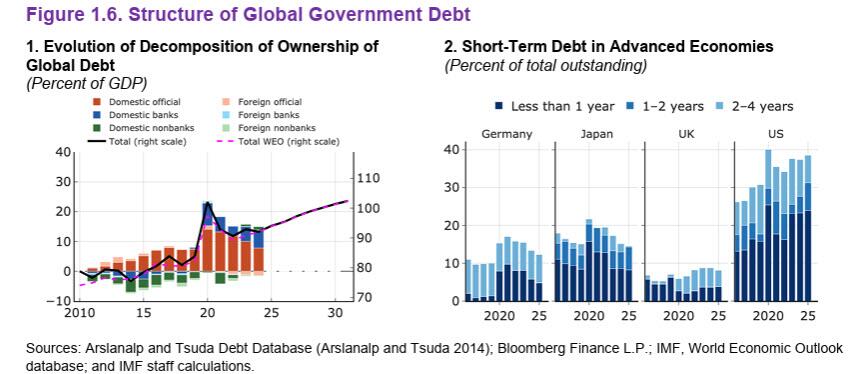
“When debt is concentrated at shorter maturities, governments must refinance more frequently, increasing their exposure to abrupt shifts in market conditions or investor sentiment,” the fund said, noting that the US – along with all other “developed” governments – has shifted reliance toward sales of bills.
Wednesday’s warnings come three weeks before Bessent’s Treasury sets out its latest plan for US debt issuance, known as the quarterly refunding policy statement.
Finally, the IMF also flagged the increasing role that hedge funds are playing in the Treasuries market, via so-called cash-futures basis trades, as a risk.
“The liquidity that hedge funds supply through such trades can be prone to flight, as it is backed by more-leveraged investors: a spike in volatility or financing costs can trigger forced unwinding, amplifying price dislocations,” it said.
Multiple elements – historically high borrowing needs, the composition of demand for Treasuries tilting toward hedge funds and the increasing reliance on shorter-dated securities – are contributing to increased vulnerability of the market to a “sudden repricing,” according to the IMF. These dynamics can also become self-reinforcing, the fund said.
“If investors grow concerned about a country’s rollover capacity, they may demand higher yields or step back from auctions of sovereign bonds altogether, validating the initial concern,” the IMF said, effectively explaining what happens when a Ponzi scheme stops working.
“The resulting political pressure to address rising costs of servicing debt may itself become a source of uncertainty that markets price in.”
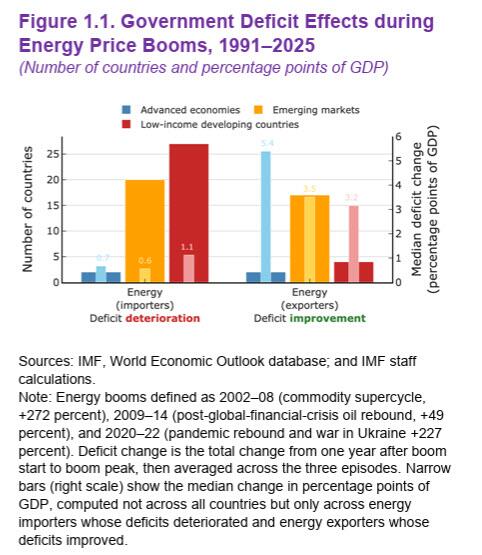
Meantime, the Iran war will stoke new fiscal pressures, forcing governments to choose between cushioning their economies from rising energy costs or keeping a lid on borrowing, the IMF also said.
“The Middle East has added a new source of fiscal pressure to an already strained global landscape,” it said. “In a scenario of prolonged conflict, global debt-at-risk could increase by an additional 4 percentage points,” the IMF said, using a term that refers to the danger of repayment difficulties in an adverse scenario.
As finance ministers and central bankers from around the world gather in the US capital this week for the spring meetings of the IMF and World Bank, the fund chided most major economies on their fiscal policies, starting with the US which has “no debt consolidation plan in sight” – the IMF certainly is correct there – while China’s persistent large deficits are continuing to add to its borrowing load, which is also accurate, but fails to discuss China’s relentless dumping of products which are collapsing its core export markets as their manufacturing sectors implode as they can’t complete with Chinese state subsidies. Several European Union member nations have triggered escape clauses from the union’s rules on deficits in order to fund defense spending, the IMF noted.
But the US has a special role, given how reverberations in the Treasuries market spread across the world, the IMF said.
“The transmission is global: supply-driven increases in US yields spill over almost one-for-one to foreign bond markets, disproportionately affecting countries reliant on external financing,” the IMF said.
Tyler Durden
Wed, 04/15/2026 – 17:20

Treasury Secretary Says Order On Citizenship Proof For Banking Is ‘In Process’
Treasury Secretary Says Order On Citizenship Proof For Banking Is ‘In Process’
Authored by Jack Phillips via The Epoch Times (emphasis ours),
Treasury Secretary Scott Bessent on Monday confirmed that an executive order mandating banks to collect citizenship information on customers is underway.
“It’s in process. And I don’t think it’s unreasonable, because, why don’t we have information on who’s in our banking system?” he told Semafor in an April 13 interview, responding to whether the Trump administration was working on the banking order.
“I have a place in the UK; they want to know who lives in every apartment—and how do we know that it’s not part of a foreign terrorist organization?” he added.
At least one Republican lawmaker has asked the Trump administration to implement such an order, and The Wall Street Journal reported, citing anonymous sources, that banks could be tasked with requiring people to submit passports under the policy.
In a post issued on X in October 2025, Sen. Tom Cotton (R-Ark.) included a letter he sent to Bessent urging the secretary to carry out a “comprehensive review of current rules that allow illegal aliens to obtain financial services and access to the U.S. banking system.”
“Access to the American banking system is a privilege that should be reserved for those who respect our laws and sovereignty,” Cotton wrote in the letter. “When individuals are allowed to open accounts without verifying legal status, we are permitting illegal aliens to establish financial roots and integrate economically, all while bypassing the legal channels that millions use properly.”
Cotton asked whether the administration could implement the order under the USA PATRIOT Act, a Bush administration-era law enacted in the aftermath of the 9/11 terrorist attacks, or the Bank Secrecy Act, a 1970 anti-money laundering law.
The Trump administration has prioritized cracking down on illegal immigration as well as entitlement fraud. Since he took office in January 2025, President Donald Trump has issued multiple executive orders and memoranda to boost the deportation of illegal immigrants and end temporary deportation protection programs for certain countries.
Trump has also called on Congress to pass the SAVE America Act, which has stalled in the Senate, to require photo IDs for voting and proof of U.S. citizenship to register to vote.
In a post last month, the president said that there would be no deal to end the partial shutdown of the Department of Homeland Security (DHS) unless some Democrats join Republicans to pass the measure.
The bill must include “their approval of Voter I.D., (with picture!), Citizenship to Vote, No Mail-In Voting (with exceptions), All Paper Ballots, No Men In Women’s Sports, and No Transgender MUTILIZATION of our precious children,” he wrote in a Truth Social post on March 22. He also called on congressional lawmakers to stay in Washington during the Easter recess, although the lawmakers ultimately went on their break.
Last month, the Trump administration established an anti-fraud task force that would investigate instances of illegal immigrants engaging in benefits fraud as well as other forms of waste and abuse.
The Epoch Times contacted the White House for comment on Tuesday.
Tyler Durden
Wed, 04/15/2026 – 17:00
https://www.zerohedge.com/political/treasury-secretary-says-order-citizenship-proof-banking-process
Mullin Blasts Biden Admin After DHS Employee Killed By Naturalized Felon
Mullin Blasts Biden Admin After DHS Employee Killed By Naturalized Felon
On Monday, Lauren Bullis, a 40-year-old Department of Homeland Security (DHS) employee, was “brutally shot and stabbed to death” while walking her dog, and DHS Secretary Markwayne Mullin is blaming the Biden administration for her murder.
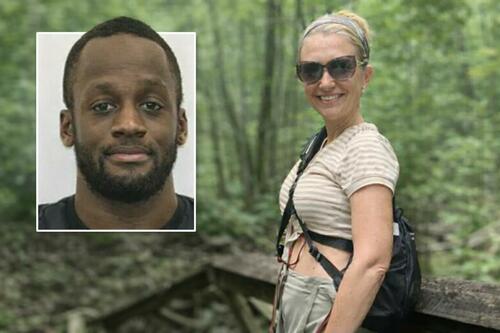
Olaolukitan Adon Abel (left) and Lauren Bullis (Photos: DHS)
Bullis, an auditor with the DHS Office of Inspector General, was found on Battle Forest Drive in DeKalb County, Georgia, around 6:50 a.m. Witnesses saw a man standing over her body before he fled. She was not the only victim. According to reports, a neighbor heard the gunfire and ran out of her house to see what was happening. The neighbor told local media that it appeared Adon-Abel was attempting to sexually assault Bullis.
Before Bullis died, police discovered another woman had been shot multiple times outside a Checkers & Rally’s restaurant. She later succumbed to her injuries. Then, in Brookhaven, a homeless man was ambushed while sleeping outside a shopping center. He was shot several times and remains in critical condition.
That suspect is Olaolukitan Adon-Abel, 26, born in the United Kingdom and naturalized as a U.S. citizen in 2022 under the Biden administration. Adon-Abel was arrested on Monday and now faces two counts of murder, aggravated assault, possession of a firearm during the commission of a crime, and possession of a firearm by a convicted felon. As a convicted felon, he not only shouldn’t have had a gun, but according to federal law, he should not have been a citizen either.
Adon-Abel had convictions for sexual battery, battery against a police officer, obstruction, assault with a deadly weapon, and vandalism — a trail of violence spanning years. And yet, in 2022, the Biden administration’s U.S. Citizenship and Immigration Services granted him full citizenship. The legal standard for naturalization, as outlined in 8 U.S.C. § 1427, requires applicants to demonstrate “good moral character.” Someone who has assaulted a police officer and committed sexual battery should not clear that bar.
“Yesterday, a DHS employee, Lauren Bullis, was brutally shot and stabbed to death by Olaolukitan Adon Abel, a 26-year-old born in the United Kingdom, who was naturalized by the Biden Administration in 2022,” DHS Secretary Markwayne Mullin said in a statement to Fox News. “Since President Trump took office, USCIS has implemented measures to ensure individuals with criminal histories and who otherwise lack good moral character do not attain citizenship.”
Mullin continued, “He possesses a prior criminal record that includes convictions for sexual battery, battery against a police officer, obstruction, and assault with a deadly weapon, vandalism and now stands accused of murdering DHS employee Lauren Bullis by shooting and stabbing her while she walked her dog. He has also been arrested for the murder of an unidentified woman whom he reportedly shot outside a Checkers, before randomly shooting a homeless man multiple times outside a Kroger in Brookhaven.”
He added, “These acts of pure evil have devastated our Department, and my prayers are with the families of the victims.”
The Biden administration routinely dismissed concerns about immigration vetting as fearmongering. Critics who raised red flags about naturalization standards were called nativists or worse. But the standard is not political — it is statutory. Federal law bars naturalization for individuals who cannot demonstrate good moral character, and multiple violent criminal convictions are about as clear a disqualifier as exists in the code.
Tyler Durden
Wed, 04/15/2026 – 16:40