Category: News

Trump’s Blockade Is Breaking Iran… And European Elites Are Angry
Trump’s Blockade Is Breaking Iran… And European Elites Are Angry
Authored by Brandon Smith via Alt-Market.us
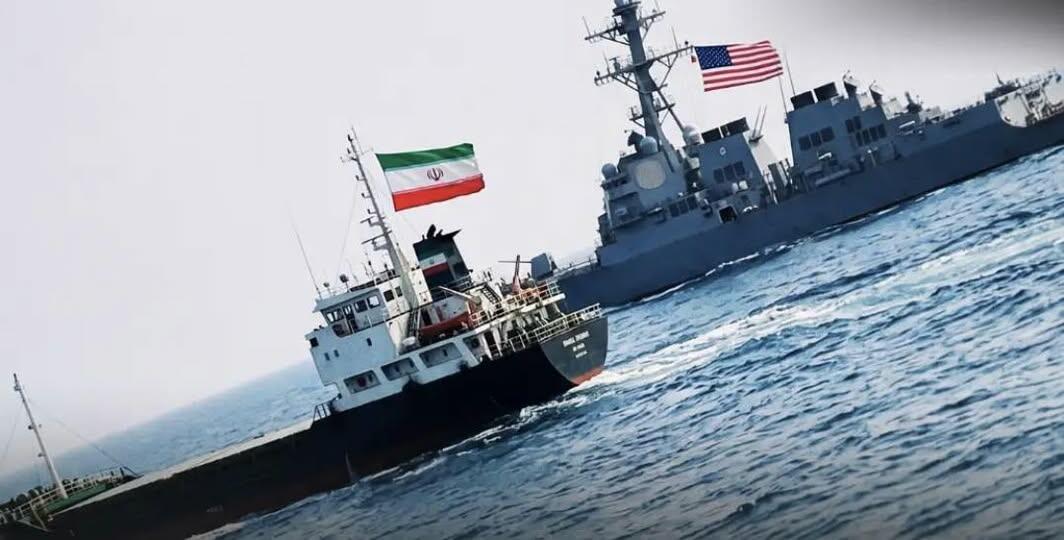
In March I published an article titled “Global Energy Crisis Or Iranian Surrender In Five Weeks?” in which I outlined the “worst case” and “best case” scenarios for the war in Iran. In my best case scenario I argued in favor of a specific plan to end the conflict quickly: A US naval blockade of the Strait of Hormuz, flipping the tables on Iran by blocking or seizing any oil tankers or gas tankers which exit Iranian ports.
Two weeks later, the Trump Administration has implemented this exact strategy.
The effectiveness of the blockade is already apparent; the propaganda bots on social media are scrambling to find a narrative to counter it, but they are failing. Why? Because Iran already tried to lock down the strait (which is an international waterway), and any government cheering (or secretly cheering) for Iran’s actions is now unable to make a rational argument against the US doing the same thing to Iran. As I noted in March:
“We constantly hear about international exposure to the Hormuz shutdown, but the media rarely mentions that Iran is the MOST exposed economy of all. For now, Iranian oil ships continue to pass through the strait and these vessels are Iran’s economic lifeline. Strategic estimates suggest that without the steady passage of these oil tankers, the Iranian economy would completely collapse within five weeks…”
I then summarized what I believed was the simplest solution to end the war:
“Iranian cargo ships can be targeted for seizure by a US blockade of the Persian Gulf well away from the narrow waters of the Hormuz. The ships could be destroyed, but I suspect the Department of Defense will try to avoid oil spills and ecological disasters. Instead, the best option is to capture Iran’s tankers and then redirect the oil to countries in danger of shortages.
Iran has the option of shutting off GPS tracking for their vessels (shadow fleet), but this would not help them maneuver past a comprehensive US blockade. In other words, I argue that the US could turn the tables on Iran and use their reliance on the Hormuz against them.
With Iran’s economy in shambles, they will no longer be able to purchase missiles or drones for resupply from Russia and China. They won’t be able to pay for logistic resources for their military and they won’t be able to contain public unrest. The Iranians would be forced to negotiate and the war would be over quickly with minimal risk to US troops.”
For now, the US is not seizing Iran’s tankers and is merely sending them back to where they came from. However, it would seem that the Trump Administration and their military advisers have come to the same basic conclusions I did.
For years I have expressed my concerns about a potential conflict in Iran, largely because of the precarious global economic risks associated with mass energy shortages caused by a closure of the Hormuz, which transits around 25% of the world’s energy exports. That said, I do not care about “picking sides” when it comes to Israel or Iran.
This debate is irrelevant and designed, I think, to divide US conservatives over ancient tribal vendettas that do not involve us. I don’t care about the Israeli government or “Zionism” and I certainly don’t care what happens to the theocratic and tyrannical Muslim regime in Iran. We have much more important things to think about.
What matters to me is how the US and the American people are affected by geopolitical events. There has been endless debate on what the war is really about, whether it be Iranian nukes, Israeli schemes, Saudi schemes, control of global oil markets, etc. (I think every action the Trump Administration has take so far from Venezuela to Iran has largely been designed to contain China). In any case, a long term closure of the Hormuz will eventually result in market cascades and a stagflationary crisis.
What matters now is ending the war as quickly and decisively as possible without leaving the Homuz and 25% of global energy exports under Iran’s control. After that, people can wrestle over the “moral and constitutional” quandary to their heart’s content.
First, I think it’s vitally important to address some lies and disinformation being spread by propagandists and foreign agents online about the US blockade, so let’s quickly go down the list…
Lie #1: The US Is Blocking All Ships Traveling Through The Strait
This is false. The US is only blocking ships coming from Iranian ports. All other ships have been allowed to pass without incident. This lie is being spread by disinfo agents all over social media and it is also being spread by foreign governments from the UK to France to China. This, to me, says A LOT about the true agenda of these countries, given that they said little or nothing about Iran locking down the strait.
Lie #2: Chinese Vessels Have Broken The Blockade And The US Is Afraid
Nope. All Chinese vessels coming from Iranian ports have been turned away and any vessels coming from alternative ports have been allowed to pass. At the time this article is being published, only one ship from an Iranian port has allegedly slipped through the blockade, though the story on this ship might be fabricated. All other Iranian ships have been repelled.
Lie #3: The Blockade Puts US Naval Ships At Serious Risk
No, it does the opposite. US ships have no need to traverse the narrow Hormuz to blockade it. All they have to do is wait outside of it and turn back Iranian tankers that approach. No mines, no missiles, no drones, no tiny attack boats, nothing Iran has the ability to deploy has much of a chance of harming the US Navy. In fact, reports indicate ships like the USS Abraham Lincoln (an aircraft carrier) have already been targeted hundreds of times by Iran with no damage taken.
There is nothing Iran can do about a comprehensive blockade.
Lie #4: Iran Is Used To Sanctions And Can Hold Out Longer Than The US
No, they can’t. Only 7% of energy exports going to the US travel through the Hormuz. Iran’s entire economy hangs by a thin thread and that thread is oil exports to countries like China or Vietnam.
Iran is reportedly losing around $430 million each day that their ships remain stuck in the strait, and they have already taken around $270 billion in infrastructure damages. Iran pays for new weapons and military logistics with oil revenues. Their soldiers are paid in part with oil revenues. They mitigate civil unrest with oil revenues.
I suspect that the blockade will force Iran back into negotiations within a couple weeks. That’s how little time they have left.
Lie #5: Iran Has Alternative Ways To Bypass The Blockade
No, they don’t. Overland routes without ample pipelines are no substitute for the ease of oil tanker shipments. Even if they did have such pipelines, those lines could be easily destroyed.
By extension, as Iran’s oil exports stack up they will quickly run out of storage space, which means they will have to shut down drilling. This would cause significant damage to their oil infrastructure within weeks due to pressure differentials.
Recent news indicates that Iran has already halted all petrochemical exports until further notice. If true, this proves that the blockade is highly effective.
Lie #6: The Chinese Will Intervene And Force The Strait To Reopen
As noted, the strait is not closed. Only Iranian ports are closed. Furthermore, China has stayed away from direct intervention in the Hormuz because they simply don’t have the naval capacity to square off with the US even if they wanted to.
Keep in mind, only a week ago the Chinese government vetoed a UN resolution to reopen the strait when they thought Iran was going to control it. The CCP is impotent and they can do nothing.
Lie #7: The US Is Losing All Its Allies Over The Blockade
Wrong. What the blockade (and the war in general) is doing is exposing the countries which were pretending to be our allies when it was convenient. I examined this problem in my last article “The US Separation From Europe And NATO Is Long Overdue”, and this brings me to my final point on the war.
The fact that the European elites are suddenly so concerned with the US blockade, enough to call for a “coalition” to reopen the strait and “circumvent” the US, tells us all we need to know. I continue to believe that the globalists in these nations have been feeding off the US while at the same time organizing a “multicultural alliance” behind the scenes – A socialist new world order to supplant western civilization and leave the US behind as a husk.
Part of this agenda clearly involves a partnership with Islamic fundamentalists as a goon squad to oppress native western populations. This is why the elites have flooded Europe with third world migrants – Ignoring the concerns of citizens and even arresting people who speak out.
This is also why the Pope is so adamant to call for a Muslim/Christian pact (while he blatantly ignores the fact that Europeans have been terrorized by Muslim immigrants for over a decade). Let’s not forget that during the pandemic lockdowns, the Vatican joined with the globalists to form the Council for Inclusive Capitalism (run by Lynn Forester de Rothschild). Modern-era Popes are not friends to conservatives or Christians, but I plan to go into that problem in my next article.
The blockade, I believe, is so effective that it has struck fear in Iran, fear in China, and fear in the liberal order in Europe which was counting on the war to drag on for months or years. Look at how angry they all are that Trump flipped the script on the Hormuz? Why all the emotion and irrational hand wringing after the strait has been opened to MORE ships and oil traffic? Why all the panic when oil prices are falling? It doesn’t make sense unless they WANT the US to fail.
Regardless of how you might feel personally about the Iran war, it is undeniable that the situation has revealed many of our supposed allies as enemies. In reality, they were always enemies. The only thing that has changed is that the truth is finally out in the open.
Views expressed in this article are opinions of the author and do not necessarily reflect the views of ZeroHedge.
Tyler Durden
Wed, 04/15/2026 – 23:25
https://www.zerohedge.com/geopolitical/trumps-blockade-breaking-iran-and-european-elites-are-angry

Trump’s Blockade Is Breaking Iran… And European Elites Are Angry
Trump’s Blockade Is Breaking Iran… And European Elites Are Angry
Authored by Brandon Smith via Alt-Market.us
In March I published an article titled “Global Energy Crisis Or Iranian Surrender In Five Weeks?” in which I outlined the “worst case” and “best case” scenarios for the war in Iran. In my best case scenario I argued in favor of a specific plan to end the conflict quickly: A US naval blockade of the Strait of Hormuz, flipping the tables on Iran by blocking or seizing any oil tankers or gas tankers which exit Iranian ports.
Two weeks later, the Trump Administration has implemented this exact strategy.
The effectiveness of the blockade is already apparent; the propaganda bots on social media are scrambling to find a narrative to counter it, but they are failing. Why? Because Iran already tried to lock down the strait (which is an international waterway), and any government cheering (or secretly cheering) for Iran’s actions is now unable to make a rational argument against the US doing the same thing to Iran. As I noted in March:
“We constantly hear about international exposure to the Hormuz shutdown, but the media rarely mentions that Iran is the MOST exposed economy of all. For now, Iranian oil ships continue to pass through the strait and these vessels are Iran’s economic lifeline. Strategic estimates suggest that without the steady passage of these oil tankers, the Iranian economy would completely collapse within five weeks…”
I then summarized what I believed was the simplest solution to end the war:
“Iranian cargo ships can be targeted for seizure by a US blockade of the Persian Gulf well away from the narrow waters of the Hormuz. The ships could be destroyed, but I suspect the Department of Defense will try to avoid oil spills and ecological disasters. Instead, the best option is to capture Iran’s tankers and then redirect the oil to countries in danger of shortages.
Iran has the option of shutting off GPS tracking for their vessels (shadow fleet), but this would not help them maneuver past a comprehensive US blockade. In other words, I argue that the US could turn the tables on Iran and use their reliance on the Hormuz against them.
With Iran’s economy in shambles, they will no longer be able to purchase missiles or drones for resupply from Russia and China. They won’t be able to pay for logistic resources for their military and they won’t be able to contain public unrest. The Iranians would be forced to negotiate and the war would be over quickly with minimal risk to US troops.”
For now, the US is not seizing Iran’s tankers and is merely sending them back to where they came from. However, it would seem that the Trump Administration and their military advisers have come to the same basic conclusions I did.
For years I have expressed my concerns about a potential conflict in Iran, largely because of the precarious global economic risks associated with mass energy shortages caused by a closure of the Hormuz, which transits around 25% of the world’s energy exports. That said, I do not care about “picking sides” when it comes to Israel or Iran.
This debate is irrelevant and designed, I think, to divide US conservatives over ancient tribal vendettas that do not involve us. I don’t care about the Israeli government or “Zionism” and I certainly don’t care what happens to the theocratic and tyrannical Muslim regime in Iran. We have much more important things to think about.
What matters to me is how the US and the American people are affected by geopolitical events. There has been endless debate on what the war is really about, whether it be Iranian nukes, Israeli schemes, Saudi schemes, control of global oil markets, etc. (I think every action the Trump Administration has take so far from Venezuela to Iran has largely been designed to contain China). In any case, a long term closure of the Hormuz will eventually result in market cascades and a stagflationary crisis.
What matters now is ending the war as quickly and decisively as possible without leaving the Homuz and 25% of global energy exports under Iran’s control. After that, people can wrestle over the “moral and constitutional” quandary to their heart’s content.
First, I think it’s vitally important to address some lies and disinformation being spread by propagandists and foreign agents online about the US blockade, so let’s quickly go down the list…
Lie #1: The US Is Blocking All Ships Traveling Through The Strait
This is false. The US is only blocking ships coming from Iranian ports. All other ships have been allowed to pass without incident. This lie is being spread by disinfo agents all over social media and it is also being spread by foreign governments from the UK to France to China. This, to me, says A LOT about the true agenda of these countries, given that they said little or nothing about Iran locking down the strait.
Lie #2: Chinese Vessels Have Broken The Blockade And The US Is Afraid
Nope. All Chinese vessels coming from Iranian ports have been turned away and any vessels coming from alternative ports have been allowed to pass. At the time this article is being published, only one ship from an Iranian port has allegedly slipped through the blockade, though the story on this ship might be fabricated. All other Iranian ships have been repelled.
Lie #3: The Blockade Puts US Naval Ships At Serious Risk
No, it does the opposite. US ships have no need to traverse the narrow Hormuz to blockade it. All they have to do is wait outside of it and turn back Iranian tankers that approach. No mines, no missiles, no drones, no tiny attack boats, nothing Iran has the ability to deploy has much of a chance of harming the US Navy. In fact, reports indicate ships like the USS Abraham Lincoln (an aircraft carrier) have already been targeted hundreds of times by Iran with no damage taken.
There is nothing Iran can do about a comprehensive blockade.
Lie #4: Iran Is Used To Sanctions And Can Hold Out Longer Than The US
No, they can’t. Only 7% of energy exports going to the US travel through the Hormuz. Iran’s entire economy hangs by a thin thread and that thread is oil exports to countries like China or Vietnam.
Iran is reportedly losing around $430 million each day that their ships remain stuck in the strait, and they have already taken around $270 billion in infrastructure damages. Iran pays for new weapons and military logistics with oil revenues. Their soldiers are paid in part with oil revenues. They mitigate civil unrest with oil revenues.
I suspect that the blockade will force Iran back into negotiations within a couple weeks. That’s how little time they have left.
Lie #5: Iran Has Alternative Ways To Bypass The Blockade
No, they don’t. Overland routes without ample pipelines are no substitute for the ease of oil tanker shipments. Even if they did have such pipelines, those lines could be easily destroyed.
By extension, as Iran’s oil exports stack up they will quickly run out of storage space, which means they will have to shut down drilling. This would cause significant damage to their oil infrastructure within weeks due to pressure differentials.
Recent news indicates that Iran has already halted all petrochemical exports until further notice. If true, this proves that the blockade is highly effective.
Lie #6: The Chinese Will Intervene And Force The Strait To Reopen
As noted, the strait is not closed. Only Iranian ports are closed. Furthermore, China has stayed away from direct intervention in the Hormuz because they simply don’t have the naval capacity to square off with the US even if they wanted to.
Keep in mind, only a week ago the Chinese government vetoed a UN resolution to reopen the strait when they thought Iran was going to control it. The CCP is impotent and they can do nothing.
Lie #7: The US Is Losing All Its Allies Over The Blockade
Wrong. What the blockade (and the war in general) is doing is exposing the countries which were pretending to be our allies when it was convenient. I examined this problem in my last article “The US Separation From Europe And NATO Is Long Overdue”, and this brings me to my final point on the war.
The fact that the European elites are suddenly so concerned with the US blockade, enough to call for a “coalition” to reopen the strait and “circumvent” the US, tells us all we need to know. I continue to believe that the globalists in these nations have been feeding off the US while at the same time organizing a “multicultural alliance” behind the scenes – A socialist new world order to supplant western civilization and leave the US behind as a husk.
Part of this agenda clearly involves a partnership with Islamic fundamentalists as a goon squad to oppress native western populations. This is why the elites have flooded Europe with third world migrants – Ignoring the concerns of citizens and even arresting people who speak out.
This is also why the Pope is so adamant to call for a Muslim/Christian pact (while he blatantly ignores the fact that Europeans have been terrorized by Muslim immigrants for over a decade). Let’s not forget that during the pandemic lockdowns, the Vatican joined with the globalists to form the Council for Inclusive Capitalism (run by Lynn Forester de Rothschild). Modern-era Popes are not friends to conservatives or Christians, but I plan to go into that problem in my next article.
The blockade, I believe, is so effective that it has struck fear in Iran, fear in China, and fear in the liberal order in Europe which was counting on the war to drag on for months or years. Look at how angry they all are that Trump flipped the script on the Hormuz? Why all the emotion and irrational hand wringing after the strait has been opened to MORE ships and oil traffic? Why all the panic when oil prices are falling? It doesn’t make sense unless they WANT the US to fail.
Regardless of how you might feel personally about the Iran war, it is undeniable that the situation has revealed many of our supposed allies as enemies. In reality, they were always enemies. The only thing that has changed is that the truth is finally out in the open.
Views expressed in this article are opinions of the author and do not necessarily reflect the views of ZeroHedge.
Tyler Durden
Wed, 04/15/2026 – 23:25
https://www.zerohedge.com/geopolitical/trumps-blockade-breaking-iran-and-european-elites-are-angry
“Can Only Imagine What FCC Has To Say”: Open Source Military Radar Plans Appear Online
“Can Only Imagine What FCC Has To Say”: Open Source Military Radar Plans Appear Online
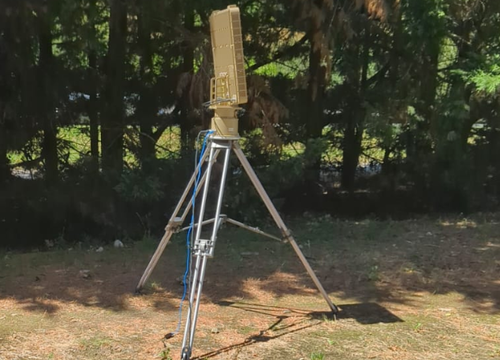
Someone on GitHub has built an open-source radar system capable of tracking multiple targets up to roughly 12 miles away, at a fraction of the cost that a major defense contractor would typically charge for a comparable system.
AERIS-10 is an open-source phased-array radar system that demonstrates how advanced sensing technology has moved out of the defense-prime world and into civilian hands, with one person releasing all the design and development files on GitHub.
The 10.5 GHz phased-array radar system is available in two versions:
AERIS-10 is an open-source, low-cost 10.5 GHz phased array radar system featuring Pulse Linear Frequency Modulated (LFM) modulation. Available in two versions (3km and 20km range), it’s designed for researchers, drone developers, and serious SDR enthusiasts who want to explore and experiment with phased array radar technology.
The developers wrote, “The AERIS-10 project aims to democratize radar technology by providing a fully open-source, modular, and hackable radar system.”
“Whether you’re a university researcher, a drone startup, or an advanced maker, AERIS-10 offers a platform for experimenting with beamforming, pulse compression, Doppler processing, and target tracking,” they added.
X user chiefofautism noted, “One person built what defense contractors charge a quarter million for and open-sourced it.”
That’s a great question:
I can only imagine what the FCC will have to say about this…
— E__Strobel (@E__Strobel) March 13, 2026
The bigger takeaway is not the project itself, but what it signals: dual-use capability has shifted into the civilian and open-source domain, a shift that is clearly visible in the drone world. It also shows how powerful dual-use technology is now becoming accessible outside the traditional defense-contractor ecosystem – something the Department of War will find increasingly difficult to ignore as funding flows redirect to “war unicorns” promising faster innovation at lower cost.
Tyler Durden
Wed, 04/15/2026 – 23:00
CBS ’60 Minutes’ Left Out The Most Damning Part Of The Story
CBS ’60 Minutes’ Left Out The Most Damning Part Of The Story
Submitted by American Truckers United,
Over the last year, the American people have awakened to the reality of truck drivers unable to speak English, operating with non-domicile CDLs, and wreaking havoc on our roadways. What had yet to gain national attention was the ownership behind these illicit trucking companies. The 60 Minutes special that aired this weekend finally changed that by exposing one of the worst “chameleon carriers” in the industry.
Chameleon carriers are four times more likely to be involved in crashes, according to data from a risk assessment firm, Fusable. pic.twitter.com/3l5LOUQcyQ
— 60 Minutes (@60Minutes) April 12, 2026
The CBS report laid out the crisis in stark detail. The motor carrier mentioned is a Serbian-based network that repeatedly sheds its identity—changing names and USDOT numbers—to erase thousands of safety violations and hundreds of crashes. Drivers described forced 18-hour days, ELD cheating orchestrated by dispatchers in Serbia, and paychecks that came back negative after excessive lease, insurance, and repair fees were skimmed off the top. The carrier network racked up nearly 15,000 violations and 500 accidents in just two years while hauling freight for major shippers. Yet the carrier insists it is merely a “leasing company,” not a motor carrier, and therefore bears no responsibility for the trucks or drivers operating under its trailers.
A whistleblower from a Super Ego-affiliated company says dispatchers and managers in Serbia were told to overwork and exploit American drivers. pic.twitter.com/cdvIbaSL38
— 60 Minutes (@60Minutes) April 12, 2026
60 Minutes built a compelling case that dismantled their narrative.
What 60 Minutes likely left on the cutting-room floor is the most damning part of the story: who keeps loading these illegal carriers with freight in the first place? Who failed—or refused—to vet the motor carrier, its foreign ownership, or its forced-labor operations?
The answer points directly to freight brokers, with industry giant C.H. Robinson at the forefront. Despite the motor carrier not being a registered motor carrier with the USDOT, C.H. Robinson awarded it “Carrier of the Year” in the 1,000+ truck category for 2025. Industry sources allege that the selection process for this award involves rigorous vetting and requires final approval from upper management. Such high-level oversight strongly suggests that senior leadership at C.H. Robinson may have been directly involved in bestowing one of its most prestigious honors on a well-known chameleon carrier.
CH Robinson (ATA & TIA Member) awarded Super Ego as one of their carriers of the year for 2025 https://t.co/A6Q6OaStFx
— American Truckers 🚛🦅 (@atutruckers) April 13, 2026
This is not merely a failure of due diligence. It reflects a pattern of willful blindness, driven by greed, that prioritizes profit margins over safety, regulatory compliance, and the integrity of America’s trucking industry.
Large freight brokers have spent the past six years expanding their market share by abandoning legacy American-owned asset-based carriers and instead tapping a new, captive capacity source: foreign networks running what amounts to organized forced-labor schemes. Dispatch operations remain in foreign countries while unsafe trucks terrorize American highways. The brokers pocket the margin; the public pays the price in crashes, congestion, and national-security risks.
Trucking is the backbone of U.S. supply chains. When middlemen profit by partnering with chameleon carriers that exploit truck drivers, they do more than undercut honest American trucking companies—they corrupt a dangerous occupation that is critical to our economy and national defense.
Current State of the US Trucking Industry pic.twitter.com/zbG9hZRJQ2
— American Truckers 🚛🦅 (@atutruckers) April 13, 2026
This scandal extends far beyond the chameleon carriers themselves. It lies with the large freight brokers, the real profiteers, who continue to provide them with freight and access to the highways, accelerating the decline of American-owned trucking companies while leaving crash victims and their families without meaningful accountability or support.
Hold the brokers accountable for what they have done to our industry! Demand Accountability! Demand Broker Liability!
Tyler Durden
Wed, 04/15/2026 – 22:35
https://www.zerohedge.com/political/cbs-60-minutes-left-out-most-damning-part-story
Gabbard Sends Criminal Referrals For 2019 Trump Impeachment Whistleblower, IG Coverup
Gabbard Sends Criminal Referrals For 2019 Trump Impeachment Whistleblower, IG Coverup
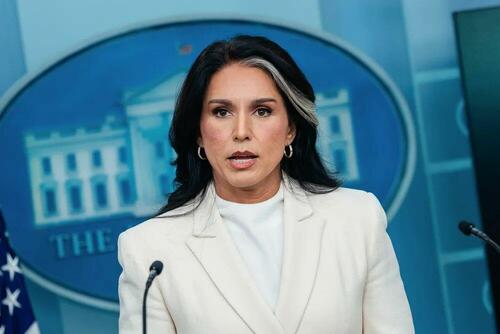
On Monday, DNI Tulsi Gabbard and the House Intelligence Committee released declassified transcripts revealing that the whistleblower whose complaint about Trump and Zelensky’s ‘perfect call’ as an extreme parisan who had a “prior professional relationship with one of the Democratic Presidential candidates,” and despite those facts, former-Intelligence Community Inspector General (ICIG) Michael Atkinson claimed “I did not find the complainant (whistleblower) was biased.”
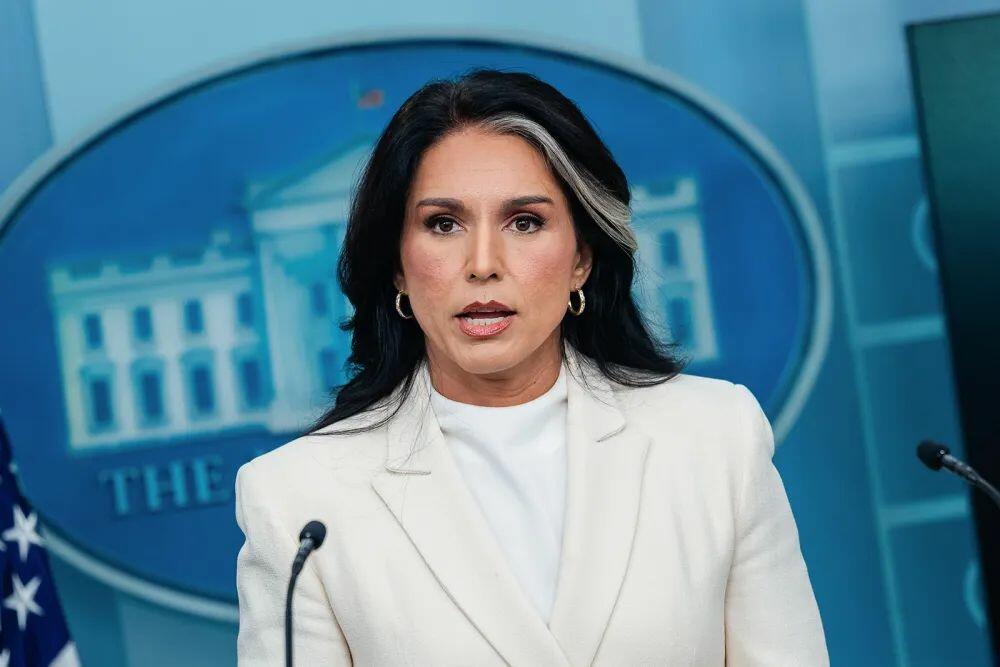
Well, tonight they’re the recipients of two criminal referrals. Director of National Intelligence Tulsi Gabbard on Wednesady referred who is believed to be former CIA analyst Eric Ciaramella – along with the former intelligence community inspector general who fast-tracked it – for potential criminal investigation, the Office of the Director of National Intelligence announced Tuesday.
The referrals to the Justice Department, first reported by Fox News and confirmed by multiple officials familiar with the matter, come days after Gabbard’s office declassified more than seven-year-old transcripts and supporting documents that Democrats and the intelligence community had kept under wraps since the fall of 2019. The newly public records raise fresh questions about the origins and handling of the complaint that accused Trump of pressuring Ukraine to investigate Joe Biden and his son Hunter.
NEW RECORDS VIA @DNIGabbard @RepRickCrawford ATKINSON TRANSCRIPTS
– First Trump Impeachment + Whistleblower Motive
Whistleblower met with Democrats on House Intelligence Committee (then led by Adam Schiff) BEFORE reporting his allegations to the Intelligence Community… pic.twitter.com/x7A1IxHLLO
— Catherine Herridge (@C__Herridge) April 13, 2026
Ciaramella was a CIA analyst detailed to the National Security Council at the time. According to the declassified materials, he had no firsthand knowledge of Trump’s July 25, 2019, phone call with Ukrainian President Volodymyr Zelenskyy and instead relied on secondhand accounts from NSC colleagues. He was a registered Democrat who had previously worked on Ukraine policy under then-Vice President Biden – including traveling with him – and had pre-complaint contacts with Democratic staff on the House Intelligence Committee, including aides to then-Chairman Adam Schiff (D-Calif.), the records show.
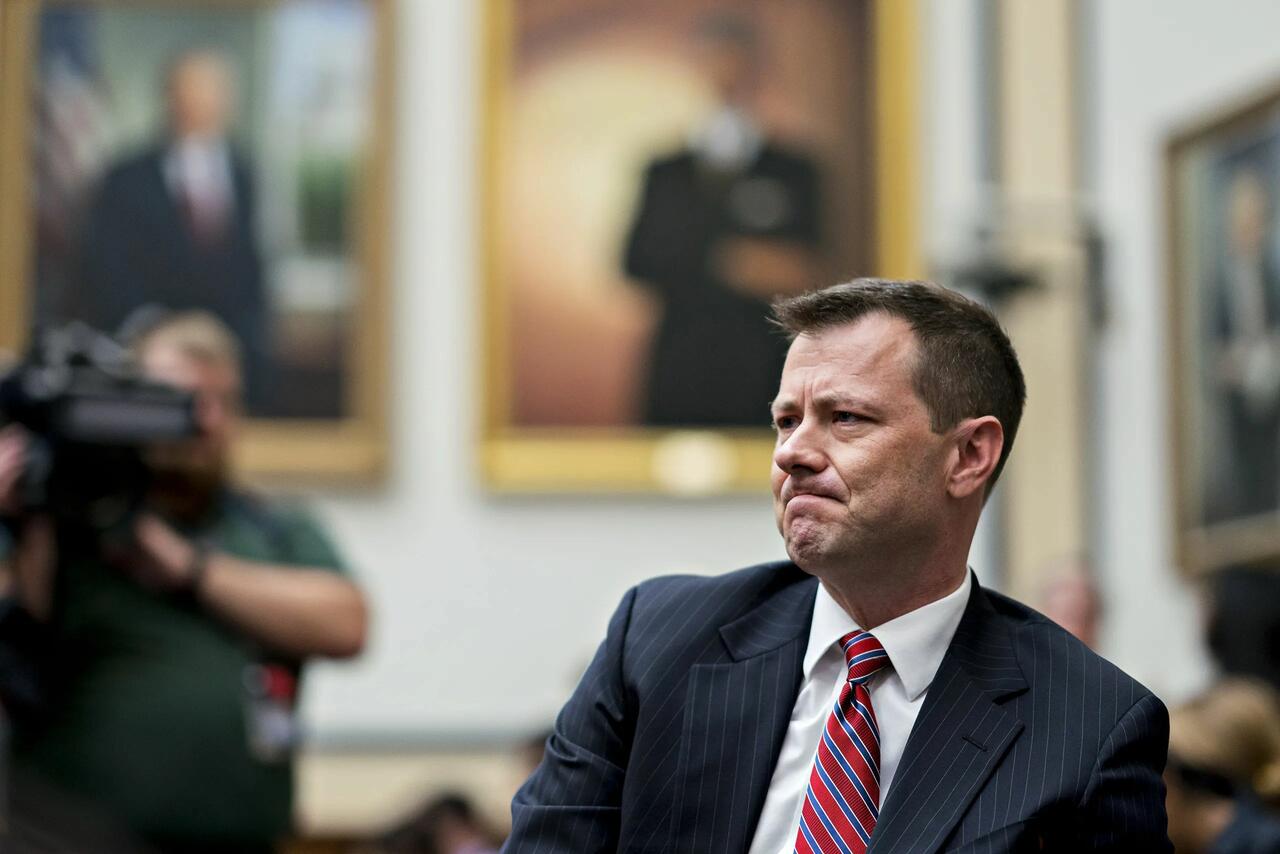
Former Intelligence Community Inspector General Michael Atkinson, who received the complaint in August 2019, is accused in the declassified files of deviating from standard procedures. He allegedly changed the whistleblower complaint form to accommodate hearsay information, ignored Justice Department guidance that the complaint did not qualify as an “urgent concern,” did not review the actual call transcript, and relied on a narrow set of interviews – including one with a witness who had co-authored the controversial 2017 Intelligence Community Assessment on Russian election interference and had ties to former FBI official Peter Strzok.
Gabbard, a Trump ally installed as DNI earlier this year, framed the declassification and referrals as long-overdue accountability.
“Deep state actors within the Intelligence Community concocted a false narrative that was used by Congress to usurp the will of the American people and impeach the duly-elected President of the United States,” Gabbard said in a statement accompanying the release. “Inspector General Atkinson failed to uphold his responsibility to the American people, putting political motivations over the truth.”
The ODNI general counsel’s referral letter, obtained by outlets covering the story, cited possible violations of federal criminal law by “one or more former employees of the intelligence community,” specifically referencing Atkinson’s 2019 congressional briefings.
The declassified package – released by the House Permanent Select Committee on Intelligence at the request of Chairman Rick Crawford (R-Ark.) following a March 24 committee vote – includes closed-door transcripts of Atkinson’s 2019 testimony before the panel. Those transcripts had been withheld from Trump’s defense team during the impeachment proceedings and from the broader public for more than seven years.
The move revives one of the most contentious chapters of Trump’s first term and comes as his second administration aggressively pursues investigations into perceived abuses by the intelligence community during the Russia investigation, the 2020 election challenges and both impeachments.
Schiff, now a senator from California, and other Democrats involved in the original impeachment have not yet commented publicly on the latest developments. A spokesman for the House Intelligence Committee under Democratic control in 2019 called the declassification “a partisan stunt designed to rewrite history.”
Tyler Durden
Wed, 04/15/2026 – 22:10
Human Smuggler Extradited From Brazil To US: DOJ
Human Smuggler Extradited From Brazil To US: DOJ
Authored by Troy Myers via The Epoch Times (emphasis ours),
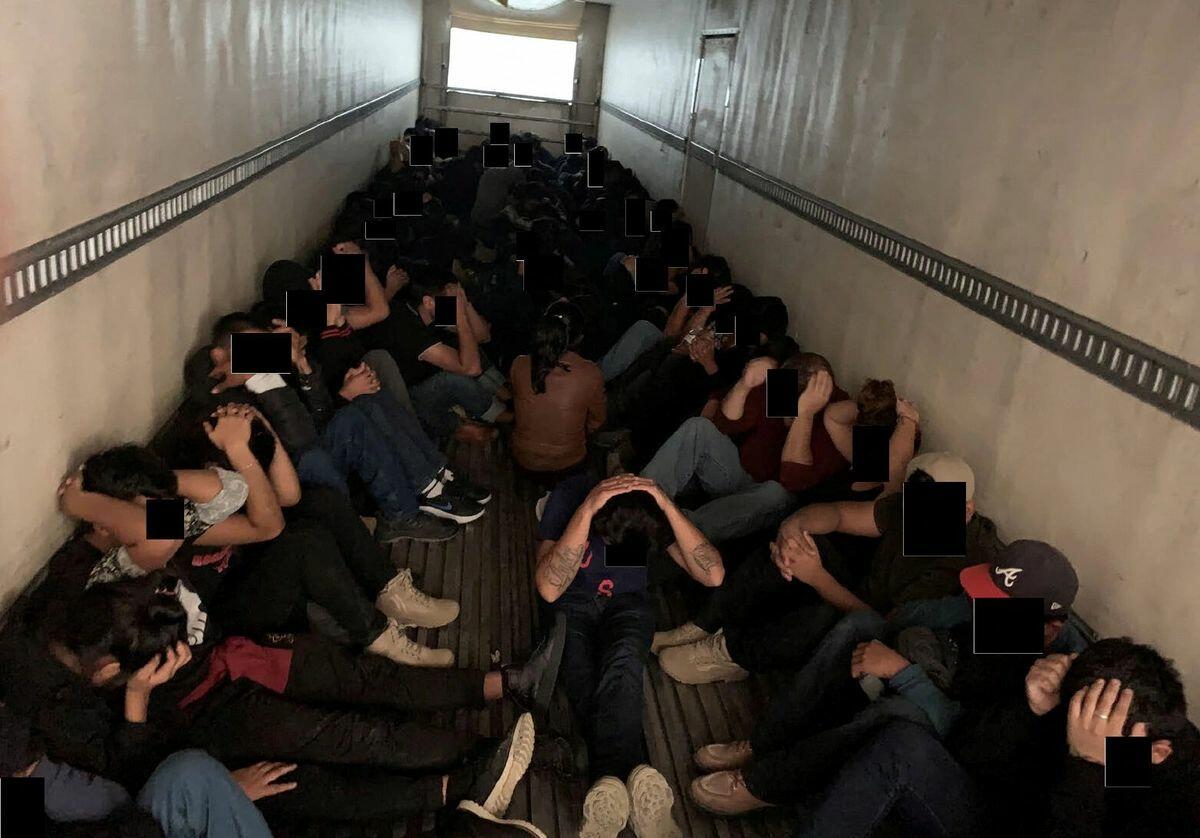
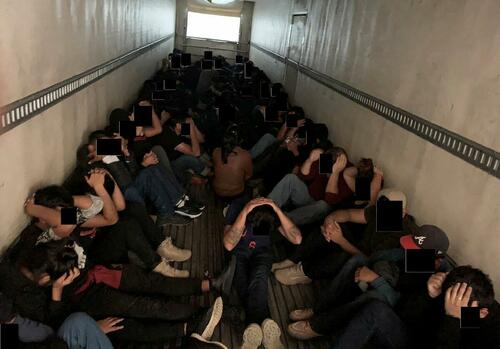
A Bangladeshi national, alleged by the Department of Justice (DOJ) to be a “prolific” alien smuggler, made his first appearance Monday in a Laredo, Texas, federal courtroom following his extradition from Brazil, according to a DOJ statement.
The indictment against Saiful Islam, 39, in the Southern District of Texas accuses him of being part of a conspiracy that smuggled numerous illegal immigrants through Central America to the United States, the DOJ said.
“Islam participated in a wide-ranging human smuggling operation,” the agency said.
The Bangladeshi man also allegedly helped other smugglers by facilitating the travel of aliens from São Paulo, Brazil, and other locations in South America, Central America, and Mexico, eventually instructing them in how to illegally cross the Rio Grande River or jump the border fence.
Islam’s charges include conspiracy to bring an alien to the United States, multiple counts of bringing an alien to the United States for financial gain, and conspiracy to encourage or induce an alien to enter the United States, according to the DOJ statement. He also faces potentially hundreds of thousands of dollars in fines.
A conviction on the charge of bringing an alien to the United States for financial gain carries a mandatory minimum sentence of three to five years in prison, depending on additional factors, and a maximum of 15 years.
Islam would face a maximum penalty of 10 years in prison on the other two charges if he is convicted of them.
There is no listed attorney for Islam yet in his online docket, which shows his case was assigned to a judge in August 2020.
Several agencies are coordinating in the investigation of Islam, including Homeland Security Investigations, Customs and Border Protection’s International Interdiction Task Force, the U.S. Marshals Service, and INTERPOL.
The DOJ credited its Joint Task Force Alpha, the agency’s lead effort in fighting human smuggling and trafficking by cartels and other criminal organizations, in investigating, charging, and prosecuting Islam.
Joint Task Force Alpha’s main goal is targeting leaders and organizers of cartels throughout the Americas, Mexico, and the “Northern Triangle countries” of Guatemala, El Salvador, and Honduras, the Justice Department said.
Former Attorney General Pam Bondi announced last September an expansion of the agency to cover Canada, the Caribbean, maritime borders, and elsewhere.
“This Department of Justice is investigating and prosecuting human smuggling more aggressively than ever before,” Bondi said.
Joint Task Force Alpha has, to date, arrested more than 450 domestic and international leaders, organizers, and facilitators of alien smuggling or trafficking. According to the Monday DOJ statement, the agency’s work has resulted in more than 395 U.S. convictions, more than 345 “significant jail sentences imposed, and forfeitures of substantial assets.”
Tyler Durden
Wed, 04/15/2026 – 21:45
https://www.zerohedge.com/political/human-smuggler-extradited-brazil-us-doj
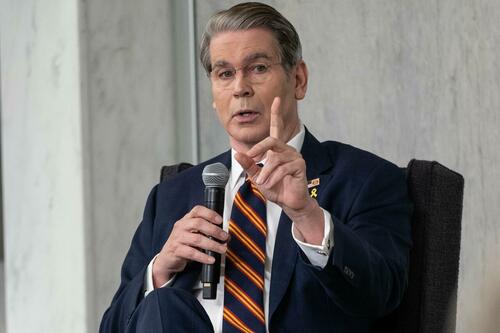
Bessent Keeps Running Tally Of China As “Unreliable Global Partner” – Count Now Stands At Three
Bessent Keeps Running Tally Of China As “Unreliable Global Partner” – Count Now Stands At Three
Treasury Secretary Scott Bessent told reporters Tuesday that Beijing’s panic hoarding of crude and refined products, while refusing to join the rest of the world in releasing supplies to offset the Gulf energy shock, has now demonstrated for the third time in five years that China is an “unreliable global partner.”
“China has been an unreliable global partner three times in the past five years; once during COVID, when they hoarded healthcare products, second on rare earth,” Bessent said, referring to Beijing’s move last year to weaponize rare earth exports against the US in the tit-for-tat trade war that disrupted US supply chains, including temporary factory shutdowns such as production lines briefly shuttered by Ford Motor Company.
Bessent said China continued to purchase tanker loads of crude instead of helping ease the global supply crunch caused by Iran’s closure of the Strait of Hormuz, despite already holding a massive strategic reserve. He also noted that China restricted exports of crude products early in the conflict.
Reuters noted that China’s strategic petroleum reserve “was roughly the same size as that of the entire reserve held by the 32-member International Energy Agency, but it was continuing to purchase oil.”
Bessent added, “They continued buying, and they’ve been hoarding, and they have cut off exports of many products.”
On US-China relations, he told reporters he’s been in contact with Chinese officials about the hoarding issue.
He declined to comment on whether the dispute and elevated tensions will derail an upcoming Trump-Xi meeting in Beijing, which has been pushed to mid-May.
“I think the message for the visit is stability. We’ve had great stability in the relationship since last summer; that emanates from the top down,” he said. “I think that communication is the key.”
Bessent added that the US military blockade would ensure that no Chinese tankers or other ships would pass the strait: “So they’re not going to be able to get their oil. They can get oil. Not Iranian oil.”
Last week, International Energy Agency chief Fatih Birol warned that governments must avoid panic hoarding and refrain from imposing fuel export bans as the Gulf energy shock continues to ripple outward to Asia, Africa, Europe, and eventually reaches the US West Coast.
“I urge all countries not to impose bans or restrictions on exports,” Fatih Birol emphasized in a Financial Times interview. “It is the worst time when you look at the global oil markets. Their trade partners, their allies and their neighbors will suffer as a result.”
The FT noted that Birol was “careful not to name China directly,” but made very clear his warning was likely aimed at Beijing.
So Bessent is clearly keeping a running tally of Beijing’s behavior as an “unreliable global partner,” and by his count, the number now stands at three.
What comes next is unclear, but the next signal will likely come from the upcoming Trump-Xi meeting.
Tyler Durden
Wed, 04/15/2026 – 21:20

Business Financial Distress Nears COVID Levels As Sole Trader Numbers Rise
Business Financial Distress Nears COVID Levels As Sole Trader Numbers Rise
Authored by Rex Widerstrom via The Epoch Times (emphasis ours),
The volume of businesses struggling to pay their debts in Australia is on track to exceed the heights set during the COVID-19 pandemic, according to two reports on the nation’s economic health.
Up to 13 percent of working-age Australians and 47 percent of secondary school students want to work for themselves or start a business, but that’s not translating into a pipeline of new enterprises, according to the Committee for the Economic Development of Australia (CEDA).
“Our analysis shows the proportion of business owners in the workforce has declined steadily over the past two decades and fell to a record low last year. The decline has been sharpest for owner-managers with employees and less steep for solo owner-operators. It is evident across all age groups, including younger workers,” said CEDA Chief Executive Melinda Cilento.
While the total rate of business formation has grown moderately over the past decade, it has been almost entirely driven by growth in sole traders.
In contrast, entry rates for businesses that employ staff declined steadily through the 2000s and has since been relatively flat.
This trend has coincided with the rise in second jobs, “side hustles,” and digital-platform work.
“Starting a side hustle or taking on gig work can be a flexible way to get started and gain some hands-on experience,” Cilento said. ”But the evidence suggests most of these activities are intended only to top-up household income, and not to build the next generation of employing firms.
“If we want a more productive, competitive, and resilient economy, we need to make it easier for people to turn a good idea into a growing enterprise.”
To help achieve that, CEDA wants the federal government to use next month’s federal Budget to introduce further cuts to “red tape” and to review existing business support programmes.
This entails eliminating redundant or out-of-date regulatory obstacles, streamlining the application process for grants and other support programmes, and expanding access to financing and insurance.
The government should also promote business advice and training more effectively, and remove anti-competitive obstacles that hinder the entry and expansion of new businesses, CEDA says.
Auditors Sound Warning
Meanwhile, 2025 was a record year for “going concern” notices for businesses unable to pay their debts with in the next 12 months, according to Chartered Accountants.
The group was concerned about the viability of 28 percent of Australian-listed companies outside the mining sector, up from 20 percent in 2021.
That compares to 15 percent in New Zealand and approximately 8 percent in comparable high‑income countries internationally.
Among Australian miners, the figure increased to nearly half, up from 32 percent in 2021.
“This level of uncertainty exceeds that seen at the height of the COVID disruptions and reflects the cumulative impact of global trade uncertainty, market volatility, higher interest rates, and persistent inflationary pressures on business viability,” said Chartered Accountants Australia and New Zealand (CA ANZ).
Its report, “Insights into 2025 auditor reports: A focus on going concern,” was conducted in partnership with the Universities of Melbourne and Queensland, and took place before the current Middle East conflict and its resulting energy price shock.
“Auditors are now flagging greater uncertainty than during the pandemic itself, which shows how sustained economic pressures around liquidity, refinancing, and future profitability can be just as challenging for businesses as an acute shock,” said Amir Ghandar.
While mining is under particular pressure, the conditions are also affecting other capital-intensive industries such as information technology and health care.
Tyler Durden
Wed, 04/15/2026 – 20:55

Major Israeli PAC Flips: Tel Aviv Should Pay Out-Of-Pocket If It Wants US Weapons
Major Israeli PAC Flips: Tel Aviv Should Pay Out-Of-Pocket If It Wants US Weapons
The pro-Israel advocacy group J Street is now calling for an end to “direct” US military support to Israel, per a new policy document published this week. The group had previously backed Washington’s continued provision of defensive weapons systems, such as the replenishment of Israel’s Iron Dome, at no cost to Israelis.
Now, it says the US “should continue to sell” short-range air and ballistic missile defense capabilities to Israel, but Israel should use its own money to pay for them.
“Israel faces real security challenges that require a significant defense investment. With a per capita GDP comparable to leading US allies such as the United Kingdom, France and Japan, as well as an annual defense budget of over $45 billion, it has the financial means to address these challenges,” J Street said.
“It does not require almost $4 billion per year in US financial subsidies to purchase weapons,” it added. “Continuing this assistance is both unnecessary and politically counterproductive, creating avoidable tensions in US domestic politics and in the bilateral relationship.”
The way the current military aid package operates is that the US provides Israel with American taxpayer funds, and those funds are put into US weapons companies to acquire equipment.
On its website, J Street says that it “organizes pro-Israel, pro-peace, pro-democracy Americans to promote US policies that embody our deeply held Jewish and democratic values and that help secure the State of Israel as a democratic homeland for the Jewish people”.
Political tide turns
J Street’s shift follows a distinct change in attitudes towards Israel among the American public after what has been widely labeled genocide in Gaza, where over 72,000 Palestinians have been killed since Israel’s war on the enclave broke out in October 2023.
But perhaps more importantly for the group, whose support base is made up of Democrats, the party’s future is changing course. Progressive New York Congresswoman Alexandria Ocasio-Cortez, who is widely believed to be seeking higher office, announced earlier this month that she would no longer vote for any US military support to Israel, despite having previously backed the provision of defensive weapons, much to the disappointment of many of her supporters.
It is notable, however, that her statement followed Israeli Prime Minister Benjamin Netanyahu’s surprise declaration earlier this year that Israel will not seek to renew its military aid package with the US in 2028. “I want to taper off the military aid within the next 10 years,” all the way down to zero, Netanyahu told The Economist in January.
J Street’s new position demands that any future US arms sales that Israel pays for out-of-pocket “be fully consistent with American law”, which echoed Ocasio-Cortez’s statement.
US law prohibits security assistance to any country whose government engages in a consistent pattern of gross human rights violations or blocks or restricts the transport or delivery of US-backed humanitarian aid.
This moment demands a reset. J Street is calling for the U.S. to end unconditional financial military subsidies to Israel and to move towards a relationship where we treat Israel like any other ally.
J Street supports:
– Phasing out taxpayer-funded military aid by 2028, when the…
— J Street (@jstreetdotorg) April 13, 2026
“US arms sales to Israel should be further conditioned to incentivize alignment with American interests and laws – as has been the case with other allies and partners – when their behavior is inconsistent with US interests,” J Street said. At the same time, the group acknowledges that Washington and Israel generally share the same interests anyway. “The US also benefits meaningfully from the relationship. Intelligence sharing has been critical in campaigns such as the fight against ISIS, while joint operations such as Israel’s 2006 strike on Syria’s secret nuclear facility have advanced shared security goals.”
It added that because “approximately 500,000 American citizens live in Israel”, selling it weapons should continue to be a US national security priority.
Tyler Durden
Wed, 04/15/2026 – 20:05
Major Israeli PAC Flips: Tel Aviv Should Pay Out-Of-Pocket If It Wants US Weapons
Major Israeli PAC Flips: Tel Aviv Should Pay Out-Of-Pocket If It Wants US Weapons
The pro-Israel advocacy group J Street is now calling for an end to “direct” US military support to Israel, per a new policy document published this week. The group had previously backed Washington’s continued provision of defensive weapons systems, such as the replenishment of Israel’s Iron Dome, at no cost to Israelis.
Now, it says the US “should continue to sell” short-range air and ballistic missile defense capabilities to Israel, but Israel should use its own money to pay for them.
“Israel faces real security challenges that require a significant defense investment. With a per capita GDP comparable to leading US allies such as the United Kingdom, France and Japan, as well as an annual defense budget of over $45 billion, it has the financial means to address these challenges,” J Street said.
“It does not require almost $4 billion per year in US financial subsidies to purchase weapons,” it added. “Continuing this assistance is both unnecessary and politically counterproductive, creating avoidable tensions in US domestic politics and in the bilateral relationship.”
The way the current military aid package operates is that the US provides Israel with American taxpayer funds, and those funds are put into US weapons companies to acquire equipment.
On its website, J Street says that it “organizes pro-Israel, pro-peace, pro-democracy Americans to promote US policies that embody our deeply held Jewish and democratic values and that help secure the State of Israel as a democratic homeland for the Jewish people”.
Political tide turns
J Street’s shift follows a distinct change in attitudes towards Israel among the American public after what has been widely labeled genocide in Gaza, where over 72,000 Palestinians have been killed since Israel’s war on the enclave broke out in October 2023.
But perhaps more importantly for the group, whose support base is made up of Democrats, the party’s future is changing course. Progressive New York Congresswoman Alexandria Ocasio-Cortez, who is widely believed to be seeking higher office, announced earlier this month that she would no longer vote for any US military support to Israel, despite having previously backed the provision of defensive weapons, much to the disappointment of many of her supporters.
It is notable, however, that her statement followed Israeli Prime Minister Benjamin Netanyahu’s surprise declaration earlier this year that Israel will not seek to renew its military aid package with the US in 2028. “I want to taper off the military aid within the next 10 years,” all the way down to zero, Netanyahu told The Economist in January.
J Street’s new position demands that any future US arms sales that Israel pays for out-of-pocket “be fully consistent with American law”, which echoed Ocasio-Cortez’s statement.
US law prohibits security assistance to any country whose government engages in a consistent pattern of gross human rights violations or blocks or restricts the transport or delivery of US-backed humanitarian aid.
This moment demands a reset. J Street is calling for the U.S. to end unconditional financial military subsidies to Israel and to move towards a relationship where we treat Israel like any other ally.
J Street supports:
– Phasing out taxpayer-funded military aid by 2028, when the…
— J Street (@jstreetdotorg) April 13, 2026
“US arms sales to Israel should be further conditioned to incentivize alignment with American interests and laws – as has been the case with other allies and partners – when their behavior is inconsistent with US interests,” J Street said. At the same time, the group acknowledges that Washington and Israel generally share the same interests anyway. “The US also benefits meaningfully from the relationship. Intelligence sharing has been critical in campaigns such as the fight against ISIS, while joint operations such as Israel’s 2006 strike on Syria’s secret nuclear facility have advanced shared security goals.”
It added that because “approximately 500,000 American citizens live in Israel”, selling it weapons should continue to be a US national security priority.
Tyler Durden
Wed, 04/15/2026 – 20:05