Category: News

Swiss Authorities Freeze Assets Linked To Venezuela’s Maduro After US Capture
Swiss Authorities Freeze Assets Linked To Venezuela’s Maduro After US Capture
Authored by Andrew Moran via The Epoch Times,
Switzerland said on Jan. 5 that it has frozen all assets held in the country by deposed Venezuelan leader Nicolás Maduro and his associates.
After Maduro’s arrest in Caracas by U.S. forces and his subsequent transfer to the United States, Swiss authorities imposed a precautionary measure designed to prevent the removal of any illegally acquired assets from the country.
The order is effective immediately and valid for four years. It is unclear how much the assets are worth.
The Swiss government said Venezuela’s situation was volatile, with a range of possible developments in the coming weeks.
Bern added that it was closely following events, urging moderation and de-escalation, and standing ready to provide its good offices to advance a peaceful outcome.
“Switzerland calls for de-escalation, restraint, and compliance with international law, including the prohibition on the use of force and the principle of respect for territorial integrity,” the Swiss Federal Department of Foreign Affairs said in a statement on X.
The decision is based on the Federal Act on the Freezing and the Restitution of Illicit Assets Held by Foreign Politically Exposed Persons.
It does not affect current members of the Venezuelan regime.
“Should future legal proceedings reveal that the funds were illicitly acquired, Switzerland will endeavour to ensure that they benefit the Venezuelan people,” Swiss authorities said.
This, officials say, is not an endorsement of the U.S. military operation, but a recognition of the loss of power that now allows the country to pursue legal assistance proceedings to reclaim the frozen assets.
The asset freeze is in addition to sanctions imposed against Caracas since 2018 under the Embargo Act.
Previous Actions
In December, the U.S. Treasury Department sanctioned several family members and associates of the Maduro-Flores family.
As a result, all properties and assets belonging to the designated individuals that are in the United States or controlled by U.S. persons were frozen.
“Treasury sanctioned individuals who are propping up Nicolás Maduro’s rogue narco-state. We will not allow Venezuela to continue flooding our nation with deadly drugs,” Treasury Secretary Scott Bessent said in a news release.
“Maduro and his criminal accomplices threaten our hemisphere’s peace and stability. The Trump administration will continue targeting the networks that prop up his illegitimate dictatorship.”
Over the years, Washington has implemented broad sanctions on Venezuela’s central bank, the Maduro government’s access to U.S. financial markets, and state oil company PDVSA.
Others have also implemented asset freezes, sanctions, and embargoes on Venezuelan officials linked to the Maduro regime and other individuals, including the European Union, Canada, and Mexico.
While Switzerland has already imposed sanctions on Caracas, it is so far the only nation to announce the freezing of assets after Maduro and his wife, Cilia Flores, were detained by the United States.
For years, Switzerland’s banking sector has been a key destination for political leaders and high-risk individuals to park their wealth.
It is an attractive location due to its strong banking foundation, immense wealth-management industry, and political stability.
Bern has also appeared in investigative journalism, leaks, and watchdog reports.
In 2022, for example, leaked client data from Credit Suisse spotlighted bank accounts connected to sanctioned individuals, corrupt officials, and clients engaged in illicit activities.
Swiss financial regulator FINMA launched an inquiry into the leak and compliance failures.
Tyler Durden
Tue, 01/06/2026 – 02:00
Illinois State takes Montana State to first-ever FCS championship OT, but ‘couldn’t find one more play’ in loss
NASHVILLE, Tenn. — Illinois State coach Brock Spack and his players didn’t sign off on their Cinderella billing in the FCS national championship game against Montana State.
Yes, the Redbirds entered the playoffs unseeded, but they won four road playoff games to reach their first title game since the 2014 season. And they knocked off No. 1 North Dakota State along the way.
They believed they belonged, and there they were at FirstBank Stadium on Monday night, trading blows with the No. 2 Bobcats. Clawing back from a 14-point second-half deficit to tie it. Taking their first lead in overtime — the first time the FCS national championship went to an extra period in the 48-year history of the game.
Until the magic finally ran out in Montana State’s 35-34 overtime win.
Montana State blocked Illinois State’s extra-point attempt on ISU’s overtime touchdown — after blocking a Redbirds field-goal attempt that would have won it in regulation with 57 seconds to play. The Bobcats (14-2) then scored the winning touchdown on Justin Lamson’s 14-yard pass to Taco Dowler on fourth-and-10 and made the extra point to win it.
Montana State players jumped around at midfield, some tossing their helmets, to celebrate the team’s first national championship since 1984. Many in the crowd of 24,105 — the most for an FCS title game since 1996 — joined them on the field for the trophy presentation.
Montana State quarterback Justin Lamson, left, talks to Illinois State quarterback Tommy Rittenhouse after the FCS Championship on Monday, Jan. 5, 2026, in Nashville, Tenn. (AP Photo/George Walker IV)
Lamson was named the game’s MVP after throwing for 280 yards and two touchdowns. Dowler had eight catches for 111 yards.
“We just couldn’t find one more play, and we needed to make one more play in order to win it,” Spack said. “But when you look at a game, it’s a one-point loss like that, there’s probably 10, 15, maybe even 20 plays in the game. If you just make one of them, you win it. We weren’t able to do that, and we came up a little short.”
ISU quarterback Tommy Rittenhouse threw for 311 yards and four touchdowns, hitting redshirt freshman wide receiver Dylan Lord 13 times for 161 yards and two touchdowns.
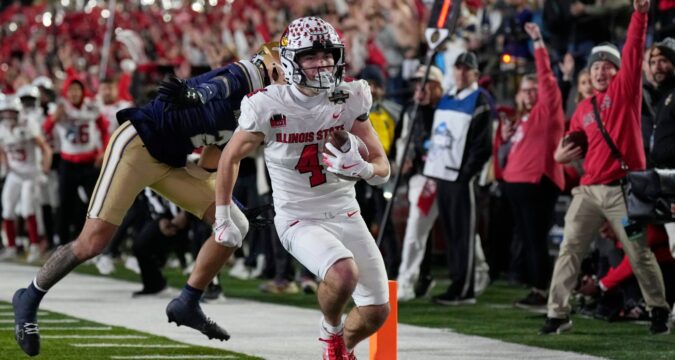
Rittenhouse and Lord connected with 5 minutes, 10 seconds to play for a 25-yard touchdown. Lord spun and scrambled around defenders to get across the goal line to tie it at 28-28 after the Redbirds (12-5) had trailed from the first quarter on.
Rittenhouse hit Lord again with a 10-yard touchdown pass on their overtime possession. Lord’s performance was big for the Redbirds as Montana State held leading receiver Daniel Sobkowicz to five catches for 52 yards and a touchdown.
“You put your all into this team. I have no doubt that we all did,” Lord said. “You get to this spot and it’s so close. Sometimes you just fall short, and that’s part of life. I’m proud of our seniors and our whole team. They were calling us a Cinderella run, and we obviously proved we deserve to be here.”
But after Lord’s overtime touchdown, Montana State’s Hunter Parsons blocked kicker Michael Cosentino’s extra point.
Montana State’s Jhase McMillan had gotten to Cosentino’s 38-yard field-goal attempt on fourth-and-1 with less than a minute to play to block it. Spack said they went back and forth about whether to go for it, but believed it was the right decision to kick at the time.
An Illinois State fan waves a sign before the FCS Championship NCAA college football game against Montana State, Monday, Jan. 5, 2026, in Nashville, Tenn. (AP Photo/George Walker IV)
Spack said he needed to look at the film but thought there may have been ball-handling issues on the kick attempts.
“We spent a lot of time on special teams, but there are no gimmes,” Spack said. “You have to execute, and we didn’t. … Yeah, it’s very disappointing.”
The Illinois State defense had trouble slowing down Montana State in the first half. After ISU scored its first touchdown with 54 seconds to play before halftime, the Bobcats responded with a three-play, 75-yard drive that took just 36 seconds and gave them a 21-7 halftime lead.
But the Redbirds clamped down in the second half, including coming up with a stop in the final minute of regulation after the blocked field goal. The Redbirds sacked Lamson for a 6-yard loss on second down, and a botched snap on third down pushed the Bobcats back another 20 yards, forcing a punt and then overtime.
“In the second half we tackled a lot better, and that was the reason we played a lot better in the second half,” linebacker Tye Niekamp said. “There wasn’t really a crazy amount of adjustments. I think the only thing really adjusted was bringing a lot of pressure on third down, because we were getting home.”
The Illinois State offense also kept fighting.
Illinois State cut Montana State’s lead to 21-14 when offensive lineman Logan Brasfield recovered Victor Dawson’s fumble in the end zone on third-and-1. The play was ISU’s sixth inside the 6-yard line and fourth from the 1. That included a pass interference penalty on Montana State defensive back Seth Johnson against Sobkowicz on a previous third-and-1.
Sobkowicz added a 4-yard touchdown catch in the fourth quarter.
“I think Tommy kind of settled down a little bit,” Spack said. “He had some guys open in the first half, and he missed them, but I think he settled down and played a lot better in the second half. We converted on third down, and our running game was pretty good. It was efficient. We were able to keep Montana State off balance with how we were attacking them with our run and throw.”
Rittenhouse and Niekamp were emotional in the postgame news conference, fluctuating between “heartbreak” at the outcome and appreciation for having been part of a historic game.
“That was a classic football game right there,” Rittenhouse said. “I mean, I had a blast no matter win or lose.”
“It was an electric atmosphere for sure,” Niekamp said. “It’s probably the most fun I’ve had playing in a game.”
https://www.chicagotribune.com/2026/01/06/illinois-state-montana-state-fcs-championship/
Asking Eric: Judged for hearing loss
Dear Eric: I am 60 years old and have had hearing loss since grade school. I’d flunk all those screening tests. My two younger siblings also have my same type of hearing loss and have worn hearing aids since their 40s at least.
My siblings are persistent in trying to get me to buy hearing aids which they feel I need. Yes, I probably need them according to medical tests, but I have resisted due to vanity and, more practically, cost.
I am tired of being judged for my loss of hearing. My siblings came at me today, together, and approached me intervention-style to tell me when and where to buy hearing aids.
People at work have made rude comments pertaining to my hearing. “Oh, you’re so deaf,” “we know you can’t hear us anyway,” et cetera.
Please tell me what to say to people who think my hearing is their business and how to address comments that are so rude. And when I do decide to get hearing aids, how should I respond to the comments I know I’ll get about how much better it is, now you can hear, oh finally you can hear?
– Hearing Jokes
Dear Hearing: Let’s take your siblings and your coworkers separately. Your coworkers are being too cavalier with their comments. They’re not trying to goad you into seeking treatment; they’re mocking you for a medical condition. They may know that you’ve taken a bold stance about your hearing loss and see that as permission to tease you about it, but they’re overstepping. This is a chance for you to talk to HR about what’s appropriate conversation for the workplace. You can also talk to HR, if you’d like, about options for hearing assistance in your company’s insurance plan.
If your company doesn’t have HR, or you’d rather deal with this head-on, be direct but don’t get drawn into a back-and-forth about it. “It’s inappropriate and unkind for you to make fun of my abilities. If you have an issue with the way I do my job, please address it with me professionally, or we can talk about it with a supervisor.”
As to your siblings, you are obviously entitled to do whatever you want with your body and your health. But I’d encourage you to think about their input, aggressive though it may be, as coming from a place of legitimate concern.
Because they share the same hearing loss, they’ve likely had a lot of conversations with medical professionals about their options and their quality of life and so they may feel they’re well-positioned to advise you.
They may fear you’re depriving yourself, or they may be concerned about the increased risk of isolation or the link between hearing loss and dementia. In short, they may see this as an emergency situation. You don’t have to agree. But I would encourage you to think of it less as judgment and more as a hand reaching out, offering help.
Dear Eric: my mother and I have given my son, his wife and my granddaughter birthday and Christmas gifts every year for 14 years now. I have taken them to dinner some four-to-five times and my mother has had them over for lunch countless times.
They have not reciprocated even once. Should my mother and I continue giving?
– Feeling Disappointed
Dear Disappointed: Disappointment often comes when an expectation isn’t met. So, the first question I’d ask is are your son and his wife aware of your expectation? Now, yes, it’s reasonable to think a son would send birthday and Christmas gifts to a parent and grandparent without being prompted or spring for a meal now and then. I can’t speak to why this isn’t occurring to him.
But what I know for sure is that this will continue to be a source of resentment for you and your mother, whether or not you stop giving, if you don’t talk it through.
What you’re feeling is an imbalance in the relationship. Gift giving can be an expression of love, so it makes sense that when you give and don’t receive, you might feel a lack of love. The question you want to ask yourself, and them, is “how can we love each other better?” That’s going to take a little bit of vulnerability. It’s OK to talk about bruised feelings if you have them, or confusion. It’s OK to ask why. But the goal of the conversation should be a better understanding of where each other is coming from.
Related Articles
Asking Eric: I’m not having him over again unless he apologizes
Asking Eric: Why should I go to my 50th high school reunion?
Asking Eric: Can I take their leftovers?
Asking Eric: Should I send gift cards instead of gifts?
Asking Eric: People think I am incapable of taking care of my home
Tell them what matters to you, tell them what gift-giving or dinners out mean to you, and tell them how you’d like to feel. The solution might be gifts from them, or it might be something else entirely. But you won’t find it unless you talk.
(Send questions to R. Eric Thomas at eric@askingeric.com or P.O. Box 22474, Philadelphia, PA 19110. Follow him on Instagram and sign up for his weekly newsletter at rericthomas.com.)
https://www.chicagotribune.com/2026/01/06/asking-eric-judged-for-hearing-loss/

Jeff Vorva’s high school girls basketball rankings and player of the week for the Daily Southtown
Providence takes over top spot, while Mother McAuley moves up and Oak Lawn enters rankings.
Top 10
With records through Monday and previous rankings in parentheses.
1. Providence 16-2 (3)
Taylor Healy grabs 17 rebounds in 69-48 win over Lincoln-Way East for Sandburg tourney title.
2. Mother McAuley 6-3 (6)
Quinn Arundel and Mighty Macs hold high-octane Bloom to 12 second-half points in 53-38 win.
3. Bloom 14-2 (2)
Sandburg, Thornwood and Kankakee are next up for Shania Jackson and the Blazing Trojans.
4. Marist 15-4 (1)
Grace Harmon and RedHawks pick up win over Fishers, Indiana between pair of losses to Benet.
5. T.F. South 15-2 (4)
Gigi Dillon and Red Wolves recover from Phillips loss to beat Joliet Central and Whitney Young.
6. Homewood-Flossmoor 10-6 (5)
Vikings recover from Phoenix trip, beating Lincoln-Way Central 48-36 to go to 6-0 in conference.
7. Lockport 14-5 (7)
Evelyn Ingram and the Porters face huge conference showdown Saturday against H-F.
8. Evergreen Park 11-4 (8)
Grace Kole and Mustangs look ahead to conference crossover battle on Jan. 13 against Lemont.
9. T.F. North 11-4 (9)
Lauryn Jackson scores 21 points and pulls down 21 rebounds in 52-49 win over Waukegan.
10. Oak Lawn 11-5 (NR)
Bianca Fleitas takes MVP at Tampa Bay Invitational as coach Mark Sevedge wins 200th game.
Player of the Week
Senior guard/forward Landrie Callahan earns tournament MVP awards at Oak Lawn and Sandburg as Providence wins championships. She scores 30 points and hauls down 14 rebounds in a 69-48 win over Lincoln-Way East in the Sandburg final.
Jeff Vorva is a freelance reporter for the Daily Southtown.

Just like playing against family, Marist’s Lucy Cosme meets Benet’s challenge. ‘Did everything that we asked.’
Marist’s Lucy Cosme can attest to how tough it can be when a big group of her family gets together and plays basketball during the summer.
It doesn’t matter the age or gender, it’s all hands on deck as both cousins and siblings get after it. That includes Lucy, a senior forward, and Lewis guard Cale Cosme, a former Brother Rice star.
“We’ll play 3-on-3 pickup games,” Lucy said, describing the rough-and-tumble dynamic. “If there’s a basketball, we will always play. It can get rough, but it’s so fun.”
Things got a little rough Monday night in Chicago for Cosme as she had to compete against a pair of Division I-caliber 6-footers from Benet.
The 5-9 Cosme still finished with seven points, 11 rebounds and a blocked shot for the host RedHawks in a 47-37 East Suburban Catholic Conference loss.
Olivia Cosme, Lucy’s cousin, added 12 points for Marist (15-4, 1-2). She also made a half-court, buzzer-beating 3-pointer at the end of the third quarter to put the RedHawks ahead 29-25.
Marist’s Lucy Cosme (15) takes a 3-pointer against Benet during an East Suburban Catholic Conference game in Chicago on Monday, Jan. 5, 2026. (Vincent D. Johnson / Daily Southtown)
“I made three of those shots last year,” Olivia said. “Whenever I get the opportunity, I take it. I don’t even practice that shot. I just throw it up there and hope for the best.”
Benet’s two 6-footers impacted the game greatly.
Furman commit Emma Briggs led Benet (14-1, 3-0) with 16 points, 15 rebounds and two steals, while Richmond recruit Bridget Rifenburg added 15 points, including 11 in the second half.
Undersized Marist faced an obvious hurdle inside, but defense, outside shooting and free throws helped the RedHawks take a 21-14 halftime lead.
Marist’s Lucy Cosme (15) boxes out Benet’s Emma Briggs (24) on a free throw during an East Suburban Catholic Conference game in Chicago on Monday, Jan. 5, 2026. (Vincent D. Johnson / Daily Southtown)
Marist and Benet battled in the Dec. 27 championship game of the Montini Tournament, a 59-38 win for the Redwings, who broke the game open in the second half. The two teams have another ESCC game scheduled for Jan. 21 in Lisle, so they will be very familiar with each other.
“We played them a lot better than we did the first time,” Lucy Cosme said. “Benet is obviously one of the best teams in the state.
“I think we competed with them really well, and the next time we play them, we can win.”
Marist did lead for most of the second half until Ava Thomas sank a 3-point basket with 4:52 left in the fourth quarter to put Benet ahead 32-31. The Redwings dominated the rest of the way.
Marist’s Olivia Cosme (1) puts up 3-pointer against Benet during an East Suburban Catholic Conference game in Chicago on Monday, Jan. 5, 2026. (Vincent D. Johnson / Daily Southtown)
Cosme’s play on the boards, however, did not go unnoticed by the RedHawks.
“Lucy’s great,” Marist coach Renee Cimino said. “She did everything that we asked. She executed our game plan defensively.
“She’s 5-9 and had to guard all of those big girls, so she did everything we could ask from her.”
Olivia Cosme, a North Central College recruit, admired her cousin’s play.
“Oh, yes, she did great in rebounding,” Olivia said of Lucy. “To do that against Emma Briggs, who is an amazing, phenomenal player, is great.”
Marist’s Lucy Cosme (15) looks to make a pass against Benet’s Bridget Rifenburg (22) during an East Suburban Catholic Conference game in Chicago on Monday, Jan. 5, 2026. (Vincent D. Johnson / Daily Southtown)
The Cosme cousins are the lone seniors for Marist, which has 10 juniors on the roster. Lucy confirmed that they enjoy being the leaders of a talented team.
Last season, there were three Cosmes for opponents to fret about as Lucy’s sister, Rose, also played basketball. But Rose is foregoing the sport this winter to concentrate on her track career.
For Lucy, this also is her final season playing basketball. She has decided to give up athletics and focus on earning marketing and finance degrees in college. Her first choice is Miami of Ohio.
Lucy, though, admitted that she will miss playing basketball.
“I love the competition,” she said. “I loved playing in this game because it went back and forth and you have to give it your all. And I love my teammates.”
Jeff Vorva is a freelance reporter for the Daily Southtown.
https://www.chicagotribune.com/2026/01/05/lucy-cosme-marist-benet-ihsa-boys-basketball/
Basketball and local scores for the Southland, Aurora, Elgin, Naperville and Lake County
High school and local college results and highlights from the Southland, Aurora, Elgin, Naperville and Lake County coverage areas.
Email Daily Southtown results to southtownsports@gmail.com, Beacon-News, Courier-News and Naperville Sun results to tribwestsports@gmail.com and News-Sun results to newssunsports@gmail.com.
MONDAY’S RESULTS
HIGH SCHOOLS
BOYS BASKETBALL
Ag. Science 70, Shepard 66
Shepard (7-9): Danny McGovern 18 points, 5 assists. Brendin Thomas 12 points, 7 rebounds.
Dundee-Crown 55, Round Lake 34
Fremd 84, Wauconda 51
Wauconda (8-5): Leo Brianis 13 points. Austin Carlsen 12 points. Tony Salemi 11 points.
Oak Lawn 69, St. Rita 47
Tinley Park 72, Schurz 69
GIRLS BASKETBALL
Beecher 60, Grace Christian 29
Beecher (8-8, 6-2 River Valley): Gianna Bonomo 16 points.
Benet 47, Marist 37
Crete-Monee 49, Rich Township 21
Crete (9-6, 4-1 Southland): Jada Franklin 15 points.
Joliet Central 67, Joliet Catholic 47
Loyola 65, Naperville Central 49
Naperville Central (13-3): Trinity Jones 27 points, 13 rebounds.
Oswego 53, DeKalb 30
St. Laurence 62, St. Edward 47
LOCAL COLLEGES
MEN’S BASKETBALL
St. Xavier 81, St. Ambrose (Iowa) 80
St. Xavier (6-7, 4-2 CCAC): Davion Lawrence 18 points. Mekhi Wilson 13 points, 4 rebounds. Jerry Abushanab 10 points, 10 rebounds.
WOMEN’S BASKETBALL
Aurora University 81, Manhattan Christian (Kan.) 37
AU (10-2): Jennifer Heinberg 21 points, 7 rebounds. Krystyna Manzanarez 14 points, 4 rebounds.
SUNDAY’S RESULTS
HIGH SCHOOLS
BOYS BASKETBALL
CRANE NEW YEAR’S EXTRAVAGANZA
Marist 64, Crete-Monee 39
Glenbard East 69, Rich Township 62
Hyde Park 50, Leo 35
Peoria Richwoods 68, St. Laurence 48
St. Laurence (14-2): Markese Peoples 21 points.
Whitney Young 72, Yorkville Christian 68
LOCAL COLLEGES
FOOTBALL
STAGG BOWL
NCAA DIVISION III CHAMPIONSHIP
At Canton, Ohio
Wisconsin River Falls 24, North Central College 14
NCC (14-1): Donovan McNeal 23 carries, 133 yards, 2 TDs (48, 1 yard). Garret Wilson 18-for-28, 194 yards. Thomas Skokna 5 receptions, 77 yards. Jack Rummell 5 receptions, 75 yards.
MEN’S BASKETBALL
Lewis 86, Maryville (Mo.) 66
Lewis (4-9, 2-3 GLVC): Arius Alijosius 40 points. Cale Cosme 15 points, 11 assists, 5 rebounds. Ryan Hall 13 points.
WOMEN’S BASKETBALL
Lewis 76, Maryville (Mo.) 60
Lewis (7-7, 3-2 GLVC): Yahaira Bueno 24 points, 6 assists. Kree Nunnally 16 points, 8 rebounds. Ally Cesarini 11 points, 4 rebounds, 4 assists.
Compiled by Josh Krockey.
Rugged Individualism Vs Collectivism Vs Community: The Truth About ‘The Right’
Rugged Individualism Vs Collectivism Vs Community: The Truth About ‘The Right’
Authored by Stephen Soukup via American Greatness,
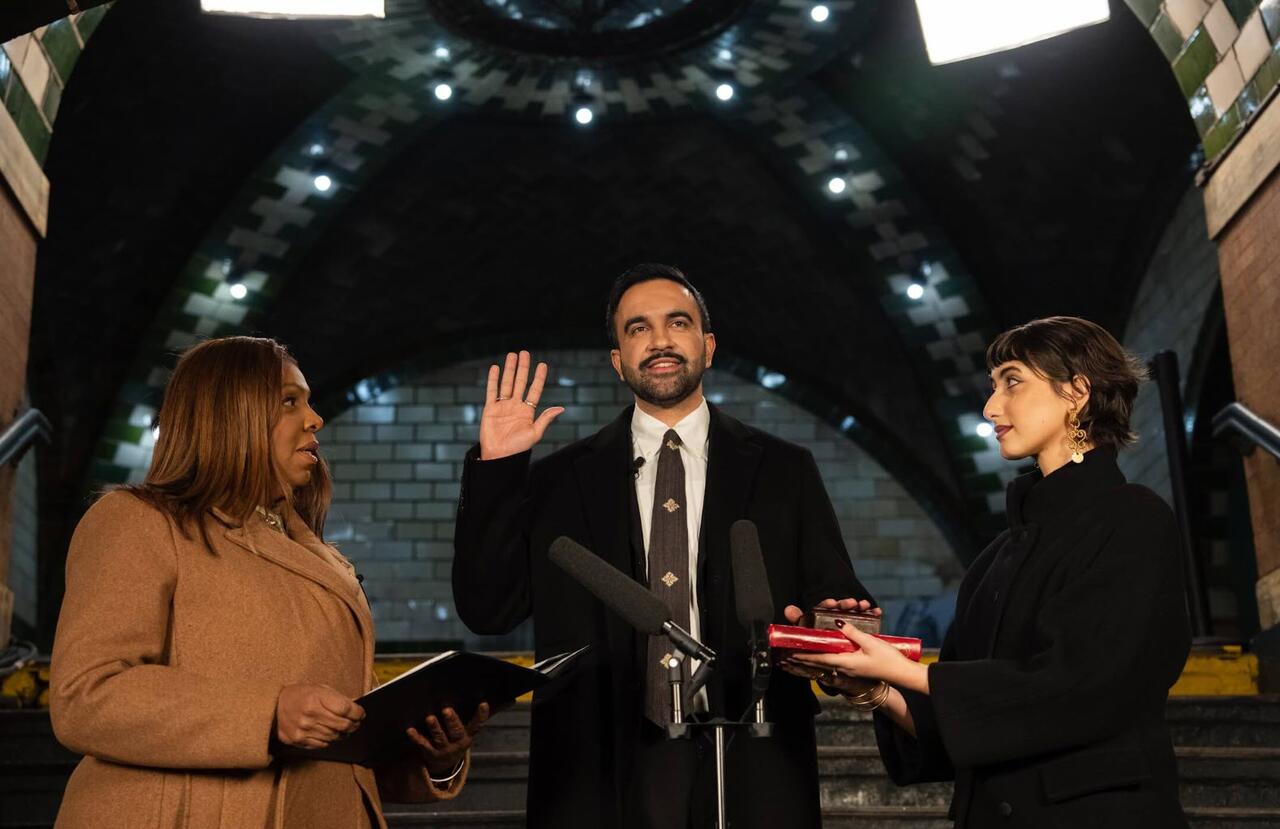
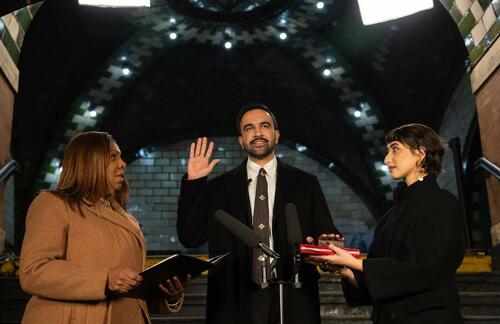
Much has been made over the past several days about a jarring line uttered by New York Mayor Zohran Mamdani in his inaugural address last week.
“We will,” the city’s first “Democratic Socialist” mayor promised/threatened, “replace the frigidity of rugged individualism with the warmth of collectivism.”
Understandably—and rightly—most of the criticism of this line (and its speaker) has centered on its mortifying and inarguable whitewashing of the term “collectivism.” Collectivism—at least as it has been used for the last 150 years—refers specifically to the political manifestations of mass ideologies, mostly Marxist in origin, but including fascism and Nazism as well. Hence, its historical record is one of repeated failure and continual mass murder. In just six decades—from 1917 to 1977—collectivism in its various forms produced the deaths of upwards of a quarter of a billion civilian men, women, and children, from Russia to Germany to Cambodia. Add in the casualties of various wars, and the total is even larger and more abominable.
Given all of this, Mamdani’s use and attempted rehabilitation of the term were viewed by many observers (of all political persuasions) as either the height of ignorance or an expression of solidarity with true and profound evil.
Either way, that’s not a great look for the new, democratically elected leader of the largest city in the country and the center of global finance.
But while both traditional and social media are filled with comments on and repudiations of Mamdani’s embrace of collectivism, what concerns me more, but has drawn far less rebuke, is the false dichotomy he fabricates in articulating that embrace. Worse still, some of those who profess to oppose his ideology and the perniciousness of collectivism nonetheless accept that dichotomy, conceding his definition of the competing and conflicting visions. They thereby demonstrate both their ignorance of history and the challenges that confront civil society as it fights to prevent its destruction by Mamdani and his ilk.
To start, it is vital to note that the “individualism” that Mamdani decries is largely a mythological beast, no more real than the Scylla or Charybdis. Not only are societies today neither built around nor devoted exclusively to individuals, but they never have been. “Man is by nature a social animal,” Aristotle wrote, and “an individual who is unsocial naturally and not accidentally is either beneath our notice or more than human… Society is something that precedes the individual.” And thus has it always been. To be clear, “rugged individualists” tend not to cluster together in groups of nearly 8.5 million just so they can be told what to do and how to live by a failed rapper who has never held a real job.
More to the point, individualism, where it does exist, is not exactly the opposite of “collectivism.” If anything, radical individualism is a precursor to collectivism, one of the many steps along the proverbial road to serfdom down which collectivism treads. In truth, man—being the social animal Aristotle identified—craves belonging. As a rule, he requires companionship and interaction. When he is deprived of them, on a societal level, by the dysfunction and haphazardness of the liberal order, he grows restless, lonely, and willing to do whatever is necessary to assimilate into whatever crowd will have him. This desire—multiplied by millions of “atomized” individuals—contains the seeds of “mass man,” of mass movements, of collective action, and, in time, of totalitarianism. As Hannah Arendt noted, “What prepares men for totalitarian domination in the non-totalitarian world is the fact that loneliness, once a borderline experience usually suffered in certain marginal social conditions like old age, has become an everyday experience of the ever-growing masses of our century.” Individualism breeds atomization, which breeds loneliness, which, in turn, leads to that which those of us not named Mamdani know as the horrors of collectivism. Collectivist totalitarianism, Arendt continued, “bases itself on loneliness, on the experience of not belonging to the world at all, which is among the most radical and desperate experiences of man.”
Unsurprisingly but still unnervingly, in the wake of Mamdani’s comments on collectivism, some observers and commentators purportedly on the political right tried to use those comments as a cudgel against others on the right, those with whom they disagree about Donald Trump and the direction of conservatism.
Cathy Young, for example, a Never-Trump conservative/libertarian who writes for Bill Kristol’s Never-Trump The Dispatch, mocked the president’s supporters, writing that “What’s amusing is that much of the MAGA and MAGA-adjacent right…will nod right along to Mamdani’s broadside against ‘the frigidity of rugged individualism.’ The only difference is they’ll use some trad euphemism for left-coded ‘collectivism.’” And just what kind of euphemism would they use? Young continued, “If you replaced ‘collectivism’ with ‘community, family, and tradition,’ much of the current right would agree.”
This is a particularly peculiar criticism of “the current right,” if for no other reason than the fact that “much of the current right” absolutely should agree with that. It is, in fact, the reason the right exists.
I’ll cut Young a little slack here, in part because she later tried to correct herself by drawing a (largely imaginary?) distinction between “voluntary” and “involuntary community,” and in part because she was raised in the Soviet Union and may not be familiar with the niceties of American conservatism. Nevertheless, it is inarguable that American conservatism is more than a little preoccupied with the notions of “community, family, and tradition.” Together, these things are, as I say, American conservatism’s raison d’être. Moreover, they are its raison d’être specifically because they constitute the alternative to collectivism. They, not the strawman of “rugged individualism,” are the opposite of Zohran Mamdani’s ideology, and one need take neither my word nor that of “the current right” as proof of this.
The post–World War II conservative renaissance began in 1948, with the publication of a little book titled Ideas Have Consequences by Richard Weaver. Russell Kirk, who is himself often described as the father of modern-day conservatism, called this book “the first gun fired by American conservatives in their intellectual rebellion against the ritualistic liberalism that had prevailed since 1933 and which still aspires to domination over this nation.”
Fast on the heels of Weaver’s ideas came Peter Viereck’s Conservatism Revisited (1949), Bill Buckley’s God and Man at Yale (1951), Whittaker Chambers’s Witness (1952), Kirk’s The Conservative Mind (1953), and Robert Nisbet’s The Quest for Community (also 1953). Each of these books was a warning cry that leftist collectivism, which had gathered a huge head of steam during the Roosevelt years and accelerated dramatically in the postwar period, represented a growing danger to American society. Weaver said this most directly in the opening sentence of the introduction to Ideas, where he announced quite simply, “This is another book about the dissolution of the West.”
Given this, each of these books was also “another book about the dissolution” of community, family, and tradition, as well as a plea to save what was left of these institutions as (ironically) a bulwark against collectivism.
George Nash, the author of the authoritative book The Conservative Intellectual Movement in America, described the thesis of the last of the books noted above, Robert Nisbet’s fittingly titled The Quest for Community, as follows:
The history of the West since the end of the Middle Ages was a story of the decline of intermediate associations between the individual and the state. The weakening and dissolution of such ties as family, church, guild, and neighborhood had not, as many had hoped, liberated men. Instead, it had produced alienation, isolation, spiritual desolation, and the growth of mass man. But men cannot live in Hobbesian isolation, and so, to satisfy his longings, he seeks out ersatz community—eventually finding it in the totalitarian state.
In many ways, this is the broad thesis of American conservatism. It is also the broad thesis offered by other anti-collectivists, who would undoubtedly bristle at being labeled “conservatives,” including Hannah Arendt, noted above, and the inimitable former Communist Alastair MacIntyre.
Collectivism is truly and inarguably evil. Community, in turn, stands as its rival—albeit a deteriorating rival. One needn’t be a “post-liberal” Trumper to recognize this. One need only be aware of man’s nature and his history.
Views expressed in this article are opinions of the author and do not necessarily reflect the views of ZeroHedge.
Tyler Durden
Mon, 01/05/2026 – 23:25
3 takeaways as Matas Buzelis’ 26-point performance not enough to lift Chicago Bulls in loss to Boston Celtics
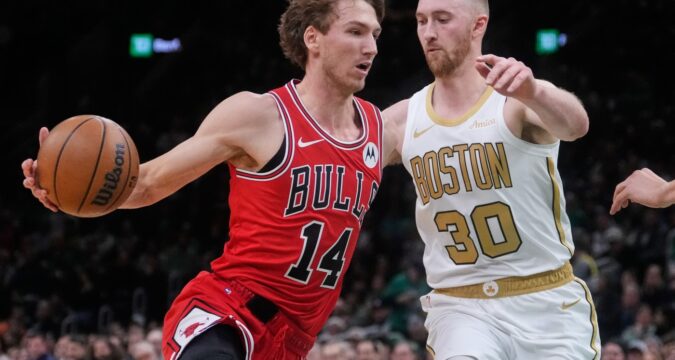
BOSTON — Matas Buzelis was willing to do it himself.
The Chicago Bulls had run out of ideas. On the court at TD Garden, they were fresh off their worst offensive half of the season, a lousy 33-point outing that signaled defeat long before the halftime buzzer. The ball clanked off the rim and sank past the net whenever the Bulls slung shots from three. The Boston Celtics took the shape of an angry swarm, forcing the Bulls away from the paint, snatching the ball away after their own misses.
Josh Giddey was absent. Coby White still wasn’t back to full strength. And that left Buzelis as the sole spark for a flailing Bulls team. So in the fourth quarter of Monday’s 115-101 loss to the Celtics, Buzelis put his head down and pushed.
There wasn’t an easy shot on the court. Buzelis crushed his body into center Neemias Queta, vaulted airborne and bruised his fingers mauling dunks through the rim. When the defense collapsed, he sought out a two-man dance with center Nikola Vučević. The pair racked up 23 points in the final frame, cutting a 21-point lead down to 11 points with just over four minutes left in the fourth quarter.
Buzelis finished with 26 points on 9-for-12 shooting, marking his fourth game in a row with at least 17 points — a crucial step forward as the Bulls rely more heavily on the second-year forward to fill in for White and Giddey.
“It’s just the comfort level, honestly,” Buzelis said. “It’s only year two for me. I know that’s not an excuse, but I’m still getting comfortable out there playing against grown men. It was just a matter of time and learning new things every day and working hard.”
But it still wasn’t enough. Not much has been lately for the Bulls, who have tumbled back down the Eastern Conference standings as injuries rack the roster. Chicago played Monday’s game without centers Jalen Smith and Zach Collins, relying on two-way forward Lachlan Olbrich to pick up a 12-minute shift behind Vučević.
The Celtics didn’t even need Jaylen Brown to hit shots to carve out a double-digit lead. The star went 6-for-24 in one of his worst shooting performances of the season, finishing with only 14 points. But the supporting cast was deep enough to fill in for Brown, with Anfernee Simons supplying 27 points off the bench.
Here are three takeaways from the loss.
1. Giving away points.
Boston Celtics guard Jaylen Brown looks to shoot after driving past Chicago Bulls forward Patrick Williams during the first half on Monday, Jan. 5, 2026, in Boston. (AP Photo/Charles Krupa)
For the first 12 minutes of the game, the Celtics busied themselves by snapping up free points. The Bulls turned the ball over six times in the first quarter. The Celtics pounced on each opportunity by racking up transition 3s off each mistake, scoring 13 points off those six turnovers. This margin highlighted the greatest disparity between the Bulls and the Celtics — one team’s inability to create cohesive offensive opportunities and the other’s keen ability to strike when the iron is hot.
Turnovers weren’t the only giveaways in the game. The Bulls took 18 fewer shots than the Celtics as a direct result of their timidity on the glass, grabbing only six offensive rebounds while Boston secured 20 offensive boards.
Bulls players marveled at Boston’s ability to pressure the glass. Coby White, for instance, detailed one play in which he checked twice for Jaylen Brown on a box out, then glanced back a third time to see the forward sidestepping the baseline to lunge fully under the basket to catch a ricochet.
By allowing 26 second-chance points and 19 points off turnovers, the Bulls dug themselves deep into a loss on their own.
“We’ve got to take care of the basketball,” coach Billy Donovan said. “That’s the formula for us. We can’t get dominated on the glass and dominated with turnovers because we don’t have other ways to get those possessions back.”
2. Losing the arc.
In a repetition of a familiar pattern, a dismal start from deep doomed the Bulls on offense. Chicago went 5-for-28 behind the arc in the first half. Buzelis was the only starter to make a 3-pointer in that stretch.
It’s not as if the Celtics were lighting the arena up from deep. They made only one more 3-pointer than the Bulls in the first half (albeit on seven fewer attempts). But Boston didn’t need the 3 to win.
The Bulls, meanwhile, rested all of their hopes on their ability to hit shots from deep. That was the only way they could ever muster enough offense to make a reasonable bid against Boston. Shooting below 35% from behind the arc was a death sentence. And once the Celtics inevitably warmed back up behind the arc — going 14-for-31 in the second half — the game was already long lost.
3. Coby White is back (again).
Coby White of the Chicago Bulls reaches in to try to steal the ball from Derrick White of the Boston Celtics during the second half at TD Garden on Jan. 5, 2026, in Boston. (Winslow Townson/Getty Images)
Coby White returned to the rotation in Boston after a three-game hiatus due to another flare-up of his lingering right calf injury.
The Bulls always prefer when White is on the court. But the guard still couldn’t find his typical sense of rhythm against the Celtics, scoring only five points on 2-for-7 shooting while playing 25 minutes off the bench.
Midway through the season, White is trying to find himself again. The guard’s first step is still a step slow. He can’t get his bearings on defense, missing assignments like Derrick White on their way to the rim for offensive rebounds. He lacked his typical punch finishing around the rim. After the game, the guard admitted that he struggled mentally with his minutes restriction, which kept him on shorter stints throughout each quarter.
White’s game readiness will remain a cloud hanging over the Bulls for the foreseeable future. He is expected to sit for one game of the team’s upcoming back-to-back series against the Detroit Pistons and the Miami Heat. The calf injury will likely be a factor to be managed for the rest of the season. And until the guard is back to his typical cadence, the Bulls will remain out of sync.
https://www.chicagotribune.com/2026/01/05/chicago-bulls-boston-celtics-matas-buzelis/
Healed-up Marc Harvey takes his shot to help Oak Lawn against St. Rita. Prognosis? ‘Everything’s feeling good.’
Oak Lawn’s Marc Harvey dealt with a sore knee for well over a year, playing through an injury he suffered his sophomore year and thriving in spite of it.
But before his senior season this winter, Harvey reached a breaking point. It was time to finally take care of the problem. He had surgery at the end of the summer to repair a meniscus tear.
“After summer league, it got to the point where I couldn’t play on it anymore,” Harvey said. “I was like, ‘I’ve got to see what’s up with this.’
“After the surgery, my body is starting to come together and everything’s feeling good.”
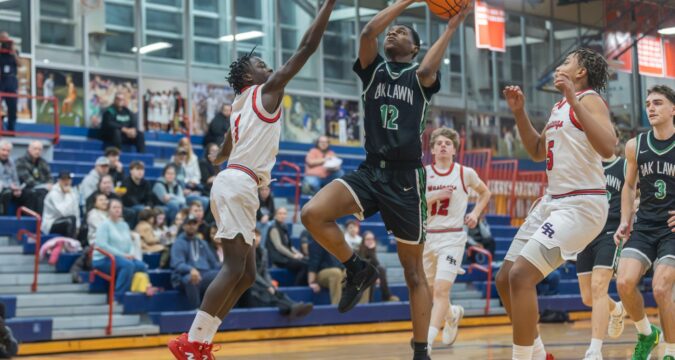
In the last couple weeks, that has started to translate to the court. Harvey, a 6-foot-4 forward, continued a hot streak Monday night, pouring in 30 points and pulling down 10 rebounds to lead the visiting Spartans to a 69-47 win over St. Rita in Chicago.
Jack Dempsey finished with 24 points and 10 rebounds for Oak Lawn (10-5), while Omar Saleh added eight rebounds.
Oak Lawn’s Marc Harvey (12) drives to the basket against St. Rita during a nonconference game in Chicago on Monday, Jan. 5, 2026. (Troy Stolt / Daily Southtown)
Micheal Hampton III and Brendan McDevitt scored nine points each to lead St. Rita (6-10). Angelo Adams and Andrew Elwood added eight points apiece.
Harvey, meanwhile, knocked down four 3-pointers. He’s expanding his game after mostly thriving inside last season.
“I think over the past couple years, his shooting has really evolved,” Dempsey said of Harvey. “I think he‘s getting into his groove for the second half of the season. He’s put in a lot of work, so kudos to him.”
Oak Lawn led 18-0 in the first quarter and 40-17 at halftime before the Mustangs put together a 22-6 edge in the third quarter to pull within 46-39.
Oak Lawn’s Marc Harvey (12) puts up a shot as St. Rita’s Micheal Hampton III (5) defends during a nonconference game in Chicago on Monday, Jan. 5, 2026. (Troy Stolt / Daily Southtown)
The Spartans were able to retake control down the stretch as Harvey hit a big 3-pointer to start a surge and Dempsey scored 11 points in the fourth quarter.
“It was a roller coaster,” Dempsey said. “We just had to calm down and deal with their pressure and start running things out of our concepts. We were able to settle down and grow our lead and pull away in the end.”
After the surgery, Harvey was sidelined for most of the fall and missed some preseason practices. Oak Lawn coach Jason Rhodes saw that hamper him early in the season.
“He wasn’t able to do much with us in the fall,” Rhodes said. “He wasn’t in the gym as much as he typically would be. He started a little slow and I challenged him early on because his shooting percentages were not where they should be.
Oak Lawn’s Jack Dempsey (3) shoots the ball from the corner against St. Rita during a nonconference game in Chicago on Monday, Jan. 5, 2026. (Troy Stolt / Daily Southtown)
“He responded and he’s playing really, really well now.”
Harvey’s surge began last week at the Pekin Holiday Tournament. He was the leading scorer among the 16 teams at the event, averaging 24.5 points over four games.
“I’ve just been getting back into my groove,” Harvey said. “At the tournament in Pekin, I started getting my shots and started knocking them down. Everything’s going good now.”
Harvey has spent a lot of time working on shooting with Dempsey, who recently topped 1,000 career points and has been a 3-point specialist his whole career.
Oak Lawn’s Marc Harvey (12) drives to the basket against St. Rita during a nonconference game in Chicago on Monday, Jan. 5, 2026. (Troy Stolt / Daily Southtown)
“I’ve definitely gotten a couple tips from him,” Harvey said. “He’s a great shooter. It’s fun playing with him. We’ve got that one-two punch going.”
Now fully healthy, Harvey feels more ready than ever to play his part in the dynamic duo. And he believes he can score from anywhere on the floor.
“I feel like my game is more well-rounded and I’m way more comfortable firing those threes,” Harvey said. “I’ve been working on my shot all summer and in the fall, improving my shot.
“It’s getting to the point where I’m really confident with it.”
https://www.chicagotribune.com/2026/01/05/marc-harvey-oak-lawn-st-rita-ihsa-boys-basketball/
Catherine Herridge Reveals How CBS Stonewalled Hunter Biden Laptop Story, Seized Her Files
Catherine Herridge Reveals How CBS Stonewalled Hunter Biden Laptop Story, Seized Her Files
Veteran investigative journalist Catherine Herridge has spilled the tea over her departure from CBS in 2004 – including the controversy over the Hunter Biden laptop scandal – in which she says she authenticated multiple records as early as October 2000, only to encounter internal resistance which prevented the story from being fully pursued or aired when it was ready.
Transcript:
This week on “Straight to the Point,” a personal message. In 2025, our team bet big on independent journalism. We believe that you were tired of talking points TV, you were tired of the stale predictable formats on Sunday, and that you were open to something new.
A recent Gallup poll reinforced our reporting. It found less than 30 percent of Americans are confident the media covers the news fully, accurately, and fairly. I experienced this myself as a CBS News Senior Investigative Correspondent assigned to the Hunter Biden probe.
After I left, I wanted to be transparent about the blocks I faced at CBS News. At that time, CBS News was under different management and did not comment. I think one of the obvious questions is why am I sitting here talking about my time at CBS News?
I’ve always had deep respect for my former employers, but in this case, I’ve had so many questions about my time at CBS. I’m taking a pause and a moment here to try and answer those questions. I think it’s better to hear it from me than to hear it from someone else.
I’d wanted to work at CBS News as long as I can remember. The first time I thought about CBS News was when I was an intern at ABC News in London and I was surrounded by so many experienced foreign correspondents. Some of them had been in Vietnam.
Some of them had worked at CBS News. It just seemed that CBS was a place for independent enterprise reporting. I never imagined that I’d be working at 60.
Getting a job at CBS at 55, to me, was an acknowledgment that the industry was really changing and that it was recognizing women who were deeply sourced and deeply experienced in national security. I was let go in February of 2024. We knew layoffs were coming.
I was not expecting to be laid off. I don’t think it was a function of my performance at CBS News. I’d been part of an Emmy-winning team.
I’d had multiple Emmy nominations. We’d won a top environmental prize for our reporting. I’m very proud of that reporting still.
It impacted a million veterans and expanded their benefits. That morning, there was an email, a company-wide saying, there are going to be layoffs. Literally, within maybe six or seven minutes, I had a text message, text message or email from my bureau chief, Mark Lima, saying, I need you to hop on a Zoom call.
My husband said to me, what are you doing today? I said, I think I’m getting laid off. And I got on the Zoom call, the human resources person was there, and they told me that my job was being terminated and that I was locked out of the office, locked out of my emails, and they would get my personal effects to me sometime down the road.
I felt a little numb when it happened. What was more surprising to me is that CBS News seized my reporting files. In October of 2020, I was asked by a senior CBS News executive, Ingrid Cyprian-Matthews, to get confirmed reporting about the Hunter Biden story.
So I brought to her several records where I had done due diligence. I’d done a lot of research. I was highly confident that this was confirmed reporting from the laptop.
What I can tell you is that it would have been standard practice for the investigative unit to be tasked with digging deeper into that story to develop our own reporting, and that didn’t happen. And that was disappointing to me. It was disappointing because I felt this was an opportunity for CBS News to really lead, to separate itself from the other networks.
But we missed that opportunity. That was not my call. It was frustrating for me.
I did my part. I got the records like I was asked, but a decision was made somewhere higher up within CBS just not to pursue it at that time. When I saw the 60 Minutes report with Lesley Stahl and she says to President Trump, we can’t verify it, I just felt a little sick because I knew that I had been able to authenticate, confirm a handful of documents.
And it told me there was a lot more there. And if you put a lot of reporting muscle behind it, you could verify a lot of those records. I don’t know if it was a case of the left hand in the news division not knowing what the right hand at 60 Minutes was doing.
I can’t answer that question. When Nora O’Donnell was asking then-candidate Biden about it, about the laptop and whether it was a Russian information operation, this senior executive, Ingrid Cyprian-Matthews, she writes, Nora, looking for all confirmed reporting. Do you have all your confirmed reporting on Hunter’s story in a note?
And I respond, yes. I tell her what it is. Nora, looking for all confirmed reporting.
Is there a Hunter connection to these documents? Yes, all of them in your inbox. And then I texted the documents and it was the million dollar retainer.
And it looks like some additional text messages from Hunter Biden to a family member. So when Nora O’Donnell had that question, I thought, did this information never reach her? I was asked to get confirmed reporting for her.
I don’t know what happened there. I never asked her. I didn’t feel that it was a welcome question.
There was no evidence that I had come across in October of 2020 that indicated that this was a Russian information operation. The former intelligence officials, several dozen, said in their statement that it had all the classic earmarks of a Russian information operation. They kind of hedged their words, but there didn’t seem to be any evidence of that.
All of the records that I was working with, that I was validating, that I was doing due diligence, I didn’t see that. Everything was lining up, in fact. And what bothered me about the letter from the 50 plus former intelligence officials is it just seemed to be this very dangerous intersection between the intelligence community and the political cycle.
Because I felt that it was sort of stepping over a line and that their actions had diminished the stature of their old jobs as CIA director or as the top intelligence official, the director of national intelligence. I’d never seen anything like this before, and I don’t think we’ve seen anything like it since. I was assigned the Hunter Biden story by the very top of CBS.
George Cheeks said to me on multiple occasions that this was a story of the highest priority for the network and that it was a high priority for his boss, Shari Redstone. So I took on that assignment and I did it to the best of my ability. Cheeks said to me, we want to have accountability, speak truth to power on both sides of the aisle, and that really sit well with me.
So I went after it the way I would go after any of these investigations. It was a very hard assignment. There were corners of support in the company for it, and there were corners of support who understood the value of investigating the Hunter Biden story.
But there were some elements within CBS News that were just resistant to it. It didn’t matter what the facts of the case really were. And this bothered me as a journalist a lot.
And I wrestled with it a lot. And people might say, well, then why didn’t you leave? Why didn’t you quit?
And the answer is, I felt I had an obligation to the senior executives at CBS to carry out their directive, to do my very best to run down that story, even if there were internal blocks that I faced. We eventually broadcast a story about the Hunter Biden laptop after the midterm elections in 2022. We commissioned a forensic review.
I got a copy of the laptop data. I have it here still. I went to a lot of effort to get the cleanest copy of the laptop data, the same data that was provided to the FBI, because I didn’t want to have any professional journalistic risk for CBS News.
I wanted this to be totally locked down. When we did the story, we did it after the midterms. I argued against that because it was ready before the midterms.
And my training is that you should always do the story when it’s ready to go. You should not be dictated by the political cycle. Once we got the laptop story on the morning news, I felt that there was so much there that we could still do.
For example, in the text messages, there’s unfortunately the use of the N-word, the liberal use of the N-word. I thought this was worthy of a story, but I was told that it was not something that interested CBS News. Then I asked for a forensic review of the laptop, and we found that there were more than half a dozen emails that were likely used by Joe Biden.
I thought that was a story. But the answer that came back was, well, we need to know what the content is of the emails. But that was going to be a years-long process.
So there were a lot of reasons I was told not to do it, not to pursue it. I spent a lot of my time at CBS following the Hunter Biden story. And one of the things that really struck me is this kind of disconnect.
I didn’t understand how a senior executive like George Cheeks could tell me that this was a high priority for the network and for his boss, and yet the executives at CBS News, show producers, anchors, could refuse that. I came to the conclusion that they must have felt that they were more powerful than George Cheeks, which was astonishing to me. I’d never worked at a place where a directive from the top would be so defied.
I had conversations with some of the reporters connected to the Twitter files, and I was, in my head, thinking that there might be an opportunity to tell that story on CBS News. We had a number of topics under discussion. They didn’t go as far as we had hoped.
But at the end of the day, this opportunity to interview Elon Musk was developing. So I went to the CBS executives, and I said, this is the opportunity that we have. He’s saying, I want to do it live and on my platform.
He’s one of the most influential human beings on the planet. And the reaction from the executives was, well, we can’t do it live. And I was like, what do you mean we can’t do it live?
He’s like, well, we don’t know what he’s going to say. I was like, well, I’m thinking, isn’t that the point of journalism? You don’t know what the person’s going to say?
Well, you know, it has to be taped. We have to have the ability to edit it. It has to be on our platform.
We have to control the platform. We talked at one point about whether we could do it sort of like a simulcast between the streaming network and maybe X. But everything just got shut down.
It’s one of the biggest interviews you could ever have. I felt so ashamed, frankly, that I never went back to Elon Musk and said, listen, they want to do it, but they’ve set all these conditions on it. I couldn’t do that.
This is someone whose DNA is free speech. And how do you tell someone who’s committed to free speech that your network can only do it taped and only if they edit it and it can only be on their platform? I just I couldn’t go back to him with that.
Well, if you’re an investigator, you always look at things through an investigative lens. And when my job was terminated at CBS, I took a look into the one sheet. This is a document they give you that outlines the terms of your separation.
And I went into the the metadata. And what I saw in the metadata is that my one sheet was created on February 9th at 515 p.m. And that is a Friday. And it is one day after I covered special counsel Robert Herr’s investigation and final report into President Biden.
I reported the facts of that investigation, that it was highly critical of the president, that it described him as sort of a nice old man with a bad memory, and that he couldn’t be prosecuted for that reason, among others. So I found the timing of that pretty significant. On top of the fact that I was given an assignment that was very difficult internally, but I was fully committed to.
And I did everything I could to put CBS first on a story that was not popular among a lot of people in that network. The day my job was terminated, I sent an email to George Cheeks, who’s the head of CBS, and Wendy McMahon, she’s head of sort of CBS News and Stations. I had a relationship with both of them.
And I said, I would rather work for the months that are left on my contract for a handful of reasons. First and foremost, we had just done a story on veterans who had been denied benefits due to their toxic exposure after 9-11. And we were so close to getting benefits for these veterans.
A whistleblower had come forward. It was really finally within reach for 15,000 veterans. And the answer that came back was, if you can get that story done, Catherine, in two days, then you can do it.
Otherwise, we’re just dropping it. And I felt this was such a disservice to America’s veterans, 15,000 and their families. We had worked for four or five years on this investigation.
We’d been able to move forward legislation. And we were this close to getting benefits for them. And then the curtain was pulled down by the CBS News executives.
I was so determined not to let go of that story, that a general I know connected me with Jon Stewart. And Jon Stewart is a great human being. And he picked up the baton, and he said he would help me get it over the finish line.
And recently, we saw an expansion of the benefits for these veterans. And I feel a little choked up saying it, because it was such a victory for them. And the fact that CBS really abandoned these veterans was a tremendous disappointment to me.
When I look at the situation at CBS News and 60 Minutes and the Kamala Harris interview, to me, it just begs for transparency. My training has always been that when you sit down with a major newsmaker, you have a special responsibility. You need to be asking questions over a broad range of topics.
And then you need to release the transcript, because you hope that other news organizations pick up the headlines and run with it beyond what you put on your network broadcast. I was also taught that releasing the transcript is about accountability and transparency, and the correspondent, the producers, the editors, the crews, standing by the integrity of the final product. I think this is especially so when you have a candidate who is running to be president of the United States.
And for all of those reasons, I’ve said it’s an imperative, I’ve been very open about this, that releasing the transcript is about accountability and transparency. And there’s a precedent for doing this at CBS News. When I interviewed then President Trump at the height of the COVID-19 pandemic, I advocated for, and they agreed to post the entire transcript on their website.
Same treatment for then Attorney General Bill Barr. And more recently, 60 Minutes posted the full unedited interview of their sit-down interview with Jerome Powell, the Fed chair. So there’s plenty of precedent for CBS News to release the full unedited transcripts.
And I think that given the questions about the internal edits in the Kamala Harris interview, it just makes sense to me to release them and to clear the air and to stand behind the integrity of your report. I took some time after I lost my job to educate myself about the marketplace. And I was really surprised at how much the marketplace had changed in the last five years.
There’s just been a tremendous erosion of the audience with the network newscasts, also with cable news. And there’s just been this explosion of smaller independent newsrooms on the platforms like X, like Instagram, like YouTube. And I made a decision that I would work independently, that I would tell the stories that I couldn’t tell before.
And there’s something very freeing about that. I feel that this chapter in my career, there are a lot of stories that I want to get finished before I retire. And so I’ve made those a primary focus.
It’s a whole new way of doing business. But I come back to the idea that content is king, and that the journalism matters. And that’s my focus now, that the facts have a power all their own.
And we are taking these investigations on X, we’re doing a newsletter, the writing skills, these are muscles I haven’t used in this way for a long time. So it’s kind of exciting to do that again. And then to have that kind of direct feedback, almost like the direct consumer feedback from your audience, which I didn’t feel I had at a big corporate entity.
I grew up in corporate media. Corporate media will always have an important place at the table. There’s no question in my mind.
But what’s exciting now is that we have a diversity of voices through independent journalists like myself, and then these smaller digital newsrooms. There’s no question that X is the platform with the greatest reach. And when I say the greatest reach, it’s not just the numbers, but it’s the individuals that you can have this contact with, whether it’s people who are very senior in politics, major business leaders.
We were super thrilled when Elon Musk subscribed to our account. That was a huge compliment. So it’s not just the size of the audience, it’s the diversity of the audience, and it’s being able to reach out to a lot of different types of people, the powerful, the decision makers, but then also the everyday consumers of information.
I feel like on X, the people who are following the account are a lot more engaged in the news. They’re super consumers of information. You can’t argue with the numbers.
I had a conversation with our bureau chief in Washington, Mark Lima, and we were talking about interviews on X. And there was one in particular, I think it was like 35 or 40 million views. And he said to me, that’s not a real number.
And I said, well, neither is 4.5 on the evening news. But if I had to choose, I would take the 40 million views on X over the 4.5 million views on the evening news, because that’s where the growth is. That’s where sort of the diverse audience is.
And I feel like this is the next chapter for media. After I lost my job, and I had my file seized, I was then held in contempt of court. And I tell people that the crisis has really been transformative in many, many ways.
And free speech, the protection of confidential sources, they really are my North Star now. It was all over the media, the fact that CBS News seized my records. That is not a standard practice in this business.
Everywhere else I have left, the custom is for the reporter to take their records with them, not for the corporation to seize them. My position has always been that I was grateful for the work at CBS News. If they don’t want me to work there anymore, that is their call.
But taking my reporting records crossed a red line that should never be crossed again in the future. These files, I had calls from sources I had worked with for years, who wanted to know whether the seizure of my records by CBS News was going to put their identities in jeopardy. I wanted to tell them it was not possible, but I could no longer offer that assurance.
Nothing is more sacred than the pledge of confidentiality to your sources. I’m fighting in the courts right now for that. And I’m not here to litigate this, but I can tell you that source protection, the First Amendment, a free press, these are my North Star.
One of my concerns is that when a corporation takes your reporting records, it makes it harder for you to work in the future. And that shuts down journalism. And if you believe journalism is at the foundation of our democracy, that is a position that just cannot stand.
This may look very glossy and highly produced, but I’ve got to emphasize, this is a small ragtag team that really makes it possible every week. So thank you to everyone behind the cameras and thank you to everyone who’s handling these edits. In 2026, you can expect more of Straight to the Point with Newsmaker Interviews.
We have total respect for people who sit down with us because we take on tough topics with direct questions. Not everyone can handle it. Second, more investigations.
That’s about real people, real problems, and real accountability. Actually demanding the government institutions keep their end of the deal and that they have the back of our service members, our spies and our diplomats. And then finally, more whistleblower investigations.
Whistleblowers, they’re so special. I feel like this is the part of my work that I’m so grateful for, because they are coming forward for something bigger than themselves. And we are so grateful that they trust us here at Straight to the Point.
And we are so grateful that you have trusted us in 2025. And here’s to more in 2026. We’ll see you soon on Straight to the Point.
Tyler Durden
Mon, 01/05/2026 – 23:00